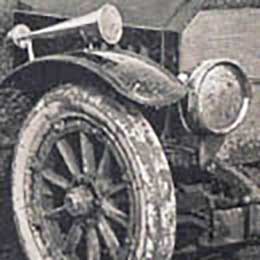


 Kemal Atatürk in Janissary uniform
I recently wrote about the turbulent fate of the Turkish translations of The Little Prince. When speaking about the discovery of the Little Prince’s asteroid B-612, Saint-Exupéry uses the story of the Turkish astronomer to show how, in the eyes of grown-ups, clothes really do make the man:
“Fortunately for the reputation of asteroid B-612, a Turkish dictator later ordered his people, on pain of death, to dress in the European manner. In 1920 the astronomer repeated his presentation, this time dressed in an exceedingly elegant suit. And this time everyone agreed with him.”
The “Turkish dictator” is, of course, Kemal Atatürk, whose veneration is prescribed by law, so Turkish translators spent seventy years twisting and turning to avoid this legally problematic phrase. Sometimes they rendered it as “the great leader of the Turks,” sometimes as “a peremptory Turkish ruler,” until finally, this January, on the seventieth anniversary of the author’s death, a new Turkish edition appeared with the accurate translation. But this in turn drew protest from an unexpected quarter: the Turkish education and science workers’ union demanded that any book containing the forbidden word be removed from the Ministry of Education’s recommended reading list.
But the story doesn’t end there.
 The story ends. Sultan Mehmed VI Vahideddin leaves Constantinople, 1922
My post was also picked up by Dmitry Chernyshev’s Russian-language blog Ответы на незаданные вопросы, which naturally quoted Saint-Exupéry’s text from the Russian translation:
“К счастью для репутации астероида В-612, турецкий султан велел своим подданным под страхом смерти носить европейское платье. В 1920 году тот астроном снова доложил о своем открытии. На этот раз он был одет по последней моде, – и все с ним согласились.”
“Fortunately for the reputation of asteroid B-612, the Turkish sultan ordered his subjects, on pain of death, to wear European clothes. In 1920 the astronomer again reported his discovery. This time he was dressed in the latest fashion – and everyone agreed with him.”
The translation was made in the 1950s by the excellent Nora Gal (those who remember our trip to Odessa may recall her memorial plaque on the wall of her childhood home). Why did she replace the “Turkish dictator” with the “Turkish sultan”? Perhaps to avoid offending the sensitivities of the Soviet Union’s Turkish-speaking peoples? Unlikely, given the deportations of the Meskhetian Turks and Crimean Tatars at around that time. Or perhaps to “correct” Saint-Exupéry? After all, in 1920 the Ottoman Empire was indeed still ruled by a sultan. But if this was her intention, she introduced a new problem: the sultan had no reason whatsoever in 1920 to impose the dress code that Atatürk would enforce in 1925. The simplest solution would have been to shift the fictional astronomer’s fictional lecture to 1925. But that would have openly diverged from the original text.
Sometimes it’s pointless to overthink an insoluble contradiction embedded in the original. You just have to translate it as it is.
 Little Princes



Add comment