

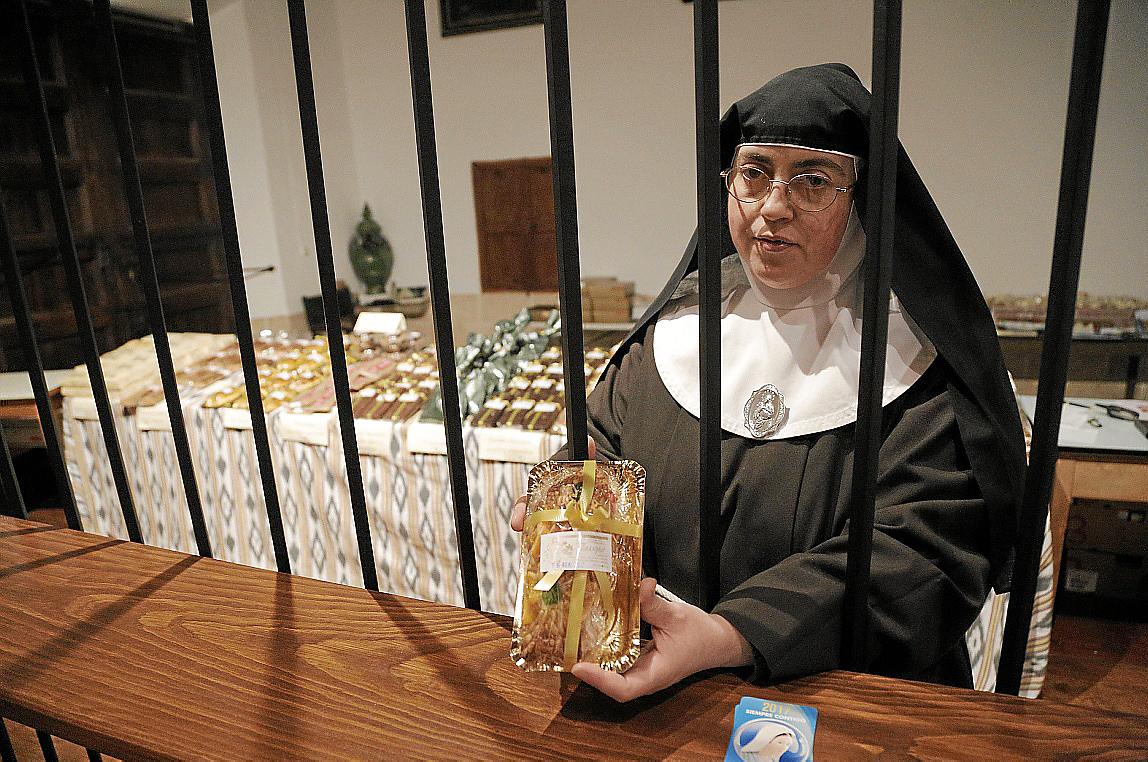
As over the past few days we had been talking about sea fish and freshwater fish, a third species suddenly came to mind: the peix reial, or royal fish, which appears only at Christmas time at the convent of the Santa Clara nuns, in the medieval heart of the city of Palma.
It is a palm-sized marzipan shaped like a fish and filled with candied fruit, made and sold exclusively at this time of year for almost 800 years. The tradition began when it was offered as a festive gift to King Jaume I “the Conqueror” (1208–1276) (here you can see a video with another version of peix reial made by the wonderful Fornet de la Soca).
Interestingly, according to the chronicles, when Jaume I’s fleet arrived from Salou in Mallorca to begin the conquest of the island at Christmas in 1229, an osprey dropped a fish onto the deck of the king’s ship, just as supplies were starting to run dangerously low. The tradition may well stem from this episode.
So I left home determined to catch one. It was early in the morning, and I took advantage of the fact that at that hour there was no one else around except the sister who sells the sweets from behind a grille, to take my time admiring the Nativity scene displayed in the same entrance hall.
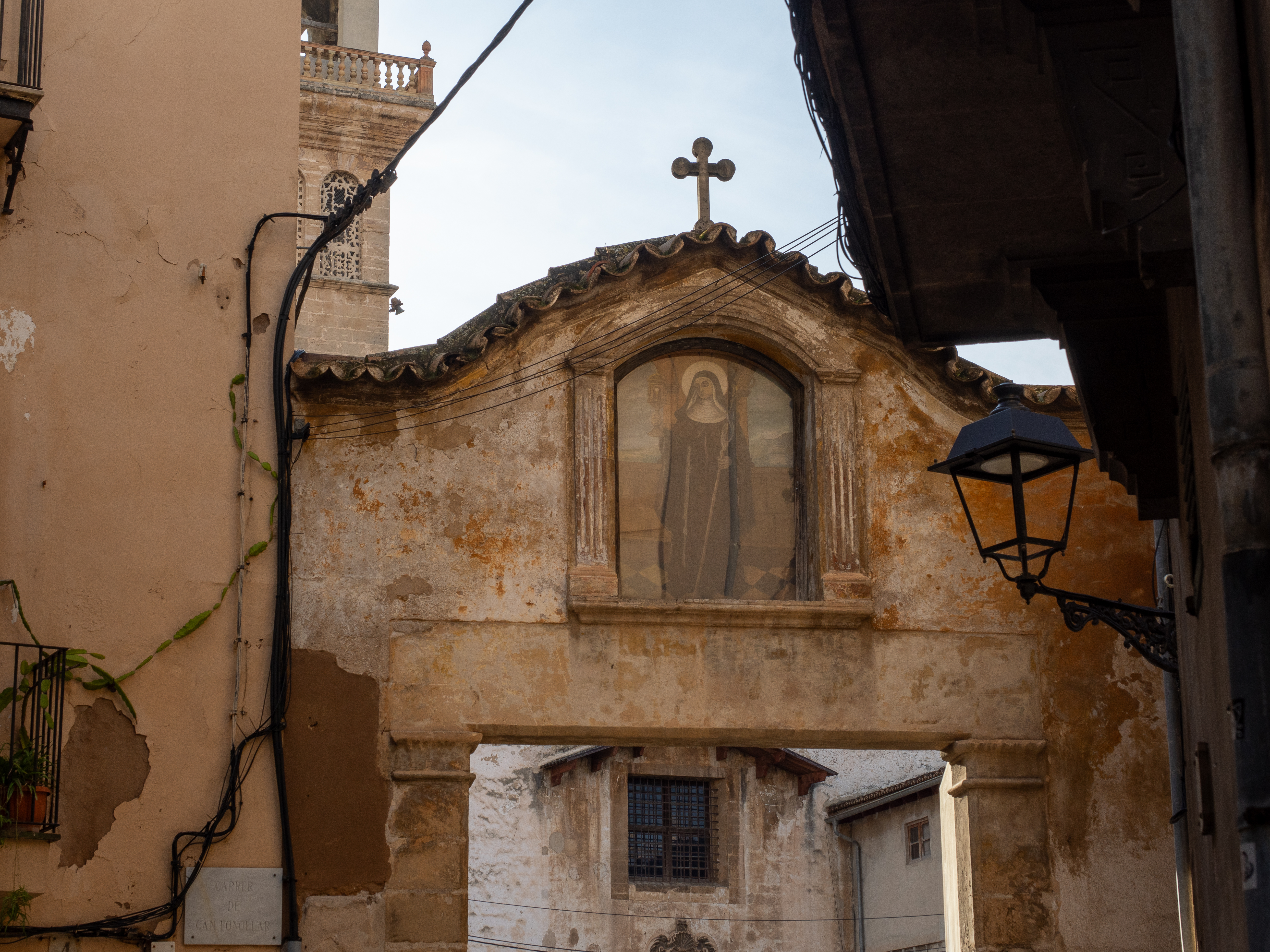
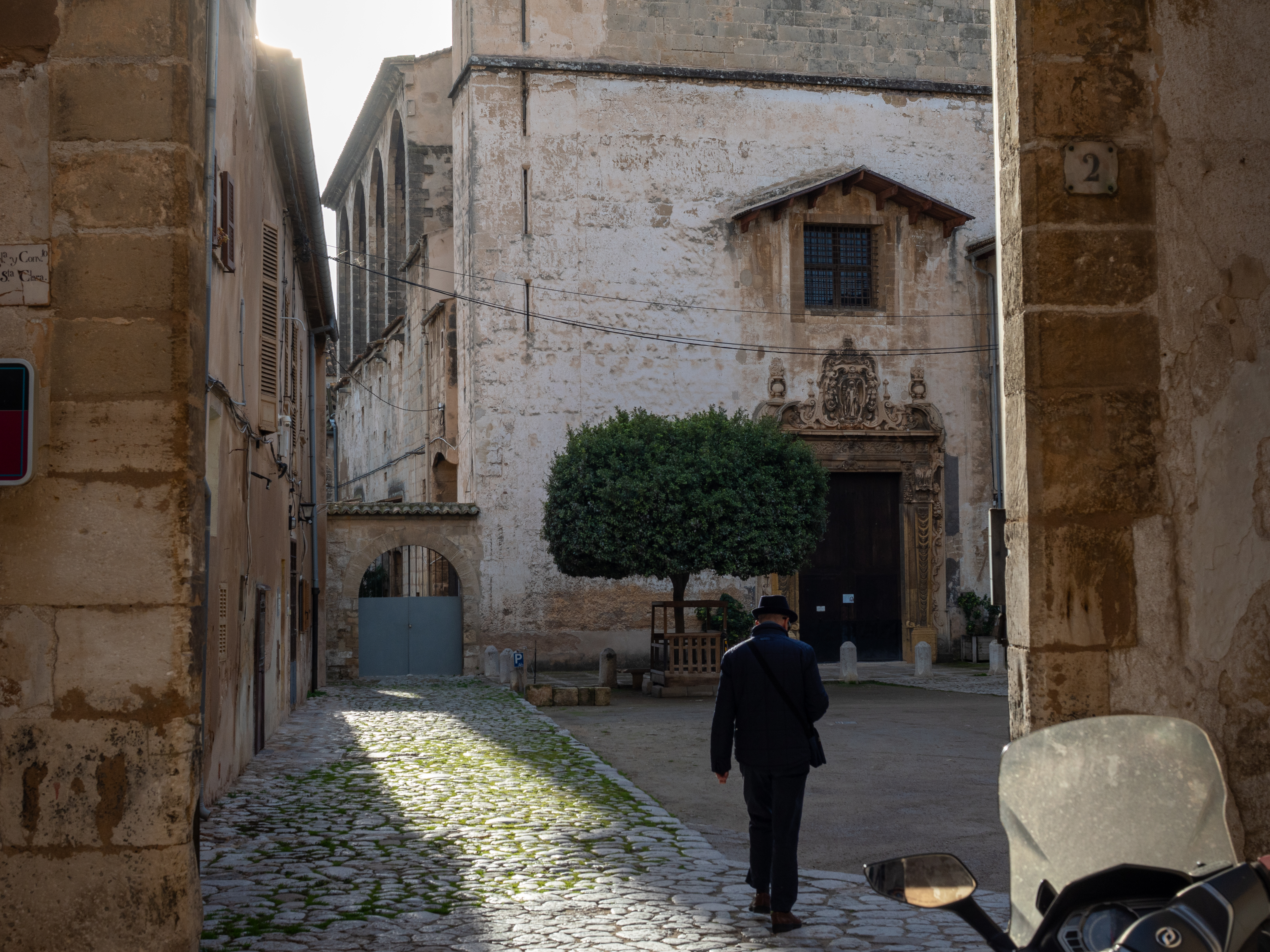
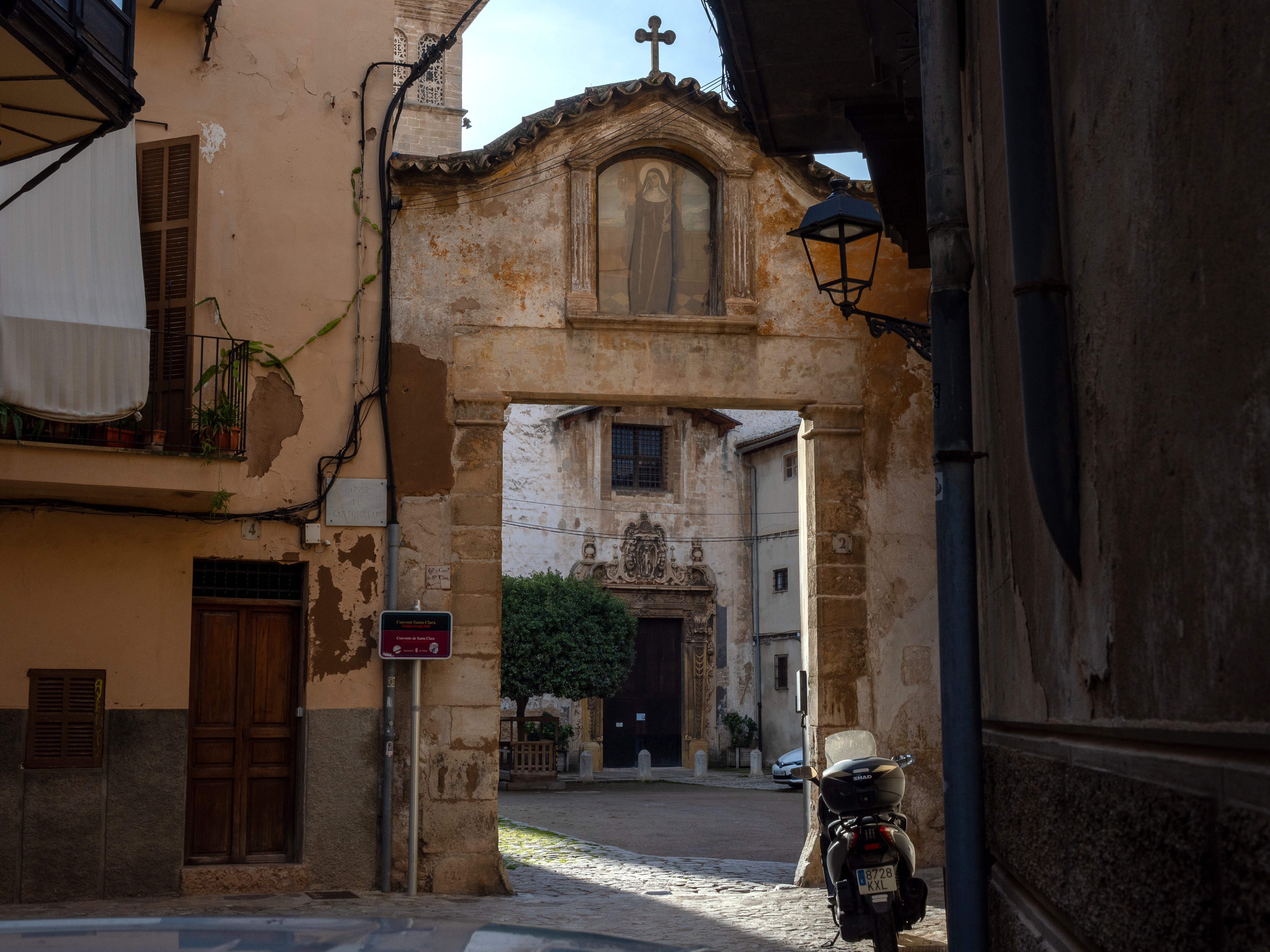
Only three years had passed since the death of Clare of Assisi when, in 1256, Pope Alexander IV granted permission for the foundation of this convent of Poor Clares. It was built in the area of the houses of Bernat de Santa Eugènia, amid the maze of streets of medieval Palma, on the remains of earlier Muslim buildings.
It is one of the monasteries most deeply woven into the historical identity of the city, both because of the presence of nuns from noble families and thanks to the popular traditions it preserves. Before a wedding, for example, the bride and her mother must come here to leave a dozen eggs, so that the saint may ensure good weather on the big day.
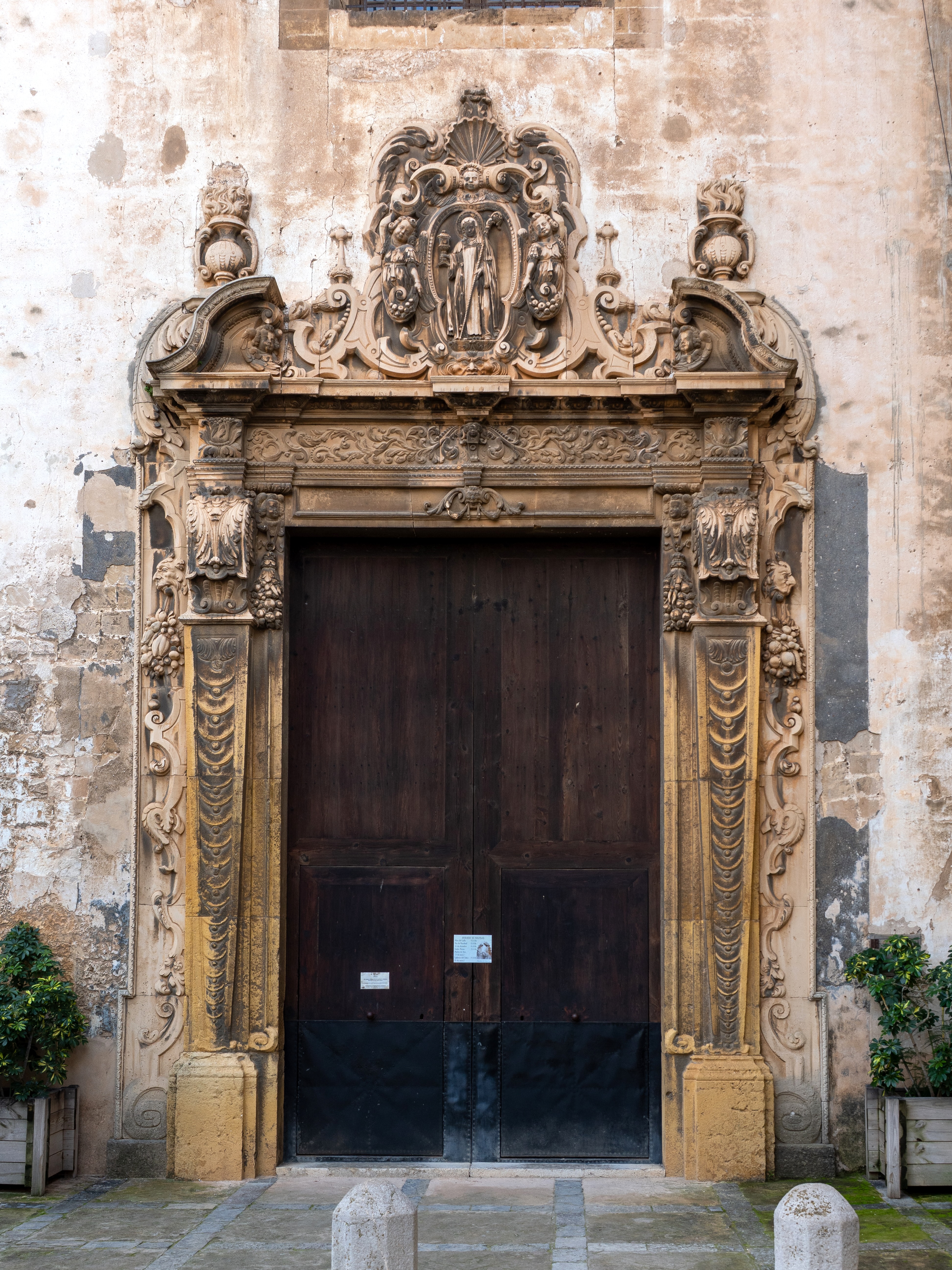
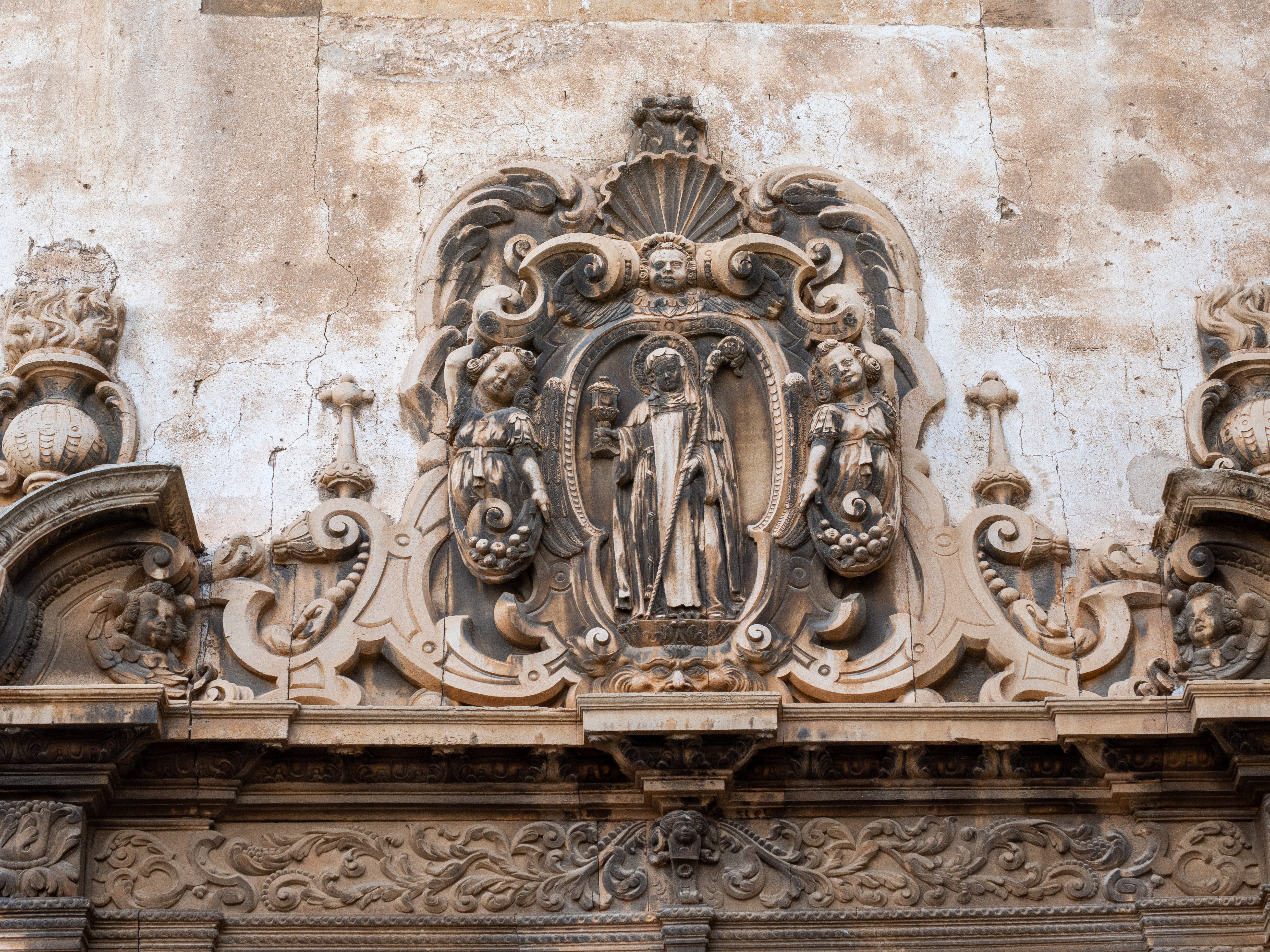
Palma is home to several remarkable Nativity scenes: the 15th-century Nativity in the church of the Hospital General, one of the oldest in Europe and surrounded by a fascinating legend about how its figures arrived in Palma (a story we will tell in another post); the conventual Baroque Nativities of La Concepción, those of the Carmelite nuns (“Las Teresas”), Santa Magdalena and San Jerónimo; the spectacular Nativity of the Capuchin nuns; and the imposing 18th-century Neapolitan Nativity of the March Foundation, with around two thousand figures. As it is currently displayed, one might think that the Nativity of Santa Clara does not quite live up to the tradition originally established by Saint Francis himself.
Let us recall the story: from 1209 onwards, Pope Innocent III had forbidden any religious tableaux vivants, but in 1223 Francis obtained permission for a close friend of his, a resident of Greccio, to commemorate Christmas by arranging a Nativity scene. It was something very simple: a manger with the Child, Mary and Joseph beside him, an ox, a donkey, and plenty of hay scattered on the ground. This hay — recounts Thomas of Celano in 1228, who witnessed it with his own eyes and is the source of our account — was preserved for its healing virtues, curing donkeys and other animals; “what is more,” he writes, “women suffering long and painful labours, by placing a little of this hay upon themselves, give birth happily” (Saint Francis of Assisi: writings, biographies, contemporary documents, BAC, 1993).
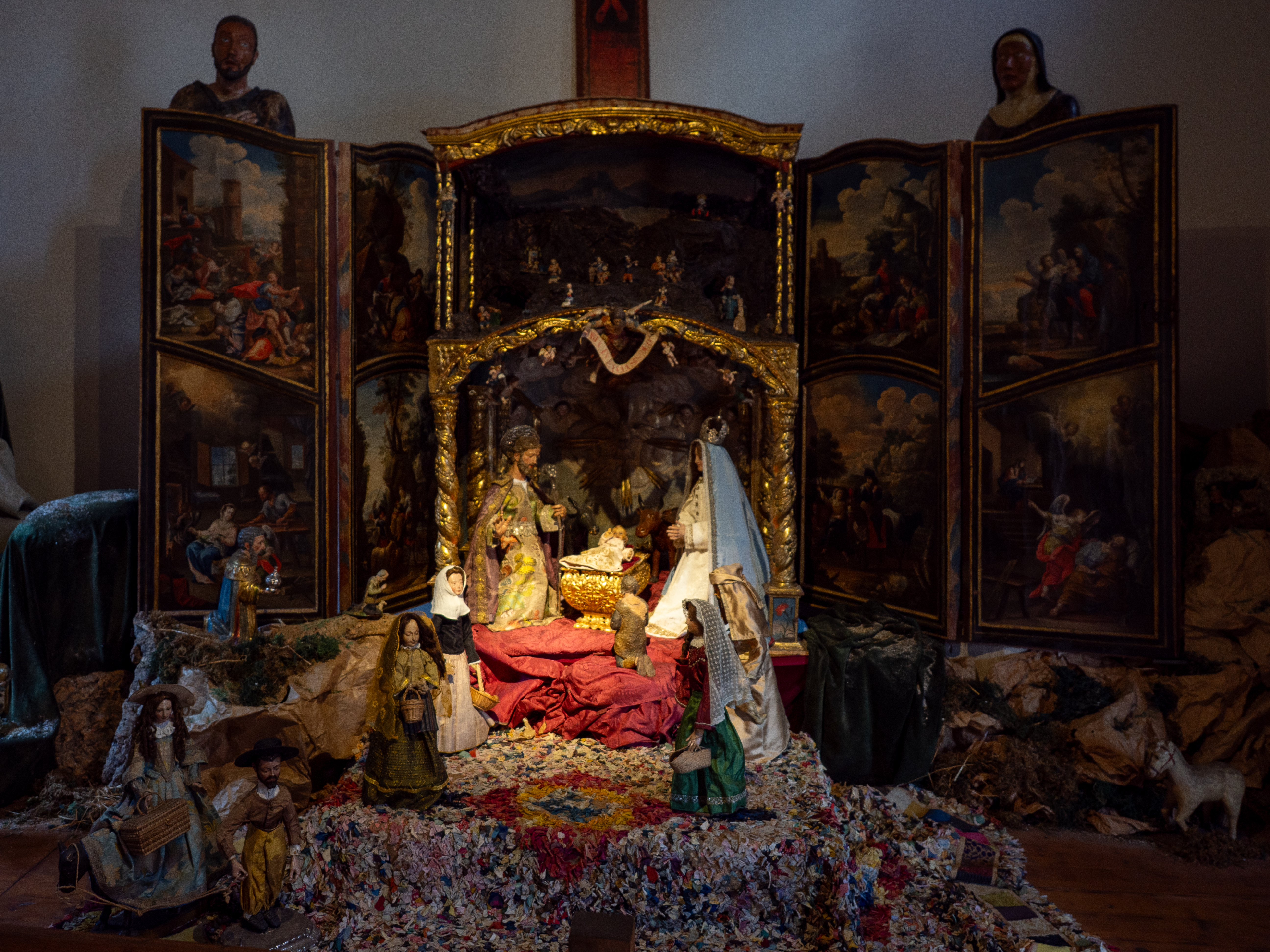
Yet although the Nativity of the Santa Clara convent is surrounded by heterogeneous elements, and the dim light of the entrance hall makes it difficult to appreciate the details, it is nonetheless one of the most beautiful in Palma. Originally, it belonged to the other convent of the Poor Clares, now lost, that of El Olivar.
When the large cabinet that houses it is opened, its two wings unfold to a width of some four metres. Its eight compartments, painted in dark tones, depict scenes of the Massacre of the Innocents, Joseph’s dream, the Flight into Egypt, and the Holy Family in their house in Nazareth.
These panels form the backdrop to the Nativity scene itself, which stands out in brighter colours within a cave: the figures of Mary and Joseph, about seventy centimetres high, and the Child laid in a Baroque cradle with gilded mouldings. The back of the cave is carved with silvery clouds, angels, the dove of the Holy Spirit, and the Eternal Father in his glory, behind the scroll bearing the words Gloria in excelsis Deo.
On an upper level, above the cave, the landscape of Bethlehem unfolds, receding into the distance as far as the horizon. The Virgin is richly dressed, wearing a silver royal crown on her head, while her long hair falls in ringlets beneath the blue veil.
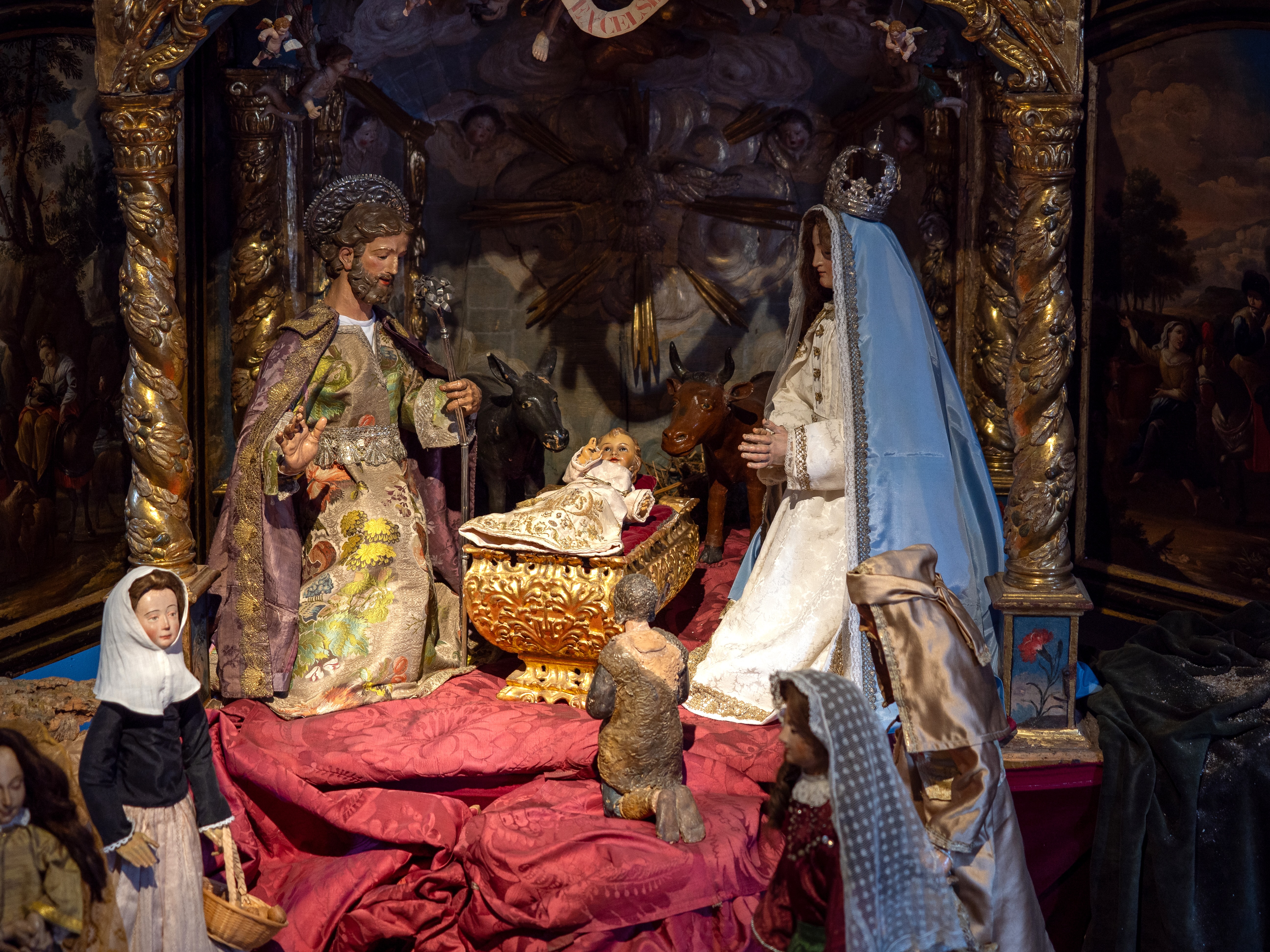
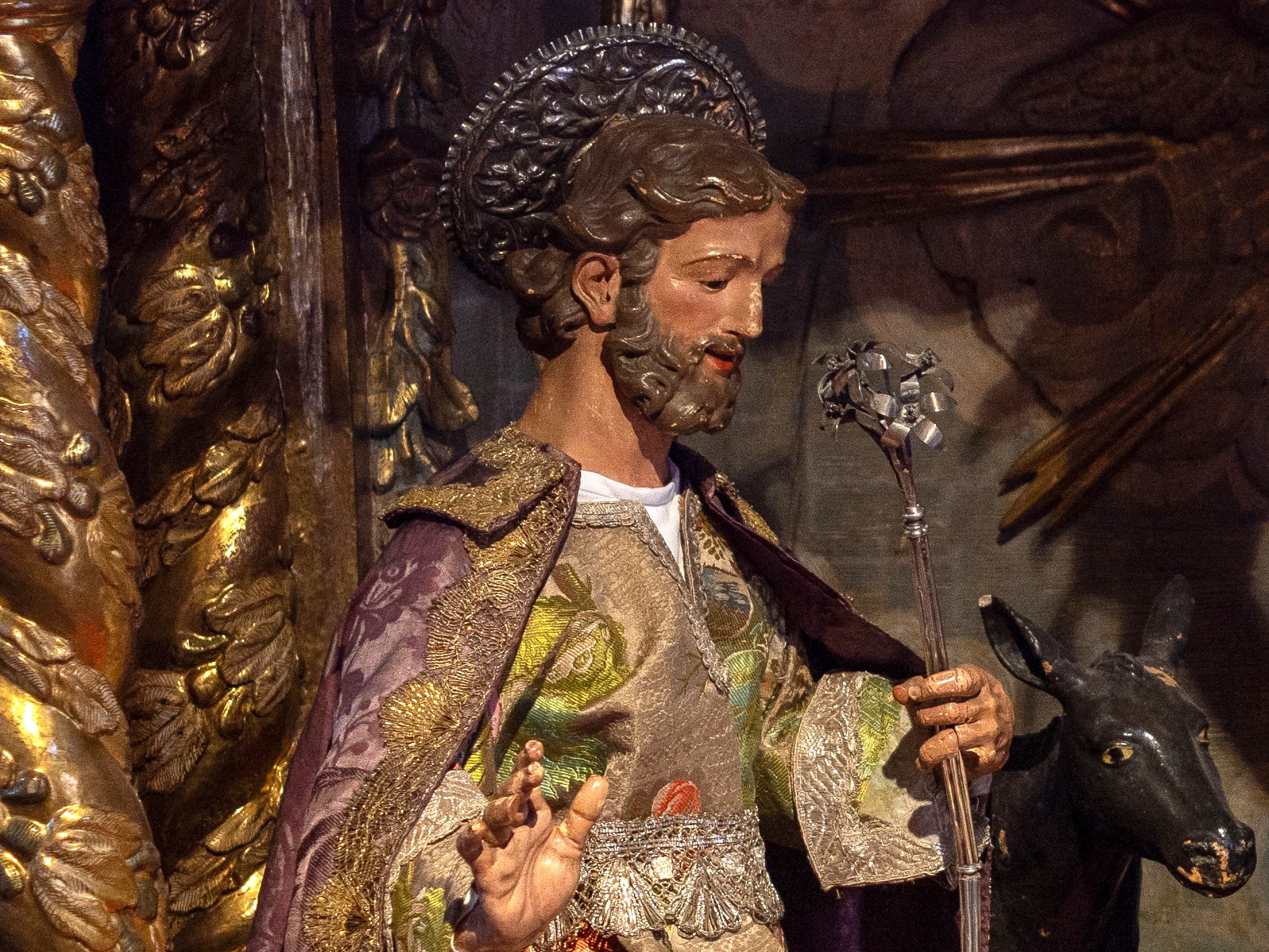
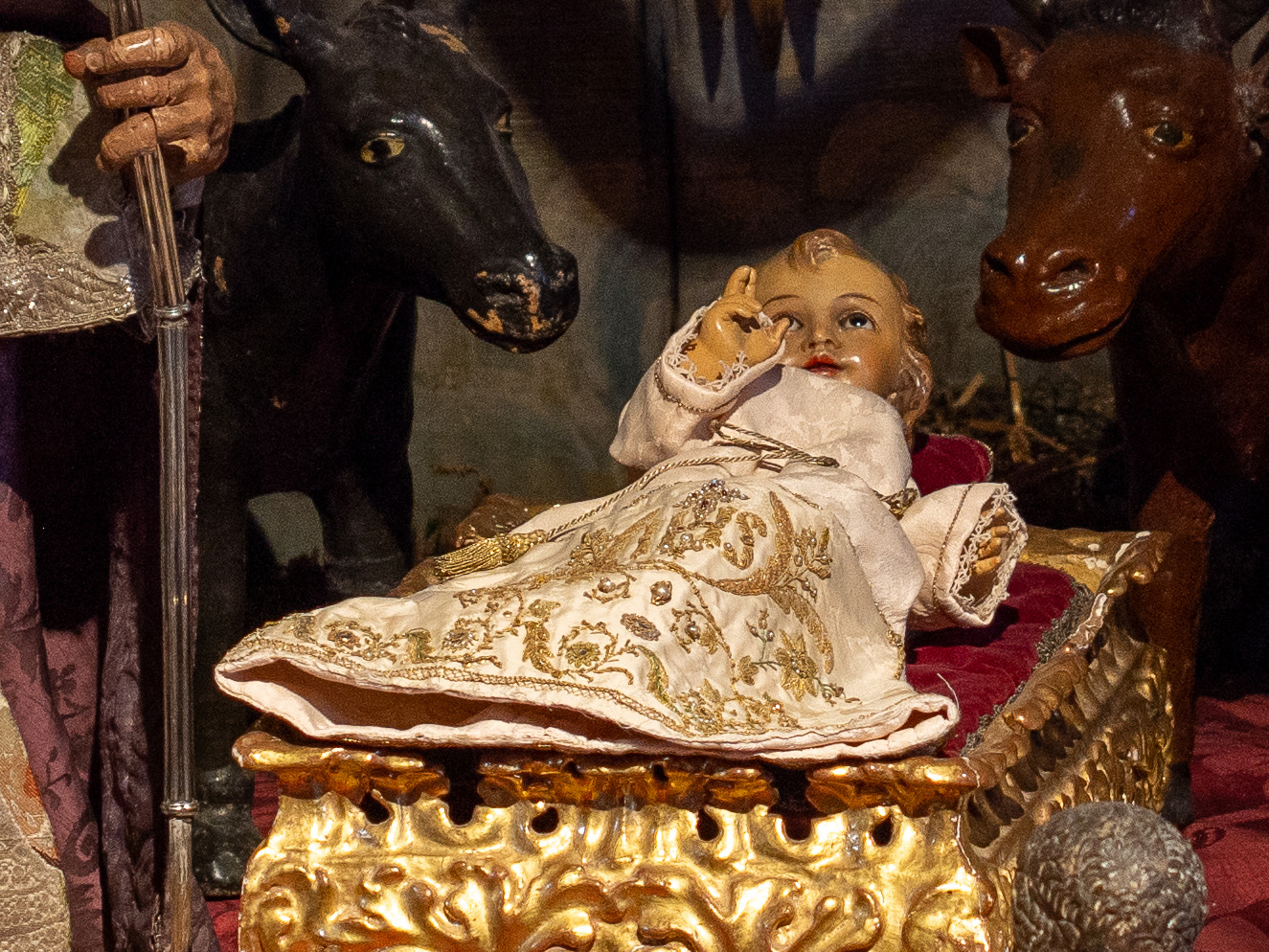
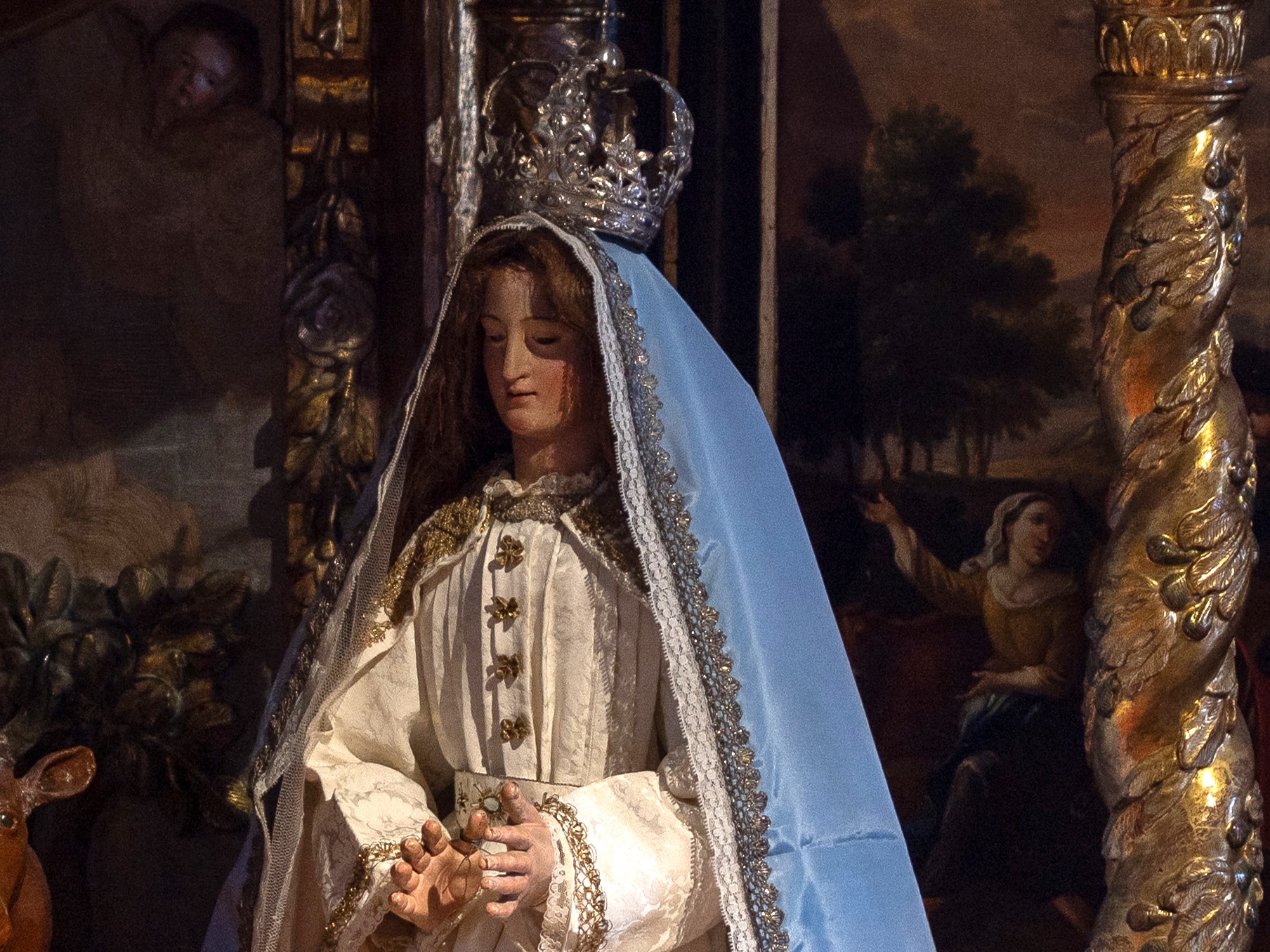
And now we come to the truly unsettling detail I wanted to comment on from the very beginning. Around the Nativity scene, the nuns place other scattered pieces that must have come from various other crèches that found their way into the monastery. Among them, for instance, are some Magi whose craftsmanship in no way falls short of that of the main ensemble.
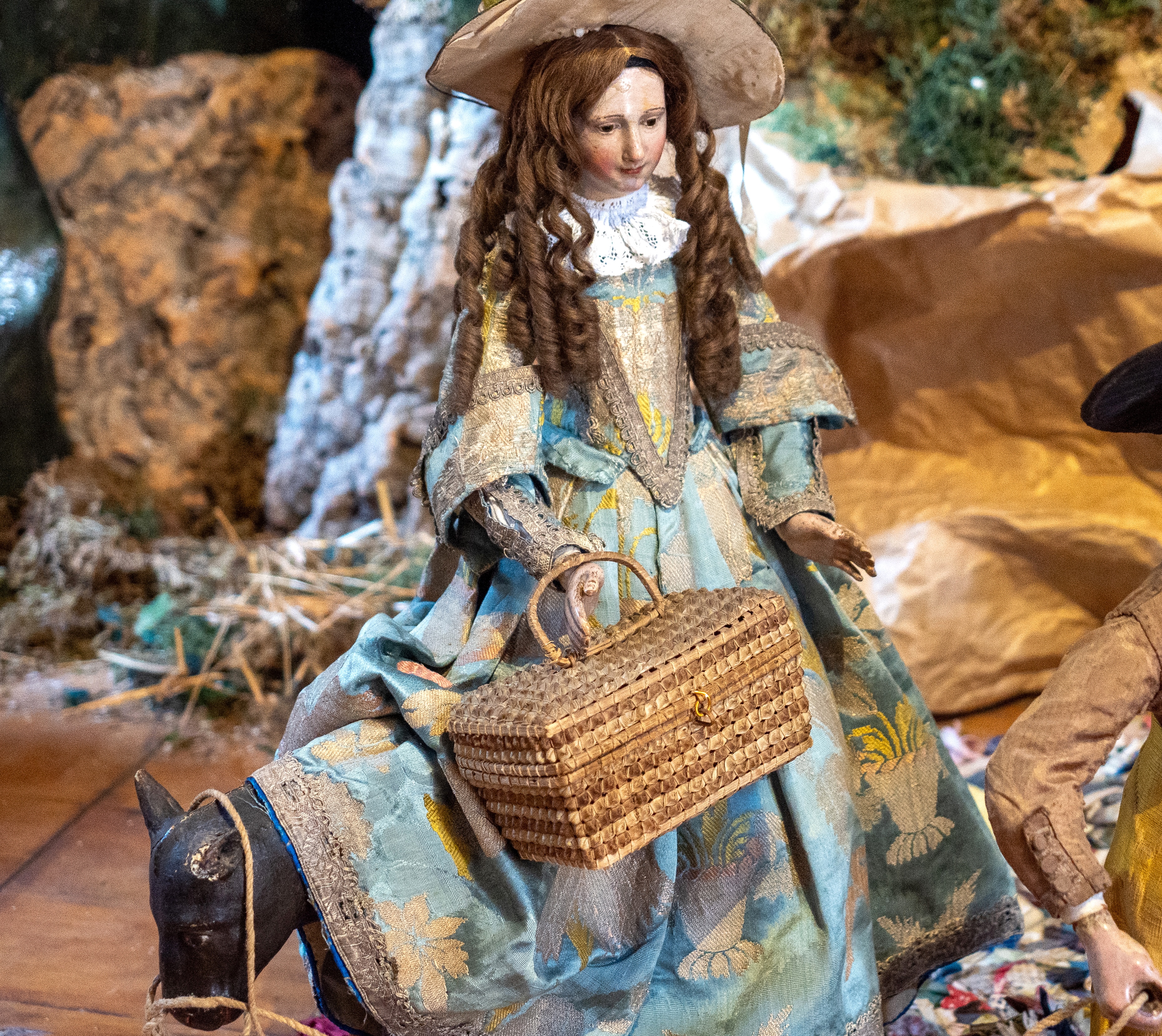
And among these pieces, in a prominent position at the foot of the central scene, there are a few figures that I can state without the slightest doubt alter what we know of the history of Christ, introducing new information with, perhaps, unforeseeable consequences. I have been turning this over in my mind for days. This is the image:
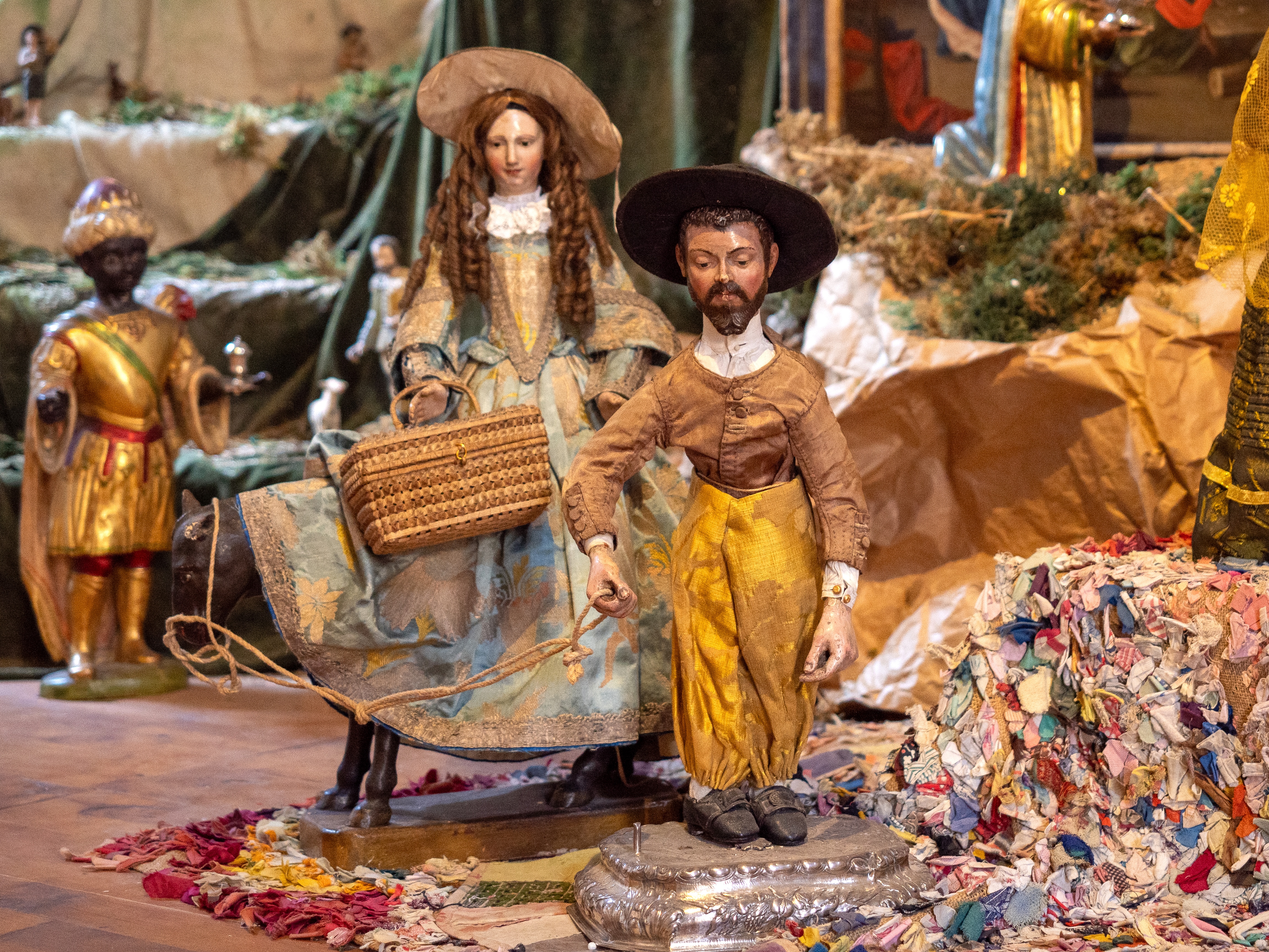
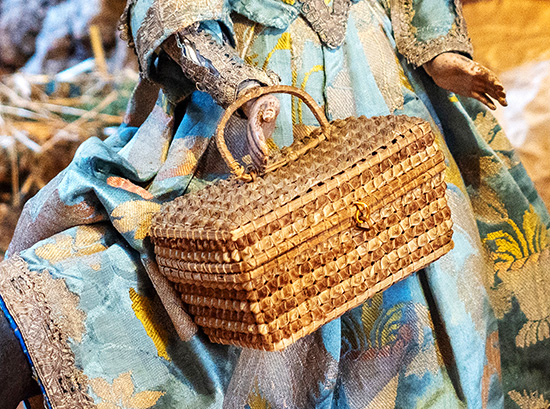
This is undoubtedly the scene of the Flight into Egypt. Saint Joseph, as in many Mallorcan Nativity scenes of the 18th and 19th centuries, is dressed in the wide trousers typical of the island’s peasants (calçons amb bufes, then known as calçons a la grega) and a jerkin, while the Virgin—wearing the same waist-length ringlets as in the main scene—is lavishly dressed and sports a straw hat and a wicker basket, as if they were heading off for a countryside picnic on a Sunday morning… But where is the Child? What has taken place here? The image is deeply disturbing.
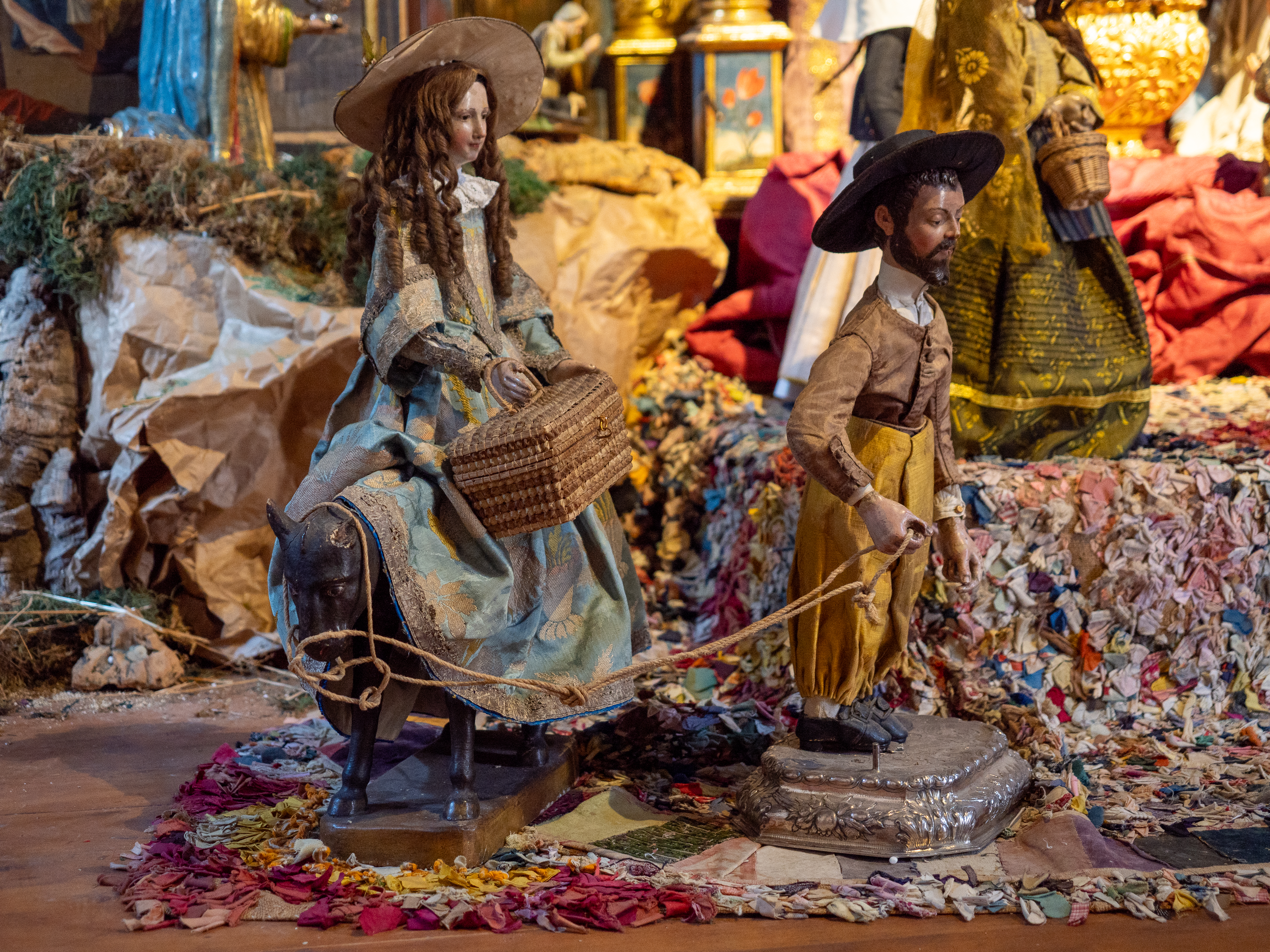
Let us calm down and examine the possibilities. The first would be that this is not the Flight into Egypt at all, but rather the journey from Nazareth to Bethlehem before the birth. I immediately ruled this out, since Mary is obviously not pregnant and in fact appears to be wearing a rather tightly laced corset.
There is another detail that reinforces this rejection: she does not seem to be riding a mule or a donkey, but rather an ox. The animal’s head and ears hardly correspond to those of an equid, and the hoof appears clearly cloven.
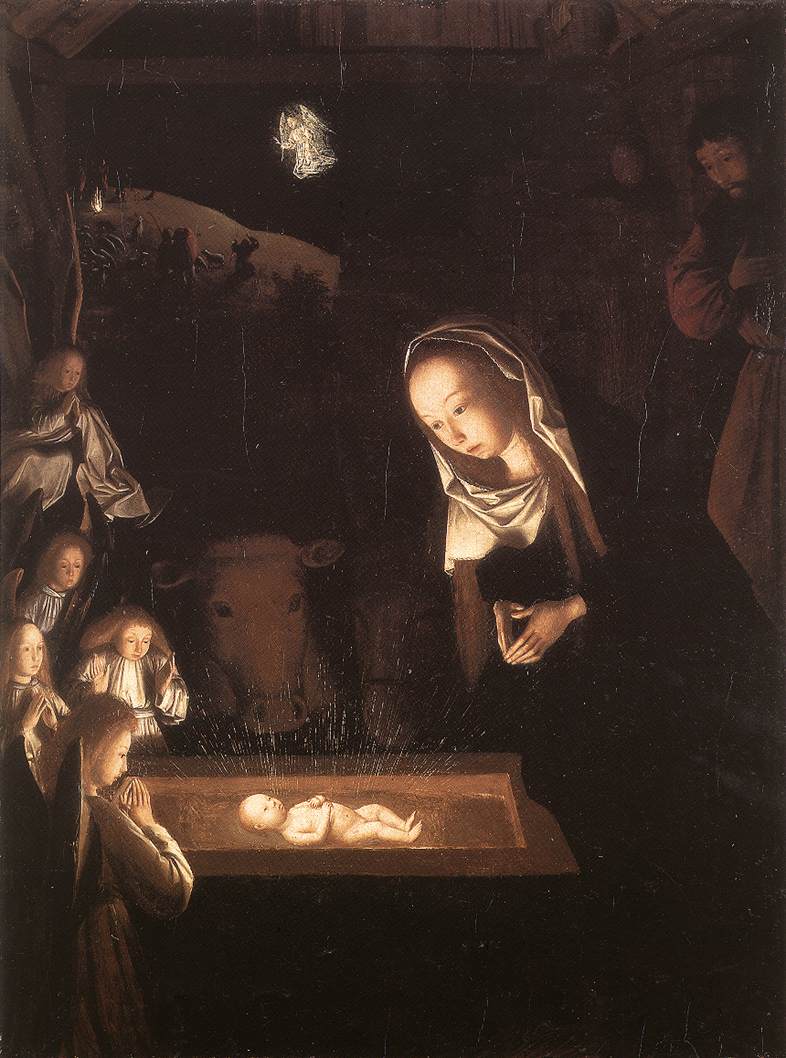
True, the horns are not visible, but one need only look, for example, at Geertgen tot Sint Jans’s Nocturnal Nativity (1484–90), where the prominent, heavy head of the ox at the centre of the composition has had its horns softened to the point of invisibility—a way of underscoring its meekness:
After the Council of Trent, the donkey disappears from quite a number of representations of the Flight, being considered an insufficiently noble animal (see P. de Montaner, El betlem tradicional mallorquí. L'evolució de les figures del betlem mallorquí als segles XVIII–XX, Palma, 2005, p. 55). In such cases, the very ox that had stood in the stable of the Nativity proved to be an excellent alternative for carrying the Virgin and Child.
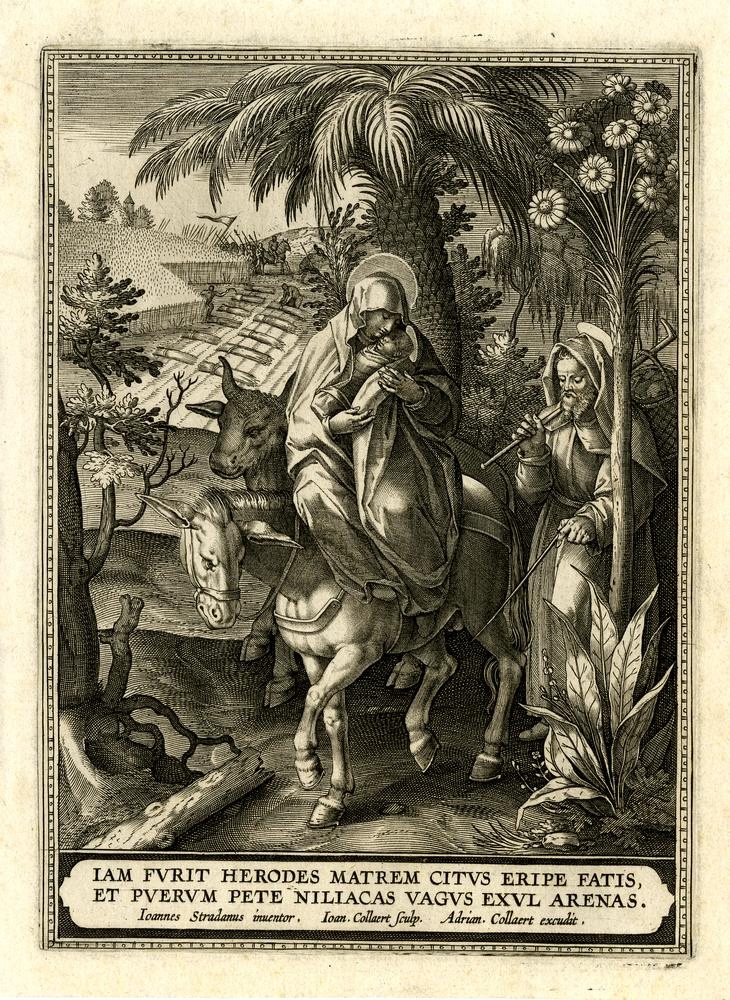 Jan Collaert, The Flight into Egypt, from the series Beatae intacta semper Virginis Mariae, Antwerp, c. 1589. The Council of Trent considered the donkey unworthy of carrying the Virgin, so it was replaced by a mule or horse, or sometimes the Virgin walked herself. The ox from the manger also appears as a companion*. Even before Trent, the ox was sometimes depicted as an alternative mount, for example in Lucas Cranach’s Rest on the Flight into Egypt (c. 1530).
Having discarded this first hypothesis, two possibilities remain to explain the unsettling mystery. One is completely absurd: to think that Jesus is missing because Herod succeeded in his plan is plainly contradicted by the subsequent story. Only one possibility remains: that the figure accompanying Joseph is not Mary, but another woman. This may not be as outrageous or heretical as it sounds.
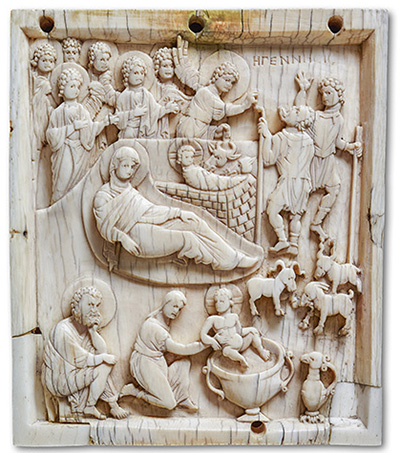 10th-century Byzantine ivory showing the Nativity above, and the bathing of Jesus by a midwife, observed by a melancholic Saint Joseph
To understand this, we must delve into the apocryphal gospel tradition, which tells of women who assisted at Mary’s birth. Their existence is highly controversial, especially after Saint Jerome’s unequivocal statement: “There was no midwife; no woman intervened. [Mary] swaddled the child with her own hands. She herself was mother and midwife” (Contra Helvidio, 10).
But it was not always so clear-cut.
In the 2nd-century so-called Protoevangelium of James, Joseph is said to have sought out a Jewish midwife. After the birth, the woman was so astonished by the mother’s continued virginity that she immediately told a certain Salome. But Salome, skeptical, said: “Unless I put my finger into her womb and examine it, I will not believe that a virgin has given birth.”
They returned to the cave “and the midwife entered, and said to Mary: Allow this woman to act upon you, for the debate we have had over you is not insignificant. And Salome, determined to verify, put her finger into Mary’s womb, after which she cried out: ‘My impious unbelief is punished, for I have tempted the living God, and behold, my hand is consumed by fire and departs from me.’”
Recognizing her error and asking forgiveness, an angel appeared and told her to take the Child in her arms: “And Salome approached the newborn, lifted him, and said: ‘I wish to bow before him, for a great king is born for Israel.’ And immediately she was healed, and justified, she left the cave.” (19–20)
From this point on, in later tradition, this character—or even both women—entered popular imagination, expanding the concise canonical account of the Nativity with marginal details that also influenced iconography. As the Jewish midwife says, the matter “is not insignificant,” since the aim was to reinforce Mary’s virginity in popular imagination with a slightly risqué touch, placing this Salome in a role parallel to Saint Thomas after the Resurrection.
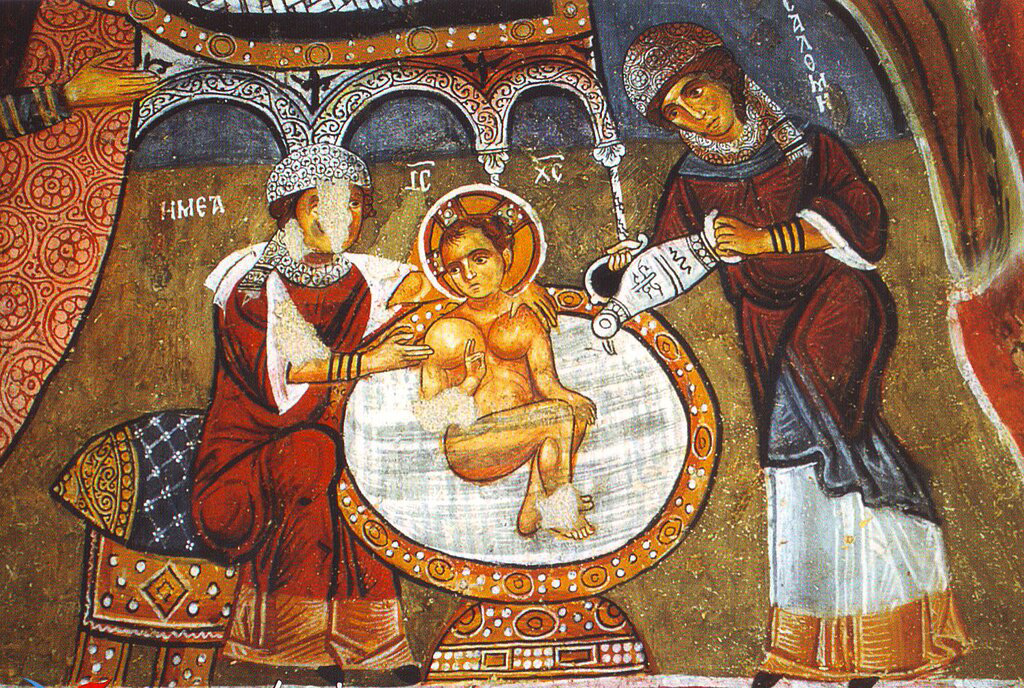 Detail from a 12th-century fresco in the Dark Church of Göreme, Cappadocia: the older seated woman is called Emea (from the Greek hē maia, “the midwife,” from the same root as “maieutic”), and her younger assistant is identified as Salome.
The story of the midwives is consolidated in the early 7th-century Pseudo-Matthew Gospel, whose details about the Virgin and the childhood of Jesus became a primary source for Western imagination (the apocryphal Gospel of James spread more in the Eastern churches).
Here, both women are Jewish midwives with their own names: Zelomi (not Emea) and Salome. What matters for us now is that the text later defines the company that fled to Egypt to escape Herod: “It is to be known that three young men traveled with Joseph, and one girl with Mary.” (XIII, 3–5) Since Salome had been introduced so memorably shortly before, it quickly became established that she was the girl accompanying Mary to Egypt.
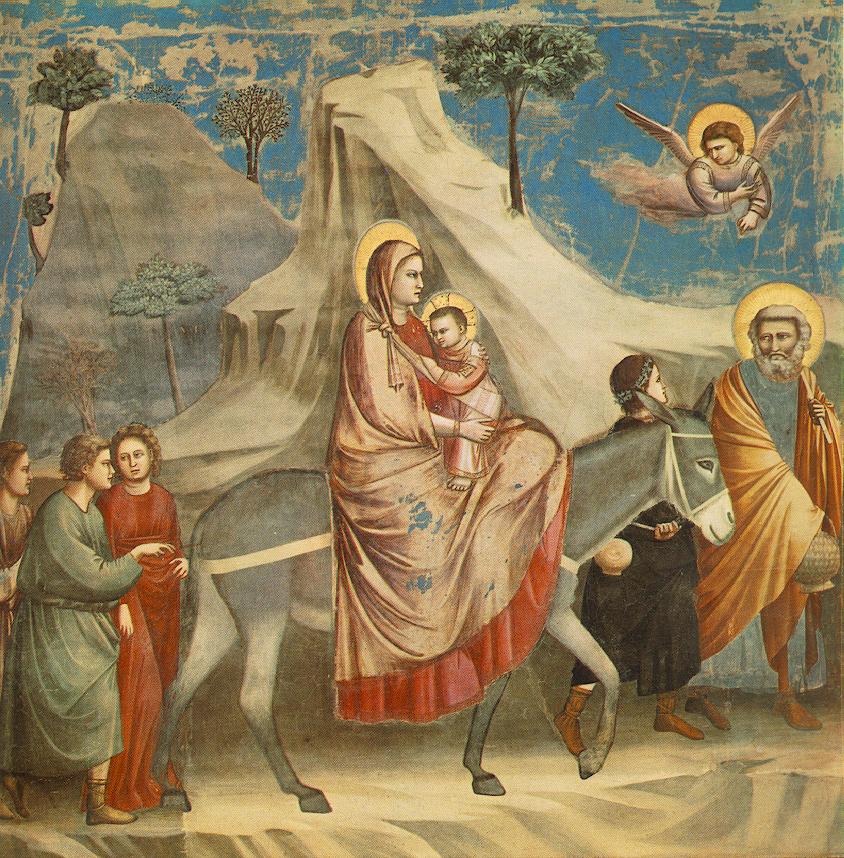 Giotto, The Flight into Egypt, Scrovegni Chapel, Padua, 1305–1306. Follows the Pseudo-Matthew account. The girl leading the Virgin’s mule is identified as Salome, the midwife. She can also be seen in this fresco in the Church of St. Mary, Beram, Croatia (1474): the Virgin on horseback with the Child, accompanied by two women. Here Joseph has disappeared.
And in the History of Joseph the Carpenter, which compiles Coptic and Arabic traditions dating from the 3rd to late 6th century, the companion is clearly the midwife Salome: Joseph “took Mary, my mother, and I lay in her bosom. Salome also was his travel companion. Thus, leaving home, they went into Egypt and stayed there for a whole year.” (13)
The figure had already gained a significance that would only diminish many centuries later due to the purging promoted by the Council of Trent of popular, risqué, or even slightly grotesque elements that had accumulated around the canonical Gospels. She is also an awkward figure for Catholic tradition because the midwife hints at a human, painful childbirth, which is difficult to acknowledge.
In the West, the Nativity is usually presented as an Adoration. In contrast, in Byzantine tradition, the newly delivered Virgin may appear tired, reclining, assisted by someone at her side.* These accompanying birth figures thus gradually disappear from Catholic tradition, and consequently from depictions of the Flight into Egypt. They remain, however, in Coptic tradition to this day.
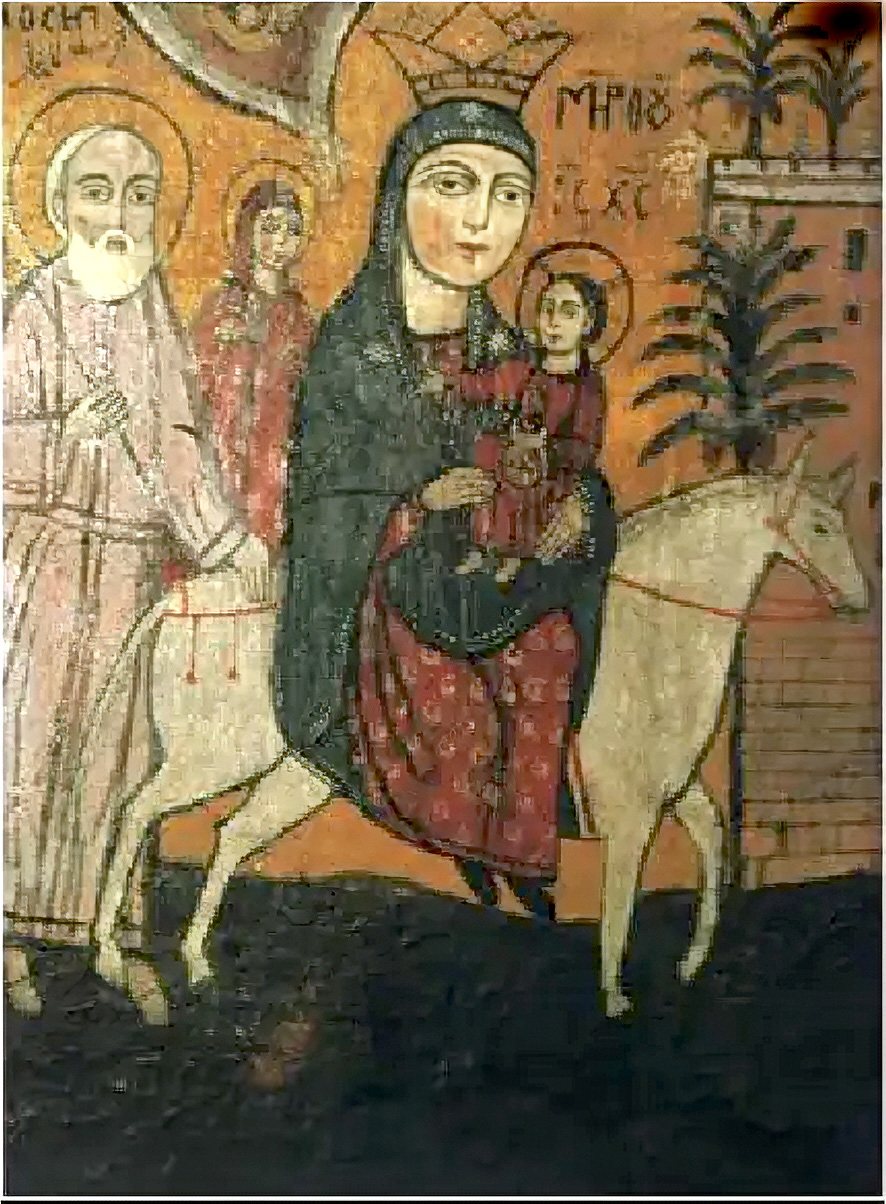 Icon from the Church of Saints Sergius and Bacchus (Abu Serga) in Old Cairo, c. 1849. Salome the midwife accompanies the family. Source: here
But no erasure imposed from above on tradition is ever final, and even after the Giotto fresco we saw, these women—Emea/Zelomi and Salome—continue to appear in Europe, together or separately, accompanying the Holy Family on the Flight into Egypt, especially in scenes showing rest along the journey. But with one important caveat: they are never explicitly identified.
-Descanso_en_la_Huida_a_Egipto-c-1555.jpg) Anonymous (Titian’s workshop), Rest on the Flight into Egypt, 2nd half of the 16th century. Prado Museum
Anonymous (Titian’s workshop), Rest on the Flight into Egypt, 2nd half of the 16th century. Prado Museum
 Rembrandt van Rijn, Landscape with the Rest on the Flight into Egypt, 1647. National Gallery of Ireland.
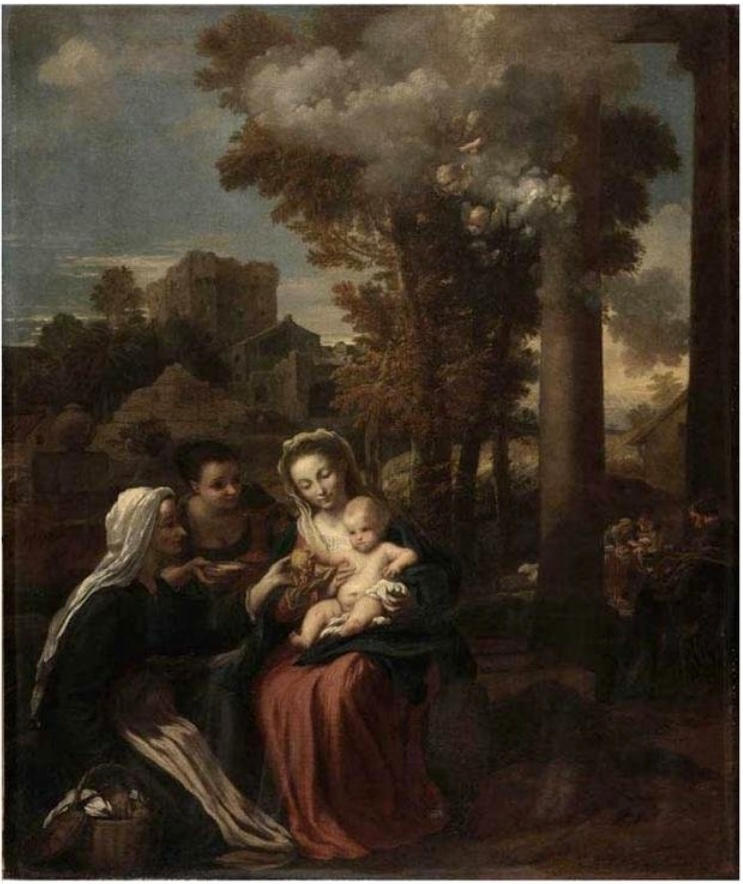 Lieven Mehus, Rest on the Flight into Egypt, 1650. Nelson-Atkins Museum of Art, Kansas City. Here we see the two midwives together, devoutly assisting Mary on the journey.
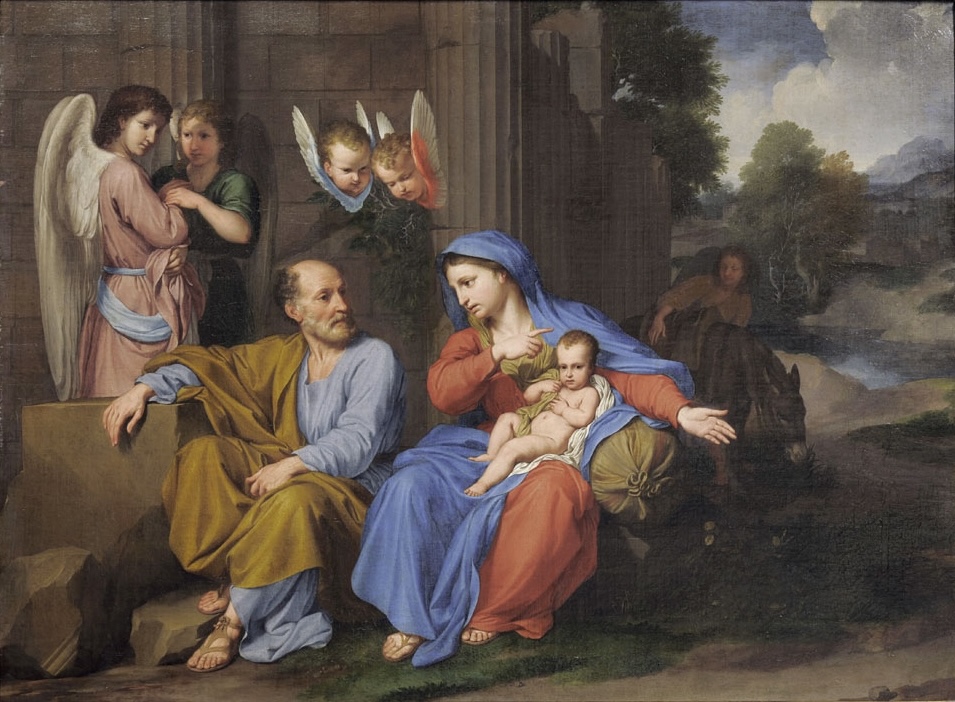 Reynaud Levieux, Rest during the Flight into Egypt, c. 1660. Musée des Beaux-Arts, Strasbourg.
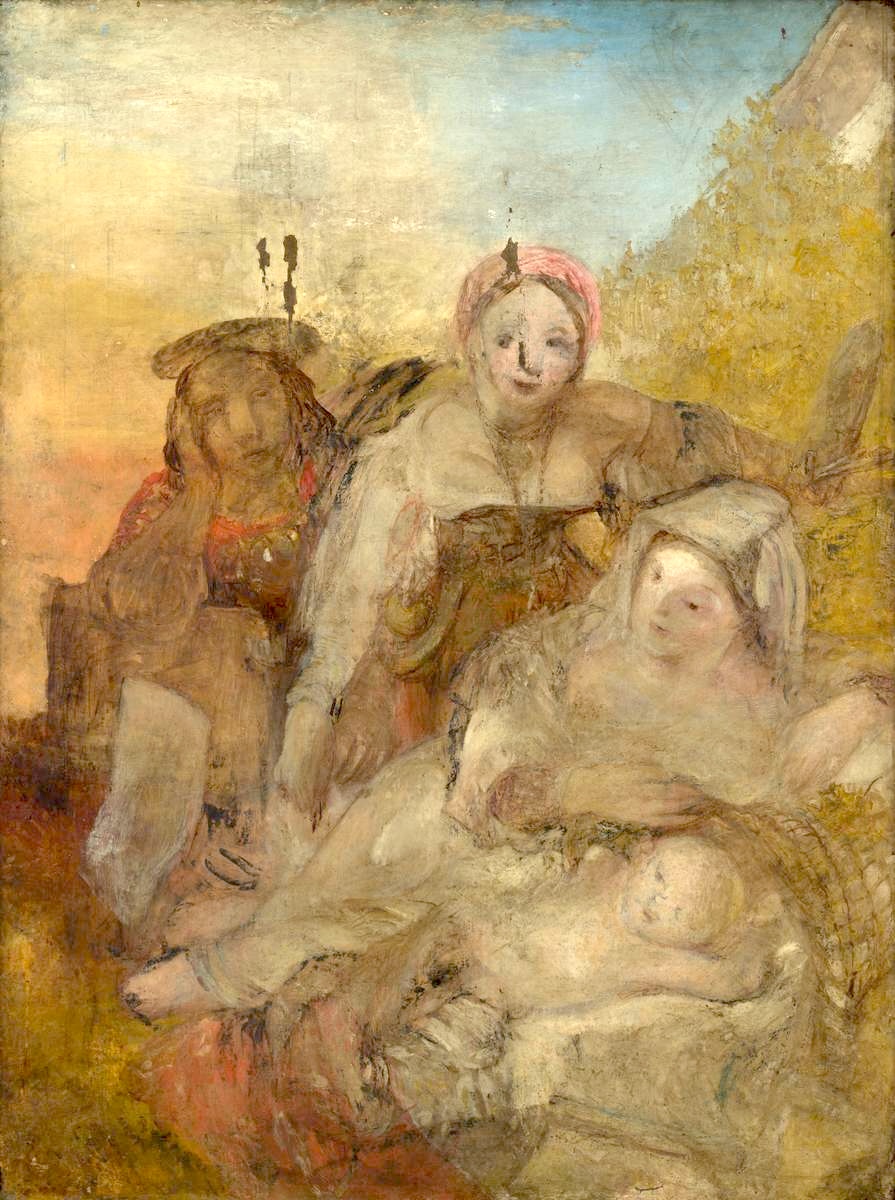 J. M. W. Turner, Rest on the Flight into Egypt, 1828. Tate Gallery, London.
In summary: What does this unusual Flight into Egypt scene from the Santa Clara Convent in Palma, where the Child has disappeared, represent? Perhaps it’s a clever ruse by Joseph, who has safely placed Mary and her child somewhere, fleeing with Salome as a decoy for their pursuers? Or has he simply left Mary and her child to their fate, exhausted by this uncomfortable and frantic story that has befallen him? Or, after all, is it the Virgin riding behind Joseph, with the Child safely in the care of some relative out of reach of Herod’s soldiers? And there’s one more reassuring possibility: just because we don’t see Jesus doesn’t necessarily mean he isn’t present in the scene. What might be hidden in the wicker basket?
Happy Twelfth Night!
Pedro Bacán, «Por el camino de Egipto» (villancico), from L'Epopée Tzigane. Road of the Gypsies (1996)



Add comment