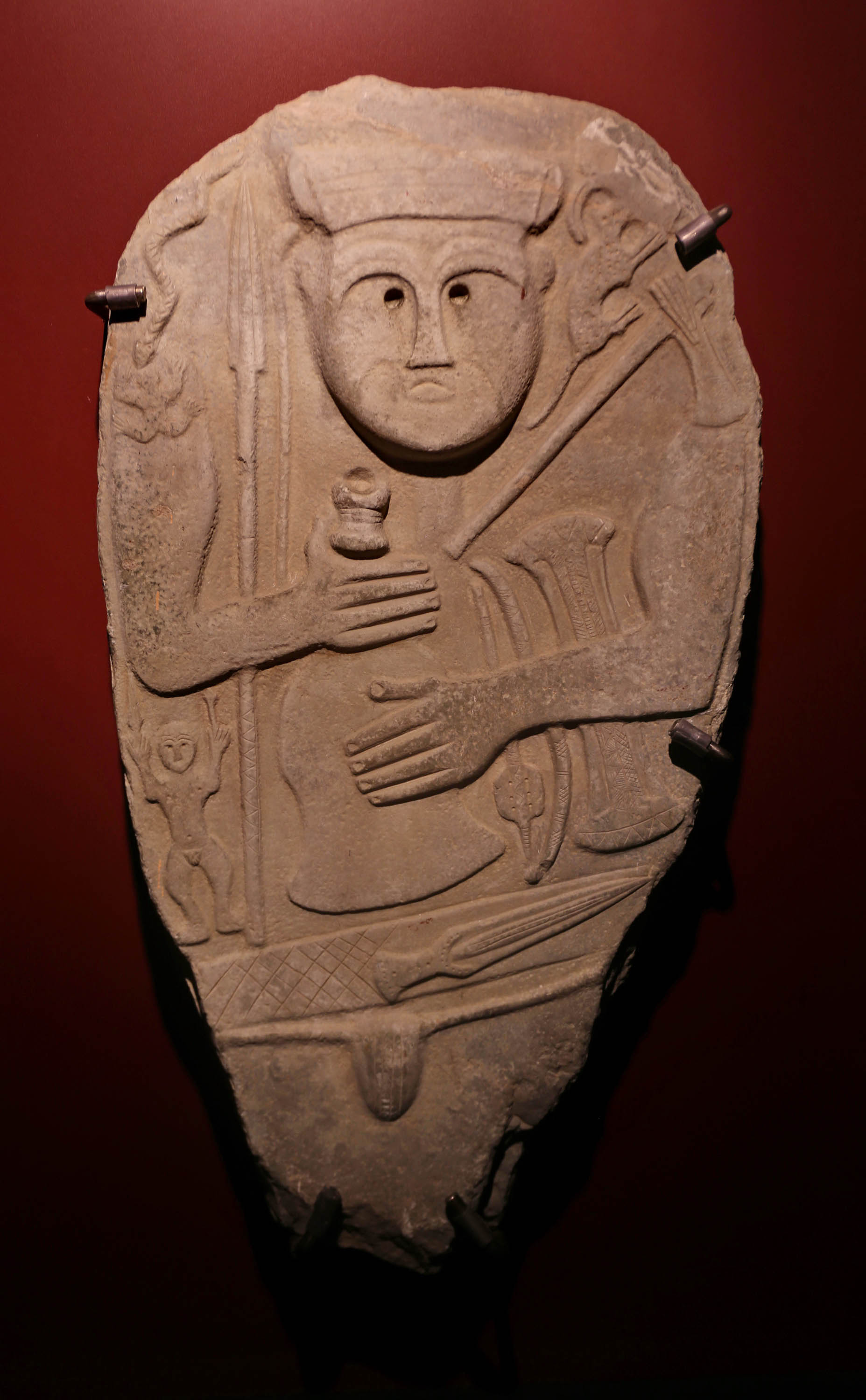
The stone warrior stele of Erzurum is not alone in its mystery in Eastern Anatolia. In another star museum, in Van, no fewer than thirteen stelae are preserved whose imagery is strikingly similar to the Erzurum figure and whose origins are just as enigmatic.
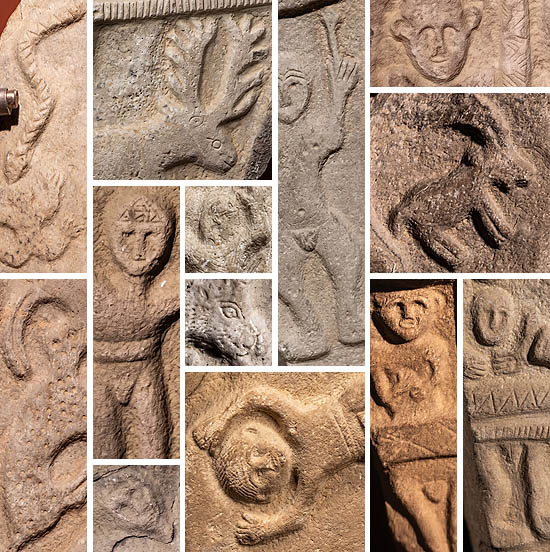
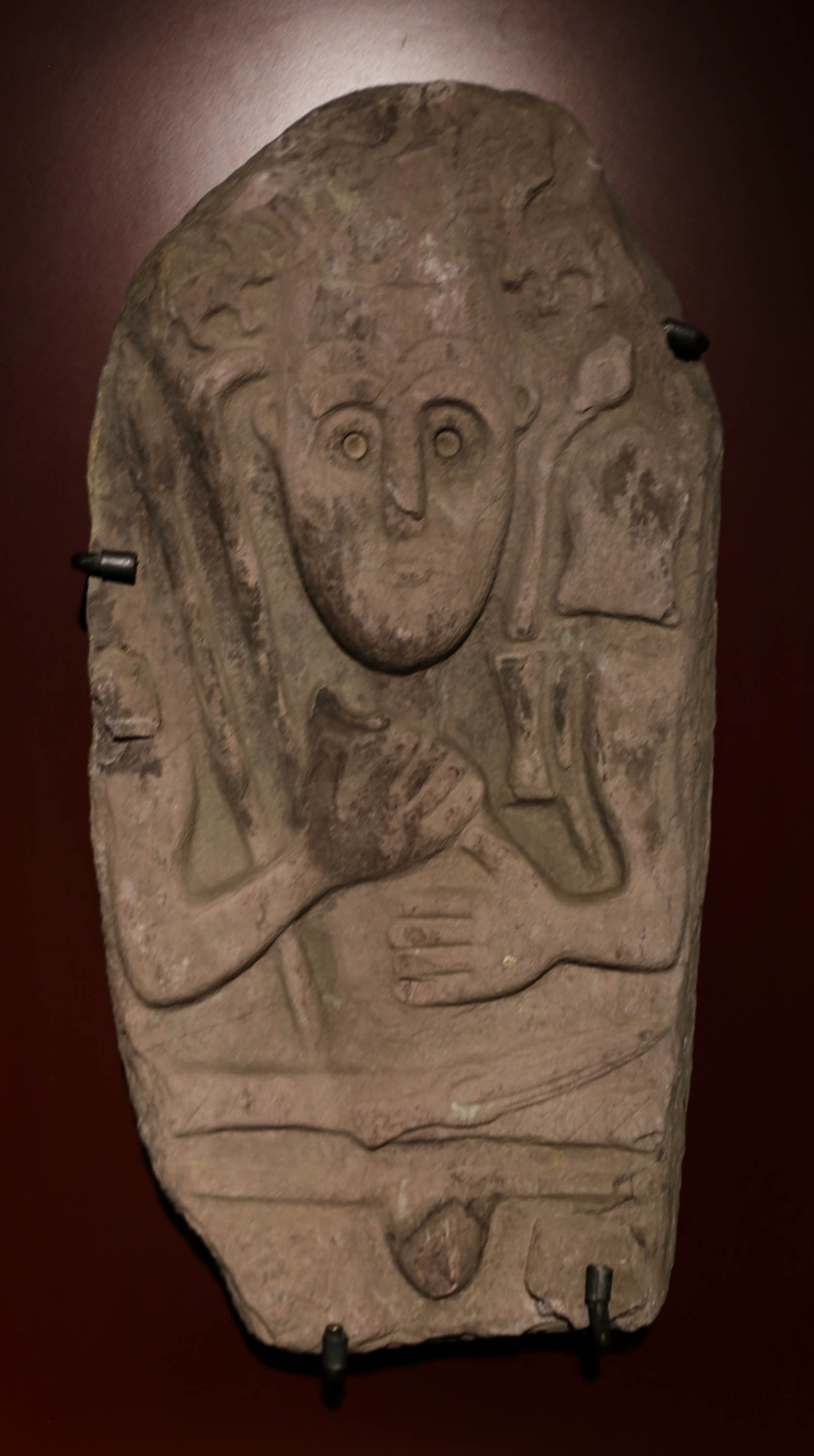
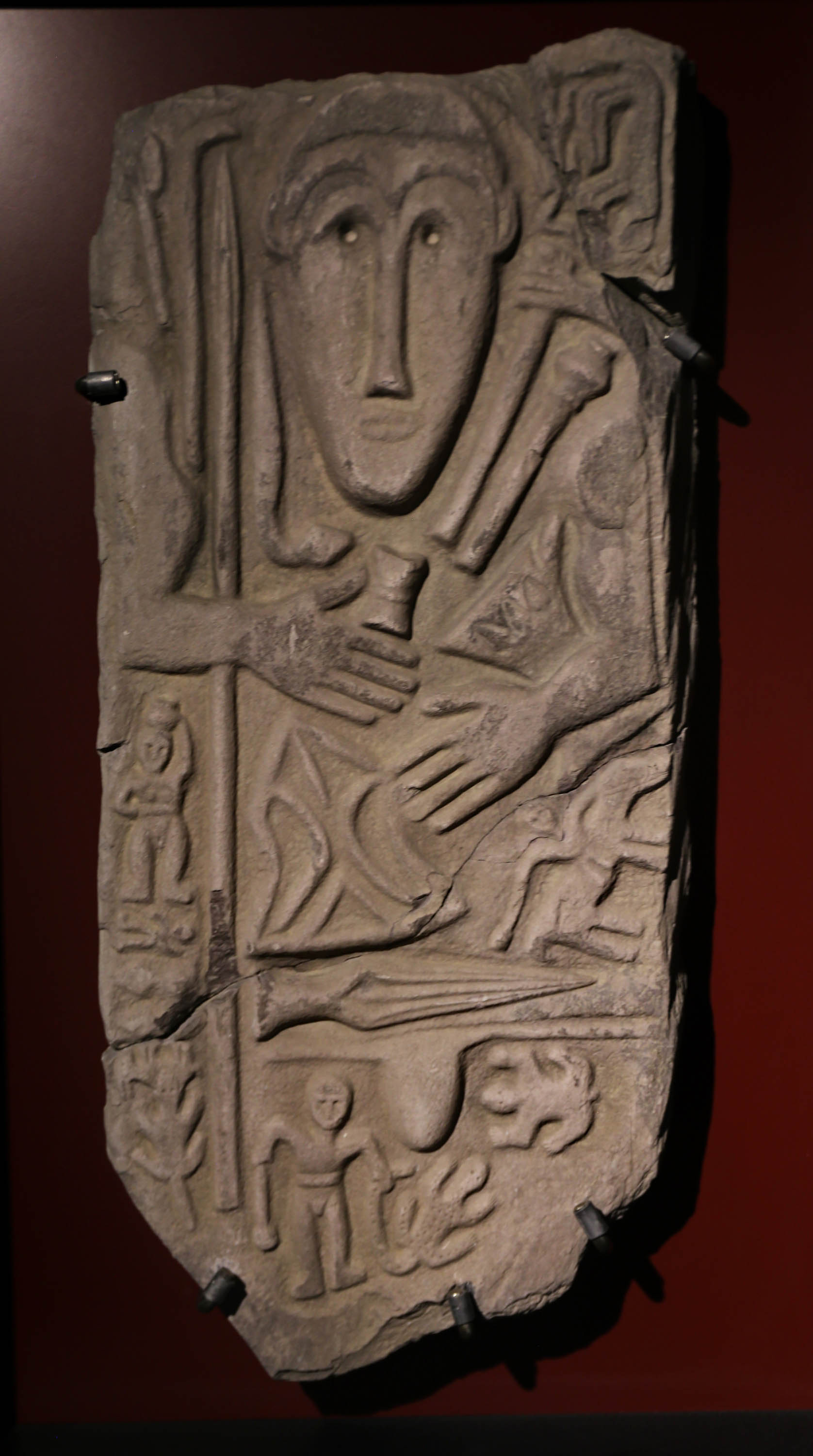
Eleven of the stelae depict warriors. All are shown naked except for a loincloth and a broad belt around the waist, from which a dagger hangs. Most also carry a spear or an axe, while raising a cup or a leather wineskin to their lips. Small animals bustle around them—mountain goats, hunting big cats, snakes—and often tiny human figures appear as well, either bound captive to their belts or lying defeated at their feet. These attributes identify the figures as great hunters and mighty warriors.
The belt and dagger became such powerful symbols of manhood that on the earliest and simplest anthropomorphic stelae—even on the Sardinian megaliths of around 3000 BC—these features, alongside the eyes and nose, are what transform a stone into a human figure. The drinking gesture was equally widespread on the stelae of the steppe, including the one from Erzurum. Since these monuments were visited during funerary commemorations, they were depicted performing the role they played on such occasions: drinking or offering libations together with the living.

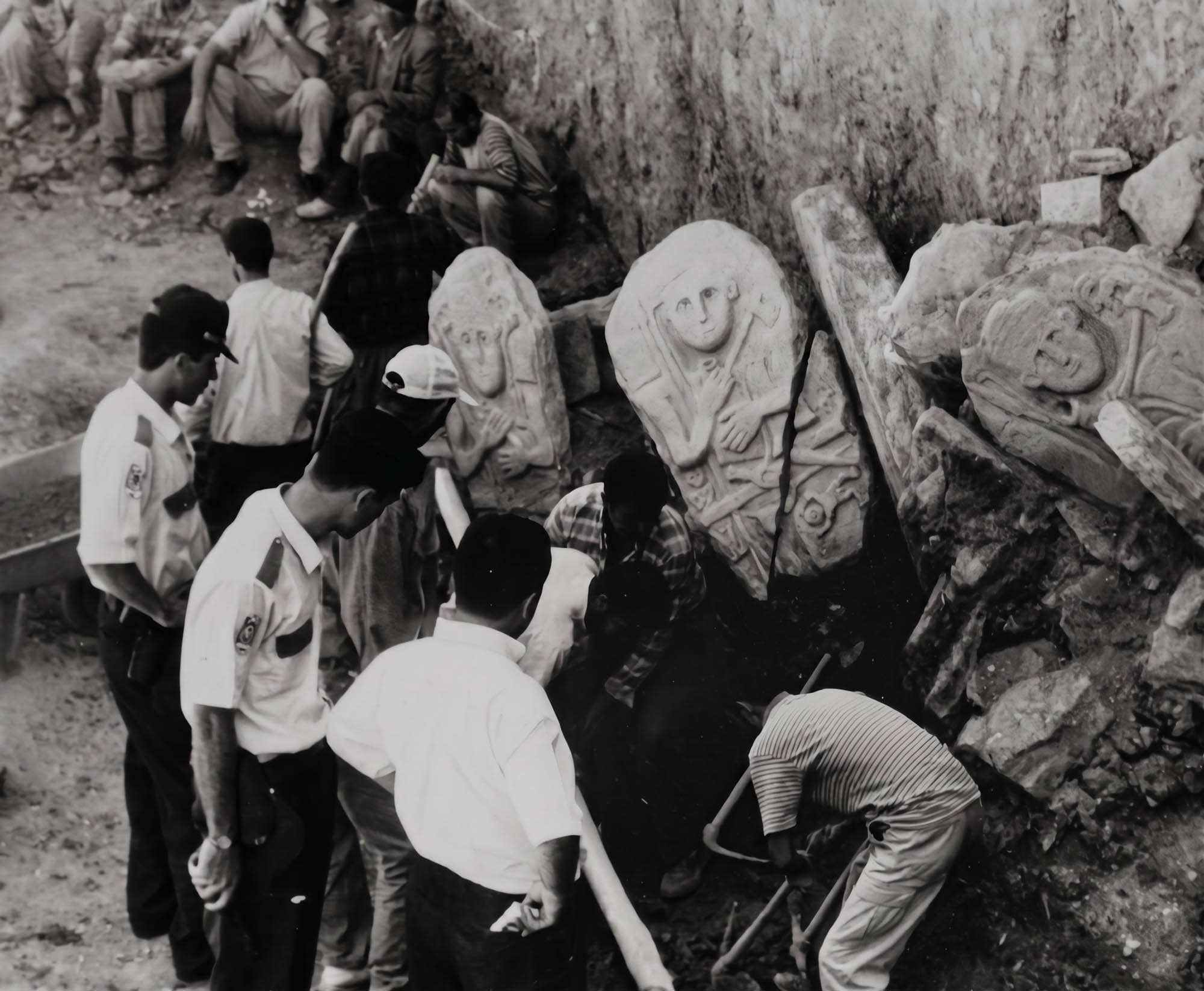
The stelae were discovered in 1998 in Hakkari, in the mountains near the Iranian border. They came to light during repairs to a family house at the foot of the castle hill, standing where they had originally been erected, set on roughly worked bases and facing downhill along the slope.
What people could have raised these monuments? The shape of the weapons points to the Bronze Age, that is, to a period before 1200 BC. The complete absence of Assyrian influence—despite the fact that the Assyrians dominated much of the region at the time—suggests an even earlier date, perhaps somewhere between 1500 and 1300 BC.
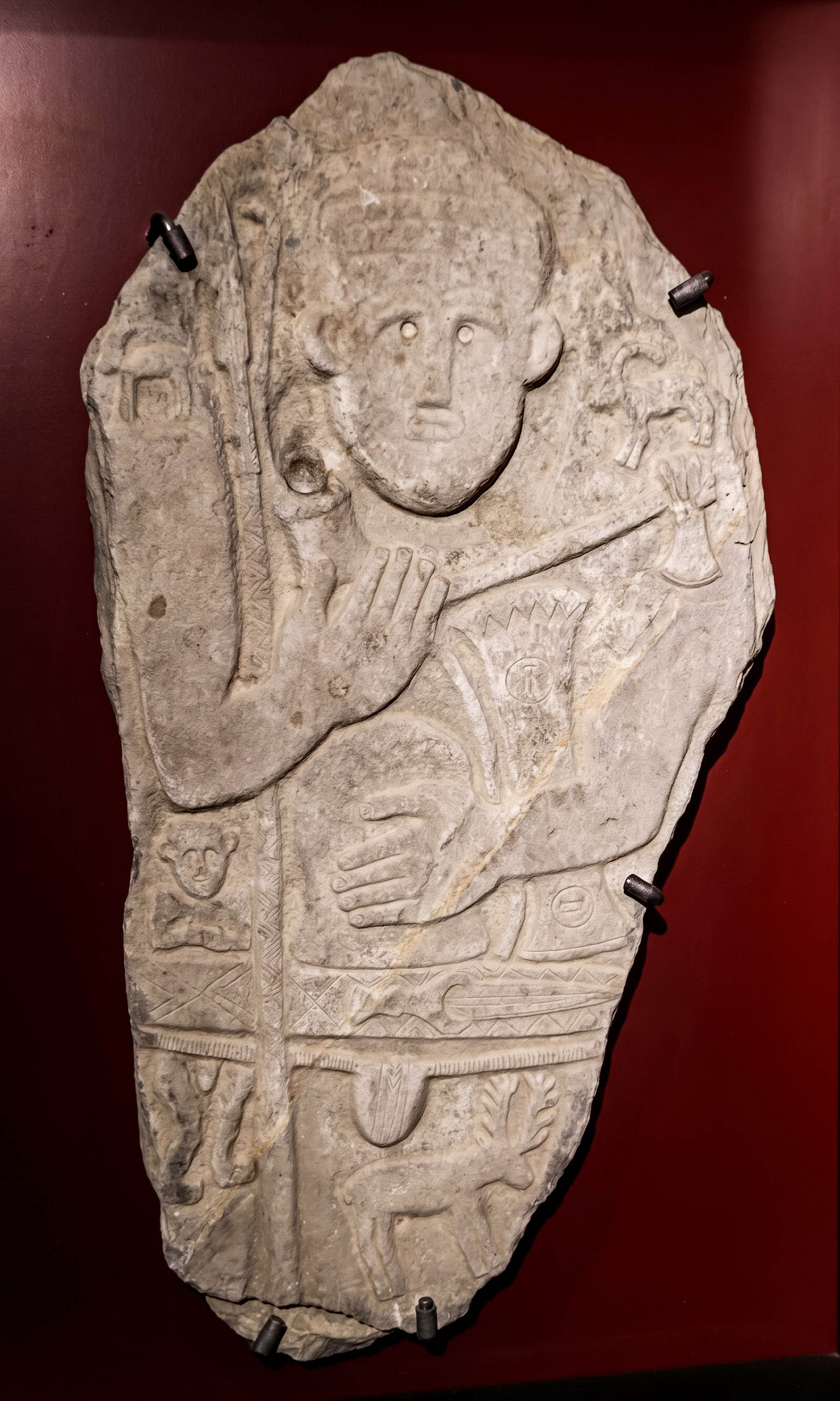
The world evoked by these images—the clothing, the weapons, the animals, and the occasional yurt-like tent appearing here and there—points to a nomadic way of life.
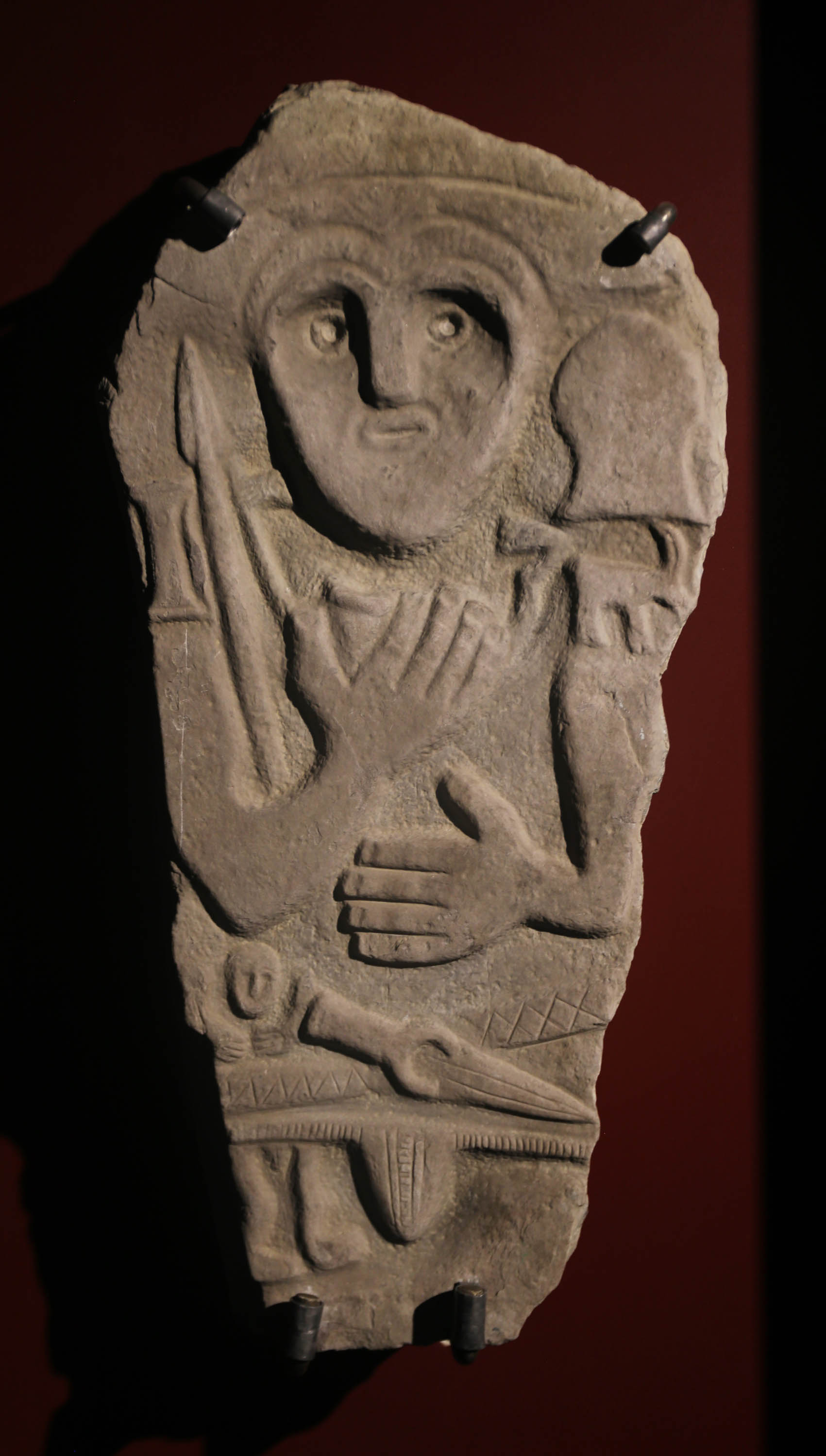
The form of the stelae likewise suggests a nomadic, steppe origin. Like the stone warrior of Erzurum, they are without local parallels in Eastern Anatolia. Yet they closely resemble the stelae erected over the graves of tribal leaders by the inhabitants of the eastern European—and later Inner Asian—steppes: first the peoples of the kurgans and later the Scythians.

Researchers agree that these stelae were erected by a people who had come down from the steppe into Eastern Anatolia during the 2nd millennium BC, and who managed to preserve their archaic way of life for many centuries in the extraordinarily inaccessible mountains of Hakkari.
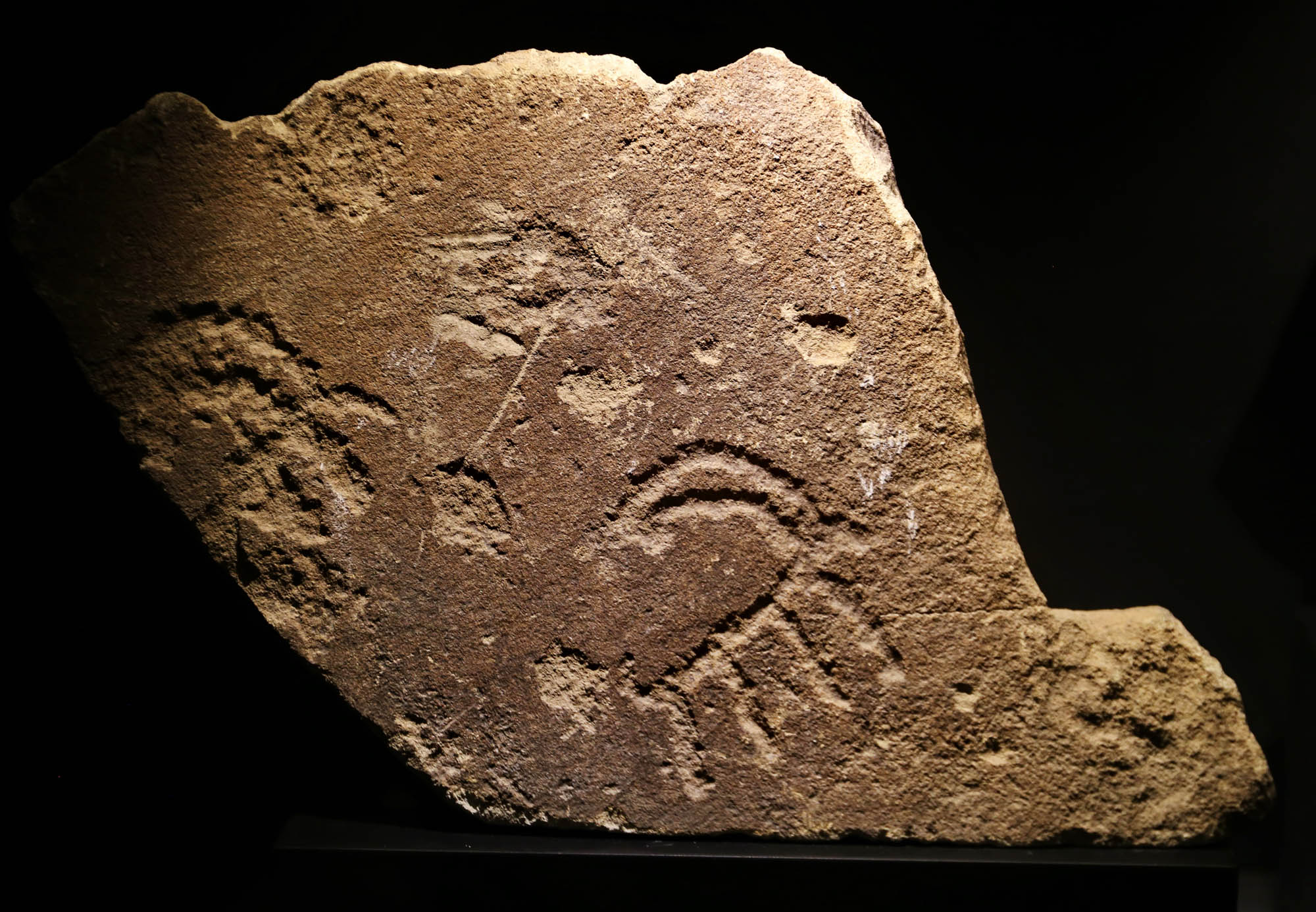
The adaptation of that lifestyle to local conditions is suggested by a motif that could not yet have appeared on steppe stelae: the great-horned wild mountain goat. These animals were the noblest quarry of hunters in the Caucasian, Iranian, and Eastern Anatolian mountains, but they were also sacred creatures dwelling closest to the heavens, companions of spirits and shamans. For this reason, too, they became one of the most beloved motifs of local art. So much so that some scholars have proposed that the people who erected the Hakkari stelae may also have created the rock carvings of the nearby Trişin Mountains, where wild goats likewise dominate the imagery. But there is a gap of seven to eight thousand years between the rock carvings and the stelae. It is therefore more likely that what we see here is the adoption of local lifeways, beliefs, and artistic motifs.
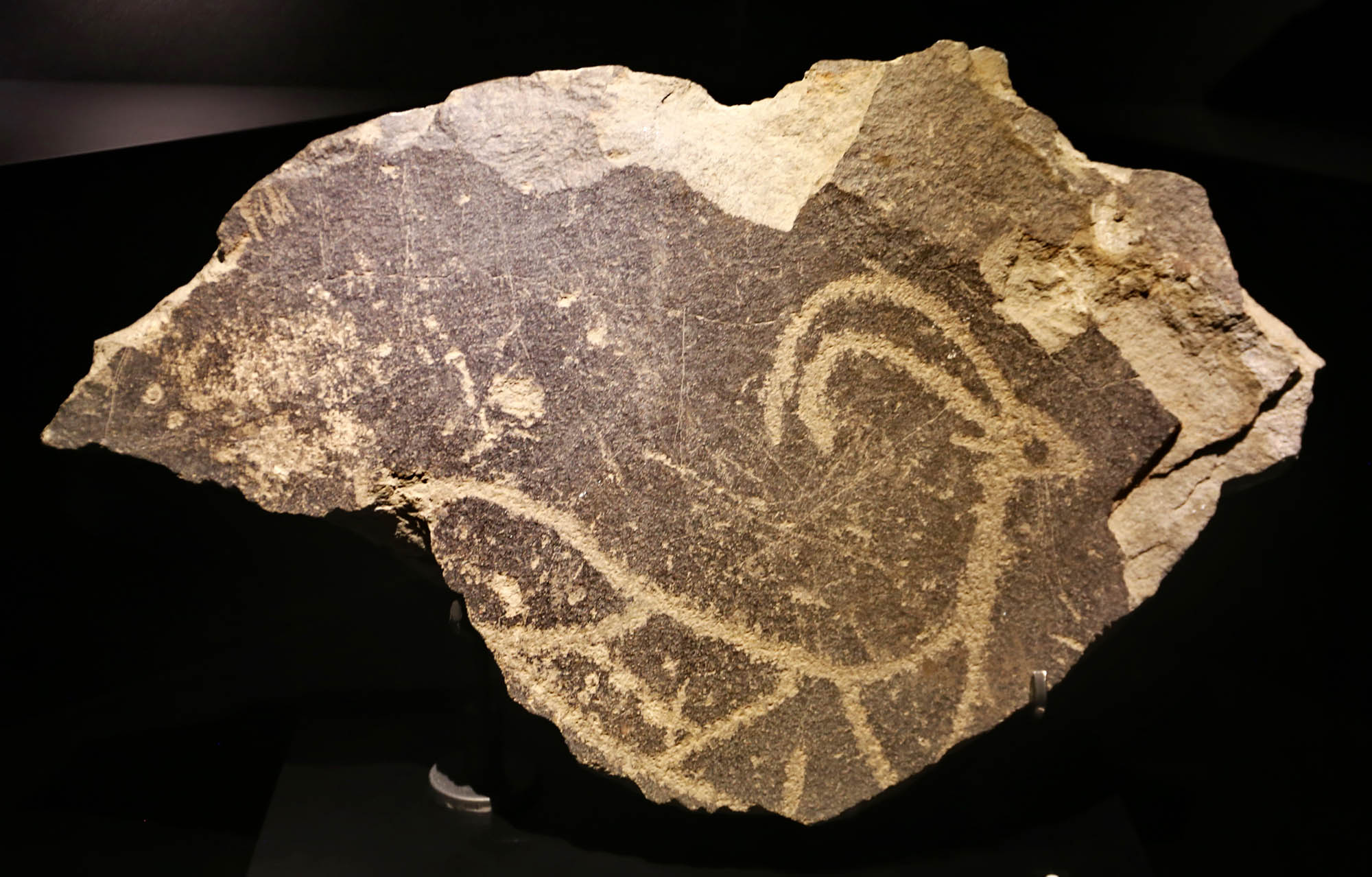 Two copies of the Trişin rock carvings in the Van Museum, and an inscribed rock at the original site, the latter from utmutsiraci’s Instagram

Another characteristic spiritual animal of Eastern Anatolian culture is the leopard, which already appears in the imagery of Karahantepe in the 12th millennium BC and of Çatalhöyük in the 7th millennium BC. The leopard was not only the region’s most powerful predator and therefore a symbol of rulership, but also a shape-shifting being, whose form a shaman could assume, a guide of souls between the earthly and otherworldly realms. On the Hakkari stelae it is usually depicted in a schematic bird’s-eye view, almost like a giant lizard.
The first written references to the region come from Assyrian sources of the 10th century BC, which mention a kingdom called Hubushkia in the mountains of Hakkari. The kingdom functioned as a buffer state between Urartu and Assyria, and Assyrian armies repeatedly crossed its territory, demanding tribute in the form of its renowned horses and locally mined metals (copper and bronze). The annals of Shalmaneser III (858–824 BC) record that a king named Kakia refused to pay tribute and fled into the mountains with his people. Rather than pursue them, the Assyrians began destroying their villages in the valleys, whereupon the king descended and promised to resume payment. During a later Assyrian campaign, the reigning king Data came out to meet the army in advance and offered contributions in the form of horses and weapons.
The tribute paid by the Hubushkian delegation is said to be depicted on the bronze reliefs of the Balawat Gates, created during the reign of Shalmaneser III. Since these reliefs are today scattered among five different museums, and I have not been able to find a complete reproduction of them, I cannot identify which scenes are supposed to represent the event. If anyone knows, please tell me, and I will gladly add it here.
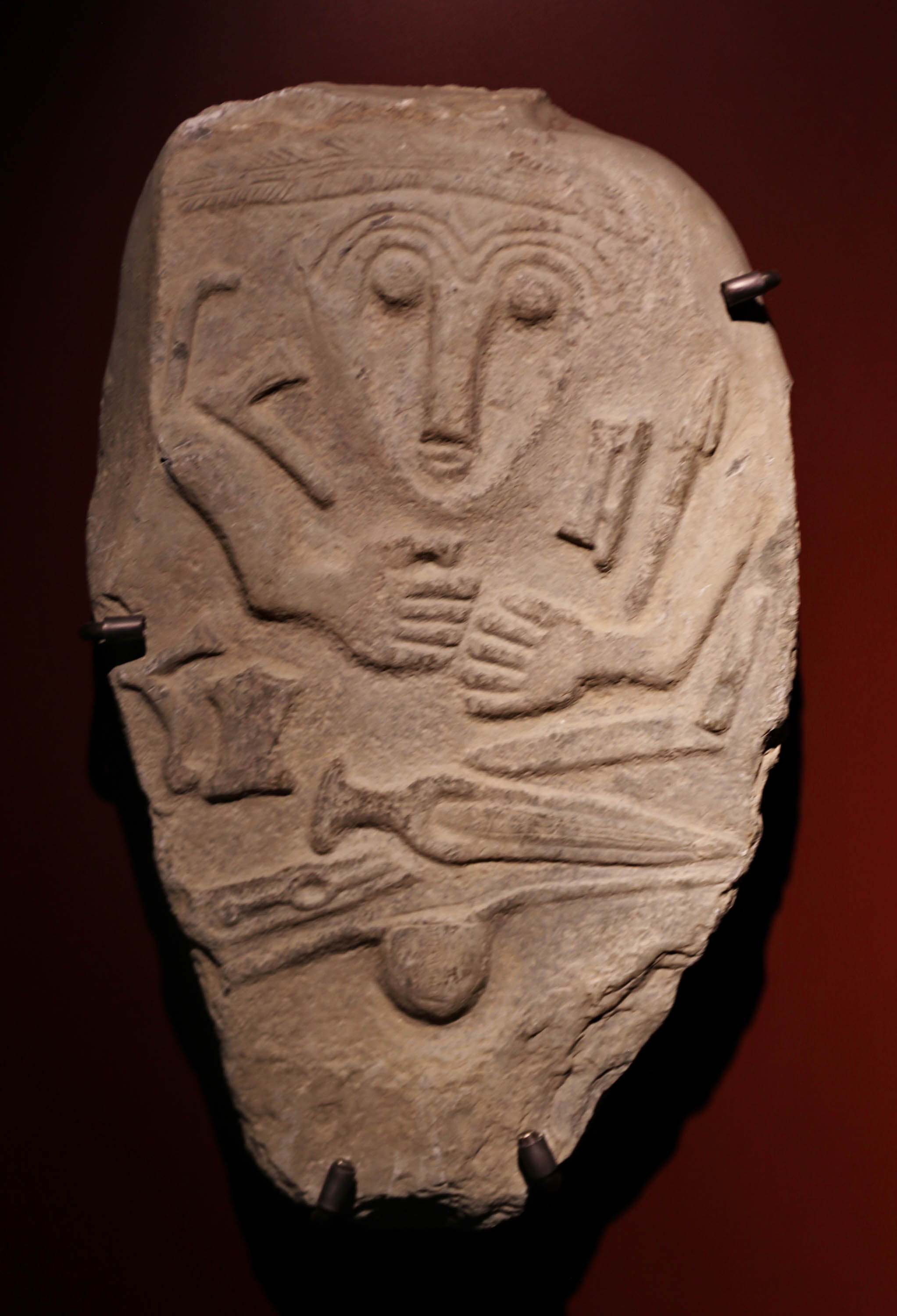
The Hakkari stelae were almost certainly erected by the same nomadic peoples who later organized the kingdom of Hubushkia. Their original location on the slope below Hakkari Castle strongly suggests as much, since Assyrian sources also identify the hilltop fortress as the kingdom’s center. The kingdom of the 10th–9th centuries BC thus preserved the memory of its ancestors and of the royal stelae they had raised, continuing a tradition that had been brought from the steppe.
The stelae also followed steppe traditions in another respect: they depicted not only the ancestor himself but also captured or defeated enemies. Later Mongol and Turkic funerary monuments expressed this idea through balbals, statues of the vanquished erected around the ancestor’s image. On the Hakkari stelae, however, the defeated are still shown directly beside the ancestor, only on a smaller scale, tied to his belt or lying at his feet. A particularly remarkable example is the stele on which the small figure serves food and drink to the ancestor. Scholars disagree about the meaning: some believe it depicts a defeated enemy serving him, while others see a servant providing food and drink during a funerary or commemorative ceremony.

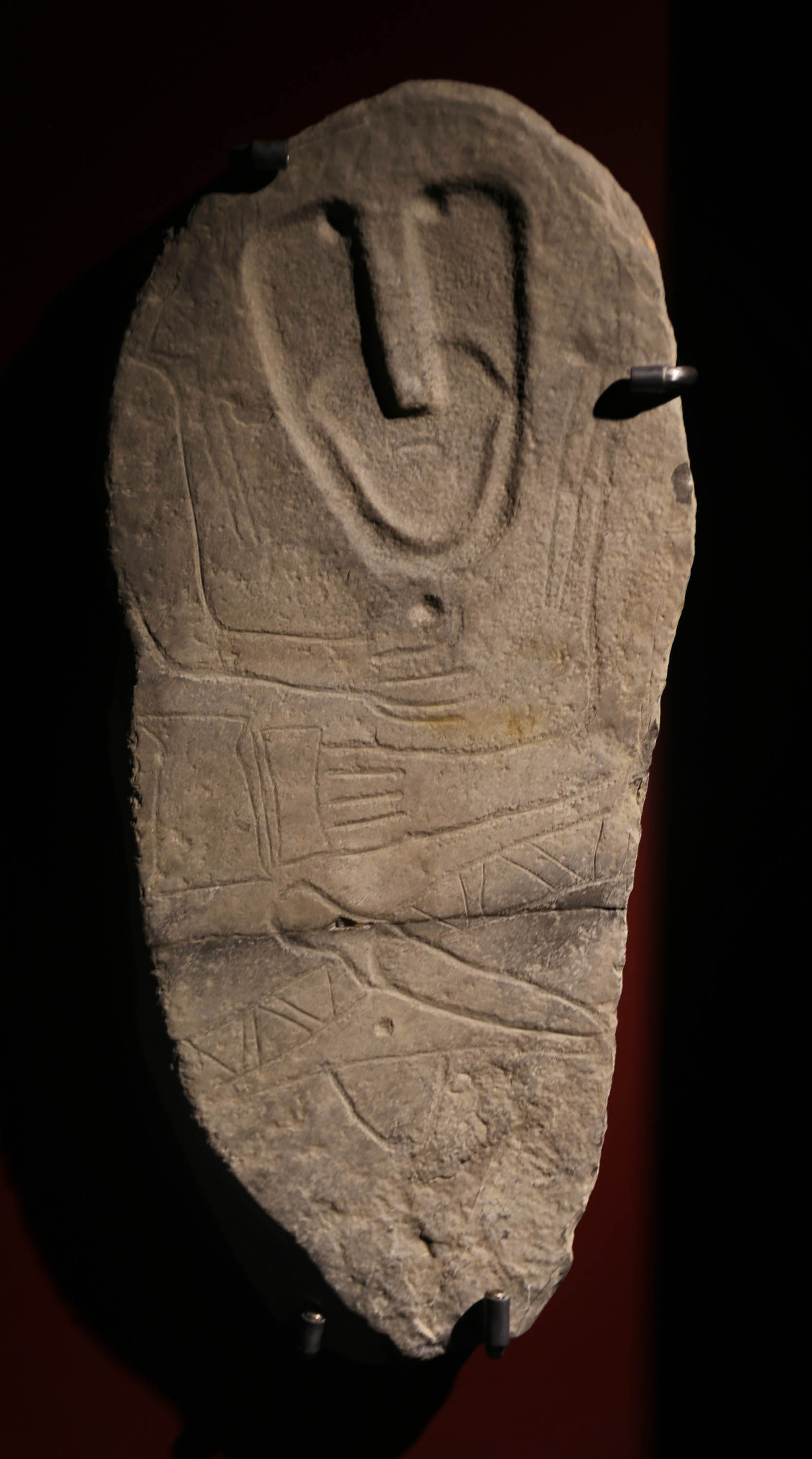
The stelae were clearly not erected all at once but over the course of several centuries, and their style evolved accordingly. The richly carved relief work inherited from the steppe gradually became more schematic and graphic.
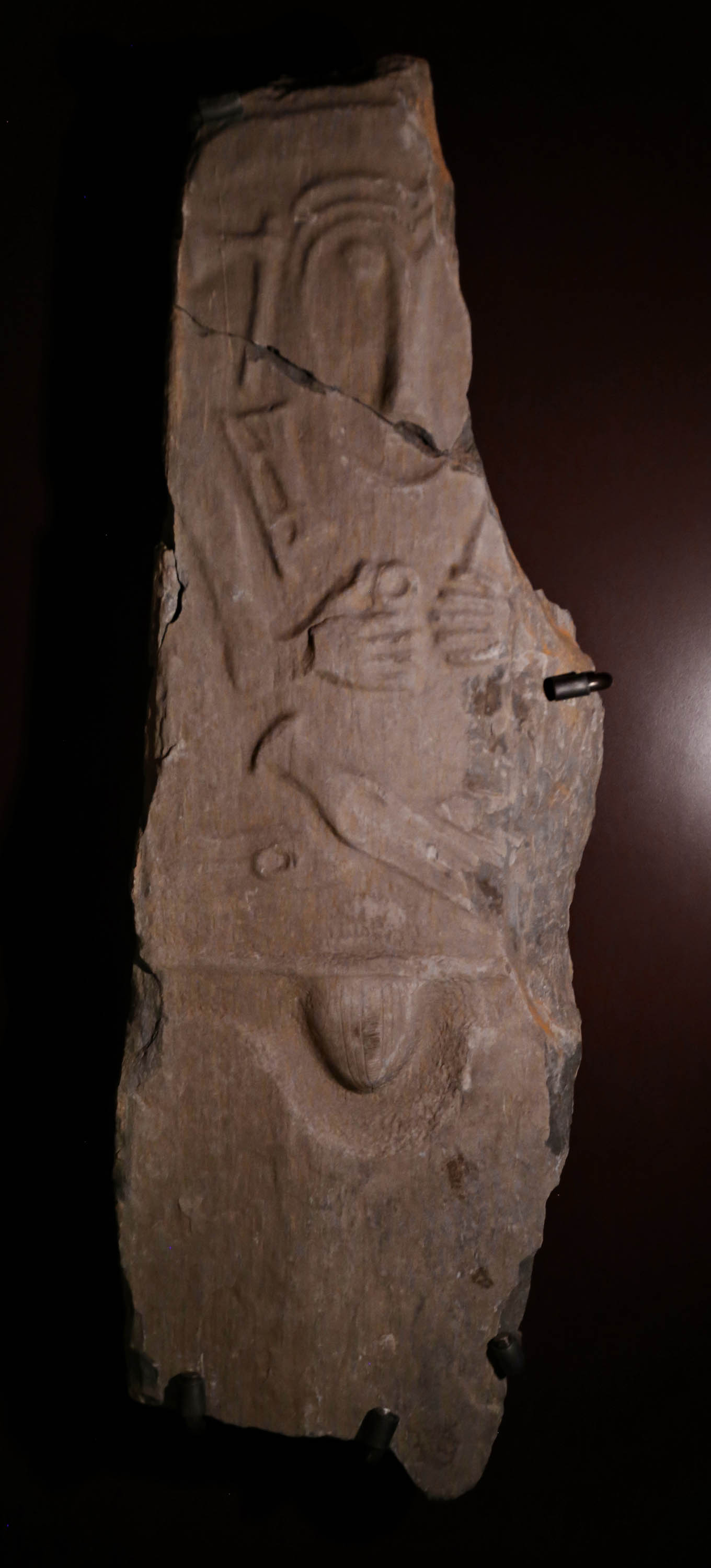
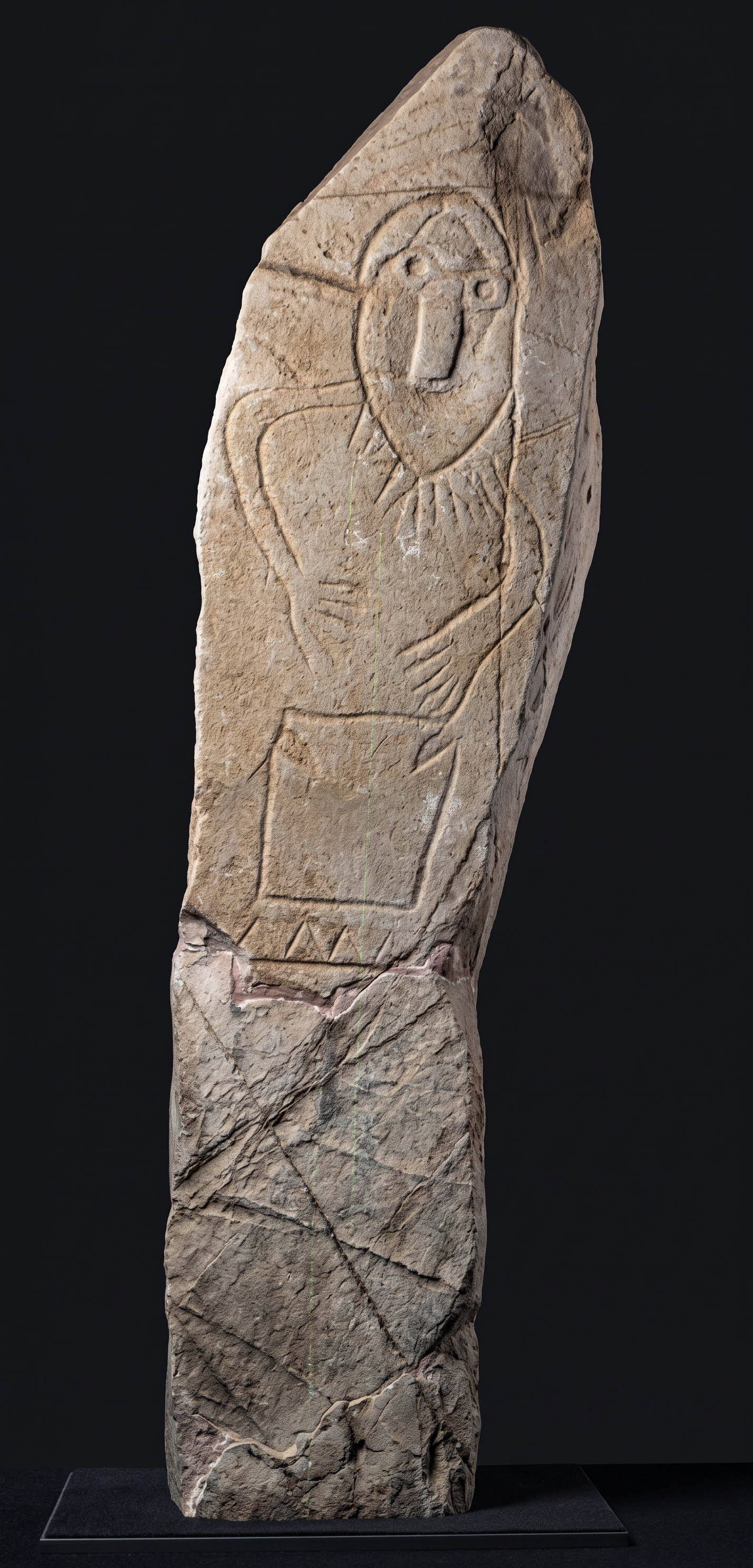
This is especially evident in the final two stelae, which depict women. They completely lack the attributes of male warriors: weapons, sacrificial scenes, animals, and drinking vessels. Their identity is carried solely by the human figure itself. These women must have been highly important leaders within the tribe to receive their own stelae alongside those of the chieftains. Interestingly, one of the female stelae is the largest of all, standing nearly three meters high, while most of the others are only about one meter tall.

When Assyria eventually conquered Hubushkia, the ruling dynasty lost its significance, and so did the stelae. They were not deliberately destroyed, but time accomplished what conquerors did not: they toppled on their own and were gradually buried beneath the earth. As for the people of Hubushkia, they were eventually absorbed into the Kurdish principality of Hakkari.



Add comment