

The very name of the Karanlık, the “Dark Church,” already shows how thoroughly traditions were lost in Cappadocia after the population exchange of 1923. A Greek Christian would never name a church after darkness, the very opposite of Light. The Muslim newcomers from the Balkans simply noticed that this relatively large church had no windows — and therefore it was dark.
When the stories of a region vanish to such an extent that new settlers have to invent fresh ones out of thin air, it is almost as great a catastrophe as the destruction of historical monuments themselves. For what disappears is precisely the tradition that once made those monuments historical and monuments. This is exactly what happened in Cappadocia: with the disappearance of the original population, thousands of cave churches, monasteries, medieval and Ottoman merchant houses — the entire cultural landscape — fell silent and in many respects became almost impossible to interpret.
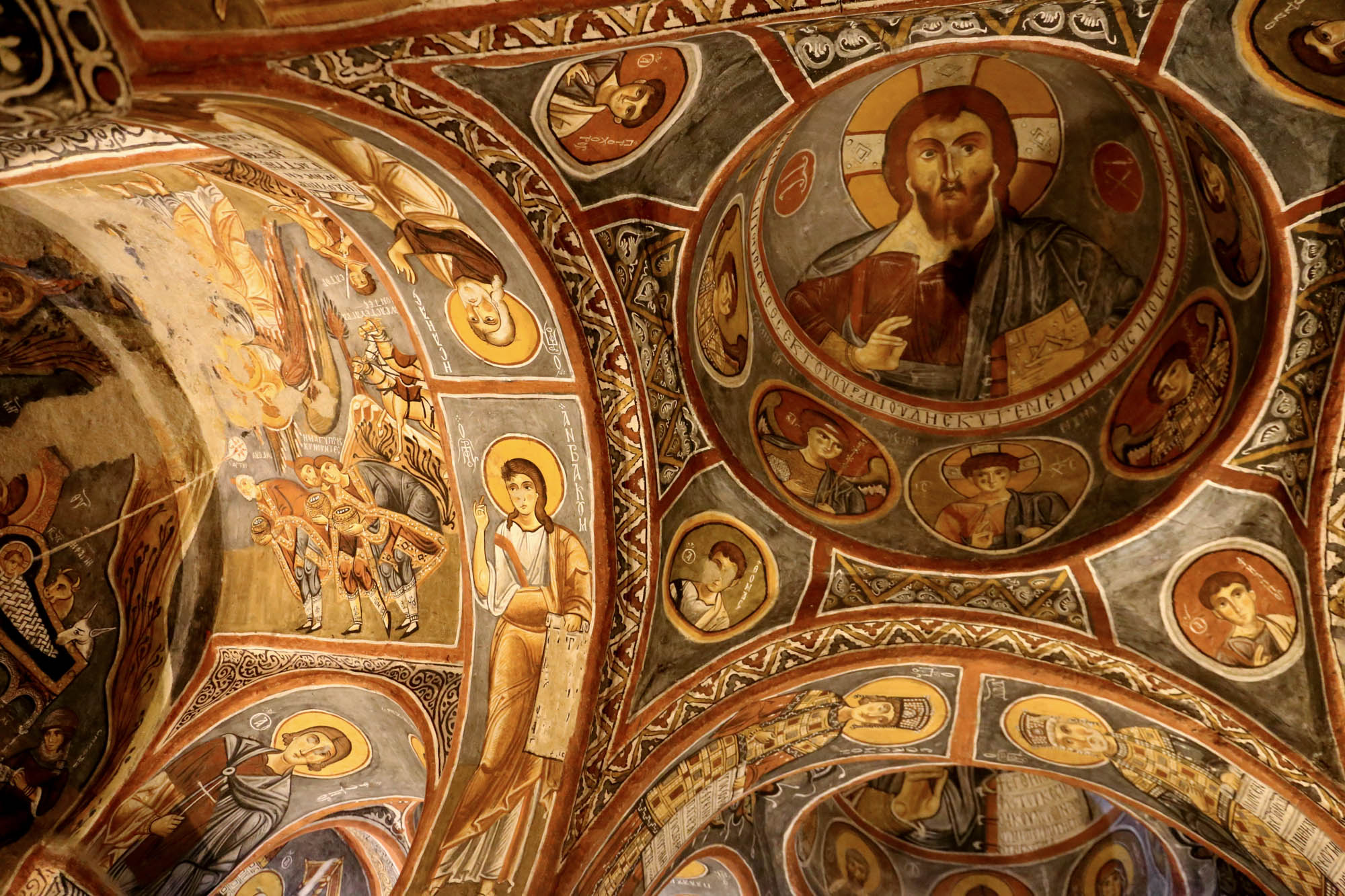
Even so, the “Dark Church,” despite the lack of stories attached to it, remains artistically the most outstanding piece of the Göreme church complex. Its entire wall surface, its domes, and the inner faces of the arches supporting them are covered with frescoes of exceptionally high quality. These were painted around 1050 by a workshop invited from Constantinople, after the soldier-emperors had begun defeating the Arab conquerors from 960 onward, bringing peace and renewed prosperity to Cappadocia. Monastic life revived, and the military aristocracy who gained estates here generously endowed the monasteries.
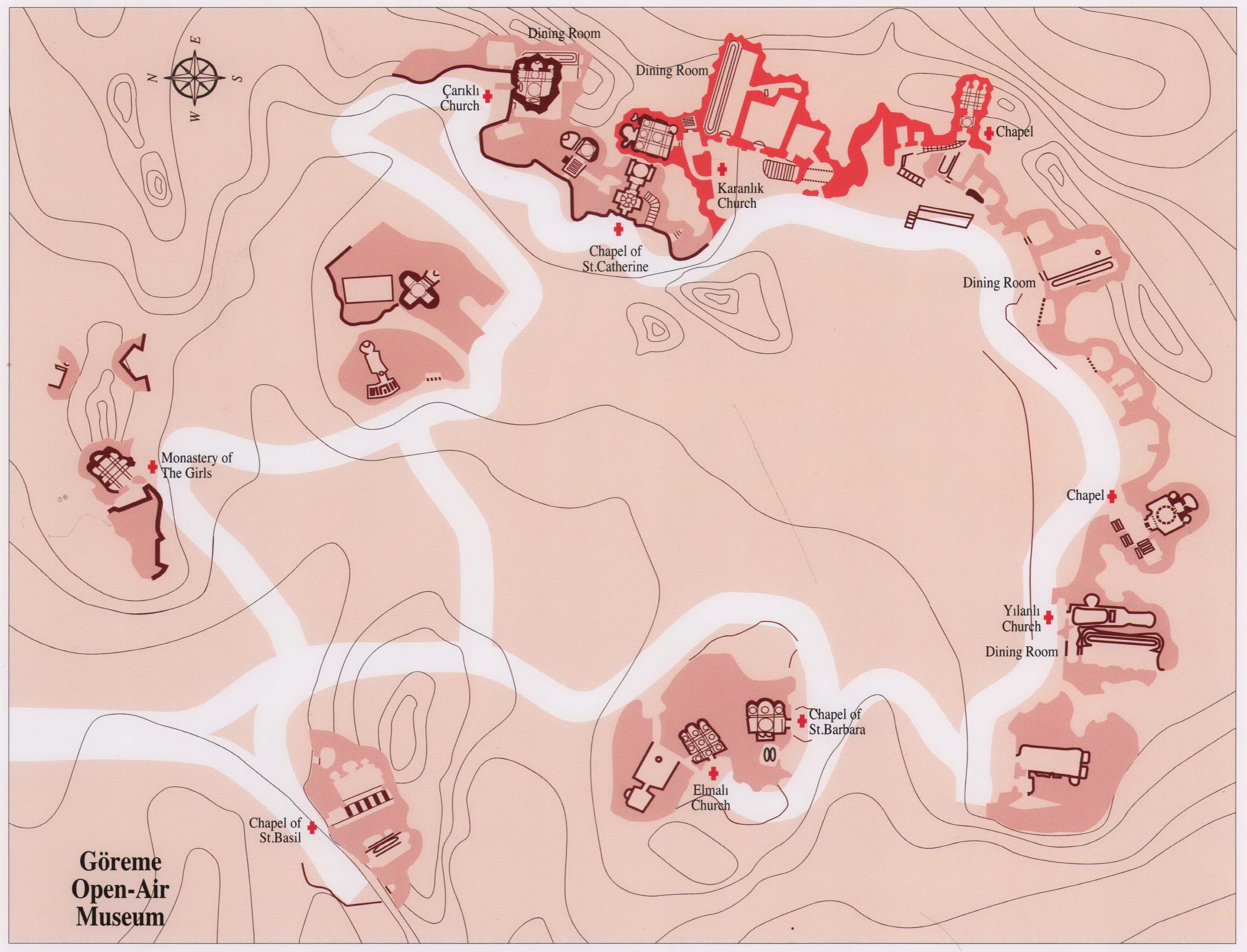
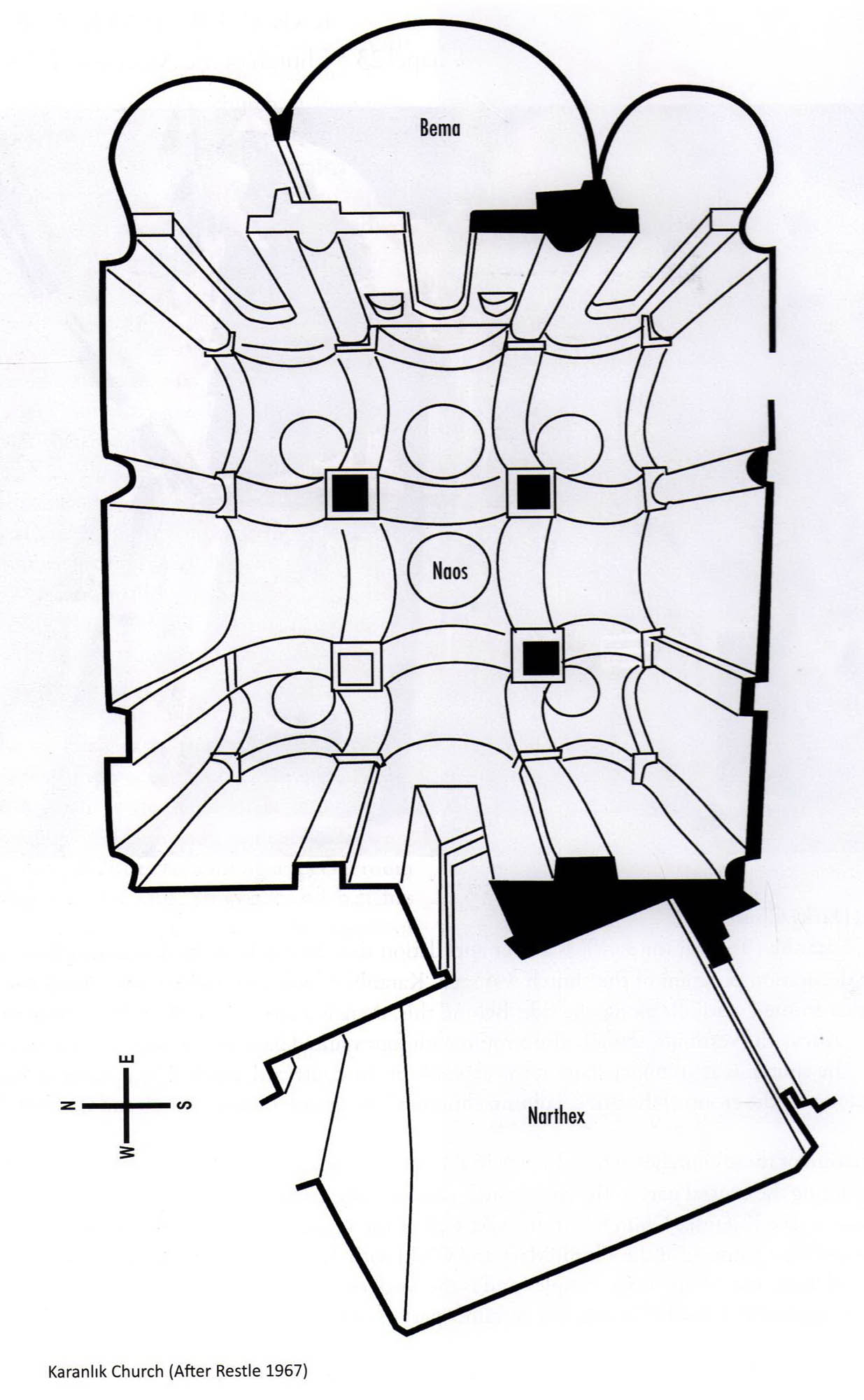
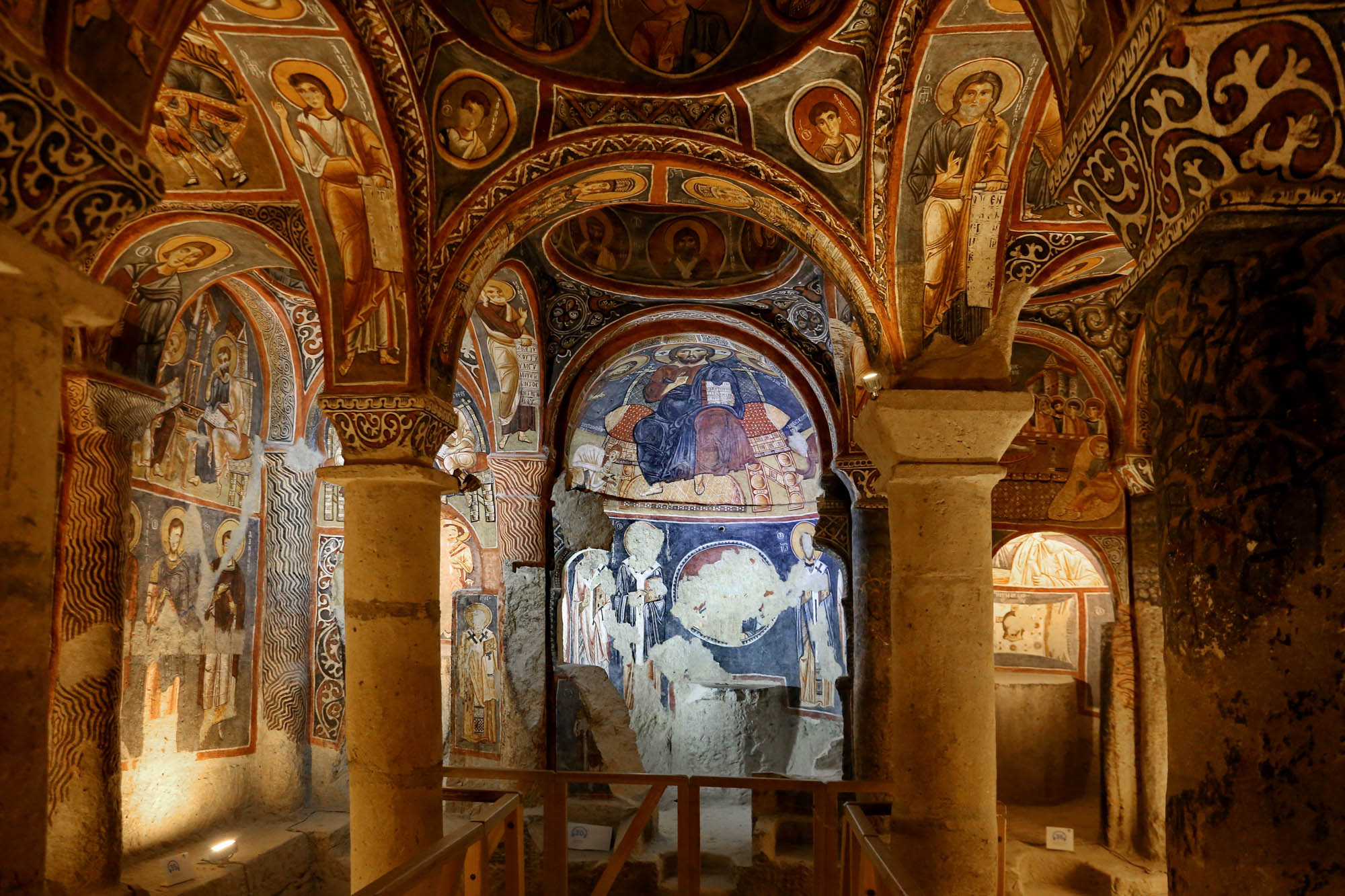
The church belongs to the “four-column” group, together with the Elmali and Çarıklı churches here in Göreme and the Church of St John in nearby Çavuşin. In these buildings, a square ground plan contains four columns supporting a central dome, while the arches springing from the columns divide the ceiling into nine compartments, usually with one or several (often five) small domes within them.
This structure was one of the most important Constantinopolitan church types of the 10th–11th centuries, and the architecture and iconography of the mid-11th-century Cappadocian flowering followed the models of the imperial capital. According to Kostof’s monograph, they may even have been painted by the very same Constantinopolitan workshop, working in a remarkably fresh style that had emerged at the end of the previous century. This style is characterized by rich, saturated colors, powerful dramatic scenes, strongly modeled figures, and refined shading.
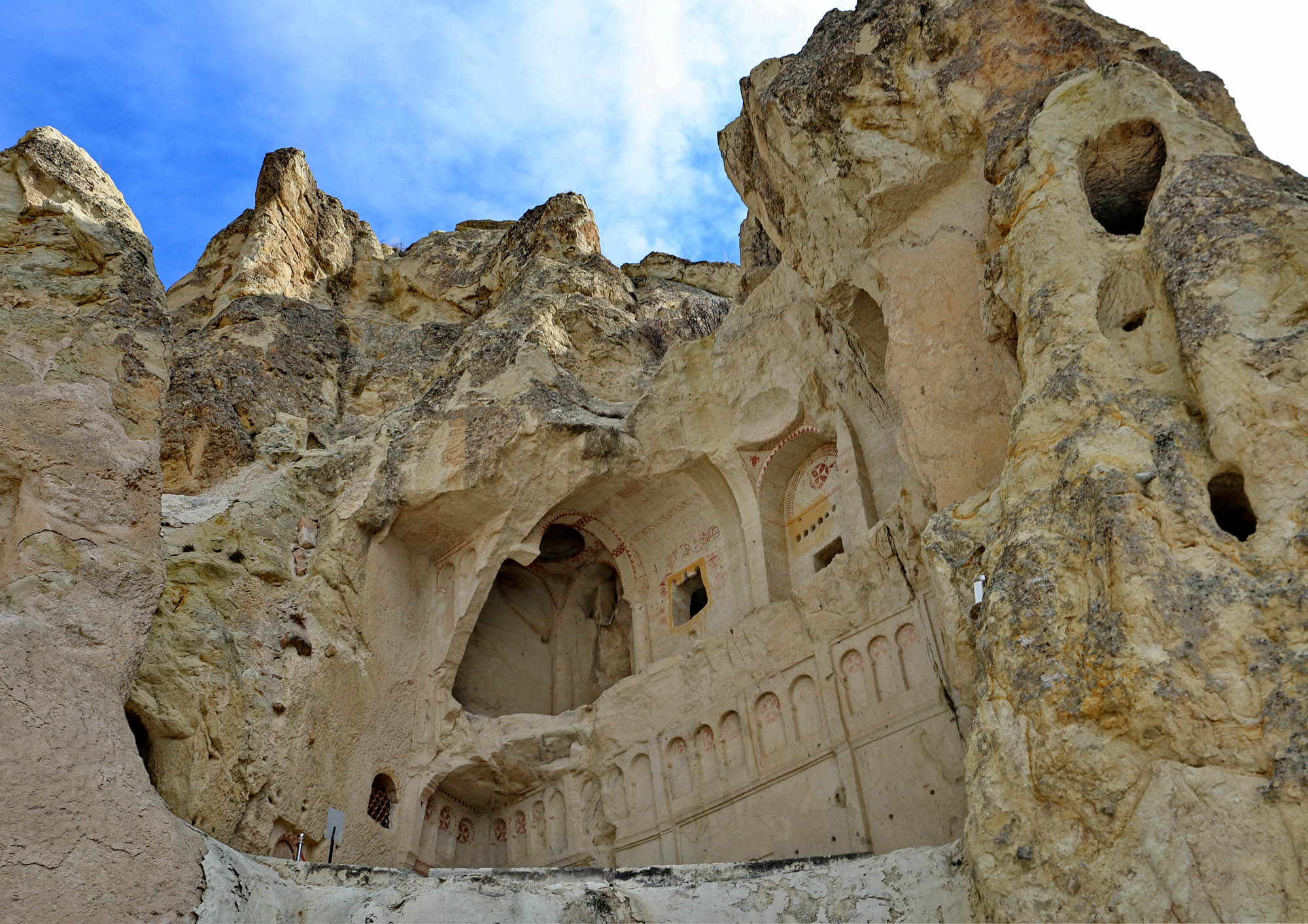
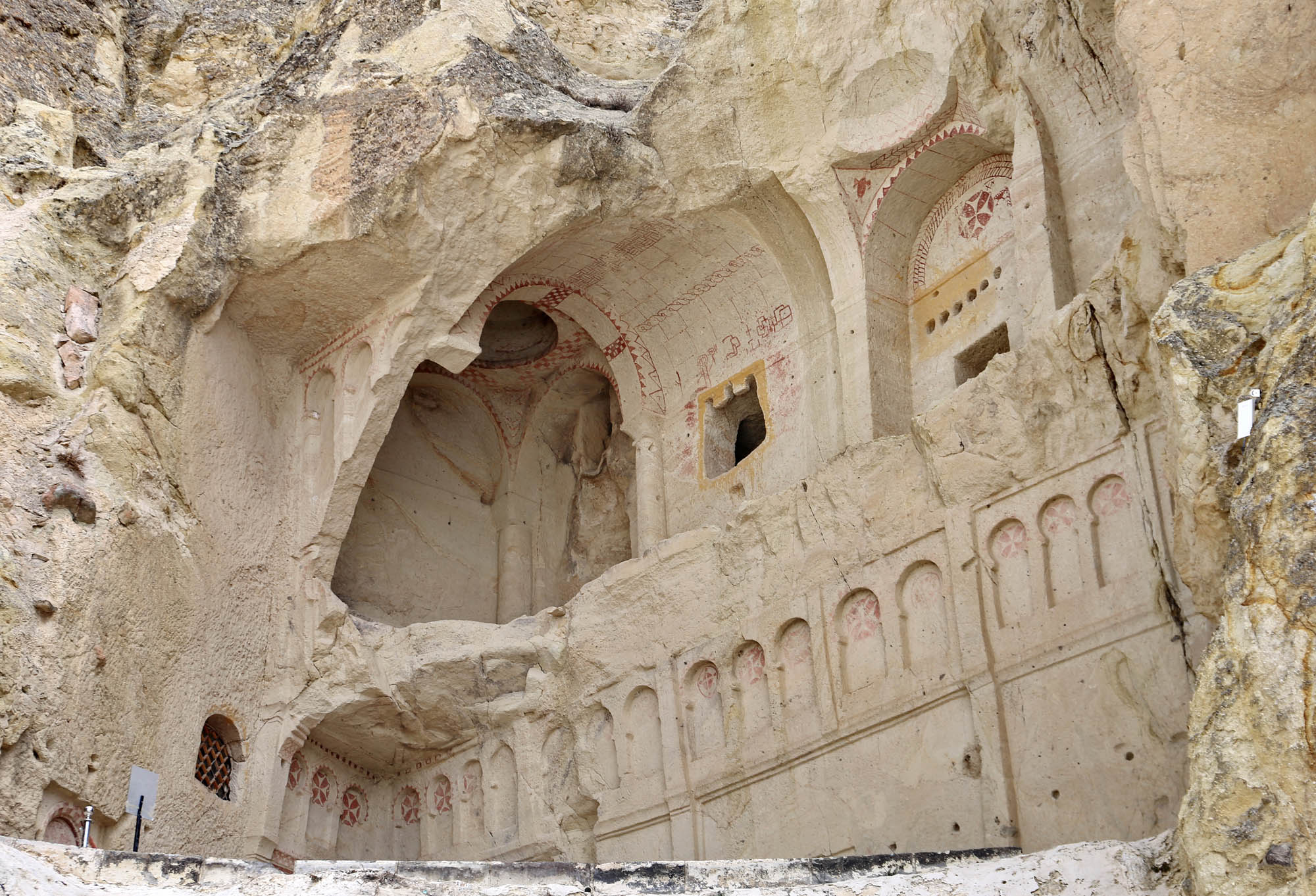
The entrance to the church opens from a spacious courtyard. On the northern side of the courtyard once stood a two-storey church. Its southern wall has collapsed, revealing the blind arcades of the lower church and the narthex and nave of the upper church with their early red linear decoration. In the vestibule of the upper church we encounter again the flower-pecking rooster of the Chapel of St Barbara, which several authors interpret as a symbol of the monk.


The iconography of the frescoes is divided into three groups. In the upper bands of the walls, on the vaults around the dome, and in the narthex, scenes from Christ’s earthly life are displayed. Unlike earlier Cappadocian frescoes, which lined up scenes of Jesus’ life in long sequences reminiscent of early Christian sarcophagi, this selection already shows a hierarchy: the canonical set of the twelve major feasts is beginning to take shape.
In the lower bands of the walls, holy protectors—soldier saints, healing saints, warrior archangels, and the Holy Cross—surround the nave, which was especially relevant in contemporary Cappadocia.
Finally, a third layer represents Christ’s descent, starting from the Pantokrators enthroned in the domes above, foretold by the twelve prophets, and made concrete through the figures of Jesus’ earthly ancestors in the second dome and the side apses, culminating in his earthly birth, where it merges seamlessly with the first group, the scenes of Christ’s earthly life.

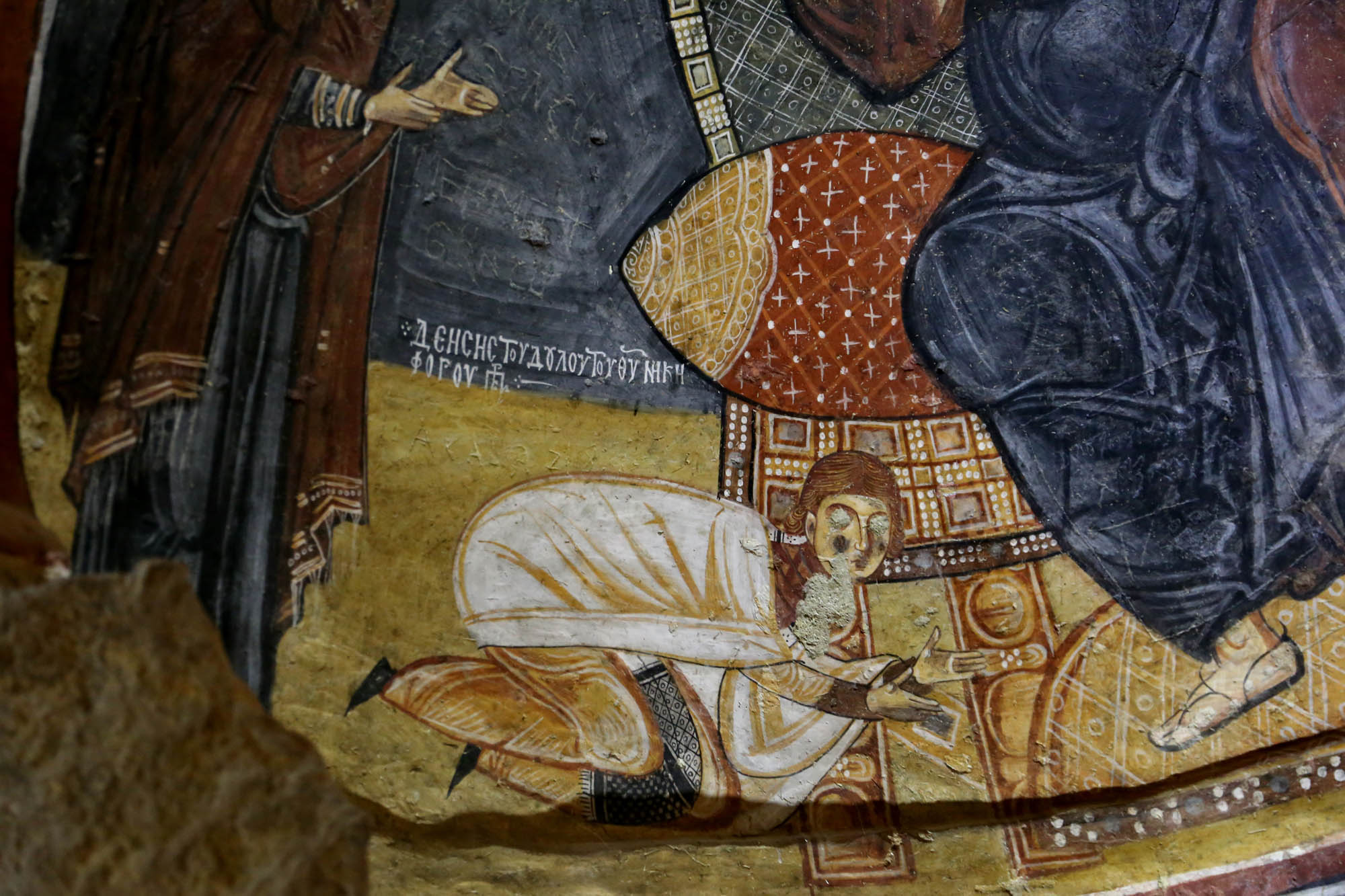
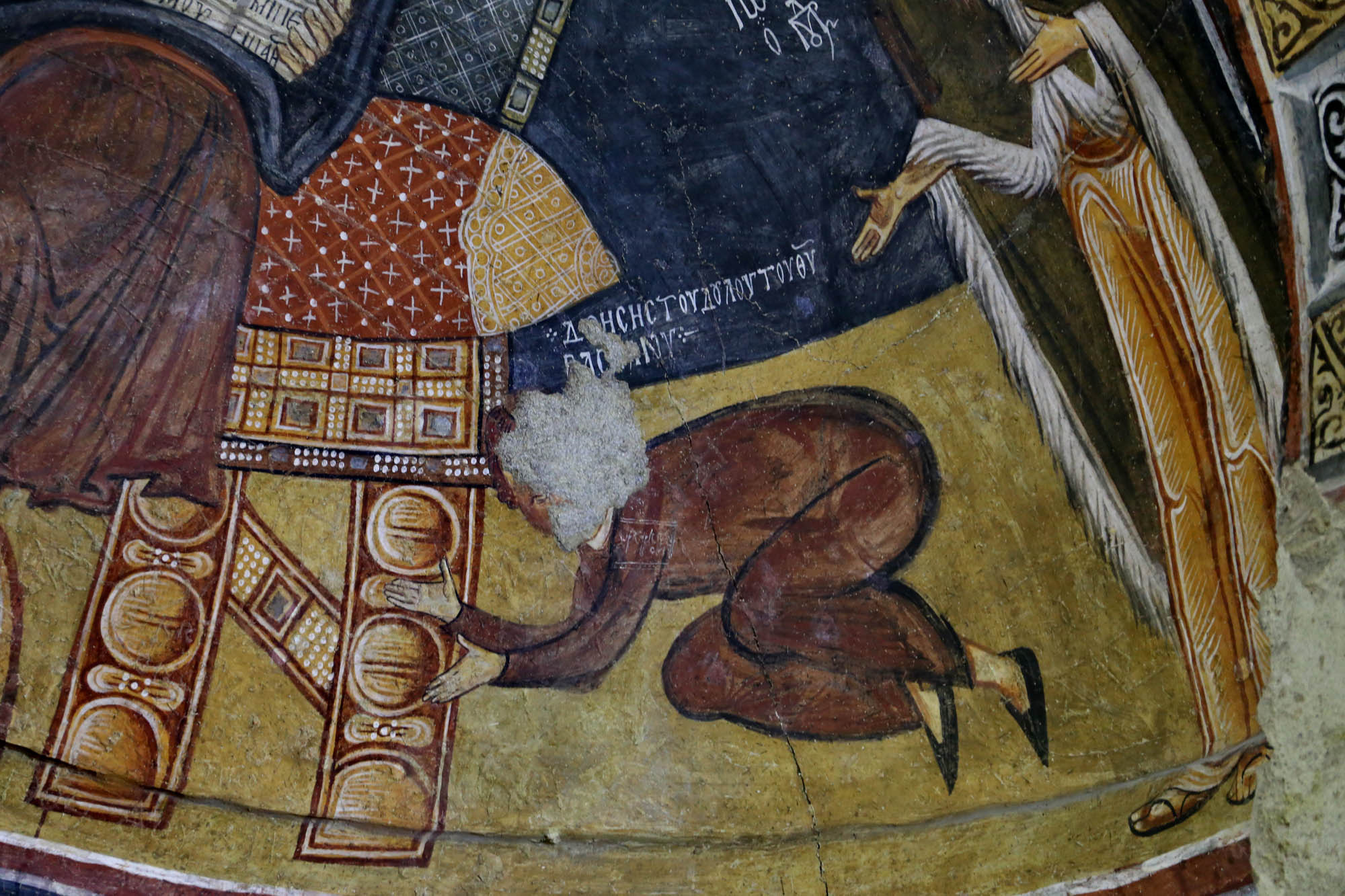
In the main apse at the top sits Christ Pantokrator, flanked on his right and left by the supplicants, the Virgin Mary and John the Baptist, and at his feet – as the inscriptions announce – the donors of the painting, Nikephoros and Bassianos, kneel in a supplicant pose.
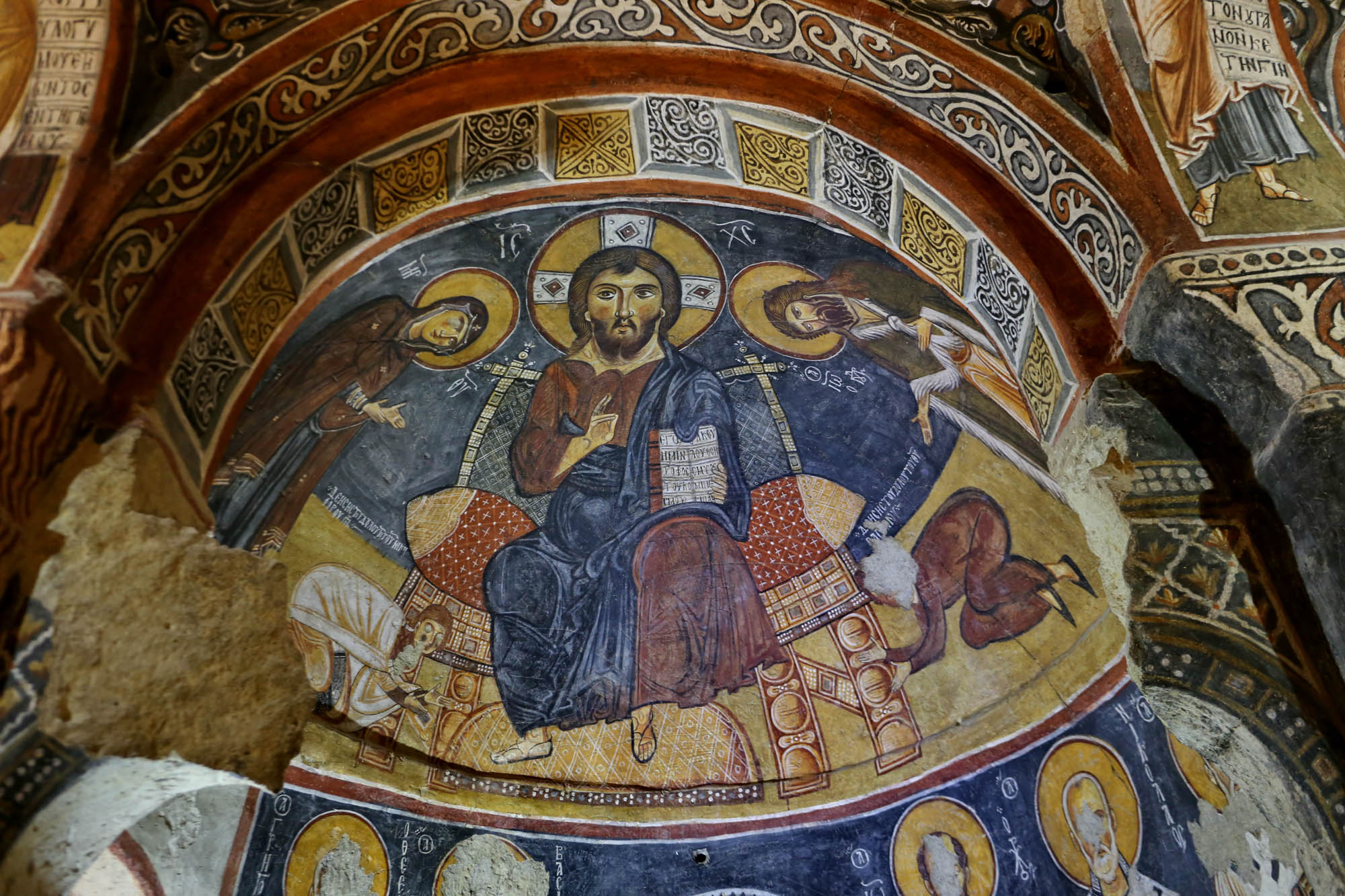
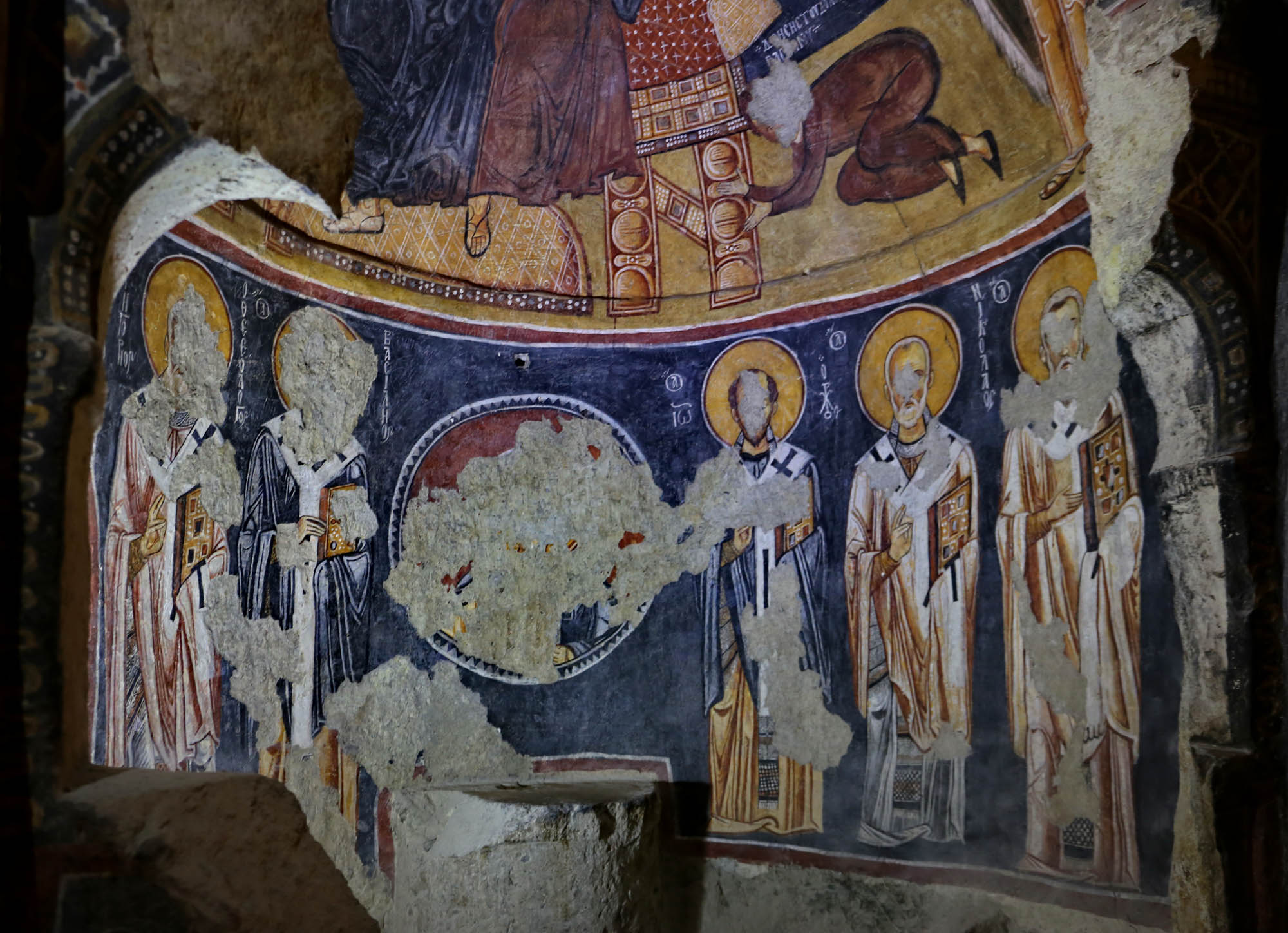
Beneath them are five Church Fathers, including the especially important Cappadocians. Just looking at the deep blue background, painted with lapis lazuli as precious as gold, you can grasp the immense expense the donors put into decorating this church.
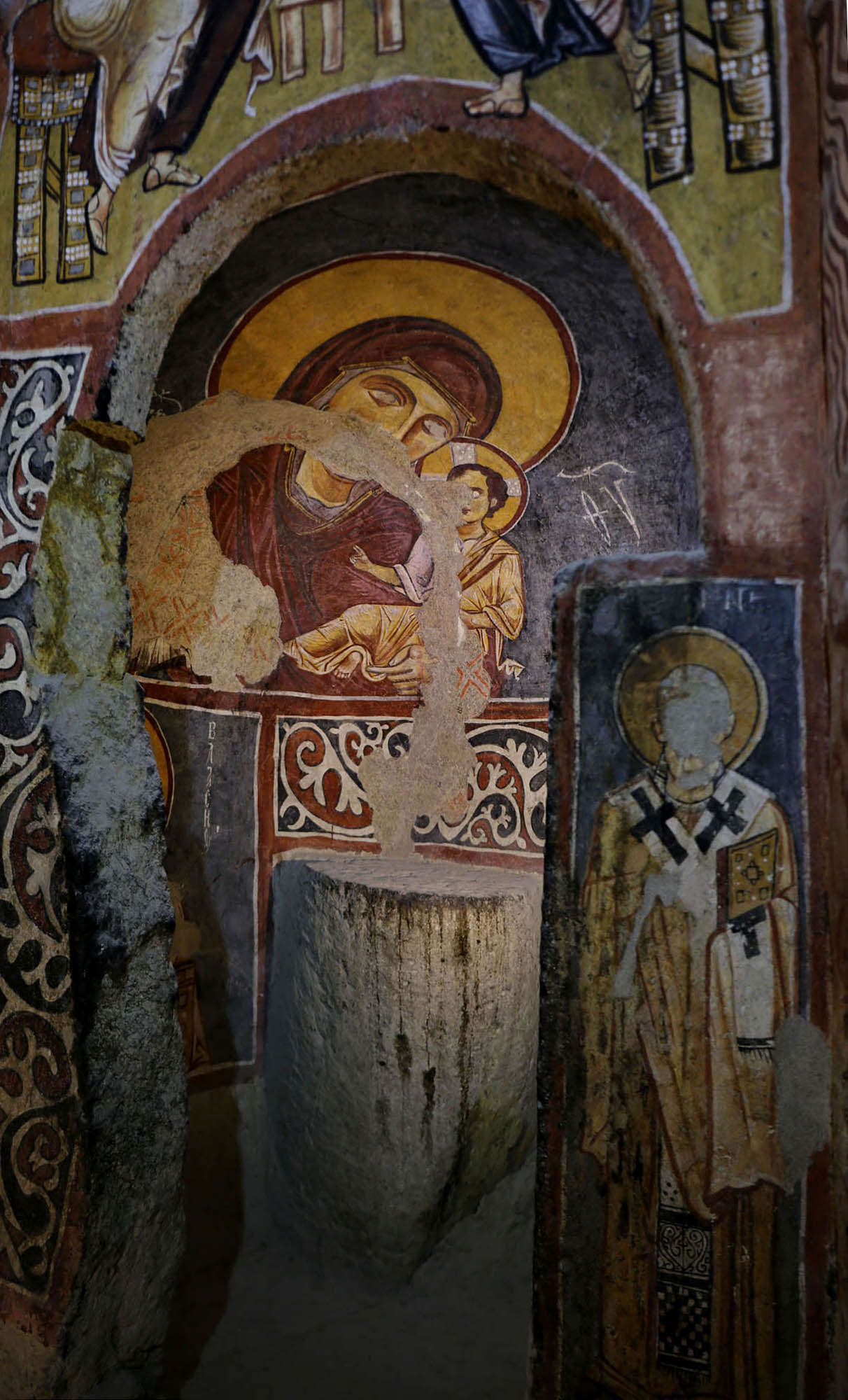
In the left, northern apse, the Virgin Mary sits with the Child, and on the outer lunette of the apse and along the nave walls are the four Evangelists.
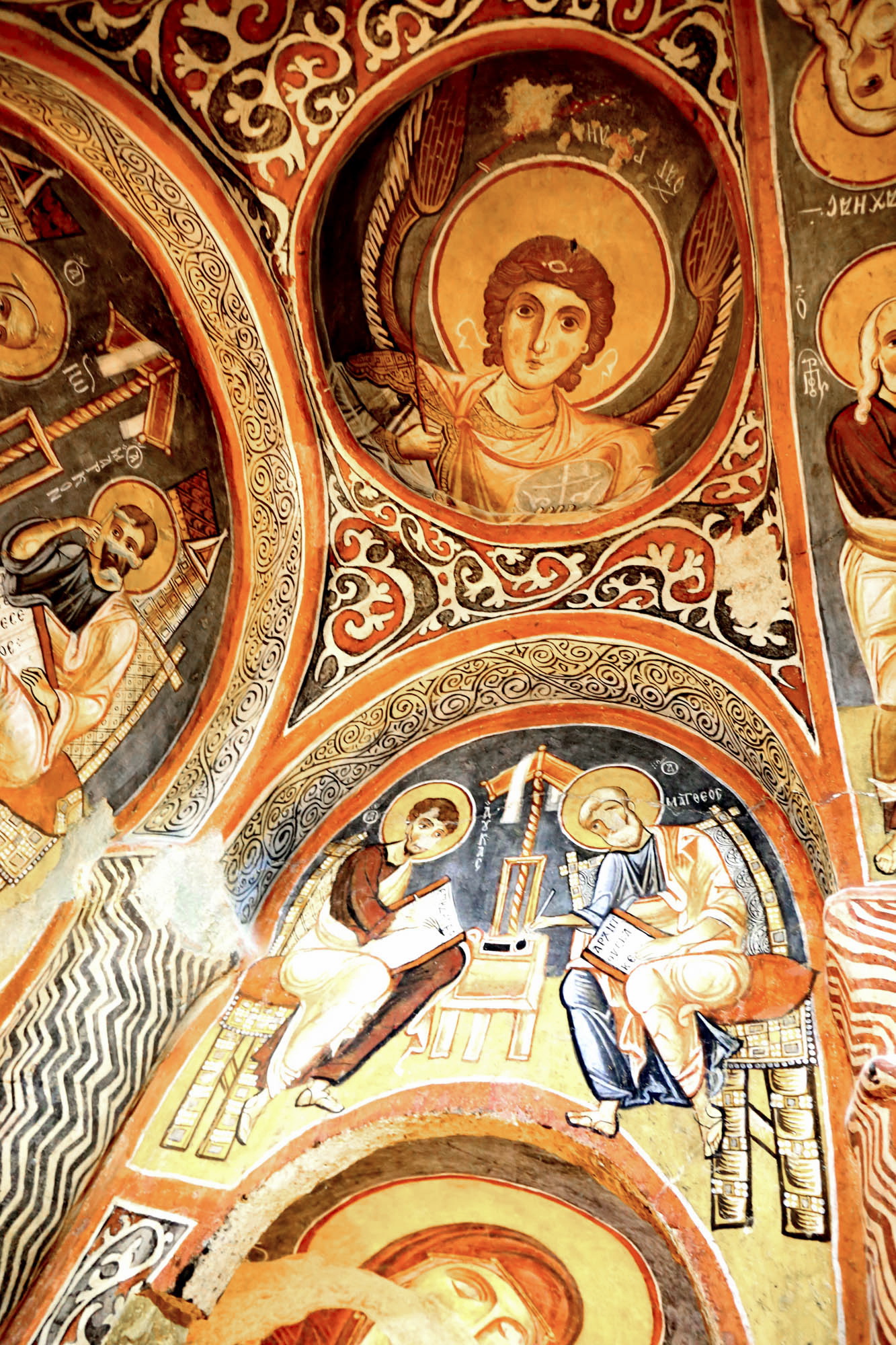
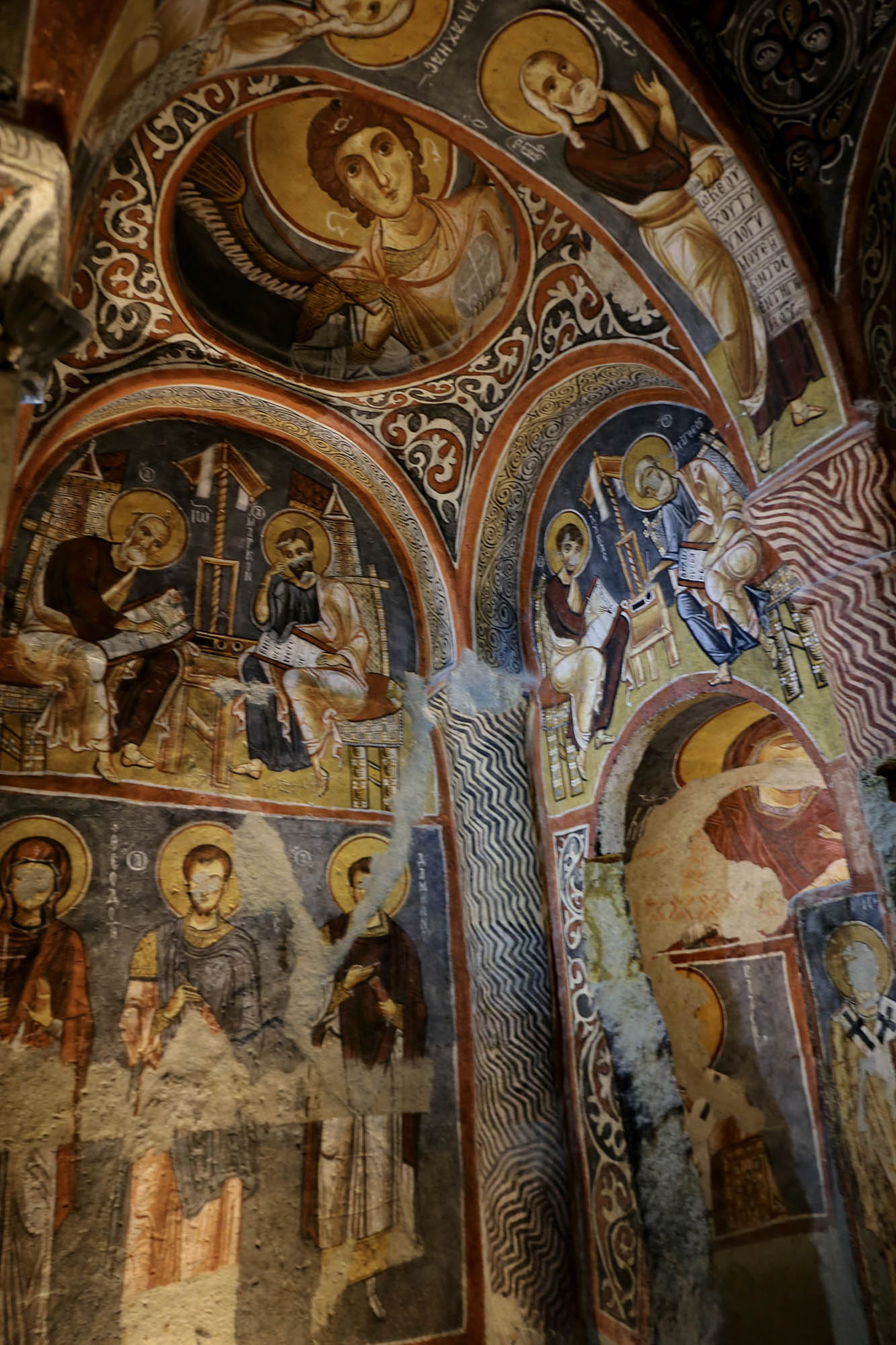
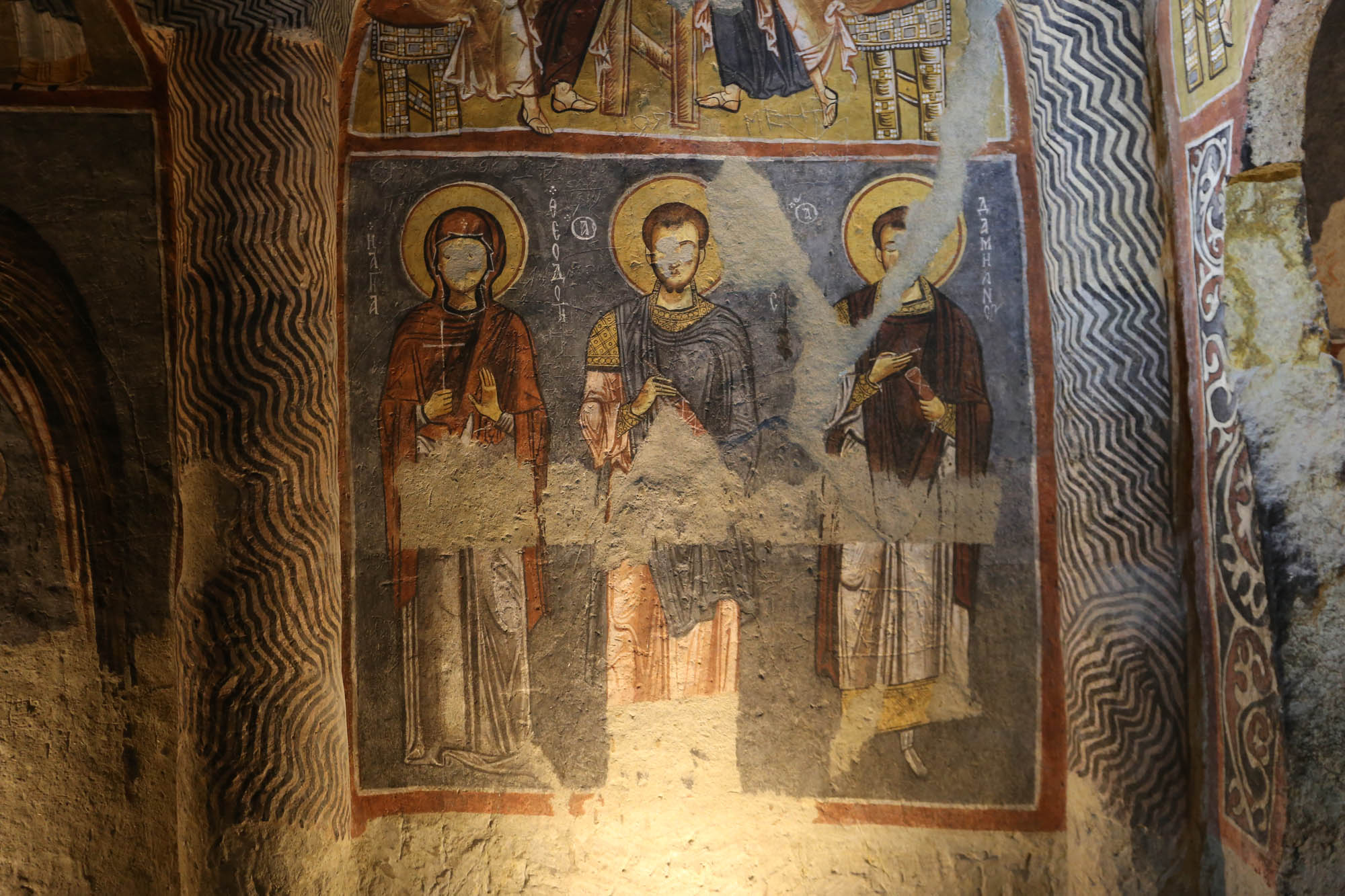
Below the Evangelists John and Mark, on the northern wall, are the two ἀνάργυροι – the unmercenary healing saints Cosmas and Damian – along with their mother, Saint Theodota. These physician saints were especially significant in Byzantine churches, as people would come before their images seeking healing, and often even spend the night there (“incubatio”).

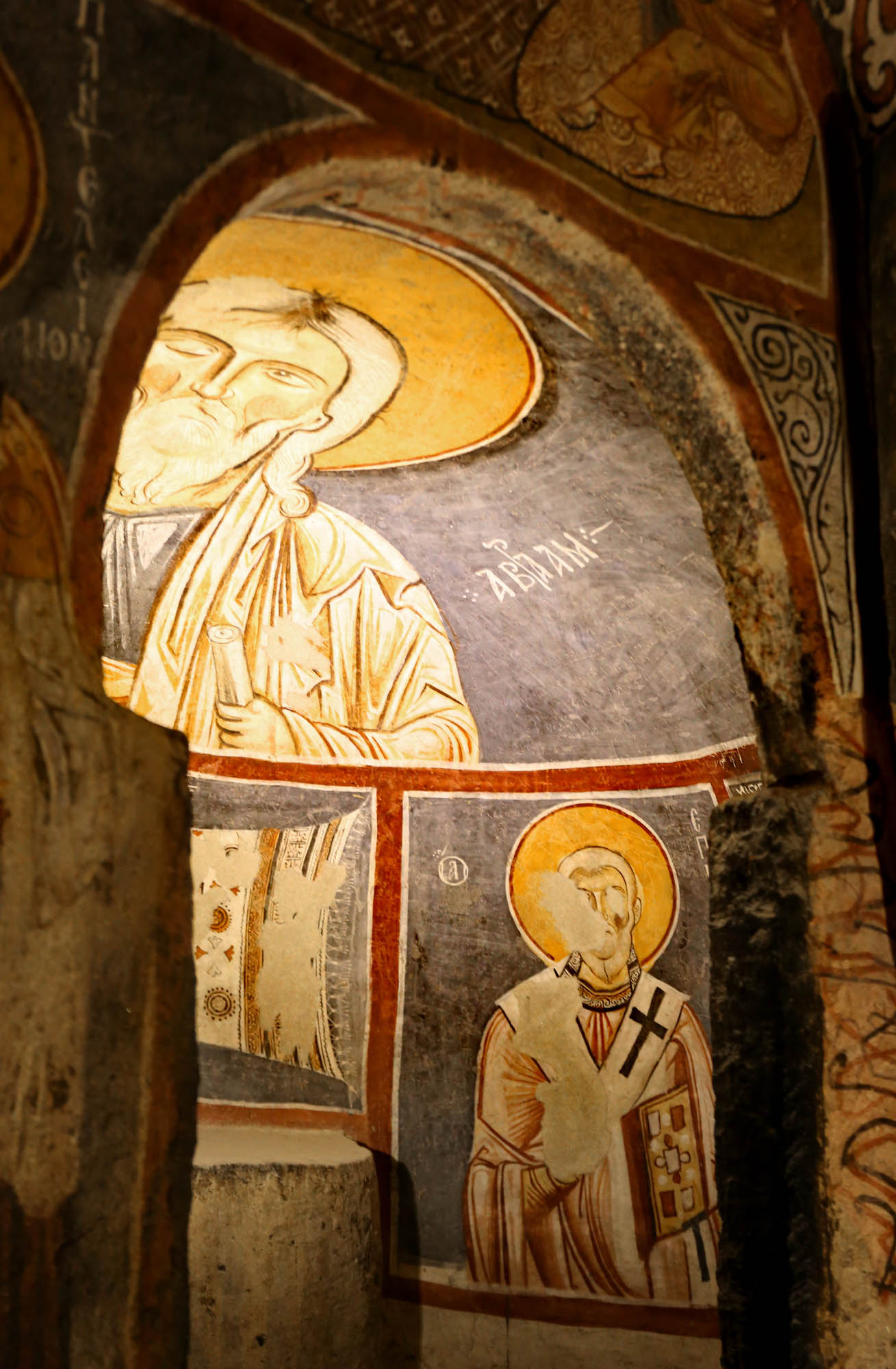
In the right, southern apse, Abraham stands with the Mandylion (the miraculous cloth preserving Christ’s face), and on the outer lunette and the nave walls are scenes of the Last Supper (with a large fish on the table instead of a lamb). The separate depiction of Abraham is relatively rare, but combined with the Last Supper and the Mandylion, it may carry an Eucharistic reference and, as a counterpart to the Mother of God in the opposite apse, testify to Christ’s earthly lineage.
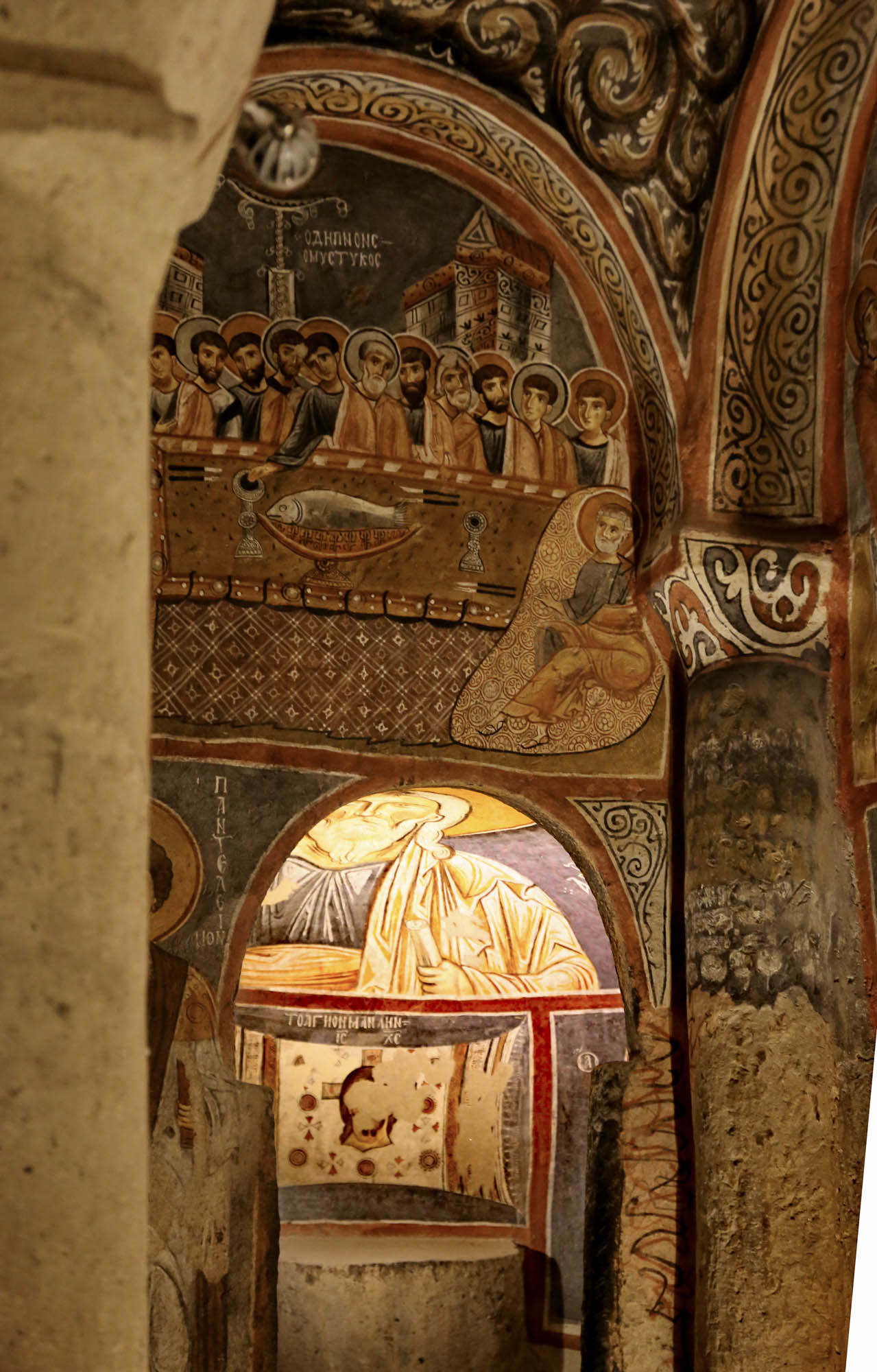
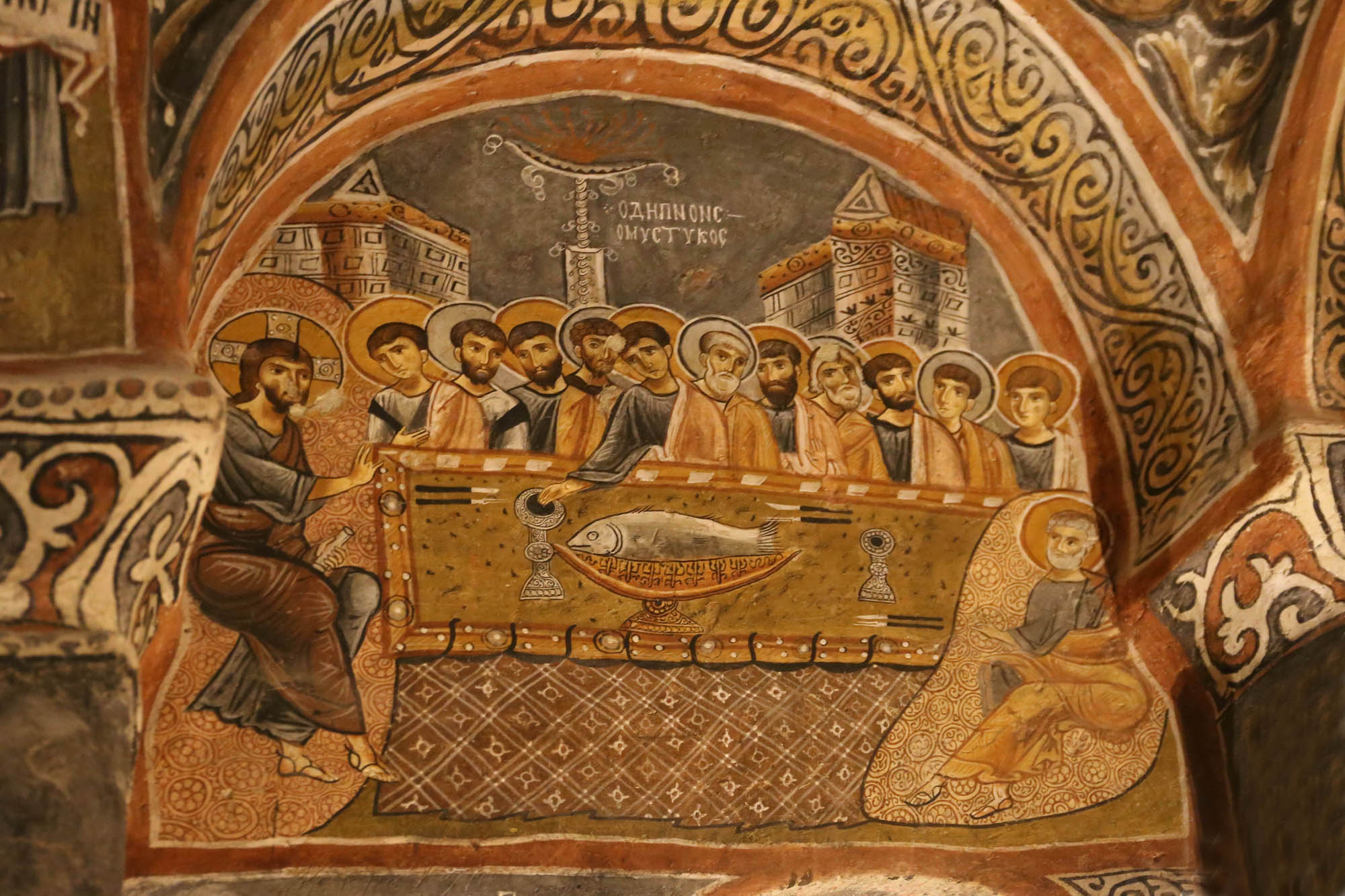
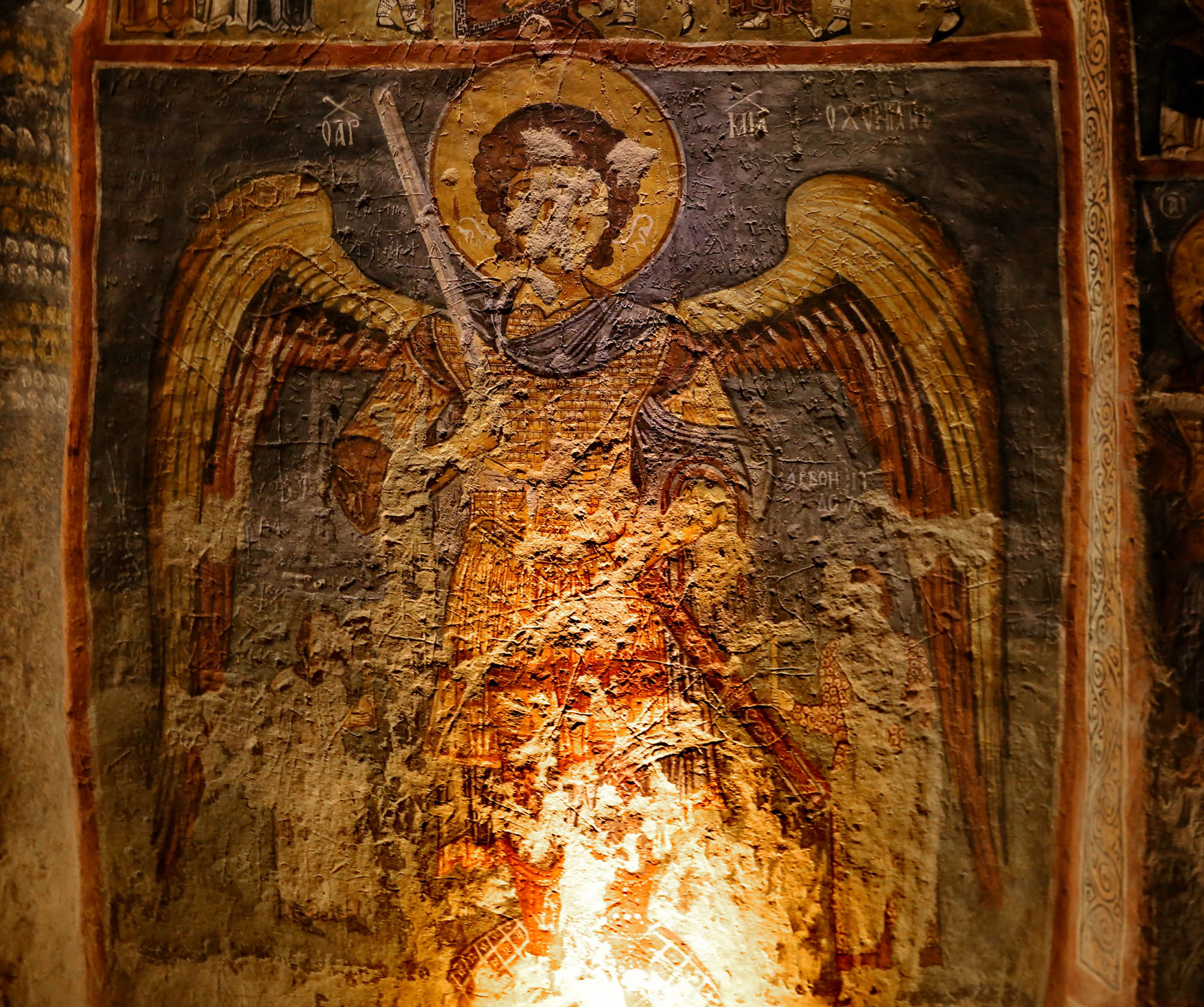
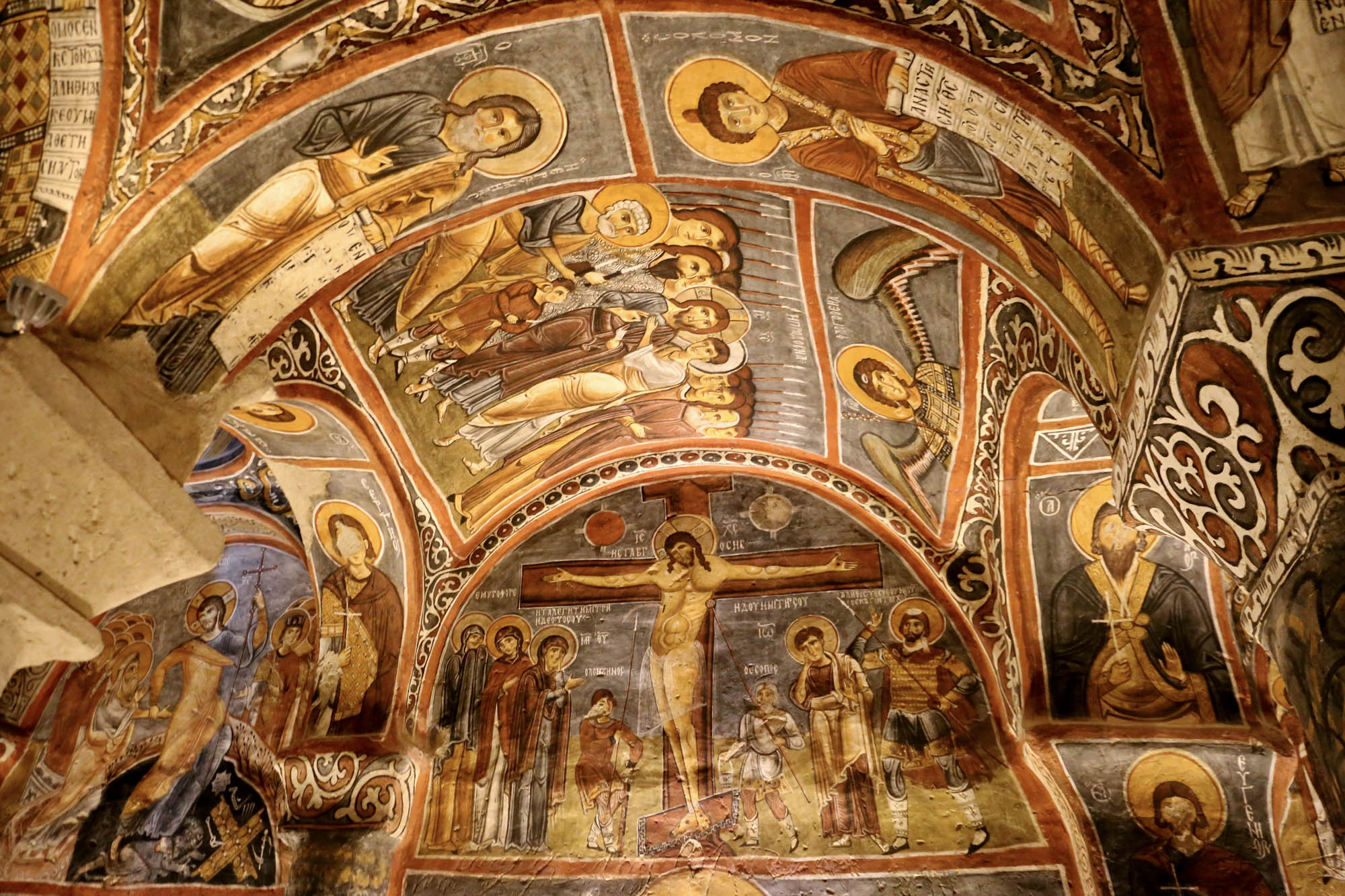
On the three lunettes of the southern nave wall – continuing the Last Supper – are scenes of Christ’s Passion: his descent into hell, the crucifixion, and the women at the empty tomb. Below, on the wall: the three youths in the fiery furnace under an angel’s protection (Daniel 3), Archangel Michael, and Saints Helena and Constantine with the True Cross they discovered.

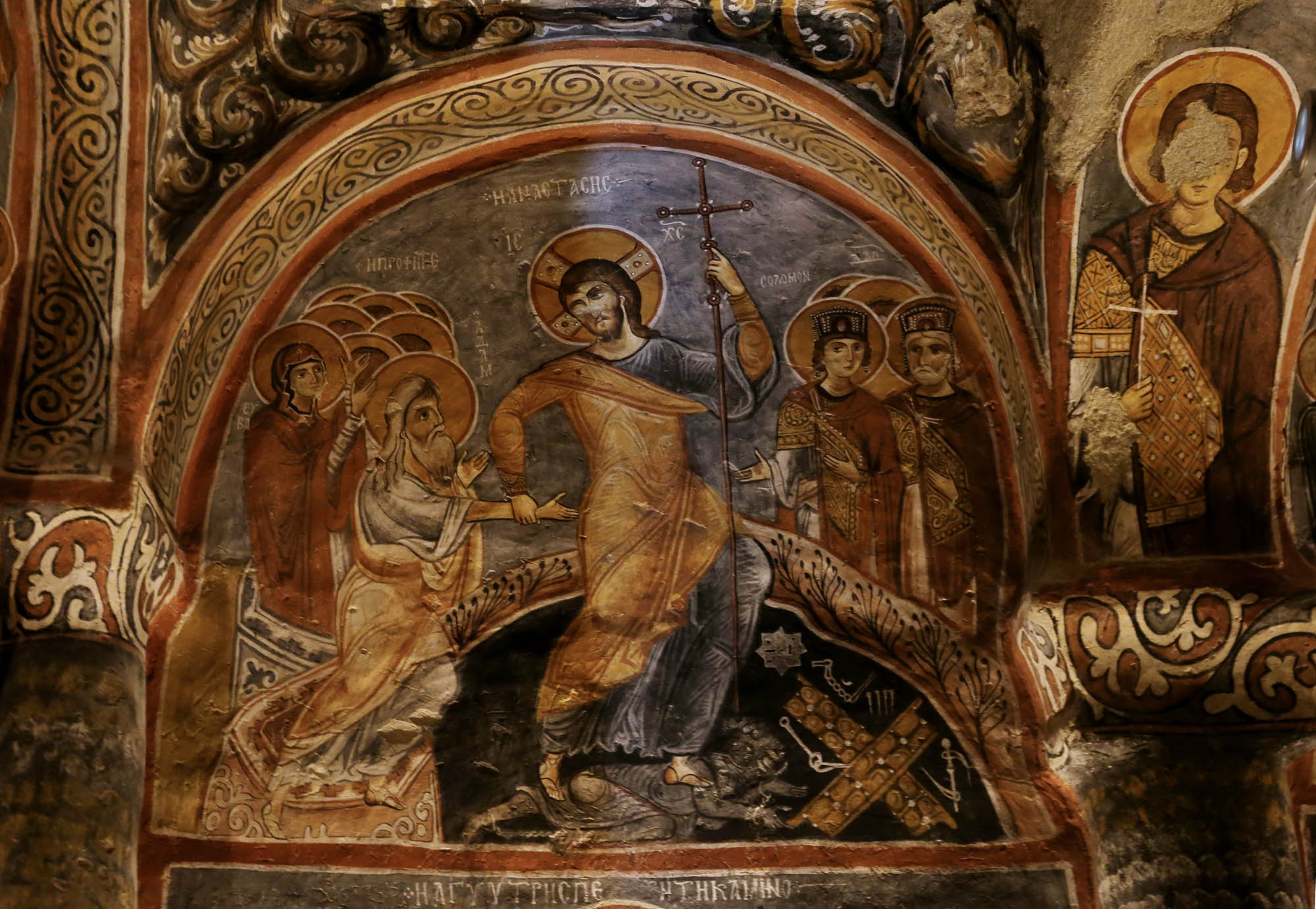 Christ descends into Hell, bringing out Adam and Eve, along with all the righteous who had been waiting on the porch of Hell until the coming of redemption. Above the heads behind the first humans is the inscription “Prophets,” and to the right, the two kings Solomon and David. Christ tramples Satan beneath his feet, next to the broken gates of Hell, almost like a catalog of medieval fittings spread out in detail.
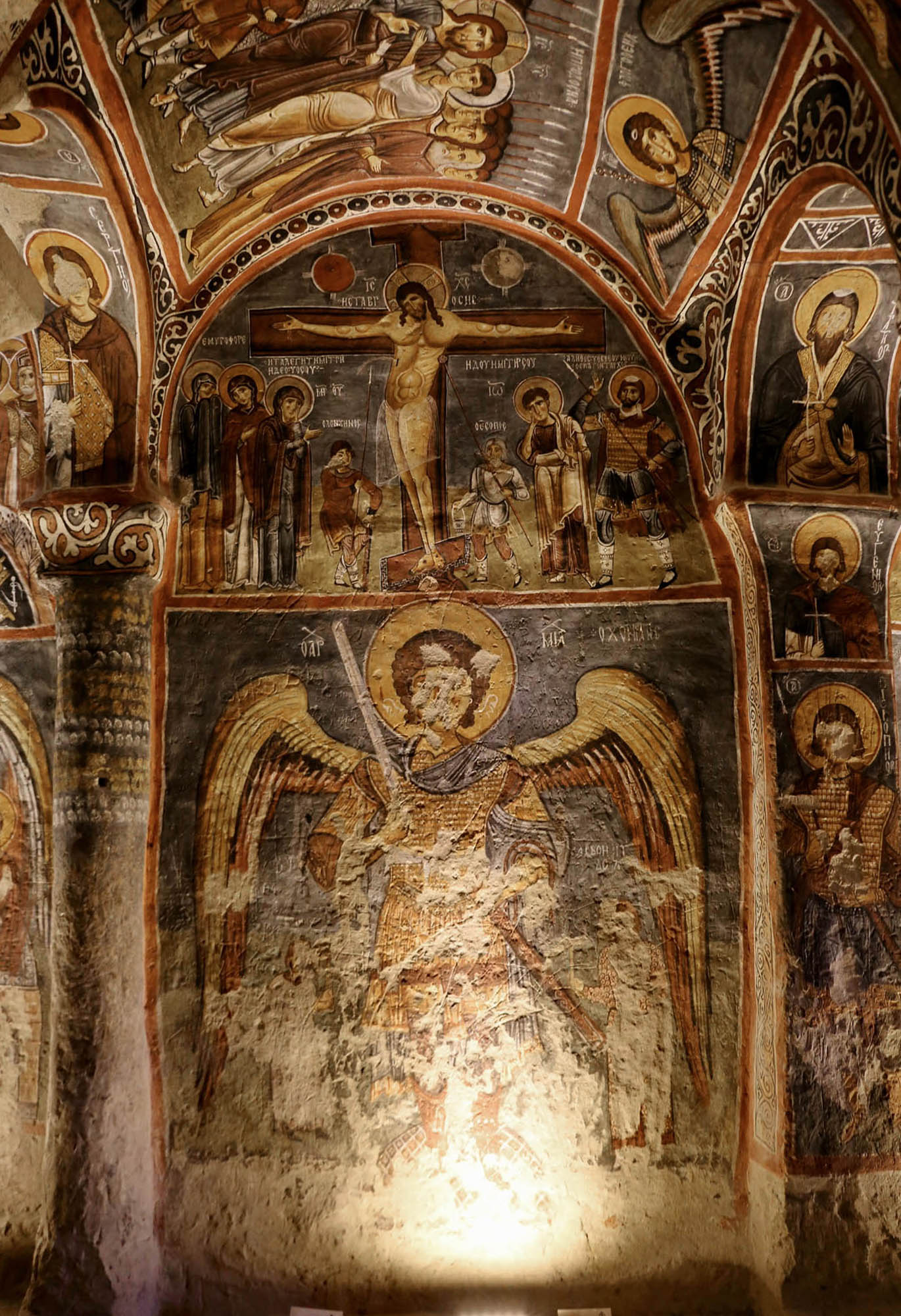
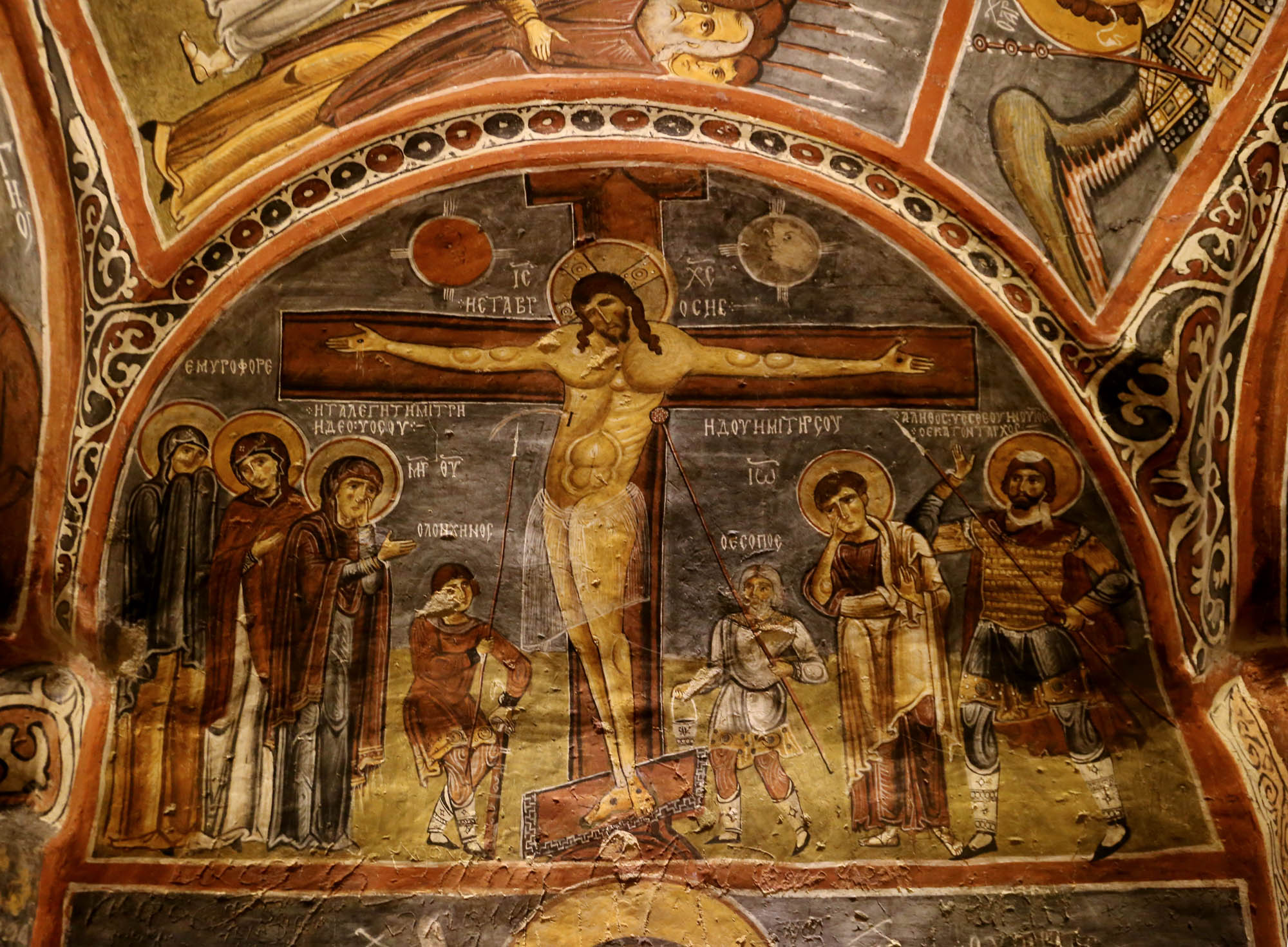 The Greek inscriptions practically act as a textbook, naming the figures: Jesus, the Holy Cross, Longinus with the lance, Aesop with hyssop dipped in vinegar, Saint John the Evangelist, and the centurion declaring, “Truly this was the Son of God.”
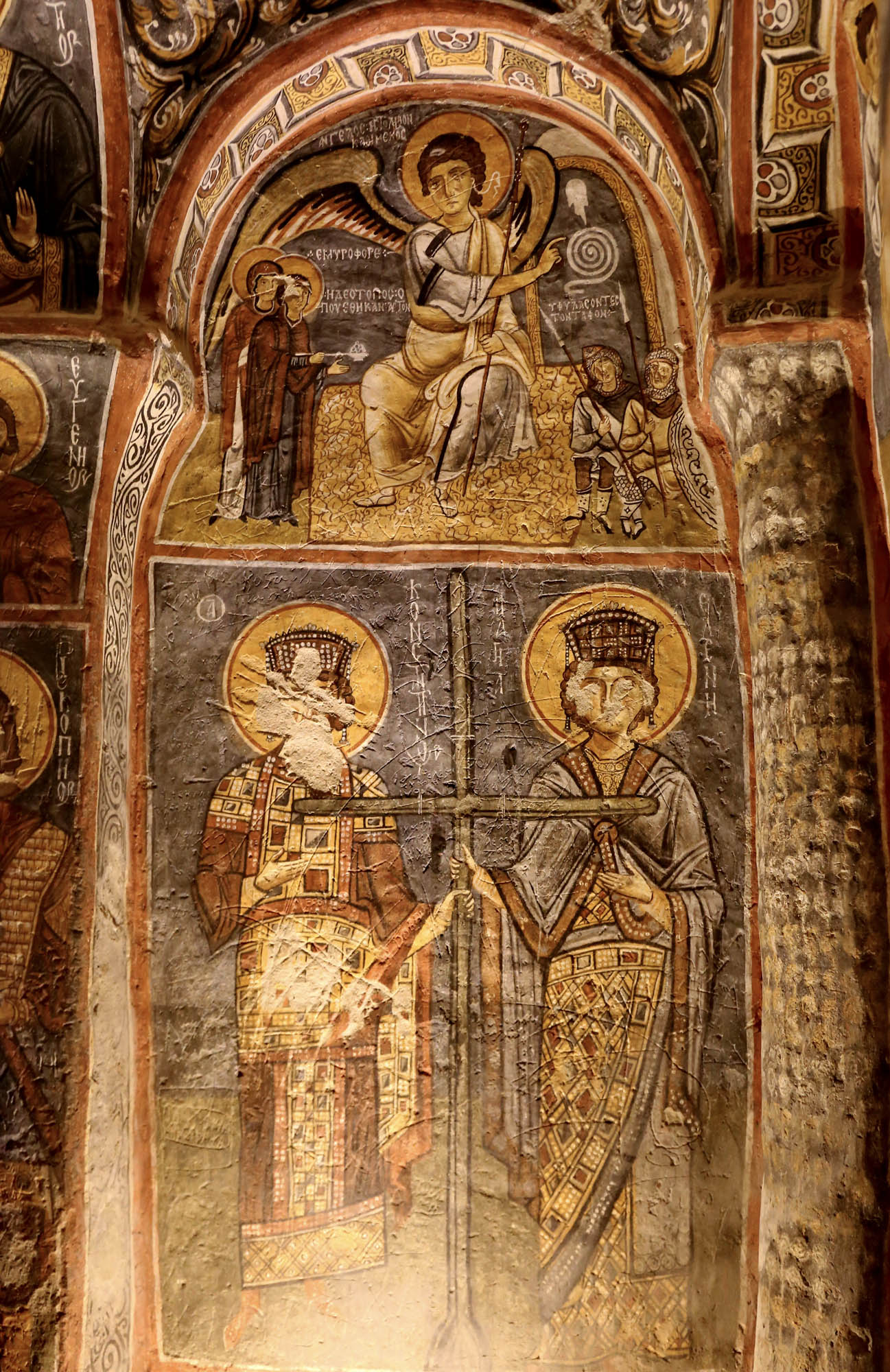
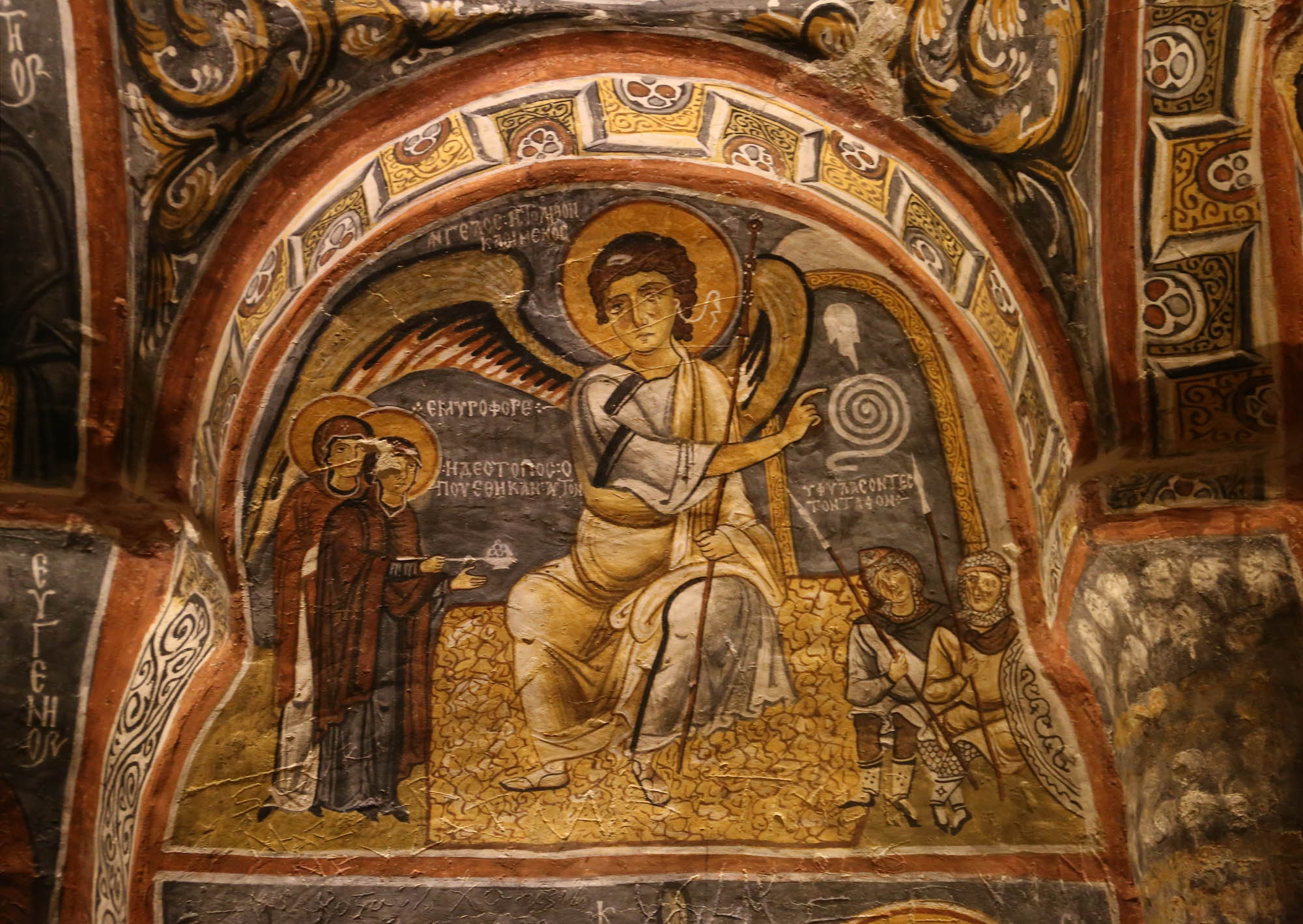 It’s tempting to see in the spiral indicated by the angel sitting on the empty tomb a “shortcut” to Christ’s transcendence, as the labyrinth symbolized crossing to the afterlife in many ancient cultures. But it is more likely depicting the rolled-up burial shroud. Such a depiction is unique to Cappadocia icons.
The epithet of Saint Michael Χωνιάτης, meaning “of Chonae,” is very telling. It specifically refers to the archangel’s miracle in Chonae (ancient Colossae) in southwest Anatolia, where pagans tried to flood a Christian sanctuary by diverting two rivers, but the waters were absorbed by the earth at the strike of Michael’s staff.
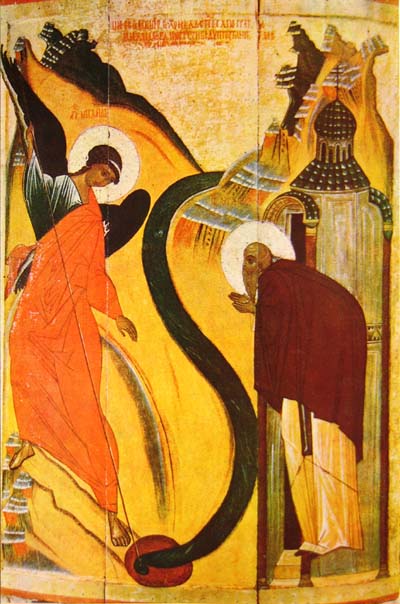 The miracle of Saint Michael in Chonae. Novgorod icon, 15th c., in the Ryazan museum.
These three scenes on the south wall, with the two angels and the Holy Cross, symbolize protection from pagans, which was highly relevant in Cappadocia.
On the north wall are the early episodes of Jesus’ life: Joseph and Mary’s journey to Bethlehem and the Nativity. Beneath these scenes are Saint Eustathius, the military saint (appropriate for Cappadocia), and Archangel Gabriel, Michael’s counterpart. The third section of the wall features the evangelists and the healer saints already mentioned.
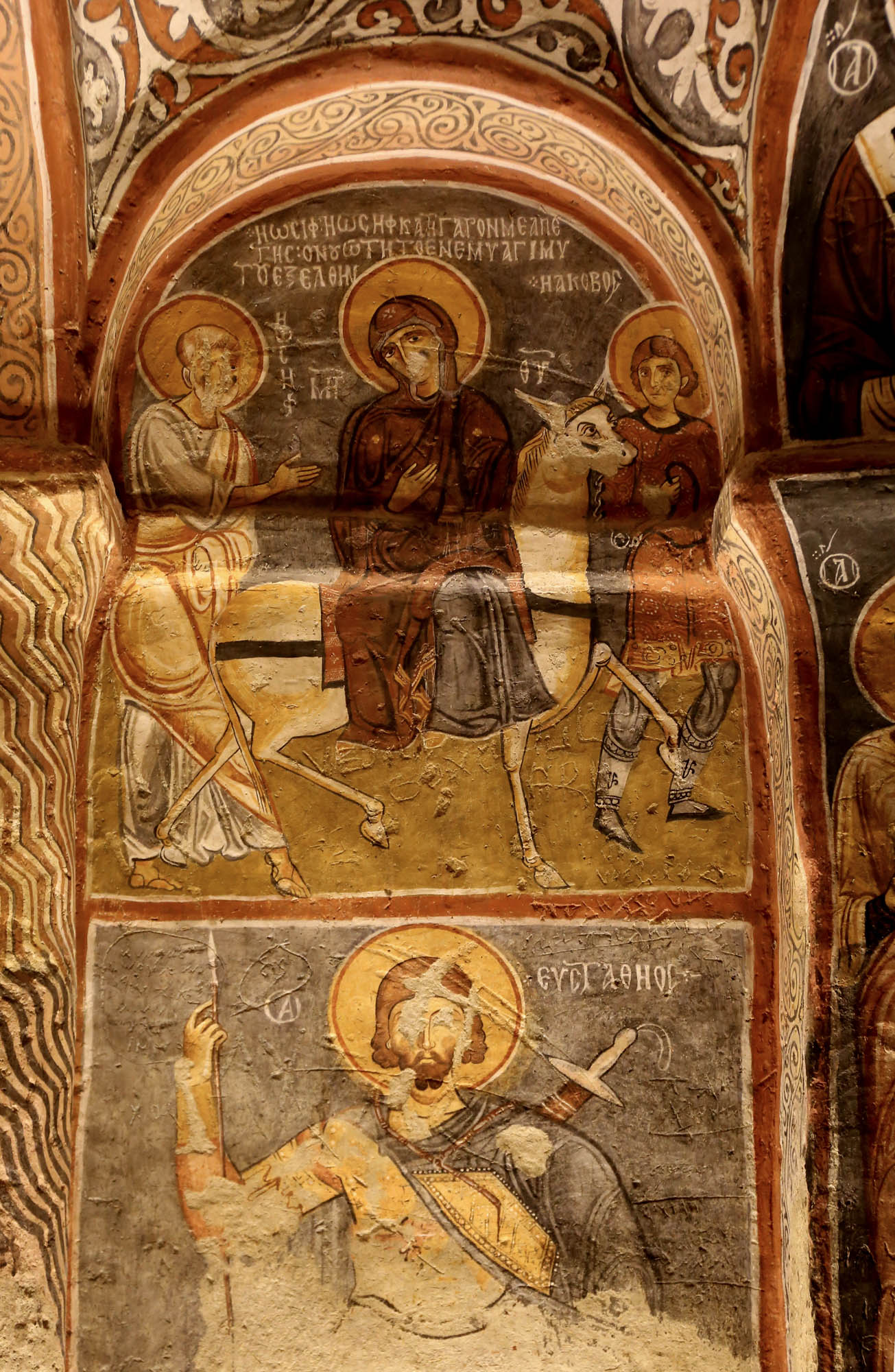
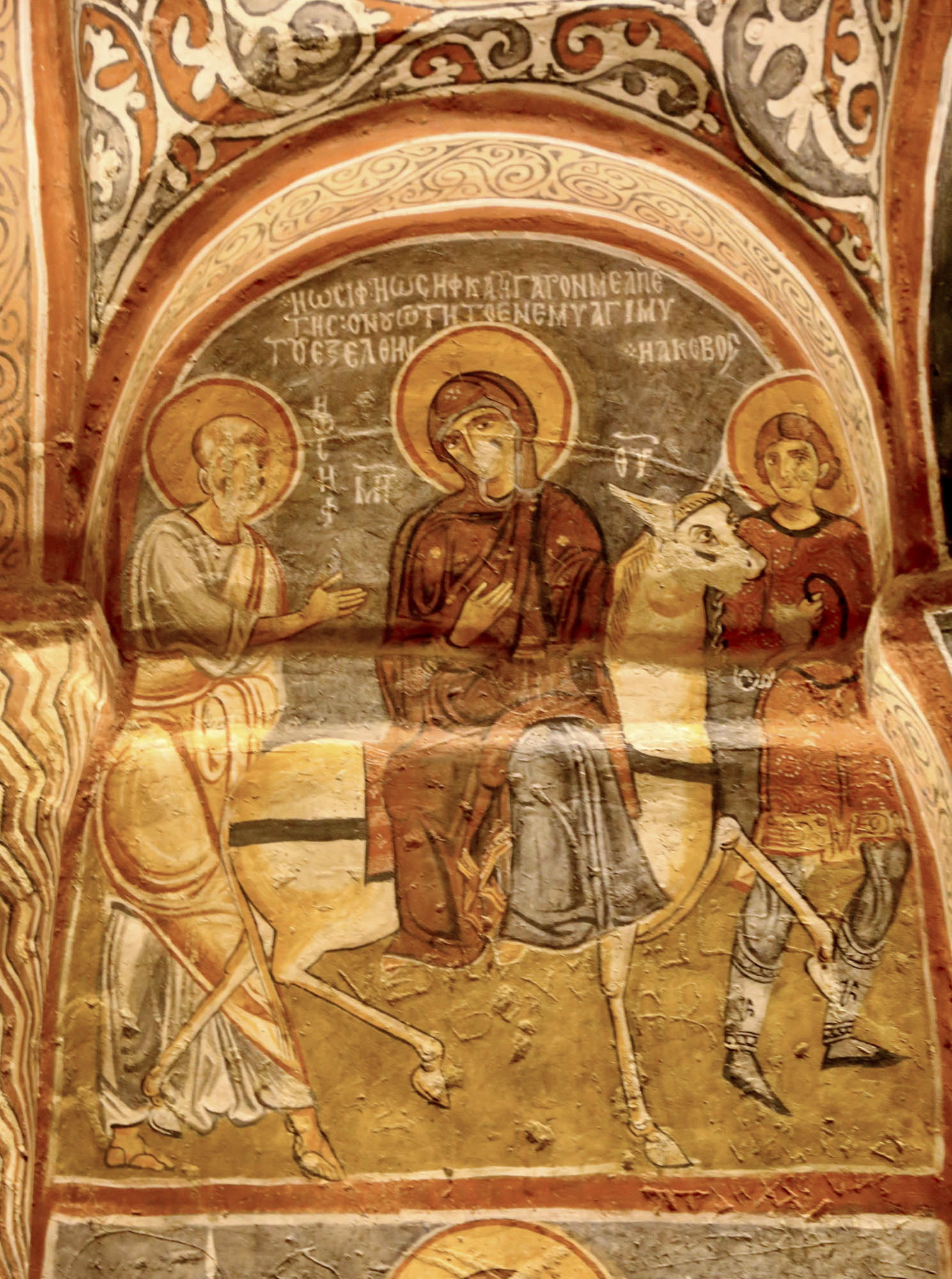 Mary’s donkey is led by James, Joseph’s son from a previous marriage. The inscription has Mary asking Joseph to help her down from the donkey.

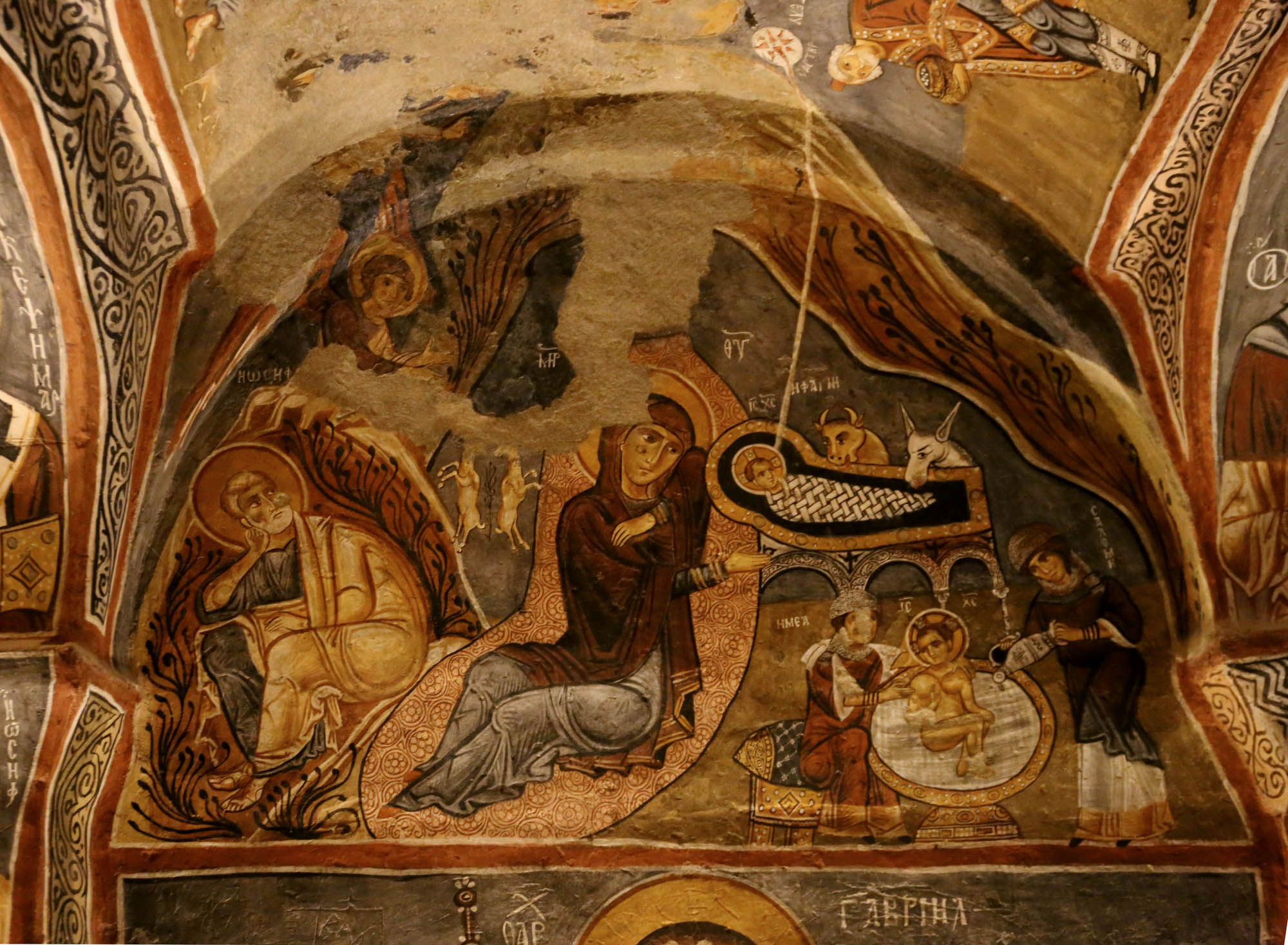 I’ve already written in detail about the Nativity scene here. Just as the freely roaming lambs appear there, the Göreme workshop’s unique emblem is the pair of symmetrical goats rearing around a small bush as the tree of life.
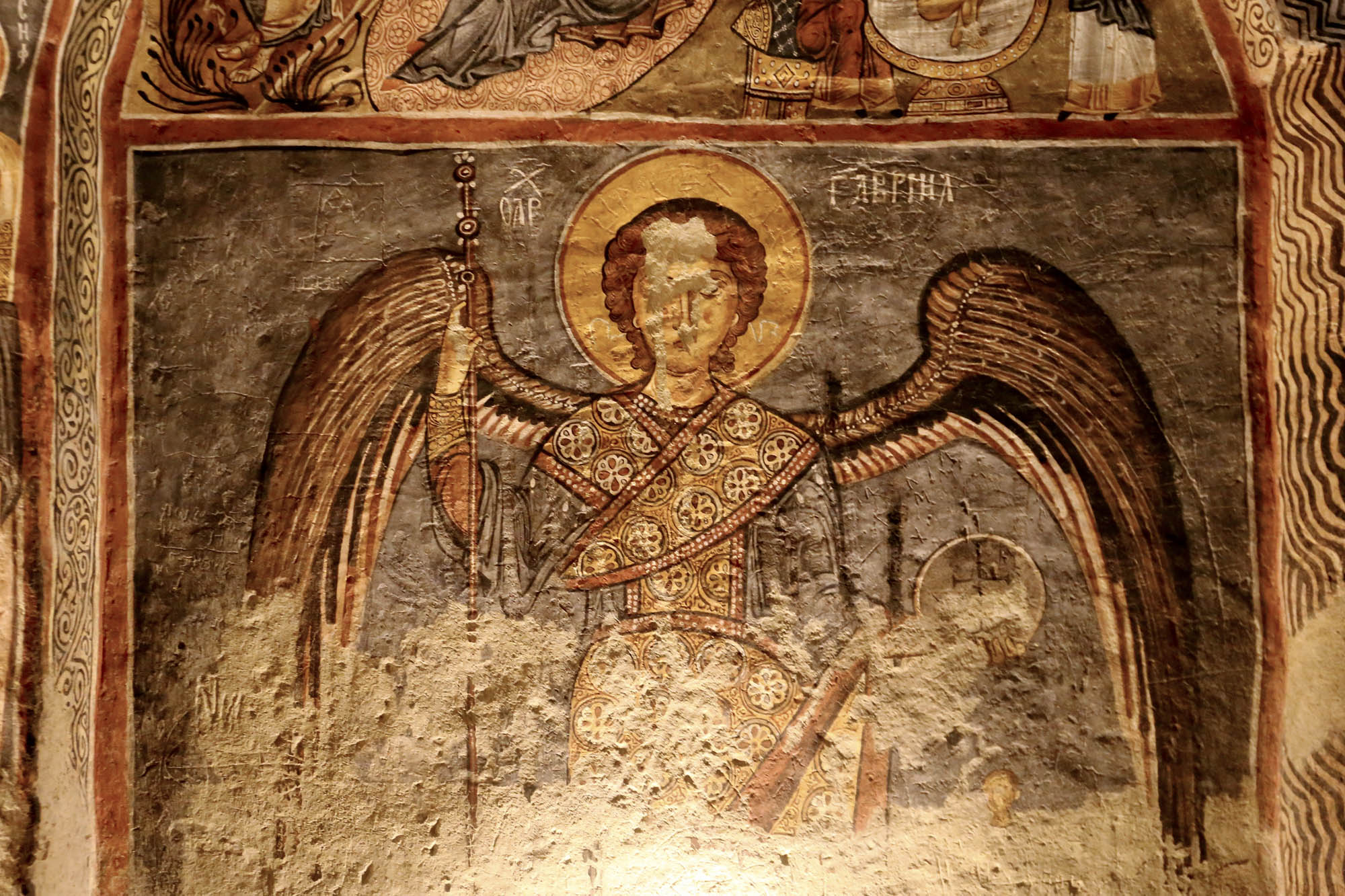
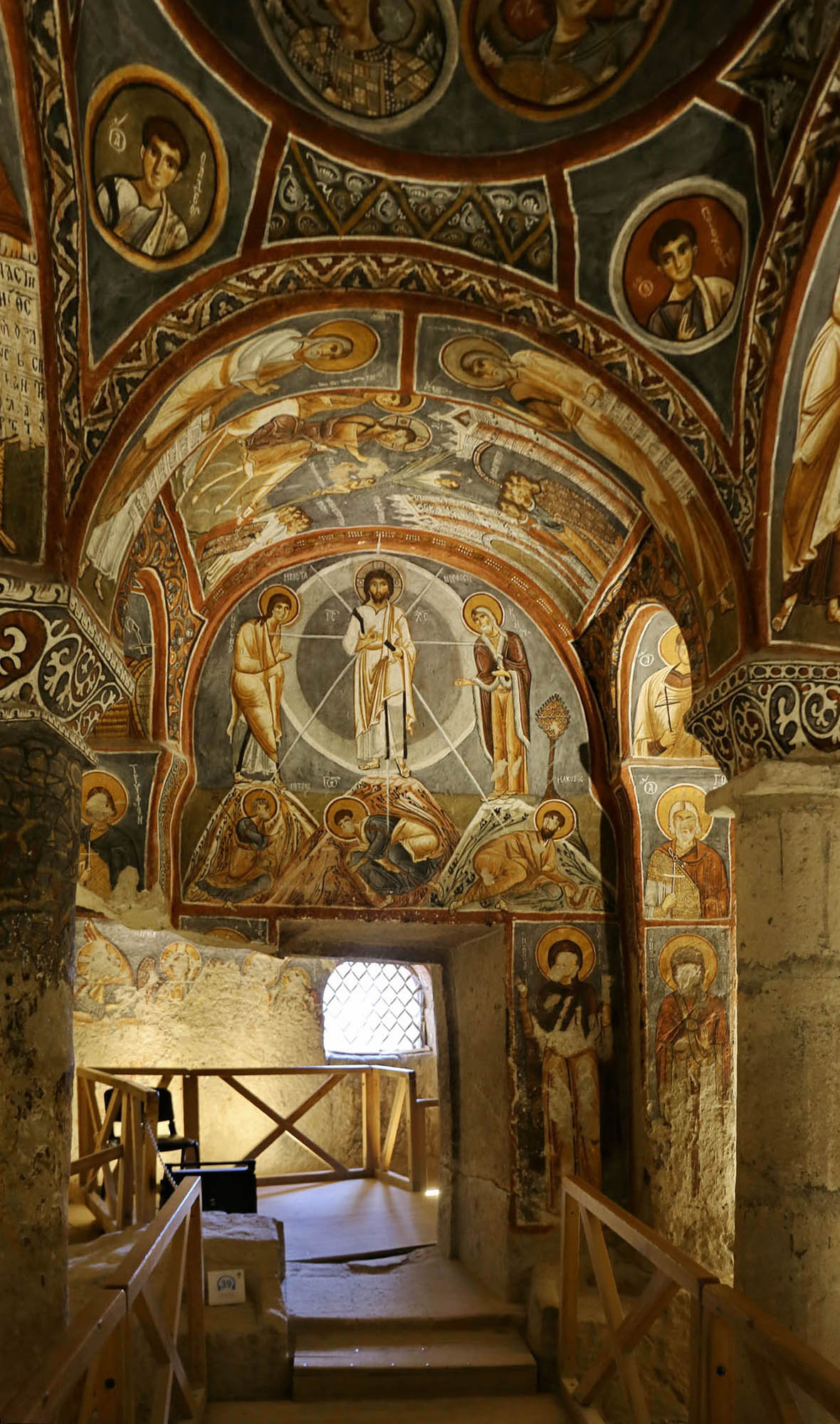
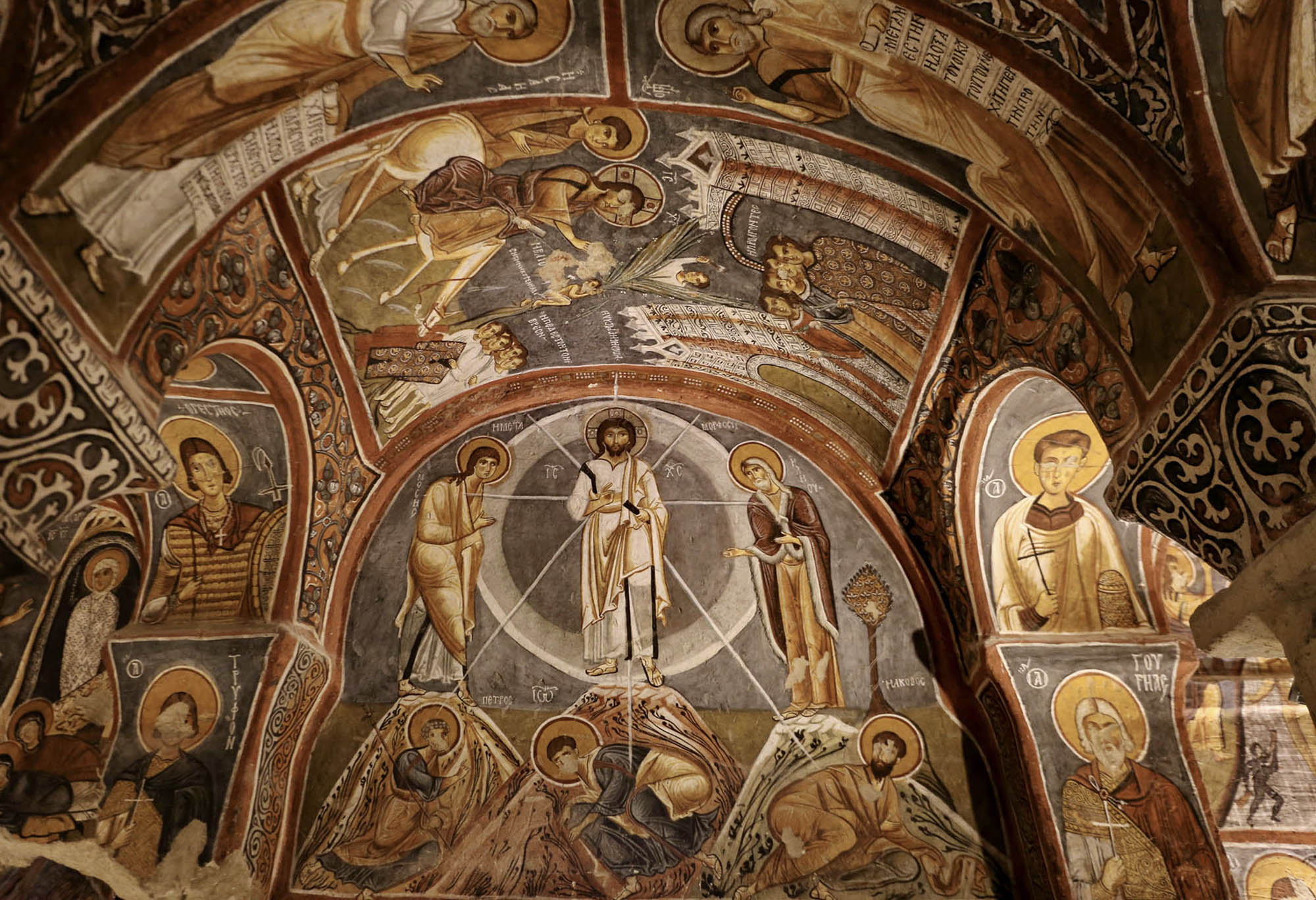
Above the entrance is the Transfiguration, flanked at the ends of the two naves by the Raising of Lazarus and the Baptism of Christ.

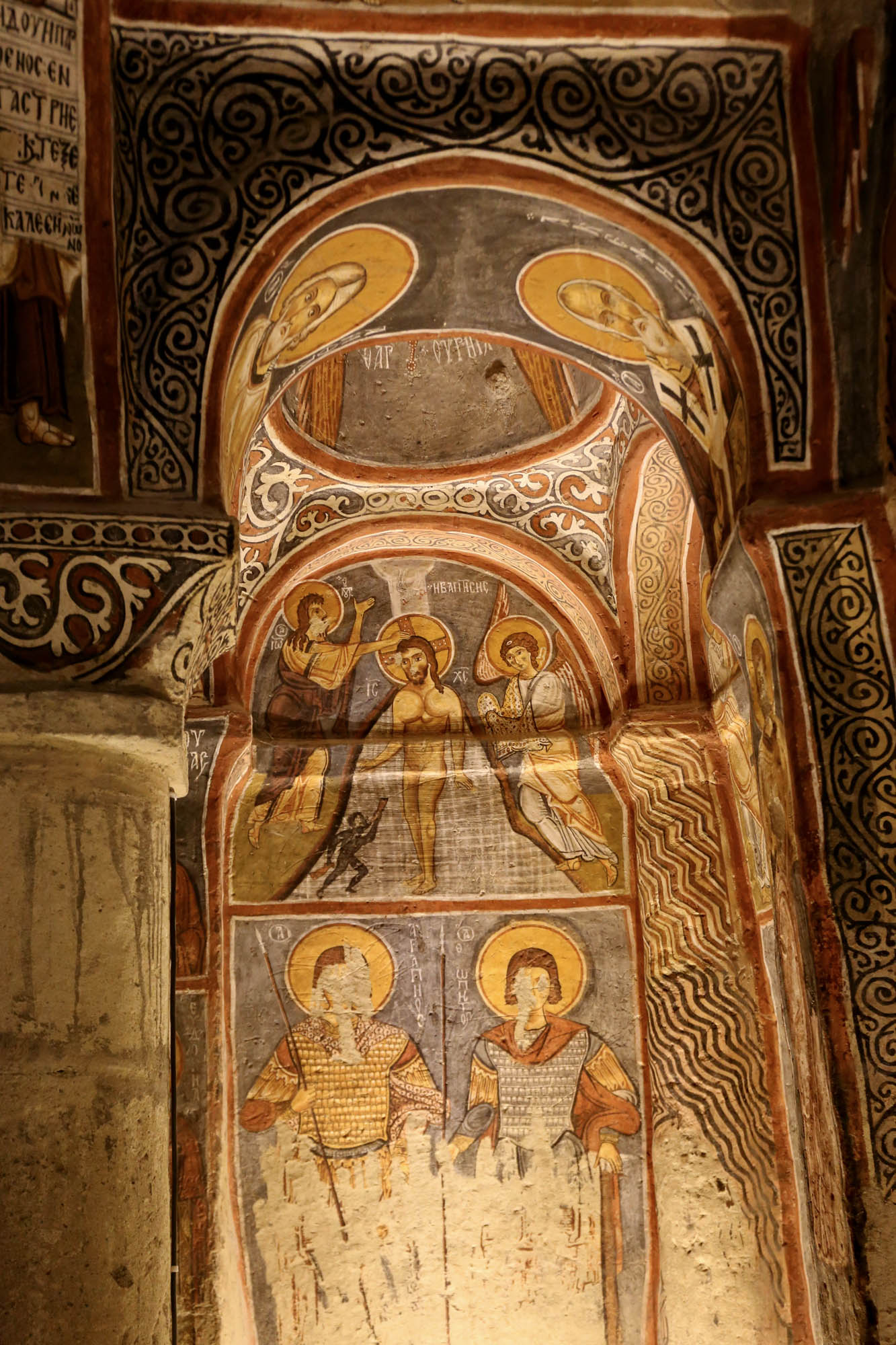
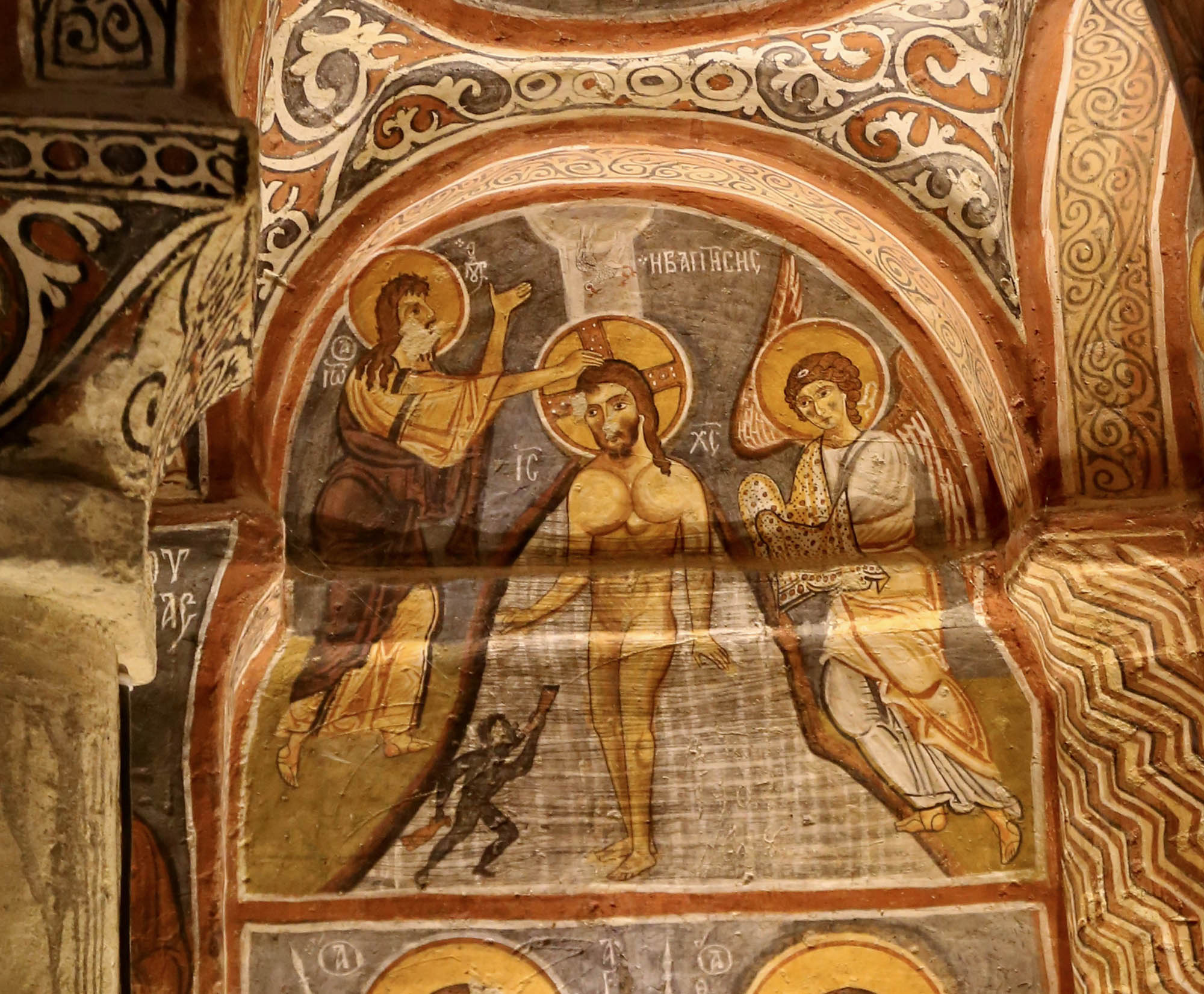 The small black creature blowing a trumpet at Jesus’ feet is not a demon, as one might first assume, but – as its jar indicates – a personification of the Jordan River.
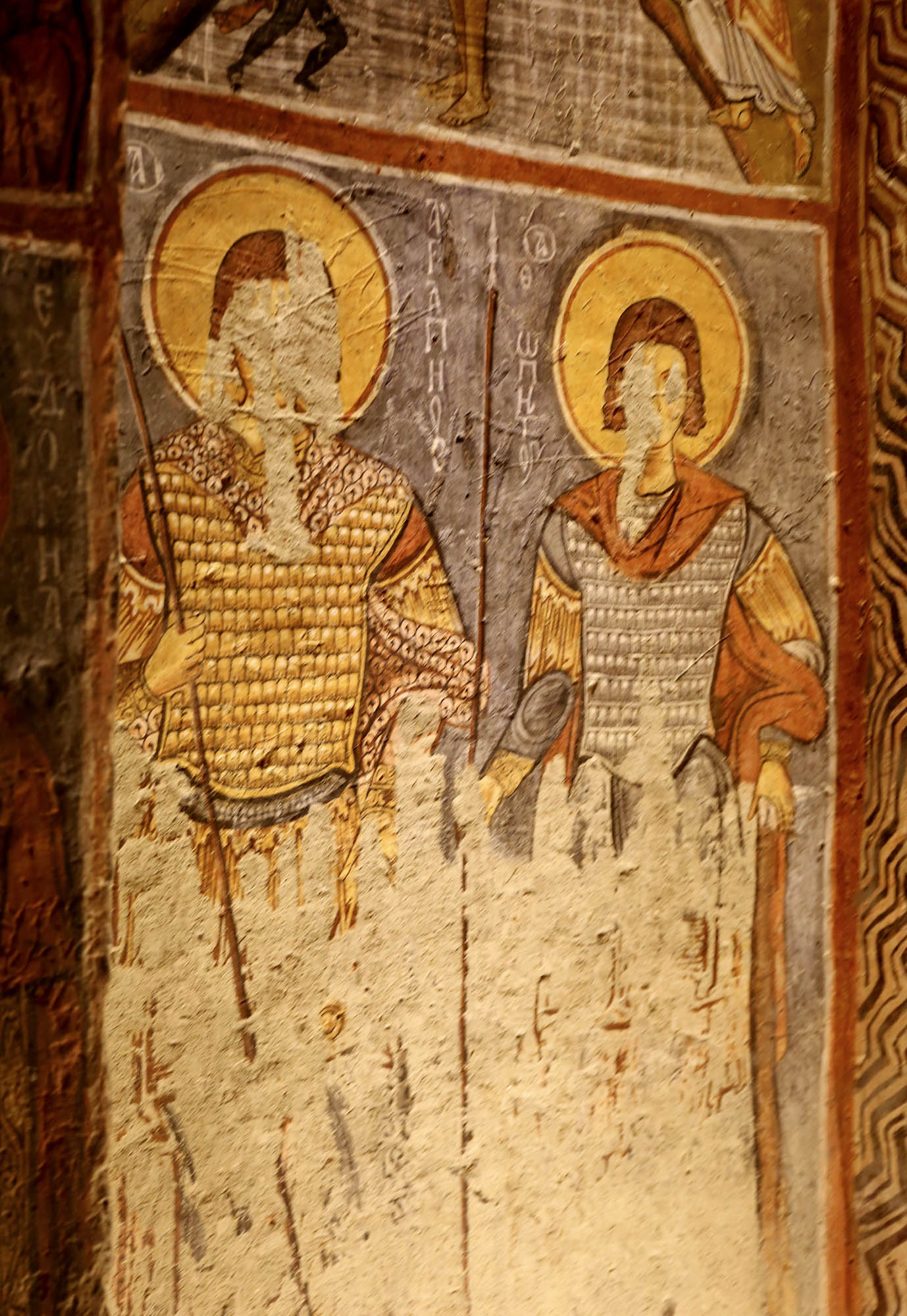 Below the Baptism scene, two warrior saints in armor hold spears. According to their inscriptions, however, they are not warriors; in fact, one is not even male: on the left, Saint Agapius of Caesarea, a martyred bishop, and on the right, Saint Theopistes, a martyr, the wife of the previously seen martyr-general Saint Eustathius.
On the three barrel vaults surrounding the main nave dome are three paired scenes, visible from both ends of the vault, connected to the lunette they frame. On the north wall, around the Nativity scene, the Adoration of the Magi and the angels and shepherds is depicted, with the light of the Bethlehem star shining onto the lunette and the newborn Jesus:
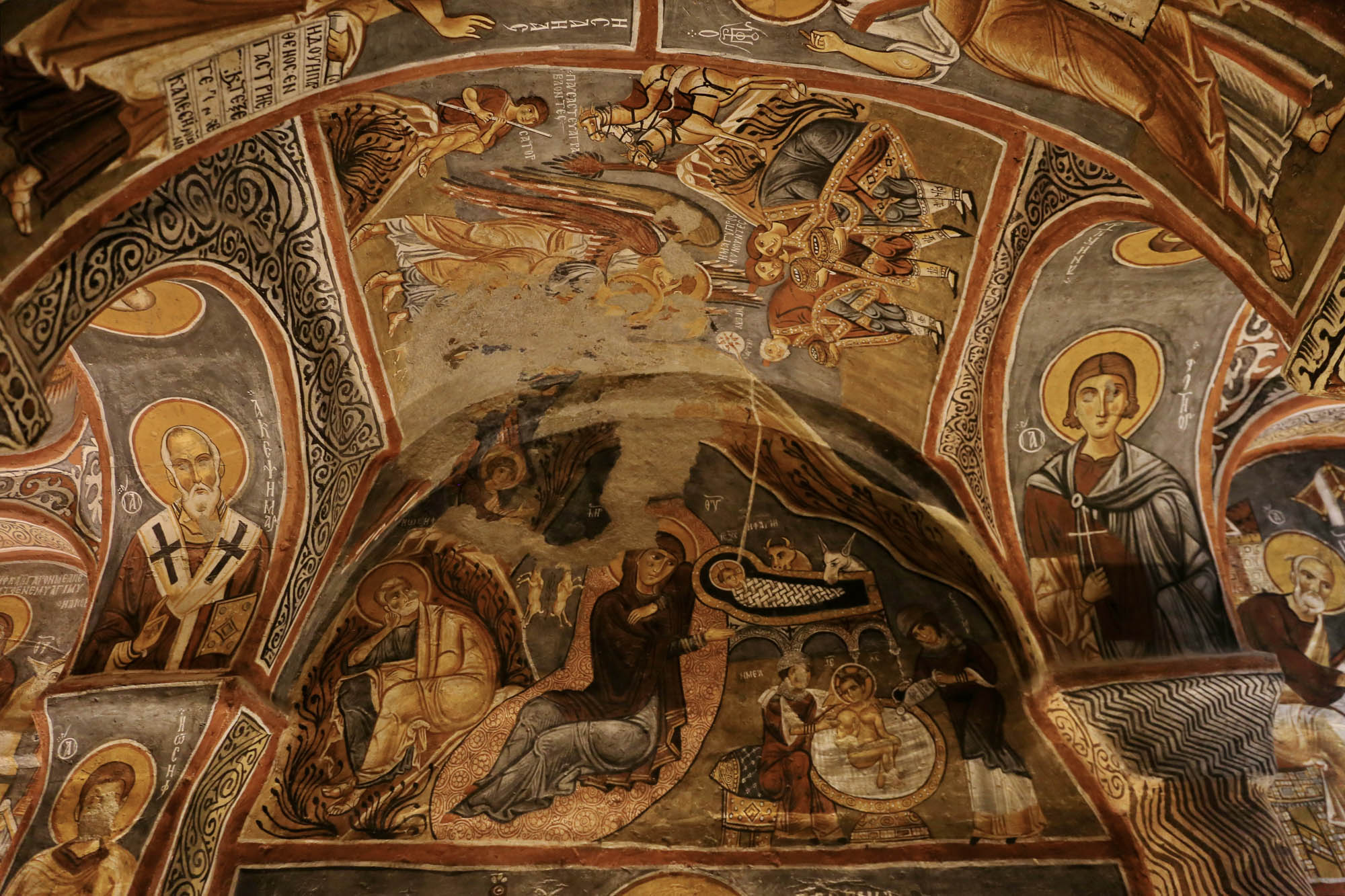
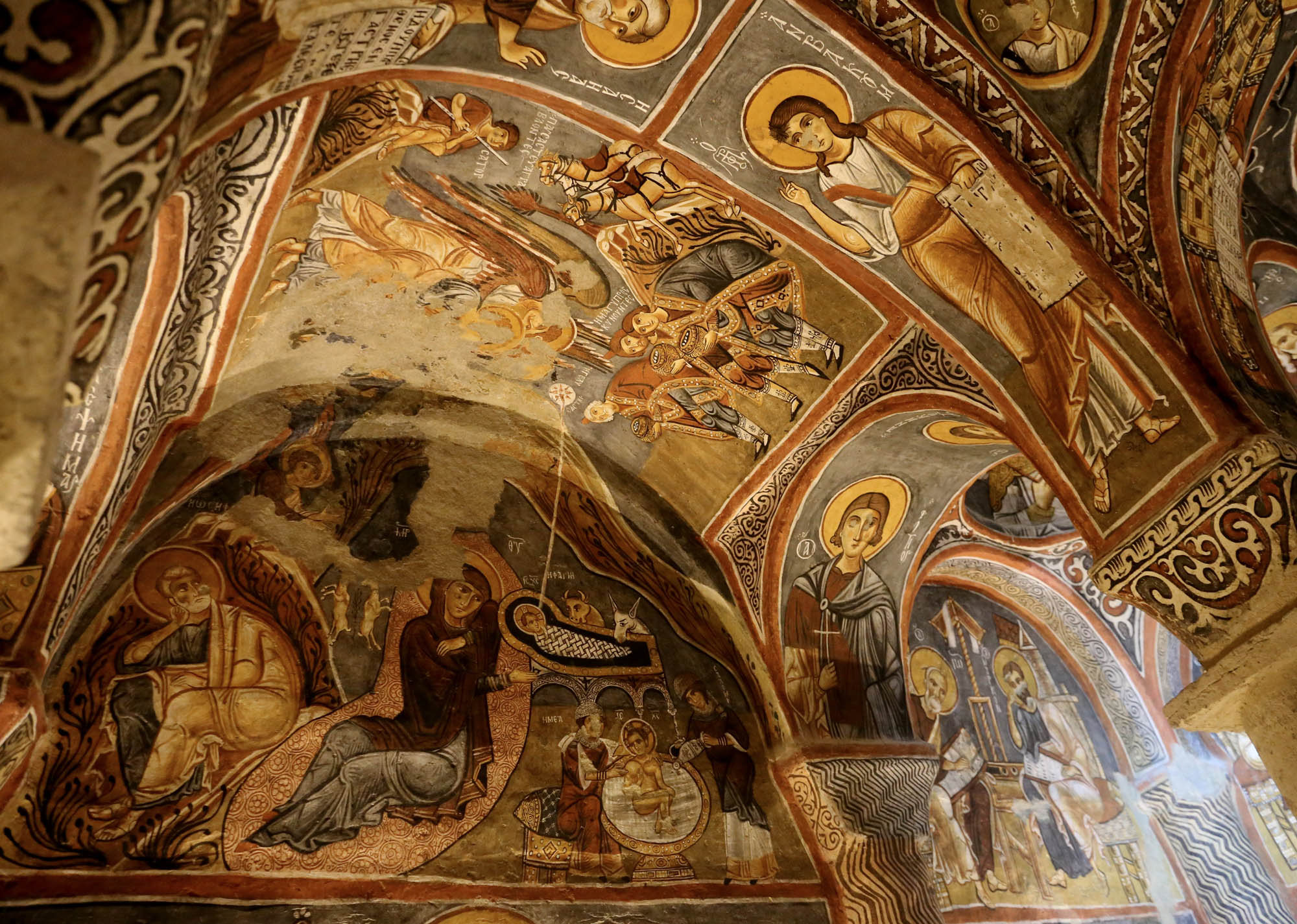 The inscription identifies the Magi, following the Gospel text, as "μάγοι ἀπὸ ἀνατολῶν" (wise men from the East).
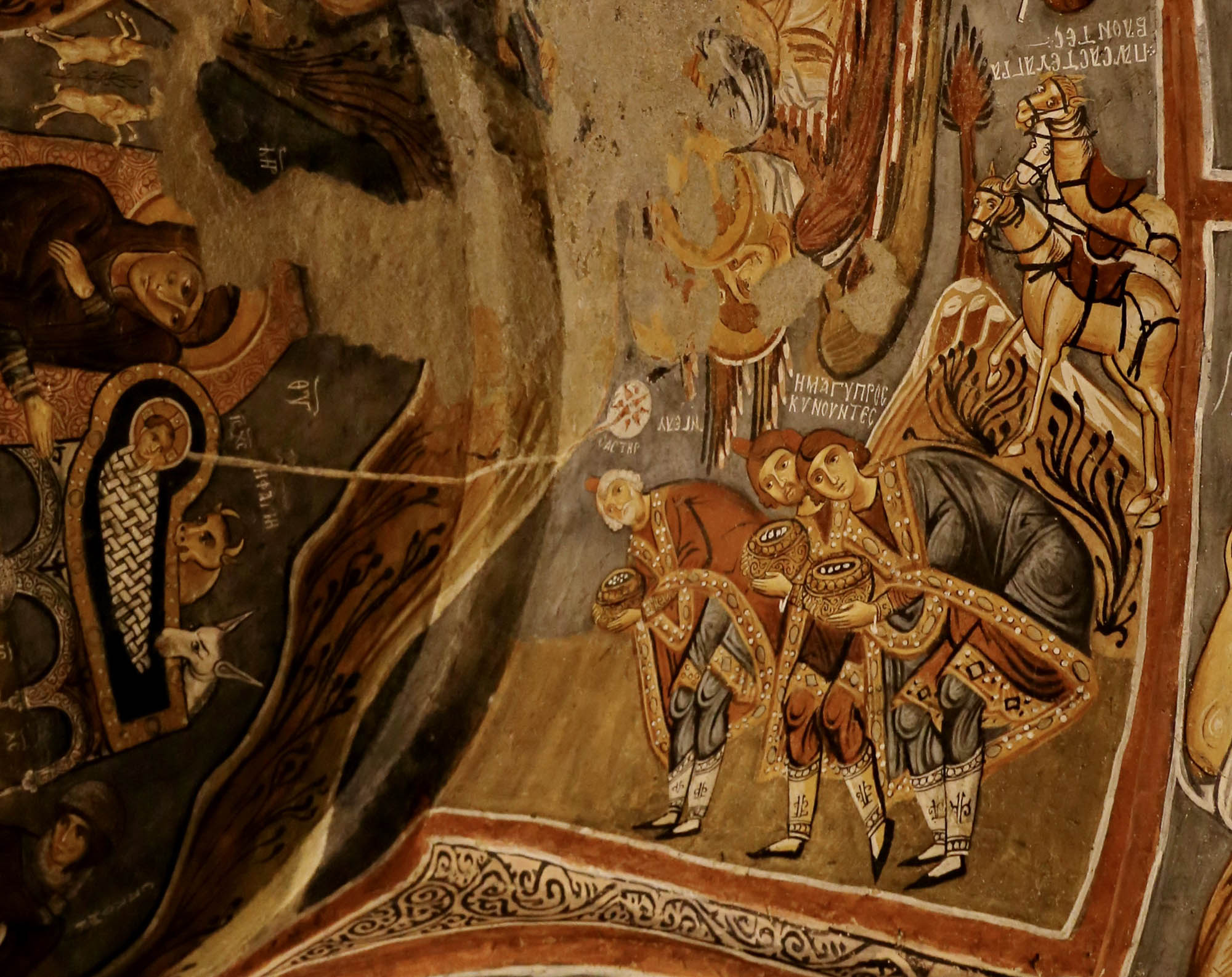
 The shepherd playing the flute in the Nativity scene symbolizes the joy of the created world at Christ’s birth. In several Cappadocian churches, the shepherds bear names drawn from the popular magical formula SATOR AREPO TENET OPERA ROTAS Sator Square.
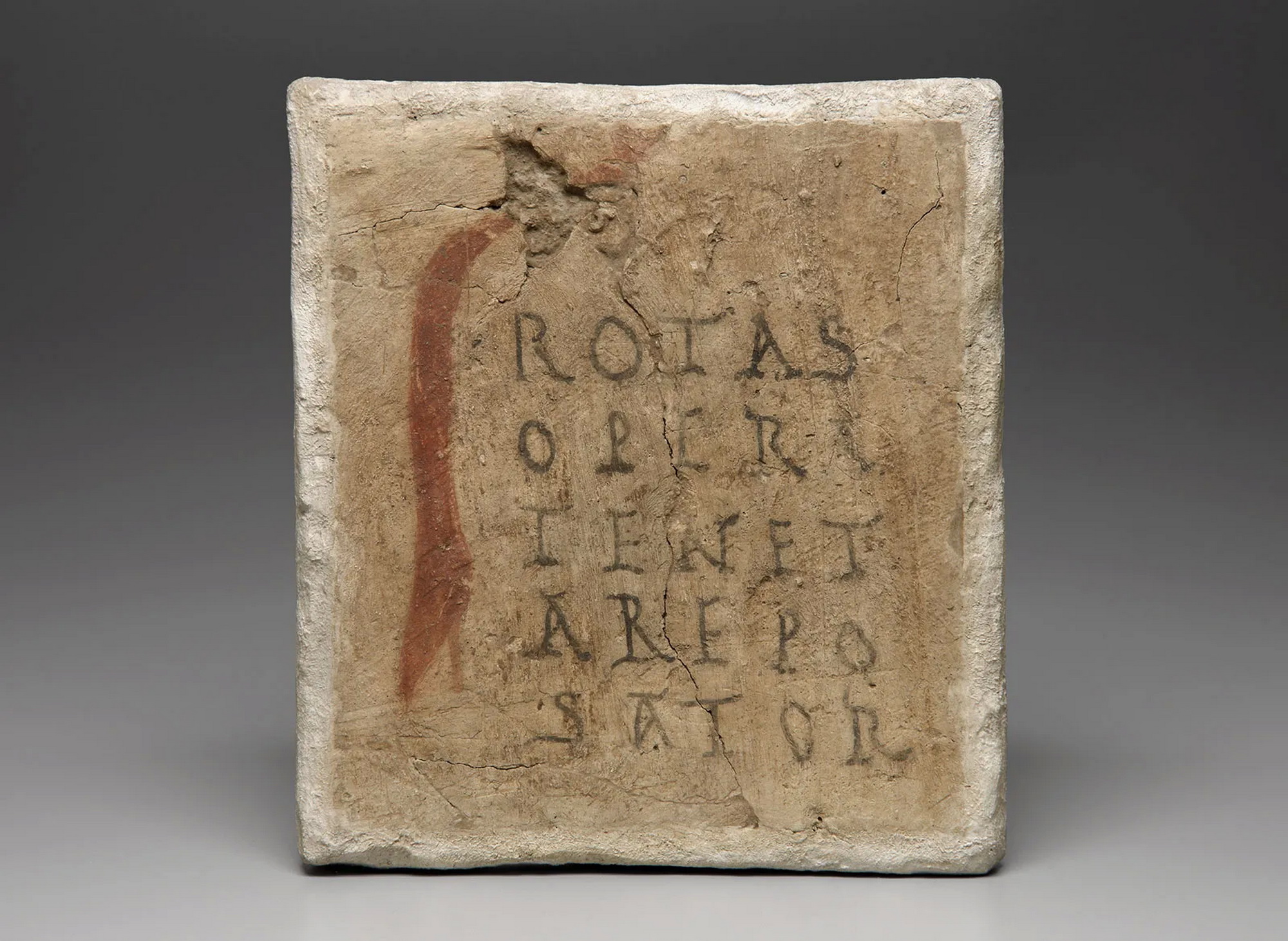 SATOR Square from Dura-Europos, Mesopotamia, 2nd century.
On the barrel vault framing the Transfiguration lunette above the entrance: the Entry of Christ into Jerusalem.
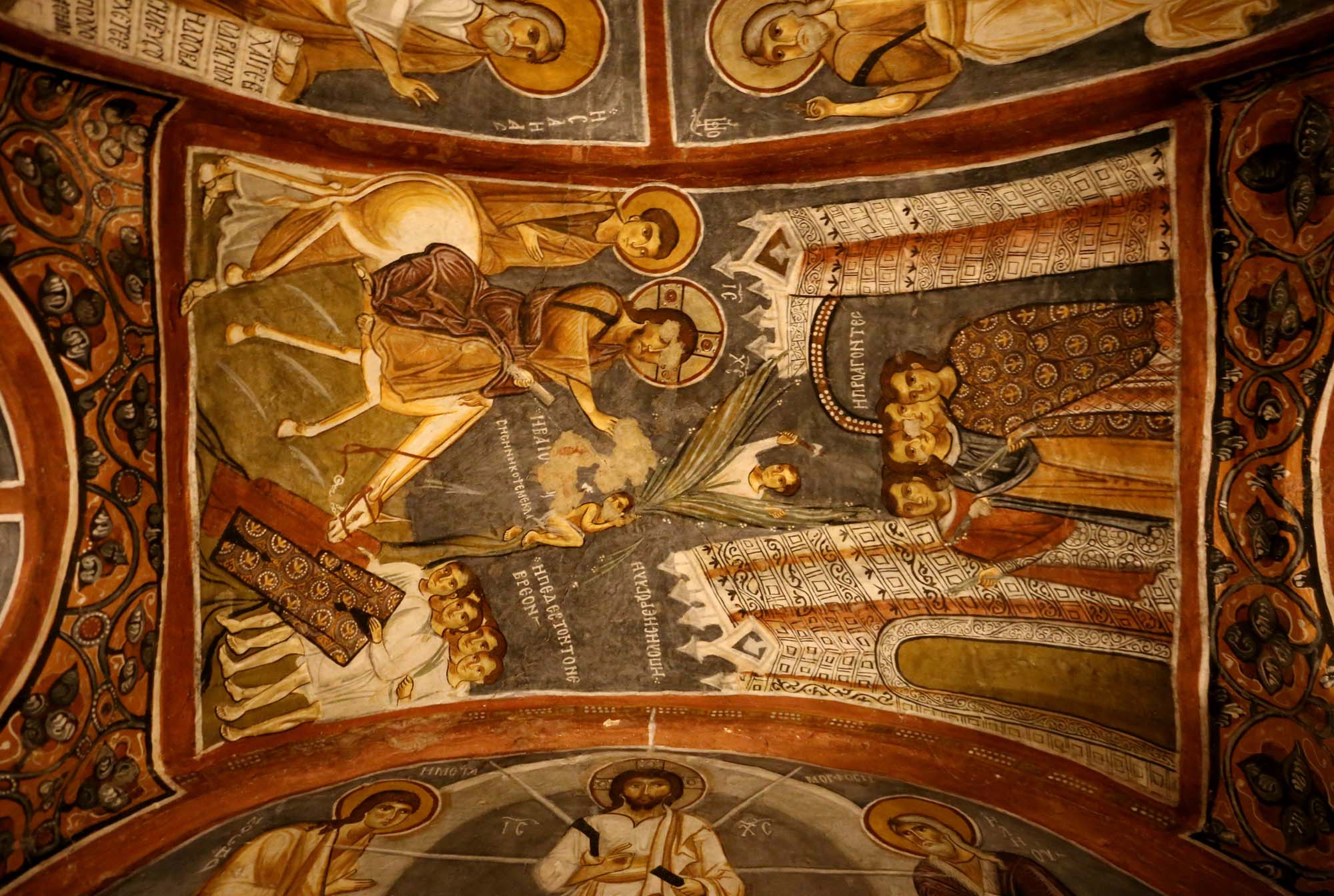 The two groups of young men in white robes bear inscriptions: οἱ προάγοντες (those who go ahead) and οἱ πεδεστόντων ἑβραῖον (the Jews marching before). The two youths cutting branches from the palm in front of Christ instruct each other in the local dialect: Σισινικοψέμεκλα, roughly translated as “Sisinis, grab/cut the branch.”


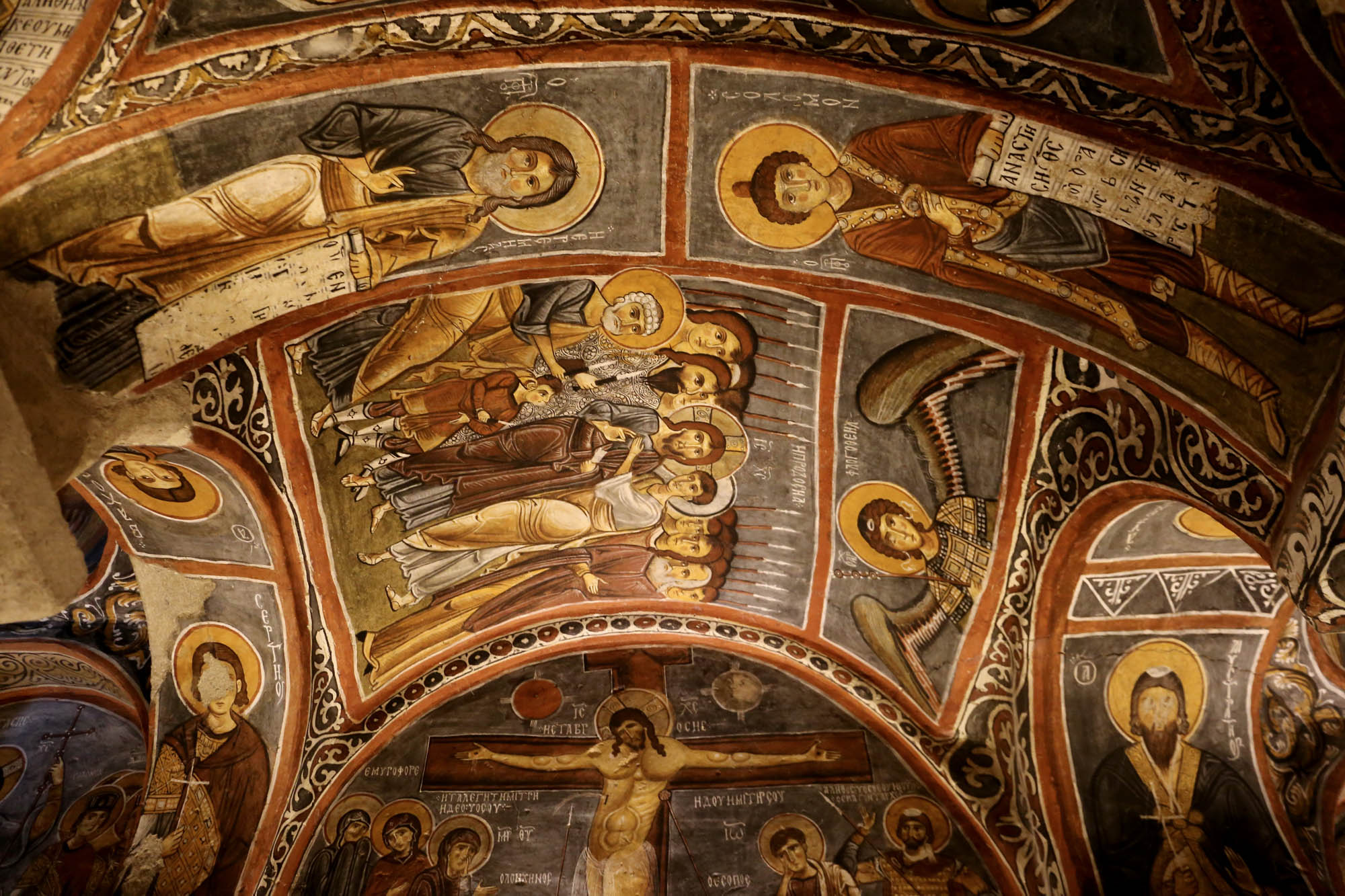
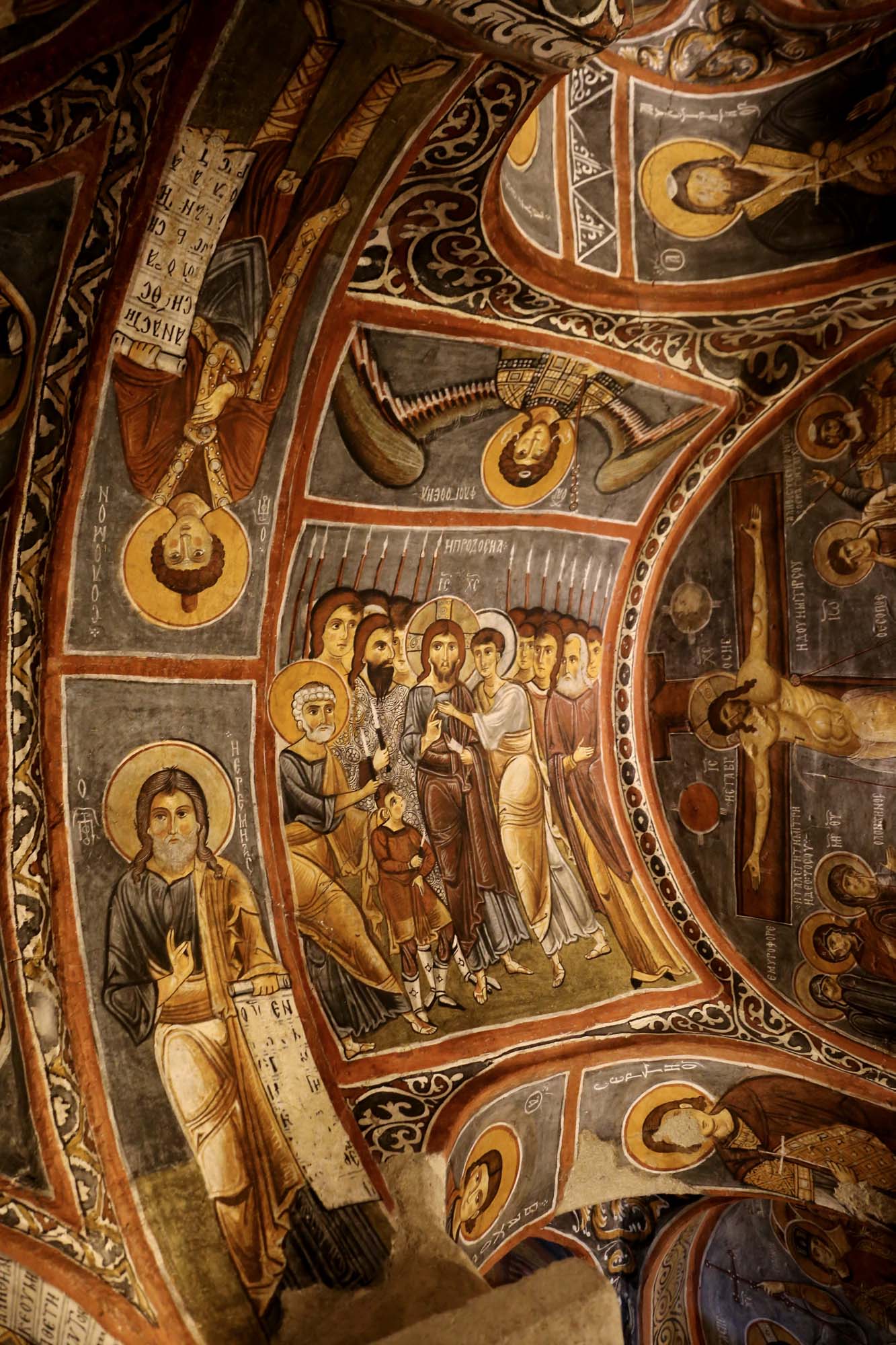
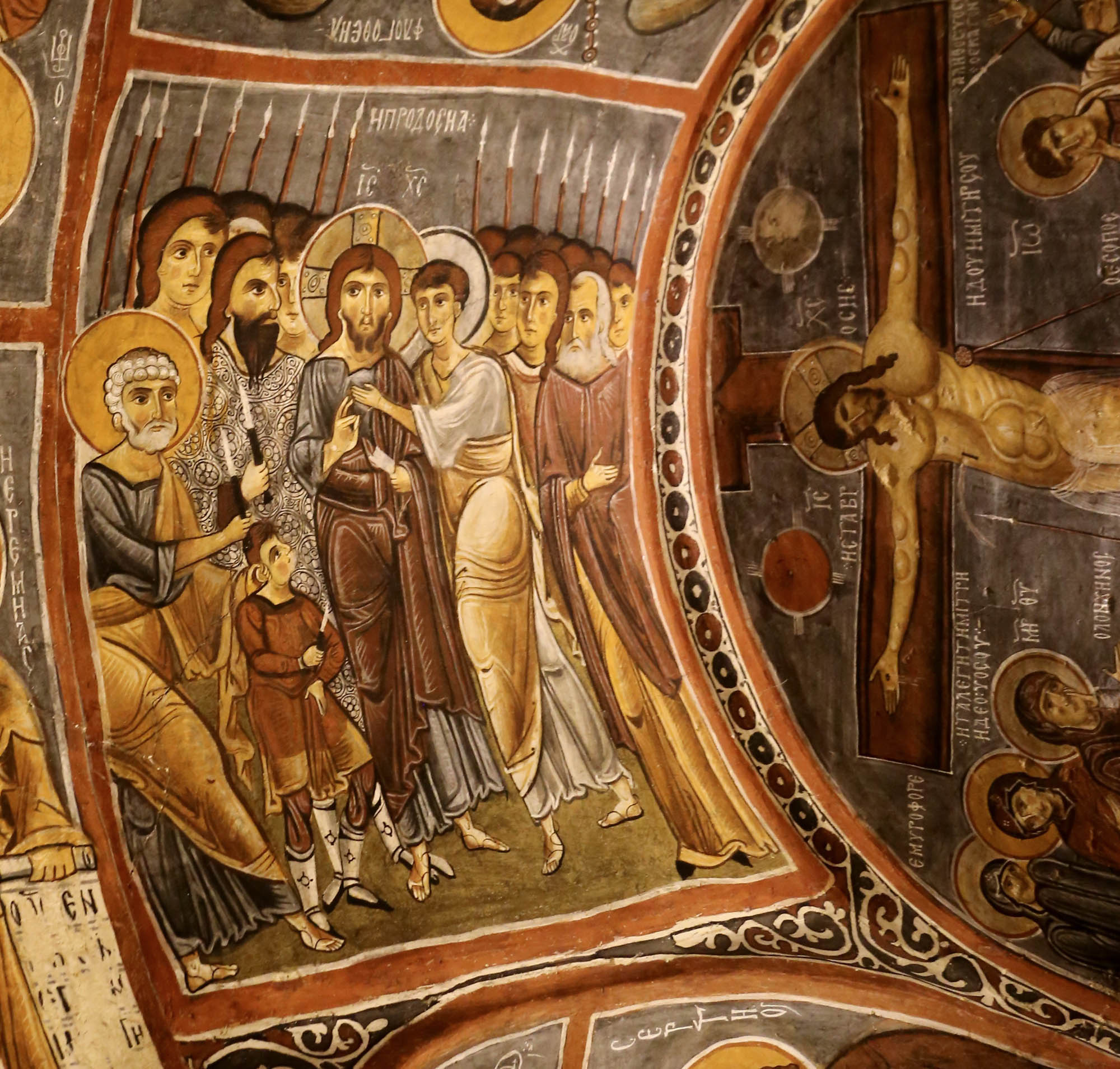
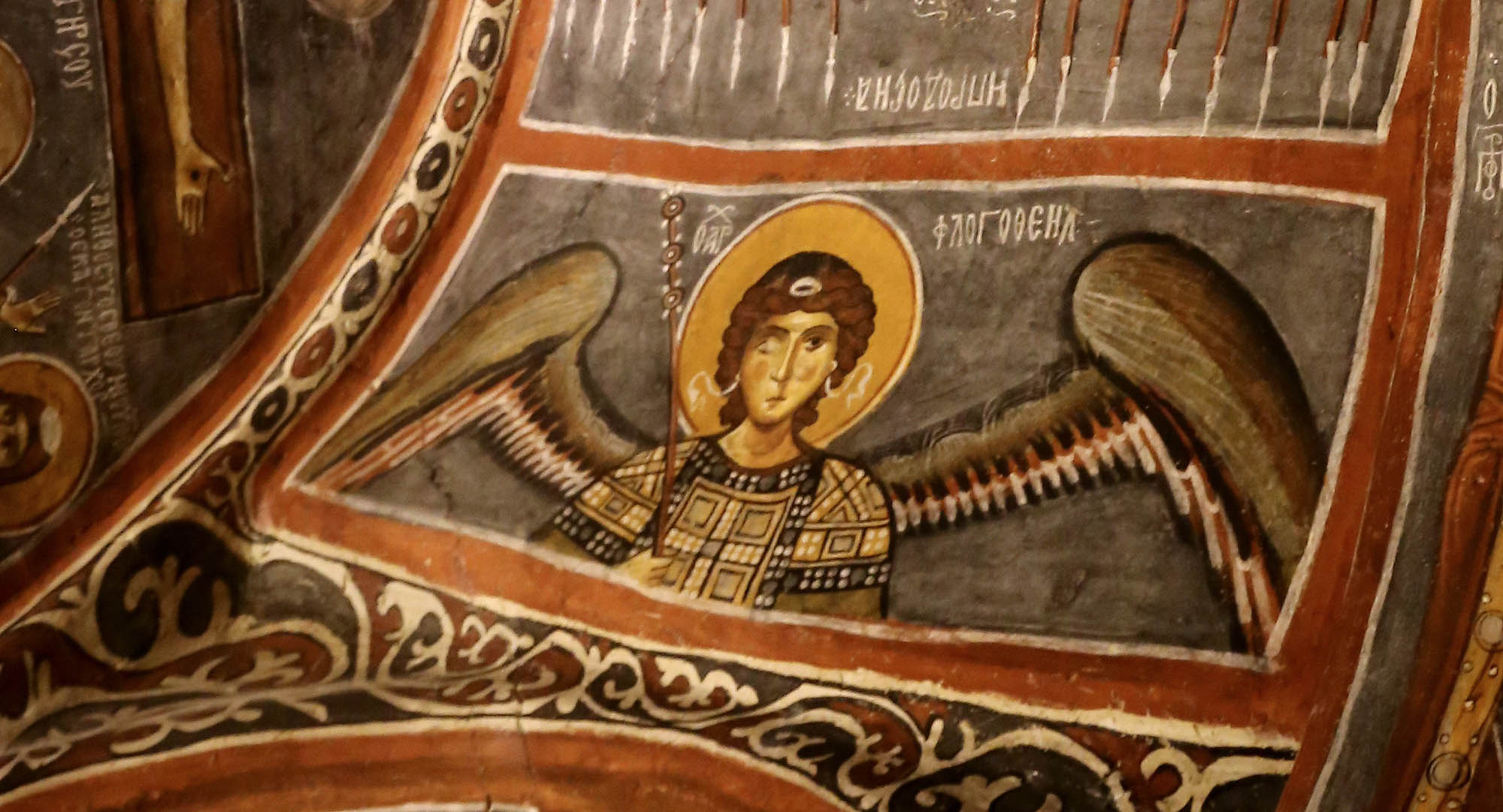
On the south wall, framing the Crucifixion scene: Judas’ kiss and the arrest of Christ. At the other end of the arch is not the continuation of the scene, but an archangel, identified as Phlogethiel, meaning “Flame of God.” The archangel is apocryphal, not mentioned in the Bible, but Cappadocian frescoes often incorporate apocryphal elements. Here, he likely symbolizes the divine flame that permeates suffering and redemption, or serves as the heavenly counterpart to the high priests’ soldiers who capture Christ.
The main nave is crowned by six domes. Their iconography generally complements the depiction of the earthly church in the nave by representing the heavenly church. Five of the six domes are arranged in a cross or X shape. In the central dome sits the Pantokrator, with six archangels on the drum and the bust of Christ Emmanuel, representing Christ as ruler of heaven and earth. The surrounding inscription paraphrases Psalm 53:2: “I look from heaven on the sons of men, to see if there is any who is wise, who seeks God.”
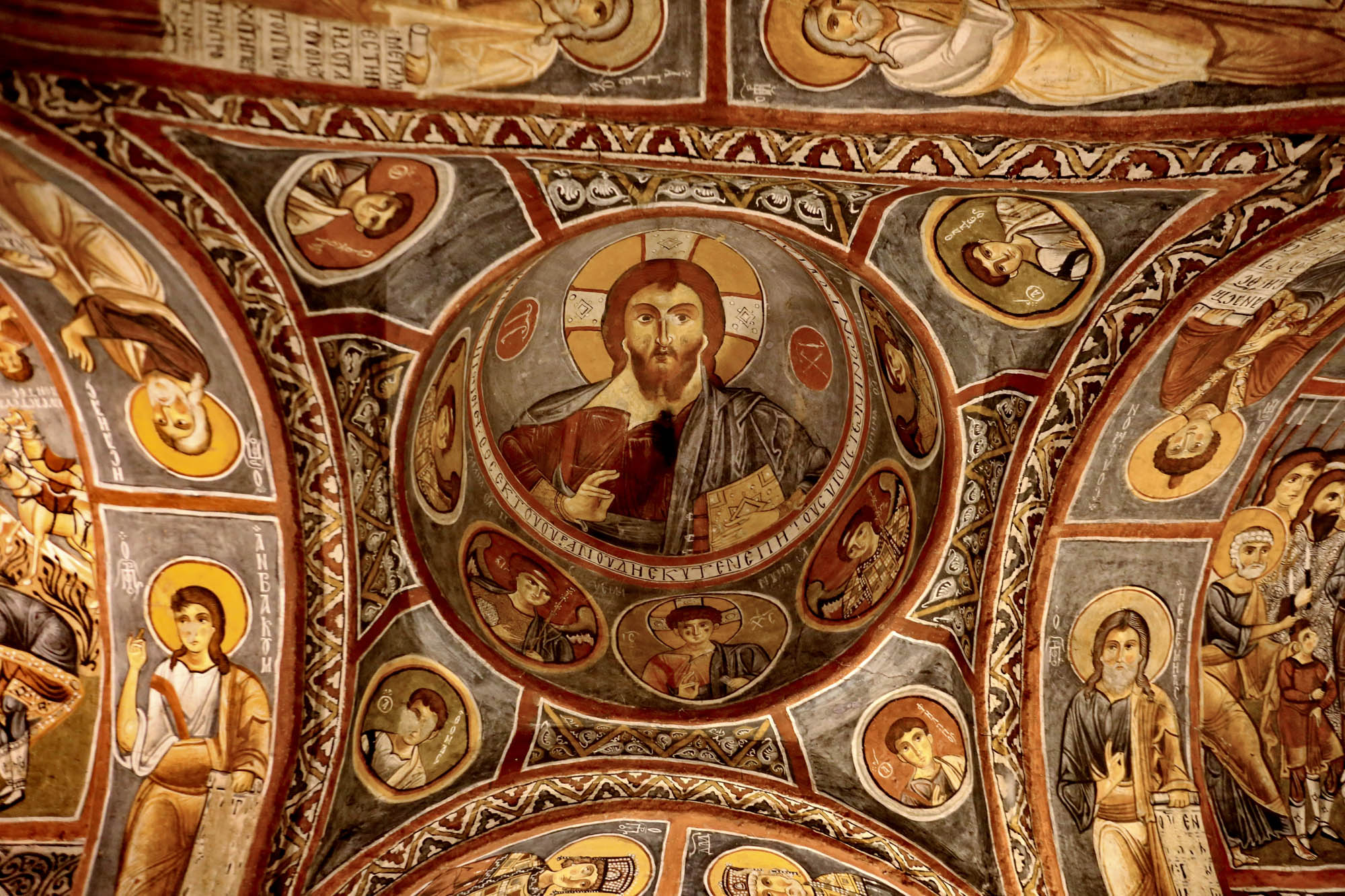 The figure of Christ Emmanuel refers back to Isaiah 7:14: “Behold, a virgin shall conceive and bear a son, and shall call his name Emmanuel,” to which Matthew 1:23 adds: “which means God with us.” Christ Emmanuel, the coming Savior, is depicted as a child before his arrival, either with the Father or in Mary’s womb, usually shown half-length. The seven archangels serve him in heaven and on earth.
In the four smaller domes arranged in an X around the central dome, each features a bust of an archangel: Raphael, Gabriel, Michael, and Uriel. Unusually, between the main dome and the sanctuary is a sixth dome with a second Pantokrator bust, surrounded on its drum by three archangels and three earthly saints—Joachim and Anna, the parents of the Virgin Mary, and John the Baptist—Christ’s earthly relatives.
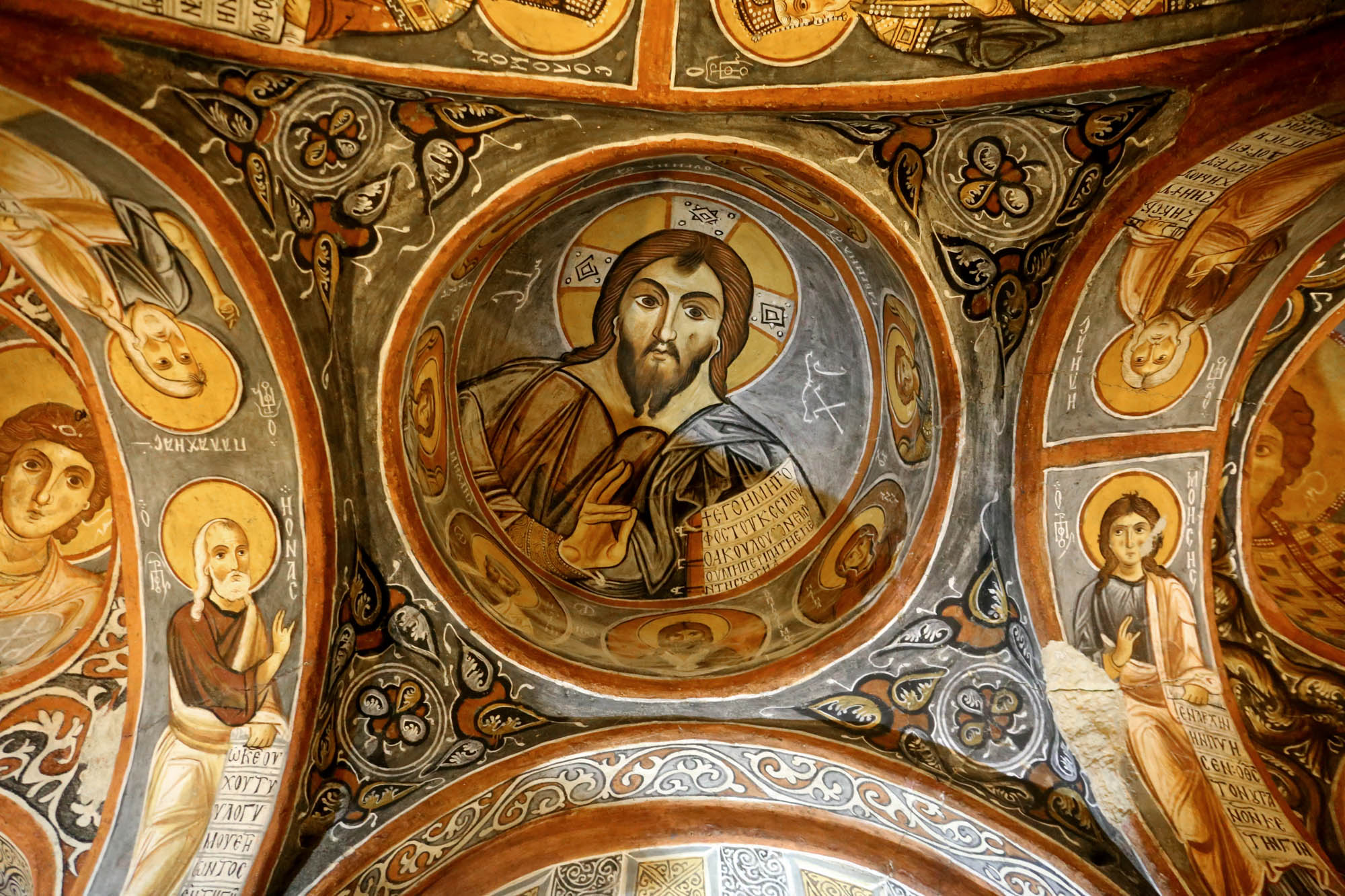
On the large arches supporting the two Pantokrator domes—the intradoses—the twelve prophets are depicted full-length, each holding a quotation referring to Christ.

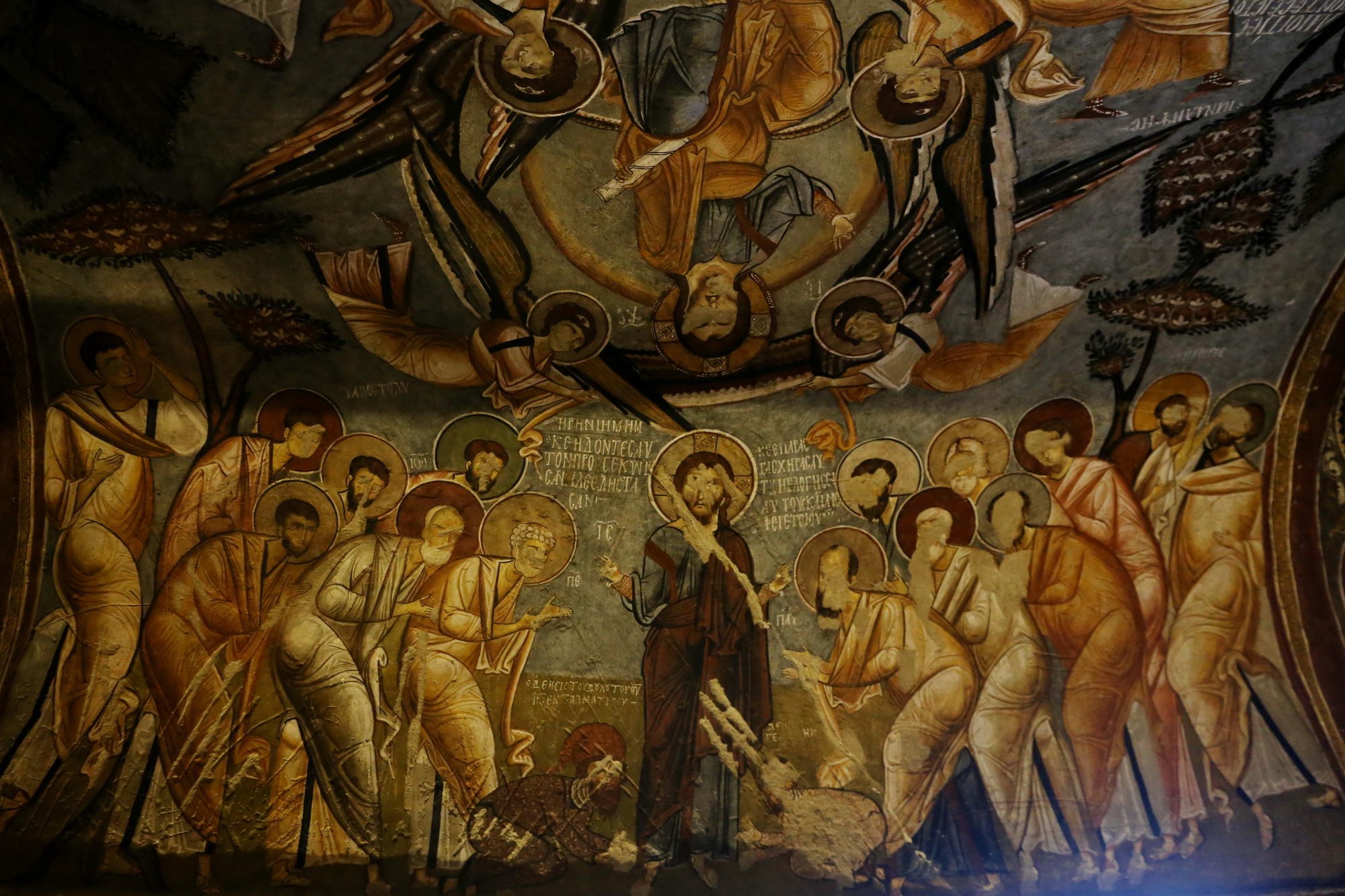
The church's narthex is covered by a transverse barrel vault, with Christ ascending to heaven depicted in the center.
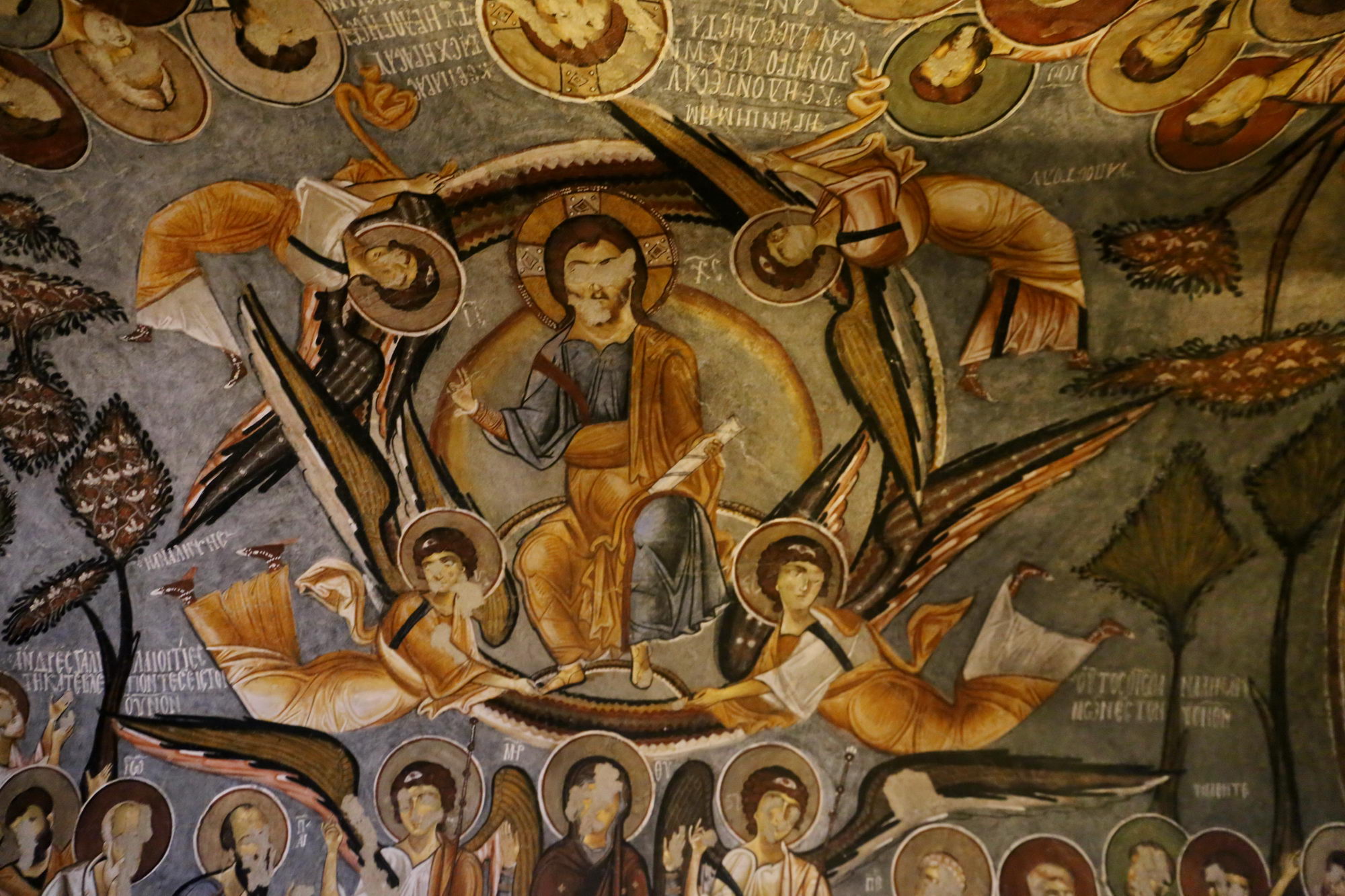
The apostles watching the Ascension stand on the eastern side of the vault. On either side of the Theotokos, whom they surround, an angel warns them not to be amazed: just as Jesus has now ascended to heaven, so He will return (Acts 1:11).
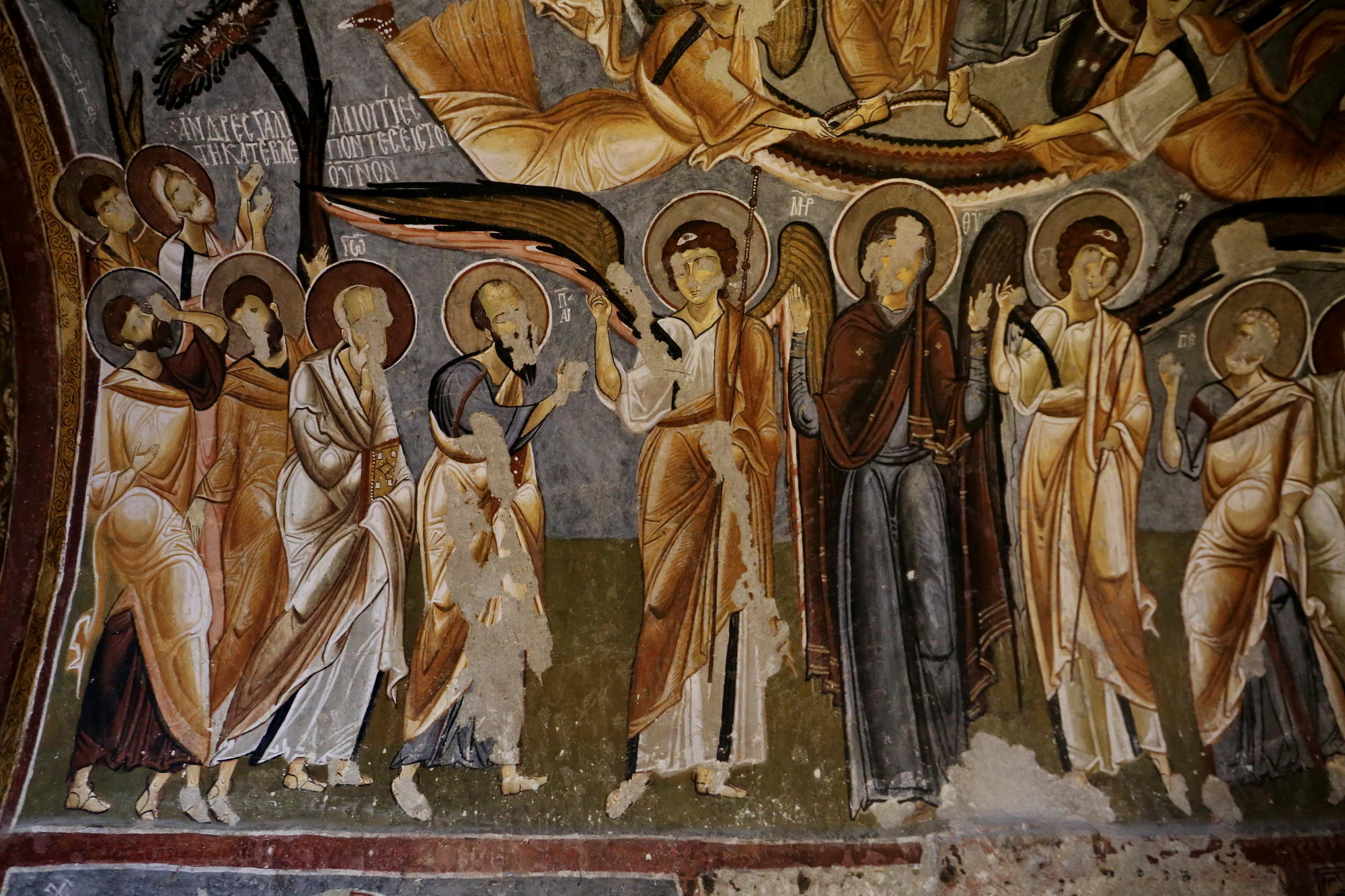

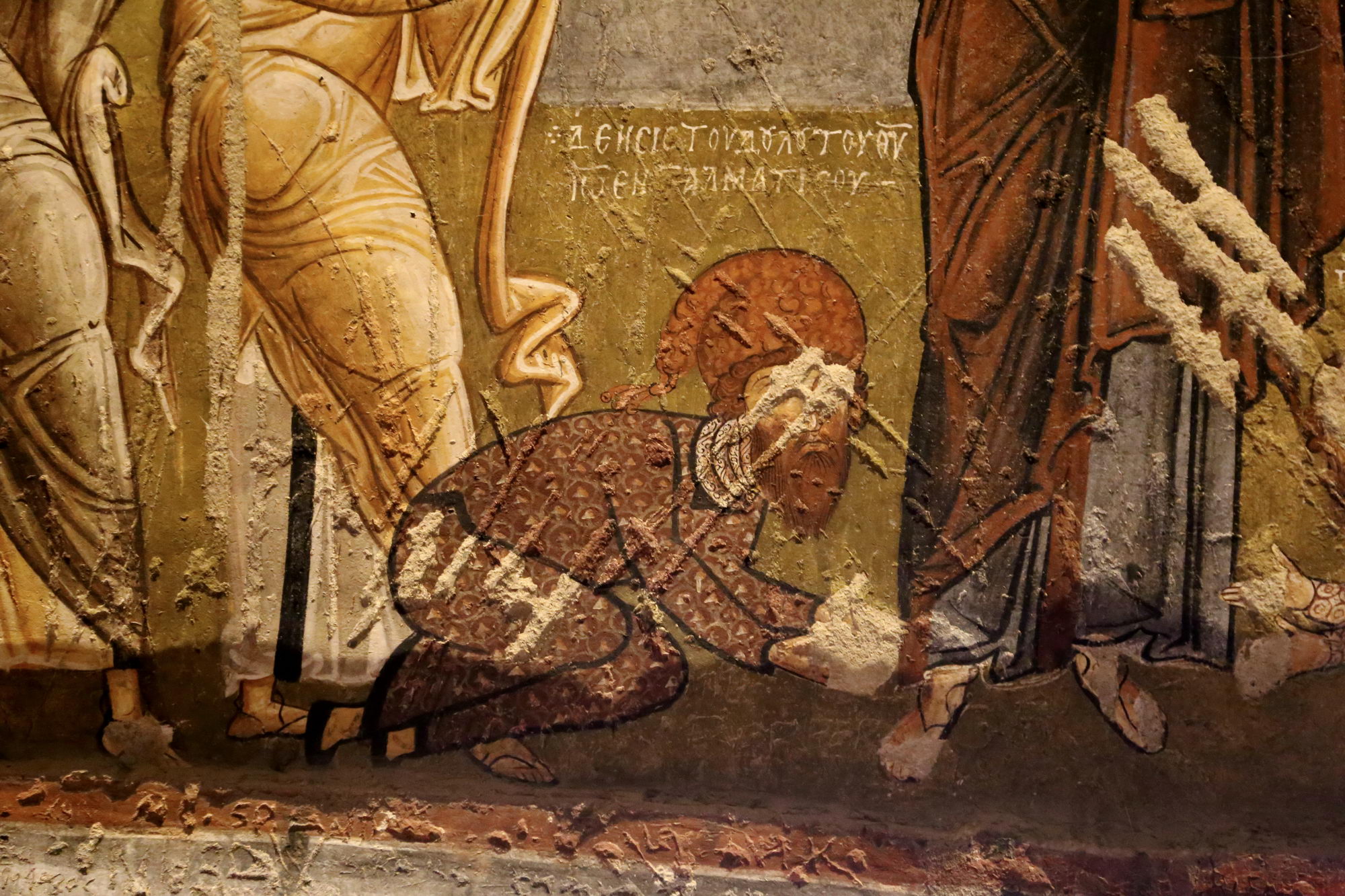
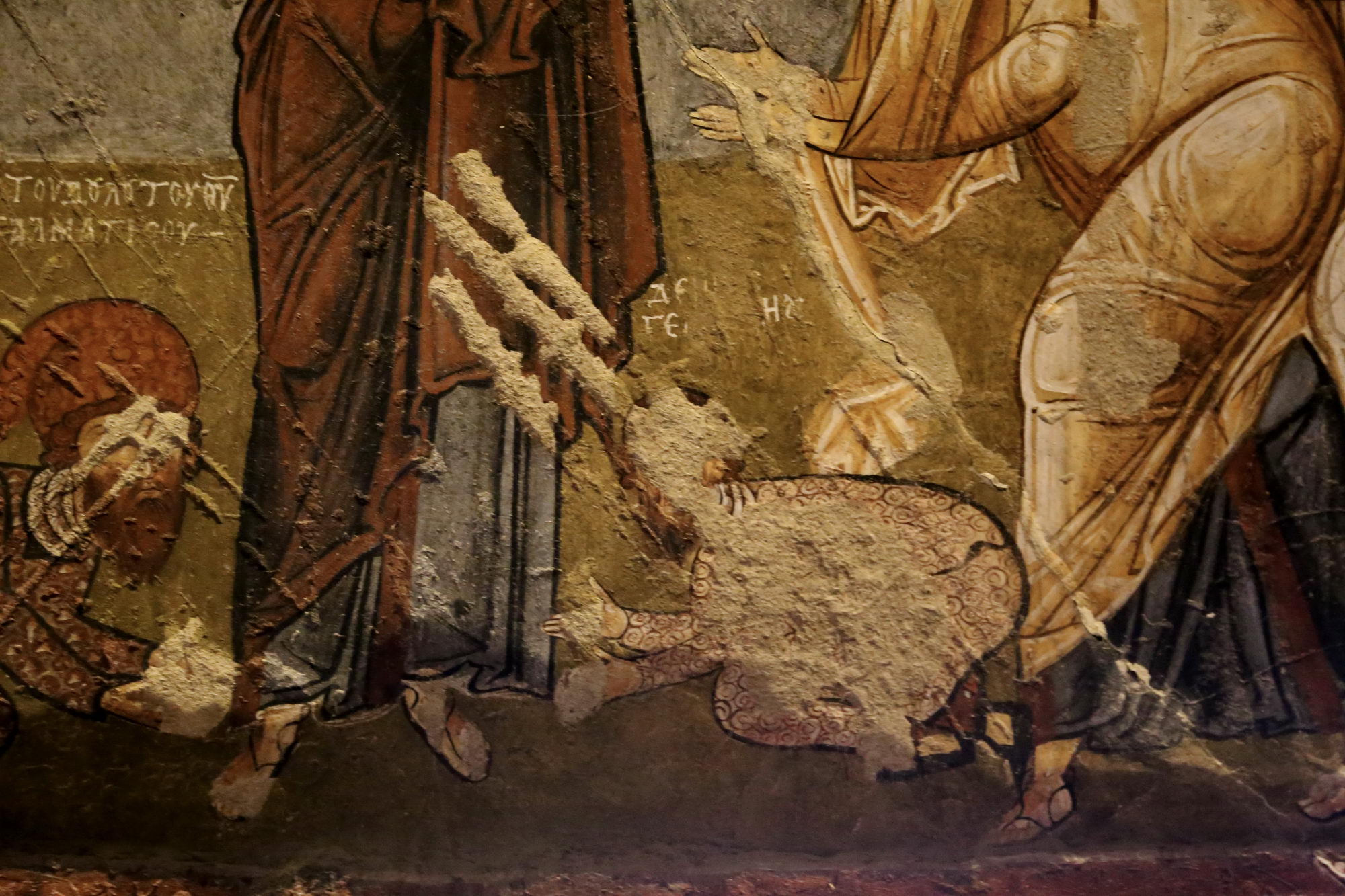
On the western side of the vault, before Christ's Ascension, He sends the apostles to preach to all nations. At His feet kneel two richly dressed donors, identified by inscription as Ioannes Entalmatikos and Genenthlios.
On the western wall, under the apostles’ mission, we see the scene—what remains of it—where Abraham entertains the three angels. In Christian interpretation, this represents the Holy Trinity itself, as the inscription indicates: ἡ Ἁγία Τριάς, the Holy Trinity.
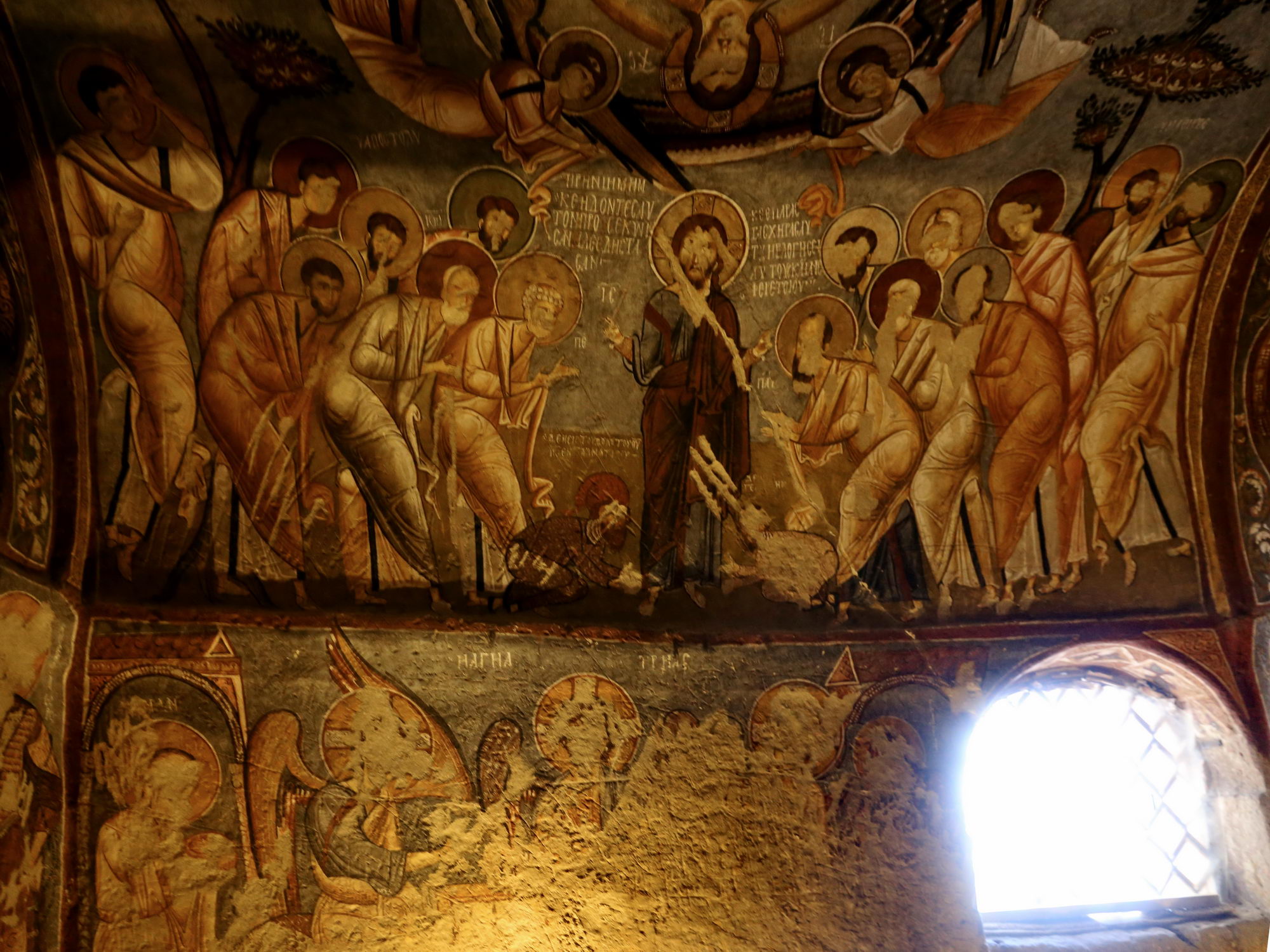
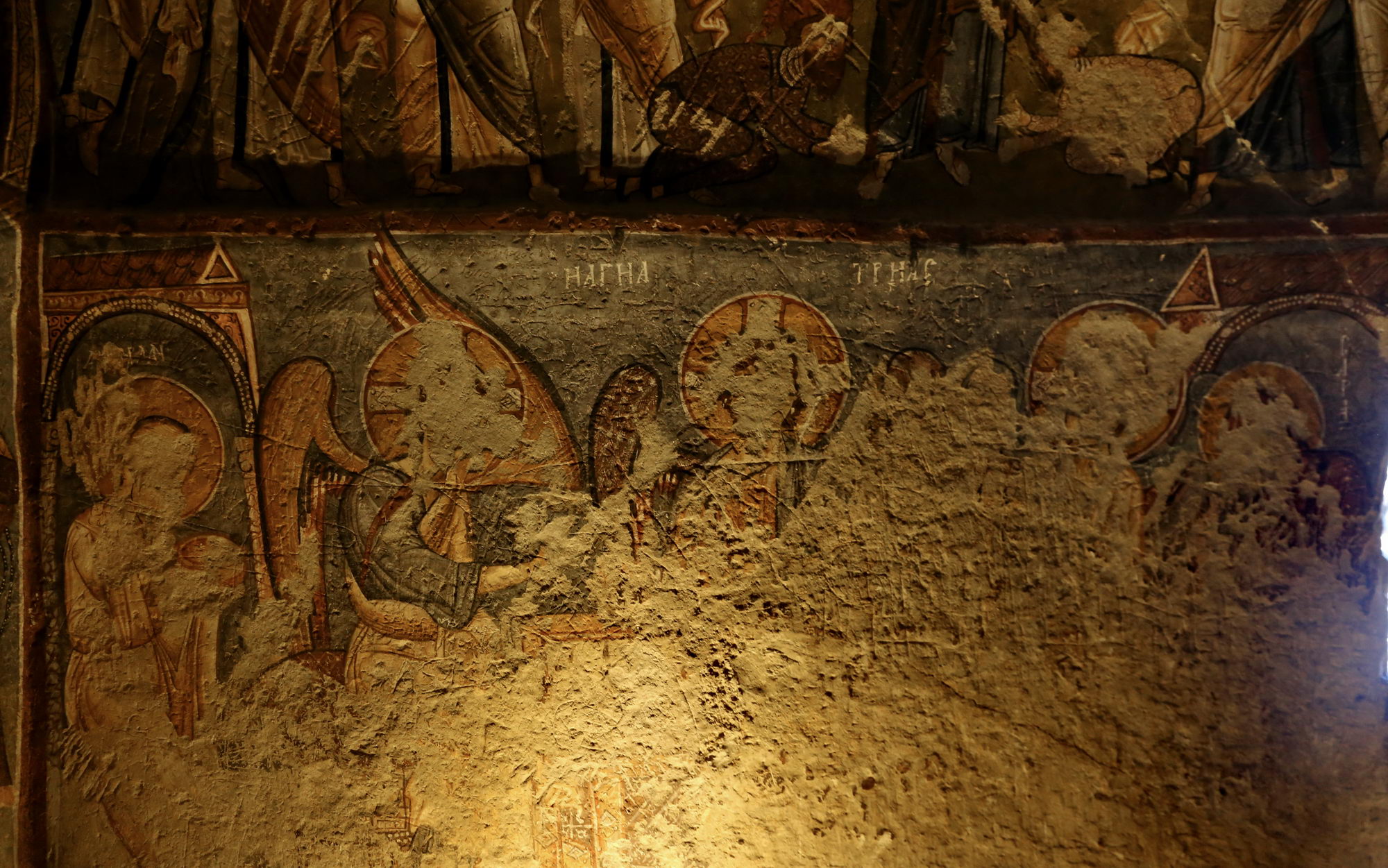
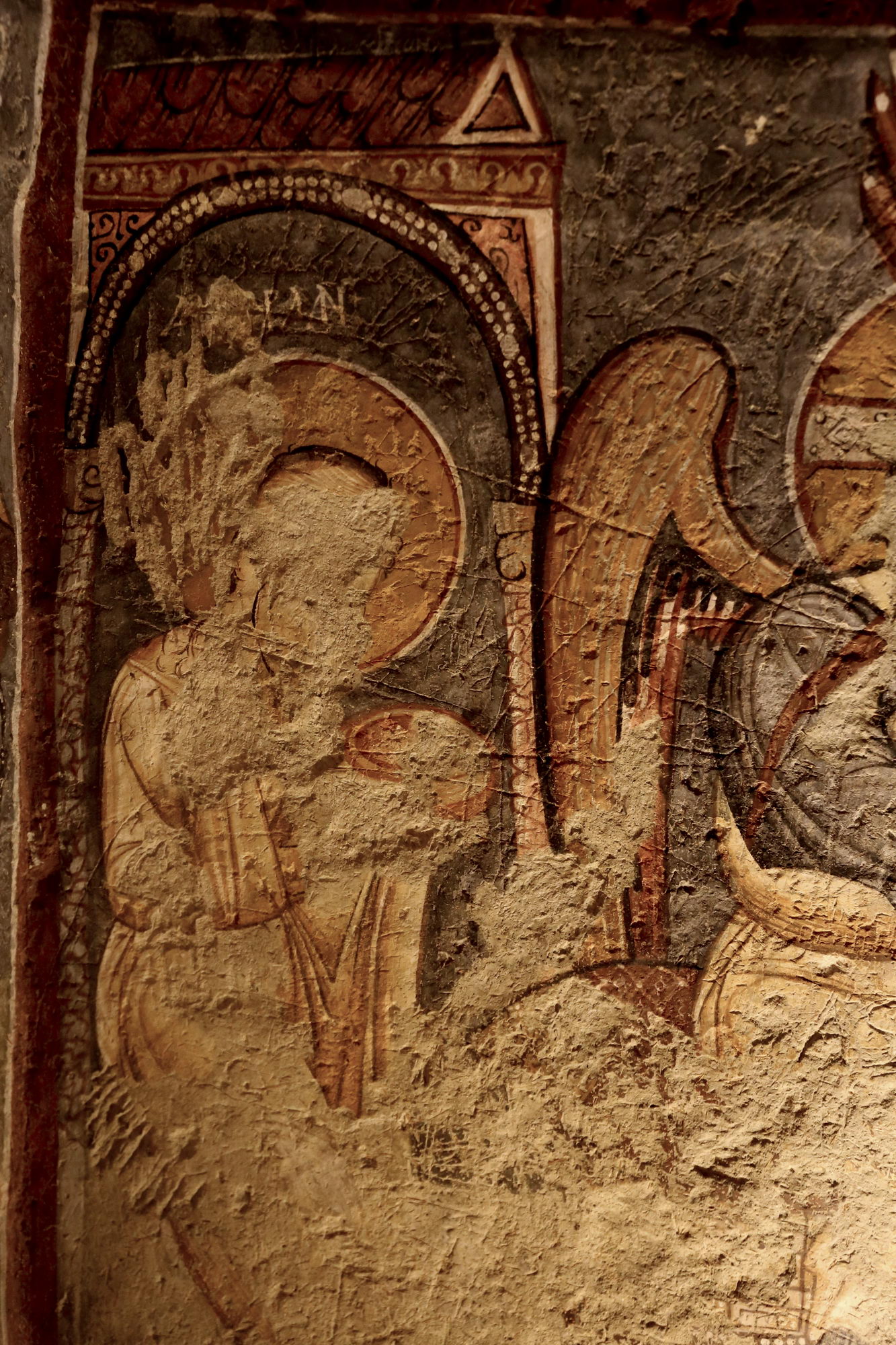

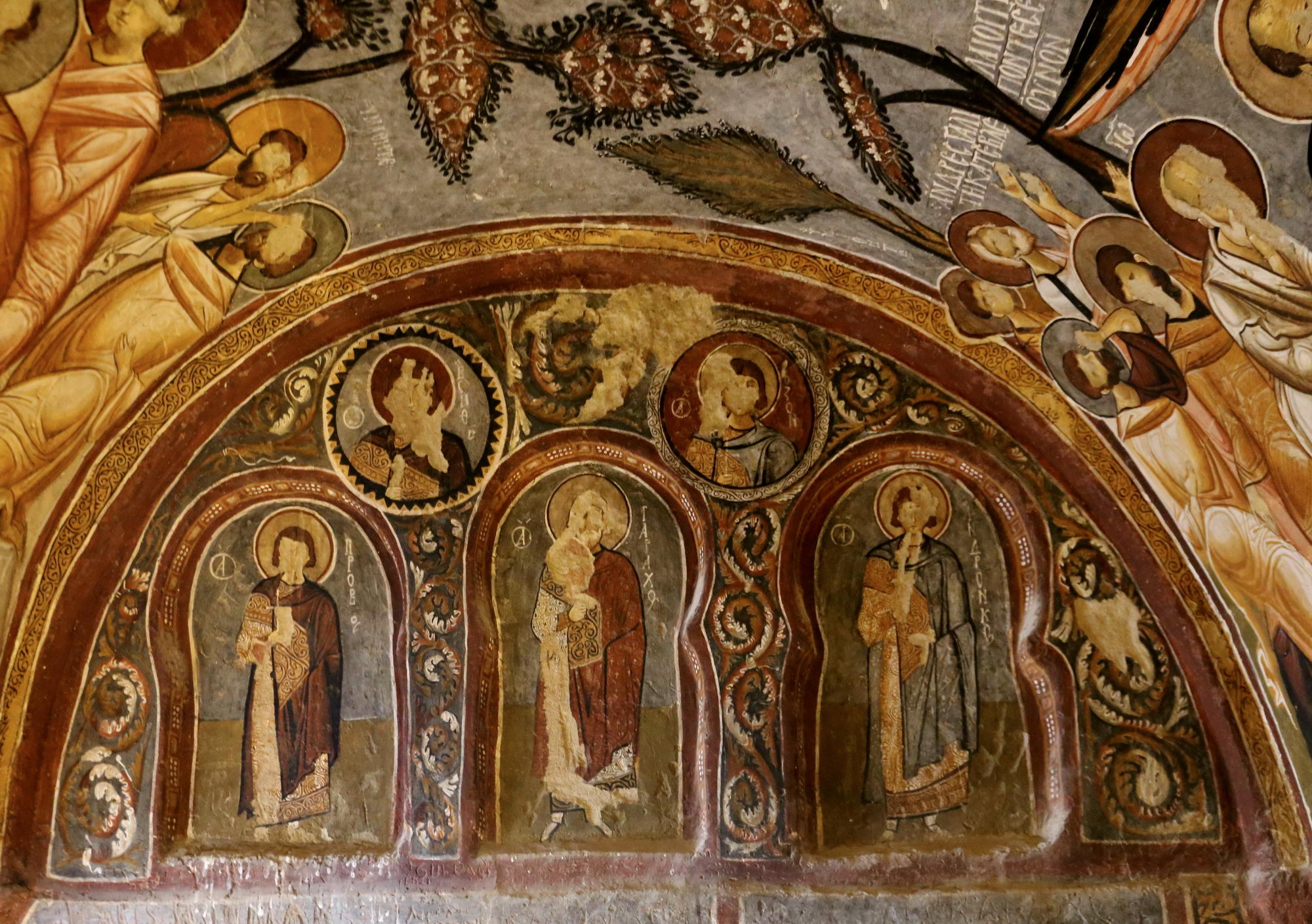
In the northern lunette closing the narthex, each of the three blind arcades contains a male saint, with female saints depicted on the wall below.

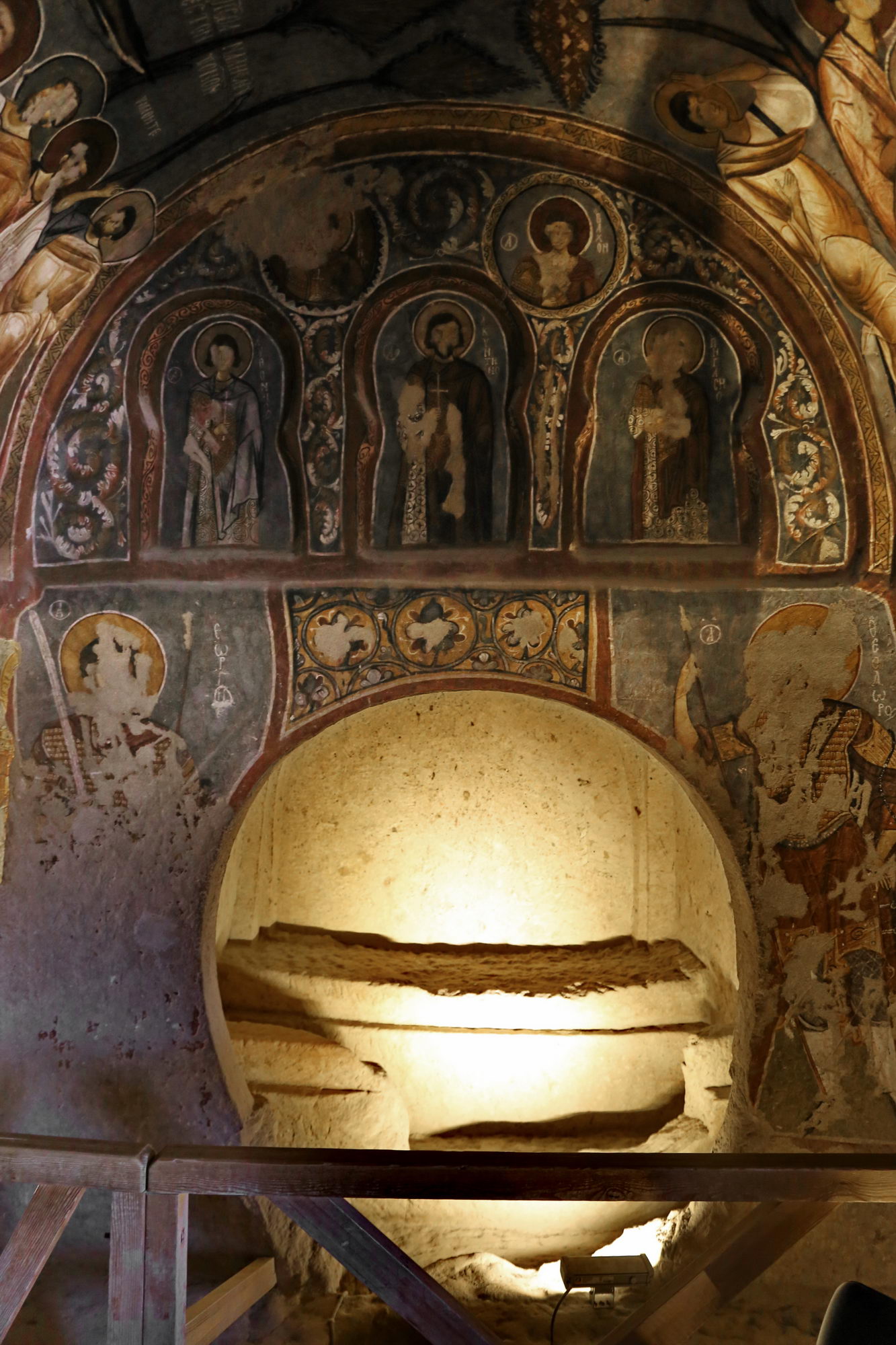
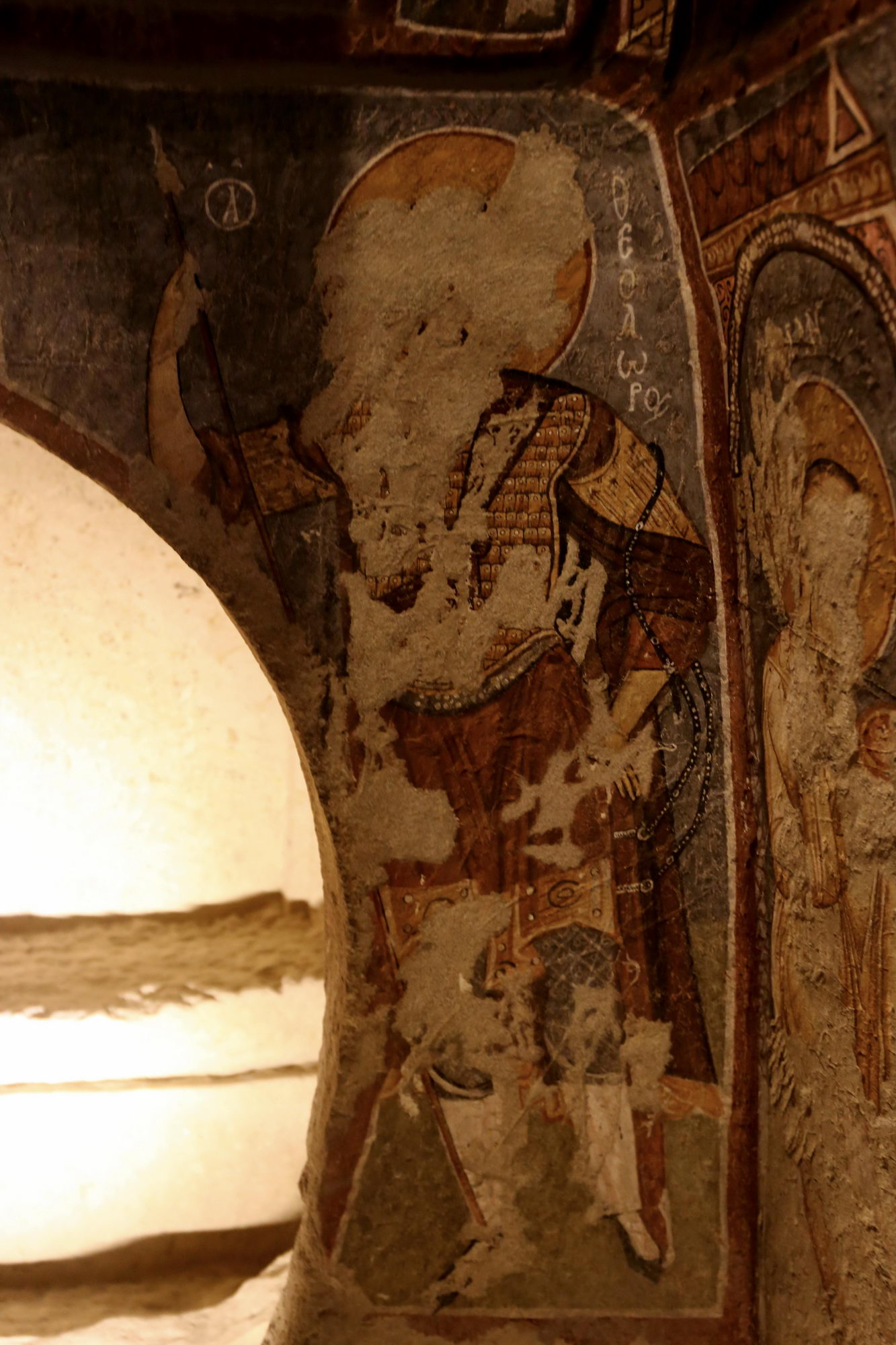
In the southern lunette’s three blind arcades, male saints are similarly depicted, with a tomb beneath, guarded by two warrior saints, Saint George and Saint Theodore. In Cappadocia, these saints are usually shown mounted, slaying a dragon, as in the Barbara and Snake chapels. Their depiction here as foot soldiers may relate to the fact that mounted iconography was a Cappadocian innovation borrowed from Georgia, and the Constantinople workshop that painted the Dark Church was accustomed to representing them on foot.





Add comment