

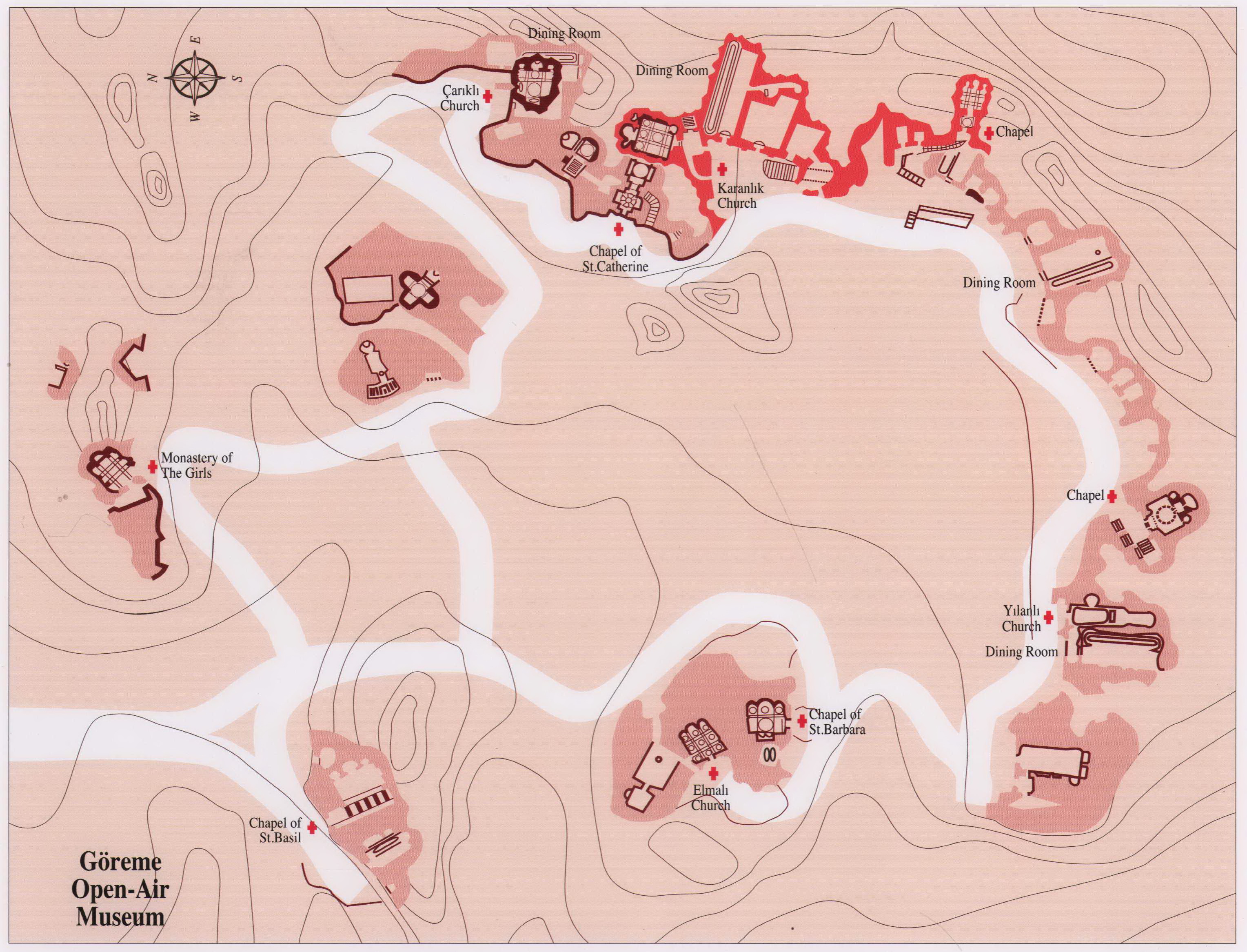
Another chapel (“No. 25”) sits a bit further east, on the upper level of a big rock, to the right—while the most splendid Karanlık Church rests on its left side.
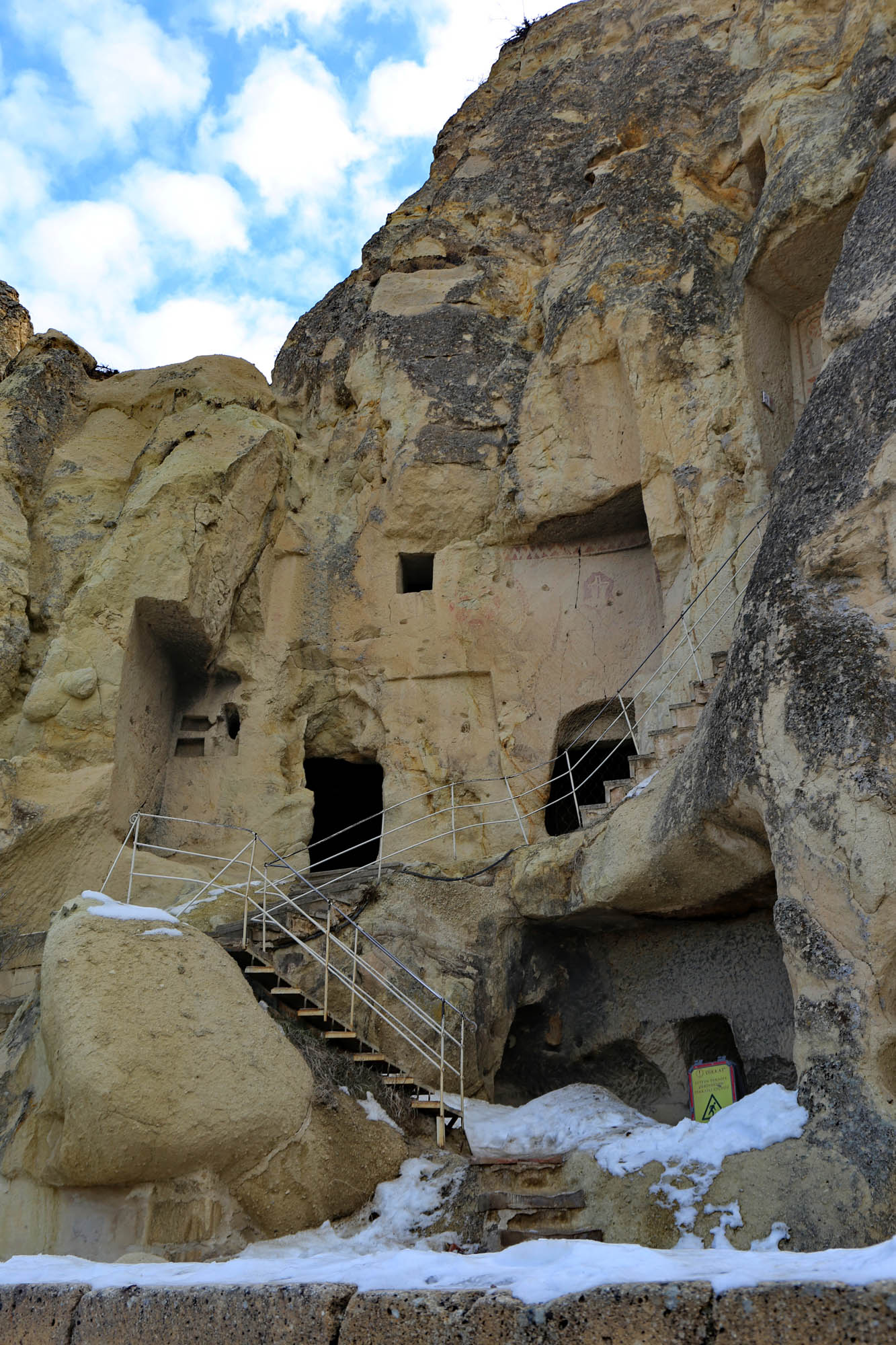
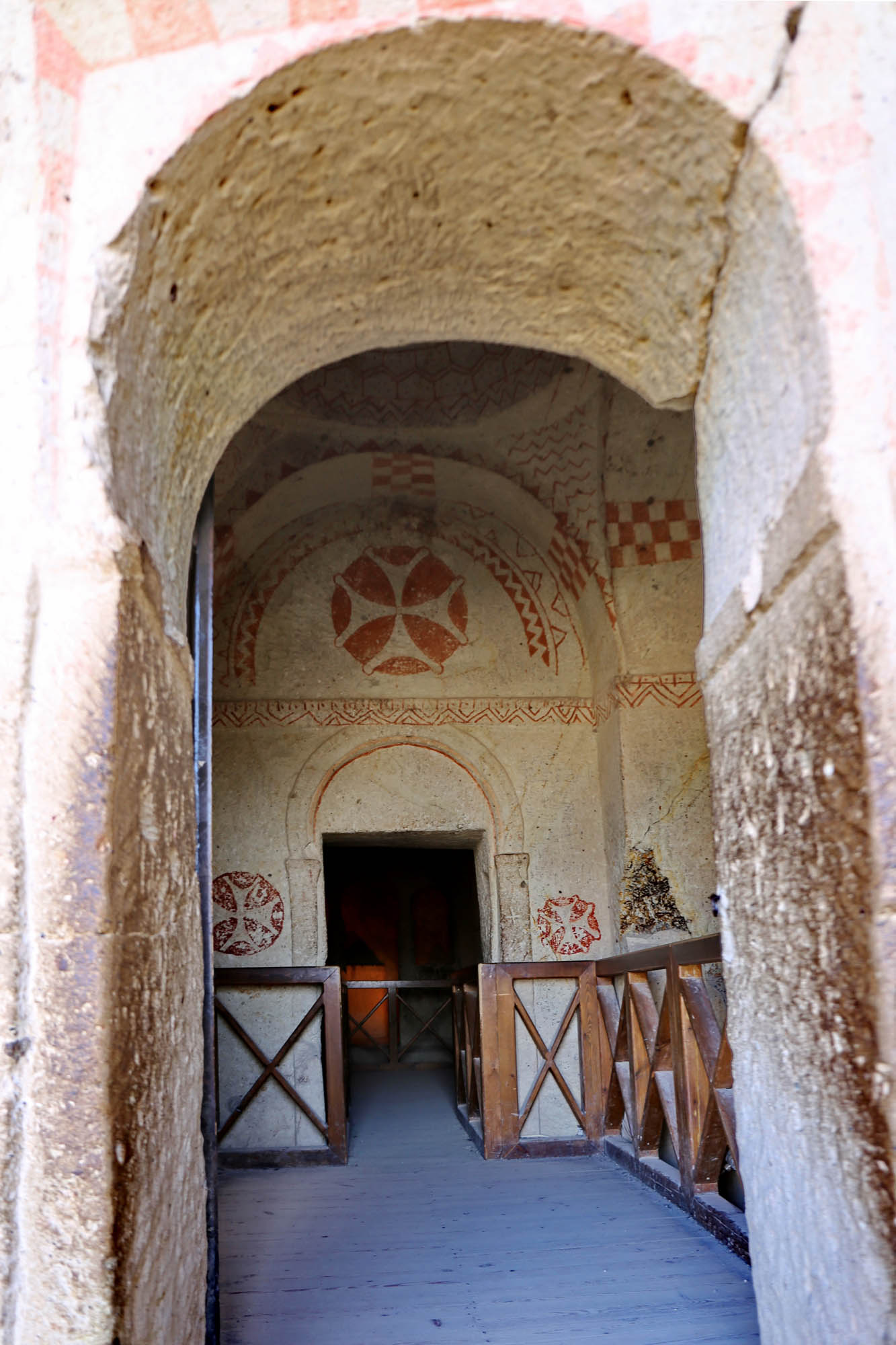
A narrow iron staircase now leads up to the chapel. Flanking its semicircular doorway are two larger blind arches, with a row of small blind arches above, each featuring a red circle‑framed cross.
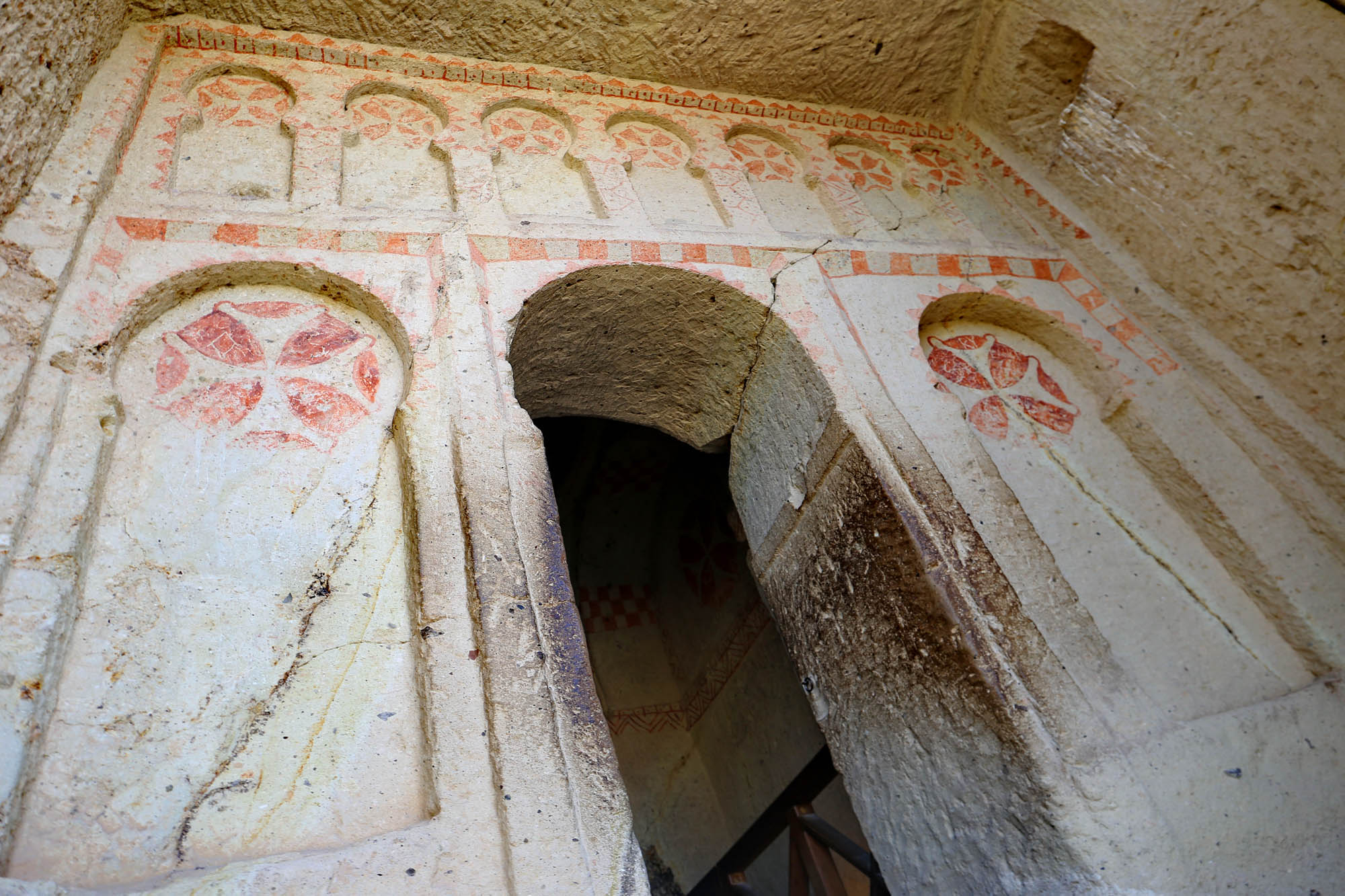
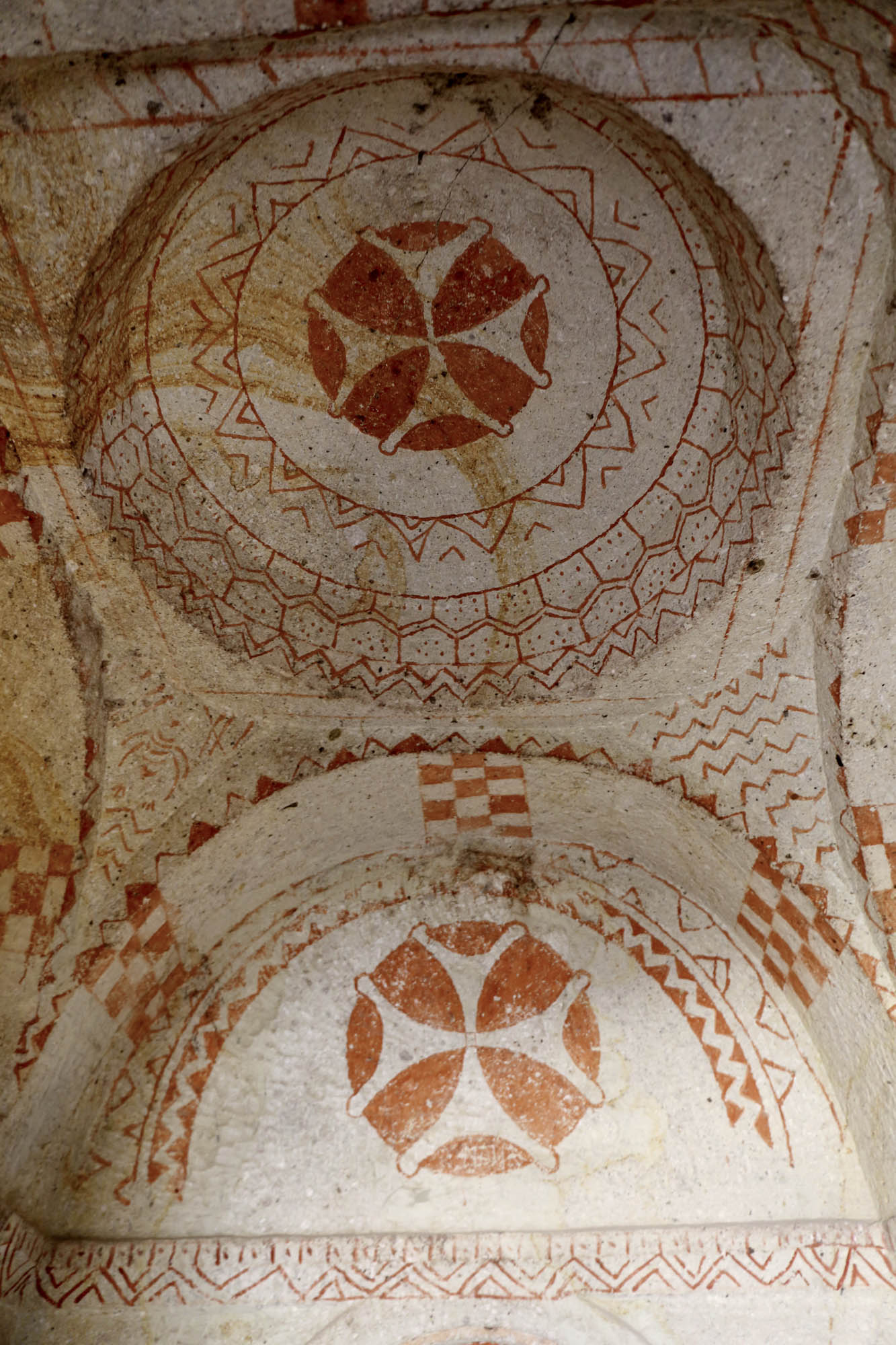
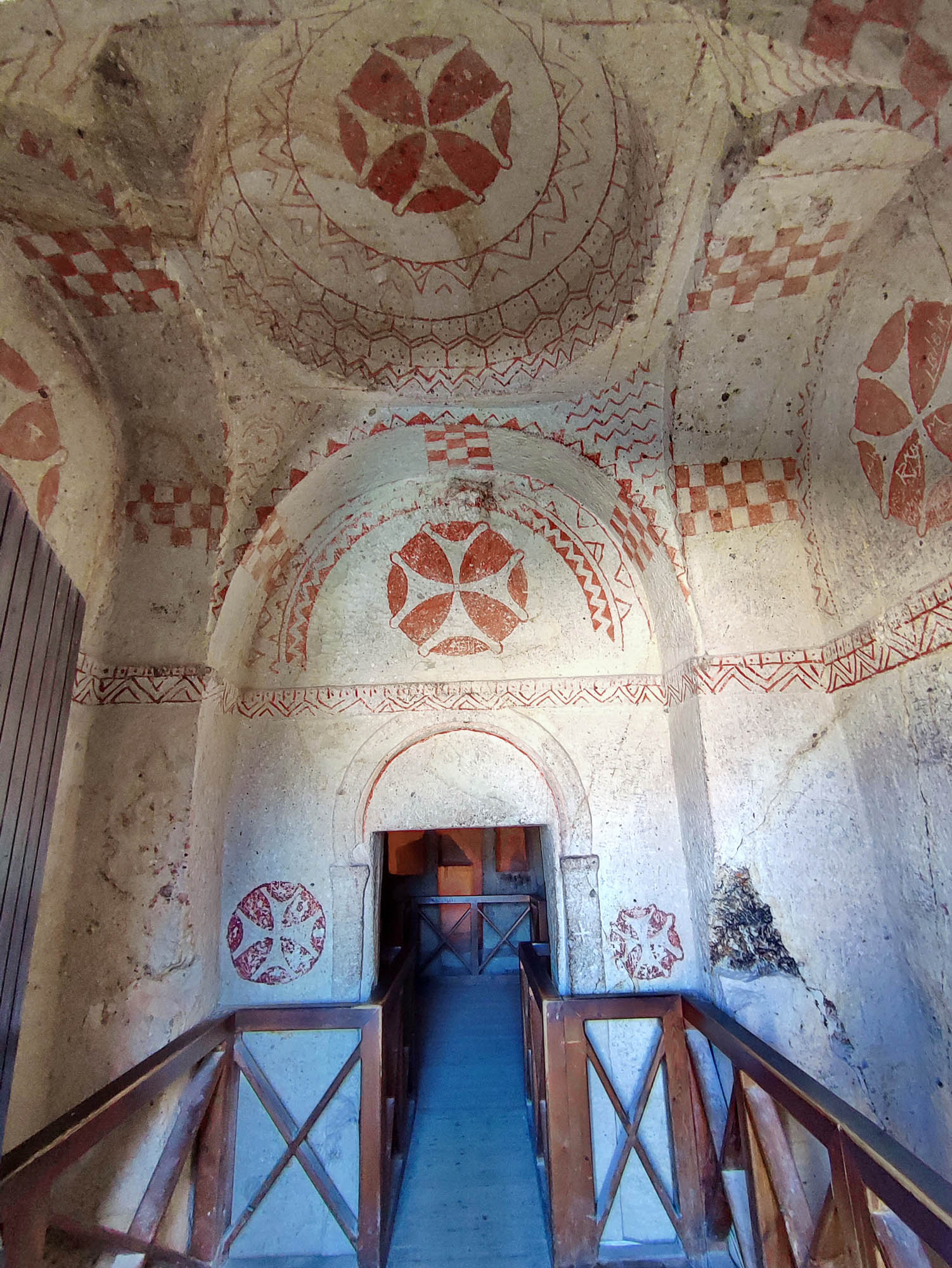
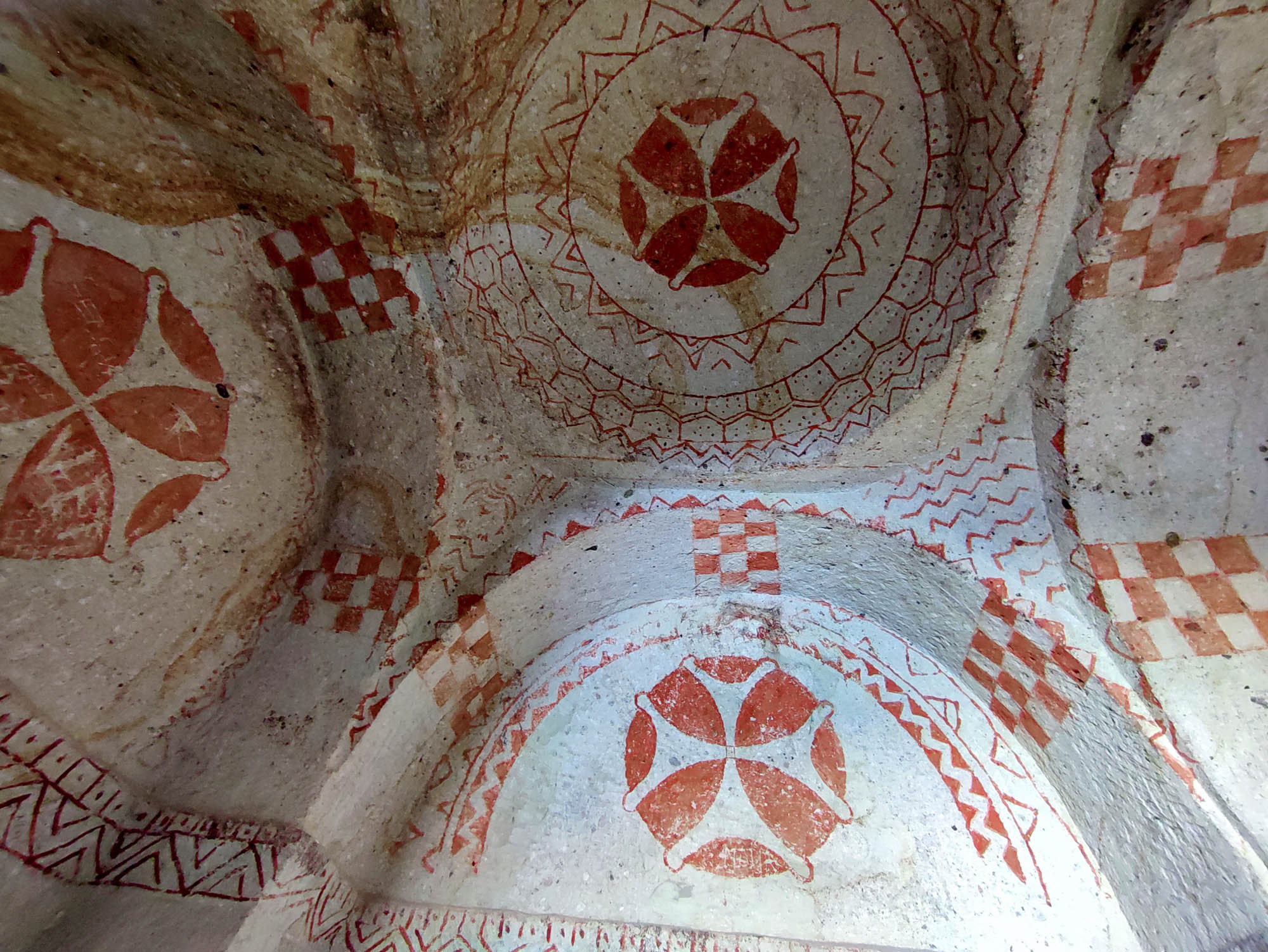
The doorway opens into a square vestibule topped with a dome, where both the dome and the four side lunettes sport similar red circle‑framed crosses. The dome itself is surrounded by rich red linear decorations.
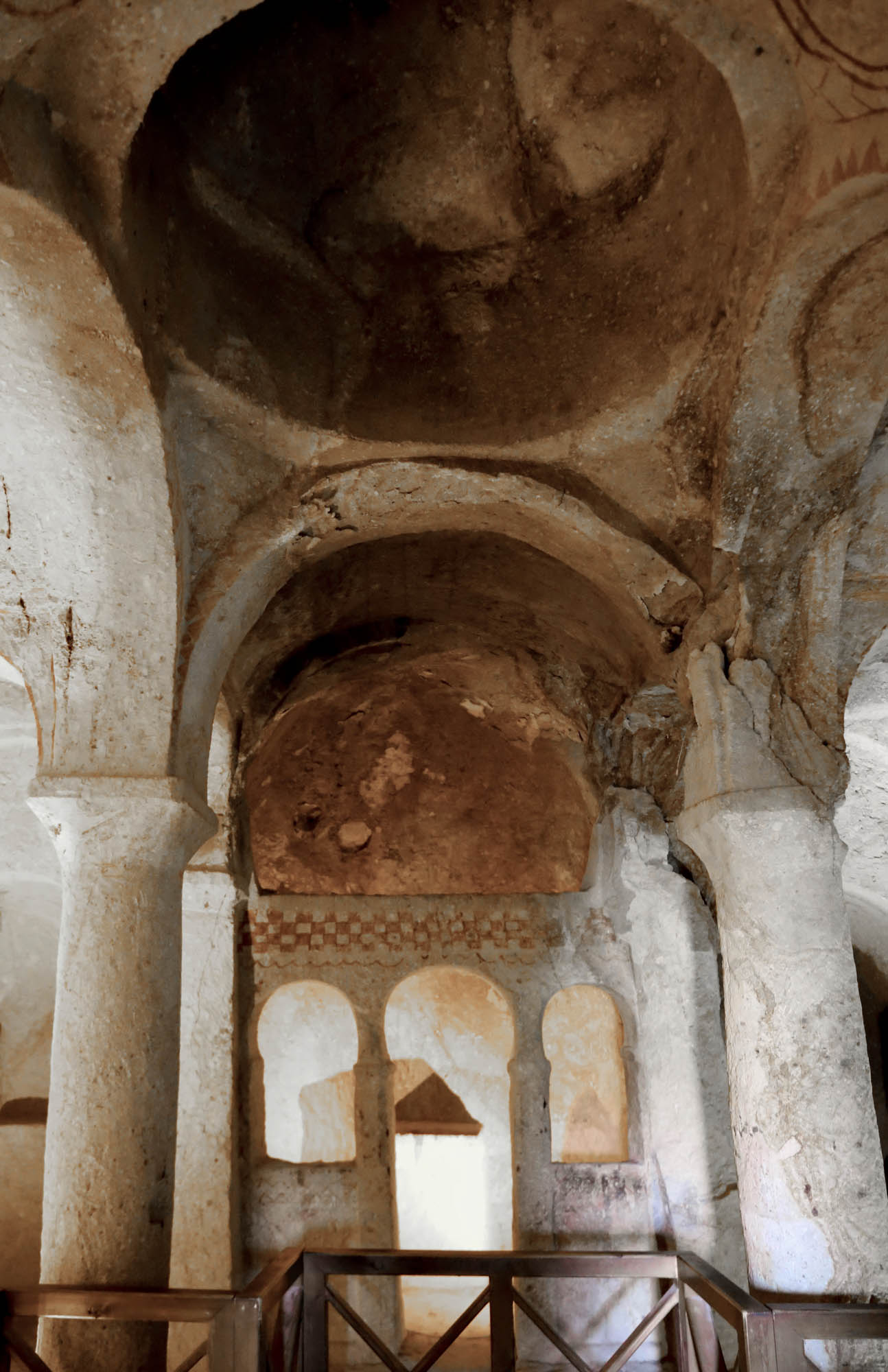
Moving further, we enter the sanctuary, supported by four freestanding columns holding up the dome. This “four-column” type is among the richest in Cappadocia. Other examples include the last three, most lavishly decorated Göreme churches—Elmalı, Karanlık, and Çarıklı—as well as the nearby Church of St. John in Çavuşin village.
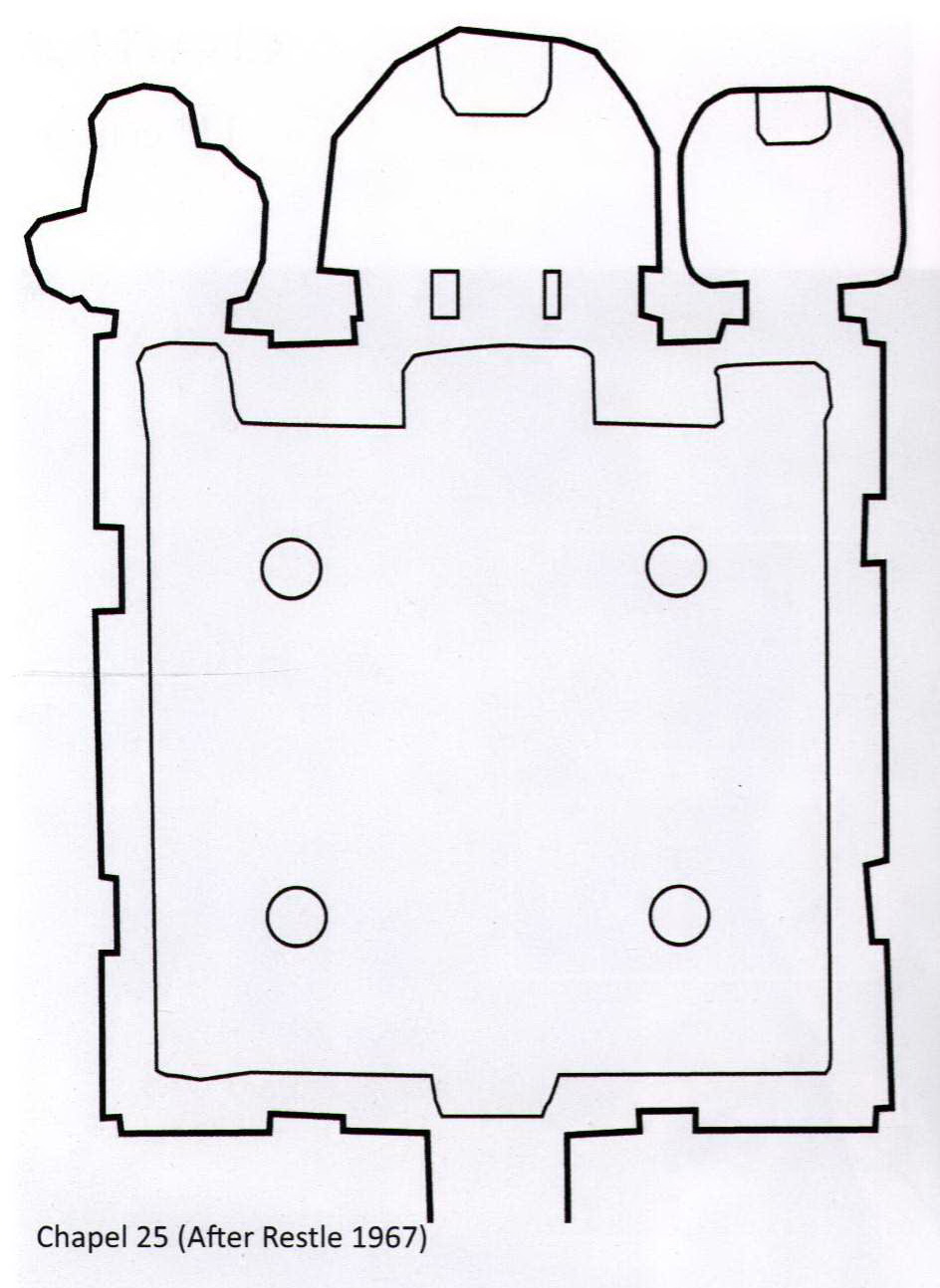
The ceiling, divided into nine fields by the four columns, and the inner surfaces of the arches supporting the dome, offered plenty of space for various scenes. Indeed, in the four mentioned churches, both patron and painter fully embraced this opportunity.
Perhaps a similar plan existed here in Chapel No. 25, but likely it was never executed—the walls lack plaster, not just the layer for painting but even the rough preparatory coat underneath. Only on the beam of the sanctuary screen do we see a red linear decoration similar to the vestibule. This suggests that, like the Basil, Barbara, Snake, and Pantokrator churches, the chapel was decorated during Cappadocia’s second painting period, the Iconoclasm era (7th–9th c.). Unlike the others, though, it never received frescoes—maybe it was never finished, or perhaps no patron emerged willing to fund such an ambitious cycle, unlike in the three other richly structured churches.
|
☞ Next church |



Add comment