

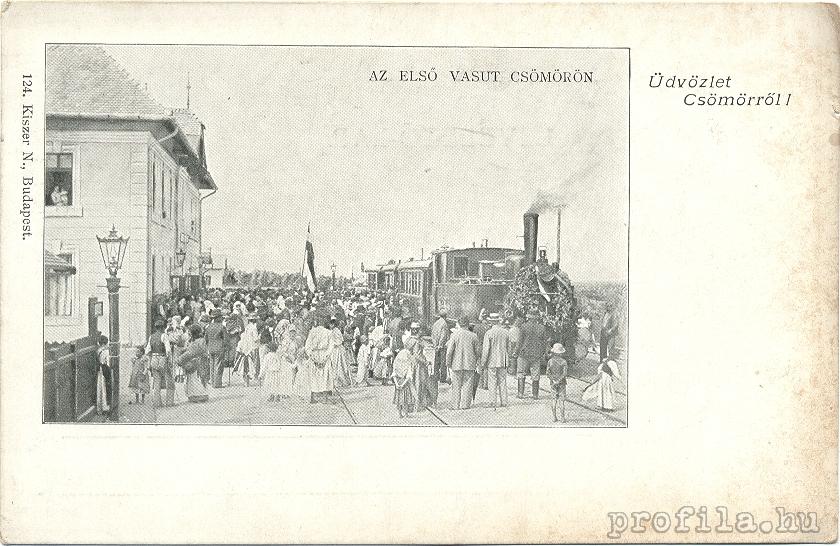
 “The first railway in Csömör” – “Greetings from Csömör!” Postcard from ca. 1896
Fifteen years ago when we came to this village, the old people still spoke among themselves in Slovak, or as they told, in “Tót”, thus making a sharp distinction between the literary Slovak language – which they of course knew and read – and the archaic dialect they brought with themselves from the northeastern Carpathians when, in the early 1700s, they descended to the hills around what is now Budapest to repopulate the villages destroyed during the previous hundred and fifty years of Ottoman domination. Ľudovit Štúr’s Nárečia Slovenskuo which more than a century later, in 1844 proclaimed the autonomy of Slovak language and established its grammar, already did not reach them. They have kept speaking until this day their dialect, close to Rusyn and enriched both by the language of their 17th-century Lutheran Czech hymn and prayer books and by lots of Hungarian terms. I also picked it up from them much earlier than I learned literary Slovak on the language course run by the local self-government of Slovak ethnic minority.
 Slovak women in Csömör on the Ecumenical Prayer Day traditionally organized on 20 August (2010)
This language variant, however, exists only in an oral form. They consider its written form the literary Slovak they encounter in the newspaper Ľudové noviny circulated by the minority self-government, in the books sent from Slovakia by the relatives resettled there during the forced population exchange between 1947 and 1949, or in the minority language courses introduced in the school from the 1950s. However, recently I have discovered with surprise that it used to have a written form of its own which was in use since their arrival to this place for more than a century until it was replaced by Hungarian as an official language.
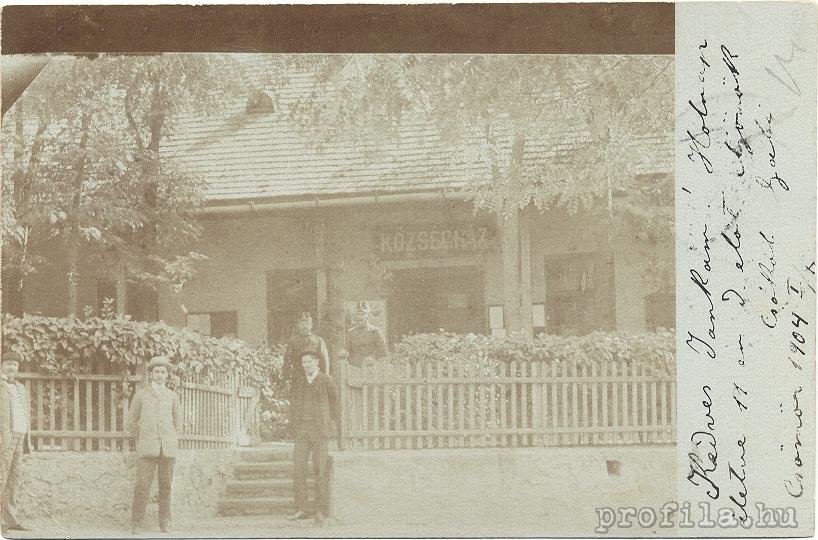 Csömör, Parish Hall, 1905
While working on the homepage of the local Lutheran church and collecting materials for the historical part of it, I discovered on the attic of the vicarage an old handwritten book describing in Latin the history of the local Lutheran community since their arrival in the early 1700s until the mid-1800s. This manuscript offered so many new data on the history of the parish and of the village that we decided to publish it in its entirety in a separate library of the Lutheran homepage as a facsimile with transcription and translation. This library was solemnly opened today, on the anniversary of the church’s foundation by pastor Gyula Johann.
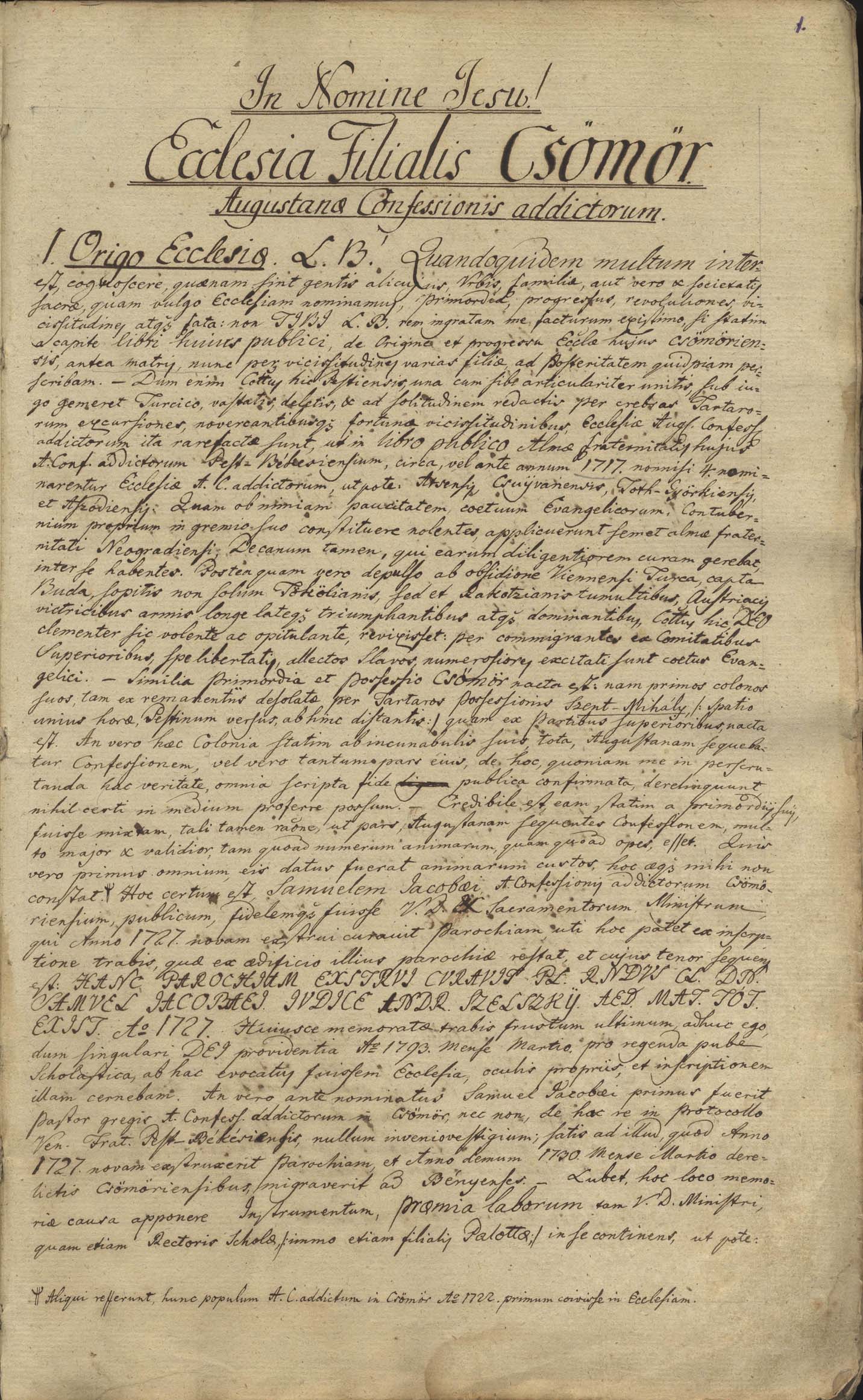 Head of the first page of the Lutheran community’s handwritten history, from here
On the first few pages of the manuscript the local schoolmaster Ján Klinger summarized in 1798 the history of the community in the eighty years that had passed since their settlement in Csömör. He also quoted a number of since then lost documents from the archive of the vicarage, including the two letters of invitation sent by the community in 1722 to their future pastor Samuel Jacobeus and then in 1793 to him as a schoolmaster. While such letters, describing in detail the provisions offered by the community, were usually written in Latin at that time, these two, as a curiosity, were composed in the local Slovak dialect of the community mixed with old church Czech. It is this mixture and the local terms that make its translation difficult, so we will be grateful for any correction by our readers.
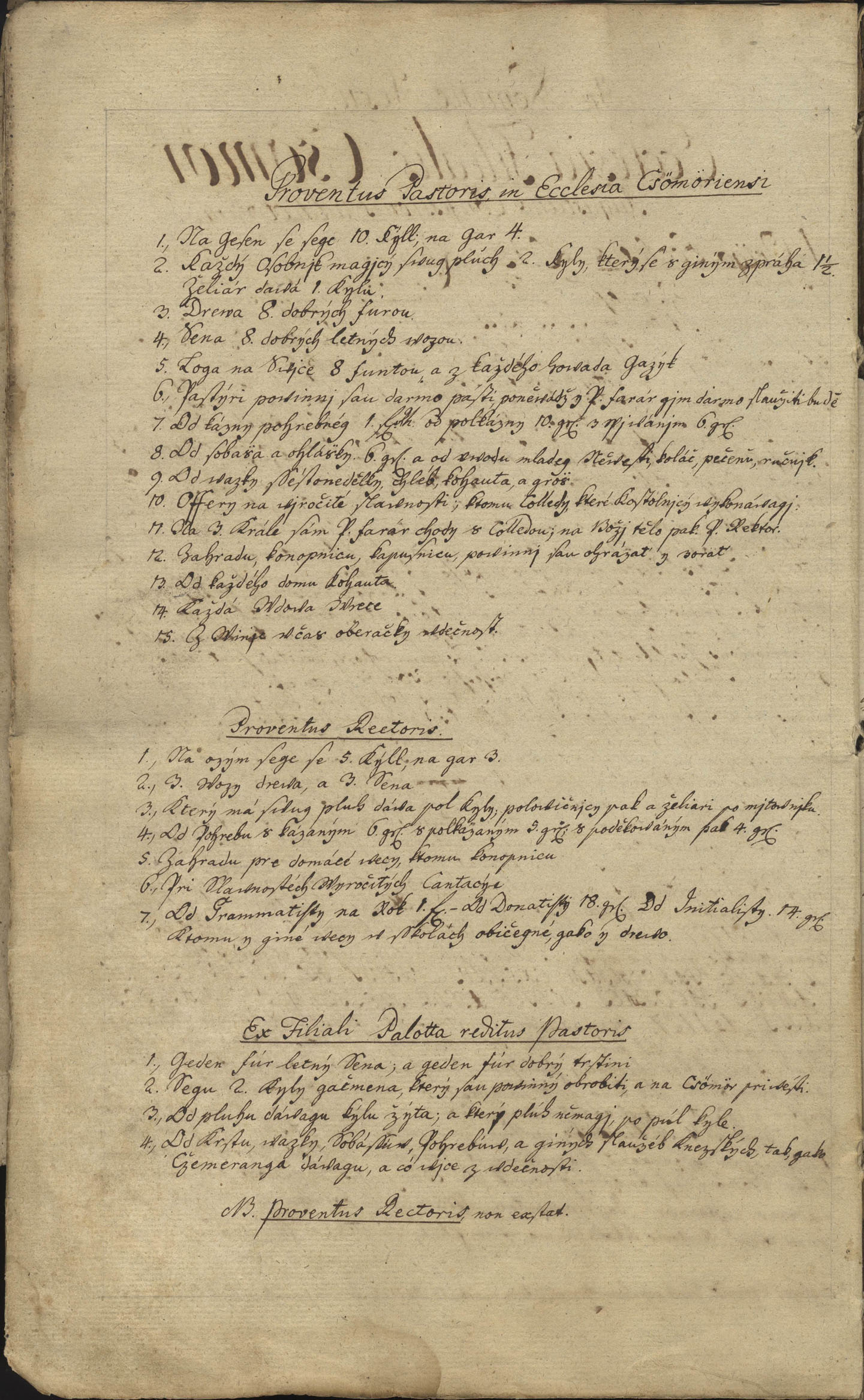 Letter of invitation to pastor Samuel Jacobeus and to the Lutheran schoolmaster, Csömör, ca. 1722 (copy, 1798), from here
| Proventus Pastoris in Ecclesia Csömöriensi 1. Na gesen se sege 10. kýll; na gar 4. 2. Každý Osobnik magjcý swug plúch 2 kyly, který se s ginným zpráha 1½. Želiár dawá 1 kylu. 3. Drewa 8. dobrých furou. 4. Sena 8. dobrých letných wozou. 5. Loga na Swjce 8 funtou a z každého howada gazýk 6. Pastýri powinnj sau darmo pásti, ponĕwádž y P. farár gjm darmo slaužiti budĕ 7. Od kázny pohrebnég 1. flh. od polkázny 10. grs. z wywánjm 6. grs. 8. Od sobaša a ohlášky 6. grs. a od wwodu mladeg Nĕwesti, koláč, pečenŭ, ručnjk. 9. Od wazky Šéstonedĕlky, chléb, kohauta, a groš. 10. Offery na wjročité slawnosti, ktomu Colledy, které kostolnjcý wykonáwagj. 11. Na 3. Krále sám P. farár chody s Colledou; na Božj tĕlo pak. P. Rektor. 12. Zahradu, konopnicu, kapusnicu, powinnj sau ohrázať y zorať 13. Od každého domu kohauta 14. Každá Wdowa Wrete 15. Z Winjc wčas oberačky wdečnost. Proventus Rectoris 1. Na ozým sege se 5. kýll; na gar 3. 2. 3. wozy drewa, a 3. Sena 3. Který má swug pluh dáwa pol kyly; polowičnjcy pak a želiári po mjtowniku. 4. Od Pohrebu s kázaným 6. grs. s polkázaným 5. grs. s podĕkowáným pak 4. grs. 5. Zahradu pre domácé wecy, ktomu konopnicu 6. Pri Slawnostéch Wyročitých Cantacýe 7. Od Grammatisty na Rok 1 fl.- Od Donatisty 18. grs. Od Initialisty. 14. grs. ktomu y giné wecy w Školách običegné, gako y drewo. Ex Filiali Palotta reditus Pastoris 1. Geden fúr letný Sena; a geden fúr dobrý trstini 2. Segu 2. kyly gačmena, který sau powinný obrobiti, a na Csömör priwésti. 3. Od pluhu dáwagu kýlu žýta; a který plúh nĕmagj, po púl kyle. 4. Od Krstu, wazky, Sobášúw, Pohrebúw, a ginných slaužéb knezských, tak, gako Cžemeranga dáwagu, a có wjce z wdečnosti. | Provisions for the pastor in the church of Csömör 1. For autumn they sow for him 10 bushels of grain; for spring, 4 bushels 2. Every person who has his own plow gives him 2 bushels, who works with another’s plow 1½ bushel, a day laborer 1 bushel 3. 8 good cartful of wood 4. 8 good summer cartful of hay 5. Tallow for candles 8 pounds, and the tongue of every cattle 6. The shepherds are obliged to pasture for him for free, as the pastor will also serve them for free 7. For funerals with sermon [?] 1 forint [?], for half-funeral [?] 10 groschen, for the inscription [?] 6 groschen 8. For wedding and announcement 6 groschen, and for the introduction of the new bride, milk loaf, roast and wash cloth 9. For childbirth blessing [baptism?] bread, rooster and one grosch. 10. Gifts on the [funeral] anniversaries, plus the colledae collected by the parish-clerks 11. On Three Kings [Epiphany] the pastor himself goes to colleda, and on Corpus Christi the schoolmaster. 12. His garden, hemp field, cabbage-patch and vineyard will be fenced and dug up for him 13. A rooster from every house 14. Every widow will weave for him 15. Grape harvesters will give him an early gift of the harvest Provisions for the schoolmaster 1. For autumn they sow for him 5 bushels, for spring 3 bushels 2. 3 cartful of wood and 3 of hay 3. Who has his own plow will give him a half bushel, those working on shares and day laborers according to their wealth 4. For funerals with sermon 6 groschen, for half-funerals [?] 5 groschen, for valedictory address 4 more groschen 5. A garden for vegetables and a hemp field 6. Cantacýe [?] for the anniversary feasts 7. From grammatists [upper classes] yearly 1 forint, from donatists [lower classes] 18 groschen, from initialists [pupils learning the alphabet] 14 groschen, to which are to be added the things necessary in the school as well as firewood Provisions of the pastor from the curacy of Palota 1. One cartful of summer hay and one cartful of good reed 2. They sow 2 bushels of barley for him, which they are obliged to take care of and to carry to Csömör 3. They give one bushel of rye per plow, and who has no plow a half bushel 4. For baptism, blessing, wedding, funerals and other priestly services they give the same as those of Csömör, and something more as thanksgiving |
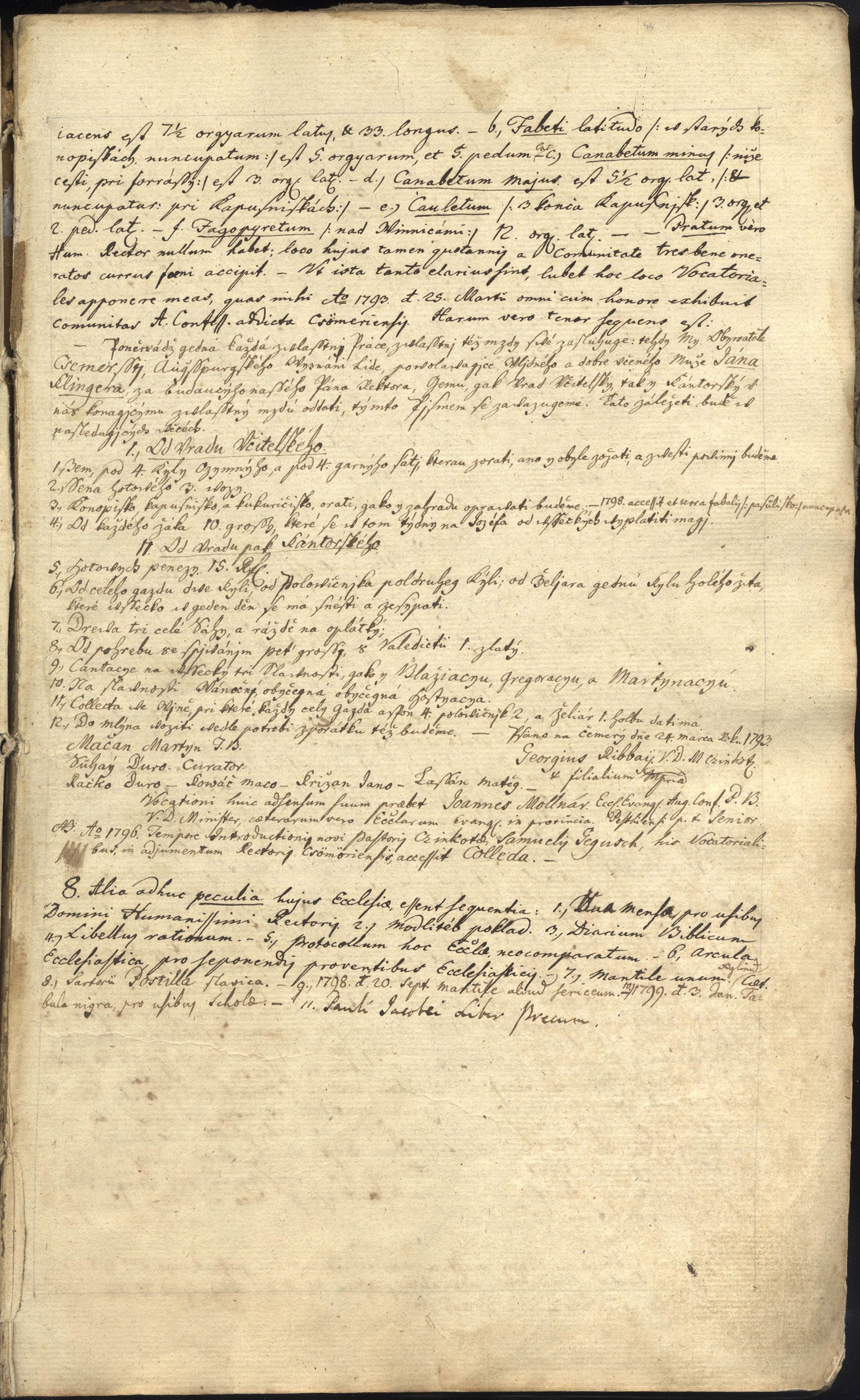 Letter of invitation to Lutheran schoolmaster Ján Klinger, 1793 (copy, 1798), from here
| Poněwádž gedná každá zwlaštny Práce, zwlastny též mzdy swé zasluhuge: tehdy My Obywatěle Csemerštj, Augšpurgského Wyznáni Lide, powolawagjce Widného a dobre wčeného Muže Jána Klingera, za budaucýho našého Pána Rektora, Gemu, gak Wrad Wčitelšky, taky Kántorský w nás konagjcýmu zwlaštný mzdú oddati, týmto Pjsmem se zawazugeme. Tato záležeti budě w nastedugjcých wěcéch. I. Od Wradu Wčitelského. 1.) Zem, pod 4. kyly Ozymnýho, a pod 4. garnýho sátj, kterau zorati, ano y obyle zožati, a zwesti powinnj buděme. 2.) Sena hotowého 3. wozy. 3.) Konopisko, kapusnisko, a kukuričisko, orati, gako y zahradi oprawati buděme. – 1798. accessit et terra fabalij (pasŭlisko) nuncupata. 4. Od každého žáka 10. grošý, které se w tom týdny na Jozéfa od wšeckých wyplatiti magj. II. Od Wradu pak Kántorského 5. Hotowych penezy. 15. Rfl. 6. Od celeho gazdu dwe kýli, od Polowičnjka poldruheg kýli; od Željara gednú kylu holého žita, které wšecko w geden děn se má snésti a zesypati. 7. Drewa tri celé Sáhy, a ráždě na oplátky. 8. Od pohrebu se spjwánjm peť grošj, s Valedictii 1. zlatý. 9. Cantacye na wšecky tri Slawnosti, gako y Blažiacyu, Gregoracyu, a Martynacyú. 10. Na slawnosti Wánoční, obyčegná obyčegná hostyacya. 11. Collecta we Wjně, pri které každy cely gazdá aspon 4. polowičnjk 2, a želiár 1. holbu datimá. 12. Do mlýna woziti wedle potrebi zporátku též buděme. – Psáno na Čemerý dne 24. marca Roku 1793. Georgius Ribbaij V. D. M. Czinkot. & filialium M[anu][pro]pria. Mačan Martyn J. B. Suhaý Ďuro. Curator Račko Ďuro – Kowáč Mate – Križan Jano – Lašán Matěg. | As everyone works, therefore everyone deserves a wage. * So we, inhabitants of Csömör following the Confession of Augsburg (= the Lutheran creed), when inviting the respectable and erudite Ján Klinger as our future schoolmaster, oblige ourselves with this letter to give him payment both for his teacher’s and cantor’s duties. And it will consist in the following things. I. For his teacher’s duties 1. We will be obliged to plow up, cultivate and care for his land sufficient for 4 bushels of autumn and 4 bushels of spring sowing. 2. 3 complete cartful of hay. 3. We will plow up his hemp field, cabbage-patch and cornfield, and will dig up his garden. [In Latin:] In 1798 was added also the bean field, called pasŭlisko. 4. 10 groschen from every student which each of them has to pay in the week of the day of St. Joseph. II. For his cantor’s duties 5. In cash 15 Rhenish forints. 6. From every complete farmer two bushels of cleaned rye, from those working on shares one and half bushel, from day laborers one bushel to be brought to him and poured together on the same day. 7. Three complete heaps of firewood and lop as a payment. 8. For funerals with singing five groschen and for the valedictory sermon one gold. 9. Cantacye [?] for all three feasts, on the day of Blaise, Gregory and Martin. 10. On the feast of Christmas the usual hospitality. 11. A collecta of wine, that is at least 4 quarterns from every complete farmer, 2 quarterns from those on shares and 1 quartern from day laborers. 12. We will also carry [his grain] to the mill and pour it on the millstones. Written in Csömör, on 24 March 1793. Ďuro Ribbai, pastor of Cinkota and its curacies m.p. Martin Mačán, judge Ďuro Suhai, curator Ďuro Račko, Matej Kováč, Ján Križán, Matej Lašán |
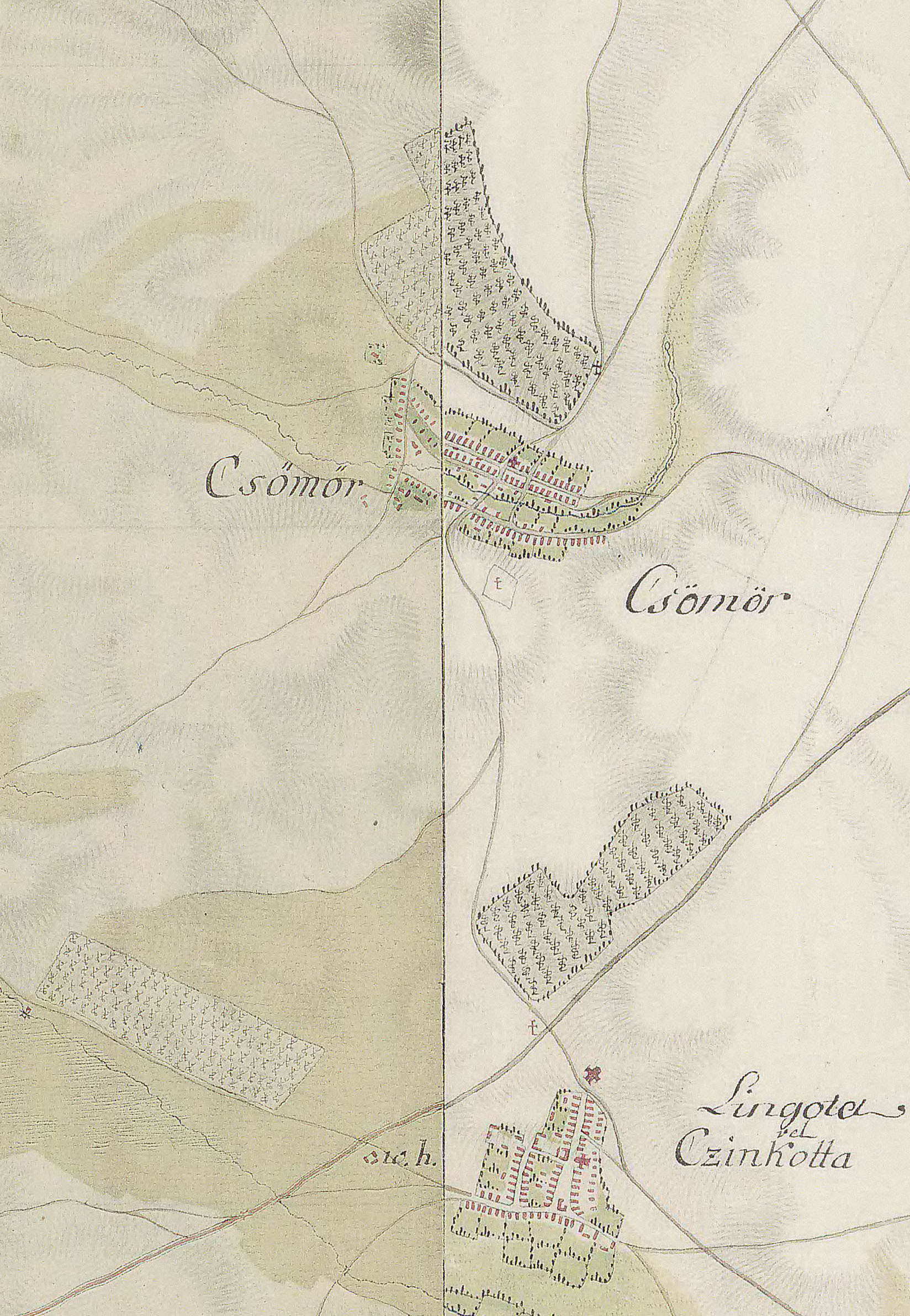 Map of Csömör from the first military survey of 1781, from here
Besides the two letters of invitation we also find some Slovak terms in the description of the lands of the church which specifies their location with their locally used Slovak names. Note the term pri forrášy, ‘at the spring’ borrowed from Hungarian forrás instead of literary Slovak prameň.
| 7. Terrae, et prata. – Inseminat D. H. Scholae-Rector de Lege 4. metr. pos. hyemalis, et 4. vernalis seminaturae. Terrae vero hae, non sunt singulatim excissae, sed adhaerent fundo pagensi. – Hortus vero infra Scholam – situs denique fabetum – canabetum, cauletum et fagopyretum sunt excissae. – Latitudo earum moderna, adinventa est sequens: a.) Hortus infra Scholae aedificium iacens est 7½ orgyarum latus, et 33. longus. – b.) Fabeti latitudo (w starých konopistkách, nuncupatum) est 5. orgyarum, et 5. pedum lat. – c.) Canabetum minus (niže cesti, pri forrášy) est 3. org. lat. – d.) Canabetum majus est 5½ orgy. lat. (et nuncupatur: pri kapustniskách) – e.) Cauletum (z konča kapustnjsk.) 3. org. et 2. ped. lat. – f. Fagopyretum (nad Winnicámi) 12. org. lat. | 7. Lands and fields. – The schoolmaster sows four Pressburg bushels in the autumn and four bushels in the spring. These lands are not marked off in one piece, but they join the lands of the village. – A garden under the school, furthermore a bean field, hemp field, cabbage-patch and buckwheat field have also been marked off for him. Their present location is found as follows: a) The garden laying under the school is seven and a half fathoms large, 33 fathoms long. – b) The bean field (as they say, v starých konopistkách [Slovak: in the old hemp field]) is 5 fathoms large and 5 feet long. – c) The smaller hemp field (niže cesti, pri forrášy [over the street, at the spring]) is 3 fathoms large. – d.) The larger hemp field is 5 and a half fathoms large (and is called pri kapustniskách [at the cabbage-patch]). – e.) The cabbage-patch (z konča kapustnisky [from the end of the cabbage-patch]) is 3 fathoms long and 2 feet large. – f.) The buckwheat field (nad vinicami [over the vineyards]) is 12 fathoms large. |
 Horsemen surveying the fields of Csömör
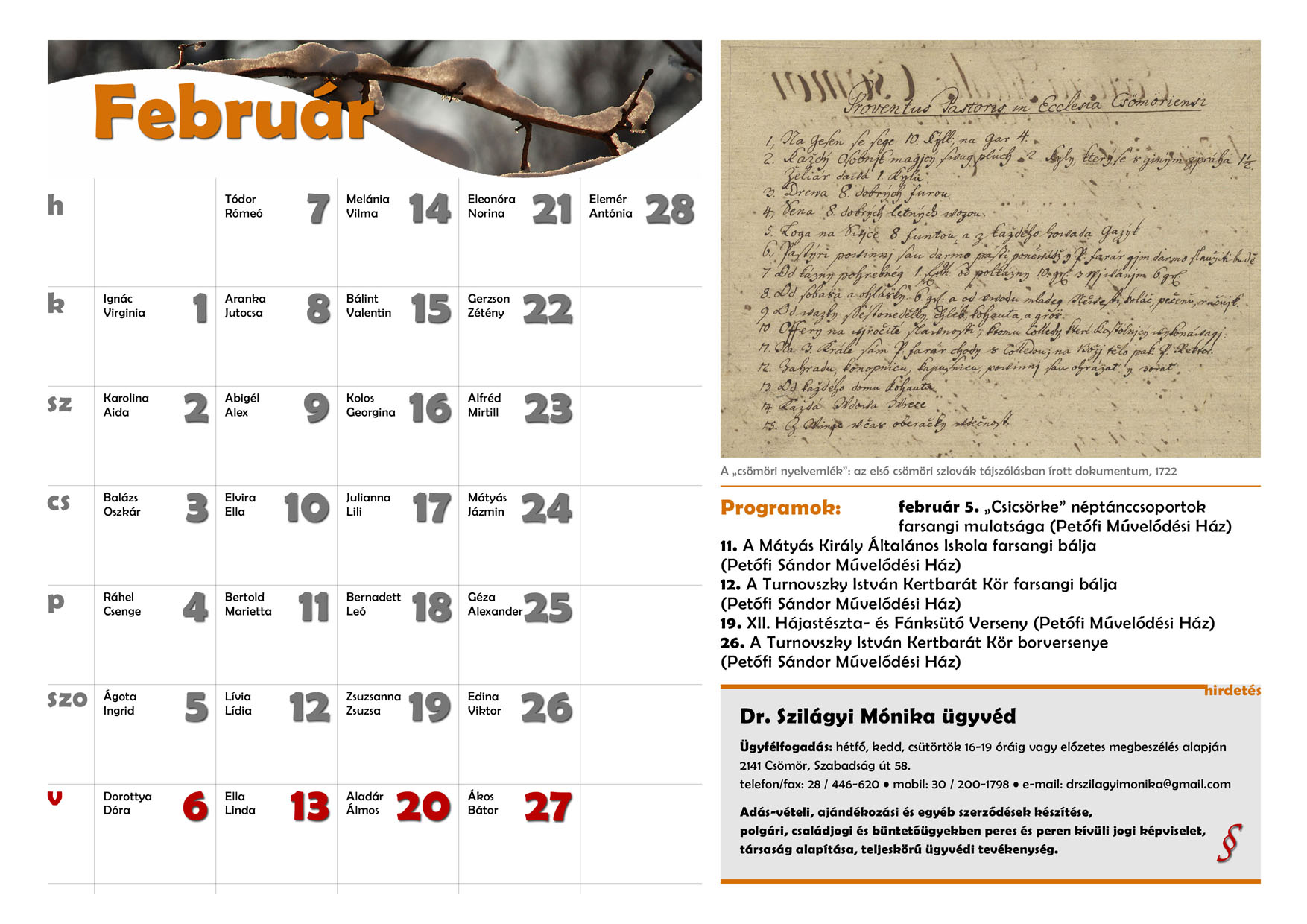
This unexpectedly discovered earliest linguistic record of the Slovak language in Csömör deserved to be included also in the calendar of the village traditionally distributed for Christmas by the town hall to the households of the village, and designed by us for the first time in this year.



Add comment