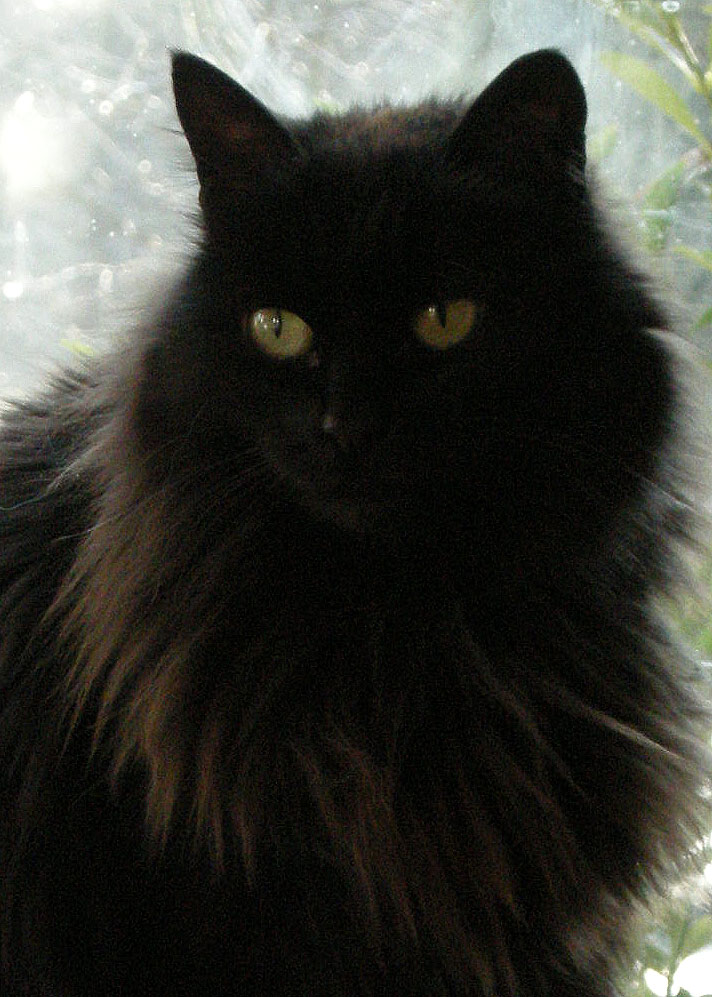
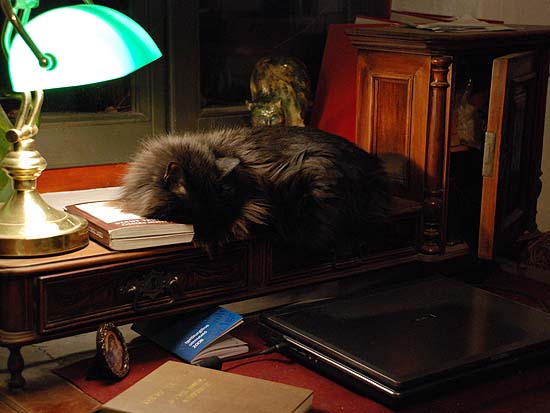
Muska is Russian through and through. Even at her happiest she can sit there with the same loftily offended expression as first-year Russian students on the opening day of term at a Western university, and on the dawn of the South Ossetian war—completely out of character—she tangled up the blanket so thoroughly that not even a Georgian tank could have rolled across it.
Every time Léna visited Budapest she promised Kata she would get her a Russian cat. “Russian cats aren’t like these here. Russian cats are tigers.” She showed us a photo of Jóska, whose name she formed from the Hungarian word “jó” (“good”) she learned on her first trip—only later realizing it’s actually a human name here; it’s even Kata’s father’s name, which made her feel terribly guilty. Jóska really was a tiger. Lynx-built, with a banner-like tail. From then on, Kata dreamed only of Russian cats.

We arrived in Veliky Rostov during the white nights, far up north, to install a computerized catalog in the Kremlin. After the fall of Kyiv in 1235, the little town had been Russia’s capital for a time, and inside its fortress—back in the early nineties still surrounded by garbage heaps and heroic mud puddles—stood seven dazzling cathedrals, all turned into museums. We assembled the computers in a vaulted chamber of the bishop’s court until nine or ten each evening for a week, then climbed up to the knights’ hall where the table was already laid with mushrooms, zakuski, cranberries, and vodka. Toasts of breathtaking wit made the rounds, and my grandfather’s World War I song, “The Muszka [Muscovites] Have Arrived with a Hundred Thousand Men,” was a runaway hit. Around two in the morning we set off to visit a ruined abbey by the river, while Sergey spent the entire walk explaining the Finno-Ugric origins of local place names.
That week there wasn’t a single cat for sale at the Yaroslavl market. In the end Grisha and his friends offered us the one kitten they had kept only so someone would keep nursing from the mother. She wasn’t even a month old. To reach the vet we had to cross the upper Volga—the river lapped at the end of his garden. “Stick her in your pocket,” he said. “By the time I get the export papers, she’ll have kittens of her own.”
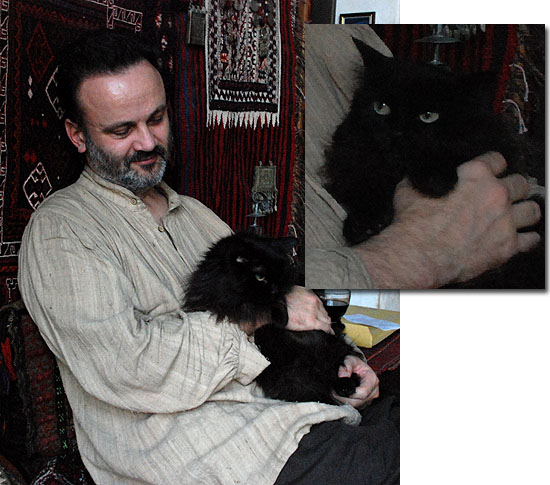
“What do people name cats here?” Léna had no idea what the Hungarian name Muszka meant. Neither did our Russian friends, who immediately started calling her Musa and Musyusa. But Musza herself understood what her name required of her, and she heroically endured the six-hour bus ride to Moscow through devastated countryside and derelict villages—three hundred kilometers without a single cultivated garden in sight. Every hour she came out and I fed her from a German baby bottle bought at a first-class Yaroslavl pet shop, drawing on my teenage experience with orphaned hedgehogs, fawns, and freshly hatched grass snakes. By the time we reached Moscow she had adopted me as her mother—and I still am.
We missed the flight. We were already at the airport two hours before departure at dawn, but the multi-stage security checks were so long they wouldn’t let us in at check-in. “I’ve been here for four hours already,” the uniformed woman said with lofty superiority. “Stay here for a thousand years then,” I replied. “Gdye vas nachalnik?”
Russian bureaucracy has a human face. In Germany, bureaucrats hide behind rules while the remnants of their humanity are quietly nourished by their daily ration of human sacrifice. In Italy—perhaps thanks to Roman law soaked into their blood—you can squeeze any reasonable favor out of them by invoking universal rights, provided you speak Italian, which makes you human in the Roman legal sense. I once convinced the head of Rome’s central post office with airtight arguments to come in on Easter Monday and release money that had arrived on Good Friday. In Russia, though, you talk to them like one believer to another, like someone asking a neighbor for salt—and if you ask decently, they’ll give it, even if they have to borrow it from someone else. Russian bureaucrats, in my experience, are always borrowing authority from someone else, but this constant overstepping of jurisdiction bothers neither them, nor their clients, nor their superiors—whom it’s always worth appealing to in doubtful cases.
Following the rosary of “gdye vas nachalnik,” we eventually reached the airport commander, who was moved by a Westerner complaining in Russian—back in the early nineties that was still a universal remedy. Scribbling something on our expired tickets, he said we could board the afternoon charter.
The flight wasn’t listed anywhere, but everyone nodded enthusiastically when we showed them our ticket—the talking robe. At boarding, however, musclemen blocked the way with handheld metal detectors. We paced the airport nervously, praying hard. We knew if they found Musa they wouldn’t hesitate for a second. Our names were already being called—there was nothing to do but go. Yet when we returned to the gate, the towers of flesh had vanished and only a hand-wringing stewardess remained. “Hurry, we’re running late.”
The small plane—maybe a few dozen seats—was filled in the front by silent Chinese businessmen and in the back by drunken Russian businessmen, and we were placed in the buffer zone between them. The latter—sorry for the stereotype, but it really was like that—brought several crates of excellent vodka on board, which not only they but practically the entire crew helped themselves to, perhaps excepting the pilot—though they may have delivered his share straight to the cockpit. Meanwhile Muszka emerged too, perhaps to say farewell to Mother Russia. The Chinese passengers melted with delight. Only later did we learn from Chinese TV that at the time keeping pets was still so forbidden that CCTV4 ran daily instructional programs in the late nineties teaching wealthy Chinese viewers how to pet a cat.
When we landed at Ferihegy Airport, the back half of the plane had reached such a volume that even the Hungarian border guards came out of their booth. “Oh, it’s you lot?” they relaxed. “Go on through.” And those passengers entered the country without passport control. My red-skinned passport, despite my Russian-looking face, they did ask for—perhaps because I was suspiciously sober. They were surprised to see what we were doing on that plane, but let us into our homeland without fuss.
That’s when Muszka grew restless. She had slept under Kata’s sweater the whole time—people had politely waved her through everywhere as if she were an expectant mother. She crawled from Kata’s stomach to her back, then began climbing upward, and by the time we reached customs she was almost peeking out, practically meowing her own death sentence. The customs officer may even have noticed her poking her head out at Kata’s neck, but probably judged what he saw impossible and kept a perfectly straight face as we passed. Then Muszka flopped back down, gathering strength to leap from the back seat onto the taxi driver’s neck later on.
When we finally let her out into the garden at home, she hesitated for a minute—then took a running start and shot up the forty-meter poplar tree.



Add comment