

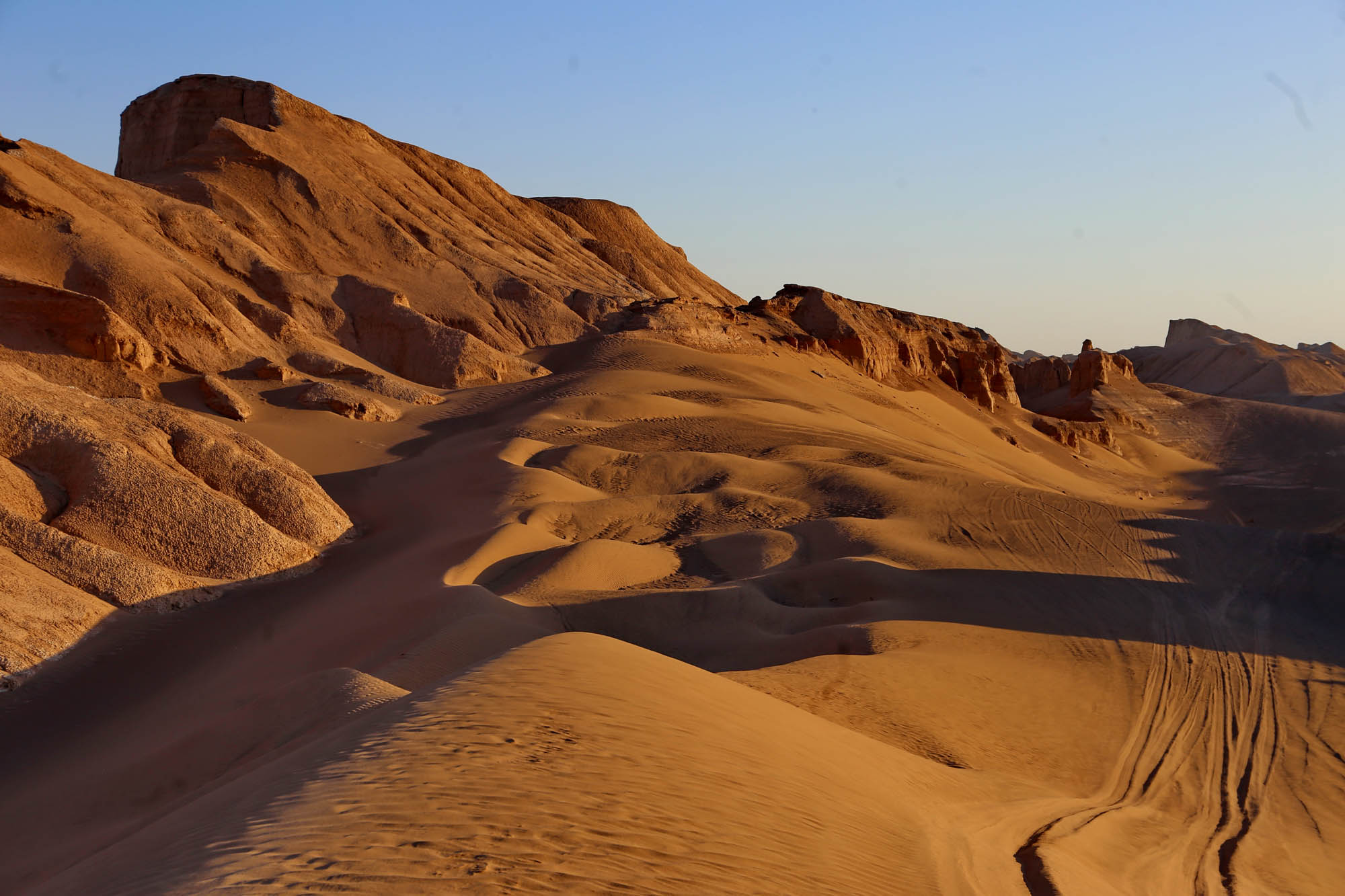
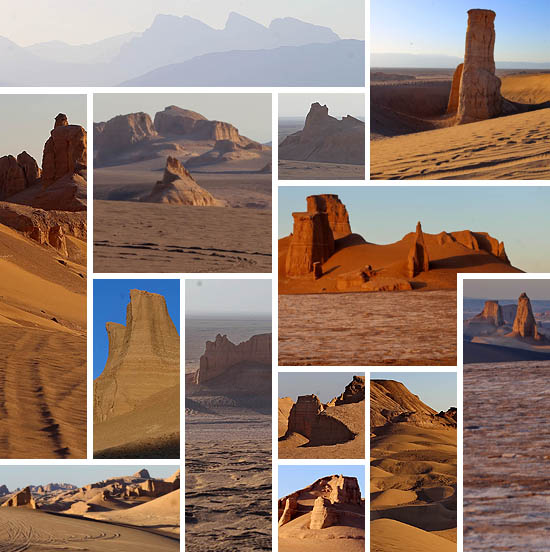
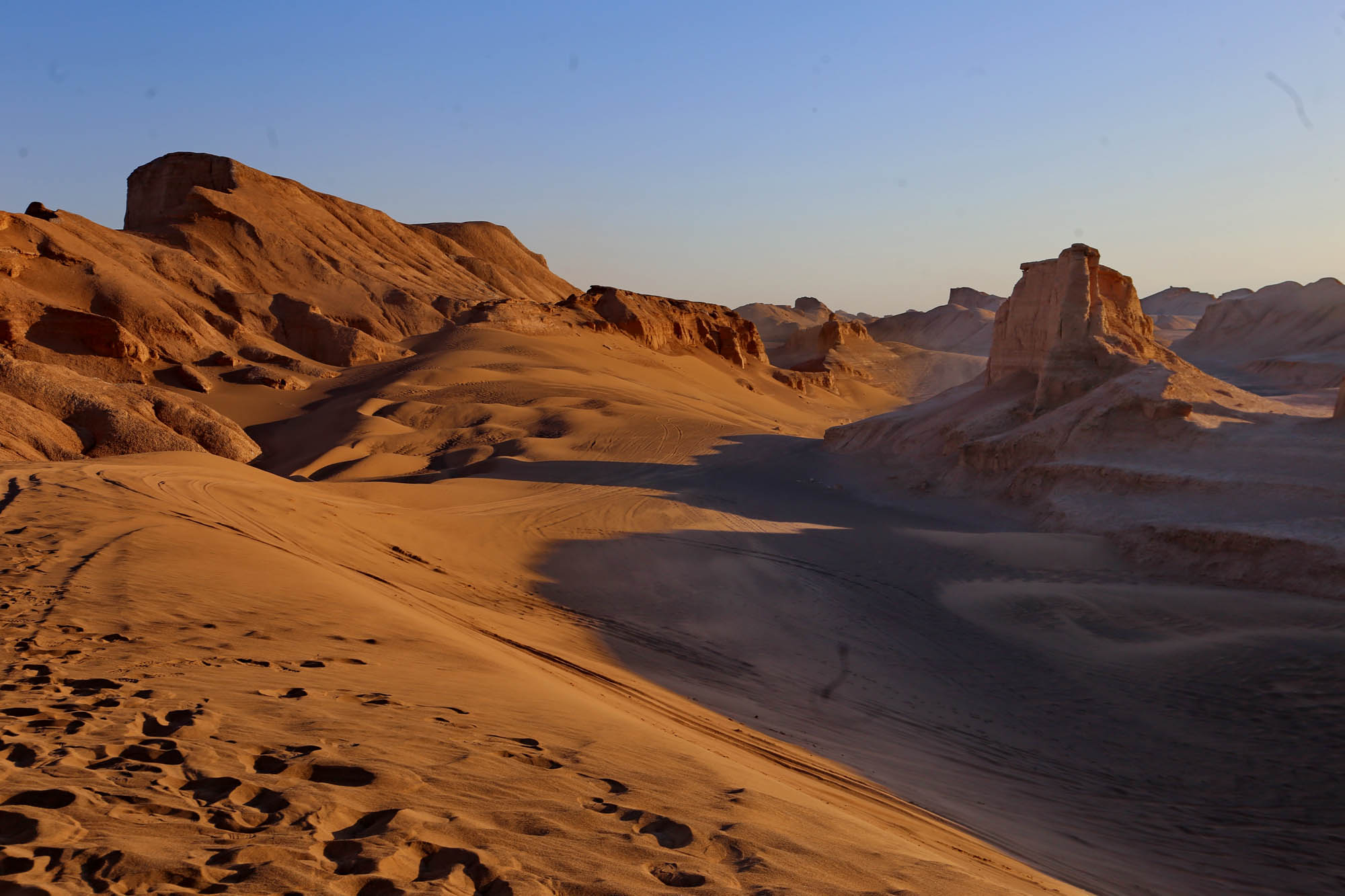
The Shahdad Desert of southeastern Iran lies about one hundred kilometers northeast of the city of Kerman, on the western edge of the Lut Desert, a UNESCO World Heritage site that we once introduced through the photographs of Nasrollah Kasraian. It is one of the hottest and driest places on Earth: in 2005, a ground-level temperature of 70 °C was measured here. Its name may well come from this, as Shahdad means “the king’s judgment.” In local legends, that king is God himself, who struck the once-wealthy and sinful cities of the region with a just verdict. The remains of those sinful cities are said to be the desert’s distinctive landforms, the kaluts: long, narrow ridges of sandstone and clay shaped by saltwater and wind erosion. The kaluts stretch across an area of roughly 150 by 80 kilometers, running from northwest to southeast, in the direction of the prevailing winds that formed them.
Locals also refer to the place as اینجا حکم نازل شده injâ hokm nâzel shode, “the judgment descended here,” and they speak of the “destroyed cities” as “those who were locked into the heat.” In the desert, one must not swear or even shout, because “the earth hears and throws it back,” or because “the wind carries it up to the sky”: اینجا صدا برمیگردد injâ sedâ barmigarad, “here the word returns”—the word of judgment.
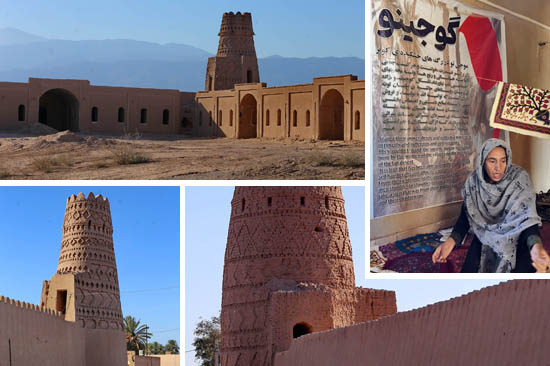
This desert mountain region was gradually drawn into the life of Persia during the Sasanian period (3rd–7th centuries CE). The dynasty’s founder, Shah Ardashir, established Kerman as a garrison town against desert nomads and as a commercial hub for caravans arriving from India. East of Kerman, a chain of small villages emerged over a depth of roughly one hundred kilometers, where life was made possible by vaulted underground water channels—qanats—leading water down from the mountains. Many of these villages still have small, thousand-year-old clay fortresses that once served as night shelters and protection for caravans: forward outposts of civilization east of the last cities. One of them is Shafiabad, with four corner towers decorated in patterned adobe brickwork. Beneath its gate, local women sell their handicrafts. A large manifesto on the wall announces that, as in many other places across Iran, women here have formed their own small craft cooperative, providing them with an independent income and a measure of independence to go with it.
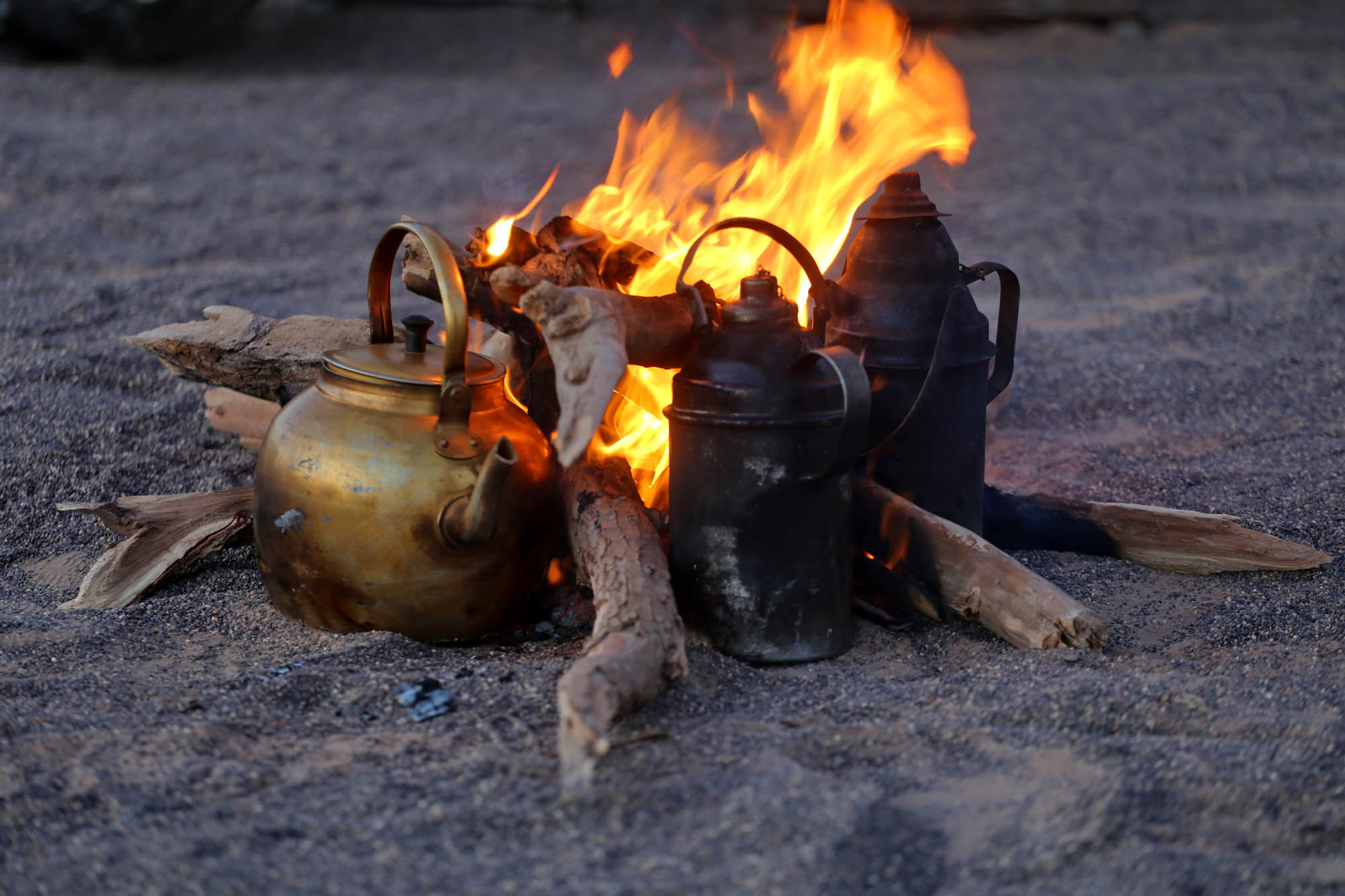
From the fortress of Shafiabad we head out into the desert in four-wheel drives, stopping now and then on a hilltop to look around and walk among the kaluts. Around five o’clock the sun sinks, and a cool wind begins to blow in the hottest place on Earth. We light a fire, brew tea, and grill skewered meat. After nightfall, we return to Kerman.



Add comment