


子曰:吾十有五而志於學,
三十而立,
四十而不惑,
五十而知天命,
六十而耳順,
七十而從心所欲,不踰矩。
(論語 Lunyu, Analects 2.4)
The Master [Confucius] said:
At fifteen, I set my heart on learning.
At thirty, I stood firm.
At forty, I was free of doubt.
At fifty, I understood the mandate of Heaven.
At sixty, my ear heard harmony.
At seventy, I could follow my heart’s desire
without overstepping the bounds.
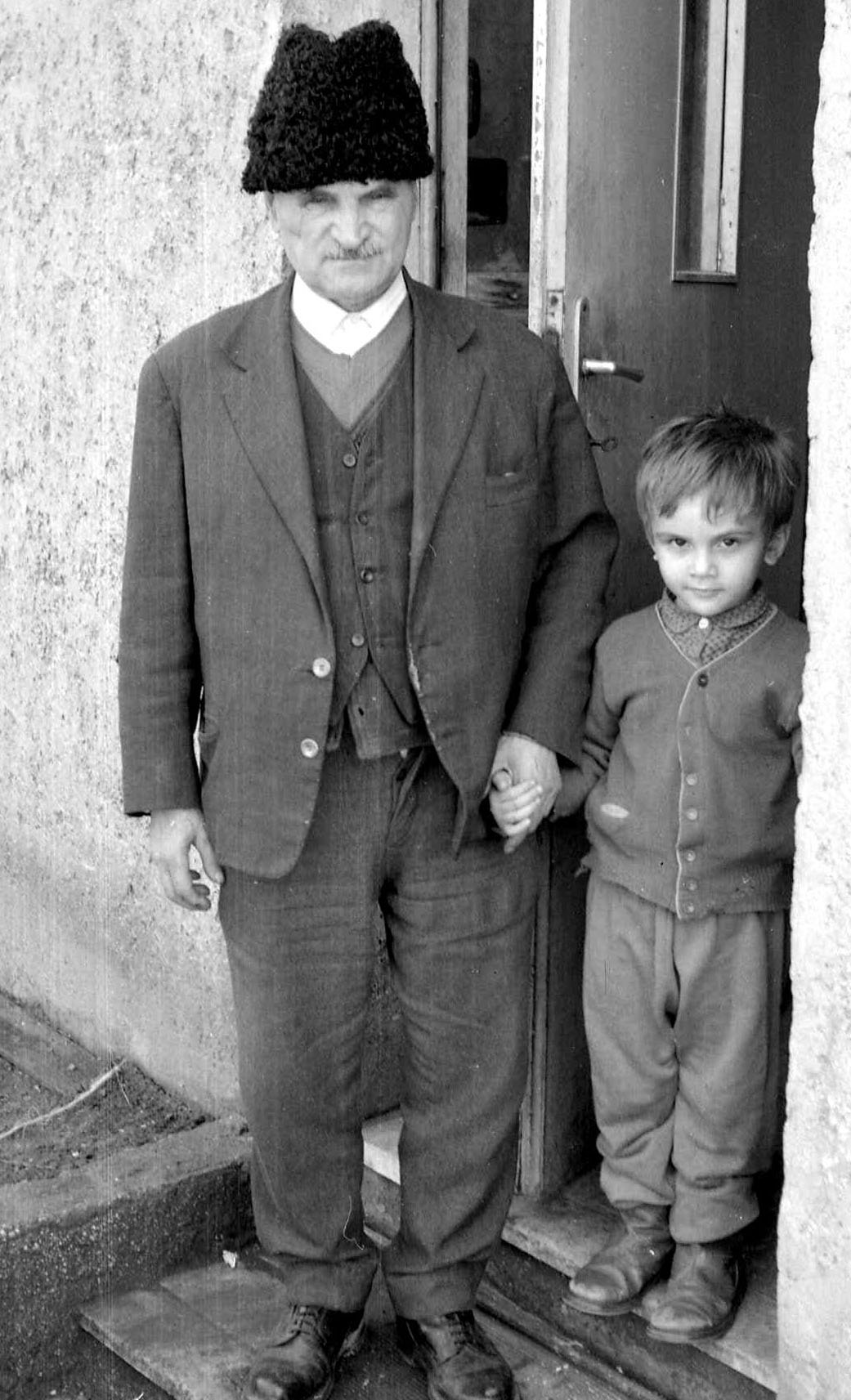
I first read this saying of Confucius when I was roughly the age shown in the photo, six or eight years old.
Even fifteen still felt far away to me, but my older brothers and sisters were already there; I could see them studying, and that much I could grasp.
But the idea that someone would plan for being fifty, sixty, seventy—and that this was when one would truly come into one’s own—left me astonished.
By then, I thought, you’re already old. Almost dead. And that’s when you’re supposed to hear harmony, or follow your heart’s desire?
My grandfather, standing beside me, was already past sixty at the time. He was a powerful, impressive man. I loved him dearly.
From the Rusyn bastard son of a Jewish land lessee, from nobody at all, he became a master shoemaker, the first property owner in the village of Mándok. He married the love of his life, and they lived happily together. He educated two children. He lived through two world wars, fought in the first, and after the second was branded a kulak and stripped of everything. He overcame it, lived off what remained of his vineyard, and took joy in his ten grandchildren.
Today I hope that even then, standing there beside me, he had already found harmony—and before his death, his heart’s desire.



Add comment