

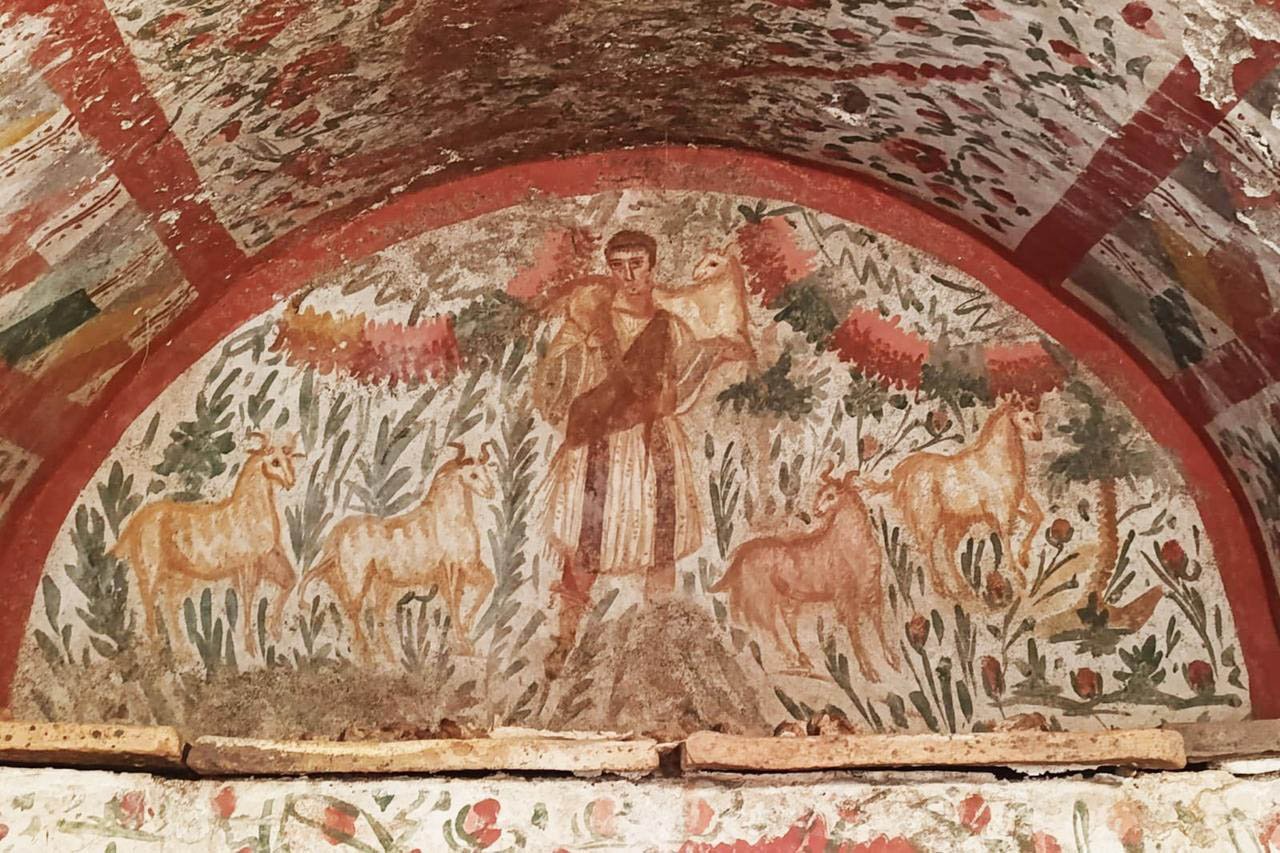
Türkiye Today – one of the best newsletters covering the exciting new results from Anatolian archaeological excavations – and the Arkeolojik Haber Turkish archaeology portal reported on December 10 that a beautifully preserved Good Shepherd fresco was found in a tomb in the ancient necropolis of Hisardere, near Nicaea. But a ceramic replica of the fresco had already been presented two weeks earlier by President Erdoğan to the Pope visiting Turkey.
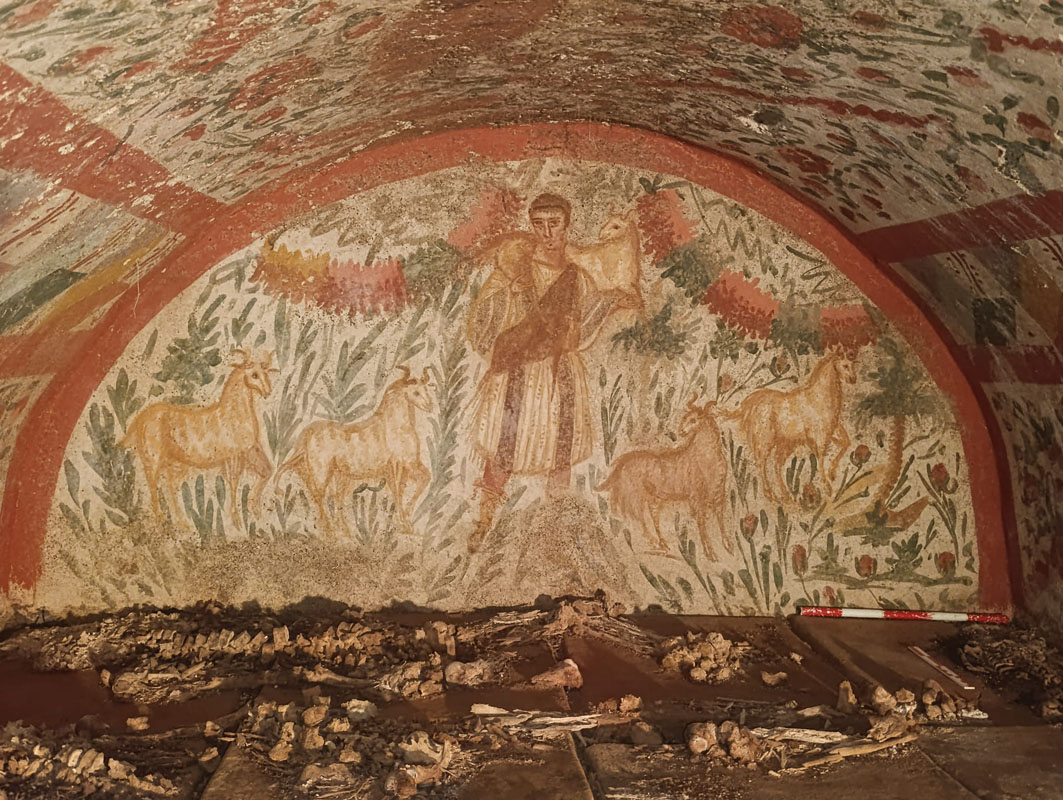
The Hisardere necropolis primarily served as the burial site for wealthy Nicaean families from the 2nd to 5th centuries CE. This hypogeum – an underground vaulted tomb – may have belonged to such a family. On the eastern rear wall opposite the entrance, above the raised klinē – the symbolic or actual resting place of the deceased – a “Roman-style” shepherd wearing a tunic is painted. He stands in the middle of a lush, flowered meadow among rams, holding one over his shoulder. Based on the stylistic chronology of the Hisardere tombs, this fresco dates to the 3rd century, before Christianity was legalized in 312.
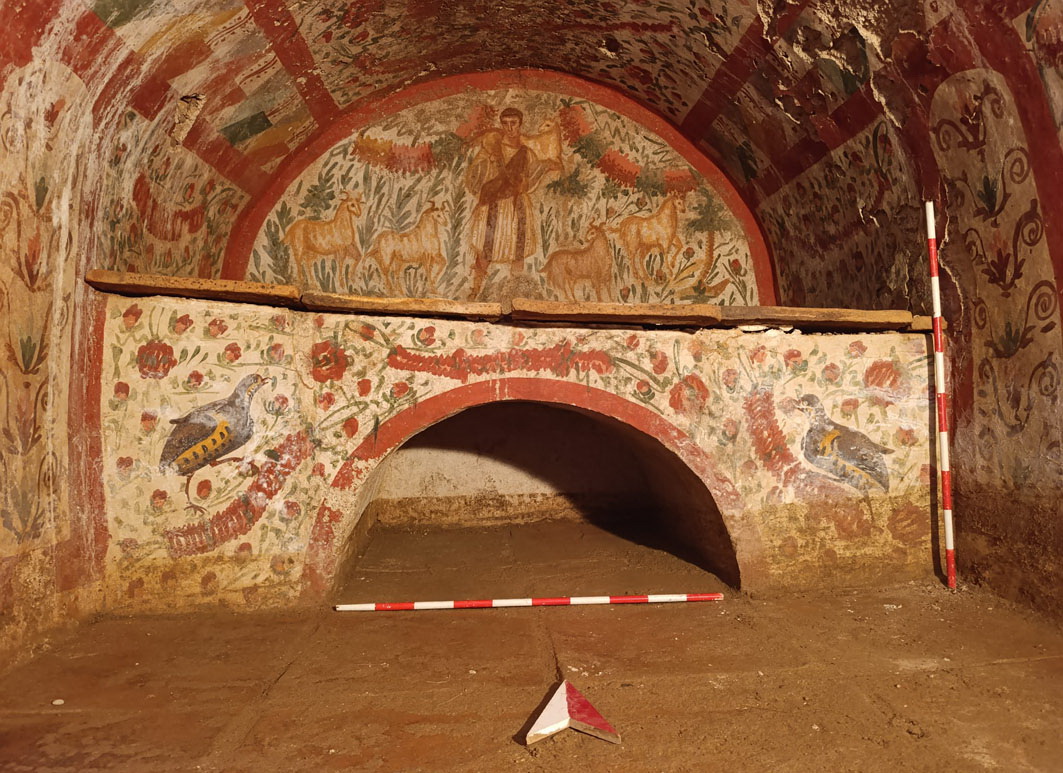
The front of the klinē is decorated with birds pecking at berries – common soul symbols – while the northern wall shows a couple seated at a banquet table. They either participate in their own funerary ritual, following an Etruscan visual tradition, or they enjoy the afterlife’s sweet, bitterness-free drink.
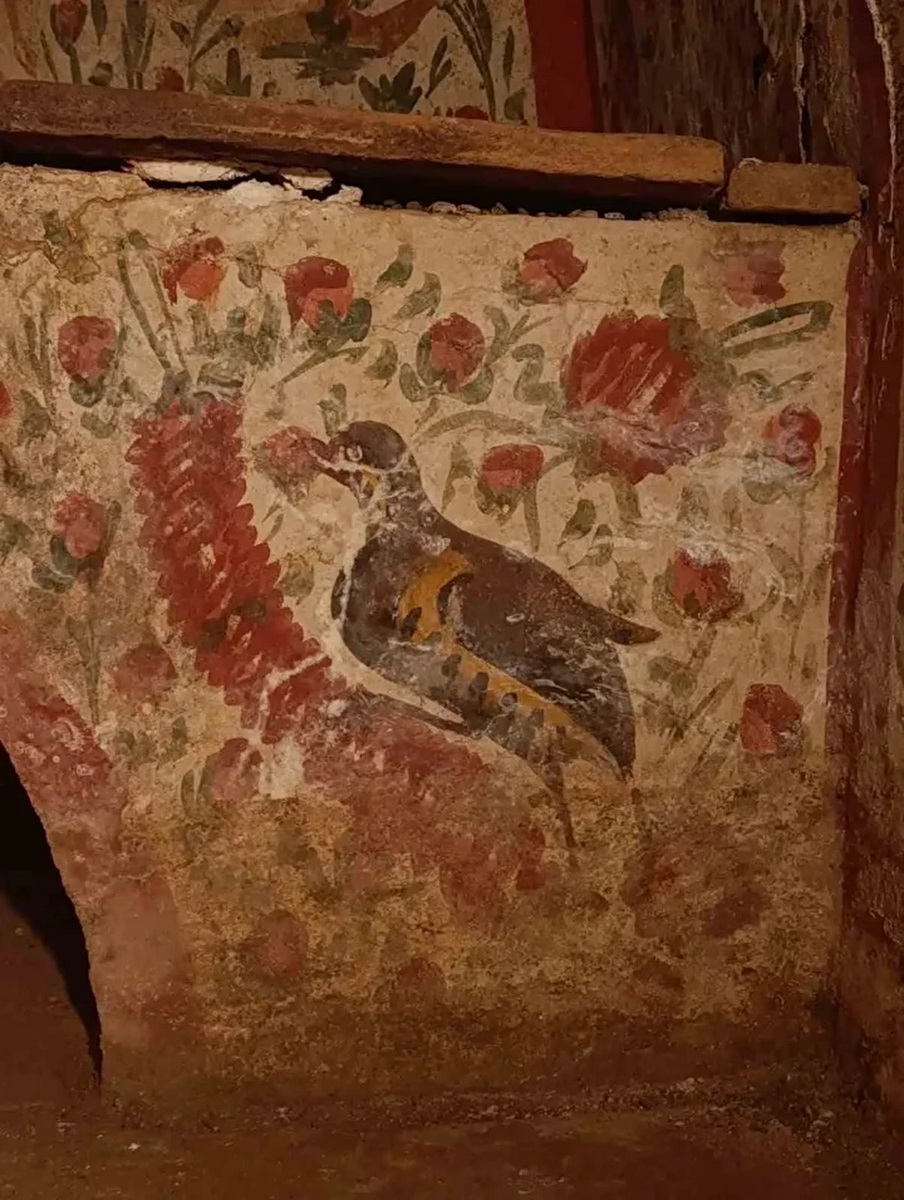
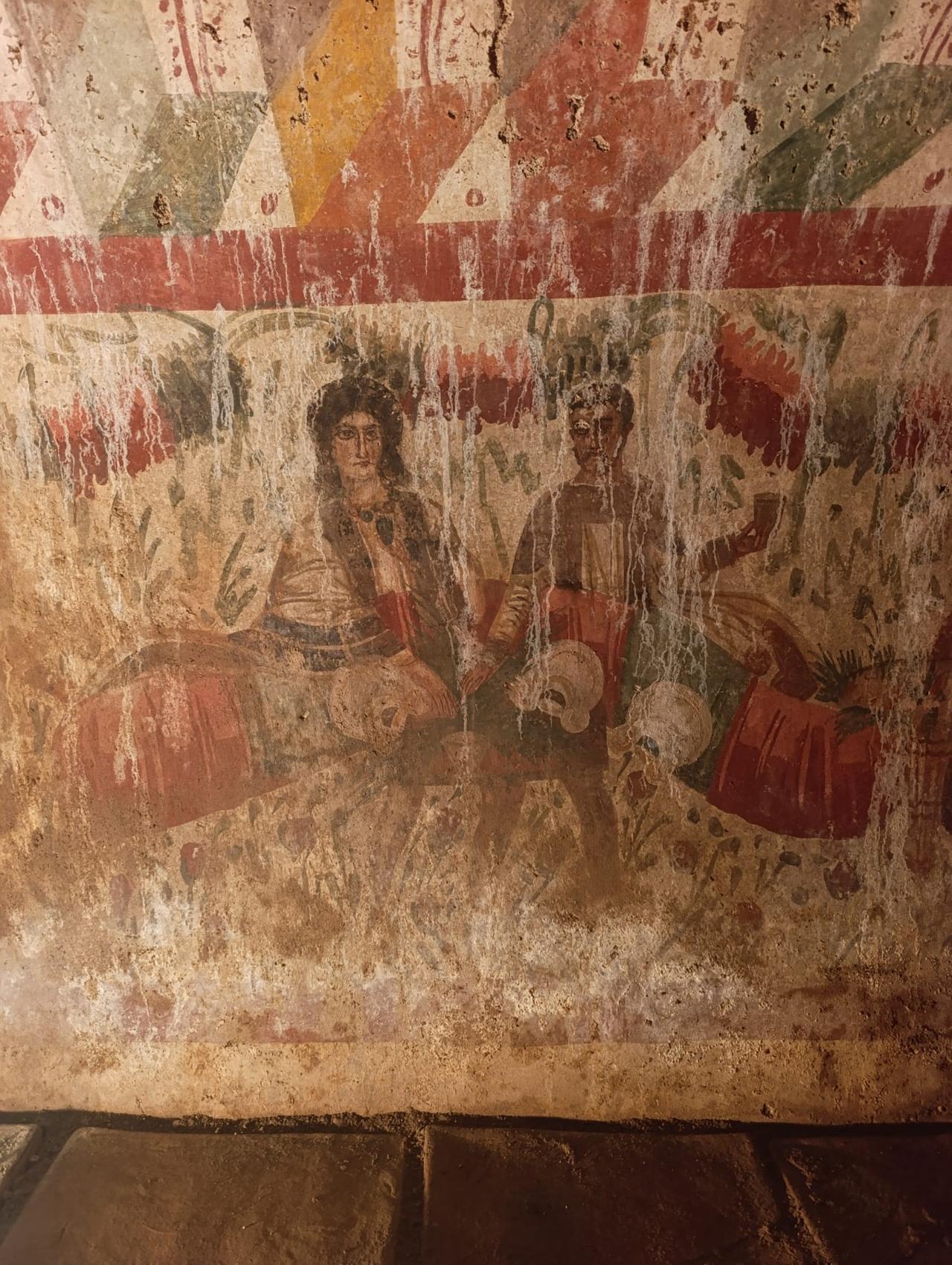
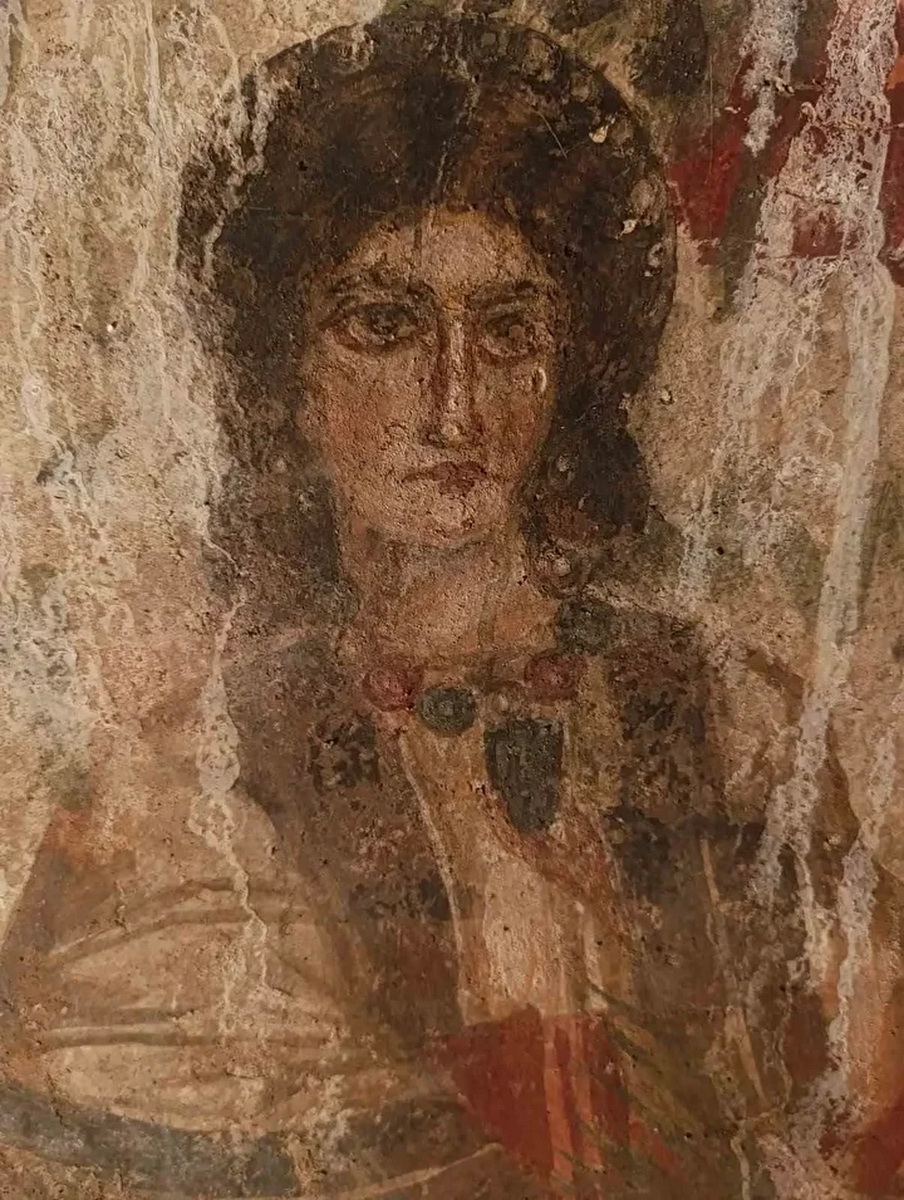
What makes the Good Shepherd fresco especially significant is that this is the only known depiction of this Christian motif not only in Anatolia but also outside Italy.
In Italy, particularly in Rome, it was the most popular Christian motif. There are 114 known representations from the Roman catacombs alone, double the occurrences of the second most common motif, the prophet Jonah symbolizing resurrection. It also frequently appears on sarcophagi and as standalone statues in tomb chambers.
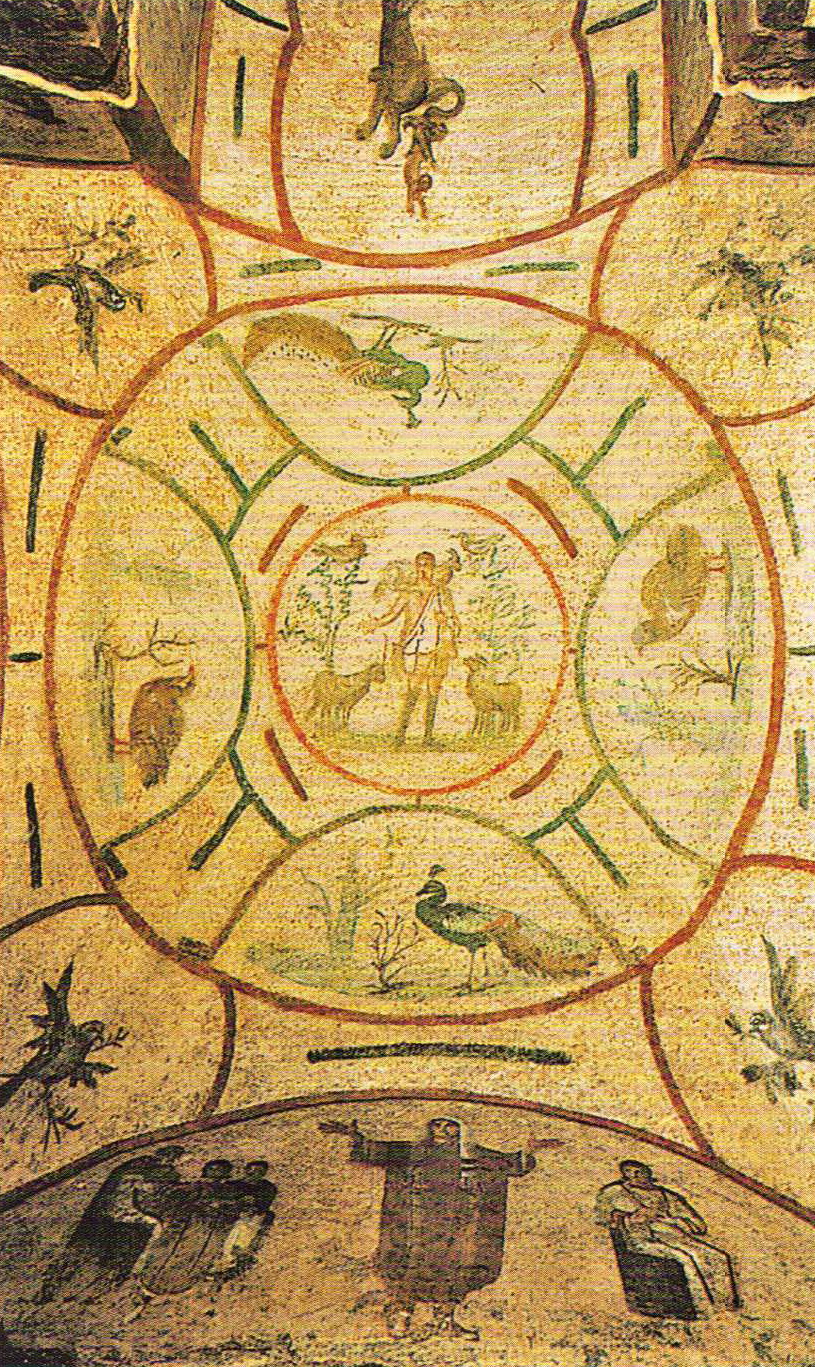 Priscilla Catacomb, 3rd century
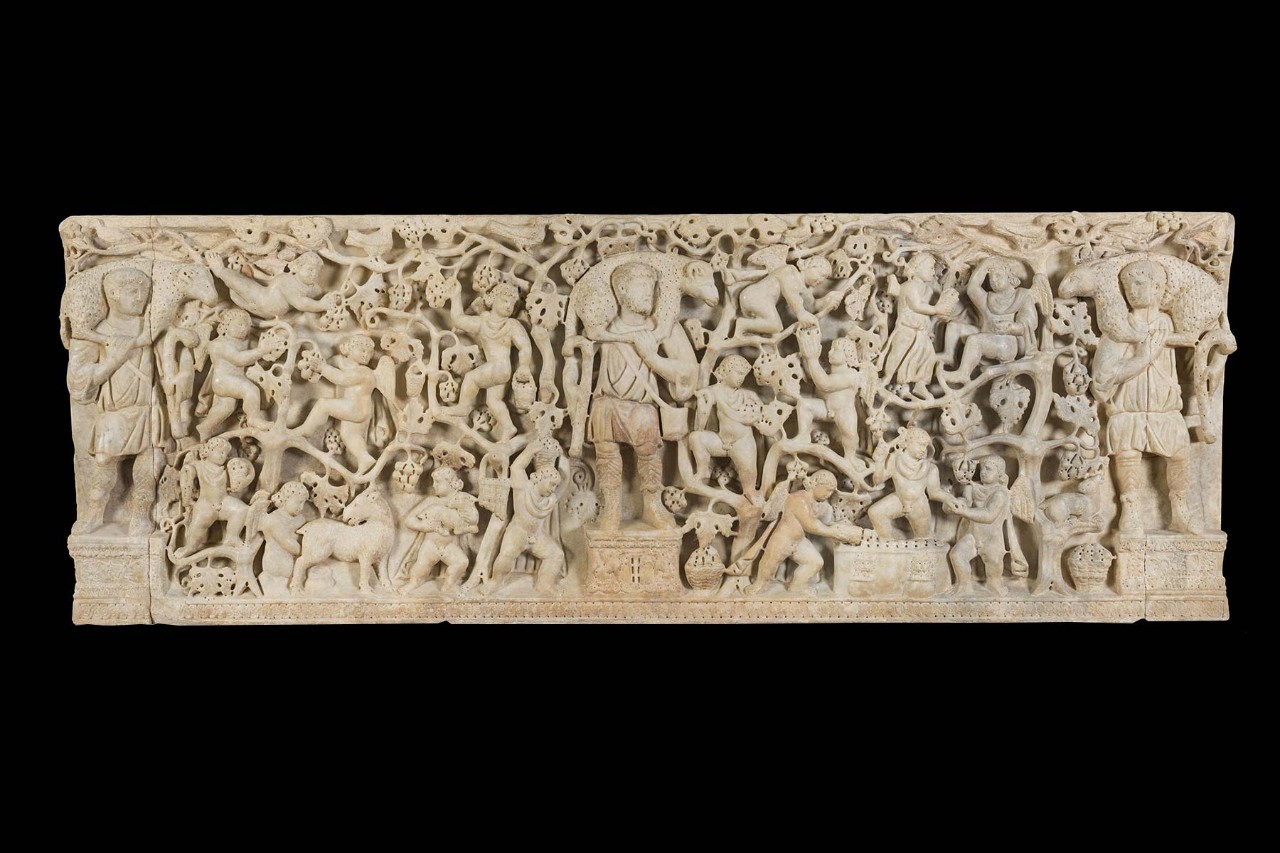 The Three Shepherds Sarcophagus from the Praetextatus Catacomb, c. 370–400, now in the Vatican Museums
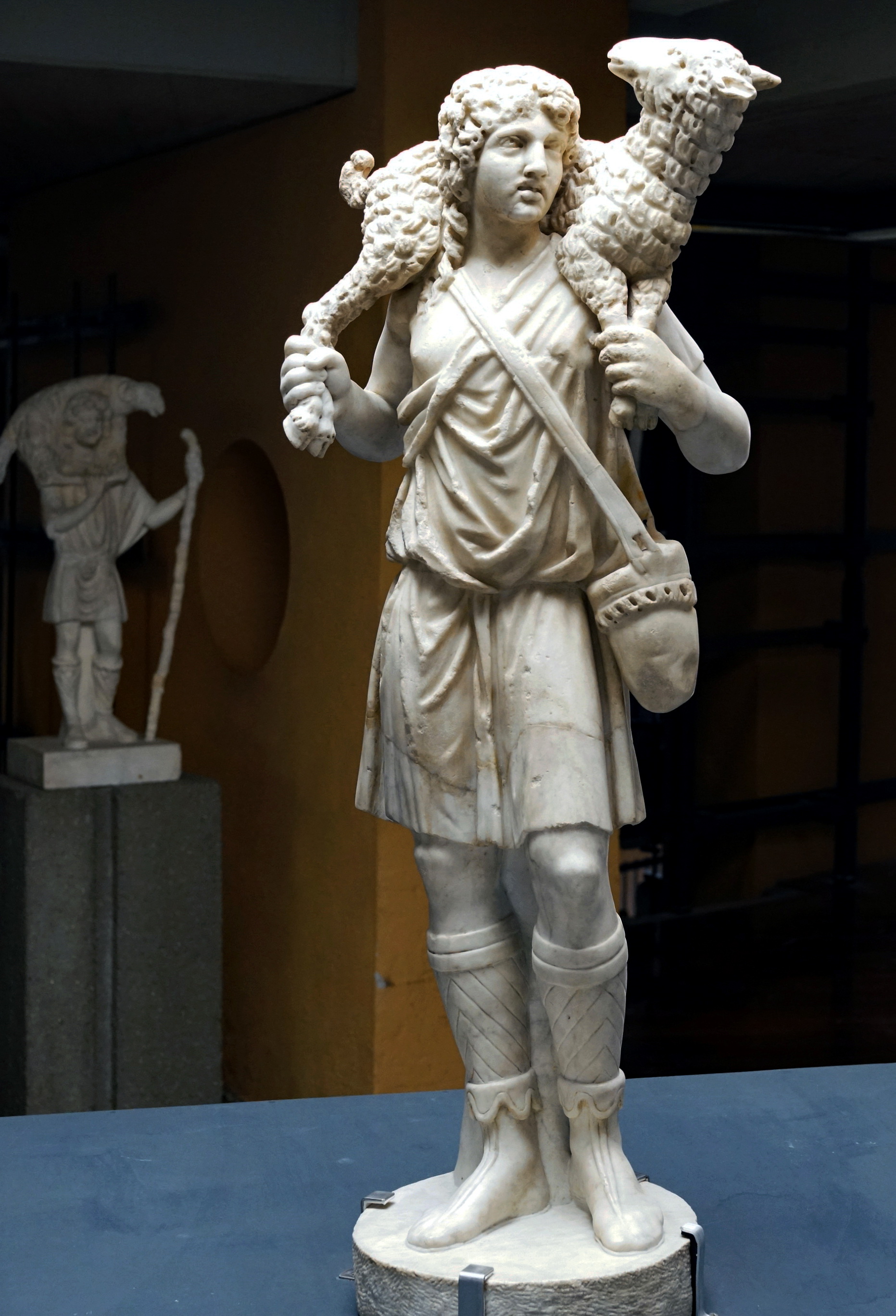 Late 3rd or early 4th-century marble statue from the Callixtus Catacomb, now in the Vatican Museums
What could the Good Shepherd motif have meant to early Christians, if they so frequently chose it as a single or prominent image above their final resting place?
The figure of the Good Shepherd – as the great Near Eastern anthropologist and Bible scholar Kenneth E. Bailey (1930–2016) explains in his seminal work The Good Shepherd. A Thousand-Year Journey From Psalm 23 to the New Testament (2014) – is only the final, 9th episode in a whole season spanning a thousand years from Psalm 23 to the Gospel of John. One could even imagine a prequel season, showing the shepherd figures of the ancient Near Eastern empires.
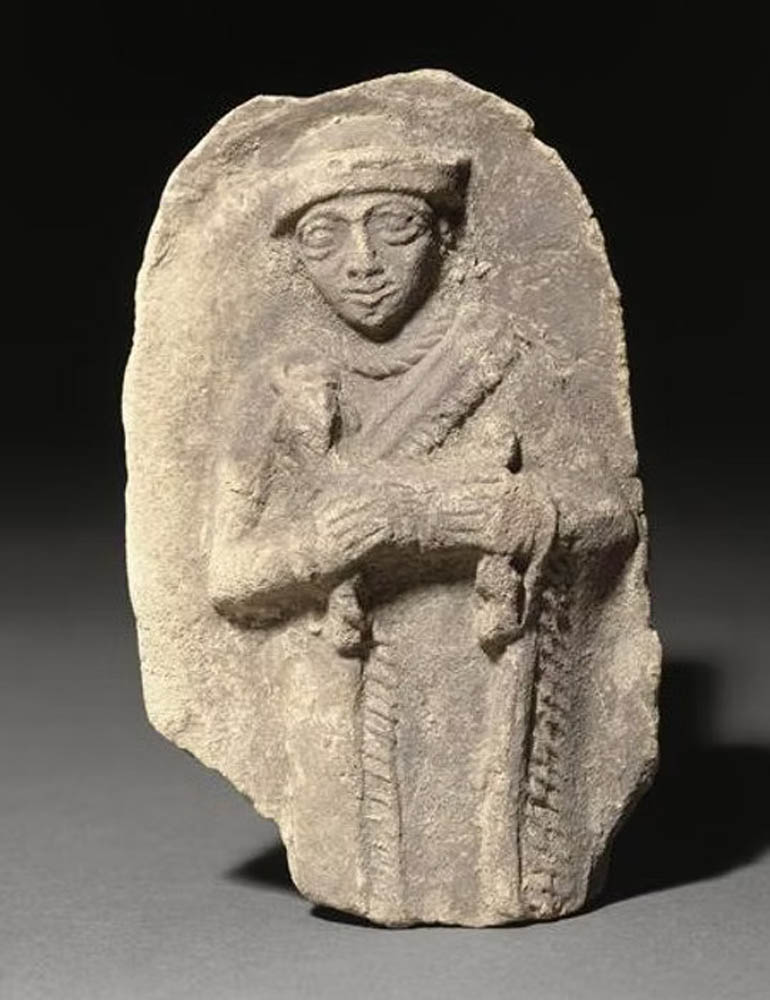 Anonymous Sumerian “Shepherd-King” statue from the National Museum of Iraq
One important metaphor in representations of ancient Near Eastern rulers was that they were shepherds appointed by the gods to lead their people and ensure their welfare. Like the Sumerian ruler Gudea (2140–2120 BCE), who calls himself sipa zid, “the true shepherd,” in the founding text of Ningirsu’s temple :
“The ruler commanded his city as if speaking to one person. The land of Lagash stood by him like the children of a mother. He opened shackles, removed chains; he restored …, dismissed accusations, and imprisoned (?) guilty ones deserving death [instead of execution].
He abolished the language of the lash and rod, replacing them with sheep’s wool. No mother shouted to her child. No child spoke back to its mother. No slave received a blow from its master, no misbehaving maid was struck by her mistress. … The ruler purified the city, sent a cleansing fire. He expelled the ritually impure … from the city.”
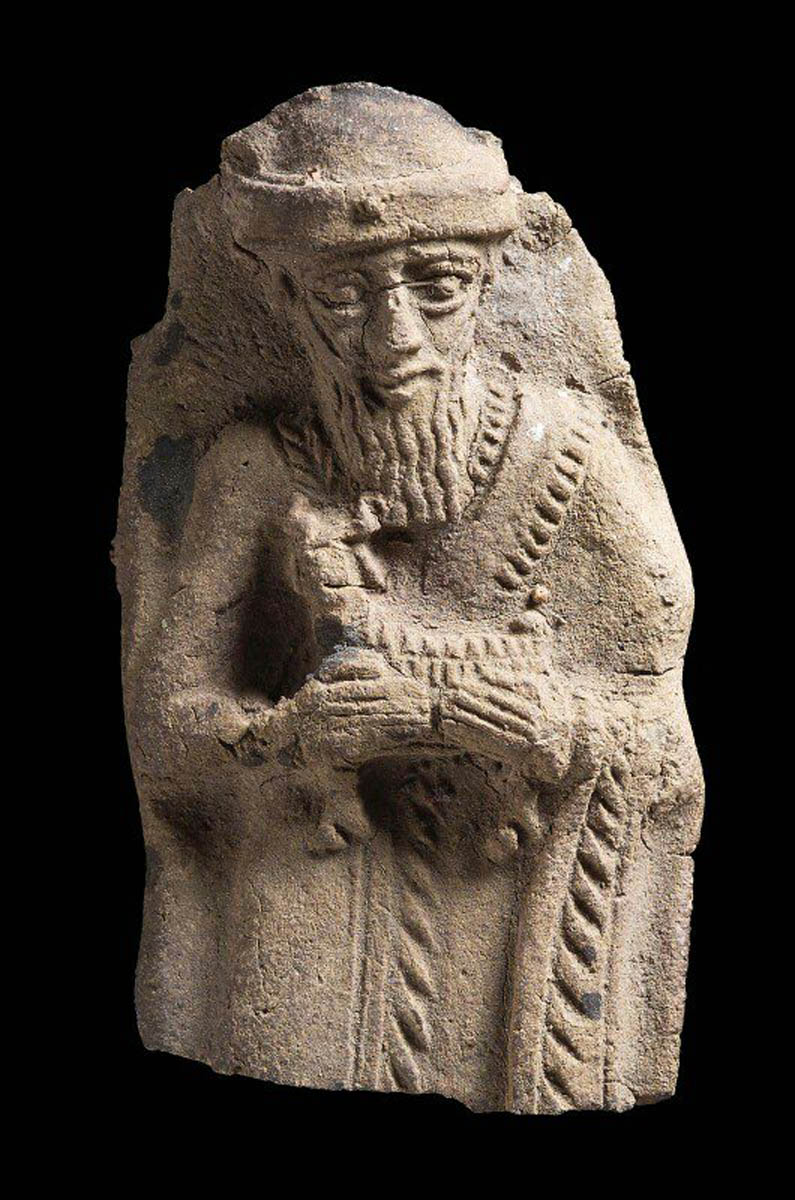 Anonymous Sumerian “Shepherd-King” statue from the Fine Arts Museum of Boston
The Bible radicalizes this image by making God directly the true shepherd in Psalm 23, rejecting the notion that human welfare and freedom depend on any political shepherd, however benevolent: “The Lord is my shepherd, I shall not want…”
In a detailed analysis of this psalm, Bailey uses his Near Eastern anthropological insights to show that this is not a romantic idyll but a perilous journey. The “green pastures” and “still waters” signify survival in the arid Near East, not abundance. The “valley of the shadow of death” depicts real, physical dangers. The shepherd is not romantic but an active protector. The closing scene (hospitality, table, oil, house) symbolizes covenant fidelity and final acceptance. The psalm’s structure is chiastic: at the center stands, “You are with me.”
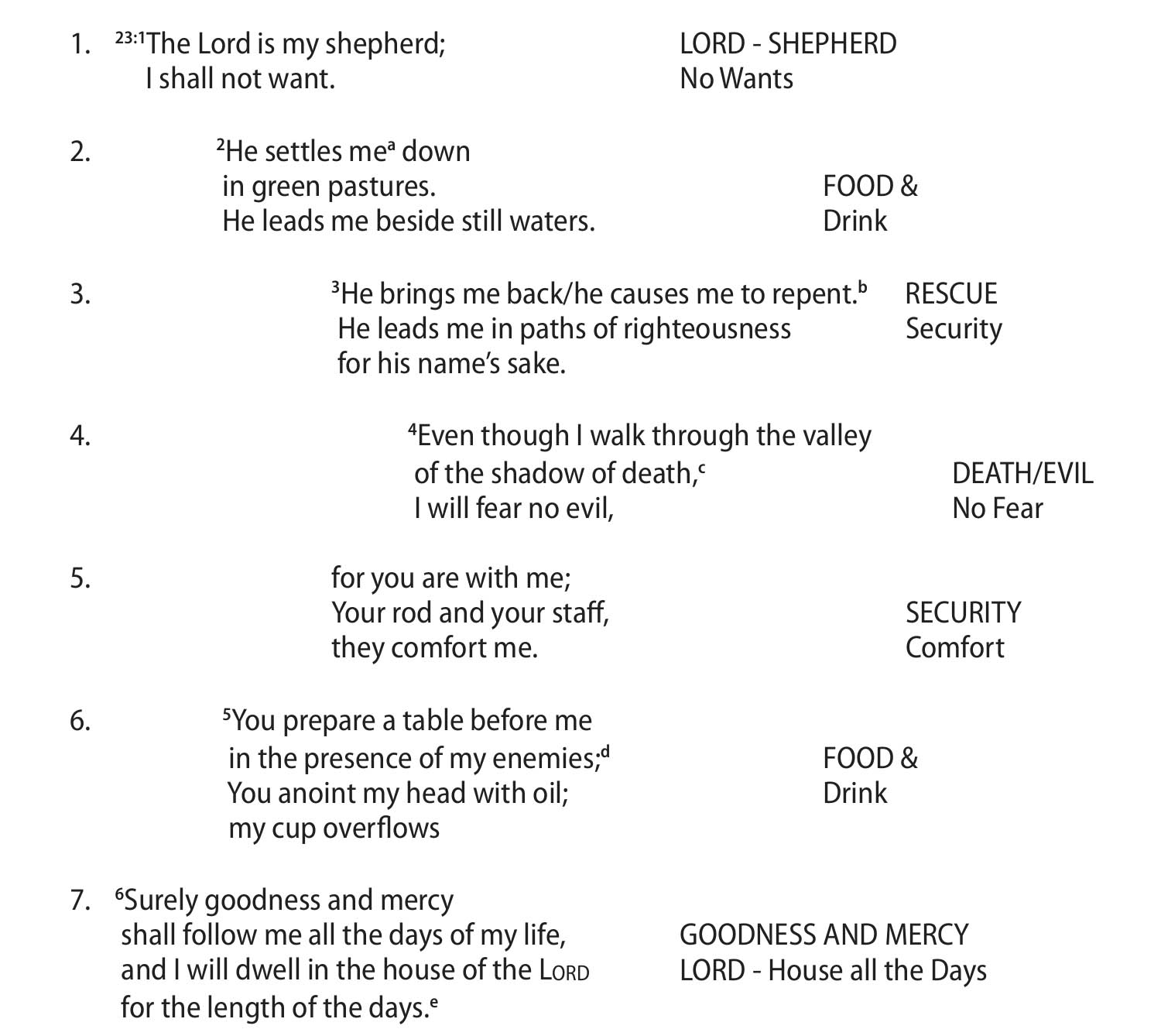
This image, the personal God as Good Shepherd, gradually unfolds and enriches in later episodes. Jeremiah 23, Ezekiel 34, and Zechariah 10 contain God’s strong rebuke of corrupt political shepherds “feeding themselves instead of the flock,” and promise the coming of a true Good Shepherd, who is Himself.
Jesus builds on this image in the Gospels. In Luke 15, two consecutive and closely related parables depict a shepherd seeking the lost sheep, and a woman searching the whole house for her lost coin, showing that God – both male and female, father and mother – actively seeks the troubled individual, and upon finding them, celebrates rather than shames. In Mark 6, He feels compassion for the crowd, “they were like sheep without a shepherd,” stands with them, and teaches them. In Matthew 18, continuing the lost sheep parable, He explains that being a shepherd means humility and service. Finally, in John 10, He explicitly declares He is the Good Shepherd promised in the Old Testament, giving His life for His sheep.
The Good Shepherd motif was one of the earliest visual motifs in Roman Christianity. It was greatly facilitated by the existence of earlier non-Christian images that could be reinterpreted as the Good Shepherd. One such figure was Hermes Kriophoros, carrying a ram to protect Tanagra from pestilence. As in many cases, early Christianity reinterpreted an already familiar visual motif, partly to avoid attracting attention and partly because sculptors and painters already had it at hand. But the meaning changed dramatically. The lamb intended for sacrifice was replaced by a metaphor with which Christians could identify, and which they knew the Good Shepherd himself pursued to find – just as he went after them, mostly first- and second-generation converts, in the pagan world – and gave his life for them as well. They could not have been in greater safety than under such a figure, waiting for the resurrection when they would meet him face to face.
“What was the popular religion of the first Christians? It was, in one word, the religion of the Good Shepherd. The kindness, the courage, the grace, the love, the beauty of the Good Shepherd was to them, if we may so say, prayer book and articles, creeds and canons, all in one. They looked on that figure, and it conveyed to them all that they wanted.”
A. P. Stanley, Lectures on the History of the Eastern Church, 1859
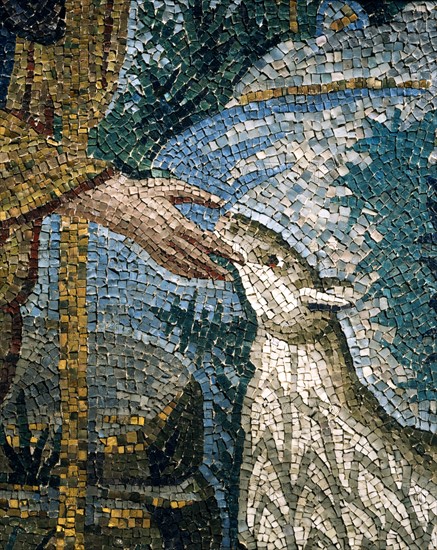
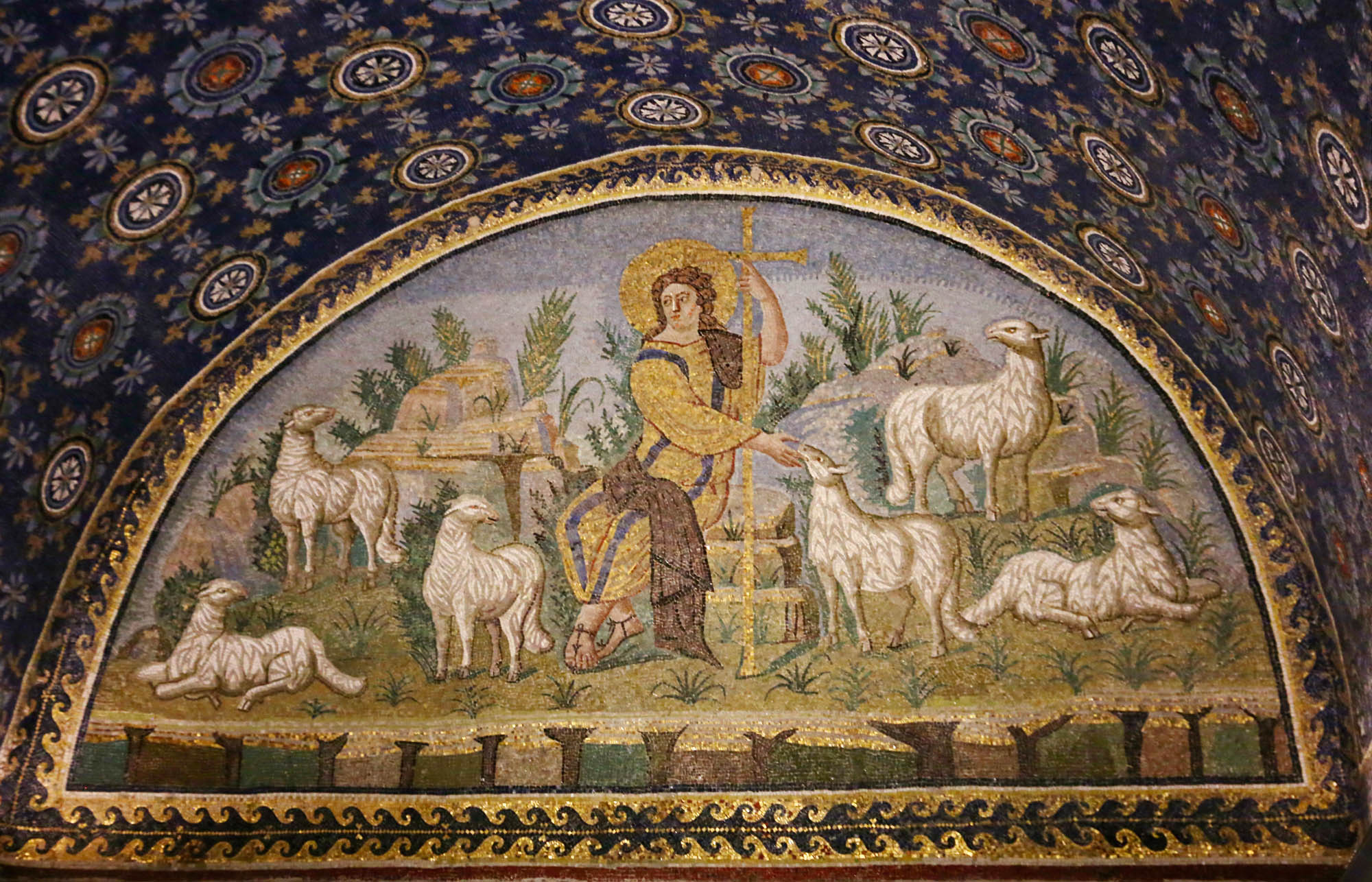 One of the latest depictions of the Good Shepherd at the dawn of monumental Christian art, in the lunette of Empress Galla Placidia’s early 5th-century tomb chamber in Ravenna. Notice the shepherd’s gentle hand and the lamb’s trusting face.
In 312, Constantine the Great not only legalized Christianity but also decided to use it to replace the weakened Roman pagan religion as a support for his throne and legitimacy. However, since he only knew that religion, he shaped the structure of Christianity as a state religion in its image. From a loose collection of base communities, he formed a hierarchical church similar to the Roman pagan priesthood, and the newly created church building type replaced the communal dinner table with the basilica, whose structure incorporated processions of homage before the ruler. With the difference that the ruler’s person or image was replaced by Christ Pantocrator on the apse vault, reigning over the world. From the 4th century onwards, this became the defining image of Christ, and the Good Shepherd motif gradually receded in Christian art and theology. Only hidden, modest representations, like those in Nicaea, Ravenna, and Rome, attest that it did exist and highlight its importance in the early days of Christianity.



Add comment