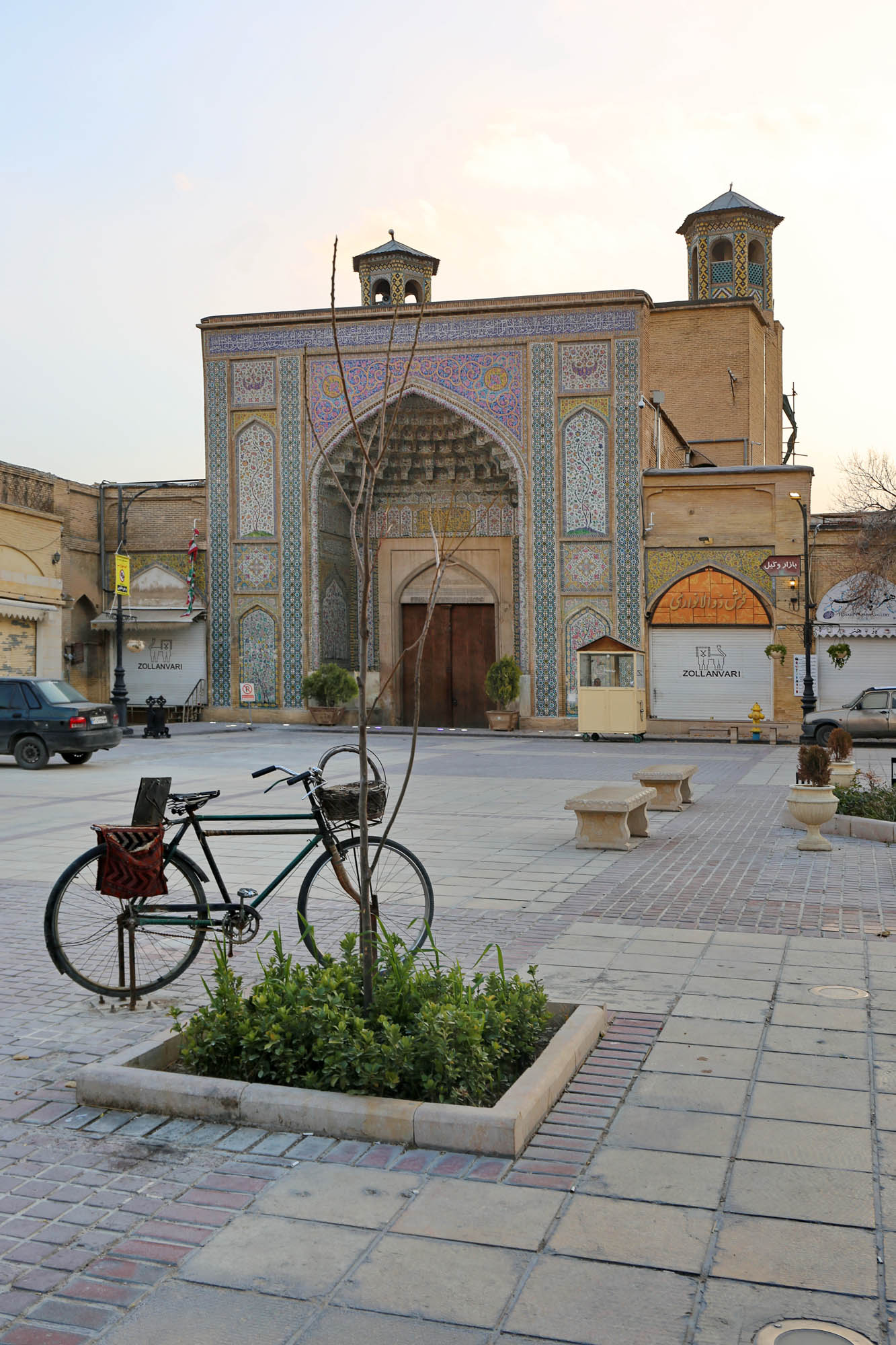


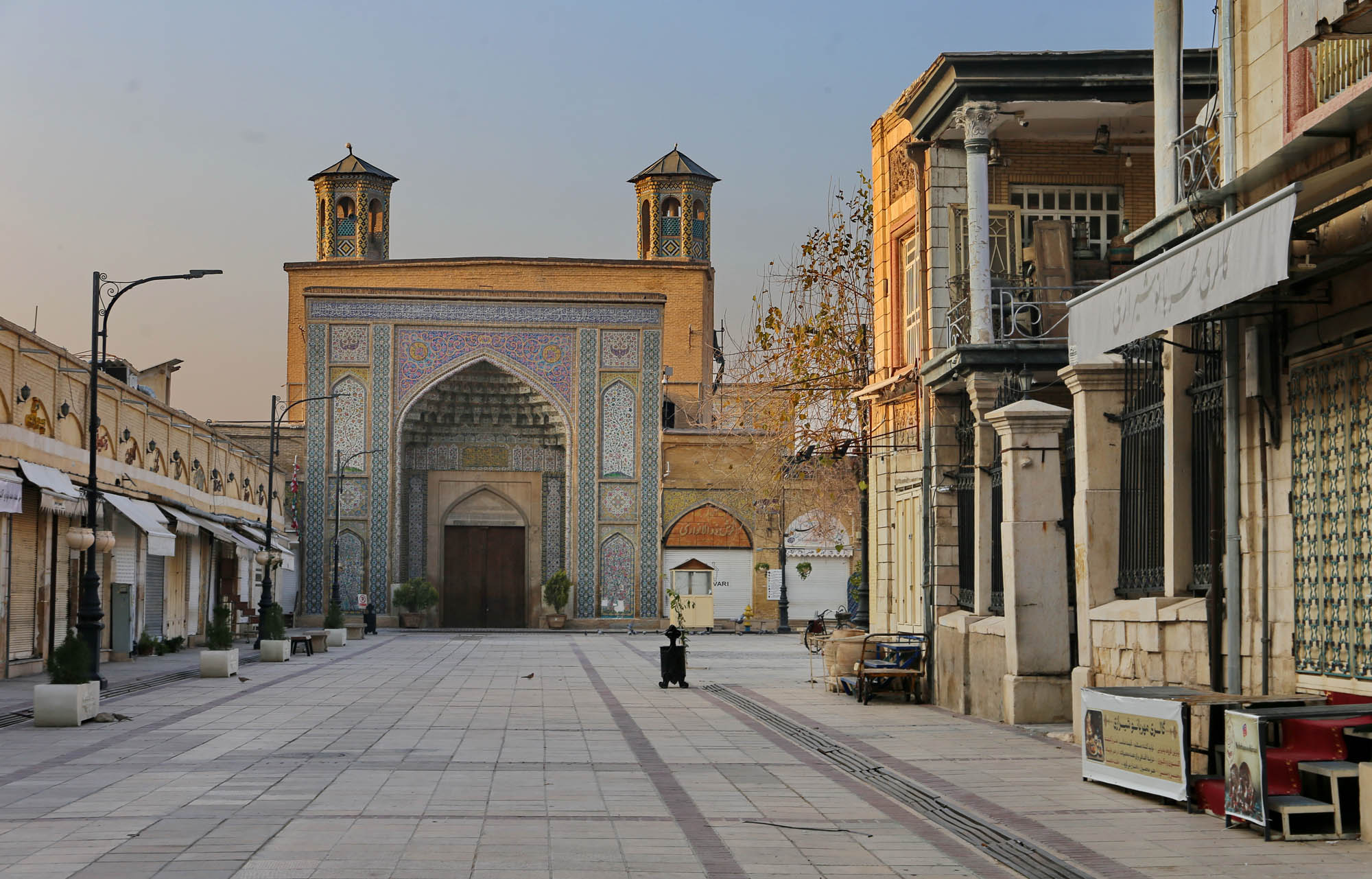
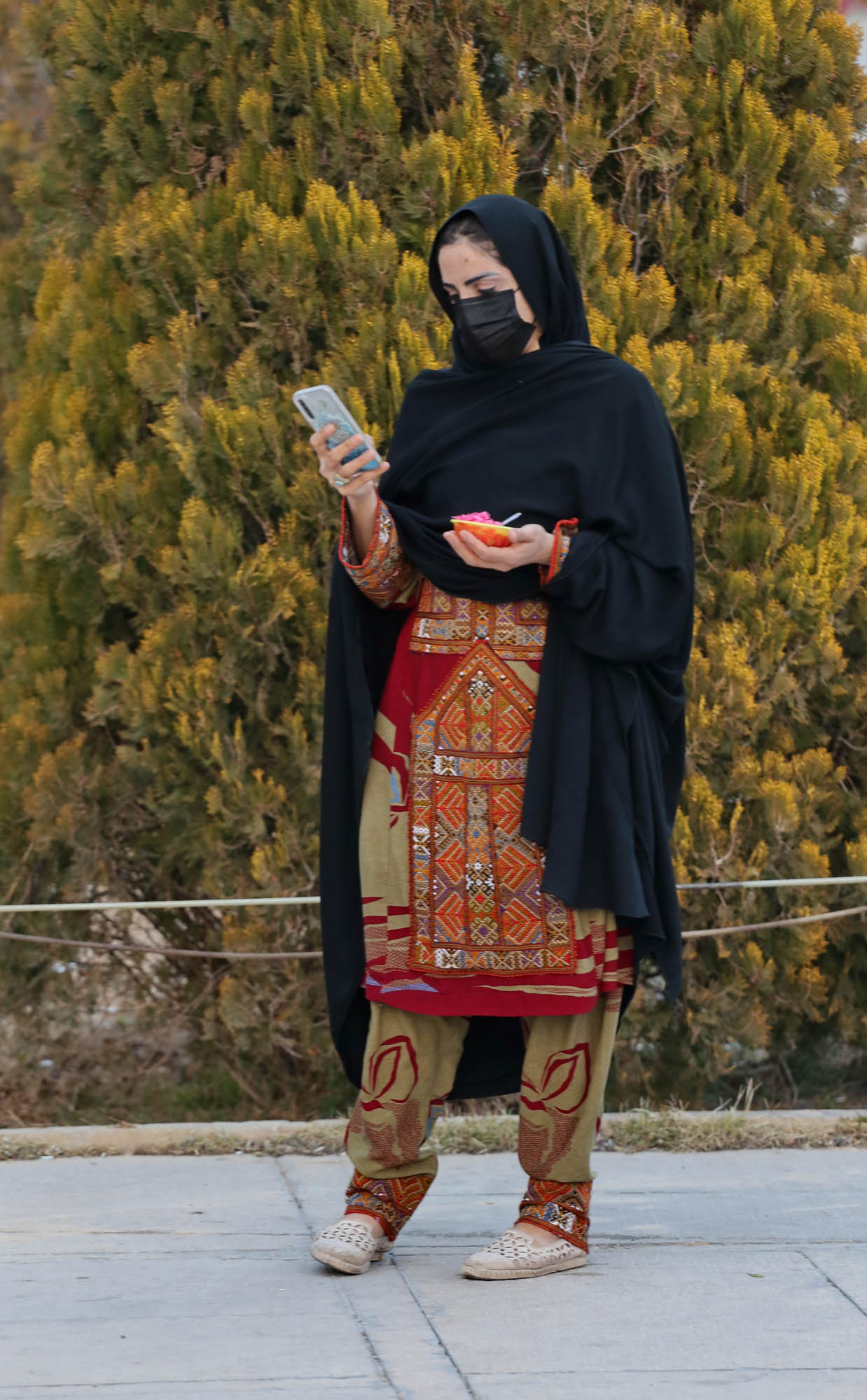
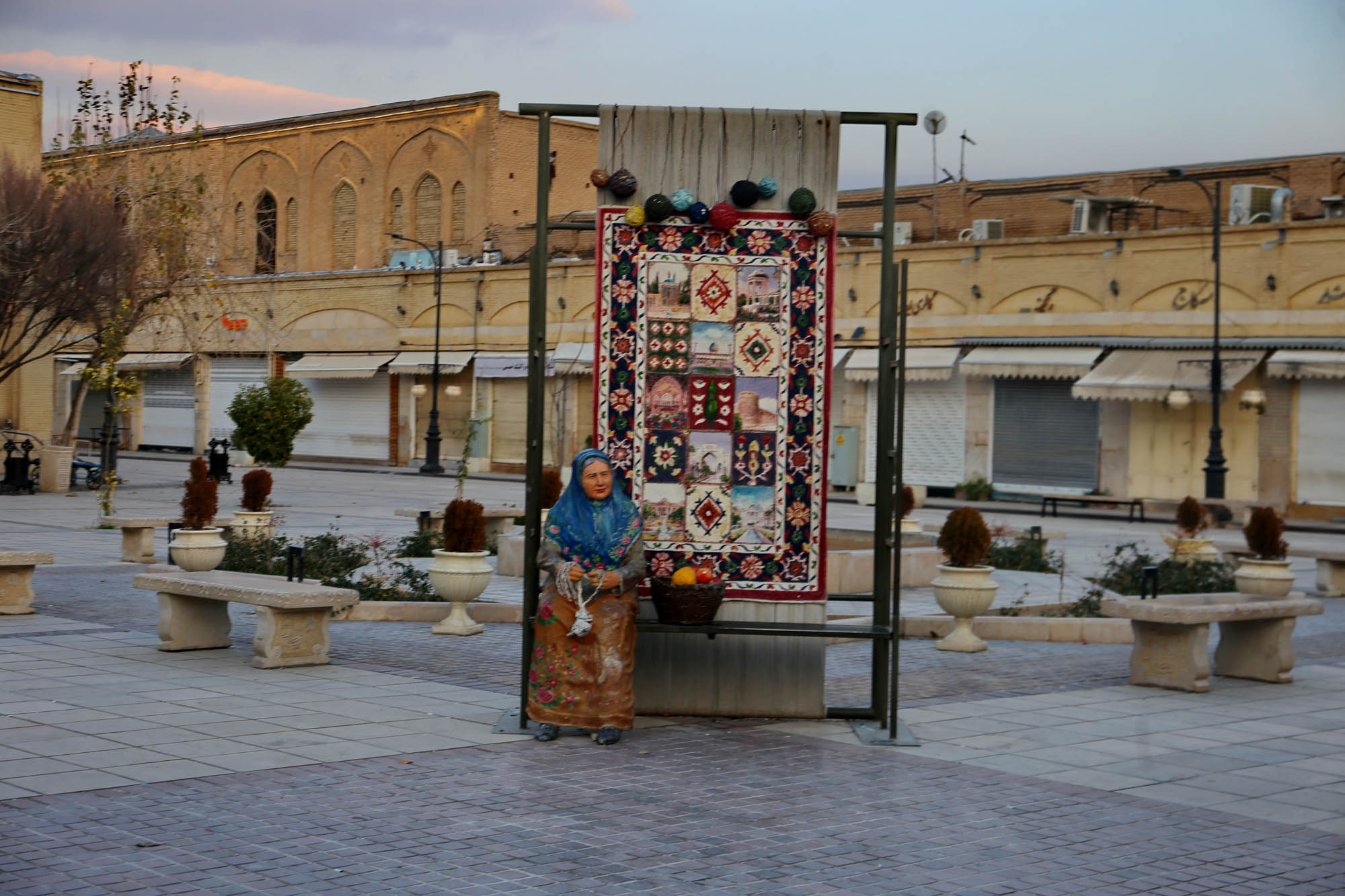
Life has vanished from Shiraz. It’s a regular weekday—Saturday, which is Monday here—around four in the afternoon, yet every shop is closed, the bazaar gates padlocked with iron chains. Not a soul walks the streets. We encounter only a couple dressed in traditional Baluchistani—eastern Iranian—attire, wandering lost through the square, unsure how they ended up in this ghost town when they had come to Shiraz, one of the liveliest cities in the world, with one of the busiest bazaars.
Mass protests have been sweeping Iranian cities for two weeks. Wednesday night marked the peak, Thursday saw even more people, Friday even more than that, and by Saturday evening, a new record is expected. The government has cut off the entire internet for a week now, so we rely solely on word-of-mouth updates brought to us each morning by receptionists and drivers, God knows from where. Apparently, Reza Pahlavi, the son of the Shah who emigrated in 1980, has taken on the role of coordinating the protests from America, calling for Iranians to flood the streets from Thursday to Saturday night to show the government their numbers. On Thursday and Friday, protesters set fire to government buildings and banks; in Qeshm we saw the charred skeleton of a freshly burned bank ourselves in the morning. By Saturday, shops didn’t even bother opening. Bazaar gates are covered with perforated aluminum sheets to prevent Molotov cocktails from being thrown inside.
We can’t enter the vaulted corridors of the historic bazaar, so we roam the outer streets. With the shutters down, the absence of colorful goods and bustling crowds makes the shoddy construction of the buildings strikingly visible—a visual metaphor for the mere survival the country has struggled with for years, and now, with new sanctions and the devaluation of the rial, it’s getting a final blow.
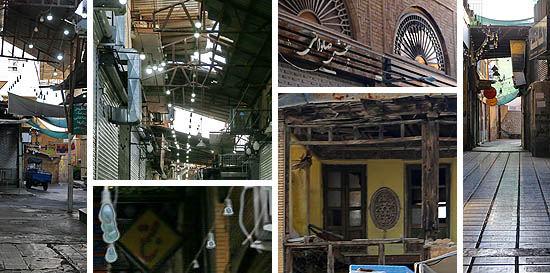
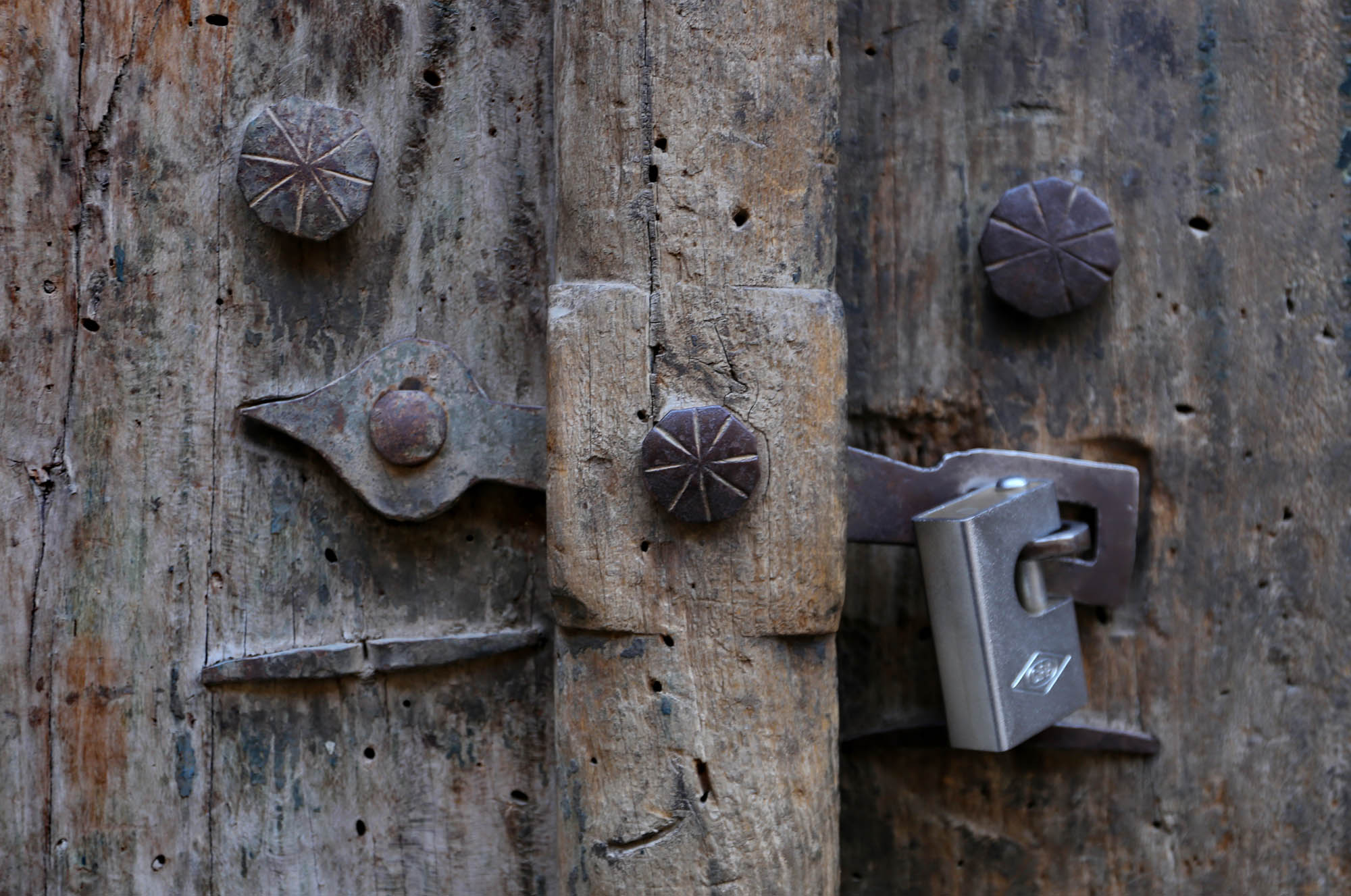
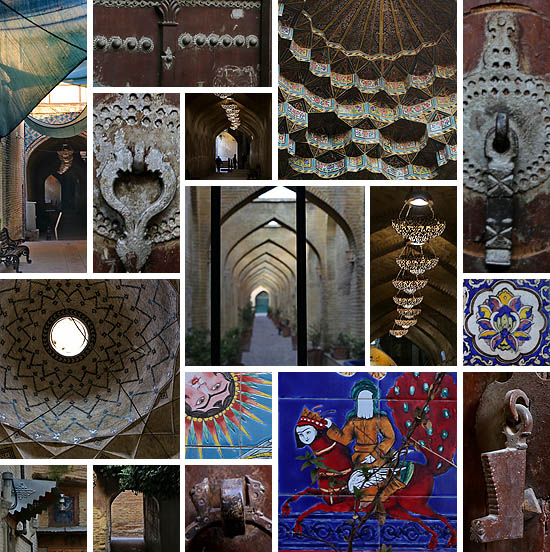
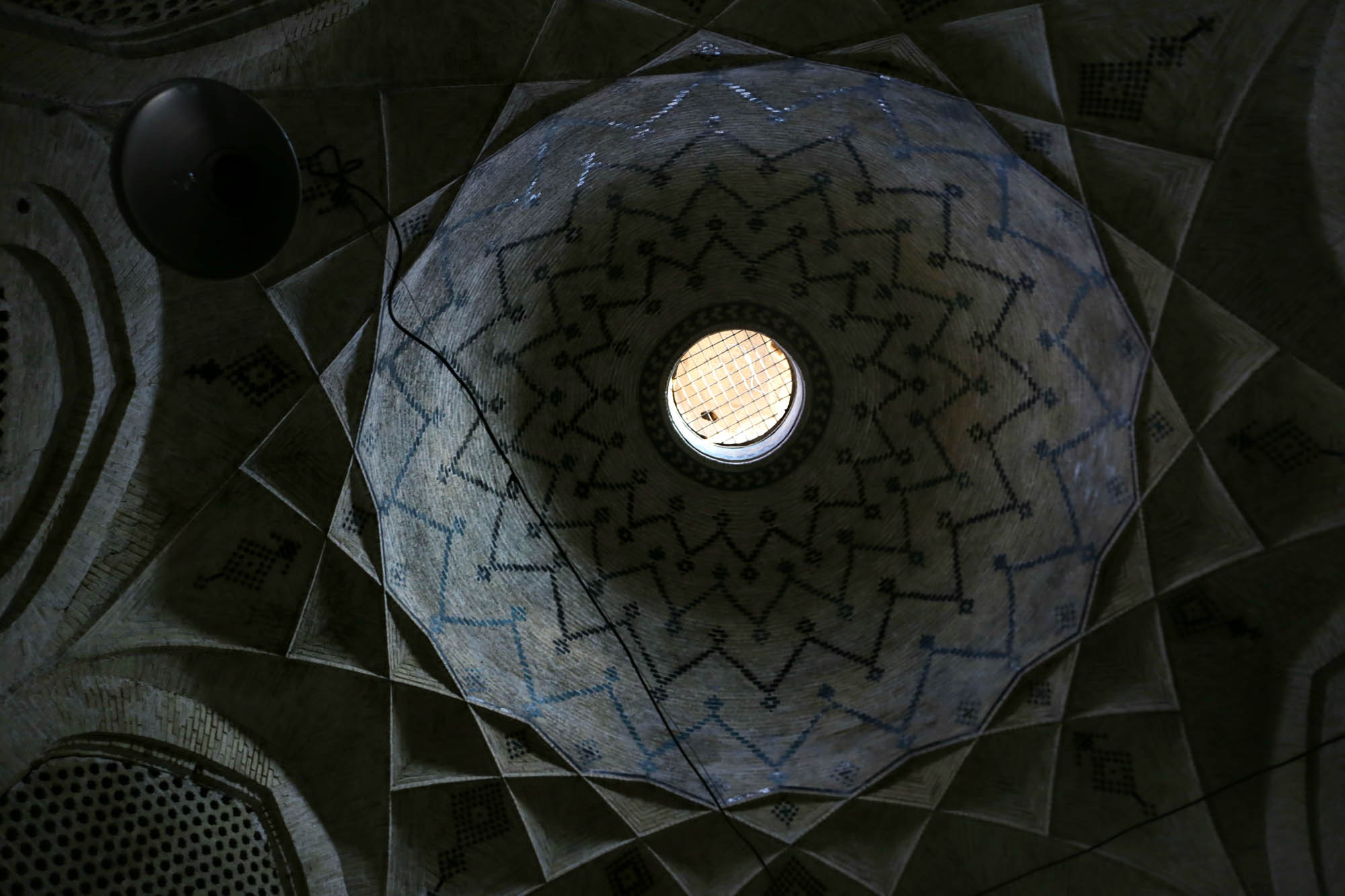
Behind the Vakil Mosque stretches a vaulted corridor that lets us catch a hint of the historical atmosphere one would feel in the bazaar, the mosque, or the old bathhouse if entry were possible. From this corridor, madrasas, mosque courtyards, caravanserais, and cafés open onto arches with tiled stalactite vaults, old doors with iron studs, all now shut tight. Shiraz’s old town is full of such little treasures; you just have to wander the winding streets, watch for signs of what lies behind each gate, and hope luck favors you with an open doorway where you’re welcomed inside.
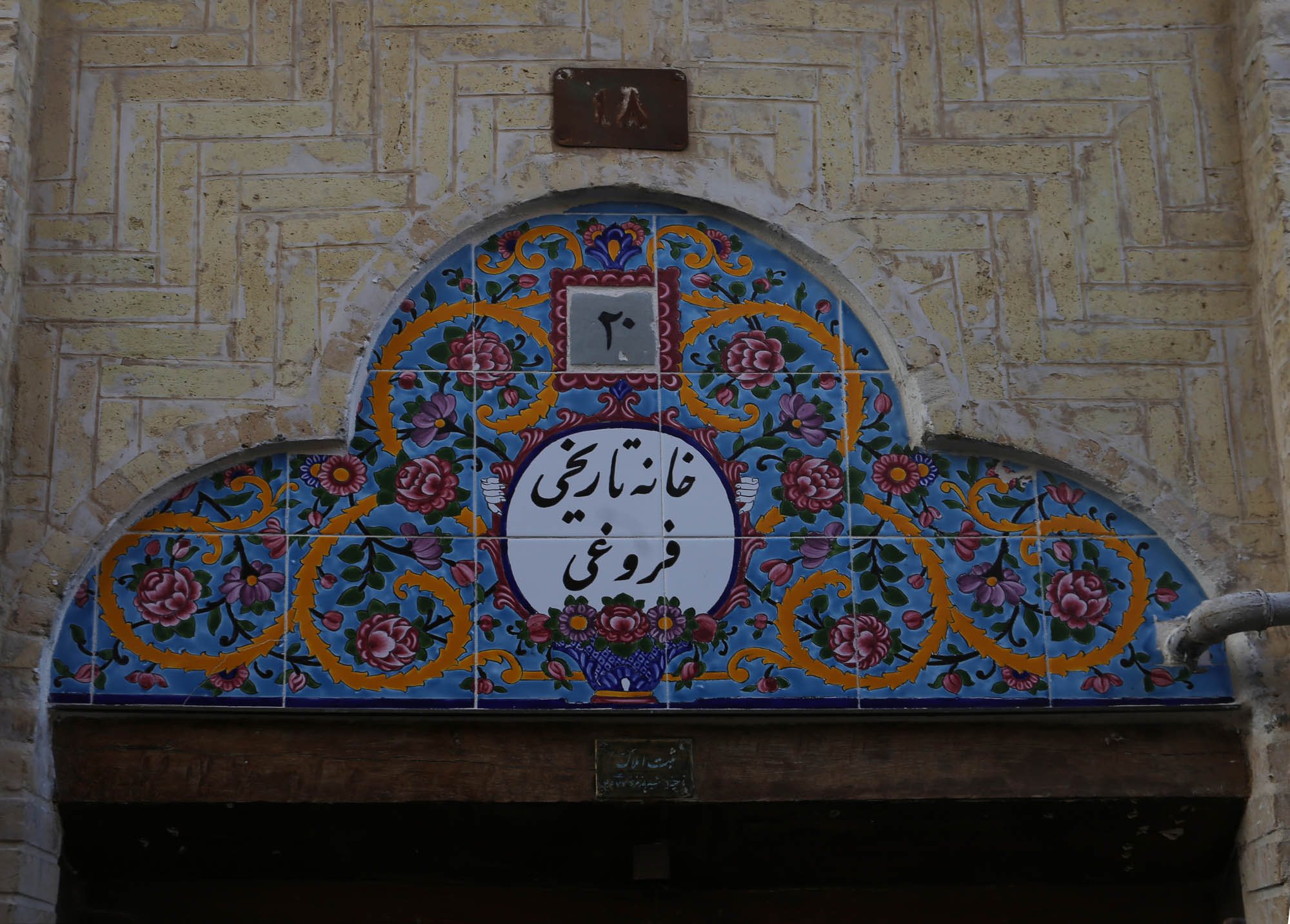
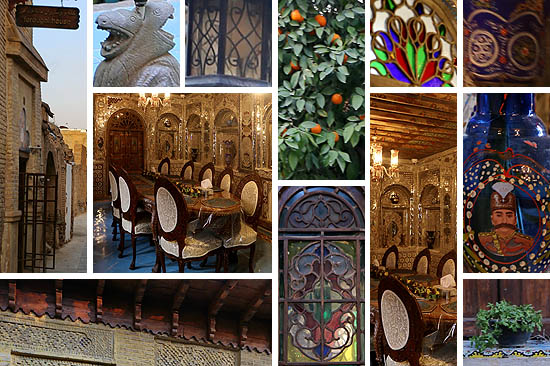
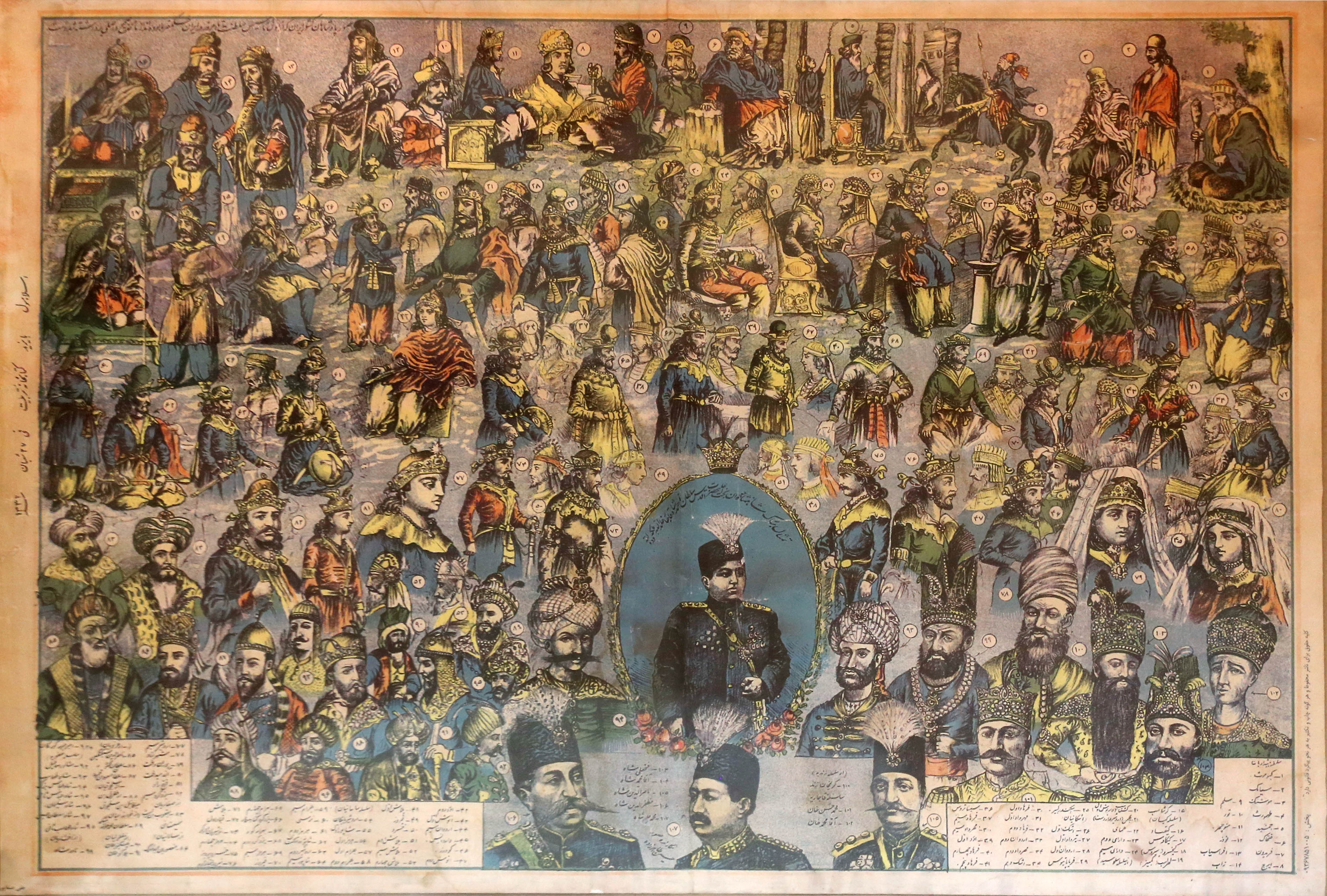
Luck is on our side. In the streets beyond the Moshir caravanserai, where several former wealthy courtyard merchant houses have been converted into guesthouses, one of them—the Foroughi House—has its gate half open. We peek inside. A receptionist steps up and, on our polite request, allows us to wander the courtyard. A beautiful patio with a fountain pool, orange trees, and Qajar-era wooden doors and window frames inlaid with colorful glass. We even enter the Qajar-era dining room, where mirrored tiles cover the walls from floor to painted beamed ceiling. Along the corridor is a print from the era of Little Prince Ahmad Shah (1909-1925), depicting the young ruler as heir to the Persian great kings from Cyrus to Nasreddin Shah. The house’s former owners were clearly supporters of the Qajar dynasty, which was sent into exile by old Reza Pahlavi—just as he himself was by the British, and later his son by the Islamist-turned-civilian revolution. But the print survived all these regime changes, and will likely outlast the current one as well, inshallah.
Night falls, and we decide to head back to the hotel. From six o’clock onward, uniformed men stand at the gate, allowing no one out. From the open window, the distant murmur of the crowd drifts up, occasionally punctuated by gunfire. According to reports delivered the next morning, two hundred thousand protested that night in Shiraz, and many were killed. No one knows exactly how many. In Kashan, four; in Mashad, ten. Word-of-mouth reports claim that in the last two weeks over a thousand have died, while locals in the Isfahan bazaar estimate three to four thousand from this city alone. Some police have switched sides. The Revolutionary Guard, normally subordinate only to the ayatollahs’ council, has been authorized to use live ammunition against the crowds; allegedly even some defecting police and soldiers were shot.
Official news comes via SMS from home, but who knows if it’s more reliable than local word-of-mouth, since major news agencies no longer have correspondents in Iran. The only local news source, Iranian TV, continuously plays years-old footage of pilgrims waving Khomeini’s image and the Prophet’s green flags at holy sites, and occasionally of Supreme Leader Khamenei mumbling about order and peace, alongside ill-tempered TV commentators who clearly struggle to explain the situation.
From Sunday, the government declared three days of mourning for the “martyrs”—its own dead. In doing so, they try to deny the protesters they killed the status of martyr, since in Shiite Iran, a government traditionally loses legitimacy when it creates martyrs among the people. From there, the rest is just the endgame, however long or bloody it may be.
Basij (the volunteer security branch of the Iranian Revolutionary Guard) escort their dead comrade as a martyr of the Islamic Republic in a motorcade along the Isfahan ring road this morning. Protests are forbidden on mourning days, yet the Council of Guardians calls on its supporters for a pro-government counter-rally today.