

write you the tale about the bear and the crown. let there be also the padishah of Madjaristan.
comment by Anna to the previous post (in the Hungarian version of the blog)

Once upon a time there was a bear living in the middle of a big round forest. The crowns of the high trees of the forest leaned against each other like the vault of a church. Under them there was an eternal, pleasant half-light reigning, no rain poured and no wind raged ever. The bear loved the forest very much, he loved to go around in it and to have talks with the other animals about the things of the forest. And he thought it would be like this in all his life.
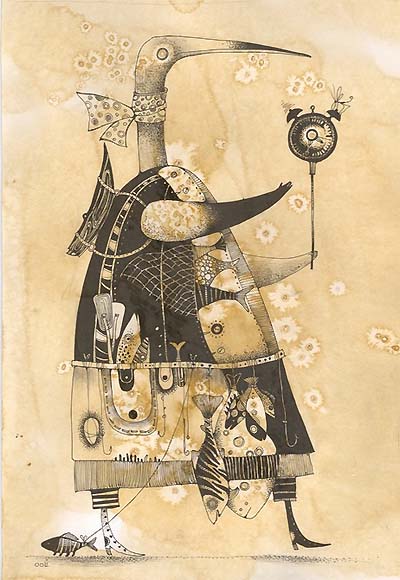
 Illustrations of Gennadiy Pavlishin to the Tales of the river Amur
On a day, however, the bear somehow got to the edge of the forest, of which he had known only from hearsay before. He came out from between the trees, and caught sight of the blue sky with the sun shining on it brilliantly. Unknown flowers were blooming on the meadow and deers were grazing on it, whom the bear had never seen before – their huge antlers were too large for the thick forest. “My God, how beautiful is the world outside the forest!” – the bear thought in astonishment. From that time on he went day by day to the edge of the forest to have a look at that wonderful view, until on a day he said: “I go and see what else is there in the world over the meadow.” And he left the forest without looking back any more.
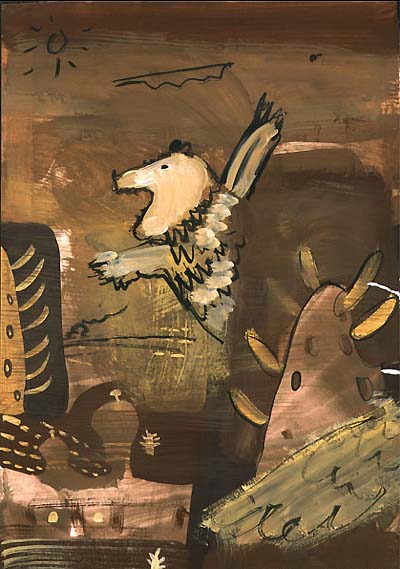 Olga Belskaya: The bear who wanted to fly
Photis Ionatos: Ithaca, poem by Kavafis. From the CD “Ithaque”
| Κωνσταντίνος Π. Καβάφης: Ιθάκη Σα βγεις στον πηγαιμό για την Ιθάκη, να εύχεσαι νάναι μακρύς ο δρόμος, γεμάτος περιπέτειες, γεμάτος γνώσεις. Τους Λαιστρυγόνας και τους Κύκλωπας, τον θυμωμένο Ποσειδώνα μη φοβάσαι, τέτοια στον δρόμο σου ποτέ σου δεν θα βρεις, αν μεν' η σκέψις σου υψηλή, αν εκλεκτή συγκίνησις το πνεύμα και το σώμα σου αγγίζει. Τους Λαιστρυγόνας και τους Κύκλωπας, τον άγριο Ποσειδώνα δεν θα συναντήσεις, αν δεν τους κουβανείς μες στην ψυχή σου, αν η ψυχή σου δεν τους στήνει εμπρός σου. Να εύχεσαι νάναι μακρύς ο δρόμος. Πολλά τα καλοκαιρινά πρωϊά να είναι που με τι ευχαρίστησι, με τι χαρά θα μπαίνεις σε λιμένας πρωτοειδωμένους, να σταματήσεις σ' εμπορεία Φοινικικά, και τες καλές πραγμάτειες ν' αποκτήσεις, σεντέφια και κοράλλια, κεχριμπάρια κ' έβενους, και ηδονικά μυρωδικά κάθε λογής, όσο μπορείς πιο άφθονα ηδονικά μυρωδικά, σε πόλεις Αιγυπτιακές πολλές να πας, να μάθεις και να μάθεις απ' τους σπουδασμένους. Πάντα στον νου σου νάχεις την Ιθάκη. Το φθάσιμον εκεί ειν' ο προορισμός σου. Αλλά μη βιάζεις το ταξείδι διόλου. Καλλίτερα χρόνια πολλά να διαρκέσει και γέρος πια ν' αράξεις στο νησί, πλούσιος με όσα κέρδισες στο δρόμο, μη προσδοκώντας πλούτη να σε δώσει η Ιθάκη. Η Ιθάκη σ'έδωσε τ' ωραίο ταξείδι. Χωρίς αυτήν δεν θάβγαινες στον δρόμο. Άλλα δεν έχει να σε δώσει πια. Κι αν πτωχική την βρεις, η Ιθάκη δε σε γέλασε. Έτσι σοφός που έγινες, με τόση πείρα, ήδη θα το κατάλαβες οι Ιθάκες τι σημαίνουν. | .... | Konstantinos P. Kavafis: Ithaca As you set out for Ithaca hope your road is a long one, full of adventure, full of discovery. Laistrygonians, Cyclops, angry Poseidon - don't be afraid of them: you' ll never find things like that on your way as long as you keep your thoughts raised high, as long as a rare excitement stirs your spirit and your body. Laistrygonians, Cyclops, wild Poseidon - you won't encounter them unless you bring them along inside your soul, unless your soul sets them up in front of you. Hope your road is a long one. May there be many summer mornings when, with what pleasure, what joy, you enter harbours you're seeing for the first time; may you stop at Phoenician trading stations to buy fine things, mother of pearl and coral, amber and ebony, sensual perfume of every kind - as many sensual perfumes as you can; and may you visit many Egyptian cities to learn and go on learning from their scholars. Keep Ithaca always in your mind. Arriving there is what you're destined for. But don't hurry the journey at all. Better if it lasts for years, so you're old by the time you reach the island, wealthy with all you've gained on the way, not expecting Ithaca to make you rich. Ithaca gave you the marvelous journey. Without her you wouldn't have set out. She has nothing left to give you now. And if you find her poor, Ithaca won't have fooled you. Wise as you will have become, so full of experience, you'll have understood by then what these Ithakas mean. |
During his long journey he met many strange creatures,
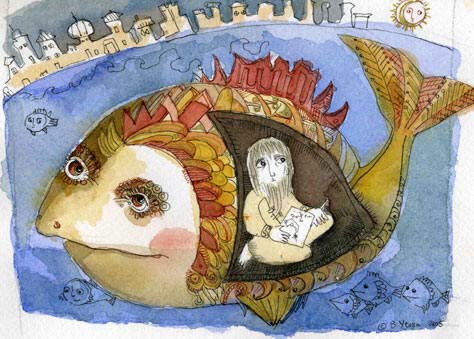
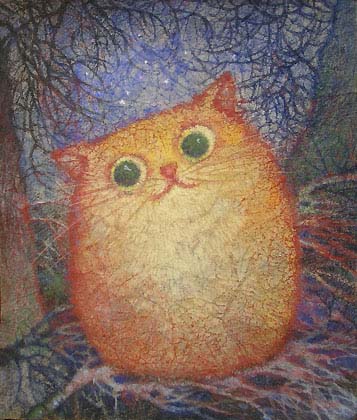
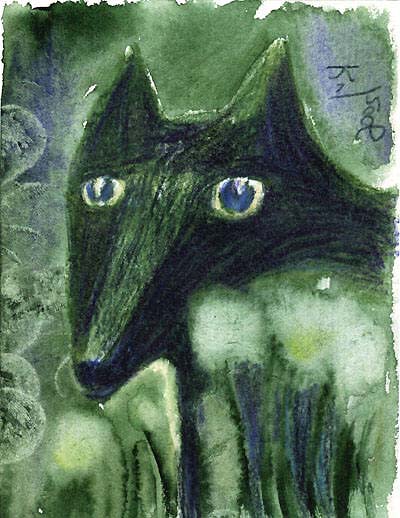
saw and heard a lot of strange things,

learned a lot,

made acquaintance with the forgotten streets and backyards of the cities,
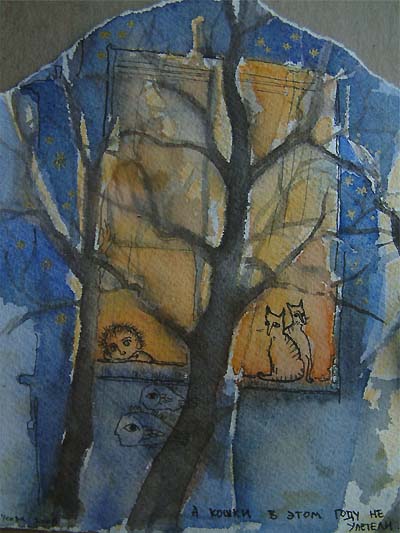
some times he got in trouble, but he always managed to fight out of it.

Finally on a day he happened to get to the land of the padishah of Madjaristan.

The padishah of Madjaristan, the terrible tyrant was just struggling with problems of succession out of his own fault.

He thus announced that his beautiful daughter came to an age to marry and was waiting for suitors. And the suitors started to arrive from the direction of the four winds, all kinds of princes and counts and selected Gypsy lads. The princess, however, did not want any of them, because long time before she had seen in a dream that none else but a flying bear would be her choice, arriving to her from a faraway land.
 Cheburashka from the modern lubok series by Andrej Kuznetsov
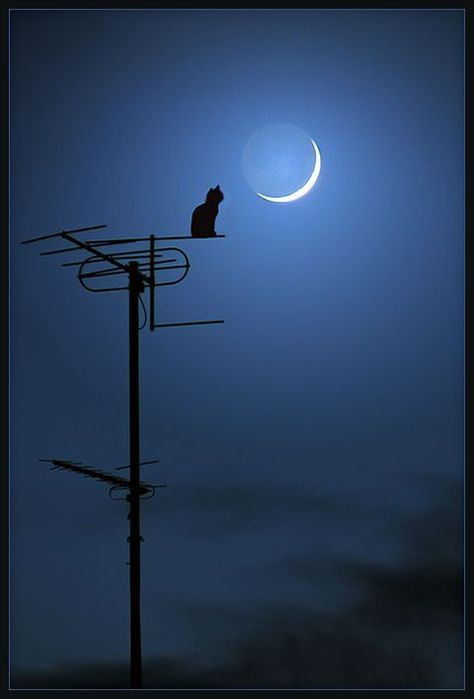
 She was sitting day and night on the highest point of the castle and watching whether there is a bear nearing who looks like a small black cloud.
Savina Yannatou and the Primavera en Salonico: Ya salió de la mar la galana (The lady has already come out of the sea), a Sephardic song from Thessaloniki, from the CD “Primavera en Salonico” (Spring in Saloniki)
| Muchachicha está en el baño vestida de colorado. Échate a la mar. Échate a la mar y alcanza – échate a la mar. A la mar yo bien me echava, si la suegra licencia me dava. Échate a la mar. Échate a la mar y alcanza – échate a la mar. Ya salió de la mar la galana con un vestido al y blanco – ya salió de la mar. Entre la mar y el río mos creció un árbol de bembrillo – ya salió de la mar. La novia ya salió del baño, el novio ya la está esperando – ya salió de la mar. Entre la mar y la arena mos creció un árbol de almendra – ya salió de la mar. | ................ | The girl is in the bath vested in red. Swim into the sea. Swim into the sea and come back – swim into the sea. I would happily swim into the sea if my mother-in-law gave permission. Swim into the sea. Swim into the sea and come back – swim into the sea. The lady has already come out of the sea in a red and white vest – she has come out of the sea. Between the sea and the river a tree of quince has grown – she has come out of the sea. The bride has already come out of the bath, the bridegroom is waiting for her – she has come out of the sea. Between the sea and the sand an almond tree has grown – she has come out of the sea. |
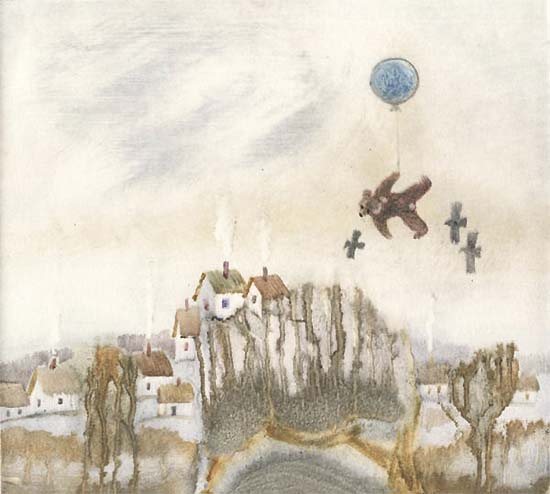
As soon as she caught sight of him, she immediately recognized him: no doubt, this was the bear she had seen in her dream. She has immediately led him to her father who gave them his blessing together with his crown and half of his kingdom.

And they threw a big wedding party, made merry, the dishes and drinks covered all place from Hencida to as far as Bonchida, and it would have spread even further, but the road over the mountain from Bonchida to Szék was not yet made and even the musicians from Szék had to come to the wedding over Szamosújvár. I was also there, dancing till morning, eating and drinking, seeing and hearing everything, just like I have told it now to you.
Let them live happily until they die and a thousand times more.




Add comment