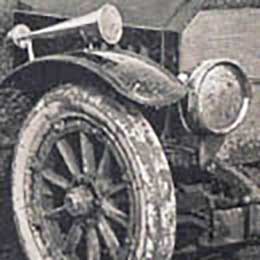


In the previous post I could not resist the temptation and I have smuggled a cuckoo’s egg among the photos of Odessa that has become a ghost city. This photo was also taken by Vsevolod Vlasenko, but instead of Odessa it was made in the Moscow studio of Rustam Khamdamov, the director of Vocal parallels (2005). I also included it among the photos of Odessa as a visual parallel, so that it would recall, by way of substitution, the lost richness of that city. Only later I discovered that it fell exactly at the middle of the photo series.

“– What is your father’s profession?
– My father writes poetry. That’s all he does. He is one of the greatest unknown poets of the world.”
– My father writes poetry. That’s all he does. He is one of the greatest unknown poets of the world.”
(A dialog from Rustam Khamdamov’s My heart’s in the highlands (1967))
The Uzbek painter and film director Rustam Khamdamov is one of the greatest unknown poets of Russian movie. Fellini, Visconti and Paradjanov all were enthusiastic about his My heart’s in the highlands that he directed in 1967 as a student of the Institute of Cinematography. The film was banned by Soviet censorship. In 1974 his next film Unintended pleasures was not even allowed to be completed; its concept was included a year later into A slave of love by Nikita Mikhalkov who has always been very sensitive to the changing winds of the regime. In 1991 his Anna Karamazoff caused a scandal in Cannes and it was not projected any more (although it can be found on the Russian web). Only the Vocal parallels of 2005 brought a late success to the director whose studio was photographed by Vsevolod Vlasenko at the time when the film was just finished.


„For Rustam Khamdamov what matters is not so much WHAT HAPPENS, but IN WHAT ENVIRONMENT and HOW he shows it. The images that later became Khamdamov’s trademarks first appear in My Heart’s in the Highlands: the room cluttered with every sort of art object in every space, ladies stockings hanging over a balcony rail, the peculiar, elegant ladies hat with the white band and feathers, and always visions of women and the Feminine.”
– writes Irina Goncharova in her review on Khamdamov published in last October, the best and most thorough essay among the few ones written on the director either in Russian or in any other language.


These photos are just like visual commentaries to Khamdamov’s movies and paintings.
Details from Khamdamov’s В горах мое сердце – My heart’s in the highlands (1967),
and some of his drawings from 2009
Detail from Анна Карамазофф – Anna Karamazoff (1991)
Detail from Вокальные параллели – Vocal parallels (2005). The Kazakh opera singer
Bibigul Tulegenova sings the love aria “No man has ever set me
on fire” from Verdi’s Traviata.
 A painting by Rustam Khamdamov where he also represented some objects from his studio.


Add comment