

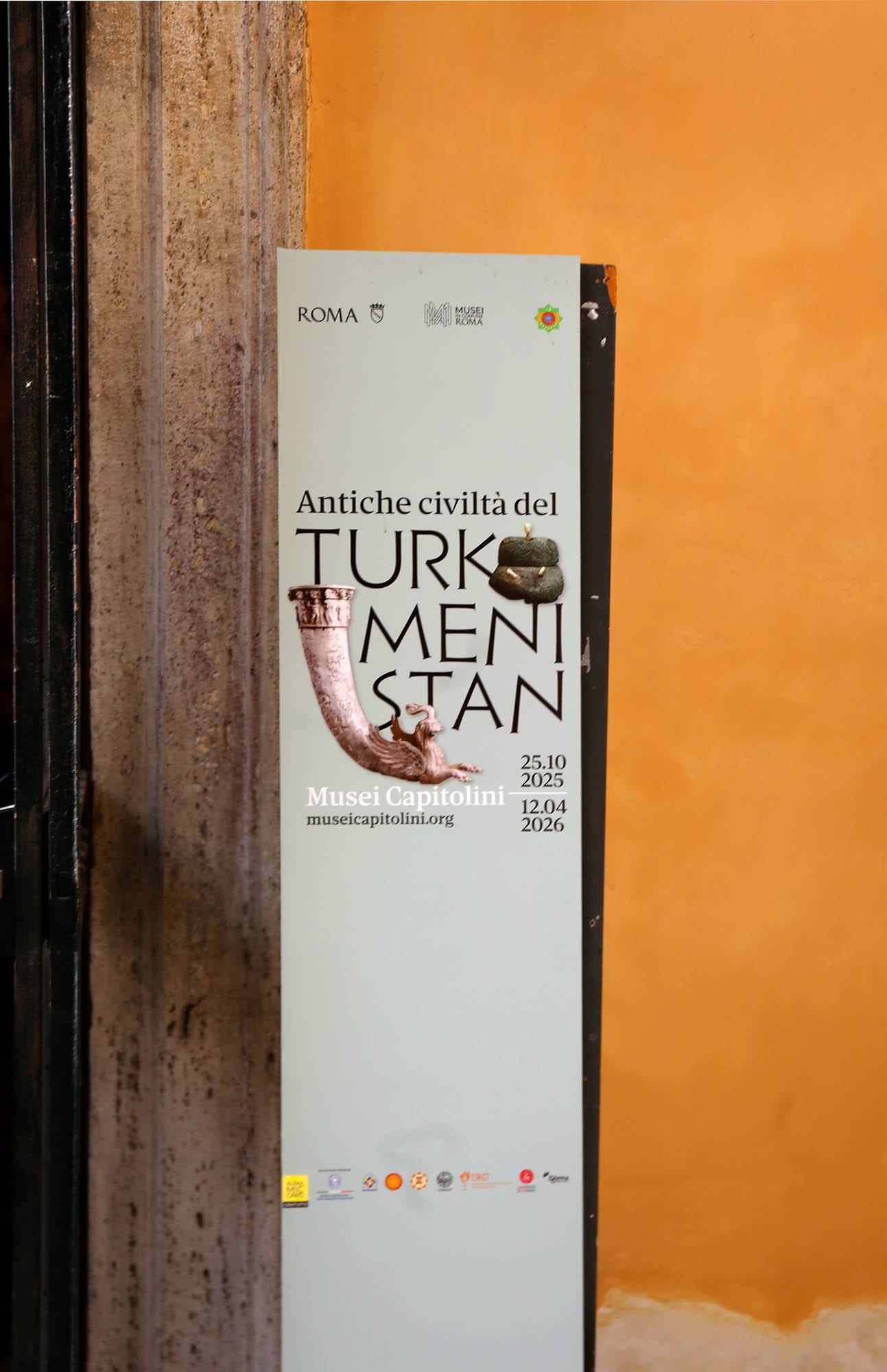
An exhibition titled Ancient Civilizations of Turkmenistan has opened in Rome, at the Capitoline Museums.
The title may not win any marketing awards. The average museumgoer probably can’t name many ancient civilizations from Turkmenistan—let alone one so irresistible that it would lure them in on its own, even with the Capitoline Museums vouching for it.
And yet, step inside, and you’ll encounter not one but two civilizations.
The first provides the very reason for the exhibition—and explains why it is being held in Italy, with Italian curators involved. For nearly thirty years now, the University of Turin and its archaeological team have been conducting excavations in Turkmenistan. The exhibition presents the results of this long-term research: the finds from the Parthian royal palace at Nisa, also known as Mithradatkirt.
The Iranian Parthian—originally Parni—tribe occupied the northeastern Persian province of Parthia in the 3rd century BC, and in 247 BC founded the Parthian Empire, which stretched from the Aral Sea to the Euphrates.
(When speaking of peoples, “Iranian” is a linguistic, not a geographical term. Many Iranian-speaking groups that emerged on the eastern Eurasian steppe—Scythians, Sarmatians, Alans—never set foot in Iran. And those who later moved south from the northern steppes—Persians, Parthians, Kurds—were already Iranian speakers before arriving there.)
The Parthian Empire was not a centralized state like Rome, but rather a loose political formation uniting various more-or-less autonomous entities—tribes, Greek cities, vassal kingdoms. For this reason, modern scholarship sometimes refers to it as the “Parthian Commonwealth.”
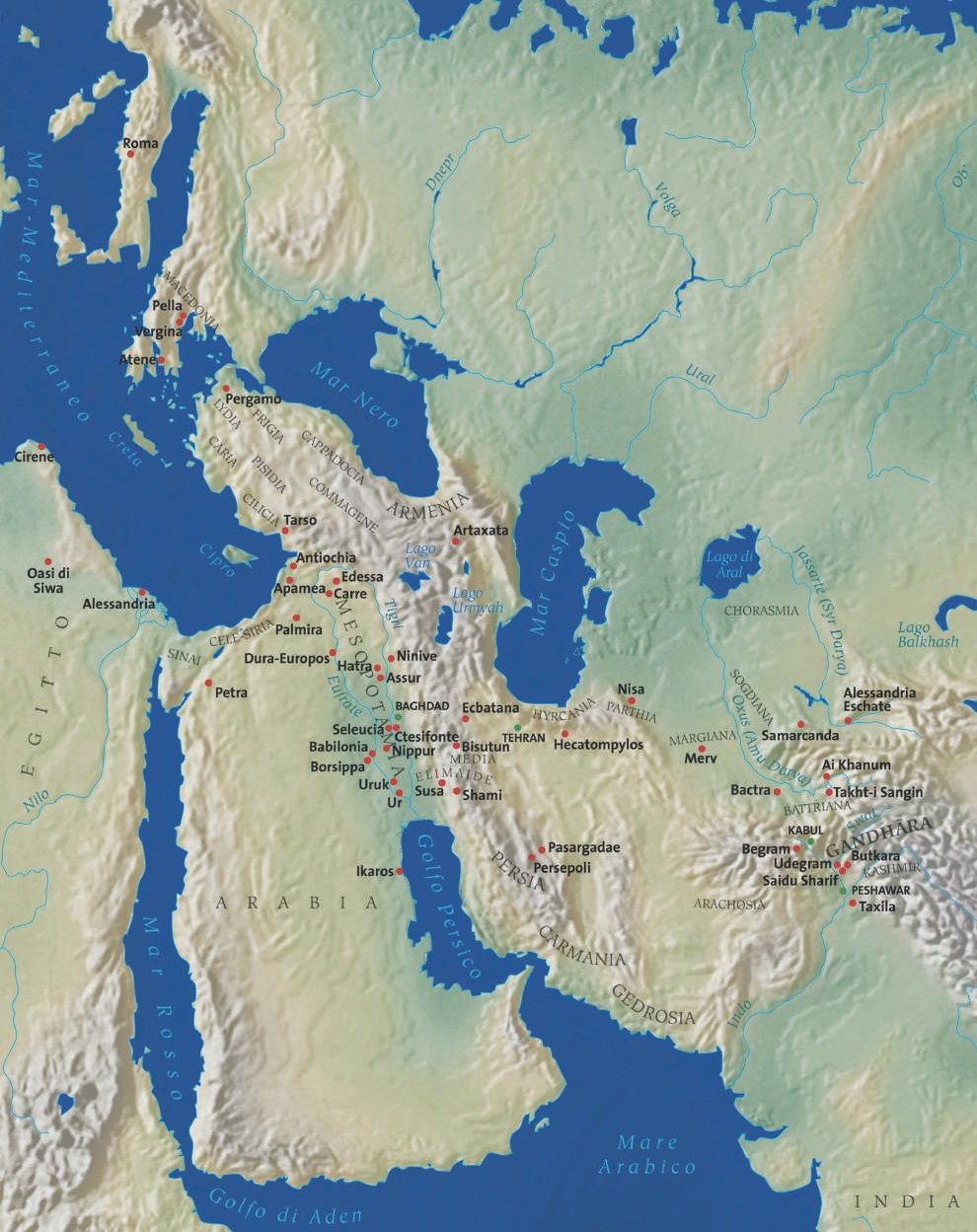 Major centers of the Parthian Empire
The first capital of the Parthian Empire was Nisa—later called Mithradatkirt—founded by Arsaces I (247–217 BC) on the northeastern fringe of the Persian realm, near today’s southern border of Turkmenistan, on the outskirts of the modern capital, Ashgabat. Excavations begun by Soviet archaeologists and later continued with Italian participation have uncovered a vast royal palace here, along with a wealth of remarkable artifacts.
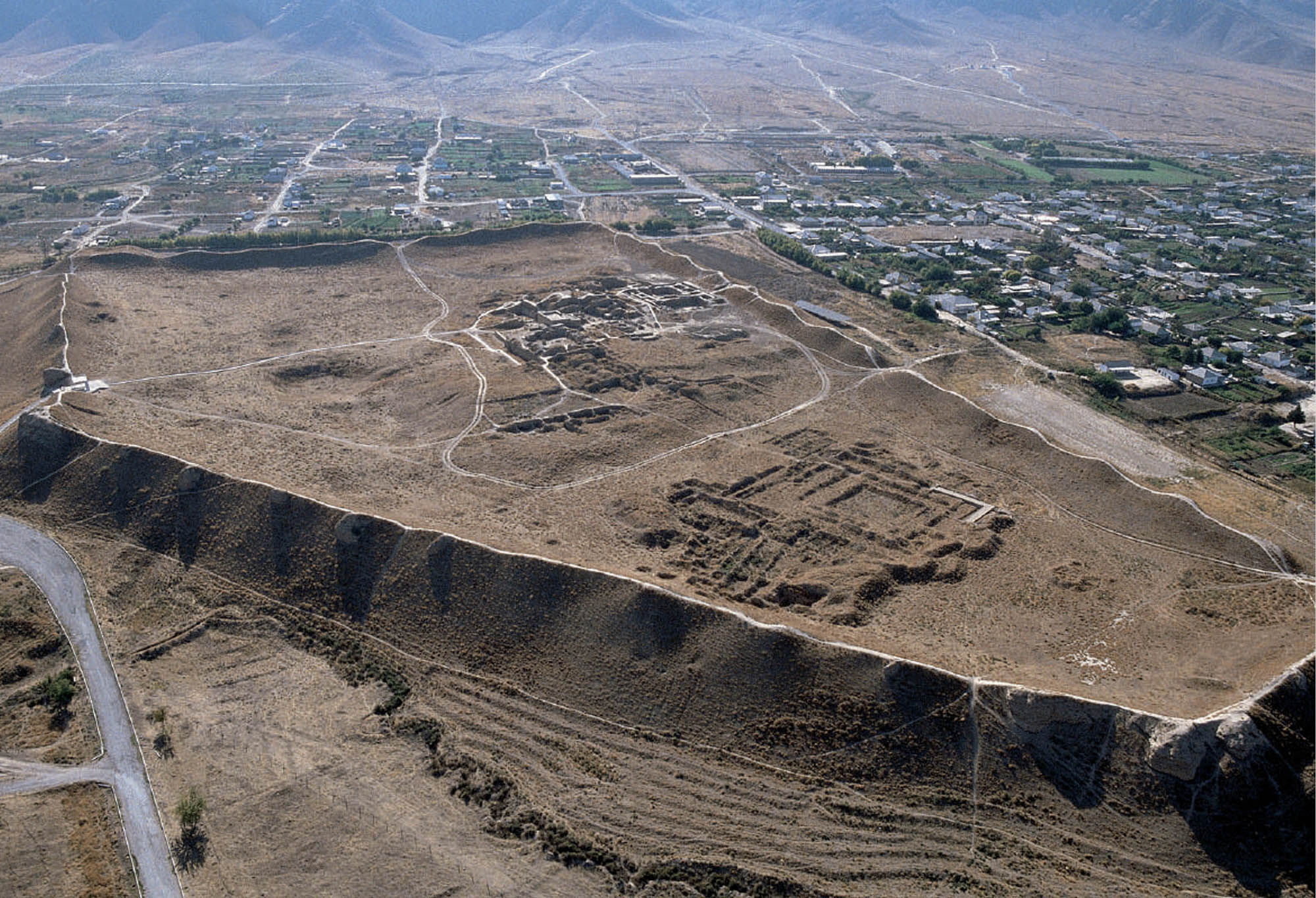 The old palace of Nisa, aerial view
Earlier excavation reports have already published photographs of the most beautiful finds. It is a special pleasure to see them now in person.
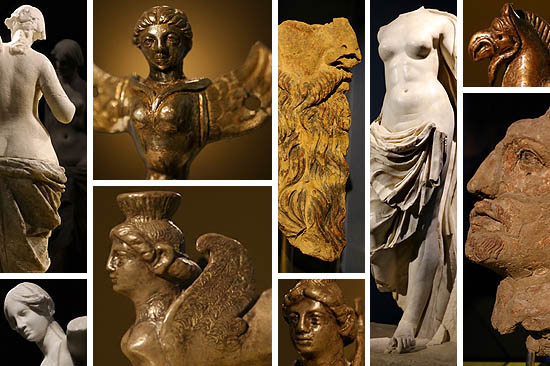
The Parthian kings ruled over the Hellenized provinces of the former Seleucid Empire. As a result, Parthian art draws heavily on Greek models, gradually developing its own distinctive, hieratic character. Here we are still at the beginning: the sculptures and carvings are entirely Greek in style, though one can already sense, ever so subtly, the direction in which this style will eventually evolve.
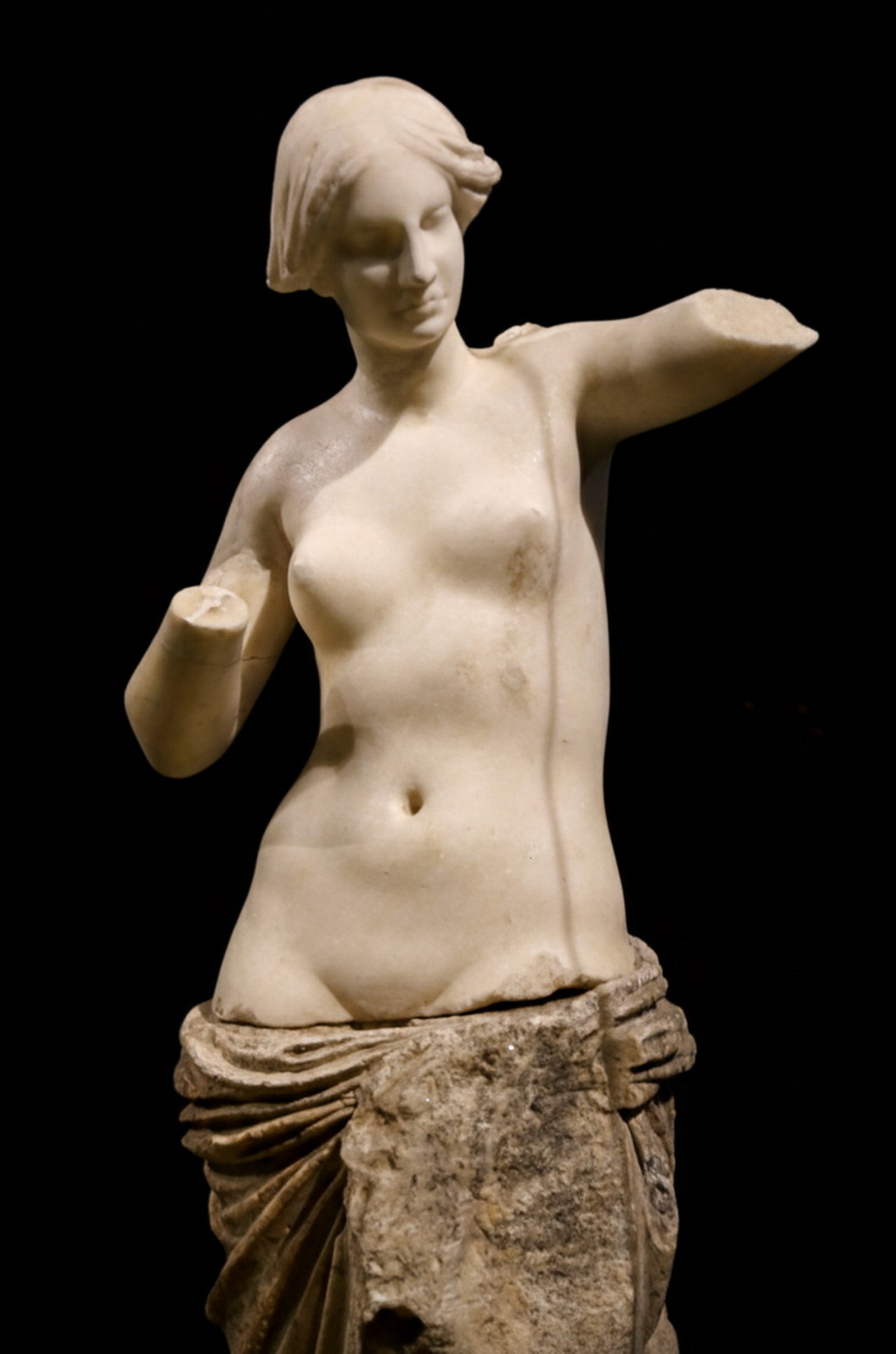 Aphrodite Anadyomene from the Square Hall of the palace at Nisa
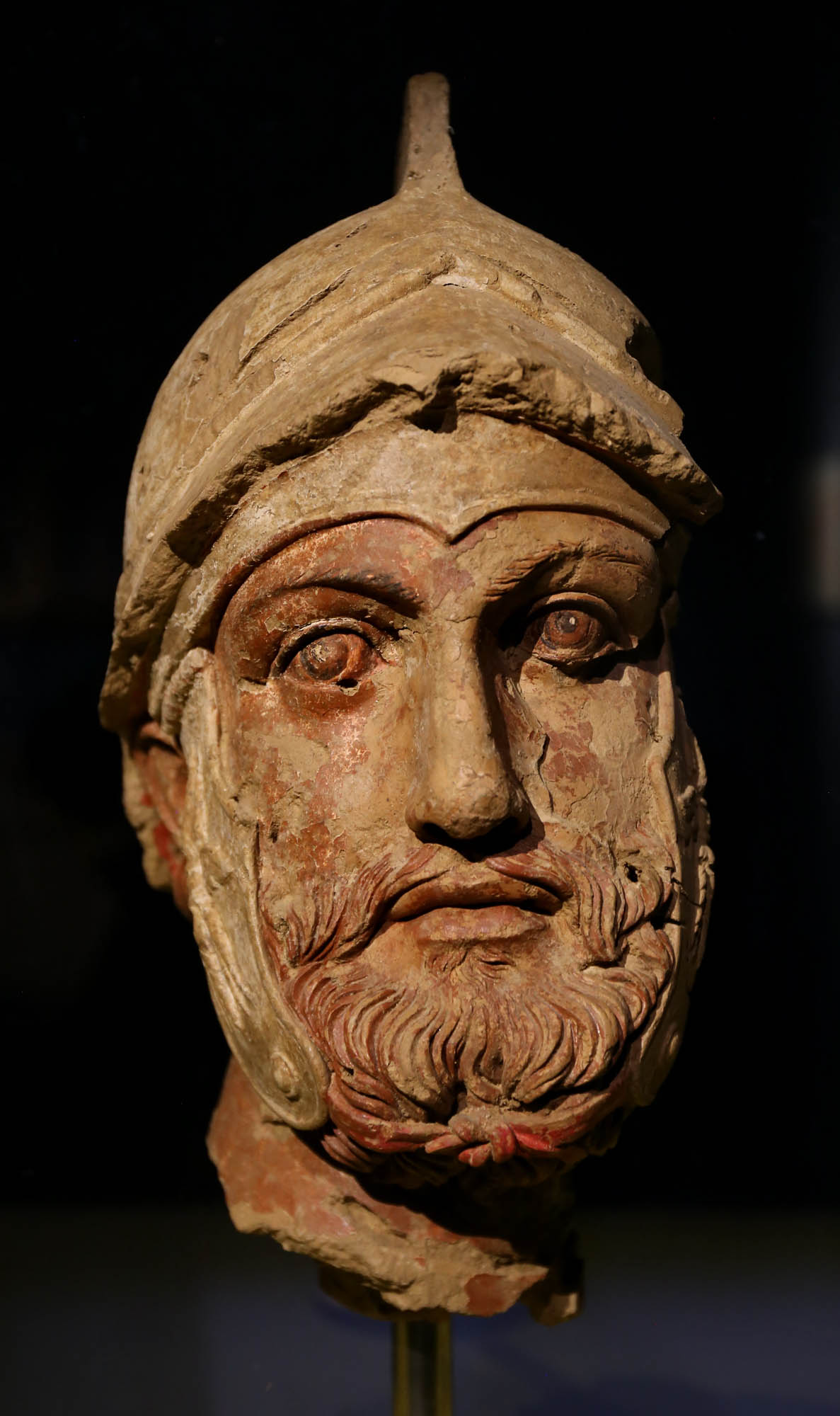 Head of a Parthian warrior from the Square Hall of the palace at Nisa
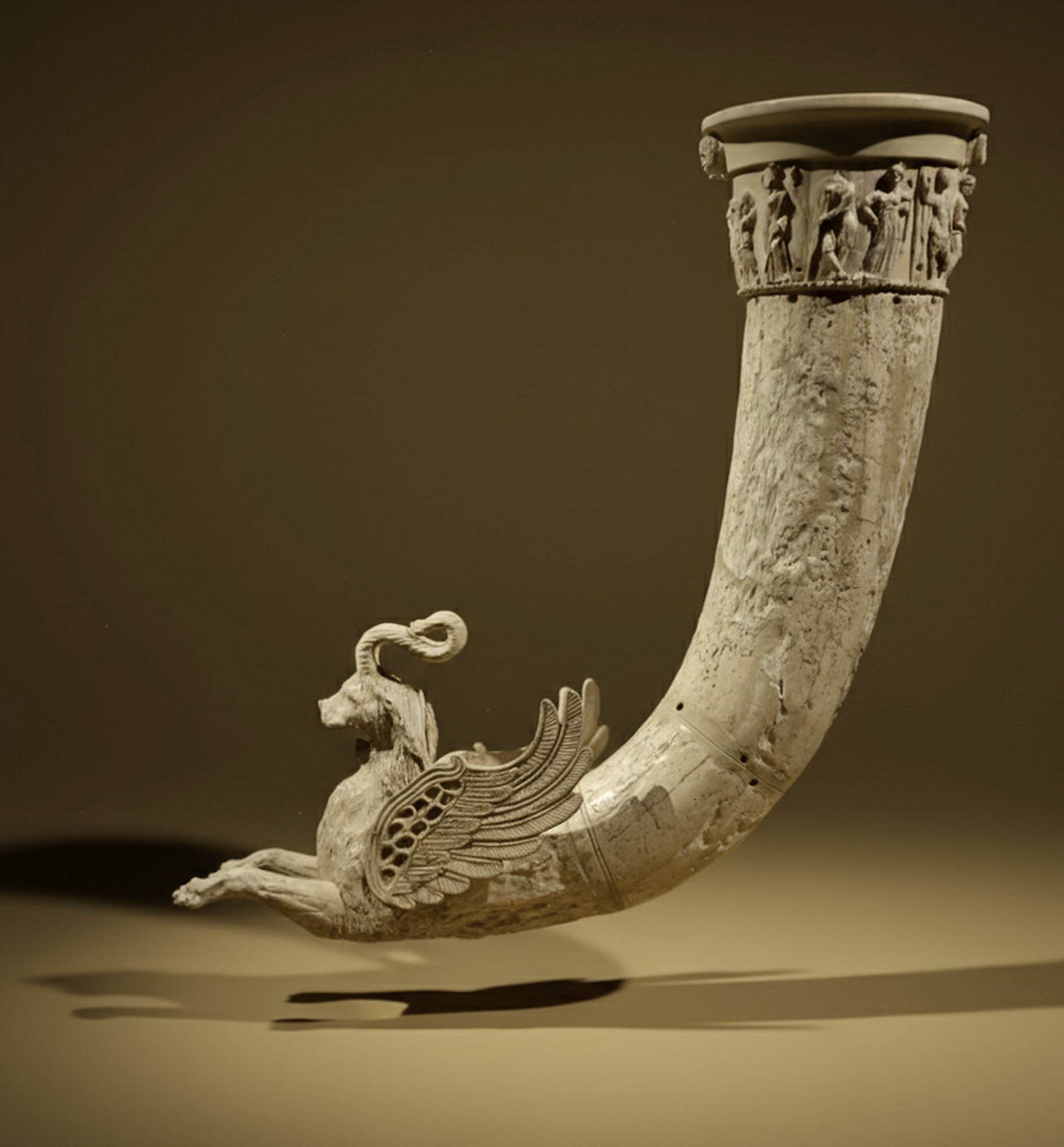
The most fascinating group of finds consists of forty-eight ivory rhyta, drinking horns from the Square Hall of the Nisa palace. The rhyta were carved in the same workshop in a uniform style, but each ends in a different figurative motif at the pointed bottom. Around the mouths, a frieze runs depicting the twelve gods or sacrificial rituals, often with Dionysian motifs, hinting at the rhyta's function: libations and ritual communal drinking.
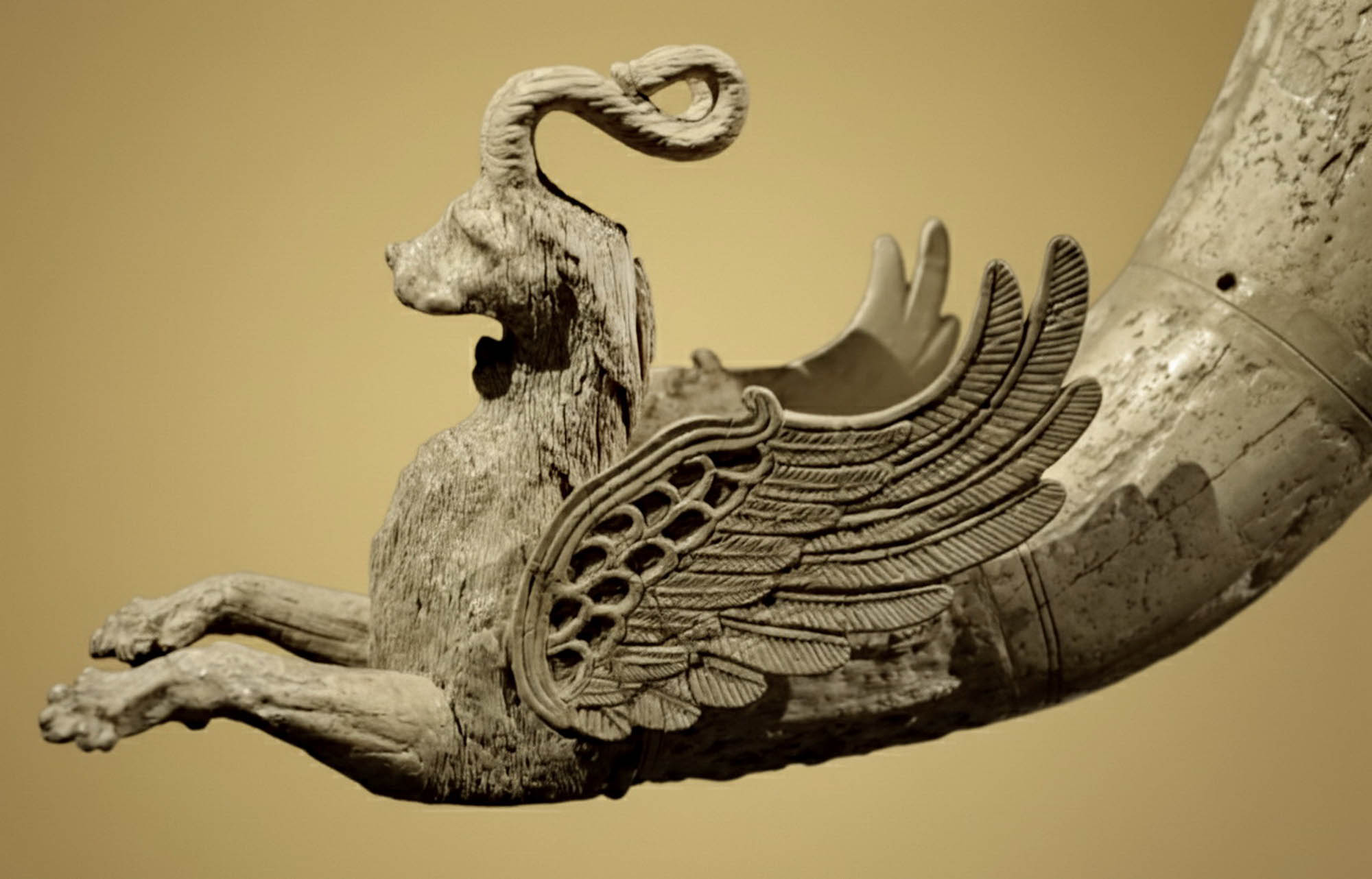
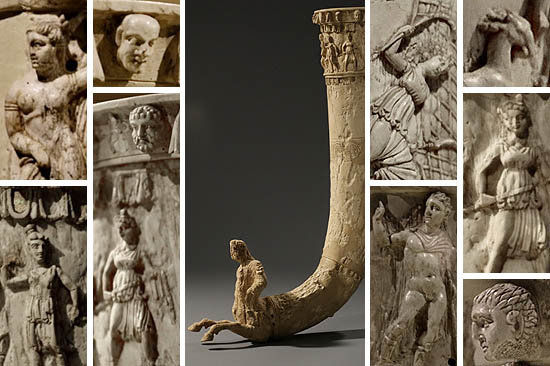
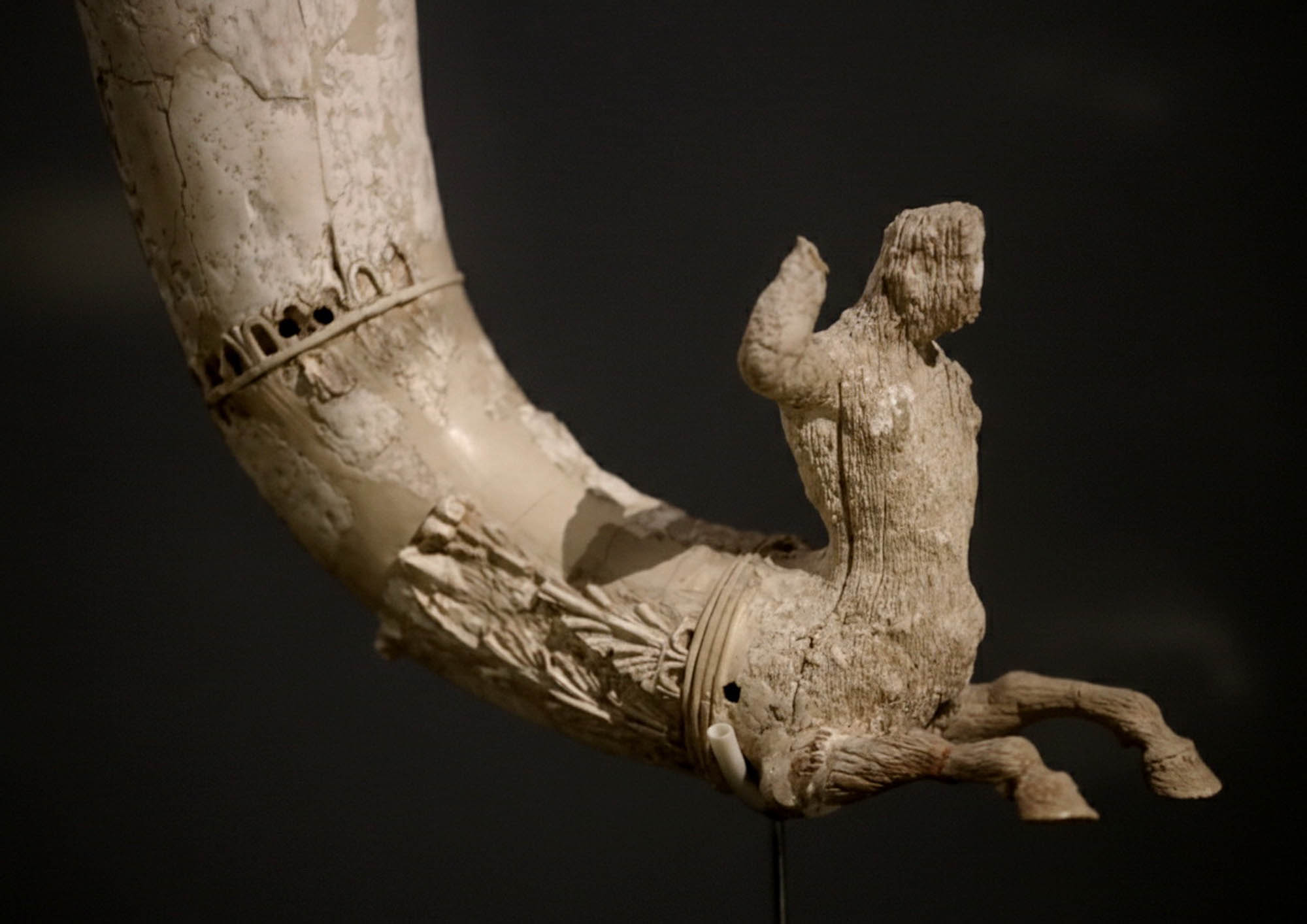
While the first civilization introduced us to familiar Greek art with an Iranian dialect, the second opens a door to something completely unknown and captivating.
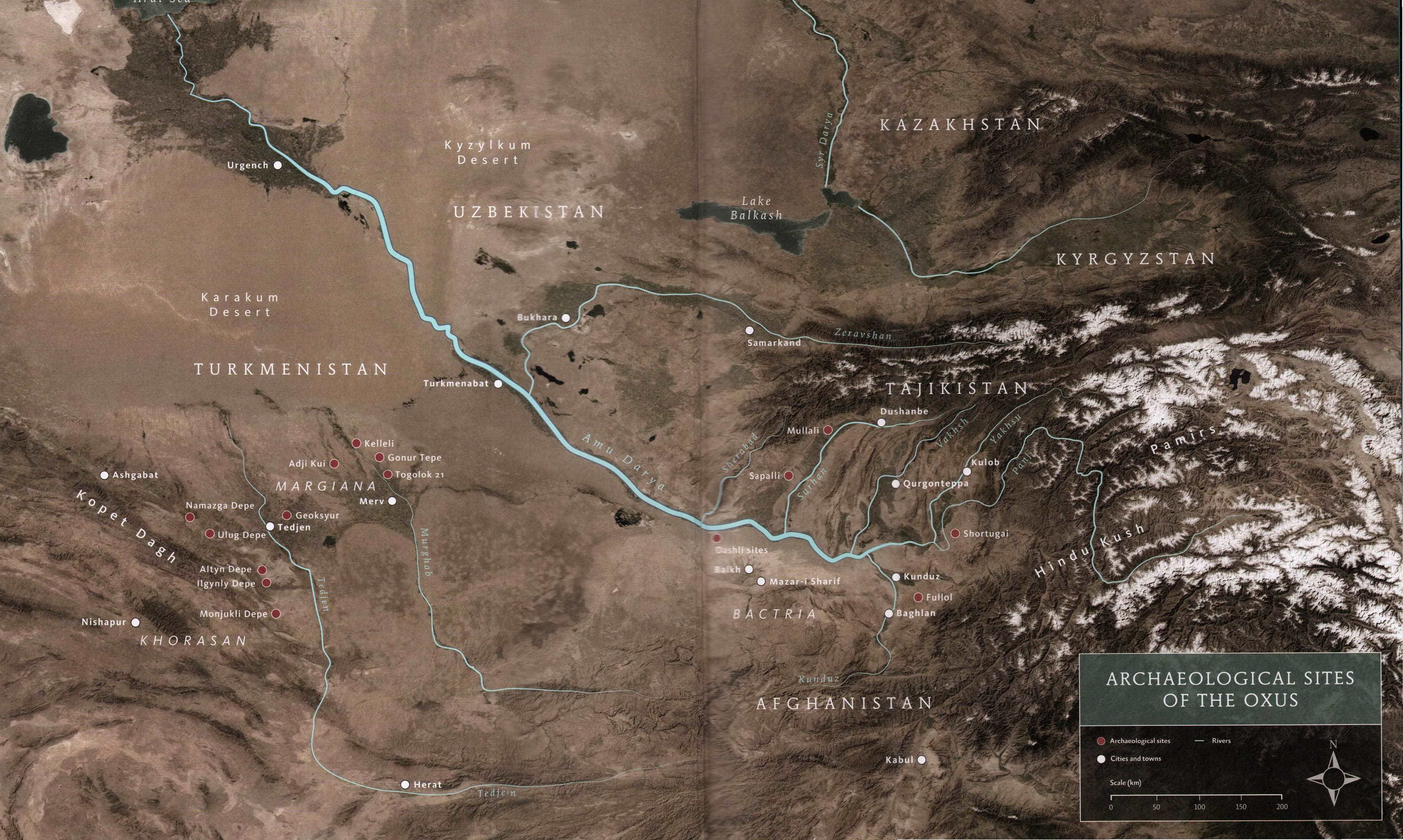
This civilization is as far back in time from the Parthians as the Parthians are from us. It flourished in the Murghab River delta between 2400 and 1700 BCE during the Bronze Age. The river originates in the Hindu Kush, collecting many mountain streams before disappearing into the Karakum Desert. Its first hydroelectric generator, as we proudly documented, was built by Abraham Ganz in the early 20th century, when the area was inhabited by nomadic Turkmens and Ukrainian peasants settled by Tsar Alexander III to develop the Merv oasis. None of them knew that three thousand years earlier one of the most brilliant ancient civilizations had flourished here, which its first discoverer, the Pontic Greek Viktor Sarianidi, a Soviet archaeologist, named the Bactria-Margiana Archaeological Complex in the 1970s — although modern scholarship prefers the terms “Oxus civilization” or “Greater Khorasan civilization.”
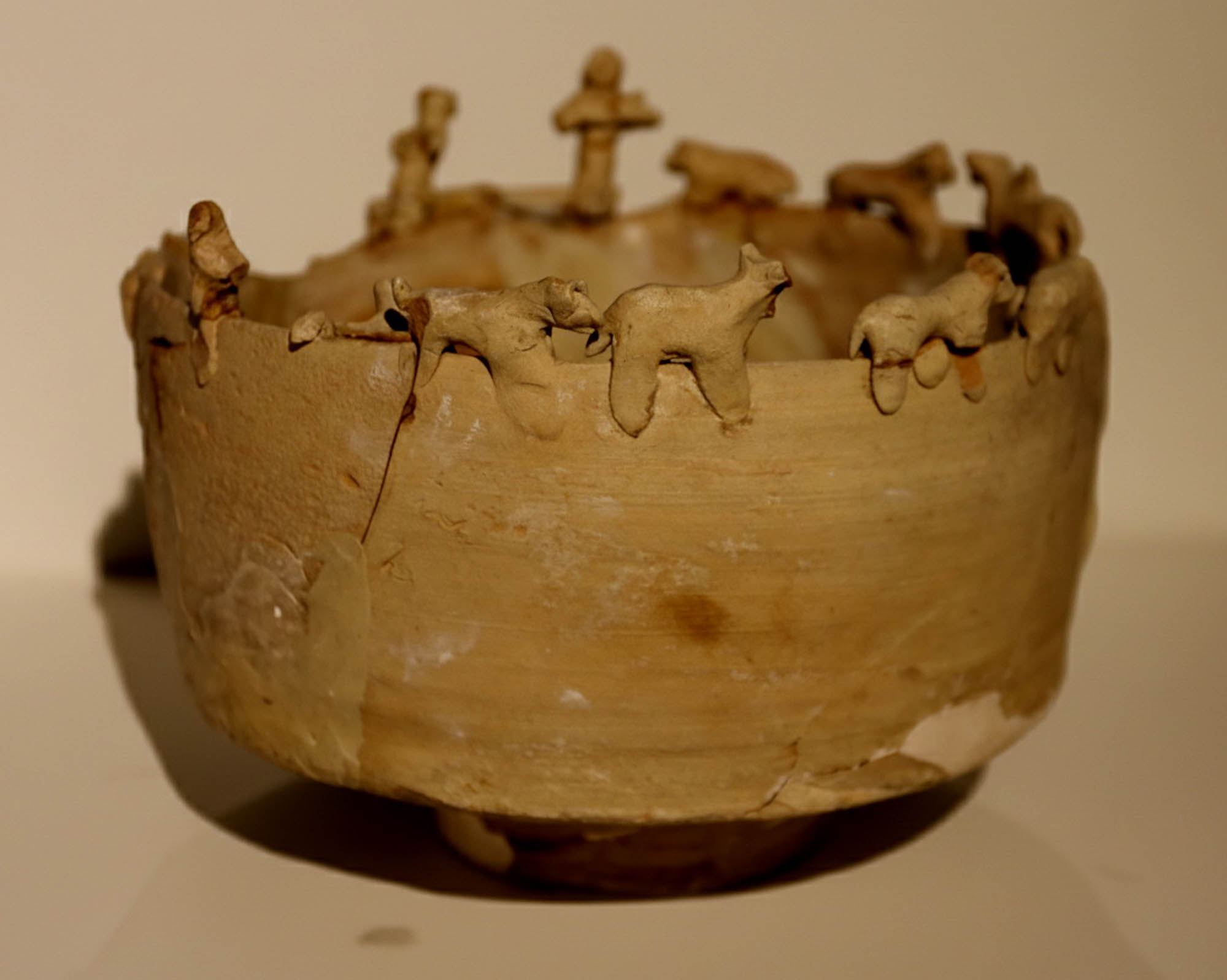
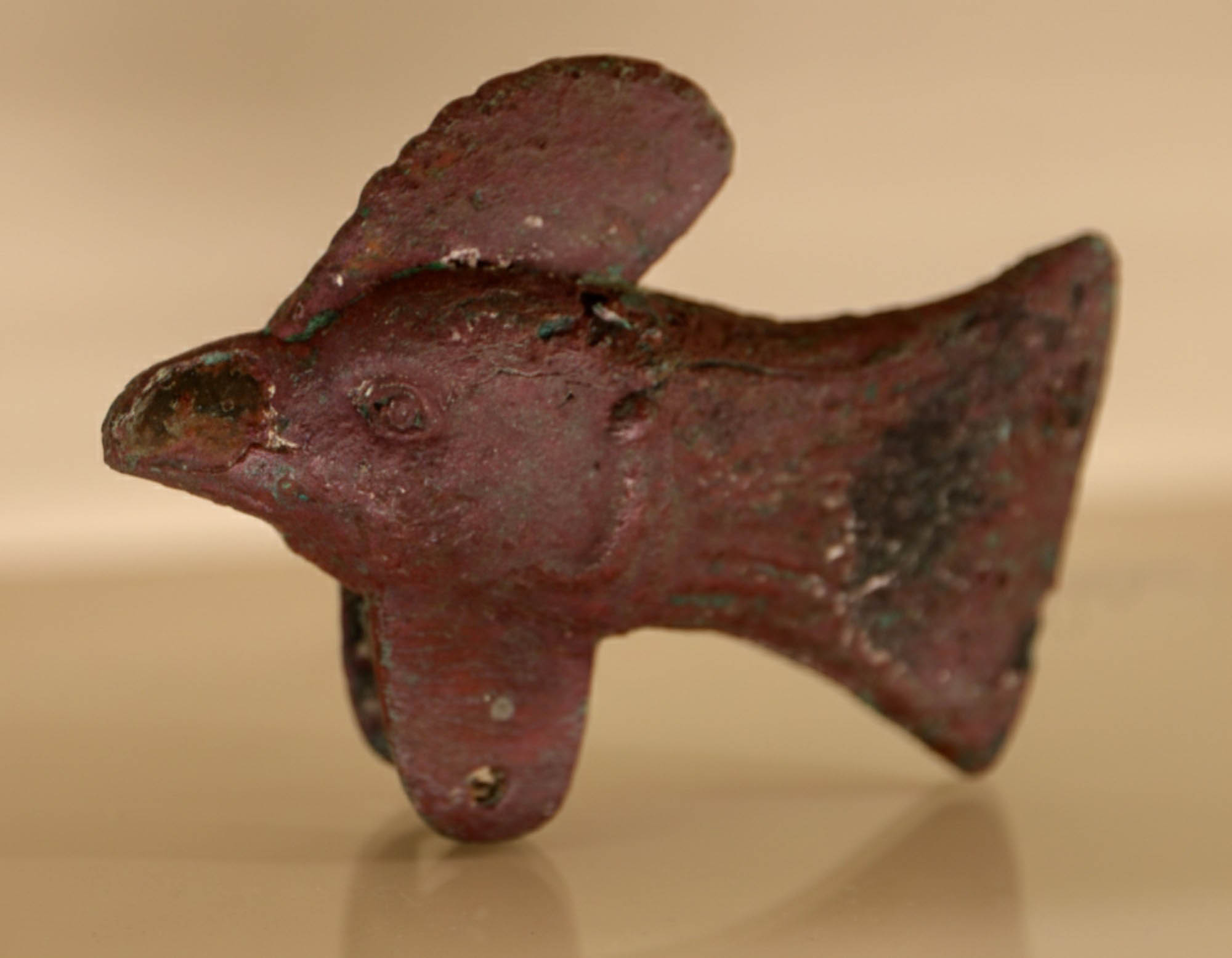
The Oxus civilization left no written records. But it did leave a wealth of objects: beautifully crafted anthropomorphic and zoomorphic figurines, whose lost mythology archaeologists and anthropologists today try to reconstruct using steppe, Mesopotamian, Iranian, and northern Indian parallels. The Oxus civilization, it seems, was an important intermediary among these cultures and deeply influenced the Iranian peoples.
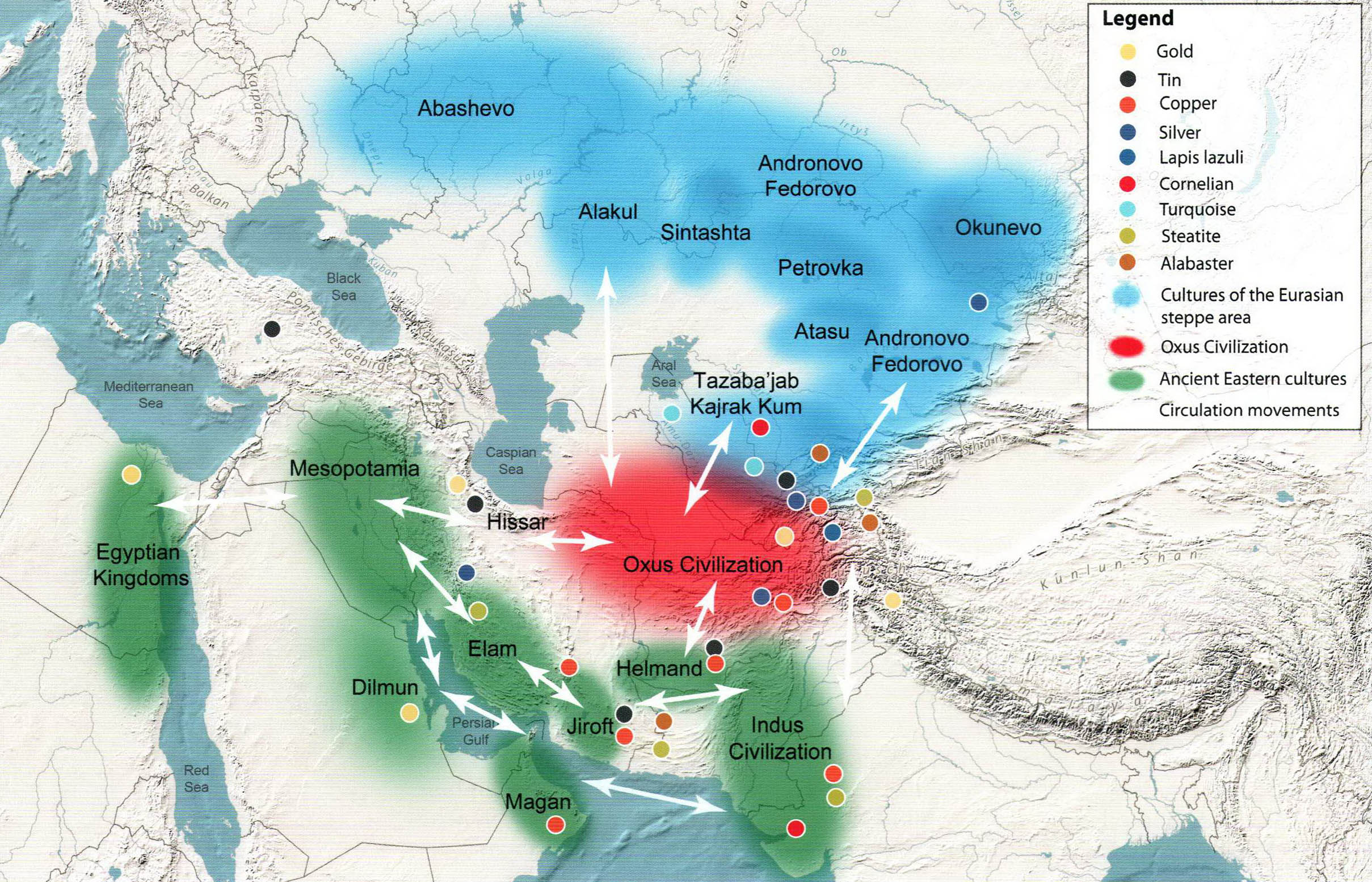 Location and main archaeological centers of the Oxus civilization (Greater Khorasan civilization). On the lower map, the thick river is the Amu Darya, ancient Oxus, from which the civilization takes its name.
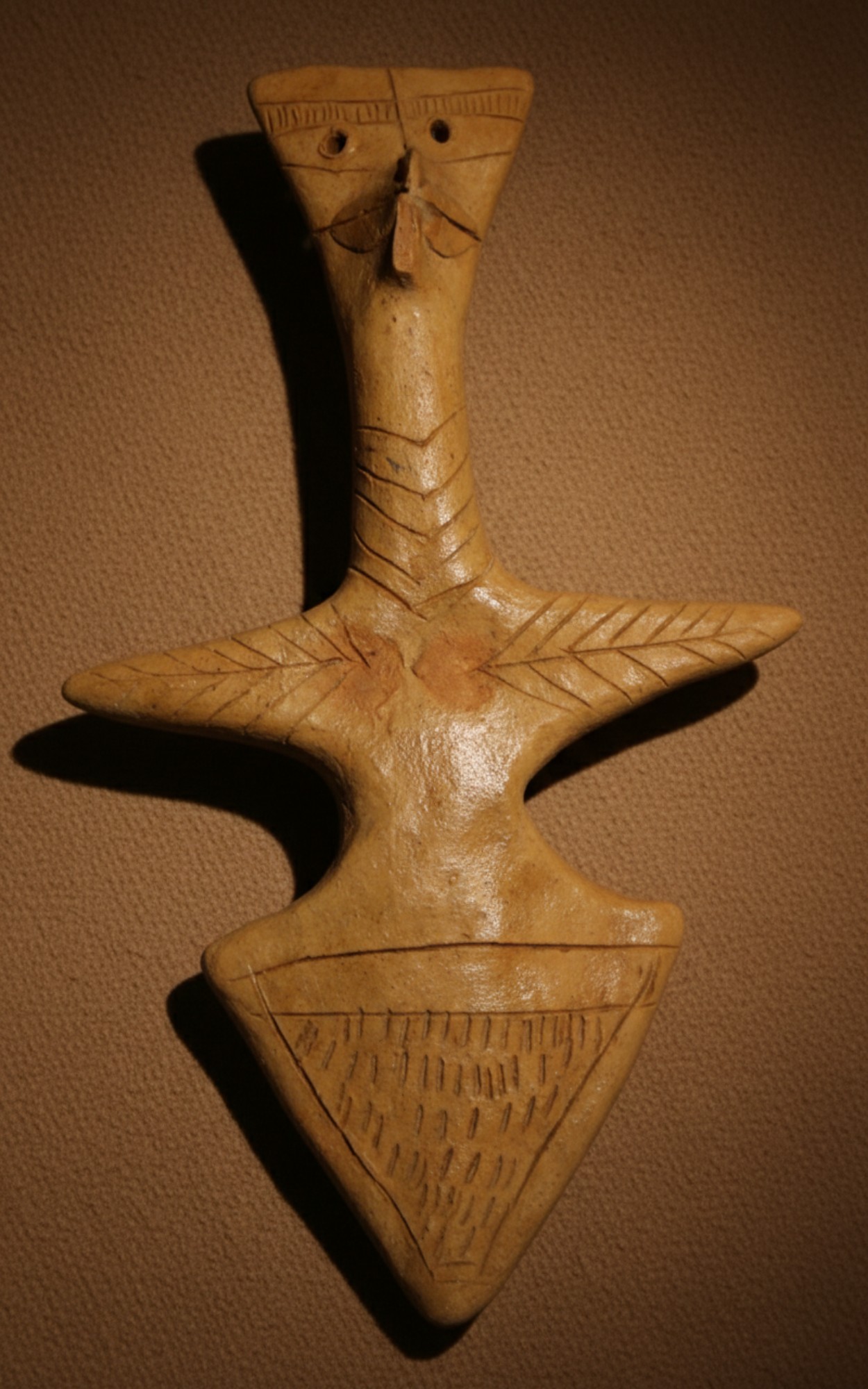
One of the Oxus civilization’s most important archaeological sites is Gonur Tepe, from which most of the objects on display today were excavated. Around five thousand graves have been uncovered here. One of the most common grave goods was the fertility-emphasizing “violin-shaped” flat female clay figurine, worn around the neck or placed in a prominent spot—on the deceased’s face or at their feet—with a protective function.
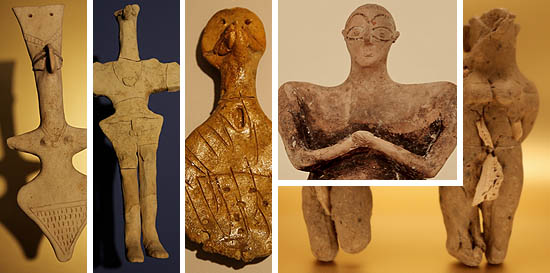
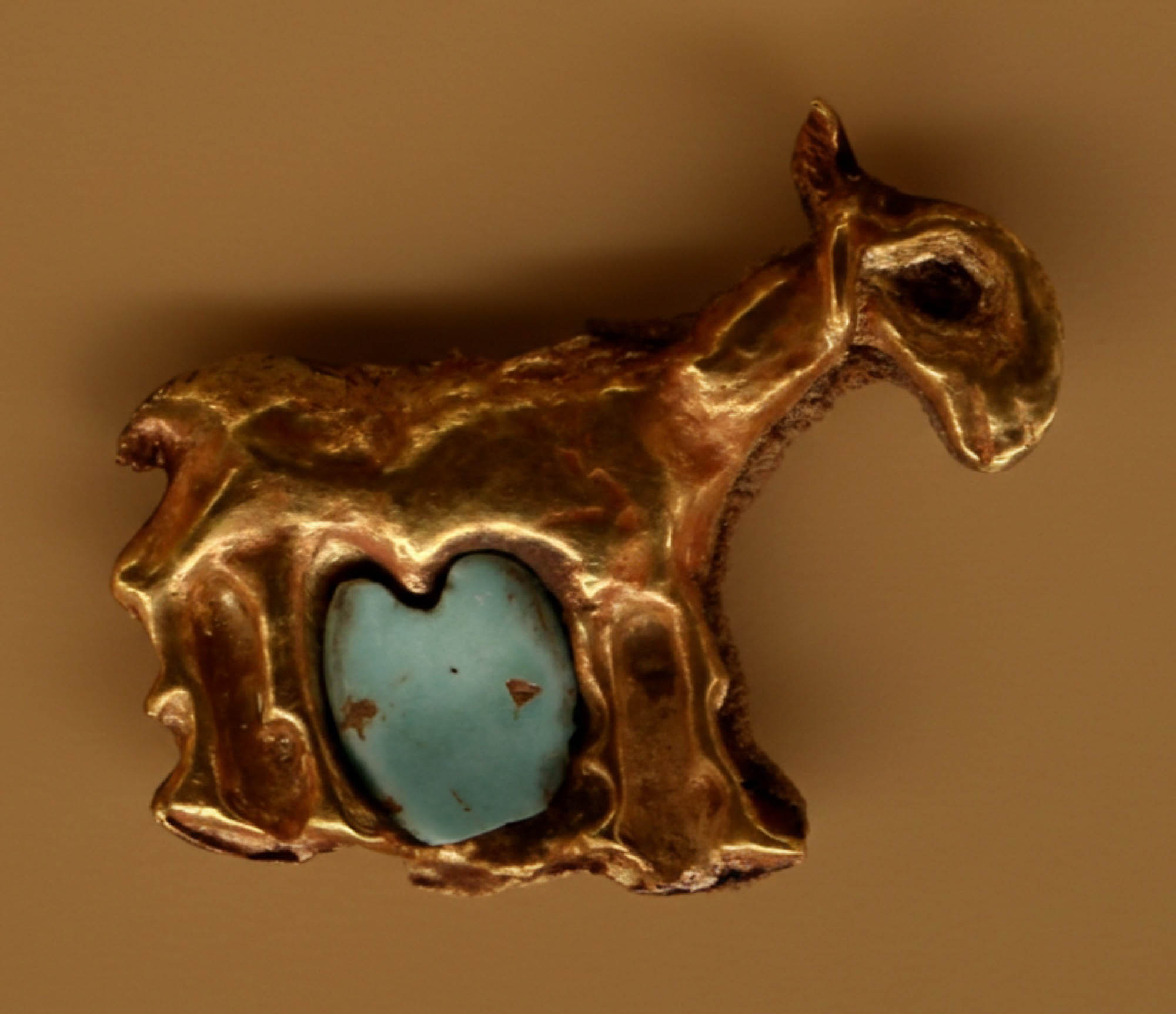
Alongside the dead, seals were also found, featuring numerous animal figures. Some of the animal scenes became cross-cultural motifs, such as predatory birds and snakes, men fighting snakes, the “tree of life” flanked by two animals, or the “Mistress of Animals” holding one animal in each hand symmetrically. These are crafted with the same refinement as other grave goods, vessels, or jewelry.
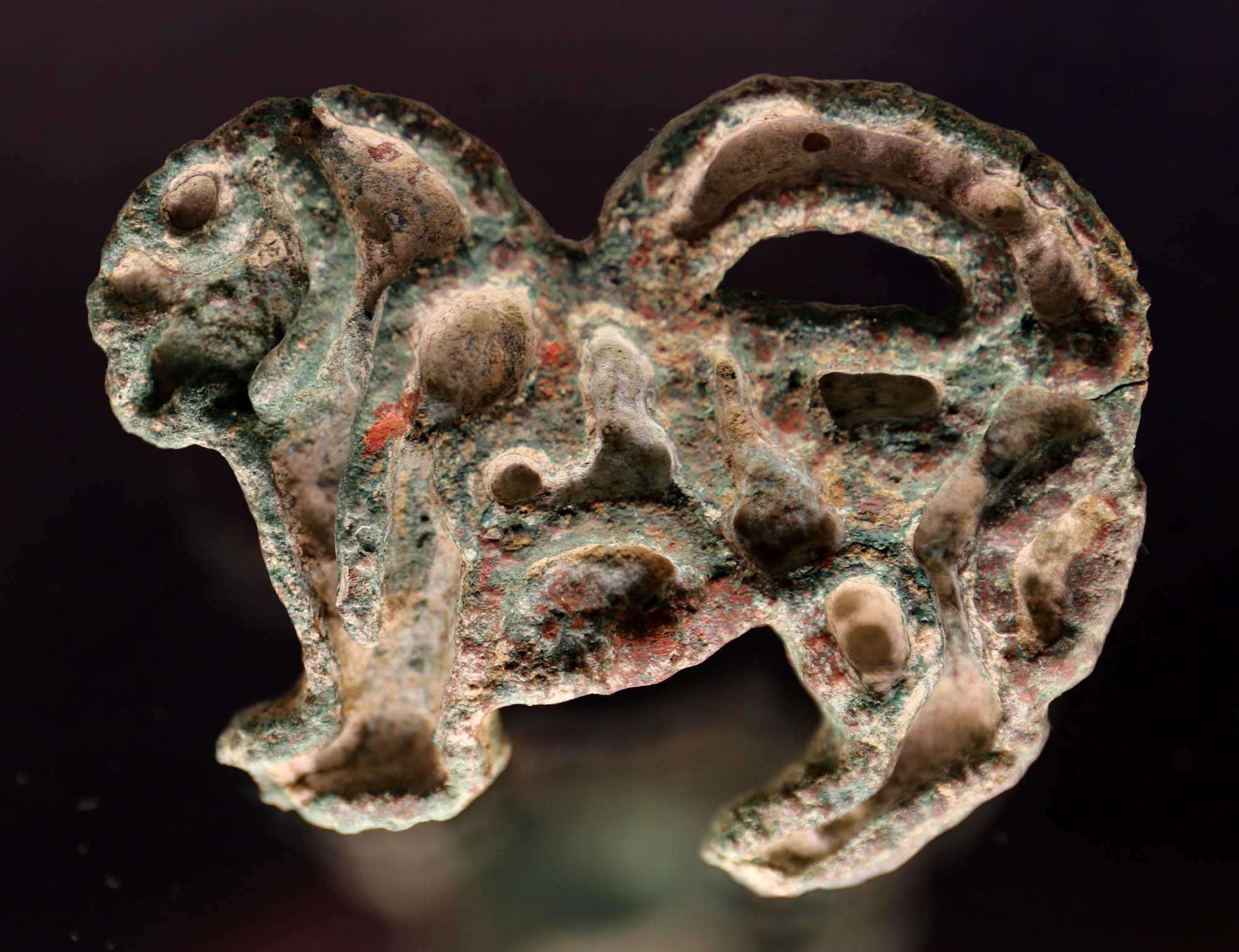
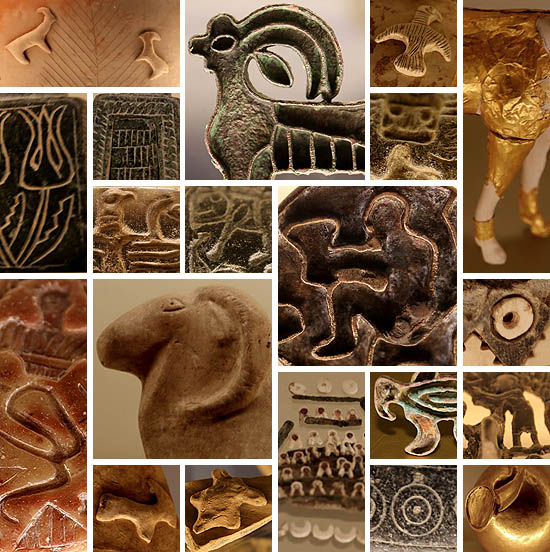
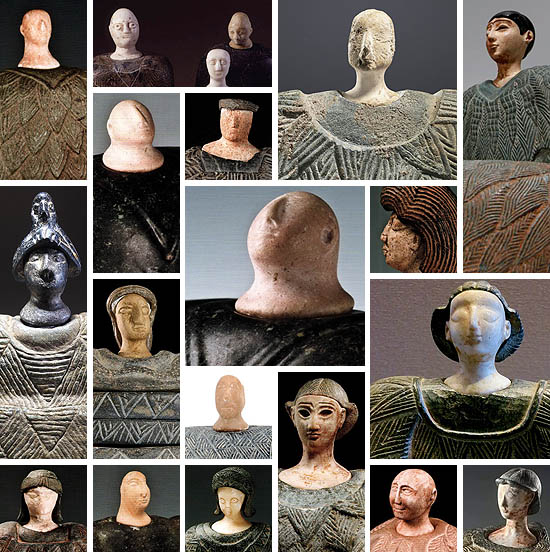
The most distinctive iconographic motif of the Oxus civilization is the small statue known as the “Bactrian princess” or “Oxus Lady,” of which nearly a hundred are known. These are composite figurines, with a body made of one or two large green stones and the head and hands attached from white limestone or calcite. They are usually seated, sometimes standing, always wearing voluminous garments composed of multiple wavy layers, reminiscent of the Sumerian wool kaunakes. The clothing is decorated with finely drawn lines, and the head is covered by carefully sculpted hair or a turban, though the face is often simplified, impersonal, like a figure by Éva Janikovszky—representing not a specific individual, but rather a role: a ruler, matriarch, or goddess. Unlike earlier female figurines, this type emphasizes power and stability rather than fertility. Those with known provenance—all of which surfaced on the market from illegal excavations starting in the 1960s—come from elite graves, likely serving as protective or guiding spirits for high-status deceased.
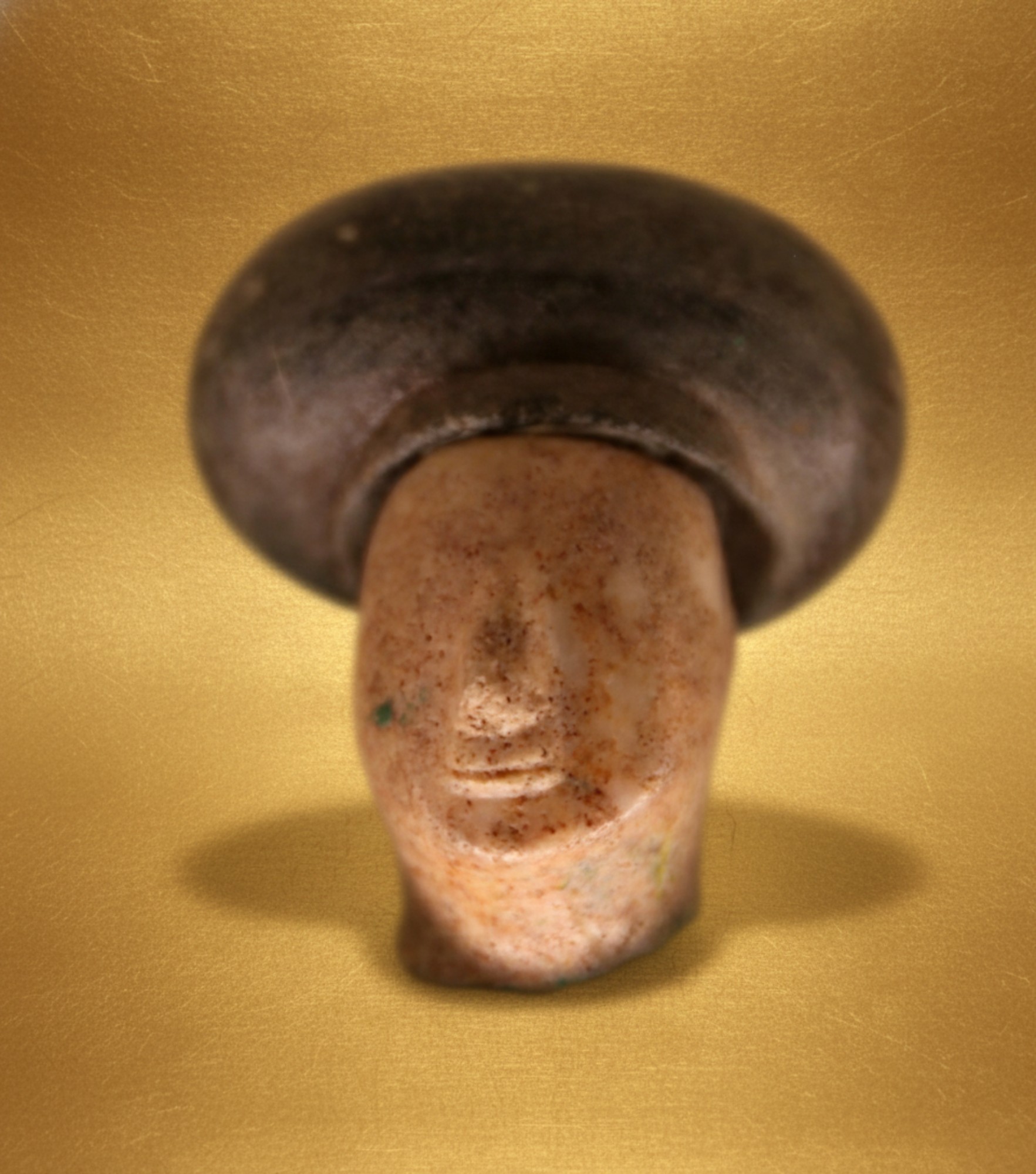
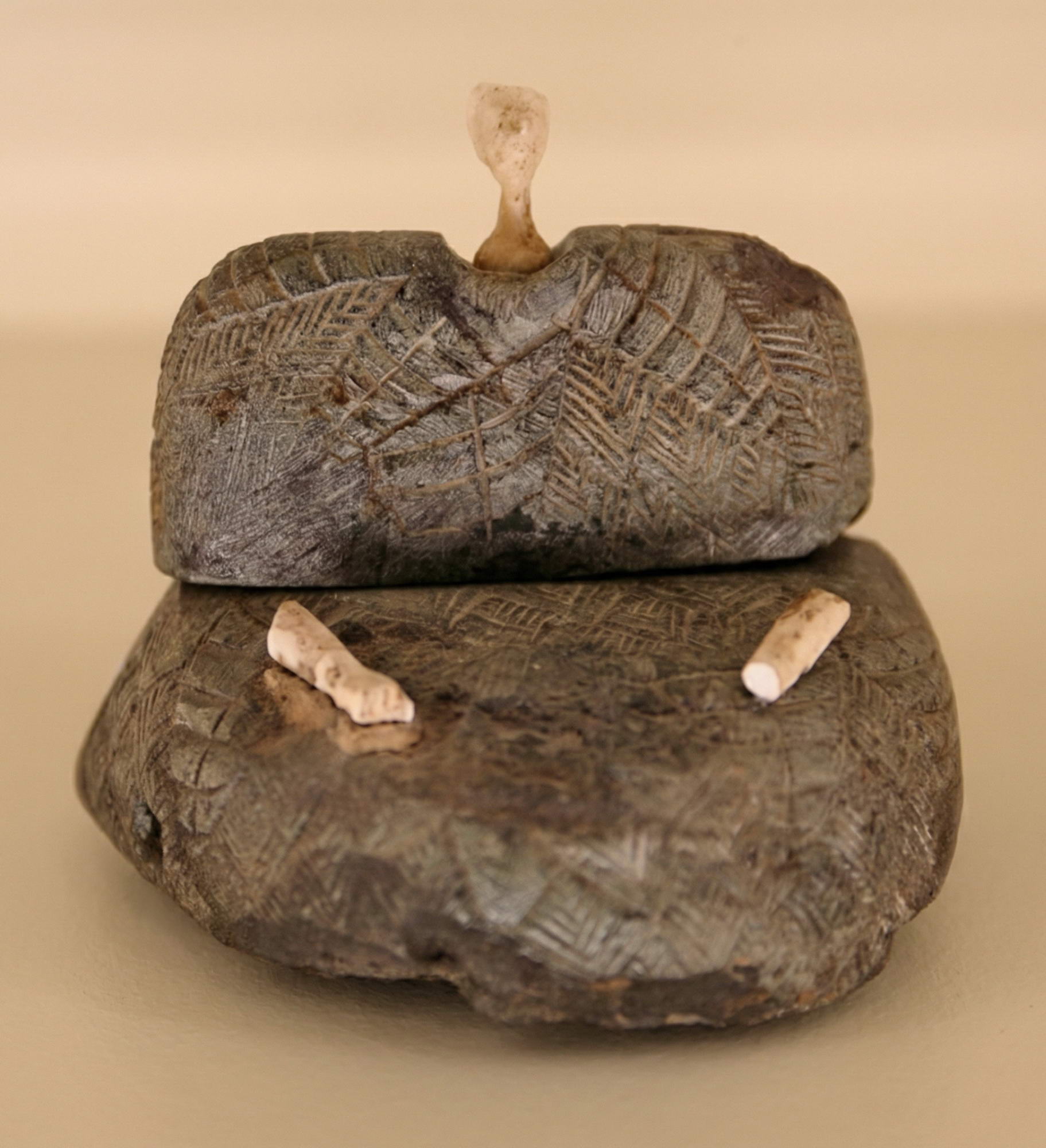 The "Oxus Lady" on display comes from Gonur Tepe, with parallels from various collections. Below: a head of an "Oxus Lady" from the exhibition.
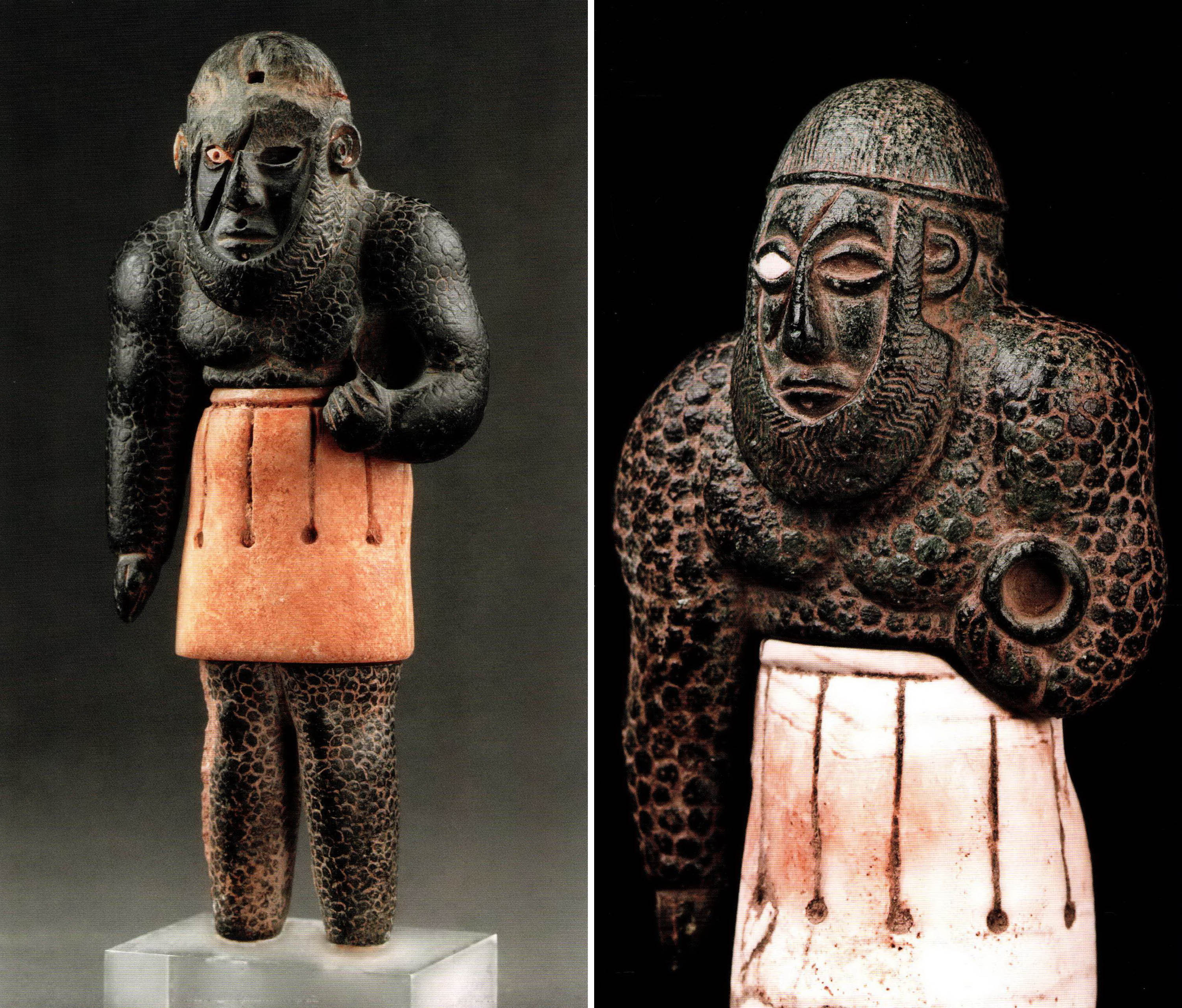
A frequent counterpart of the "Oxus Lady" — not represented in the exhibition but interesting to know — is the "Scarred Demon," of which a dozen examples are known, though without secure provenance. The figure depicts a muscular male with scaled skin, a barrel under his arm, a fierce face often marked by a long scar and a pronounced half-eye. Some hypotheses suggest it could have been a cosmic snake-demon, a opener of subterranean waters, perhaps the adversary of the "Oxus Lady" a lost myth of Lucifer. The "Scarred" figure is always composed of multiple dark and light stones, reflecting an aesthetic based on contrasts.
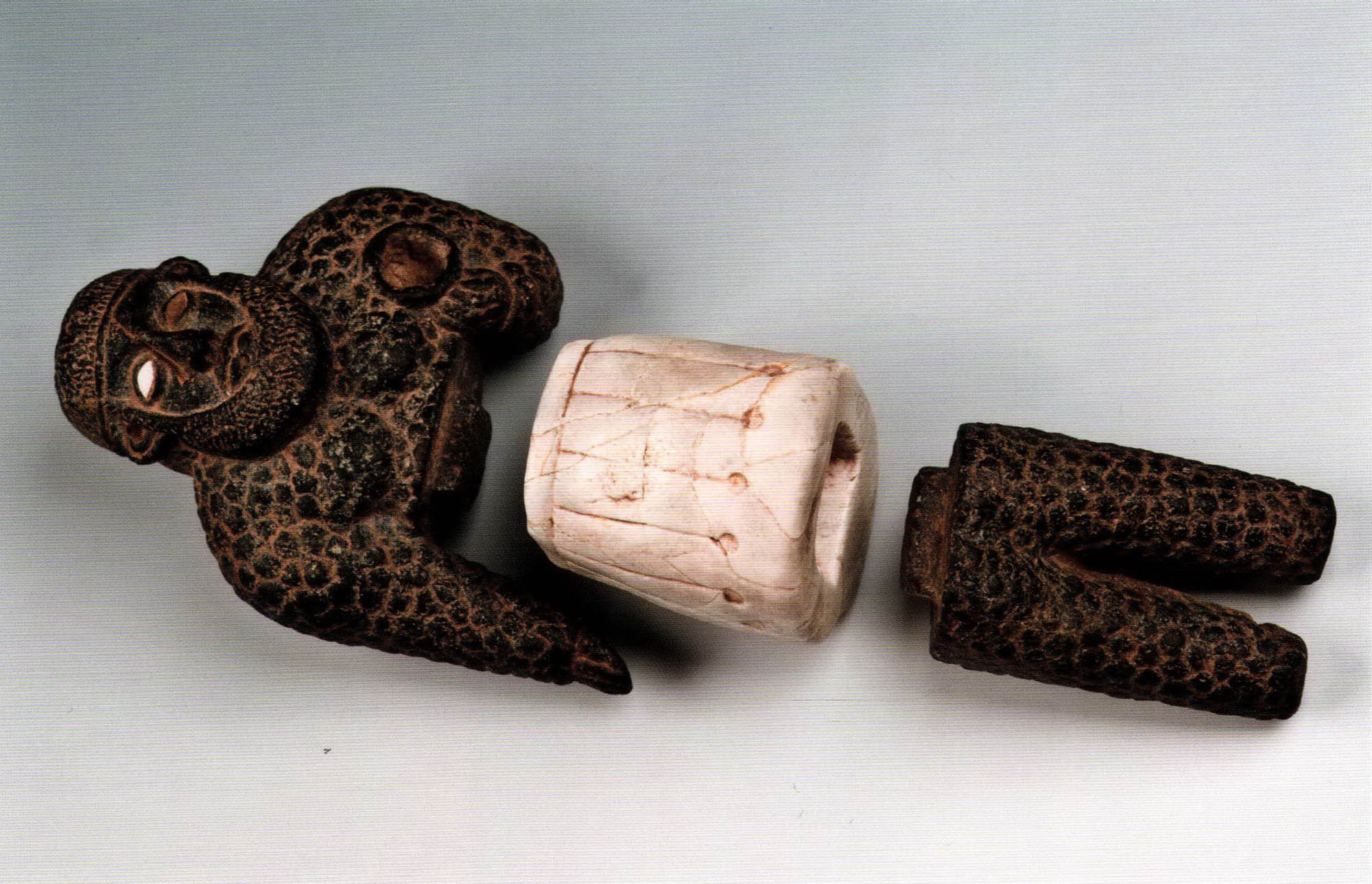
And all of these objects, this entire unknown culture, can now be seen for the first time outside its homeland, Turkmenistan, which is nowadays very difficult to reach.
The courtyard gate of the Capitol does not open to the Palazzo dei Conservatori these months. But just as in Michel Ajvaz’s Other Prague, the door to the basement toilet of the Slavia café opens onto an infinite jungle, here too it opens onto a mysterious civilization that remained unknown underground until the 1970s, yet in its time rivaled the sophistication of Mesopotamian and Indus Valley cultures and was large enough to influence both and transmit their knowledge to the steppe peoples, the main actors of later eras. We do not know its history or stories, but judging by its objects, there were many, and they must have been fascinating. Perhaps future research and parallels will reveal more about them.



Add comment