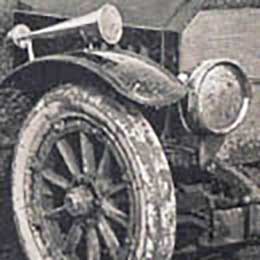


 We have already written about a number of wartime phrasebooks, but never about any more peculiar than this one. The 13×18 cm sized Stummer Dolmetsch, that is, “Silent Interpreter” translating machine bears no date, but according to the – since then sold, but from cache still saved – catalog card of Fünkchen Antiques it was printed in 1940, that is at least half a year before it could begin its intended service on the Eastern Front.
 The two illustrations are from Sprachfuehrer’s excellent Военный разговорник и переводчик до 1945 г. (Wartime phrasebooks and interpreters before 1945) blog, on which we will soon write more, and where the above copy can be also purchased; the data from the Übersetzerportal
| “Man zeige dem Russen die Übersetzung des Wunsches, Befehls usw., gegebenenfalls zur Ergänzung auch das passende Bild. Auf diese Art kann man nach kurzer Orientierung Hunderte von Wünschen und Befehlen ohne Sprachkenntnisse ausdrücken.” | “Show to the Russian the translation of the wish, command etc., eventually supplementing it with the appropriate picture. In this way, after a short orientation you can express hundreds of wishes and commands without any language skill.” |
The “hundreds of commands” seems excessive, or to be understood including the combinations made with the pictures. In fact, the two sides of the machine show only twenty-twenty Befehle, Fragen, Verhör, Erkundung and Quartier, that is command, question, examination, information gathering, and instructions concerning quartering. The user turns the upper visible part of the inner disc to the number of the required command, and the equivalent of it appears in the opening framed red for the Russian. A flaw of the machine is that one probably had to poke by hand on the eventual supplementary picture, but we are sure that in case of an extended use the precise Teutonic spirit would have solved the automation of this as well.

The ingenuity of the machine is stunning. But what kind of surplus use value (Gebrauchsmehrwert) may it have offered in comparison with the hitherto seen simple German-Russian glossaries? That the user did not have to face the sea of the foreign language, but – apart from the small danger zone well limited in red – he could feel in his own language medium on both sides? The childlike joy of turning, the habitual safety of machine using? That it, so to say, industrializes the production of the foreign terms? That it enthralled the interaction partner, in whose language there was even no proper equivalent for “efficiency”? Who knows how much cybernetics would be ahead today if this war takes a while longer.



Add comment