

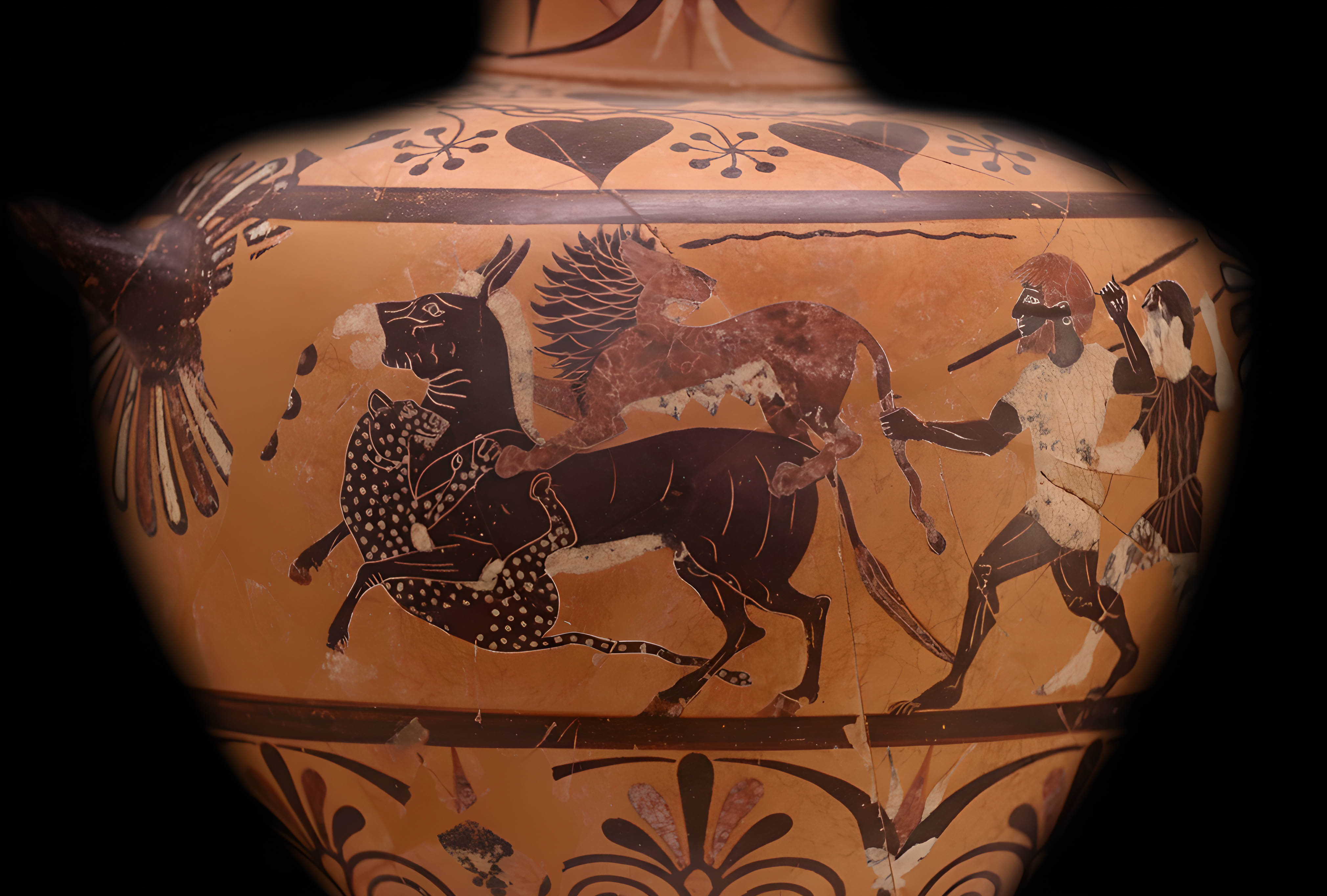
I photographed this vase in the ETRU National Etruscan Museum at Villa Giulia in Rome. According to its label, it is a hydria ceretana from the Etruscan necropolis of Cerveteri — in other words, a Caeretan water jar — made by the so-called “Busiris Painter” around 530–520 BC.
The Caeretan hydria is a distinct type within Etruscan pottery: around forty examples have been found in and around the city of Caere. Their shape is consistent. They were produced in the black-figure technique, which originated in Corinth around the turn of the 7th–6th centuries BC: outlines were incised into the red clay and then filled in with black — and sometimes other — colors. This contrasts with the red-figure technique developed about a century later, where the figures were left in the natural clay color and the background was painted black. What makes the Caeretan hydriai special is how much more colorful they are than contemporary black-figure vases — and how lively and dynamic their scenes feel.
According to Jaap Hemelrijk’s 1984 monograph, the Caeretan workshop was founded around 530 BC by two Greek masters who had emigrated from Ionia, whom he dubbed the “Busiris Painter” and the “Eagle Painter.” Their Ionian background is suggested not only by their style but also by the occasional appearance of Ionic Greek letters on some of the vases. The workshop seems to have operated until about 510–500 BC, after which it simply disappears from view.
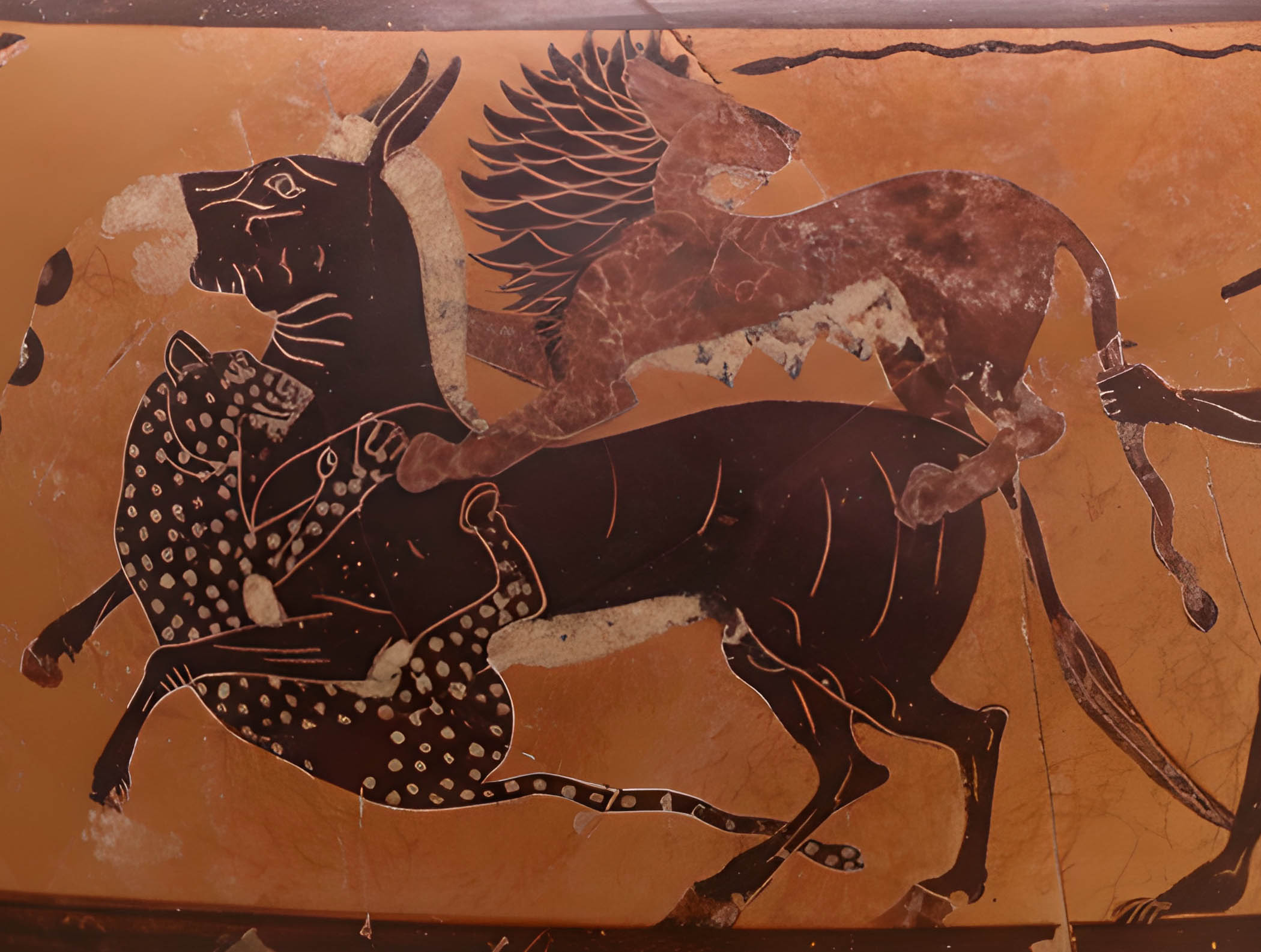
On this particular vase, a panther and a lion are attacking a mule, while its handlers desperately try to defend it. One of them grabs the lion’s tail — and the lion looks back in visible astonishment at such audacity. Even more intriguing, however, is how closely the iconography of the attack matches that of the tiger and lion attacking horses in front of Berlin’s Altes Museum, as I wrote here: the panther clings to the mule’s chest from the front, while the lion leaps onto it from behind.
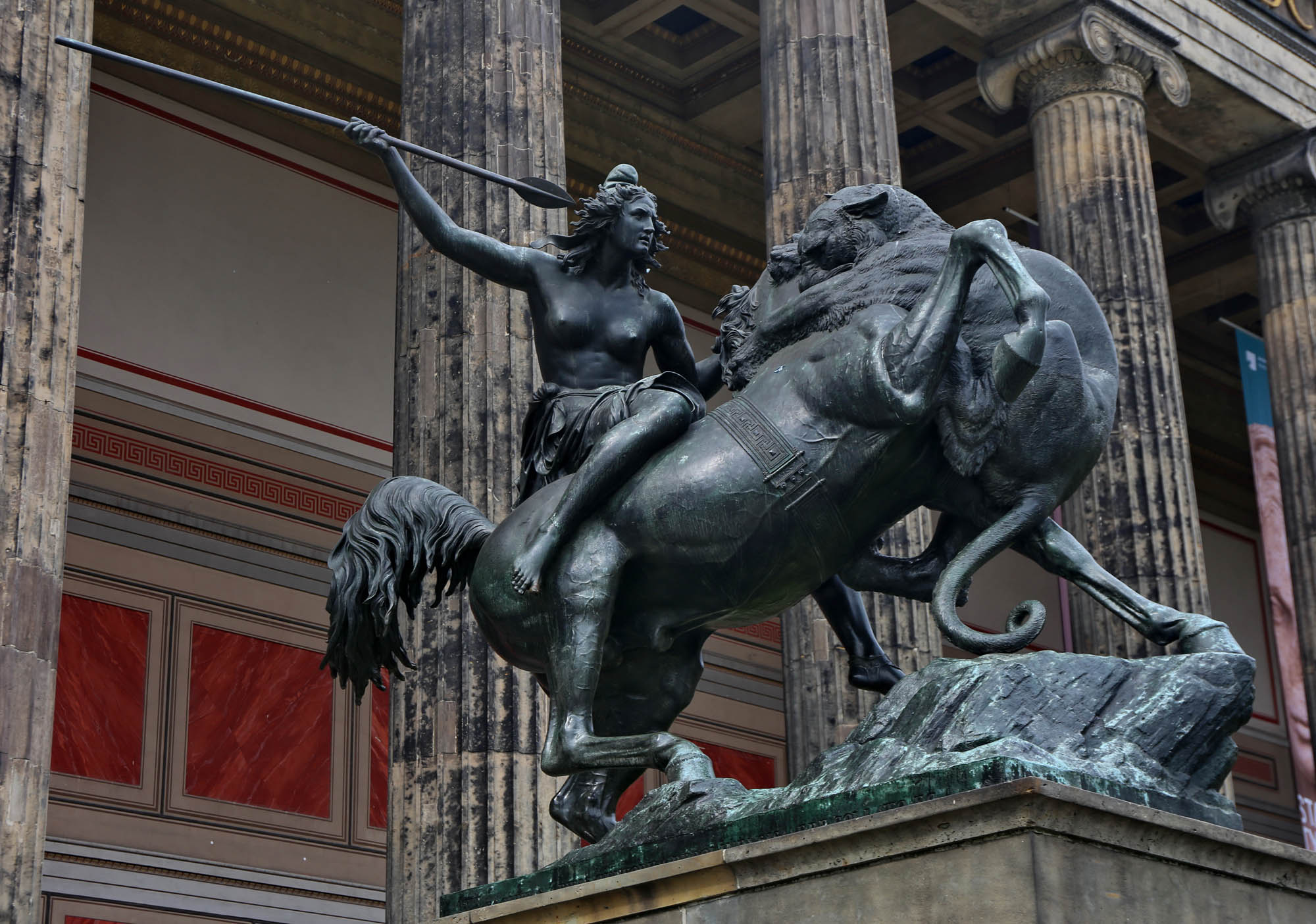
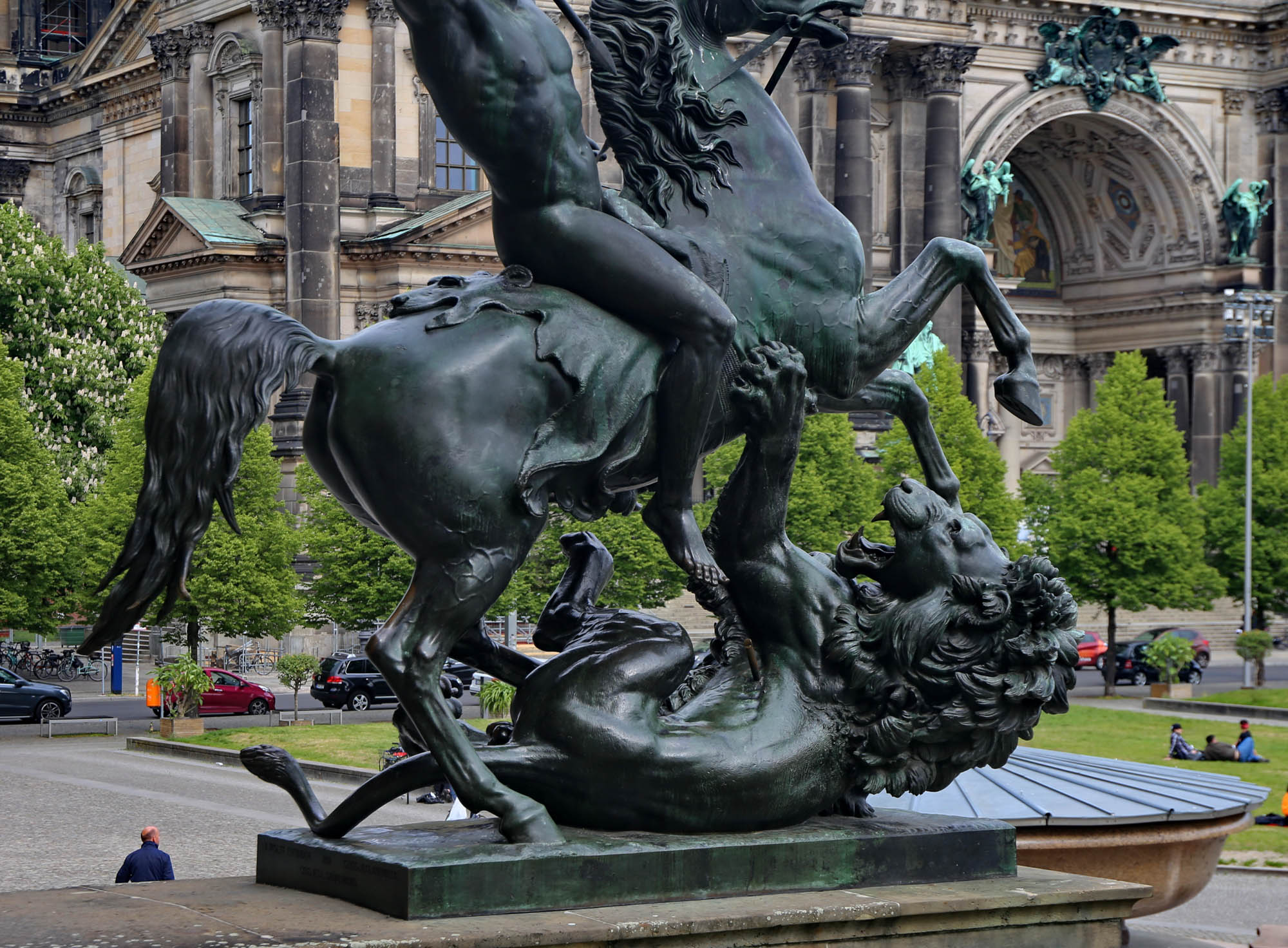
In the Berlin post I had already shown ancient fantasy images of coordinated big-cat attacks like this — but now it seems they followed a fairly specific iconographic formula. Somewhere, at some point, August Kiss — the Berlin sculptor — must have seen it. The question is: where?



Add comment