

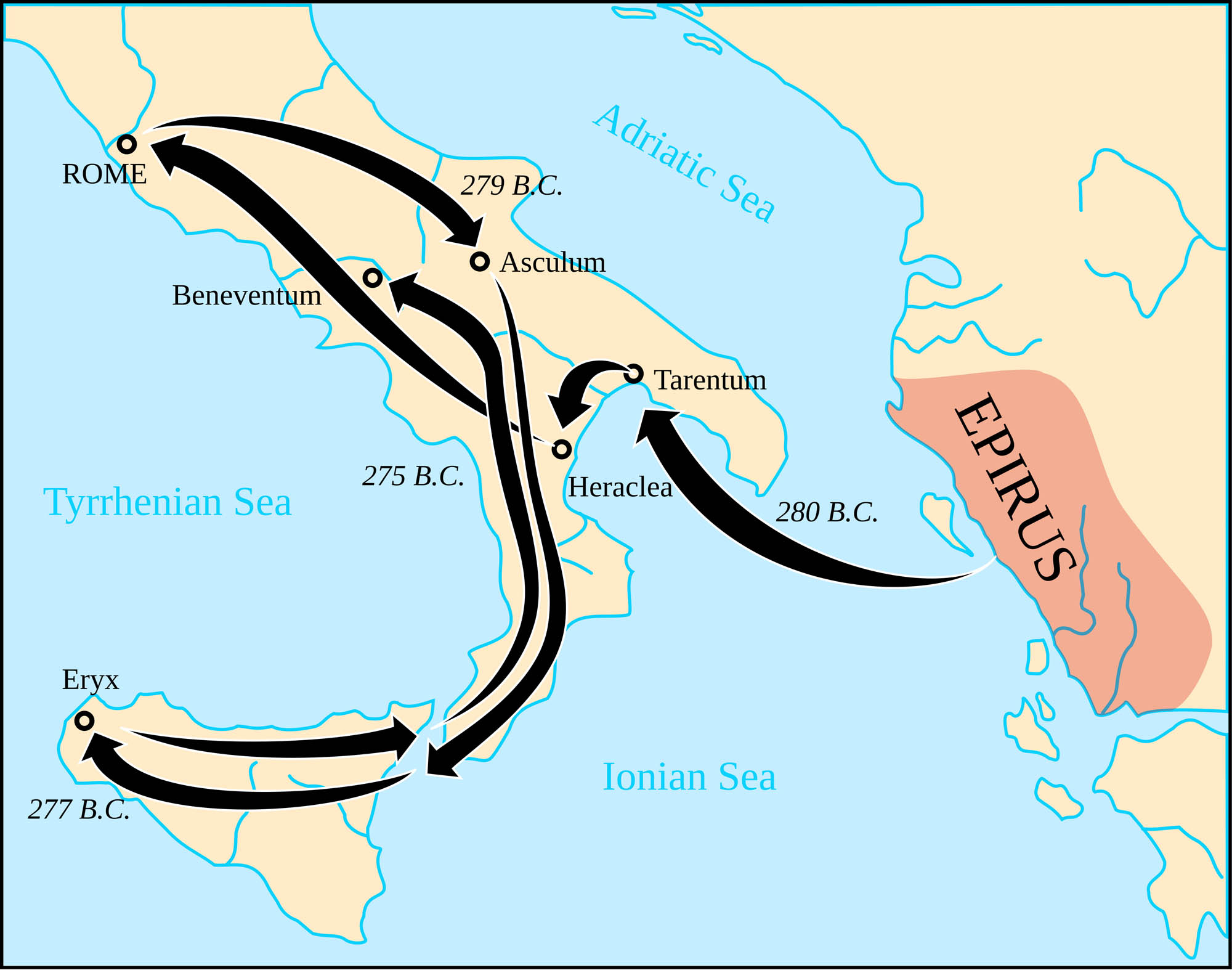
 Pyrrhus’ campaign in Southern Italy, 280–275 BC
Pyrrhus, king of Epirus and a second cousin once removed of Alexander the Great, came to the aid of the Greek cities of southern Italy threatened by Rome. He defeated Roman forces twice — at Heraclea in 280 BC and Asculum in 279 BC. According to Plutarch’s collection of anecdotes, when someone congratulated him on his victory, Pyrrhus replied: “Another such victory, and we are lost,” — or, in another version, “and we’ll have no soldiers left.”
The king was probably counting his losses not only in men, but also in elephants.
The Greeks first encountered war elephants during Alexander the Great’s Persian campaign (340–330 BC). Their mere appearance was terrifying — but on their backs they also carried wooden towers from which archers and spearmen struck down their enemies. Gradually, the Greeks learned not only how to resist them but eventually how to use them themselves.
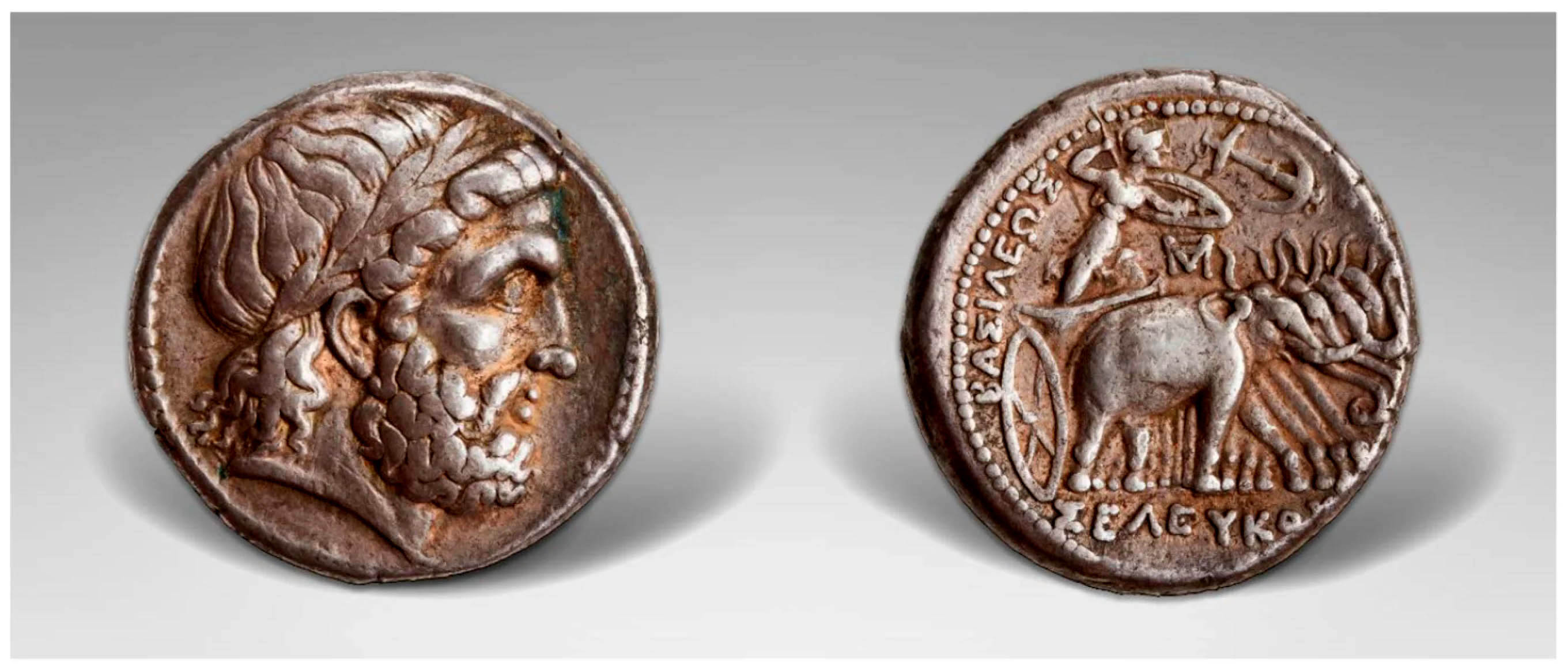 Seleucid tetradrachm, c. 296–281 BC
Pyrrhus himself landed in Italy with twenty elephants. Of these twenty, he lost ten. Fortunately for them, the Romans captured eight of them alive, and after winning — one, but final — victory at Beneventum in 275 BC, they paraded these elephants in the triumph of the victorious commander Curius Dentatus in Rome.
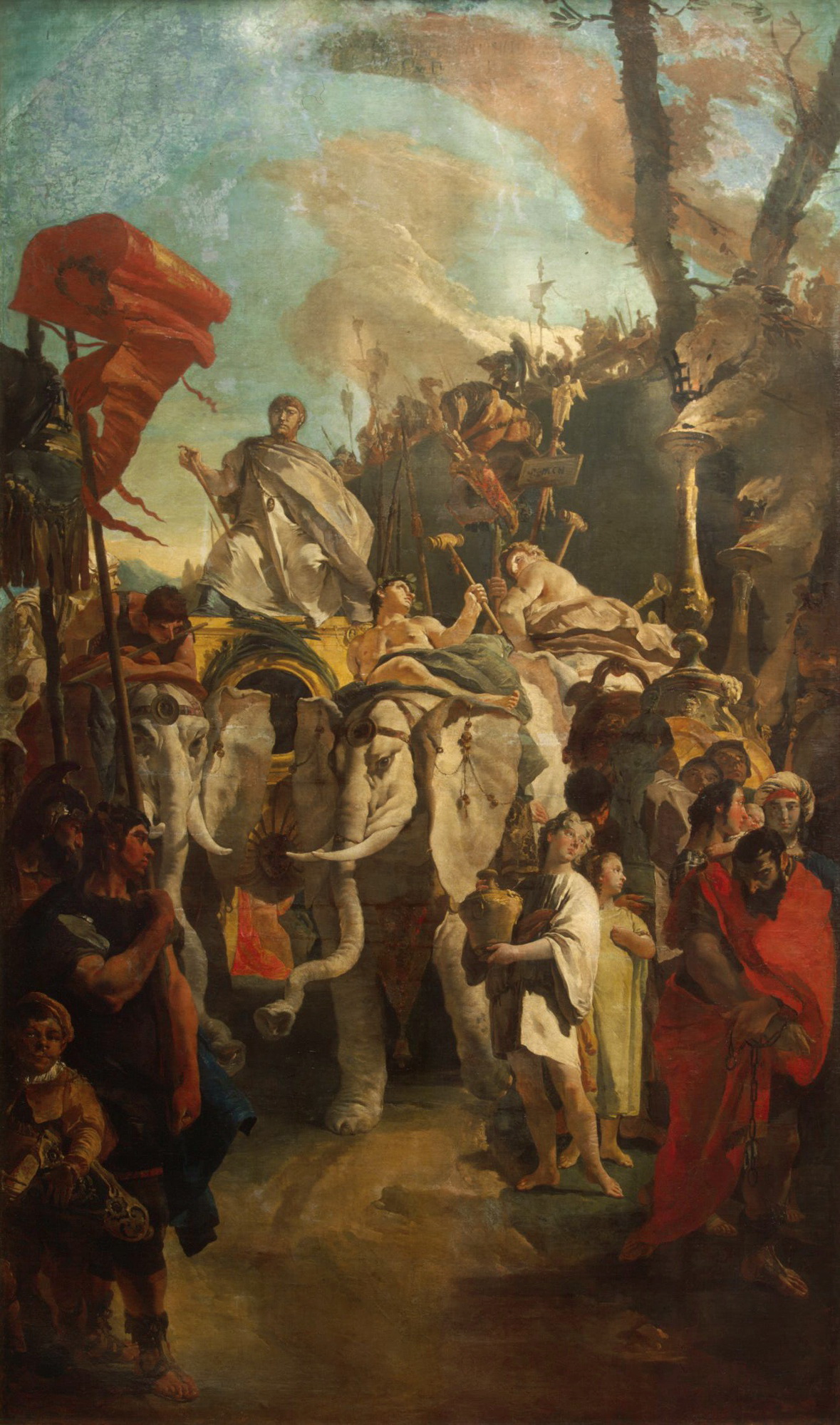 Tiepolo: The Triumph of Curius Dentatus, c. 1725–29, Hermitage Museum – “Primus Curius Dentatus in triumpho duxit elephantos” (“Curius Dentatus was the first to lead elephants in triumph,” Seneca, On the Shortness of Life 8.13)
The sight of those strange beasts, never before seen in Rome, must have caused quite a stir among the people — not only during the triumph itself but already in the weeks before, when the victorious army, as custom required, waited outside the city walls on the Campus Martius —then still uninhabited, now the heart of Renaissance Rome — until the Senate granted permission for the procession.
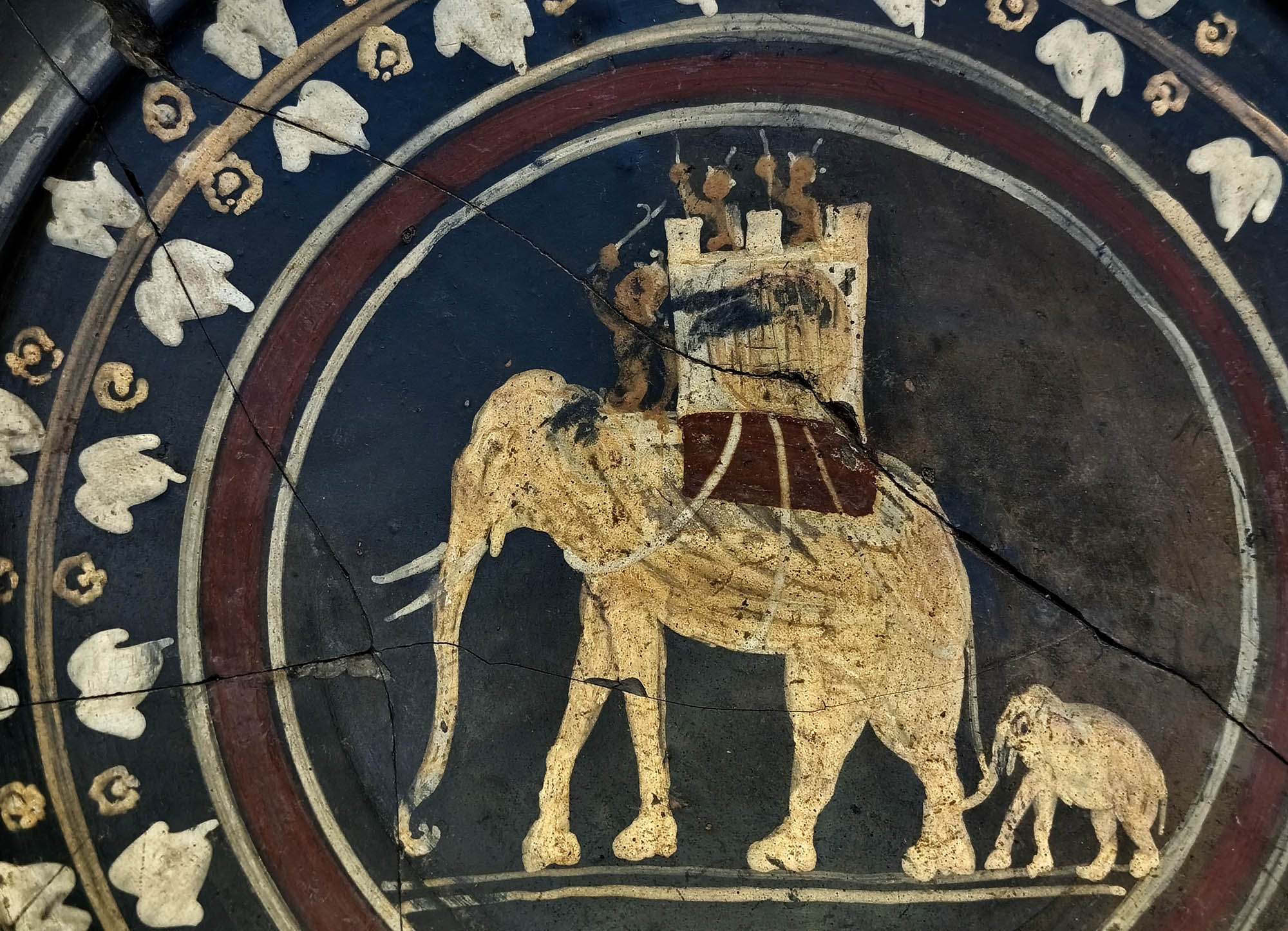
Evidence of this survives in an Etruscan bowl found at Capena, now in the National Etruscan Museum of Villa Giulia, Rome. It was almost certainly sold or distributed as a souvenir of the triumph, like two similar bowls found in Nursia and in Aléria, Corsica.
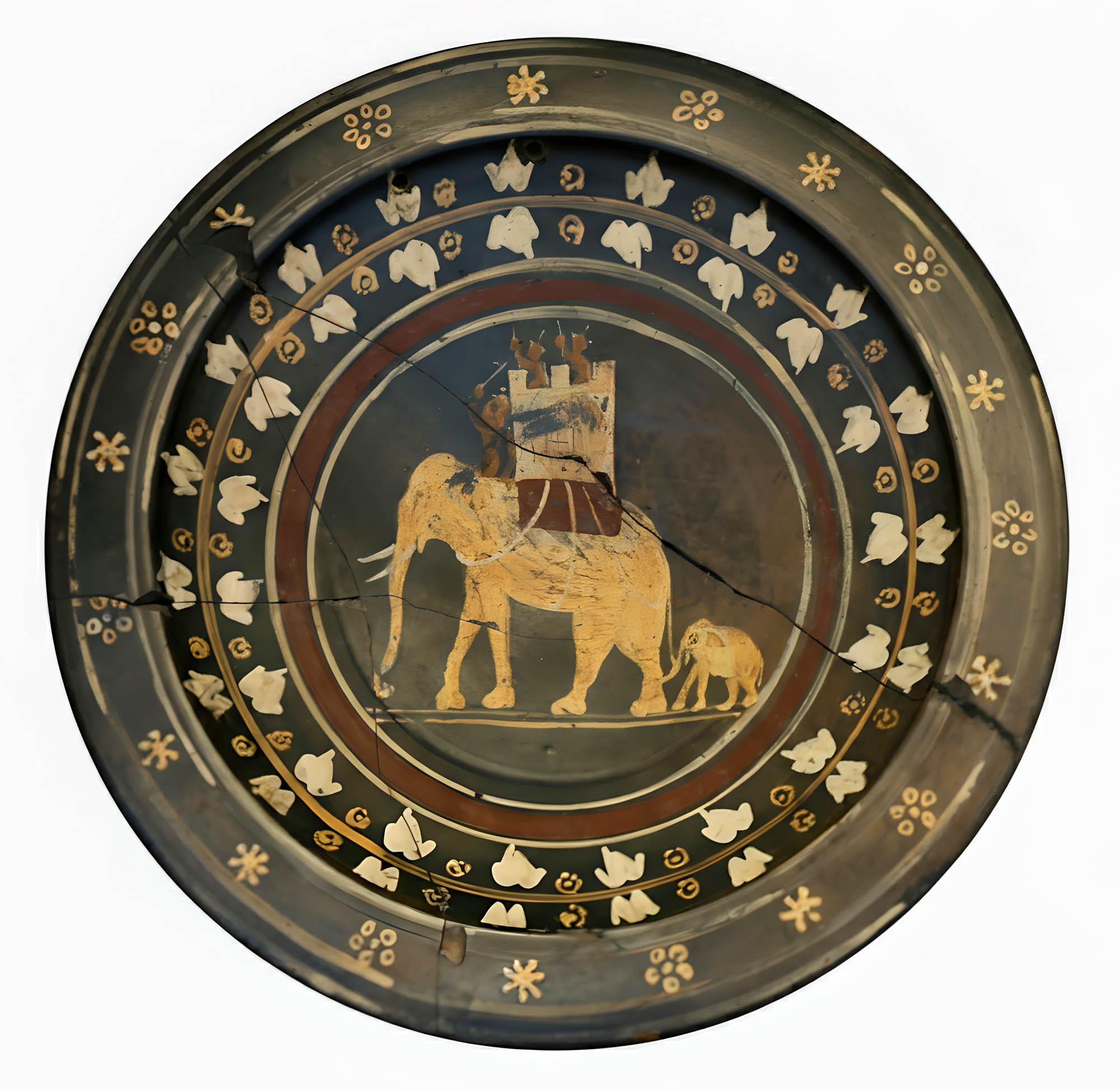
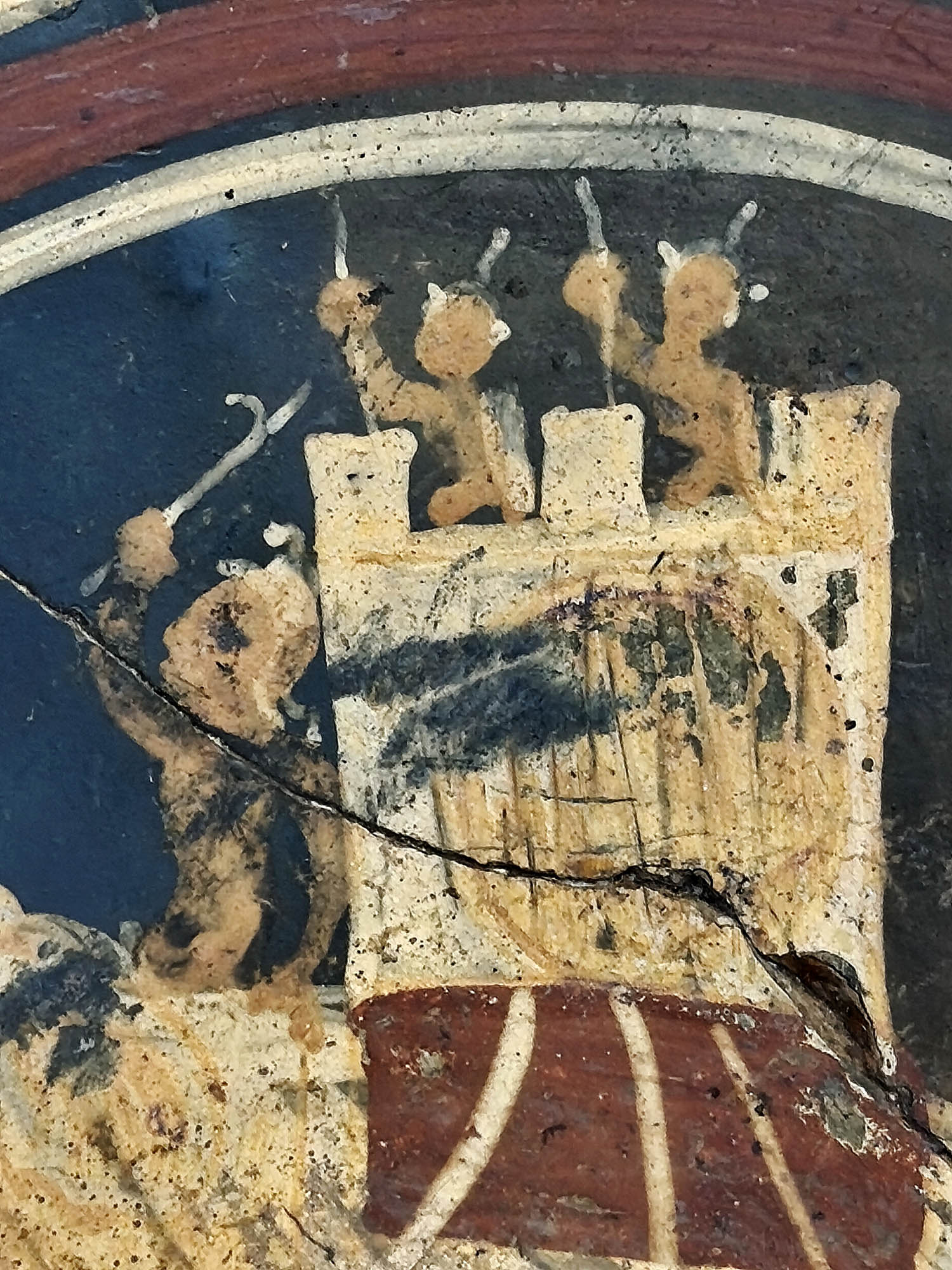
On the bowl we see one of the captured elephants in full battle gear, carrying on its back a mahout and a wooden tower with two soldiers — probably depicted during the triumphal procession, or while preparing for it.
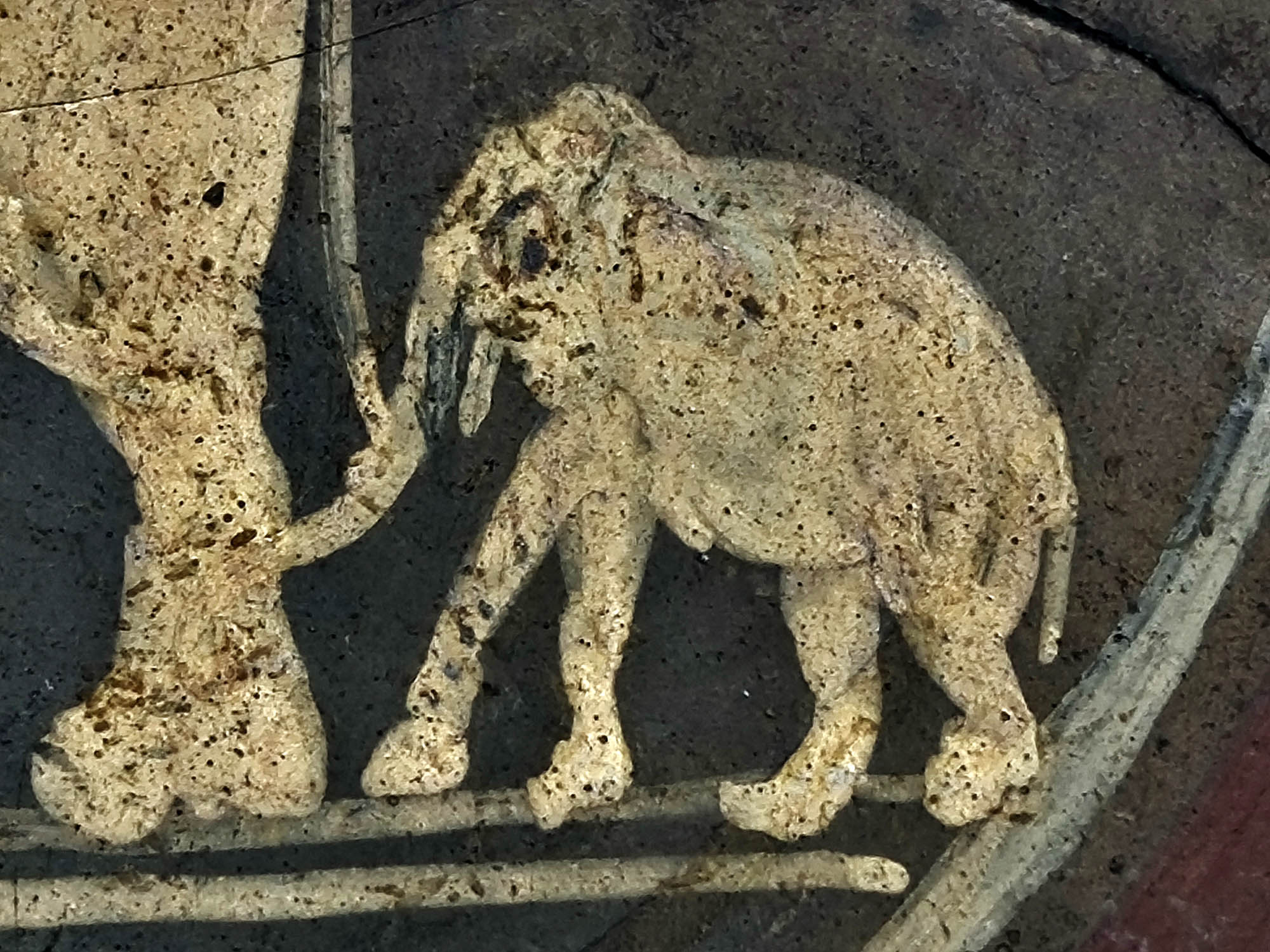
And most curiously, the elephant is accompanied by a calf. It is clearly not a creature of imagination – the tell‑tale gesture, painted from life, gives it away: the little one clings with its trunk to its mother’s tail or leg.
The calf, moreover, played a role in the Roman victory itself. As Dionysius of Halicarnassus writes in Roman Antiquities 20.12.3:
|
ἀναβάντων δὲ τῶν σὺν τῷ Πύρρῳ μετὰ τῶν ἐλεφάντων αἴσθησιν οἱ Ῥωμαῖοι λαβόντες σκυμνίον ἐλέφαντος τιτρώσκουσιν, ὃ πολλὴν ἀκοσμίαν τοῖς Ἕλλησιν ἐνεποίησε καὶ φυγήν: οἱ δὲ Ῥωμαῖοι δύο μὲν ἐλεφάντας ἀποκτείνουσιν, ὀκτὼ δὲ κατακλείσαντες εἰς χωρίον ἀνέξοδον παραδόντων τῶν ἐπ᾽ αὐτοῖς Ἰνδῶν ζῶντας παραλαμβάνουσι |
As Pyrrhus’ troops advanced with their elephants, the Romans spotted them and wounded a young elephant, which caused great disorder and panic among the Greeks. The Romans killed two elephants, trapped eight in an enclosure with no escape, and captured them alive after their Indian mahouts surrendered. |
So the wounded elephant calf must have recovered in time for the triumph — and hopefully lived long and peacefully, to the full measure of an elephant’s life, like the other Roman war elephant in Spain.



Add comment