

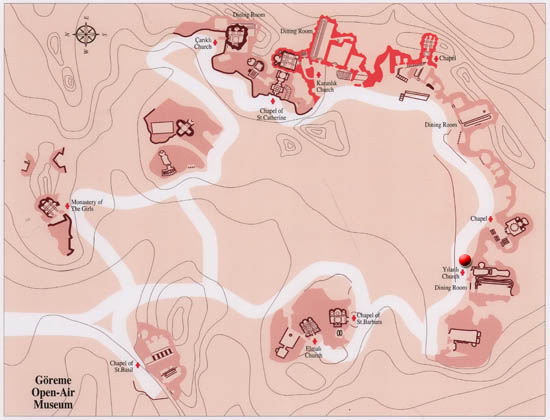
The Snake Church, or Yılanlı Kilise, gets its name from the abundance of snake-themed depictions across Cappadocia—a clear nod to the popularity of Saint George. The snake always represents the dragon that Saint George, often alongside Saint Theodore, slays, as vividly shown in the frescoes inside the church.
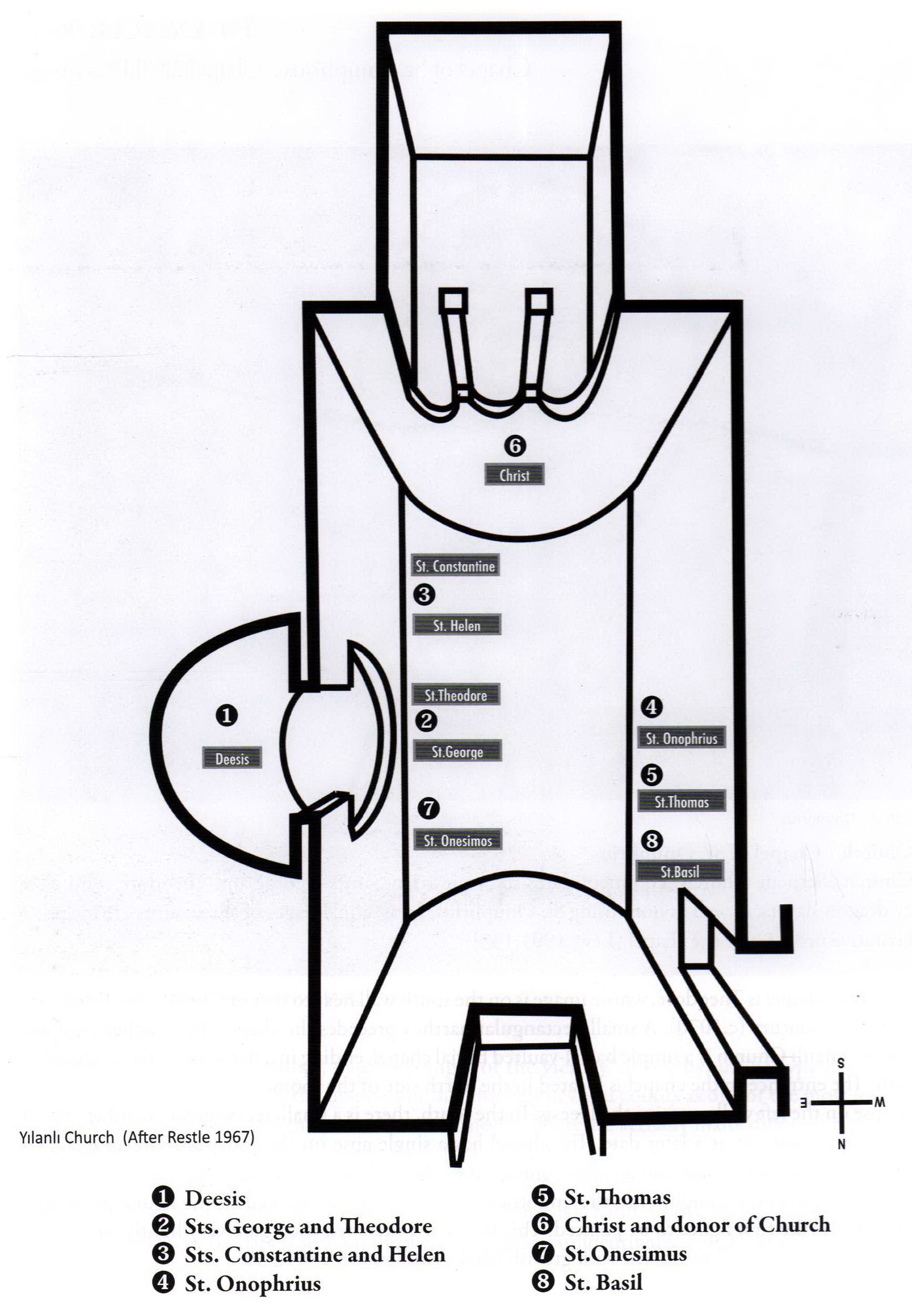
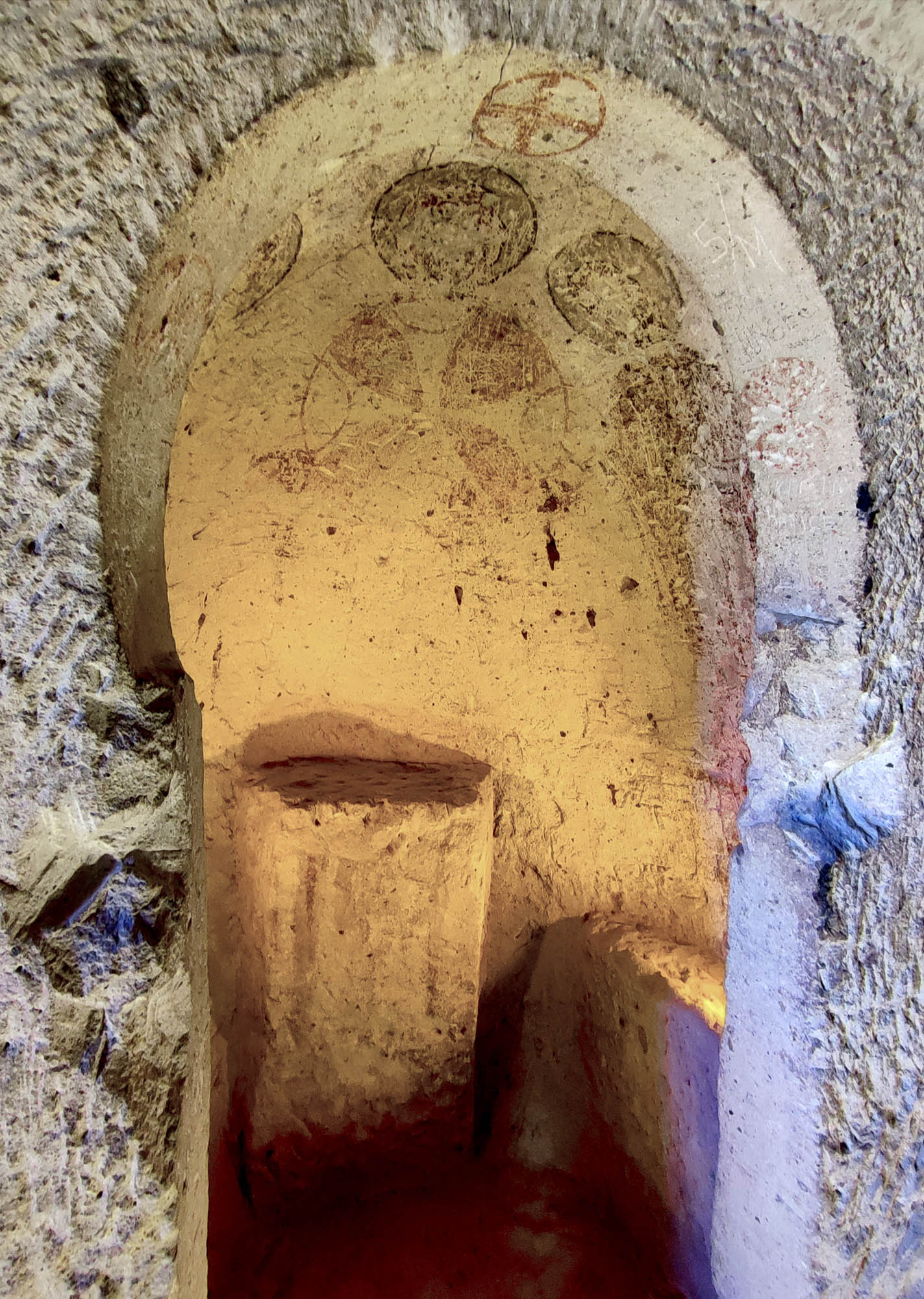
Göreme’s Snake Church is a simple barrel-vaulted chapel with an apse and altar on the eastern long side, giving it a cross-shaped, monastic layout, just like the nearby Saint Basil and Saint Barbara churches. The entrance on the shorter north wall is a side door, and directly opposite, a small chamber opens on the southern short wall, its floor dotted with graves.
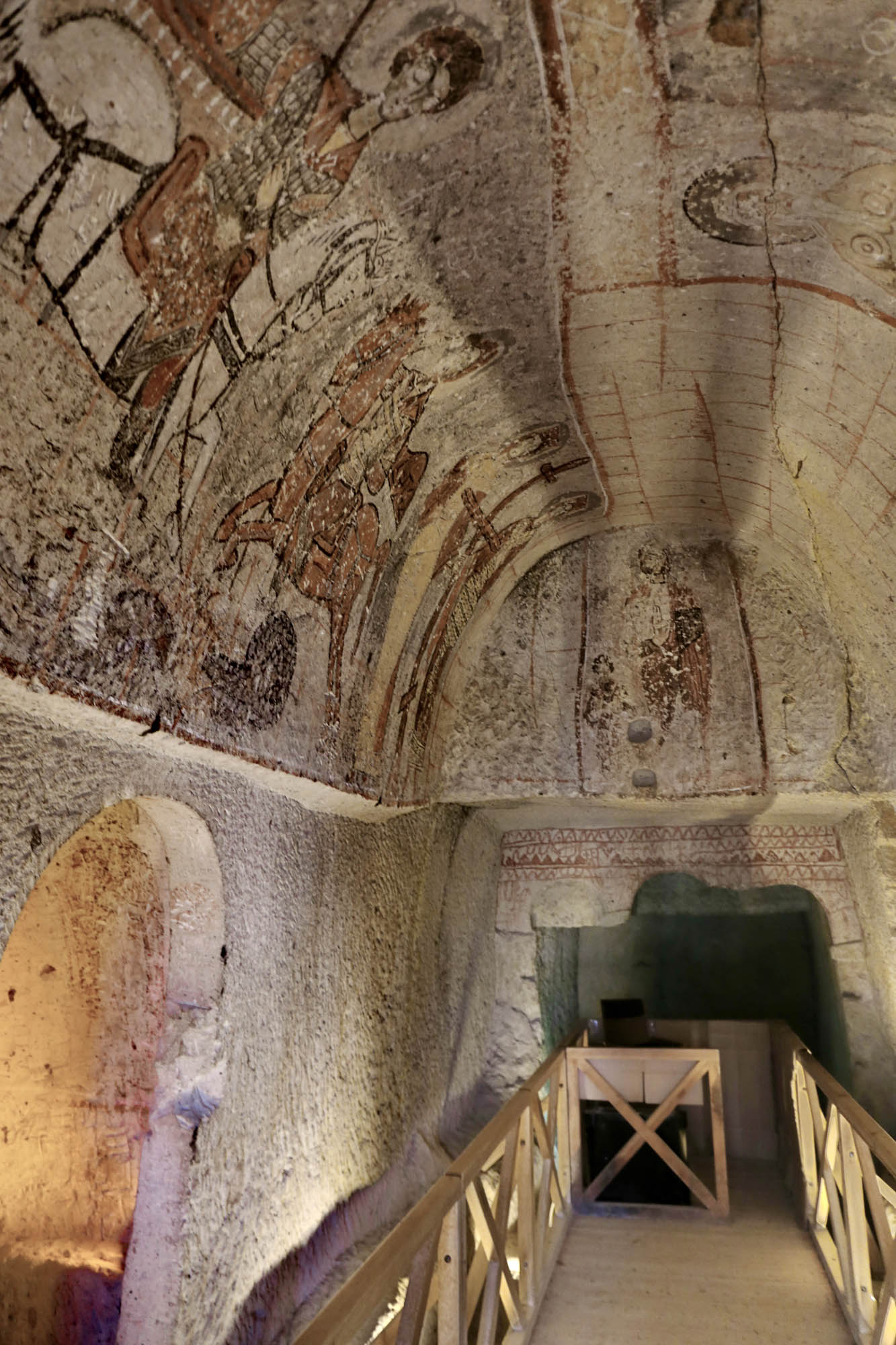
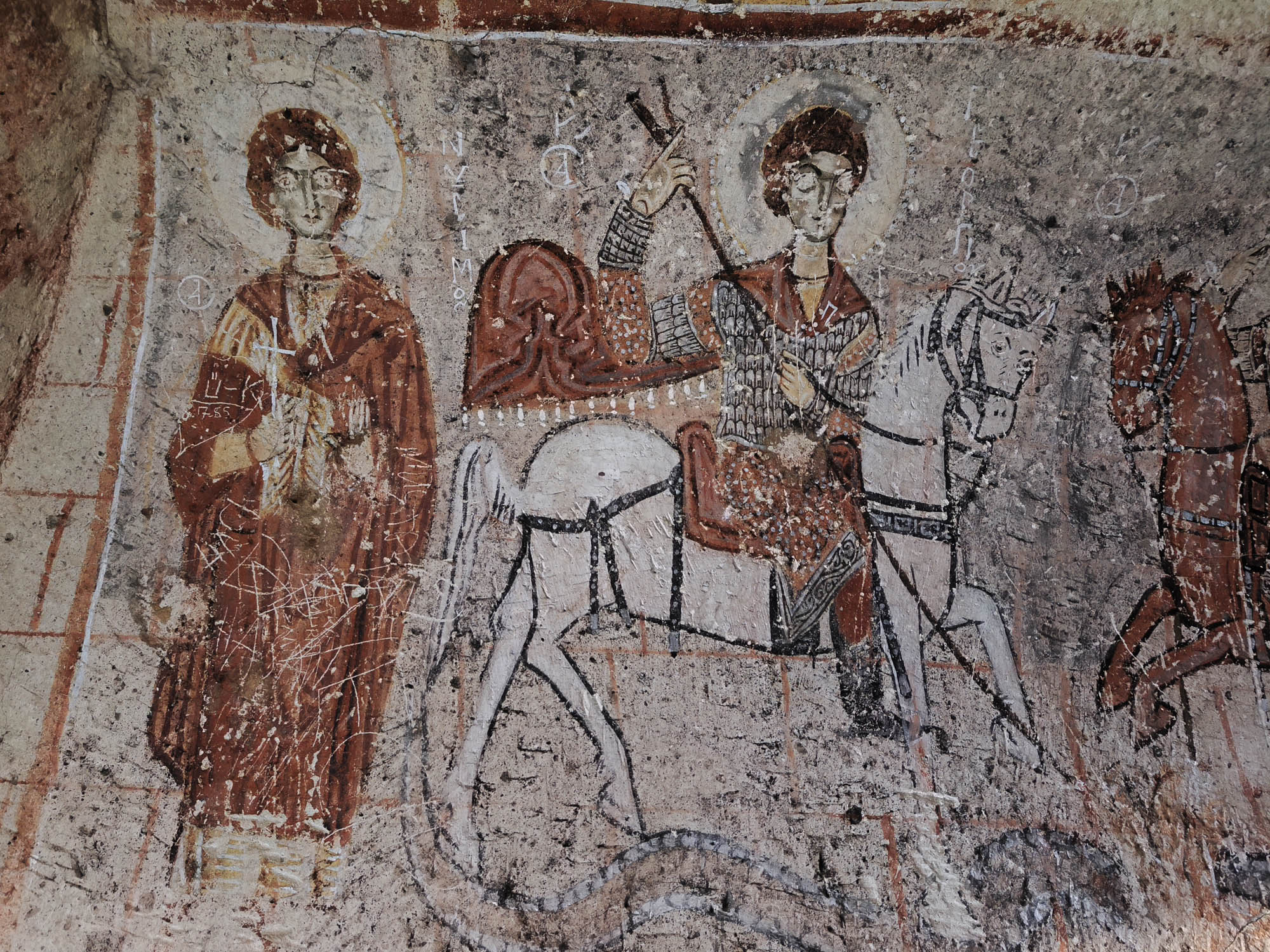
Along the eastern barrel vault stretches a single fresco panel. At its center, Saint George and Saint Theodore face each other on horseback, spearing a huge writhing dragon together. This is the earliest depiction of the duo in Cappadocia, dating to the mid-11th century—just over a century after the first dragon-slaying Saint Georges in Georgia.
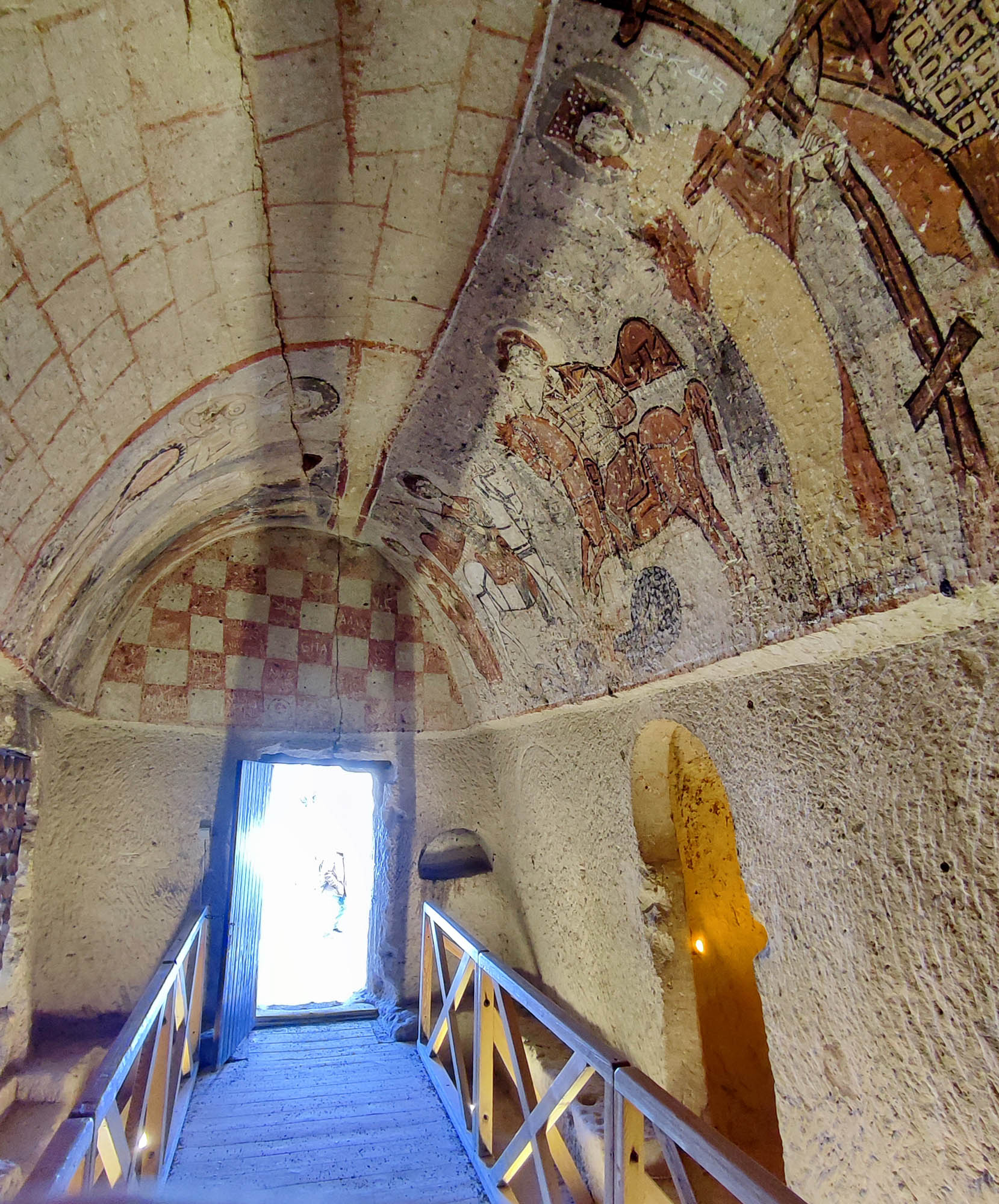

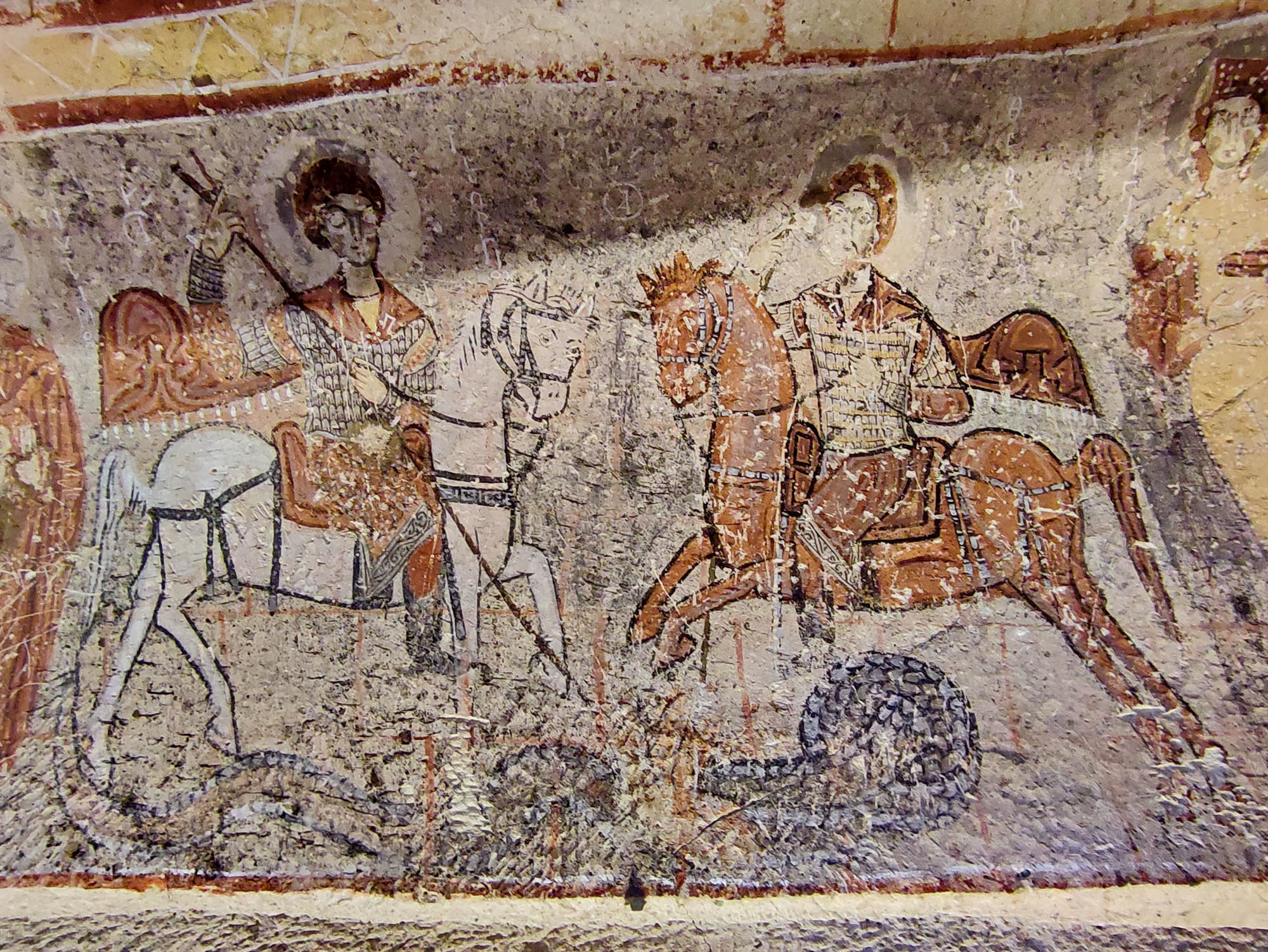
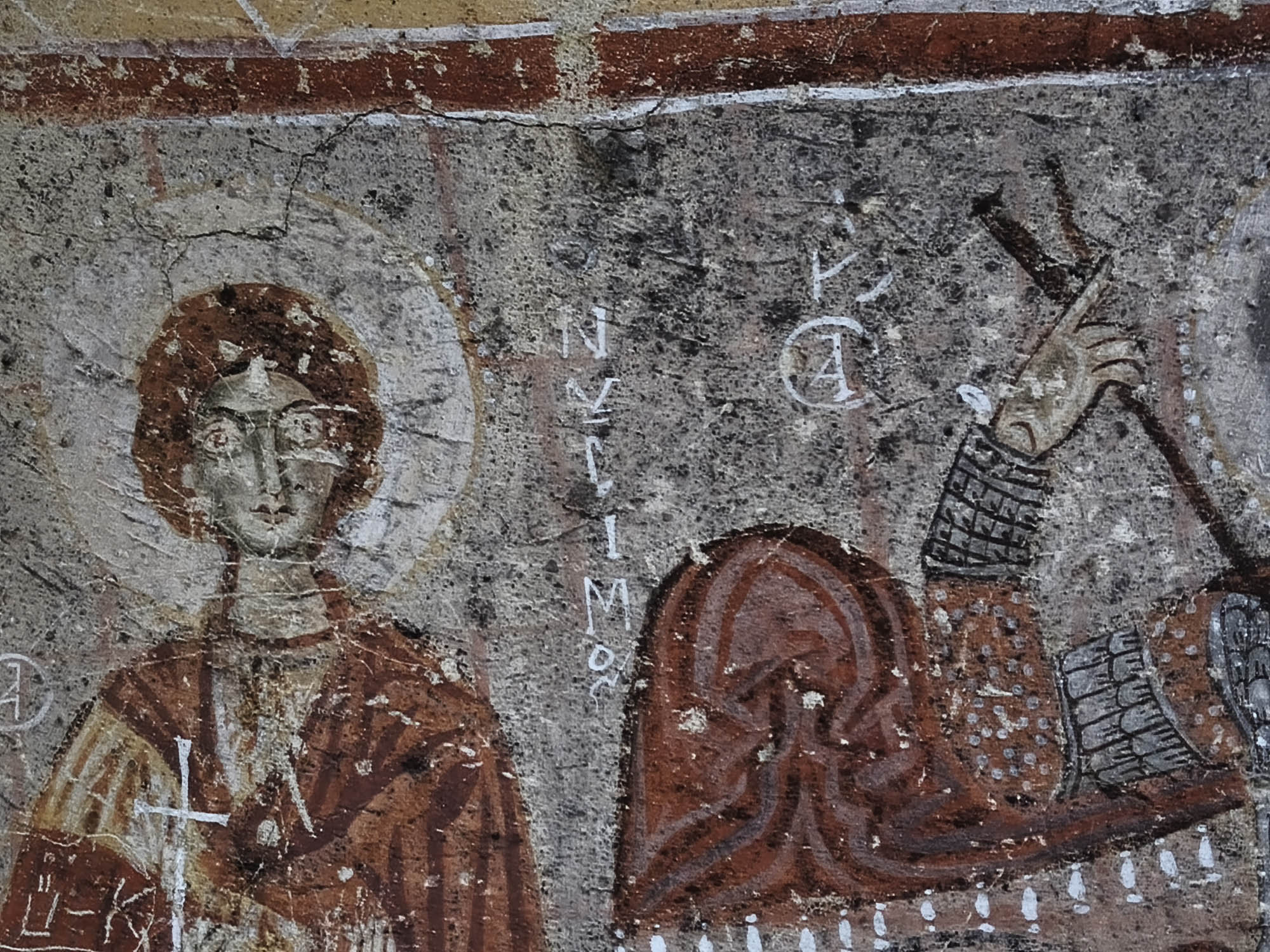
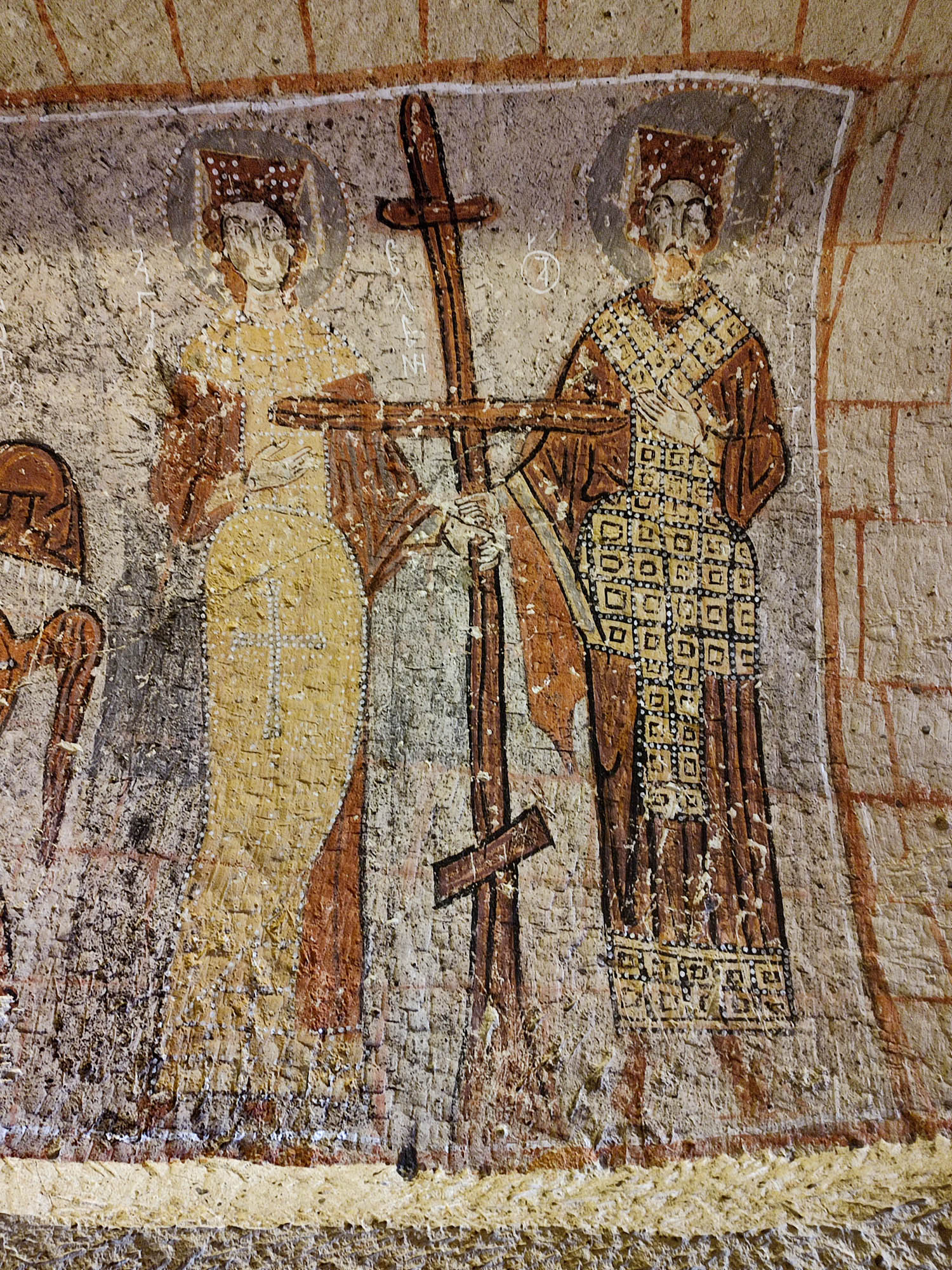
To the left of the two horsemen stands a male saint, Saint Onesimus, a runaway slave converted to Christianity by Saint Paul, as we know from Paul’s letter to Philemon. On the right is a familiar Orthodox motif: Emperor Constantine and his mother Helena, presenting the True Cross they discovered in Jerusalem.
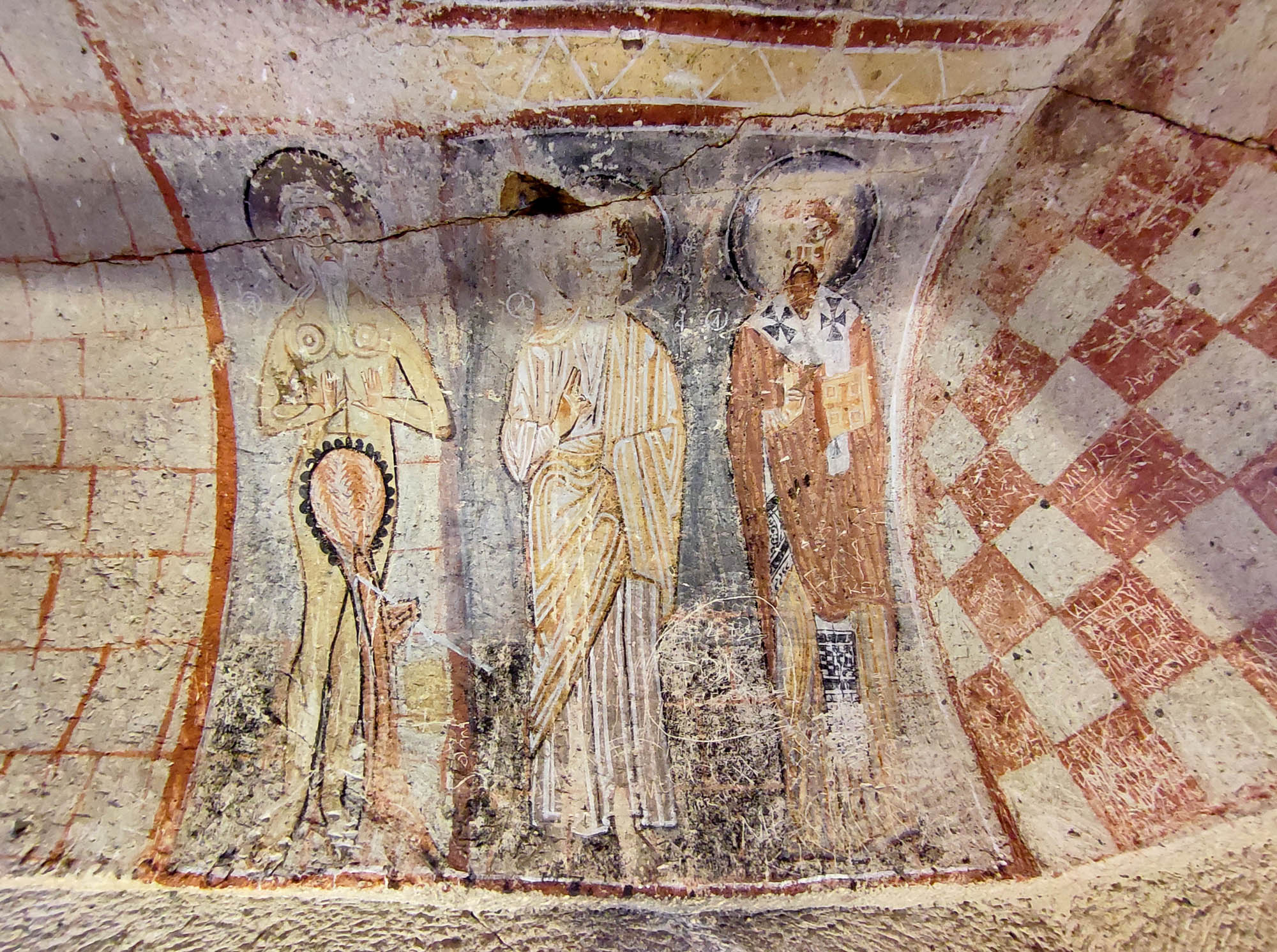
Across from this, on the western barrel vault, there’s only one fresco panel near the entrance, framed in red, depicting three male saints: Saint Onuphrius, the Egyptian hermit whose body is entirely covered by his floor-length hair; Saint Thomas the Apostle; and Saint Basil of Caesarea, founder of Eastern monasticism. Including the first and third saints is natural for a Cappadocian monastic chapel, while Saint Thomas might need a bit of explanation.
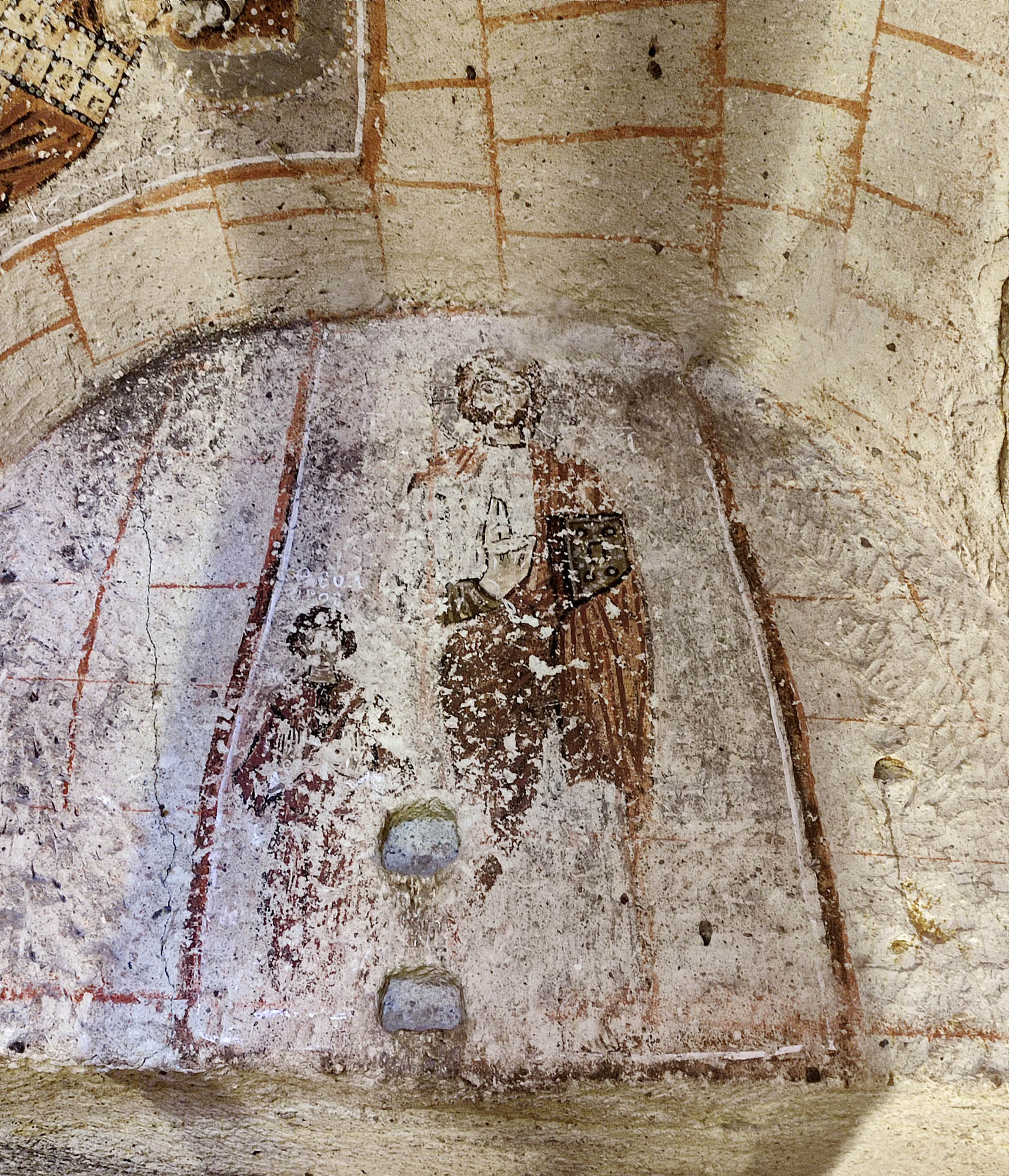
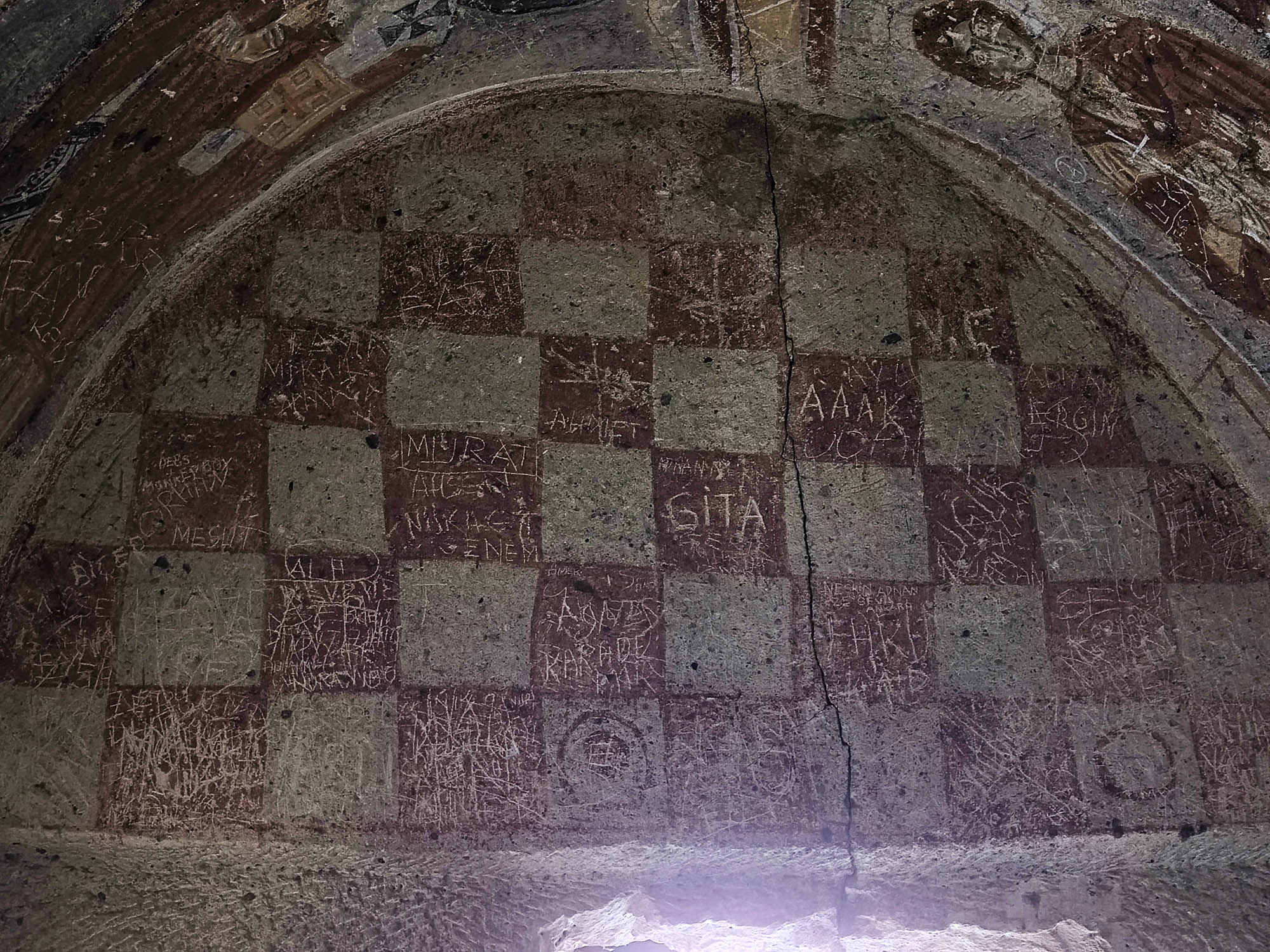
The lunette above the entrance is filled with a red checkerboard pattern. On the opposite lunette, above the tomb chamber entrance, Christ stands alongside a much smaller donor, Theodoros—perhaps he was interred in this same tomb.
In the apse, a Deesis is depicted—the classic motif where Christ sits on the throne of judgment, flanked by his closest human relatives, the Virgin Mary and John the Baptist, imploring mercy for humanity. What’s unique here is that only Christ’s head is visible; the rest of his body is hidden behind a large, circular cross.



Add comment