

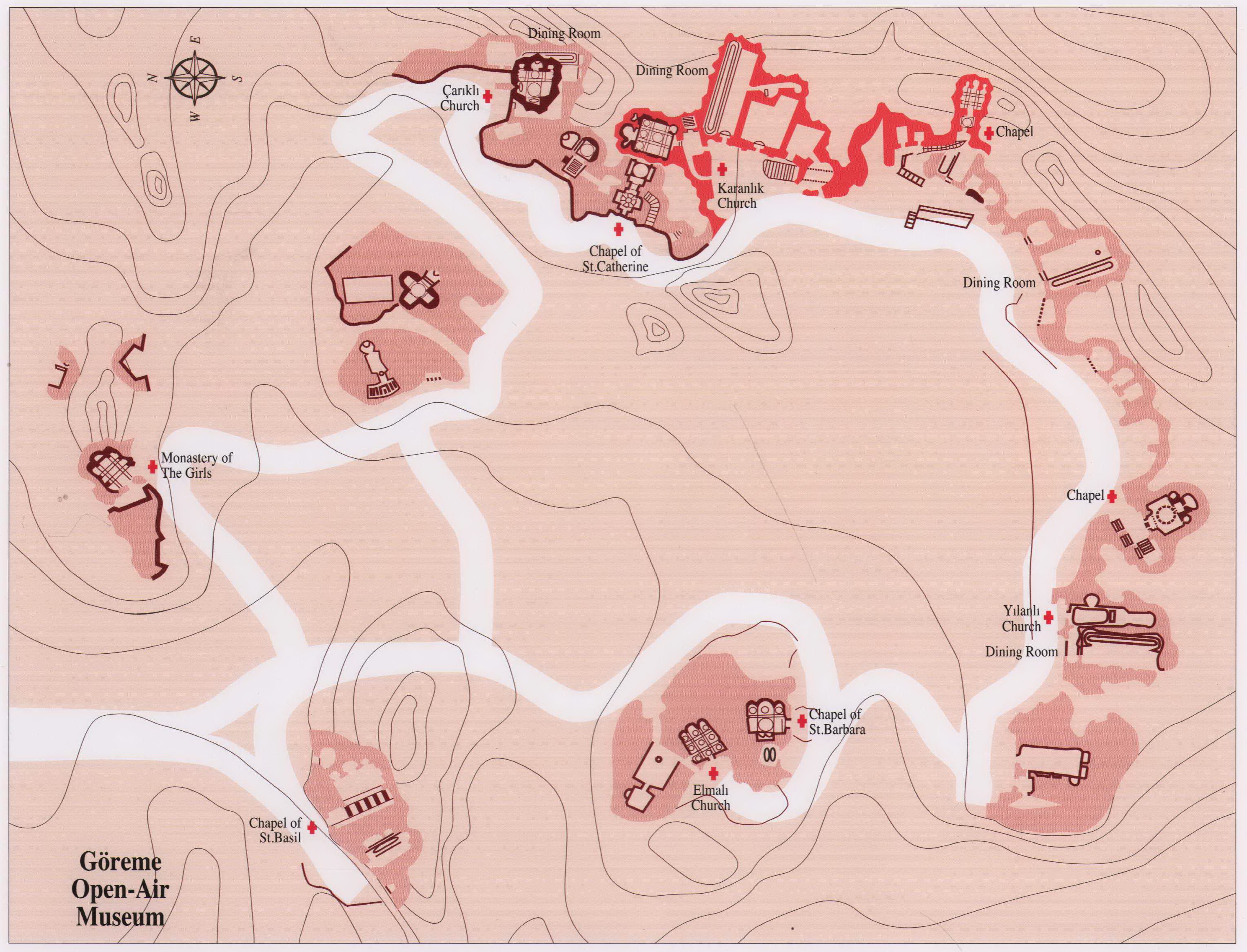
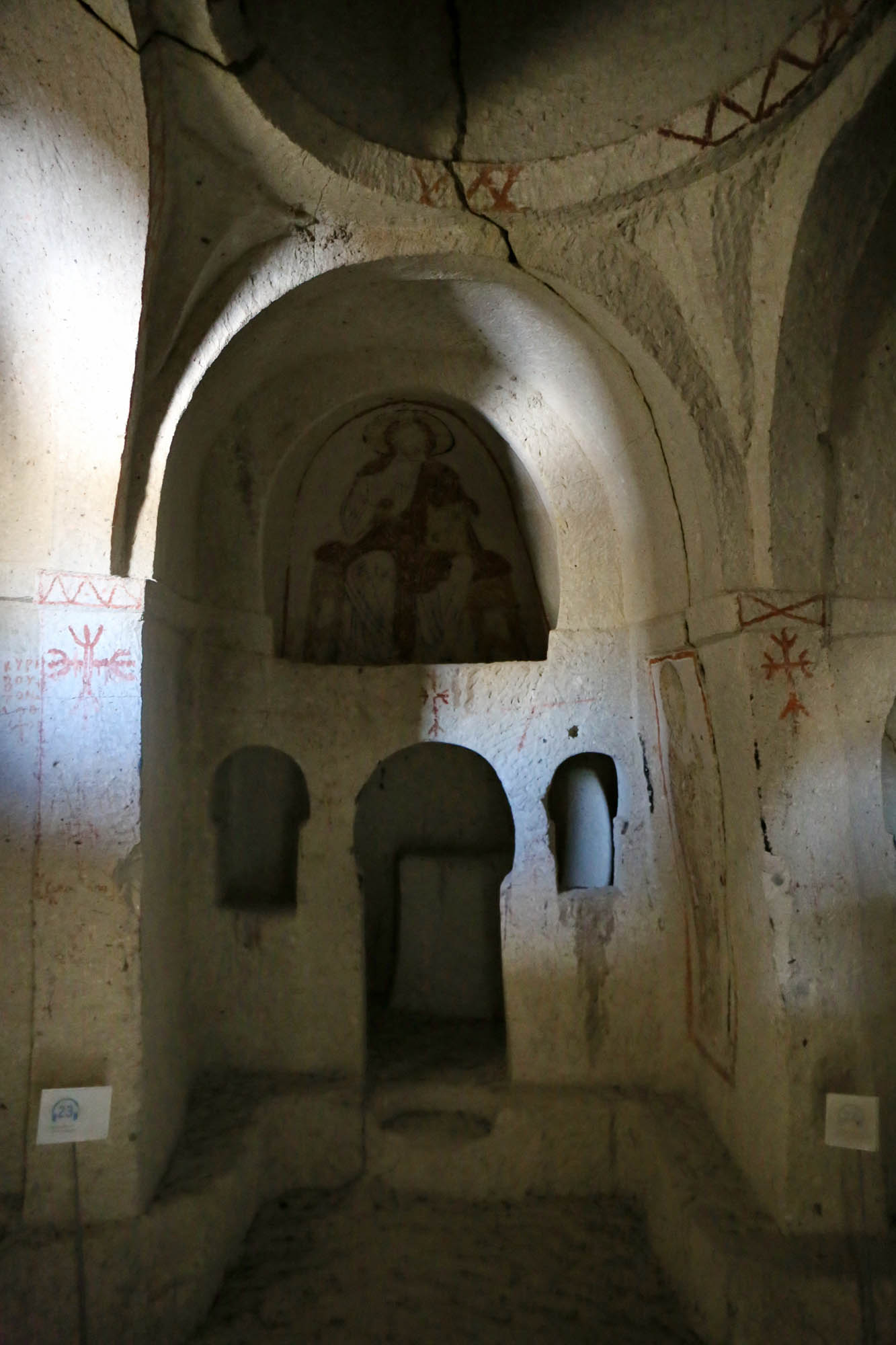
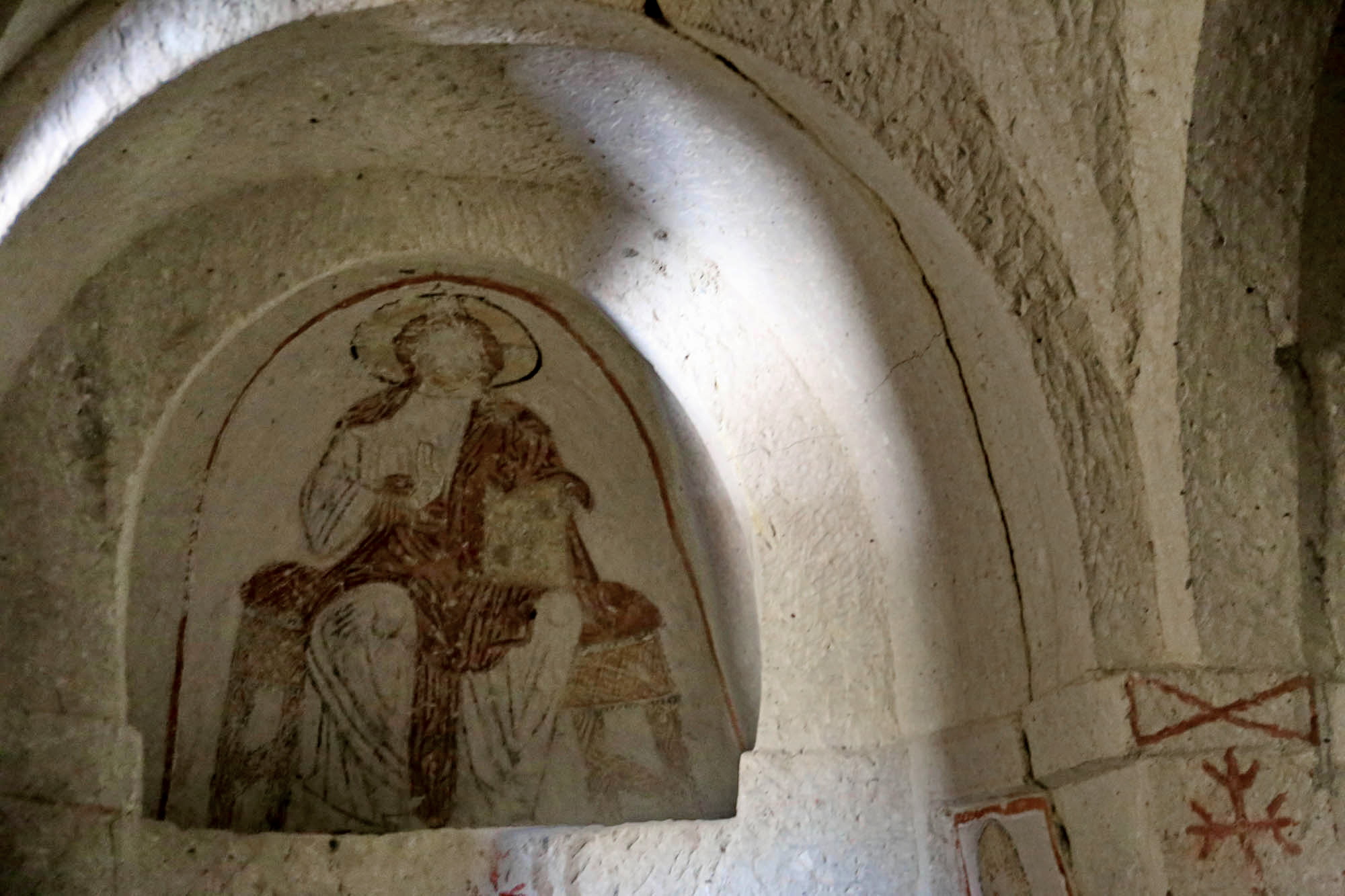
The Pantokrator Church (“Chapel 27”) sits next to the Snake Church and is one of the smallest chapels in the Göreme Open-Air Museum. It’s laid out in a simple Greek cross plan with a central dome and three apses to the east. In the middle apse, above the altar hidden by the sanctuary screen, is the chapel’s largest, namesake fresco: a grand Pantokrator, Christ as the Ruler of All, raising His right hand in blessing and holding a book in His left.
On the right-hand wall before the sanctuary screen, there’s another fresco: a standing Saint Basil in his usual bishop’s robes. Saint Basil’s importance as a local Cappadocian Church Father and founder of Eastern monasticism is highlighted by the fact that, with one exception, he appears in every chapel we’ve seen so far. It’s as if, after Iconoclasm, he and the Pantokrator became the first icons in chapels that had previously been decorated only with geometric patterns and crosses.
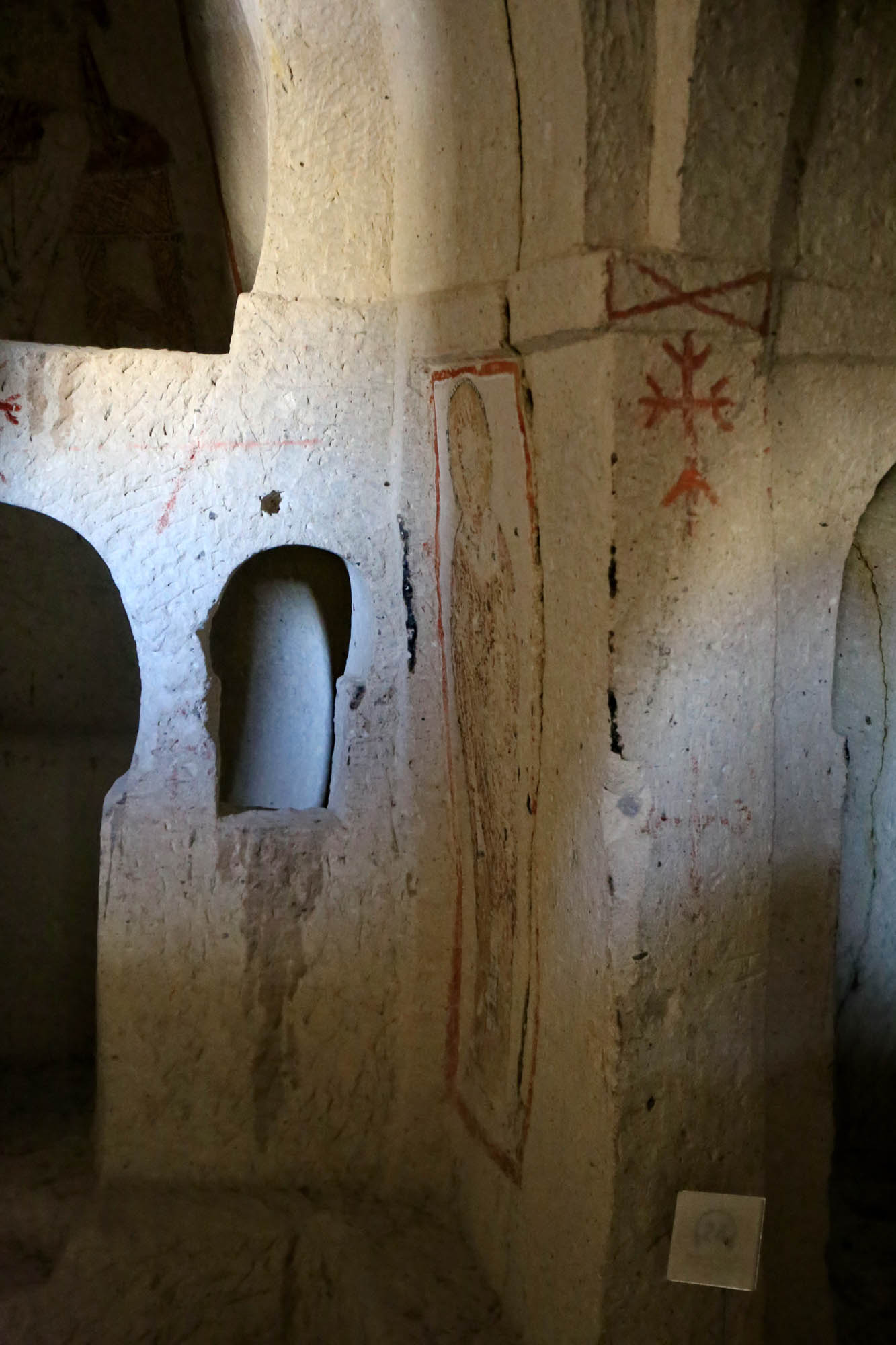
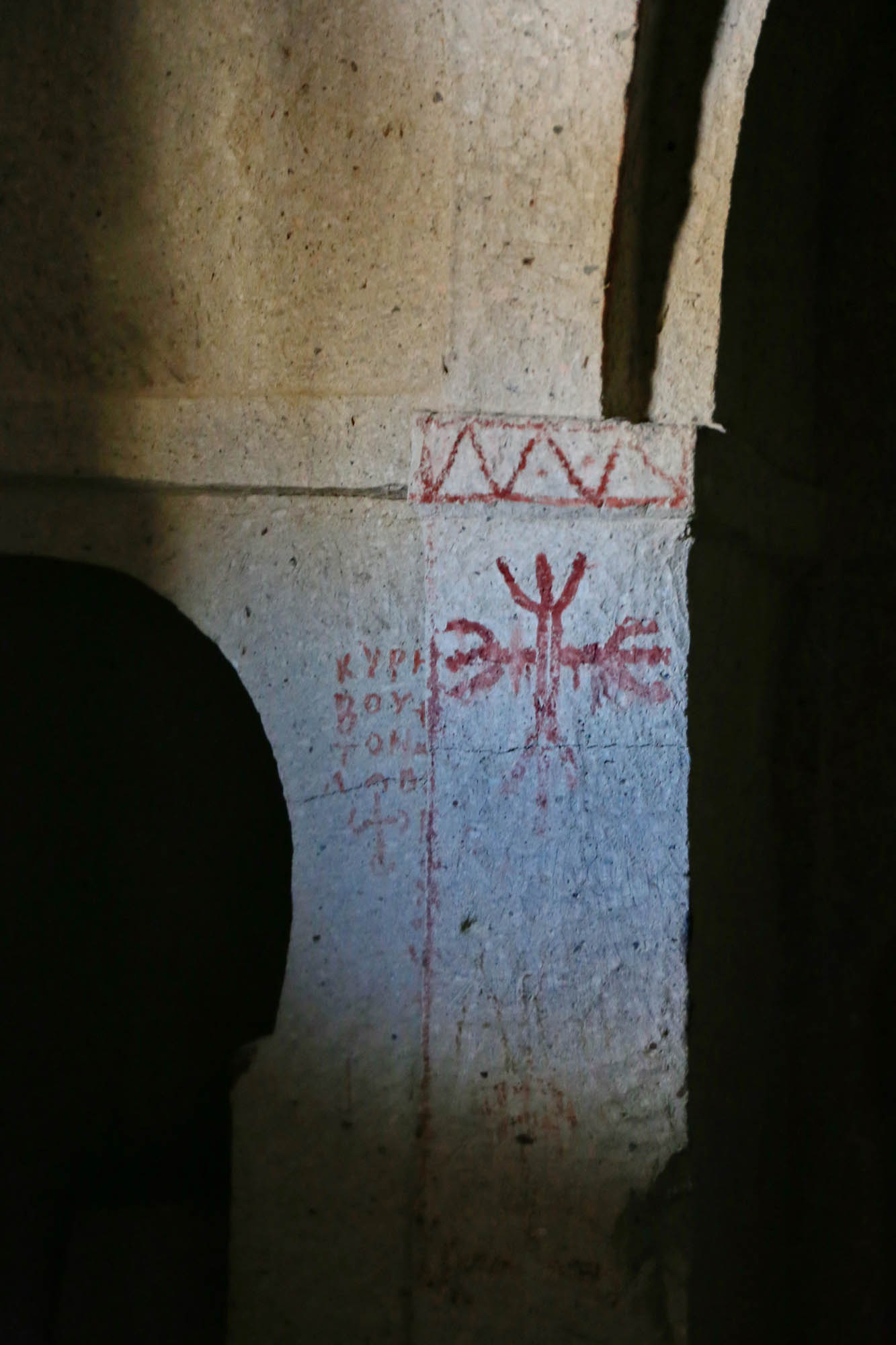
On the half-columns supporting the dome arches, you’ll see a naïve red cross with three arms, flanked by two inscriptions: “Lord, help Your servant Michael” and “Lord, help Your servant Thamadest.” The latter may be connected to the small burial chamber at the chapel’s entrance.
The little chapel may seem modest compared to the richly painted churches in the Göreme Valley, but chapels like this made up the hundreds of Cappadocian churches. What mattered most was that monks, hermits, and the laypeople connected to them had a place to gather for their rituals. If a donor spent money on decorating it, that added prestige—but probably only to us, their distant successors.
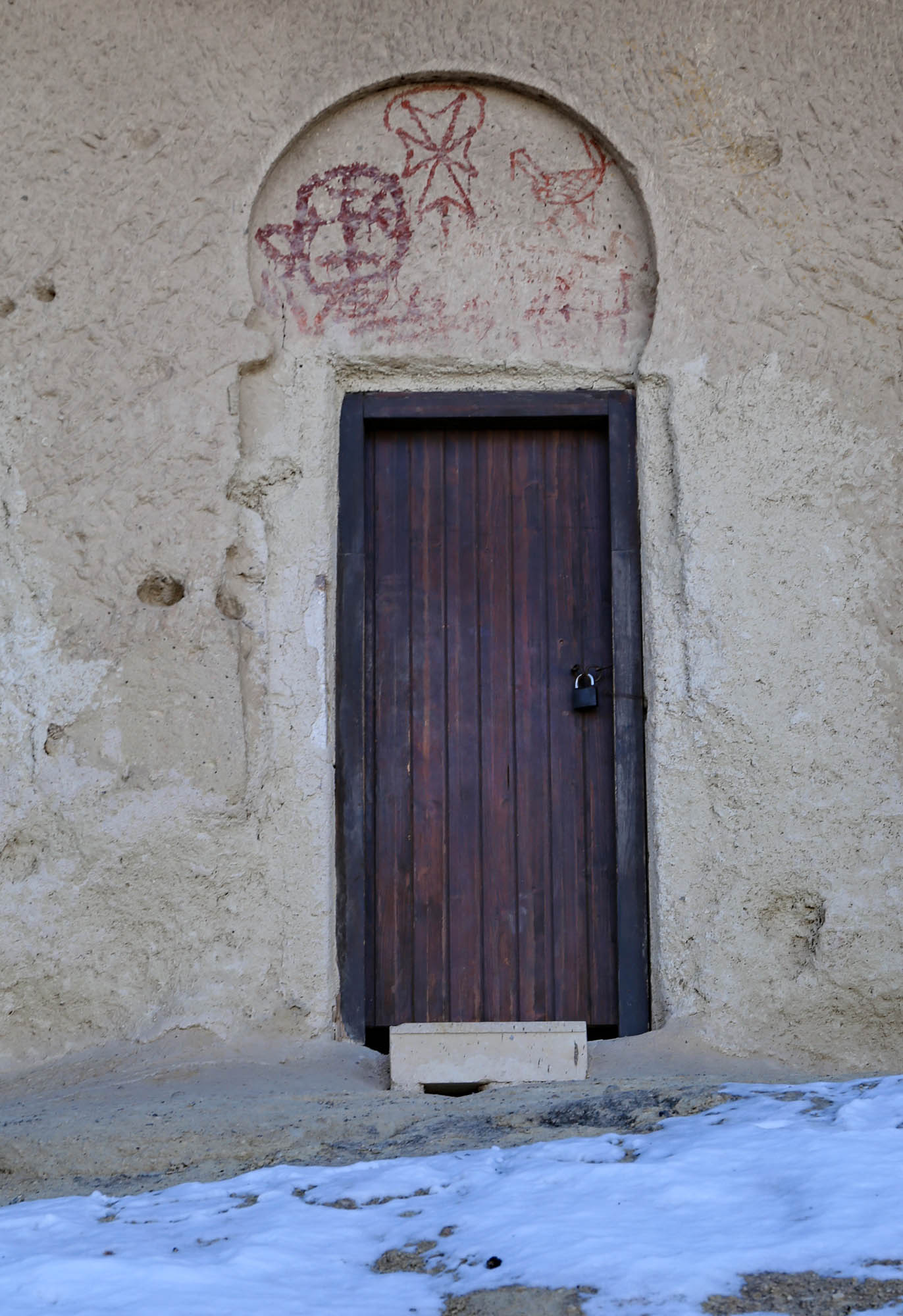
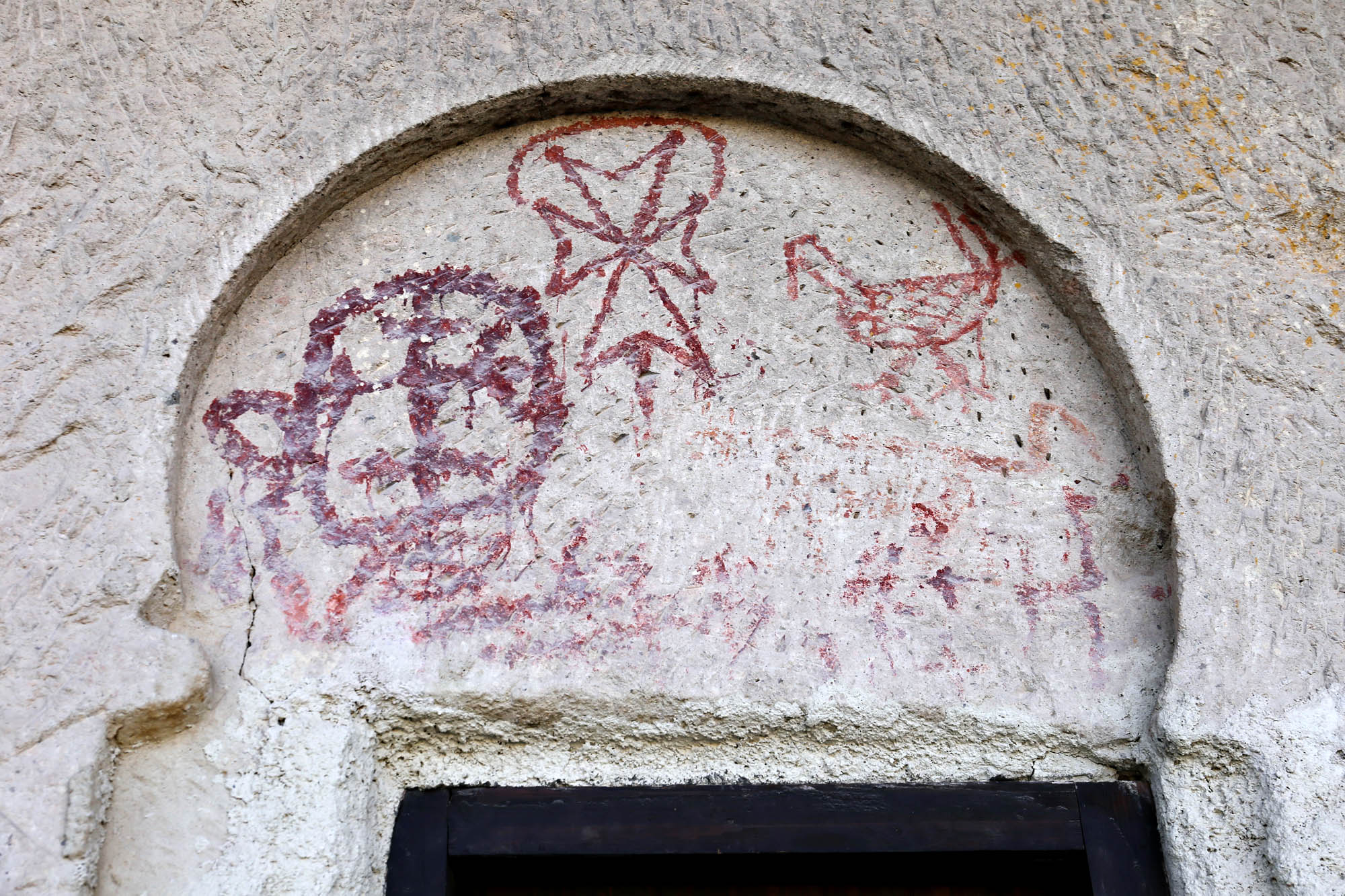
After the Pantokrator Chapel, there’s a small rock-cut door that’s always locked. Scholars don’t mention any frescoes inside. Yet in the lunette above the door, a few simple red-painted symbols appear: a Maltese cross in the center, possibly a globe to the left, a rooster to the right, and perhaps a lion beneath. In addition to the linear style, these images recall the simple symbols conveying fundamental faith truths during Iconoclasm; the rooster especially echoes the one in the Barbara Chapel, symbolizing the monk praying at dawn and vigilance. Another similar rooster will appear on the half-collapsed antechamber wall of the Dark Church.
The images were painted directly onto the carved rock without plaster, which was common at the time. Builders often added a few protective images on the façade, expecting fresco artists to paint over them later. Here, the artists never came, so the “temporary” sketches became permanent.
Beyond the rooster-adorned chapel lies the trapeza, the monks’ dining hall, with an adjoining kitchen. Its long table and benches were carved directly from the living rock during the room’s creation. In the center, traces of a former buried wine storage jar remain.
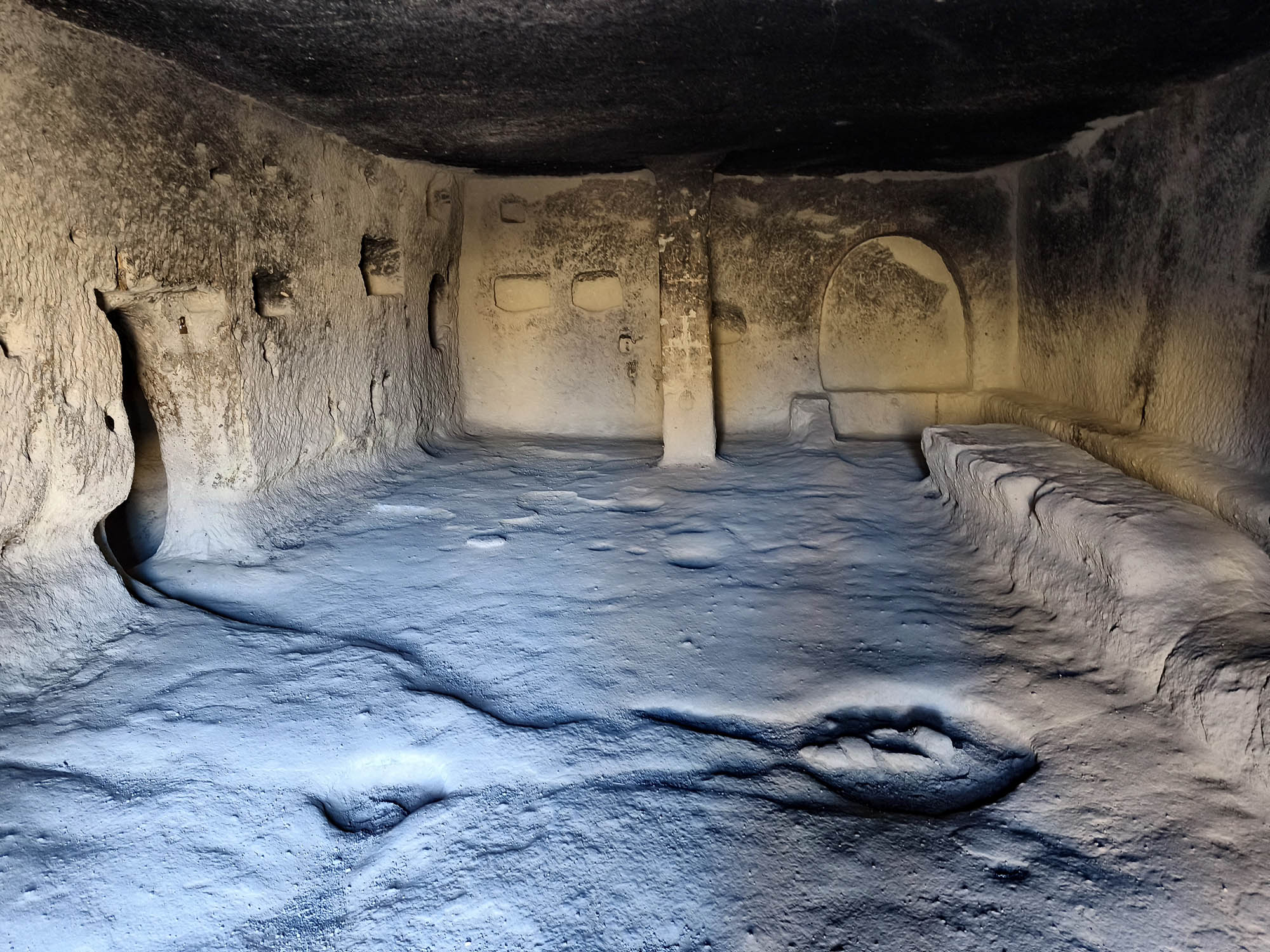
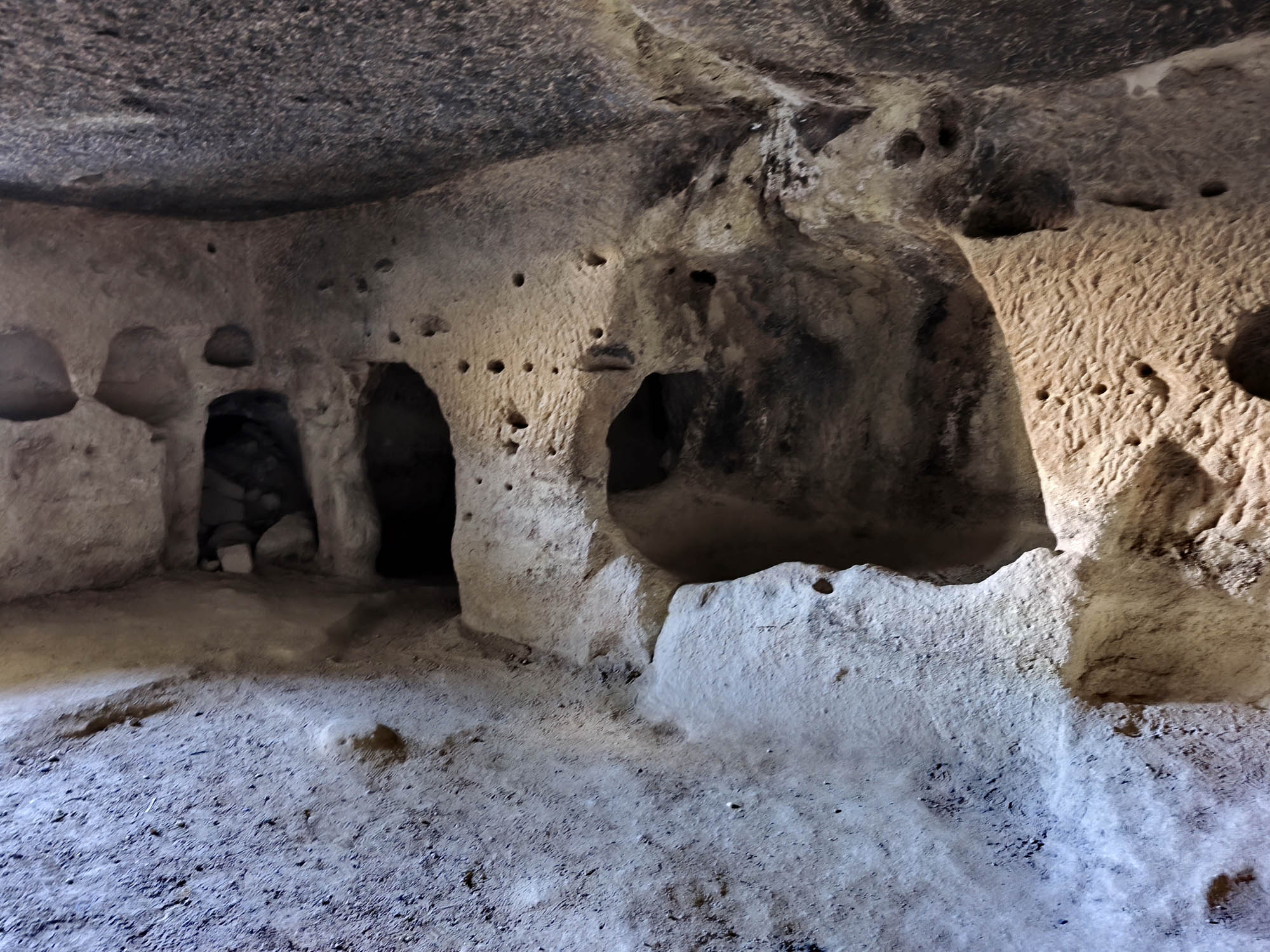
The monks gathered twice daily for communal meals, which were also liturgical events and occasions to strengthen community bonds. They commemorated deceased members at these meals, on the 40th day after death and on anniversaries, reading their names aloud at subsequent meals. Readings from the Bible, Saint Basil, or the lives of the saints were included because, as the saying went: “The trapeza without the Word of God is like a stable.” And if you look closely, it really is.
 The spiritual prototype of the monastic meal: the Last Supper, as depicted in the late 11th-century fresco of the Dark Church. Here the participants eat fish instead of the lamb mentioned in the Bible, since Maundy Thursday still falls within the fast.
|
☞ Next church |



Add comment