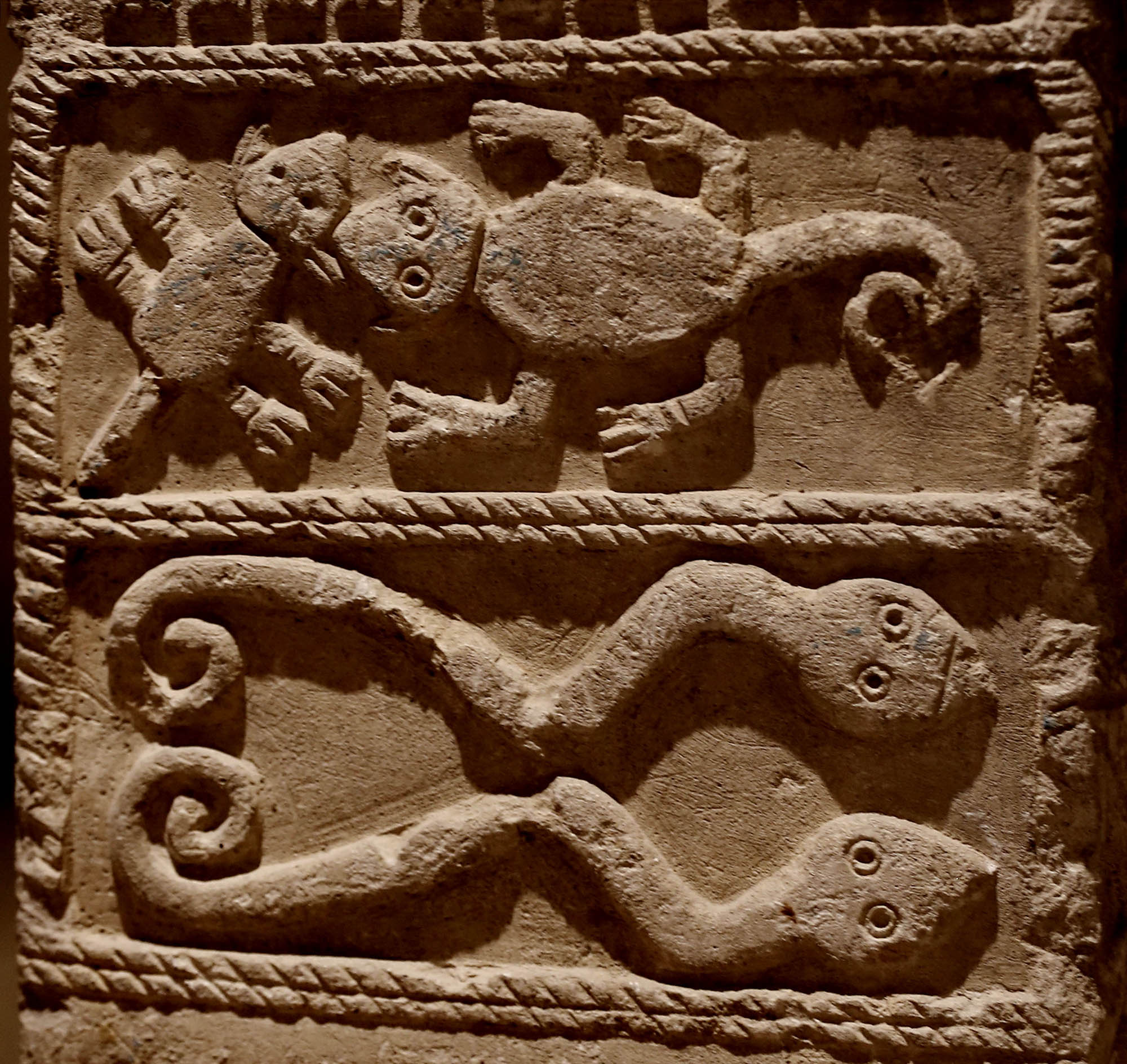


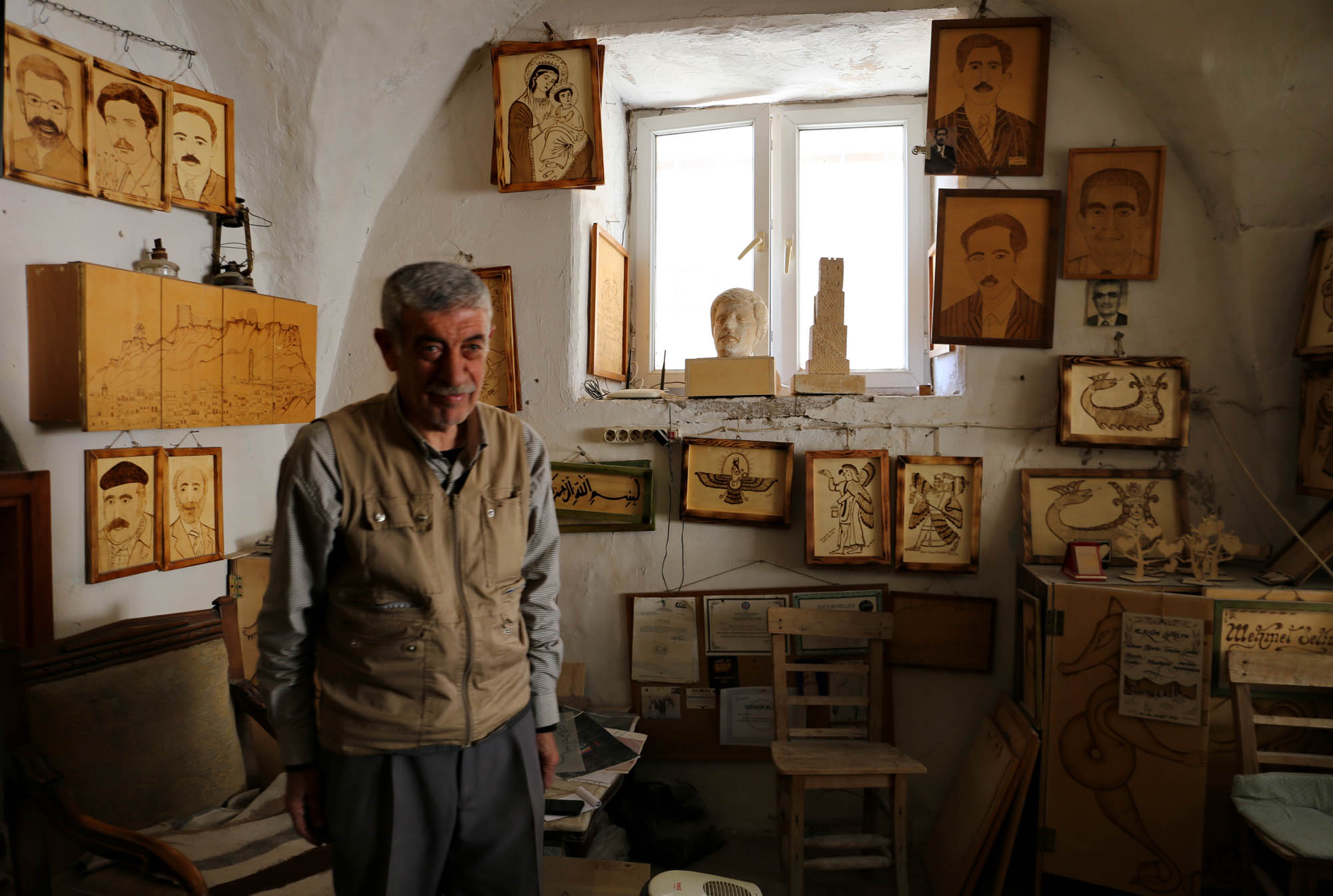
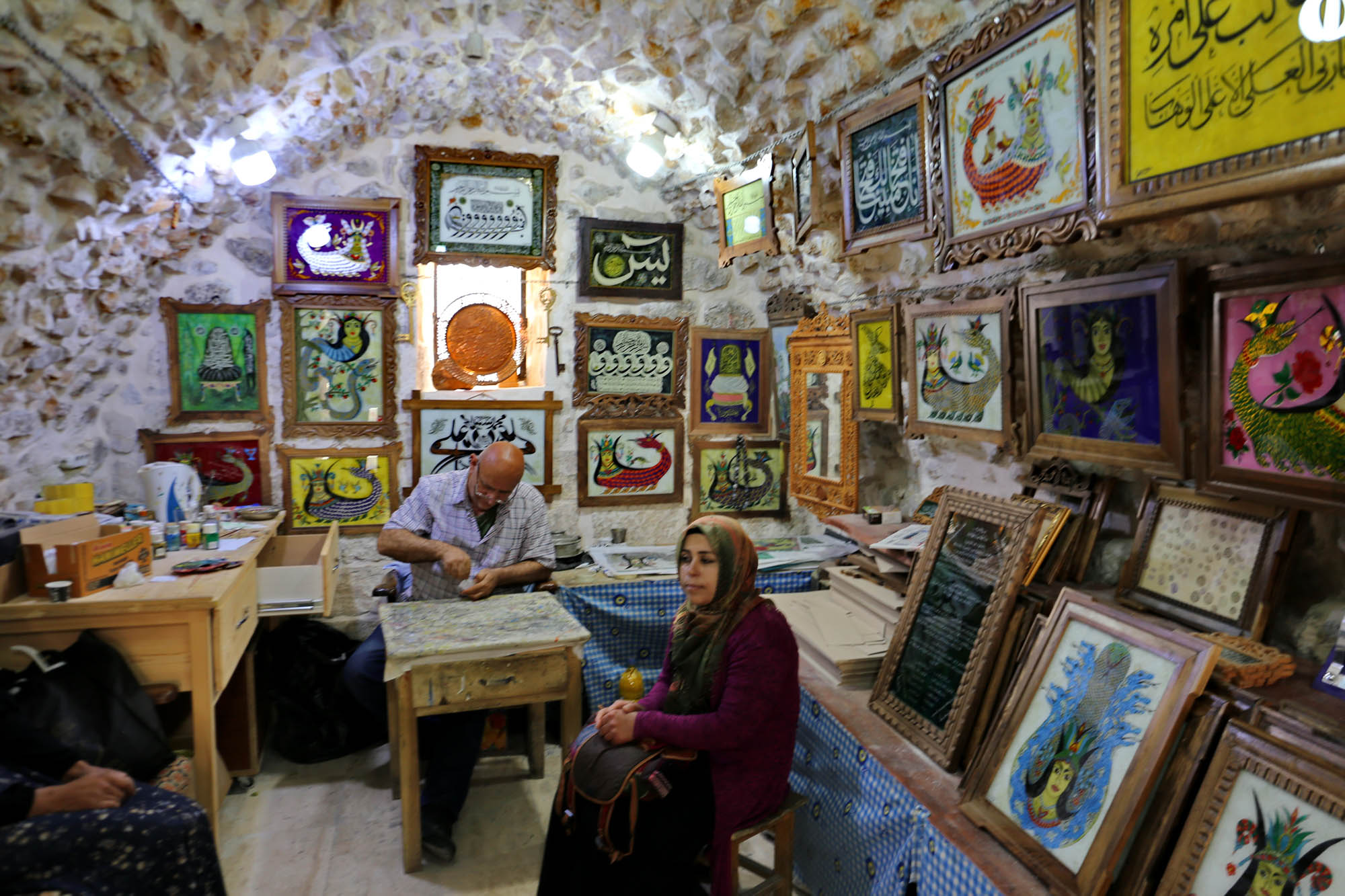
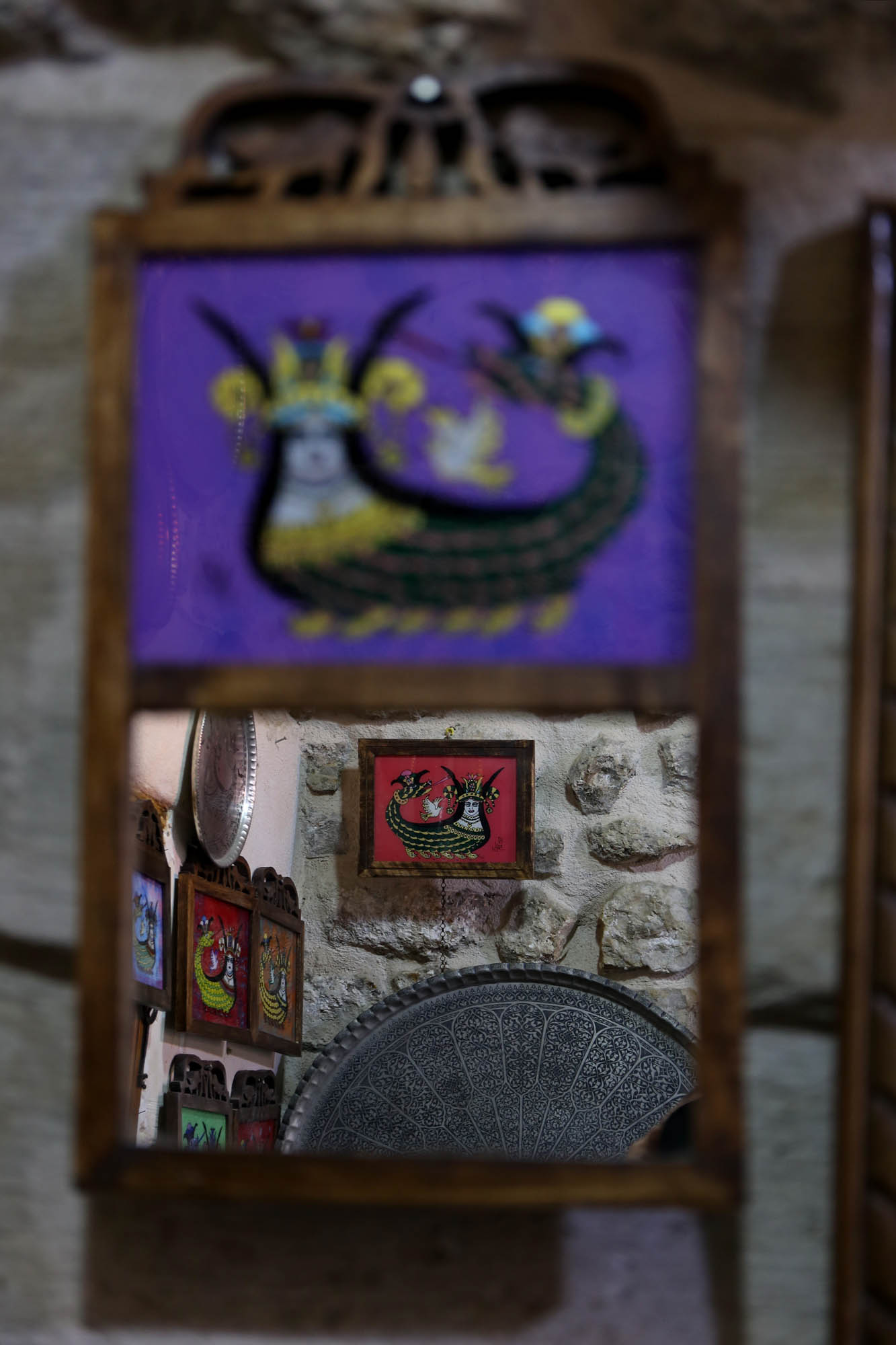
The next morning, I started working in the workshop. There were a few small workbenches: threads, paints, spindles, frames, canvases, glass, and sticks. I learned to mix paint, wind thread, set up the embroidery frame, and a few other minor tasks. But what I really wanted was to learn how to draw. The master noticed my impatience and quietly smiled at my eagerness.
On the third day, he seated me next to him.
– “It’s hard to draw something whose story you don’t know, don’t understand, and can’t even grasp, Ilyas,” he said.
– “One should not touch what one does not know.”
– “If you do, you must also take responsibility for understanding it.”
– “Taking responsibility for understanding is hard, Ilyas.”
– “Knowledge frightens a person, fills them with fear. Knowledge is a little bit of a curse too…”
– “I will tell you the story of Şahmeran.”
– “Now start drawing!”
– “If you allow, master, I would rather you tell me first and then I would draw,” I said.
– “No,” he replied. – “If I did, you might not be able to draw at all. And if you understood everything at once, then certainly not. At the beginning, you don’t need to know too much. Knowledge has its own time. Over your life, you’ll feel what you lack. Knowledge whose absence you don’t feel adds nothing. When the moment comes that you can no longer give up drawing—then, yes, then you will accept knowing it all.”
Of course, I didn’t understand everything he said. But I felt it. I reached my own conclusions by feeling my way, and tried to follow every instruction precisely.
The master continued:
– “First, look at the empty white space in front of you as if you were gazing into cloudy water. Just like the clouds form shapes before your eyes when you look at the sky—mountains, birds, humans—look at this white emptiness the same way: like a drifting cloud. Summon a Şahmeran figure before you and try to draw it with charcoal. It will resemble those drawn before you—don’t be afraid. This is an unavoidable path, a path you must walk. A station that cannot be skipped. It will be primitive, childlike, resembling previous drawings, yet it must be yours. Among the lines seen and borrowed from others, your own line must also appear—even if it trembles, even if it’s weak. It must say: ‘Look, here I am!’ It must speak so it can have a continuation.”
– “Where should I start, master?” I asked.
He smiled. The barely noticeable wrinkles on his face gathered the light, white serenity that always shimmered there.
– “Ah, I almost forgot,” he said. – “You usually start with this question: where do I begin the work?” As if recalling himself and all his students. – “Start anywhere, just make sure it can continue,” he said. – “Or start in a way that allows you to continue.”
On the first day, I drew a few Şahmerans with charcoal on paper. I showed them to the master. He looked at them and smiled.
– “None of these look alike,” he said.
So I drew a few more and showed them again.
– “Now they all look the same,” he said.
I didn’t understand what the master meant, didn’t know how to please him, and thought hard about it. I must have furrowed my brow, because he said:
– “Don’t make that face. You’re on the right path. A person is always drawing the same thing, yet none of the drawings look alike. They shouldn’t. But to get here, a long path lies ahead. You are still very young. You must walk this path with patience: enduring, without tiring, without boredom, facing every difficulty, without betraying yourself or your work. This is what a Şahmeran artist must learn most: not to reveal. That is what we need the most.”
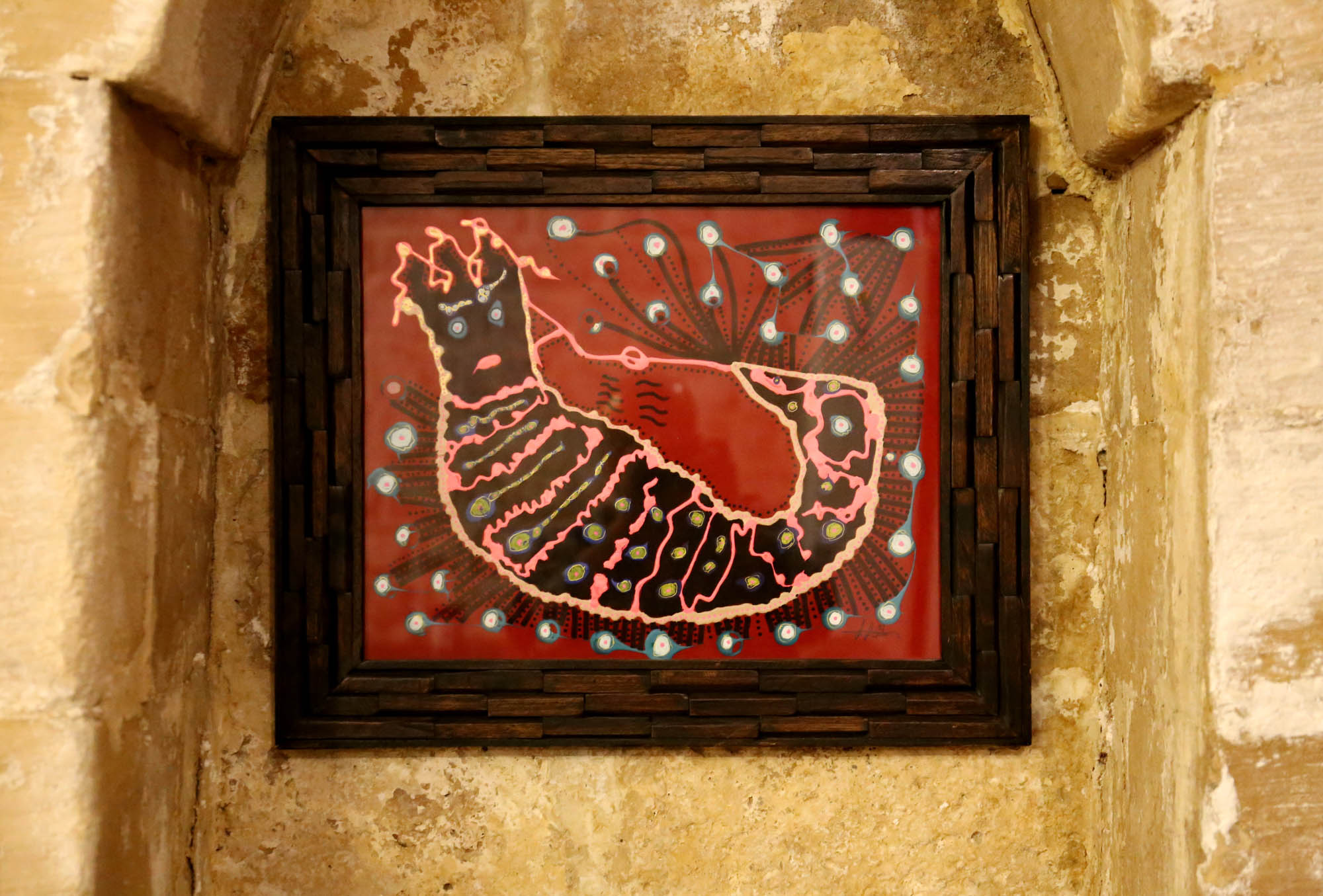
I drew a huge Şahmeran.
Perhaps I thought that if it was big enough, it would contain everything.
The master seemed to read my mind: he looked at me smiling and gently stroked my hair. I felt his fingers sliding softly through my strands. It was as if I were being stroked for the first time.
I thought that I wouldn’t be embarrassed to be an apprentice under a Şahmeran master; and that if I ever saw an old friend in the market, holding their mother’s or father’s hand, I could look them in the eye and smile.
I thought, I love this work.
And now, writing all this down, I don’t feel that I have betrayed my master at all.
I still believe that what I do is truly Şahmeran-making.
2.
I pulled a small stool over and sat beside his knees.
The master said:
– “Let’s think for a moment: what exactly is Şahmeran? Who is she?
For centuries, what has her majestic figure been telling, traveling from the mud-walled coffeehouses of villages to the cafés of provincial towns? What does that Şahmeran say to people, appearing embroidered on pillowcases and bedspreads?
Think about it: how many Şahmeran-makers live on these lands? Every year, hundreds of them draw her images, craft the panels, and sell them. And those who buy them and hang them on their walls—what do they see? What memory do their walls keep alive?
What is the poison hidden in Şahmeran’s story? This poison has been spreading like a fairy tale from mouth to mouth for a thousand years. The friendship—or perhaps the enmity—between snake and human goes way back, all the way to the story of the apple.
In this tale, the snake is noble, and the human is the traitor.
Here’s what Şahmeran said to Camsap:
‘I told you, Camsap, humans betray.’
Let’s start from the beginning;
so we can return again and again to the truth over which Şahmeran slides on her forty feet:
Long ago—or in a time whose date we either don’t know or don’t want to know—there lived a wise man named Danyal. He wasn’t satisfied with what he was given: he always sought more, dug beneath the surface. He didn’t limit himself to what he knew; he wasn’t content with daily work; the visible—or seemingly visible—side of life wasn’t enough for him. He always hungered for something deeper, a hidden truth he believed lay somewhere beneath.
Knowledge and learning were his passion. He devoted his life (and death) to becoming a scholar, a sage. Others found him hard to understand. But Danyal had long accepted this solitude. After all, if you choose knowledge, must you not also accept loneliness and rejection?
For many years he worked in various fields, from medicine to philosophy, reaching unique insights and forming unusual thoughts. On one hand, he conducted research ahead of his time; on the other, he pursued topics that have fascinated scholars across all eras. For example, he sought the secret of immortality—the path to eternal youth, to endless vitality.
Everything hides in the bosom of nature. But how much do we truly know of what nature gives us? Of all the things we see and touch—do we really understand them? Do we know what lies at their core?
He made potent ointments from healing herbs; they healed the deepest wounds and eased the sharpest pains. And when he saw these little miracles, he believed that one day he might reach immortality too.
Yet Danyal didn’t have enough time. His life wasn’t long enough to reach immortality.
Knowledge, learning, research—they have no end—but human life does. When he was near death, he called his wife to him.
By his bedside lay a black book, into which he had written everything he had learned. He had condensed his entire life onto these pages, locking a lifetime into a single notebook. When his wife came to him, he handed her the book. Now she held his whole life in her hands.
He said:
– “I didn’t go far enough; let my son continue where I left off.
– My life was not enough; where mine ends, let my son pick up.
– Human life is short. What we learn, what we know, what we acquire only matters if it continues with others, in others’ lives. Otherwise, everything returns to the earth with us. I entrust this book to my son, and my son to this book.”
He placed the book in his wife’s hands—entrusting her with his life.
Then he closed his eyes, never to open them again.
Danyal’s son was still very small.
Danyal died.
And only his son remained.
His son was mischievous, playful, and curious about the world… He grew up fast. The time came when his mother sent Camsap to school. But Camsap was stubborn and playful. He wouldn’t study. His mother’s every thought was the black book lying at the bottom of the box; Camsap had to learn the alphabet, learn to read, so that when the time came, his mother could place the black book in his hands, and he could continue where his father left off—fulfilling his father’s final wish.
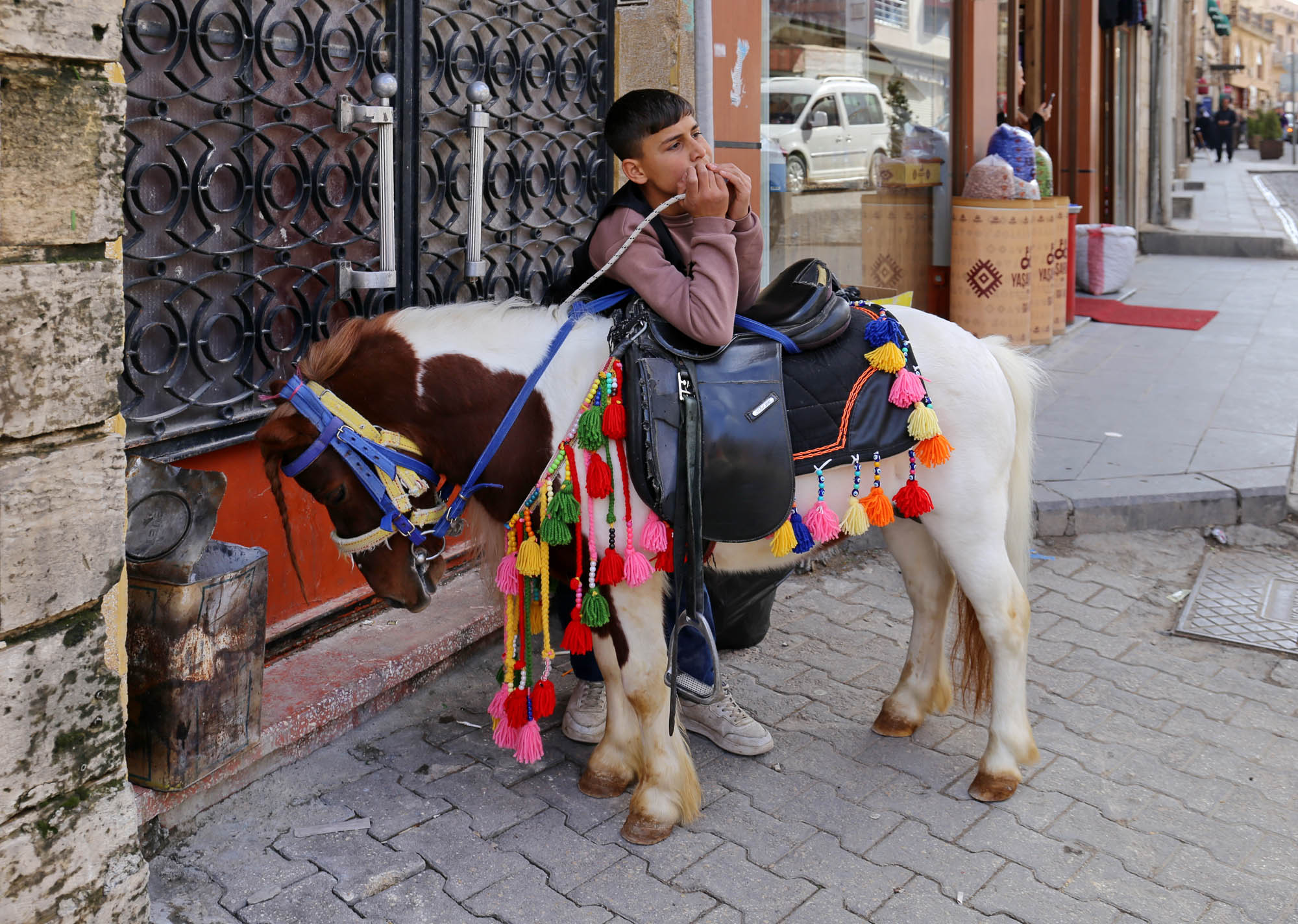
As Camsap went to school—or didn’t, as he often avoided it—avoiding the school, the house, and life itself, spending his days in trees, along streams, by rivers, and in dark corners of the forest, he realized it was all just a dream. Over time, he slowly forgot the black book lying alone at the bottom of the box. He had to forget. Seeing no other way, his mother took him out of school and set him to work. She gave him a donkey, sent him to the forest; with his friends, he began chopping wood. Axes on their backs, whistling in their mouths, they went into the woods every day, cut trees, and earned their family’s living.
Over time, his mother got used to her son. Camsap wasn’t what Danyal had imagined—or dreamed—him to be. If he could have lived his own life, maybe he would have been, or maybe not, but by then, it was pointless for anyone to ponder. Sons do not follow their fathers. Fathers must give up seeing their sons as apprentices standing in their place. A boy is not an apprentice; a boy is a boy.
Camsap was Camsap. There was no choice but to accept him as he was. He became a full-fledged person, with his own destiny.
The days he spent with his friends were joyful and carefree. They turned work into play. For them, chopping wood was nothing more than a cheerful adventure. They were still very young, not facing life’s fundamental problems; they didn’t know what choice, responsibility, or real pain meant—they simply lived, believing life would always go on like this. The fire of youth blinded them. They lacked basic knowledge about the world and life; they didn’t even truly know themselves or other people. They hadn’t measured their strength, tested their limits, or challenged themselves or others. Life was an entirely free adventure to them, and they lived it that way—healthy, strong, lively, cheerful, and full of zest. Betrayal was still unknown to them.
One day, they climbed to the top of the forest, to the steep cliffs, and began attacking the huge, sun-dried, ancient trees. Their eyes were shrouded in a haze of desire. Each wanted to wipe out these giant trees so that no other woodcutter would have anything left. Probably, they thought they could take on the entire forest. Passion knows no limits; a person must teach their passion moderation, because only then can they face it.
When they reached the base of the cliff peaks, clouds heavy with rain surrounded them, followed by an unstoppable storm. Camsap spotted a small cave, hidden among dense plants and dark branches. He entered the cave, and his friends followed. They waited there for hours, as the downpour showed no sign of stopping, and Camsap scratched at the ground with a stick until he finally reached a marble surface. He cleared it and saw a marble cover. Together they lifted it, revealing a massive beehive.
From that moment, the beehive became their shared treasure. They abandoned woodcutting and took up beekeeping. Once again, they mounted their donkeys, climbed to the forest’s high peaks, entered the cave, lifted the marble, and sold the honey measured from the full boxes in the market.
This beehive became their secret. They vowed never to speak of it and to guard it until their deaths.
Days and weeks passed; suddenly, at the bottom of the endless well, the bottomless cavity began to appear. Above the emptied boxes, the mist of the tale now swirled…
Who left Camsap at the bottom of the cave? Legends say his friends did, hoping to claim his share. But that’s hard to believe: the last few boxes wouldn’t have made anyone rich. And if you count the number of friends—rarely mentioned in stories, but since they speak of “friends,” there could have been quite a few—it still wouldn’t justify taking Camsap’s share.
So why did they do it? Let’s think…
Following the story: first, let’s assume that since Joseph’s time—or even earlier—humans have been prone to betray those cast into the well.
Then let’s assume these kids had reached the age of betrayal. Growing, guarding, and protecting a shared secret is difficult. Let’s assume they buried everything in the well—together with Camsap, the secret’s discoverer—so that the secret would be forgotten forever. After all, betrayal is human nature.
Once Camsap realized that his fate had been left in this circular well, he spent hopeless hours. Every hour of waiting is already hopeless, isn’t it? Then he realized he had no choice but to embrace his fate. He discovered that the well he found was actually a tomb for him, though he could only understand this over time. To escape, he needed a test. It was better to act than wait idly. He began looking around, seeking a way out. For some reason, he recalled the joy he felt when discovering the well on the first day. It was as if this current captivity was the revenge of past joy. Or perhaps every joy eventually strikes back. He started scratching the earth, clawing at the walls of the well. He had to get out of this tomb at any cost—even if it meant entering another tomb—but he had to escape.
How long this long, exhausting struggle lasted, he did not know. After a while, he lost all sense of time and space. Only later did he notice a tiny speck of light on one wall. At first, he thought it was a disappointment, an illusion; then he looked from another angle—no, he wasn’t mistaken. It was light. He started scratching around the light. As the cleared area grew, so did Camsap’s hope of escape. Finally, he managed to make a hole large enough to push his head through, then his body. This was his first victory.
Ahead of him stretched a long, spacious garden, endless. A fairy-tale land. Or a country of tales. From the very first moment, he felt the garden’s magic had escaped from a storybook. He squeezed through the hole and stepped onto another land. A different timeline, a different climate of space began.
Where he stepped was the land of Şahmeran. But he would only understand this later. For now, he simply experienced the magic of the discovered place, the tingling thrill of revived hope. The garden spread before his eyes like a blindfold being lifted—growing wider and wider.
Here the master paused the tale.
“That’s enough for today,” he said. “Tomorrow we’ll continue where we left off.”
I didn’t say a word.
That night, in my bed, I dreamed of Şahmeran’s land. I fell asleep…
I watch my master’s hands.
How he holds the pencil, draws the lines, the dexterity of his fingers.
His hands flow across the desk like water, or flap like wings, like a pigeon. The lines, the colors seem to glide under his hand and pencil. When I watch his hands, my own tremble; my little hands feel weak, fragile, insignificant. Tiny, thin, inconsequential… I loved my master, but I envied the way his hands moved across the desk like wingbeats. I was at once frustrated, jealous, and admiring.
My master said, “Between master and student, everything must be discussed—everything. Nothing may remain unspoken. That is the master-student tradition.”
I hesitated to speak my feelings. I was ashamed of feeling this way toward my master. At the same time, I couldn’t control my emotions. I thought long and hard, but in the end decided not to speak—for now. I postponed it. I thought: as I advance, I too will become skillful; my hand will move across the desk as fast as his. Then I will no longer be angry, no longer jealous.
We will be equals, and when we are equals, I will love him more easily, without anger or jealousy…
That’s what I thought.
As I advance…