

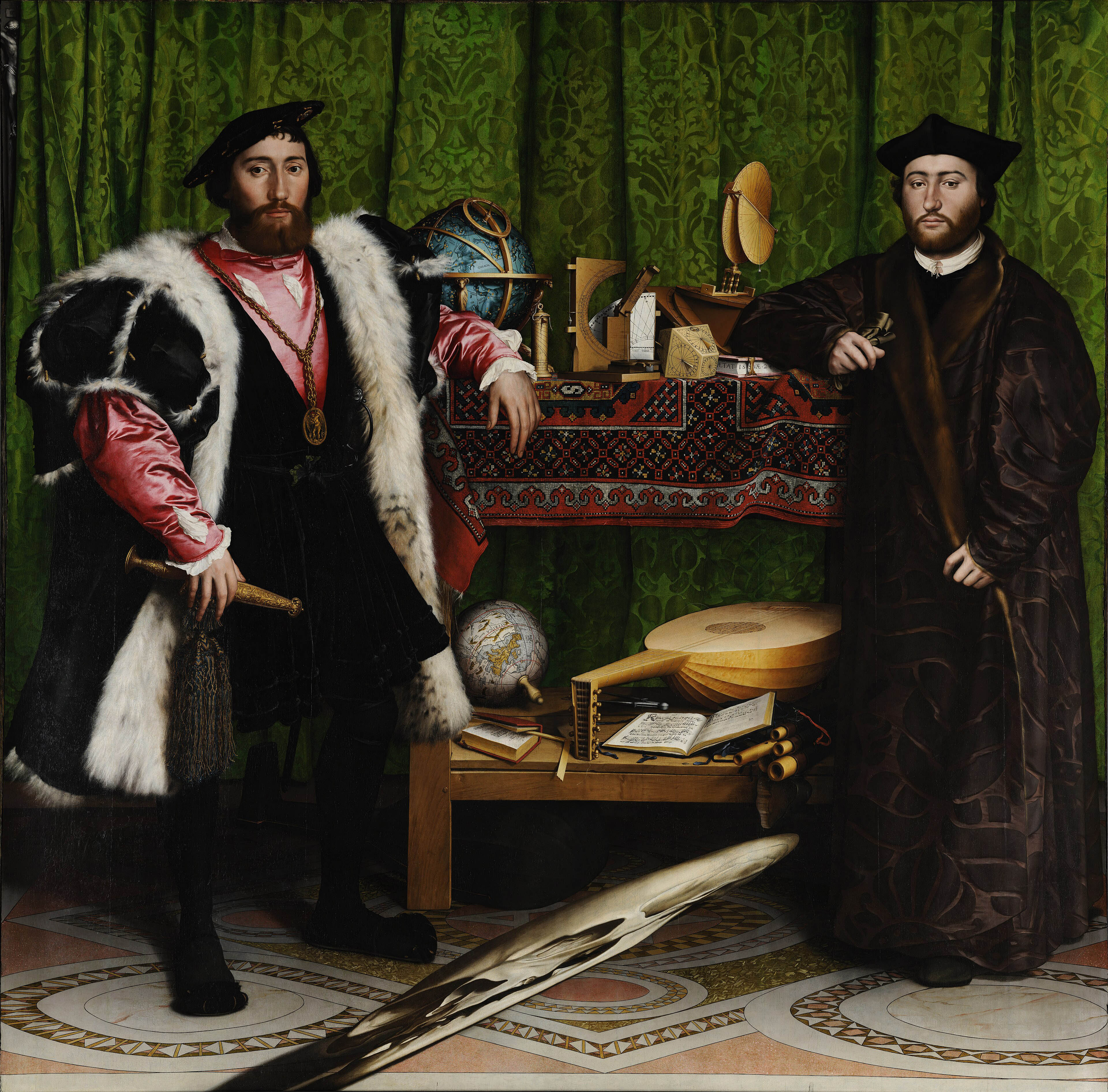
Holbein’s 1533 Ambassadors is probably the most famous example of anamorphosis. This trick of perspective shows an object from such an odd angle that it only becomes recognizable from exactly the right viewpoint. The blurred, stretched shape floating in front of the ambassadors turns into a skull only when seen sharply from the side. That’s why most scholars think the painting originally hung in a staircase: as visitors climbed up, they first encountered the skull hovering against the slanted background, and only when they reached the front of the painting did the ambassadors reveal themselves.
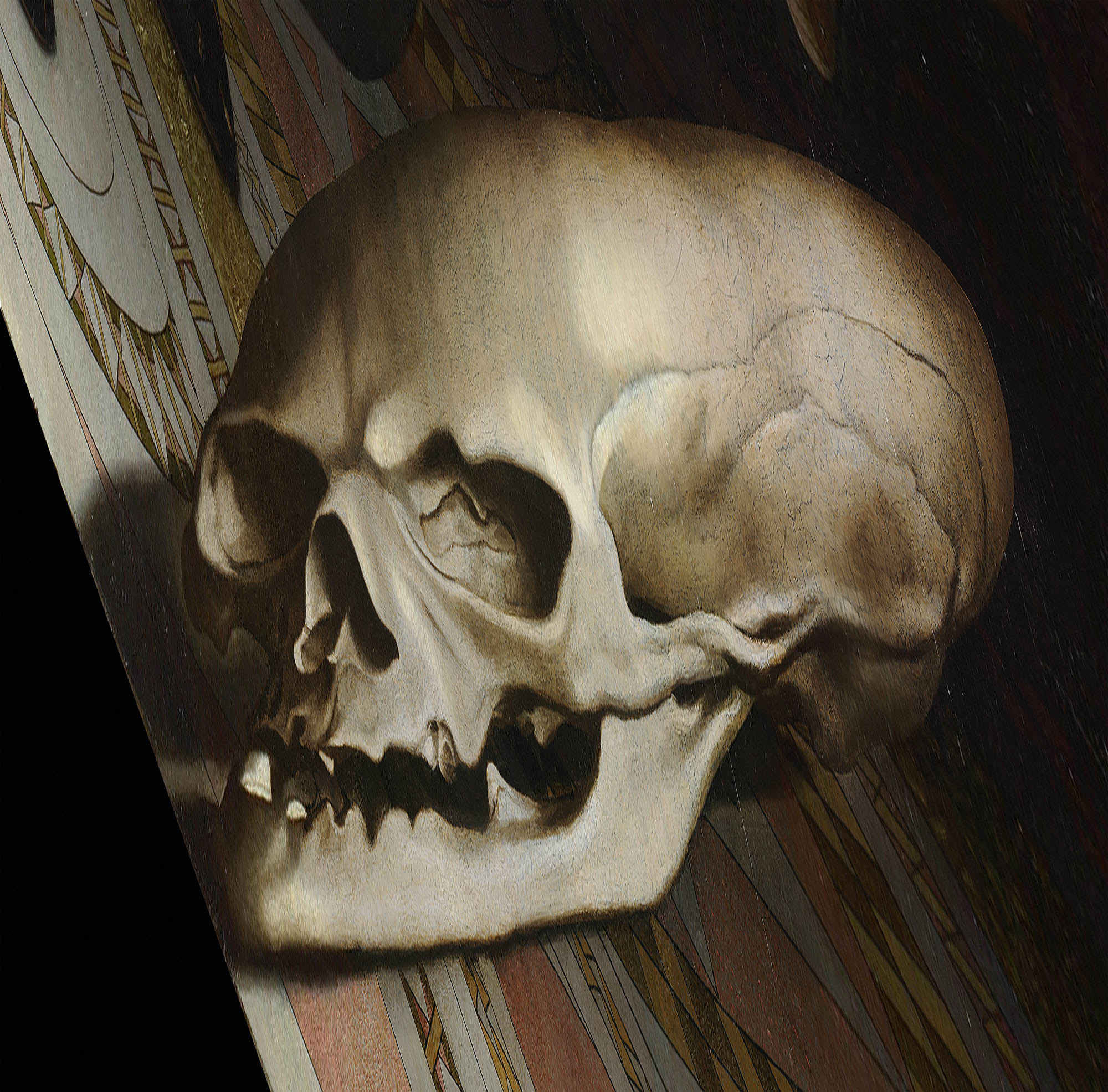 The skull seen from the right angle
Something very similar awaits visitors at Terminal 2B of Ferihegy Airport (officially Budapest Liszt Ferenc Airport). At first, you see what looks like a small exhibition of musical instruments. If you think anything at all, you probably assume it’s some kind of tribute to the airport’s namesake, the great pianist Franz Liszt—while also wondering why, of all things, there’s no piano. But as you walk further and reach the front, the mystery solves itself: from that precise viewpoint, the instruments suddenly assemble into the portrait of the great musician himself.
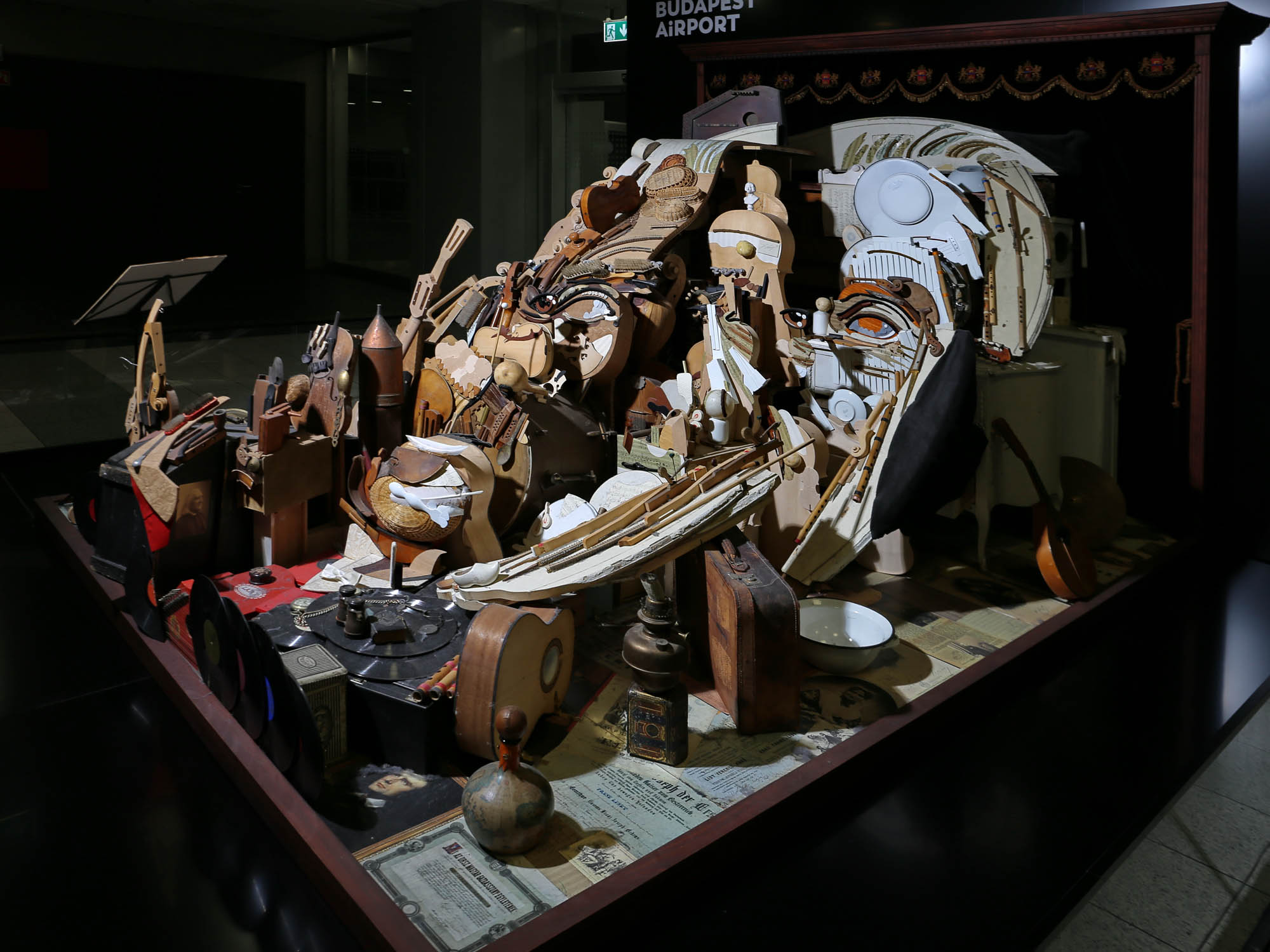
The installation was created for Ferihegy’s 75th anniversary, on December 19, 2025, by Czech anamorphic artist Patrik Proško, who has already produced many similar works from Prague to Ankara—among them a portrait of President Havel at Prague Airport, which also bears his name, as well as several others in Prague’s Illusion Art Museum. Sadly, none of this is explained next to the installation itself.
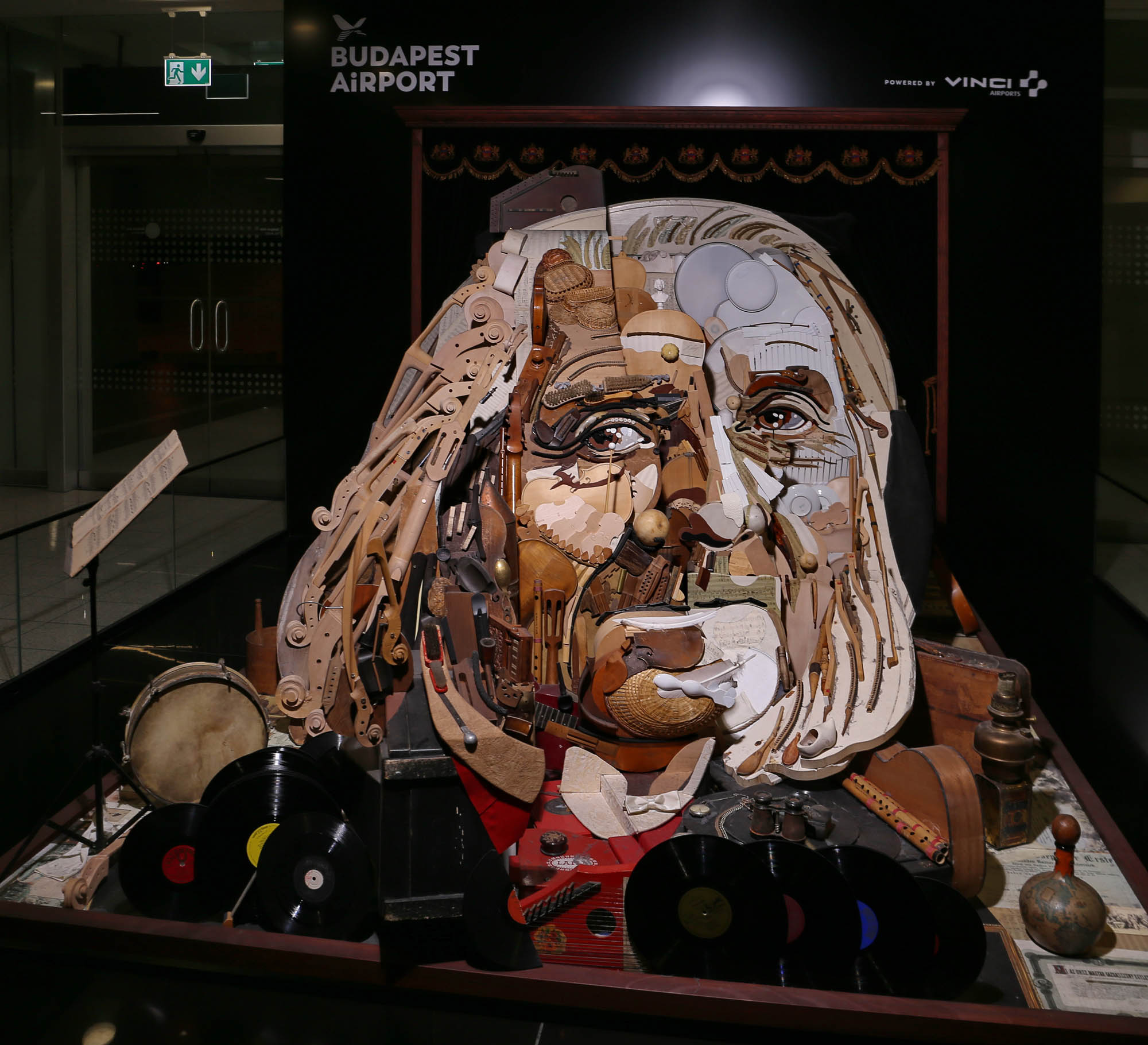
And it is a pity that they hid the installation at the passport-control gates of Terminal 2B, so only passengers flying outside Schengen ever get to see it.
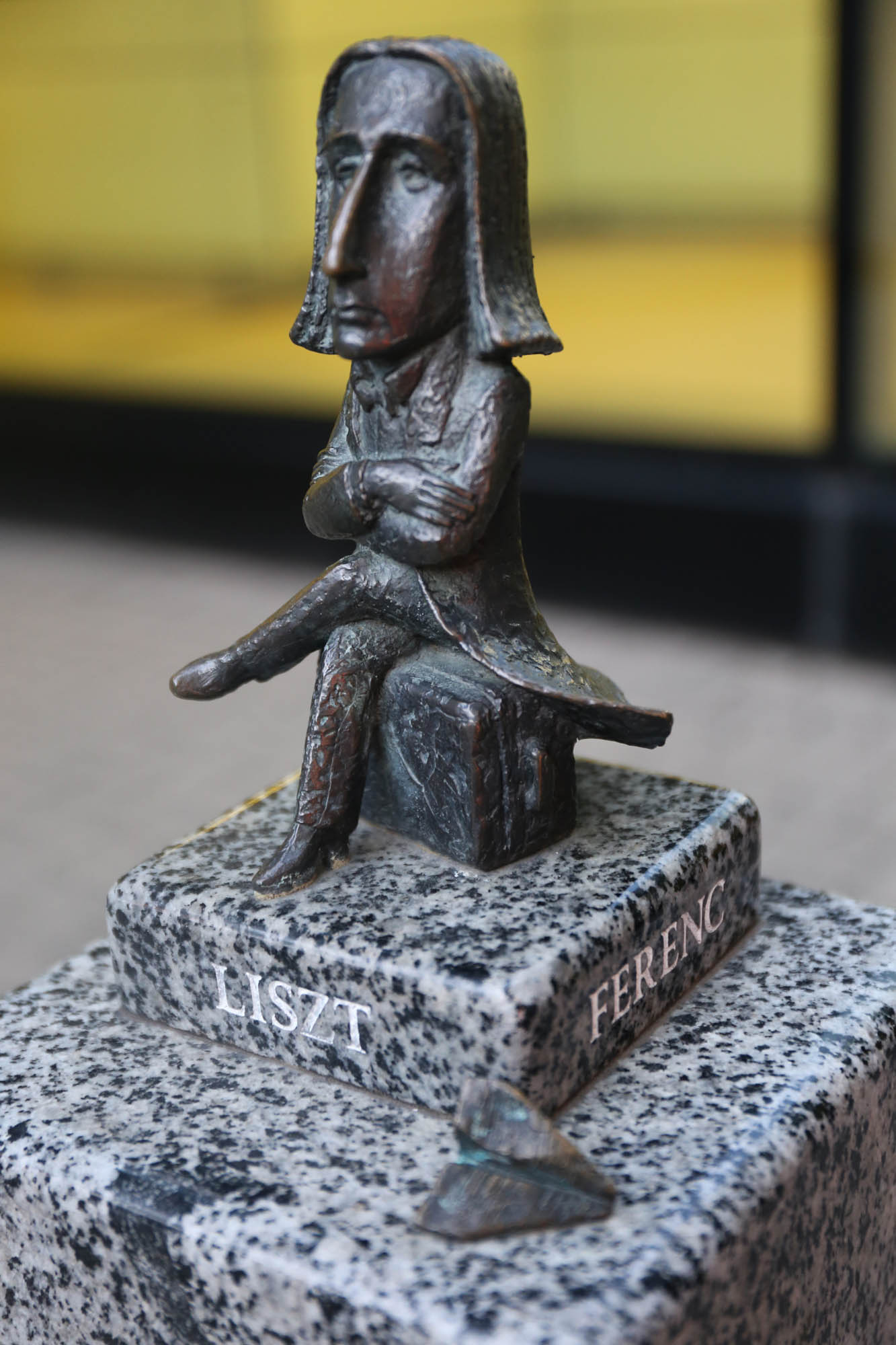
I wanted to end this post on an optimistic note: even if you’re not departing from the passport gates, you could still enjoy a personal farewell from the airport’s namesake, because since April 5, 2011, Mihály Kolodko’s tiny Liszt statue had been sitting in front of the airport entrance, ready for departure—perched on a suitcase, with a paper airplane folded from sheet music at its feet. Unfortunately, after checking Köztérkép, I discovered that the statue was removed on October 23, 2025. The airport management clearly had a sense for symbolic dates, but rather less for humor. Perhaps after the April 12 changes, that too may improve, and the little statue might return to its rightful place. Until then, a copy can still be seen in Uzhhorod, on the riverside promenade, in equally passport-controlled—and war-stricken—Ukraine, which makes it somehow even less accessible than the anamorphic Liszt hidden at Terminal 2B.



Add comment