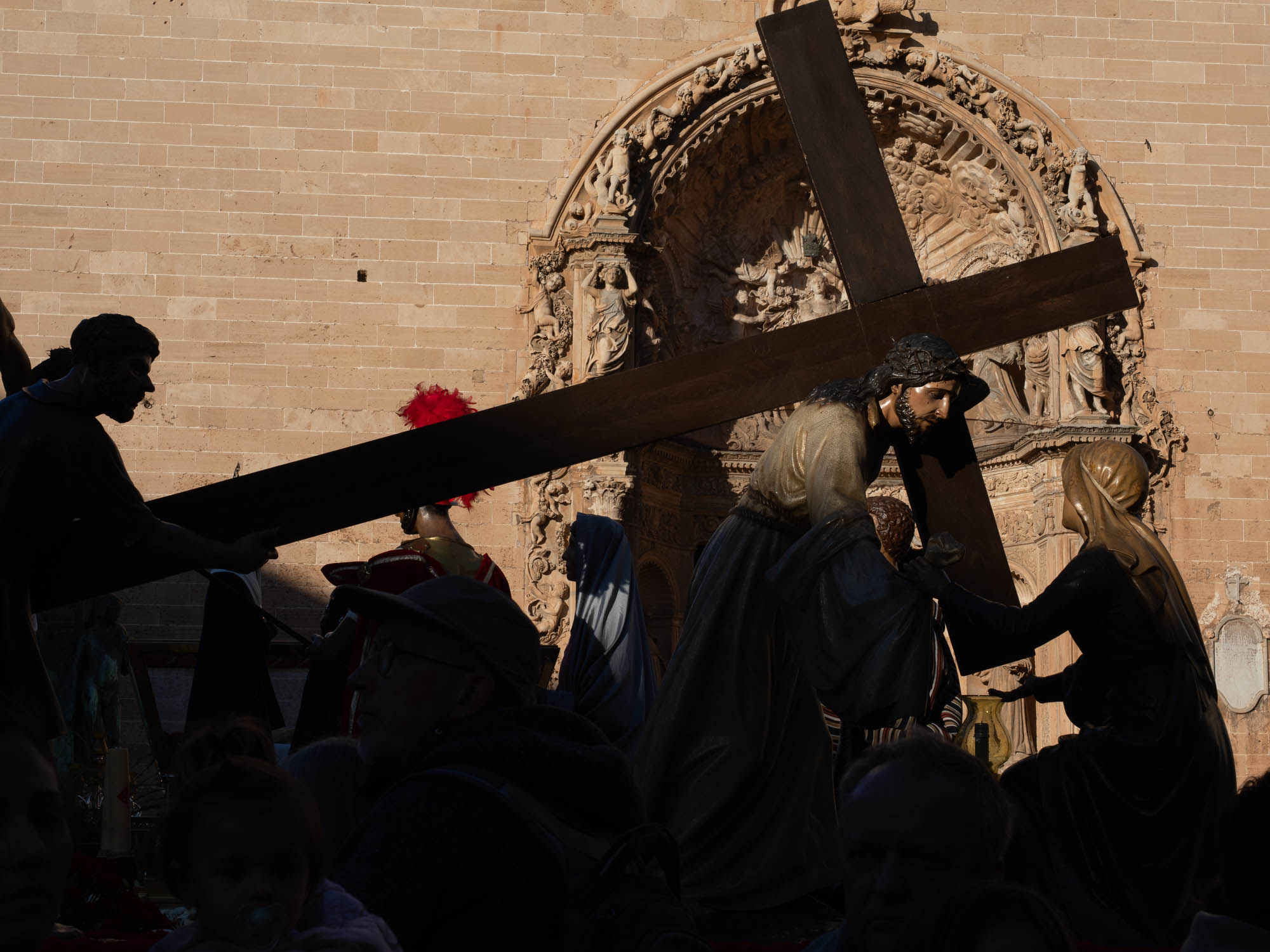
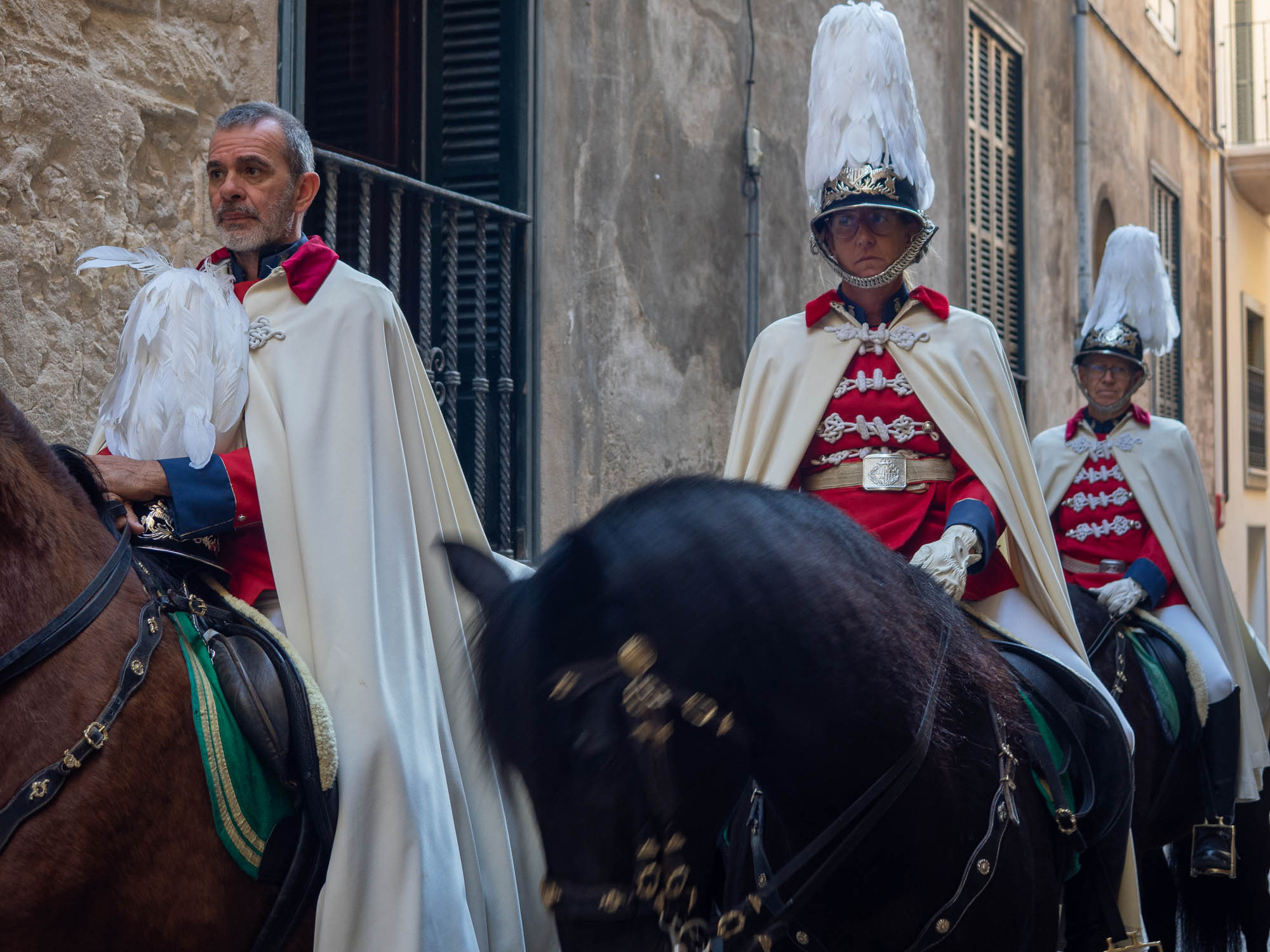
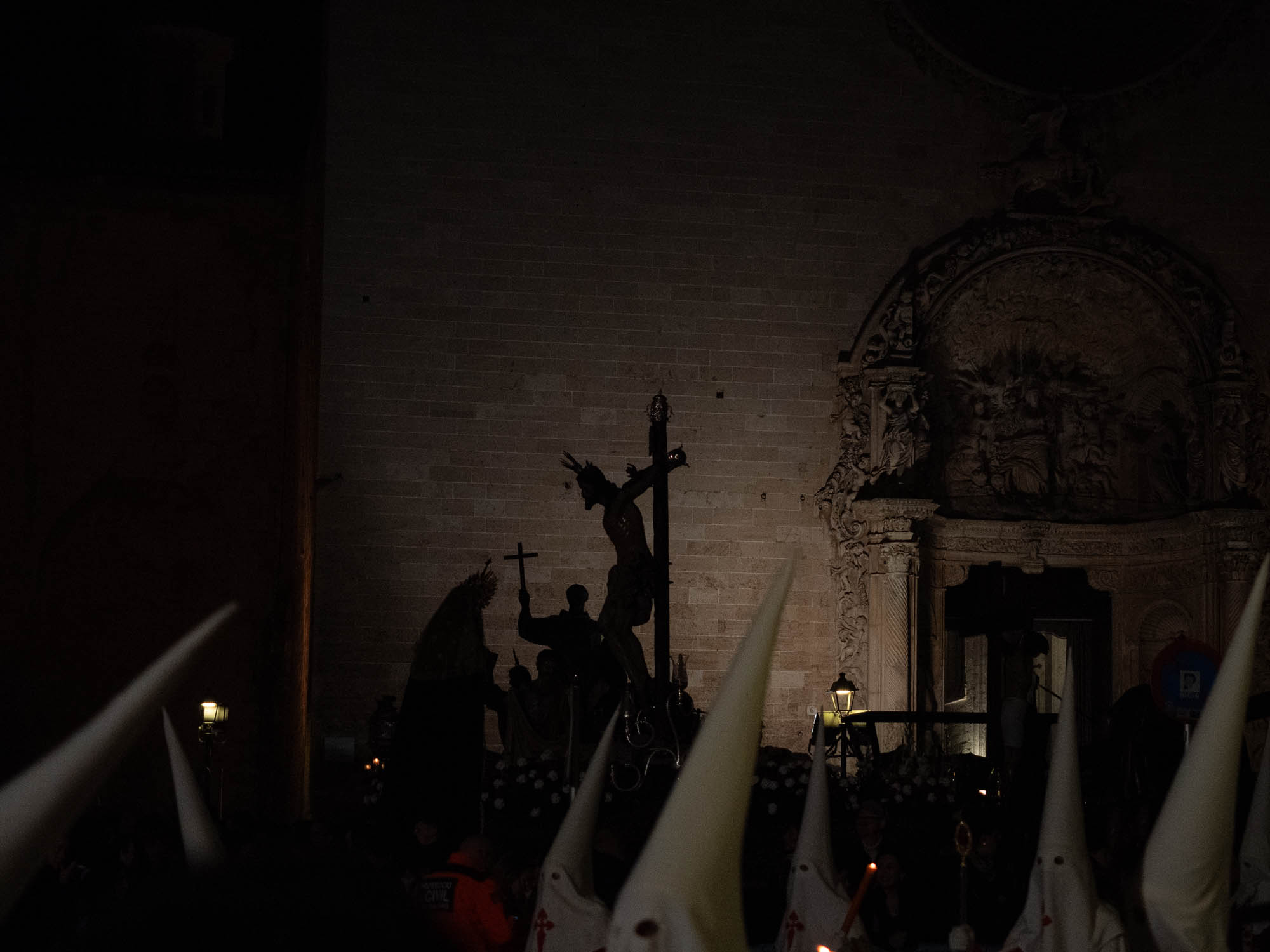
The Good Friday procession is all about silence and darkness. Church candles are snuffed out, statues are draped in black or purple cloth, the altar stands bare, and the tabernacle is empty. In Palma, the grandest procession actually happens on Maundy Thursday, mainly because it features Mallorca’s most revered statue, the Crist de la Sang, from the island’s very first religious brotherhood. Today, Maundy Thursday still draws big crowds, but back in the day it was even noisier in Palma, where the “xuetas” had a complicated segregated status, and local Christian boys relentlessly rattled wooden clappers—the “roncadores”, “maçoles”, or “carraus”—to, as they said, “scare the Jews away.” Then came the silence of Friday. By Holy Saturday, eating empanadas was allowed—more on that soon. I still remember how completely the mood shifted on Easter Sunday morning with the ringing of the bells and the booming cannon fire from San Carlos Castle.
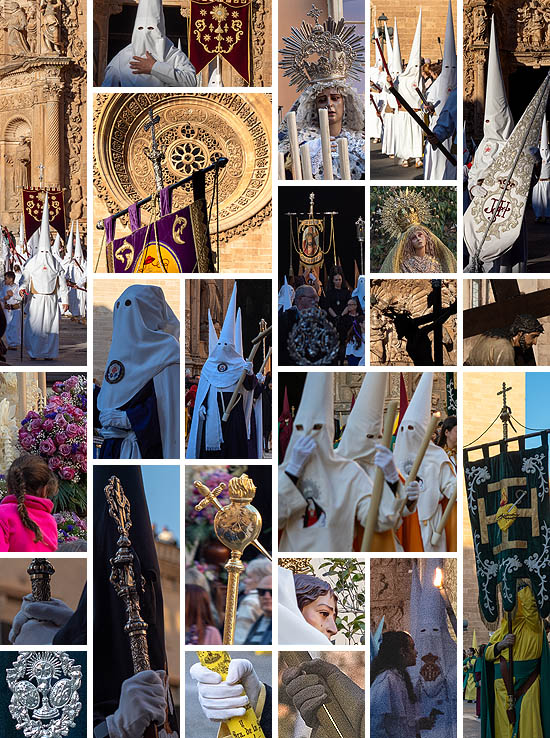
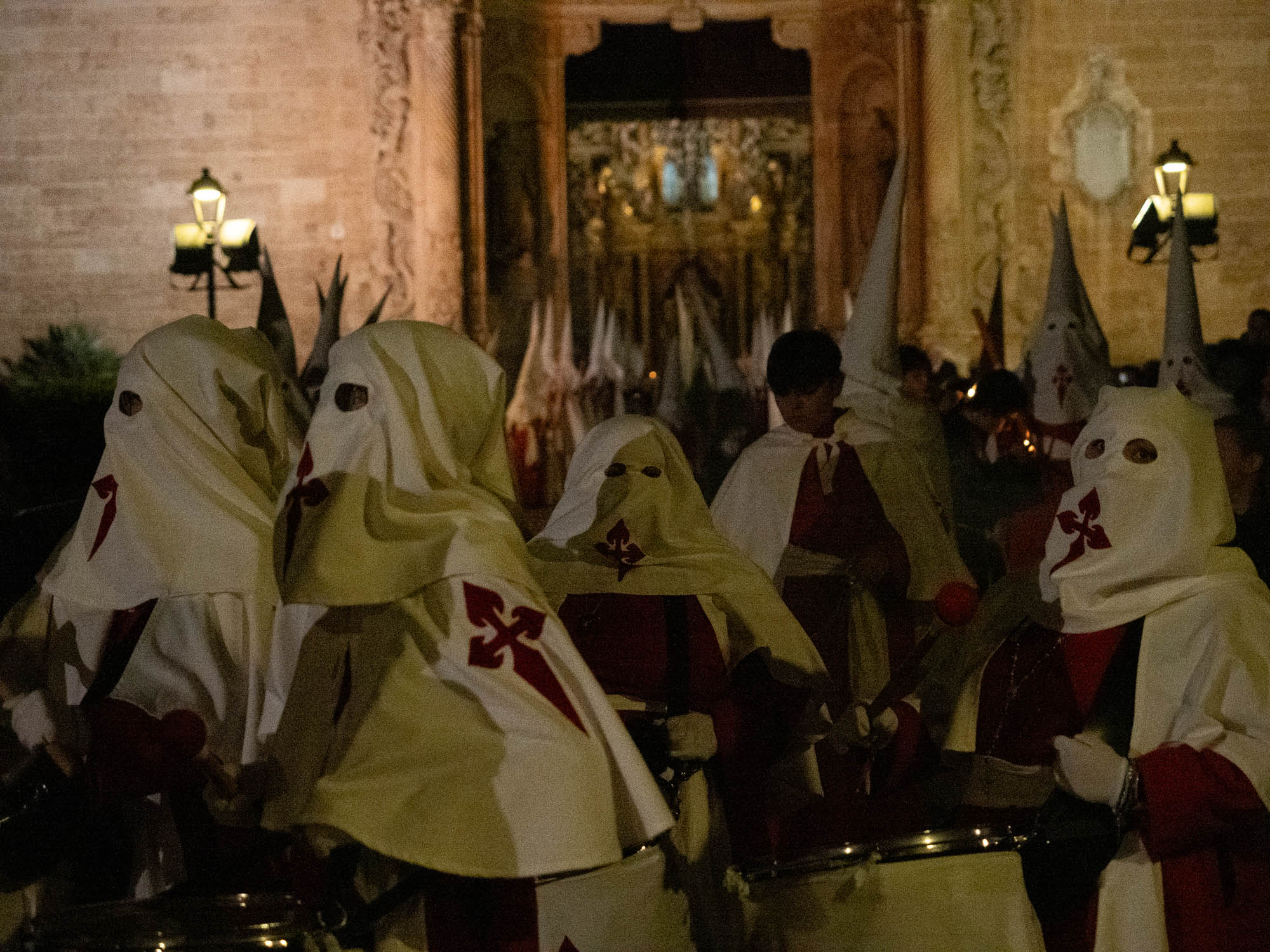
The Good Friday procession, the Processó del Sant Enterrament, is always the quietest. Today, it still follows an almost circular route from the Basilica of Sant Francesc to Plaça de Santa Eulàlia. From there, it moves through Cadena Street to Plaça de Cort, continues along Colom Street past Bosseria, Plaça d’en Coll, Galera Street, Corderia Street, Plaça de la Quartera, Esparteria Street, Plaça del Mercadal, Travessia d’en Ballester, and Socors Street, and concludes with the Sant Enterrament ceremony at the church of Nostra Senyora del Socors.
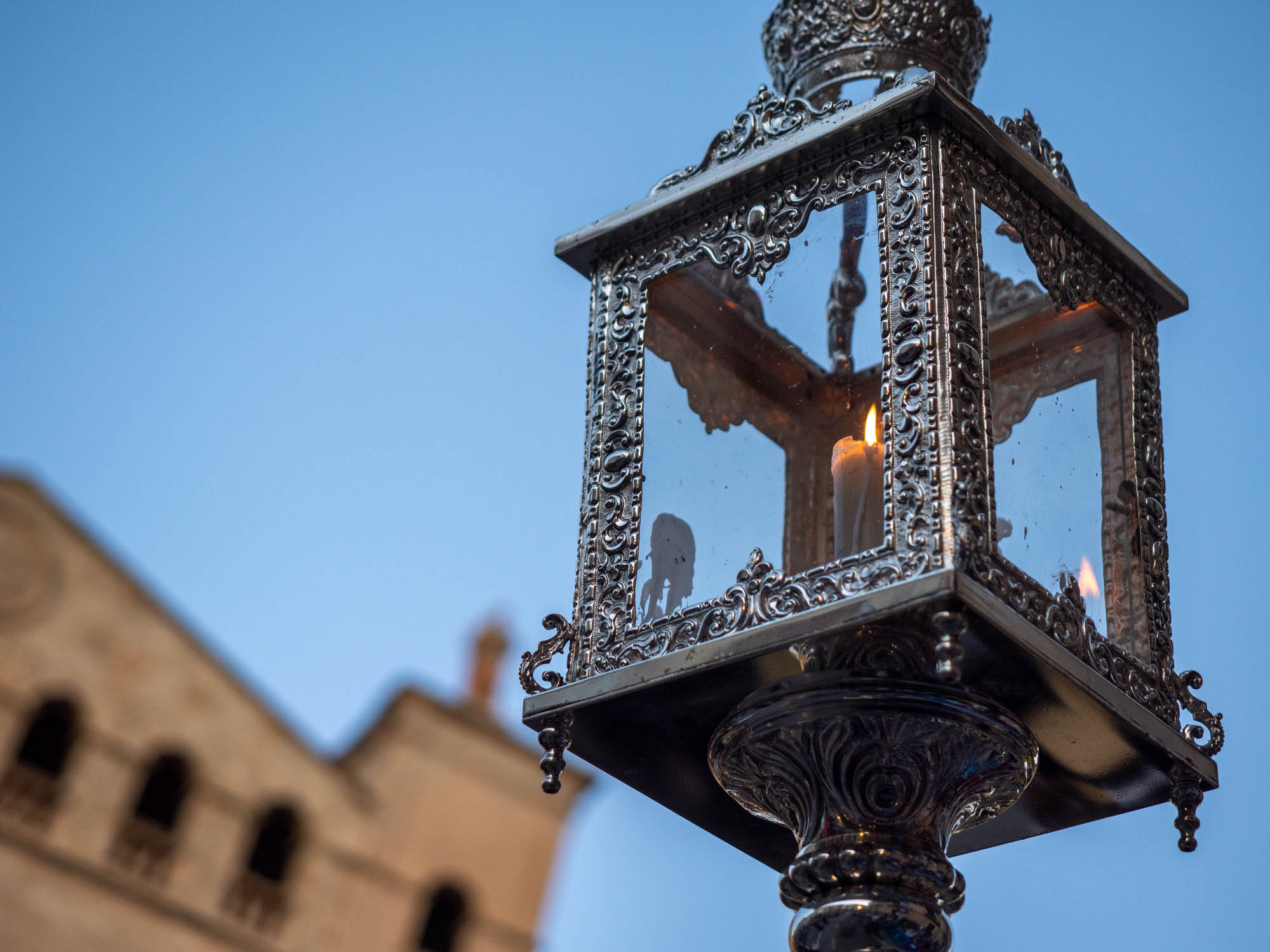
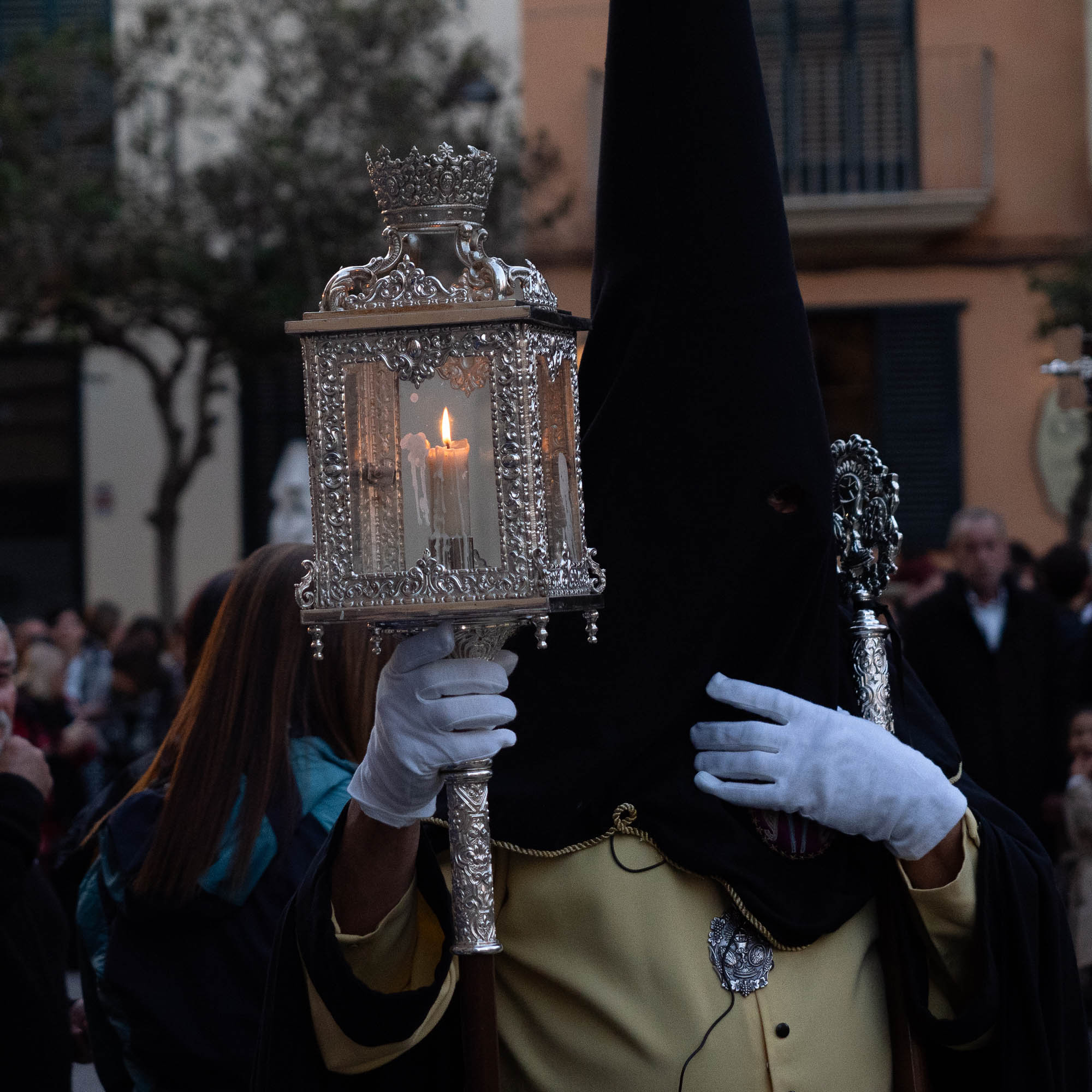
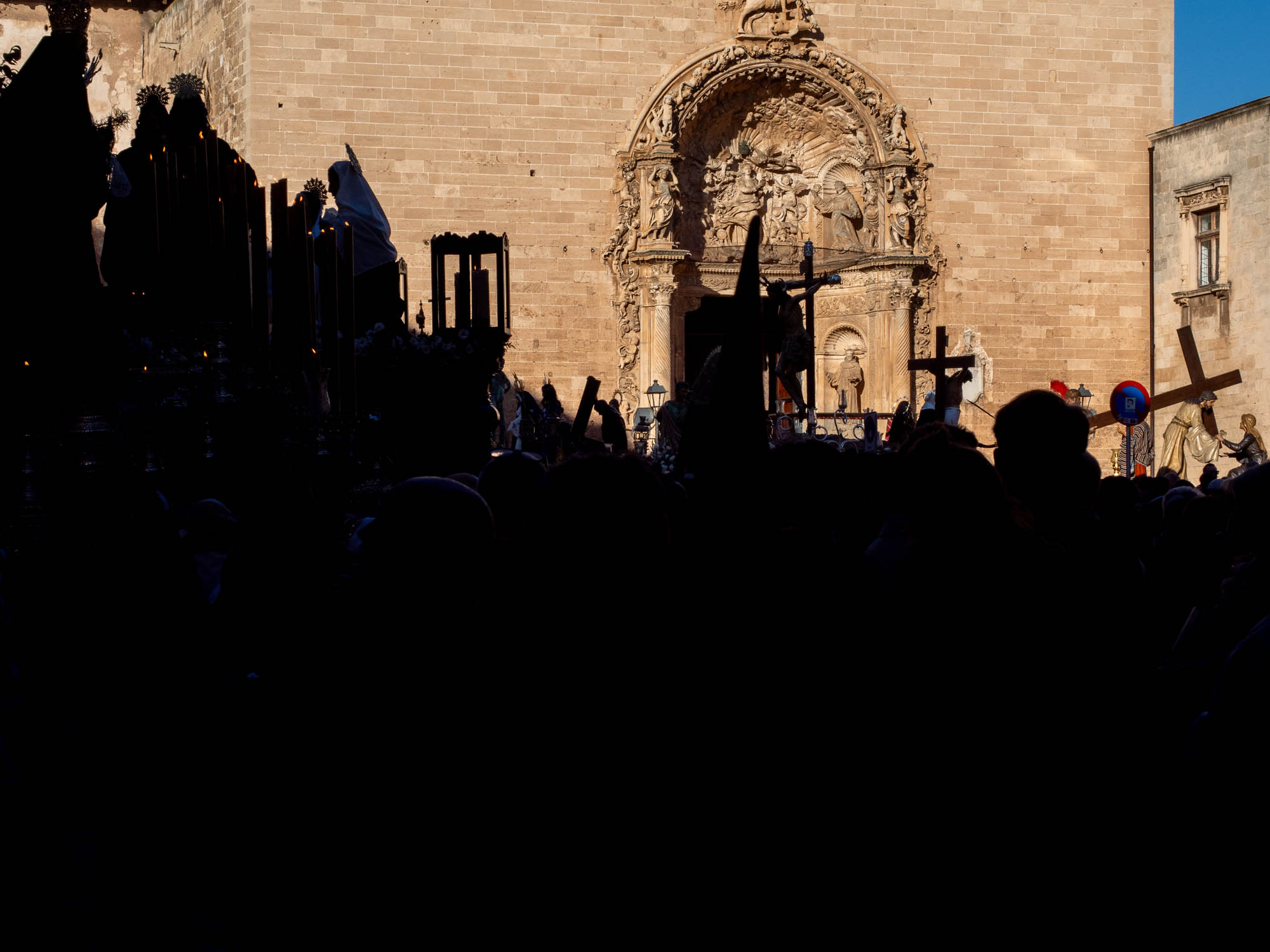
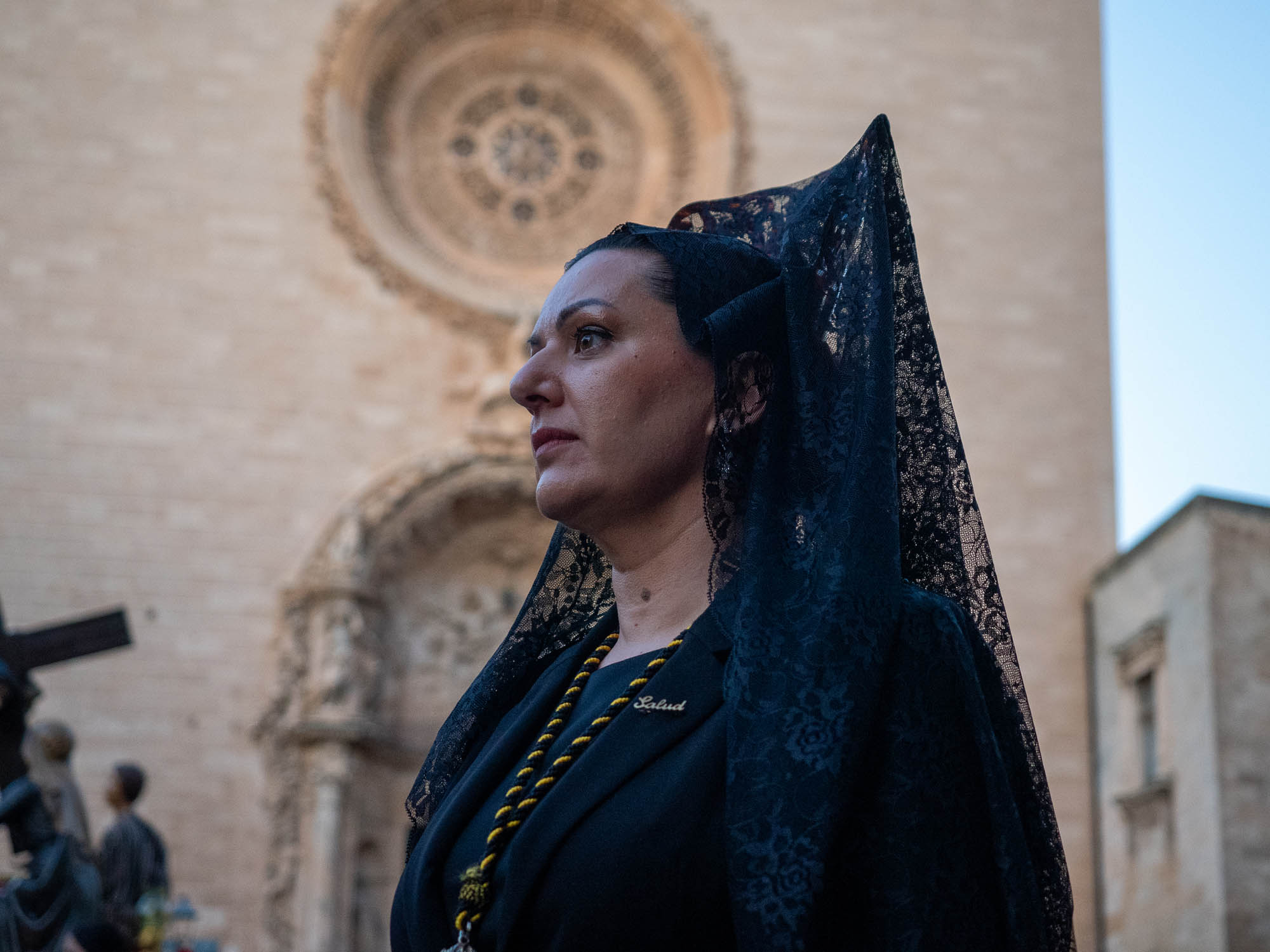
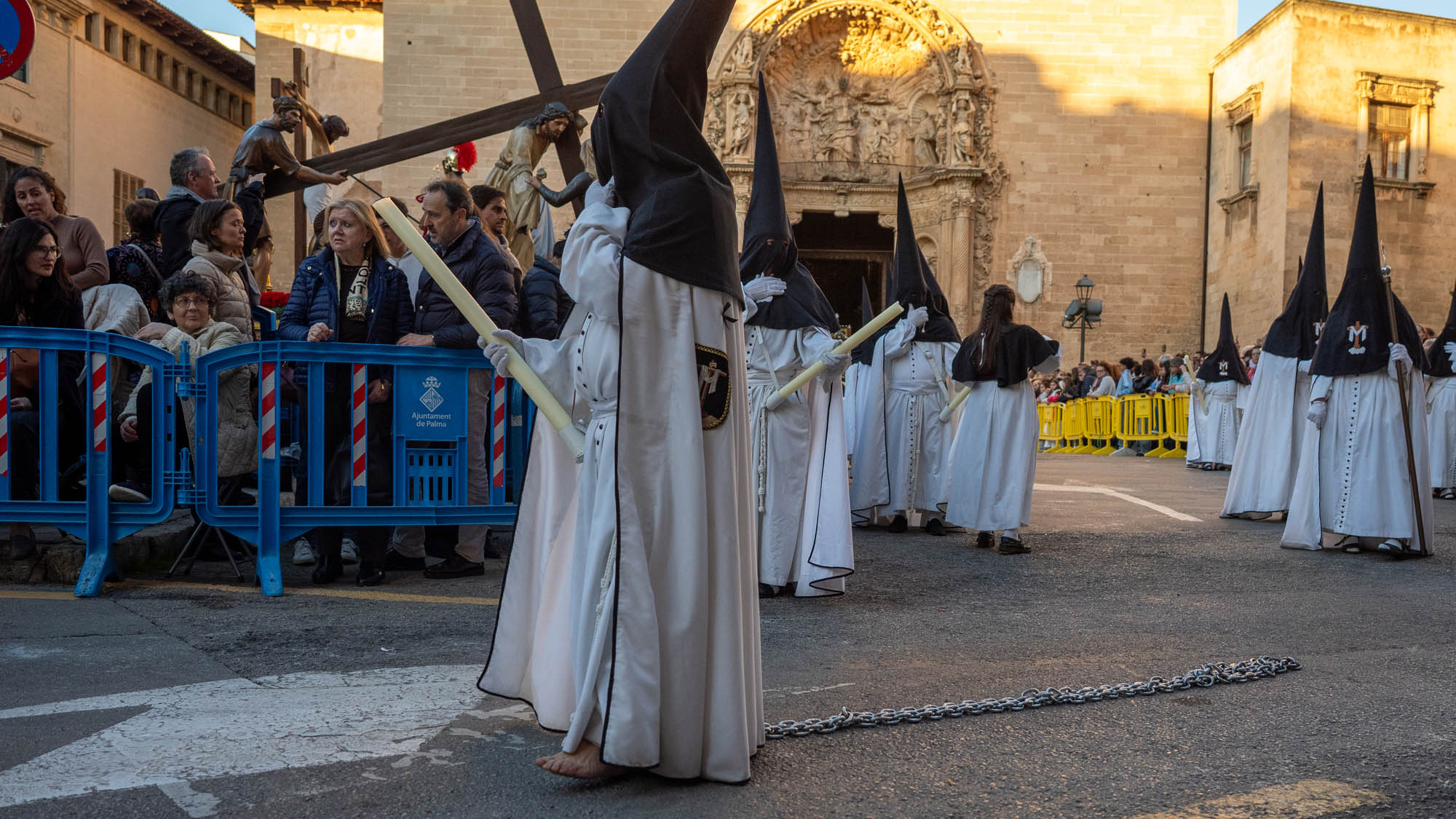
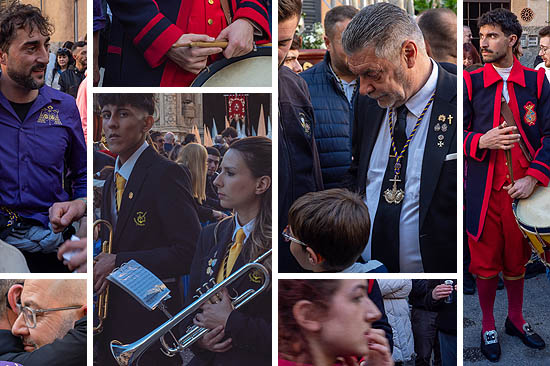
We stand in front of the gate of Sant Francesc, with the statue of Saint George above dominating the large rose window. The procession—the sorrowful Virgin, Christ lying in a crystal coffin—waits on one side of the square, while the religious brotherhoods slowly, very slowly, leave the church. The rainy spring has cleared the air, and the bright blue sky forms a striking contrast with the somber liturgy. The ochre color of the church’s façade turns red in the setting sun. Gradually, darkness descends.
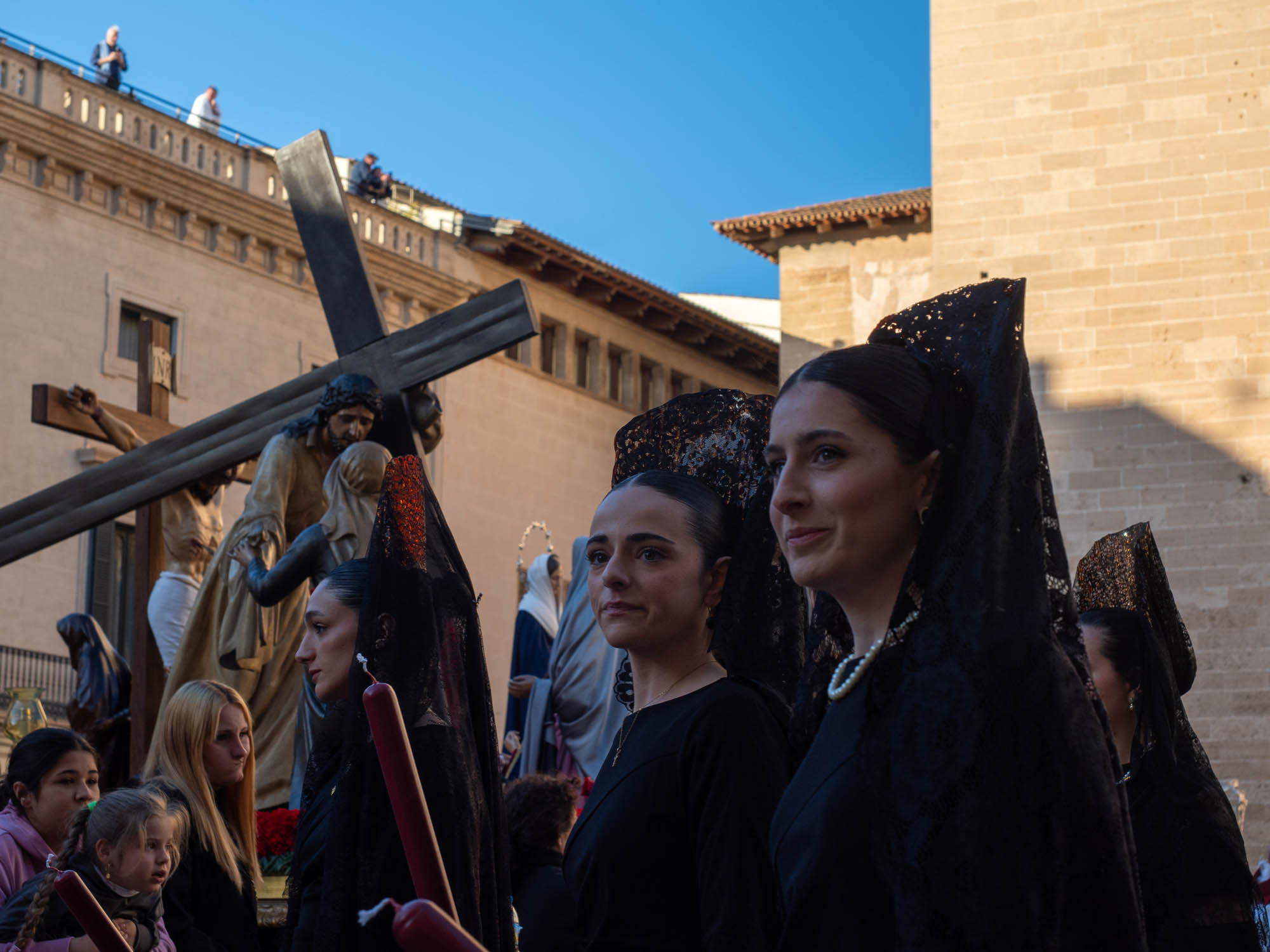
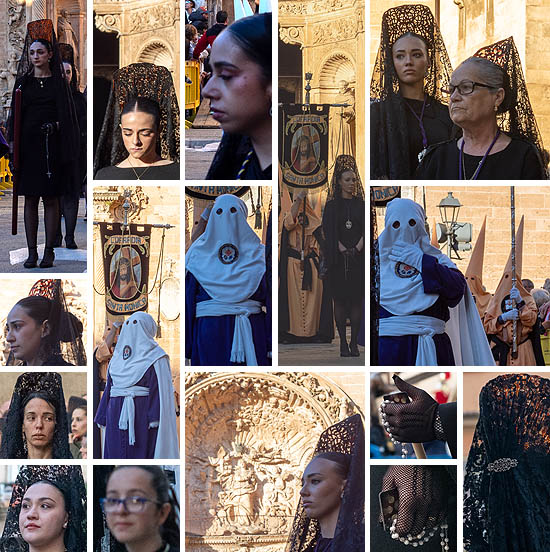
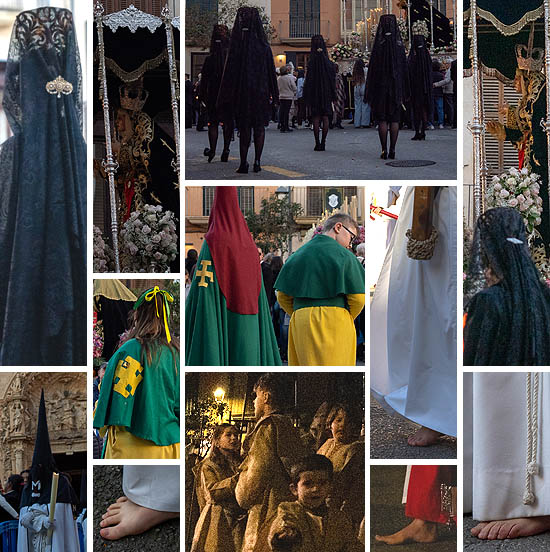
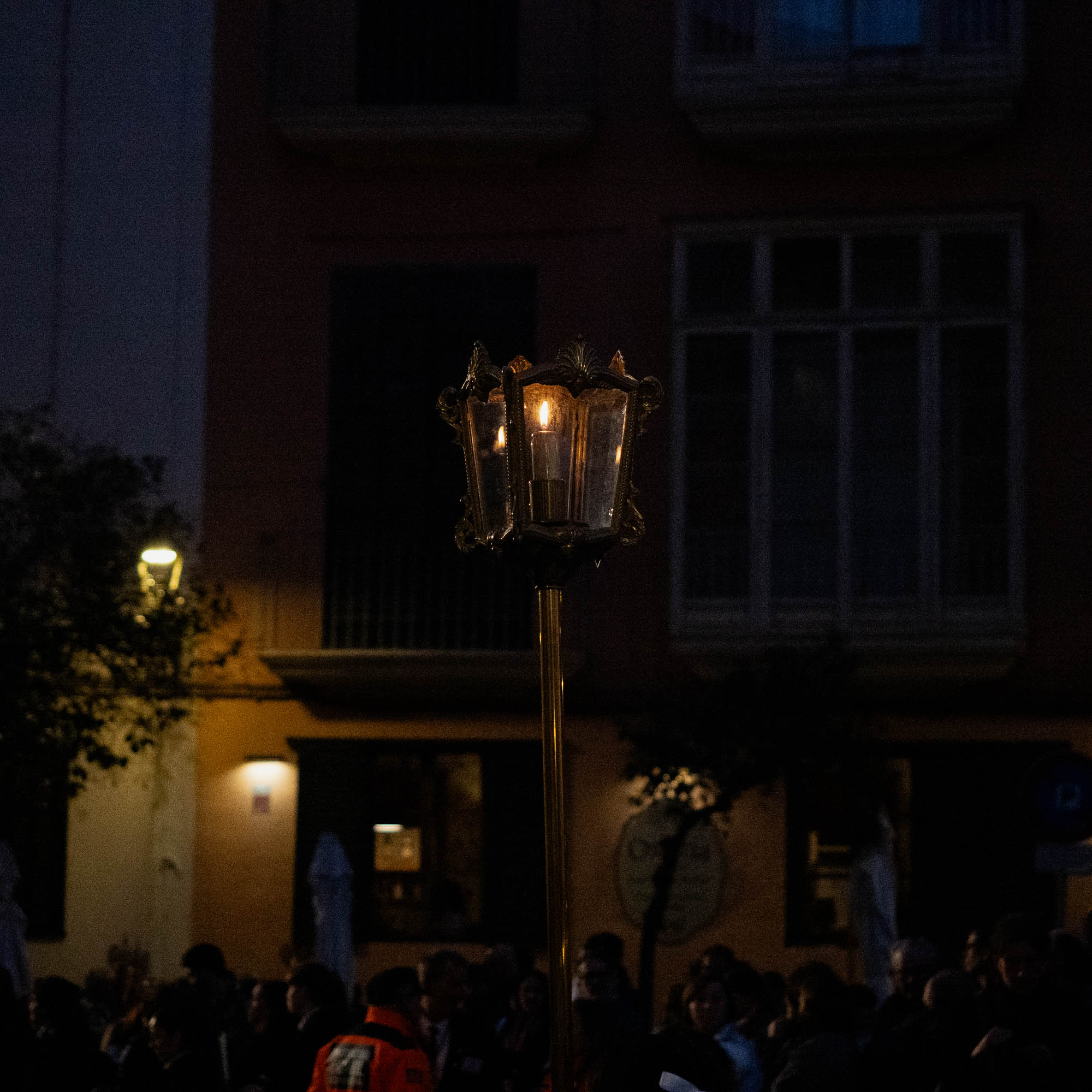
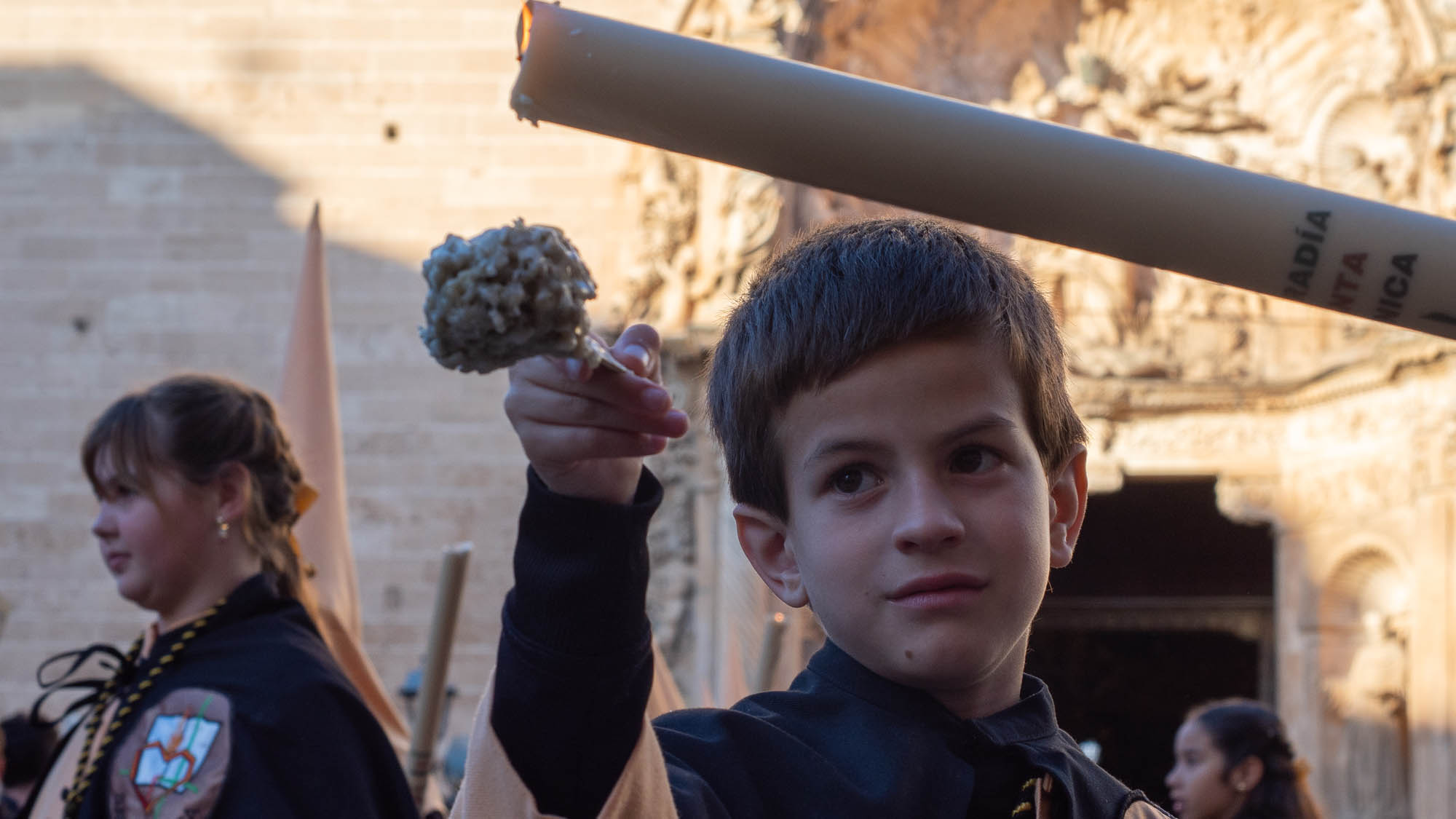
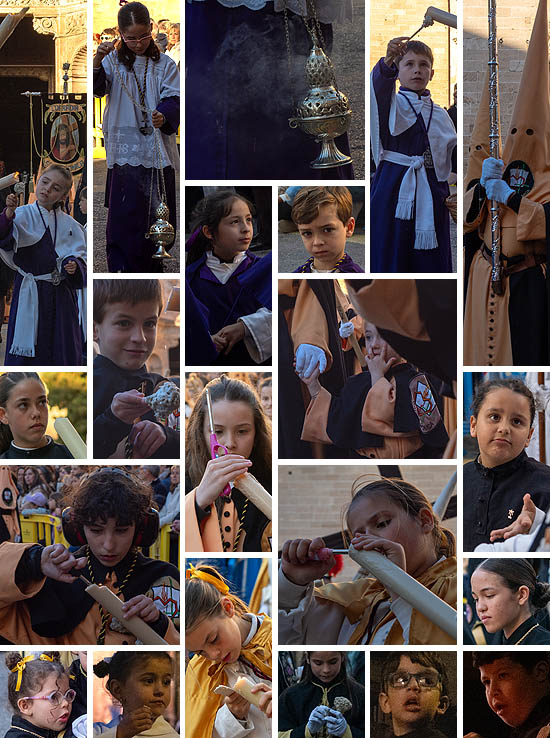
But there are some unexpected little elves who tirelessly work against the darkness. The youngest kids—some with a responsible air, others playful—dash between the hooded figures, relighting candles that have gone out and preventing wax from dripping everywhere. The streets, however, will stay slippery for weeks, squeaking peculiarly under tires and rubber-soled shoes.
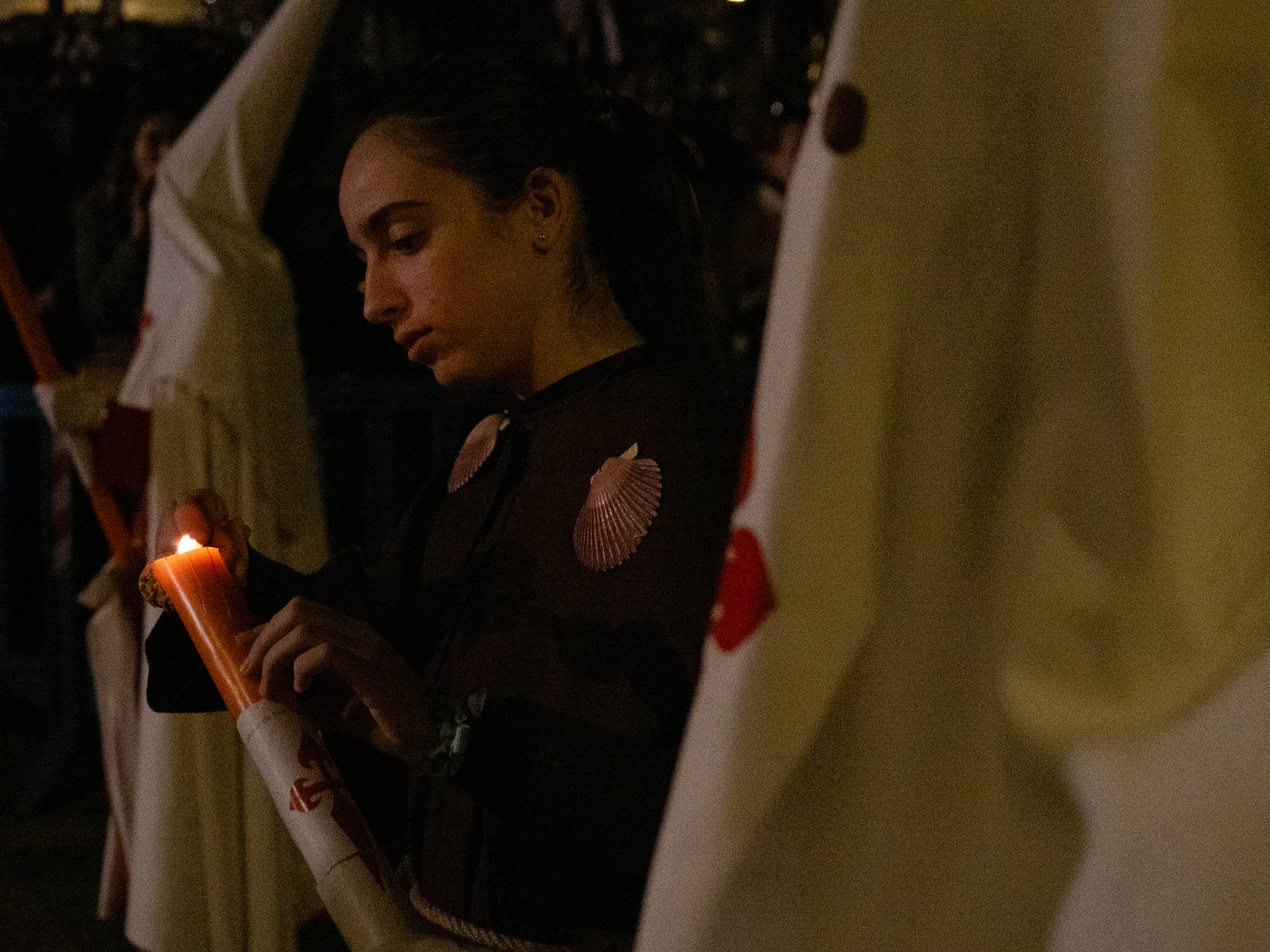
Tomorrow will be Holy Saturday. Before the 1969 liturgical reform, this was the day for ringing the bells, which had to sound exactly at ten in the morning. The celebration blended with the joy of the earth’s rebirth. Under the bell chimes, children would chant: “cuquetes sortiu des niu, que el Bon Jesús ja és viu” (“little bugs, come out of the nest, for the Good Jesus is alive”). The Easter cycle began with the blessing of the baptismal font water—legend had it that a child baptized with this first holy water would remain incorrupt after death—and they lit the New Fire with flint, carrying it from house to house across the village or parish. The children themselves performed this task, going from house to house, shouting: «Llum, llum, llum!» (“Light, light, light!”).



Add comment