

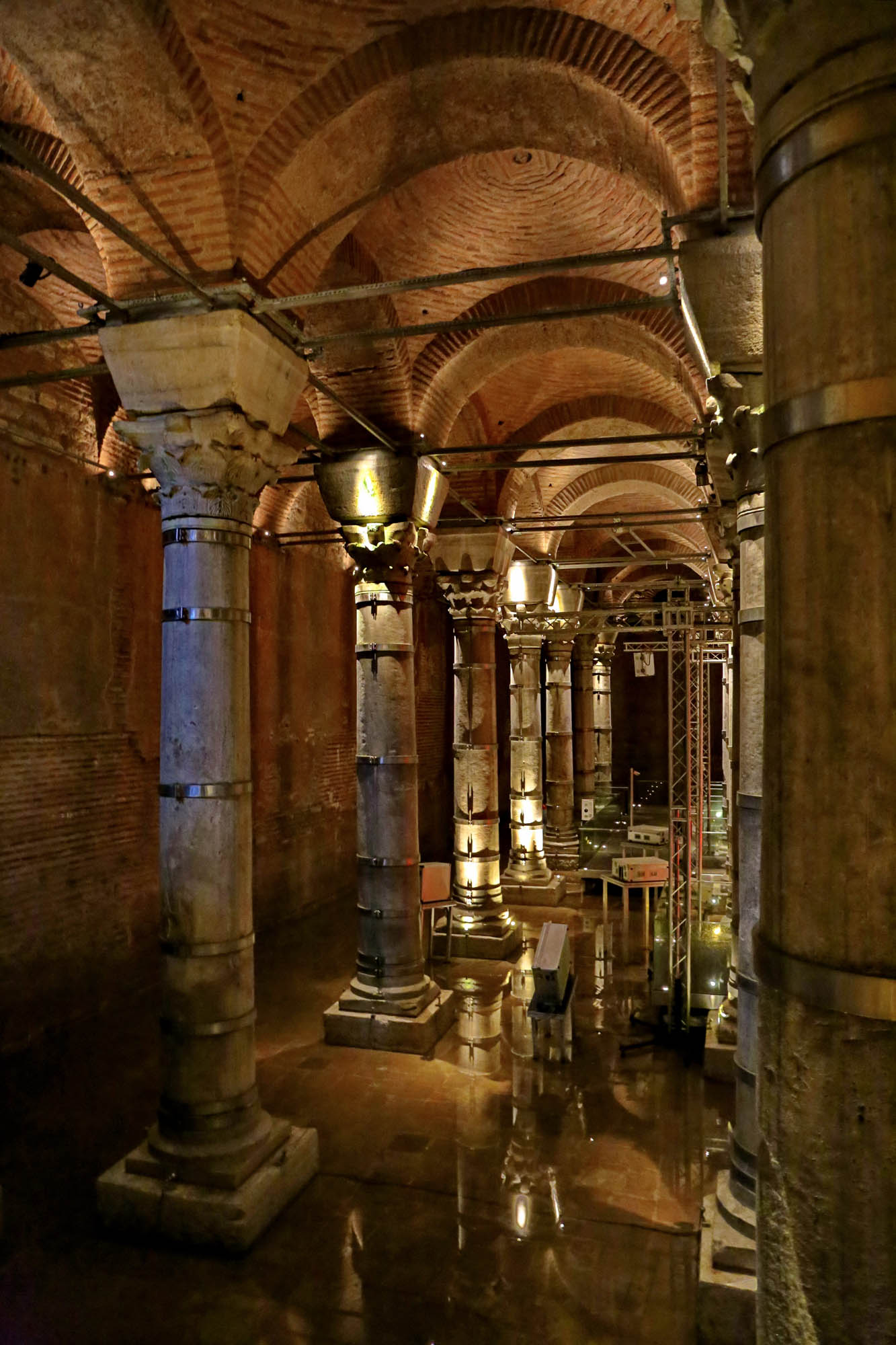
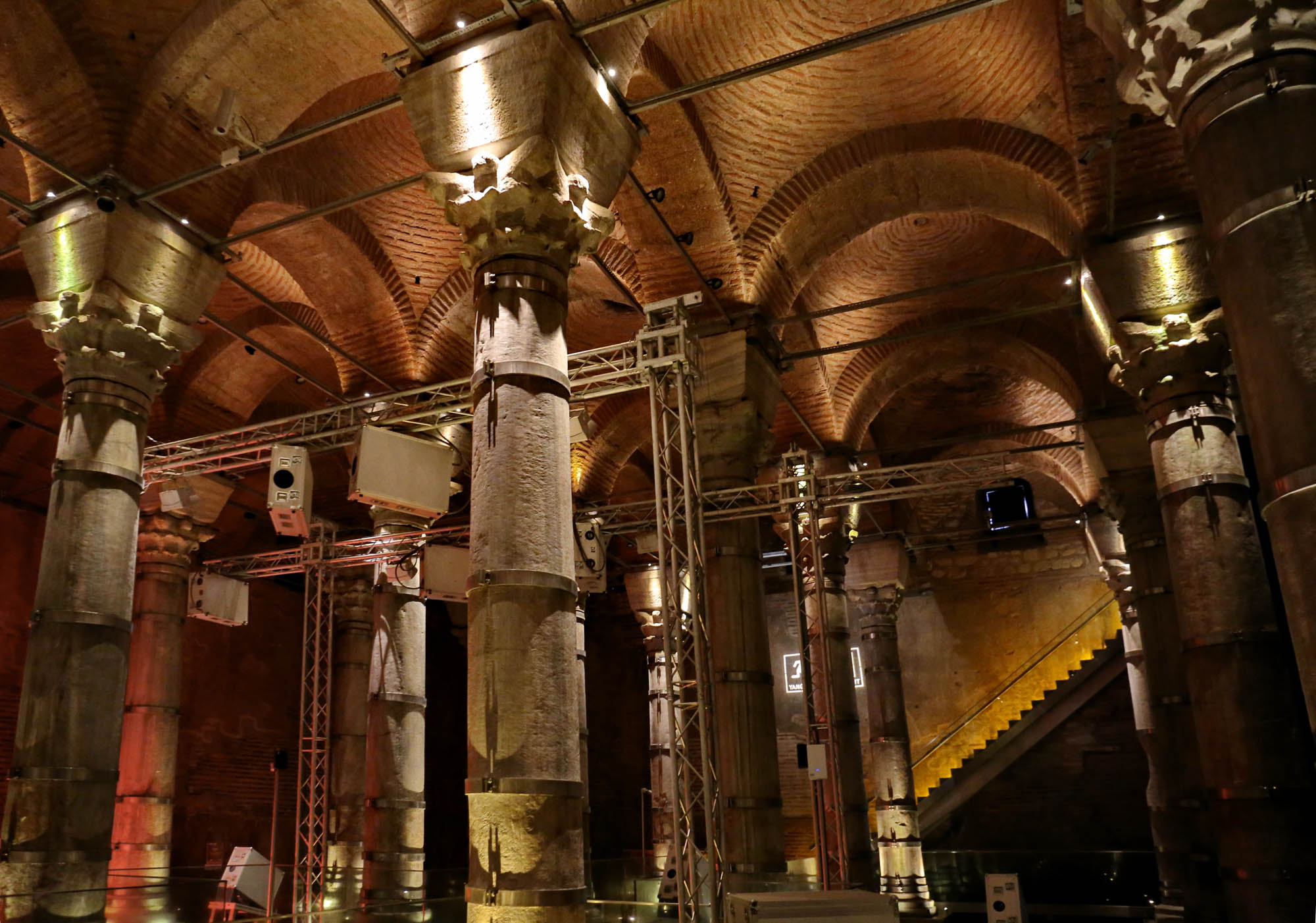
The Cistern of Theodosius (c. 428–443) is the second largest among the 50–60 surviving ancient cisterns in Istanbul. But the number one—Justinian’s cistern next to Hagia Sophia, better known today as the Yerebatan Sarnıcı—so completely steals the show with its sheer size and mystical atmosphere that this one has to pull a few extra tricks to draw visitors in. Think regular light shows, whose scaffolding fills the space even when nothing is on, giving the whole place the feel of a film set.
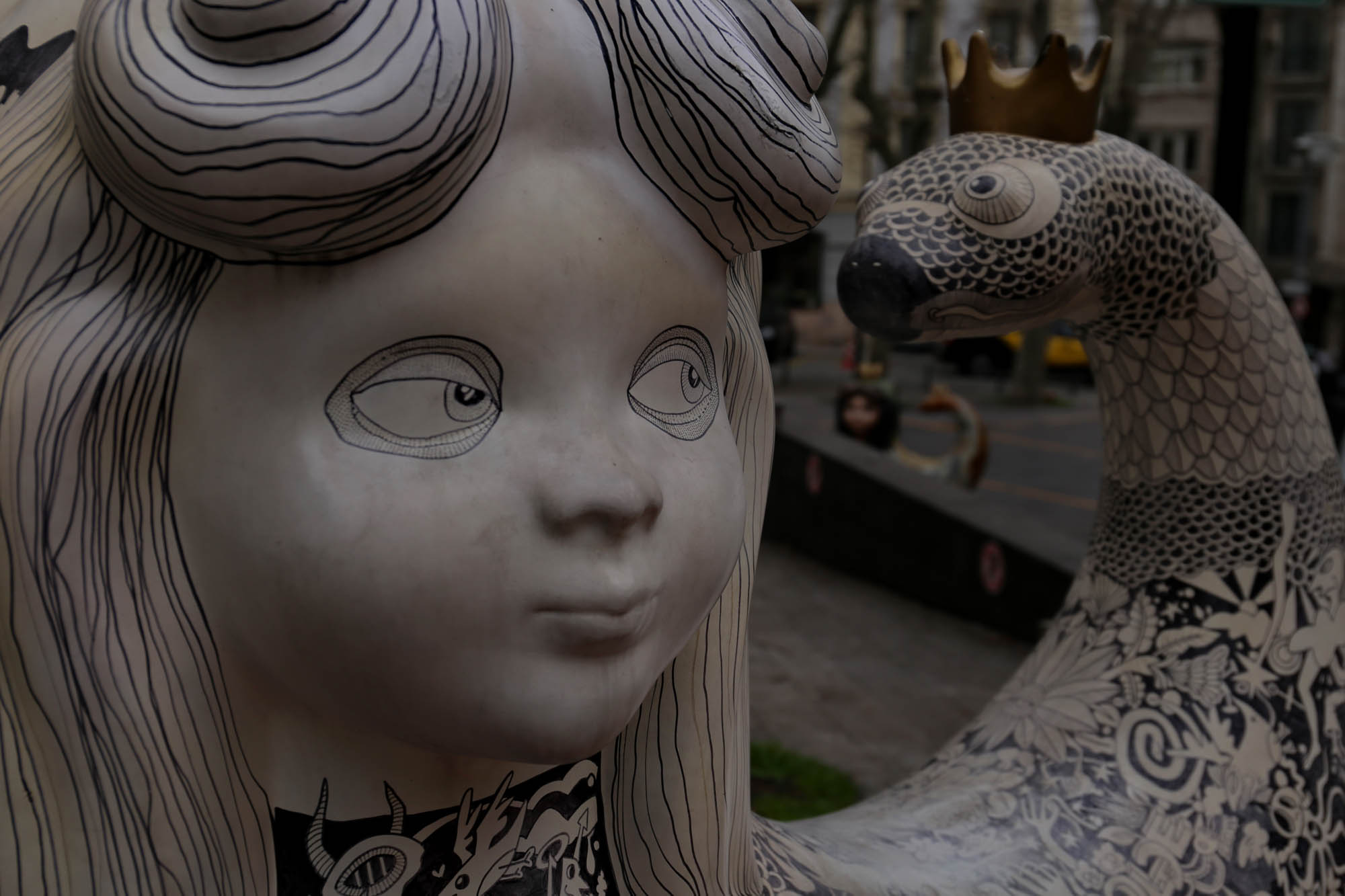
And then there are the exhibitions regularly hosted in the cistern. The current one puts Shahmaran in the spotlight. The concept is reminiscent of Berlin’s Buddy Bears or the cow sculptures that stirred up a bit of controversy in Budapest some years back: pick an emblematic animal, cast it in cute plastic form, have popular artists decorate each piece, and scatter them around the city. Here, “around the city” is just one spot: the Theodosius Cistern, now called Şerefiye Sarnıcı, and the square in front of it, Pierre Loti Square.
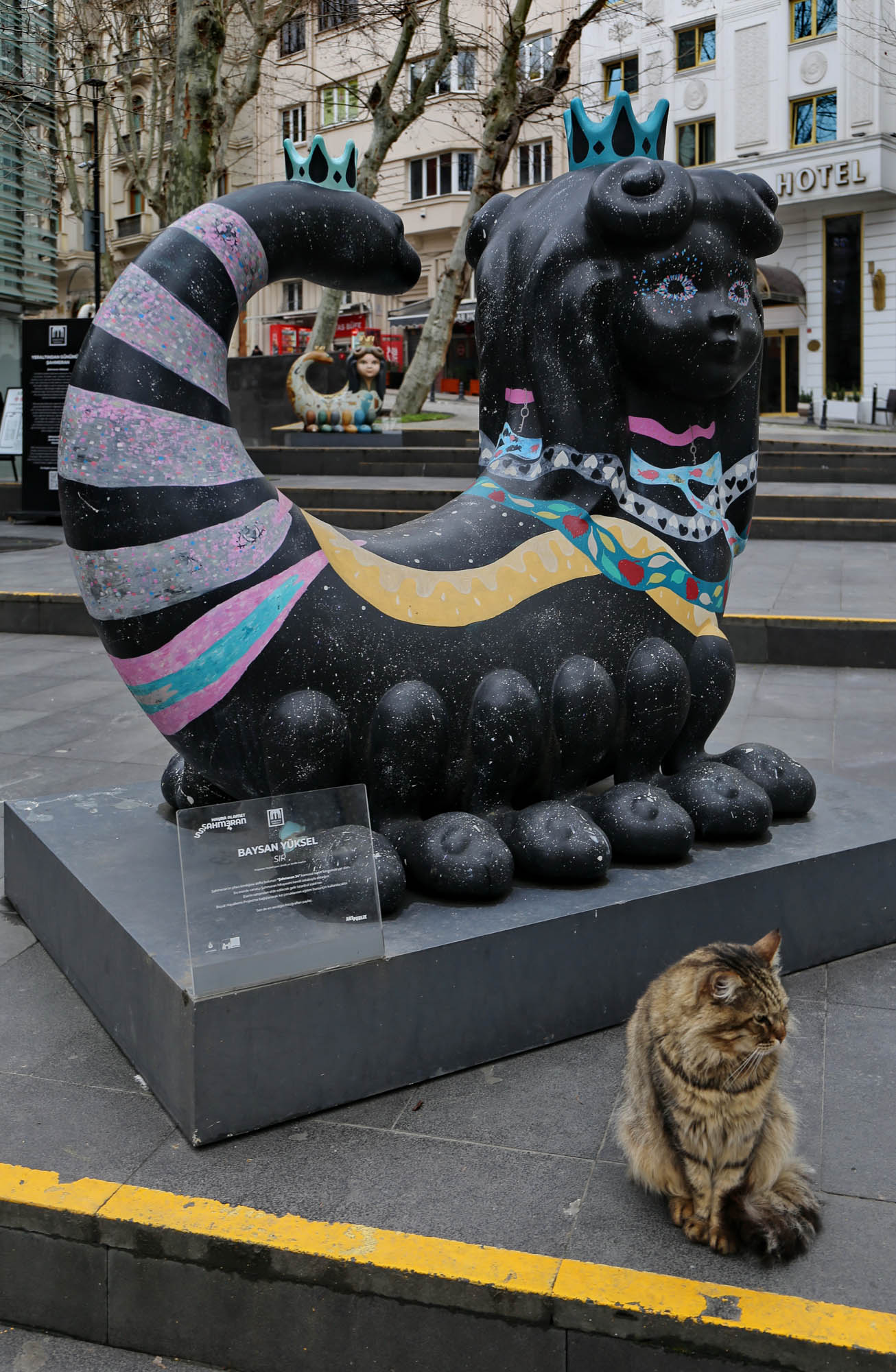
The fact that Istanbul chose Shahmaran as its emblem for the occasion says a lot about how deeply rooted this figure is—not just in the visual culture of Mardin and Mesopotamia, but across Turkey as a whole.
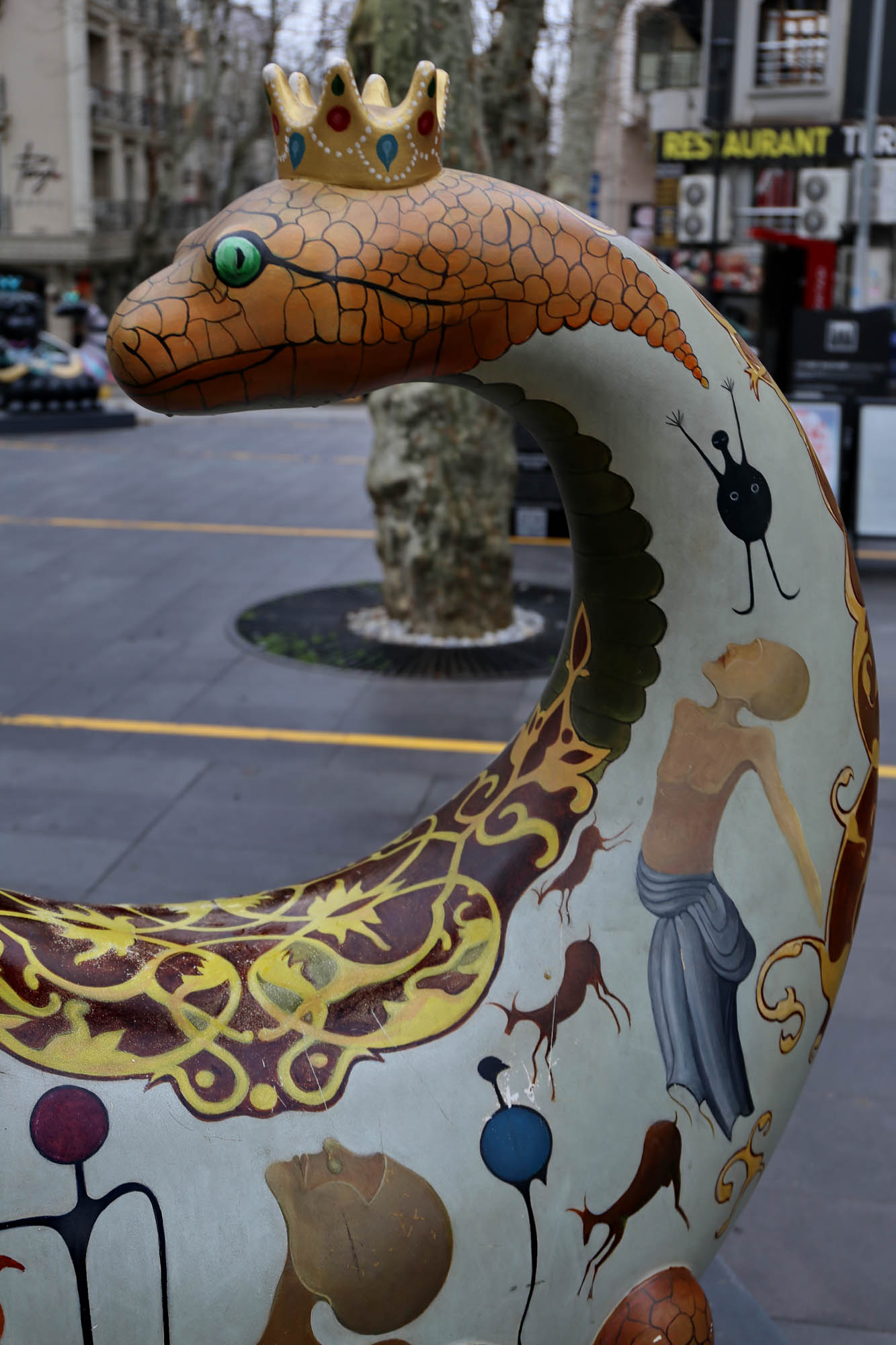
Each sculpture comes with a small plaque naming the artist and briefly outlining the concept behind the decoration. One that immediately catches my eye is by İsmet Yedikardeş. His Shahmaran is covered in colorful figures reminiscent of rock art and prehistoric figurines—some imagined, others clearly inspired by real pieces I’ve seen at Anatolian sites and in museums. The accompanying text presents Shahmaran as a guardian of the memory of Anatolia’s mythical past.
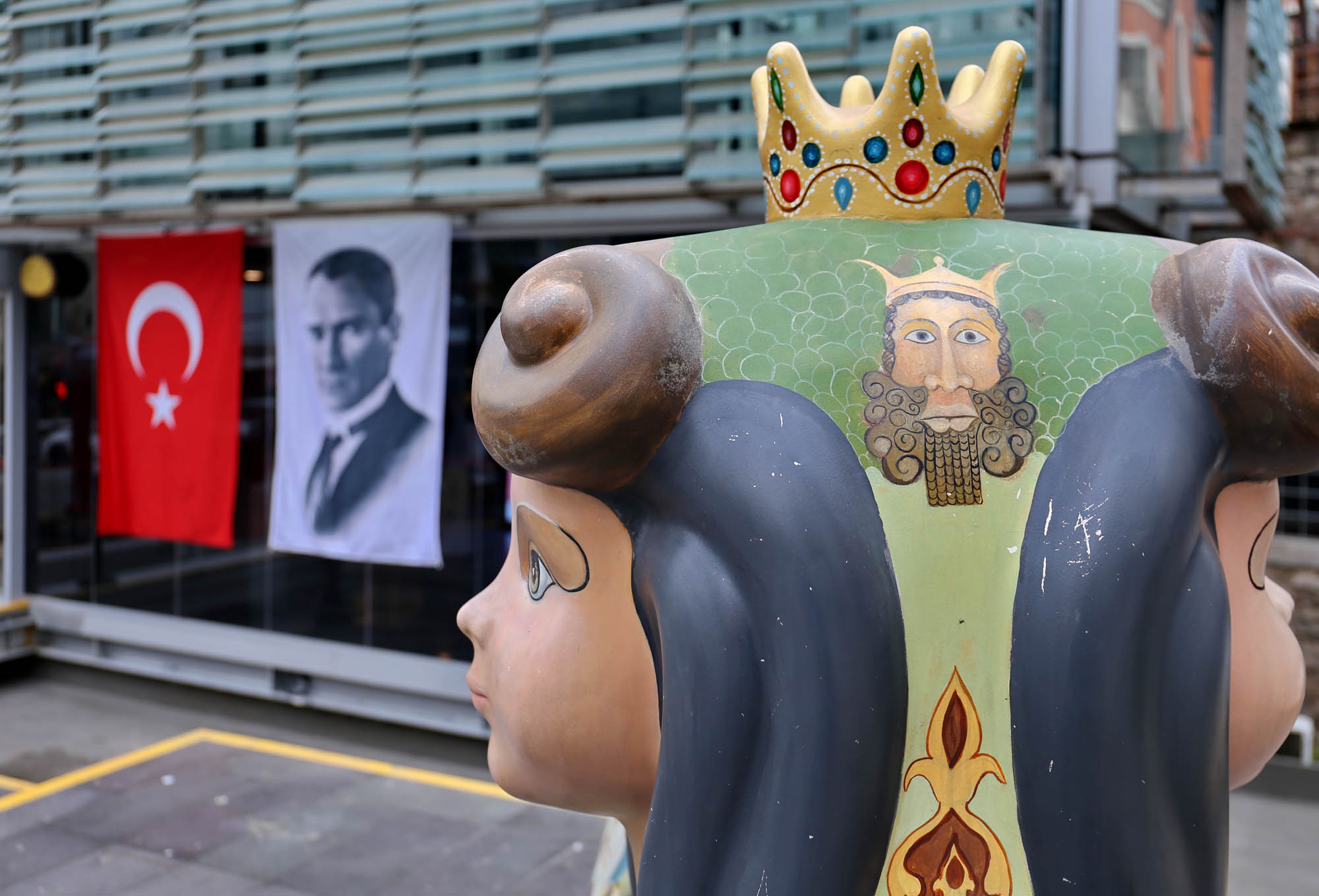
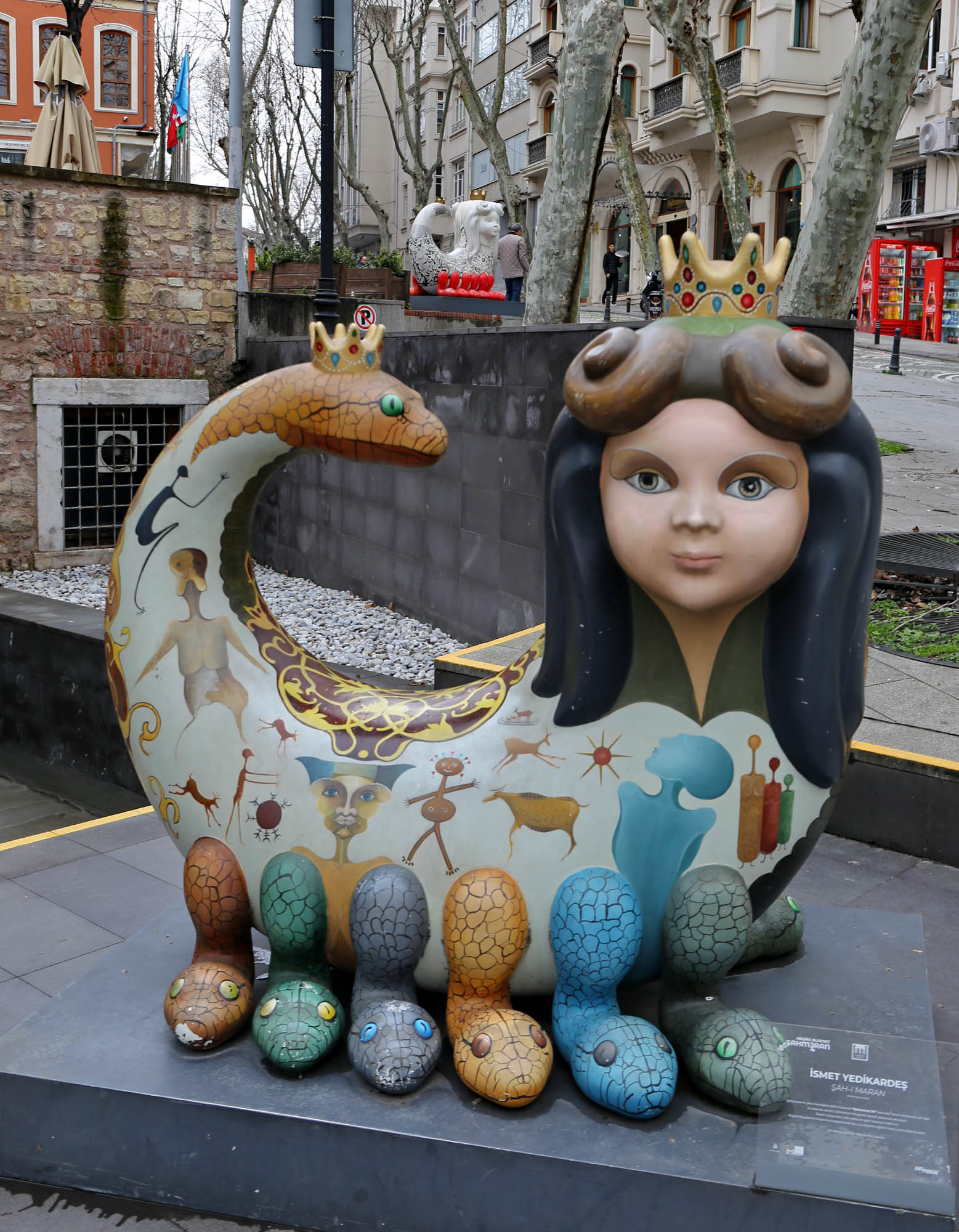
It’s a striking—and very timely—concept, especially now, when the exploration of Anatolia’s Stone and Bronze Age heritage is gaining real momentum, with remarkable finds emerging from sites like Göbekli Tepe and other megalithic complexes, as well as from the Hittite and Assyrian Old Kingdoms.
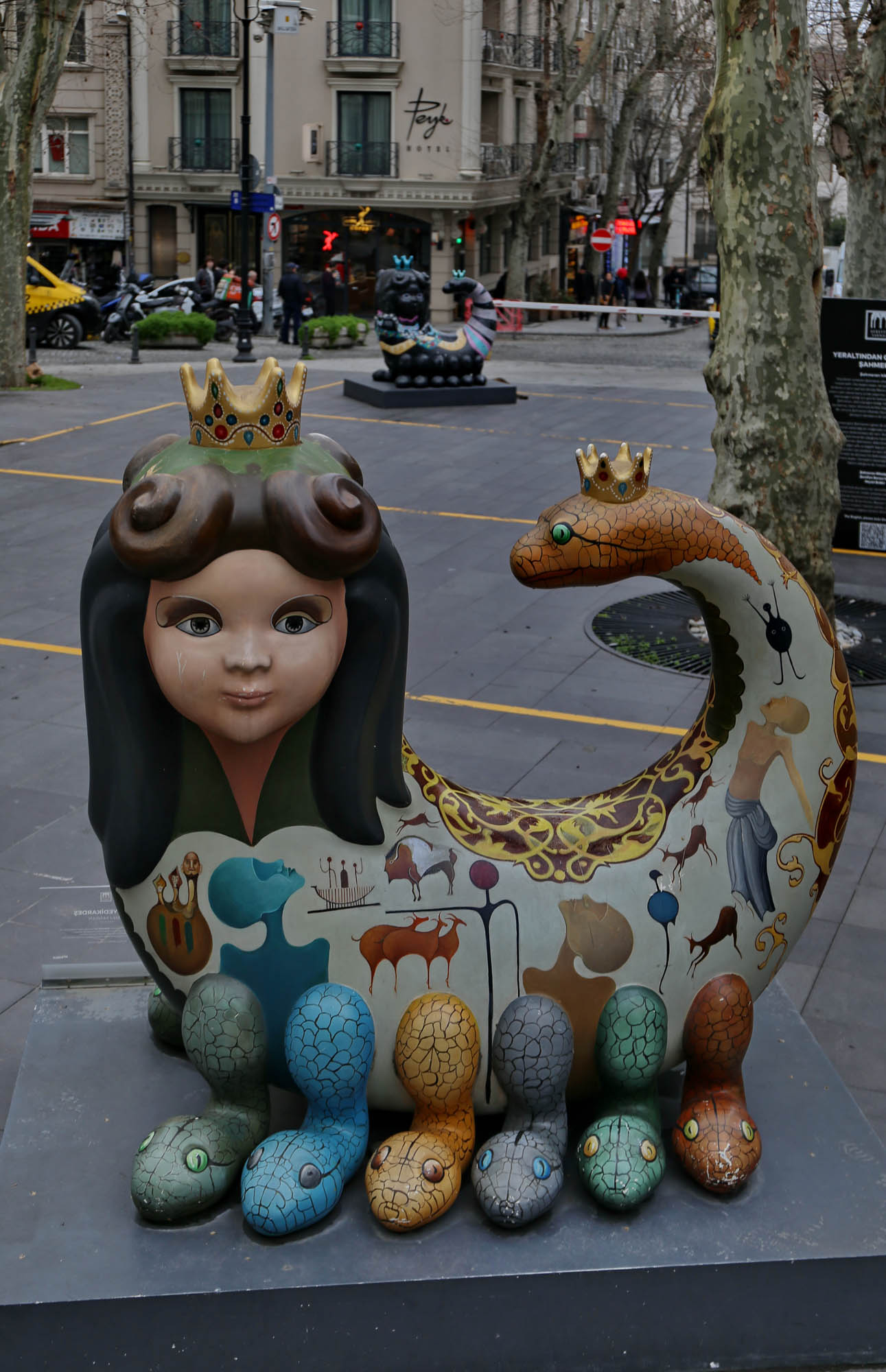
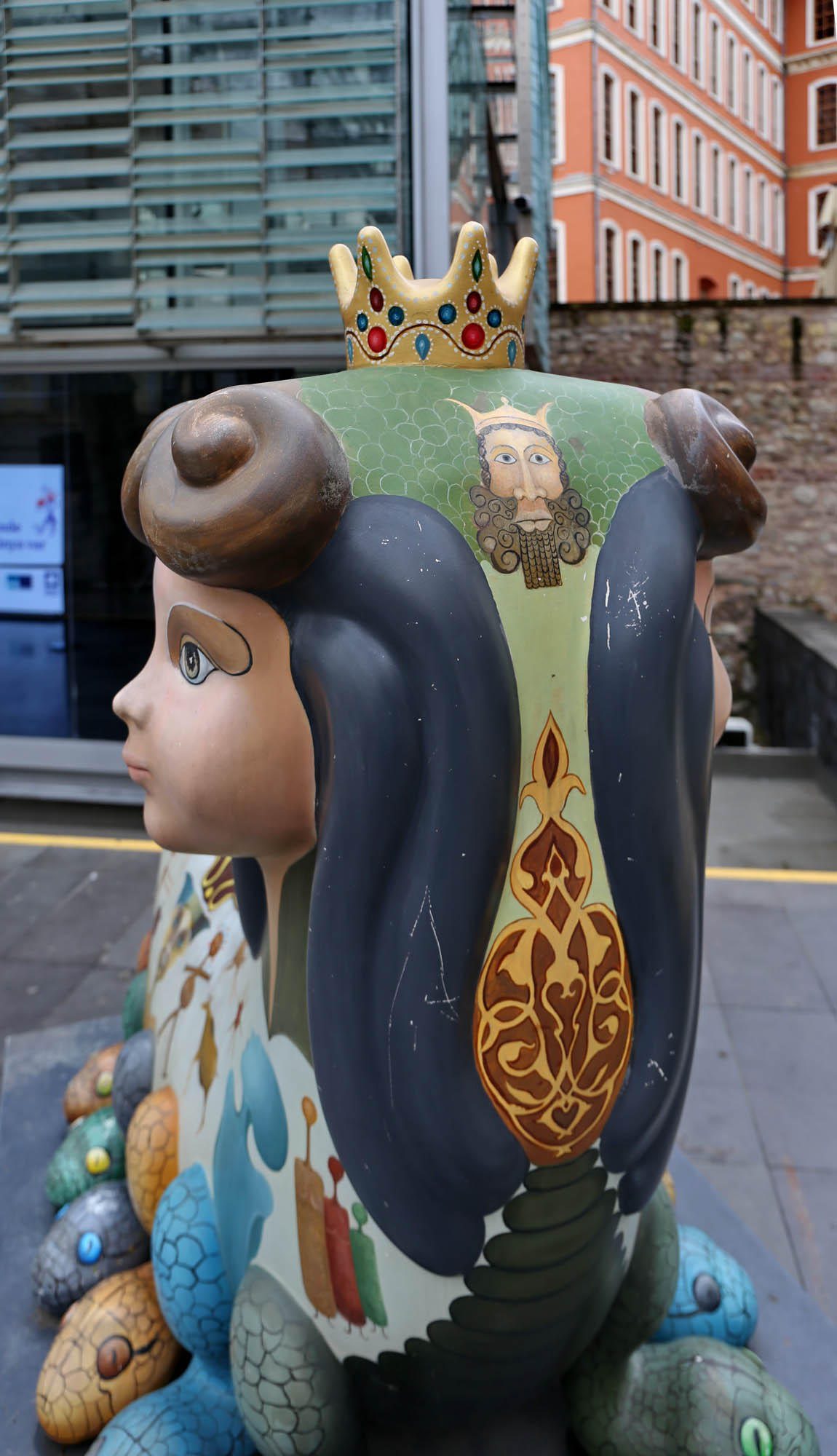
I look up the artist and quickly see where all this inspiration comes from. İsmet Yedikardeş is from Mardin, and the architecture of his hometown—along with the historical heritage of Mesopotamia—forms the core of his work. I even come across a study in the 2023 yearbook of Mardin University that analyzes in detail how he uses these elements.
According to the study, Yedikardeş (his surname means “seven siblings”) was born in Mardin in 1947 into the old Beyt il-Kuvvak, or Çömlekçiler, family of potters. He learned both the craft and a sense of history early on alongside his father: “I remember making a clay statue of Gilgamesh when I was about 10 or 11.” He studied prehistoric archaeology at Istanbul University and applied several times to the fine arts academy, but due to limited places was never admitted—so he eventually completed his painting studies at the University of Stuttgart. By then he was already supporting himself through his art and even held exhibitions, often transferring motifs of Anatolian cave paintings onto canvas and leather. Since returning home, he has made a living importing German household appliances, while continuing to paint out of passion. His works are primarily inspired by the cityscape of Mardin: a vertically layered, multi-religious, multicultural city climbing up a hillside, whose elements he combines and enriches with motifs from Anatolia’s prehistoric art.
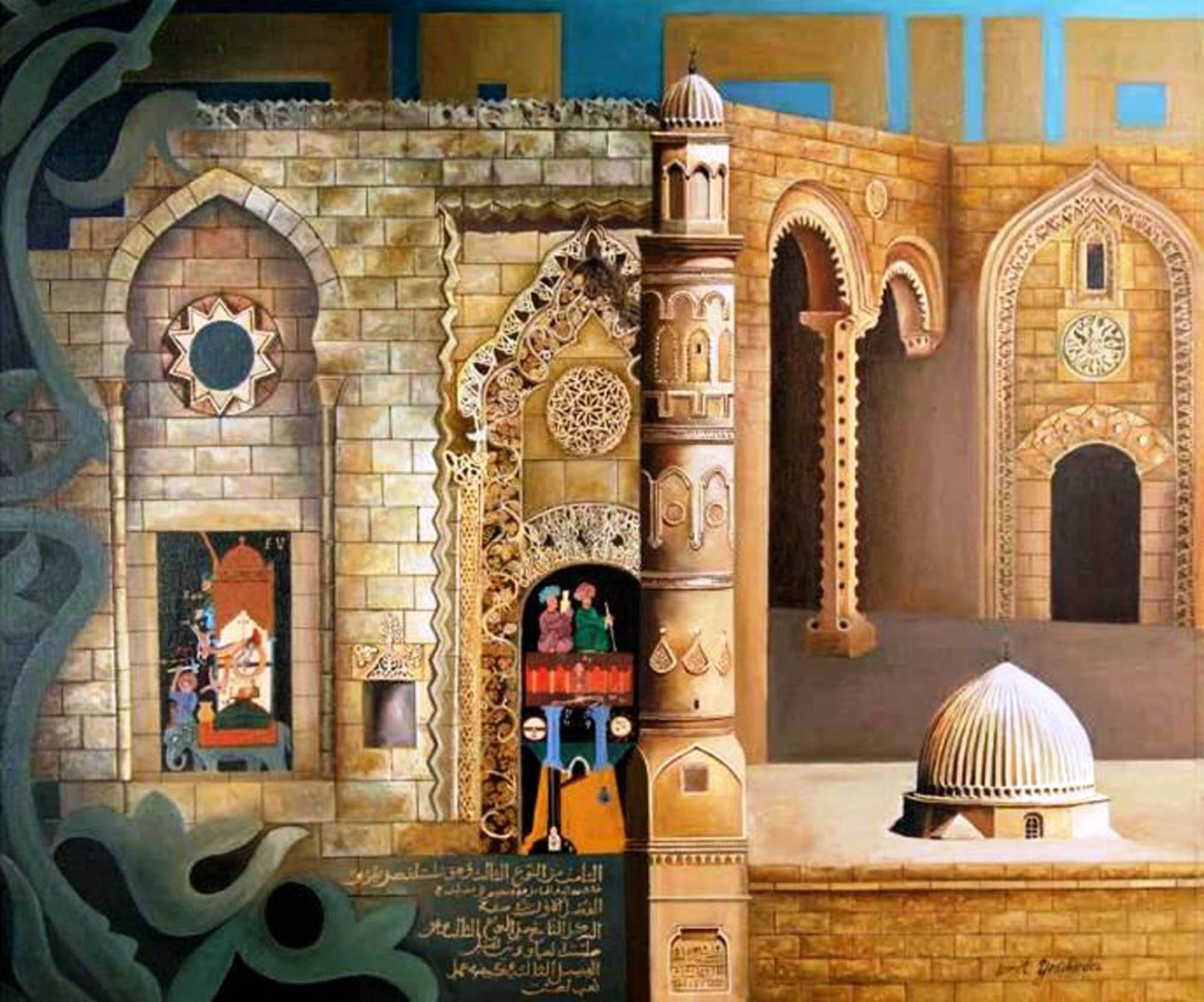 A 2005 painting showing the minaret of the Great Mosque of Mardin and the dome of the Zinciriye Madrasa, surrounded by various carved portals and windows
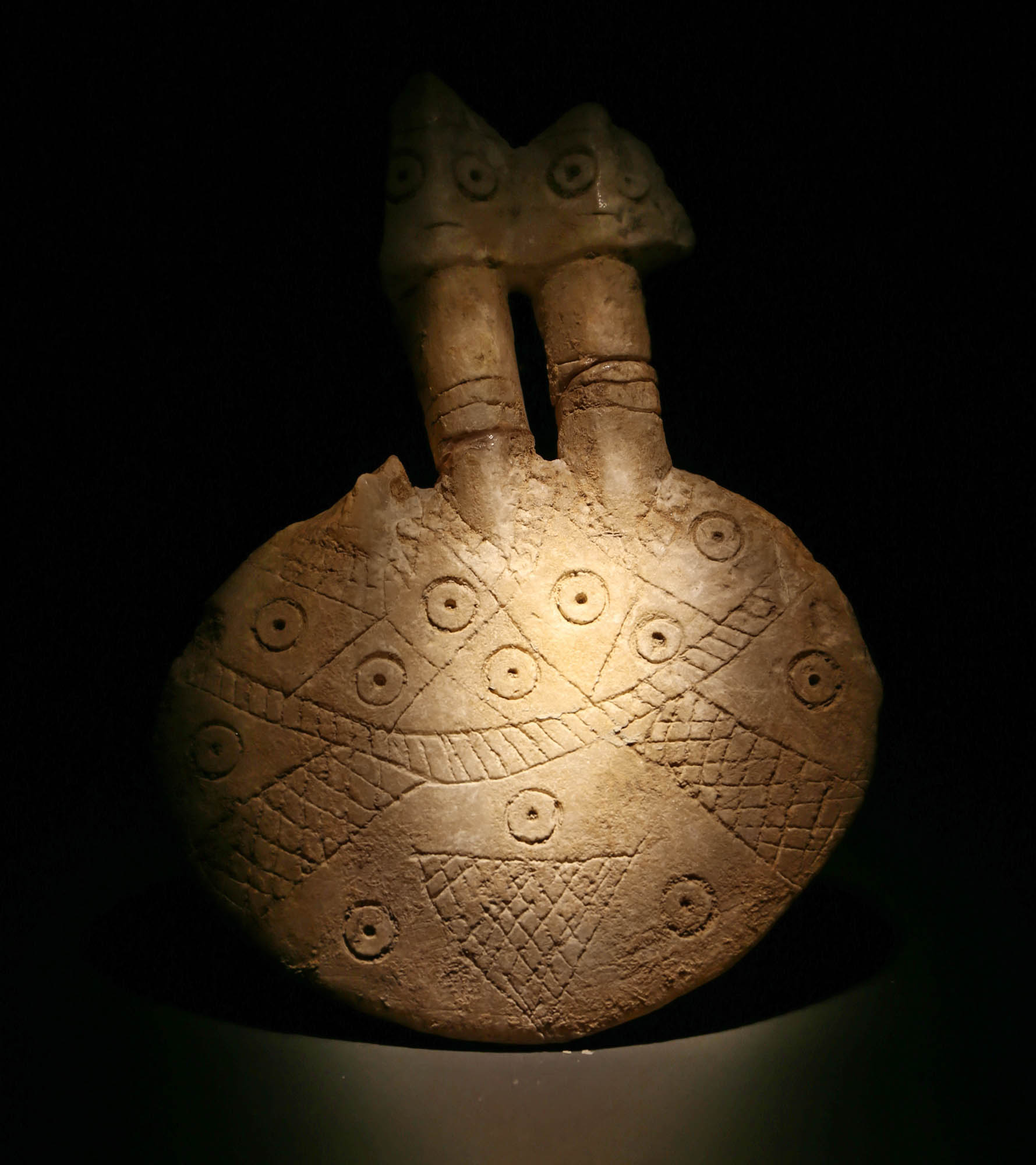
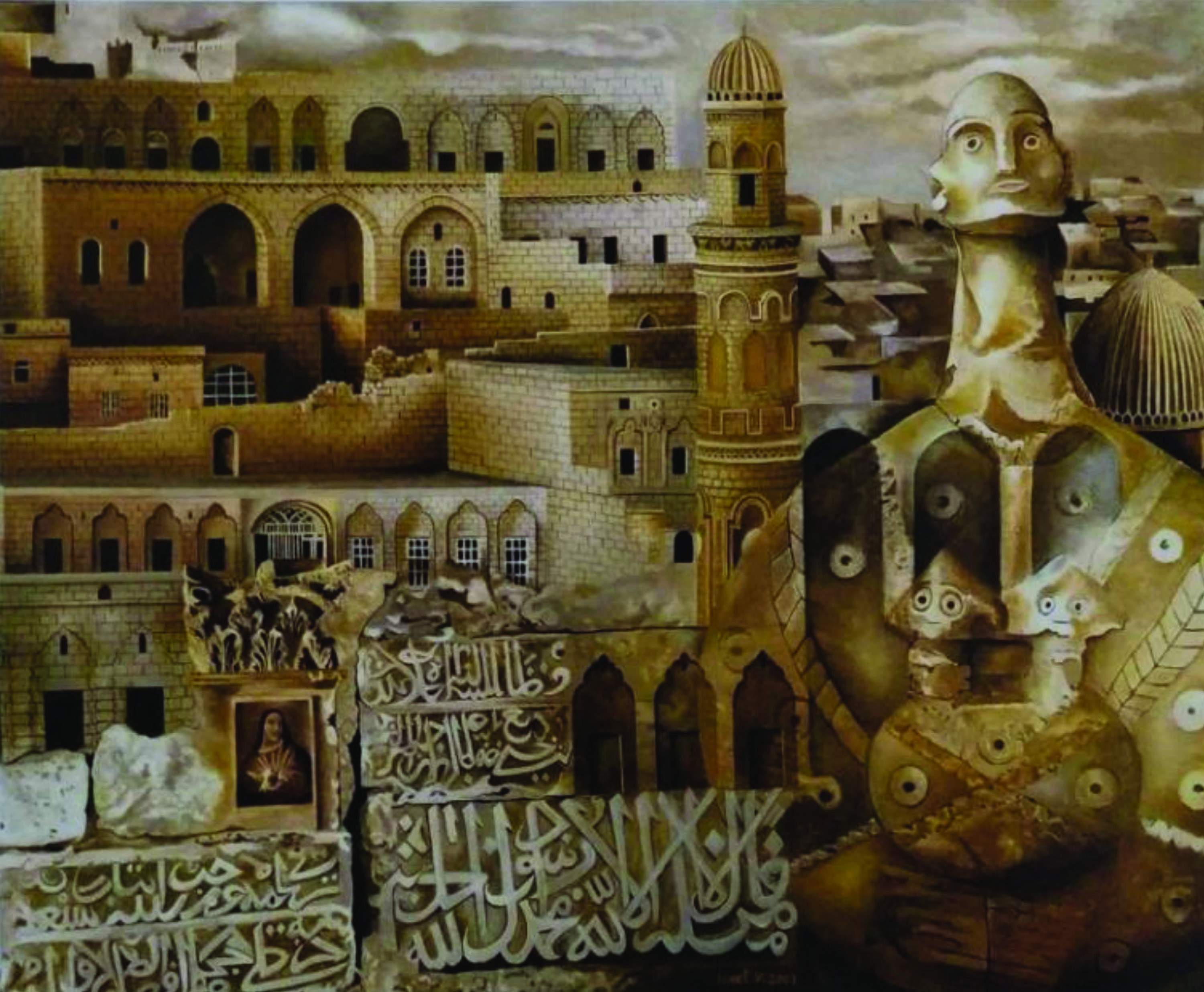 Here again the Great Mosque’s minaret dominates; to the left are façades of Mardin palaces and a Sacred Heart of Jesus image from the Chaldean church, while to the right appear details of two characteristic Kültepe deities from around 2000 BCE (below, an original Kültepe idol from the Kayseri Museum)
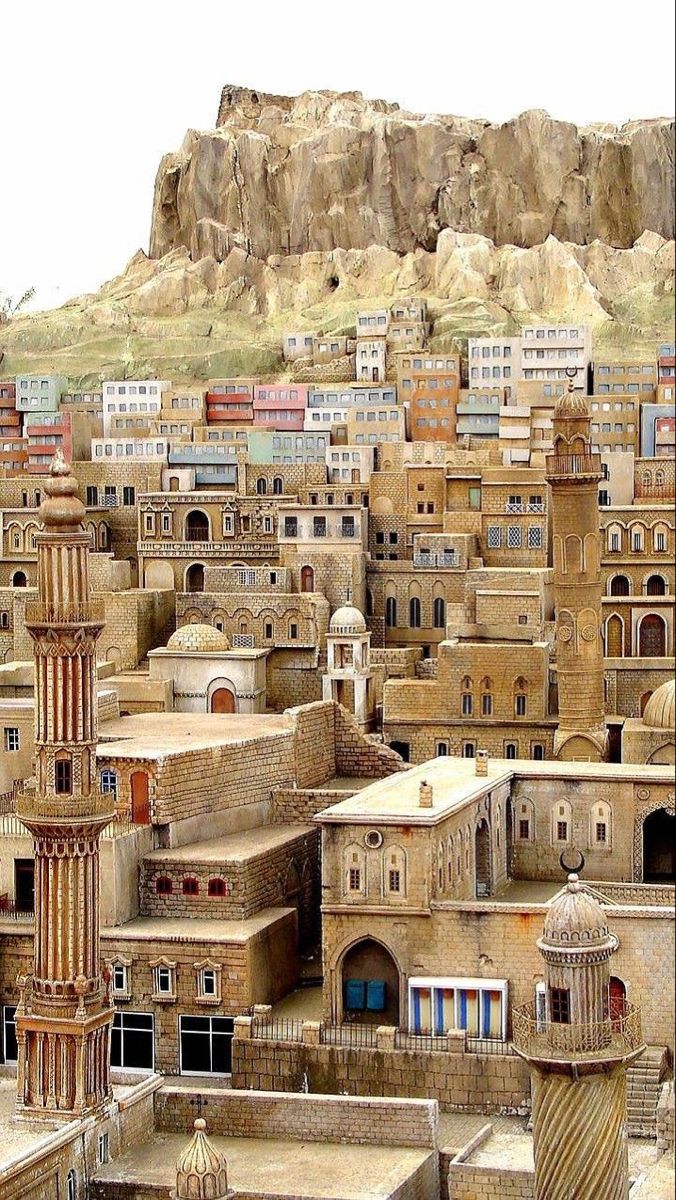
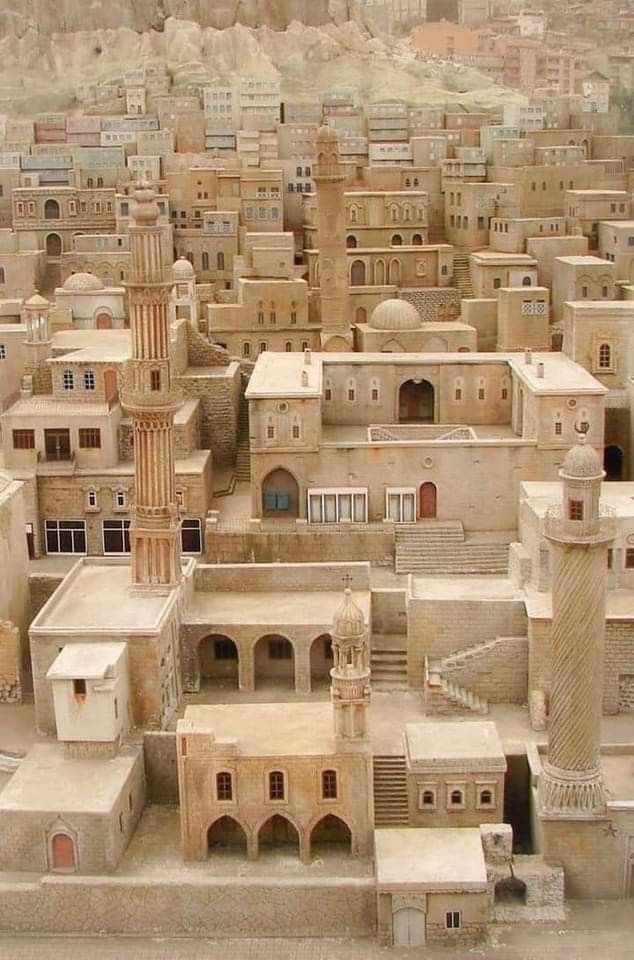
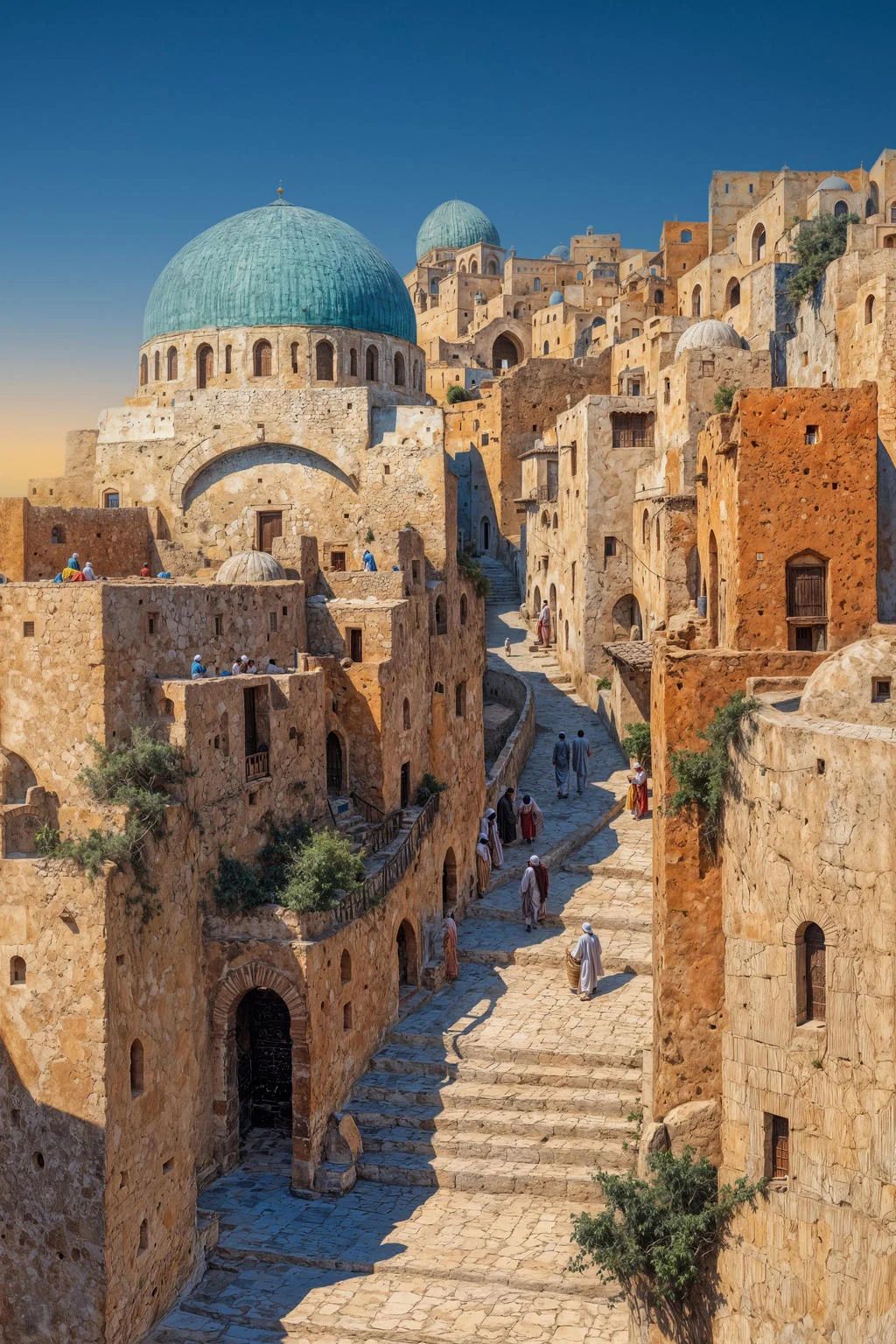
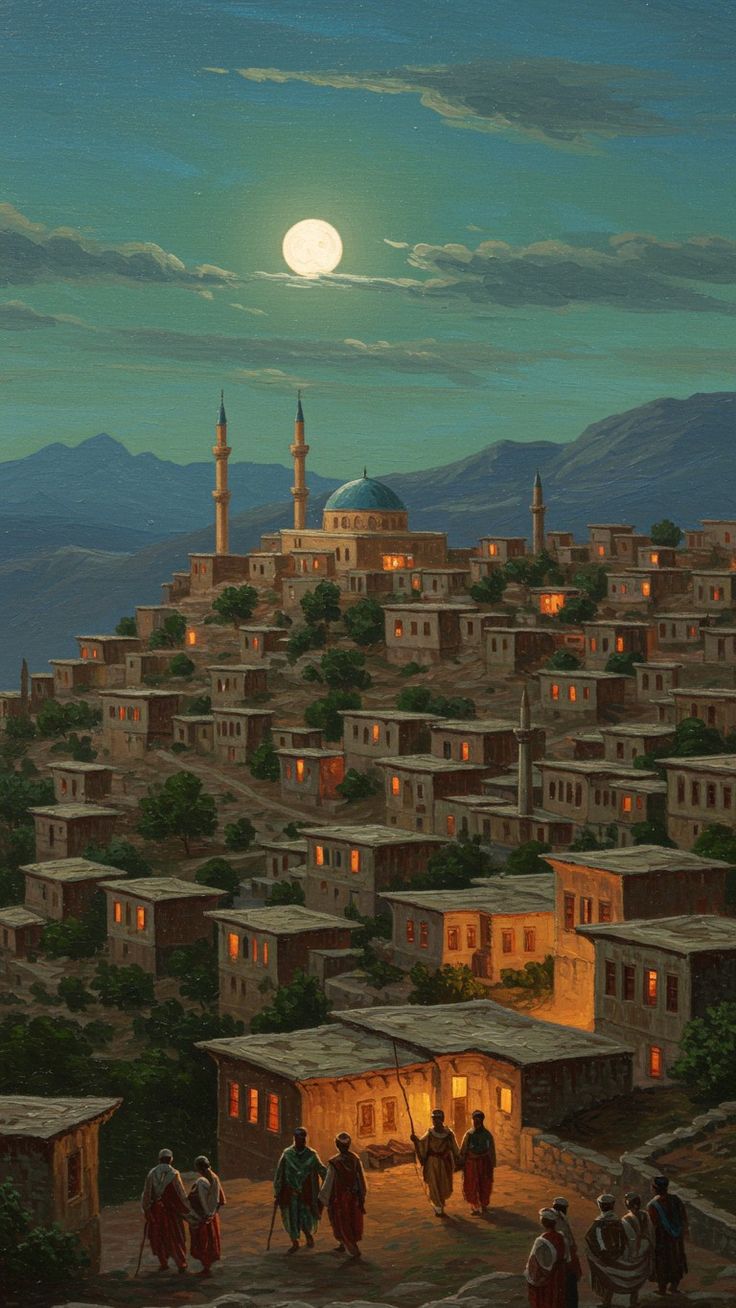
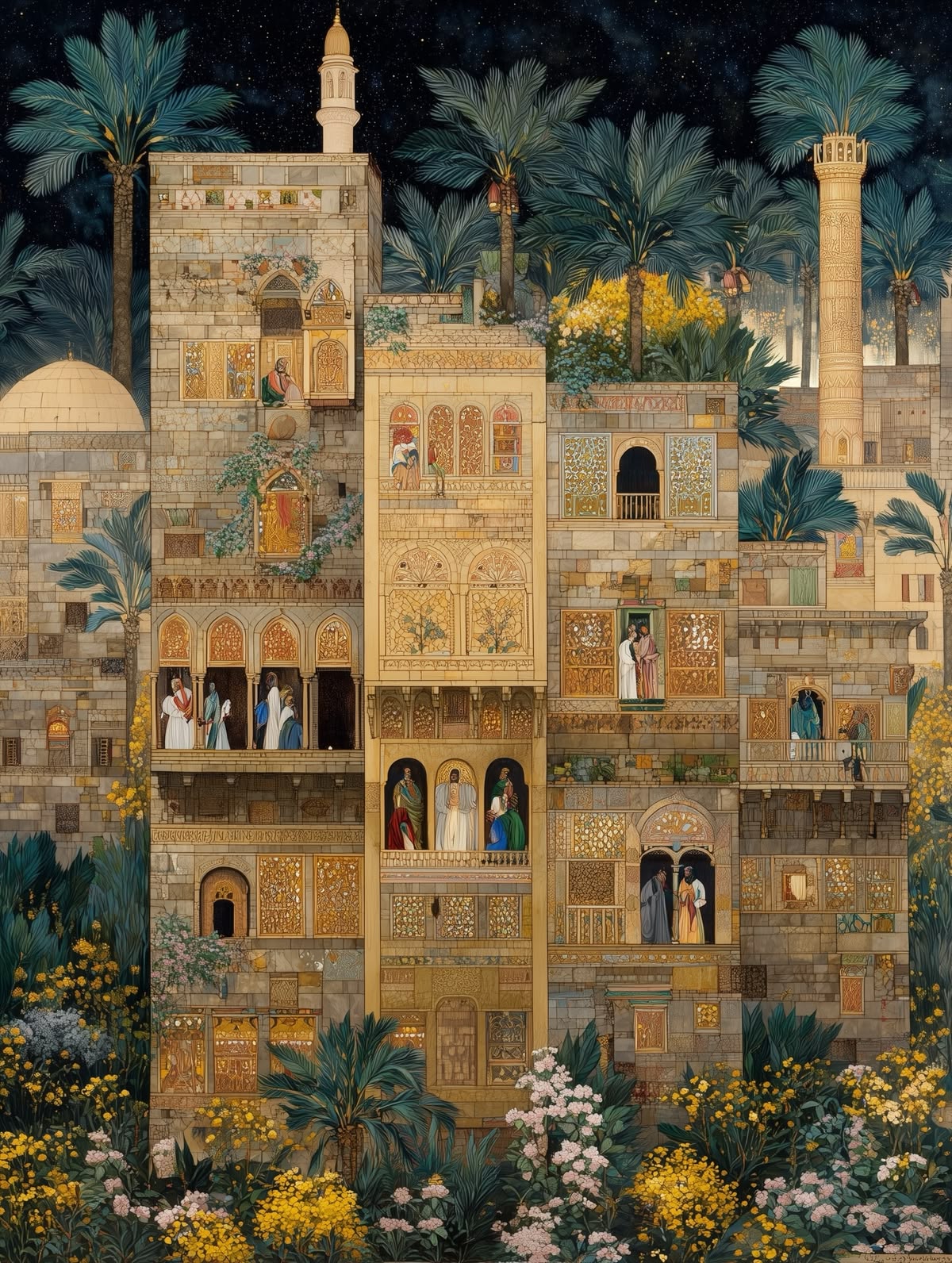
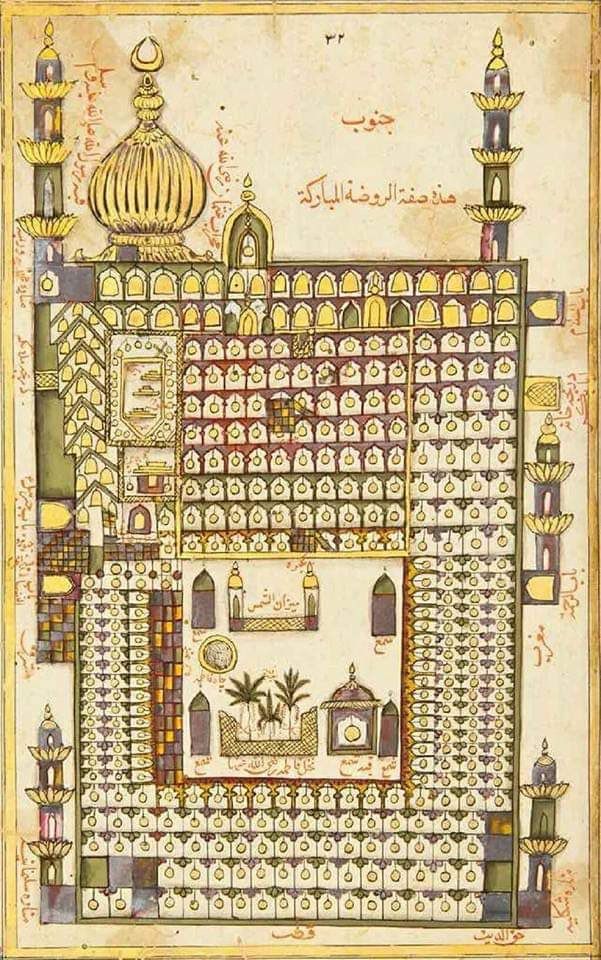
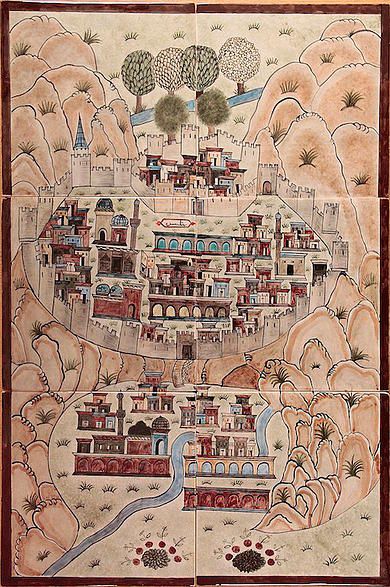
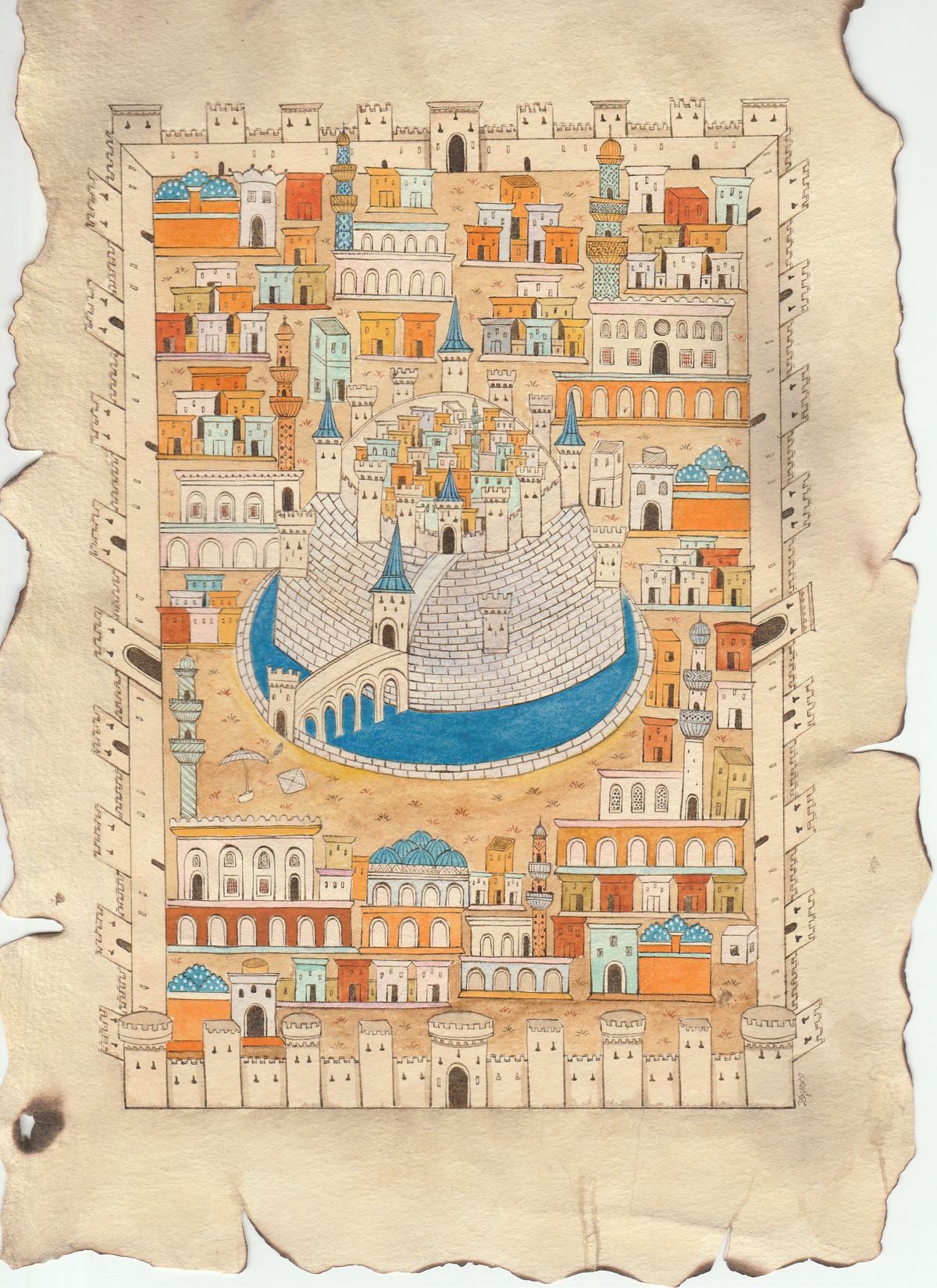
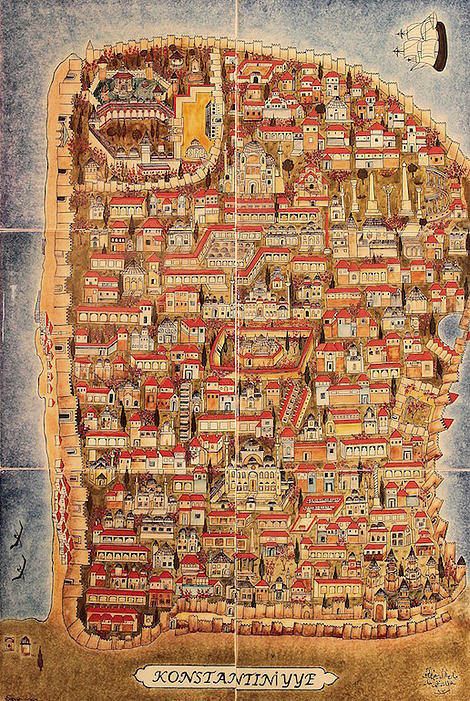
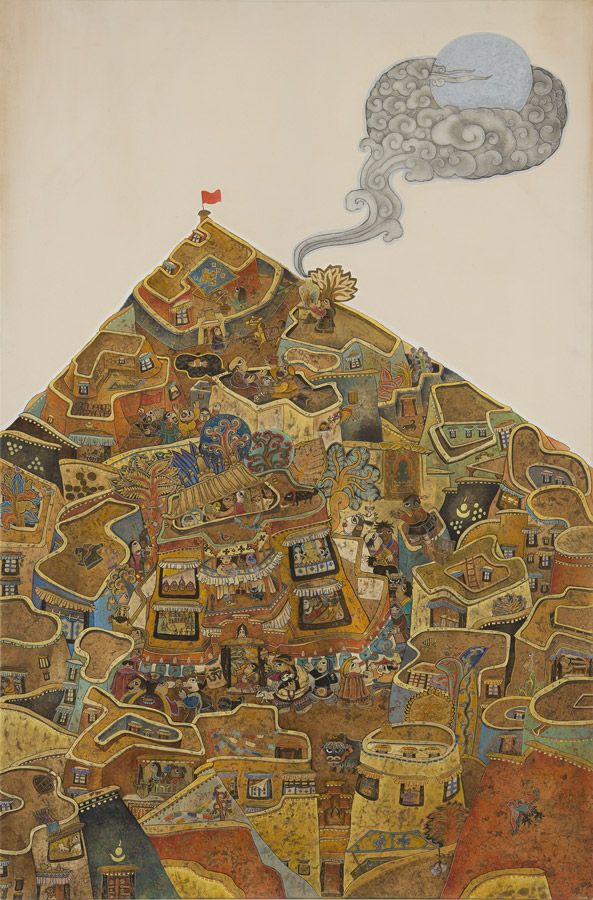
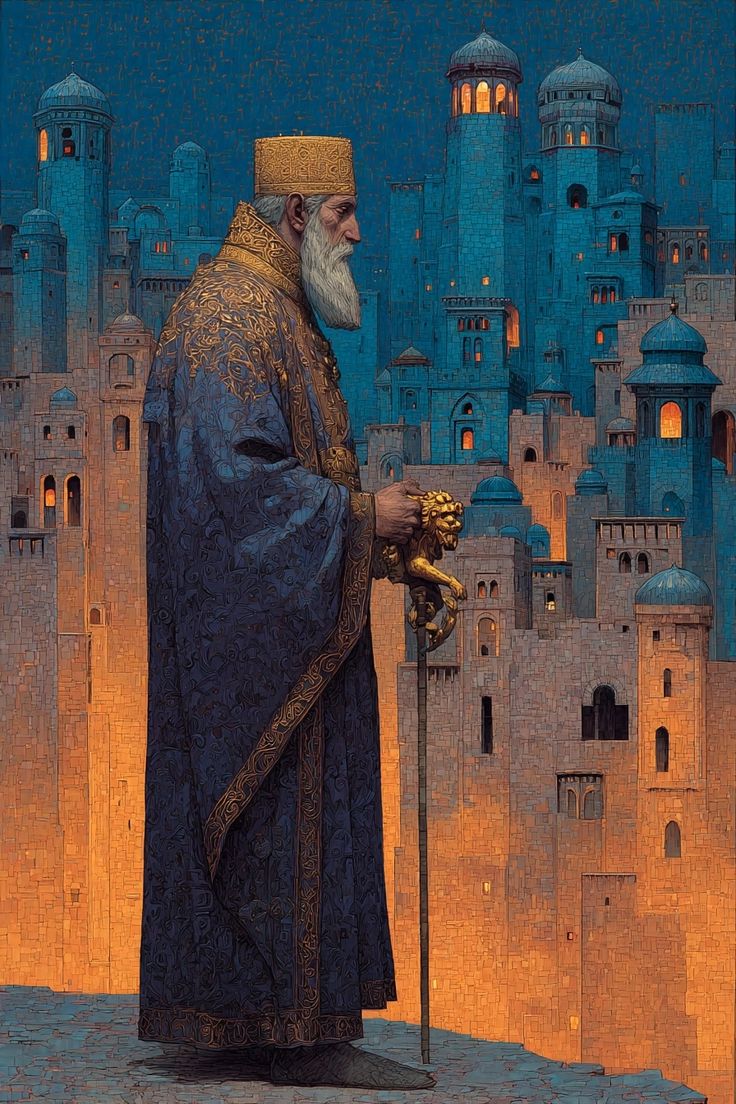
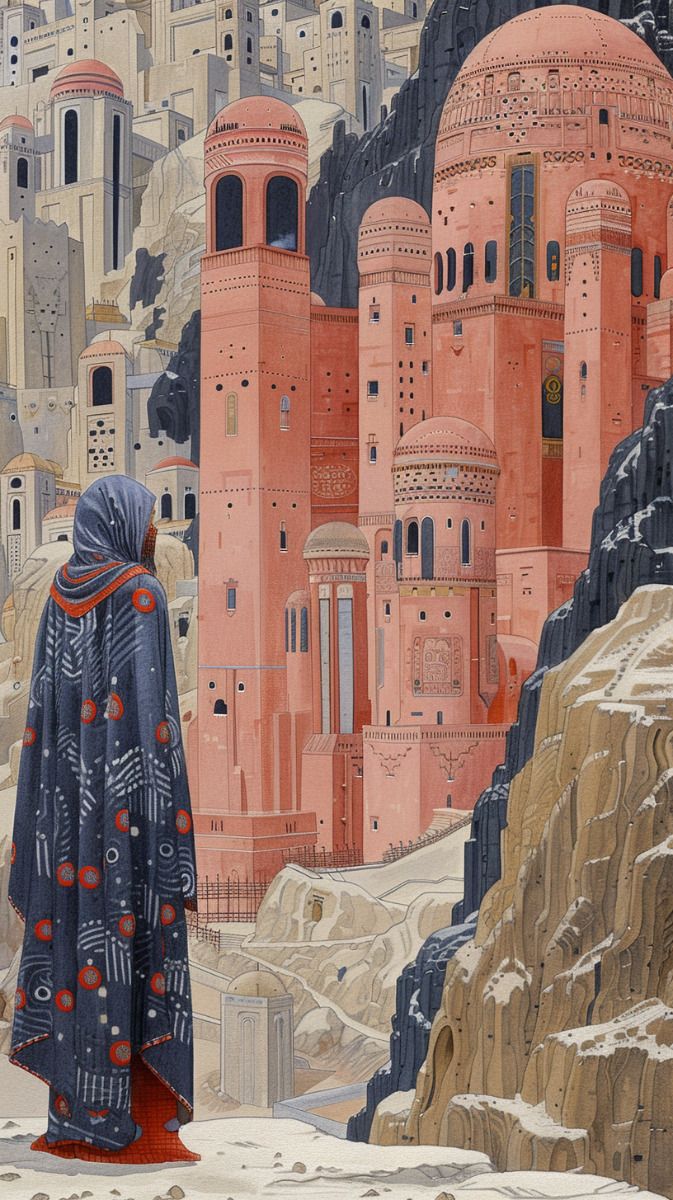
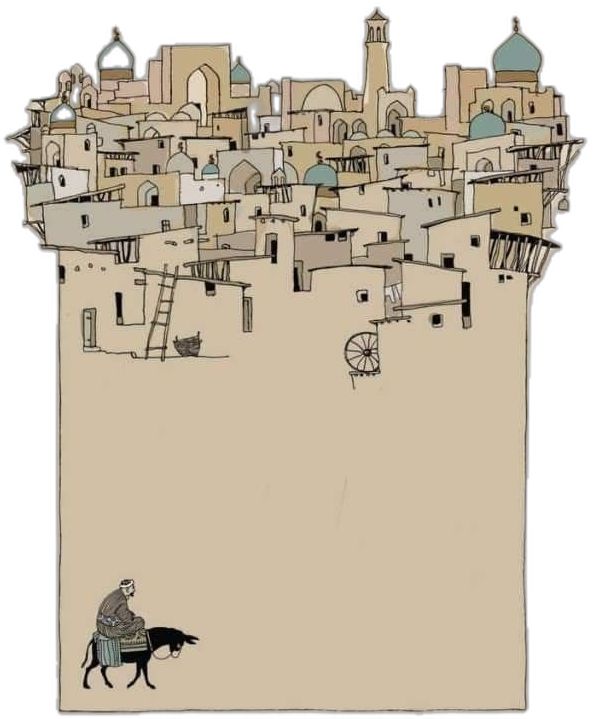
The image of the “vertical city”—whether a real hillside settlement like Mardin, where streets seem to stack on top of one another, or a topography unfolded in layered tiers like the 16th-century Ottoman city maps of Matrakçı Nasuh—is a powerful model in Eastern and Orientalist painting and graphic art, from Ottoman miniatures to contemporary fantasy illustration. Yedikardeş had plenty to draw on beyond the view of his hometown.



Add comment