

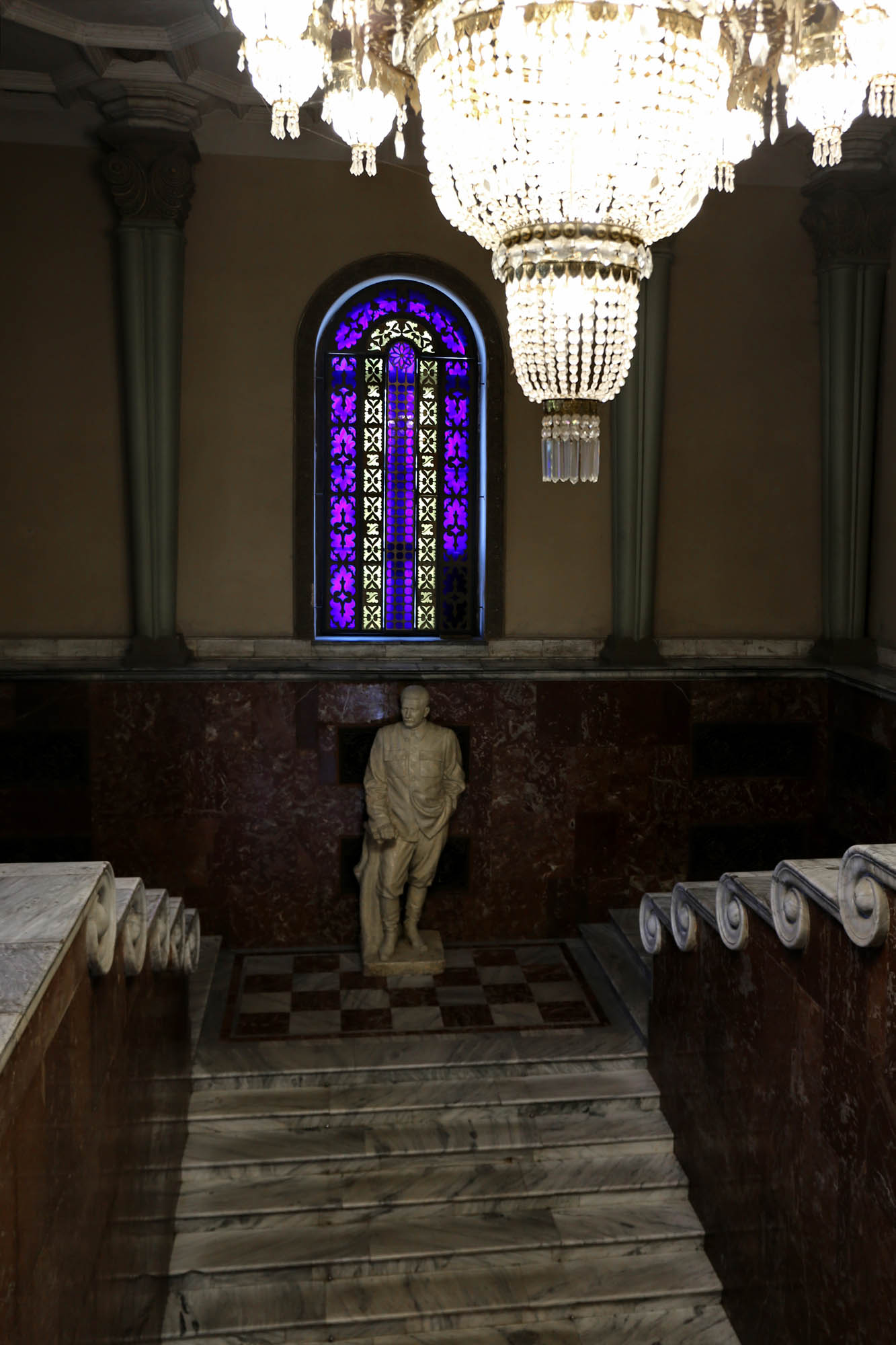
Oh tempora. Today’s ceremonial military parade on Red Square was only a grotesque shadow of its former self. And no one brings flowers to Comrade Stalin anymore either! Last year at this time, in the monumental stairwell of the Stalin Museum in Gori, a grove of wreaths still surrounded the statue of the Vozhd’, and parents with small children—who had planned cultural programs for the holiday—were happily taking photos with it.
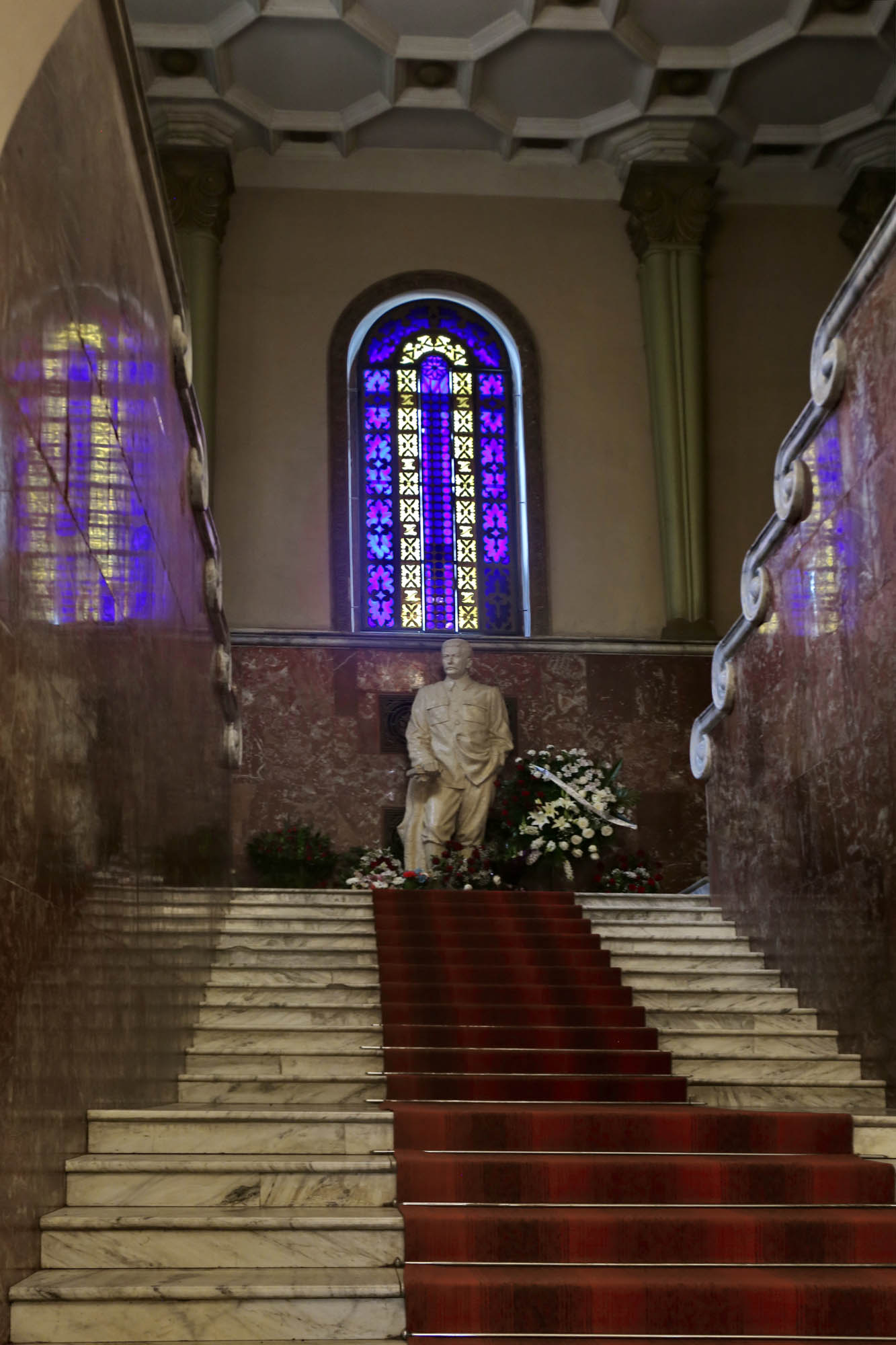
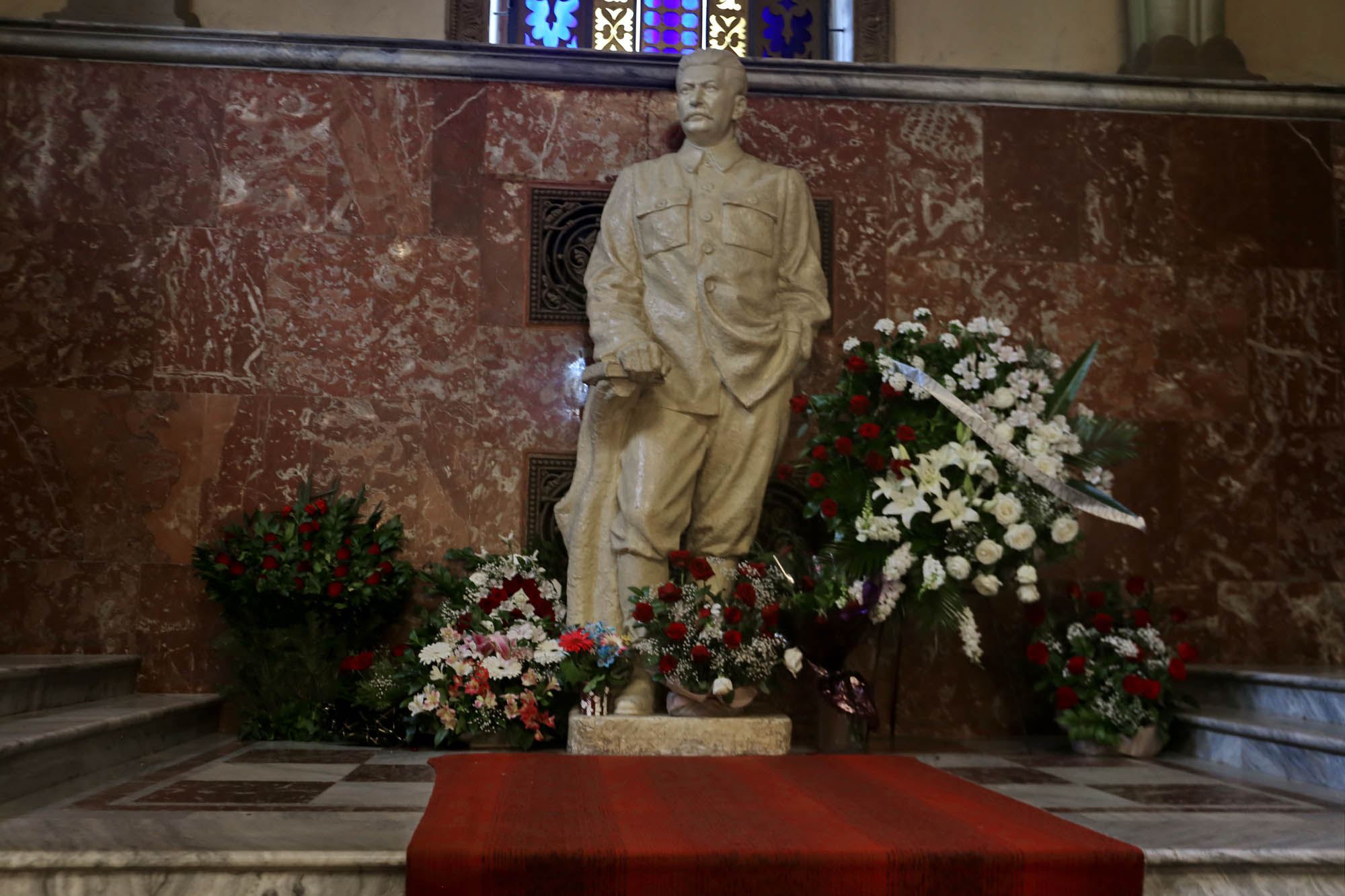
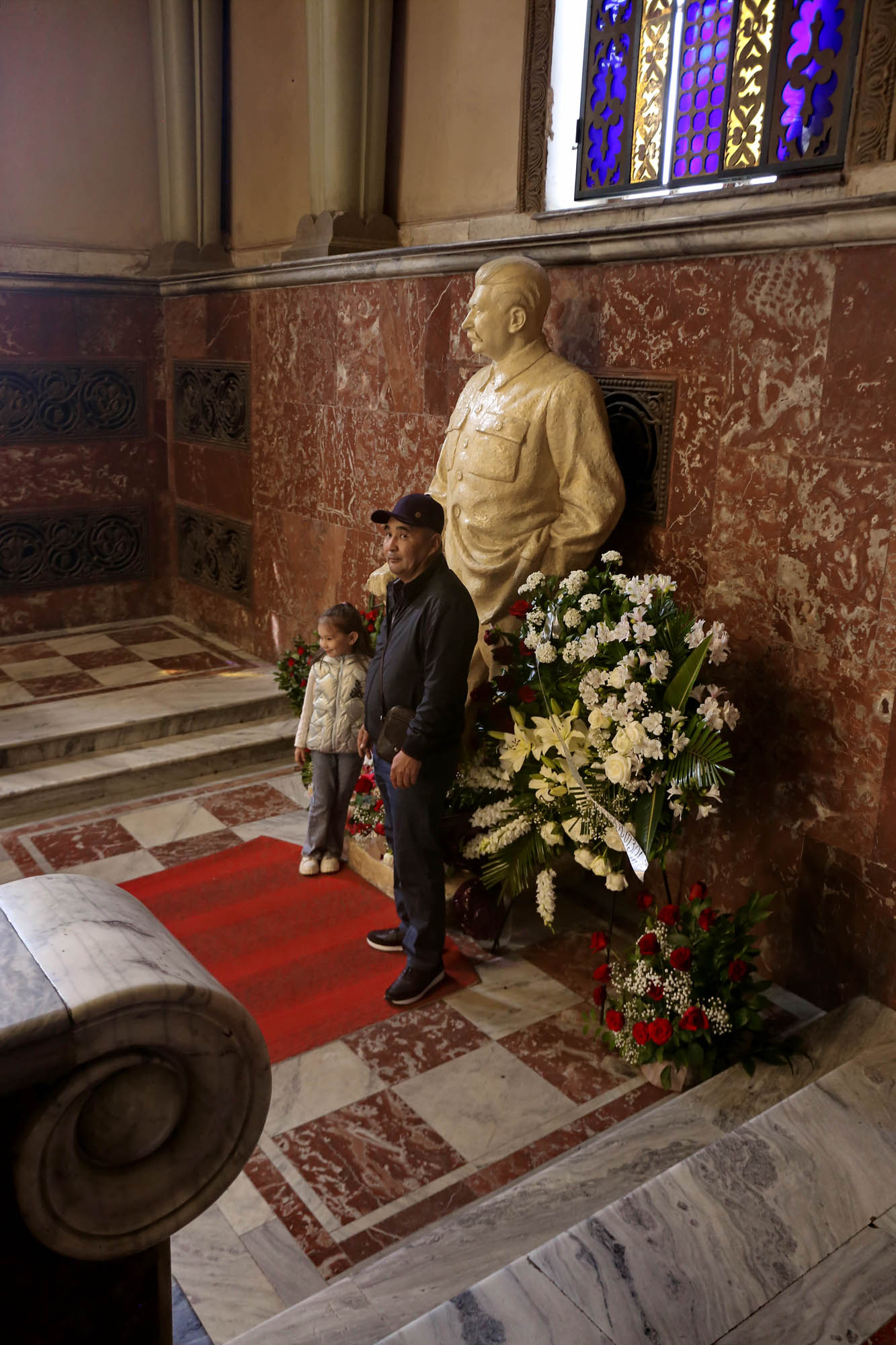
But today there wasn’t even a single flower in the stairwell. And inside, the Leader of the Peoples slept in total silence, even though on this very day once upon a time long rows of buses brought the people who knelt down and kissed Stalin’s images.
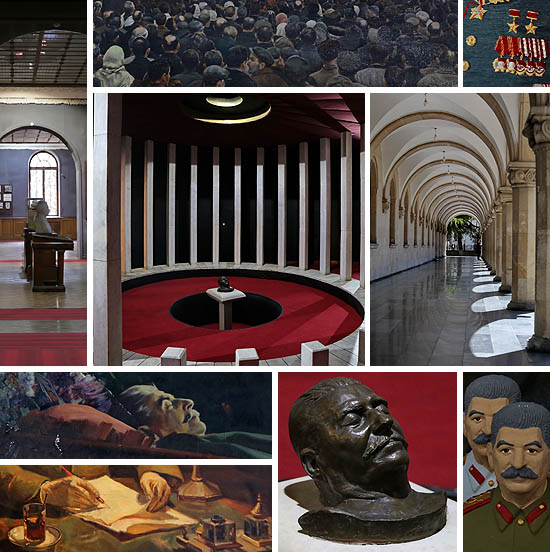
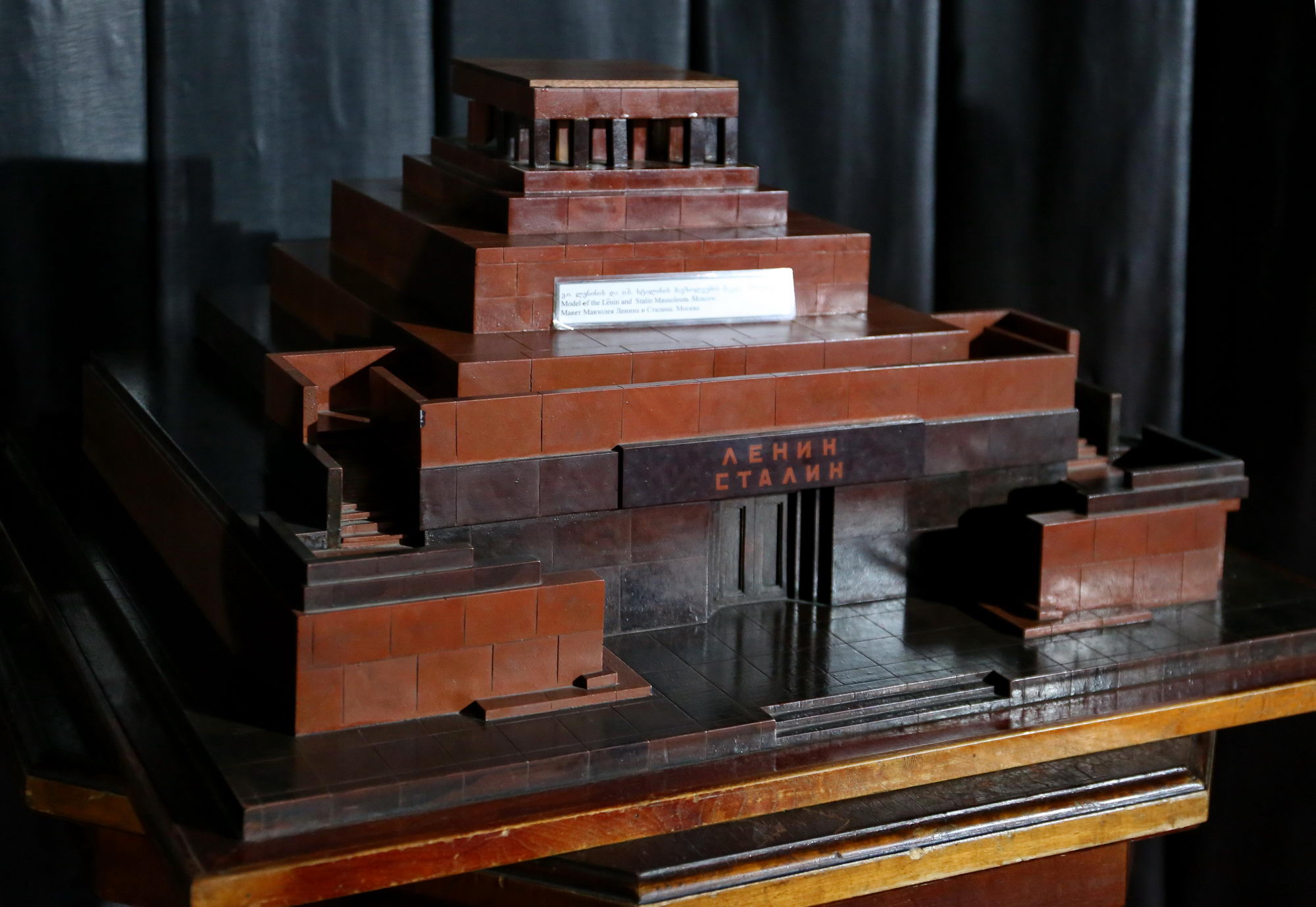
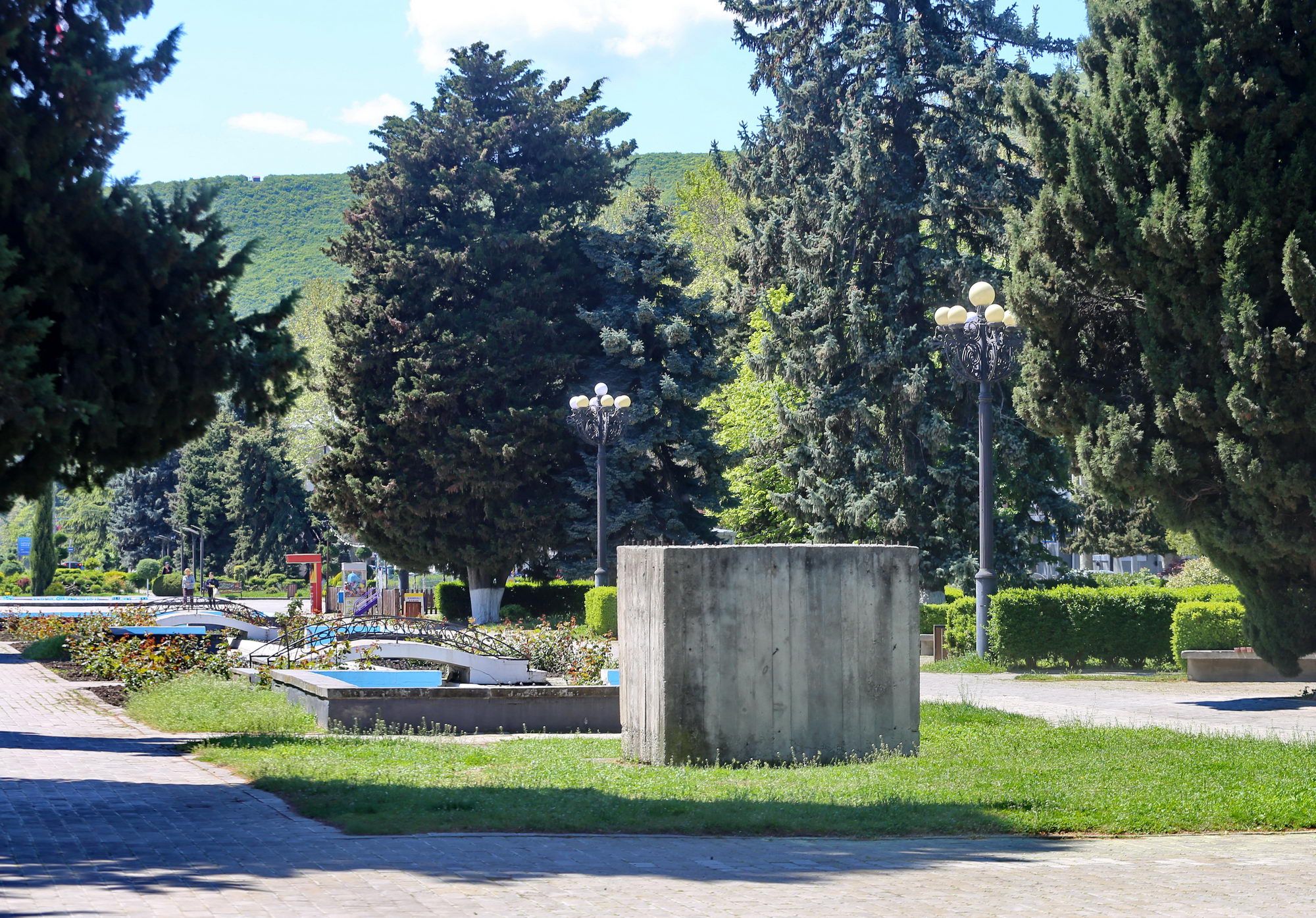
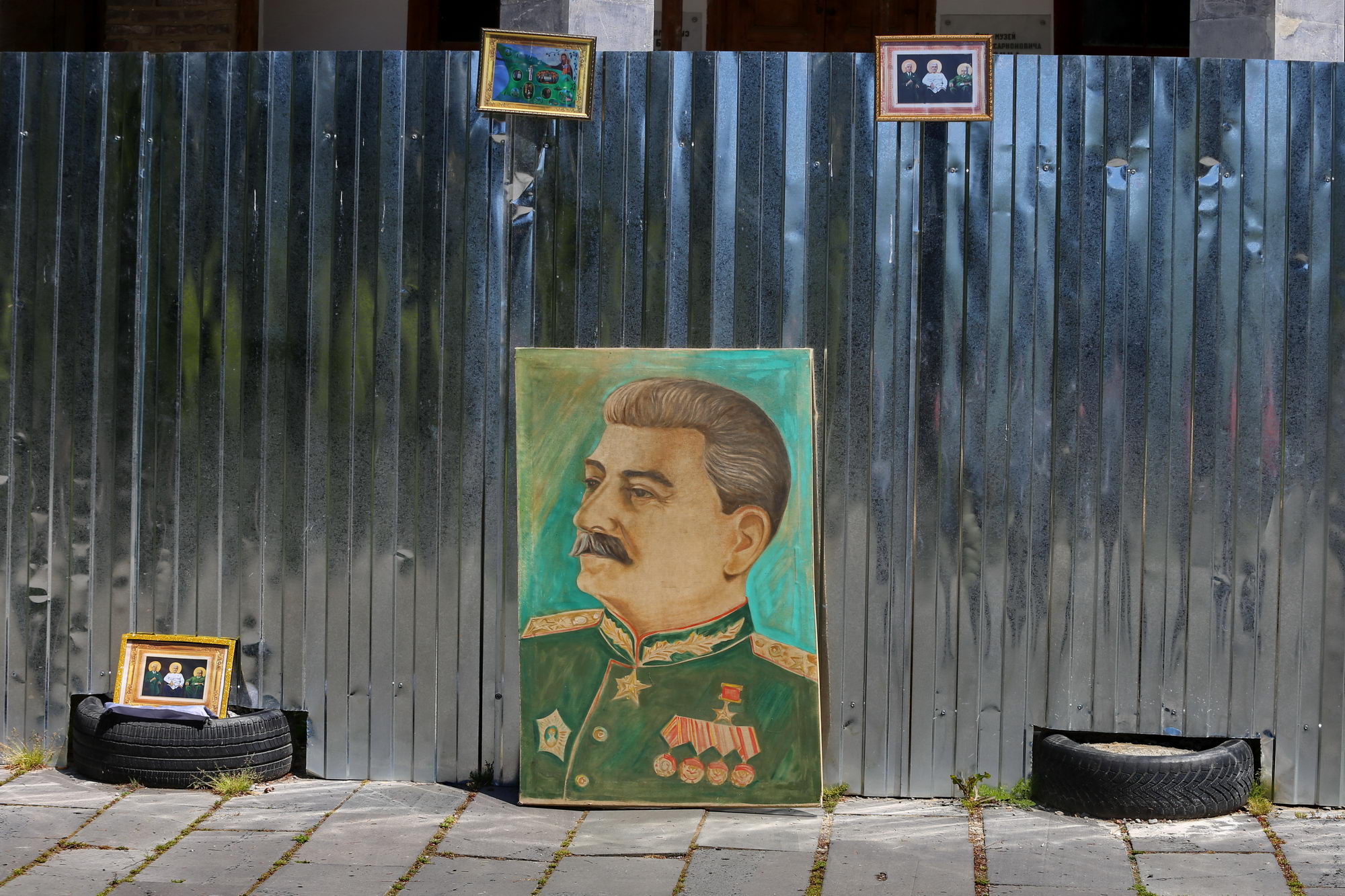
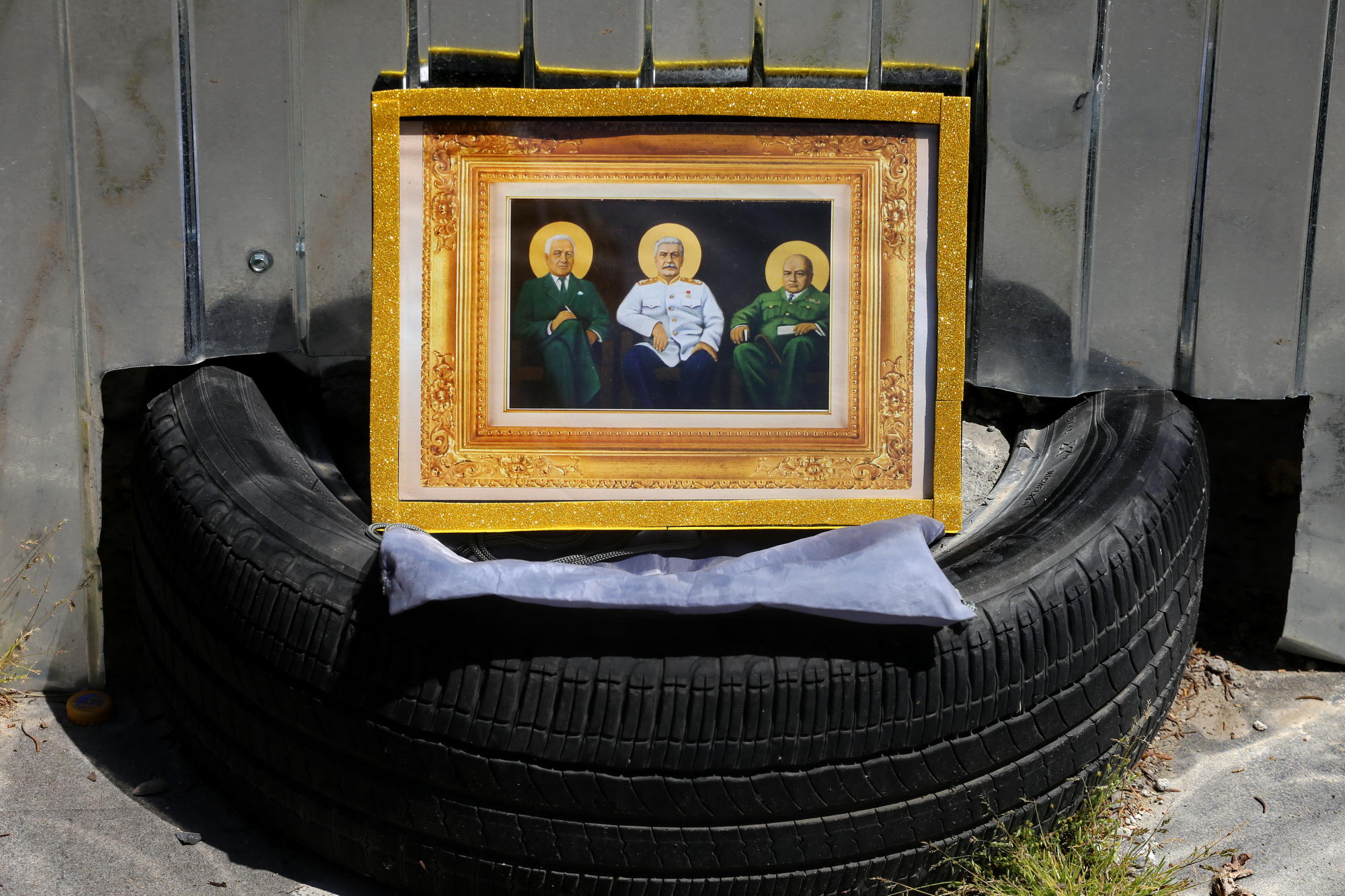
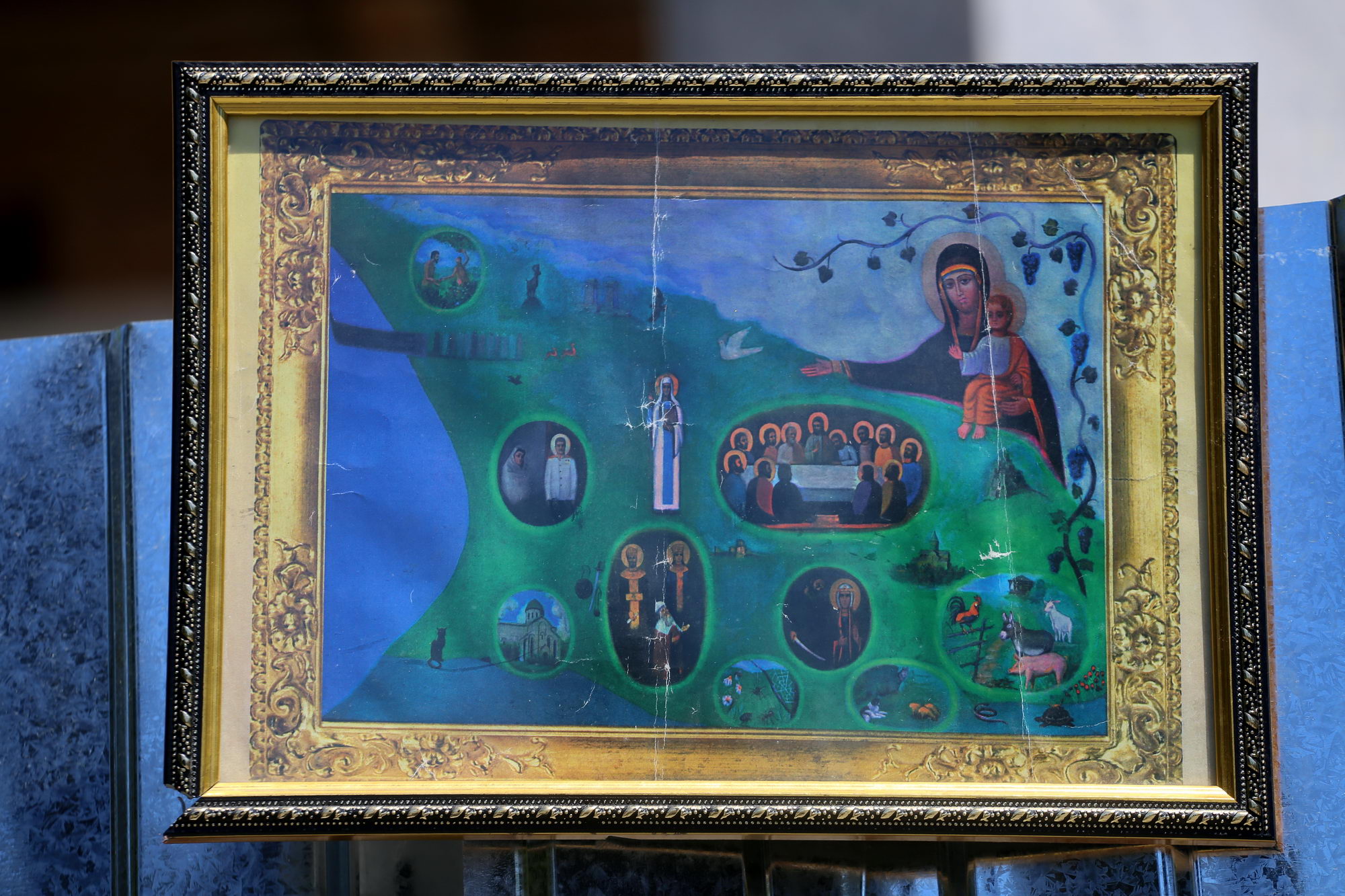
Fortunately, not all of his followers have turned away from the shining torch of humanity. In front of the museum, next to Stalin’s former house and the empty pedestal of his monumental statue, a small group of hardcore fans stands excitedly with flags and flowers, ready to celebrate. Some of them may have known the guarantor of happy childhood since his childhood. On the corrugated fence surrounding the house for unknown reasons, there are still images of Stalin, even in icon form, with halos, as I have already written about here.
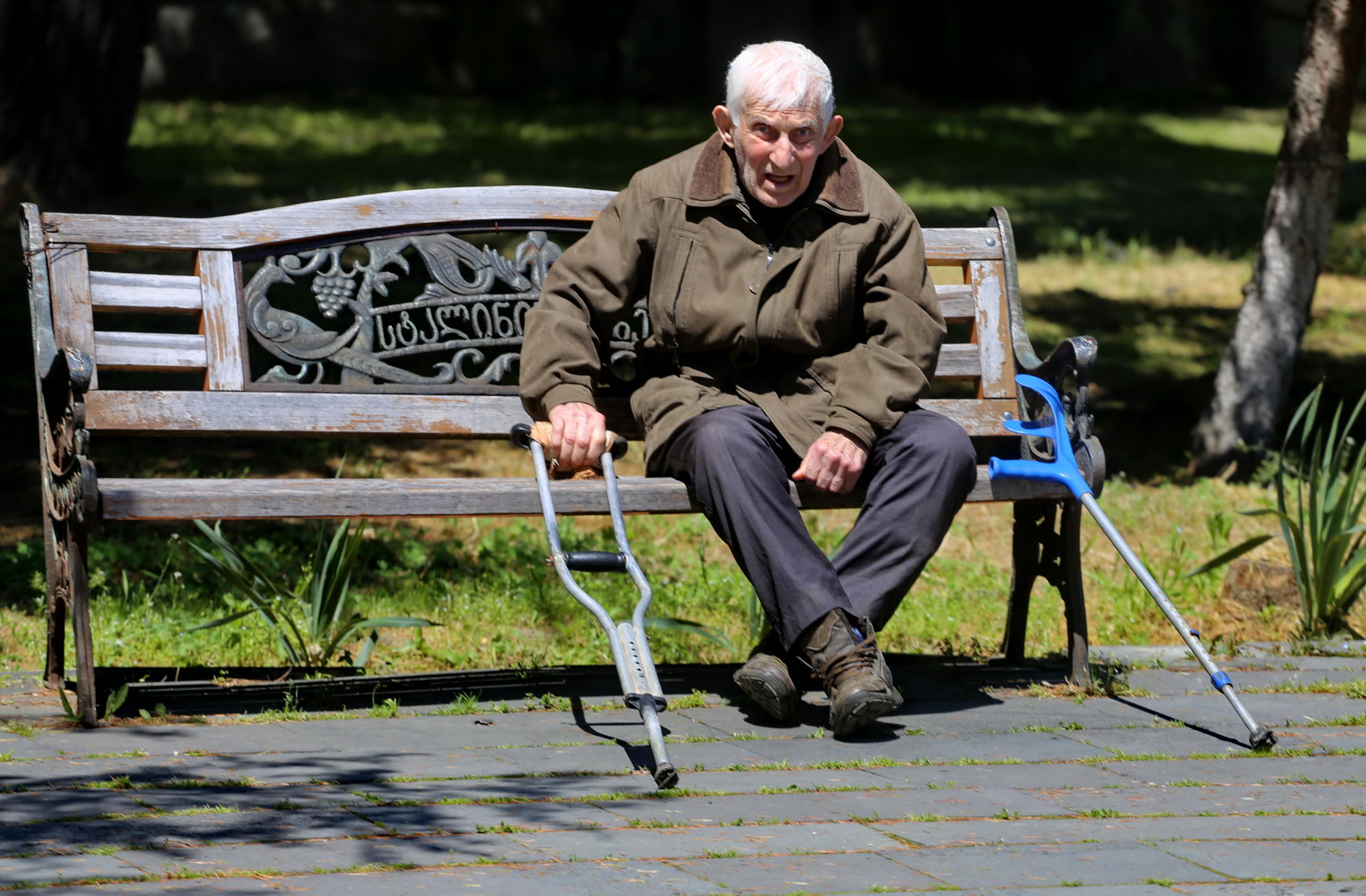
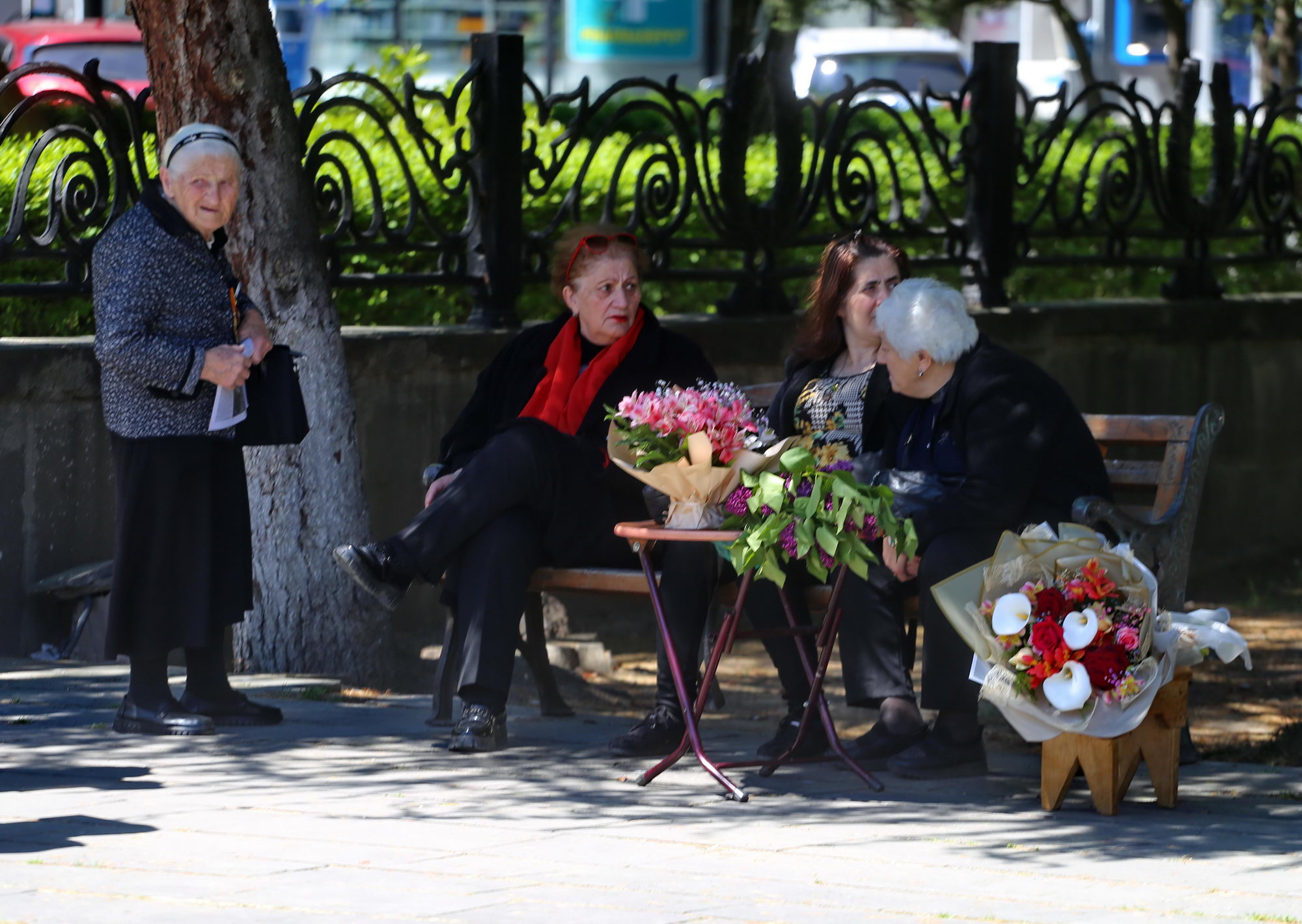
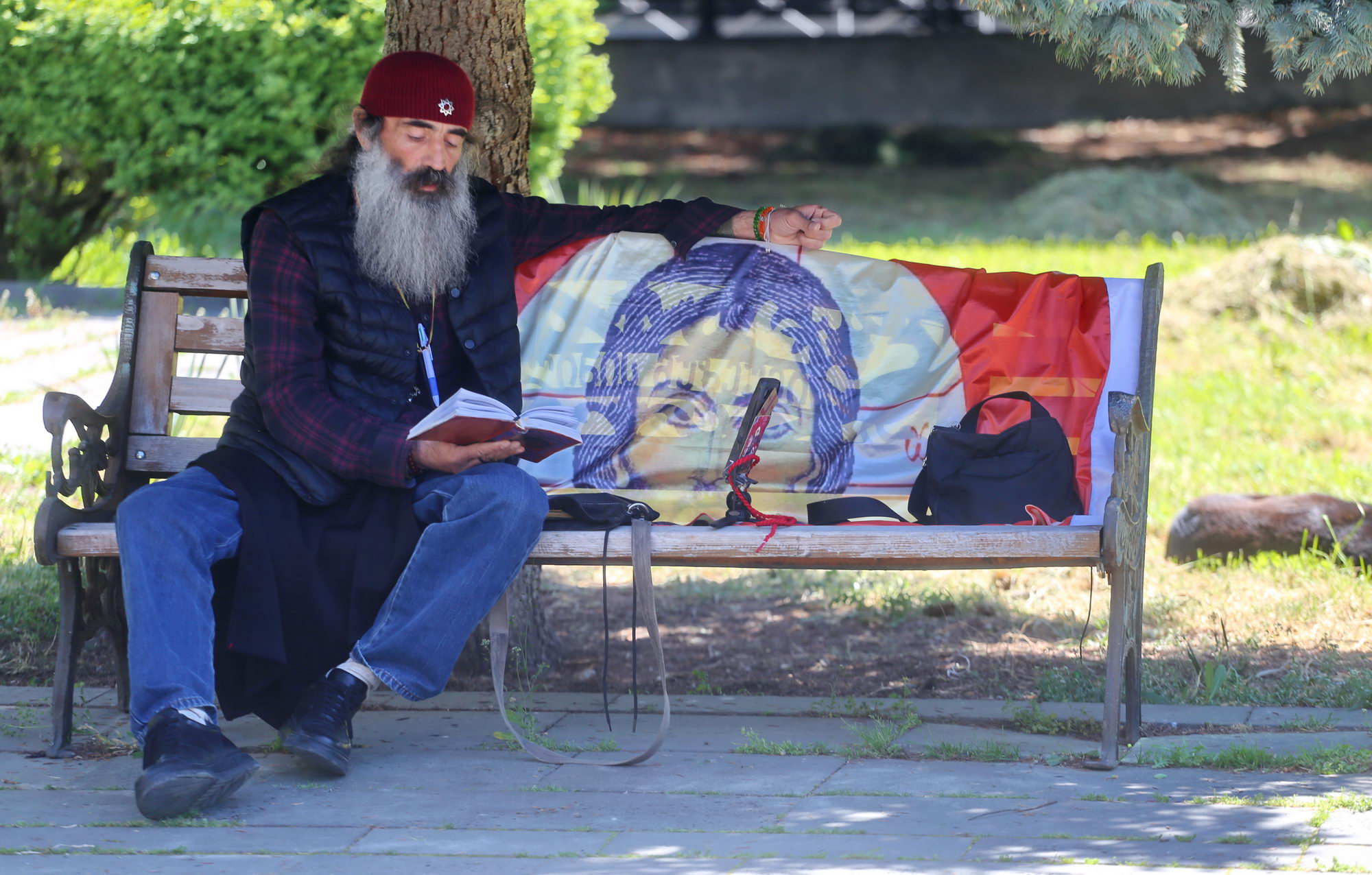
Only on one bench sits a wandering monk-like figure, buried in his book, with a large Christ-banner spread across the backrest—like those carried by Russians into the First World War. Who knows whether as a counter-protester or a sympathizer, or simply following the principle that one madman makes a hundred.
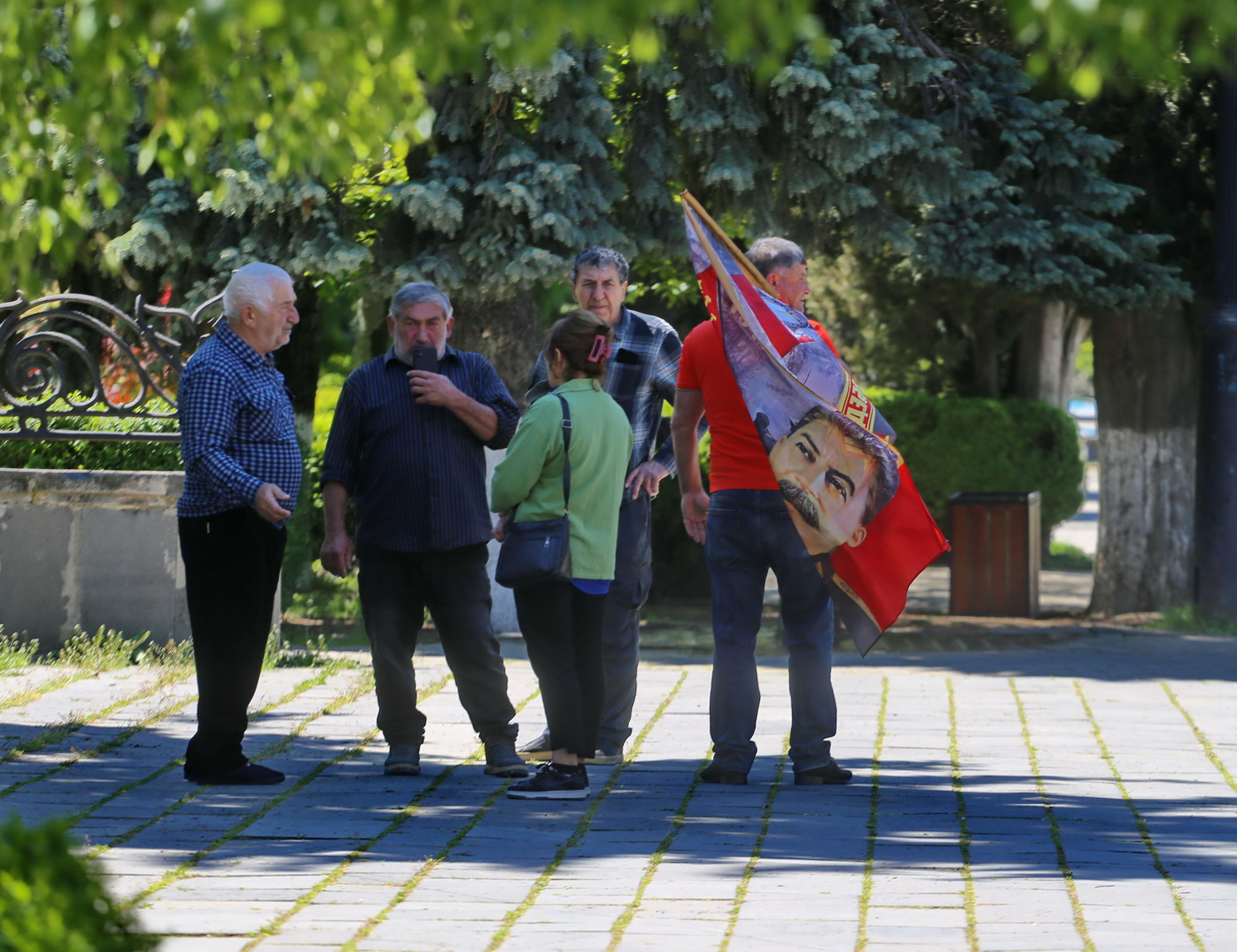
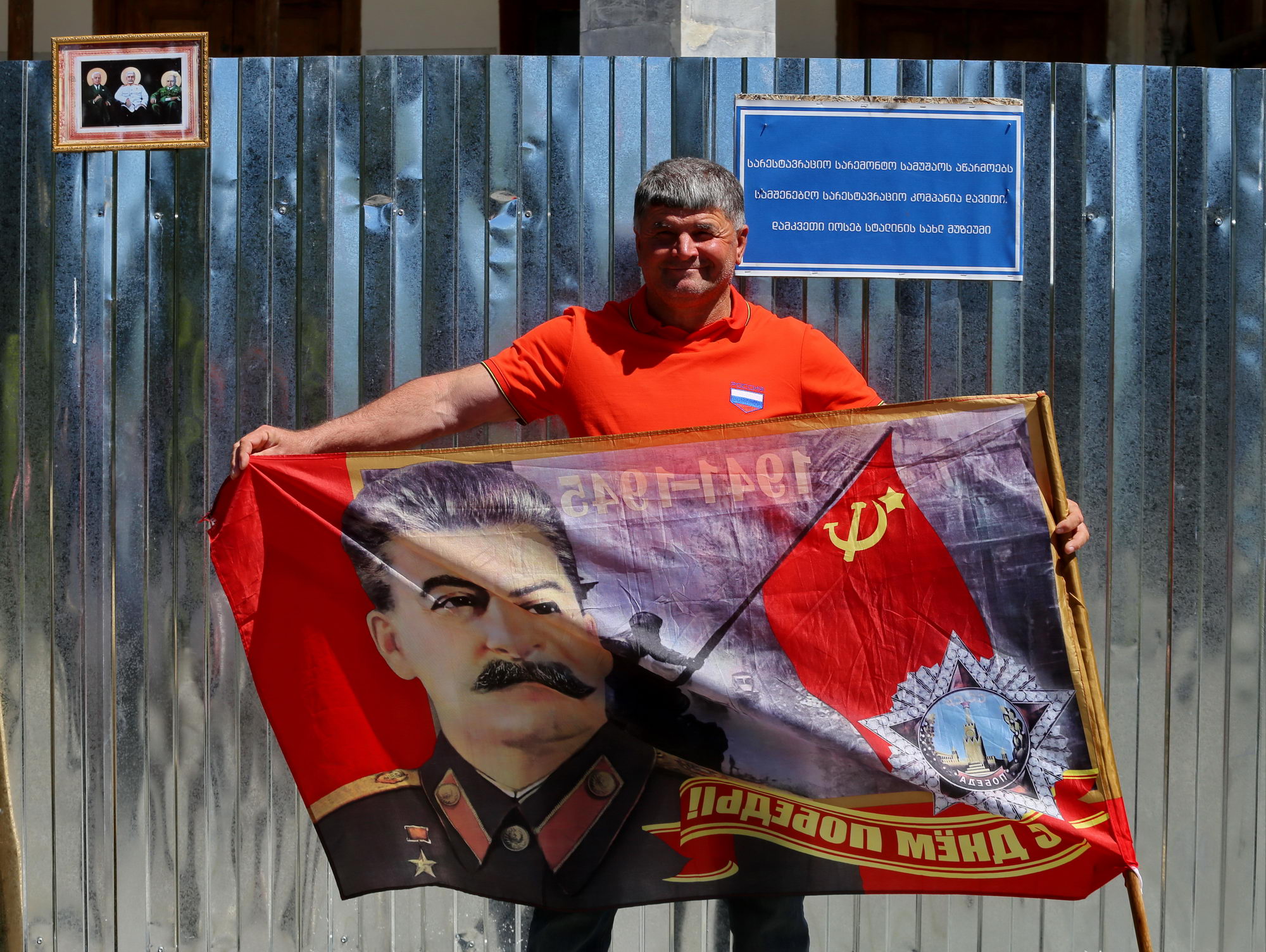
The djigit waving a Stalin-faced victory flag strikes a pose when he notices the camera. He shows his accessories one by one. “Where are you from?” “Hungary.” “Ah, Viktor Orbán, harasho!” “He’s already in the soup,” I say, but it slides past him, as did many things in the complicated history of the twentieth century.
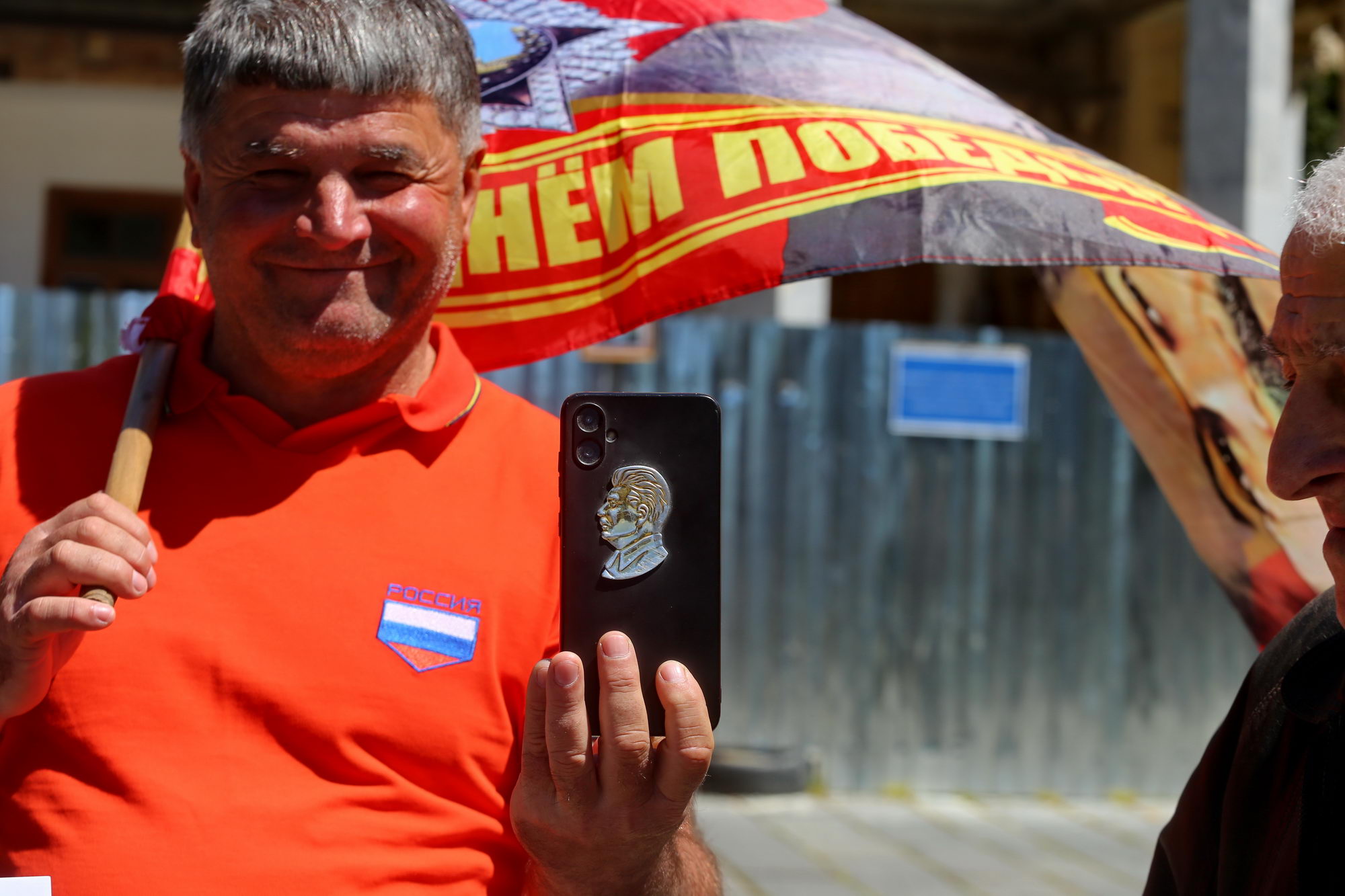
But from this complicated history, an unexpected figure steps forward in their support. Quite by chance we come across the true hero of Victory Day. In his native village, Jvari, he stands in a neglected park, both as a full-figure soldier statue and as a portrait bust.
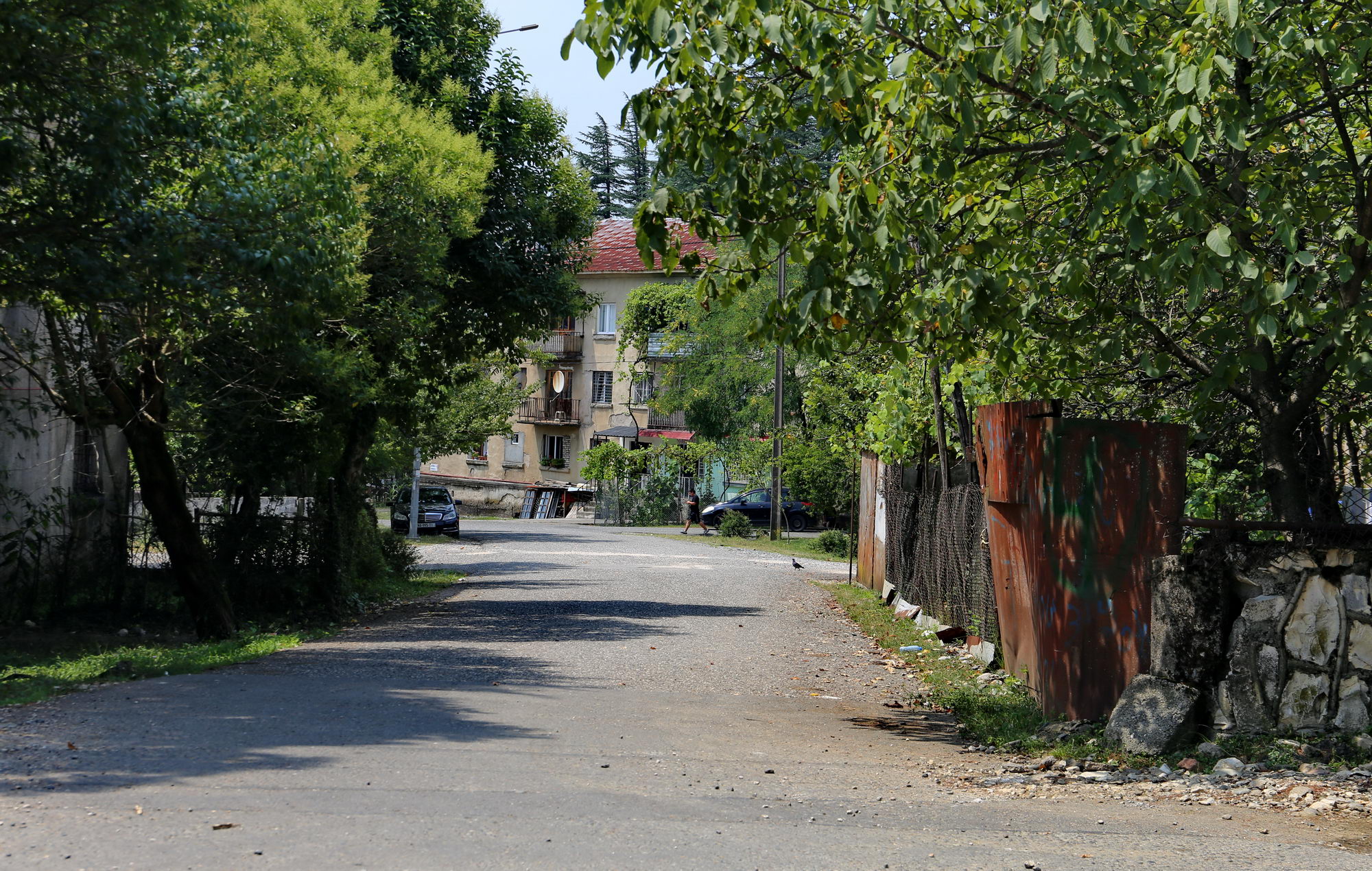
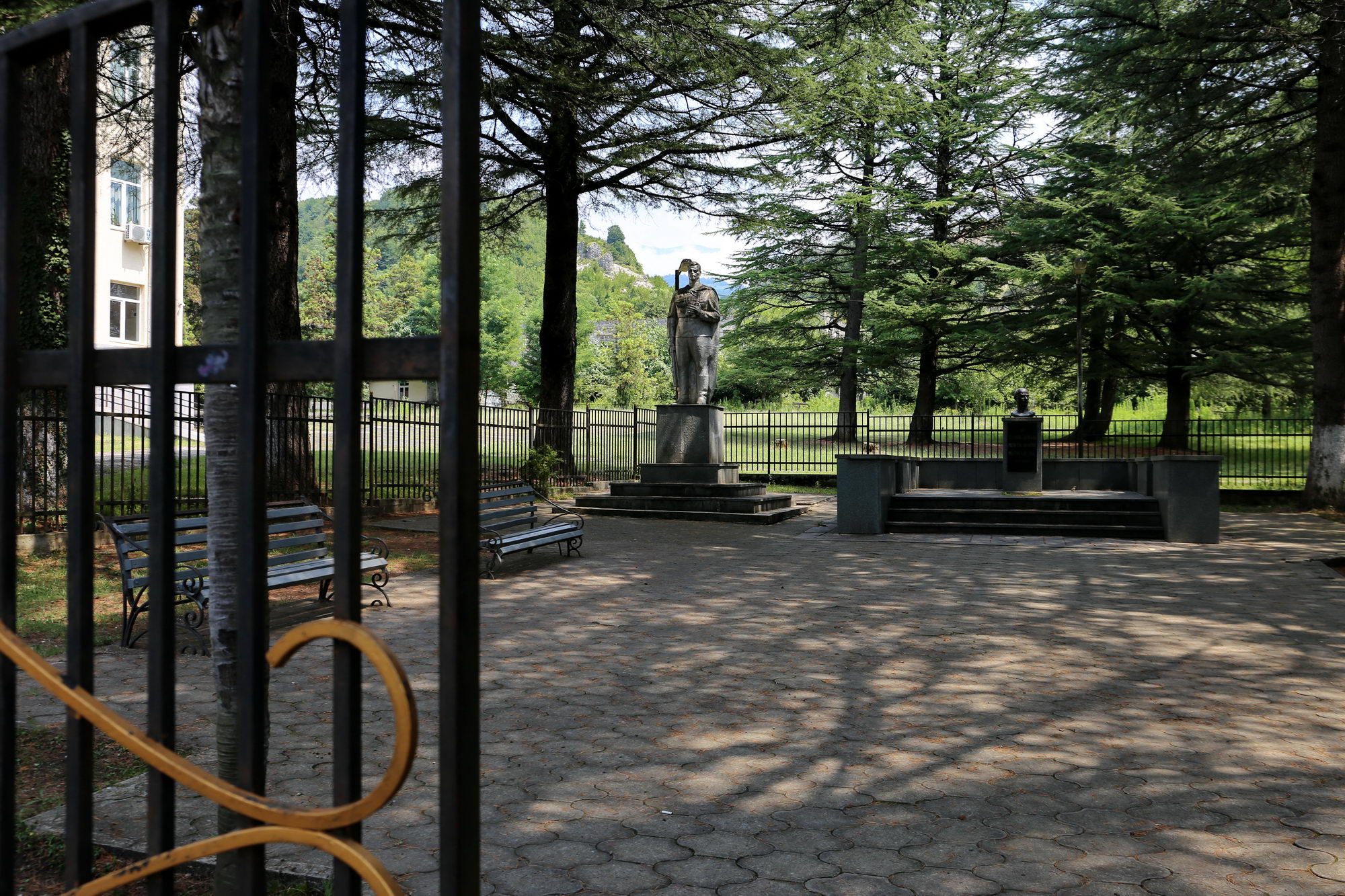
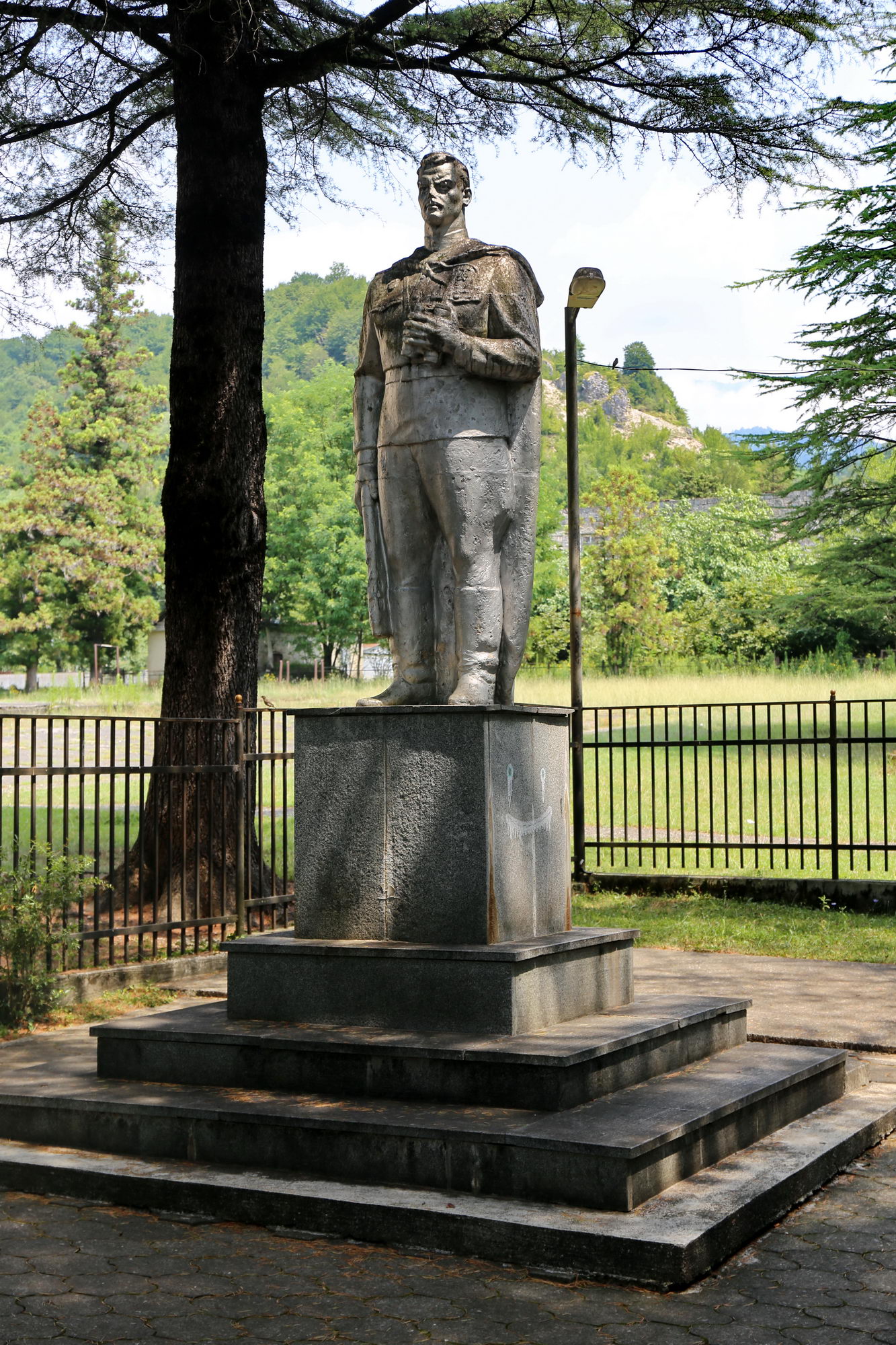
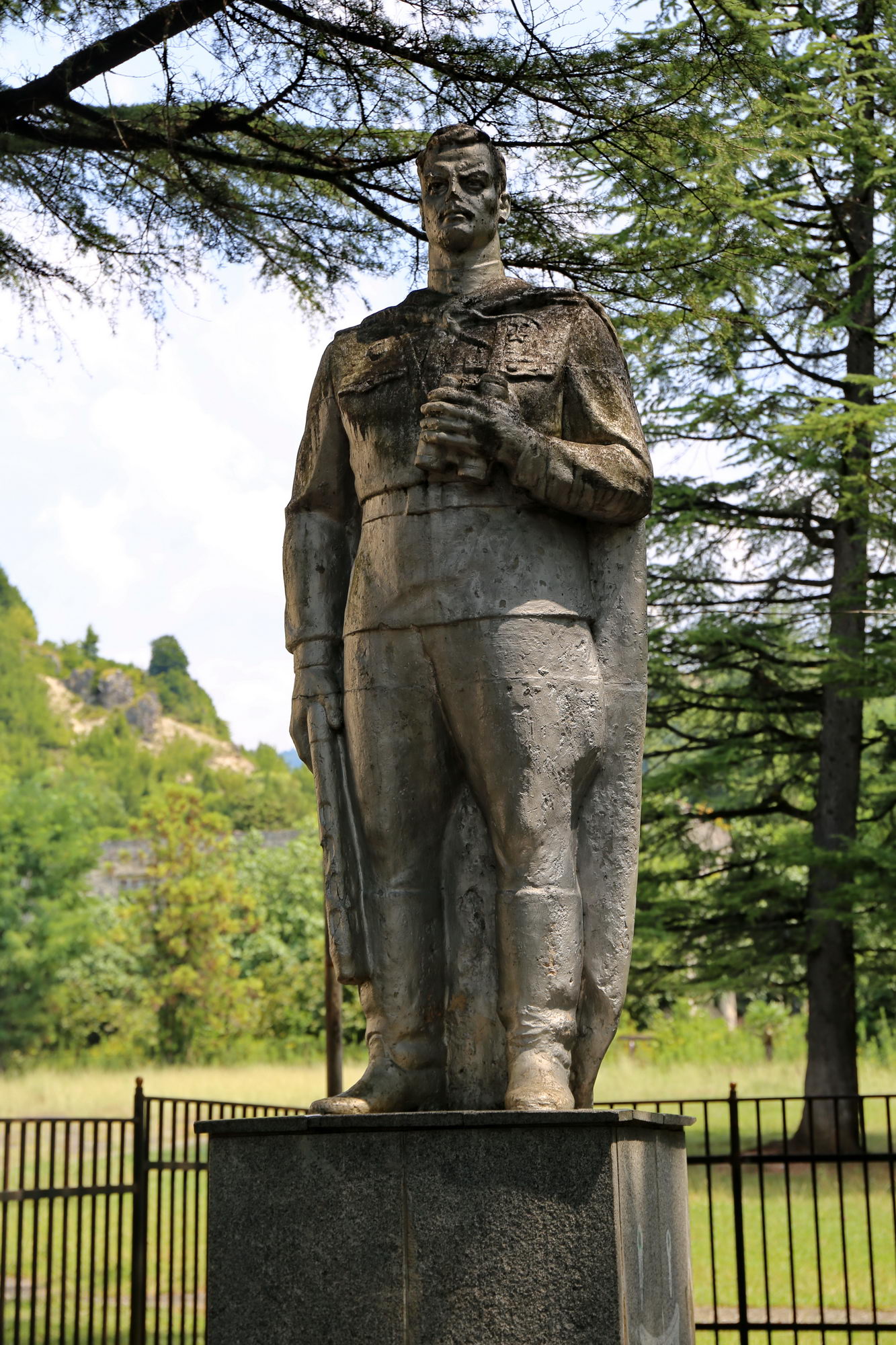
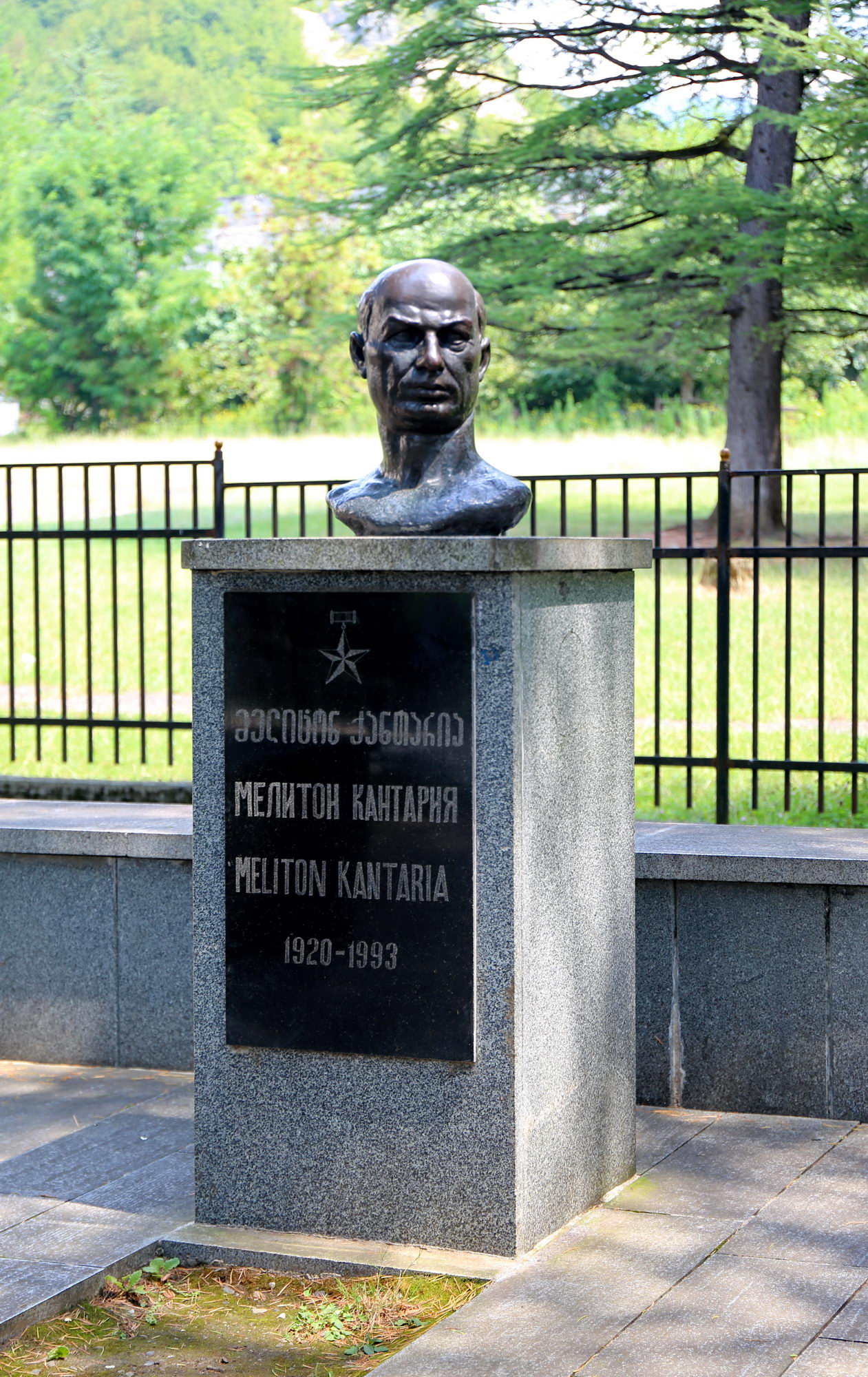
Does anyone still remember Meliton Kantaria? Then they must have learned Russian from a rather old textbook. The Georgian Meliton Kantaria and the Russian Mikhail Yegorov were the two Red Army soldiers who, on 30 April 1945, raised the red flag over the Reichstag—at least Stalin declared them official national heroes, in the spirit of balancing the nationalities. There was no photograph of this, however. The official photographer of the Great Patriotic War, Yevgeny Khaldei, only arrived in Berlin on the third day. In order to produce a staged report on the event everyone had been “waiting 1,400 days for,” he selected three soldiers at random for the photograph. Later he made it even more dramatic by tilting the flag further and adding smoke clouds in the background. He also removed the watch from the right wrist of the soldier holding Kantaria, since there was already another watch on his left wrist. AI ante festam.
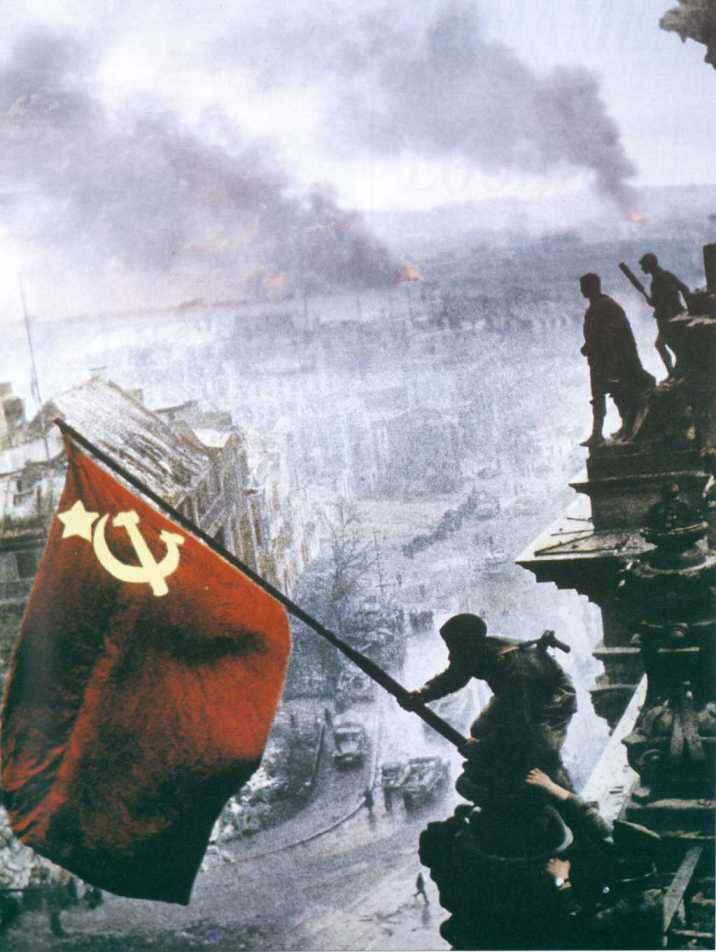
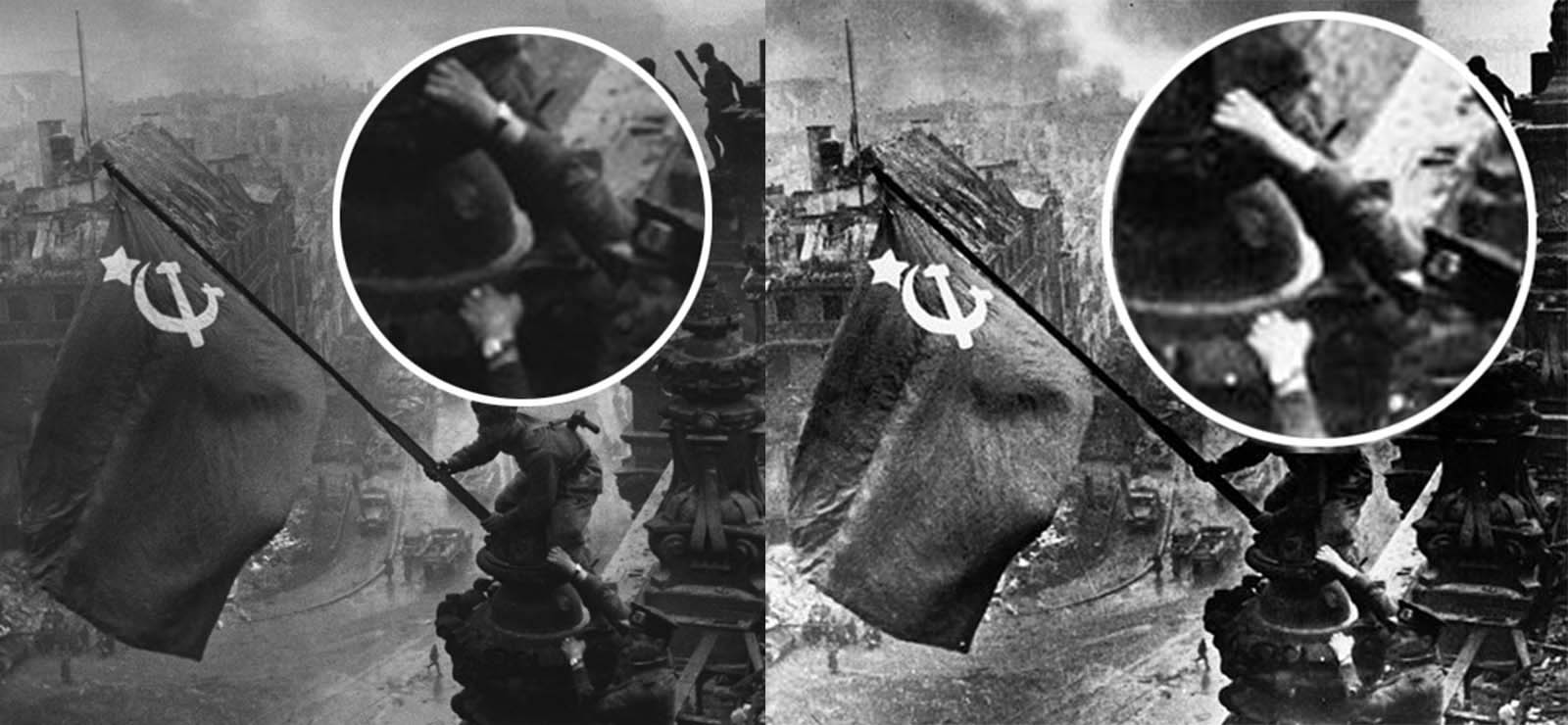
Yet these two wristwatches were the most authentic historical testimony in the entire image. A silent visual testimony, supported by oral recollections as well.
“By Christmas 1944, the front had closed around Budapest. The Zugliget tram still reached the city’s green outskirts at that time. The line, used in peacetime by excursionists and students, had by late December 1944 become a route of survival.
On that Christmas morning, during a quieter hour, a few Soviet soldiers boarded the tram leaving Zugliget. They were not exactly coming from battle, more as if they wanted to look around—but they had weapons, and the passengers immediately sensed that this would not be an ordinary inspection.
The soldiers said little. They walked through the carriage, their eyes catching the glint of metal on the men’s wrists—wristwatches, German, Swiss or Hungarian-made. At the time, a watch was not just a tool, but value, prestige, often one of the last remaining possessions someone still had.
The Soviets stopped one by one in front of the passengers, pointing at the watches—“Davai chasy!”—and there was no objection. People slid their watches off and handed them over in silence. Some may have tried to hide them, but it was pointless. The soldiers knew what they were looking for.
The whole action did not take long. The tram did not even stop in the meantime. It was Christmas, but peace and celebration felt distant—instead, fear, vulnerability, and the cold silence of survival filled the carriage.
This small episode—the taking of watches on the Zugliget tram—does not appear in history books. Yet it lives on in the memory of generations. A tiny scene from the horrors of war, when occupation became not only political but personal. When time—and what measured it—belonged to someone else.”



Add comment