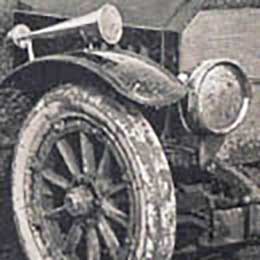


As in China with the ascension of each new emperor the years started being counted from zero, so the time of Studiolum is divided by the protagonists of the projects following each other. “This happened when we were preparing… for the Radnóti centenary, the Hong Kong exhibition of Aurél Stein, the presentation of the codices of David Kaufmann…” and so on. The era that began in this March is marked by the name of the greatest Hungarian Iranologist Sándor Kégl (1862-1920).

 Sándor Kégl was born in a noble family, the center of their estates was the small Szentkirálypuszta on the left bank of the Danube against the town of Ráckeve. The knowledge of foreign languages was self-evident in his family whose members spoke and wrote to each other just as often in English or French as in Hungarian. Nevertheless, Sándor surpassed everyone. To the astonishment of his professors, already at high school he read all literature in the original – Latin, Greek, German, English, French, Italian – languages, and in the following four years he perfectly acquired Russian, Dutch, Danish, Swedish, Spanish and Portuguese. After the main European languages he turned to the Oriental ones, and mastered Turkish, Persian, Arabic, Hebrew, Tatar and Sanskrit. He kept learning languages all along his life: he learned a number of other Iranian and Indian languages, living and dead Scandinavian dialects, and during WWI he even learned Chuvash and Mordvin from the captive soldiers of the Russian army working on his estates.
 A characteristic page from the notebooks of Sándor Kégl with notes in Sanskrit, Persian, Arabic, Icelandic and Swedish.
It was around that time, in the 1880s – as we have written about it – that the other great master of languages Ármin Vámbéry returned from his long Oriental journey to Budapest, and it was for his sake that the young Sándor Kégl enrolled for Oriental languages where he was tutored, besides Vámbéry, also by another professor of European fame, the great Islam scholar Ignác Goldziher. He made lifelong friends with both of them. Having taken his PhD degree in 1889, on the proposal of Vámbéry he went to Persia for a year to perfect his knowledge of the language. Vámbéry provided him with the best recommendations from Constantinople to Tehran, including a letter to the Shah of Persia himself.
 From Emperor to Emperor. Sándor Kégl’s passport made out in the name of Franz Joseph, and his letter of recommendation written by Ármin Vámbéry to Shah Nasser al-Din.

Besides his studies of language and literature, in Persia he mainly purchased manuscripts. He returned to Hungary with a priceless and excellently selected collection. In the following thirty years he prepared the internationally appreciated edition of a large number of Persian and Turkish literary works on the basis of these manuscripts.
 The collection of the poems of the Governor of Bursa Ahmed Pasha (?-1497), copied in 1531 in Edirne, and their Romanized transcription by Sándor Kégl, both in the Kégl Library.

On his return he became a private lecturer of Persian language and literature at the University of Budapest, but he also taught Indology and held comparative courses in Persian and Sanskrit epic poetry – all for passion, without any remuneration. Twice a week he made the equipage harnessed, went to the local railway station, then from the Eastern Railway Station of Budapest he went by droshky to the university. After his lessons he immediately returned to his estates where he spent the largest part of his time by learning languages, reading, writing essays and increasing his library. It is typical of the period that the bookshops of the nearest little town immediately provided him with the most recent scholarly books and reviews from all over the world, from London through Saint-Petersburg to India.
 A note in Russian by Sándor Kégl from an article of the scientific, political and literary journal Вестник Европы of Saint-Petersburg, of which he was a subscriber, 1885
Neither Sándor Kégl, nor his brother and his sister founded a family. They remained together until their death on the estate of Szentkirálypuszta, managed by his brother, the jurist János in a very competent and modern way. Their sister Teréz learned the new languages together with Sándor, and besides she wrote essays on contemporary English literature and belonged to the pioneers of amateur photography in Hungary.

Sándor Kégl in his will left to the Oriental Collection of the Hungarian Academy of Sciences his huge library, the best collection of Iranology and Indology in Hungary. Together with the library, his complete legacy of manuscripts, notes, correspondence and documents came to the Library of the Academy. Unlike his books and Persian manuscripts, they have not been researched by anyone since then: they were lying in closed boxes in the Manuscript Collection of the Academy.
 An English language letter of Teréz Kégl to her brother in Tehran, 1889
This December, on the ninetieth anniversary of his death, the Academy Library would like to commemorate the great scientist with an exhibition and conference, so finally his manuscripts have been uncovered. Since this spring we have been researching and organizing them. Several interesting pieces will be presented not only at the exhibition in December, but – as usual – also on a website dedicated to the life and work of Sándor Kégl. The site is nearing completion, and our readers will be able to have a look at some parts of it already before the official opening.

The summary of the history of the Kégl family is illustrated by the hundred and fifty photos found in his manuscript legacy. The photos were certainly taken by Teréz Kégl on her two brothers and herself, on their father, their servants and the estate. And, last but not least, on the veritable lords of the estate: the cats.


 Sándor Kégl Sr., shortly before his death




Add comment