

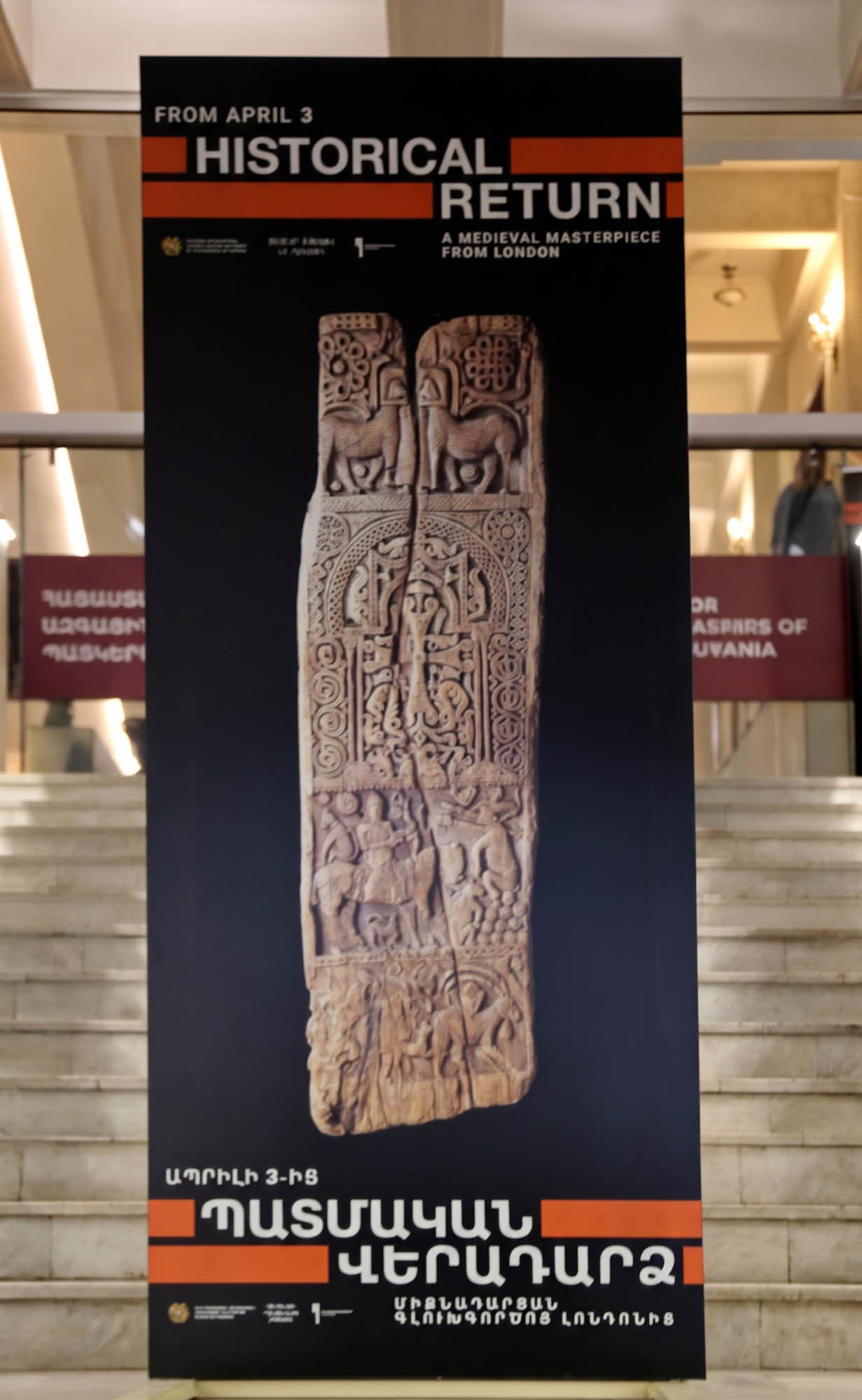
“Historical return!” proudly declares the poster of the chamber exhibition in the entrance hall and stairwell of the Yerevan History Museum. And they certainly have every reason to be proud.
I recently wrote about the beautifully carved gate of an Armenian monastery destroyed by the Turks, which, after a long and complicated journey, eventually made its way to Armenia and found a place in the History Museum. This newly exhibited gate panel, while not quite as dramatic in its story, has followed a similarly winding path.
The gate was stolen in the late 1980s, during the collapse of the Soviet Union, in the Caucasian turmoil of the early, chaotic phase of the Nagorno-Karabakh conflict, from the Haghpat Monastery in northern Armenia, now a UNESCO World Heritage site. One of its panels was purchased at the time by a New York collector, and it resurfaced from his estate at the Frieze Masters 2025 art fair, and then at an auction held by the London-based Sam Fogg gallery. It was there that specialists from the Armenian Ministry of Culture noticed it, while they were actually working on acquiring an Arshile Gorky painting — also now on display. In December, they purchased it for 450,000 dollars. Since April 3 it has been on view in the History Museum’s special exhibition, and it will soon be integrated into the permanent display.
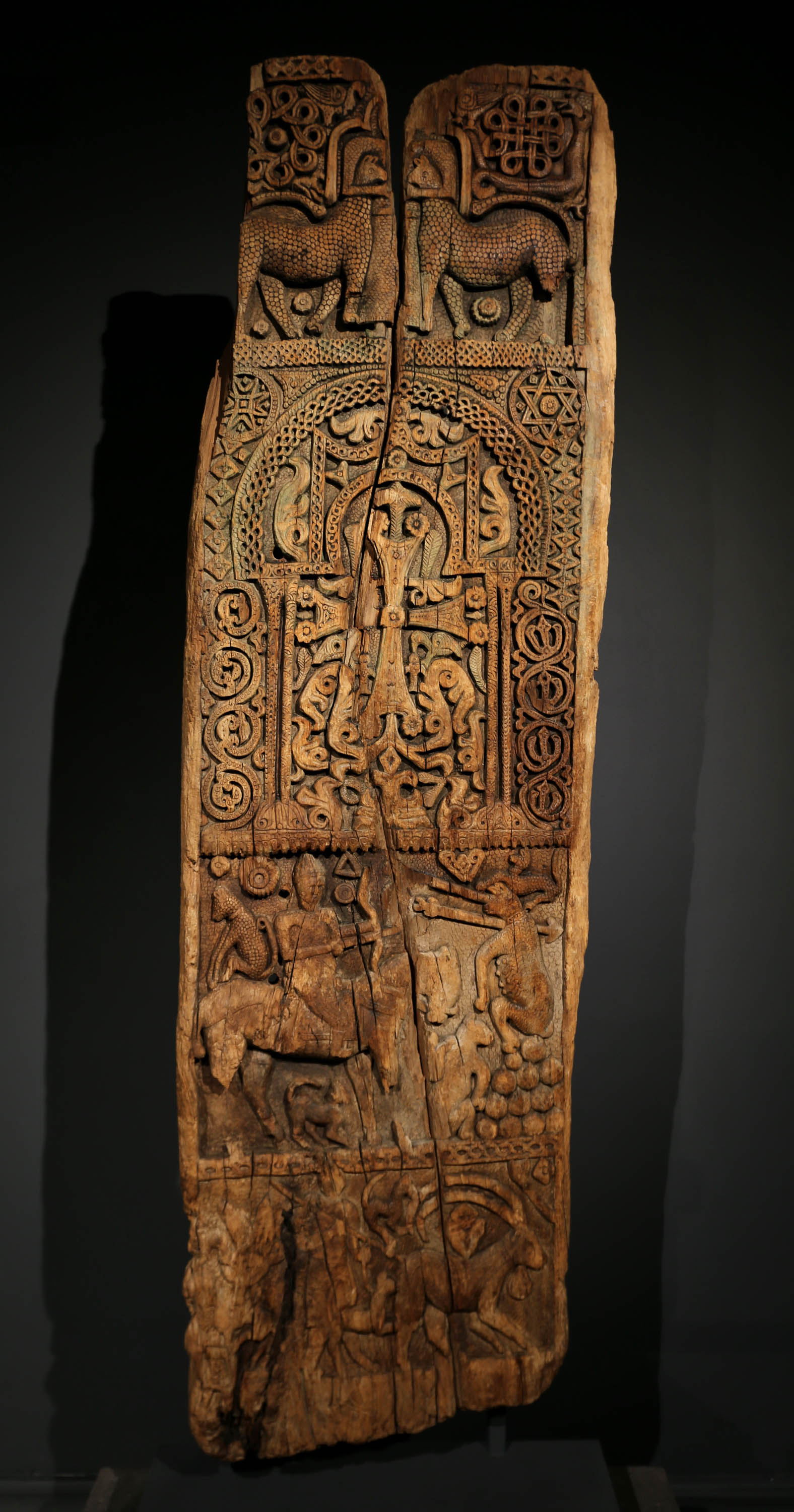
The gate was made of walnut wood, which is well suited for carving, allowing richly detailed textures and deep reliefs, while also being extremely durable and highly resistant to warping, cracking, and shrinkage. Only eight such Armenian walnut wood doors have survived — one of them is precisely the Msho Monastery Saint George gate mentioned earlier.
The gate is dated to 1188 based on the fact that its motifs correspond to those of the main church of the Haghpat Monastery, the Surb Nshan (Holy Sign), which was reconsecrated at that time and where it originally stood. According to tradition, the church, founded in 976, was expanded at this time by the master builder Trdat, who was later invited to Constantinople to repair the dome of Hagia Sophia.
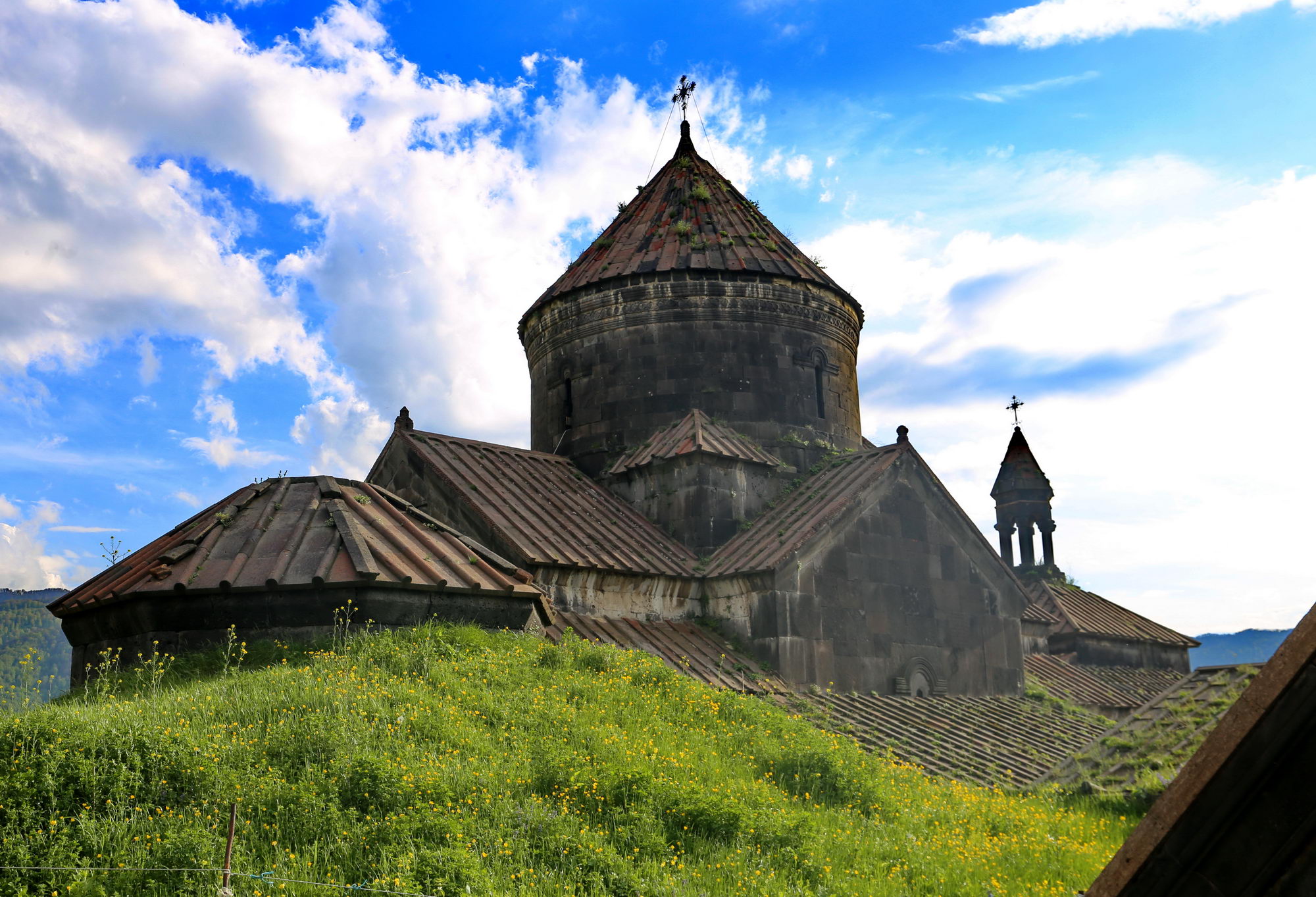
This period around the turn of the 12th–13th centuries was the golden age of the monastery. The Lori region, bordering Georgia, where it stands, was conquered in 1185 from the Seljuks by the Kurdish-Armenian generals of Queen Tamar of Georgia, Ivane and Zakare Zakarian, who were granted it as a fief. Just to the north, they established their power centre in Akhtala. The following century was a time of peace and prosperity throughout the Armenian highlands. During these years, the monastery was transformed from a simple monastic complex into the monumental ensemble we see today.
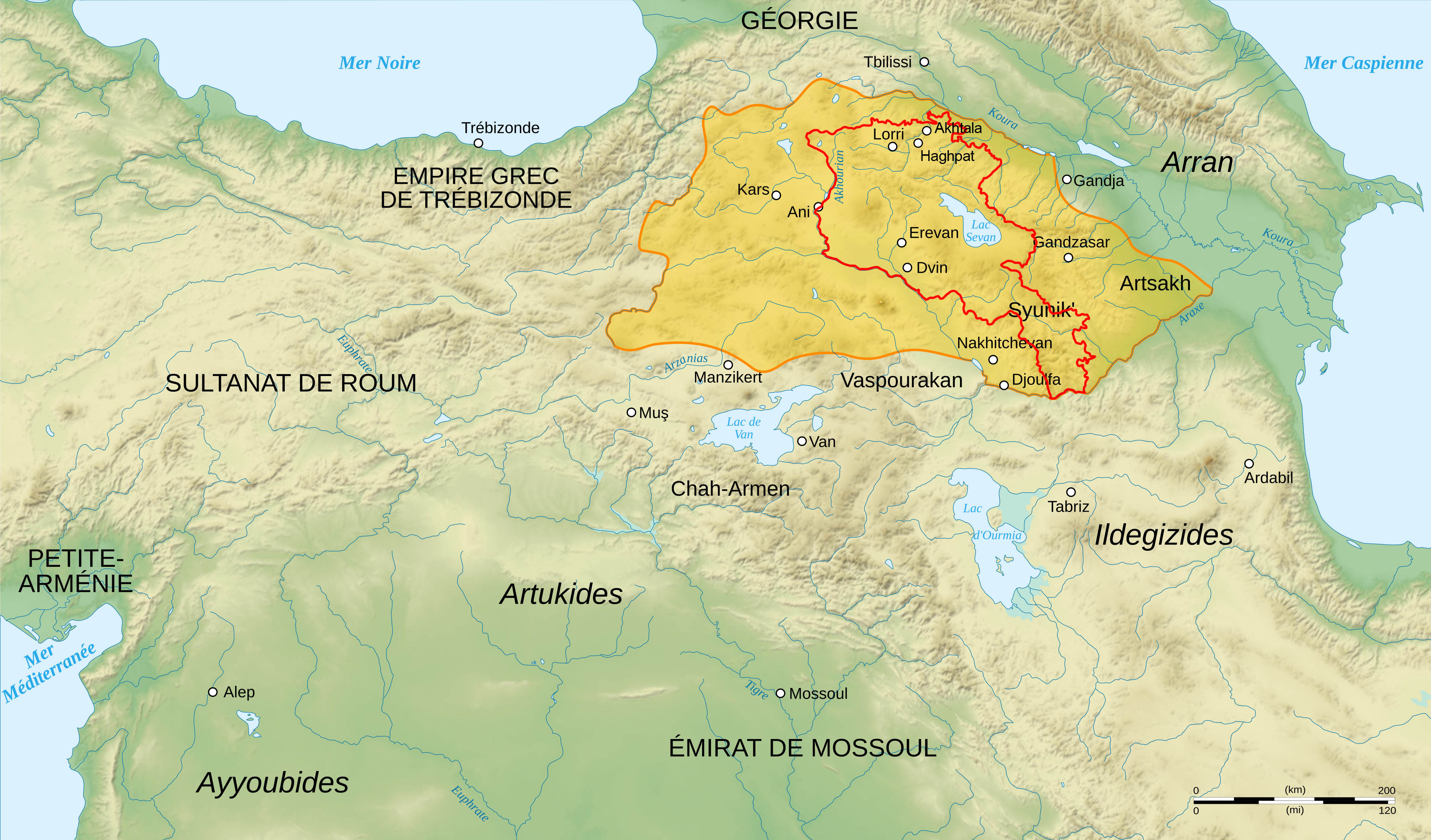 The Armenia reconquered from the Seljuks by the Zakarians at the turn of the 12th–13th centuries (in yellow), with the borders of today’s Armenia marked in red. Before the Muslim conquests, historic Armenia extended much further south, encircling Lake Van and reaching down to the foothills of the Tigris River.
In the enlarged detail below, the places mentioned in the text can clearly be seen: Ani, the former capital (taken by the Seljuks in 1064 but briefly retaken by the Zakarians in 1199), Lori-Berd, the seat of Lori province, Akhtala, the Zakarian centre of power, the monasteries of Haghpat and Gandzasar, and Julfa, whose many thousands of medieval khachkars were destroyed by the Azerbaijani army in 2006.
Until 1191, the full liberation of the Lori region, even the Armenian Kiurikian dynasty — a branch of the Bagratids who had ruled the area before the Seljuks and founded Haghpat and other monastic centres of the province in the 10th century — expanded the church complex: in 1185 Princess Mariam commissioned the large Mariamashen gavit (narthex), which also served as her family’s burial place. The inner gate leading from here into the church was the one whose panel has now been exhibited.
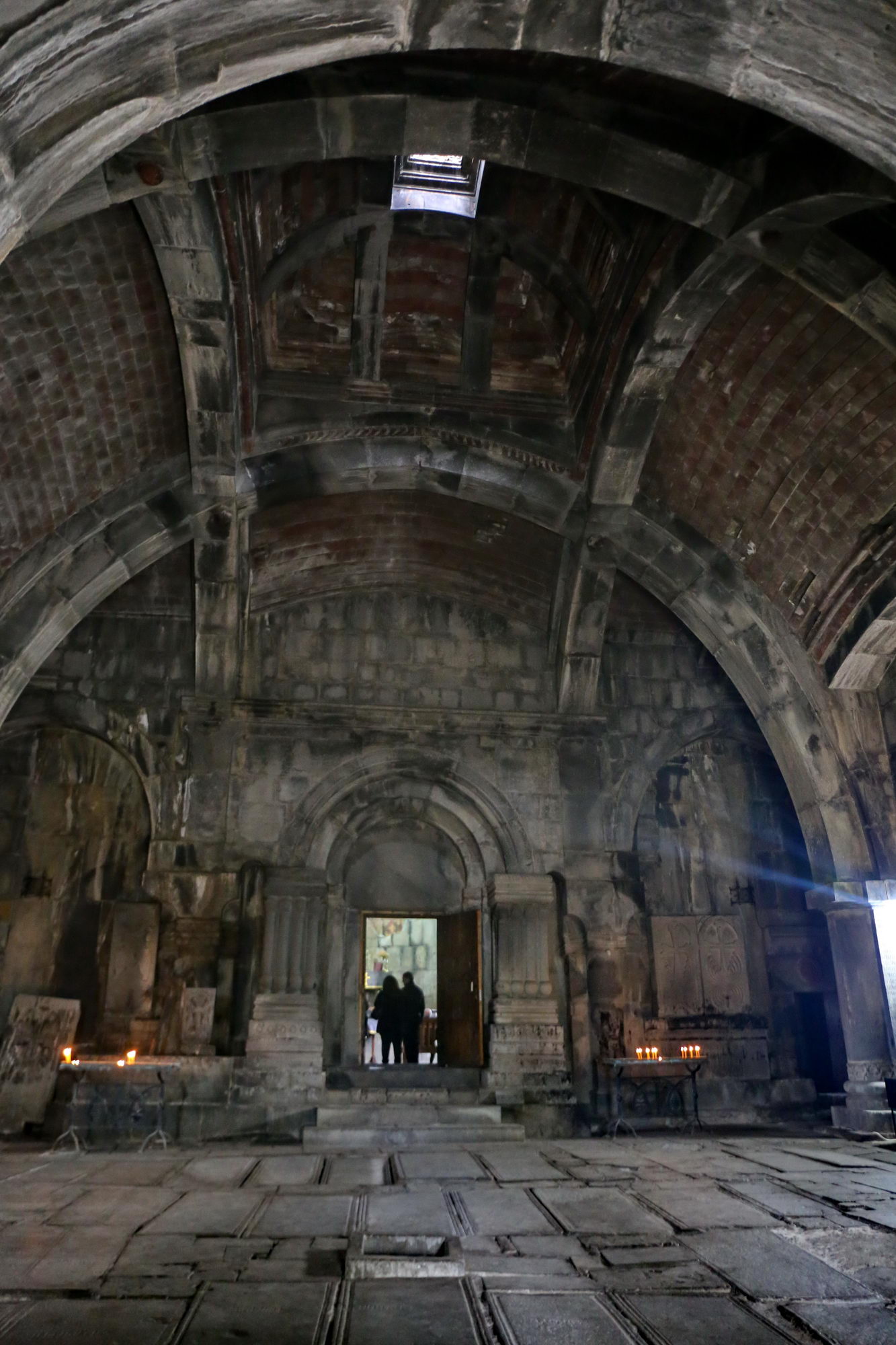
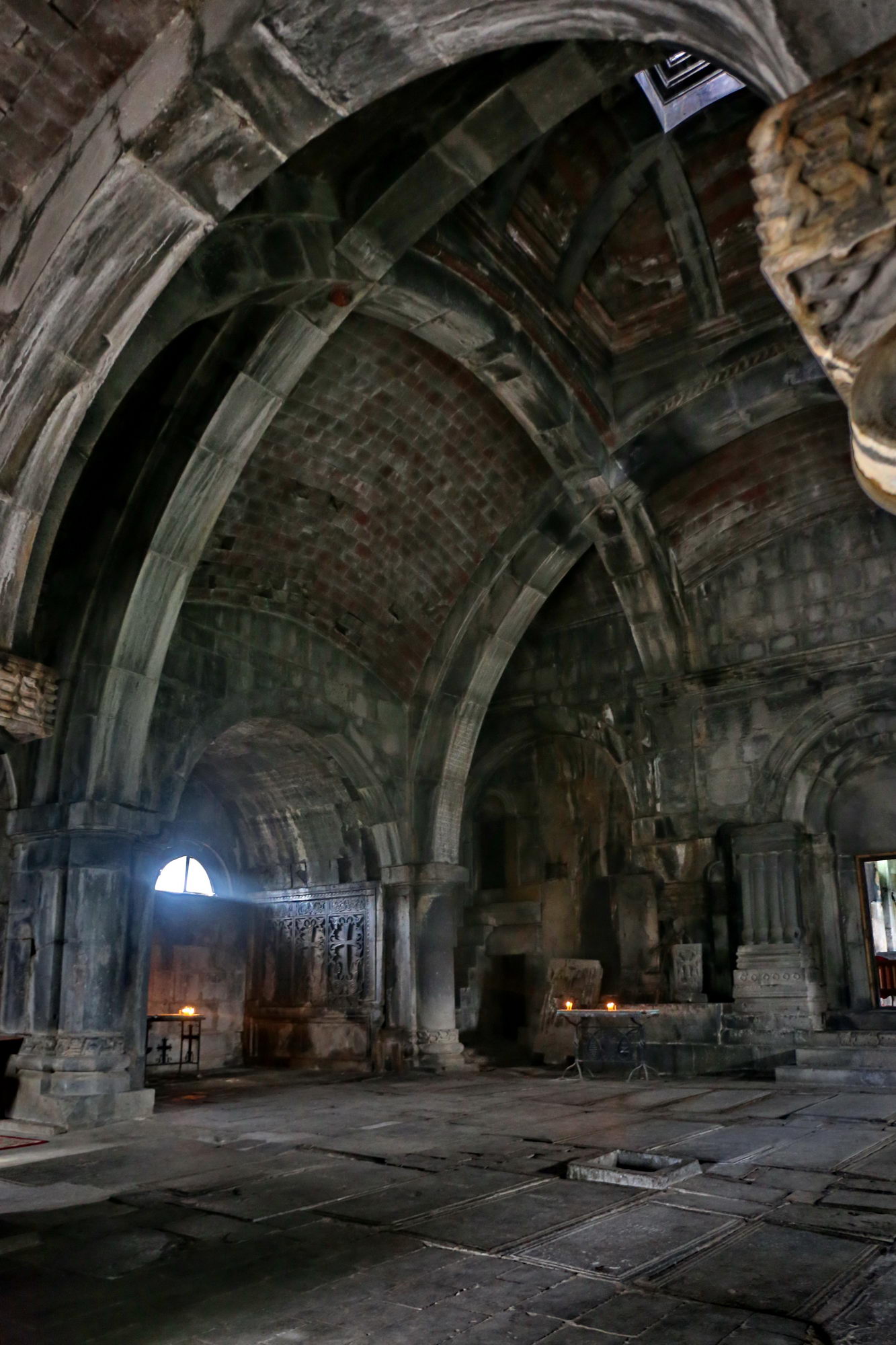
At this time Haghpat became one of the most important intellectual centres and de facto universities of all Armenia. It was here that the polymath and poet Hovhannes Imastaser (c. 1050–1129) taught. This period also marks the golden age of the Haghpat scriptorium, when one of the most beautiful Armenian manuscripts, the Haghpat Gospel, was produced.
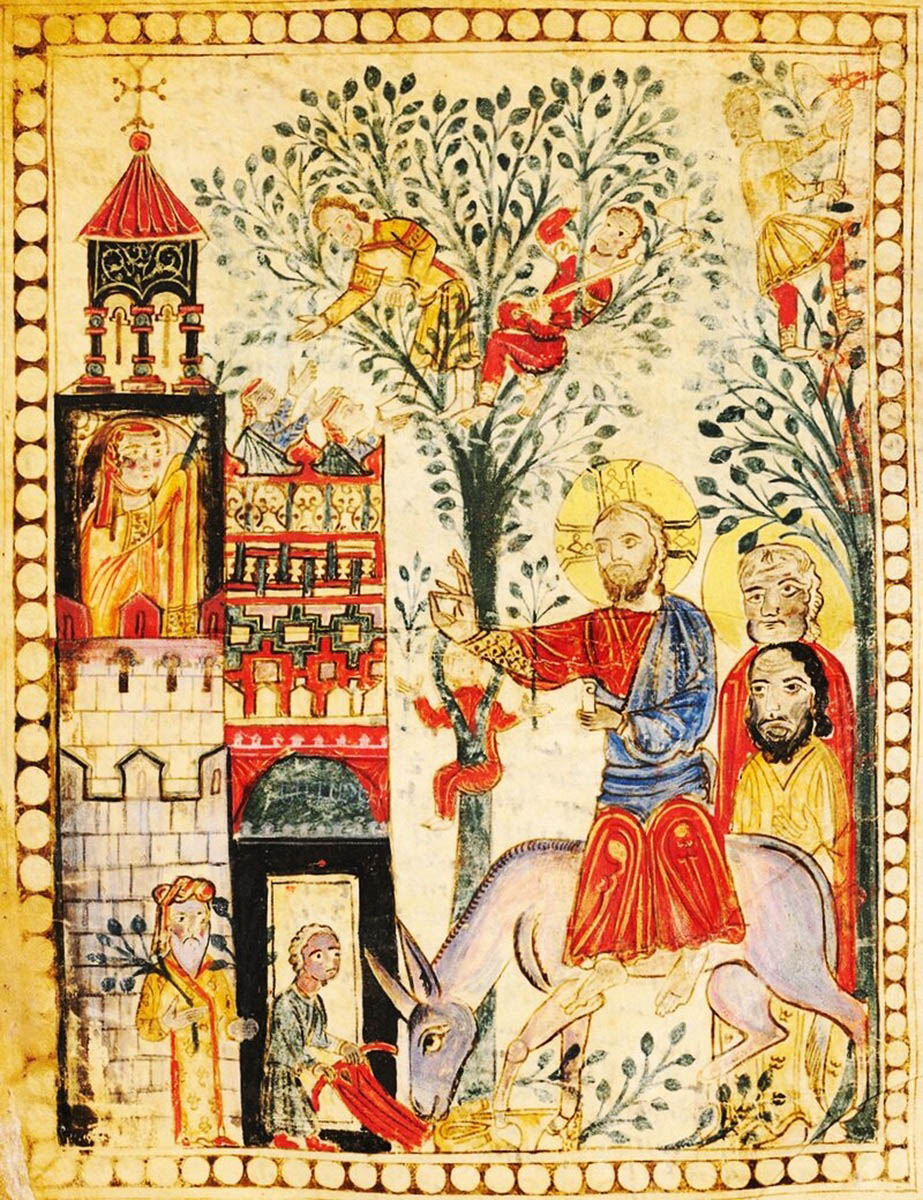
The refined theological thinking of this era is also reflected in the iconography of the gate.
The exhibited gate panel can only be properly understood together with its counterpart. The latter is in the possession of a private collector in Beirut, with whom the Armenian state is currently negotiating its purchase. In the meantime, a photograph of identical size has been displayed in the exhibition.
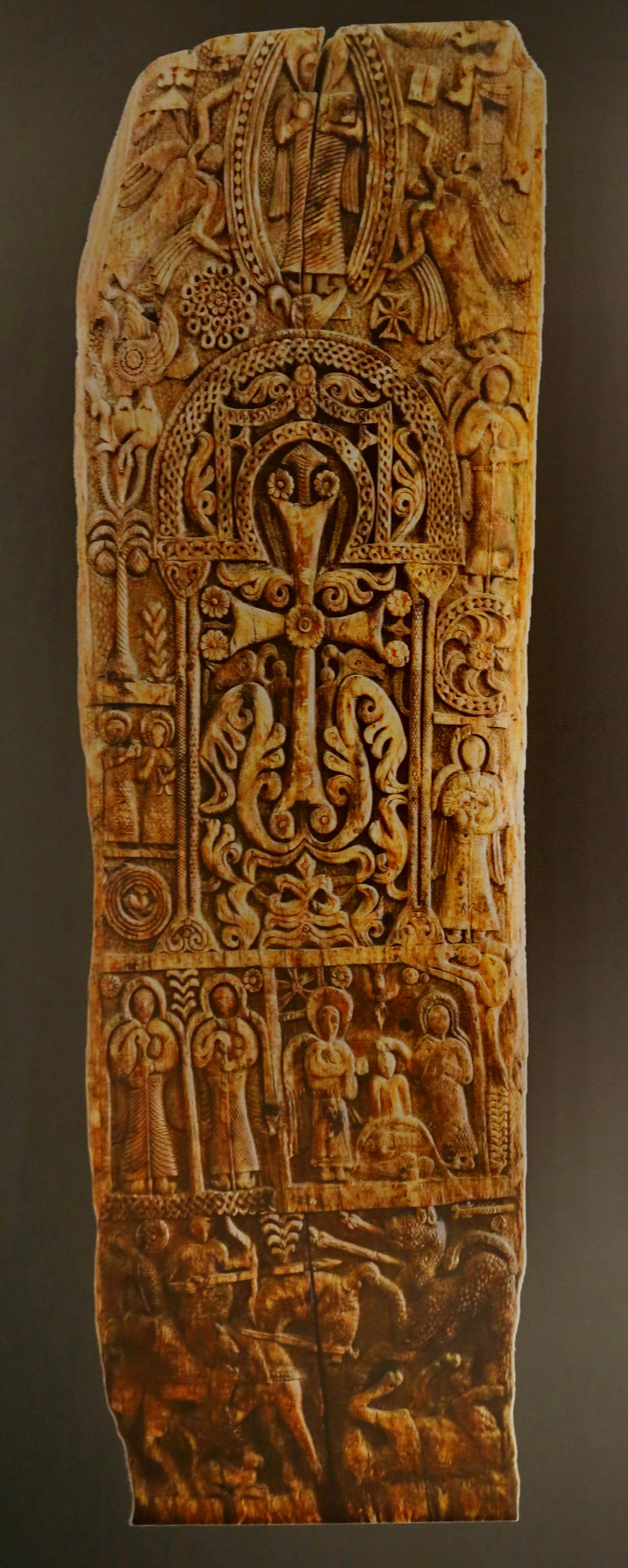
At the center of both gate leaves stands a “living cross,” a cross from which vegetal tendrils, flowers, and fruits sprout, as if from a great heavenly flowerpot. This is one of the most important motifs of medieval Armenian art. Armenian Christians, as Monophysites/Miaphysites, place far greater emphasis on Christ’s divine nature than on his human one, and therefore they consider the depiction of his human body to be an emphasis on the less essential aspect. For this reason, their crosses do not bear a corpus, but instead represent the result of divine salvation through living plants sprouting from the cross. After the liberation from the Arabs in the 8th century, this symbolism developed into a rich ornamentation covering entire stone surfaces, becoming the “cross-stone”, or khachkar.
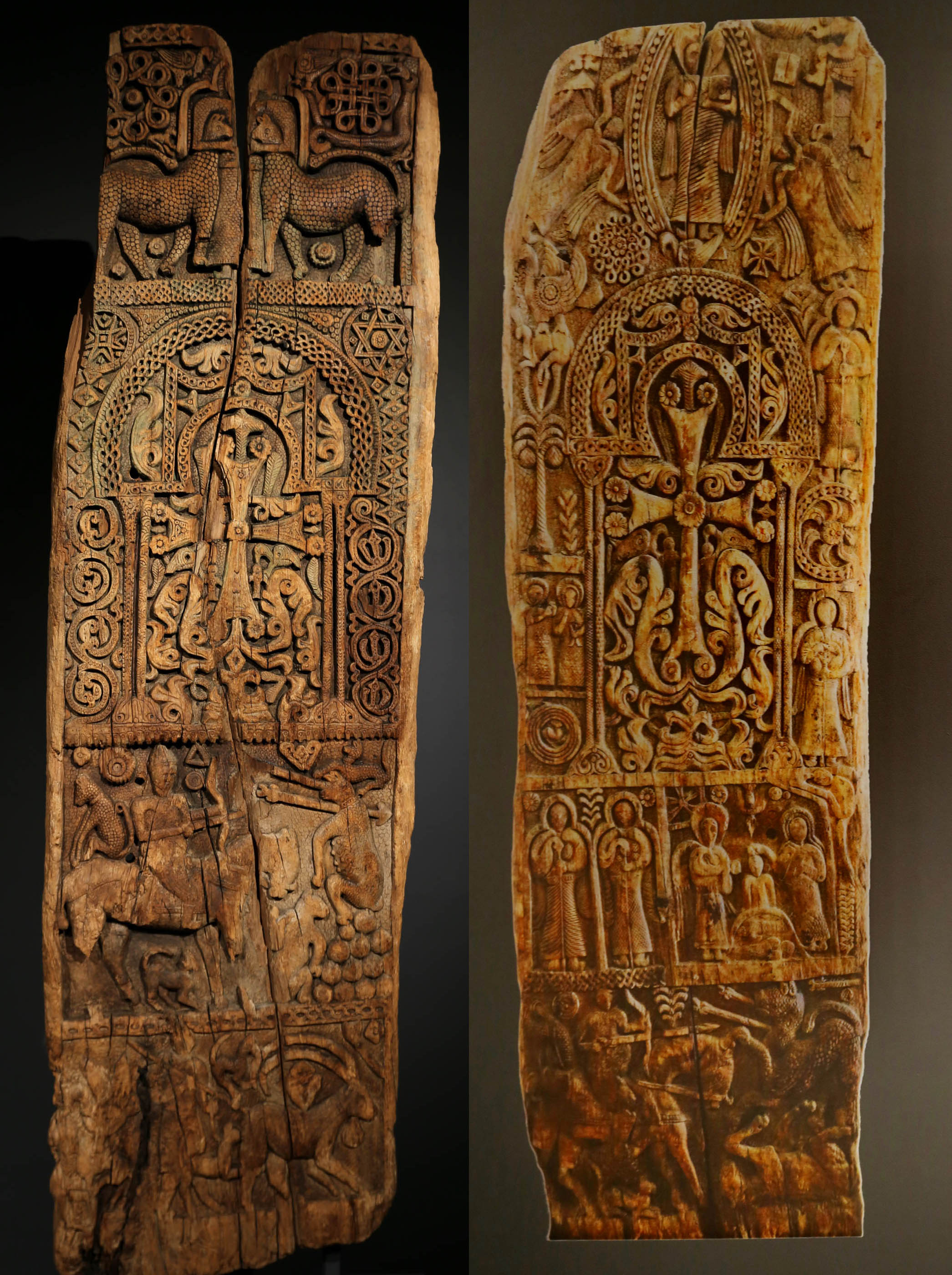
The two living crosses differ in their details, as every khachkar has its own unique ornamentation. The motifs surrounding them are also significant.
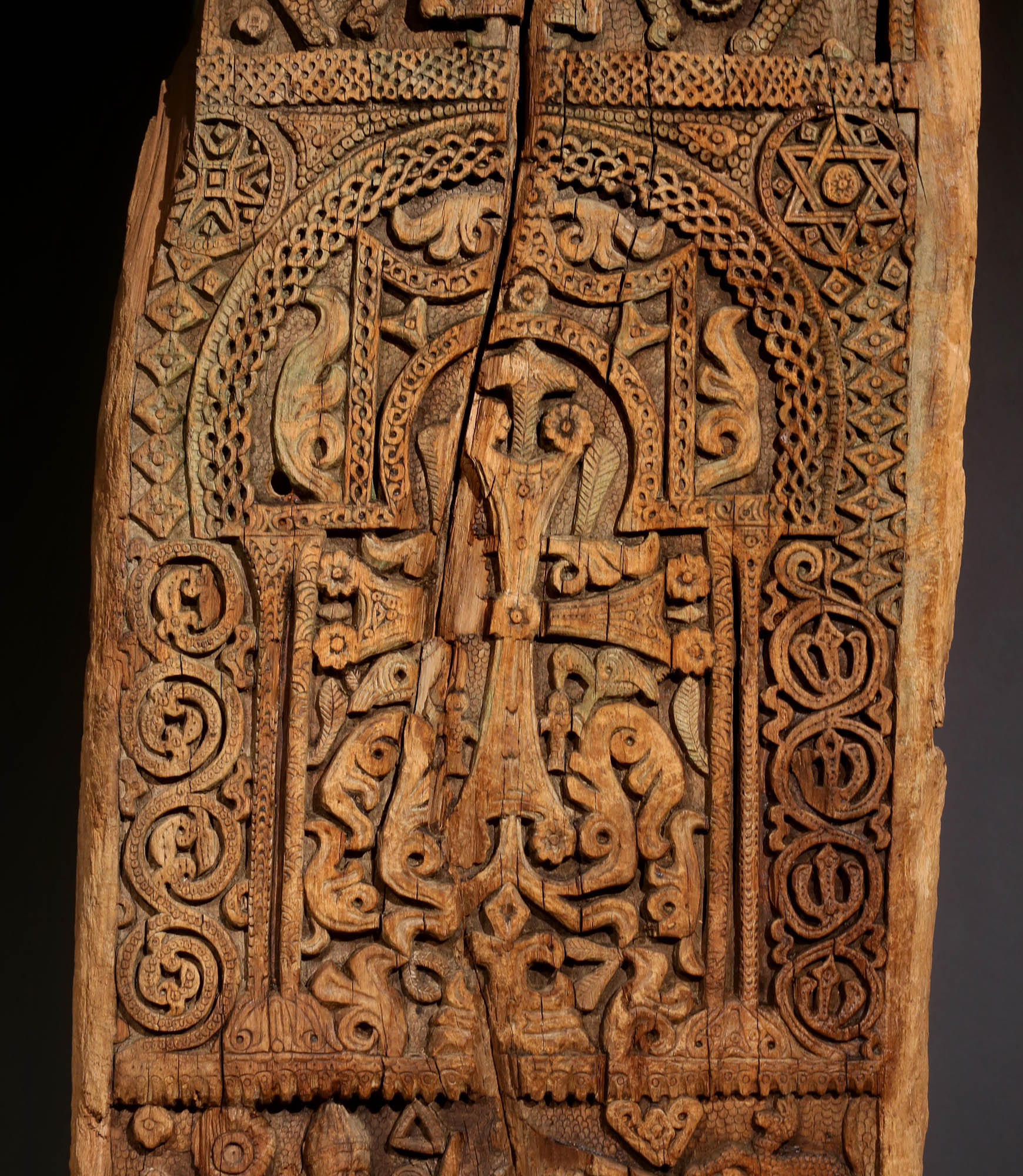
On the exhibited left wing, a small Greek cross and a six-pointed star appear above the two arms of the cross, both with a rotating solar symbol at their centre. At this time, the six-pointed star was not yet a Jewish symbol, nor the Seal of Solomon as in Islamic symbolism, but rather an apotropaic sign widespread across the ancient Near East, and—with the solar emblem inside it—a symbol of eternity. It was used in medieval Armenian and Kurdish visual traditions as well, for example by the Kurdish-Armenian Hasan-Jalalyan family that ruled Karabakh, or by the Kurdish Yazidis.
 The finial of the main dome of a Yazidi Kurdish sanctuary at Kiweksi
 A six-pointed star with a solar symbol at its centre, next to a full solar disk, on the central Yazidi sanctuary of Lalish

 Tombstone of the Armenian-Kurdish prince Hasan-Jalal, split into two halves, in the Gandzasar Cathedral of his dynasty
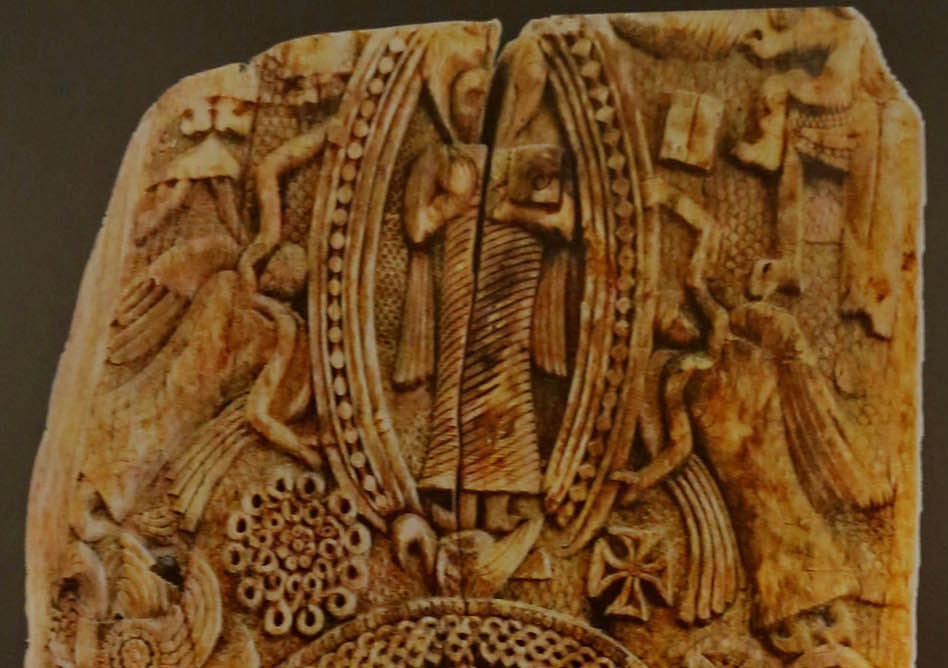
The small symbols surrounding the khachkar on the right gate wing represent further salvific effects of the “living cross.” In the upper left is a palm tree, the tree of martyrdom and victory, above which a large bird decorated with a solar disk lifts up an animal—perhaps a sheep—symbolizing the soul raised to heaven by Christ. Around it are figures of saints, representing the living Church gathered around the cross. The two figures on the right seem to hold the Eucharistic bread and chalice. Between them is a large rotating solar disk, which, from a pre-Christian Caucasian sun cult symbol, evolved into the Armenian Christian symbol of eternity under the name arevakhach (“sun-cross”), today even having its own Unicode symbol: ֎.
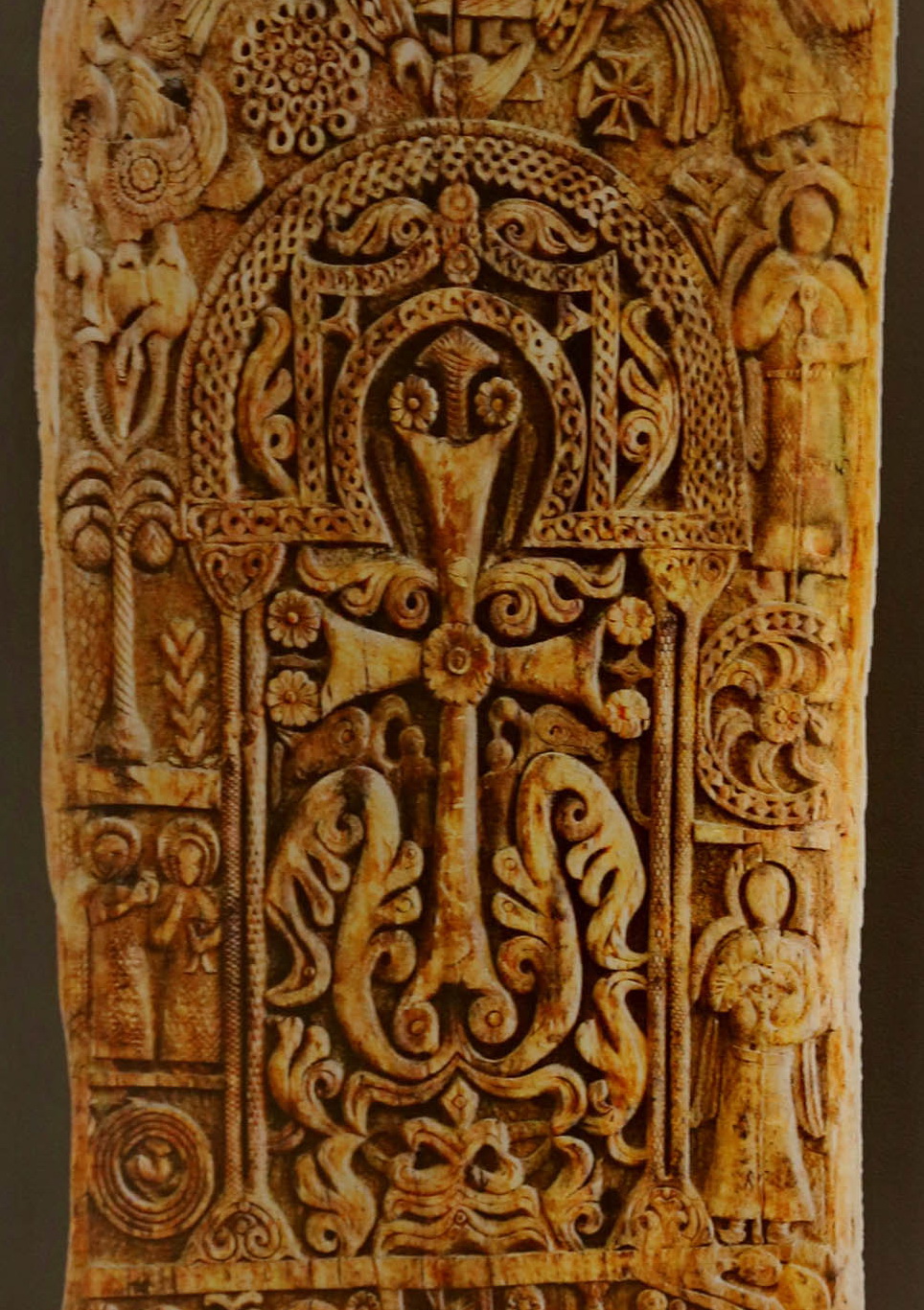
The central large khachkar on both gate wings is framed by three bands on each side—one above and two below. In terms of the medieval fourfold method of interpretation, the upper bands correspond to the anagogical sense, referring to heavenly reality, while the lower ones carry the allegorical sense, relating to the Church and salvation history.
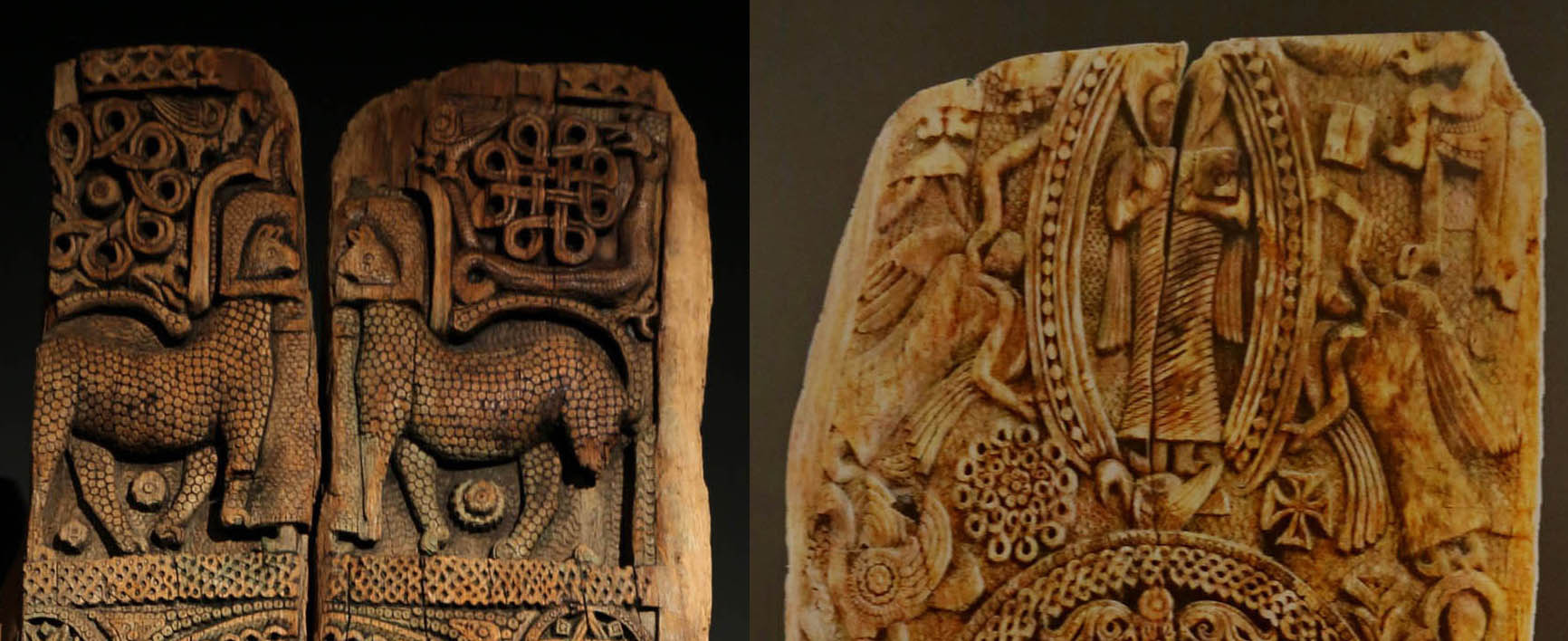
Moreover, the two upper scenes are also linked typologically: the Old Testament scene on the left wing functions as a prefiguration of the New Testament depiction on the right wing.
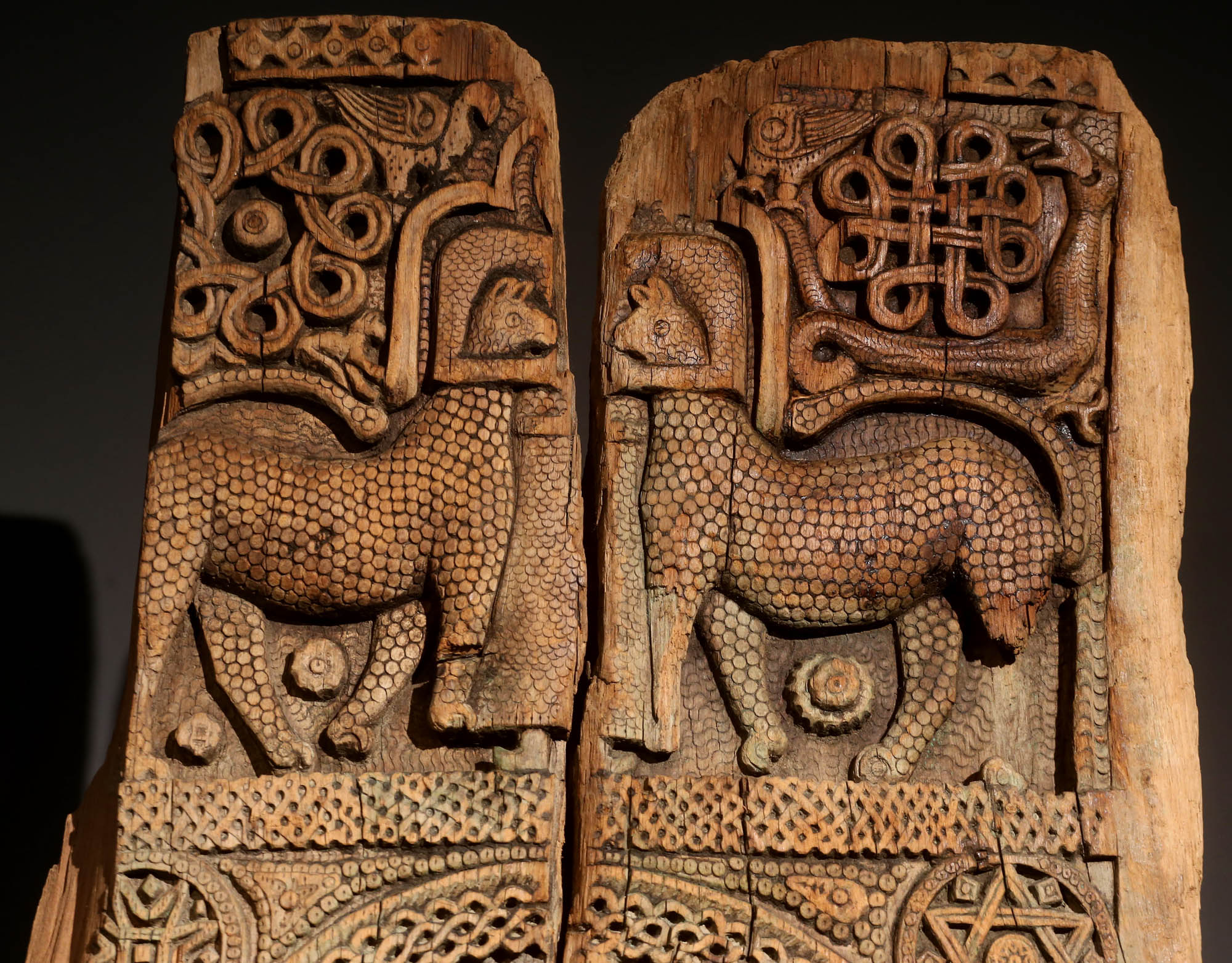
At the top of the left wing, a barely legible male figure—obscured by a crack—grasps two animals by the neck, holding their heads tightly against himself. This formula was widespread throughout the Near East even before Christianity; in scholarship it is known as the “Master of Animals” (The Master/Mistress of Animals), where a central male or female figure, human or divine, symmetrically holds two animals, often identical and most frequently lions.
As so often happens, Christian art here reuses an earlier visual formula but assigns it a new meaning. In this case, the new meaning is Daniel in the lions’ den. In Western Romanesque art, Daniel is usually shown standing in prayer, while the lions sit calmly around him, pacified by the power of his prayer. On the Haghpat gate, however, the older formula persists: he demonstrates his dominion over them by grasping them by the neck.
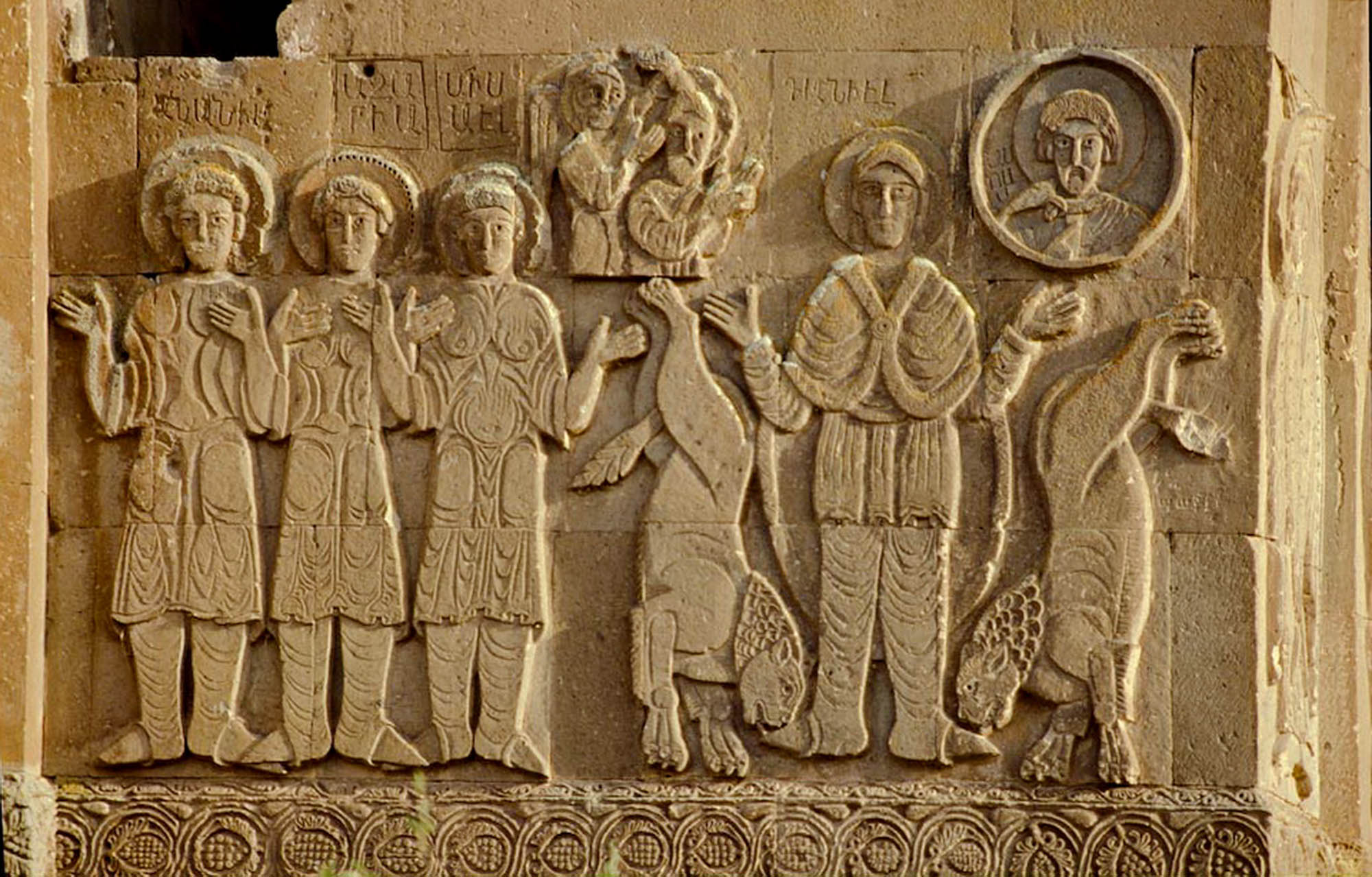 Daniel in the lions’ den and the three youths in the fiery furnace. Aghtamar, Armenian cathedral, 915–921. The three orant figures appear lower on the Haghpat gate, in the scene of Christ’s baptism.
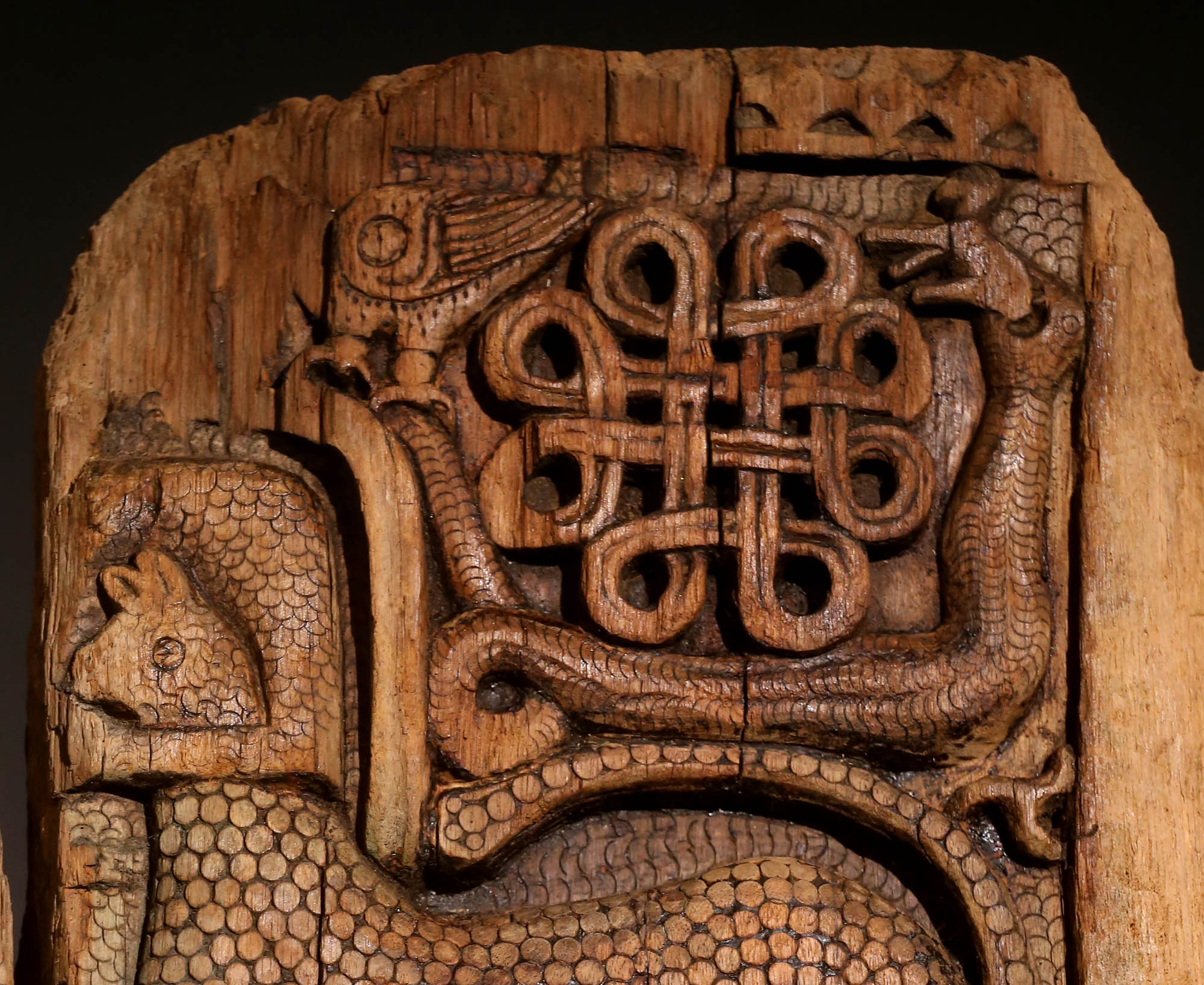
The composition of the scene evokes the courtly style that flourished in Ani, the Armenian royal capital, until the Seljuk conquest of 1045. The heraldic treatment of the lions resembles those carved on the city walls and palaces of Ani. For the Armenian ruler, Daniel was the perfect model: a faithful leader whose trust in God sustains and legitimizes him amid the circle of oppressive pagans.
Above the right-hand lion, a serpent coils around a ribbon-interlace cross, attempting to swallow a small lamb symbolizing a human soul. The serpent, however, is seized by a bird similar to the sun-cross phoenix of the right wing, continuing the Mesopotamian “eagle and serpent” iconographic formula. The small image functions almost like a marginal commentary explaining Daniel’s divine deliverance.
When Daniel was thrown into the lions’ den, the entrance was sealed with a large stone and stamped shut, yet the prophet emerged unharmed. Medieval exegesis interpreted this as a prefiguration of Christ’s burial and resurrection. And indeed, on the right wing we see the Maiestas Domini, the risen Christ who has conquered death and ascended into heaven—no longer merely lord of the lions, but lord of the universe, the Pantokrator.
The two bands beneath the khachkar mainly depict hunting scenes. Hunting on a church gate?
The patrons of Haghpat and other Armenian monasteries were princes, for whom hunting imagery played an important role in self-representation: the ruler as he strikes down strong or noble game. This motif, inherited from Persian royal iconography, after the adoption of Christianity also came to signify the struggle between good and evil—the righteous ruler defending his realm (as the Zakarians did here), even Christ as protector of his people against evil, and the faithful individual fighting daily against sin. Thus, in the fourfold biblical sense, the scene refers literally to the princely patron of the gate, allegorically to Christ as ruler of the world, and morally to the struggle against evil.
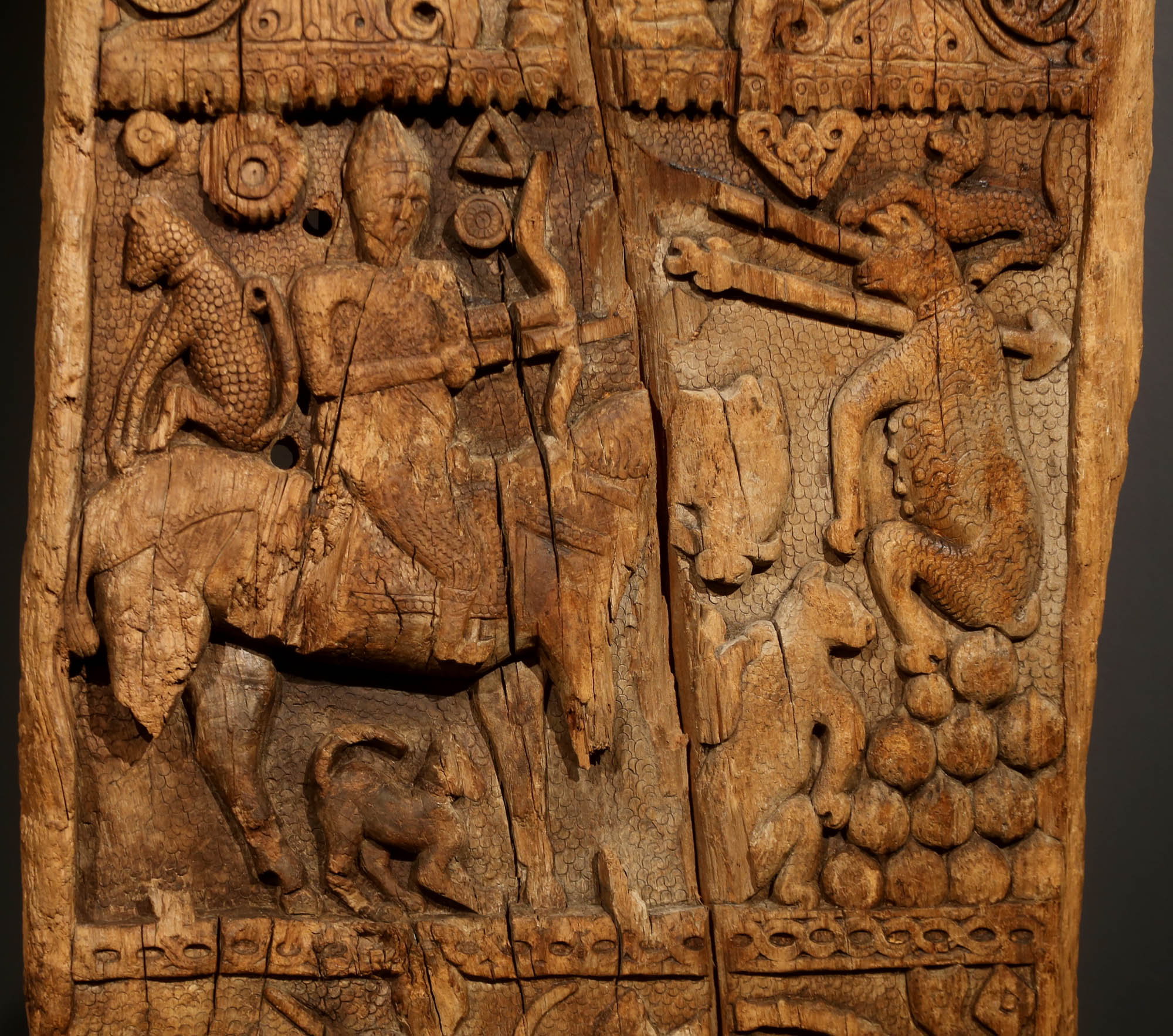
The hunter is clearly hunting bears. This especially emphasizes the allegorical meaning, since in the Middle Ages the bear was a symbol of wrath, one of the seven deadly sins, and of everything that follows from wrath—war and social chaos included. In the Armenian context it is even more significant that the head of the pagan King Trdat, when he refused to accept Christianity, was transformed into a bear’s head, and only Saint Gregory the Illuminator was able to save him by converting him and restoring him to human form, turning the bestial pagan back into a man.
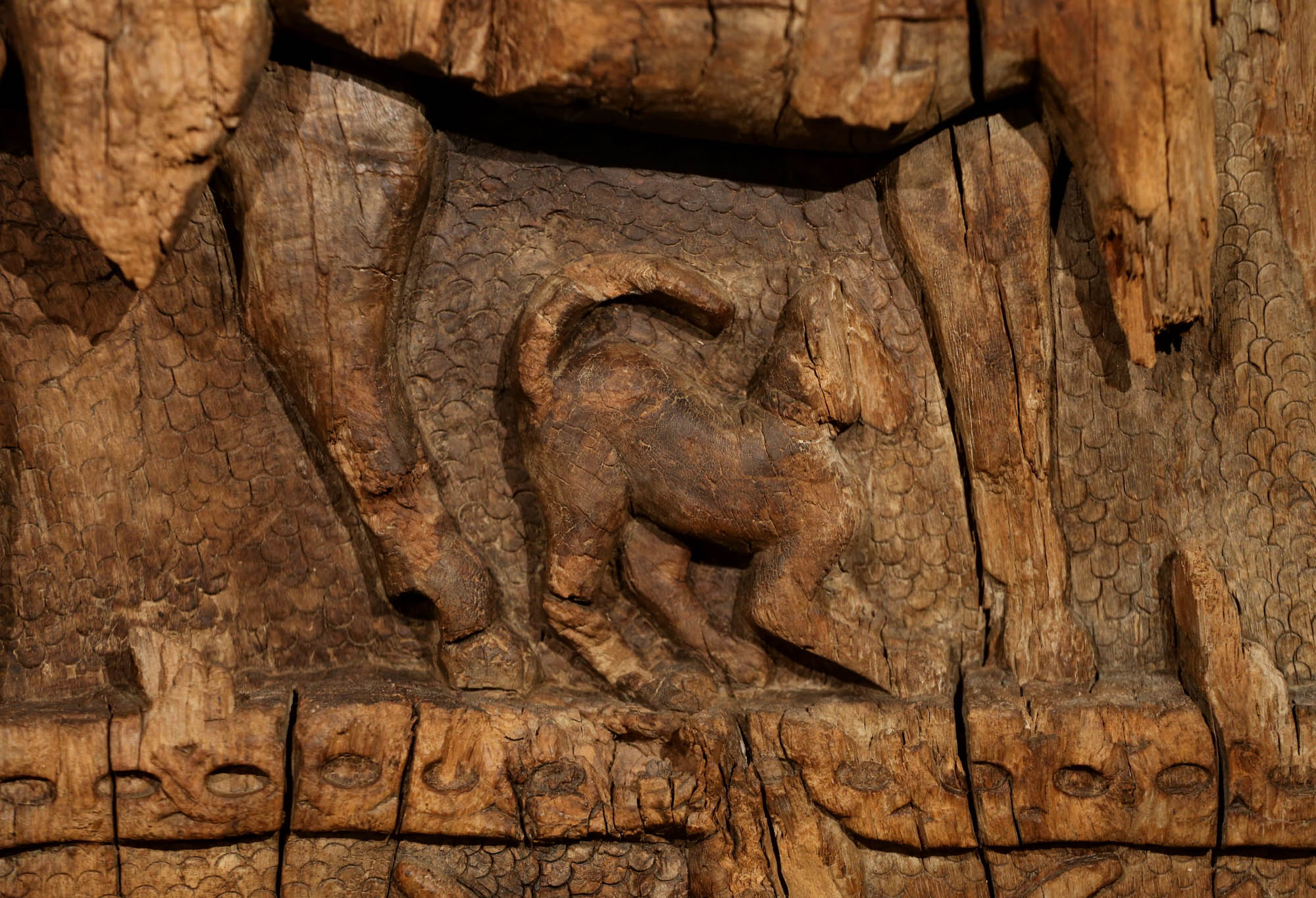
The hunter is also assisted by trained animals. Under the horse there is a hunting dog.
But what are the other two figures—the one behind the hunter on horseback, and its counterpart riding on the bear’s head?
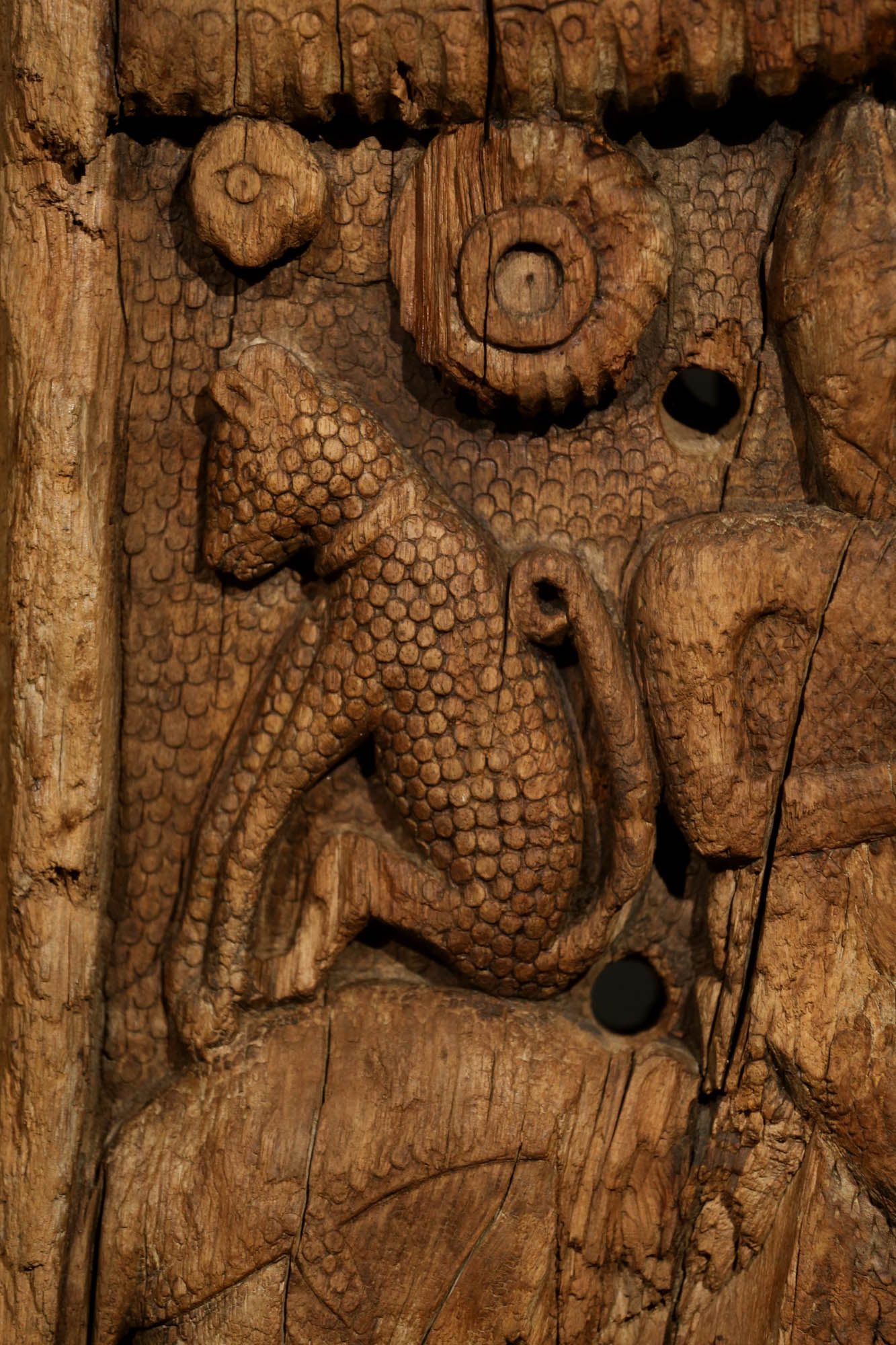
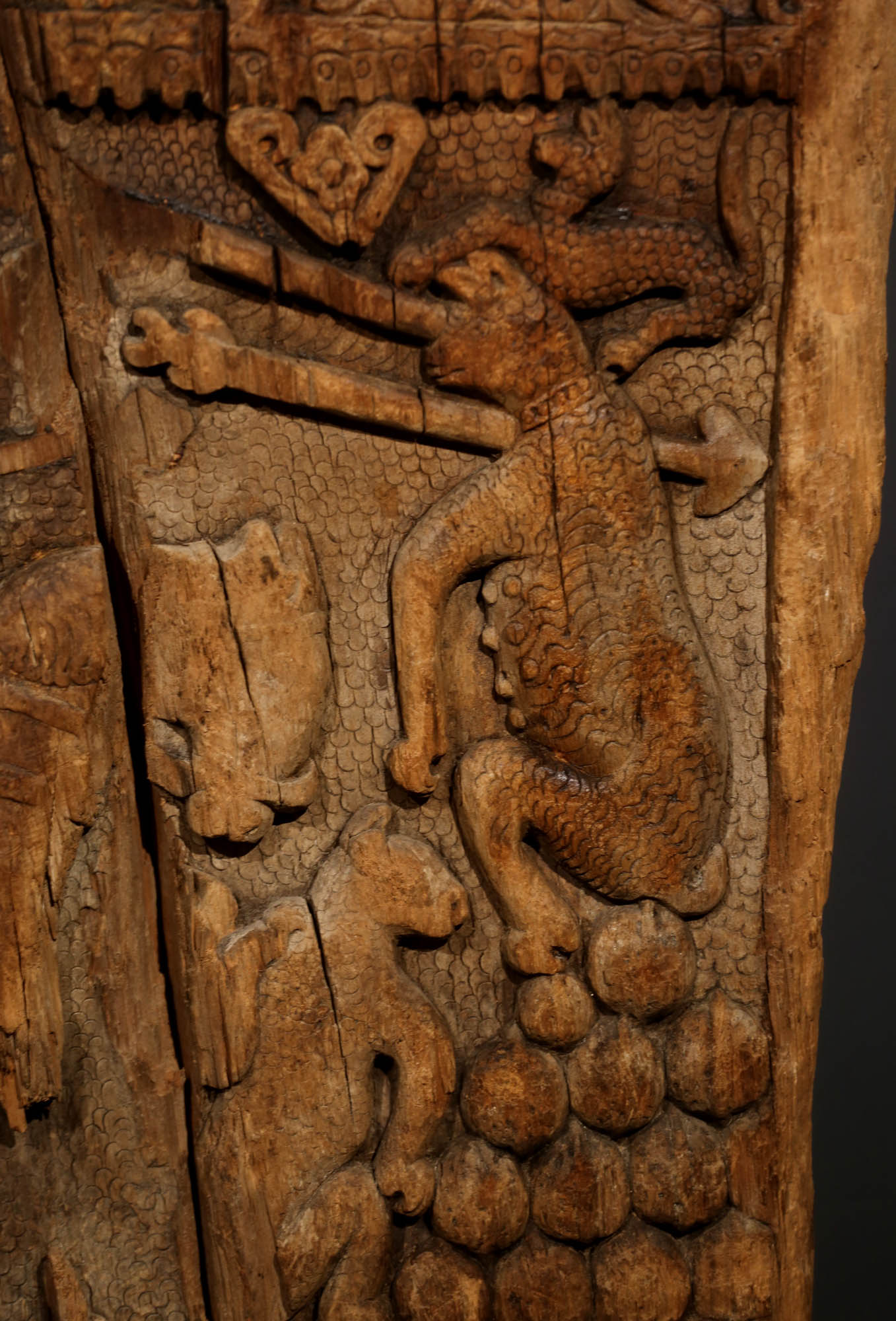
One cannot expect zoological precision from a medieval allegorical depiction. But as far as the scene can be identified, it shows two cheetahs—the Asian hunting leopard (Acinonyx jubatus venaticus).
Cheetah hunting was a privilege of the elite in medieval Persia and the broader Persian cultural sphere. The cheetah, trained from birth to be accustomed to humans and horses, sat behind the mounted hunter in exactly the position shown here, and would leap down from there to chase the prey. Its appearance on the Haghpat gate shows how deeply the Caucasian Christian elite was integrated into Iranian aristocratic visual culture.
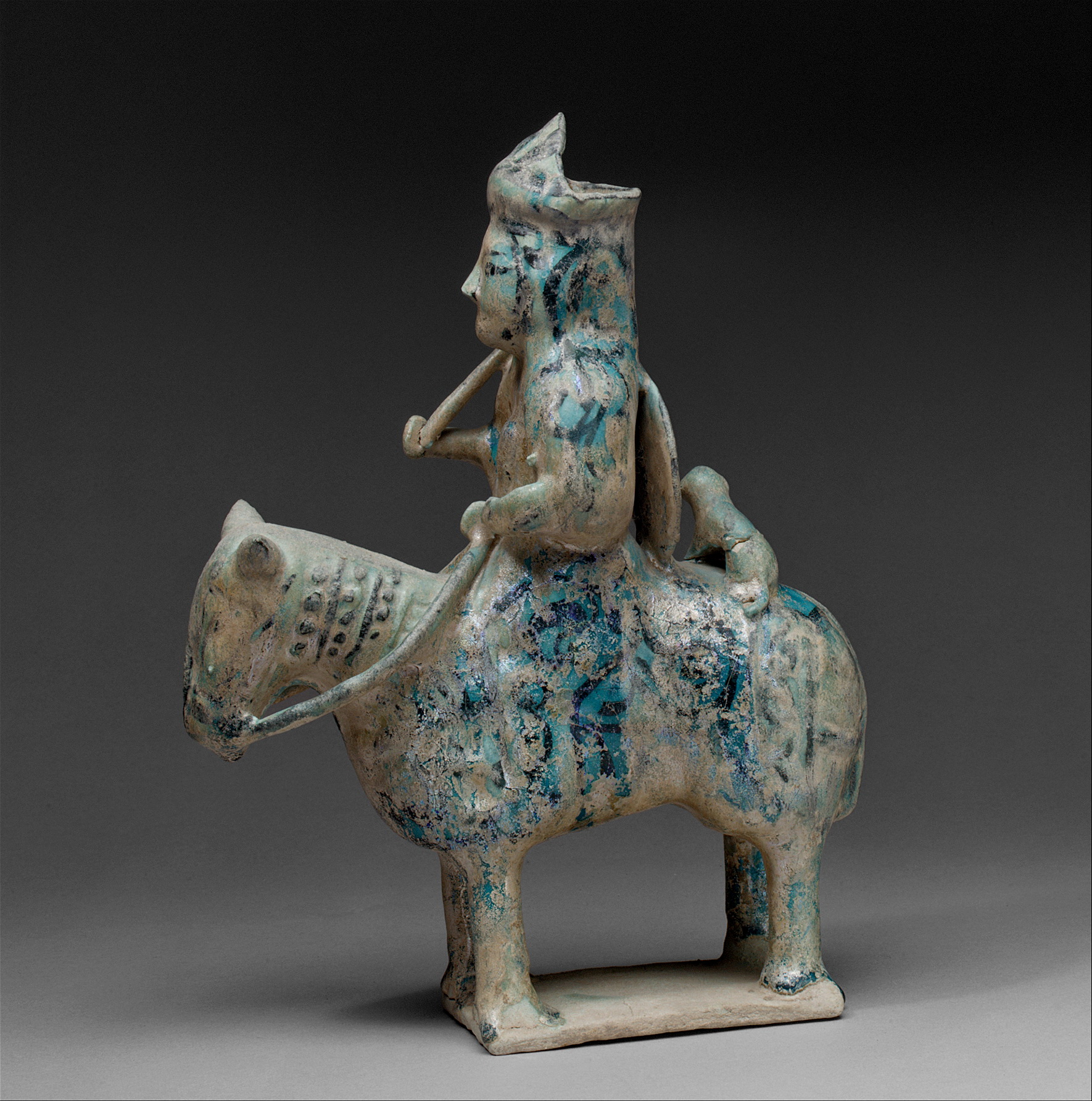 Mounted hunter with cheetah. Iran, late 12th–early 13th century, MET
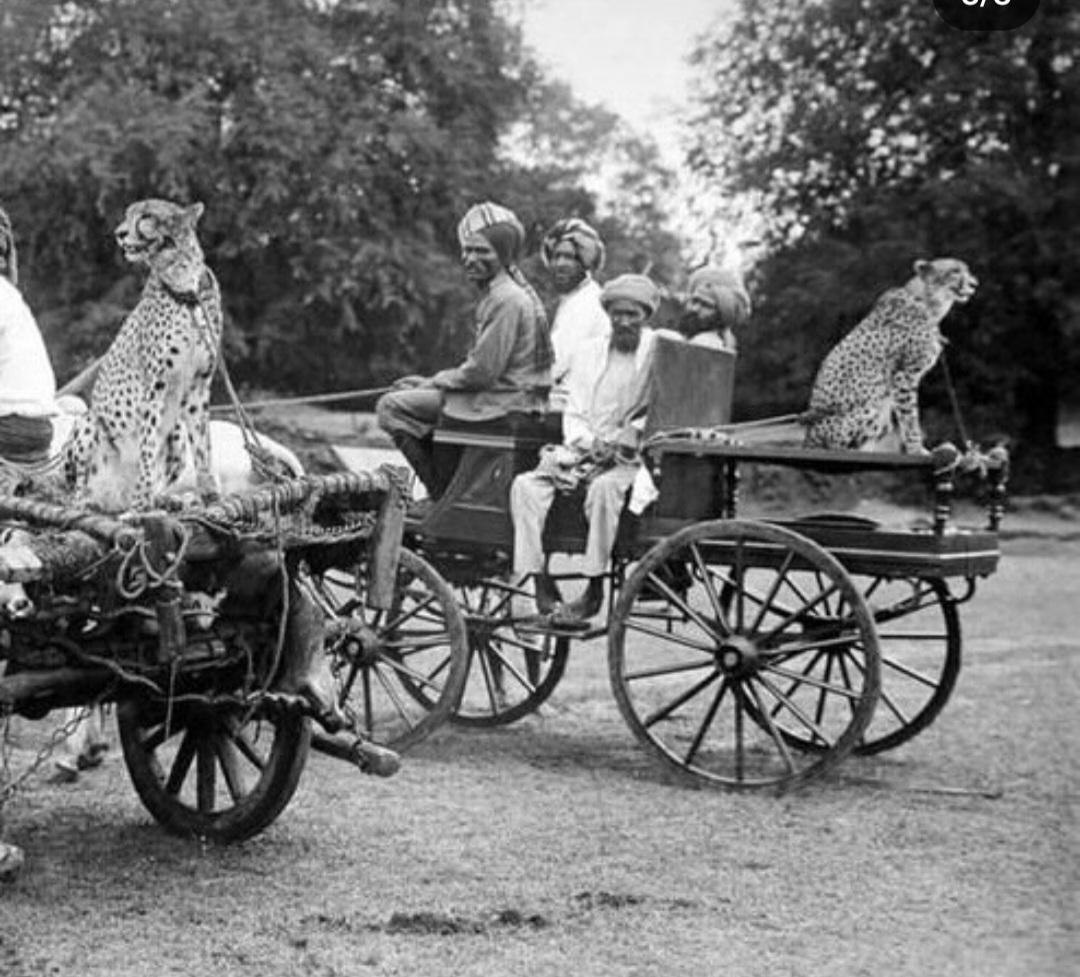
Cheetah hunting was especially popular in the Persian-influenced Mughal India. Akbar the Great (1556–1605) kept more than 1,000 cheetahs. His most famous hunting feats were depicted in separate paintings, and there is even a record of one exceptional animal that had to be carried on a palanquin during court processions. The Akbarnama provides detailed descriptions of their taming, training, and use in hunting.
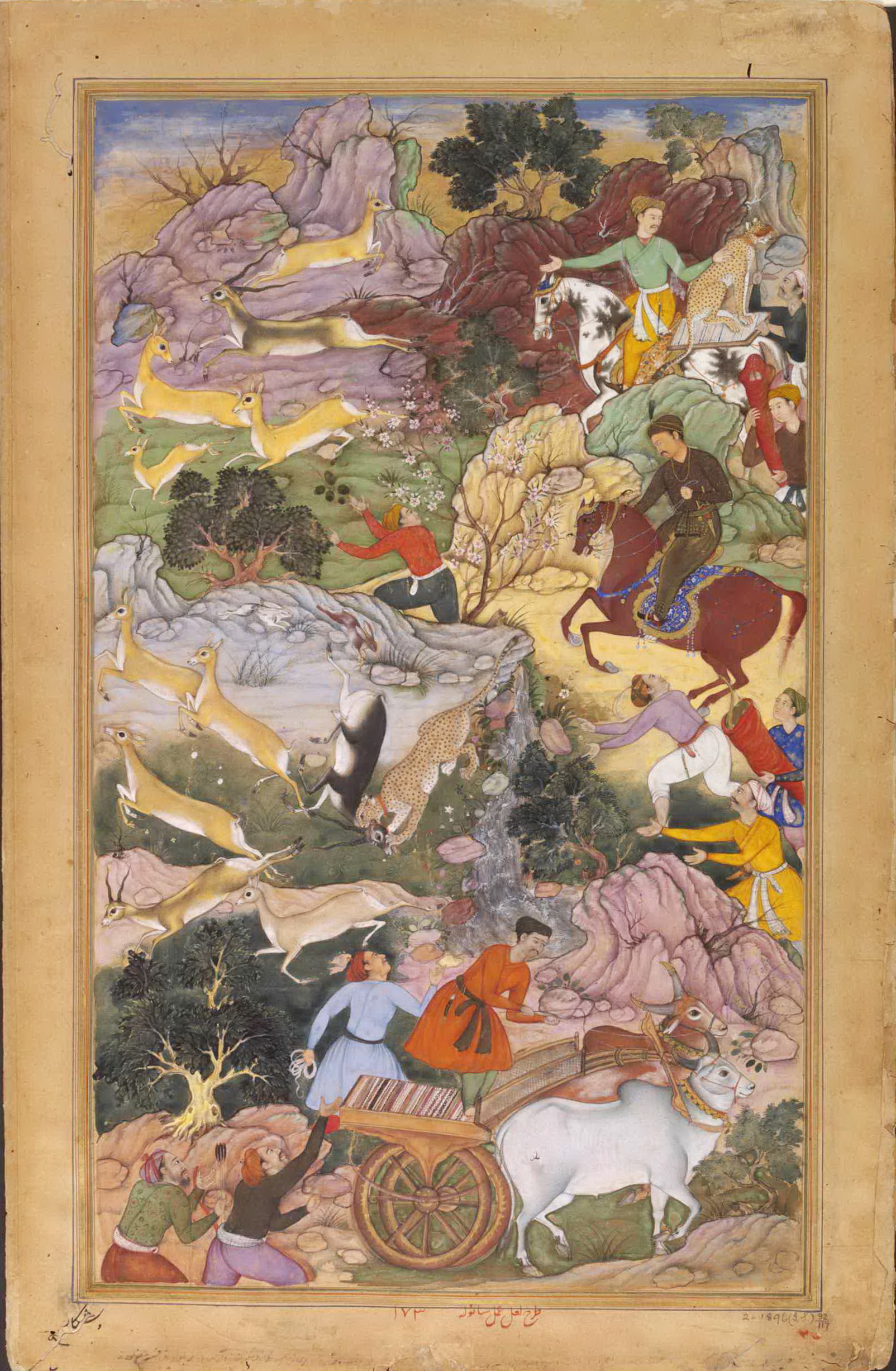 Akbar’s cheetah hunt. Court painters Lal and Sanwala, 1572
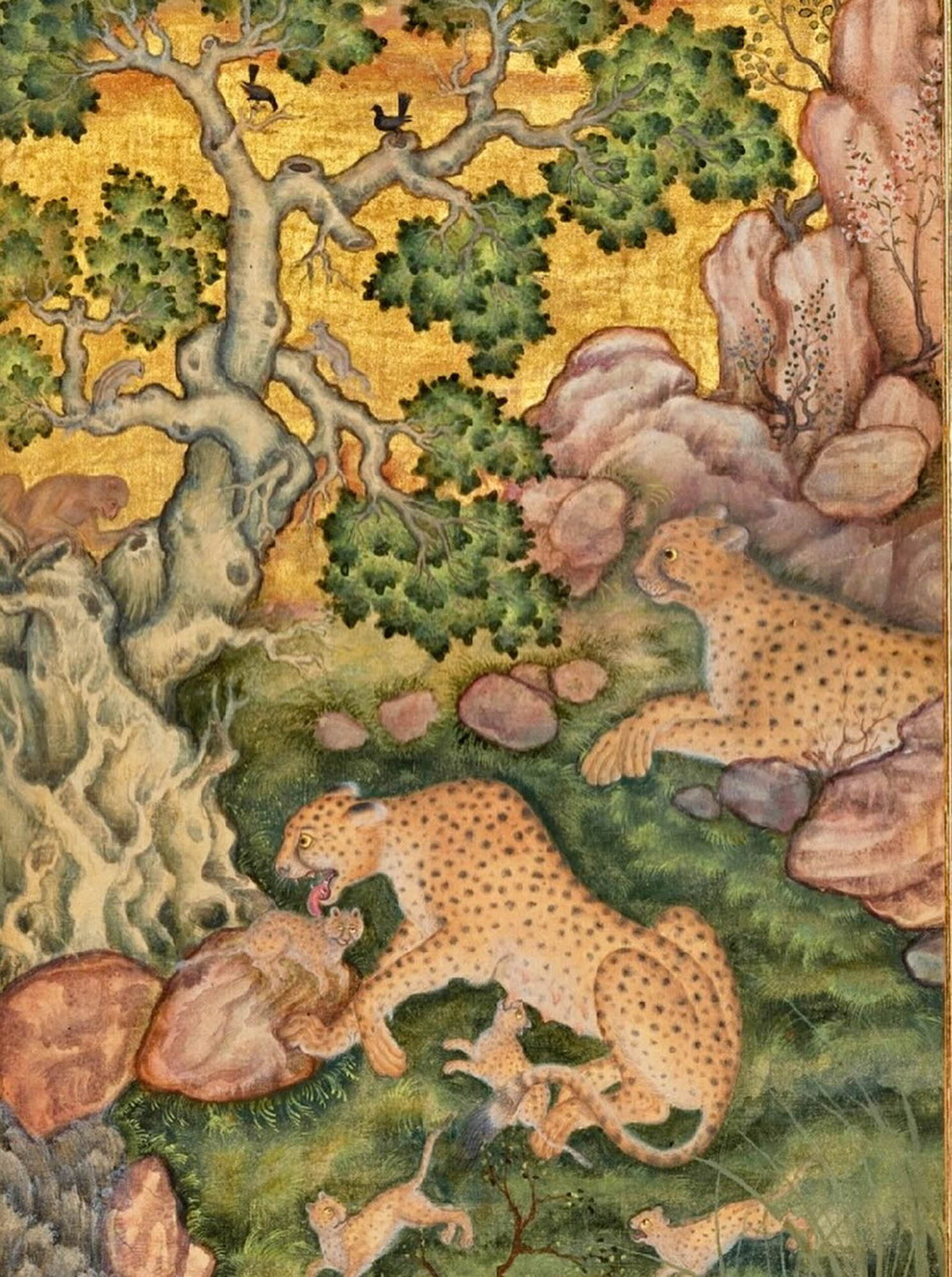 A family of cheetahs in a rocky landscape, 1575–1580. Attributed to Akbar’s court painter Basawan. From the private collection of Sadruddin Aga Khan, sold at Christie’s auction on 28 October 2025
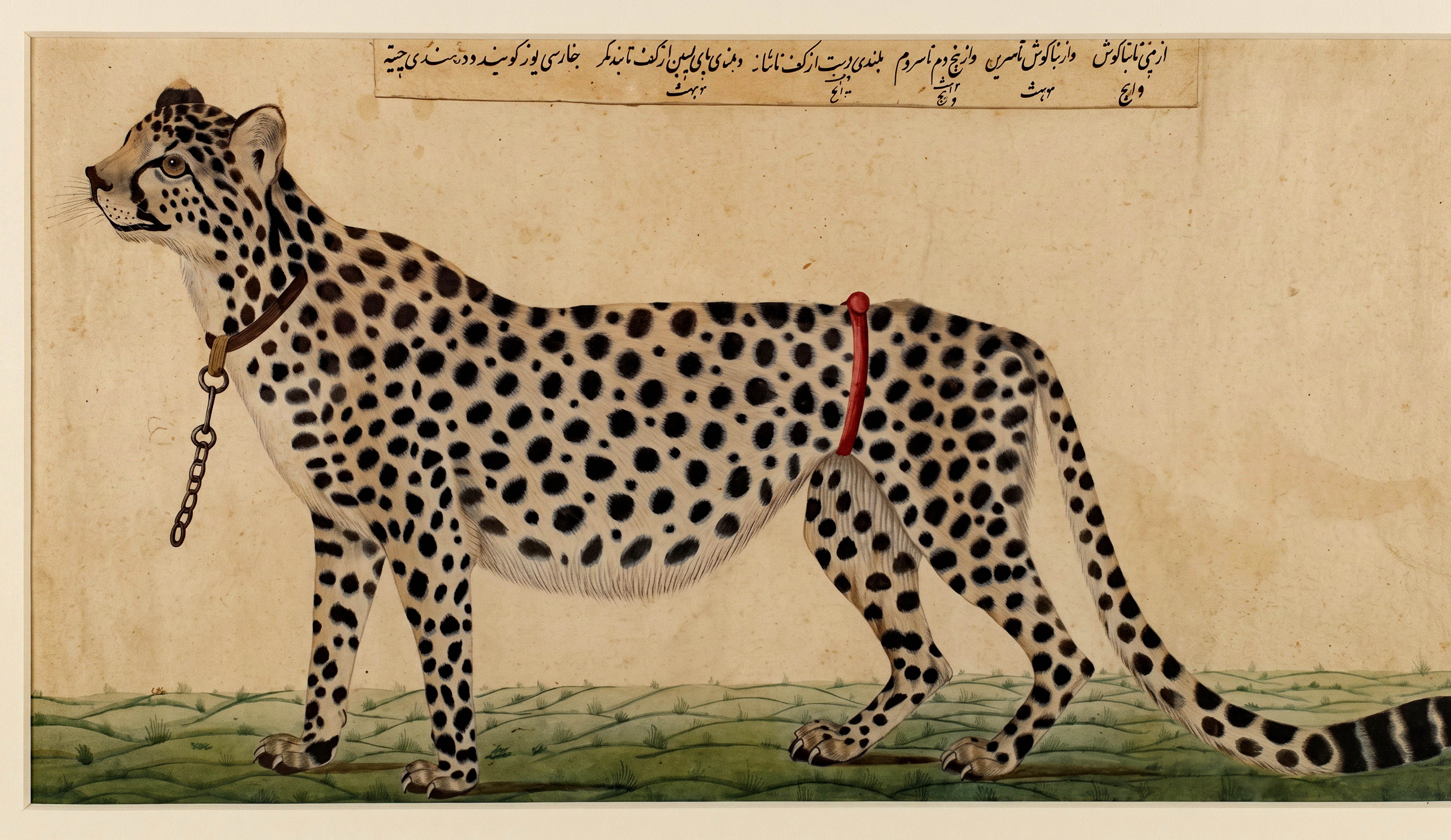 The favorite cheetah of Tipu Sultan of Mysore, 1806
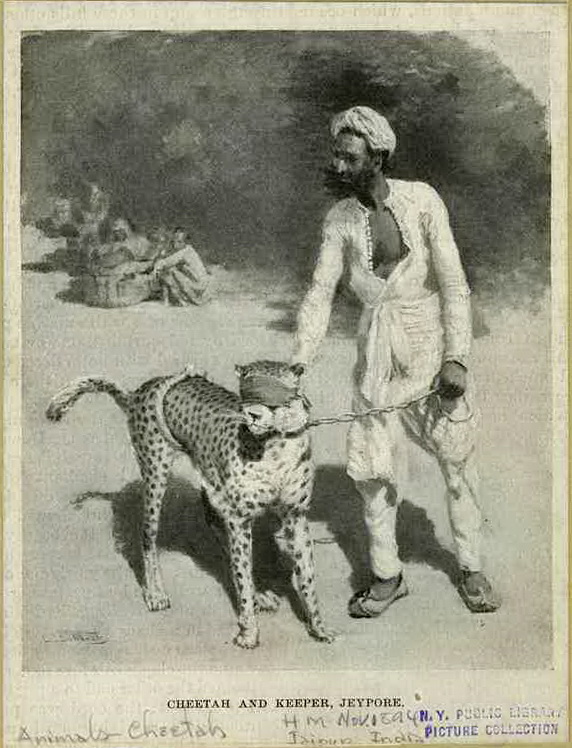 Indian cheetahs with their keepers
But the most surprising depiction of the cheetah is known from Florence, from the chapel of the Palazzo Medici, where in Benozzo Gozzoli’s Procession of the Magi a cheetah sits on the saddle of the young Giuliano de’ Medici, in a pose similar to the one on the Haghpat gate. We know* that the Medici greatly appreciated exotic animals, and they indeed possessed cheetahs acquired from Persia.
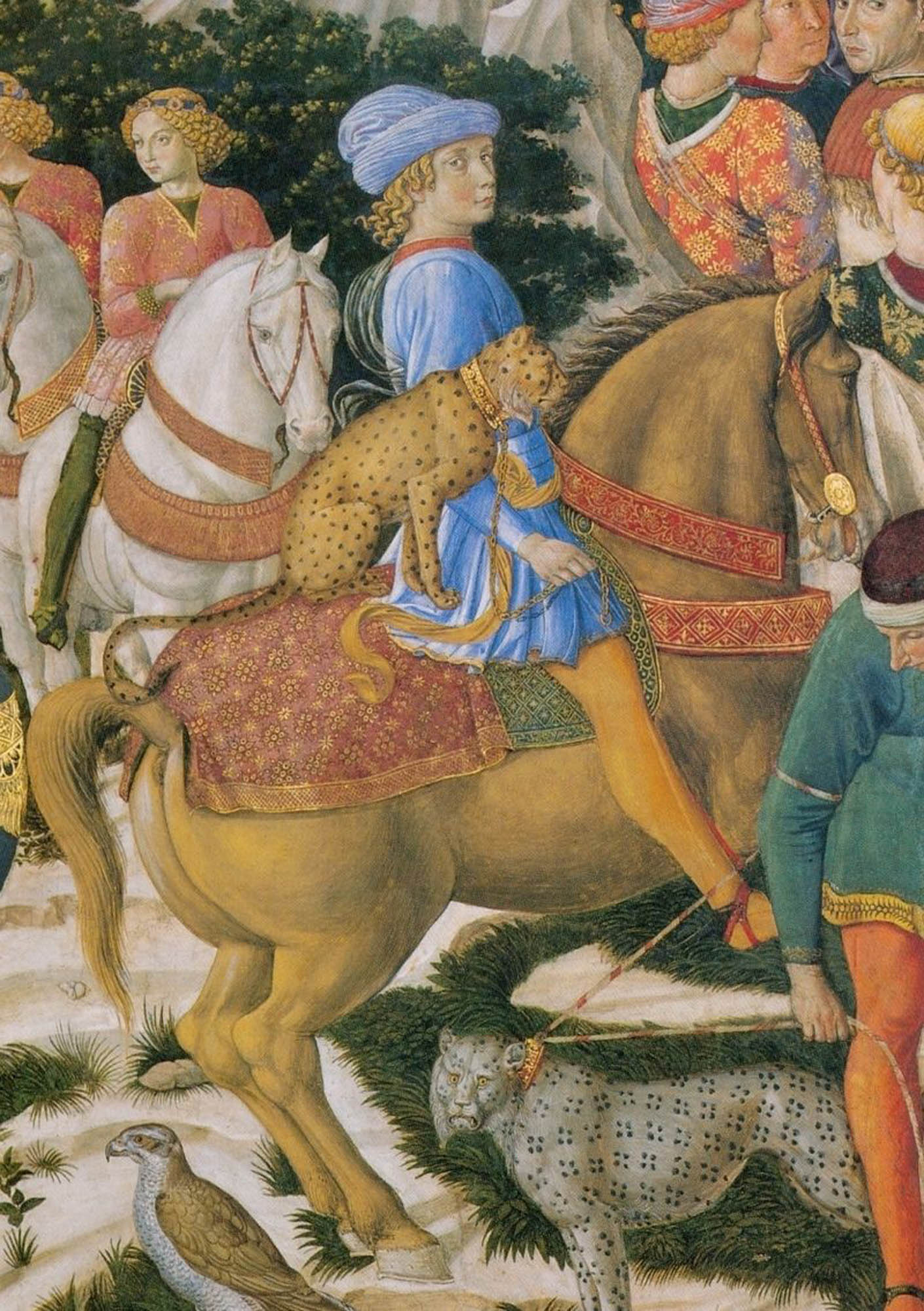
The cheetah thus serves as a kind of emblem of the hunter’s nobility, whether the hunter is the prince who commissioned the gate or Christ himself, hunting down evil.
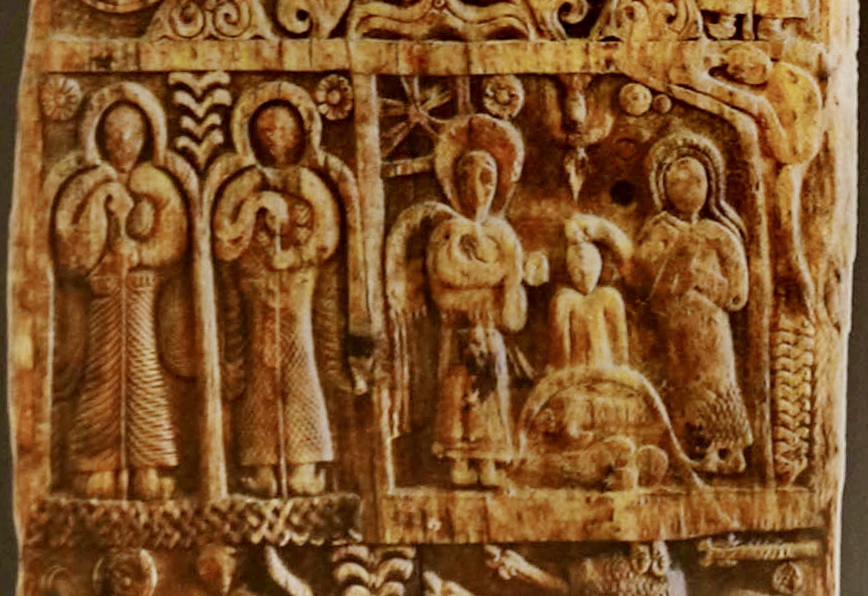
In contrast to the hunting scene, on the right gate leaf we see the scene of Christ as it appears in contemporary Armenian miniatures. Figurative details that begin to appear on Armenian monumental public artworks—such as khachkars and portals—from the 13th century onward, and which had earlier been avoided for theological reasons, were largely borrowed from manuscript art, where they functioned as narrative illustration and thus did not risk doctrinal misuse.
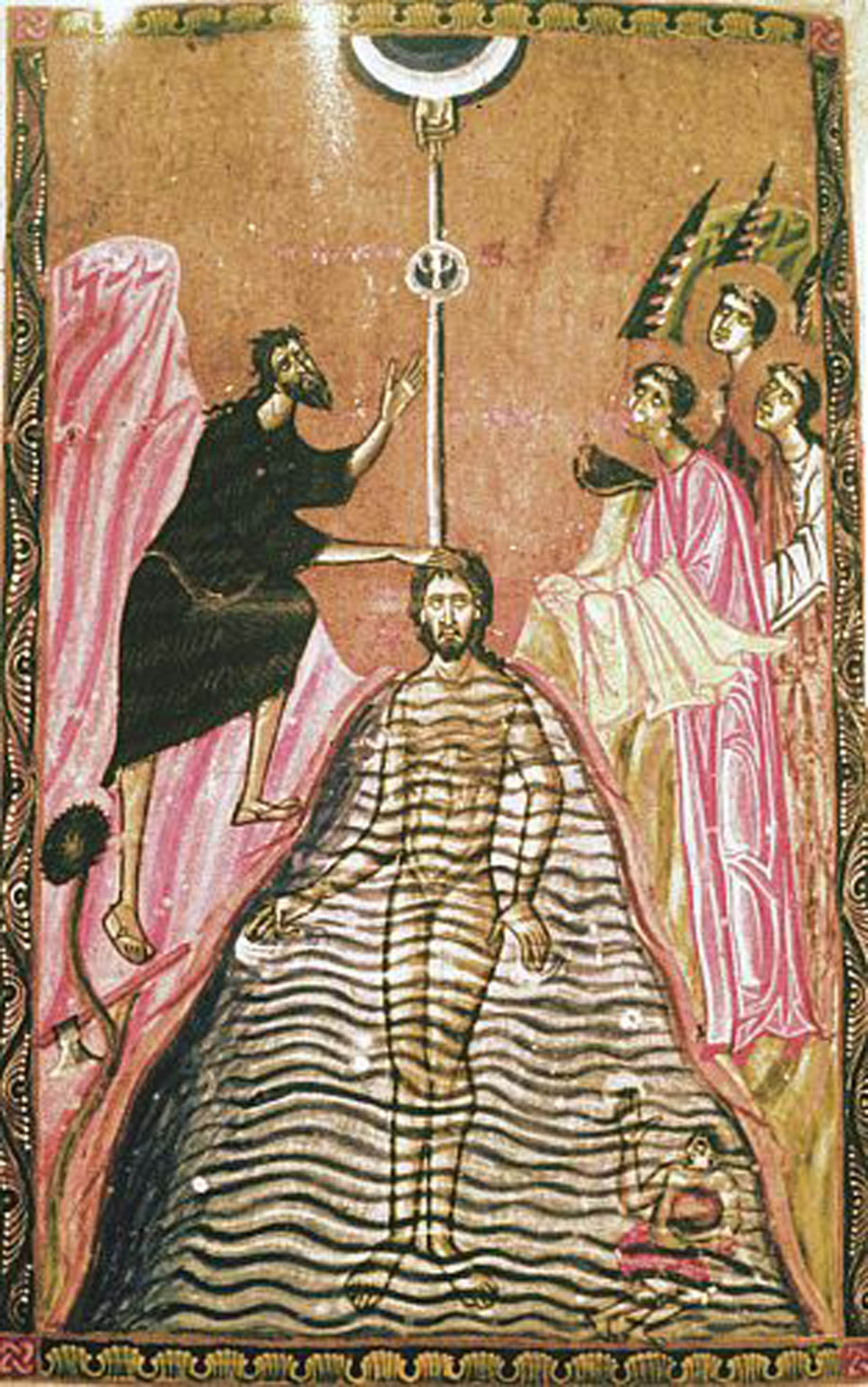 Skevra, Cilicia, 1193. Matenadaran MS1635
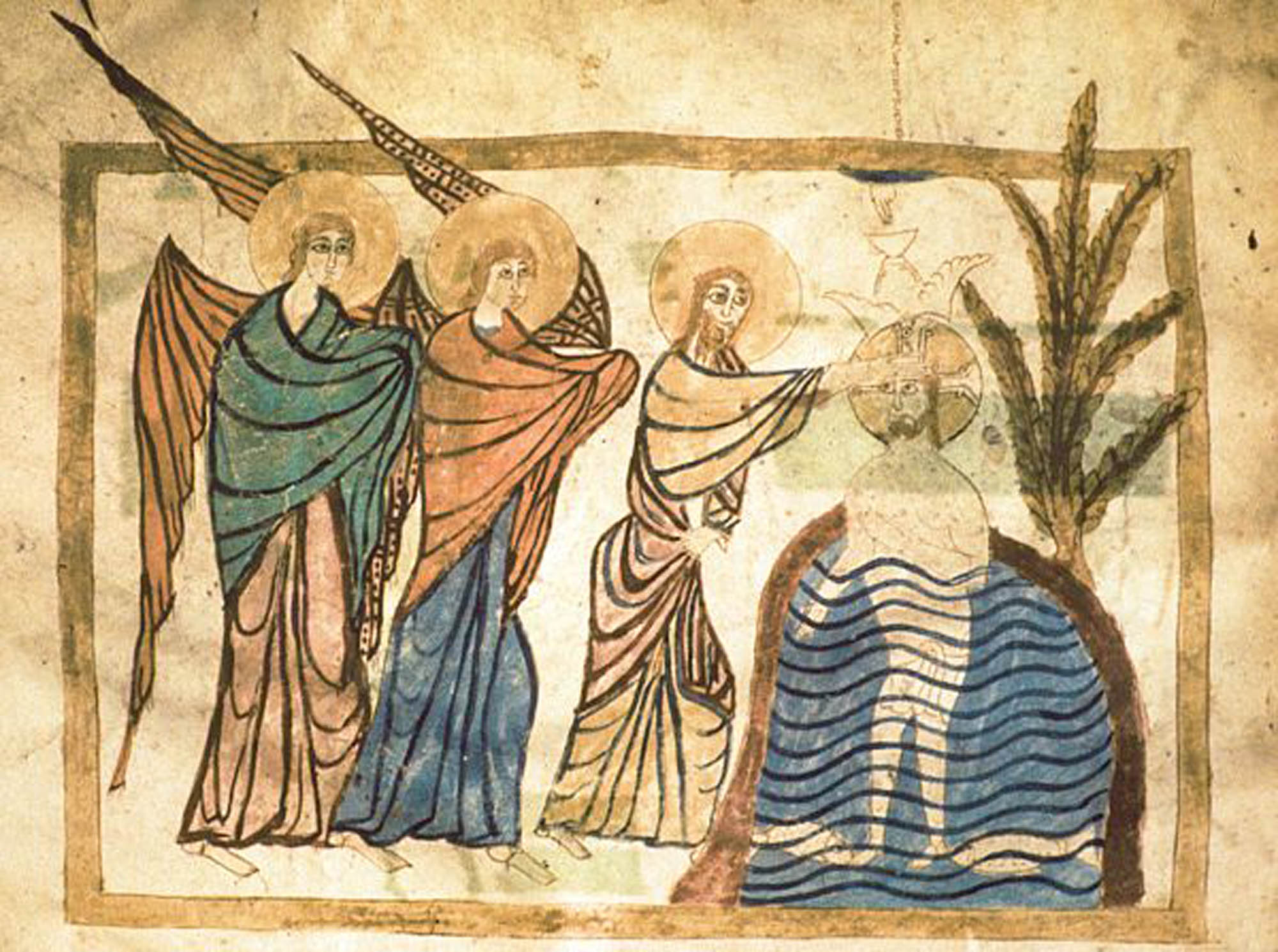 Taroni Evangeliary, 1038. Matenadaran MS6201
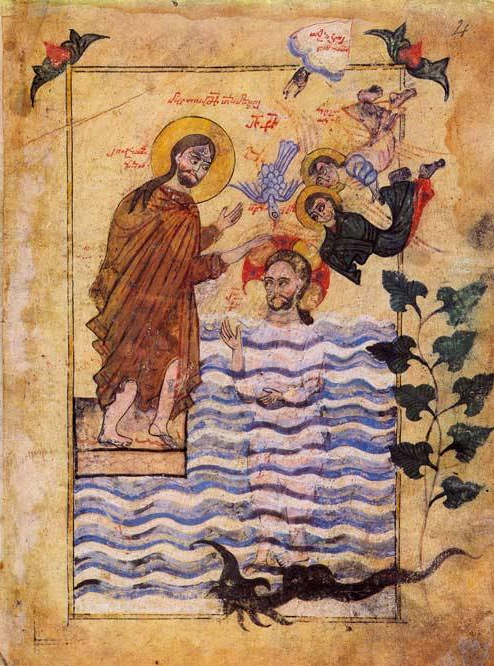 Vardjesh, Vaspurakan, 1305. Matenadaran MS2744
Christ submerged in the Jordan—surrounded in the depiction by the swelling waters of the river—is flanked on his left by John the Baptist and on his right by three angels, while the Holy Spirit descends from above in the form of a dove. Christ’s feet stand in the depths of the Jordan, trampling the subdued figure of evil, as in some miniatures.
The depiction of the Baptism thus forms the logical continuation of the hunting scene on the left as an allegory of struggle with sin, and ultimately as the final paradigm of liberation from sin.
On the lowest register we see two further hunting scenes—allegory or not, these were surely among the most beloved motifs for the donating prince, and it cost the monks who composed the iconographic program nothing to select scenes that would please him while also lending themselves to their own theological interpretation.
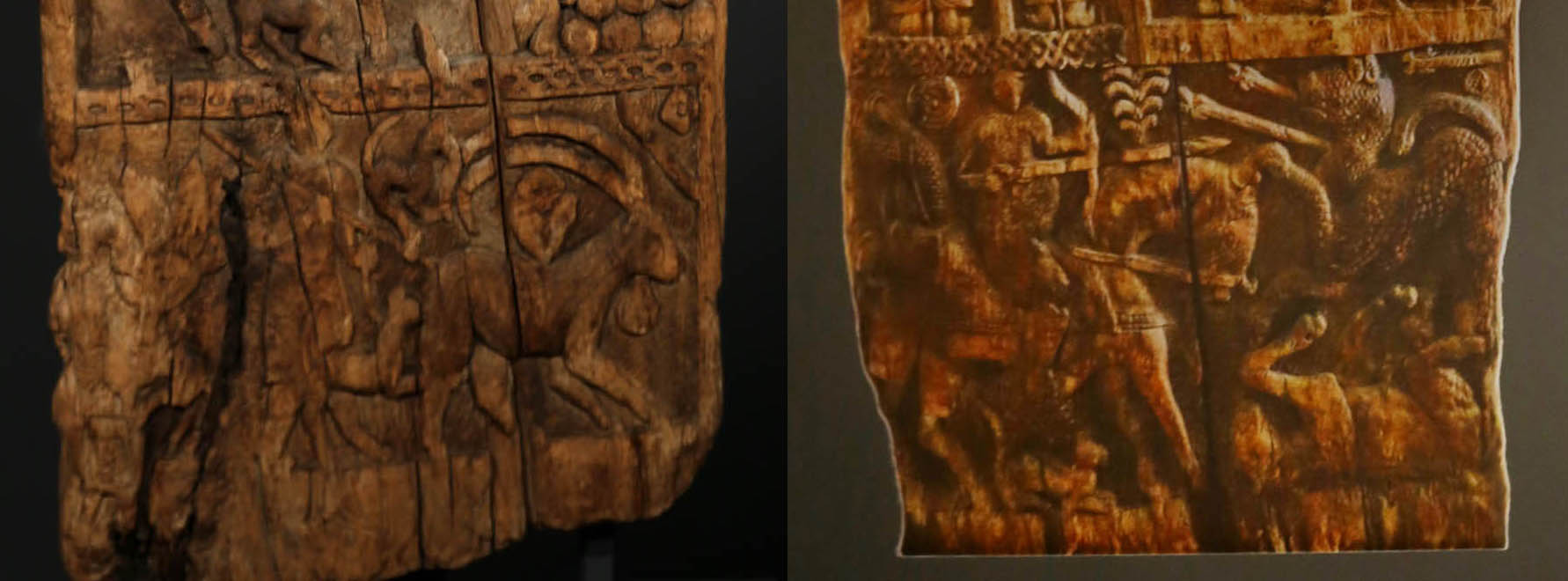
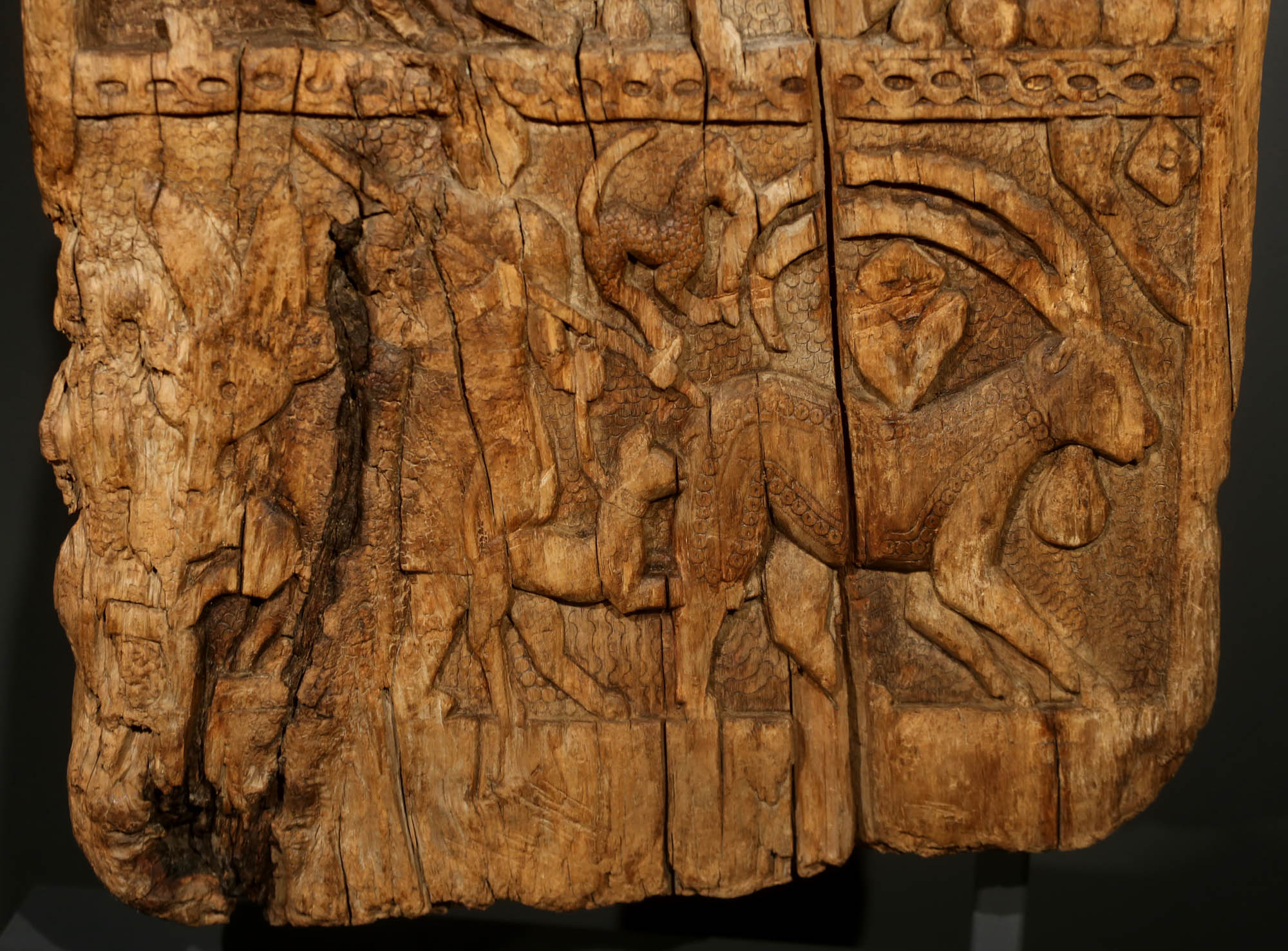
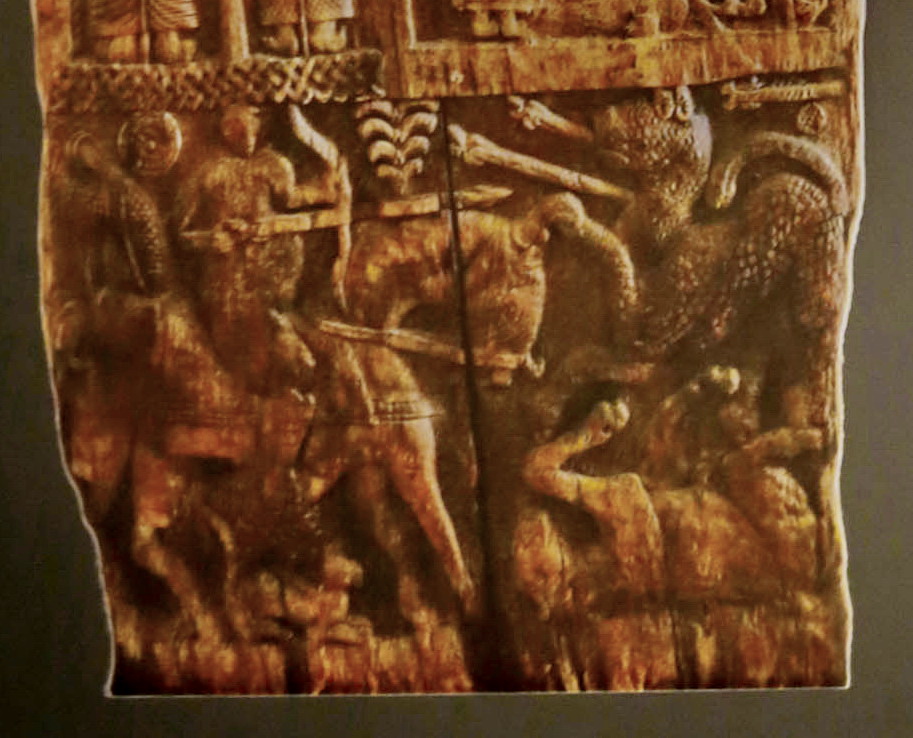
On the left wing we see a hunt of a bezoar goat, on the right wing a lion hunt. Both animals are ancient symbols of Persian royal ideology. The ornamented goat and the rearing lion alike recall similar figures in Sasanian metalwork.
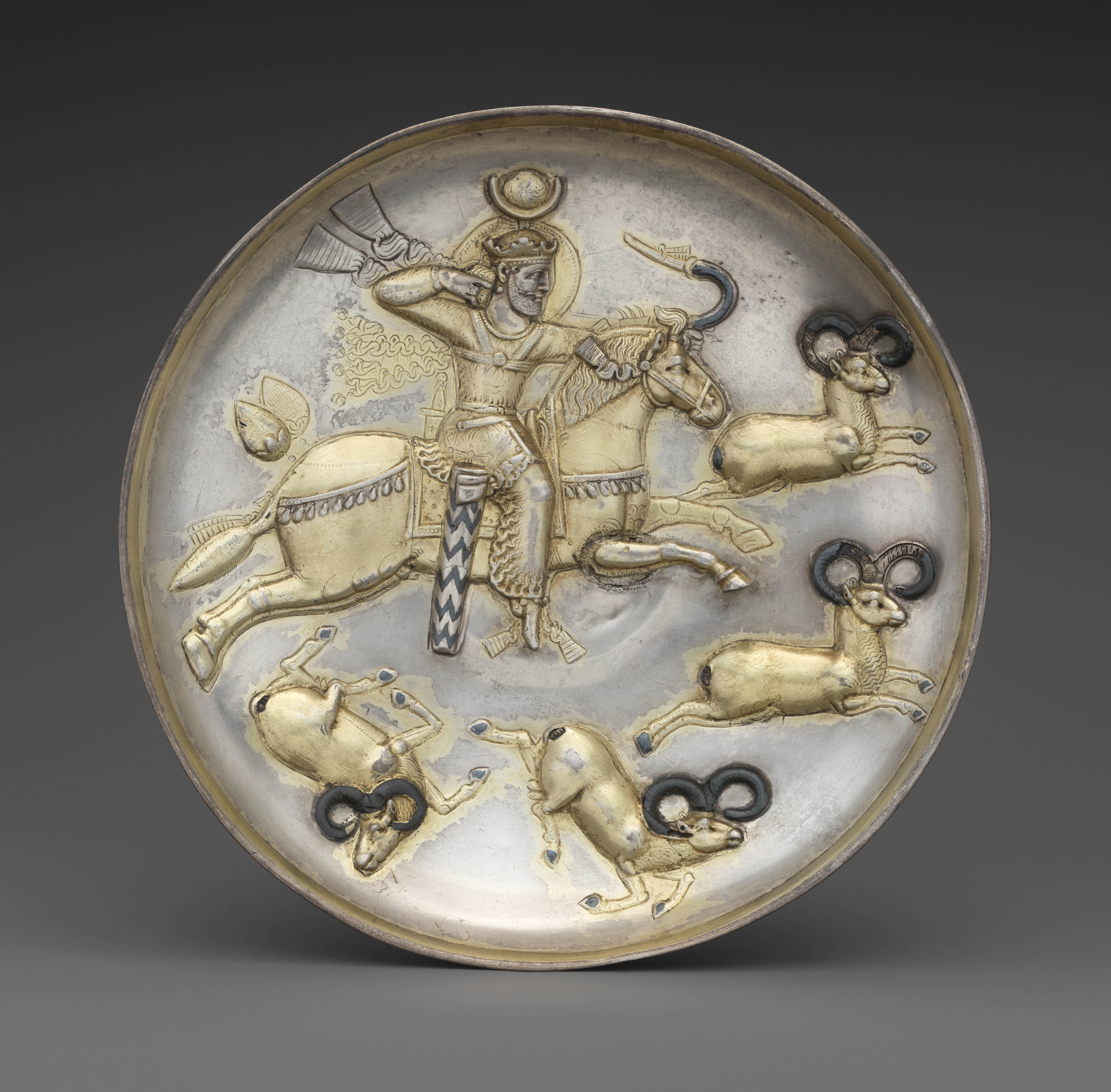 Royal goat hunt of the Sasanian king Peroz (459–484) or Kavadh I (488–497, 499–531)
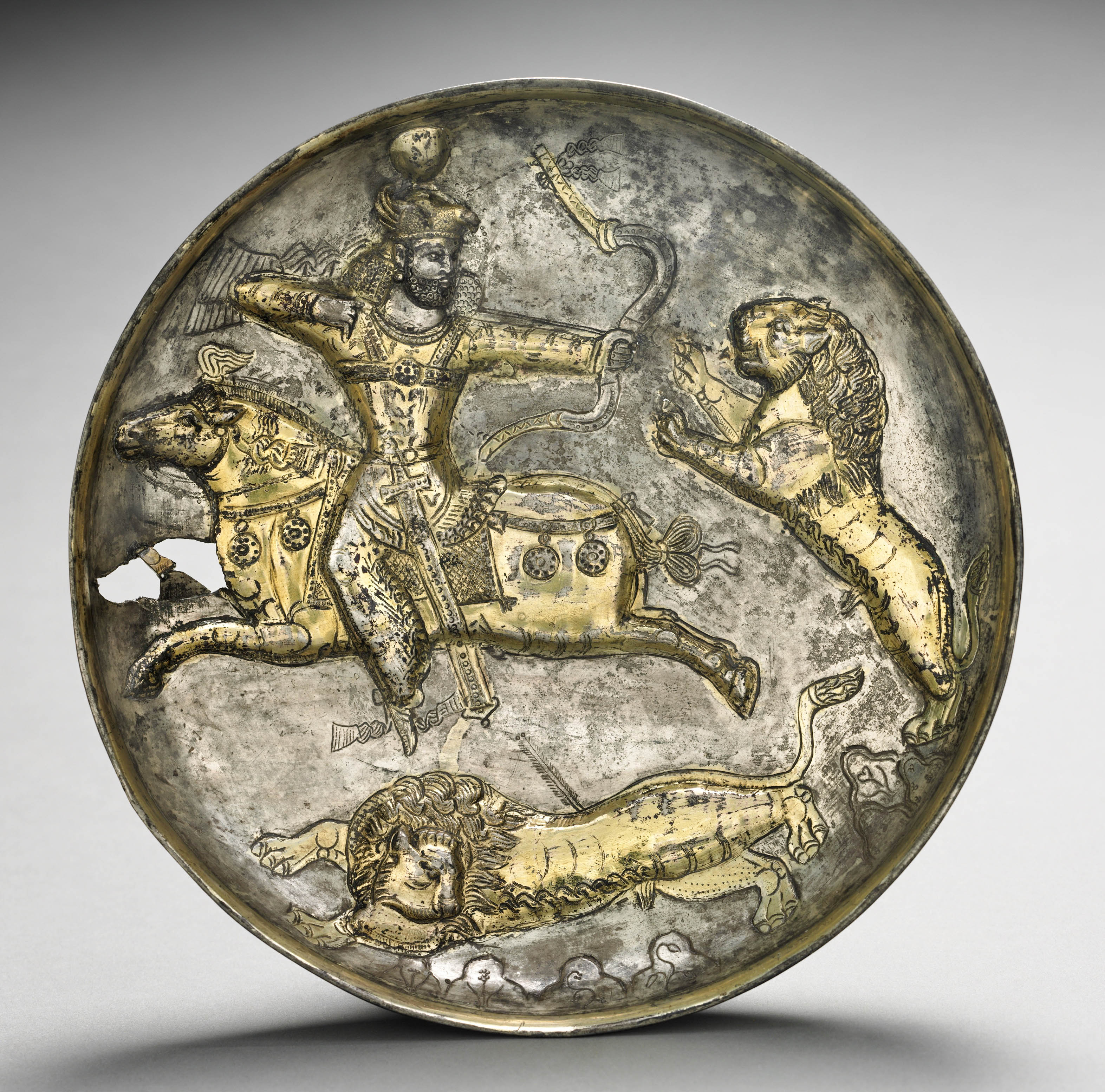 Lion hunt of the Sasanian king Hormizd II (303–309)
In Persian iconography, the hunting of these two animals praised the ruler’s strength and his ability to impose order over chaos. Their depiction was also appreciated by the contemporary Armenian elite—including the Zakarid princes. For a theological viewer, these scenes could naturally be read as allegories of the struggle against sin and, in an anagogical sense, of divine ordering of the world.
From these most earthly scenes, the imagery gradually ascends into ever higher spheres of reality, culminating at the top of the gate in the depiction of the redeemed human and the glorified Savior.
A similar dynamic is visible between the two wings of the gate: the more worldly scenes of the left wing find their transcendent fulfillment on the right wing.
One can only hope that efforts to acquire the right wing will also be fulfilled, so that the two sides of the gate may once again be seen together—the outstanding monument of Armenian art that has endured so much destruction.
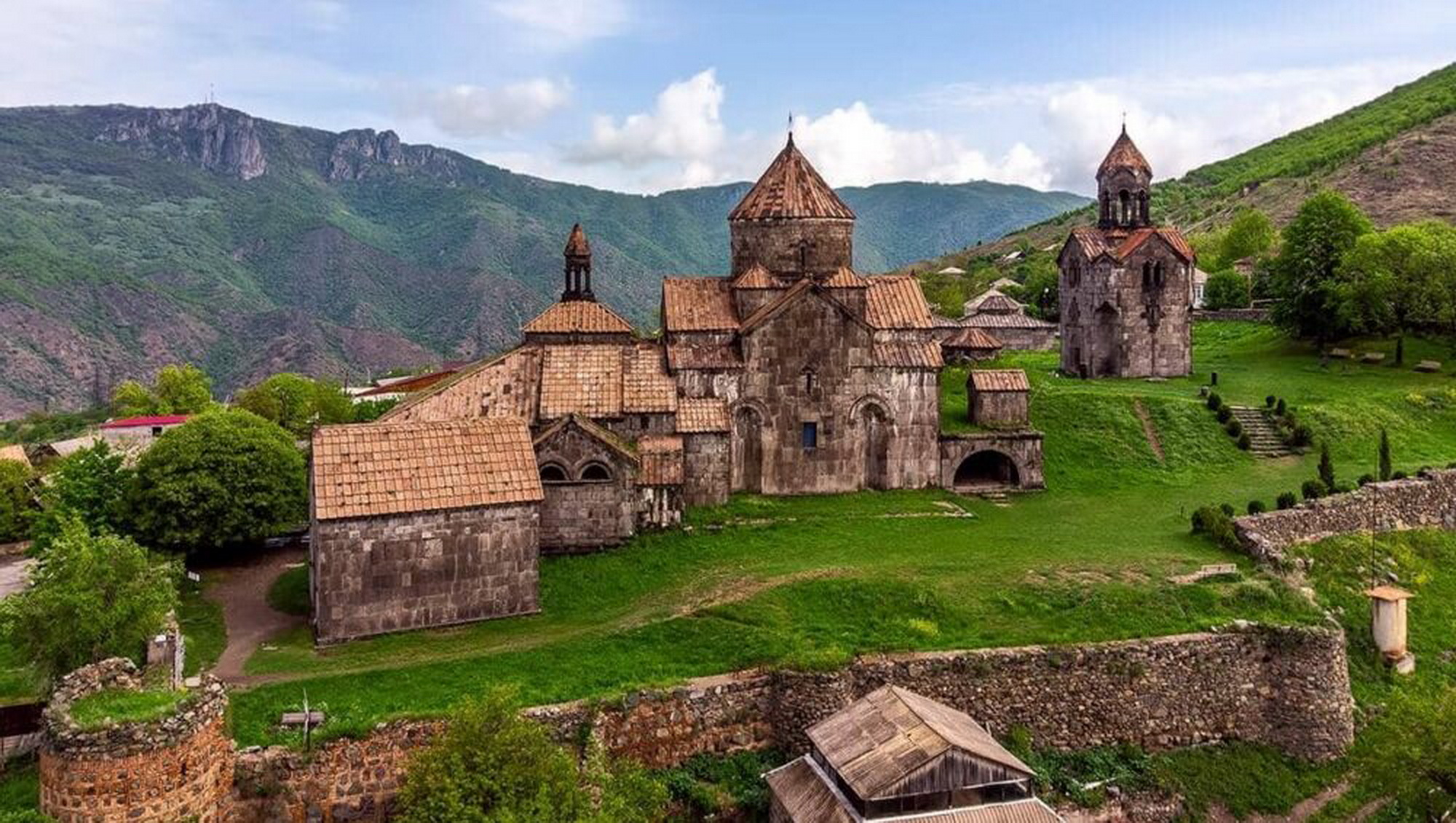 The monastery of Haghpat. In the center, the Surb Nshan church seen from the south, with the large gavit to its left in the foreground.



Add comment