

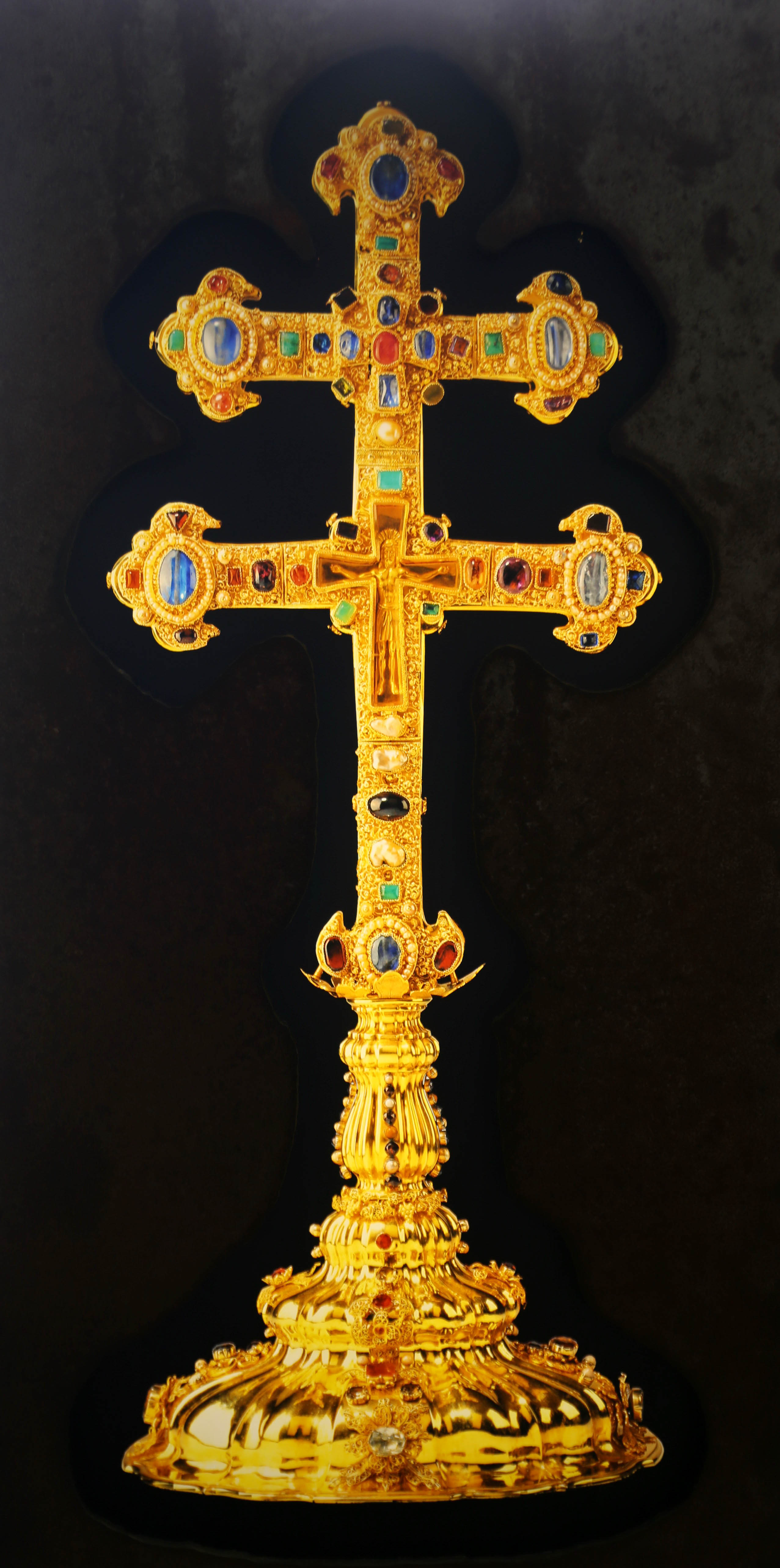
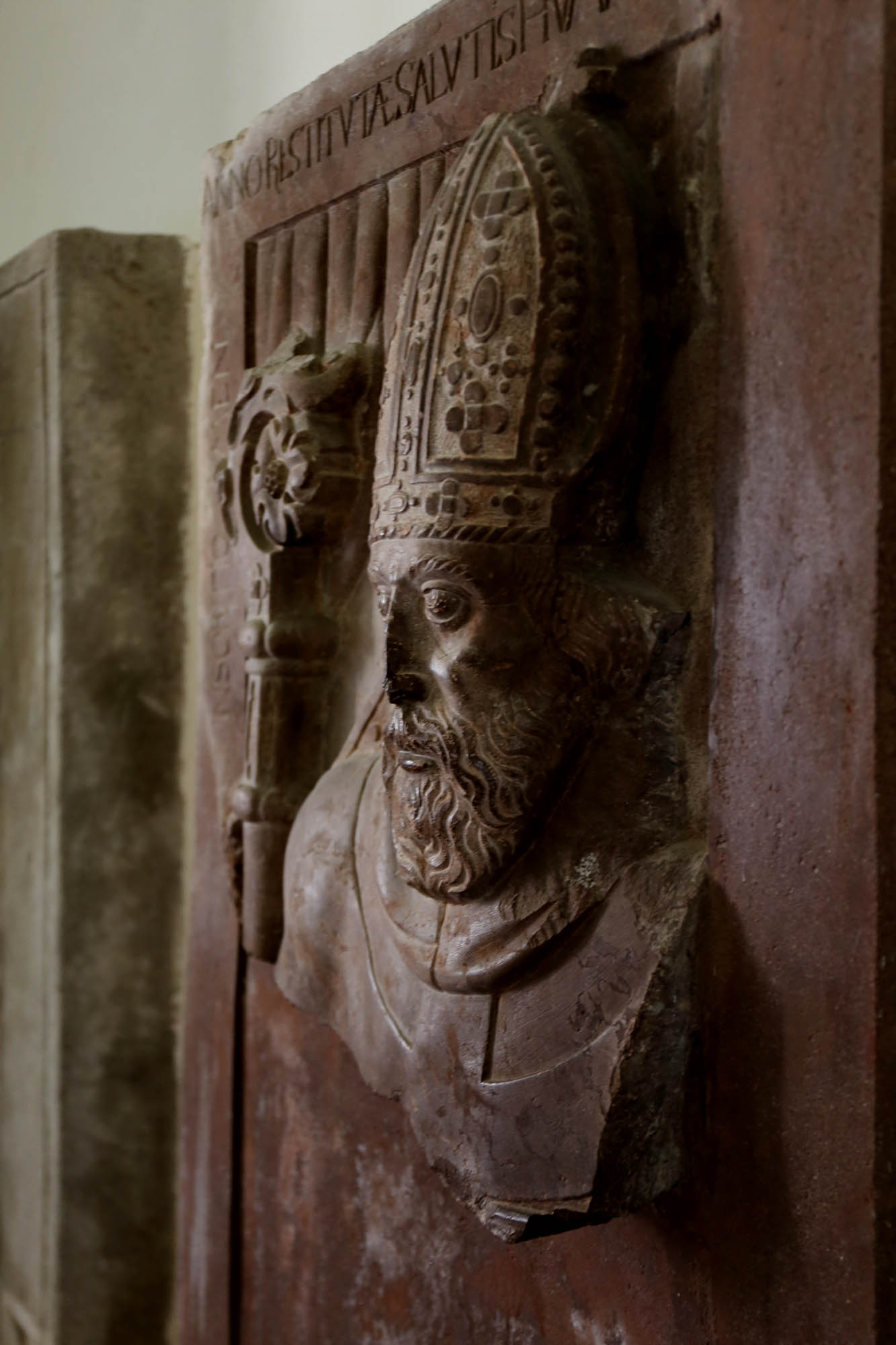
For more than seven centuries, the Cistercian monastery of Vyšší Brod (Hohenfurth) on the Vltava has safeguarded one of the most precious medieval treasures of the Czech lands: the Cross of Záviš. This 70-centimetre-tall silver reliquary, a double cross containing a fragment of the True Cross, is adorned with gold plating, 44 gemstones and 166 pearls. At the centre of one side hangs a golden corpus of the Crucified Christ—most likely attached at a later date. The reverse bears nine enamel roundels depicting saints, each identified by its name written in Greek: Saints Peter, Paul, John the Theologian (the Evangelist), Thomas, George, Demetrius, Athanasius and Nicholas, while the central medallion depicts either Christ Pantocrator or, perhaps, another saint.
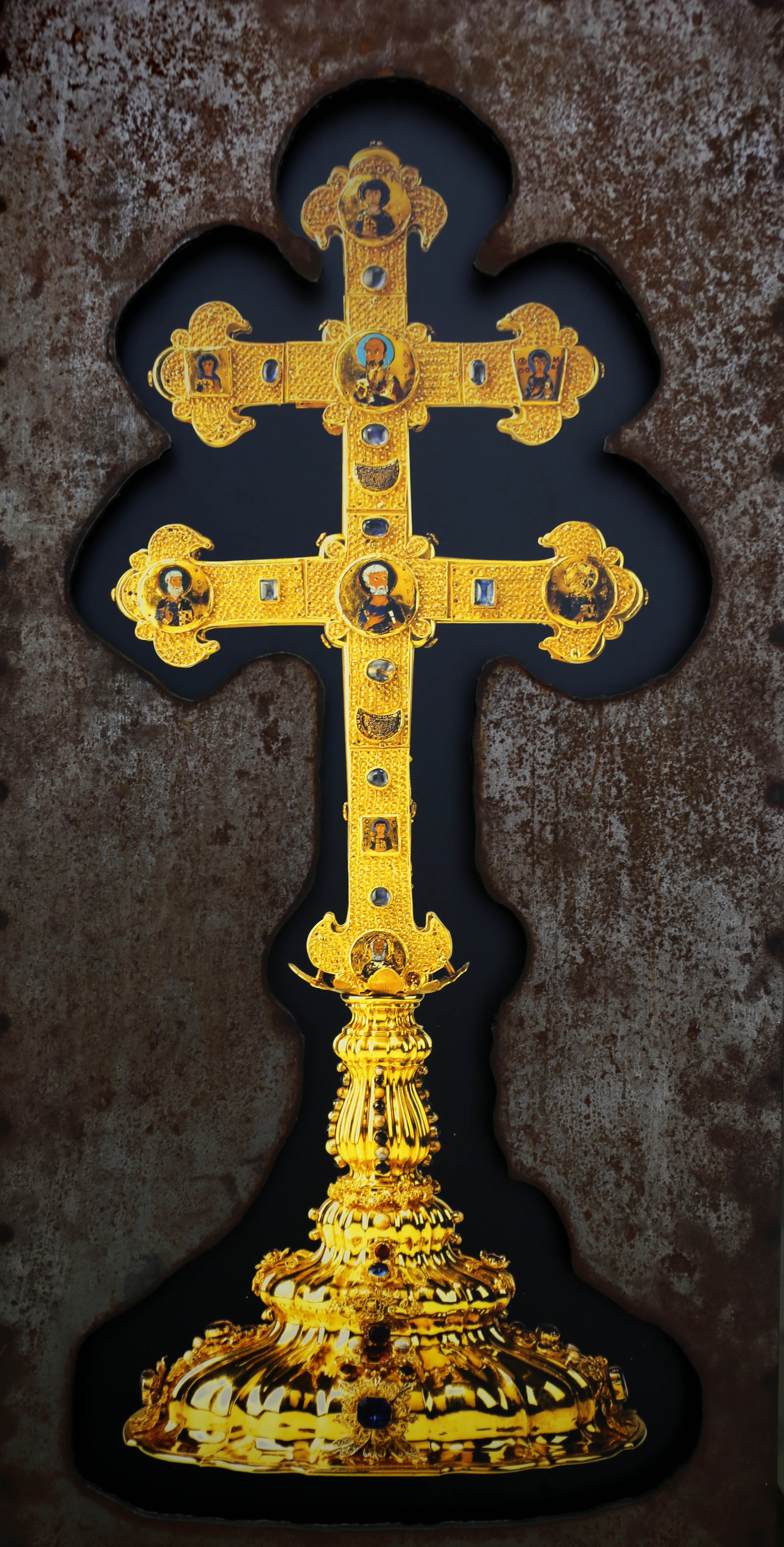
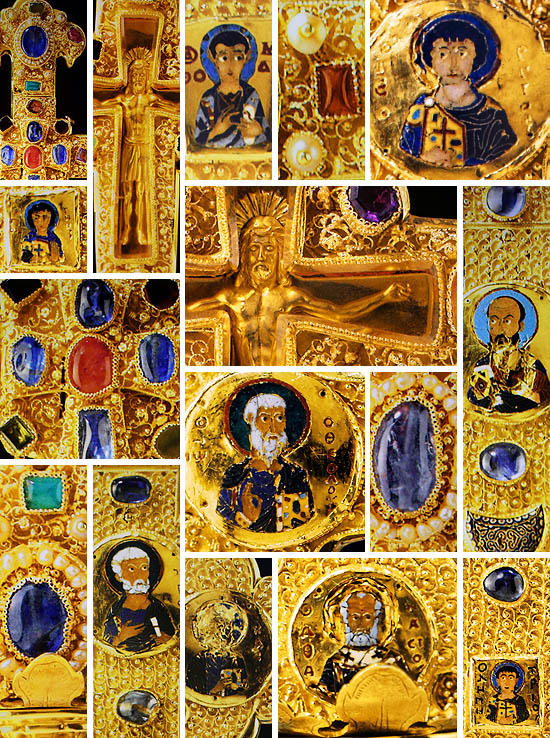
The Greek inscriptions, the selection of saints—featuring some of the most venerated Orthodox warrior saints and bishops—and the style of the cross all point to a Byzantine origin. On the other hand, it bears not a single distinctly Western, let alone Bohemian, saint, indicating that it was never intended for patrons in these lands.
This raises several questions:
• How did such a precious Byzantine cross find its way to the Cistercian monastery of Vyšší Brod?
• Who was Záviš, after whom the cross is named?
• And why does the cross bear his name?
* * *
1. Hohenfurth / Vyšší Brod, the Rosenberg Stronghold
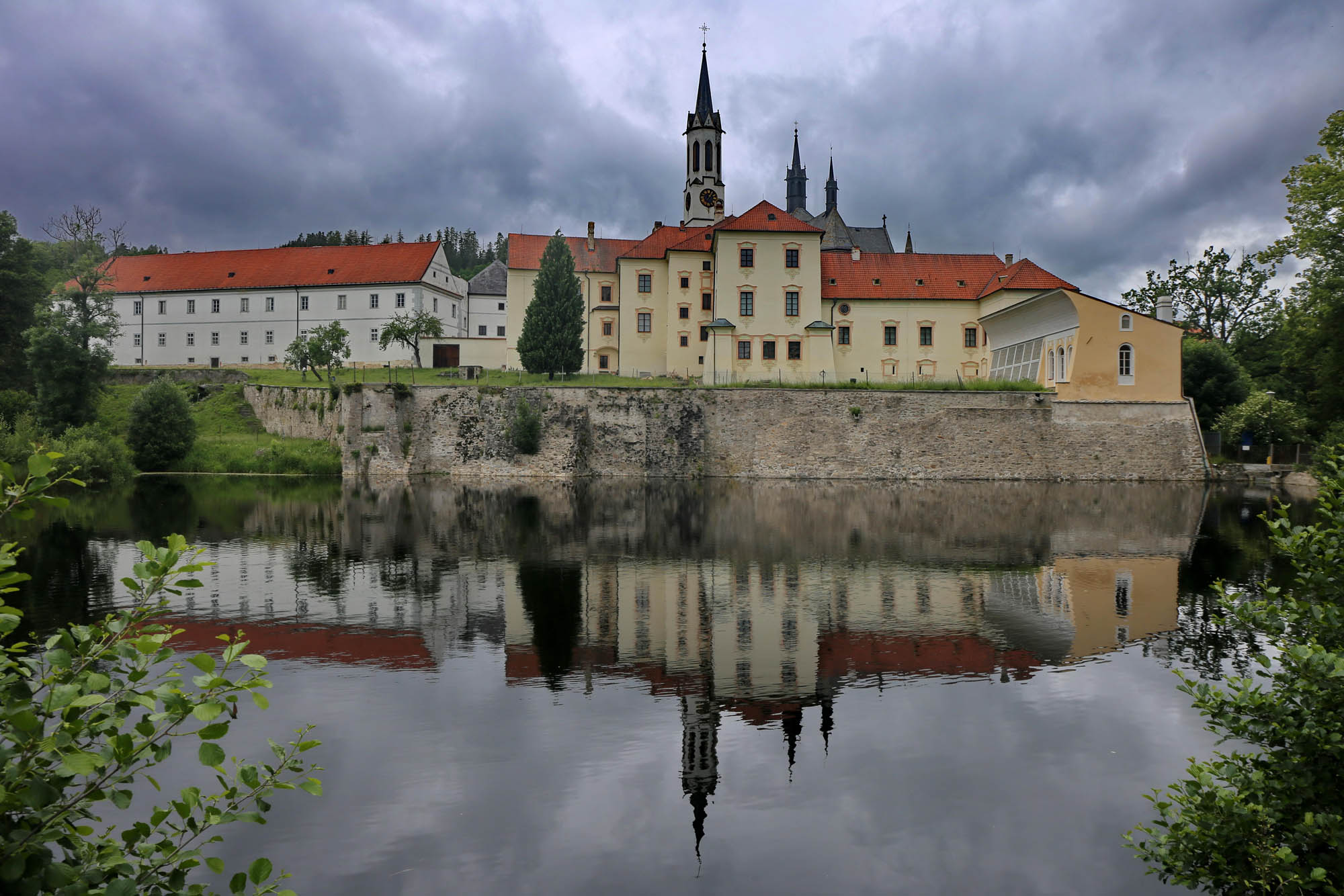
The Cistercian monastery of Vyšší Brod (Hohenfurth, Altovadum, meaning “High Ford”) was founded in 1259 on the banks of the Vltava by Wok I of Rosenberg (1210–1262), at the very spot where, according to tradition, he miraculously escaped the swollen river through the intercession of the Virgin Mary. The miracle is depicted in a large allegorical oil painting created in 1759 to commemorate the 500th anniversary of the monastery’s foundation, now preserved in the monastery gallery.
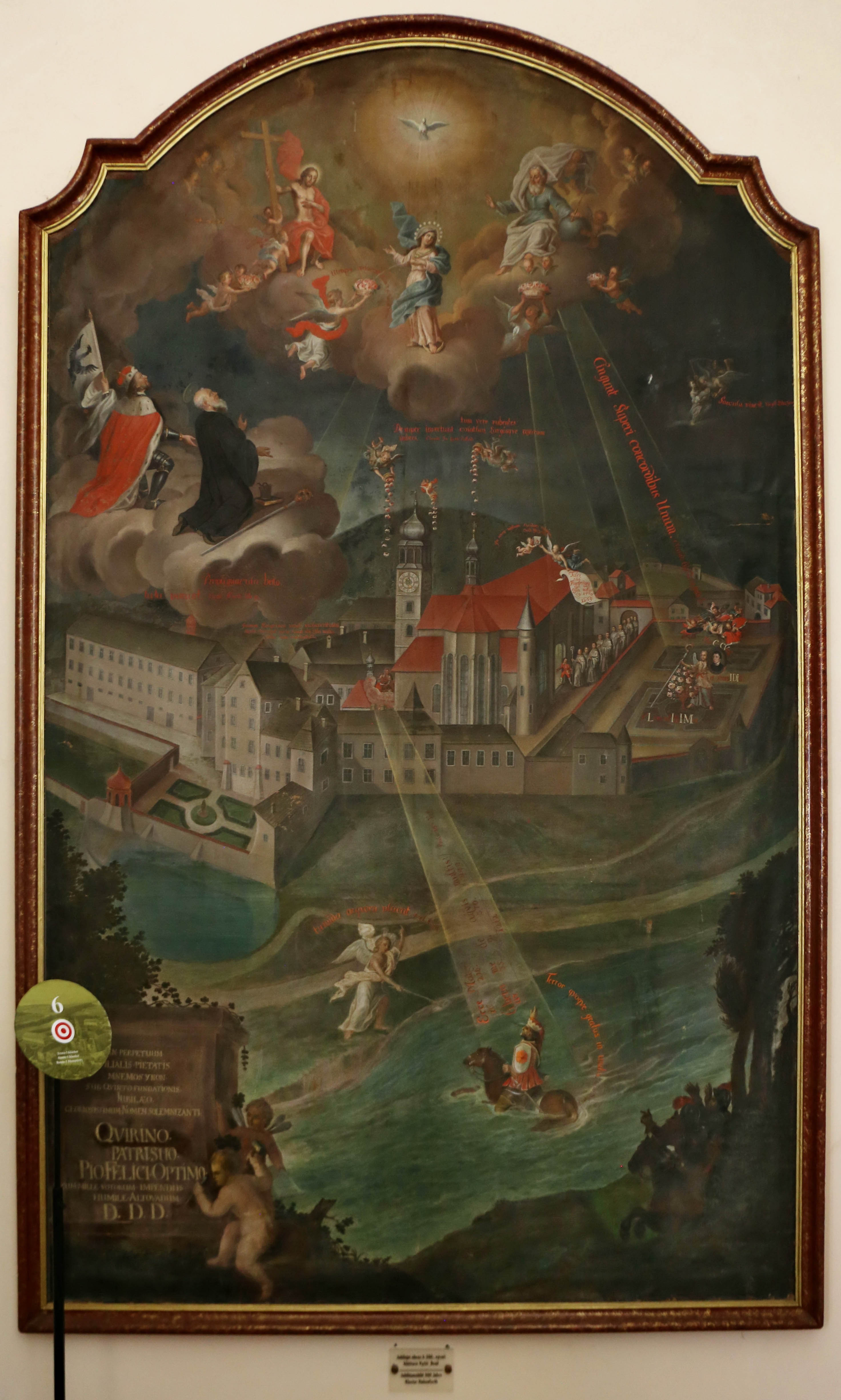
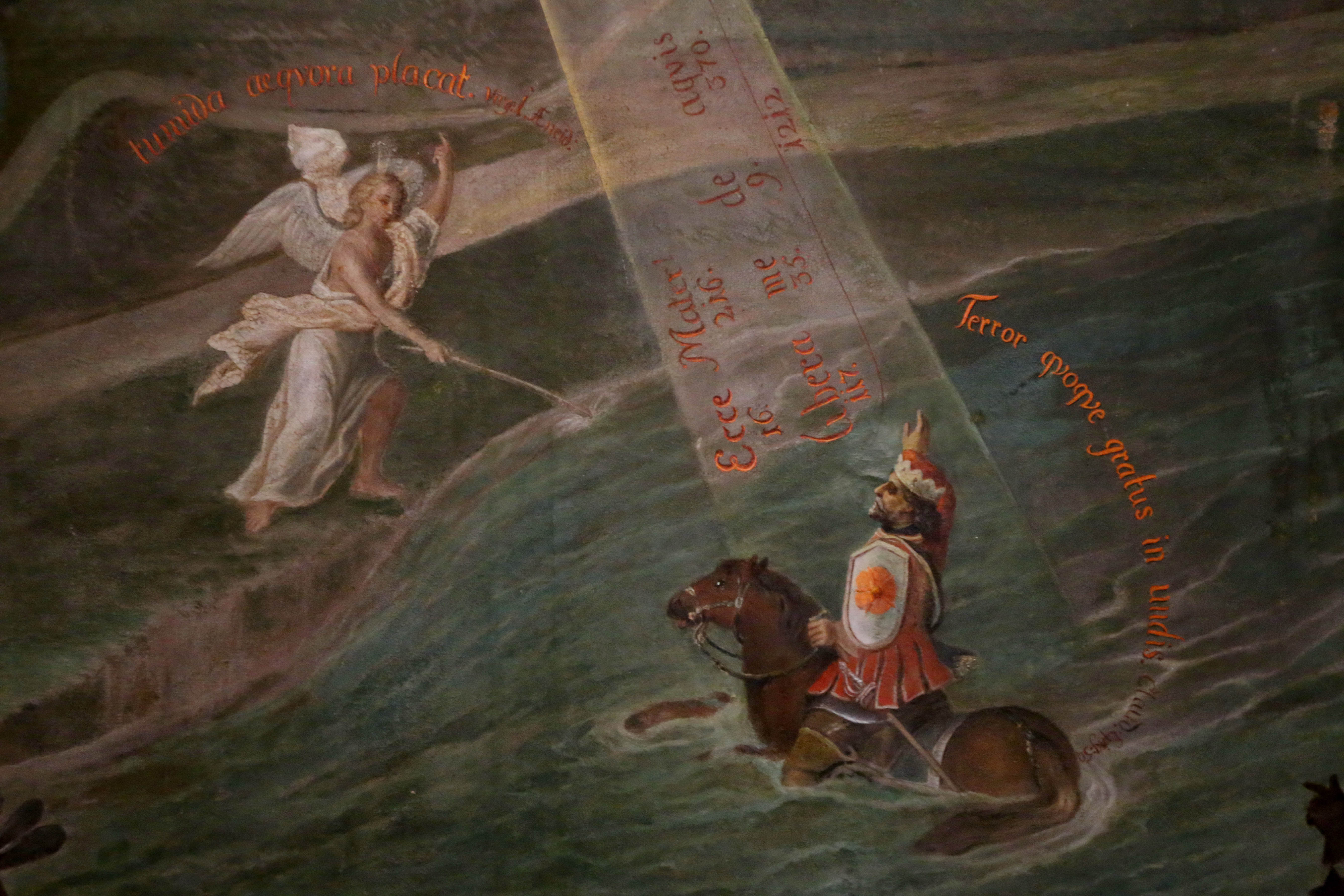 In the lower part of the painting, Wok of Rosenberg struggles against the current while crying out, through a combination of two biblical quotations: Ecce Mater, libera me de aquis multis (“Behold Mother” [John 19:26], “Deliver me out of great waters” [Psalm 144:7 Vulgate]). Beside him, the painter comments on the scene with a quotation from Claudian: Terror quoque gratus in undis (“Even terror is salutary amid the waves”). On the riverbank, an angel stretches out his staff over the water, with which, as the accompanying inscription says, he tumida aequora placat (“calms the swelling waters” [Aeneid 1.142]), while with his other hand he points upward to the heavenly source of salvation.
An intriguing detail of the painting is that numbers appear beneath the words of Wok’s plea for help. They indicate the numerical value obtained by assigning consecutive numbers to the letters of the Latin alphabet and adding them together. The total is 1212. This refers to a document preserved in the monastery archives according to which “Wernerus de Rosenberg” promised the Abbot General of the Cistercian Order that he would found a monastery. Yet no such Wernerus is known. Nor could he be, for Wok himself was the founder of the Rosenberg branch of the Witiko/Vítkovci family, and in 1212 he was only two years old. The charter is in fact a monastic forgery produced around 1340, retrospectively dating the foundation of the monastery to the year of Emperor Frederick II’s famous Sicilian Golden Bull, regarded as the constitutional charter of the Kingdom of Bohemia. In this way, it sought to secure the monastery’s landed possessions against any future claimants—around 1340, above all the House of Luxembourg, represented by Kings John and Charles IV. At that time, the Rosenberg court at Český Krumlov and the monastery of Vyšší Brod maintained what was effectively a charter-forging workshop, whose purpose was to shield the vast Rosenberg estates from encroachment by royal authority.
Charles IV was one of the most learned rulers of his age and commanded an outstanding legal and diplomatic chancery. He clearly saw through the deception and knew that the documents were contemporary forgeries. Yet he had no wish to confront the Rosenbergs openly: the family was too powerful, and he depended on their support to maintain the stability of the Bohemian Crown. He therefore confirmed the monastery’s privileges, but referred not to the forged charter of 1212, but to the genuine foundation of 1259.
The story of Wok’s miraculous rescue from the Vltava may sound legendary, yet it is a historical fact that two years earlier, in 1257, he had indeed survived another river crossing—the Inn—after the Bohemian army suffered a crushing defeat at the Battle of Mühldorf against the Bavarians. The survivors were forced to swim across the river, where many drowned. Some historians believe that Wok’s vow dates from this event, and that over the centuries its setting was transferred to the ford on the Vltava where the monastery was eventually founded.
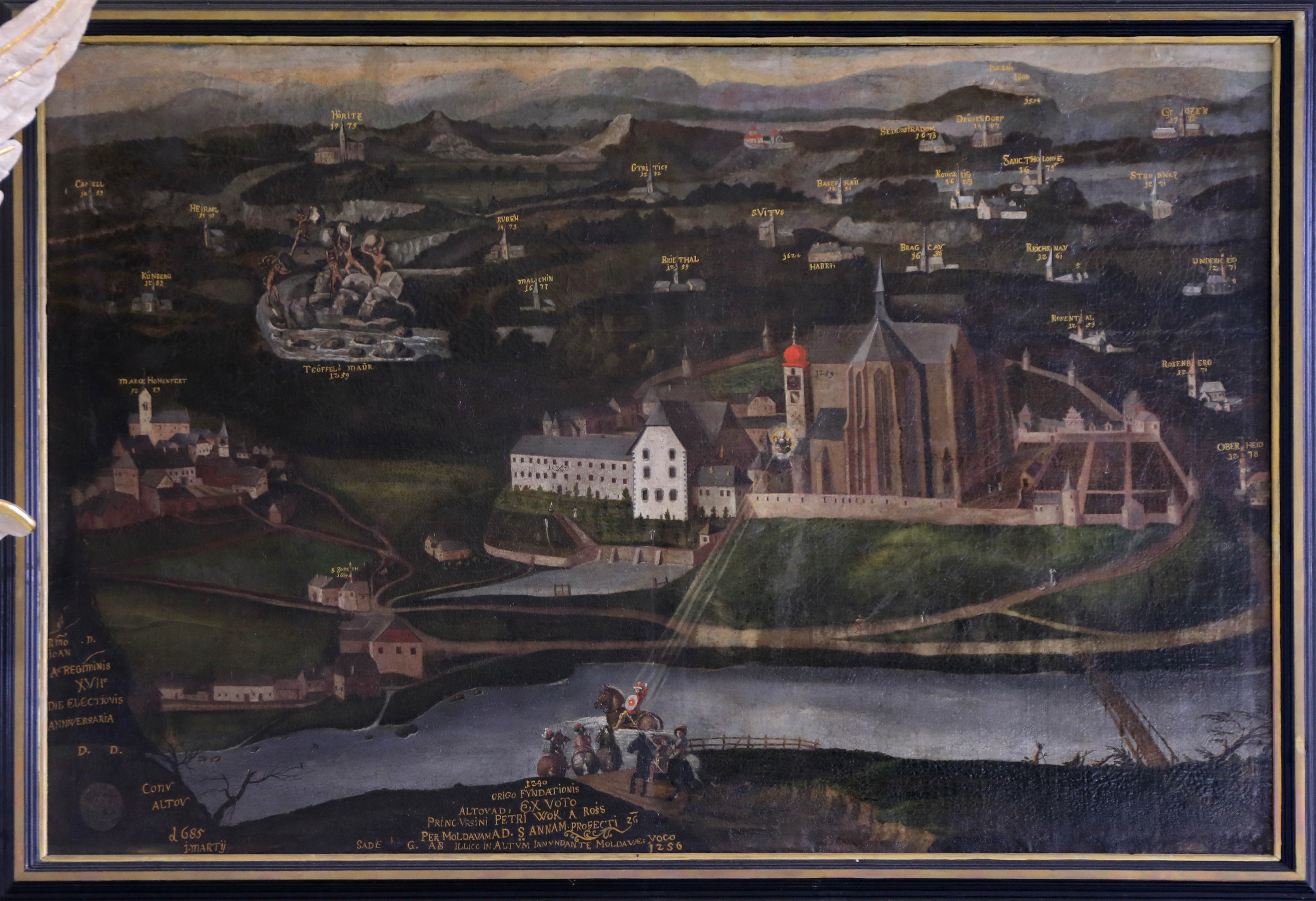 Another painting in the monastery gallery, dating from 1685, depicts the villages belonging to the abbey. Once again, the miracle appears in the foreground, while the background includes another famous local legend: that of the Teufelsmauer (Čertova stěna, “Devil’s Wall”). According to tradition, the Devil and his demons piled up these rocks across the Vltava to dam the river and flood the monastery, but when the third cock crowed earlier than expected, they were forced to abandon their work. This legend later inspired Bedřich Smetana’s opera The Devil’s Wall.
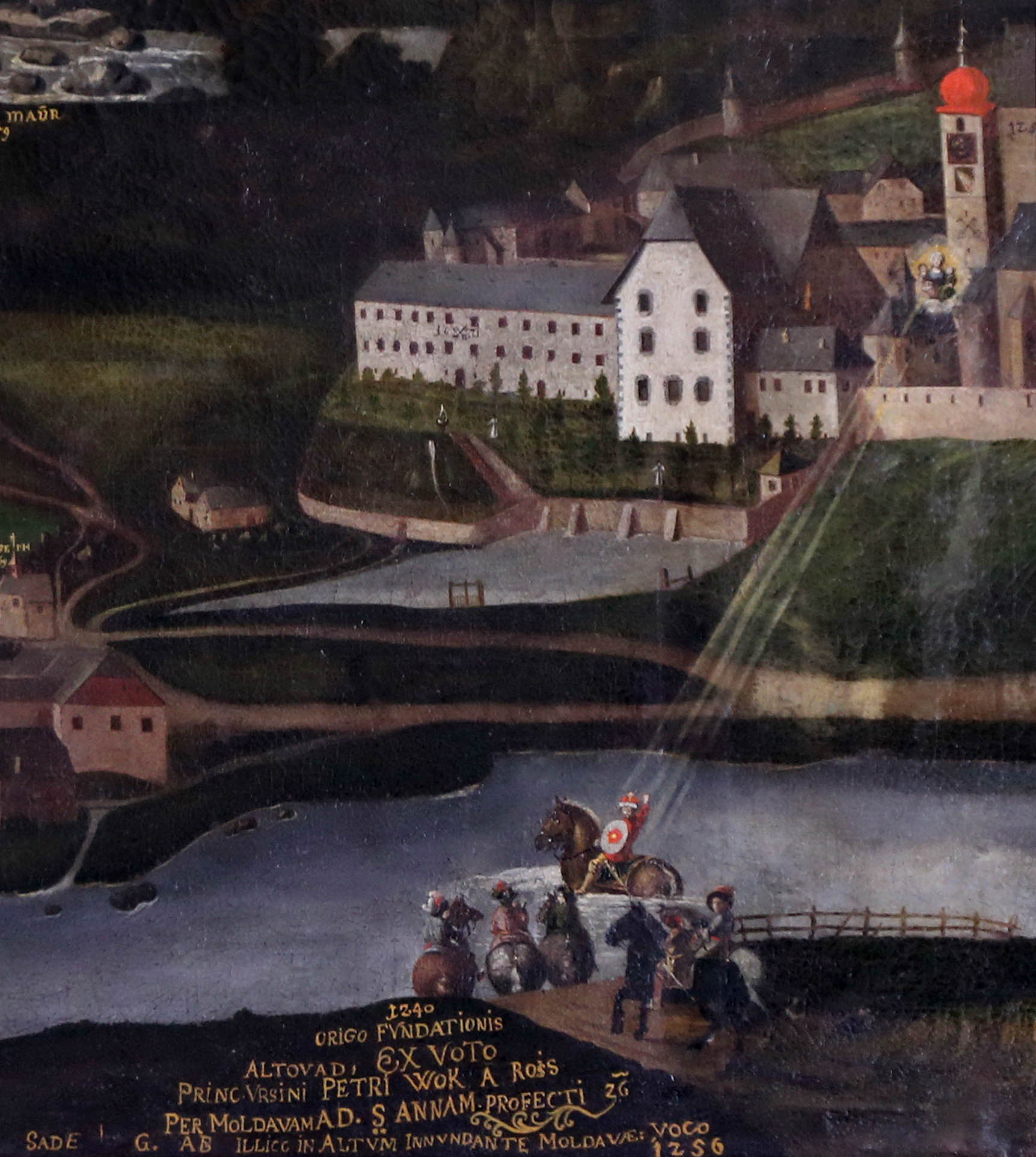
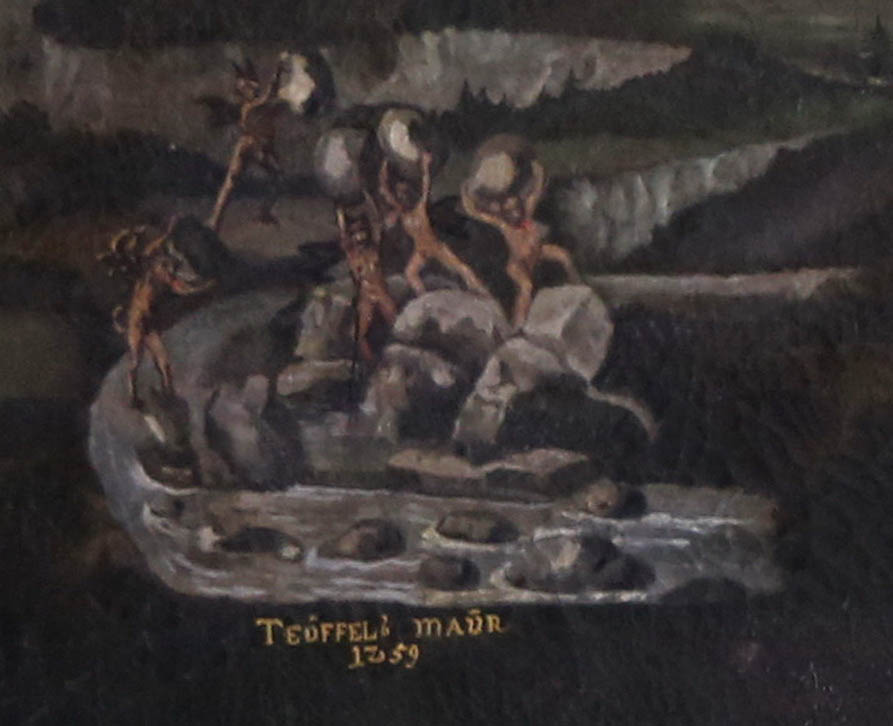
Wok of Rosenberg (Wok z Rožmberka) belonged to the Vítkovci (Witigonen) family, whose members established in the twelfth century the Land of the Rose, the vast dominion of southern Bohemia. The five sons of the dynasty’s founder each bore a differently coloured five-petalled rose in their coat of arms, and together ruled what became almost a state within the state—at times nearly independent of it. It was Wok who founded the Rosenberg branch, identified by the red rose. Gradually absorbing the other branches of the family, the Rosenbergs rose to become the most powerful noble house in Bohemia, only to die out without heirs at the height of their power in the sixteenth century.
The monastery of Vyšší Brod became the family monastery and burial place of the Rosenbergs and, more broadly, of the Vítkovci. Thirty-one members of the family are buried here, including its last head, John Zrinski, son of the hero of Szigetvár, Nikola IV Zrinski. His mother was a Rosenberg noblewoman who, after her husband’s heroic death in 1566, returned with her two sons to the Rosenberg estates. John was raised by his two maternal uncles who, having no sons of their own, made him their heir. Yet John, too, died childless in 1612, and after a brief interlude under the Eggenbergs, the Land of the Rose passed to the Austrian House of Schwarzenberg.
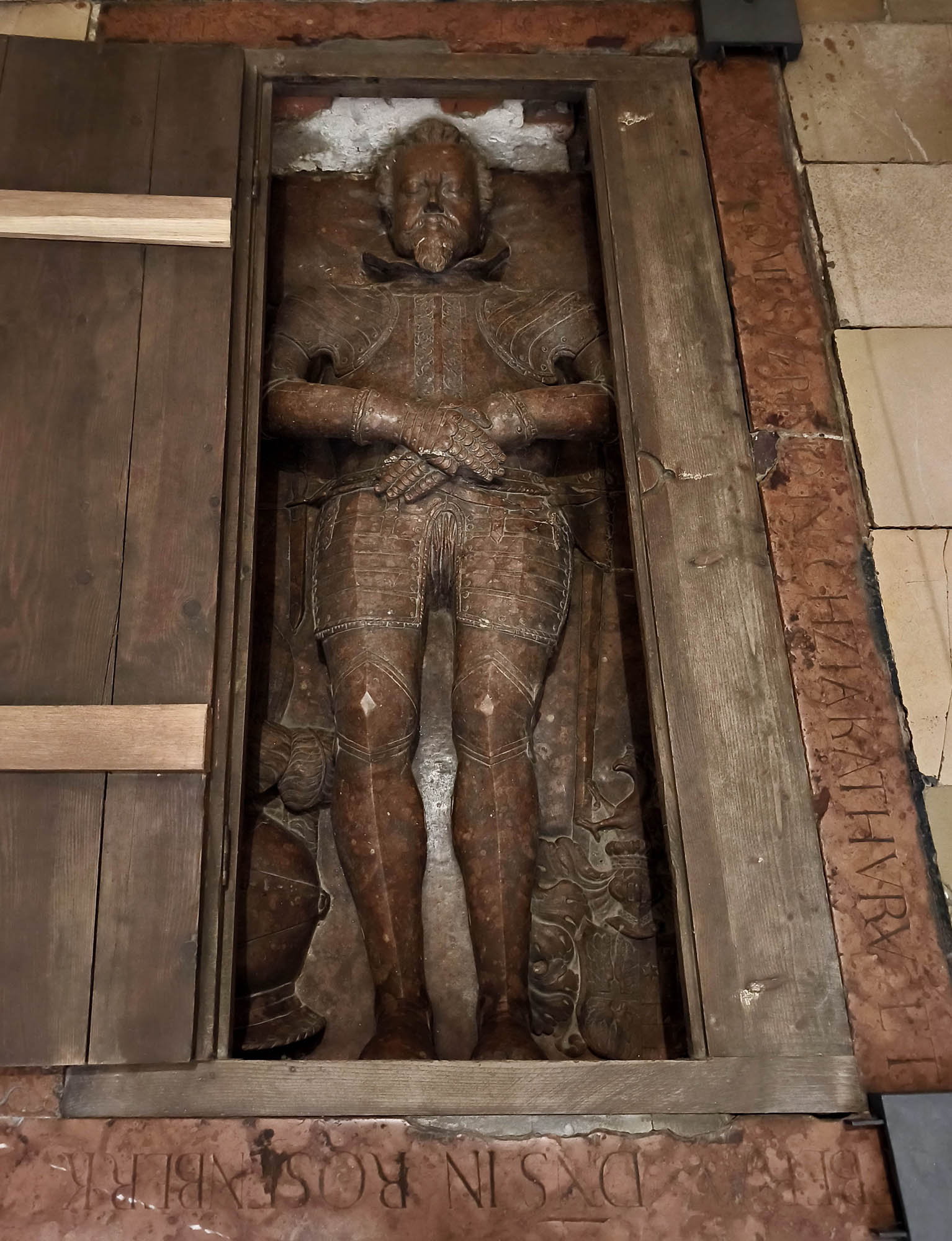 The tomb of John Zrinski in the second transept chapel on the left side of the abbey church.
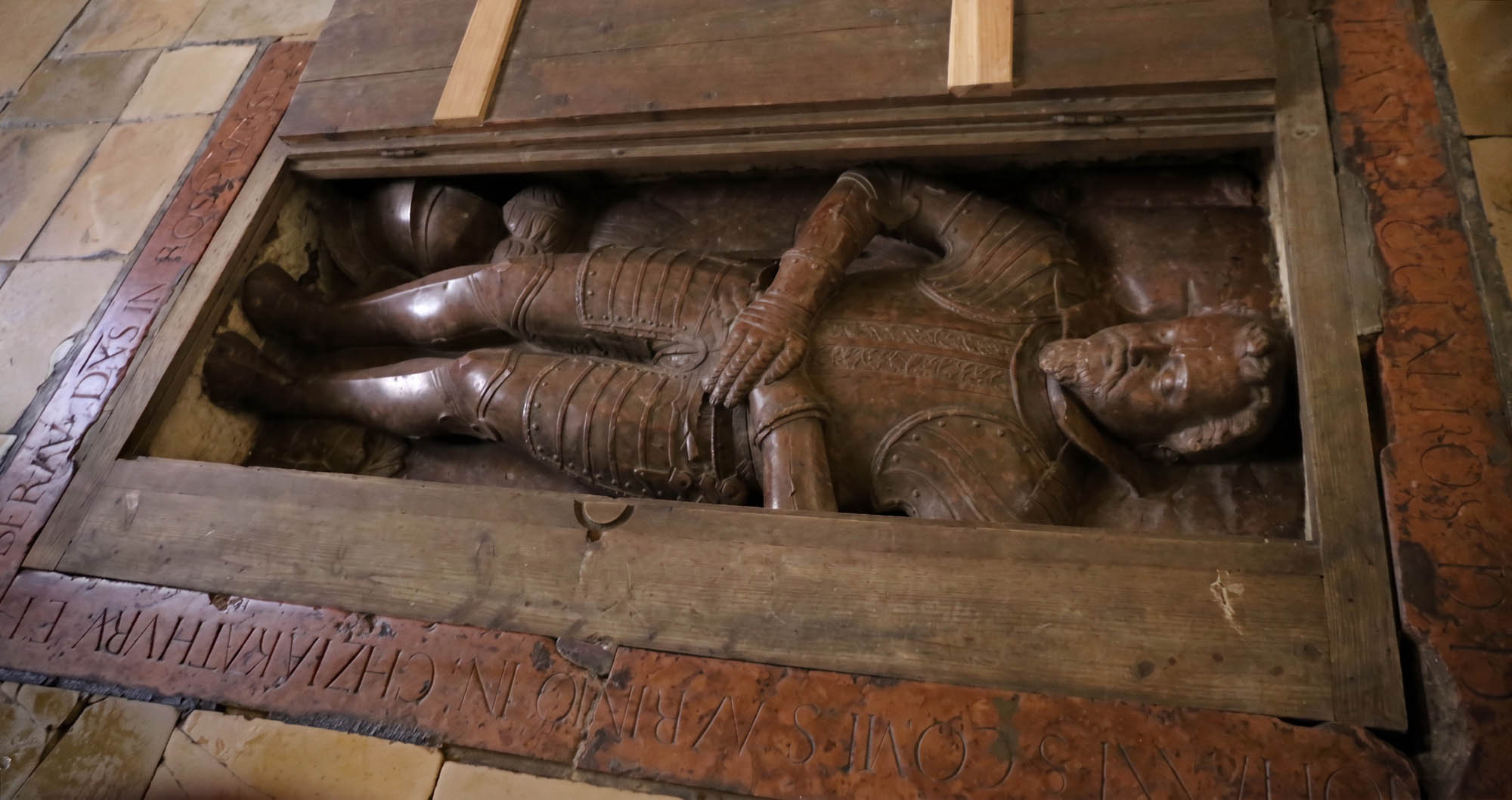
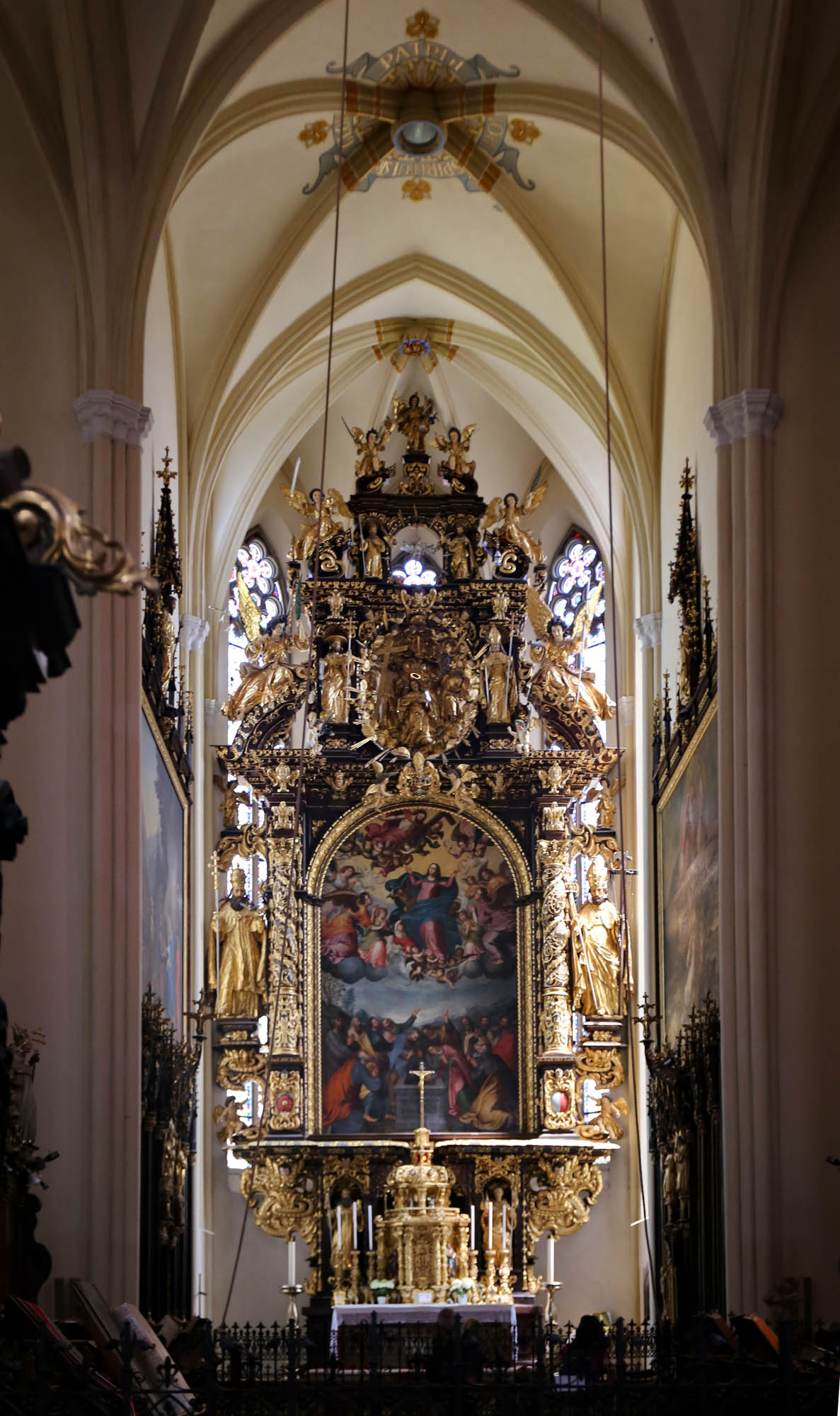
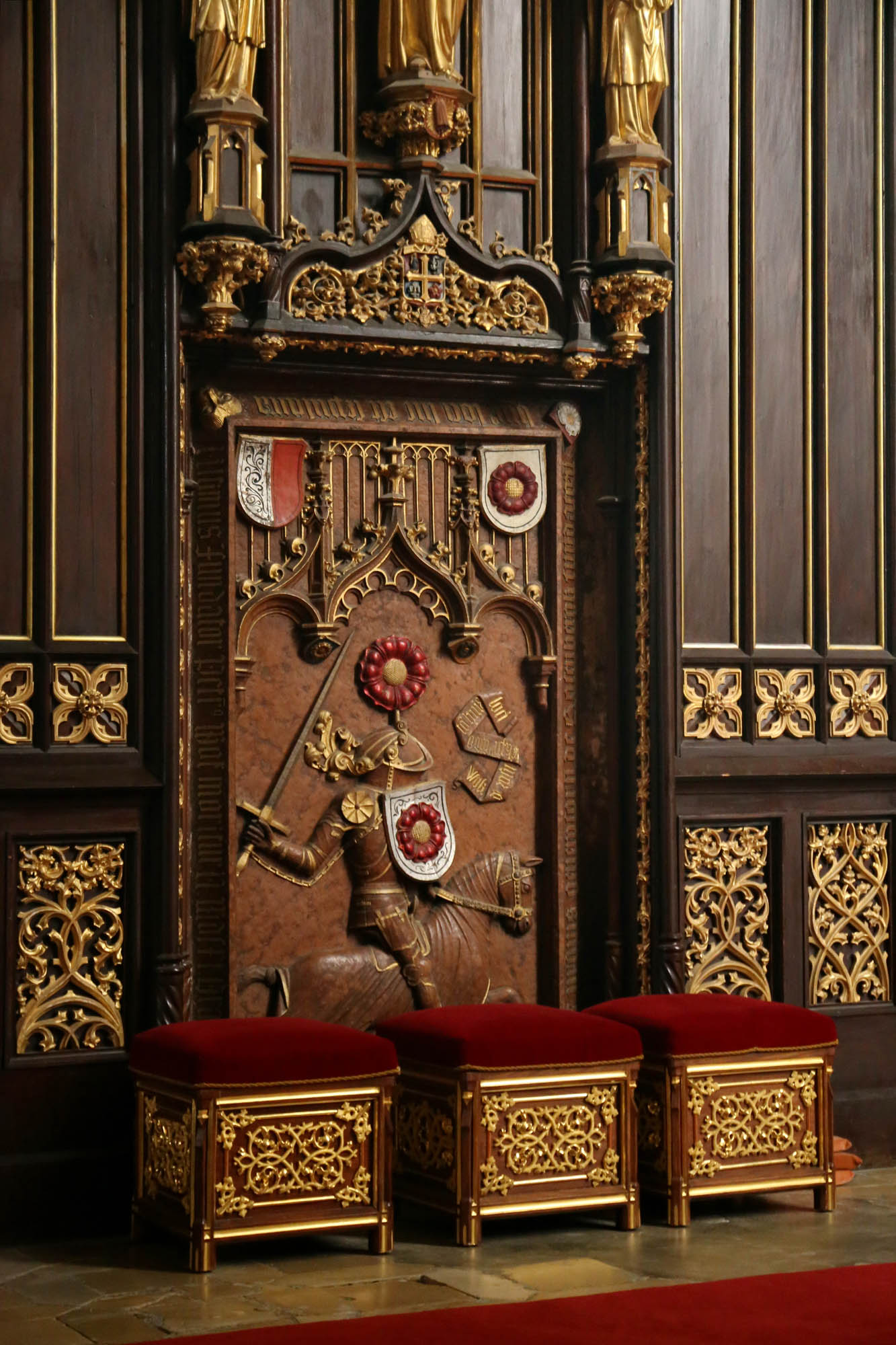 The high altar of the abbey church and the tomb of Wok I of Rosenberg in the main sanctuary. Above are the coats of arms of Wok of Rosenberg and his wife, Hedwig of Schaunberg. Together they founded the monastery, whose mother house was the Austrian abbey of Wilhering, itself under the patronage of the Schaunberg family.
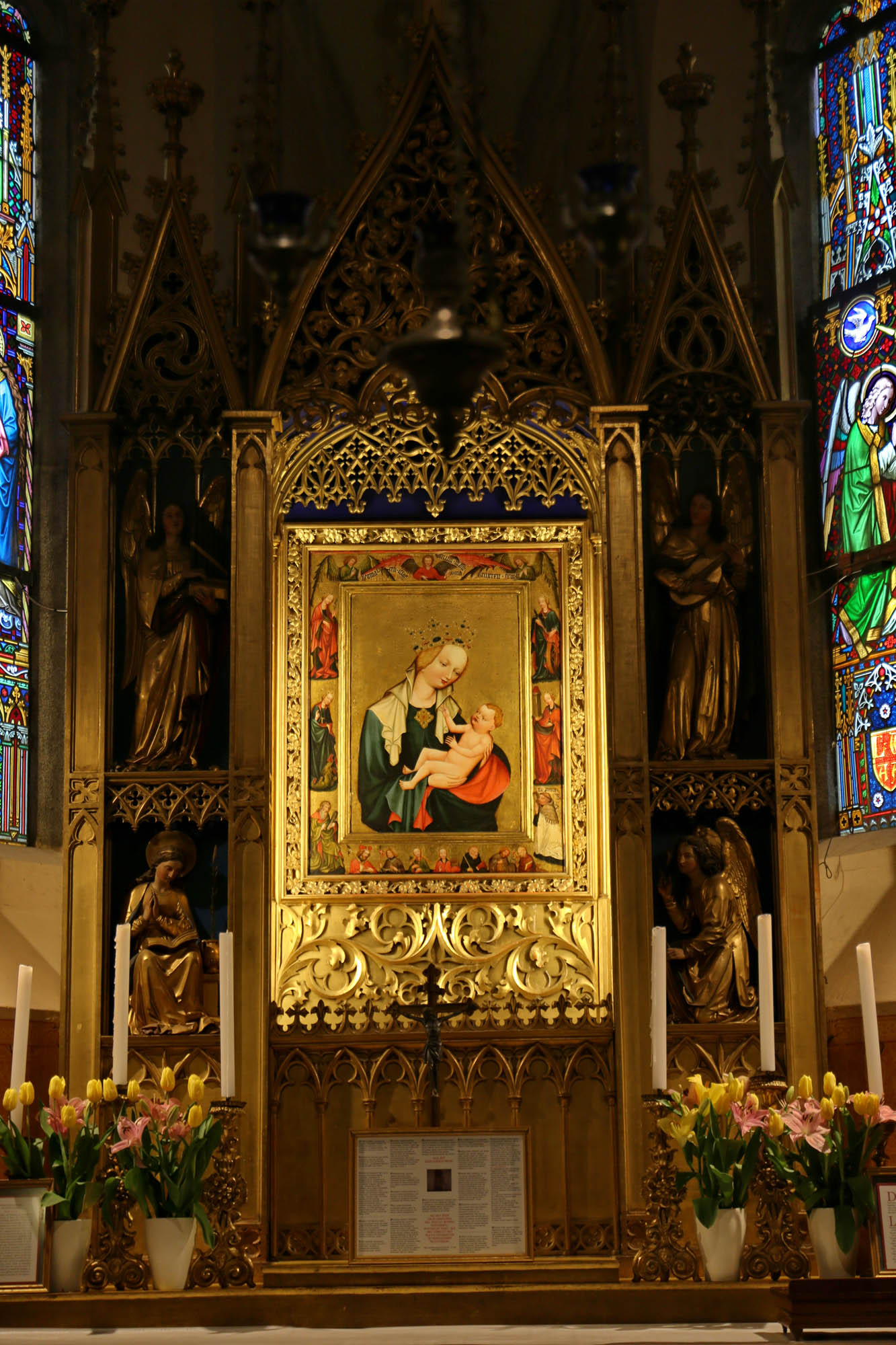 On the altar of the second transept chapel on the right stands the monastery’s celebrated devotional image, the Hohenfurth (Vyšší Brod) Madonna. Painted around 1420 by a Bohemian master in the refined International Gothic style of the period, it was commissioned by the abbot of the monastery, who also had himself portrayed in the lower right corner of the frame. The frame itself, populated by angels bearing the hymn Regina caeli laetare and by saints, becomes a symbolic gateway to Heaven. The original painting was evacuated to Prague in 1938 and was returned to the monastery only after the Cistercians came back in 1990. Today it is displayed in the monastery gallery; the image on the altar is a faithful copy.
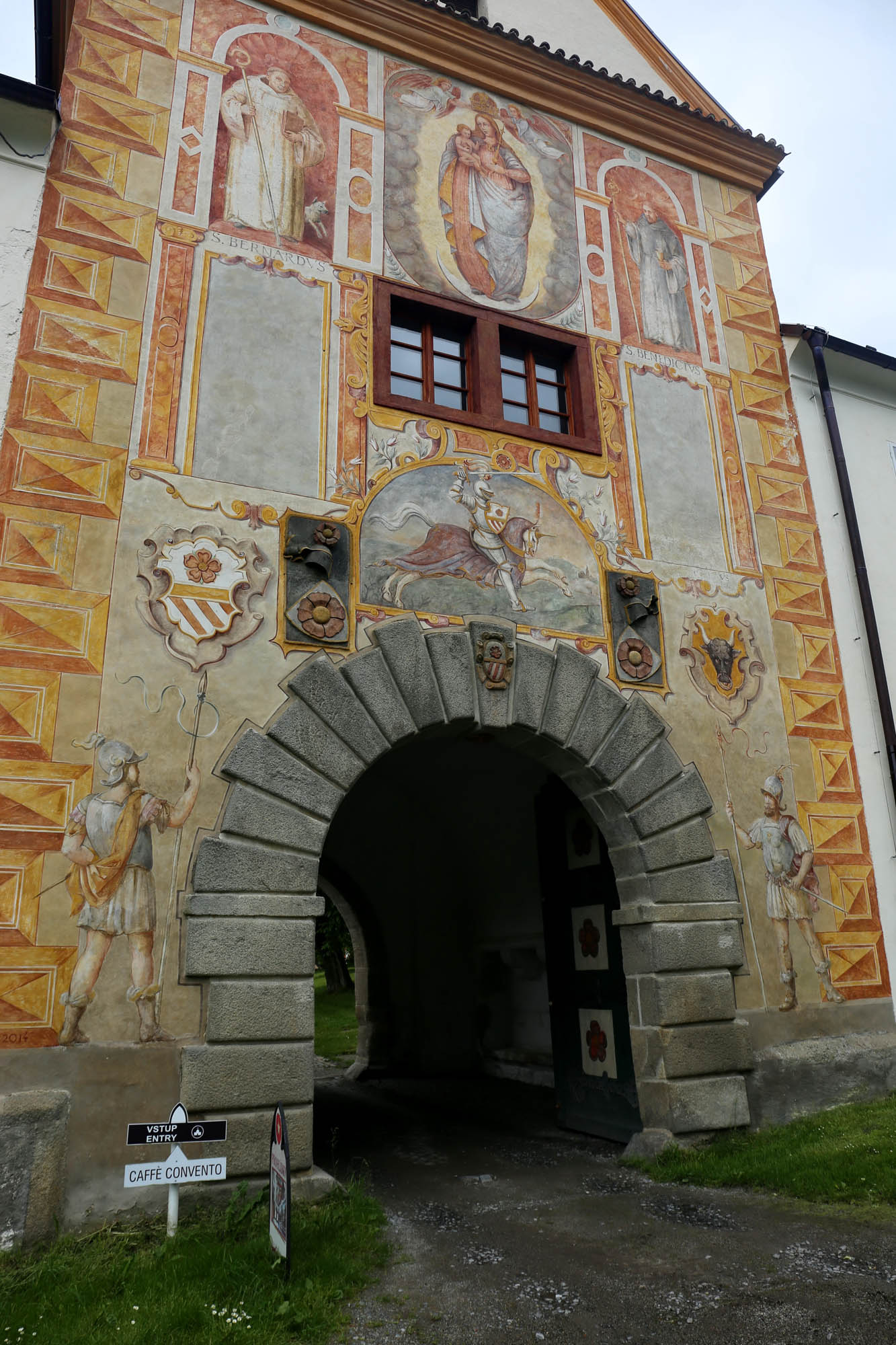
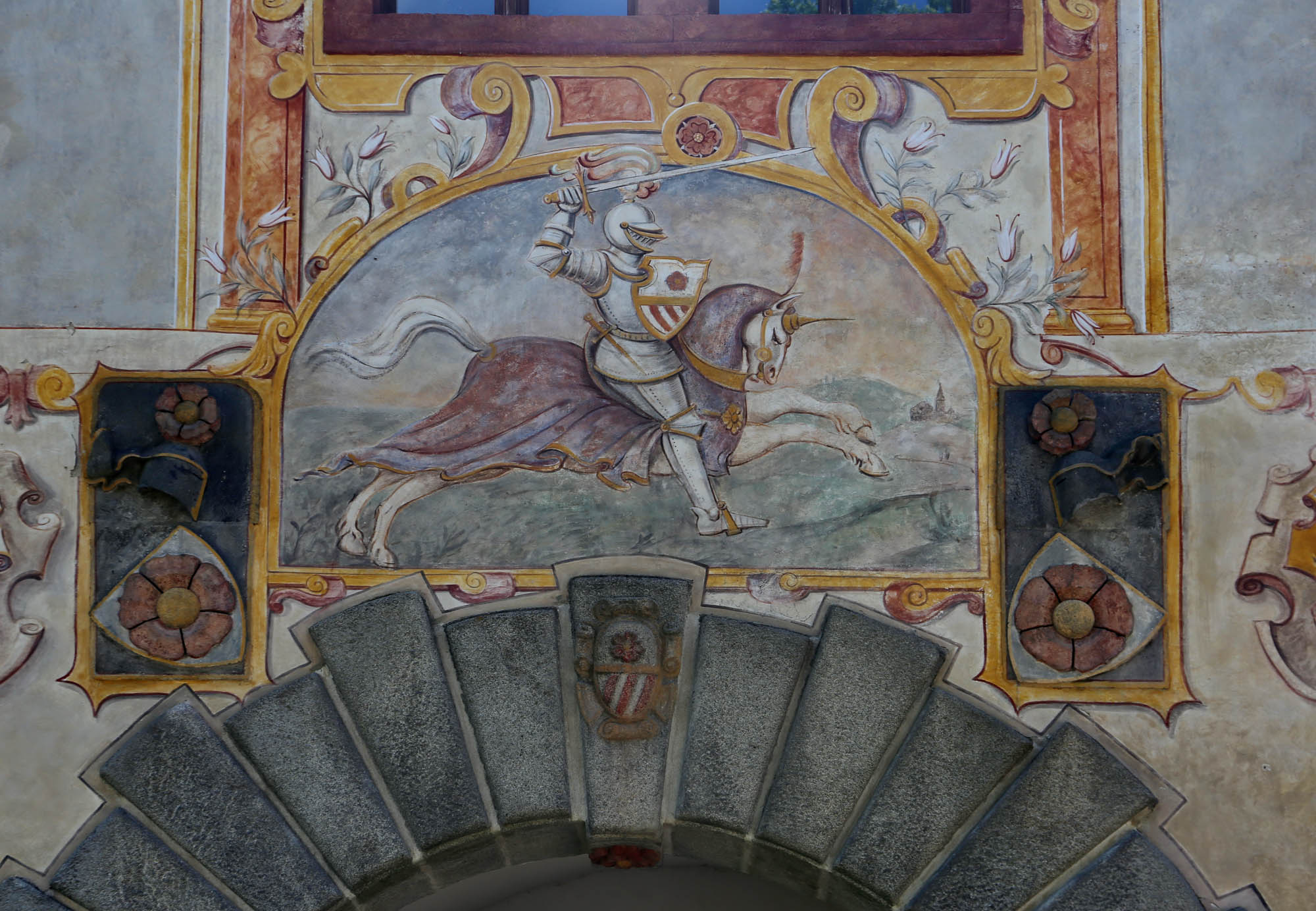
The central motif of the monastery’s main gate is once again Wok I of Rosenberg galloping on horseback beneath the red rose of his family. Beside him appear the coats of arms of the penultimate head of the house, Wilhelm of Rosenberg (1535–1592), and his wife Polyxena of Pernstein. Above them, the monastery’s patron, the Immaculate Virgin Mary, flanked by Saint Benedict and Saint Bernard, founders of the Cistercian spiritual tradition, is almost relegated to second place by the overwhelming dynastic symbolism.
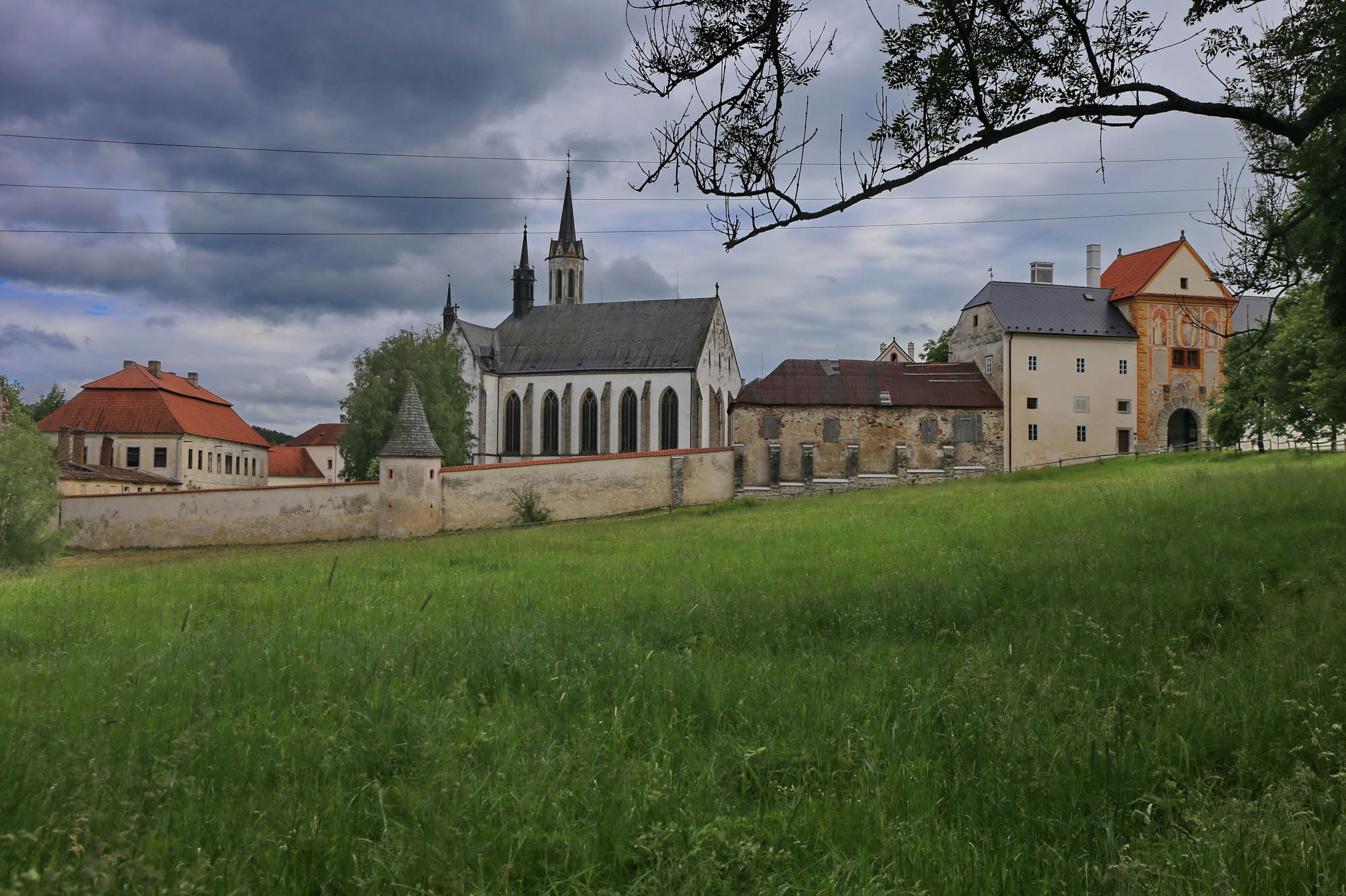
A richly endowed religious foundation marking the southern frontier of the Land of the Rose and of Bohemia; estates defended even through forged charters; a family mausoleum from which the uninterrupted prayers of an entire monastery formed a fast track to Heaven; a site chosen by a miracle of the Virgin and protected by one of her most revered images; a Rosenberg offering to God that simultaneously proclaimed the family’s earthly power in every detail—this was the setting in which the Cross of Záviš was preserved.
* * *
2. Goldenkron / Zlatá Koruna, the Counter-Monastery
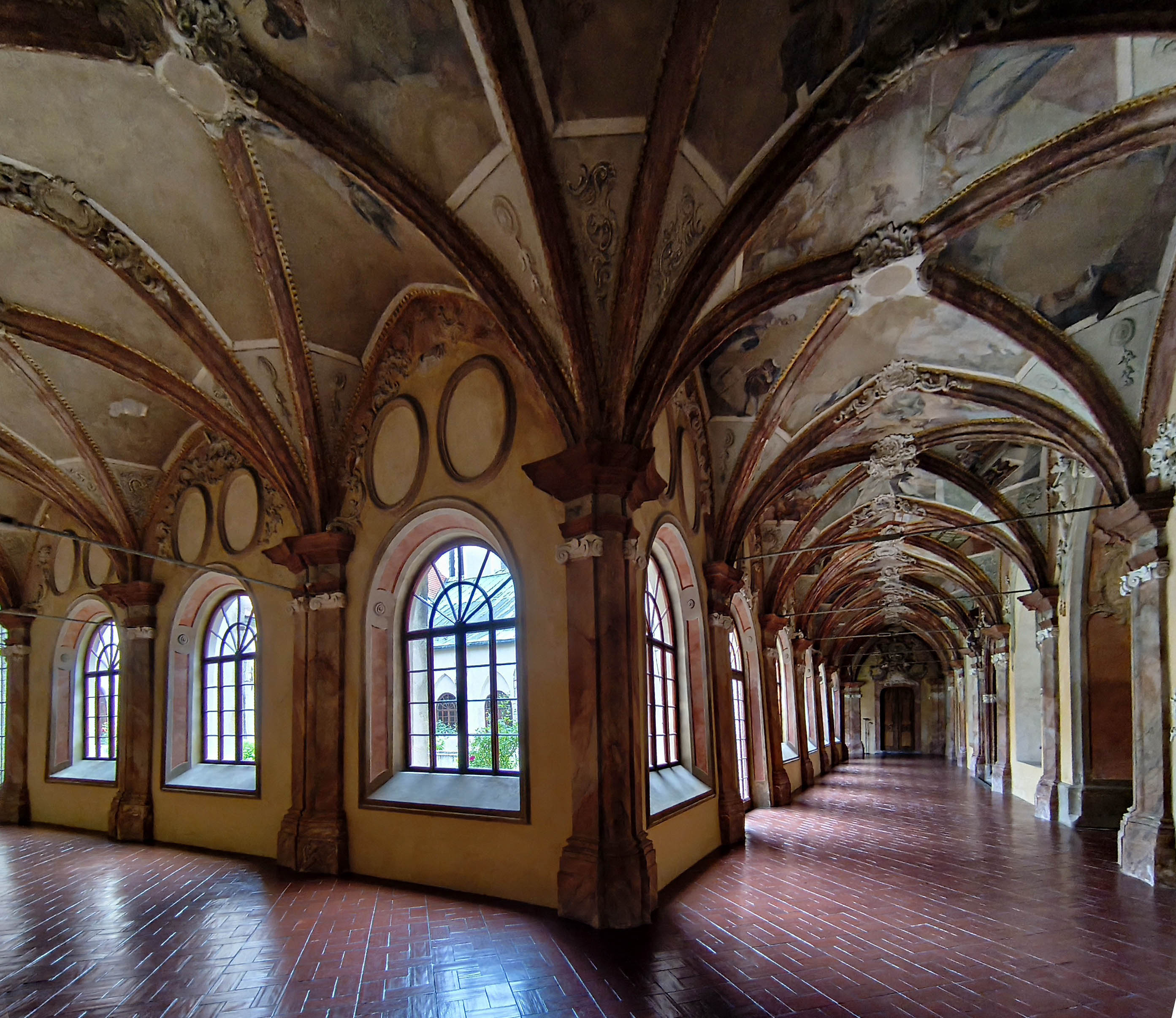
Four years after the foundation of Vyšší Brod, in 1263, King Ottokar II of Bohemia established a Cistercian monastery of his own immediately beside the Rosenberg estates, scarcely ten kilometres from Český Krumlov.
Here too the foundation was preceded by a vow made in return for divine assistance. Yet, just as in the case of Vyšší Brod, it also served clear political and strategic purposes.
The divine assistance for which Ottokar II gave thanks had come in 1260, at the First Battle of Marchfeld, where he fought the armies of King Béla IV of Hungary for possession of the Austrian and Styrian duchies left vacant by the extinction of the House of Babenberg. The battle ended in a decisive Bohemian victory, and by the Peace of Vienna of 1261 Ottokar emerged as the ruler of the region.
Gratitude was not the only motive behind the foundation. It also served a strategic purpose: to create a royal corridor stretching from the crown lands of central Bohemia towards the newly acquired Austrian possessions, threading its way between the great aristocratic domains that lay to either side.
Finally, the monastery also had a clear political function. It was intended as a conspicuous demonstration of royal authority on the very edge of the expanding Vítkovci territories. In 1263 this was still largely a precautionary measure, for Wok I of Rosenberg remained a loyal servant of the king. Yet the vast and increasingly continuous block of South Bohemian estates that he had assembled already represented a potential political challenge. The king sought to counterbalance that growing power by making the presence of the Crown unmistakably visible before the threat became a reality. As we shall see, it took less than a decade for that precaution to prove justified.
The monastery’s name was no coincidence: Goldenkron, Zlatá Koruna, the "Golden Crown." Evoking the royal crown itself, the name derived much of its prestige from the monastery’s greatest treasure: a thorn from Christ’s Crown of Thorns, presented to Ottokar II by King Louis IX of France. In 1239 Louis had purchased the relic from the Venetian creditors of Baldwin II, the last Latin Emperor of Constantinople, who had pawned it to finance his empire. By acquiring the relic, Louis sought to establish France symbolically as the foremost kingdom of Christendom. To house it he built the Sainte-Chapelle in Paris, consecrated in 1248—a monumental two-storey reliquary in architectural form. Ottokar consciously echoed this model at Zlatá Koruna, demonstrating how profoundly the example of Saint Louis shaped royal representation throughout medieval Europe.
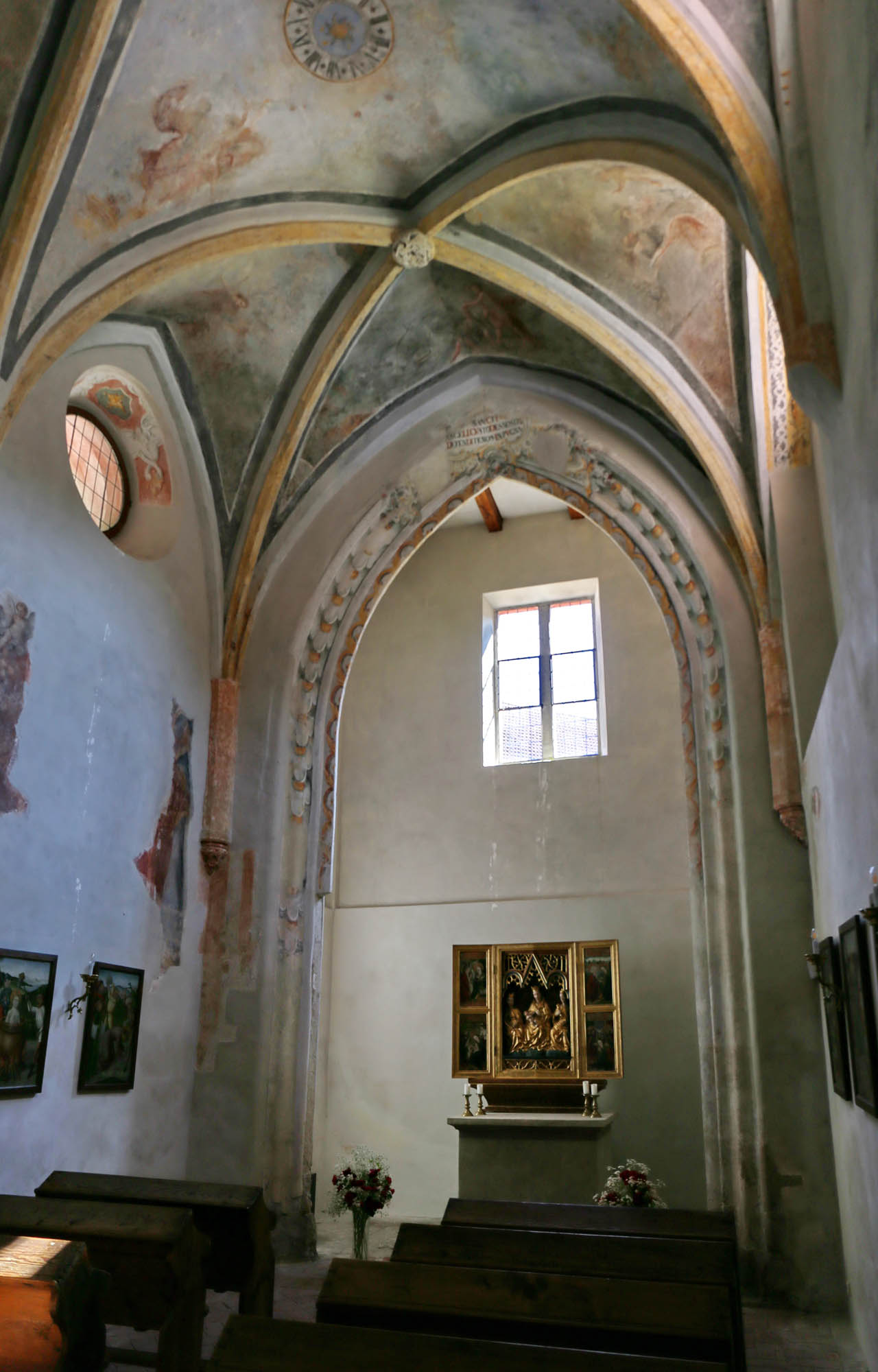 The lower level of the Guardian Angels’ Reliquary Chapel at Zlatá Koruna, with its fifteenth-century Sedes Sapientiae altar.
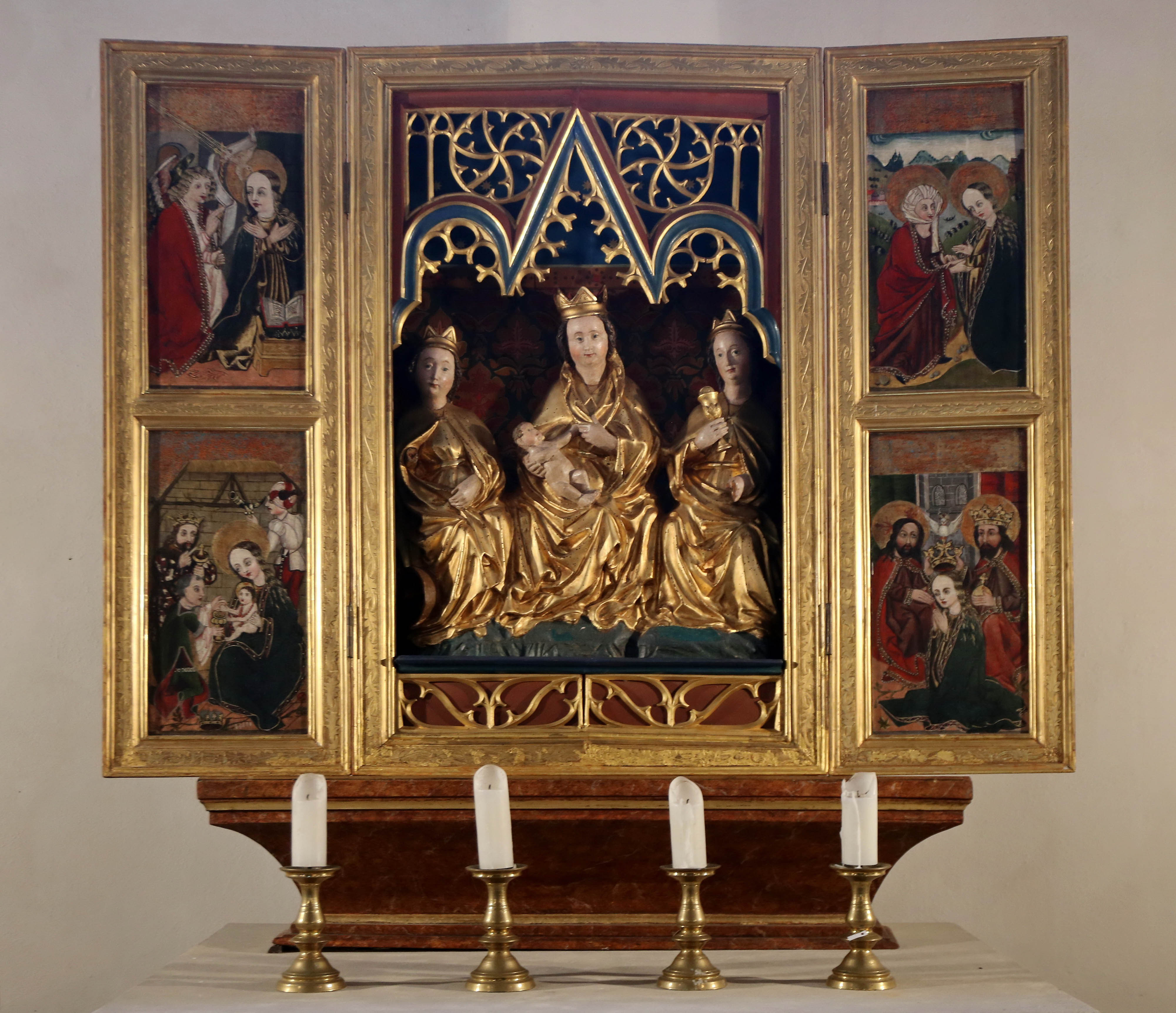
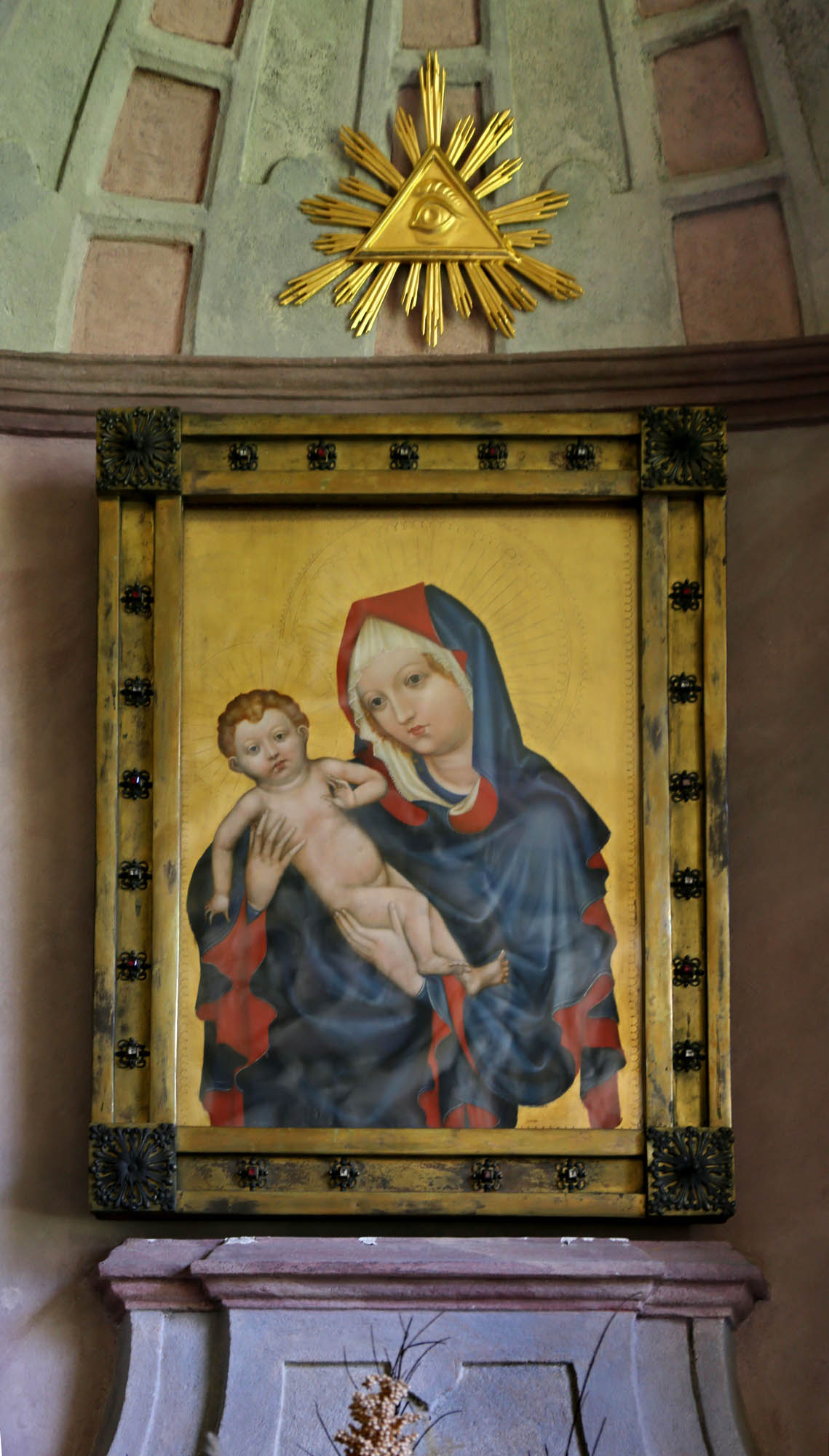 Like Vyšší Brod, Zlatá Koruna also possesses its own miraculous Marian image: a half-length Madonna painted around 1420 in the gentle style of International Gothic. The painting was evacuated to Prague in 1938 to protect it from the Nazis and was returned to the monastery only in 2016.
* * *
3. The Hungarian Connection
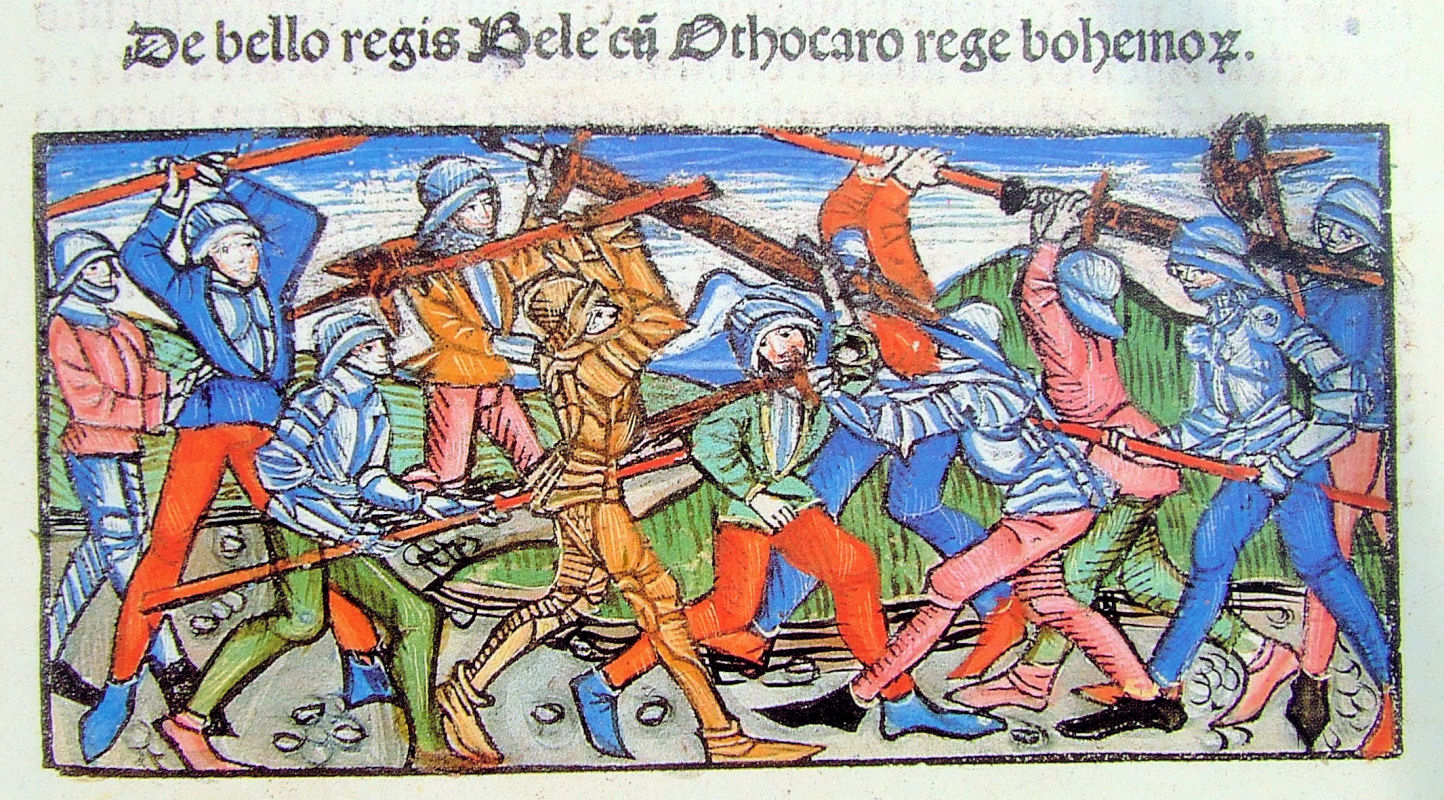
King Béla IV of Hungary suffered defeat not only in foreign affairs. At home, too, he was confronted with grave political challenges.
When Béla IV ascended the Hungarian throne in 1235, he immediately set out to curb the overmighty barons who had become dangerously independent during the reign of his father, Andrew II. At the royal council he had their ceremonial seats smashed and began reclaiming the royal lands his father had granted away. Yet the Mongol invasion of 1241–1242 forced him to reverse course. It became clear that the kingdom could only withstand another Mongol assault if the magnates were entrusted with even more royal estates, enabling them to build castles and maintain private armies responsible for defending their own territories.
By the 1260s the lands in baronial hands had doubled, and with them their political ambitions. Those excluded from influence at court rallied around Béla’s adolescent son, the future Stephen V, urging him to demand recognition as co-ruler so that they, too, might obtain offices and power. A struggle soon developed between father and son and their respective factions, at first through diplomacy and, from 1264 onward, by force of arms. Both sides sought foreign allies. Béla found his in Ottokar II of Bohemia, who likewise desired peace along the eastern frontier of his greatly expanded dominions. To seal the alliance, Béla offered him his granddaughter Kunigunda, the daughter of his favourite child, Anna.
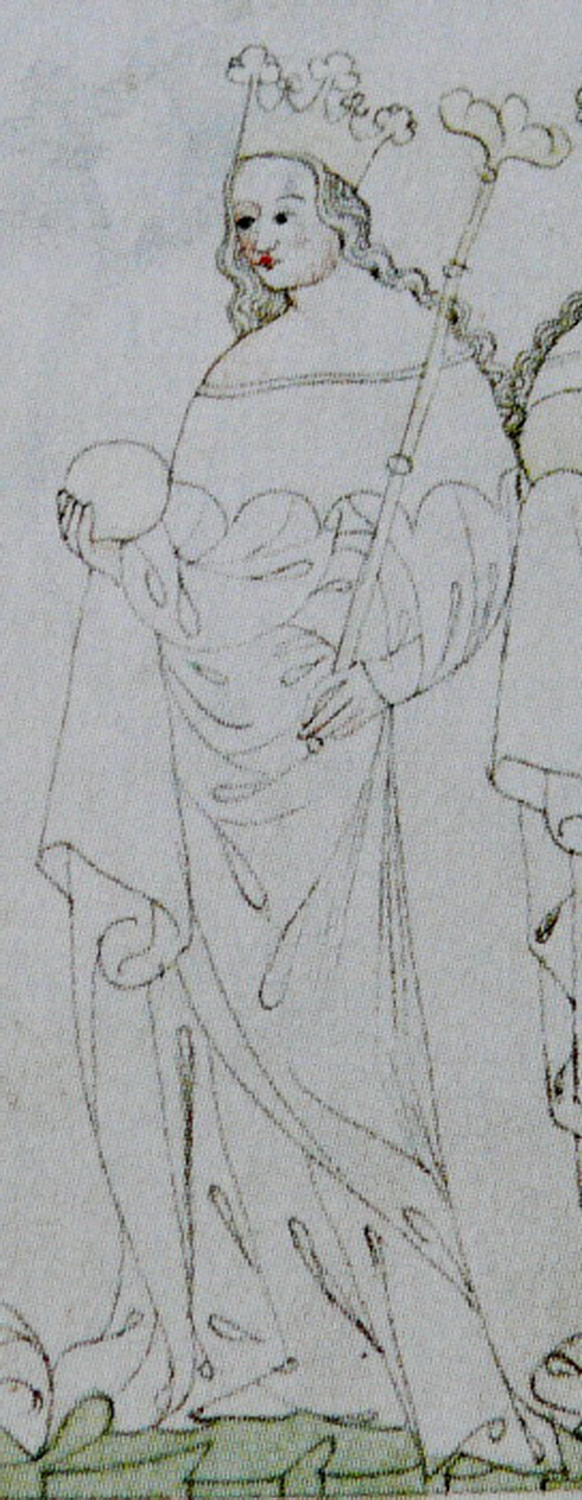 Queen Kunigunda of Bohemia in the Zbraslav Chronicle (c. 1335–1339)
The tourist guides at Vyšší Brod describe Kunigunda simply as a princess of Halych, without mentioning her Hungarian ancestry. In fact, she was the product of an earlier strand in Béla IV’s dynastic web. After the Mongol invasion, Béla married several of his daughters into the ruling families of neighbouring states in order to secure allies against any future Mongol attack. The Principality of Halych—forming the historical core of later Galicia—could serve Hungary as a buffer state against the Mongols, while Hungary offered the princes of Halych a secure refuge whenever they were driven from their lands by conflicts with their boyars or with their Polish, Lithuanian, or Mongol neighbours. Thus Rostislav Mikhailovich, Prince of Halych, became Béla’s ally and the husband of his daughter Anna. To ensure that he retained both rank and income during the periods when he was forced into exile, Béla later appointed him Ban of Slavonia.
The internal conflict in Hungary grew so bitter that in 1270, while lying on his deathbed, Béla wrote to Ottokar asking him to receive his widow, his daughter Anna, and the members of her political party should he die. The request was fulfilled soon afterwards. Anna fled to Prague, taking with her, among other things, the entire Hungarian royal treasury, which was never returned.
* * *
4. The Revolt of the Rose
The tension between royal centralisation and the ambitions of semi-independent territorial magnates seems almost like a tectonic force shifting back and forth across thirteenth-century East-Central Europe. Before long, it reached Bohemia as well. Ottokar II’s strongly centralising policies and his efforts to restrict the expansion of the Vítkovci domains provoked resistance from the family, who were determined to preserve their almost princely autonomy.
Their opportunity came in 1273. Fearing the overwhelming power of the far more formidable Ottokar II, the German prince-electors chose instead the comparatively insignificant Swabian count Rudolf of Habsburg, whom they considered easier to control. They elected him not emperor but merely King of the Romans. In that capacity Rudolf challenged the legality of Ottokar’s possession of Austria. Outraged, Ottokar rejected his claims outright, whereupon Rudolf placed him under the Imperial ban in 1276.
Realising that Ottokar could not fight on two fronts simultaneously, the Vítkovci sided with Rudolf in the conflict and rose in rebellion against their own king. The leader of the uprising was Záviš of Falkenstein (Záviš z Falkenštejna), a member of one of the family’s cadet branches. The rebels captured or laid siege to several royal castles in Bohemia, tying down a substantial part of the royal army while Rudolf advanced into Austria.
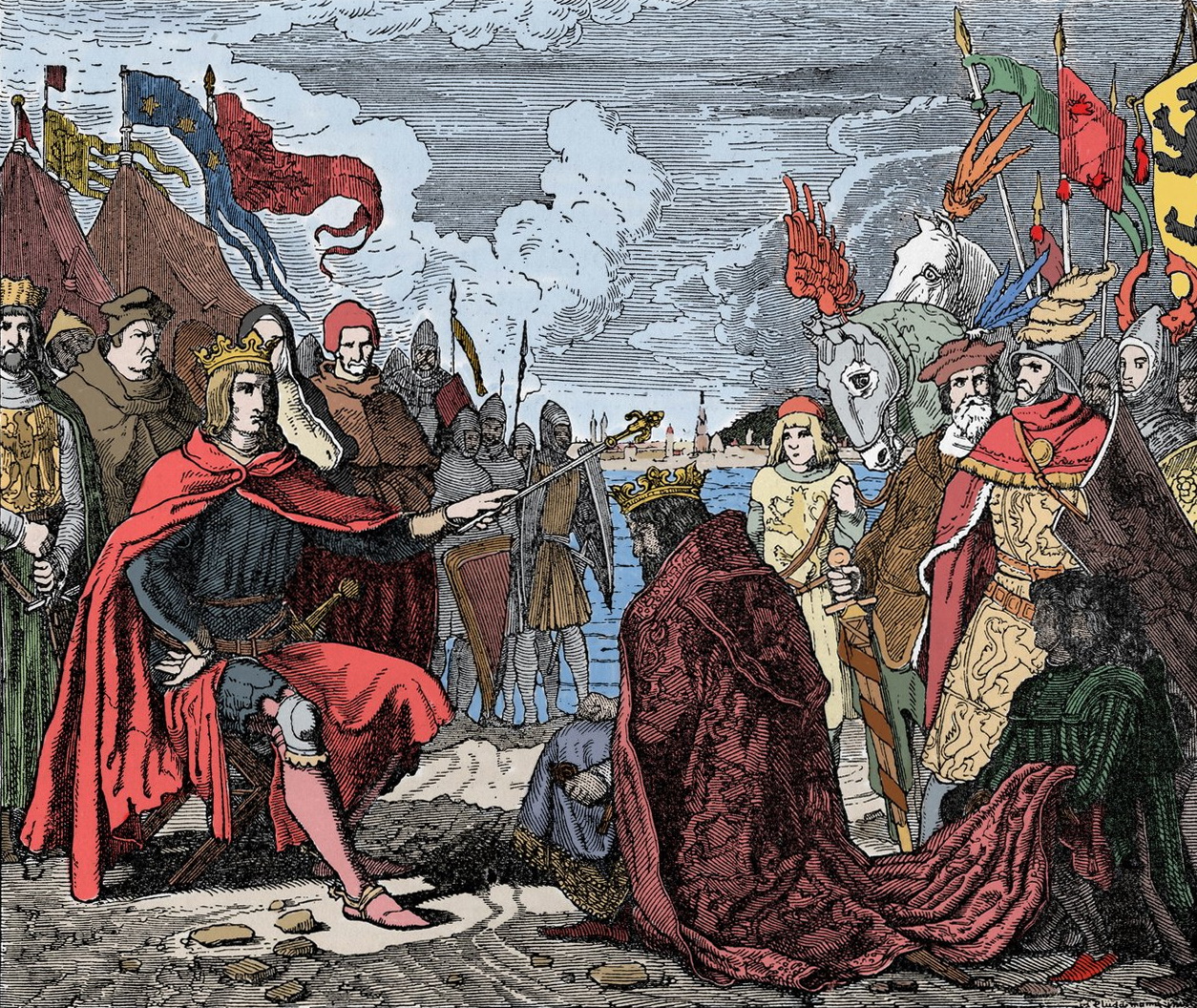 Ottokar II submits to Rudolf in 1276. Victorian English engraving.
Ottokar was forced to accept a humiliating peace. He renounced the Austrian duchies and also concluded peace with the Vítkovci, but at the same time began assembling a new army. In 1278 he marched once more against Rudolf. At the Second Battle of Marchfeld he again found himself facing Hungarian troops—those of Stephen V and his son, Ladislaus IV—who, in reaction to Béla IV’s earlier pro-Bohemian policy, had allied themselves with Rudolf. The Bohemian army was decisively defeated, and Ottokar himself fell on the battlefield, leaving behind a political vacuum, a minor son—the future Wenceslas II—and a widowed foreign queen with no independent power base.
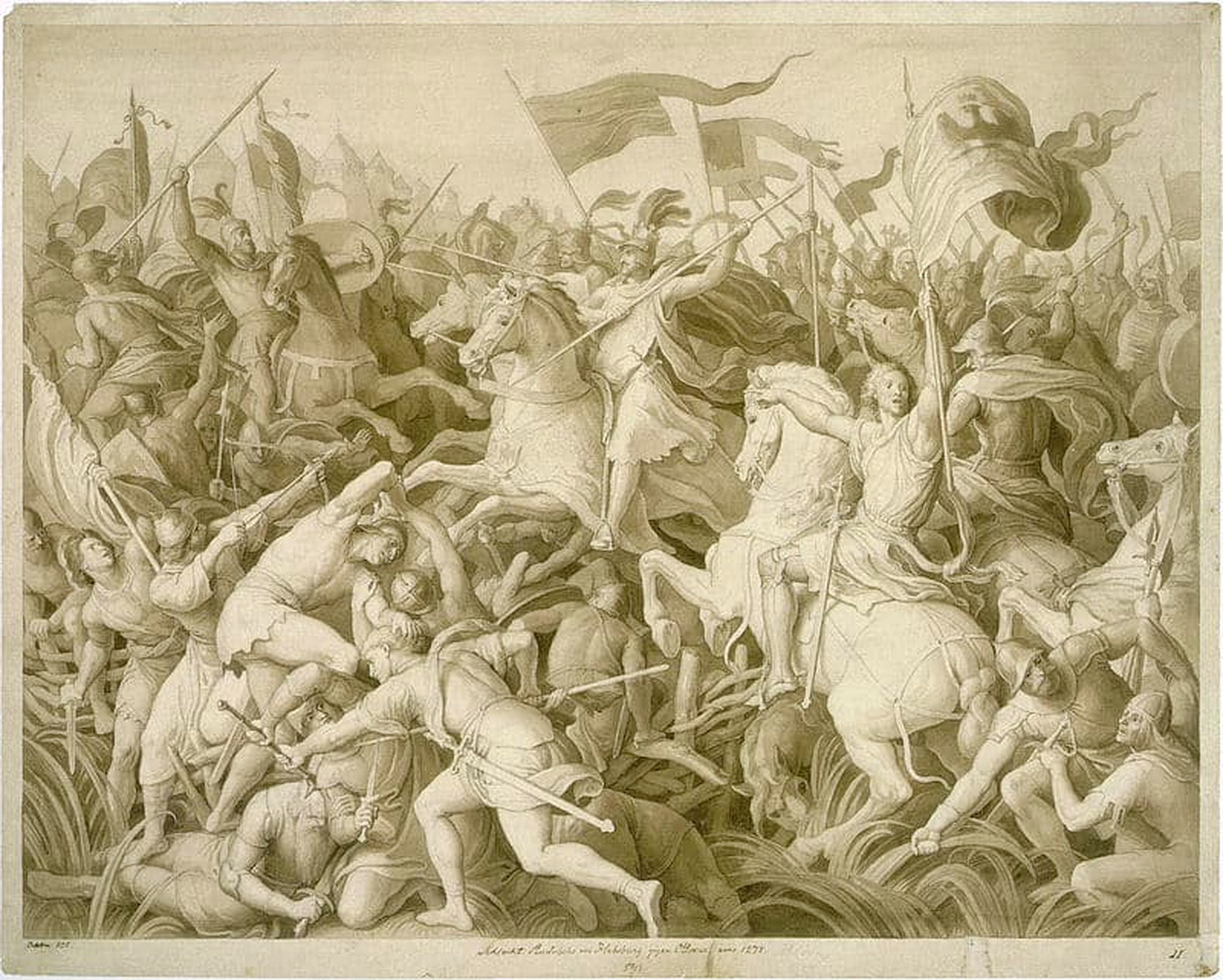 The Second Battle of Marchfeld in Julius Schnorr von Carolsfeld’s classicising drawing (1835).
It was into this vacuum that Záviš stepped.
After the king’s death, the guardianship of his young son was assumed by Margrave Otto V of Brandenburg, a relative of the Přemyslid dynasty. Otto had the boy taken to the castle of Spandau, near Berlin, ostensibly to ensure his safety, but also to prevent the Bohemian nobility from proclaiming him an independent ruler. Meanwhile, Brandenburg troops occupied the royal castles of Bohemia, filled the chief offices with their own men, and imposed heavy taxes on the kingdom. According to the Bohemian chronicles, famine followed.
The widowed Queen Kunigunda began organising resistance against the foreign regime, and Záviš immediately joined her cause. He provided military support, swore loyalty to the young Wenceslas, became the queen’s closest adviser and principal support in governing the kingdom, then her lover, and, according to later tradition, even her husband, although no documentary proof of such a marriage has survived. What is certain is that they had a son named Jehanek, and contemporaries regarded them as husband and wife. Czech Romantic literature transformed their relationship into one of history’s great love stories, but in reality it was probably a careful balance between genuine personal affection and mutual political interest.
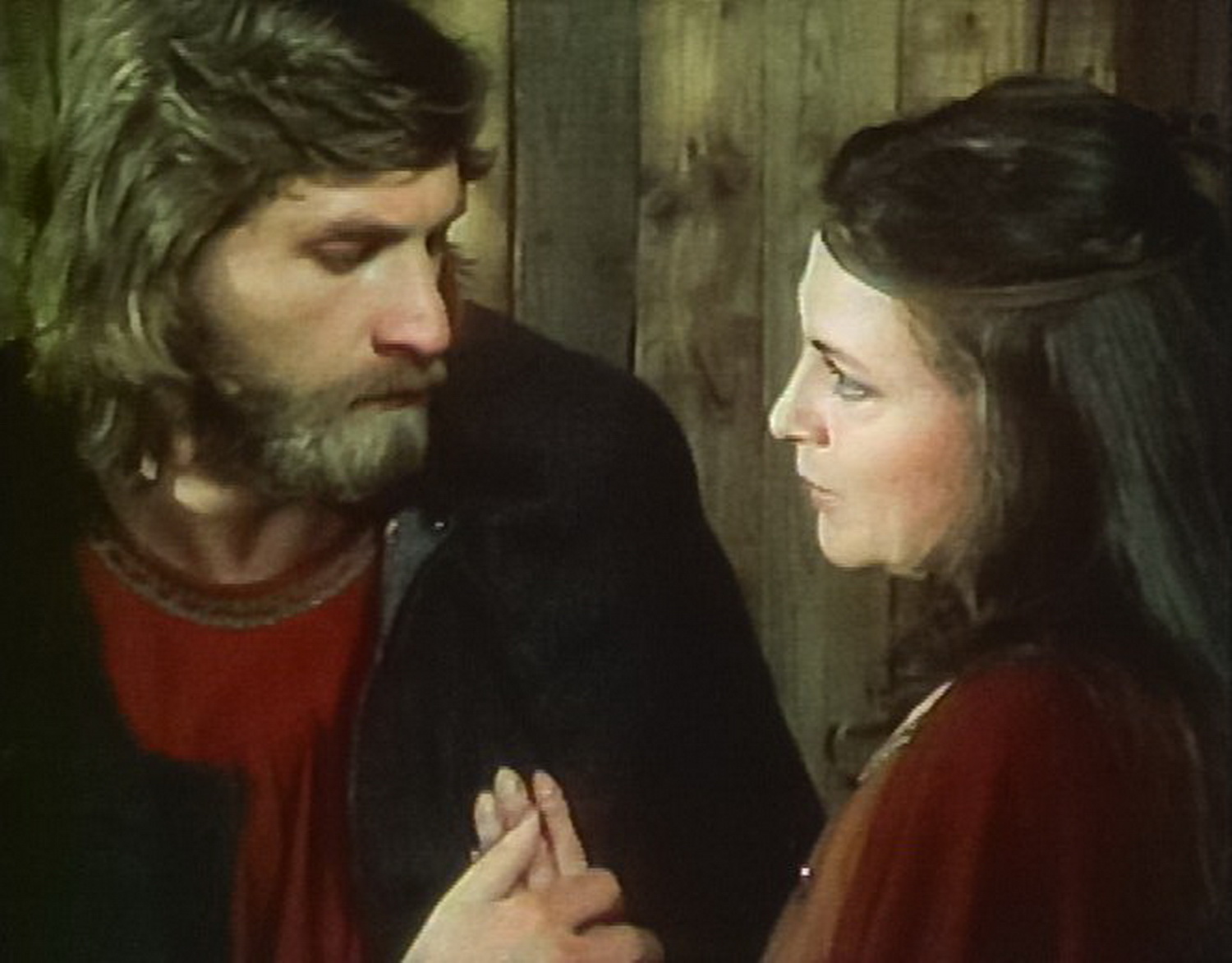 Záviš and Kunigunda (Vladimír Kratina and Milena Dvorská) in the 1985 Czechoslovak film Záviš a Kunhuta.
In 1283, Záviš and his supporters succeeded in bringing Wenceslas back to Prague. The young king, however, was only twelve years old, so effective power remained in their hands. Záviš appointed his relatives and followers to the kingdom’s highest offices while at the same time stabilising the state and restoring the authority of the Crown.
Queen Kunigunda died in 1285, and Záviš’s position immediately became more precarious. Although he remained immensely influential, he also had many enemies, and with the queen’s death he lost the legitimacy that her person had conferred upon his authority.
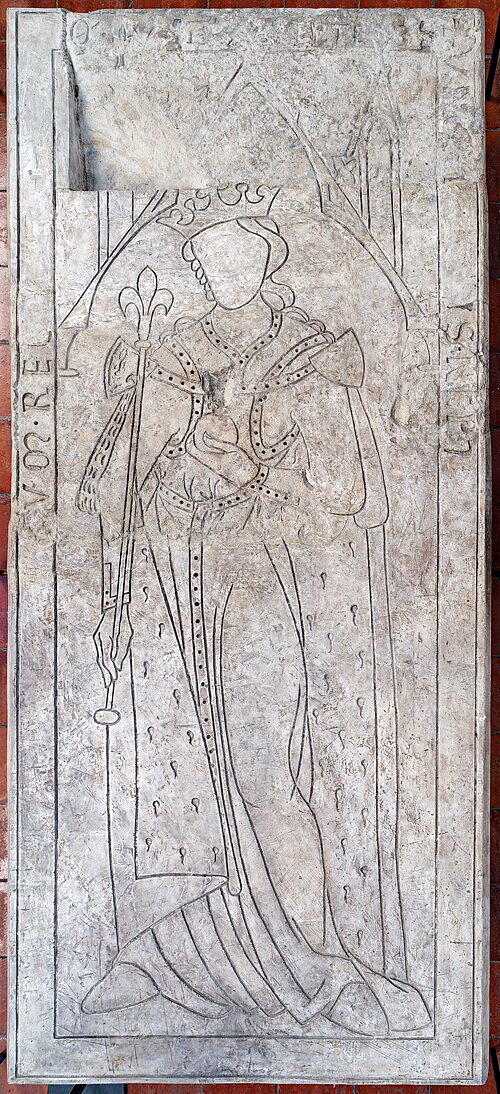 The tombstone of Queen Kunigunda in the Convent of St Agnes, Prague.
In 1288 he travelled to Hungary, where he married Elizabeth, the sister of King Ladislaus IV (“the Cuman”). To do so he had to abduct her—probably with the king’s consent—from the Dominican convent on Margaret Island, where she was a nun and even served as the convent’s prioress.
According to a Serbian medieval tradition (Životi kraljeva i arhiepiskopa srpskih), Elizabeth had previously been the consort of King Stefan Uroš II Milutin (r. 1282–1321), whom she may have met through the Balkan connections cultivated by her father, Stephen V of Hungary. The tradition even attributes to them a daughter named Zorica. The matter is far from straightforward, however, since Milutin contracted several partly overlapping marriages, and the Serbian, Byzantine, papal, and Hungarian sources often contradict one another. Whatever the exact truth may have been, Elizabeth eventually returned to Hungary and became prioress of the Dominican convent on Margaret Island—only to be carried off from there by Záviš. This Balkan connection may prove significant for understanding the history of the Záviš Cross.
Through this marriage Záviš hoped to preserve his political influence, but it ultimately damaged his position instead. Many Bohemian magnates, and King Wenceslas II himself, came to believe that Záviš was attempting to establish a new dynastic power centre of his own. That, in their eyes, went too far. In 1290 the king invited Záviš to what was presented as a council meeting, where he had him arrested and charged with treason and disloyalty.
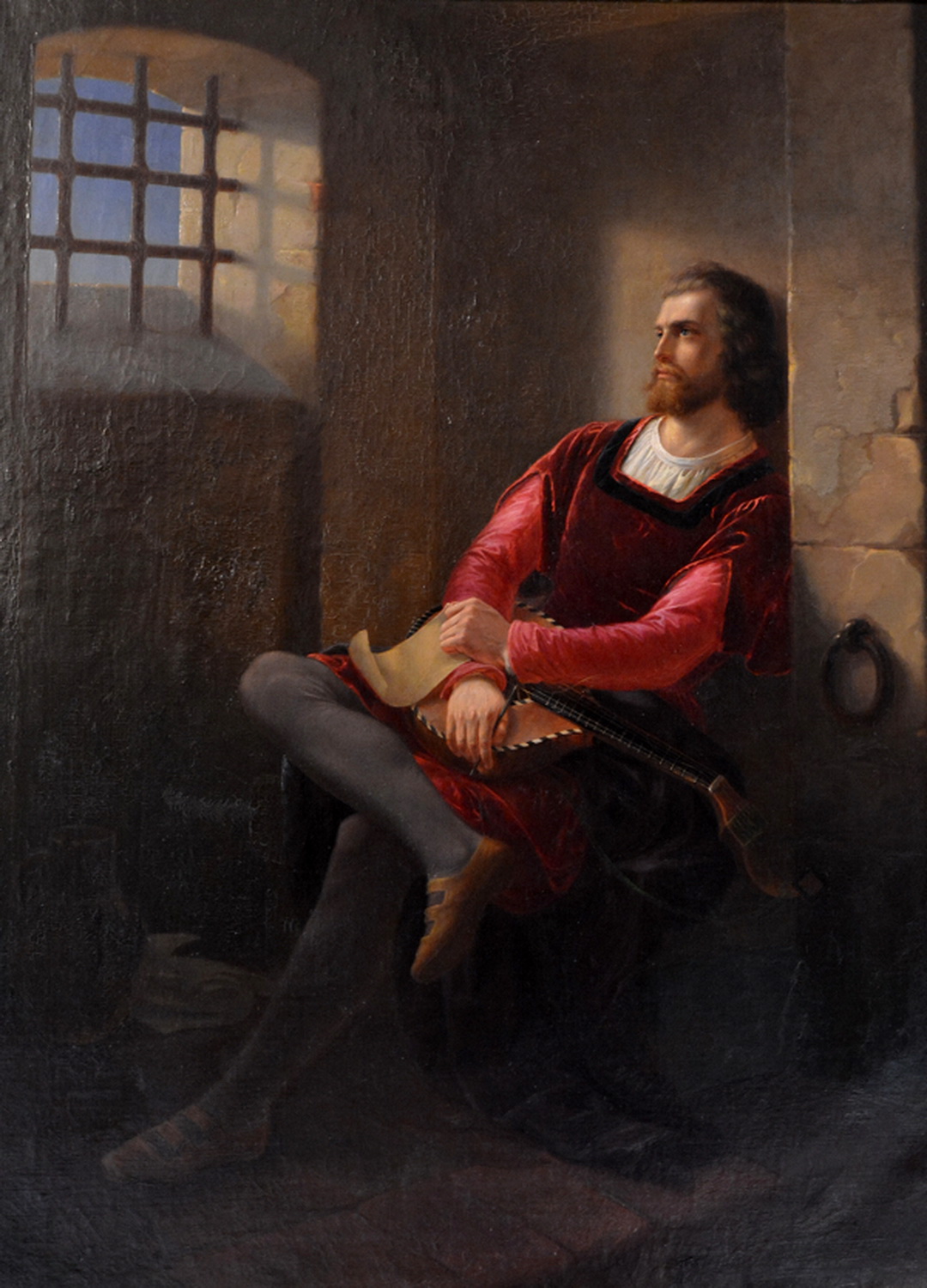 Záviš in prison. Romantic painting by Petr Maixner (1861), Castle Museum, Český Krumlov.
Záviš was then paraded as a prisoner through the principal strongholds of the Vítkovci dominion, each stop serving as a carefully staged public demonstration of royal authority. Finally, before one of their greatest castles, Hluboká nad Vltavou (Frauenberg), he was brutally executed in full view of members of his own family. The entire spectacle of humiliation and execution was intended as a powerful warning to the kingdom’s oligarchs—and they understood the message. The Vítkovci confederation was broken, their political power weakened, many of their castles surrendered to the Crown, and Peter I of Rosenberg publicly swore fealty to the king. This submission paved the way for the Rosenbergs’ remarkable resurgence during the fourteenth and fifteenth centuries.
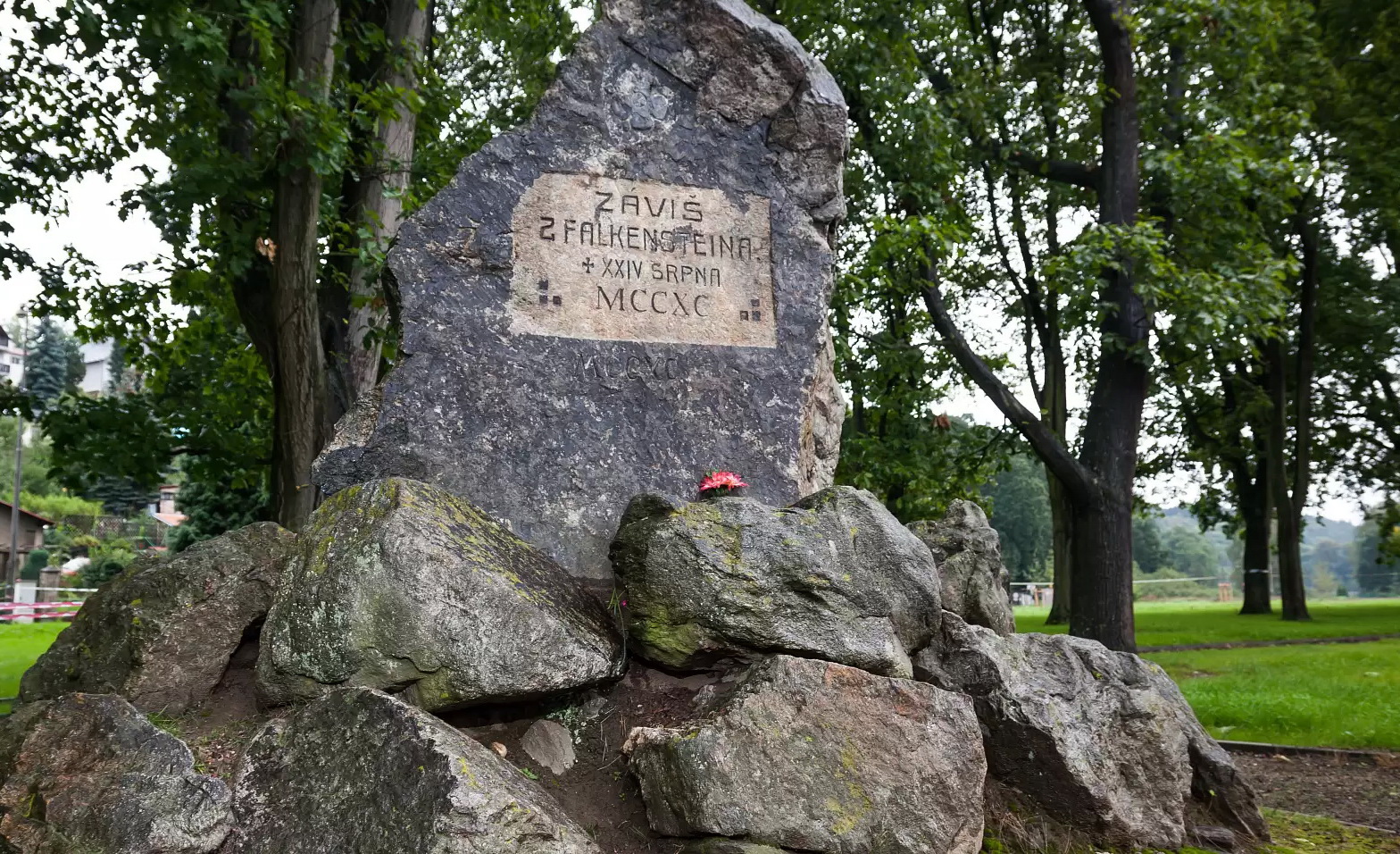 Monument erected in 1895 by Prince Adolf Joseph of Schwarzenberg on the meadow beside Hluboká Castle, marking the traditional site of Záviš’s execution.
It is symbolically fitting that we do not know the location of Falkenstein Castle, from which Záviš of Falkenstein derived his name. As we have seen, every branch of the Vítkovci—the various “coloured roses”—took its name from one of its principal castles, all of which still survive today. But where was Falkenstein? Some scholars identify it with the ruined castle of Falštejn, north of Plzeň, on the western edge of the former Vítkovci dominion, where the wooded remains of the fortress are still marked on hiking maps and the waterfall below continues to bear the name Falkenštejnský vodopád. Others place it much closer to the family’s ancestral lands, above Vyšší Brod on the Vltava, near the ruins of today’s Vitkův Kámen (Wittigstein).
Záviš, once the most powerful man in the Kingdom of Bohemia, for several years a kingmaker and perhaps even a potential king himself, collapsed together with his political programme at the height of his power. The castle whose name he bore vanished without a trace, while the cross that still bears his name survived him, his family, the Hussite wars, the Habsburgs, the Nazis, and Communist rule.
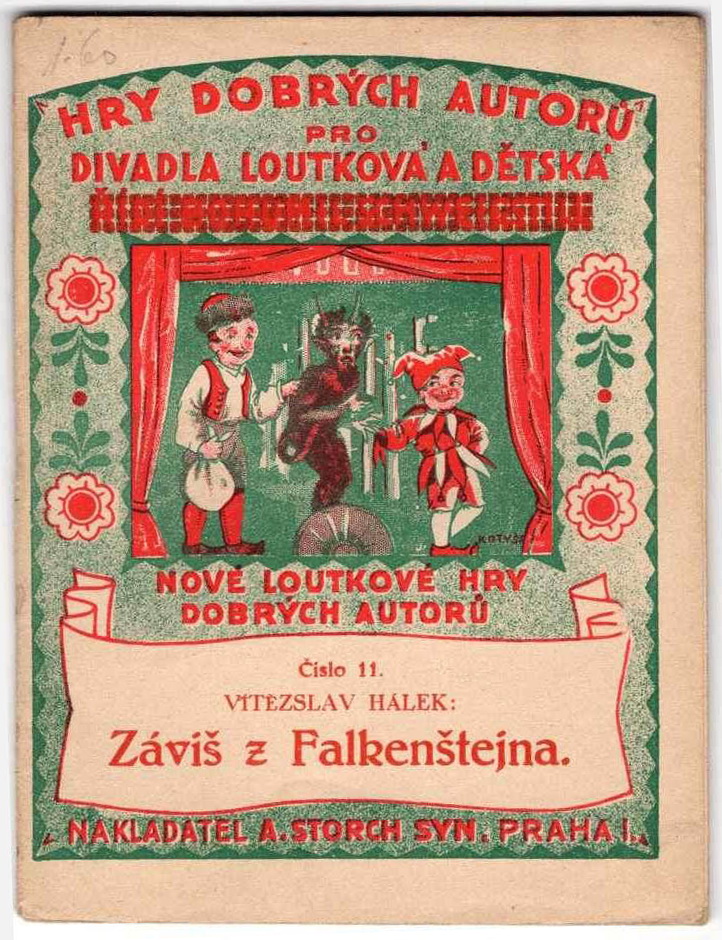 Záviš of Falkenstein. Puppet theatre for children.
* * *
5. Parallel Lives
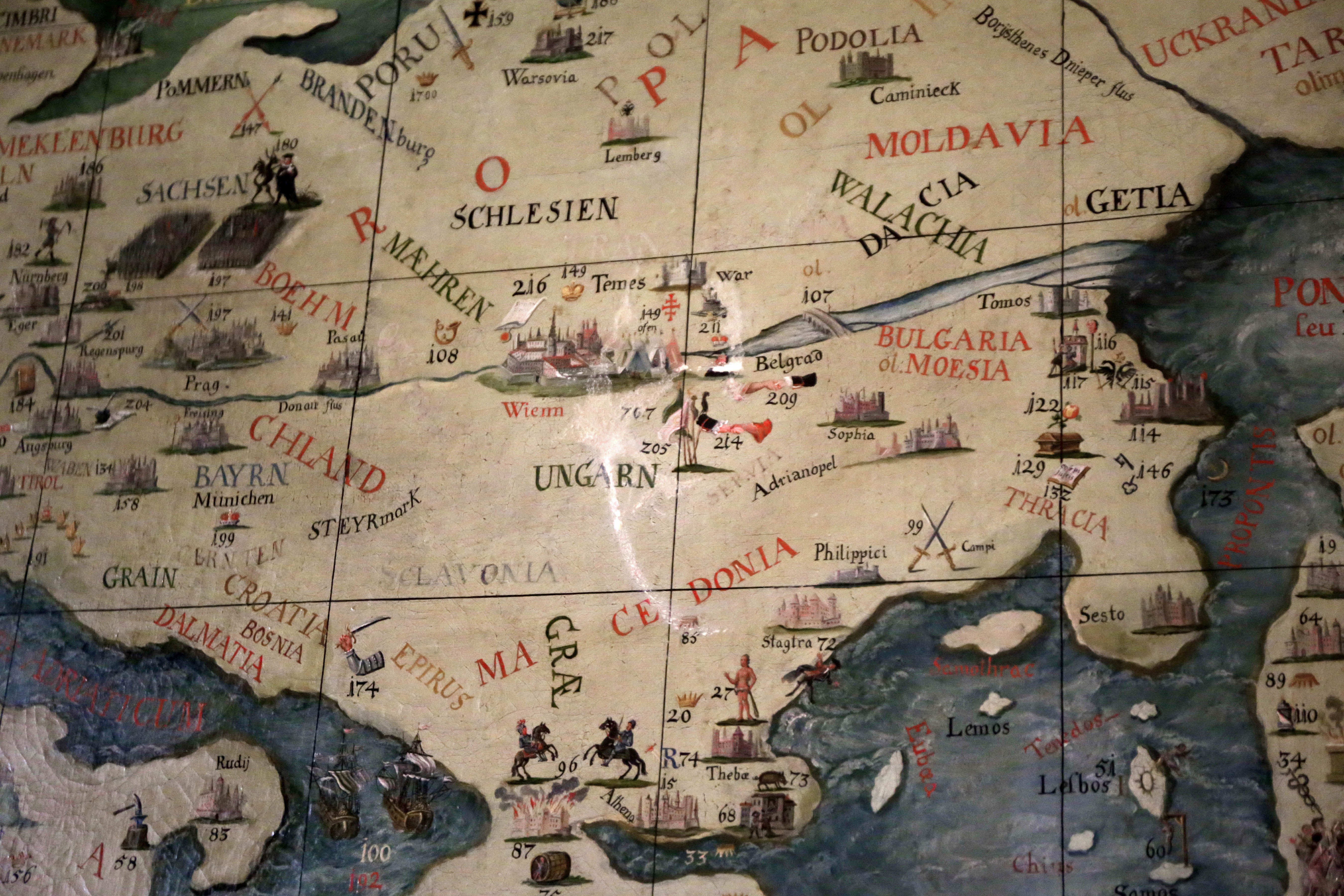 Central Europe on Jacopo Russo’s world map in Zlatá Koruna Abbey.
Against this background, it is not difficult to recognise that remarkably similar political processes unfolded in both Bohemia and Hungary during the second half of the thirteenth century:
|
|
|
Bohemia |
|
Hungary |
|
1260s |
Conflict between Ottokar II and the magnates |
Conflict between Béla IV and the magnates |
||
|
1270s |
Rebellion and the death of Ottokar II |
Civil war and the deaths of Béla IV and later Stephen V |
||
|
1280s |
Struggle among the magnates during the minority of Wenceslas II; rise of Záviš |
Struggle among the magnates during the minority of Ladislaus IV; rise of Matthew Csák |
||
|
1290 |
Execution of Záviš |
Assassination of Ladislaus IV |
||
|
1290–1305 |
Restoration of strong royal authority |
Fragmentation of the kingdom into provincial lordships |
During the 1270s and 1280s royal authority weakened in both kingdoms, while the power of the great magnates steadily increased. The decisive turning point came in 1290. In Hungary, King Ladislaus IV, who had become the pawn of rival aristocratic factions and had quarrelled with virtually every political force in the kingdom, was assassinated. A few months later, Záviš was executed in Bohemia. The two events were probably not entirely unrelated: with Ladislaus dead, Wenceslas II no longer had to fear retaliation from Záviš’s royal brother-in-law in Hungary.
In Hungary, a final Árpád dynasty king was still “procured”, as it were, but under him too the power of the provincial magnates continued to grow. By contrast, Wenceslas II used this brutal exemplum to intimidate the oligarchs and restore royal authority to such an extent that within the following decade he secured the Polish throne and even briefly, through his son, the Hungarian crown.
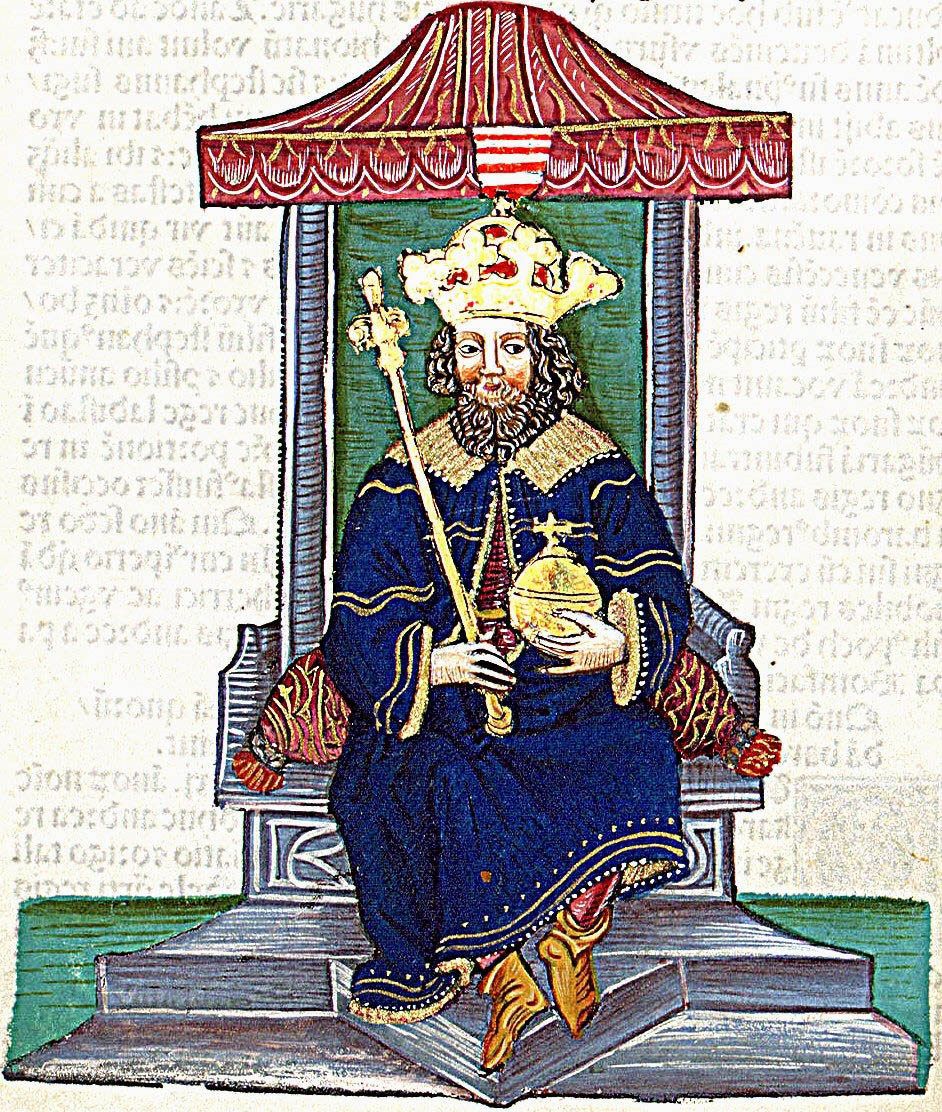 Wenceslas as King of Hungary (1301–1305) in the Thuróczy Chronicle.
* * *
6. And the Cross?
We have already seen who Záviš was, whose name the Vyšší Brod cross bears. But why does it bear his name at all? How did it come into his possession, and from him into the monastery?
The only contemporary source we have is the monastery necrology, which states:
|
“Anno Domini M°CCLXXXX, IX Kalendas Septembris obiit dominus Zawissius de Falkenstayn, qui donavit huic monasterio lignum sacrosanctae crucis Domini preciose ornatum et sepultus est hic in capitulo nostro” |
“In the year of Our Lord 1290, on 24 August, died Lord Záviš of Falkenstein, who donated to this monastery the wood of the Holy Cross of the Lord, richly adorned, and was buried here in our chapter house.” |
According to this account, the cross was donated by Záviš to the family monastery of the Vítkovci at the height of his power, between 1285 and 1290, as a commemoration of his name and to enhance the prestige of the family foundation.
It thus becomes understandable that when he was beheaded below Hluboká Castle, the Cistercian monks of Vyšší Brod came to claim his body and buried it in the chapter house of the family monastery, as their special patron and benefactor.
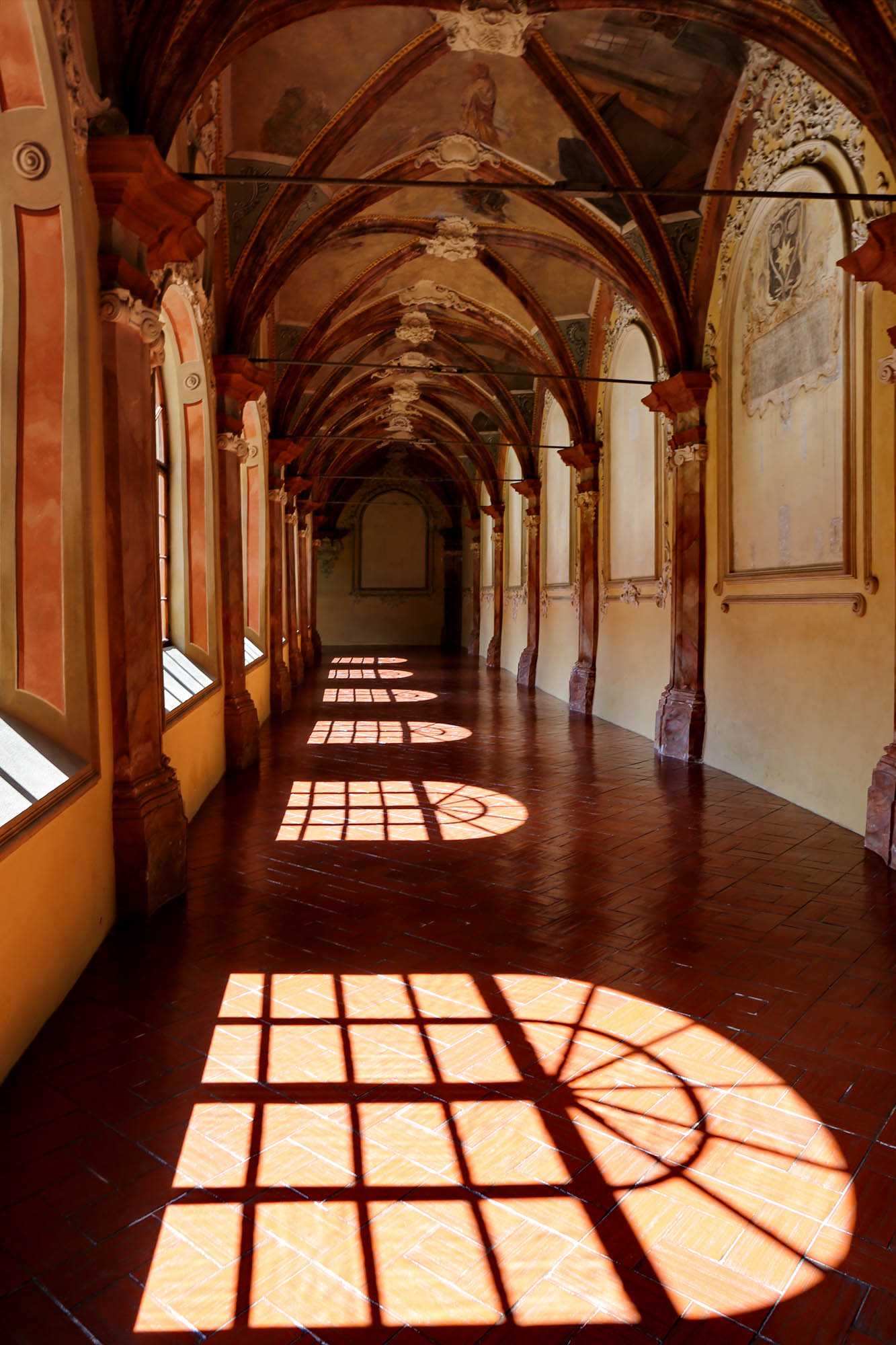
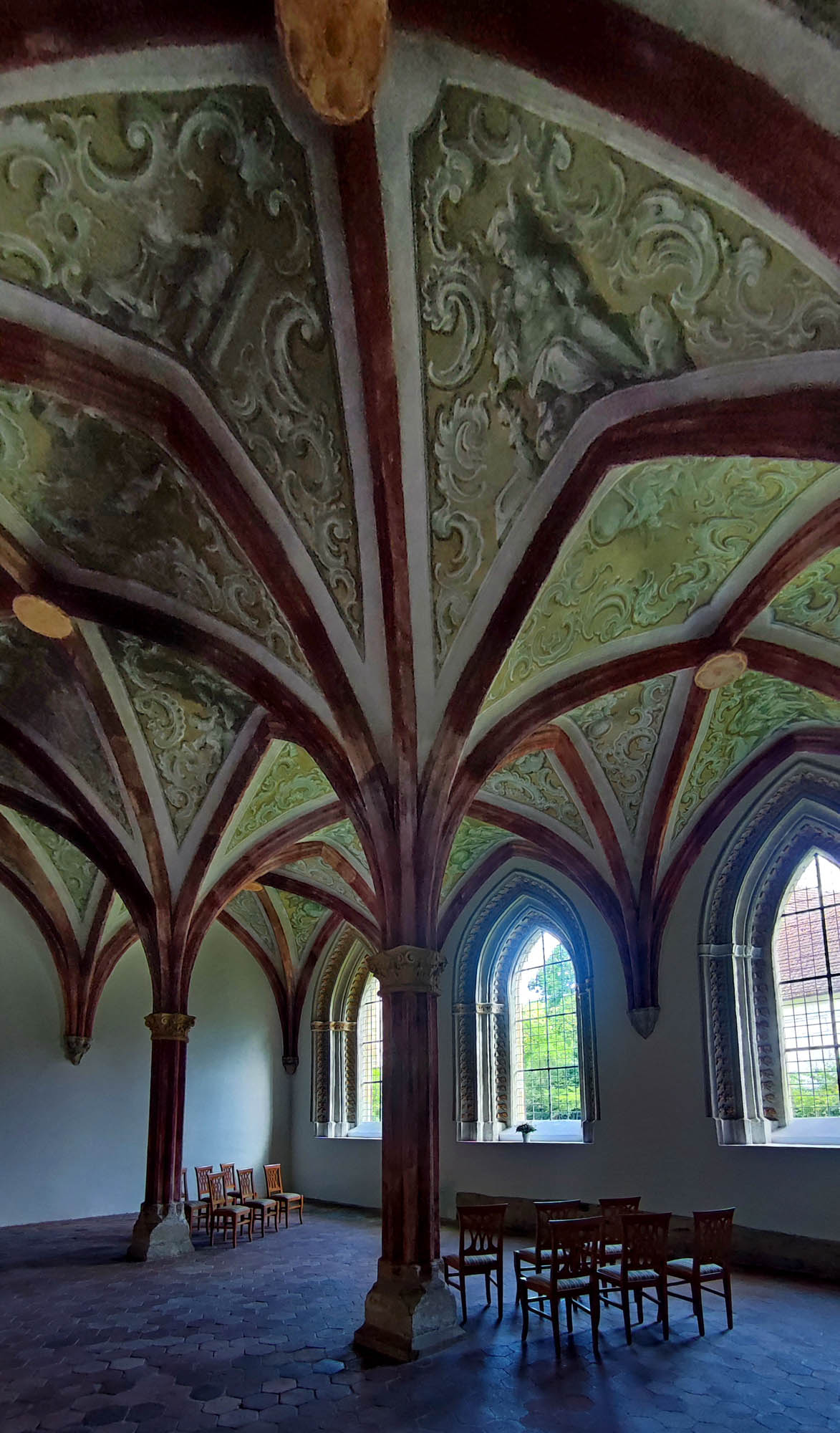
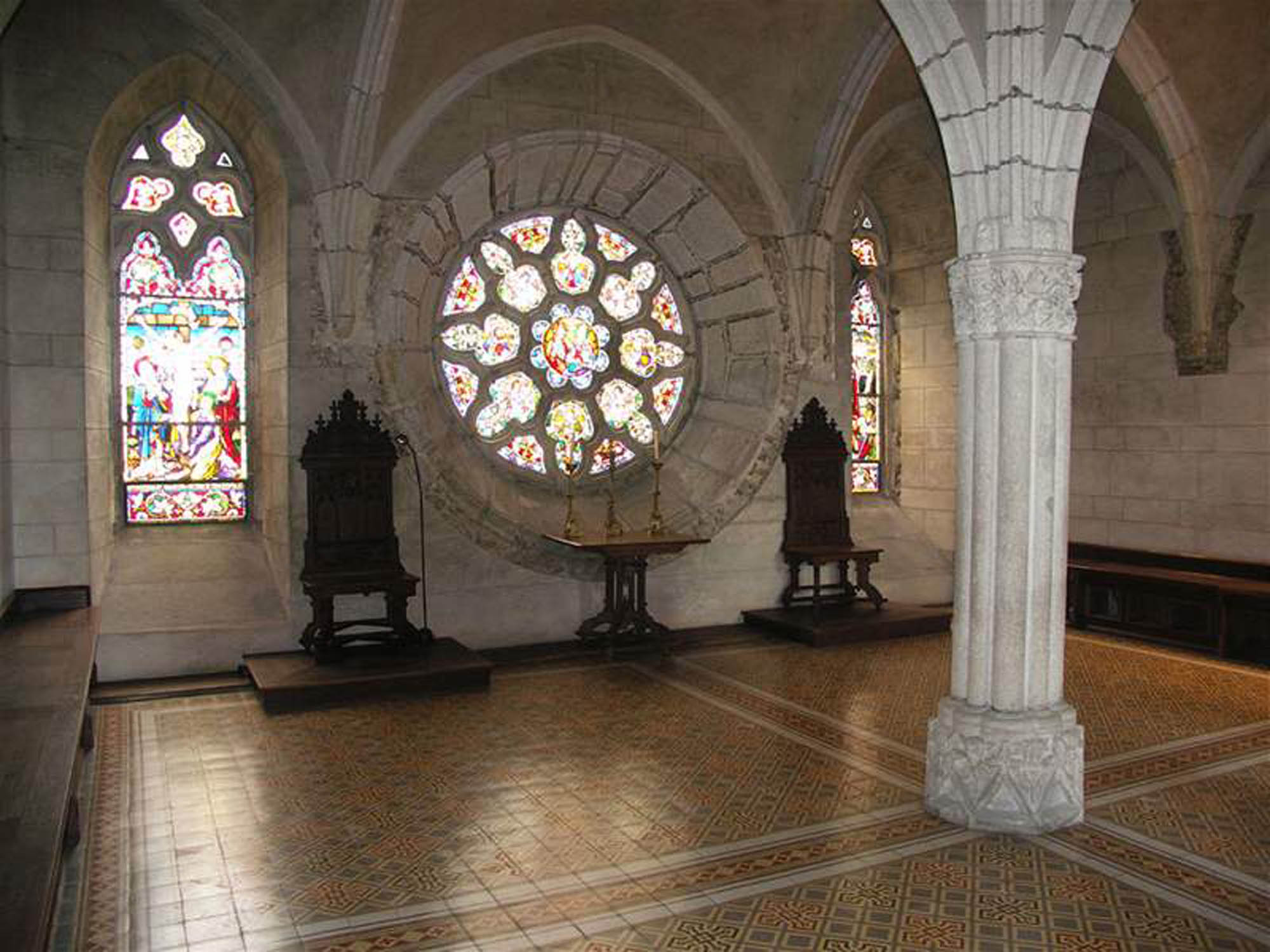 The chapter house of the Vyšší Brod monastery
According to monastic tradition, the monks even ransomed Záviš’s head – which, as the head of a traitor, should have been publicly displayed on a castle gate or in a marketplace according to contemporary practice – and later buried it as well in the chapter house. We have no contemporary source for this, just as we have none for the other tradition, according to which even the body was transported away with the king’s permission. But given the realities of the period, this is quite likely.
It is also recorded in a charter that Záviš’s brothers, Witiko and Wok of Krumlov, donated three villages to the monastery in the same year, pro salute animae Zawissi, for the salvation of Záviš’s soul, so that he might be perpetually commemorated in their prayers.
All of this is significant. Had Záviš’s execution been accompanied by total confiscation of property and damnatio memoriae, the family would hardly have dared to make such a public donation. It is more likely that King Wenceslas II did indeed execute his political opponent, but spared the Witiko family, whose cooperation he would need in the future.
In exchange for the three villages – and other donations, such as the cross – the monks were obliged to preserve Záviš’s memory in perpetuity. And they did so. Thus, the king’s judgment is counterbalanced by another memory: that of the monastery.
But how did the cross come into Záviš’s possession?
We do not know. The only certainty is that it is a Byzantine work, not made for a Czech patron, and therefore it must originate from somewhere within the Byzantine cultural sphere – with which Bohemia had no contact at the time.
Today, historians increasingly tend to believe that the cross reached Bohemia through one of Záviš’s two Hungarian royal wives. This is also stated on the official website of the Vyšší Brod monastery, according to which it may have been among the treasures of the Hungarian royal treasury brought to Prague in 1270 by Anna, daughter of Béla IV, and later passed to Záviš through Anna’s daughter, Kunigunda.
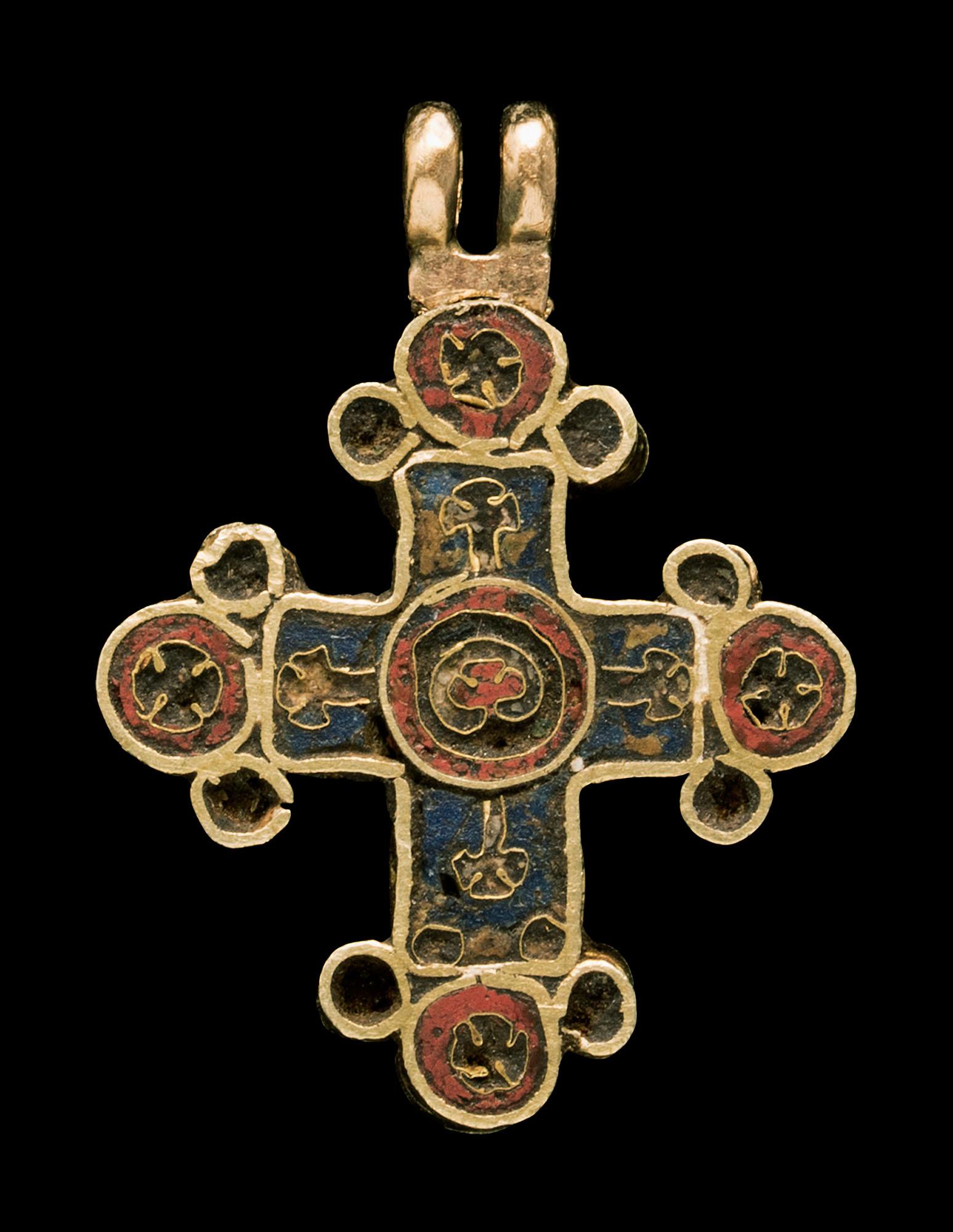
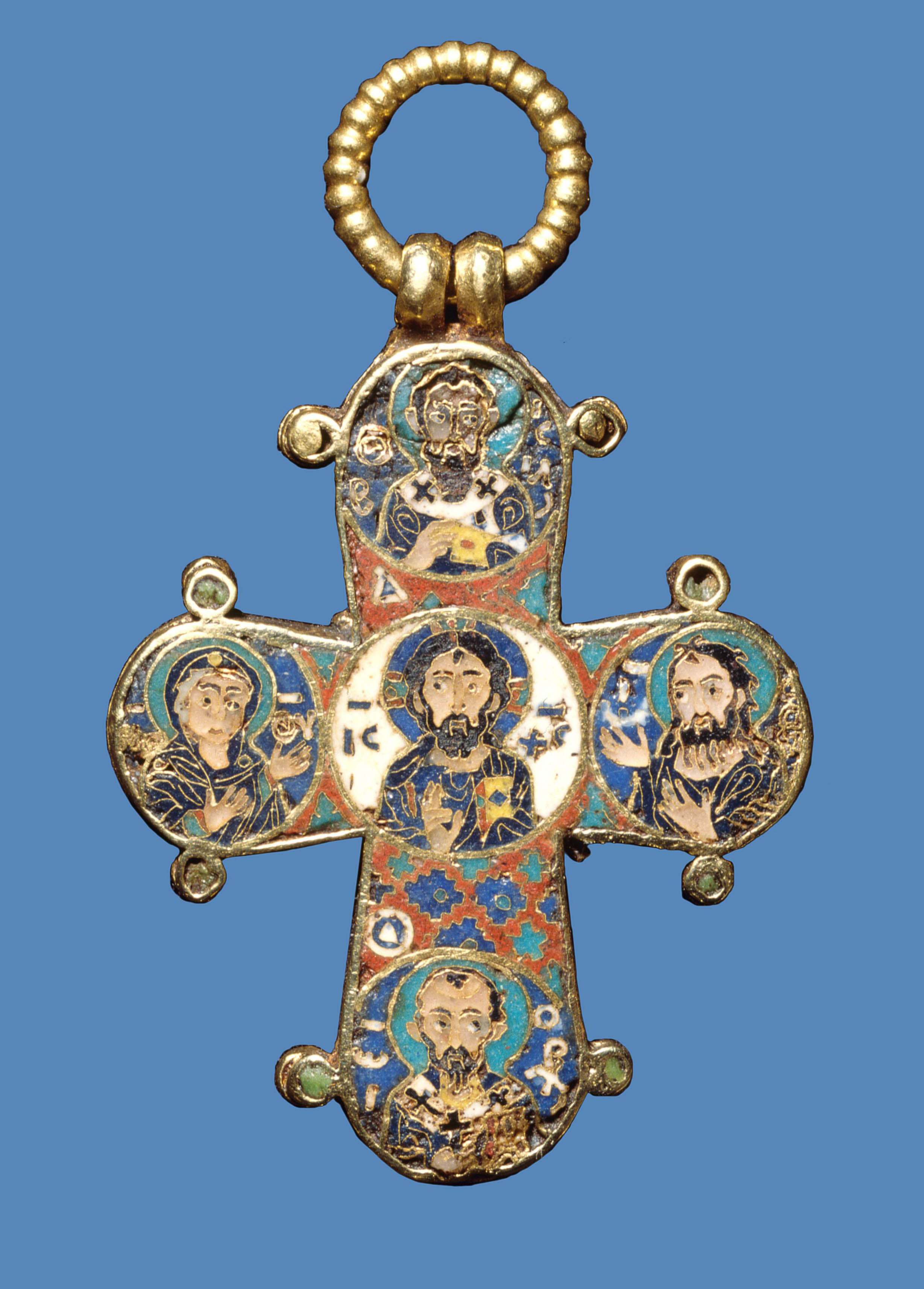
The high-quality craftsmanship and iconographic program of the cloisonné enamel reliquary cross suggest that it was probably made in a Byzantine court workshop at the turn of the 12th and 13th centuries. In that case, it could have been a diplomatic gift to a court with which Constantinople maintained relations – for example, Esztergom.
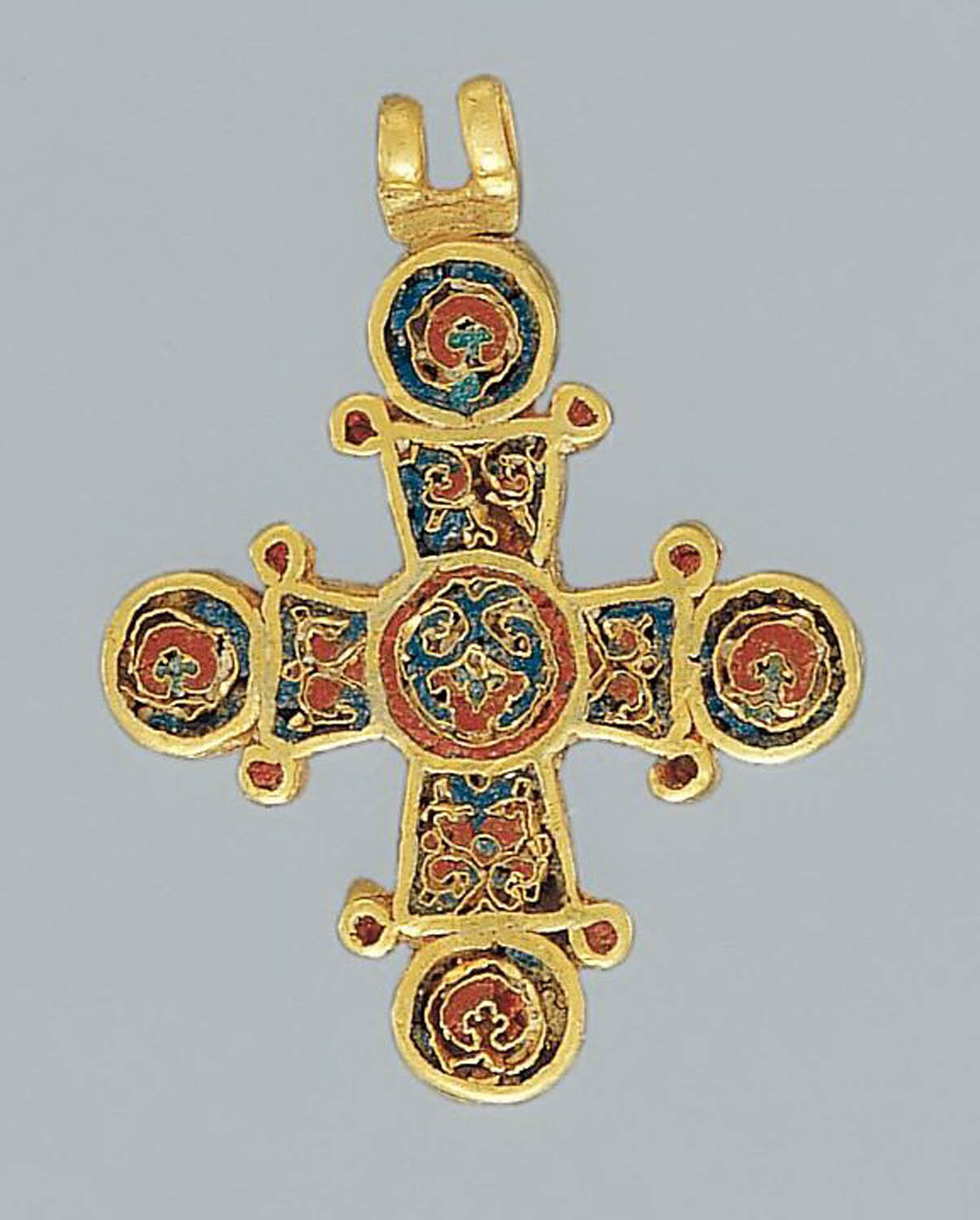 Byzantine crosses of similar date and technique: above, an example from the Metropolitan Museum; below, one sold at a Christie’s auction in 2020 (now in a private collection); and the third is the so-called Dagmar Cross, from the tomb of Margaret, the Czech wife of King Valdemar II of Denmark, which may have been made about a century earlier.
And there is another theory as well: that this court was not Esztergom, but Prizren, the court of Stefan Uroš II Milutin of Serbia, from which Záviš’s second wife, Elisabeth, may have brought the cross as a Byzantine diplomatic gift.
Záviš lost the struggle for power, but won the struggle for memory. The castle of Falkenstein disappeared, his political program collapsed, yet the Vyšší Brod monastery still preserves his tomb and the cross that bears his name. Ultimately, it is not the victorious Wenceslas II, but Záviš, who is associated with the most famous artefact and one of the most powerful stories of the period.



Add comment