


Introduction
The significance of the Armenian parliamentary elections to be held on June 7, 2026 extends far beyond the country’s borders. Formally, voters are deciding who will form the next government, but in reality much more is at stake. The election will determine the geopolitical path that Armenia—and the South Caucasus as a whole—will follow in the coming decade: whether it remains part of the Russian security and economic system or gradually integrates into the Western network of European and American partnerships.
What makes this election unique is that it takes place in the aftermath of a historical trauma that fundamentally shook Armenian society: the loss of Nagorno-Karabakh. For more than three decades, the Karabakh issue was one of the cornerstones of Armenian national identity. The 2020 war, followed by Azerbaijan’s military victory in 2023 and the mass exodus of the Armenian population of Karabakh, brought that era to an end.
For this reason, the current election is significant not only politically but also historically: Armenians must decide how they envision their country’s place in the world after Karabakh.
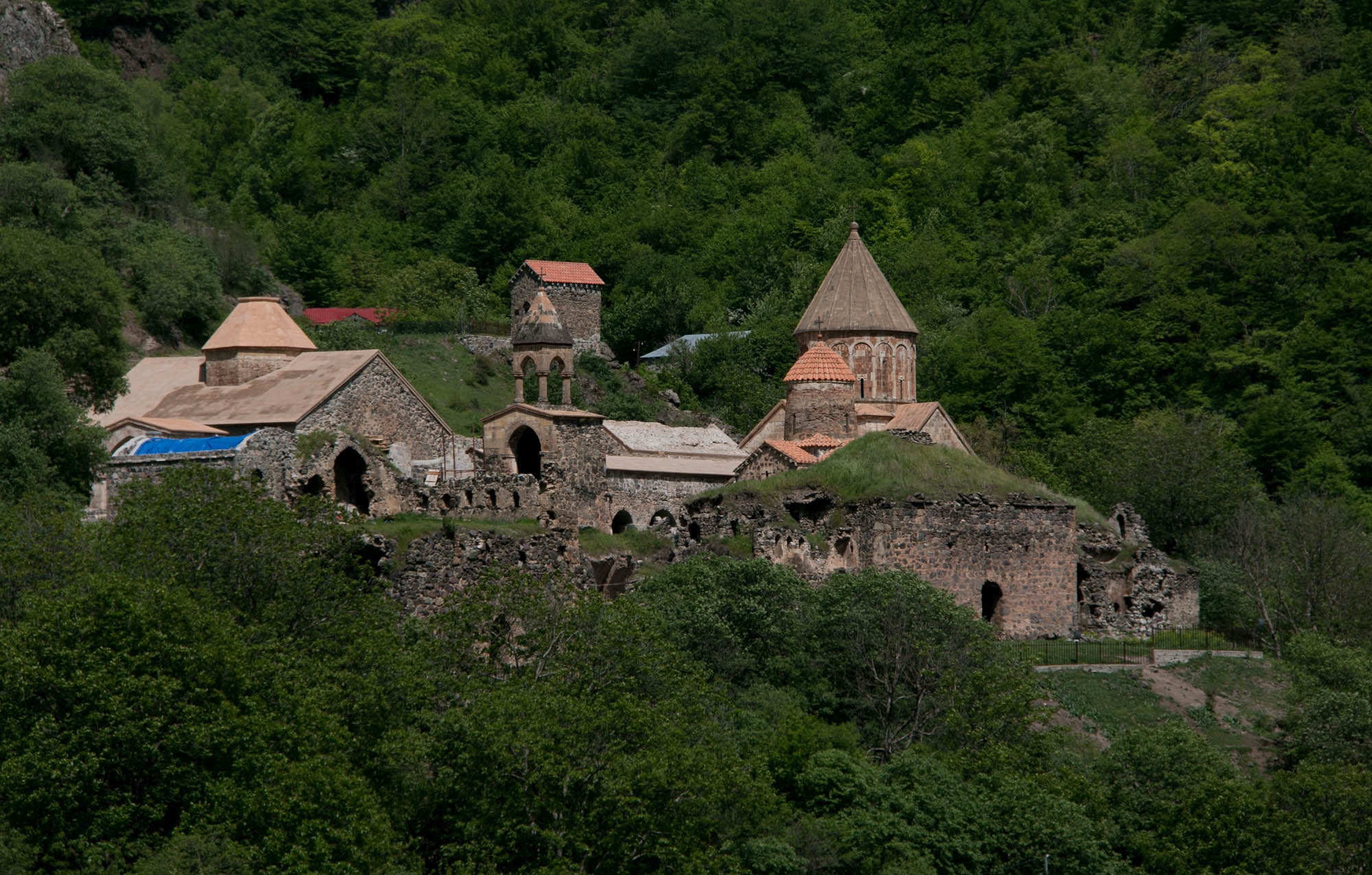 Dadivank Monastery in Karabakh before 2023 (does it still survive?)
Historical background of the elections
The defeat in Karabakh
The roots of the current political situation go back to the Second Karabakh War. In the autumn of 2020, Azerbaijan, with Turkish support, recaptured a significant portion of the territories previously controlled by Armenia. The agreement ending the war was brokered by Russia, which also deployed peacekeeping forces to the region.
Most Armenians, however, do not regard this as the end of the story. In 2023, Azerbaijan finally dismantled the Armenian political structures in Karabakh, and almost the entire Armenian population of the region fled. In the eyes of many Armenians, these events represented not only a military defeat but also a national tragedy.
Changing Perceptions of Russia
Perhaps the most important geopolitical consequence of the Karabakh defeat was not the defeat itself, but the way Armenians interpreted it.
Since the collapse of the Soviet Union, Armenian security policy had been built upon its alliance with Russia. The country is a member of the Collective Security Treaty Organization (CSTO), hosts a Russian military base on its territory, and remains heavily dependent on Moscow economically.
Many Armenians, however, feel that Russia failed to fulfill its obligations as an ally. Russian peacekeepers were present in Karabakh, yet they did not prevent Azerbaijan’s military operation. This fundamentally undermined trust in Moscow.
One of the main fault lines in Armenian politics today stems directly from this issue. One side argues that Russia betrayed Armenia. The other believes that Moscow was not at fault and that it was the current Armenian leadership that placed the country in danger.
 The heraldic animal of the Hasan-Jalalyan dynasty on Gandzasar Monastery in Karabakh, before 2023
The main political actors
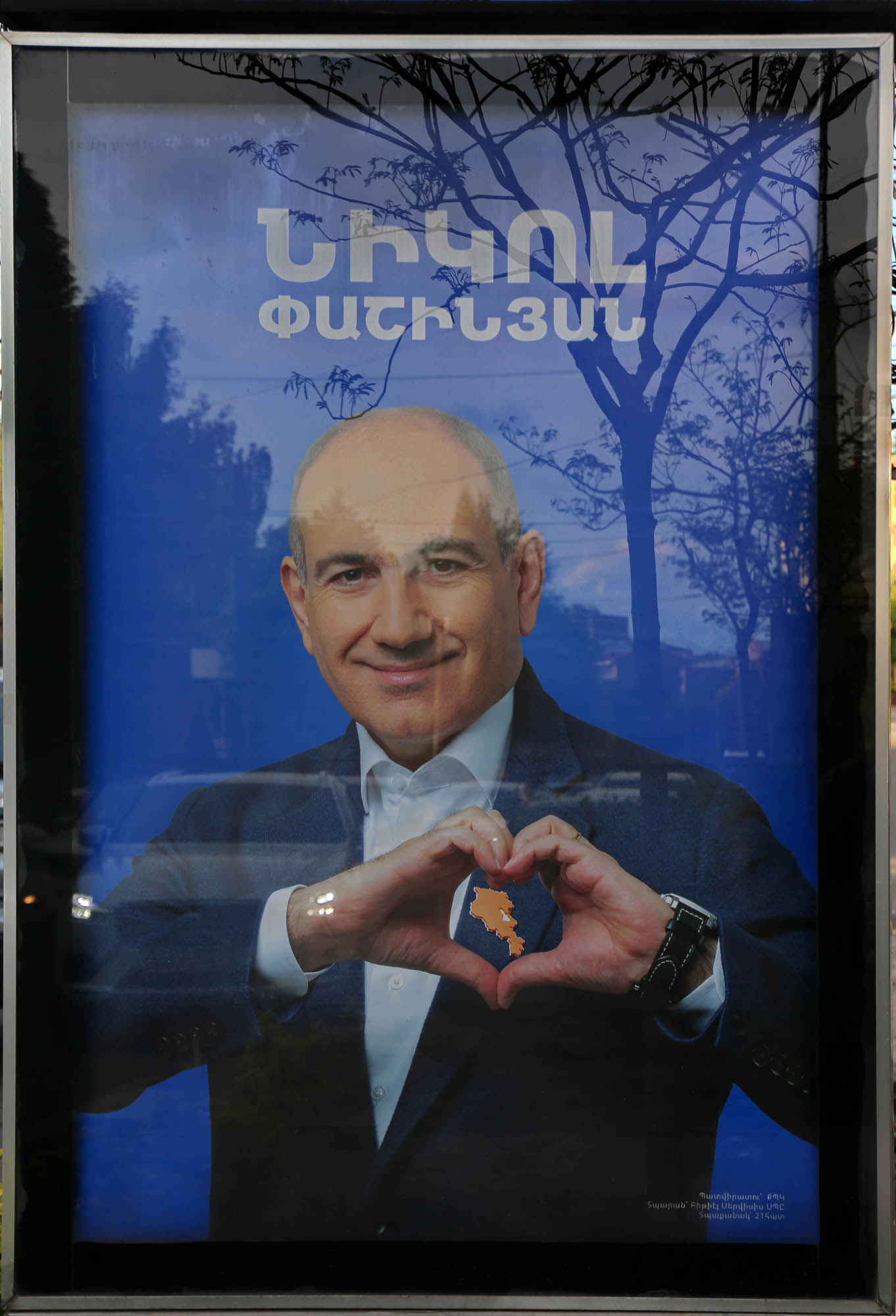
Nikol Pashinyan and the Civil Contract
The favourite in the election remains Prime Minister Nikol Pashinyan and his party, Civil Contract.
Pashinyan came to power in 2018 as the leader of the “Velvet Revolution.” At the time, his agenda was centred on fighting corruption, implementing democratic reforms, and dismantling the oligarchic system.
In 2026, he is campaigning in a very different political role.
The essence of his political message is:
• the Karabakh era is over,
• Armenia must accept the current realities,
• peace must be concluded with Azerbaijan,
• relations with Turkey must be normalised,
• dependence on Russia must be reduced,
• and gradual integration with Europe must be pursued.
Pashinyan’s personal motivation is also clear. After the defeat in Karabakh, many predicted his political downfall. If he wins again, he will secure historical legitimacy for his political project.
Samvel Karapetyan and Strong Armenia
The most powerful new opposition figure is businessman Samvel Karapetyan.
Karapetyan has significant business interests in Russia and seeks to appeal to those Armenians who believe that Pashinyan has made too many concessions to Azerbaijan and Turkey.
The core elements of his programme are:
• a stronger national policy,
• emphasis on the Karabakh issue,
• closer ties with Russia,
• slowing down Western orientation.
Robert Kocharyan and the old elite
Former president Robert Kocharyan remains an important political actor.
For many voters, he represents the mindset of the old security elite:
• a strong state,
• close alliance with Russia,
• a tougher stance toward Azerbaijan.
At the same time, the memory of the pre-2018 corruption system continues to weigh heavily on his political image.

The role of the United States
One of the most important developments in the current campaign is the growing level of American engagement.
The visit of Secretary of State Marco Rubio and the signing of the US–Armenia strategic partnership agreement today indicate that Washington is no longer merely observing developments in the South Caucasus, but increasingly seeks to actively shape them.
The United States’ objectives include:
• strengthening Armenian sovereignty (at Russia’s expense),
• reducing Russian influence,
• developing regional transport connectivity,
• supporting the Armenian–Azerbaijani peace process.
It is important, however, to recognise that the United States cannot fully replace Russia’s role in the region.
The following are unlikely:
• NATO membership,
• American security guarantees,
• or direct military protection.
US policy is primarily economic and diplomatic in nature.
Russia’s role
Why is Armenia so important for Moscow?
For the Kremlin, Armenia is strategically significant for several reasons:
• military presence,
• influence in the South Caucasus,
• proximity to Iran,
• stability of post-Soviet integration structures.
Moscow fears that a successful Armenian pivot toward the West could set a precedent for other countries in the region.
Tools of influence
In recent weeks, several forms of pressure have become visible:
• Economic pressure
• the threat of withdrawing discounted gas prices,
• trade restrictions,
• import bans on Armenian export goods.
• Diplomatic pressure
• public warnings,
• the recall of the Russian ambassador for consultations (as of today),
• signals concerning the future of the Eurasian Economic Union.
• Information operations
According to Western sources, Russia is also attempting to influence public opinion through media campaigns and disinformation operations.
Moscow of course denies these allegations.

Europe and the reality of integration
European Union integration is a central pillar of Pashinyan’s political agenda.
Supporters argue that the EU could provide:
• stronger rule of law,
• reduction of corruption,
• economic modernisation,
• decreased dependence on Russia.
At the same time, it is important to distinguish between political orientation and actual membership.
Full EU membership remains highly unlikely in the short term.
The reasons for this include:
• geographical location,
• economic dependence on Russia,
• energy security considerations,
• unresolved regional conflicts.
The more likely scenario is the so-called “European approximation” model:
• reforms,
• free trade cooperation,
• deeper institutional integration.
Regional consequences
A victory for Pashinyan and the Western-oriented political course would not only be an internal Armenian political event, but could also accelerate a broader transformation of the geopolitical structure of the entire South Caucasus. Many analysts argue that this is the first time there is a serious possibility that the region may gradually move out of the Russian-dominated security system that has defined it since the collapse of the Soviet Union.
Azerbaijan
For Baku, a Pashinyan victory would likely be preferable.
The current Armenian government appears more willing to pursue a peace agreement and open transport connections.
Turkey
Ankara is also interested in normalising relations.
The reopening of the border and the restoration of railway links—announced by Pashinyan this week—could create significant economic opportunities.
Georgia
The most interesting consequences may emerge precisely in Georgia.
In the 2000s and 2010s, Georgia was the South Caucasus’ primary Western partner. For the EU and the United States, Tbilisi represented a model of reforms, anti-corruption policy, and Euro-Atlantic integration. In recent years, however, the Georgian Dream government has gradually drifted away from Brussels and Washington, while Armenia has moved in the opposite direction. According to several Georgian analysts, it is now conceivable for the first time that Yerevan could become the West’s primary regional partner.
This is also psychologically significant. In Georgia, there is an increasingly uncomfortable awareness that the country may lose the special geopolitical status it has taken for granted for two decades.
The country may benefit politically from the region’s closer alignment with Europe, but economically it could face a new competitor.
A central element of the current US–Armenian–Azerbaijani vision is the Zangezur/TRIPP corridor, which would connect Azerbaijan through Armenia to Nakhchivan and Turkey. This would reduce regional isolation, but at the same time partially undermine Georgia’s transport monopoly.
Over the past thirty years, almost all east–west transit corridors have passed through Georgian territory, which has accounted for a significant share of the country’s revenue. The opening of Armenian routes could reduce this advantage.
But the deepest transformation may not be geopolitical, but symbolic.
Since the collapse of the Soviet Union, South Caucasus politics has largely been structured around frozen conflicts:
• Abkhazia,
• South Ossetia,
• Karabakh.
Pashinyan’s political approach essentially argues that Armenia should abandon revisionist logic, accept existing borders, and build peace through economic integration rather than conflict. This would represent a fundamental break with the entire post-Soviet political philosophy of the Caucasus.
If successful, this could also intensify debates in Georgia about whether the country’s future should be built on the constant mobilisation around territorial conflicts, or instead on economic and European integration.

What could the election result be?
Based on current polling, the most likely scenario is:
• Civil Contract remains the strongest party,
• Pashinyan remains Prime Minister,
• but with lower support than in 2021.
(* Following the signing of the US strategic partnership agreement at the end of May and the subsequent recall of the Russian ambassador, a public opinion poll showed 65% support for Civil Contract, while no opposition party reached 12%.)
For comparison:
• 2021
• Civil Contract: 53.95%
• 71 seats
• Expected 2026 result
• 35–45% support range
• narrow majority or coalition government
The key factor remains the fragmentation of the opposition.
Conclusion
The 2026 Armenian election is not simply about a change or confirmation of government.
With the closure of the Karabakh era, the country has reached a historical crossroads.
One path is the continuation of traditional Russian orientation, which offers security guarantees but appears increasingly unreliable.
The other is a gradual opening toward the West, which promises economic and political modernisation but also entails significant risks and uncertainties.
The outcome of the election will therefore not only determine who governs Armenia for the next four years. It may also define whether the South Caucasus remains primarily a Russian sphere of influence in the coming decade, or becomes part of a new regional system shaped by European, American, and Turkish connections.





Add comment