

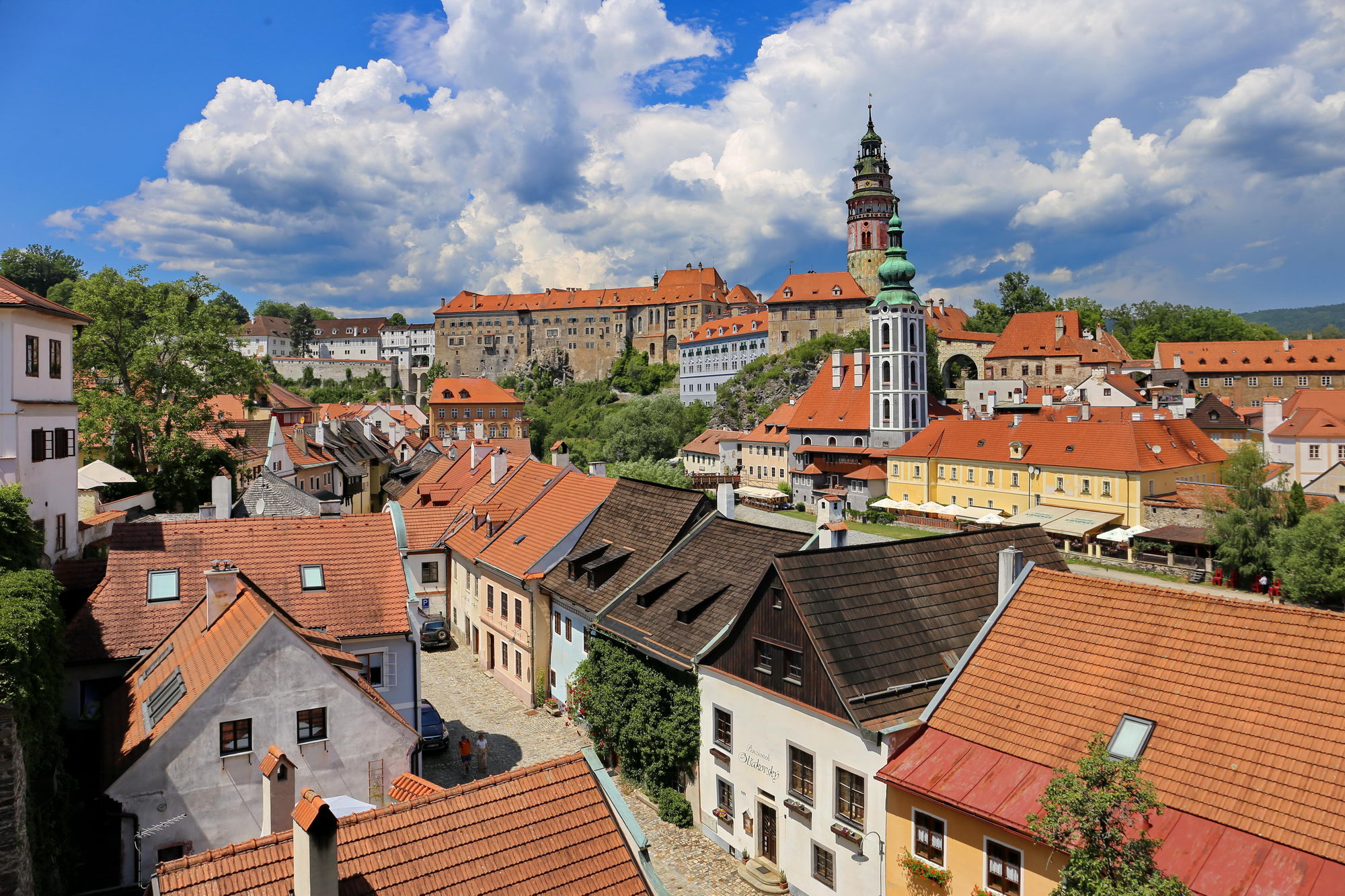
I have written before about a province in medieval Europe that was wealthy enough, powerful enough, and cultivated enough to become an independent country. It came remarkably close to doing so, only to disappear at the very height of its prosperity, power, and brilliance, merging into the neighboring kingdom from which it had sought independence. No, I am not talking about Burgundy. I mean a province that does not even have a proper name of its own—perhaps it never did. I call it the Land of the Roses, because its founder, Witiko (1120–1194), is said to have divided his domains among his five sons, each of whom inherited the founder’s five-petaled rose in a different color: the Hradec branch bore it in gold, the Třeboň branch in silver, the Stráž branch in blue, the Ústí branch in black, and the largest and most powerful branch, the Rosenbergs of Krumau, who would eventually absorb all the others, in red.
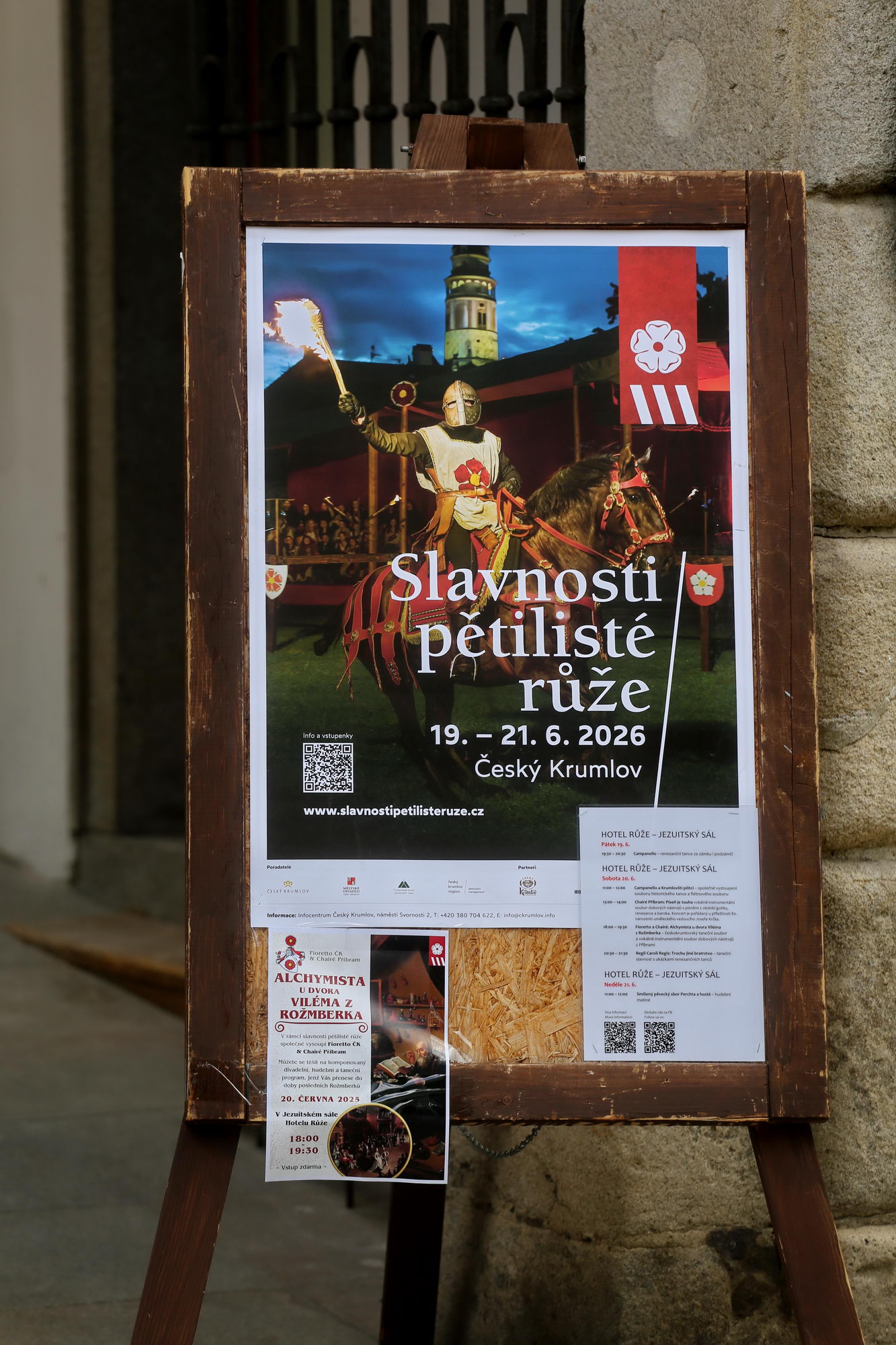
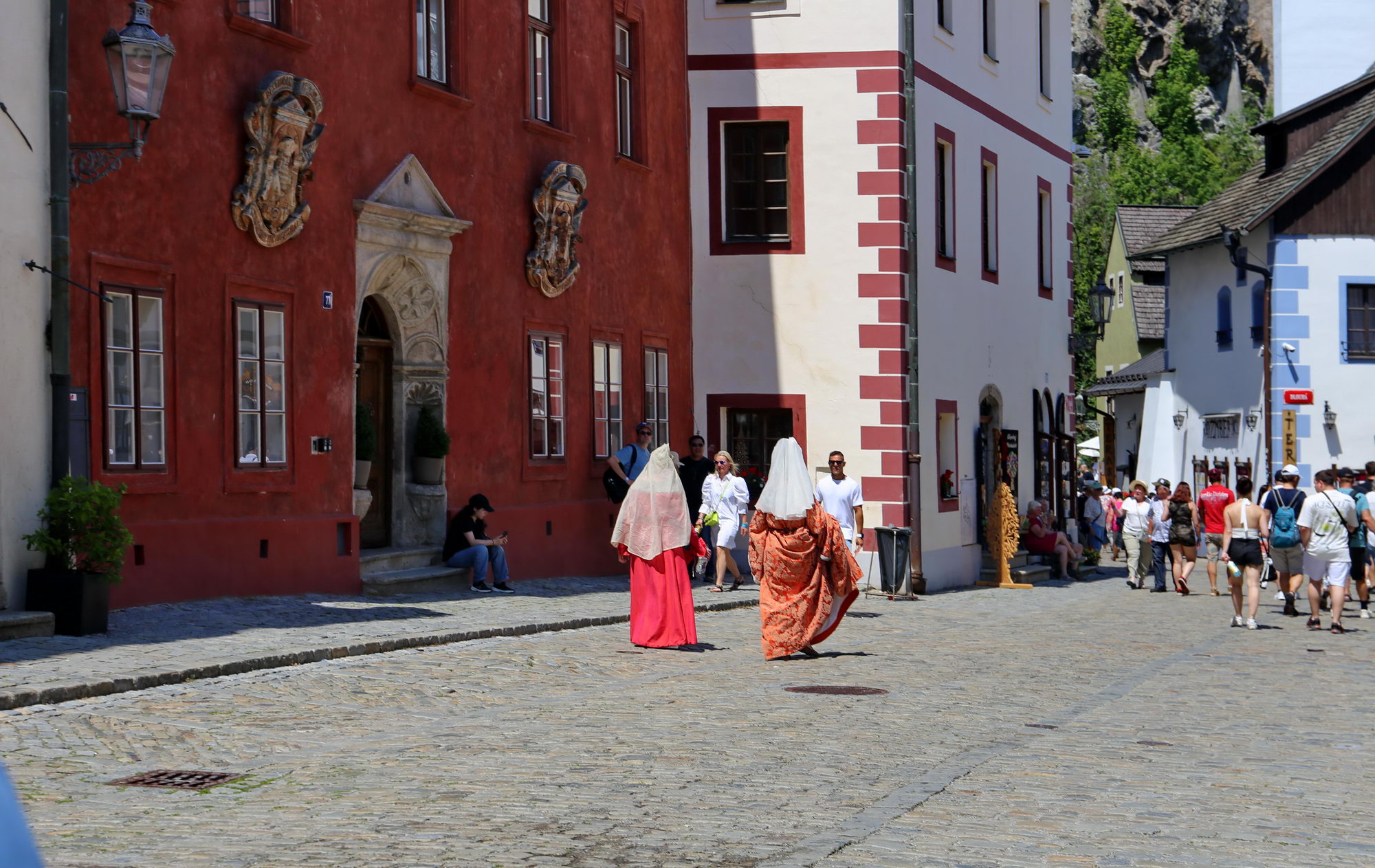
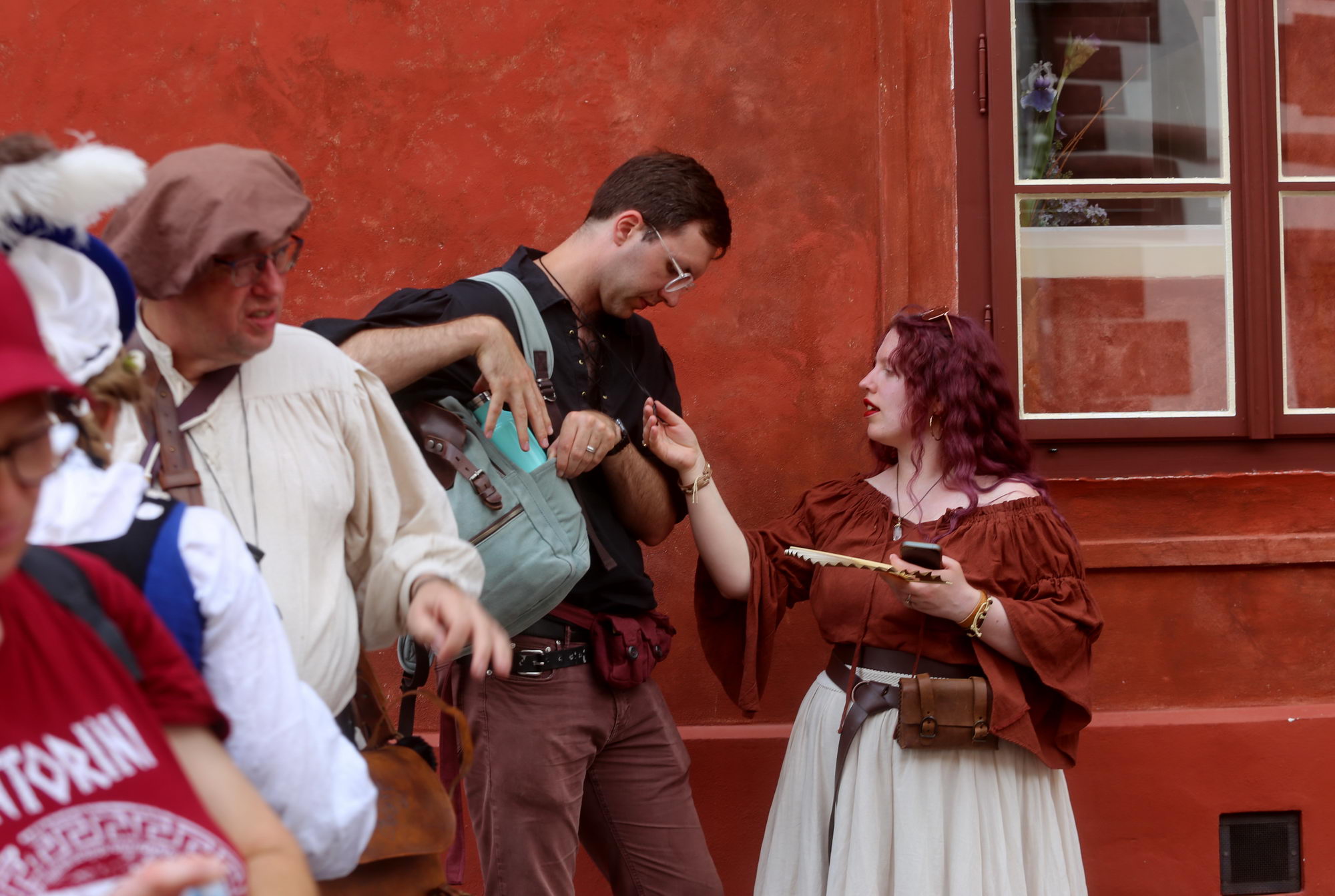
The people of the region still look back longingly on that lost greatness, even though it was not really theirs. The original inhabitants were forcibly deported to Germany and Austria in 1946. There are many ways in which the memory survives, but none more spectacular than in mid-June, when Český Krumlov celebrates the Five-Petaled Rose Festival for three days. During those days, the people of the region—and the returning descendants of expelled Krumau families—dress in medieval costume and relive, through medieval ceremonies and festivities, everything that might have been wonderful about that enchanted world.
As we cross the bridge over the Vltava and enter the town, the first medieval figures are already coming toward us.
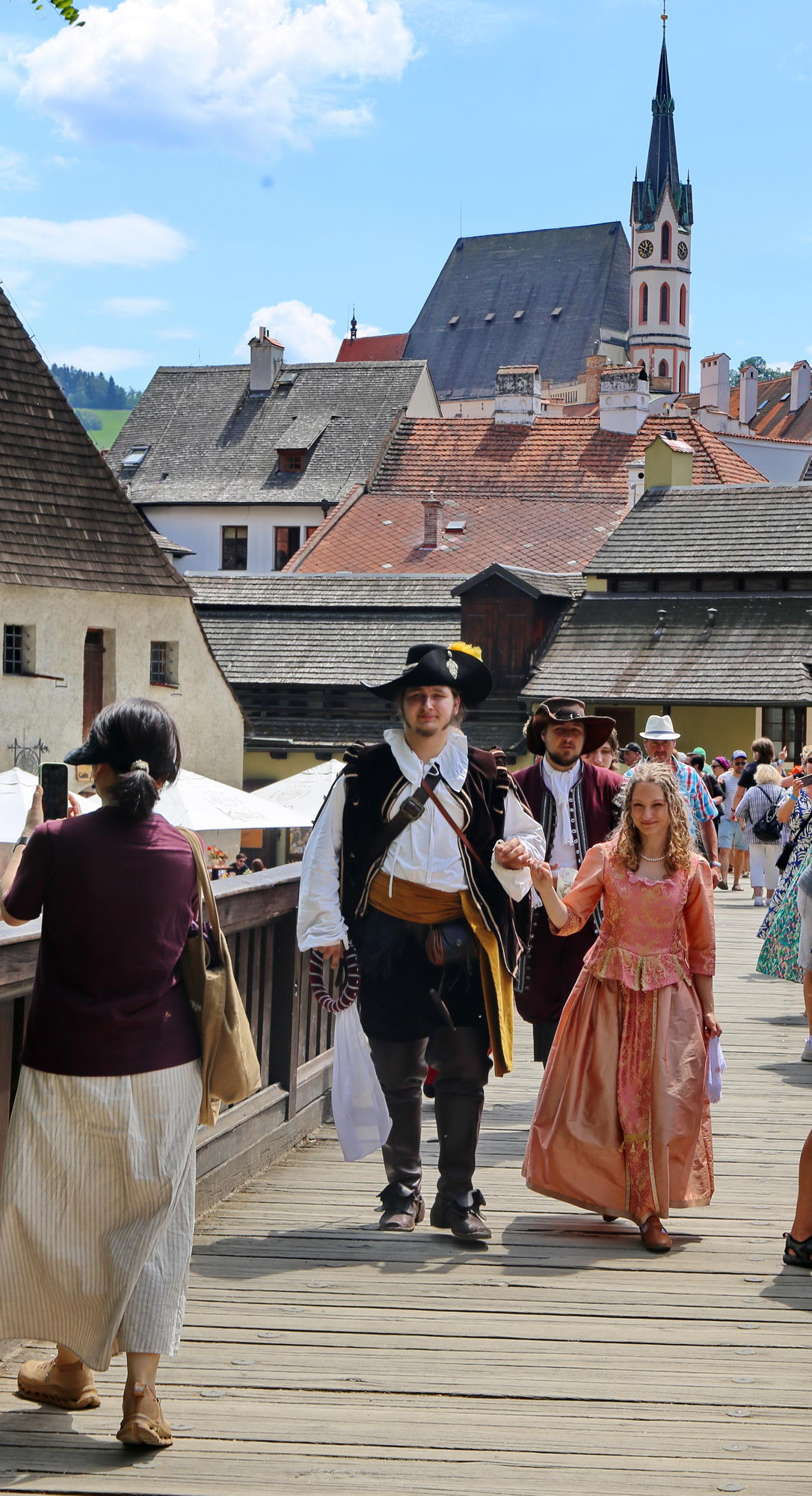
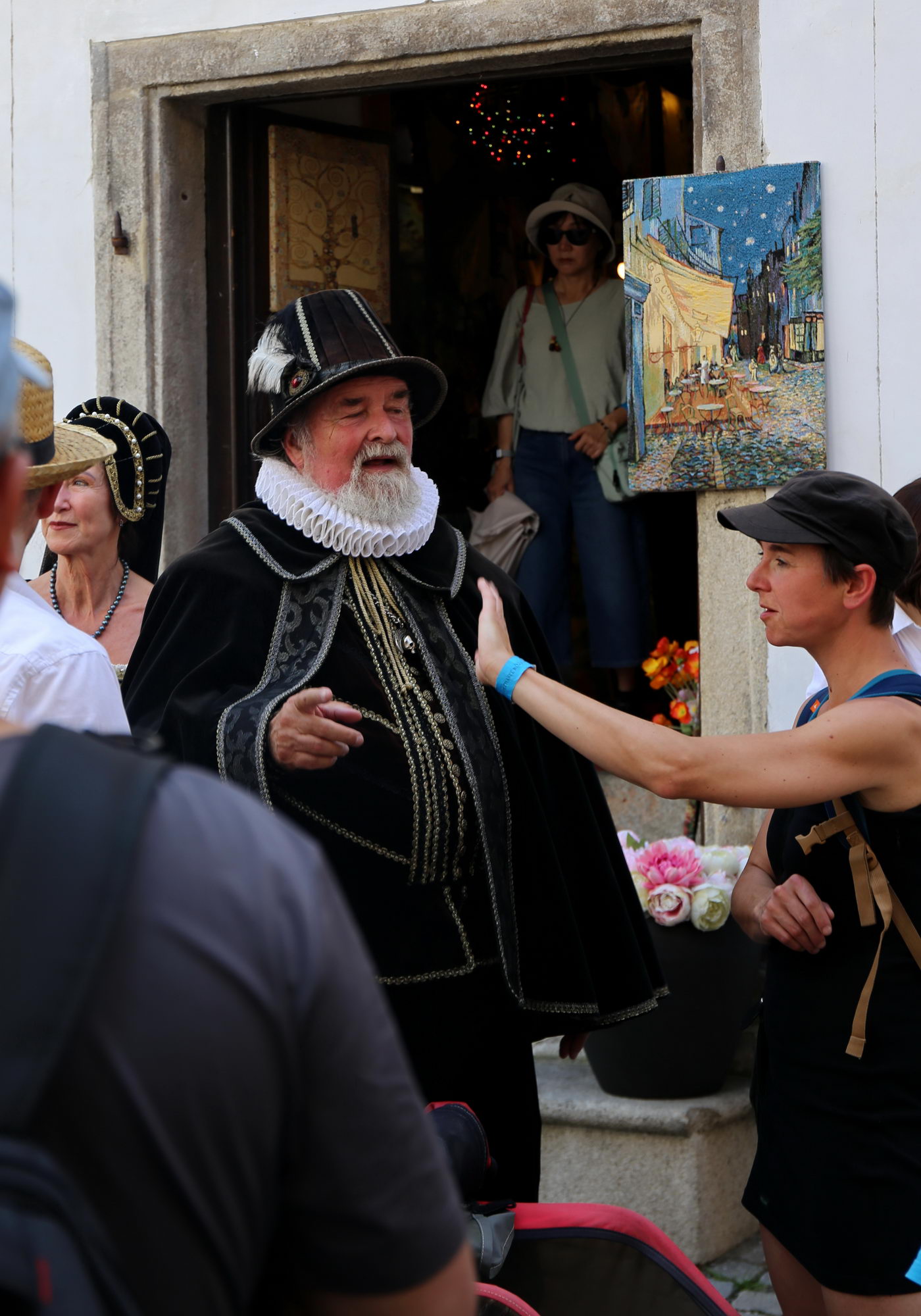
Or rather, the first ones had already transformed themselves out in the parking lot, shedding their modern Austrian and German clothes and changing into medieval attire before walking back into their ancestral town.
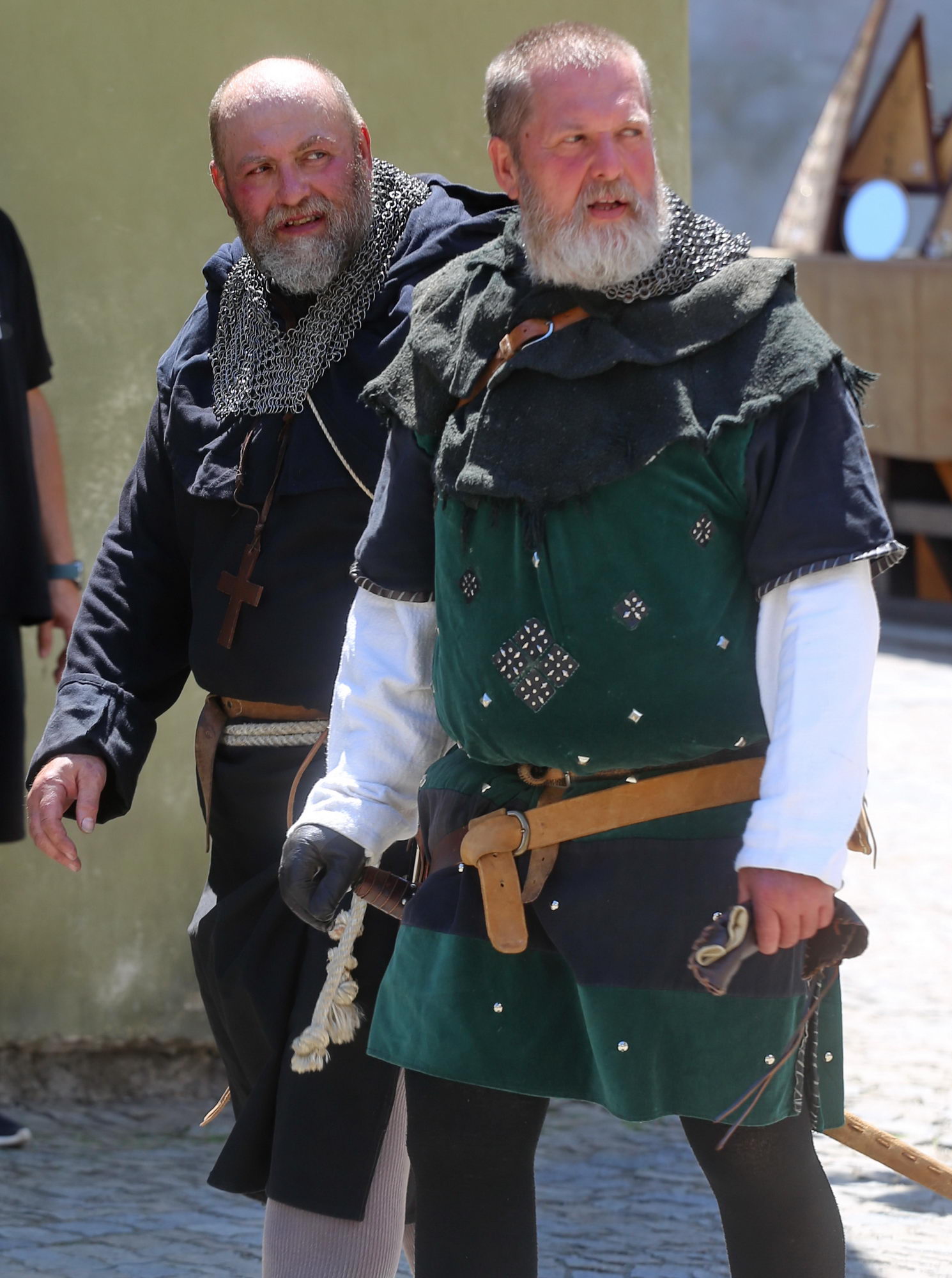
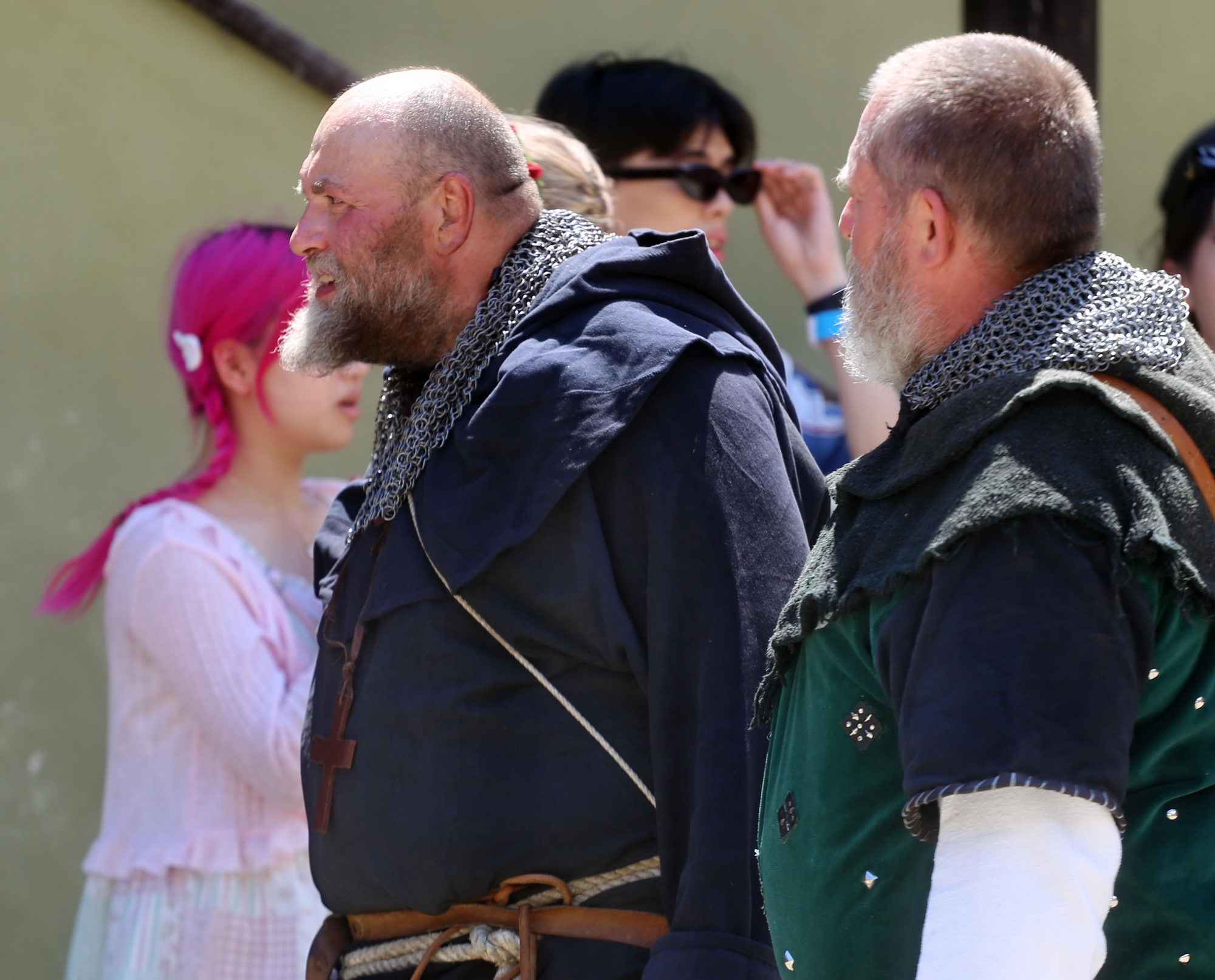
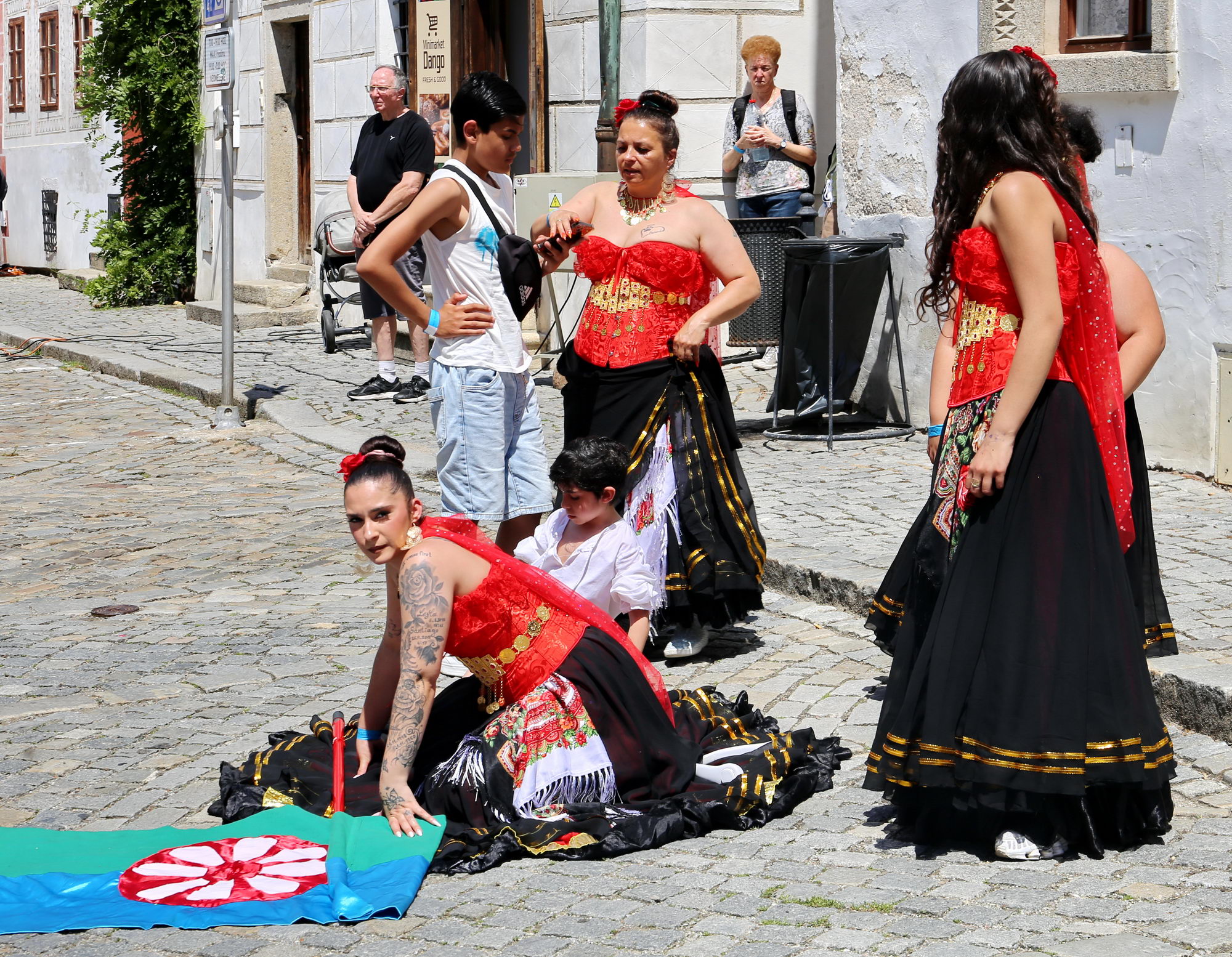
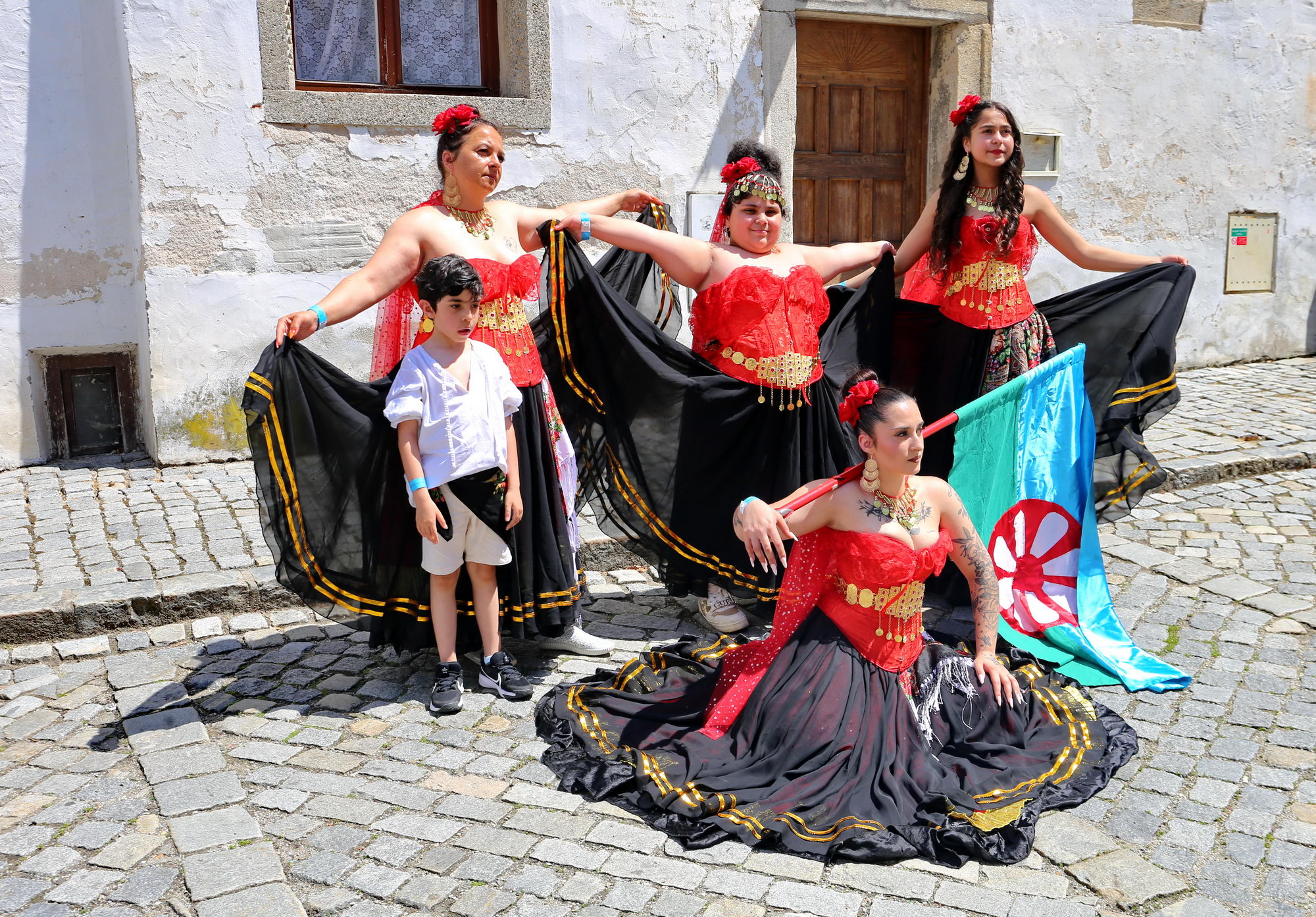
In town they meet medieval Czechs—and even medieval Roma. The latter moved into Krumau’s emptied houses after 1946 and have since become proud citizens of the town, celebrating their shared medieval heritage alongside everyone else.
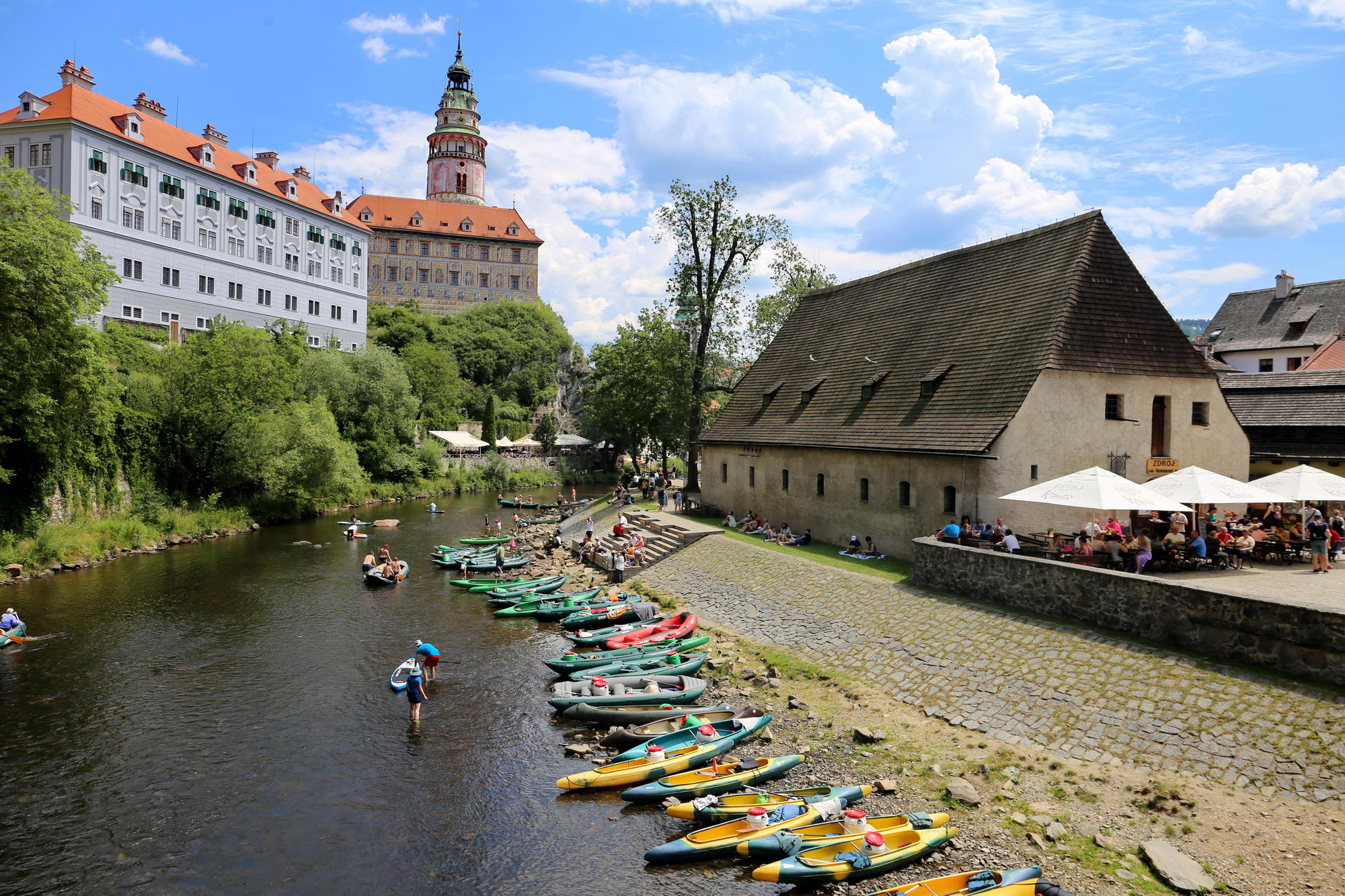
Others arrive by kayak, raft, or traditional river float, pulling ashore beside the restaurants lining the banks of the Vltava.
From early morning, medieval musicians, jugglers, and entertainers keep the crowds amused in the main square. Then, at three o’clock in the afternoon, the grand procession sets off. For hours it winds through the streets of the town, climbs up to the castle, and continues beyond it to the brewery founded in 1560, where participants can recover from the sweltering heat with suitable refreshments.
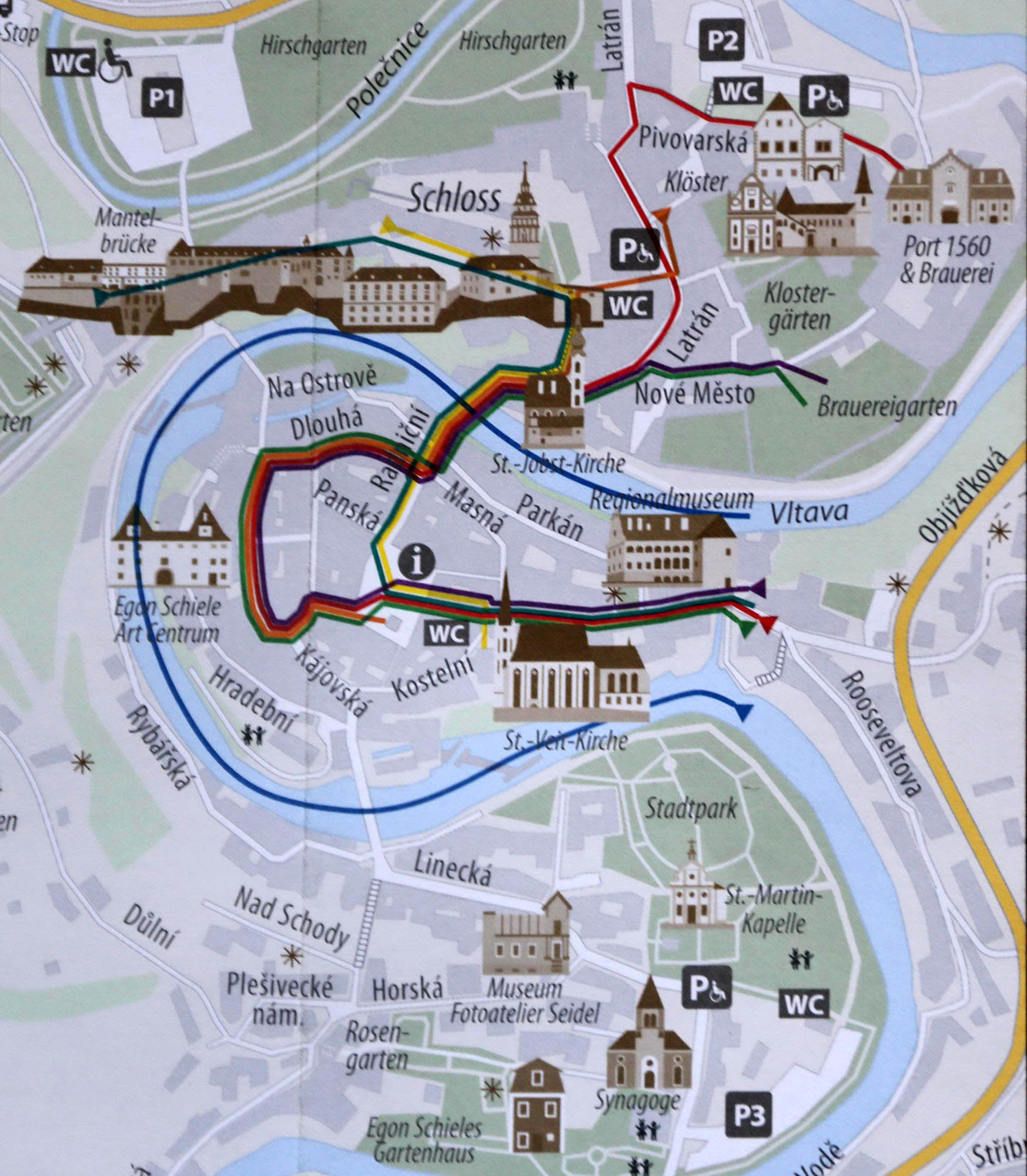
We choose an observation point at the northwestern corner of the route and film the procession as it approaches from the south.
Fifteen minutes later, my phone surrenders to the heat and shuts itself down. I wait a little while and try again.
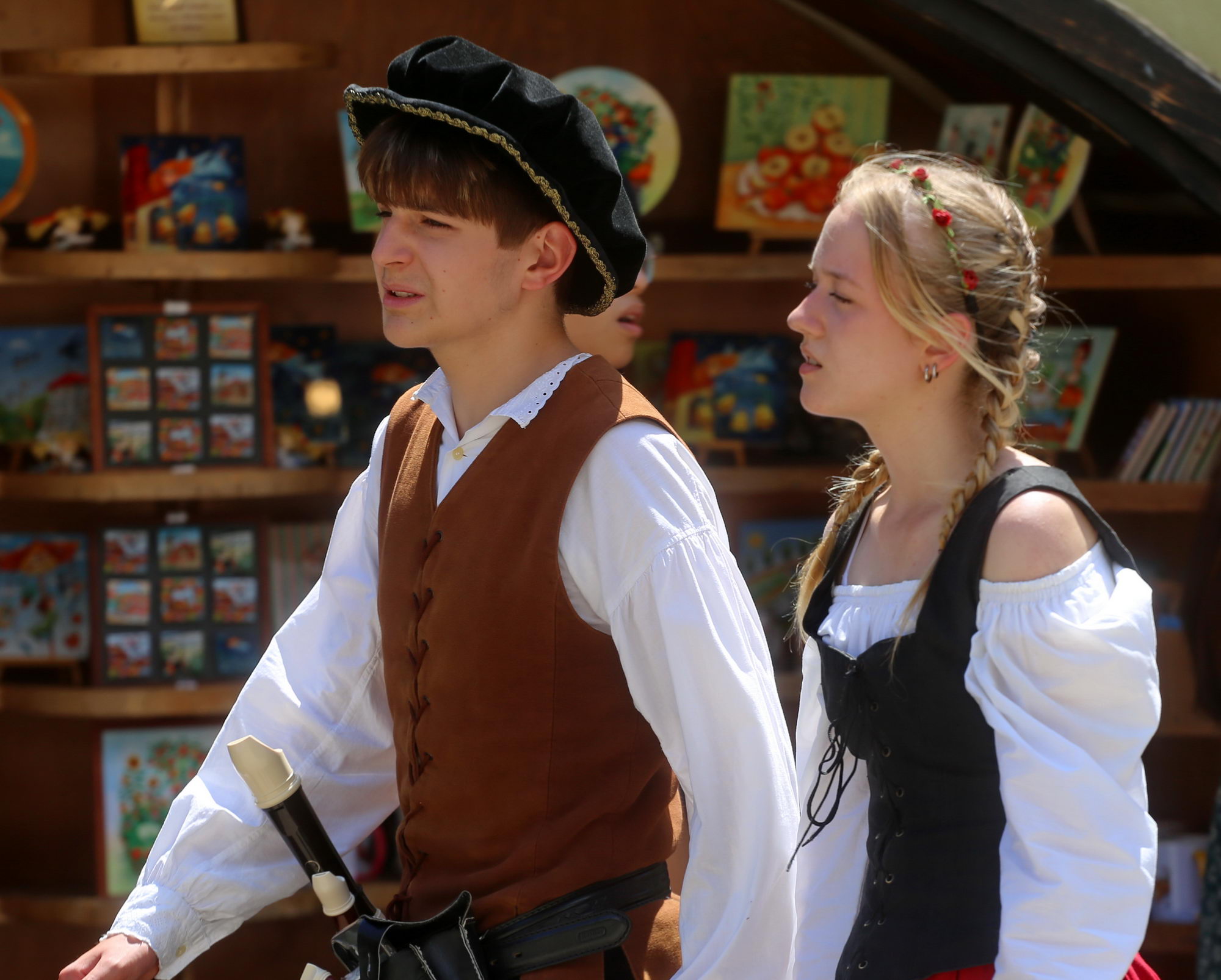
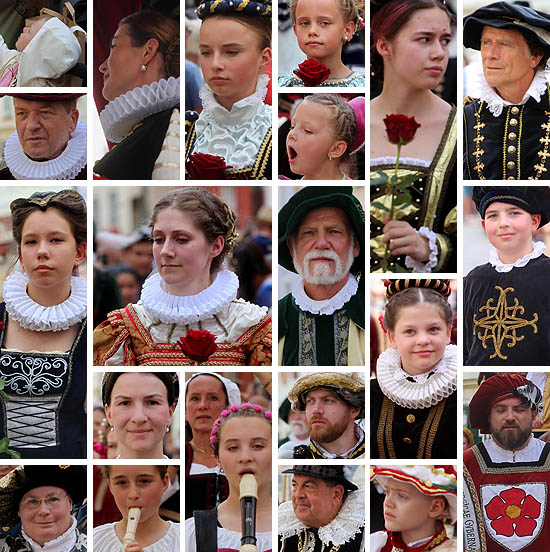
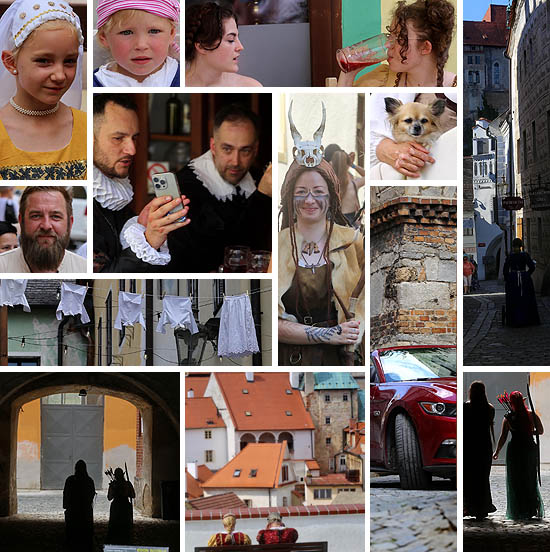
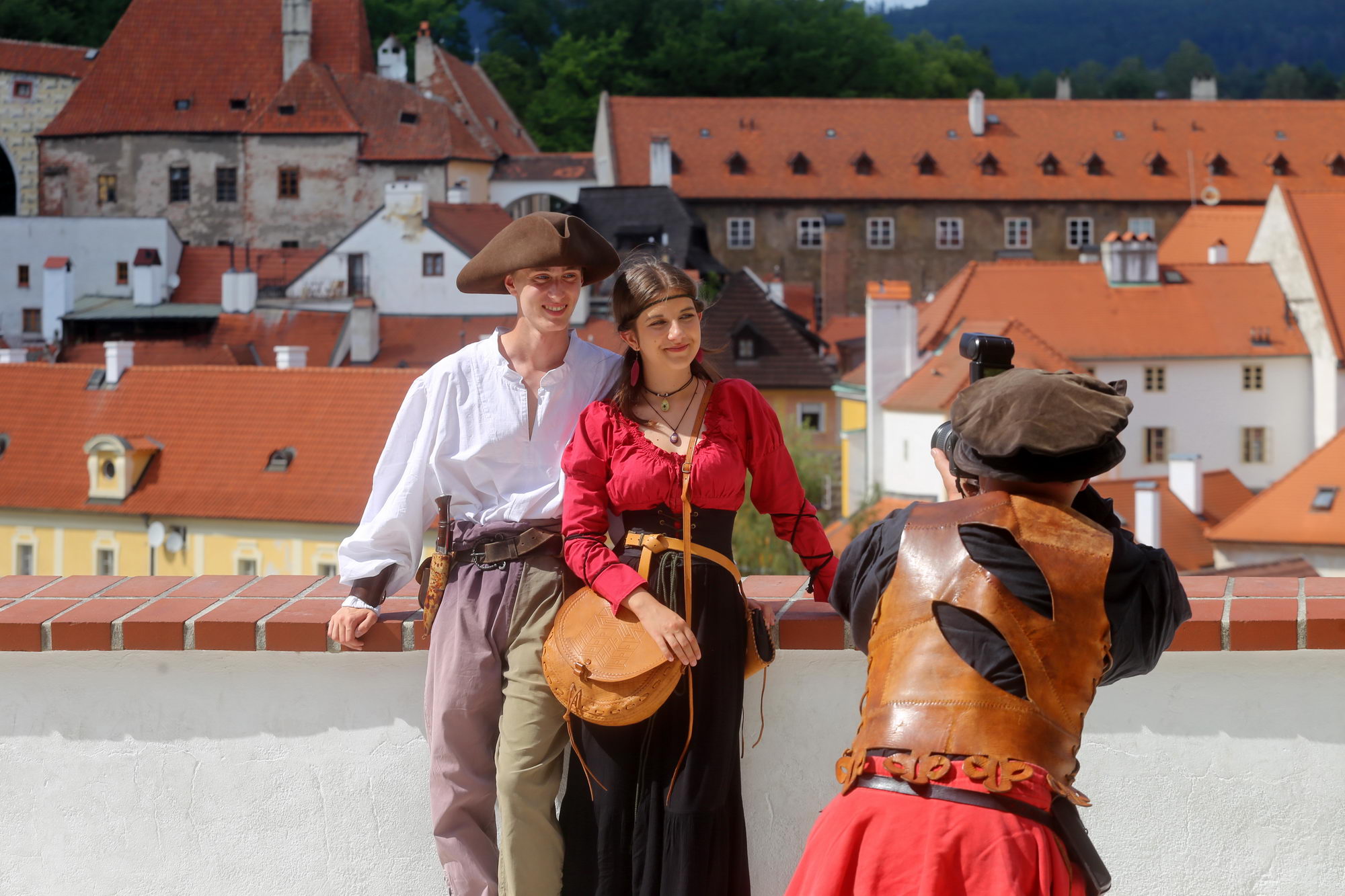
This time it lasts barely half a minute. I put it away to cool down and spend the rest of the time photographing the participants one by one. They are happy to pose for photographs. Once again, the old observation proves true: wherever people dress up—whether in occasional costumes and traditional attire, as in China, or in carefully chosen everyday clothing, as in Iran—they are aware of their own visual presence and do not take offense or object when others wish to preserve that spectacle in a photograph.
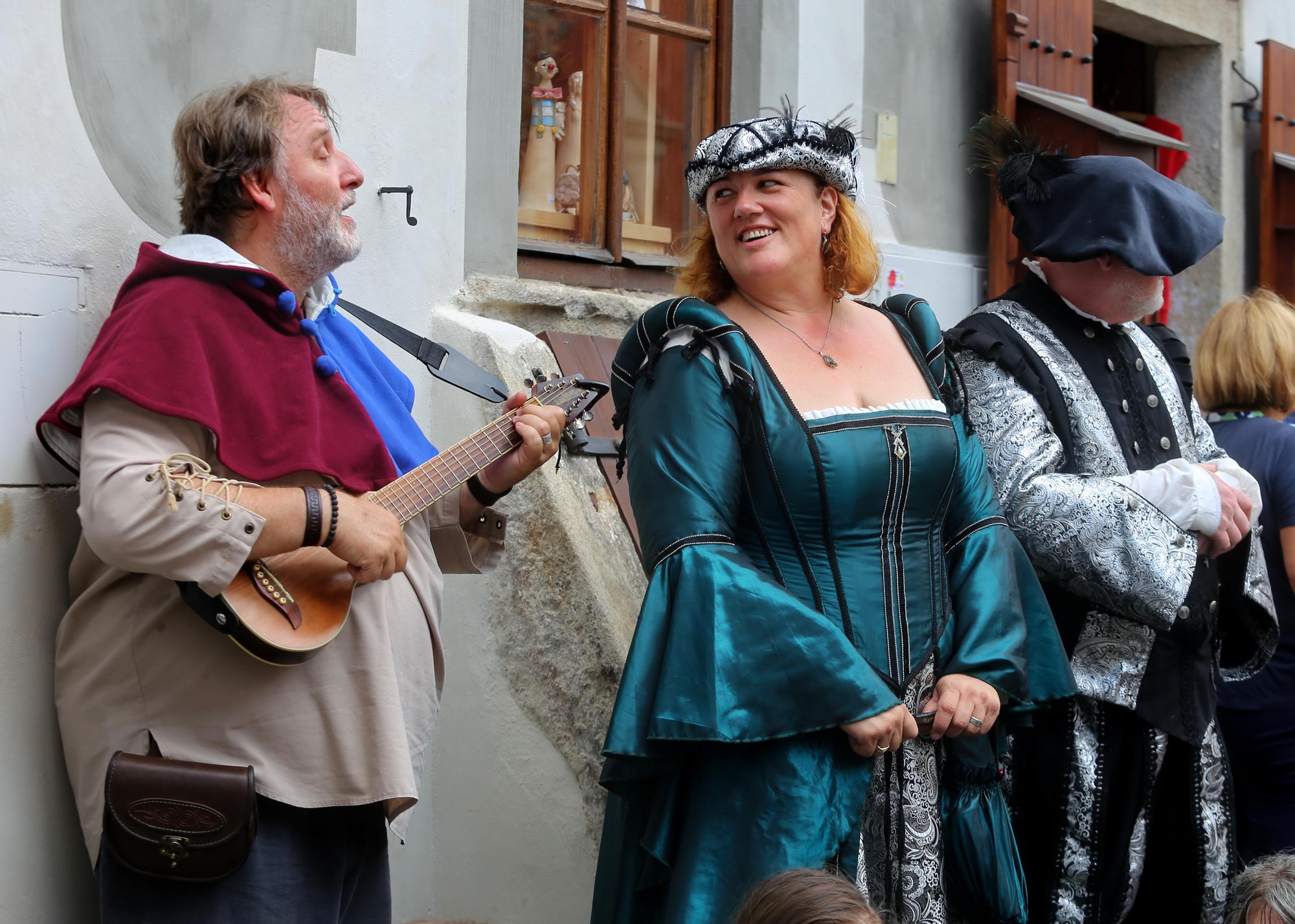
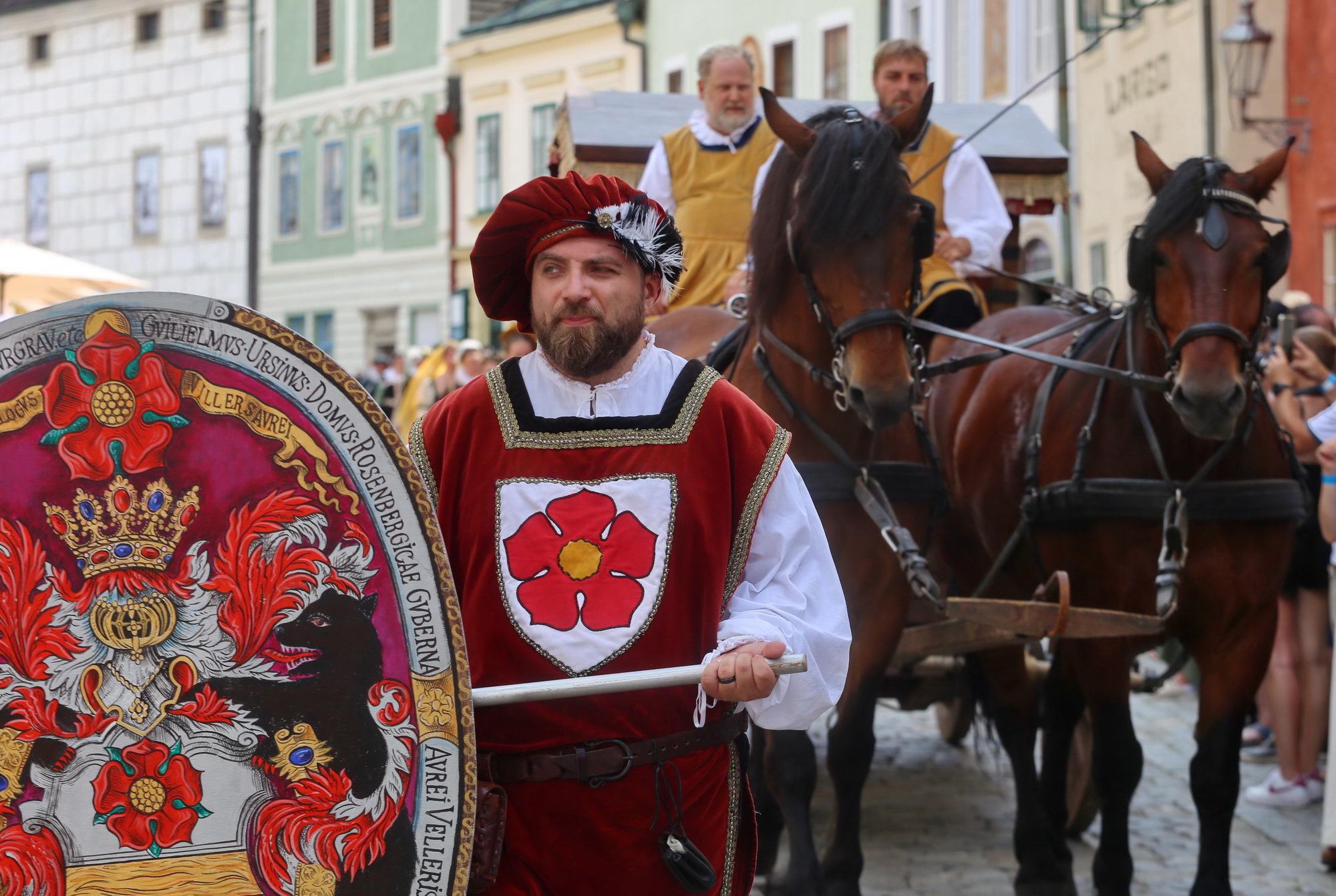
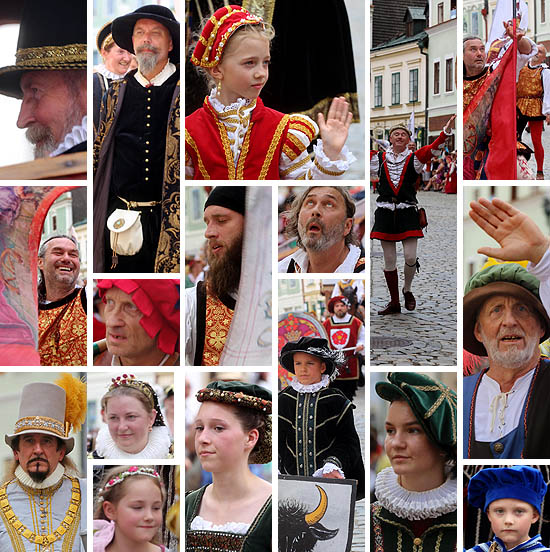
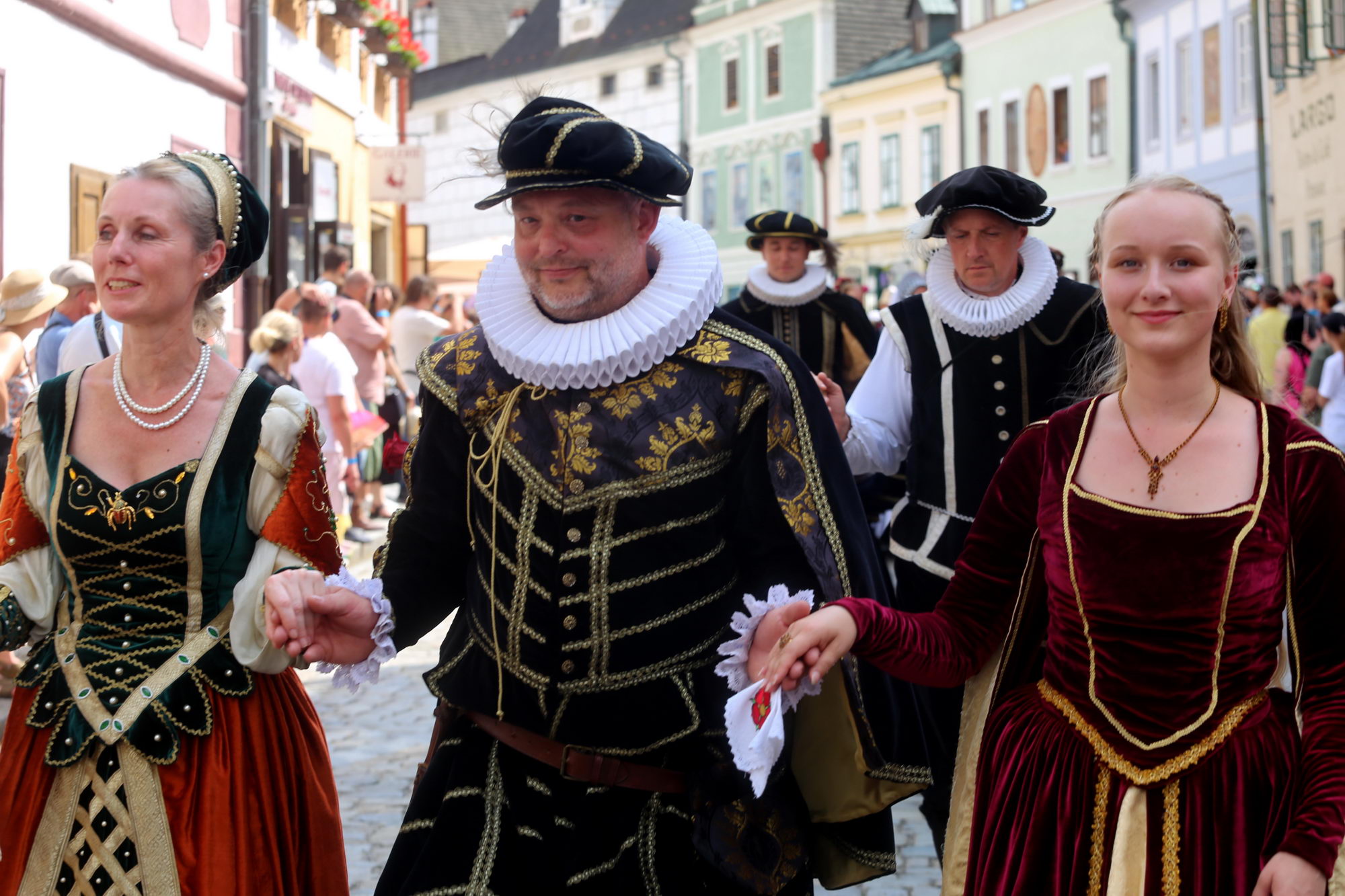
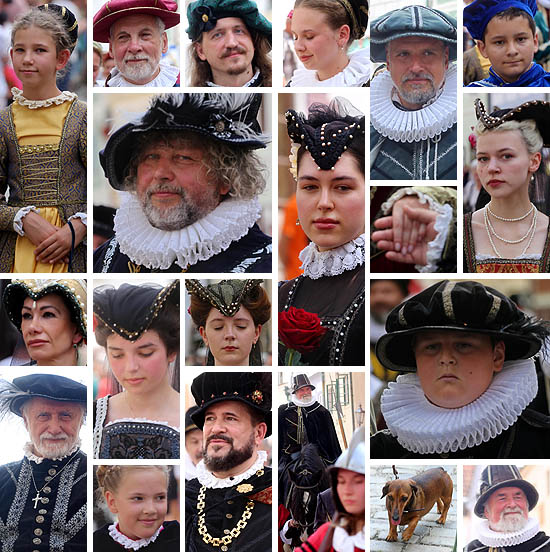
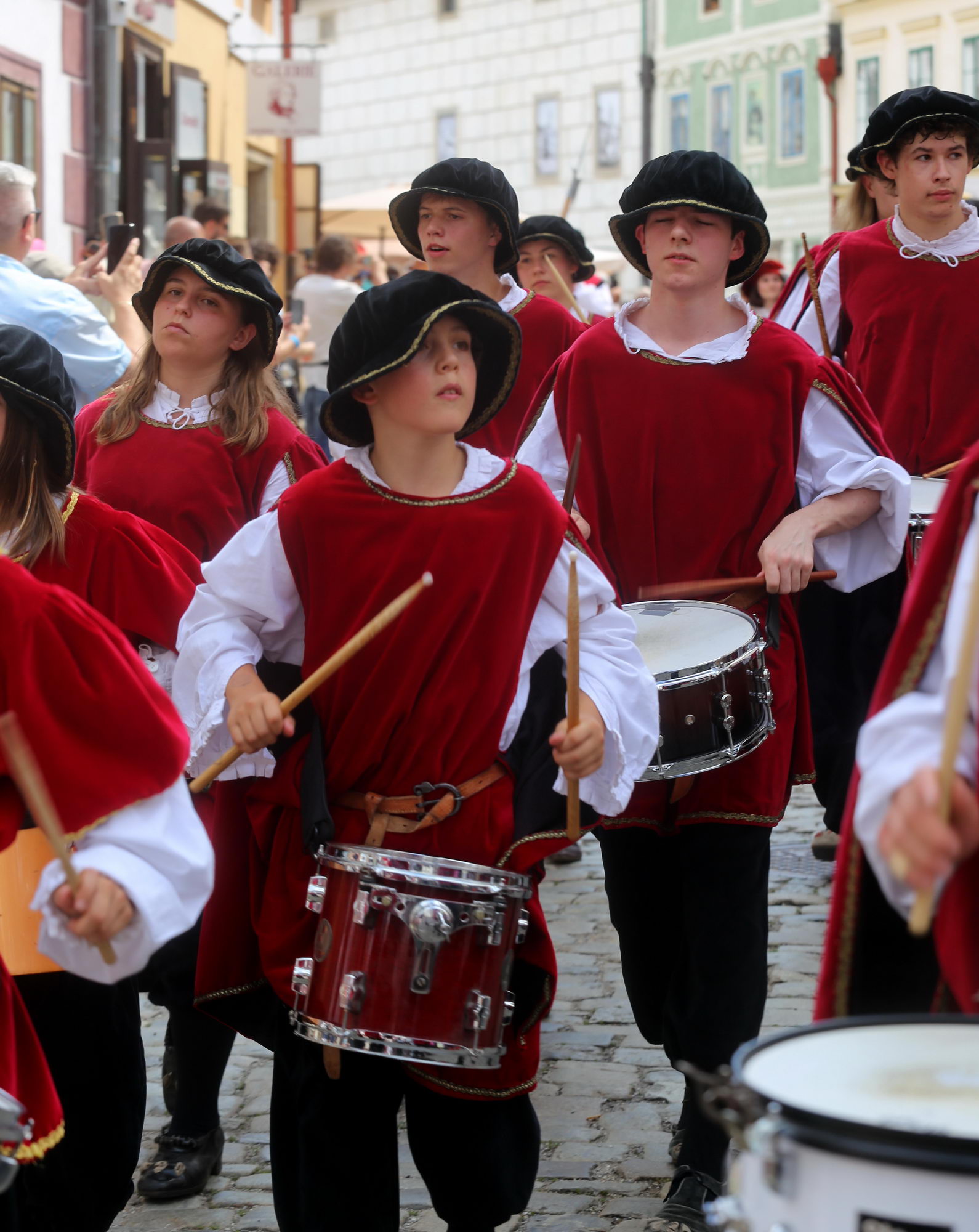
When the musicians appear, I take out my phone one more time, because this simply has to be filmed. By now we are also at the very end of the procession: the common folk, servants, laborers, and villagers. The expensive costumes of nobles and burghers give way to the simpler clothes of ordinary people. And then even those gradually blend into modern clothing, as spectators join the tail end of the parade.
By this point, only the most determined participants still make the climb up to the castle in the oppressive heat. The procession begins to thin out. Many of the medieval characters set their sights on the town’s beer gardens instead.
At ten o’clock in the evening, one final torchlit procession sets off for the castle. There, a brief fireworks display celebrates the equally brief return of the Middle Ages. See you here again next year.



Add comment