


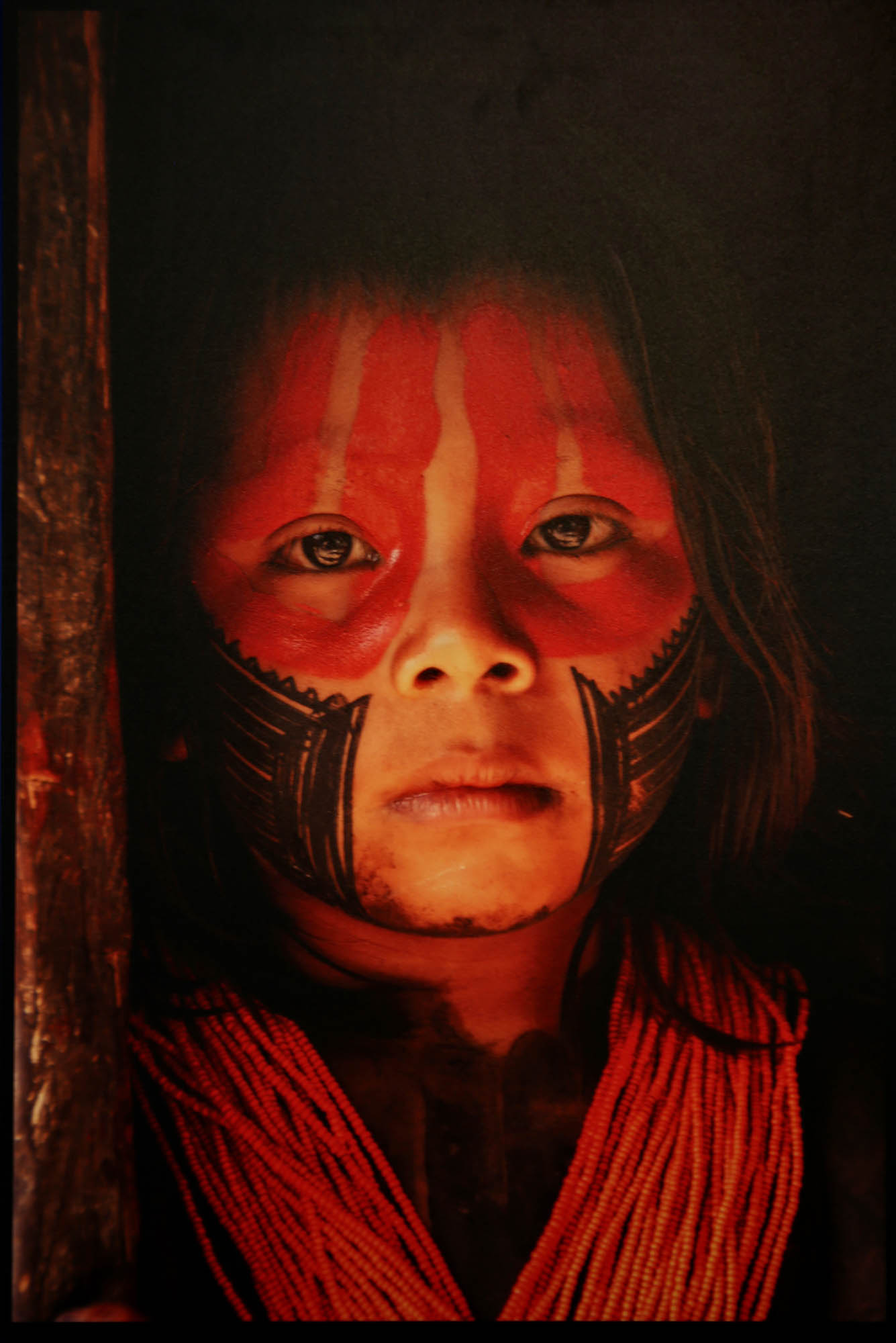
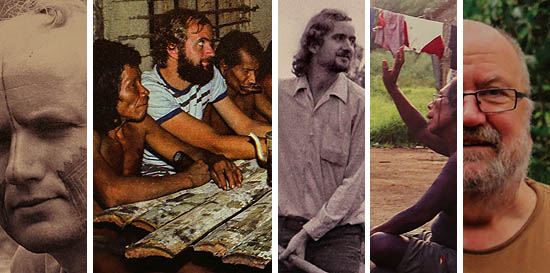
A new photography exhibition opened this week at the Hungarian Museum of Ethnography: The Rituals of Beauty. Feather Adornment and Body Painting in Amazonia. The exhibition presents a small selection from the 47,000-piece photo archive of Flemish anthropologist Gustaaf Verswijver, retired curator of the Royal Museum for Central Africa in Tervuren. Over the course of fifty years (1974–2019), he assembled this remarkable archive while living among the Mebengokre Indians in the Brazilian rainforest. Four years ago, he deposited the collection at the Hungarian Museum of Ethnography, explaining that he believed the material would truly be appreciated and preserved there. This is an extraordinary recognition for Hungarian museology.
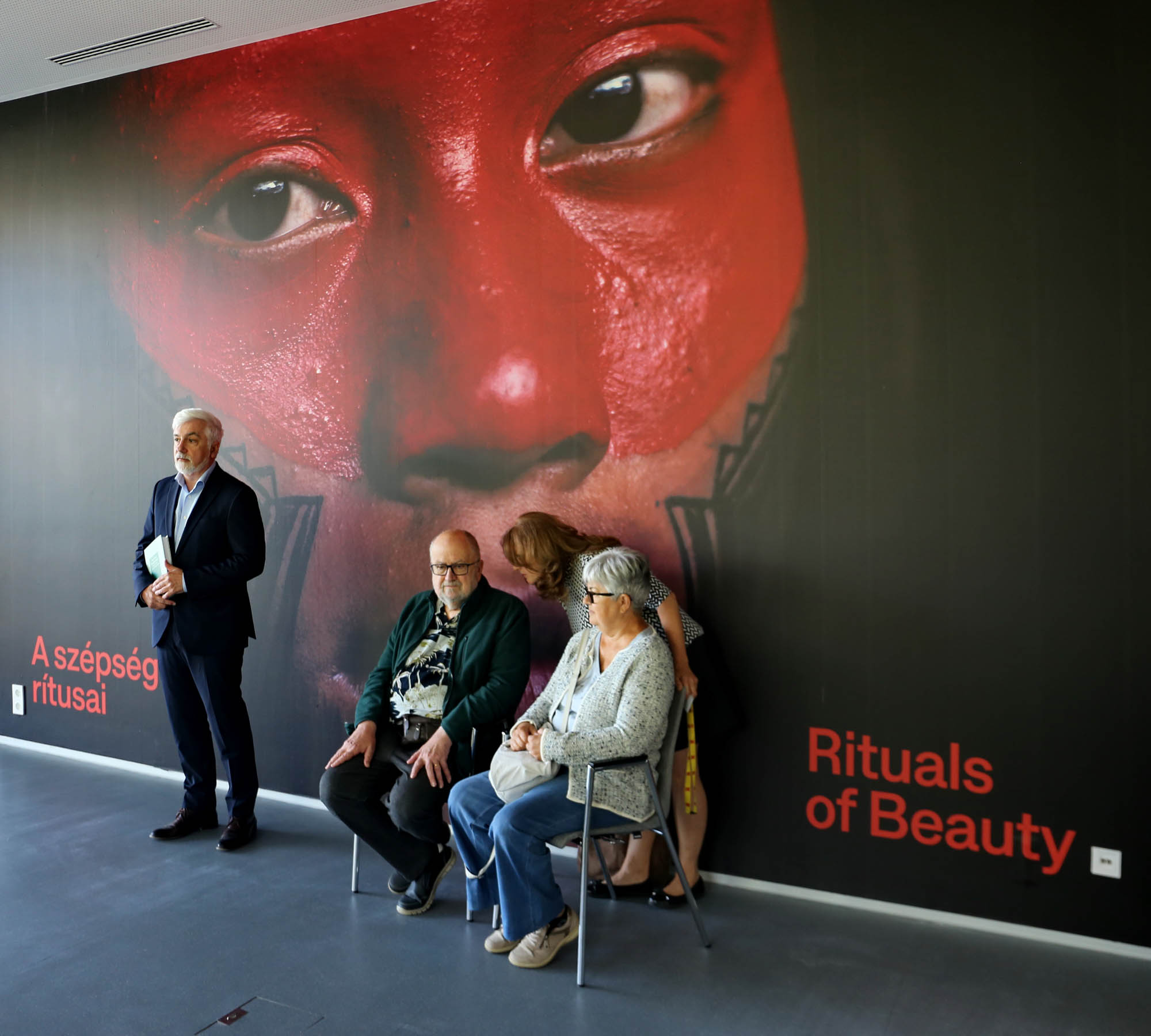 Press conference of the exhibition with the participation of Gustaaf Verswijver and his wife, Martine de Roeck (seated)
What is this exhibition about?
First of all, it is about a people living in the rainforest south of the Amazon, along the Xingu River and its tributaries — the name “Mebengokre” itself means “the people from the source of the waters.” It is about a people who, from their first contact with Europeans in the eighteenth century until the 1950s, were in constant conflict with gold prospectors, adventurers, and land grabbers invading their forests, until eventually the Brazilian government concluded a peace agreement with them, accompanied by certain promises. Since then, they have continued their struggle through political means against the Brazilian government and the ever-new waves of land speculators, gold mines, plantations, and most recently the hydroelectric dams planned on the Xingu River. Through the pan-Indigenous protests organized against these projects — with Sting acting as their international voice — the people briefly emerged into global public awareness.
Secondly, it is about how, despite continuous external pressure and the struggle against it, this people still lives according to its traditional way of life — which, of course, like every traditional culture, is constantly changing through interaction with the outside world. Young people now occasionally leave for the cities, and in one of the final photographs they can already be seen filming their own traditional ceremony on mobile phones.
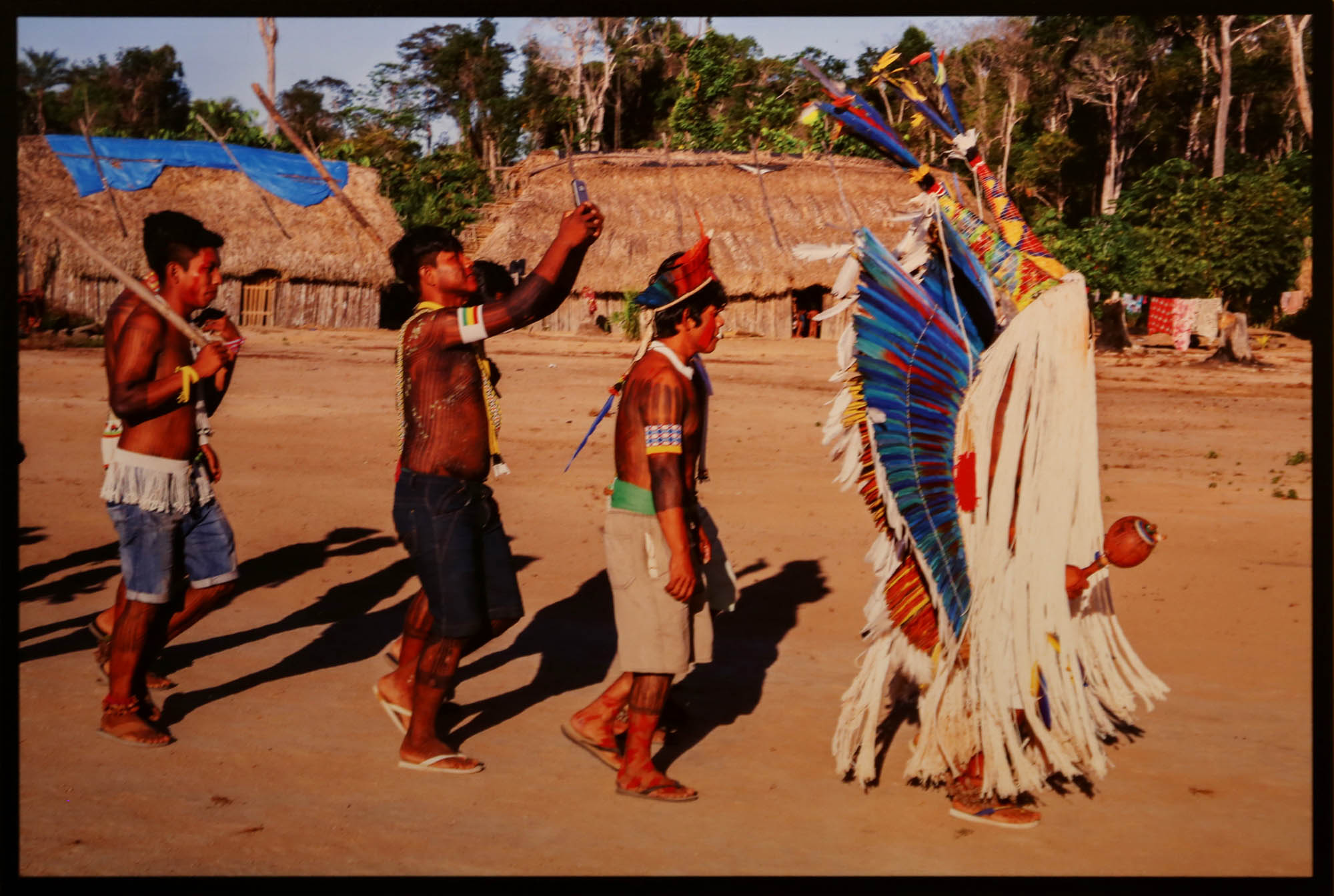
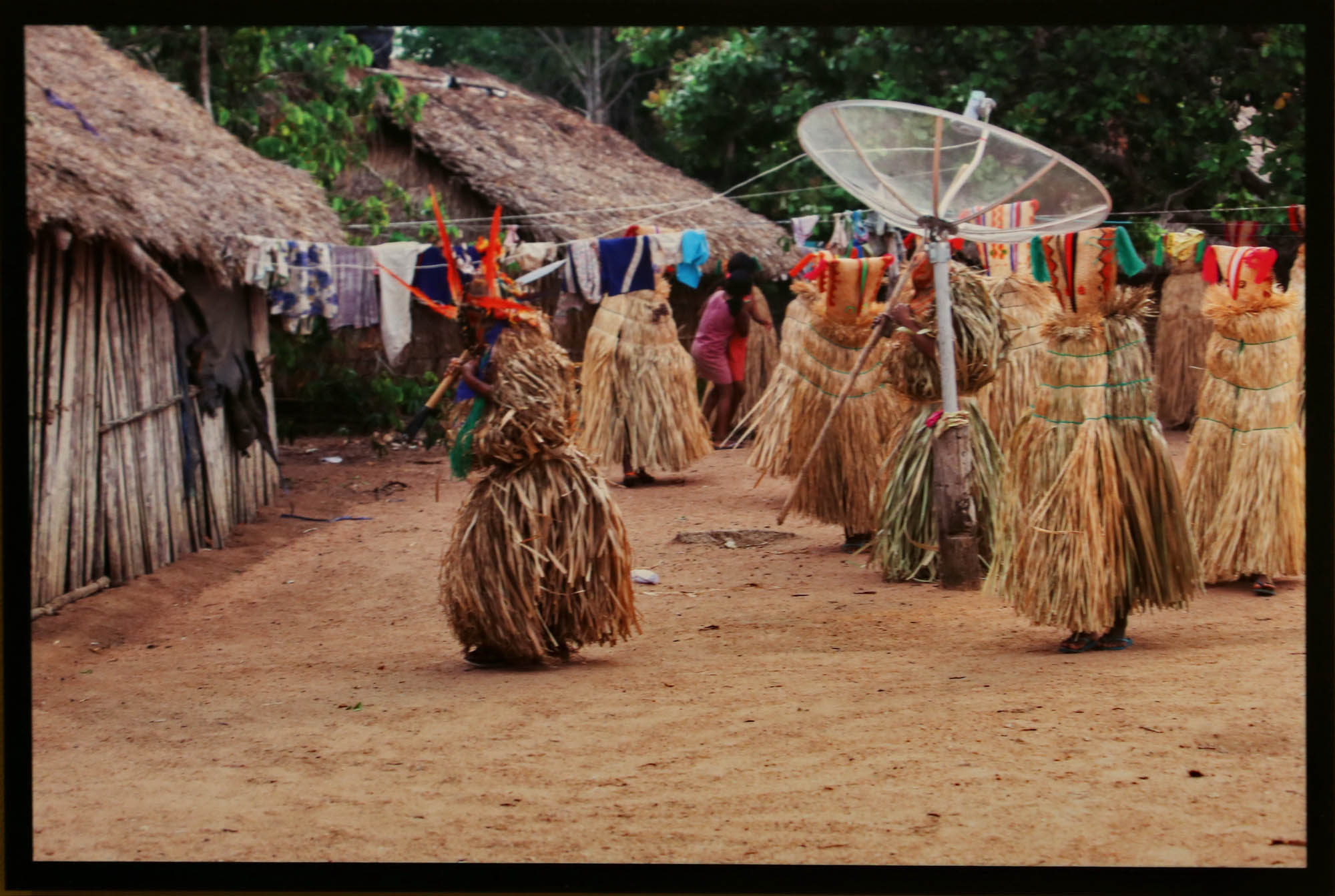
Thirdly, it is about these ceremonies themselves. Nearly fifty years and nearly fifty thousand photographs naturally encompass far more than this, but Gustaaf Verswijver and his Hungarian curators chose to exhibit a particularly striking and spectacular segment of the material — one that beautifully represents the distinctive Mebengokre concept of beauty.
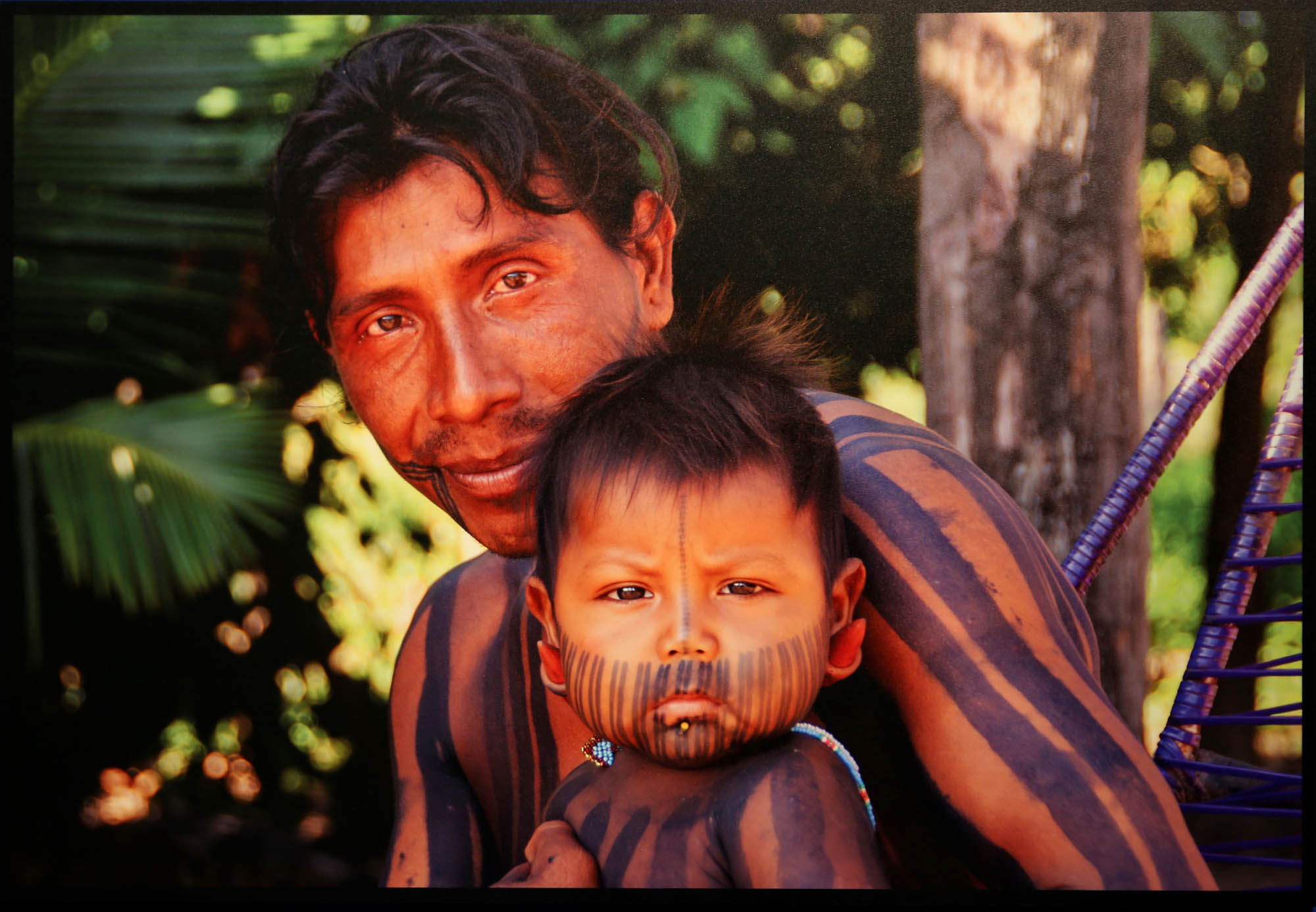
For the Mebengokre — as we know from the work of the American anthropologist Terence Turner, who conducted research among them from 1962 until his death in 2015, taught them to document their own culture, and stood at the forefront of their struggles for their land — beauty, mereremex, is a culturally shaped condition created through the participation of the community. A human being “is not born complete”: the human body must be culturally fashioned. A person is not beautiful merely because of their own individual qualities, as in Western cultures, but because from childhood onward they gradually become integrated into the communal order, increasingly identify with it, and through participation in rituals — together with the body painting and feather adornments prepared for them — express both their alignment with the cosmic order and their own unique place within it. This beauty manifests itself most powerfully not in the individual body, but in the collective presence of synchronized bodies: in the communal sight and sensation of people moving rhythmically together, painted with similar yet still individual patterns, and shining with feathers.
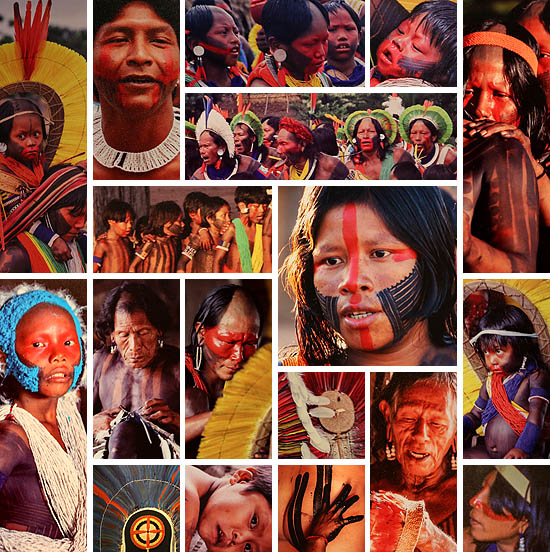
A few days after birth, Mebengokre children are given names by shamans, who receive them through inspirations coming from the forest, wild animals, and spirits. Among these names there are ordinary names and so-called “beautiful” or “great” names. The latter must be gradually activated through communal ceremonies between the ages of two and eight. These are known as the “beauty-expanding” rituals, during which the child is made “beautiful” through body painting, feather adornments, songs, dances, and ceremonial roles — fashioned into a socially complete human being. Vanessa Lea, one of the foremost scholars of these ceremonies, calls this process the “fabrication of beautiful people.” These rituals, which sometimes continue for months, involve the participation of the entire community and thus almost permanently permeate everyday life.
Fourthly, this exhibition is also about the man who spent fifty years studying this people. Returning to the same place for half a century, spending a total of 40–50 months there, forming deep personal relationships, and being ritually adopted into the family of a village chief — all this inevitably transforms the researcher, as well as the way he documents the people among whom he lives.
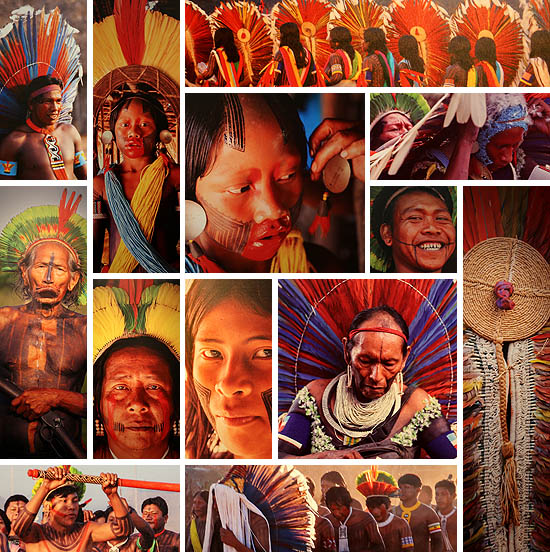
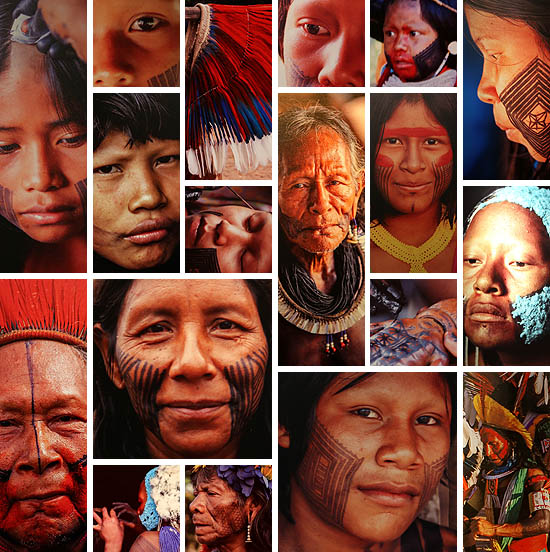
The photographs on display therefore do not merely document the exotic ceremonies of an exotic people, but persons. Not only the portraits — it is already unusual for an anthropological documentation to contain so many portraits — but even in the images of communal ceremonies, everyone possesses their own face, their own individuality. To paraphrase Robert Capa, Gustaaf Verswijver was close enough for his photographs to be good enough: close enough to see and reveal, beyond the ceremonies, feather adornments, body painting, unfamiliar facial types, and surroundings, the human being and the person. Or, more precisely, to see and reveal them in such a way that both he and we — participants in his Western culture — perceive them as persons, as people like ourselves. And beyond revealing and understanding all forms of otherness, perhaps this is the ultimate and most beautiful task of anthropology.



Add comment