

The art of the Armenian Middle Ages is a hidden art. There are no monumental sculptures, very few frescoes — and those mostly created under foreign, Orthodox or Western influence — and there are neither icons nor panel paintings. Armenian art flourished in two genres, both cryptic and difficult to access. Manuscript illumination, whose vividly colored scenes with unusual iconography are enclosed within codices preserved in distant libraries. And the khachkars standing around every church, which, at first glance, all seem the same: a cross carved into an upright rectangular stone slab, surrounded by vegetal scrollwork.
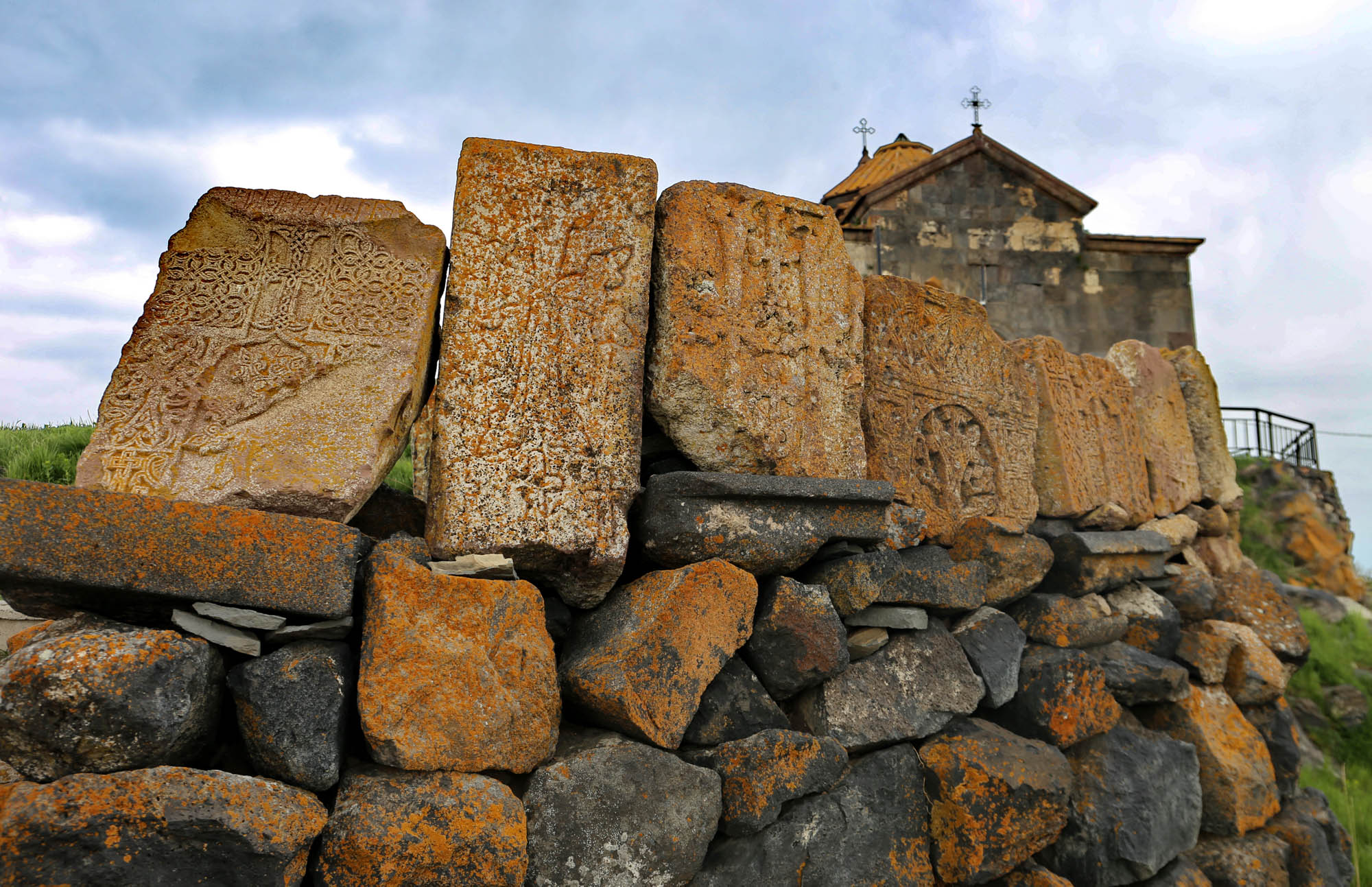
But only seemingly so. The subtle stylistic and iconographic differences between khachkars tell long and ramified stories about artistic, theological, liturgical, and regional schools, patrons, intentions, historical turning points, and the communities that erected them and regarded them as their transcendent advocates. The images of the manuscripts also overflow from the codices and appear on the carvings, together bearing witness to a visual and imaginative world that feels both foreign and strangely familiar. So much so that the history of the Armenian Middle Ages could almost be told entirely through khachkars and other carvings, as well as through manuscript miniatures, despite the immense destruction they suffered during the tragedies that befell the Armenian people.
This is what I attempt in this series, by analyzing individual khachkars, tombstones, and miniatures. The individual posts build upon one another, often referring back to information already discussed earlier. Their steadily growing table of contents appears in the “Armenian history inscribed in images” section of the Caucasus overview post, in chronological order.
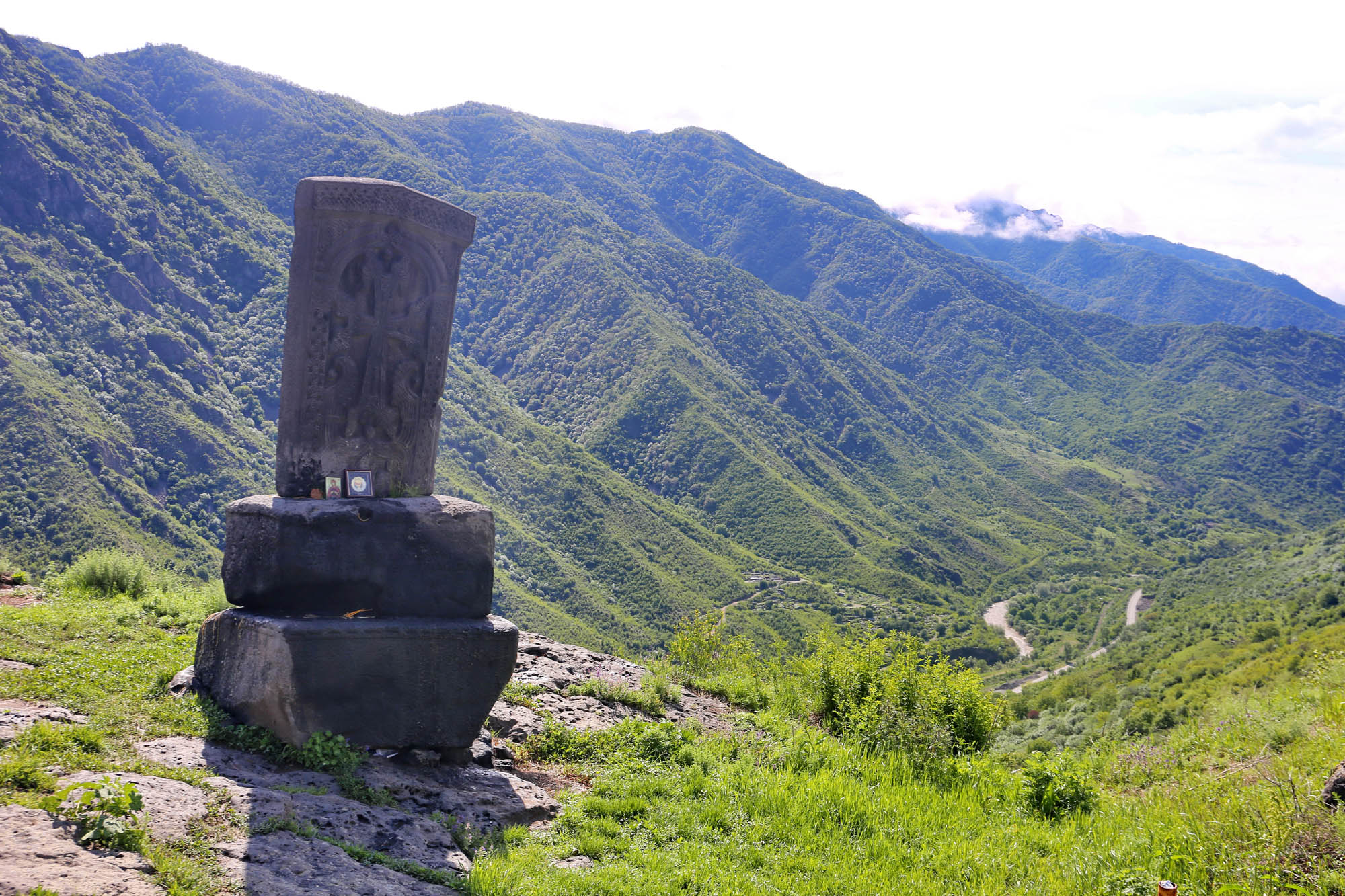
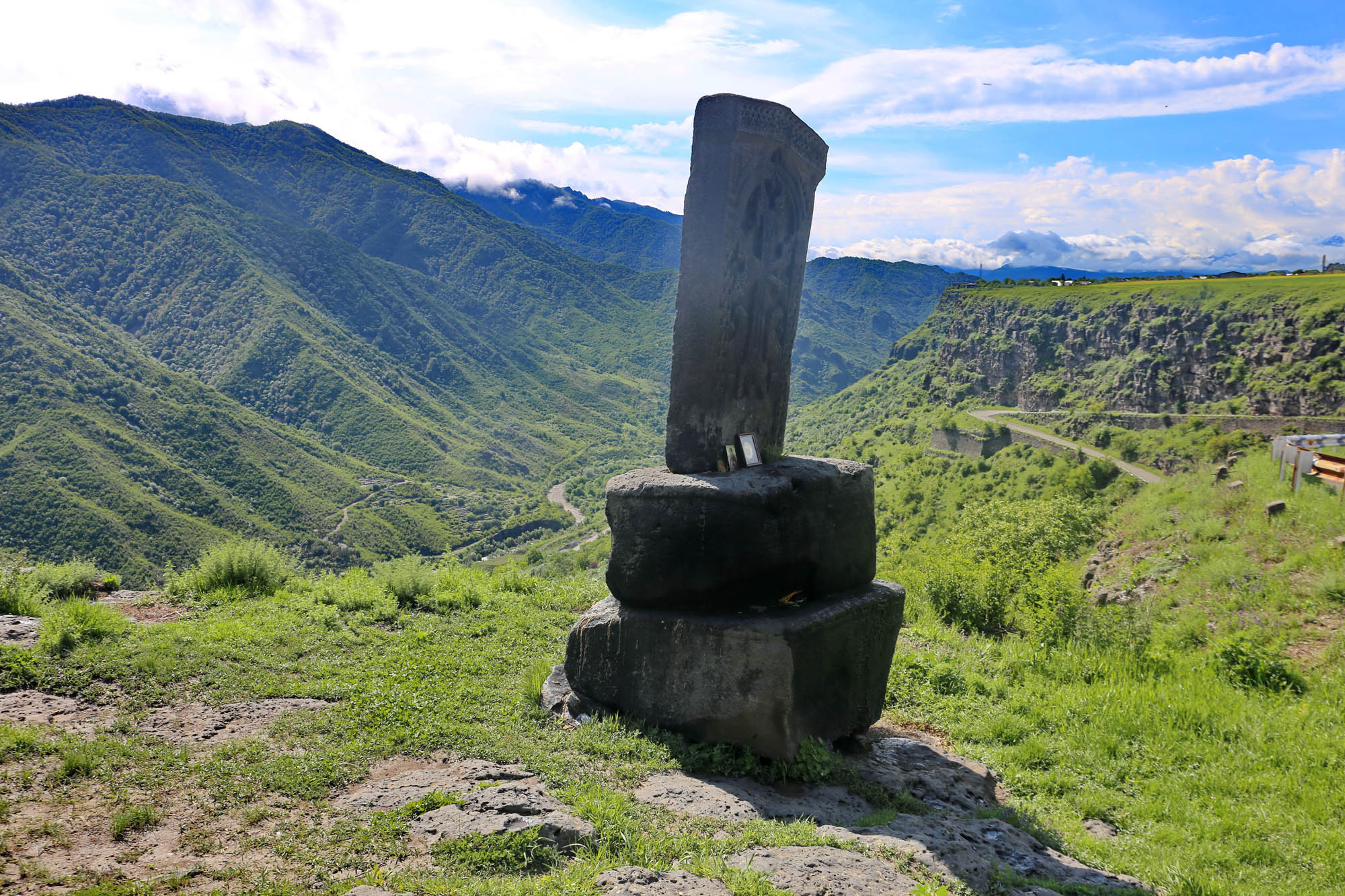
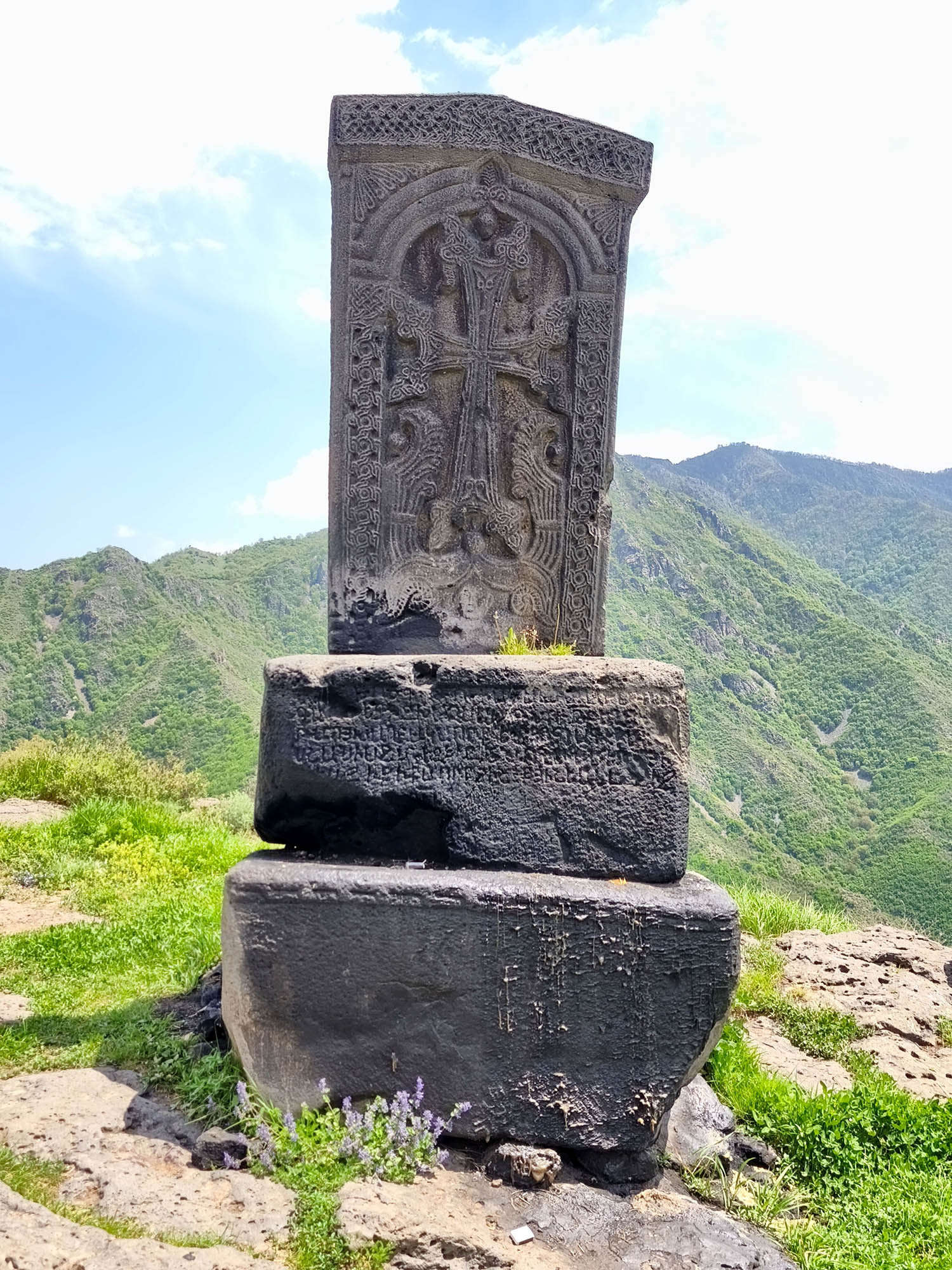
As the road leading toward the monastery of Odzun climbs from the canyon of the Debed River onto the plateau, a robust, slightly stooping khachkar stands by the roadside, with its back to the canyon and facing the road.
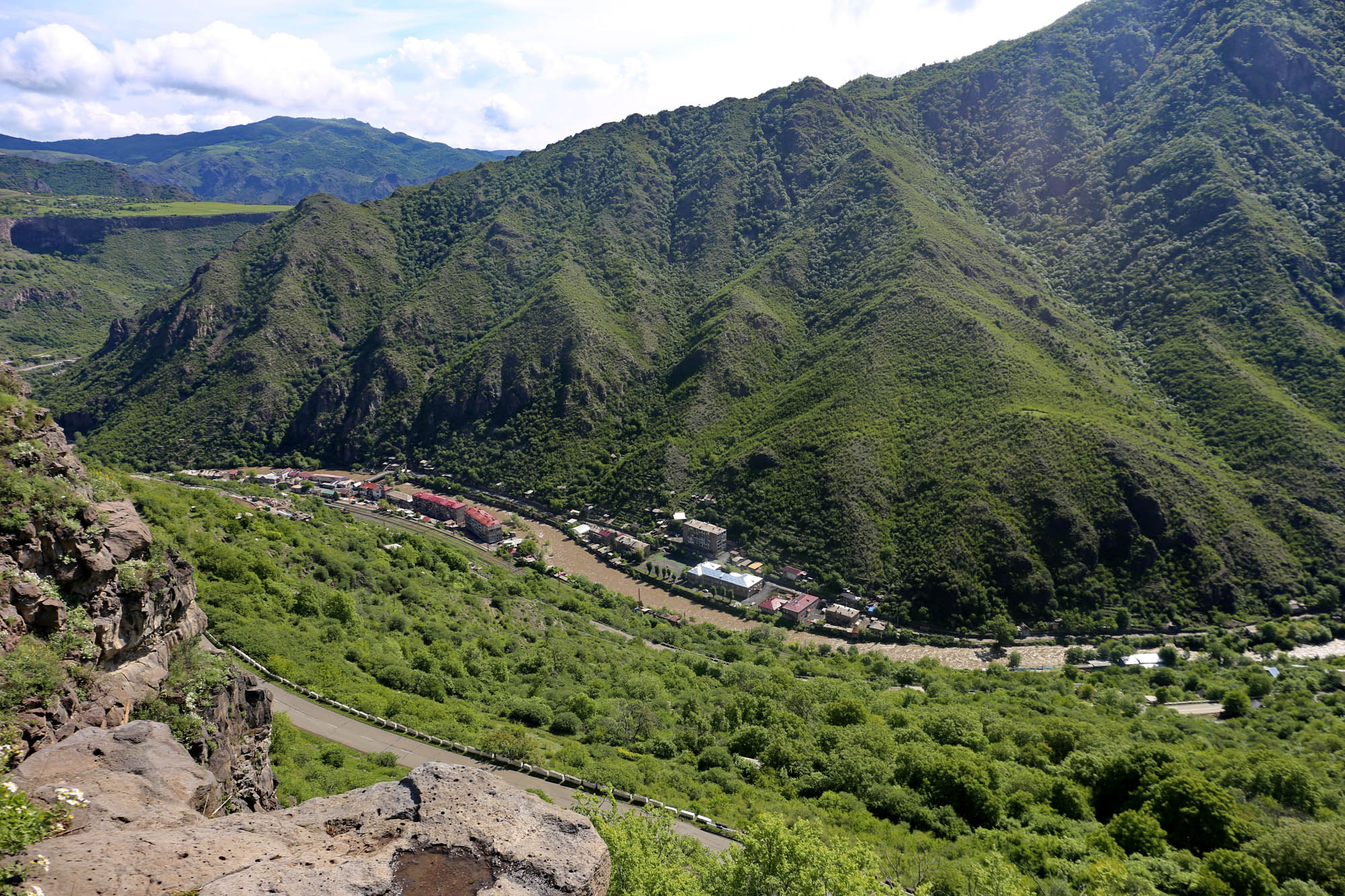
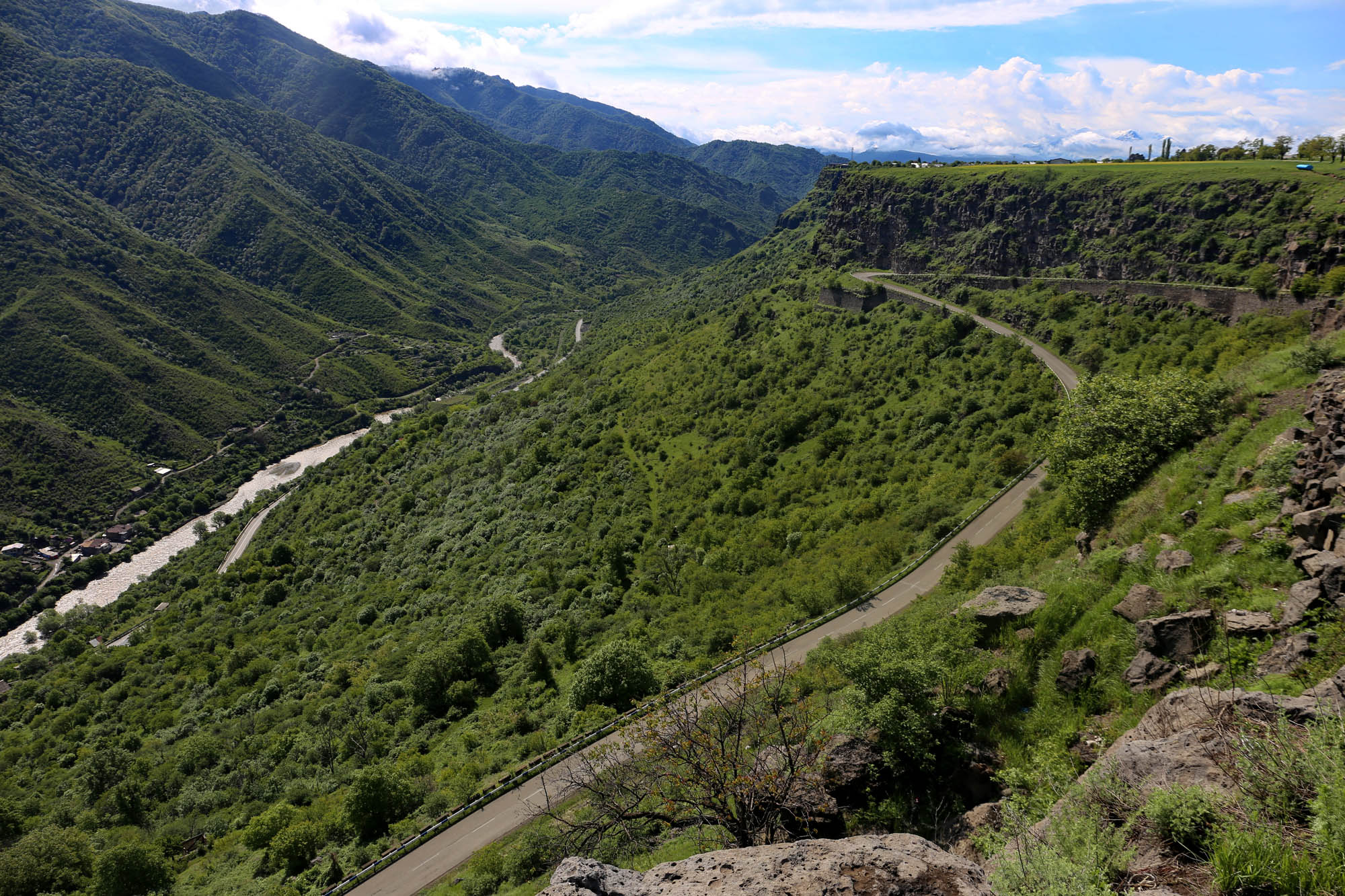
Such roadside khachkars standing on rocky cliffs are called “guiding” or “protective” crosses by the locals. According to legend, these stones emit an almost invisible spiritual light at night that protects travelers from falling into the abyss and from attacks by bandits.
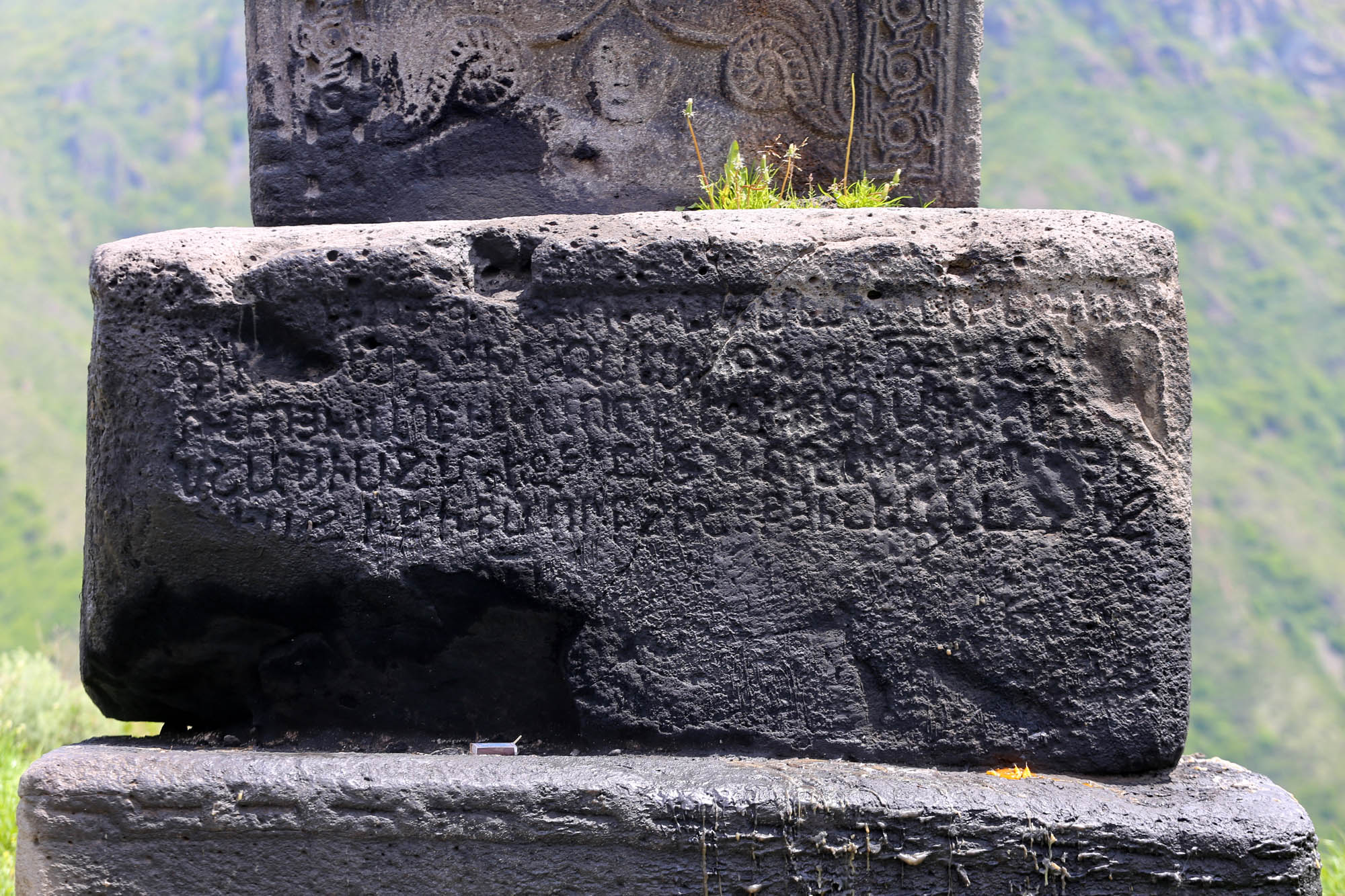
The base of the cross is a massive stone block bearing a multi-line inscription in Classical Armenian (grabar), carved in the erkatagir (“iron script”) style, the uncial script of early Armenian monuments. The clearly legible part reads as follows:
ԹՎ[ԻՆ] ՉԷ (1258). ԿԱՆԳՆԵՑԱՒ ԽԱՉՍ ԲԱՐԵԽԱՒՍ ՏԷՐ ՅՈՎՀԱՆՆԻՍԻՆ – “In the year 707 [Armenian era = 1258], this cross was erected as the intercessor of Ter Hovhannes.”
The word բարեխոս barekhos literally means “intercessor” or “advocate.” In Armenian thought, a consecrated khachkar is not merely a memorial monument but a kind of spiritual gateway that continually prays before God for the forgiveness and salvation of the donor.
Commissioning such a richly executed monumental cross was extremely expensive. Ter Hovhannes (Father John) was probably not a simple village priest but a wealthy and influential ecclesiastical leader — perhaps an abbot or a noble-born prelate — closely connected to the Zakarian princely family that ruled the Lori region and served as the chief commanders of Queen Tamar of Georgia.
The year 1258 already belongs to the age of Mongol conquest in Armenia. The country did not resist the Mongols but became their vassal, paying tribute and providing auxiliary troops. In return, the Mongols granted protection and tax exemptions to certain important monasteries. The patron Ter Hovhannes was likely a high-ranking church leader who was still able, in this period, to maintain the economic strength of his monastery. The fact that the inscription records not the princes’ names but his own shows that, by this time, the clergy had become the principal force preserving local autonomy.
The cross stands on the road leading toward the basilica of Odzun. In this period, Odzun was one of the most important intellectual and educational centers of Armenia and even served as a refuge for the head of the Armenian Church during the Arab invasions of the 7th century. Ter Hovhannes, however, probably did not serve there, but rather at the Monastery of Horomayr, built in a dramatic location among the cliffs somewhat farther away, which the Zakarian princes were expanding precisely during these decades (its main church of Saint Mark was consecrated in 1187). This was the monastery’s golden age, when the monastic community actively erected monuments and khachkars across the plateau. And while the builders of Odzun used pinkish tuff stone, at Horomayr they employed the same grey-black porous basalt from which the khachkar of Ter Hovhannes was carved.
According to Armenian theology, a cross becomes “alive,” a mediator and bearer of grace, only through a church consecration ritual. In the 13th century, when Ter Hovhannes erected this cross, the ceremony consisted of the following stages:
• In the presence of priests and faithful, the stone was washed with water and wine. The wine symbolized the shed blood of Christ; this is why many inscriptions refer to a khachkar as having been “washed with holy blood.”
• The clergy chanted biblical passages and hymns praising the power of the Cross and its protection against evil.
• “Angelic anointing” (ocum): The climax of the ritual was the anointing with holy oil. The bishop or leading priest anointed the four endpoints of the cross and the central rosette (the wheel of eternity) with consecrated oil. This act elevated the khachkar to the same sacred status as a church altar, making it a holy place before which people could pray and light candles.
• Matagh (ritual communal feast): After the consecration, the patron hosted those gathered, giving thanks for the monument and praying together for the forgiveness of the donor’s sins.
At the foot of khachkars one often finds the remains of rooster sacrifices: tied legs, feathers, sometimes even a rooster’s head. Such ceremonial sacrifices (Matagh) are performed as acts of thanksgiving: for recovery from illness or accident, for the safe return of a conscripted soldier, or in memory of the dead. The rooster is carried three or seven times around the khachkar or church, then fed blessed salt (the ritual’s name itself means “salt offering”), after which it is slaughtered and its blood used to draw a cross on the foreheads of those present. The remains are left to the earth, while the meat is taken away for cooking. It may be prepared only with salt — the sanctified ingredient — and besides the hosts, portions must also be given to seven poor families, neighbors, or pilgrims. Before sunset on the same day, all of it must be consumed.
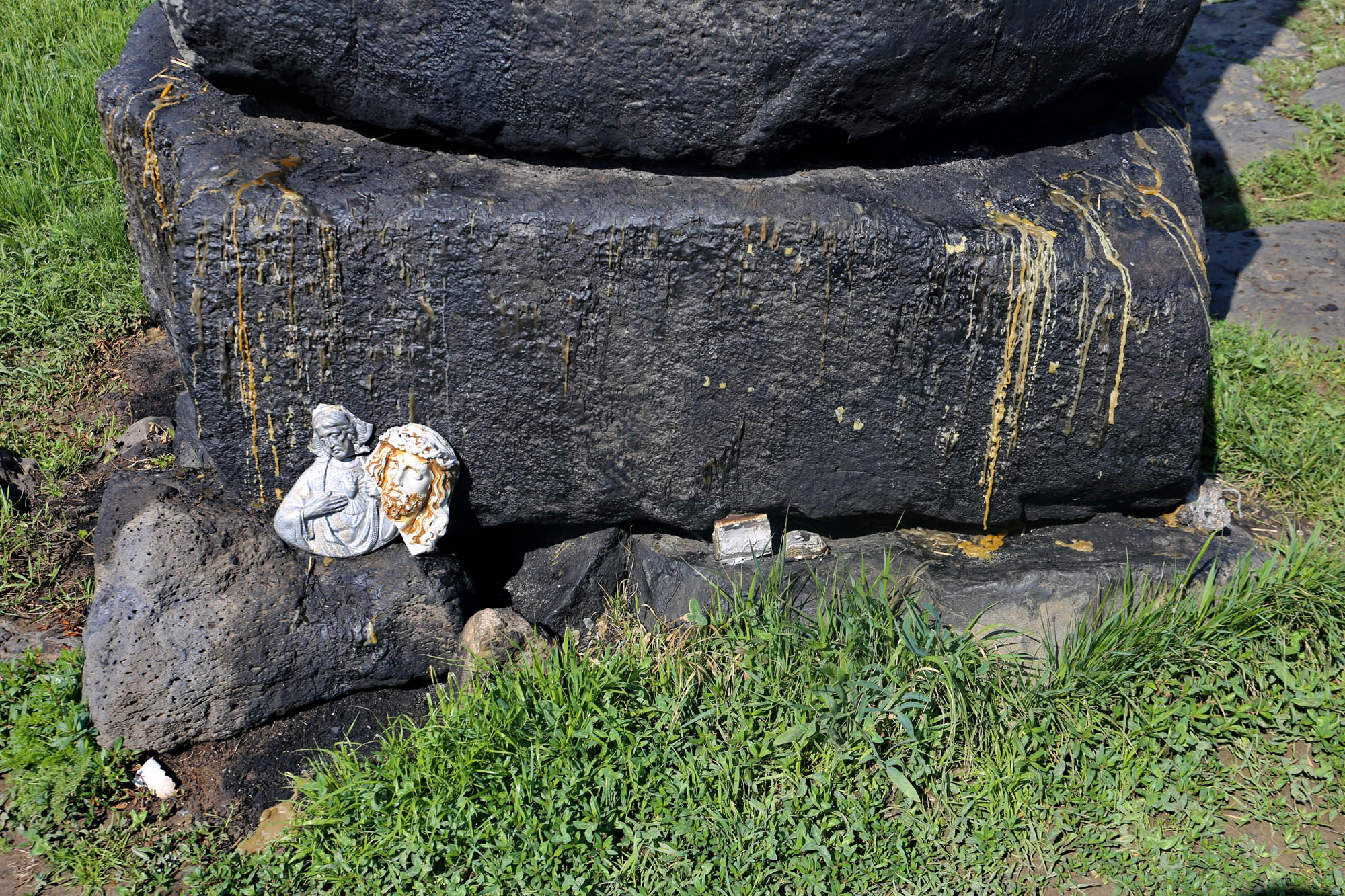 The faithful bring holy images and sacred objects to the cross and light candles upon it as if before an altar. From the most recent rooster sacrifice, only a few feathers remain today.
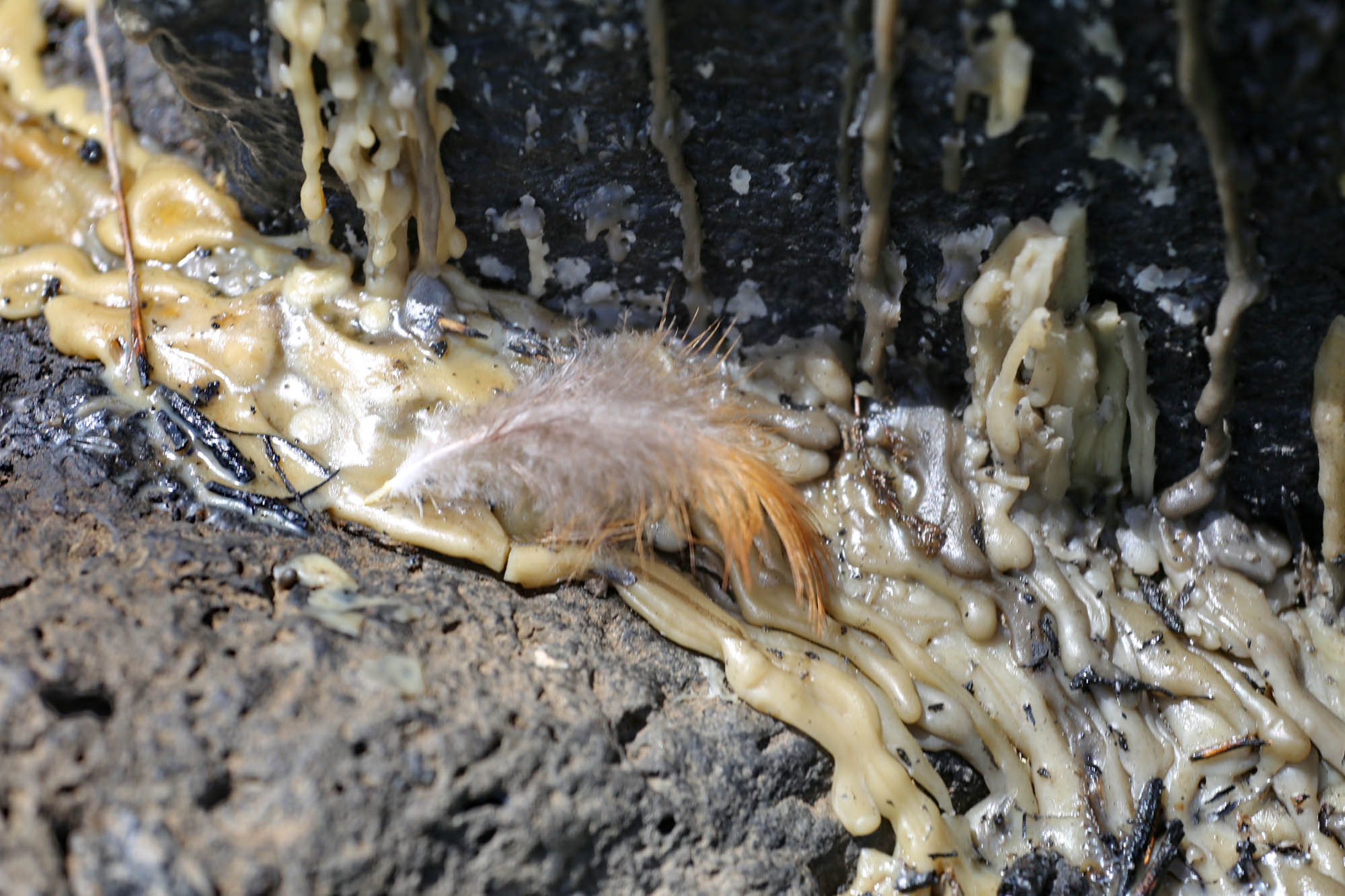
In the countryside, the custom of Matagh is still alive, though urban Armenians and members of the Armenian diaspora returning home often feel uneasy about it. They prefer instead to buy meat from a supermarket and organize a communal feast from that.
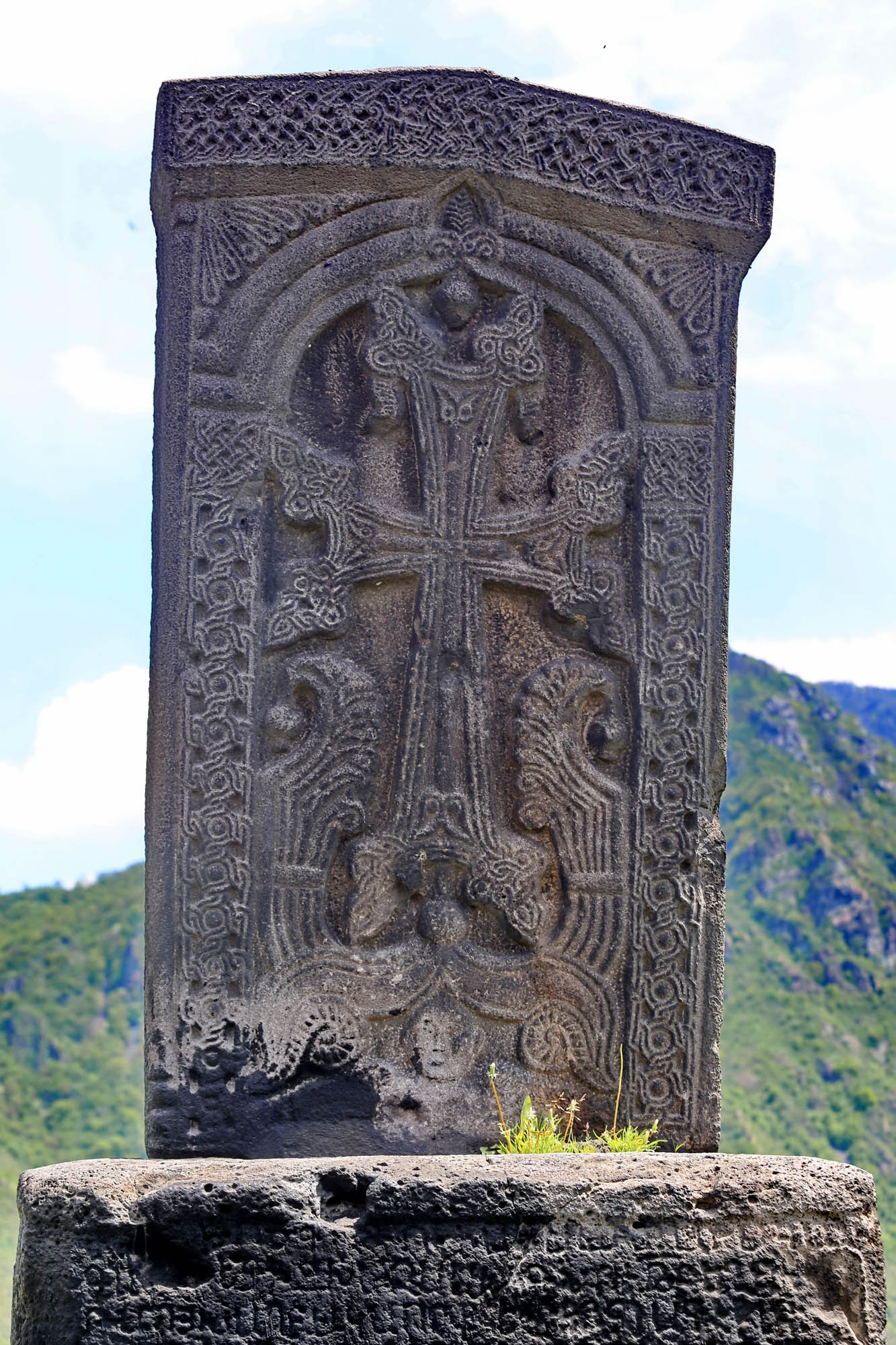
The only figurative representation on the khachkar of Ter Hovhannes is a human head at the base of the cross. This is the skull of Adam, above which, on Golgotha — the Hill of Skulls — the Cross of Christ was erected, whose dripping blood redeemed humanity from Adam’s sin. In the same way, the faithful here anoint their foreheads with the blood of the sacrificed rooster so that it may protect them from misfortune.
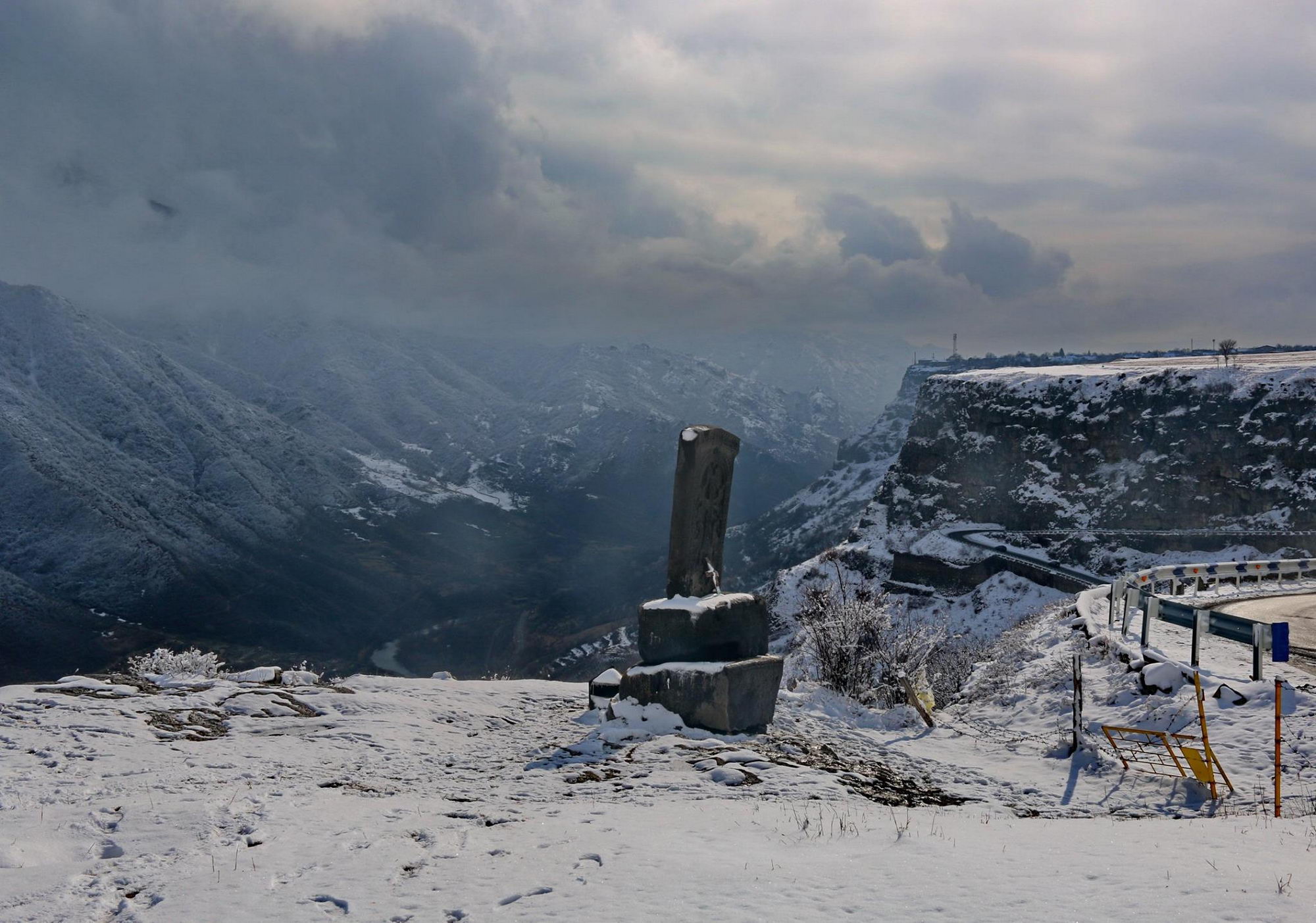 The khachkar in winter



Add comment