


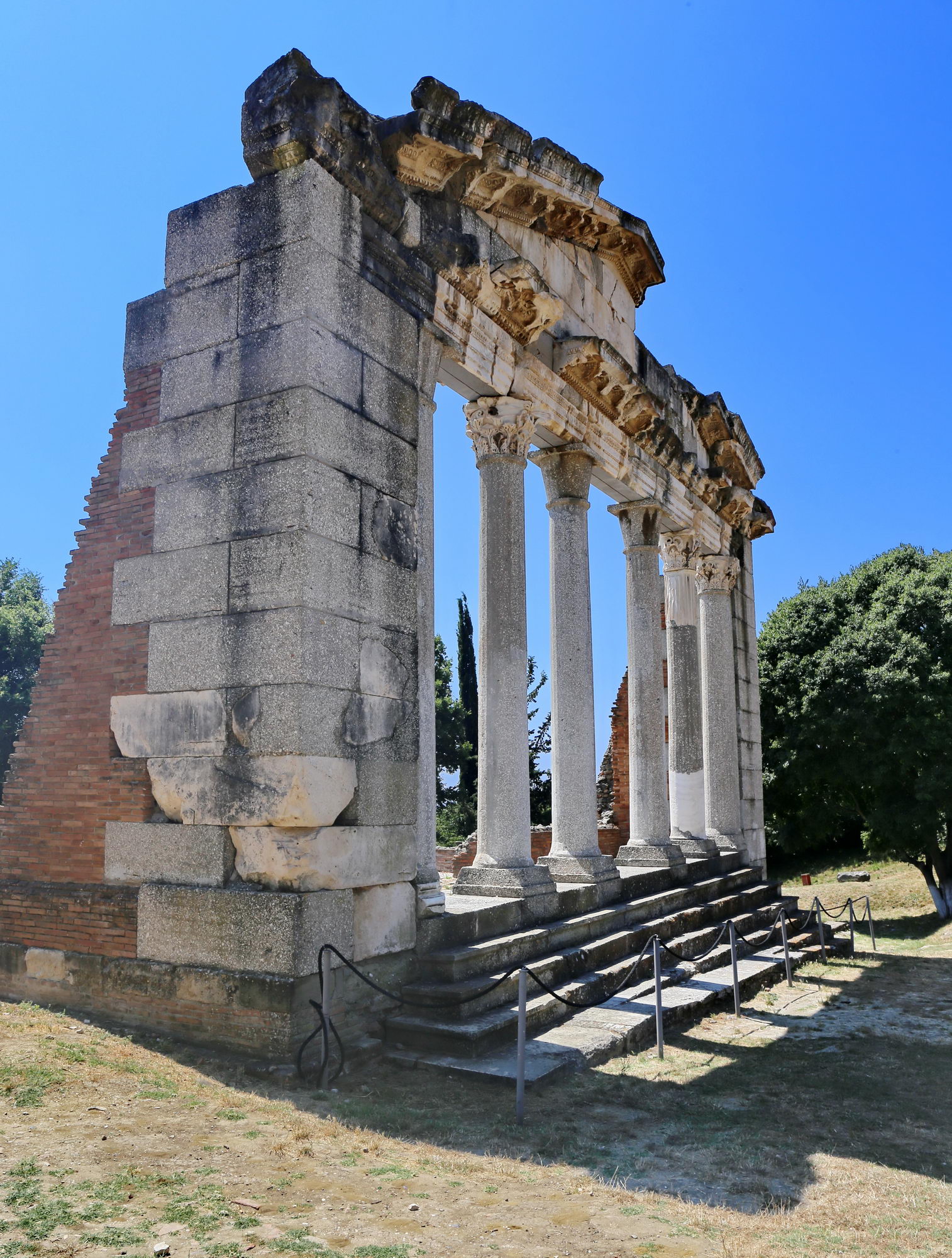
Ancient Apollonia in Albania was one of the most important port cities and cultural centres of the ancient Mediterranean world. Its significance is well illustrated by the fact that Cicero described it as a magna urbs et gravis, a “great and venerable city,” and that Octavian—the future Augustus—studied here before returning to Rome upon hearing of Caesar’s assassination. After becoming emperor, he granted the city exemption from taxes, which further increased its prosperity.
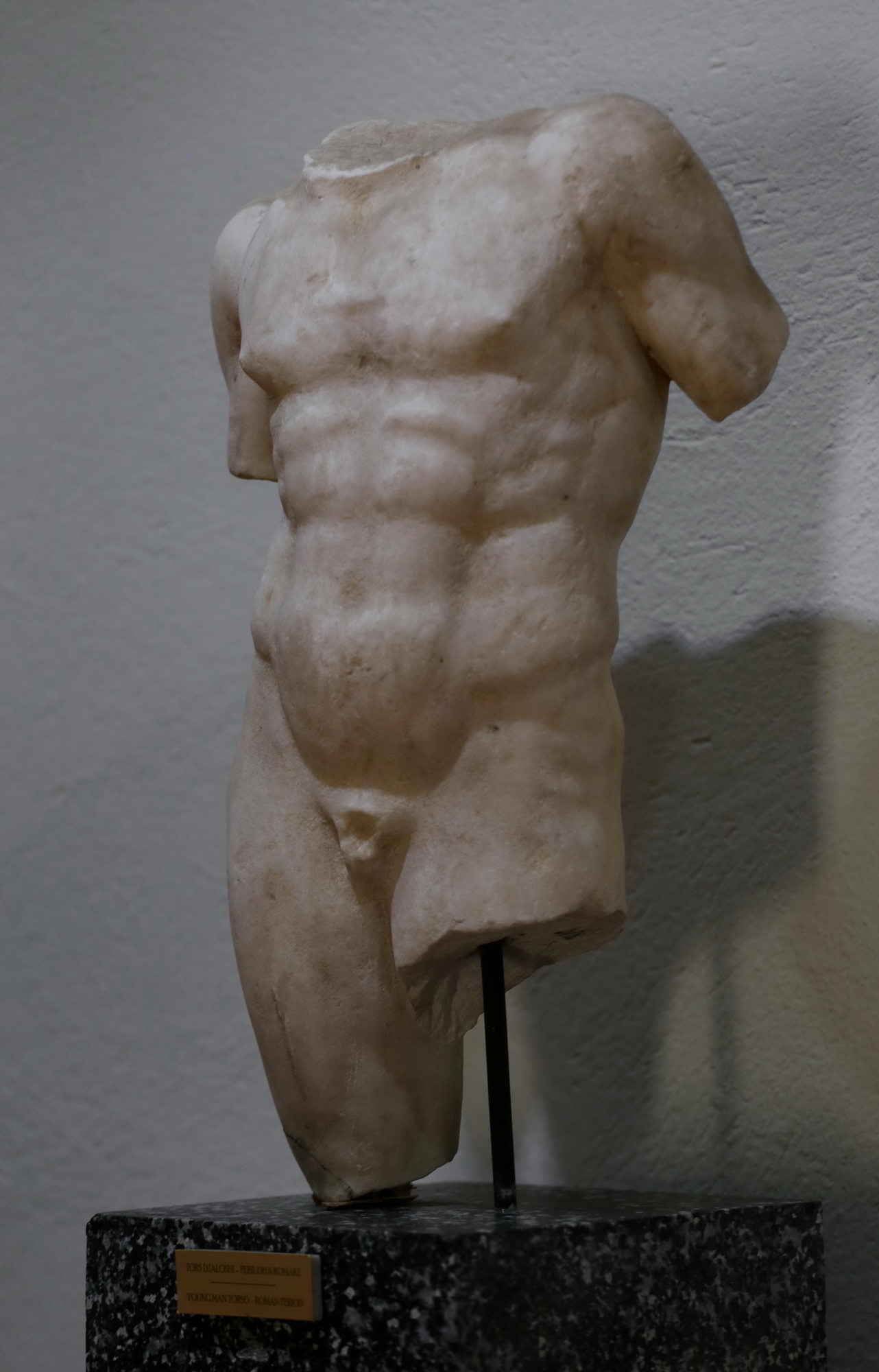
This explains why the lapidarium of what is today a relatively small archaeological site preserves stone carvings of such extraordinary refinement, testifying both to master craftsmen and to a wealthy city.
The lapidarium also preserves many funerary stelae from the cemetery of what was once a city of sixty to seventy thousand inhabitants. Among them is a tall, narrow grave stele from the third century BC whose iconography is unique in the entire corpus of surviving ancient monuments. It depicts the deceased descending from the world of the living into the afterlife, leaving the mourners behind and proceeding under the guidance of Hermes and Charon toward the judge of the Underworld.
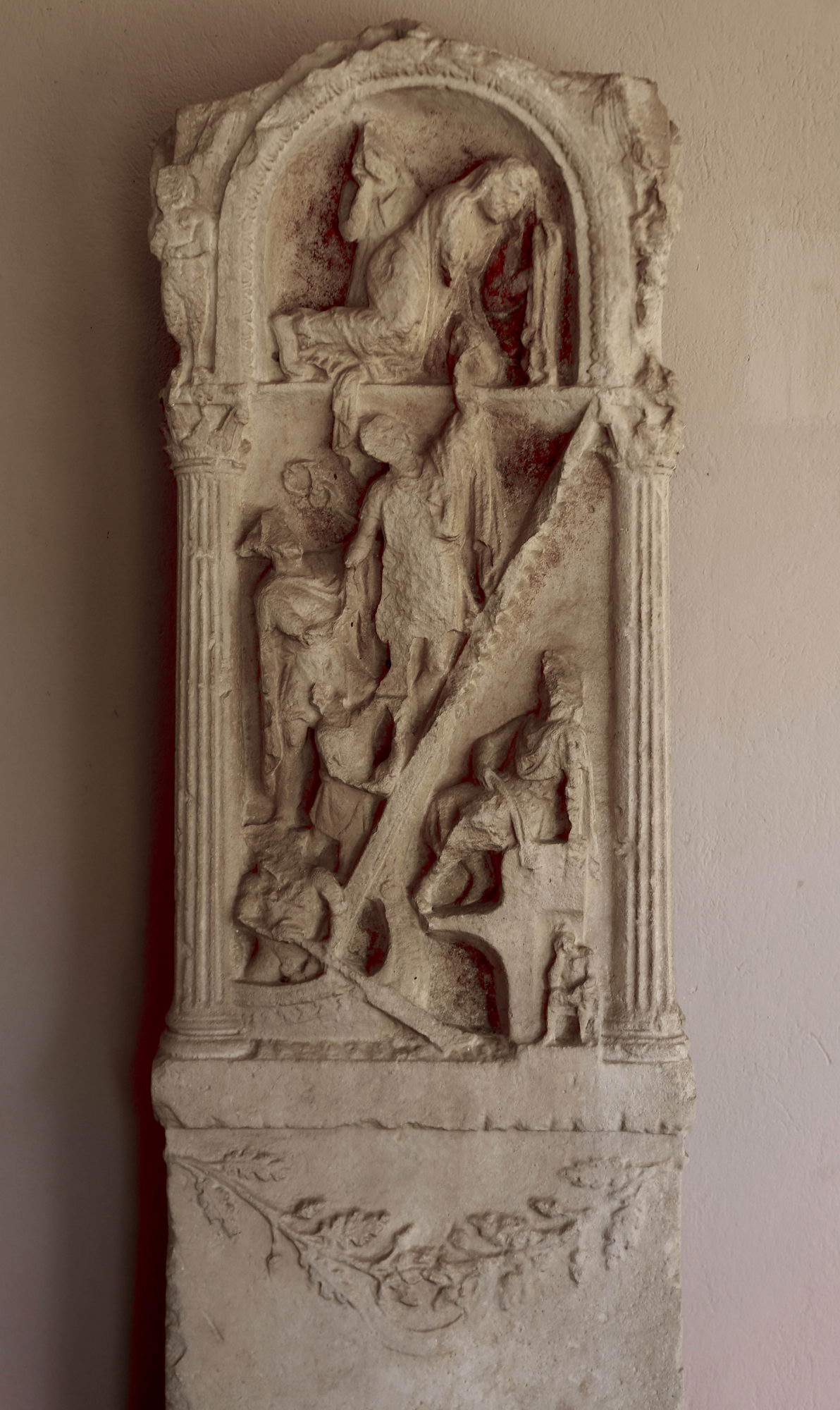
The form of the stele, framed by columns and crowned with an arched niche, is known in the scholarly literature as a naiskos (ναΐσκος), or “little temple.” This type became popular in Apollonia from the third century BC onward, replacing the earlier stelae with straight pediments. Along with many other details, this feature dates the monument to the third century BC, when Apollonia was still a Greek enclave within Illyrian territory.
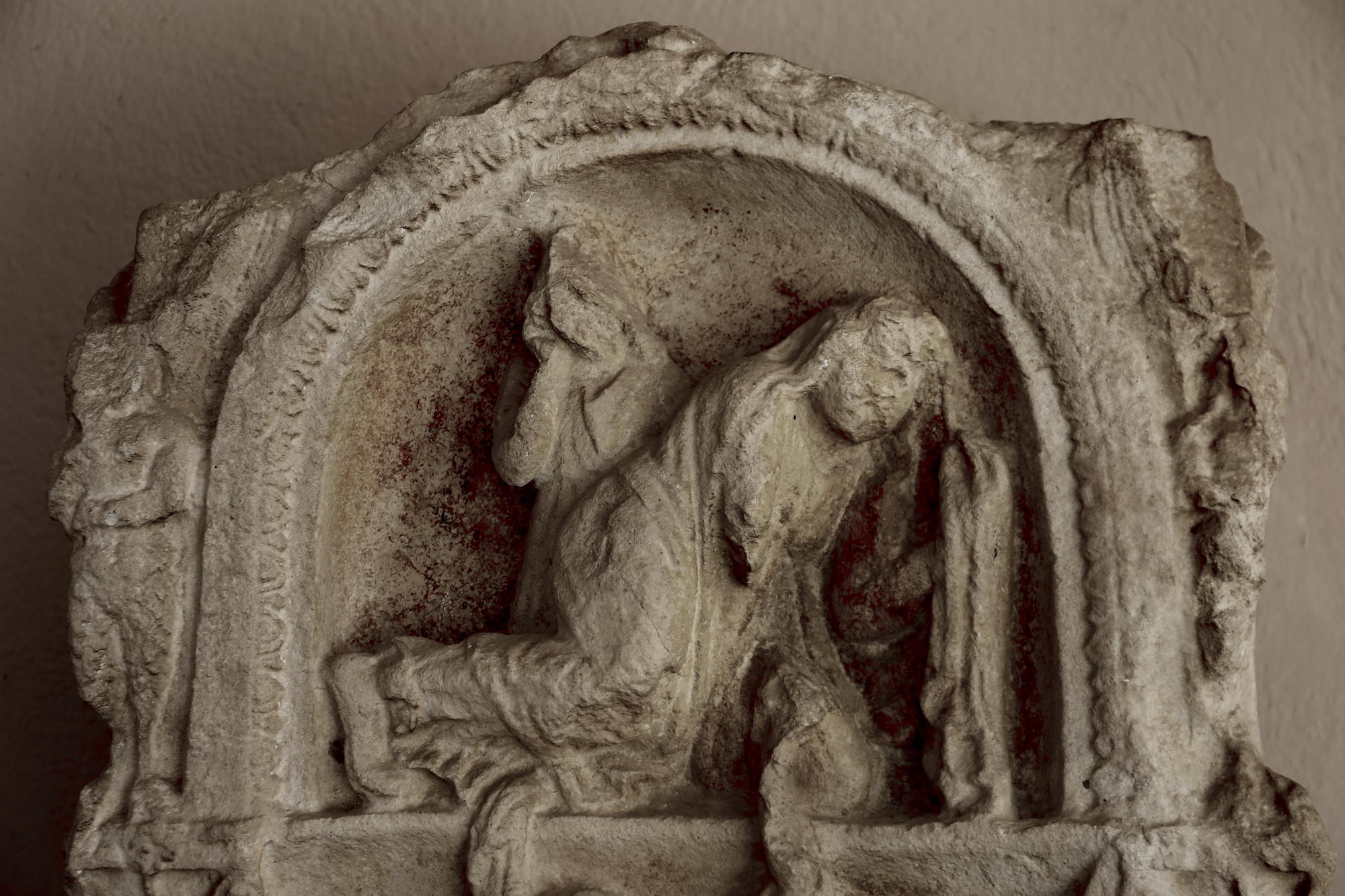
Within the niche kneel two women weeping in mourning, their gaze directed downward toward the place where, according to the relief, the deceased has disappeared.
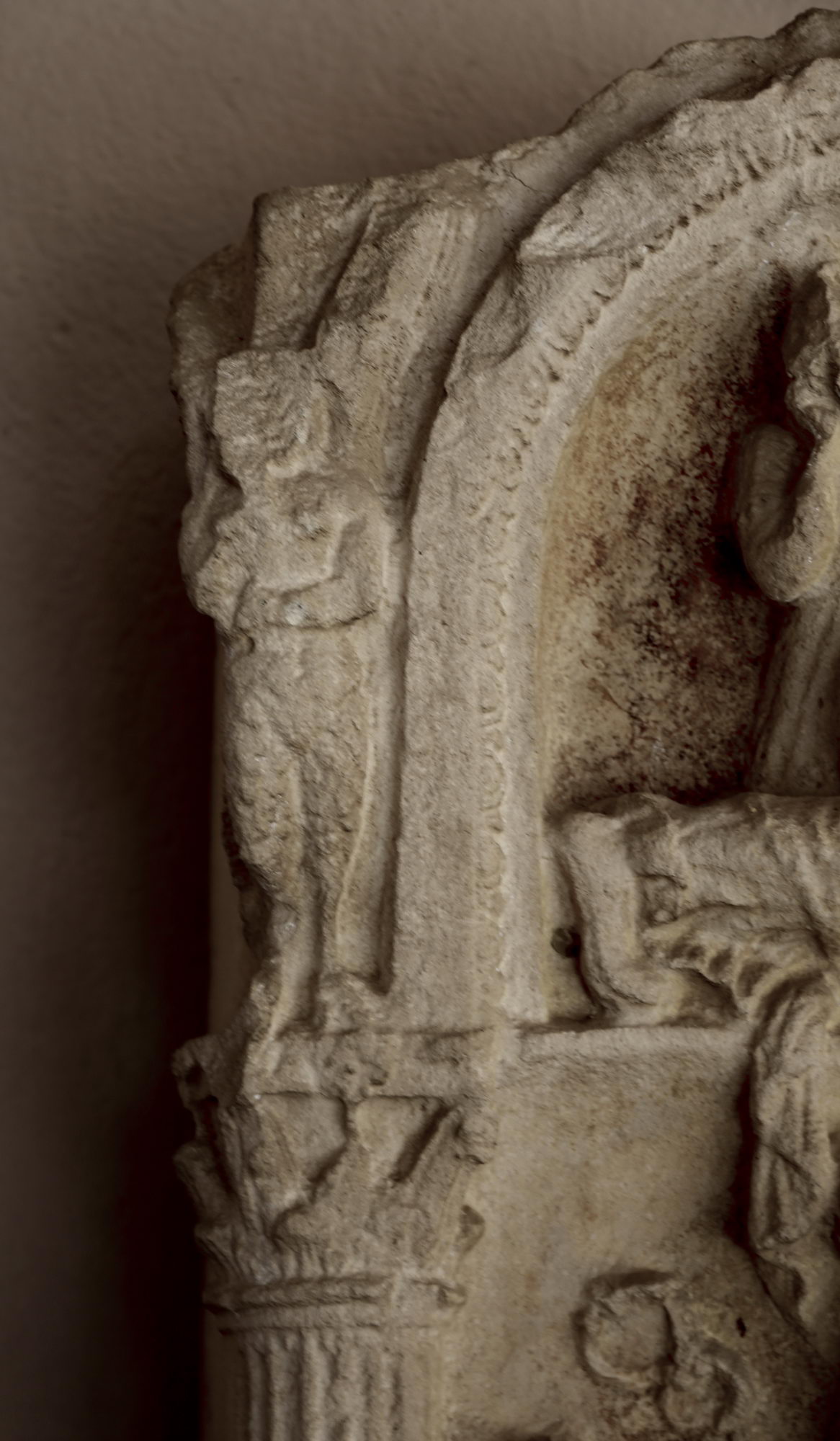
On either side of the niche stands a Siren with outstretched wings, originally bearing the face of a woman. In the Odyssey, the Sirens are still malevolent beings who lure sailors to their deaths with their song. By this period, however, they had become guides of the afterlife: with their beautiful voices they both gave expression to the grief of those left behind and comforted the newly departed, still frightened soul as it left the earthly world. Their bird bodies enabled them to move freely between this world and the next.
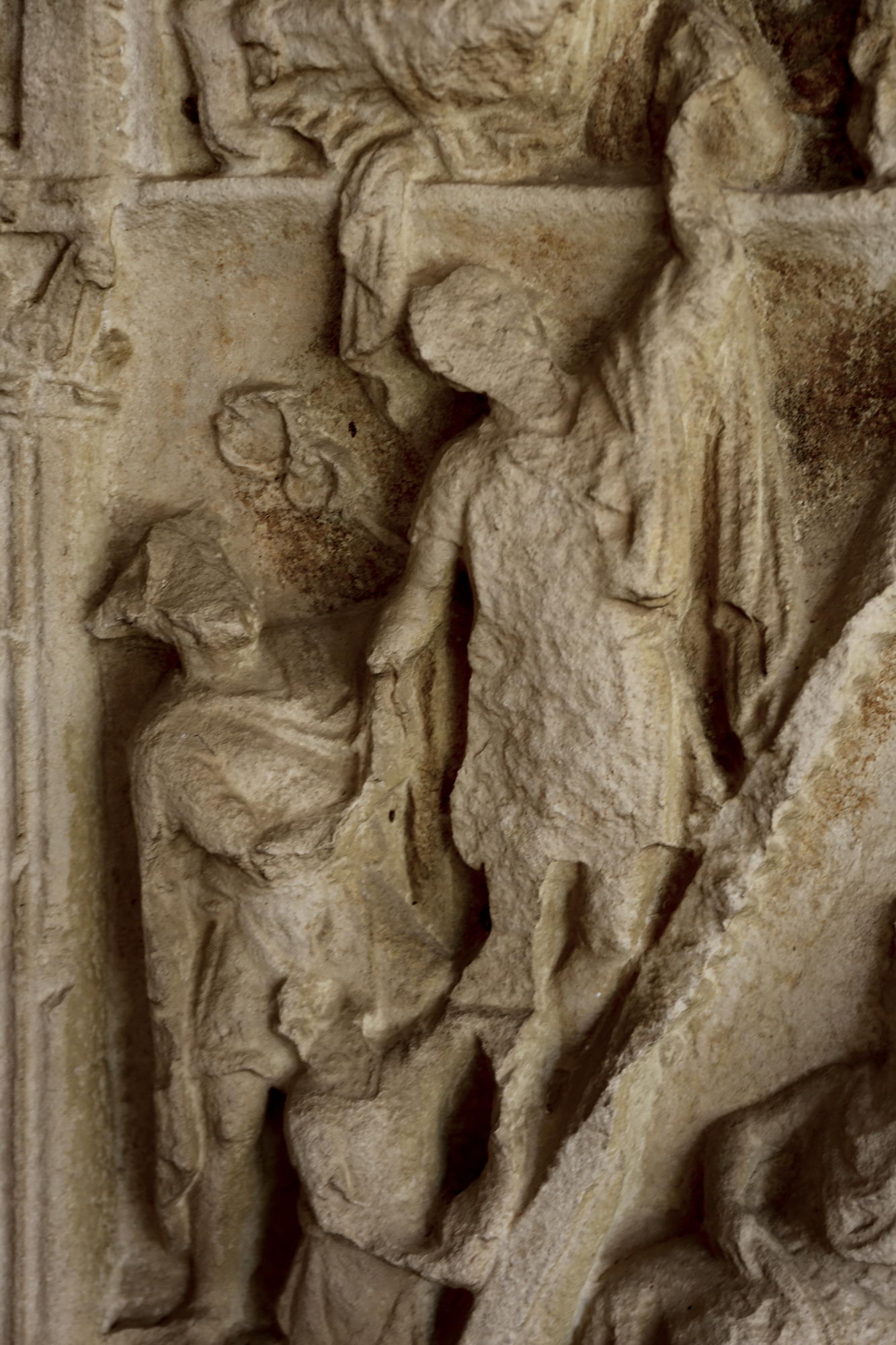
The soul descending the ladder (?) is guided above all by Hermes, the only god who could move freely between the worlds of the living and the dead, and therefore the guide of souls (psychopompos). His attribute is the caduceus shown above, the staff of Hermes entwined by two serpents.
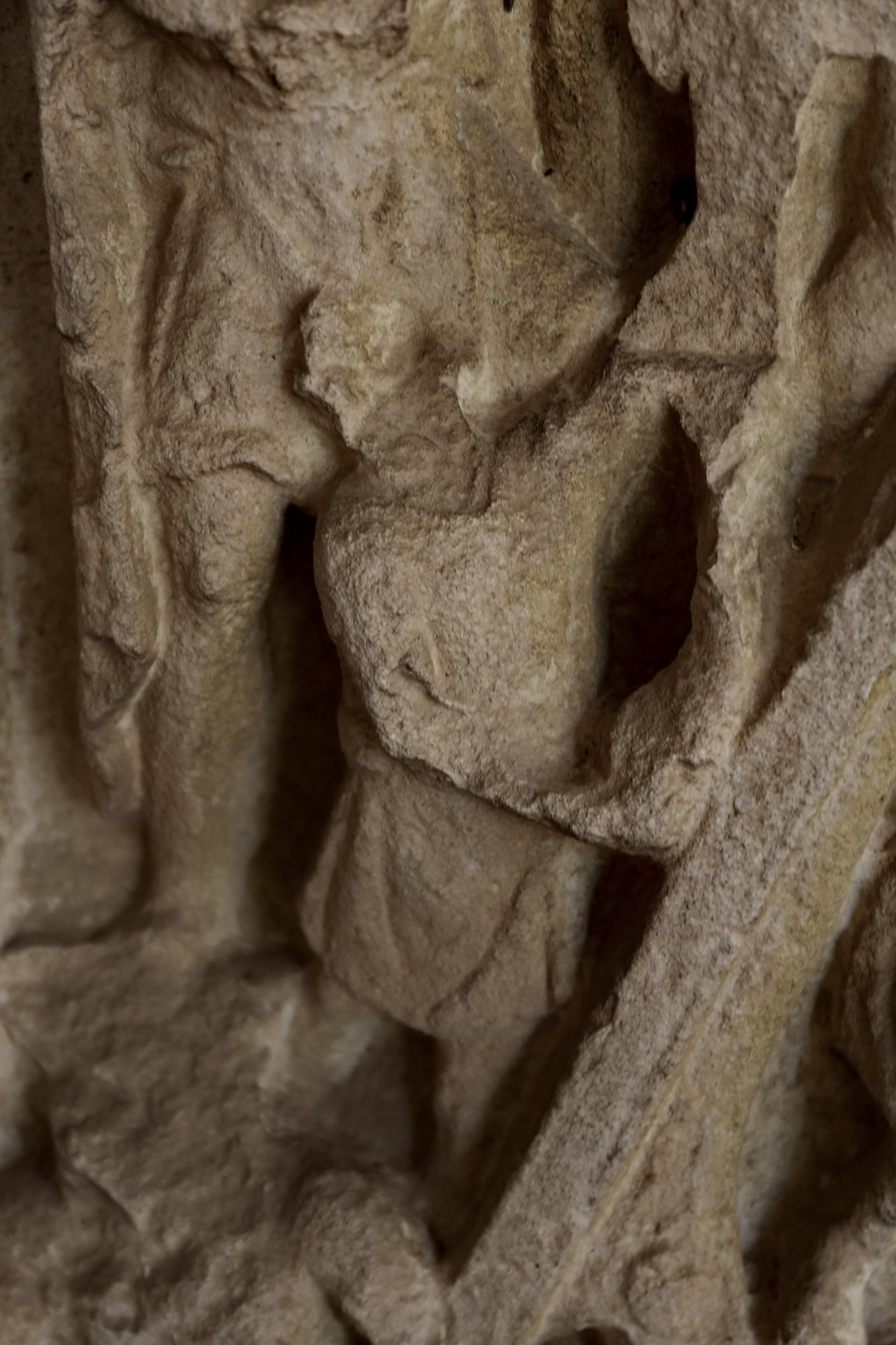
At the foot of the ladder, a figure helps the soul into Charon’s boat, which awaits at the bottom of the relief. The identity of this figure is disputed: some scholars regard it as a helpful spirit of the afterlife, but the most widely accepted interpretation identifies it as Charon himself (known in Illyrian as Keronti), stepping out of his boat to lift the soul aboard while simultaneously appearing seated within it—thus depicting two successive moments of the narrative at once.
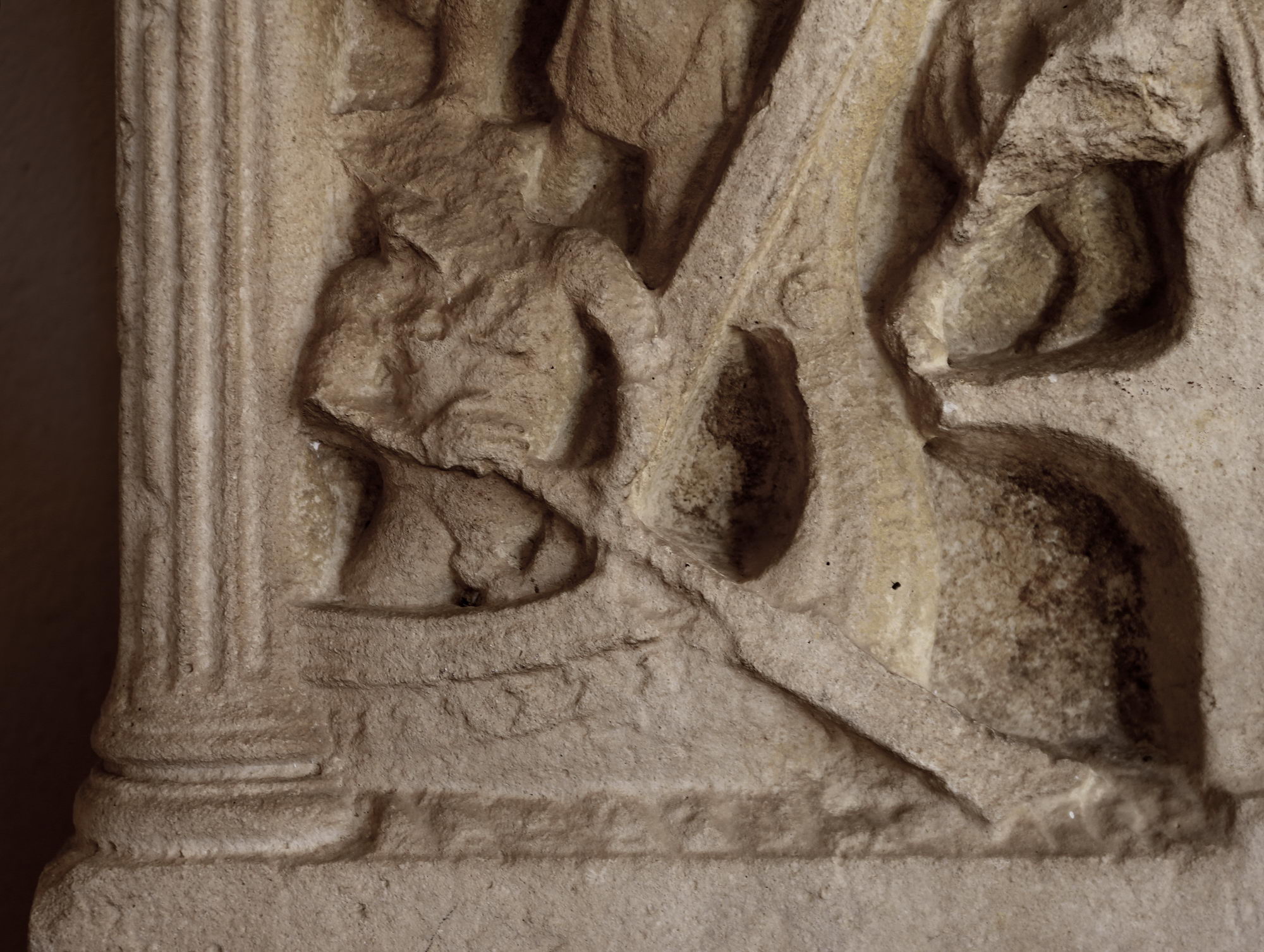
Charon’s local importance is demonstrated by the fact that the dead unearthed in the cemetery of Apollonia still usually had the obol intended for him in their mouths—or at least the greenish discoloration left by its former presence.
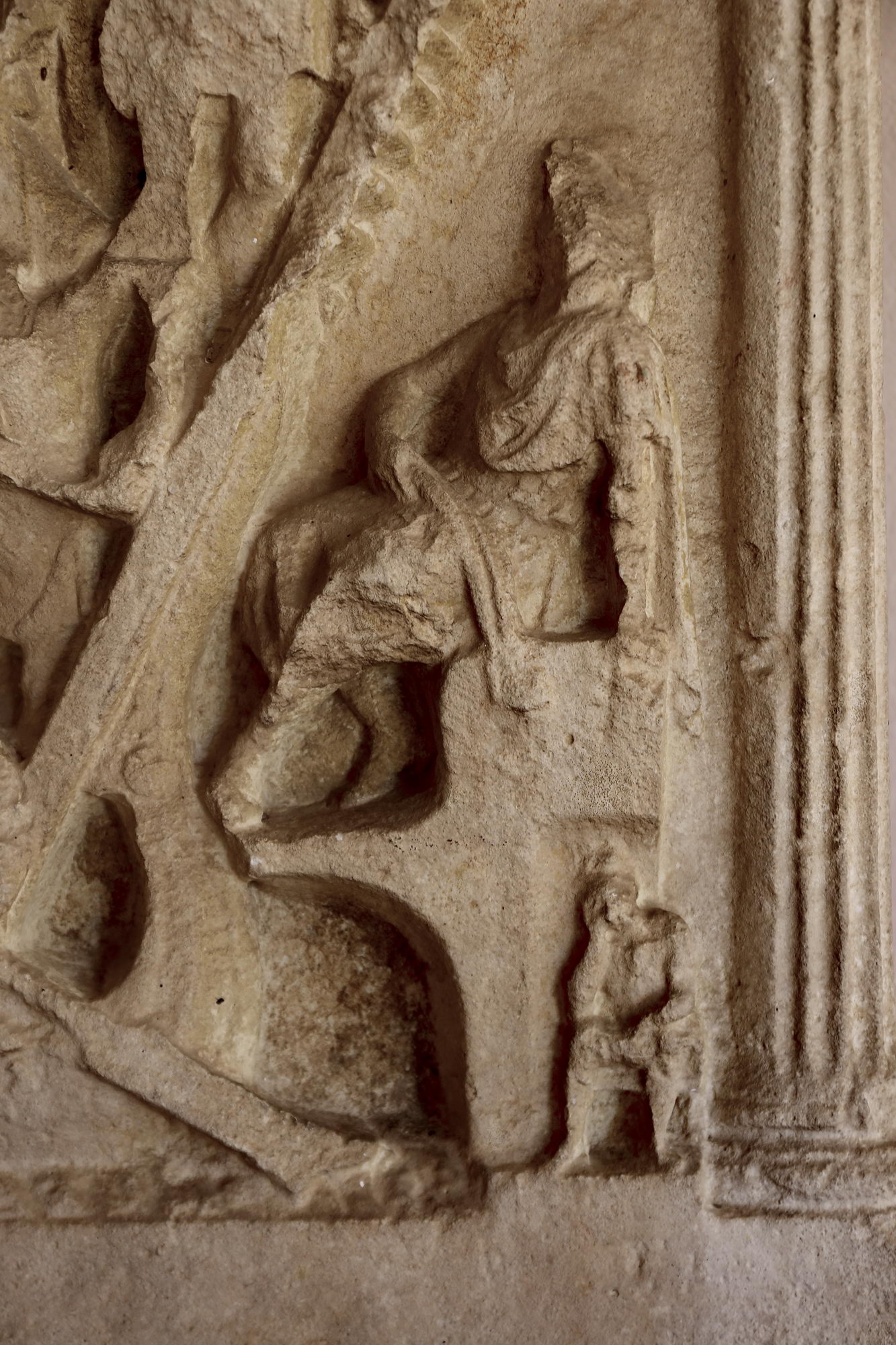
On the right side of the ladder, already in the Underworld, Hades awaits the soul, seated upon his throne.
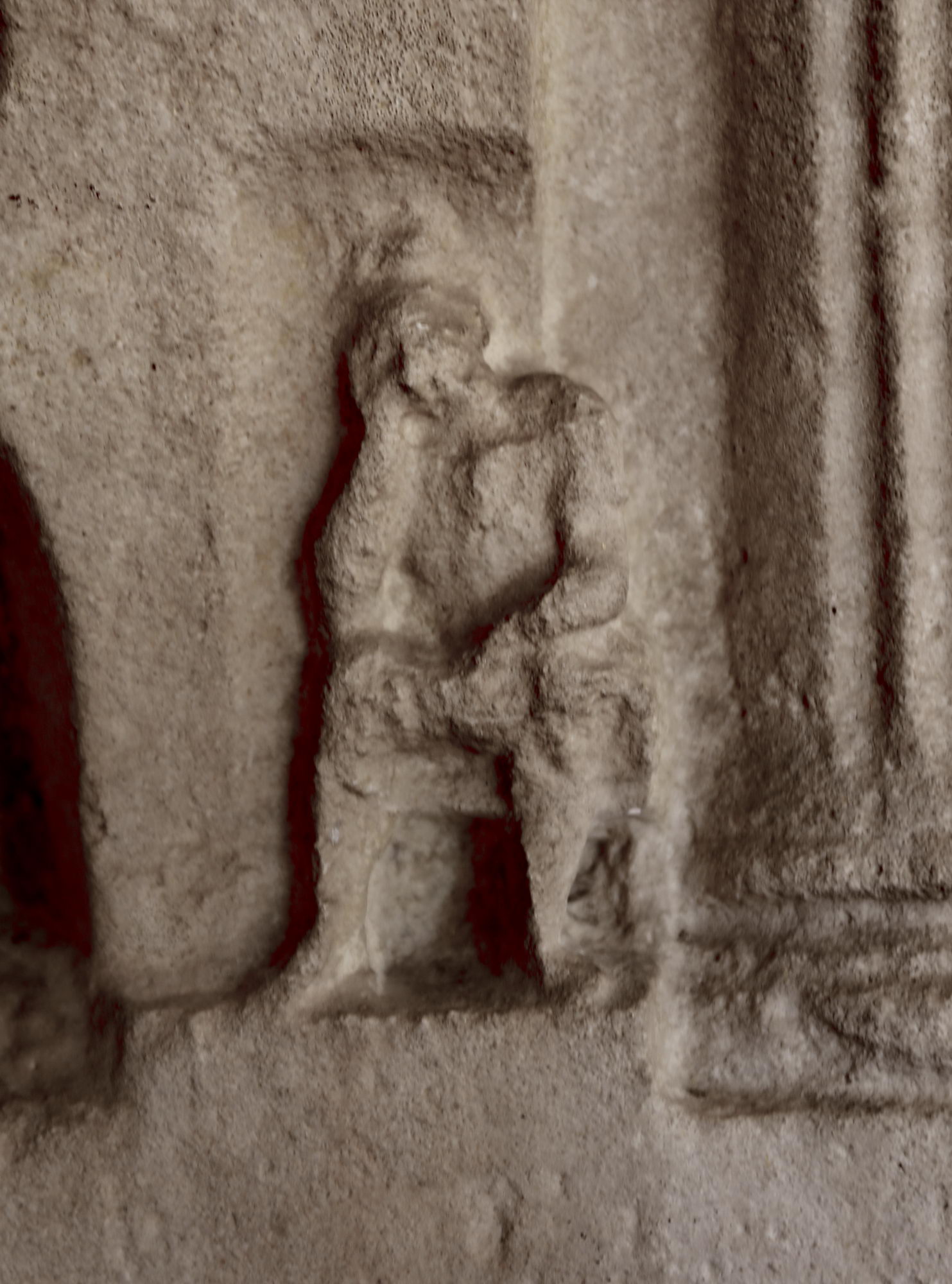
Crouching at the foot of Hades’ throne is Persephone. Her role appears overshadowed by that of Hades, yet according to Greek belief it was she who welcomed the soul with genuine compassion, having herself experienced abduction from the world above and the forced descent into the Underworld. And because, according to her myth, she spent half the year on earth with her mother Demeter as the embodiment of spring’s renewal, she symbolised on funerary monuments the hope that the deceased’s soul would not perish completely, but awaken to a new form of life. Followers of the Orphic and Eleusinian Mysteries, immensely popular in this period, prayed specifically to Persephone for happiness in the afterlife. Her presence on the relief guaranteed that the soul was arriving not in a place of darkness and torment, but in a just and orderly kingdom.
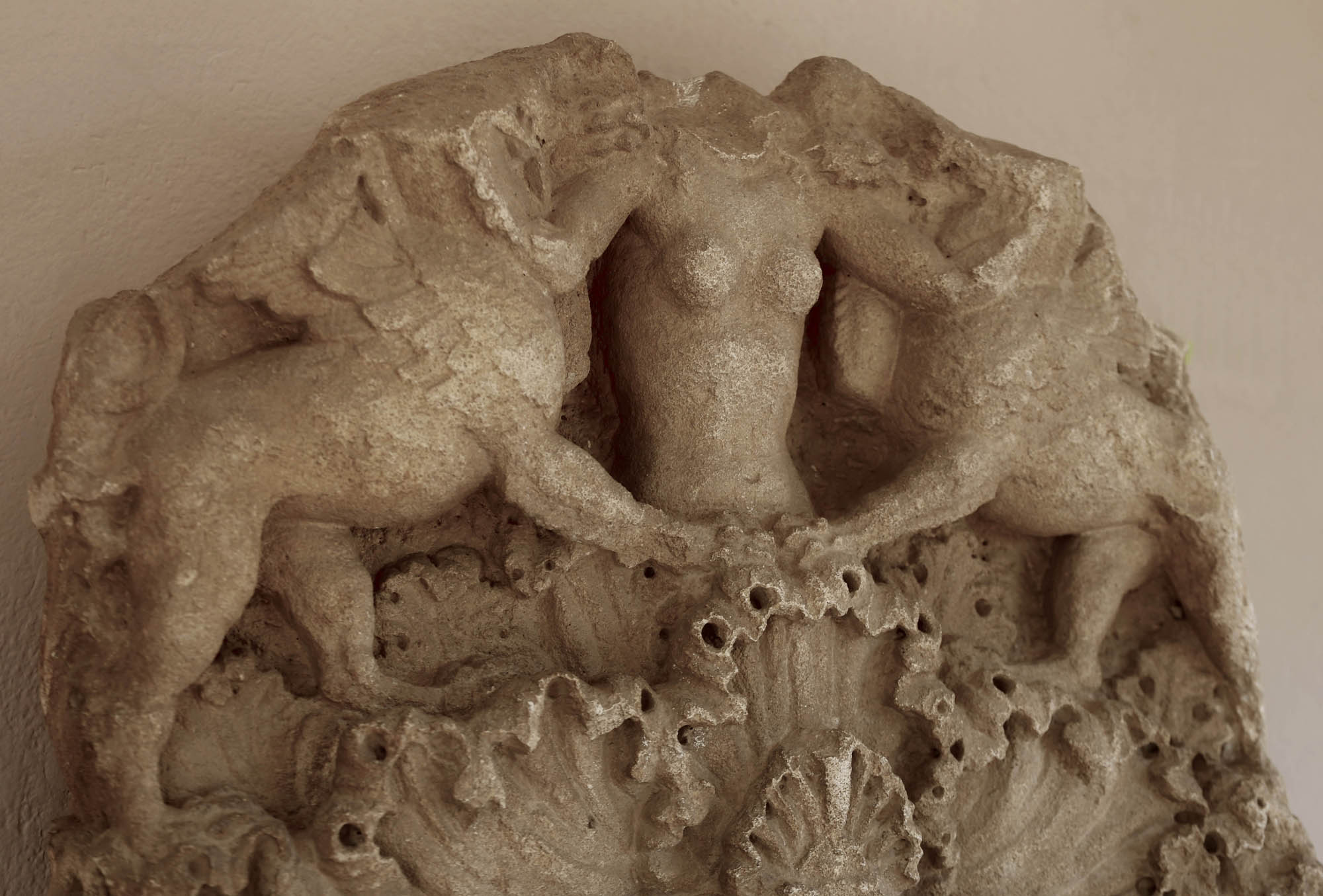 Birth of Aphrodite (detail), from the lapidarium of Apollonia, 3rd century BC.




Add comment