

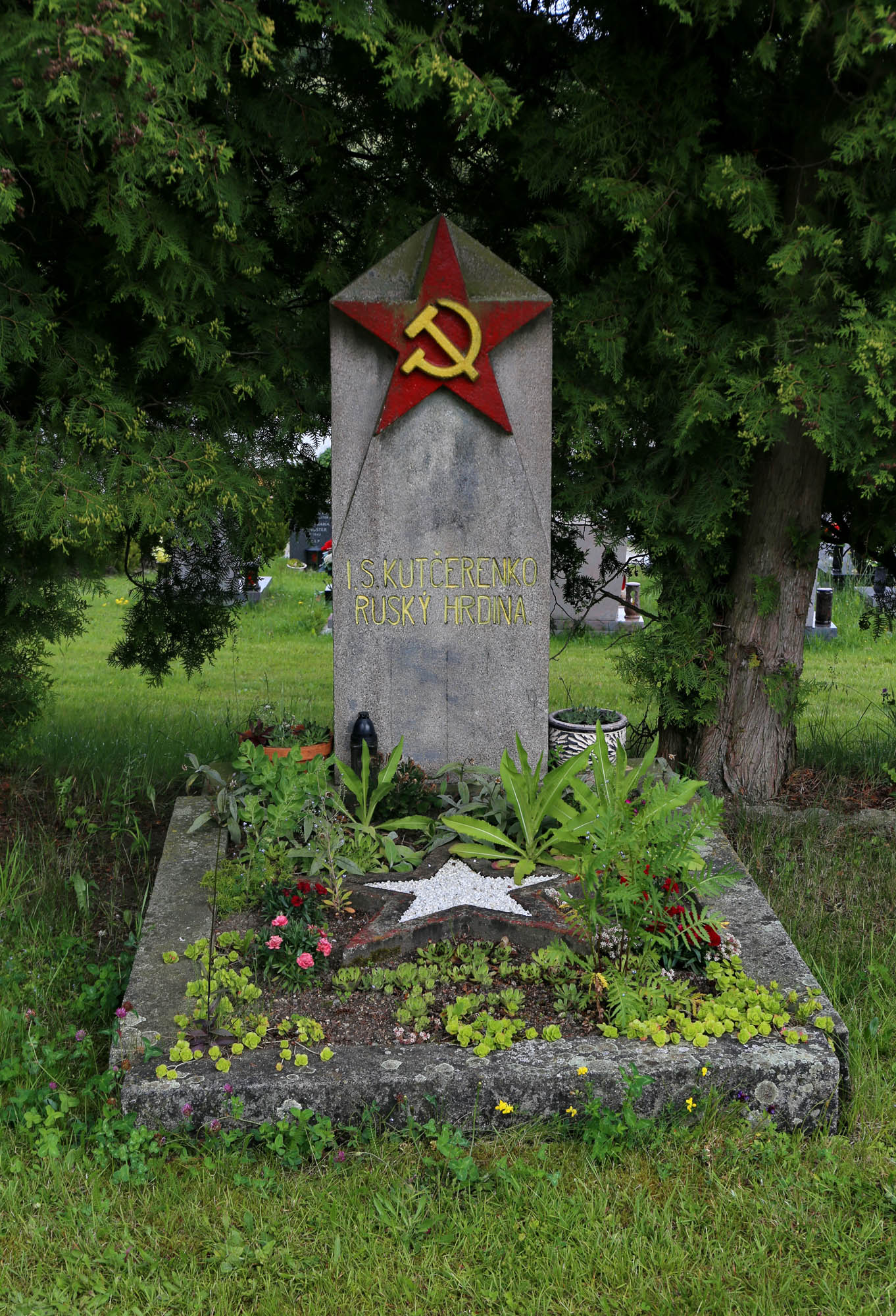
In the cemetery of the Church of St. Bartholomew in Vyšší Brod, founded in 1259, stands an unusual grave: a simple concrete monument bearing a red star and a gold hammer and sickle, with the gilded inscription below reading: I. S. Kutčerenko, ruský hrdina (“Russian hero”).
The story of Soviet First Lieutenant Ivan Stepanovich Kucherenko, born in either 1913 or 1914 according to Soviet military records, was reconstructed by the Czech organization Spolek pro vojenská pietní místa, which researches military memorial sites.
He was probably captured by the Germans on the Eastern Front sometime in 1941 or 1942. He was assigned POW number 4889-XIII D, indicating that he was registered at Stalag XIII (Nuremberg-Langwasser), part of Wehrkreis XIII. The camp was built on the Reichsparteitagsgelände, the site of the Nazi Party rallies. Originally established as an internment camp, it became a camp for Polish and French prisoners of war from 1939 onward. Following the invasion of the Soviet Union, the first Soviet POWs were also brought here and were treated with exceptional brutality; their daily ration consisted of just 300 grams of bread and 250 grams of potatoes. At its peak, the Stalag XIII camp complex held around 150,000 prisoners.
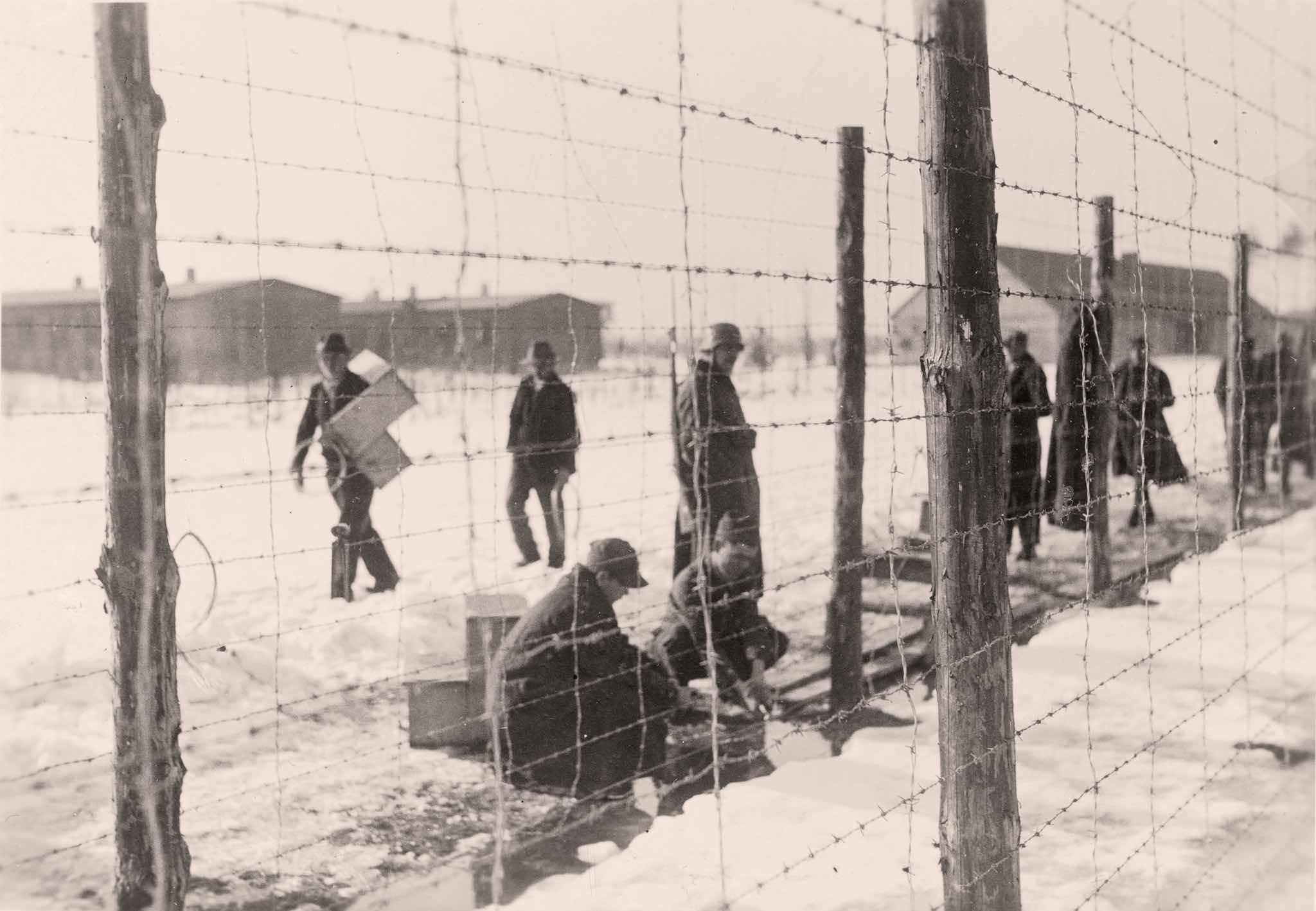 Polish prisoners of war erecting the barbed-wire fence of Stalag XIII.
Prisoners fit for work were assigned to external labour detachments. This is how Kucherenko was transferred to occupied Bohemia for forced labour. He escaped in the spring of 1944 and headed east in the hope of reaching the advancing Soviet forces. At the edge of the forest near the German village of Lahrenbecher (in Czech, Mlýnec), he was spotted by the maid of the local Nazi Party leader, who immediately informed her employer. The latter then alerted Fritz Haider, the son of a neighbouring family who happened to be home on leave from the front. Haider tracked down the escaped prisoner and shot him. A German military unit transported the wounded man to Dr. Dutschek in Vyšší Brod, but nothing could be done to save him. He was buried in the local cemetery on 19 June 1944.
(With hindsight, knowing the fate that awaited many Soviet prisoners of war who returned home alive, he may have been spared an even more terrible end. Former POWs, regarded as politically unreliable because they had experienced life under the enemy, were often sent to the Gulag, where many died after years of imprisonment and forced labour.)
Fritz Haider returned from the war in the spring of 1945 and went into hiding in the nearby Austrian village of Althut. He was arrested there by a Czech military unit and taken to České Budějovice, where he was assigned to forced labour clearing war damage together with many other Czech Germans. His subsequent fate is unknown. There is no trace of him in the records of the local People’s Courts, which were established only in the autumn of 1945. It is therefore quite possible that he was executed before any formal proceedings took place.
Since Kucherenko had been shot on the outskirts of Lahrenbecher/Mlýnec, the arriving Red Army and the newly formed Czech Revolutionary Guards regarded all 87 inhabitants of the village as collectively guilty and treated them with particular brutality. Many were killed or sent to forced labour during the first, arbitrary phase of the expulsion of the Sudeten Germans, known in Czech as the divoký odsun (“wild expulsion”). The survivors were rounded up under the Beneš Decrees in January 1946 and taken to the transit camp at Kaplice before being deported to the American occupation zone in Bavaria. The village houses and the mill (to which the Czech name Mlýnec also refers) were bulldozed in the 1950s. Today Mlýnec is an uninhabited cadastral area within the municipal territory of Vyšší Brod.
 Lahrenbecher/Mlýnec in a photograph taken before 1928. In the foreground stands the Woisetschläger House, also known as “Pekel”. Further back, on the left edge of the image, is the Jagerhof, where Johann Haider’s family, including Fritz Haider, lived. Next to it is the house of Lembauer, who served as the local Nazi Party leader between 1938 and 1945. The white building at lower right is the mill, home of the Hable family. The small white chapel stands in the centre of the village. Image from the Zaniklé obce (“Vanished Villages”) website.
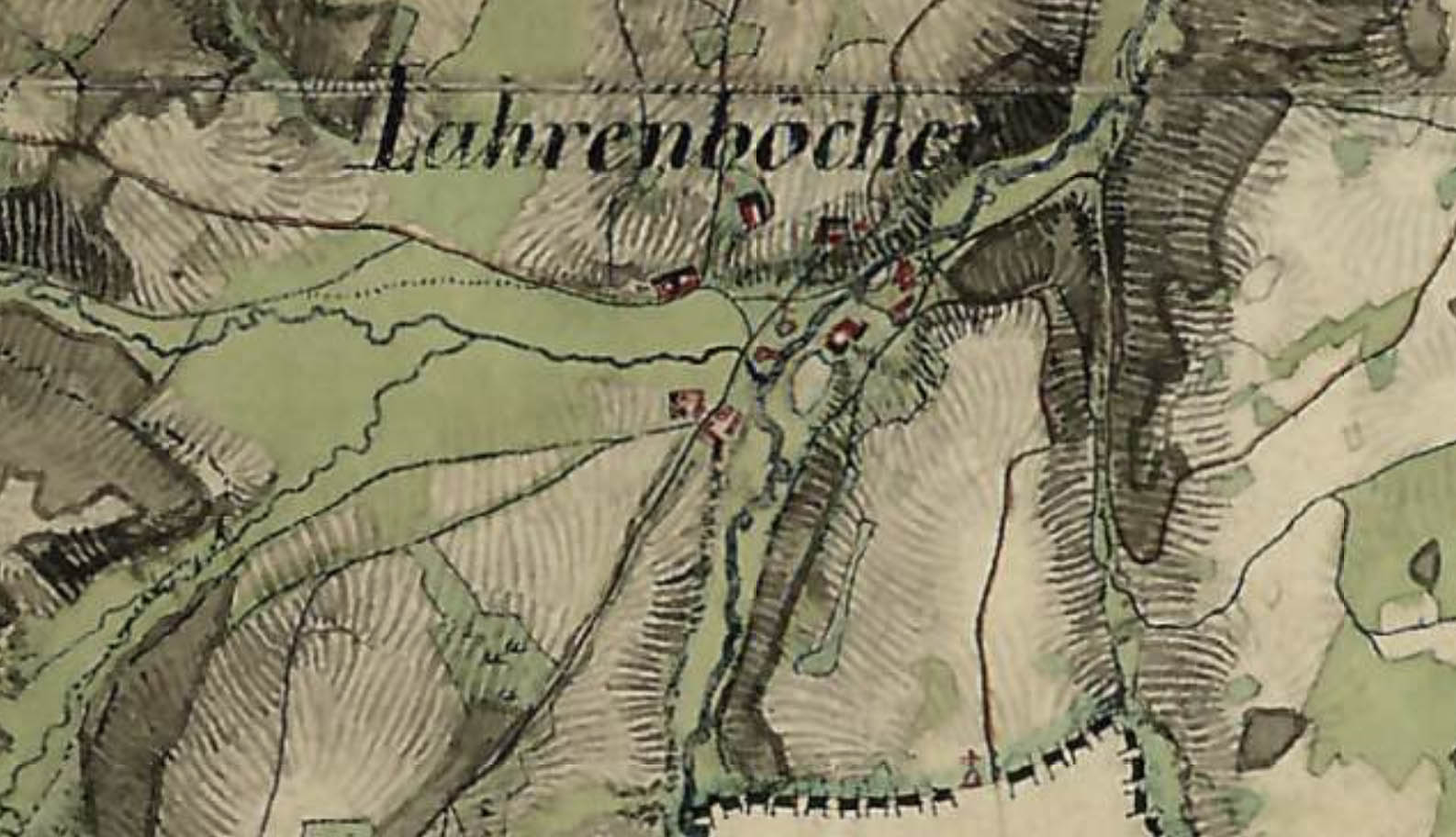 The village on the First Austrian Military Survey (1764–1768).
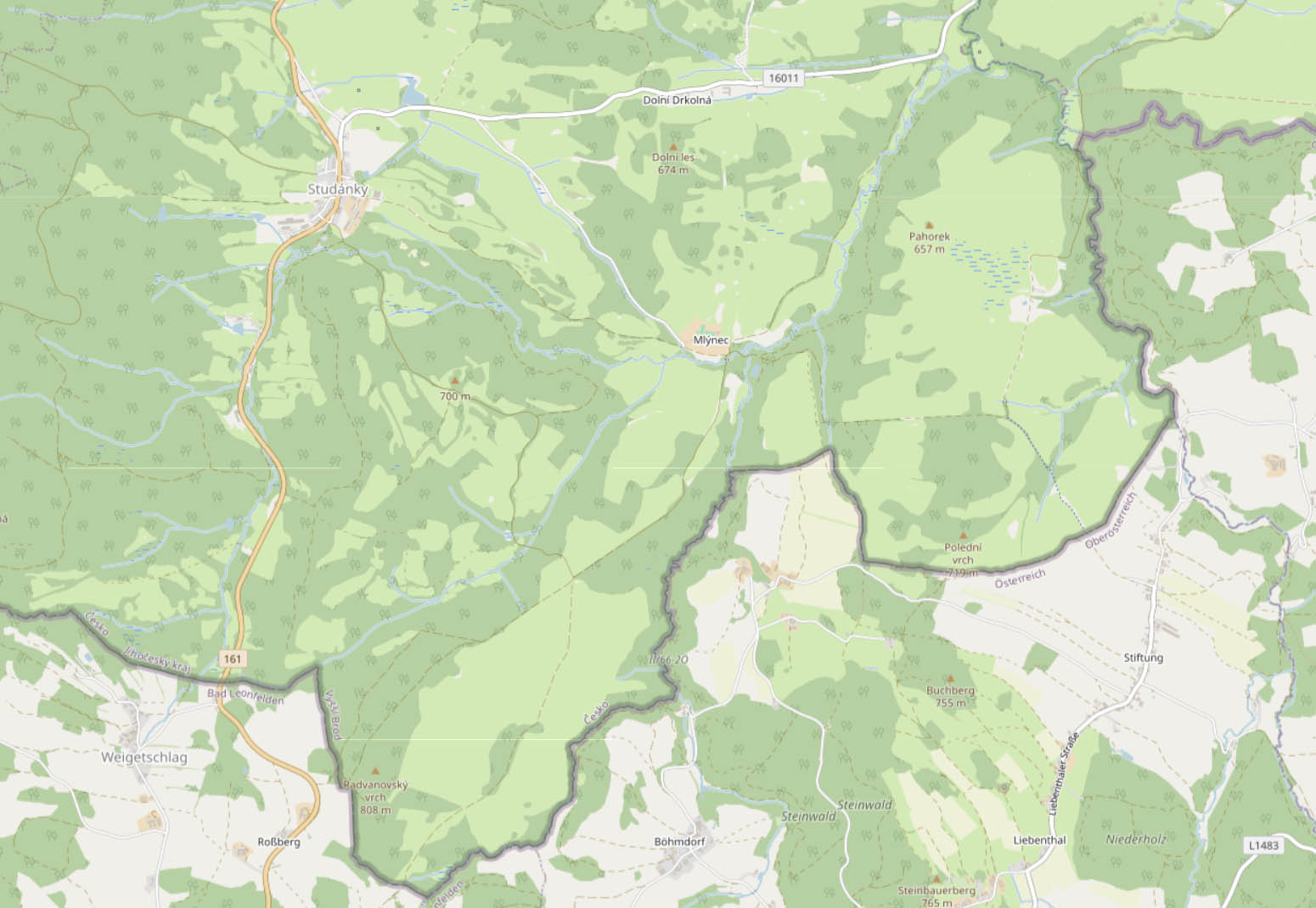
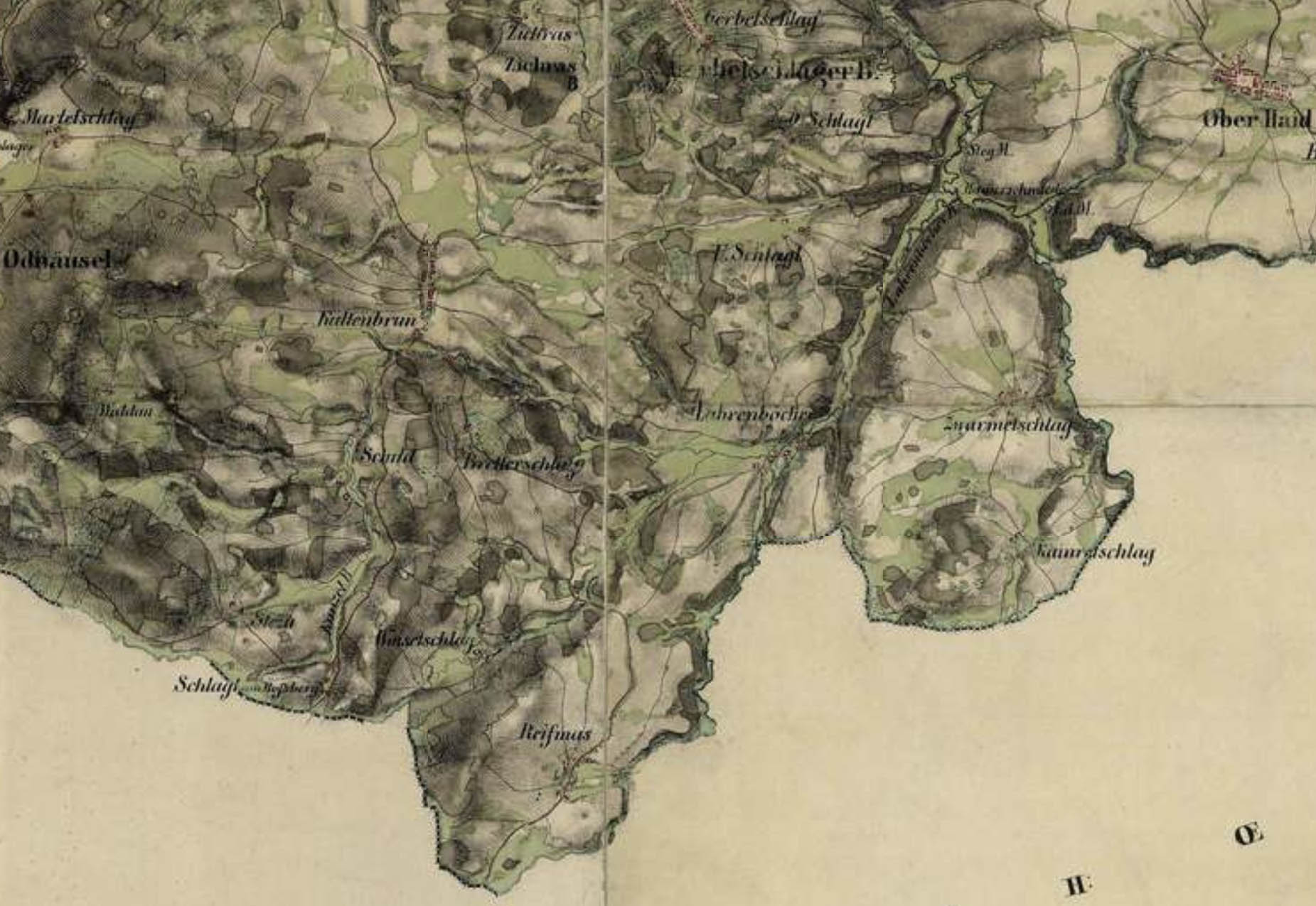 The village and its surroundings on the First Austrian Military Survey (top) and on OpenStreetMap today (bottom). Of the twenty villages shown on the historic map sheet, only two still exist. At the site of Mlýnec, the outlines of a border guard barracks built in the 1950s—since demolished as well—can still be seen.



Add comment