

In 1106, King David the Builder of Georgia commissioned the monastery church of Gelati, near the then-capital Kutaisi, as the intended burial place of his dynasty. But only fifteen years later, he also reconquered Tbilisi from the Arab occupiers, and from then on his successors were buried in the cathedral of Mtskheta, just outside Tbilisi—for as long as the Bagration dynasty ruled Georgia. And, in fact, for quite a bit longer.
The prince’s double family name points to a long-standing split within the former Georgian royal house. The last king to rule over all of Georgia was Constantine I (1405–1442). After his death, his sons began fighting over the inheritance. The conflict was happily encouraged both by the ambitious eristavis (provincial lords) seeking independence and by the rising neighboring superpowers—the Ottomans and the Persians. By the end of the century, Georgia had split into three kingdoms: central Kartli, eastern Kakheti, and western Imereti.
The Mukhrani branch was founded in 1512, when Prince Bagrat received the Duchy of Mukhrani from his brother, the King of Kartli. After the main royal line died out, the Mukhrani branch ruled Kartli from 1658 to 1724.
But King Erekle II of Kakheti (1744–1798) reunited Kakheti and Kartli in 1762, and he and his son George XII ruled until the Russian annexation of 1801. That is why the larger part of Georgian monarchists recognizes this branch—the so-called Bagration-Gruzinsky line—as the legitimate heirs to the throne.
The debate, which until quite recently could still cause proper storms in Georgian salons, was finally calmed when Patriarch Ilia II—who openly supports the restoration of the monarchy—married Prince David Bagration-Mukhrani, arriving from Spain, to Princess Anna Bagration-Gruzinsky, who had grown up in Georgia, right here in Mtskheta Cathedral in 2009. Their son, Giorgi Bagration-Bagrationi, born in 2011, is now regarded by virtually all monarchists as the future ruler, and this idea continues to enjoy the support of a steady 30–40% of the Georgian population.
Reading Prince Konstantin Bagration-Mukhrani’s tombstone, we find that he died on May 19, 1915—almost exactly 111 years ago—at the age of only 26. But even more surprising is the place of death: Zagrody, Galicia. And most surprising of all is the cause of death: “fell heroically during the assault on enemy positions.” The enemy positions, that is, were ours—Hungarian.
While analyzing the Georgian First World War recruit photographs I had found by pure chance in an antique shop in Kutaisi, we had already seen that a significant part of the Russian troops fighting against us in Galicia and the Carpathians were Georgian—men who, judging by the dedications on their photographs, marched off just as resignedly and with just as little hope of returning as ours did to the Italian front or to Palestine, against people with whom they had never had the slightest quarrel. But to run into a Georgian commander who fought against us in the Carpathians—inside Mtskheta Cathedral—still comes as quite an unexpected surprise. So naturally, I start digging into the Russian and Georgian internet.
Prince Konstantin was born in Tbilisi on March 2, 1889 (March 14 according to the new calendar). His family—like most Georgian aristocratic families—had been incorporated into the Russian nobility after 1801. From the same family came Pyotr Bagration, the Russian commander at the Battle of Borodino, well known from War and Peace.
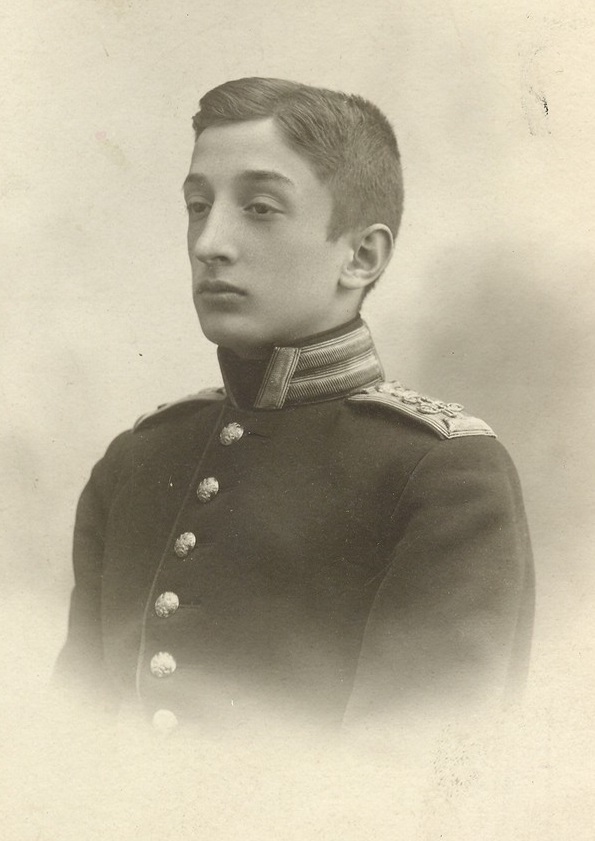
On both his father’s and mother’s side, the prince descended from the chief commanders of the Turkish and Caucasian wars, and he himself entered a cadet school. After passing his exams successfully, he became an officer in the tsarina’s cavalry regiment, where he befriended Konstantin Grand Duke’s son, Oleg. In Oleg’s house he met his sister Tatiana, and the two soon fell in love. This love became one of the great romances of early 20th-century Russia and Georgia.
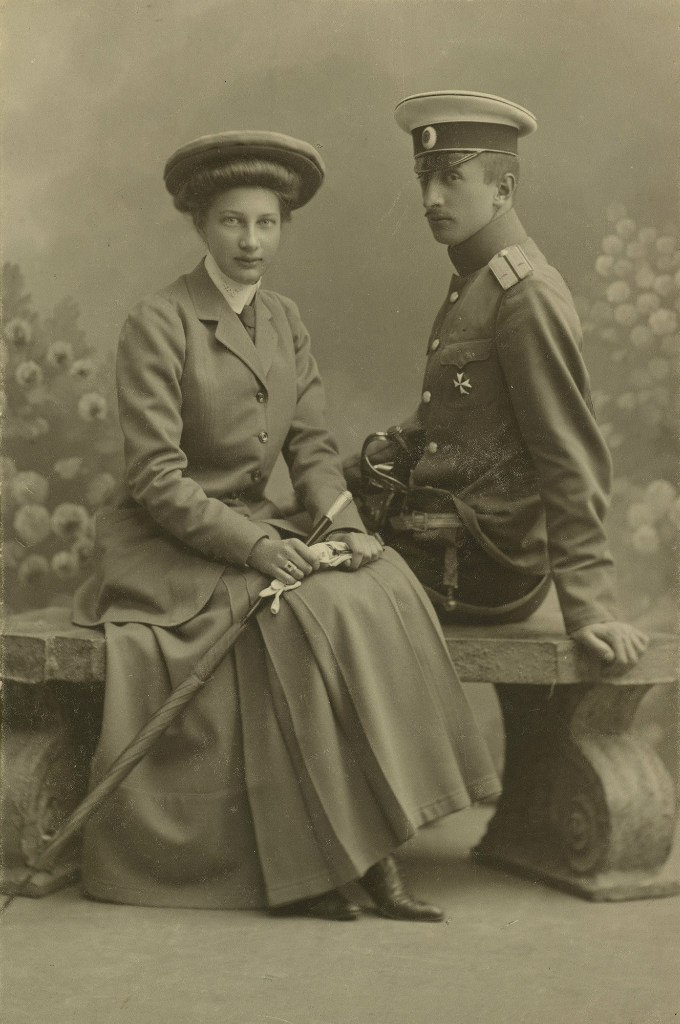
When Tatiana confessed her love to her parents, the Grand Duke was somewhat surprised, but did not oppose the marriage. However, a special court protocol had to be devised, since a marriage between a member of the imperial family and a “simple” nobleman was considered beneath rank and unprecedented. In 1911, Tsar Nicholas II issued a special decree allowing it, on the condition that any children from such a marriage would not inherit the throne. The lovers, of course, cared little for this and— as Tatiana writes in her diary—were “madly happy.” They married on August 24 / September 6, 1911 in Saint Petersburg. Two children were born from the marriage, Teimuraz and Natalia. In 1913, the Tsar, as compensation, appointed Konstantin his adjutant.
At the outbreak of the war, Konstantin went to the Galician front with his cavalry regiment. From then on, he and Tatiana exchanged letters almost daily, and at Easter 1915 they met once more in Pavlovsk. But soon after, following the Austro-Hungarian and German breakthrough at Gorlice between May 2–5, 1915, the Russian army collapsed and began to retreat. Their withdrawal was covered by the 13th Erivan Life Grenadier Regiment.
“Life grenadier” (often also translated as “guard grenadier”) is the translation of лейб-гренадерский, which itself comes from the Swedish livgrenadjär. In the 18th–19th centuries, these units were elite formations that also served as direct guards of the tsar or king. The 13th Erivan Life Grenadier Regiment took its name from the 1827 capture of Yerevan, but was in fact stationed in Manglisi, Georgia, and most of its members were Georgian, so in the capital it was simply called “the Georgian regiment.” The whole town of Manglisi grew up around its barracks system and cathedral.
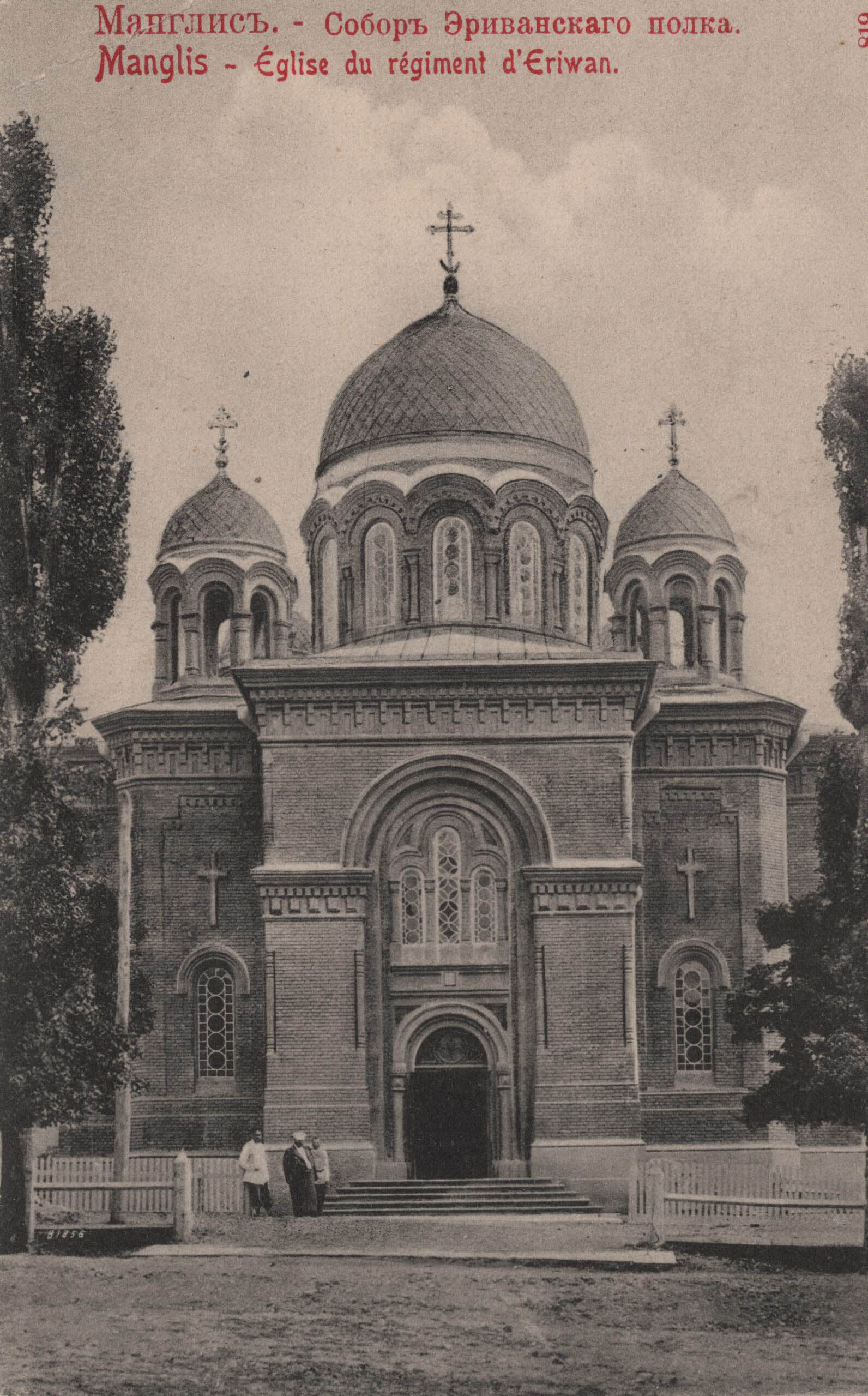 The regiment’s cathedral in Manglisi was destroyed during the anti-religious campaigns of the mid-1930s, as were the garrison cathedrals of Kutaisi, Tbilisi, or Akhalkalaki
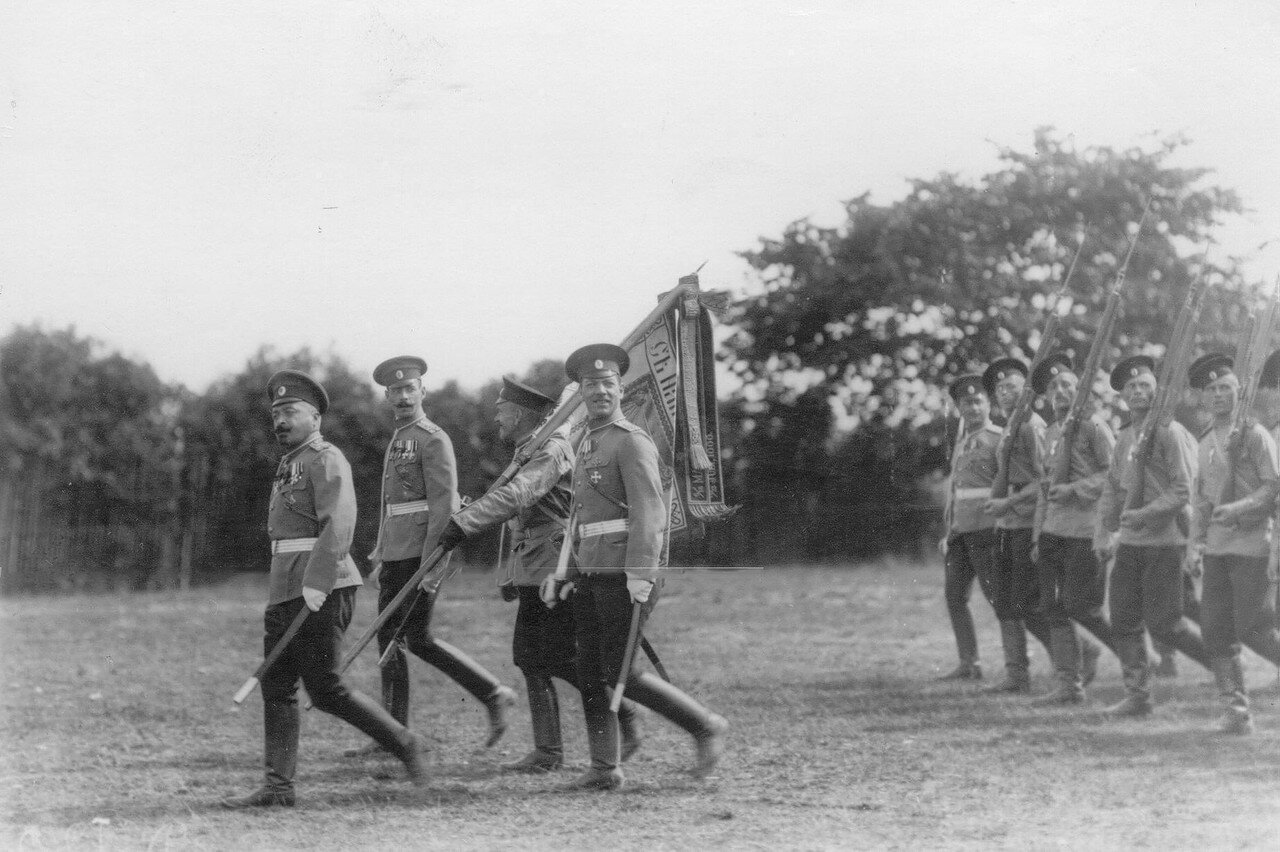 Review of the 13th Erivan Life Grenadier Regiment before Tsar Nicholas II, June 1913
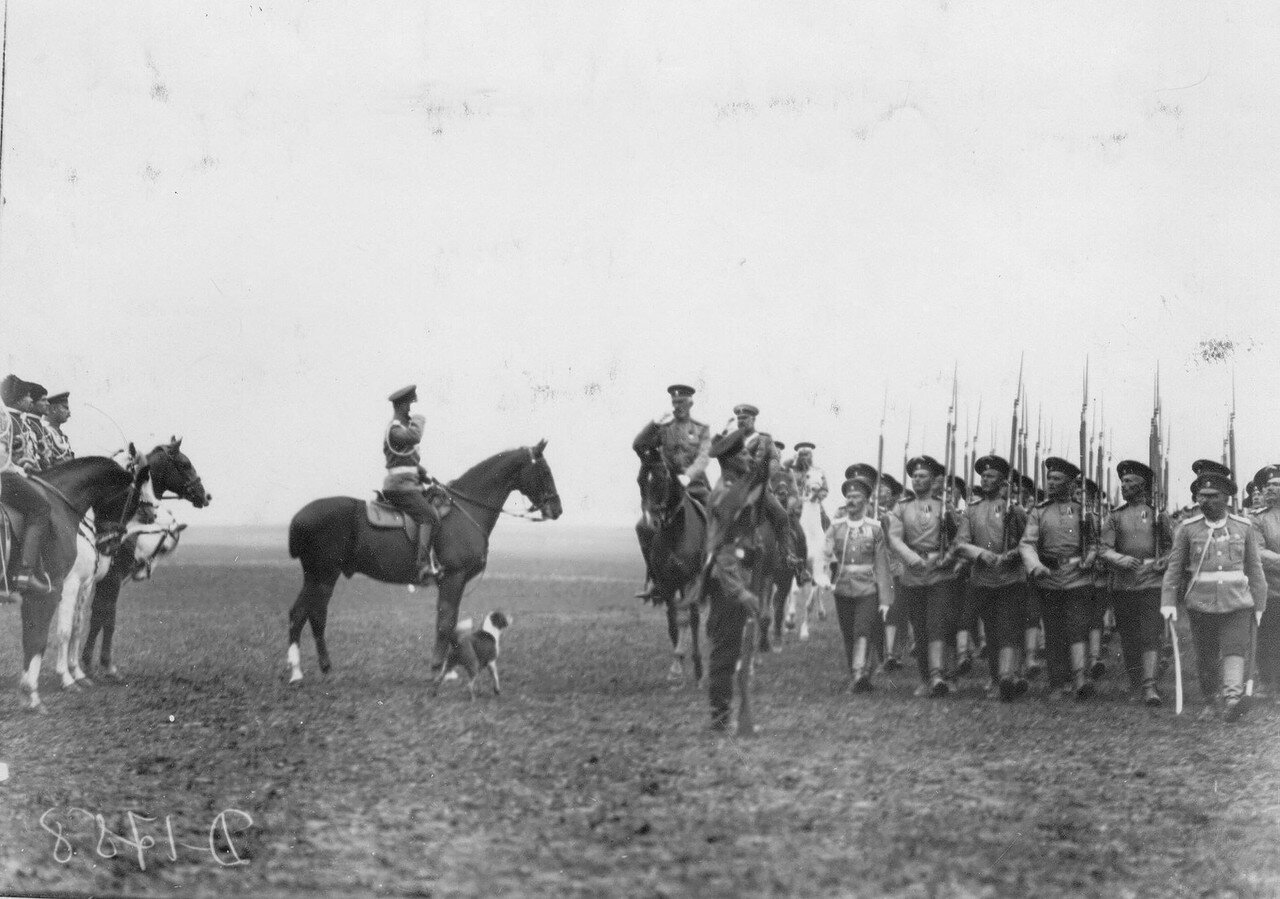
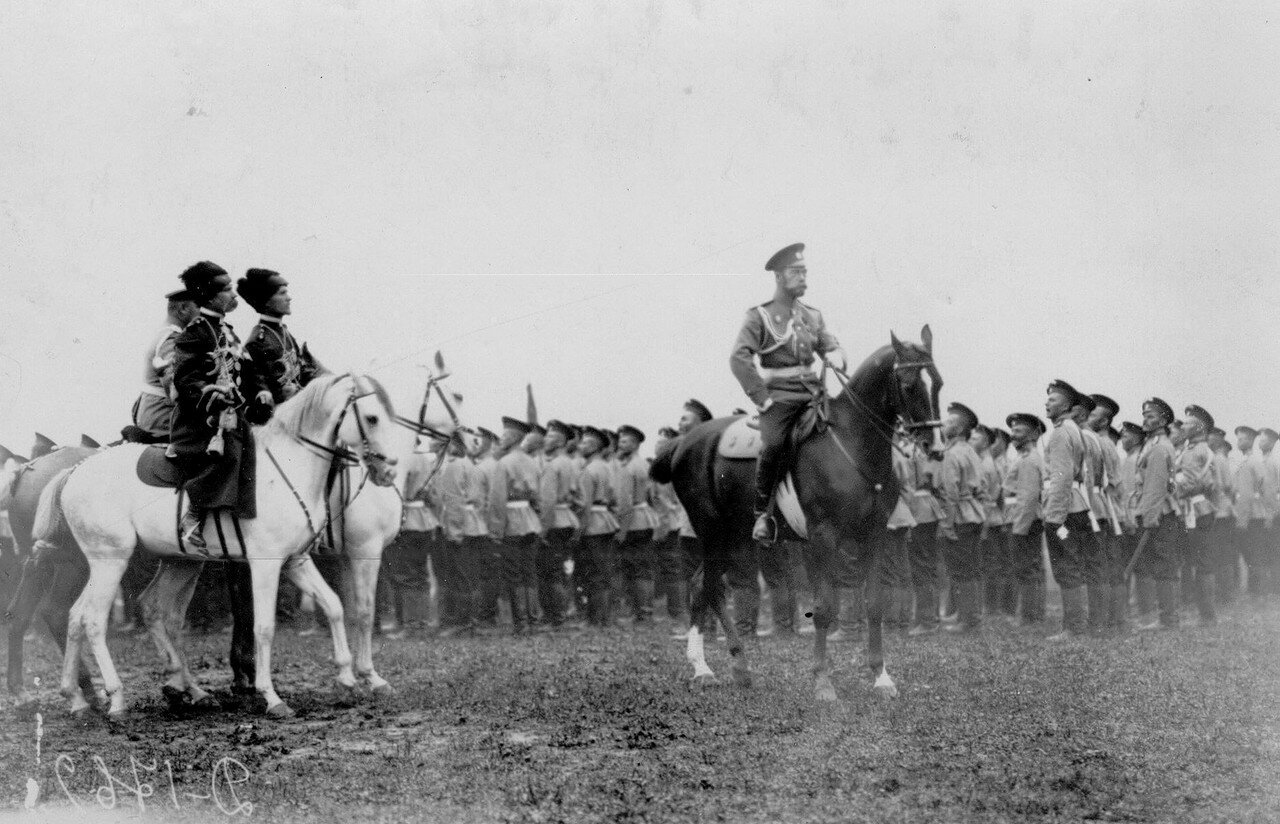
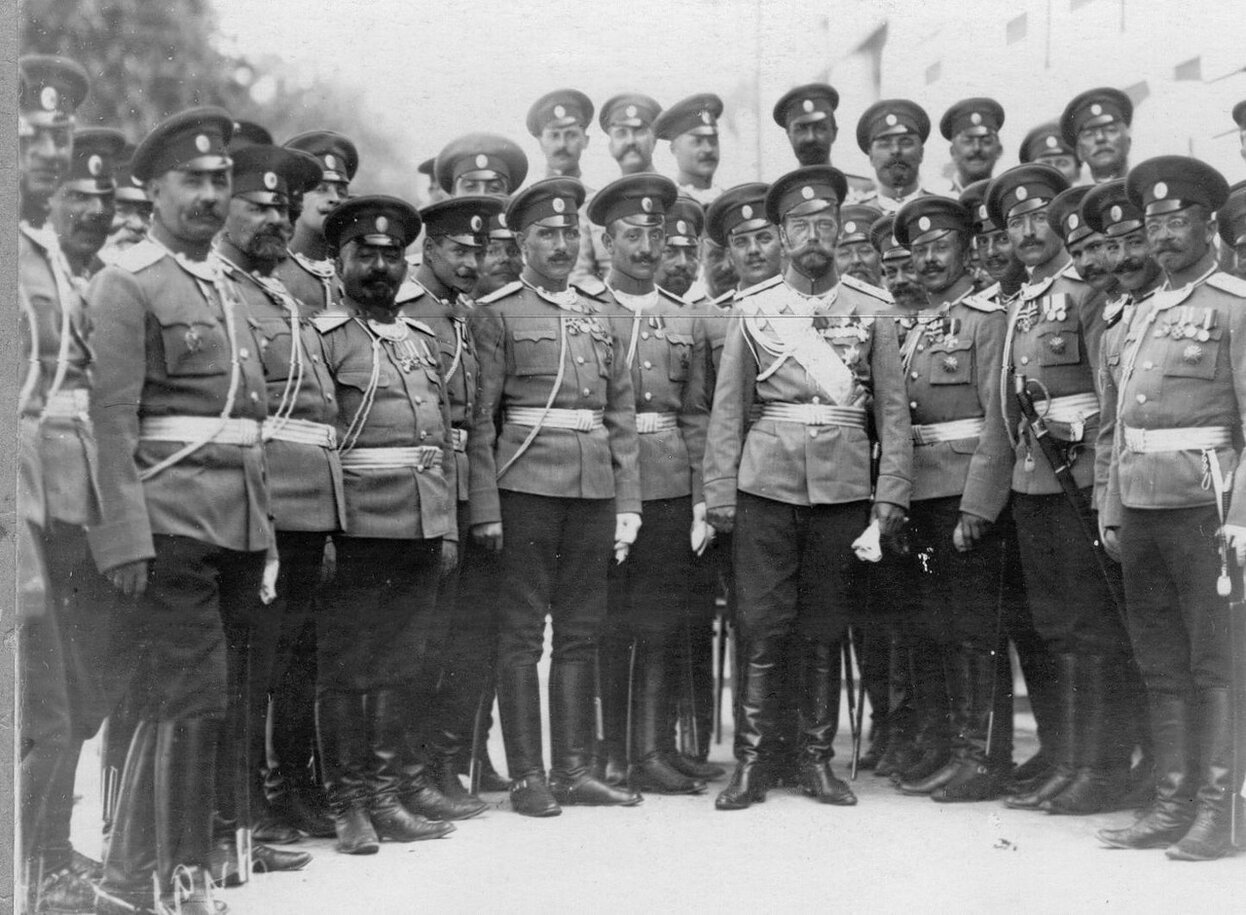
As an elite unit, the 13th Erivan Life Grenadier Regiment fought in the hardest sectors against German and Austro-Hungarian forces, and after the breakthrough it was tasked with covering the retreating Russian army. On May 18, Prince Konstantin requested transfer to the grenadiers. According to Tatiana’s diary, besides a sense of duty, he was probably also motivated by the desire to prove to his wife’s family that he was worthy of her hand. The family acknowledged this: after his death, the Tsar awarded him the highest Russian military decoration for personal bravery, the 4th class of the Order of St. George.
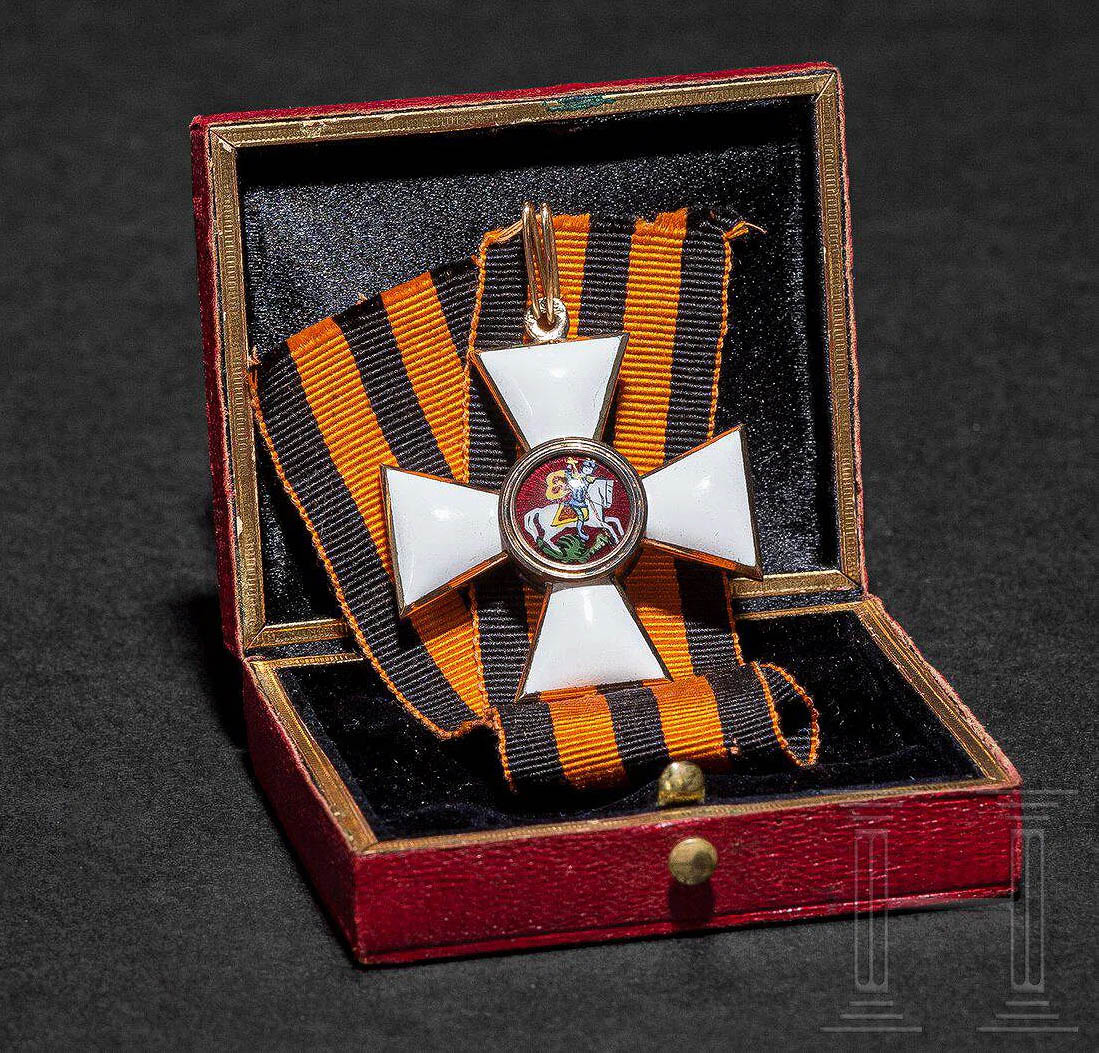
The following day, May 19, the Russian army crossed the San River, while the grenadiers remained on the western bank to cover their retreat, in the village of Zagrody/Zahrobela, today a district of Jarosław. The prince led an assault against the advancing Austro-Hungarian forces—the 13th Pressburg Honvéd Infantry Regiment, the “Iron Honvéds”—but their machine guns mowed them down. It was here that Prince Konstantin fell. The Hungarian Honvéds then waded across the San River up to their chests, under heavy enemy fire, to clear the Russian positions.
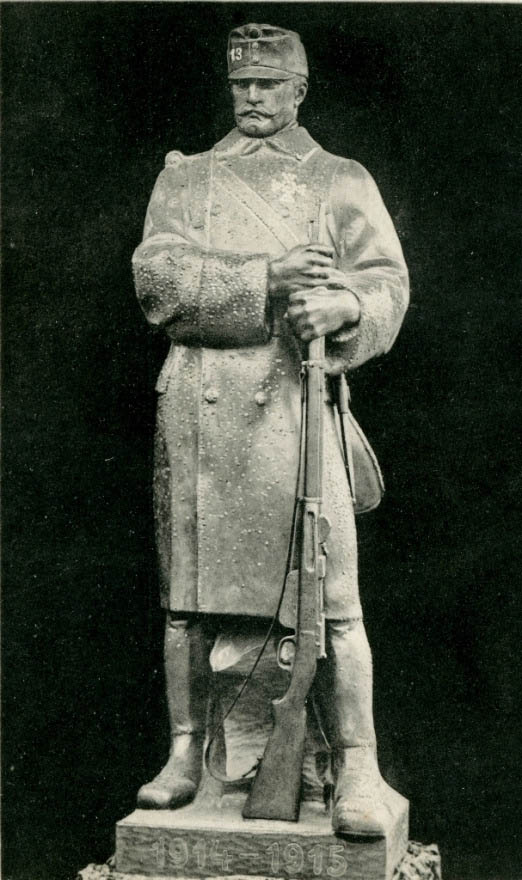 The Iron Honvéd statue erected in Pressburg (Bratislava) four days after the San breakthrough link
The fallen life grenadiers were buried by the Hungarians north of the town, where their military cemetery still stands today. Prince Konstantin’s body, however, was recovered from the battlefield by members of his regiment in a swift night operation. At Radymno station—which remained in Russian hands for another four days—they laid him in state. Contemporary newspapers and later memorial volumes reported the ceremony in detail. For the imperial court, Konstantin’s death became a symbol of “sacrifice of the imperial family”: they wanted to demonstrate that princes bleed alongside common soldiers, and therefore every detail of the lying-in-state and transport was documented and published. Along the road to the station, the surviving soldiers of the life grenadier regiment stood in honor. The coffin was placed in a black-draped funeral carriage, and at every station (Przemyśl, Lemberg, Kijev, Saint Petersburg) honor guards saluted it. At Tsarskoye Selo station in Saint Petersburg, Grand Duchess Tatiana and several members of the imperial family awaited the deceased.
“On the morning of May 20 I received a letter from my mother informing me that Kostya had been killed. General Brusilov, who commanded the Southwestern Front, telegraphed to my father that Bagration had fallen a hero’s death on May 19 near Lvov. He was commanding a company and was shot in the forehead, almost in the first engagement. My father was not told of Bagration’s death immediately. My mother did not dare to tell him and asked my uncle to come from Strelna to prepare him. My uncle came at once and gently informed him. When I was left alone with my father, he looked utterly broken. I tried as best I could to comfort him.
When I went to Tatiana, she was sitting in the Columned Hall and was very calm. Thank God, she is deeply religious and accepted the heavy blow that had befallen her with Christian humility. She did not wear black, but dressed entirely in white, which somehow emphasized her tragedy even more. That same evening a memorial service was held in the church of the Pavlovsk Palace, attended by Their Majesties with the grand duchesses and many others. My father, of course, could not attend the service.”
(From the memoirs of Prince Gavriil Konstantinovich Romanov)
The Grand Duke Konstantin mentioned in the memoir died two days later under the weight of the shock.
Tatiana wrote this in her diary:
“On May 6, the Emperor’s birthday and my own name day, Kostya fell... I immediately felt that life had ended for me. My happiness was so short, yet so complete. He died a hero, at the head of his company, with the Cross of Saint George on his chest, which he had dreamed of so much.”
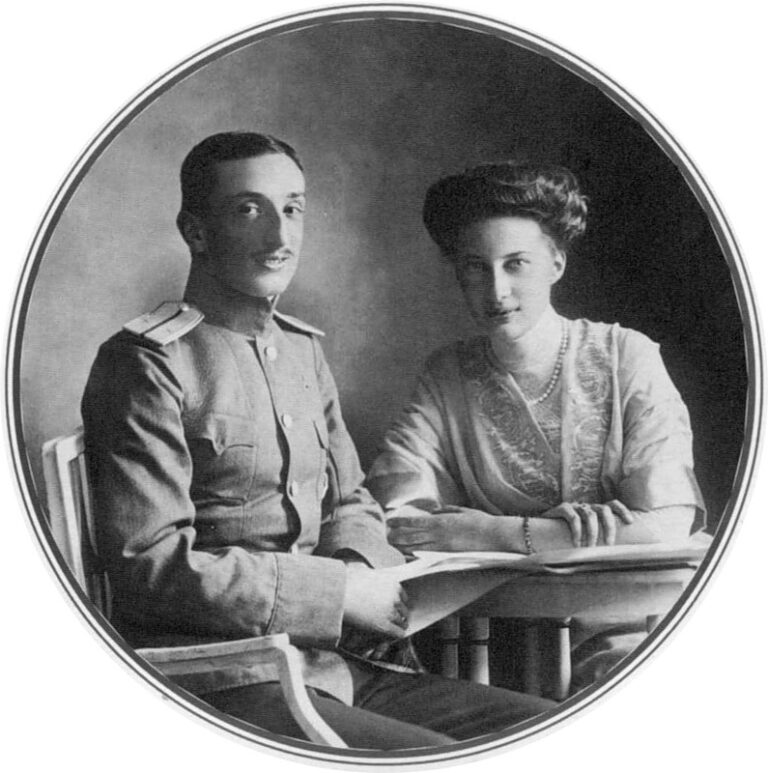
The fact that Prince Konstantin died on his own name day has great spiritual significance in Orthodox culture. Moreover, it was also the Tsar’s birthday and the feast day of Saint Job, which Nicholas II himself said brought him so many misfortunes—making the prince’s sacrifice for his country symbolic. And only two weeks earlier it had been the feast of Saint George, patron saint of both Georgia and Russia.
Tatiana decided to bury her husband not in Saint Petersburg, but in Georgia. There were several reasons for this. In Saint Petersburg he could not have been placed in the imperial family crypt. Moreover, although Konstantin was a Russian officer, he primarily considered himself Georgian and a scion of the Bagrationi dynasty. By burying him in Mtskheta, a royal descendant would return home and become part of the Georgian national pantheon. Finally, such a grand funeral in Georgia was also meant to strengthen Georgian loyalty to the ruling house.
For the Georgians, Prince Konstantin’s unexpected return home was also seen as the sudden revival of national pride and ancient royal dignity, which contemporaries called a “spiritual coronation.” Since 1801 there had been no occasion when a member of the dynasty was received with such great state and ecclesiastical pomp. The road from the railway station to the Sioni Cathedral was filled with people; the Georgian nobility stood in full national dress. The coffin was carried on the shoulders of Georgian officers and princes. The ceremony became an important moment in the awakening of Georgian national consciousness. Grand Duchess Tatiana was also accepted at that time as a “Georgian princess.”
Two years later the revolution broke out. Members of the imperial family were placed under arrest, but Tatiana was not considered part of the family because of her husband. Together with her children she managed to leave the country and found refuge in the Kingdom of Yugoslavia. Teimuraz and Natalia studied there and later went on to distinguished careers, which I will write about later.
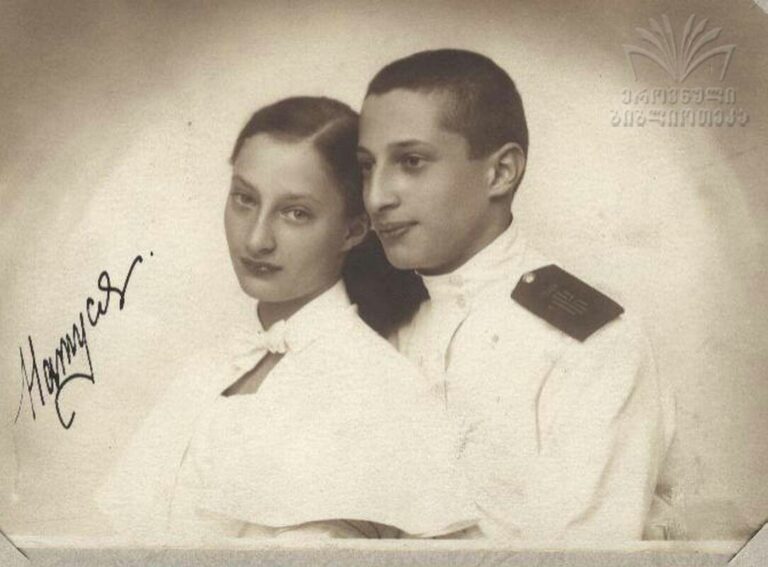
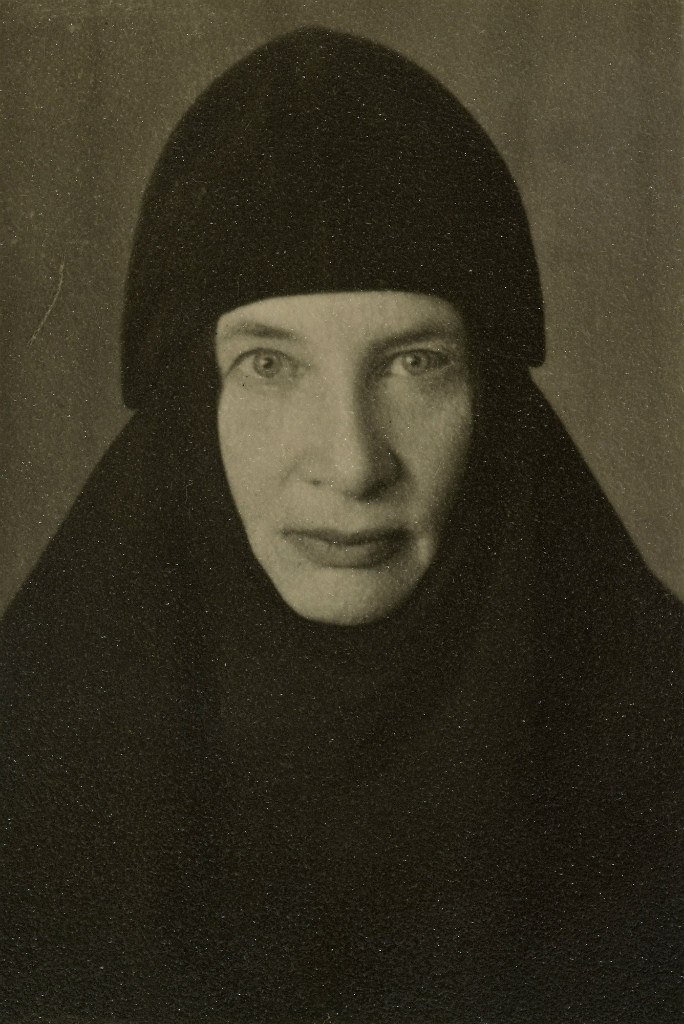
In 1946 Tatiana took monastic vows under the name Tamara, in honor of the Georgian queen. In 1951 she went to the Holy Land, to the Russian Convent of the Ascension on the Mount of Olives—the largest Russian monastery outside Russia—where she organized a school for Arab girls. She died there in 1979 as the abbess of the convent.



Add comment