

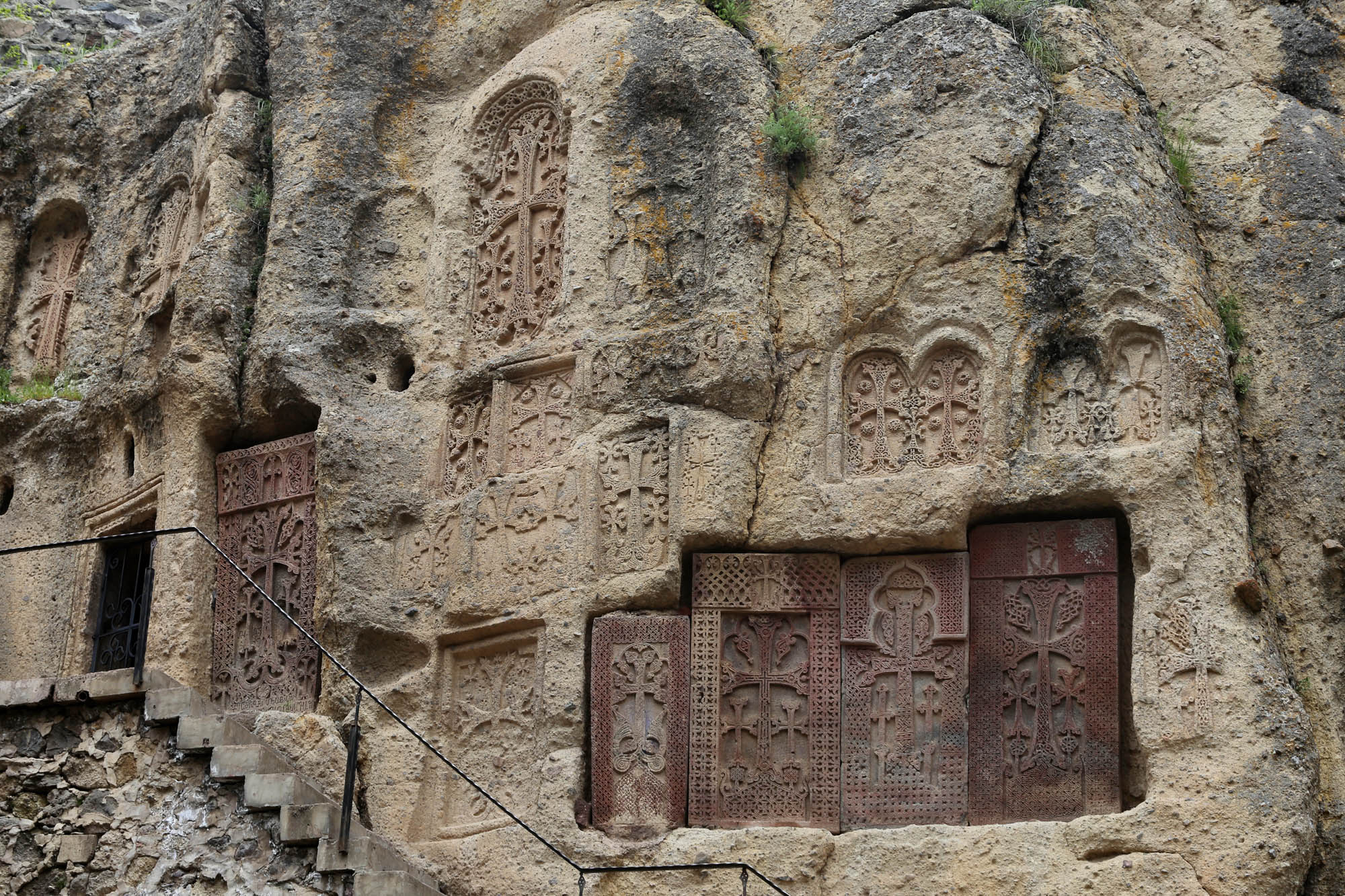
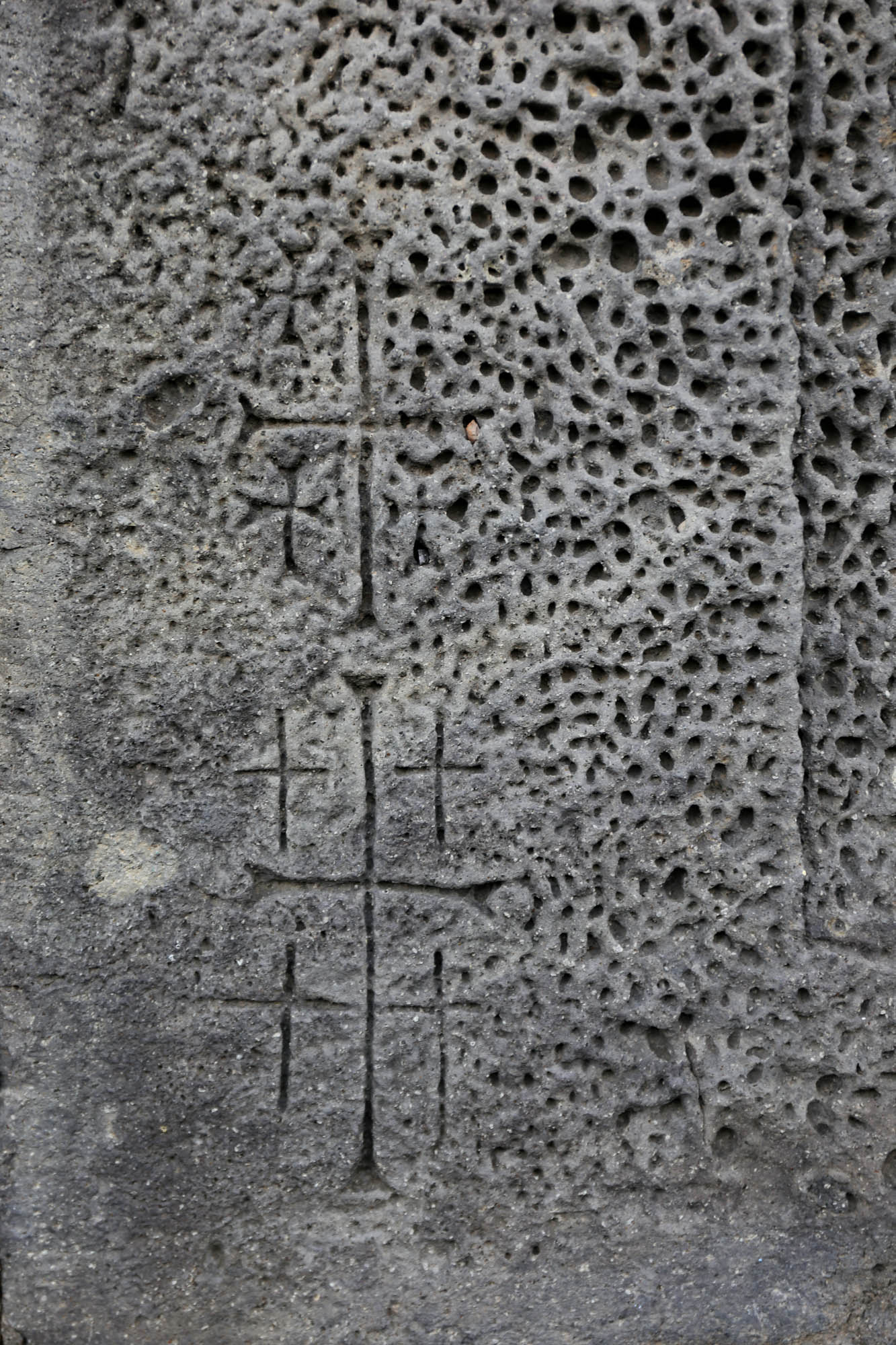
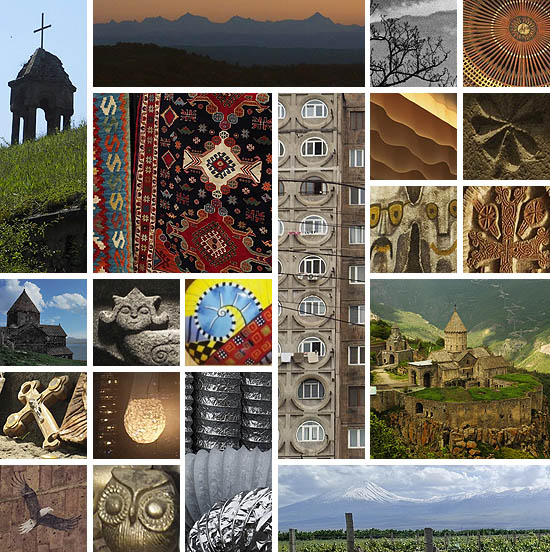
After returning from our group journeys, we often put together collective posts. These are not seamless travel accounts but rather kaleidoscopic compositions assembled from many different fragments of reflection, a kind of living patchwork, like the carpet of small crosses carved into the walls of Armenian churches.
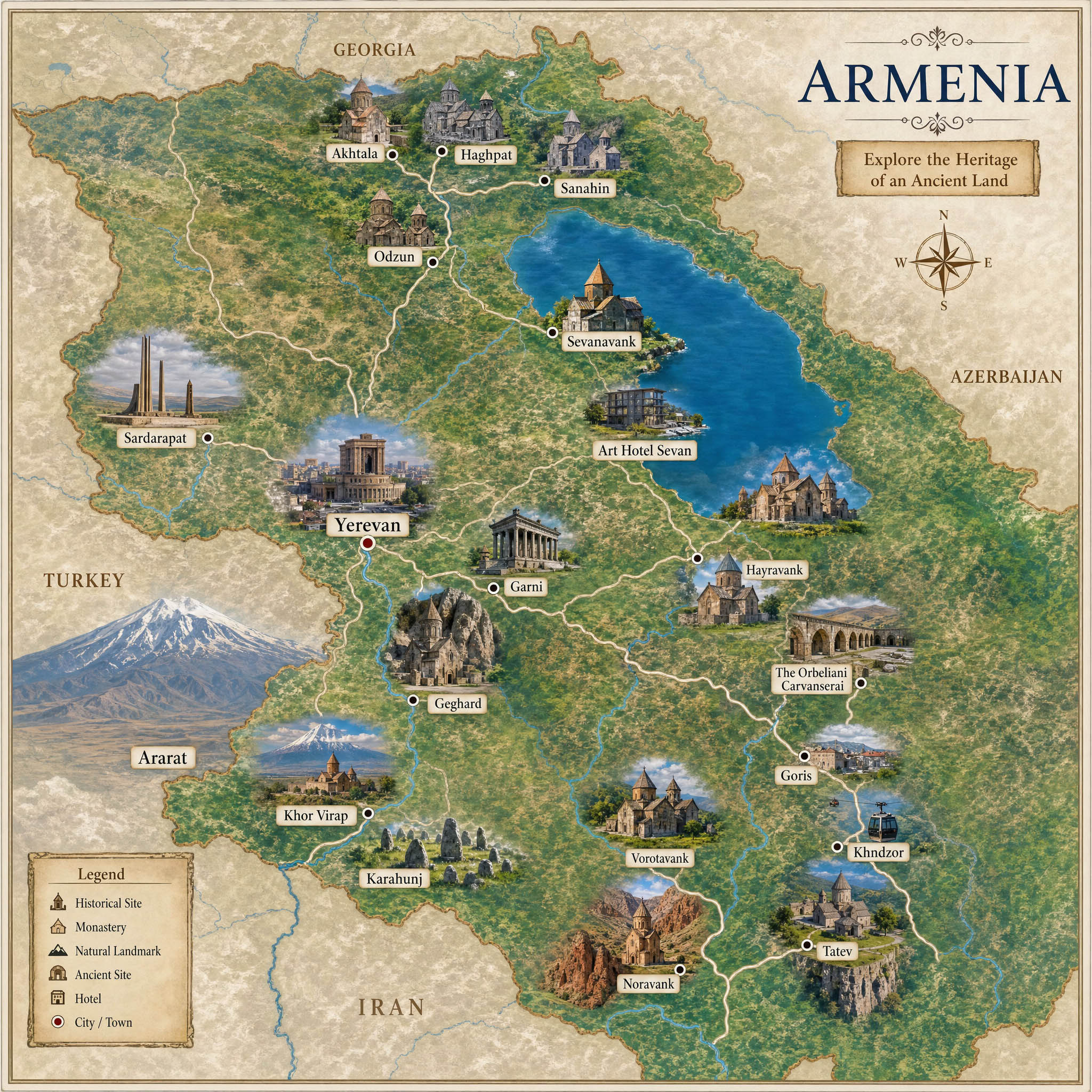
We are publishing such a collection now, following our journey through Armenia. Starting from Kutaisi – hence the photographs from Georgia – we entered the country through the northern region of UNESCO-listed monasteries (Akhtala, Haghpat, Sanahin and Odzun). Travelling along the shores of Lake Sevan and crossing the Vardenis Mountains – whose pass is marked by the Orbelian Caravanserai, built in 1332 – we reached Syunik, perhaps the richest province in Armenia in terms of medieval monuments. After that, we spent three days in and around Yerevan before flying home.
The posts below offer many different answers to the question of what captures the imagination of a first-time visitor to Armenia. Yet some discoveries can only be earned through repeated returns. For me, who by profession is expected to know all the major monuments and their histories, the revelation this time was how rich the stories are even behind seemingly insignificant details: solitary khachkars, gravestones, fragments of frescoes, and ornate crosses carved into church walls. I have already begun writing about these, one post at a time; their ever-growing list of titles can be found here in the section entitled “Armenian History Inscribed in Images.” It was precisely the richness of these details that inspired me to begin work on an Armenia guidebook that would present the monuments and the country through such details and the stories attached to them. I hope that on our next journey to Armenia I will be able to place such a guidebook into the hands of my fellow travellers.
Tamás

Clinging to the mountains
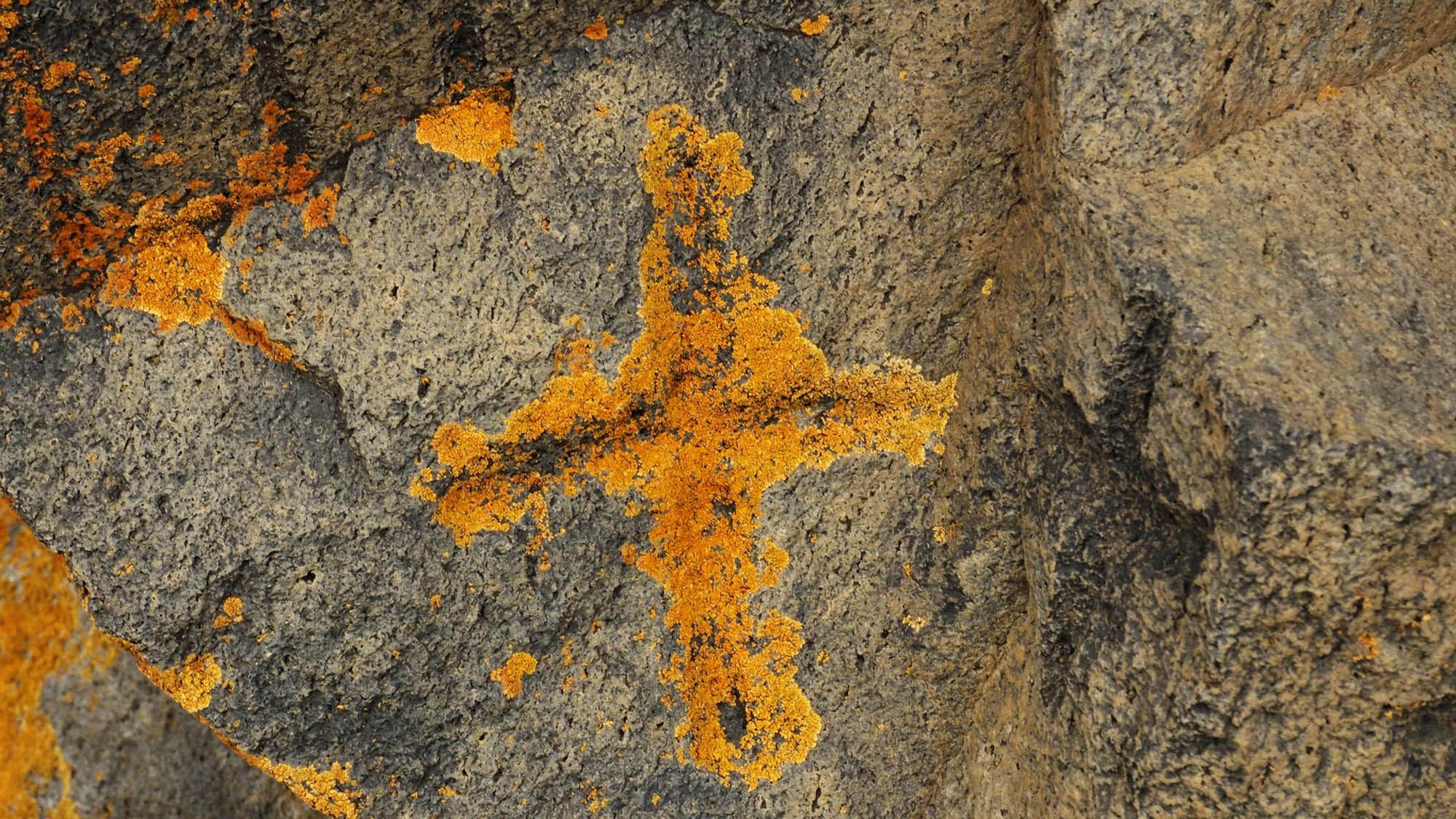
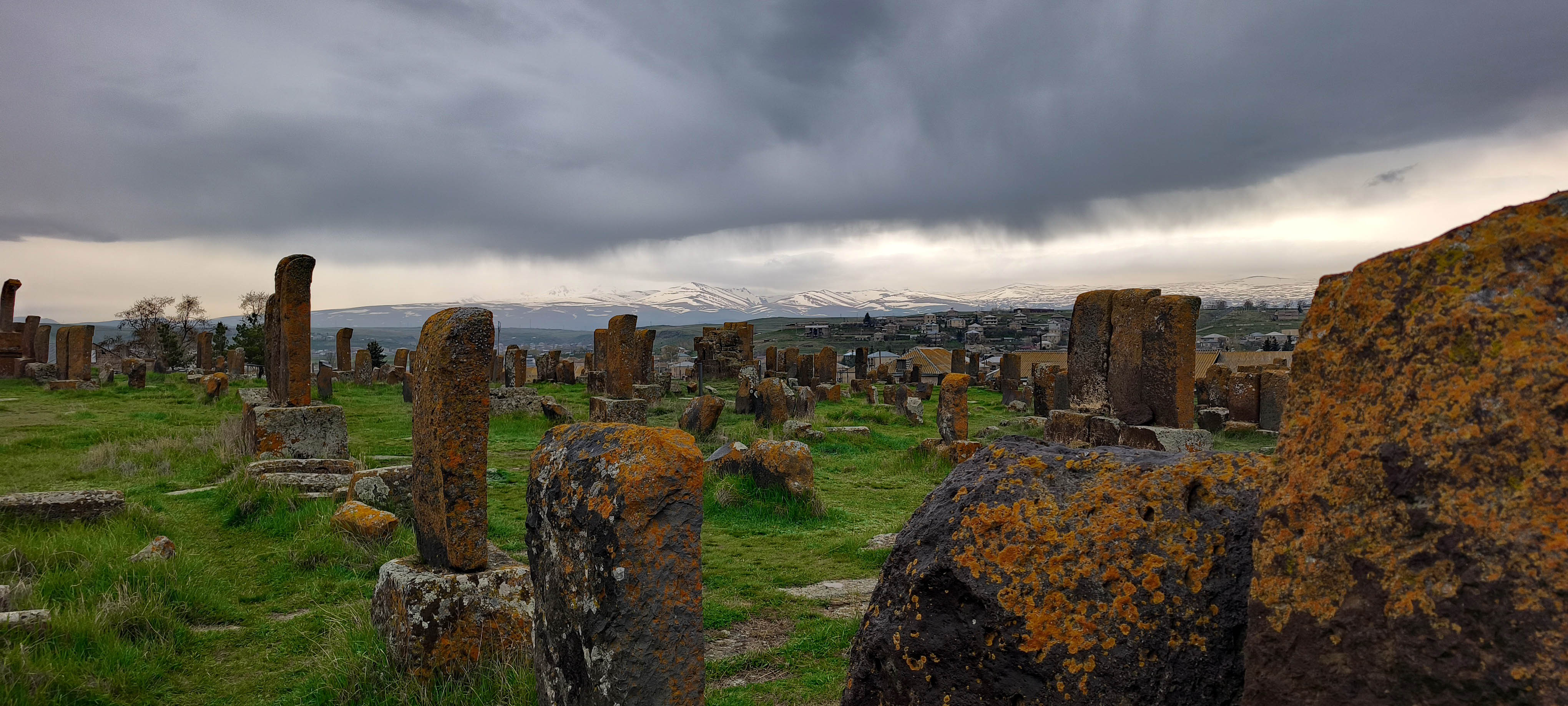
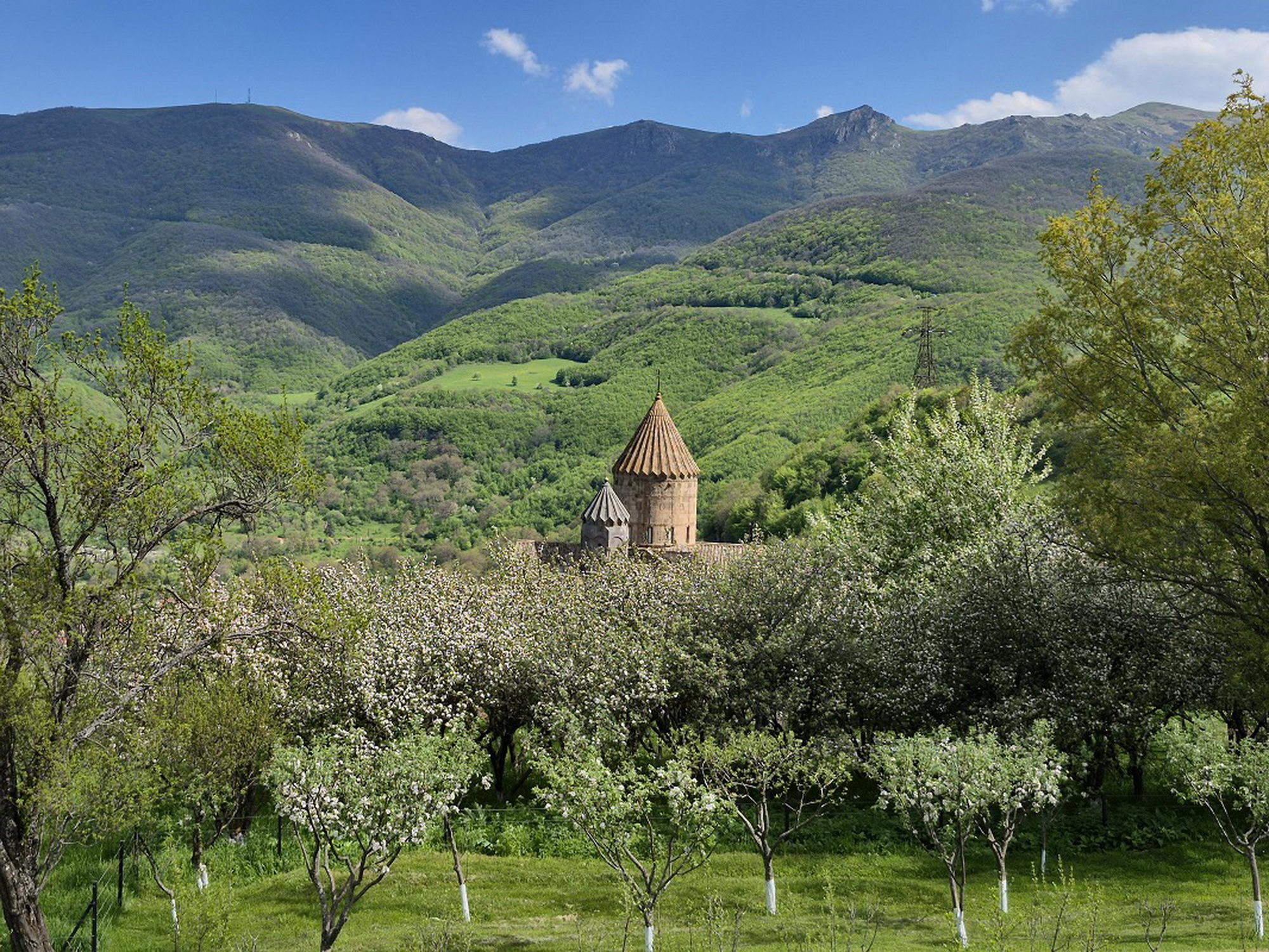
In Armenia, the rocks were often coloured orange by lichen. I am a biologist, and I know that lichens are the first to begin life on a newly formed rocky landscape. They dissolve minerals from the stone, they begin photosynthesis, and they create the first soil. To me, this lichen is a symbol of Armenia and the Armenians. They were among the earliest Christians to take root in this mountainous land. Under difficult circumstances, clinging to their magnificent mountains, they cultivate the valleys hidden among the peaks, valleys that yield grain, vineyards, and fruit trees. Nature itself gave birth here to the walnut tree, quince, pear, and apple, and the people of the land planted fertile gardens from them. Amid these landscapes they raised majestic sacred places that harmonise with the terrain. Sadly, this region proved very harsh for them. I think we Hungarians are rather poor beginners compared to them with our Mongol invasion, the Turks, and Trianon. There is a saying: “What does not kill you makes you stronger.” Well, they were many times almost completely killed. That is what made them strong.
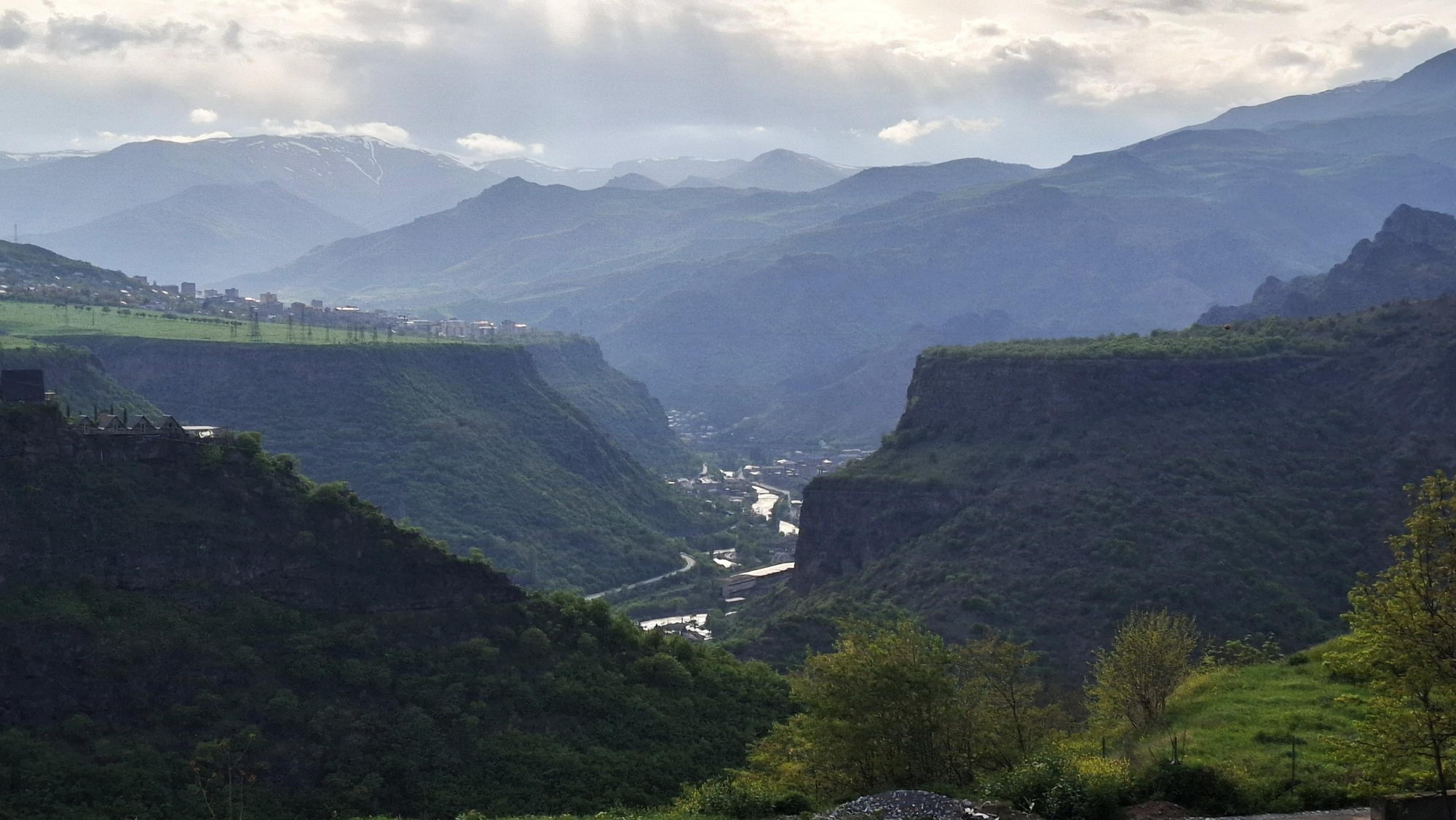
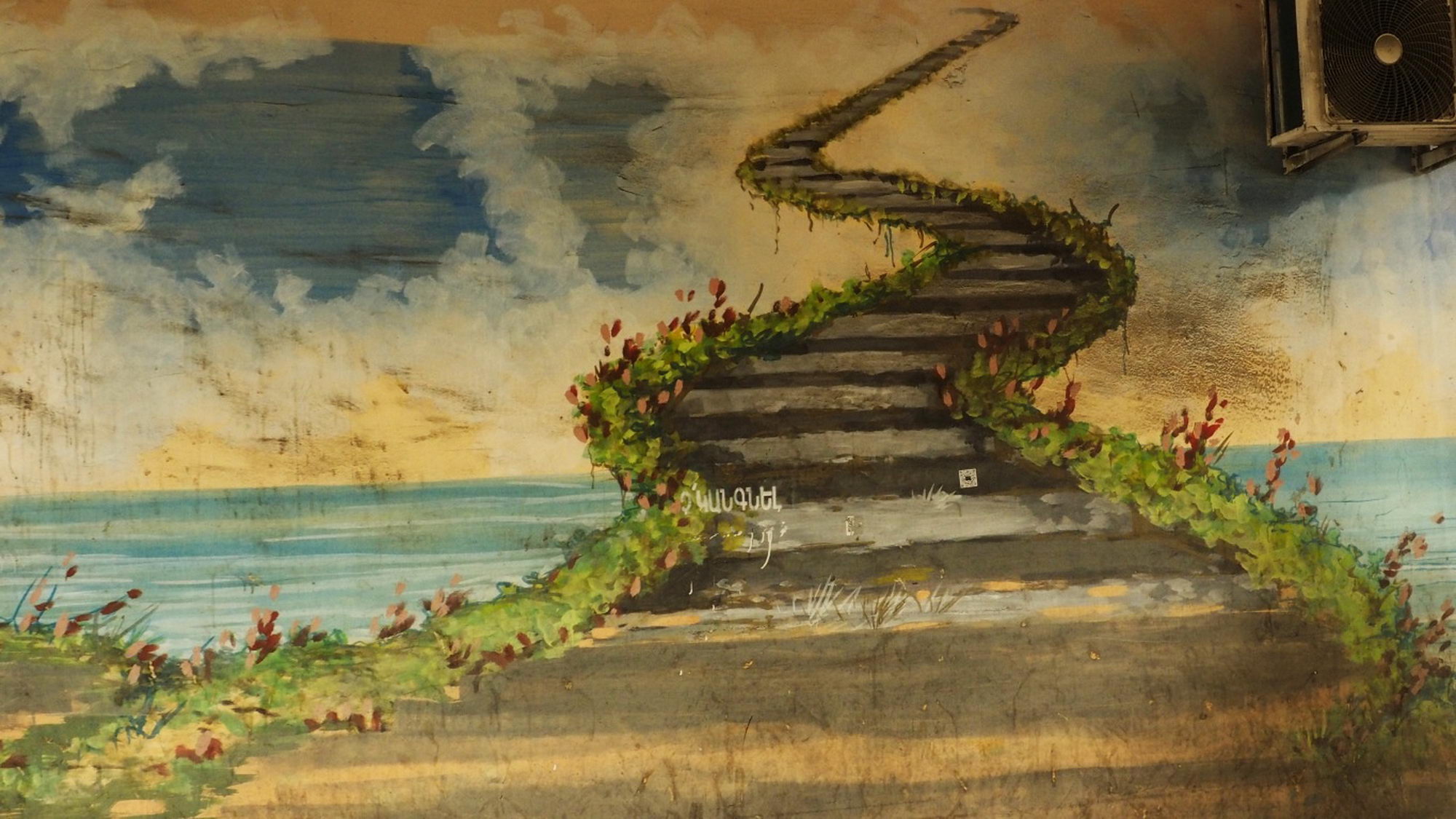
Attila and Viktória
Armenia surprises—but not in the way we expect
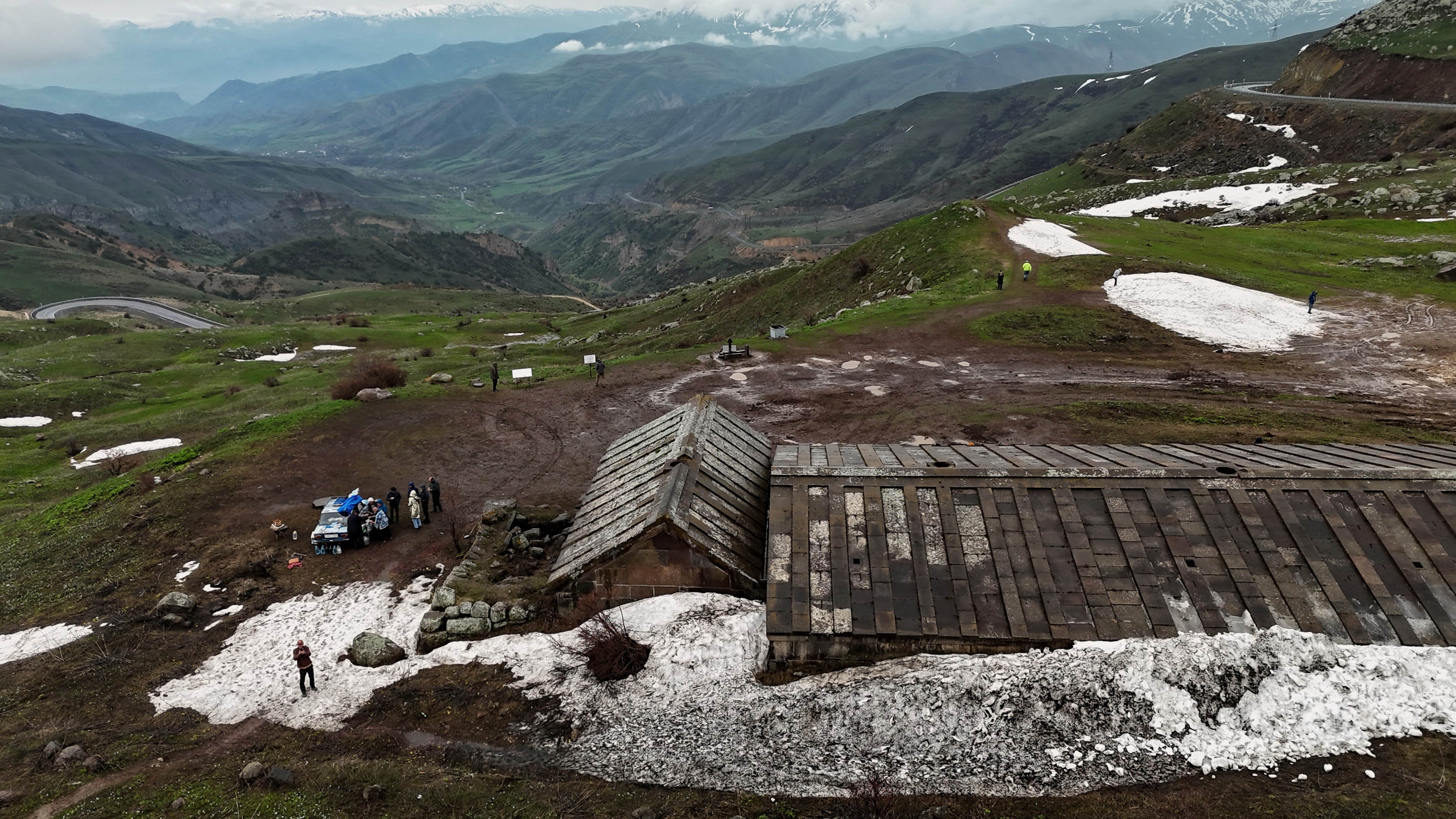
During the COVID period, I had to drive a lot because of my work, but there were few petrol stations open during the pandemic. So when you finally found one that was operating, you felt an almost ancient kind of happiness. It was a similar feeling to stopping at the Orbeliani caravanserai, both now and centuries ago. Although in function it was closer to a mountain refuge in the Tatras, at 2,410 meters—especially in muddy, miserable weather—you could still feel that this massive, windowless space was not built for decoration but for survival. While outside weather and bandits posed a threat, inside, huddled together in animal-warm, human-smelling heat, relationships were formed. A large hall with a shared kitchen, from which a long three-aisled wing opened; in the central nave cargo could be unloaded, while in the two side aisles animals could rest alongside their owners. From anonymous camel drivers to silk merchants, everyone could stay free of charge for three days at the state’s expense.
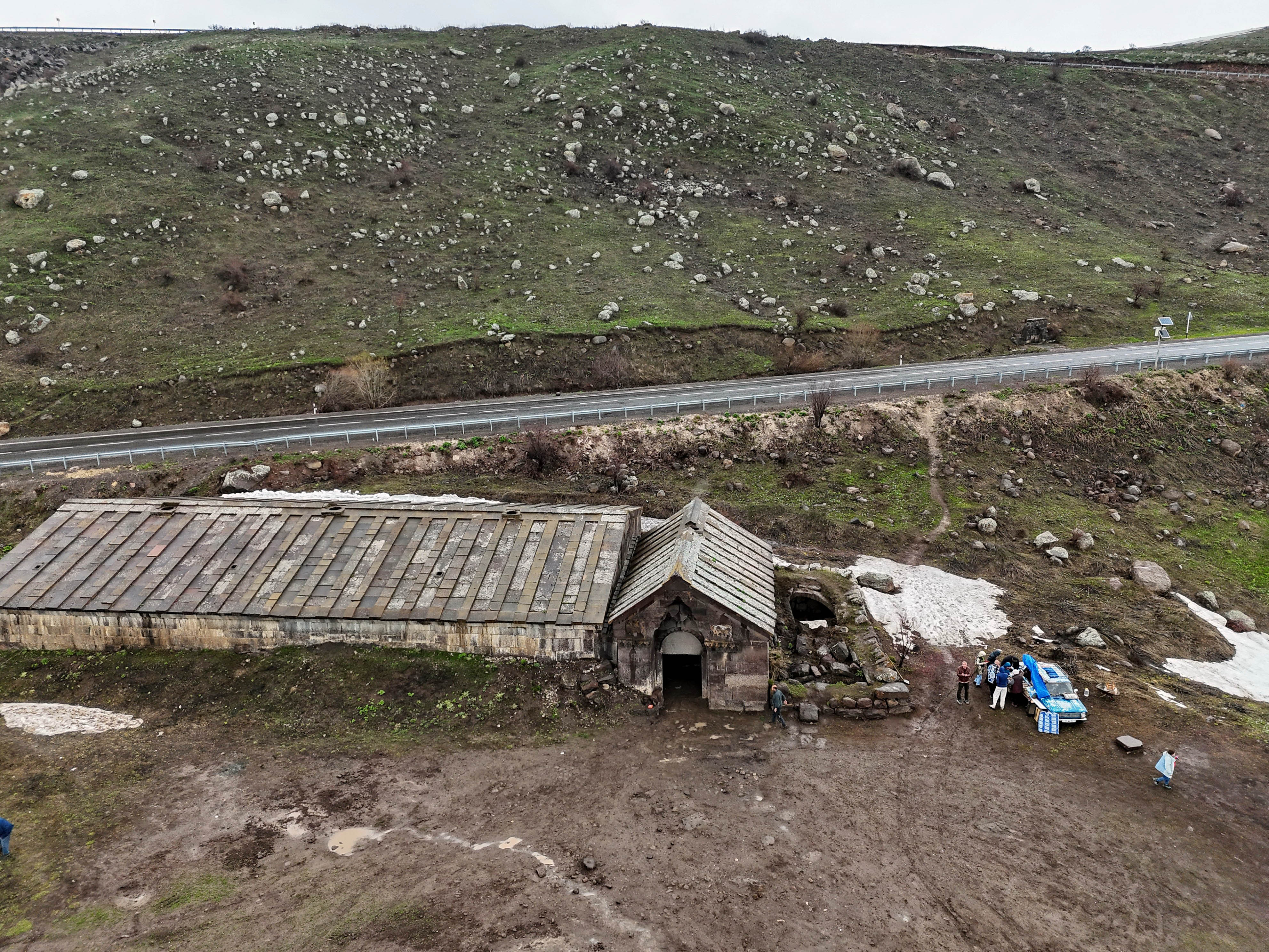
Zorats Karer was the place I most looked forward to, this ancient mystical site—but there I realized something important about myself, or perhaps about the general human mind. I am simply incapable of grasping, recalling, or even contemplating the time depth in which Zorats Karer was born. The world of 6,000 years ago is too distant. The signs are too alien. The stones are too silent. The culture that created it lies entirely outside what I can meaningfully absorb. However impressive that era may be, my mind simply bounced off those ancient stones, because there was nothing to connect to.

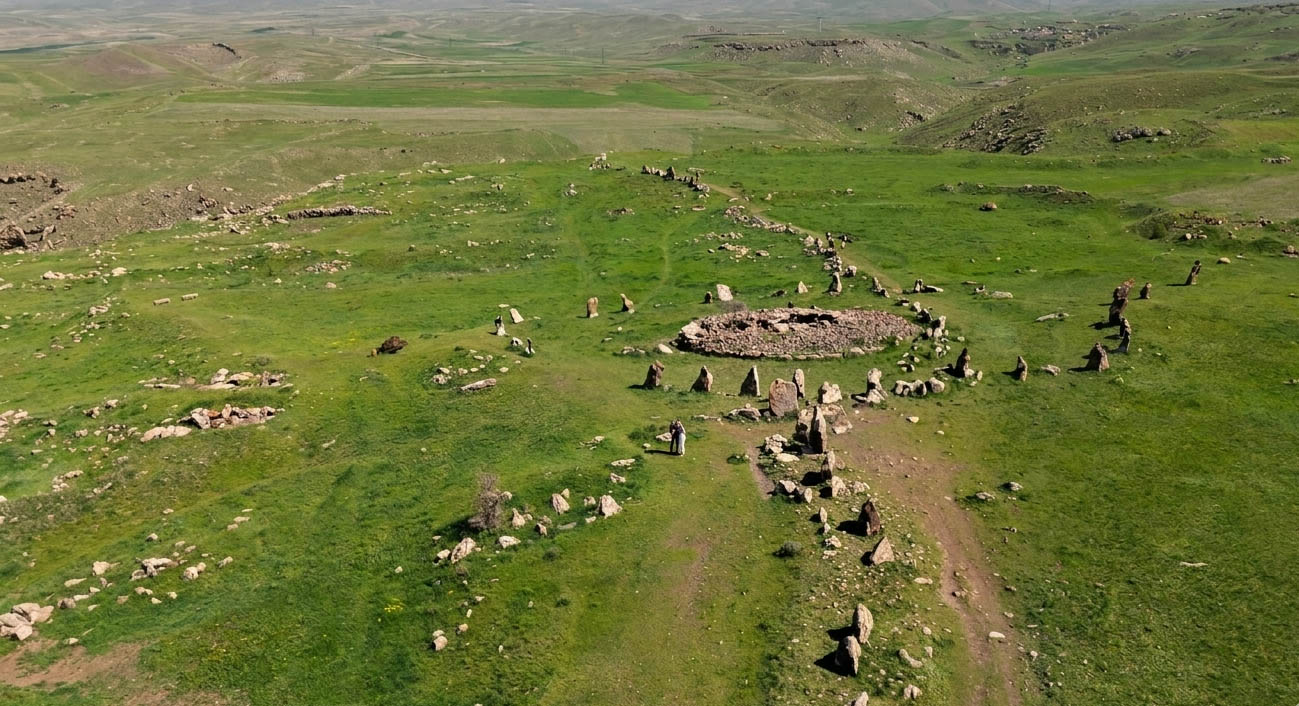
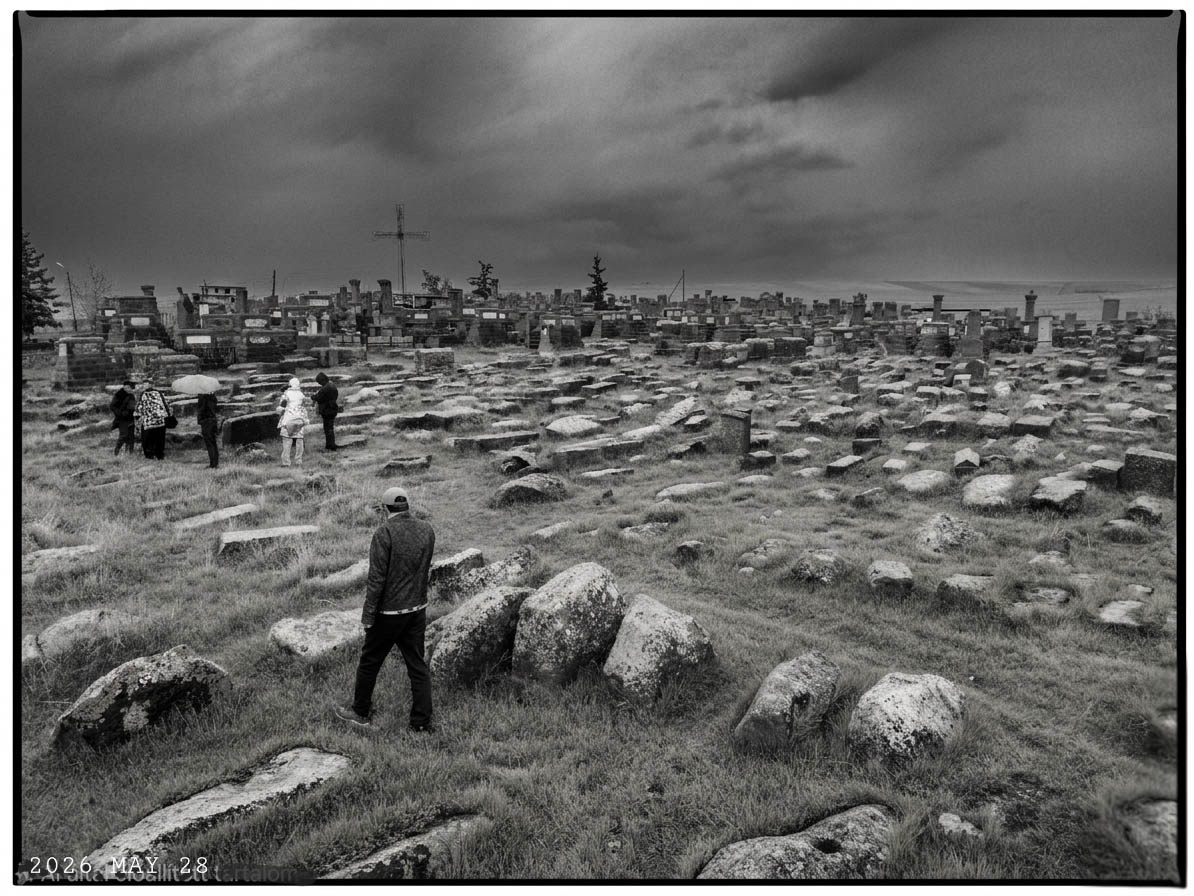
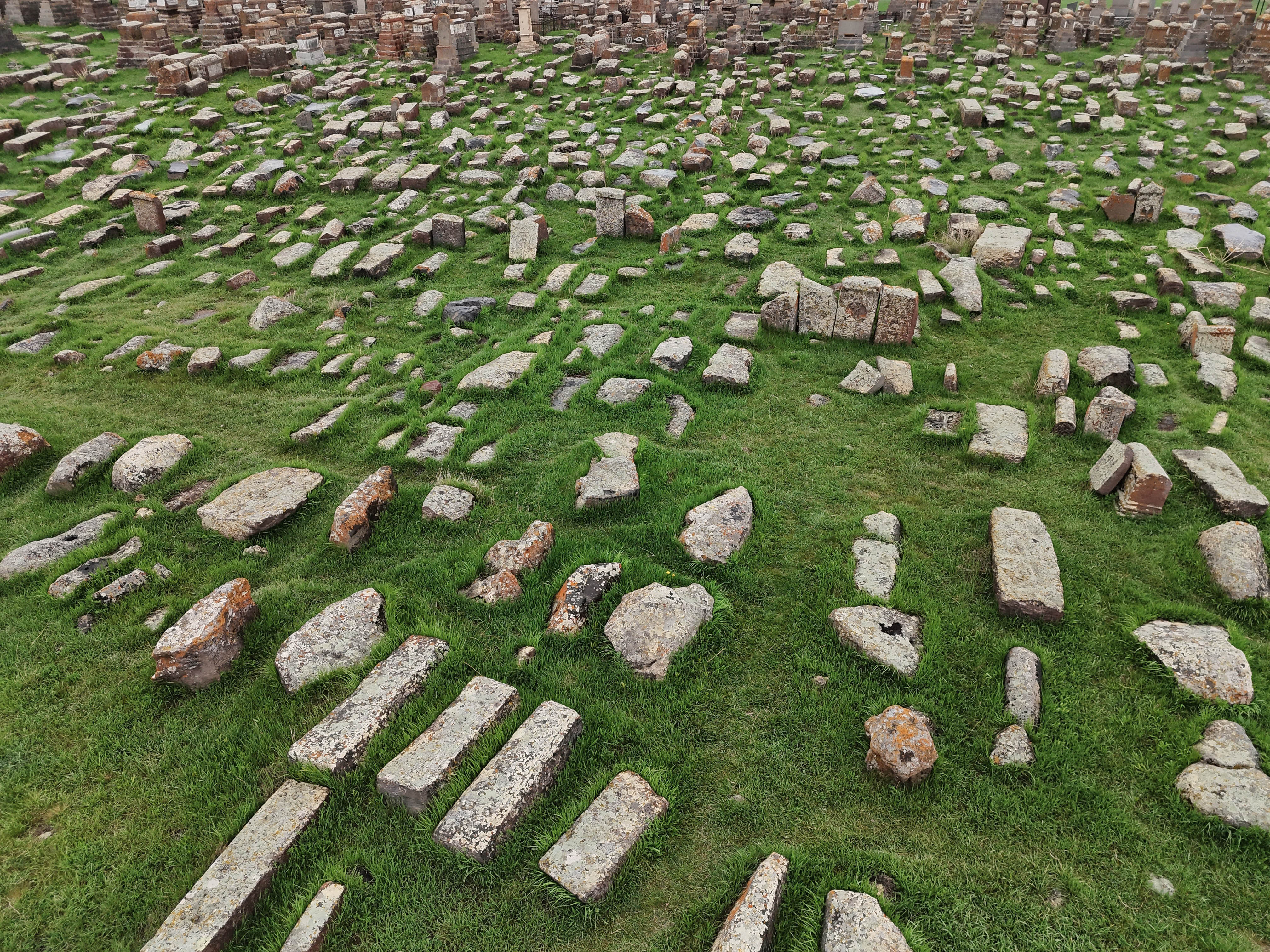
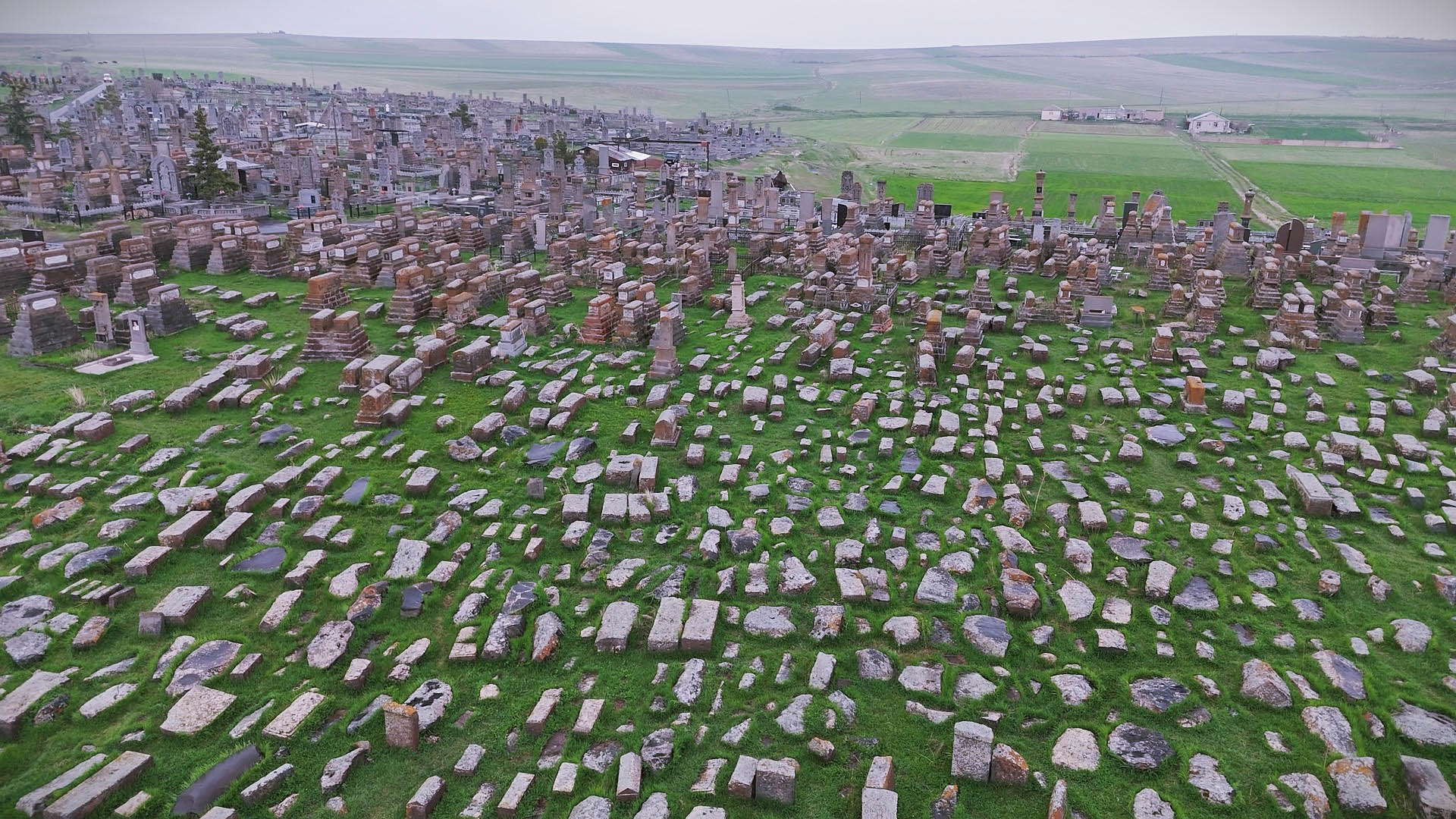
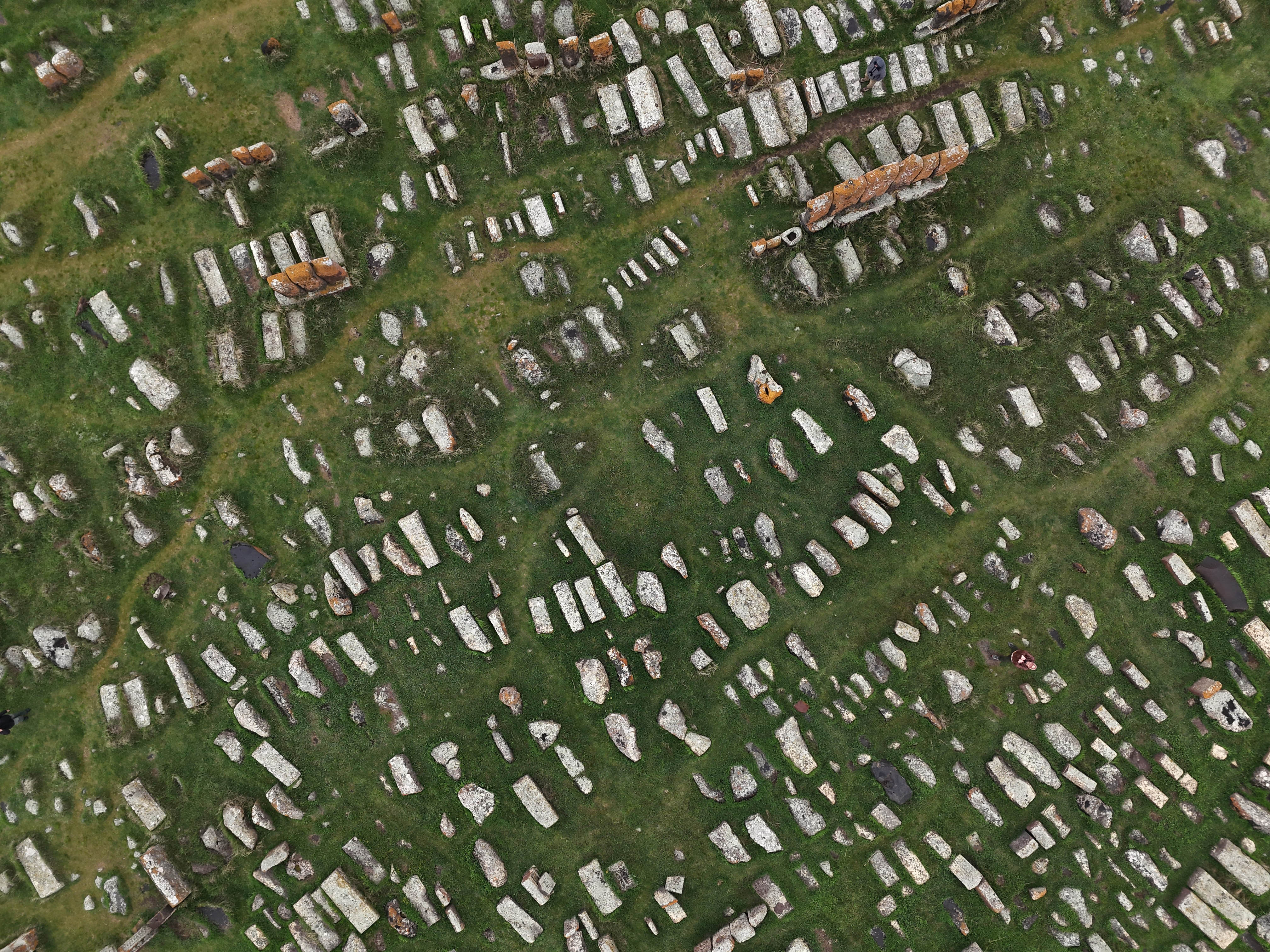
In contrast, Noratus, despite its equally respectable age of 1,100 years, somehow felt like a much closer place. A familiar cemetery, as a culture of memory and life. I used to visit cemeteries often with my great-grandmother. She could tell a life story for every grave, and around every plot we would meet another visitor with whom a short chat would naturally unfold. The cemetery and the market were the most important places for the exchange of information. And if someone has had enough of the winding khachkars, here are a few photos from below and above, where hundreds of carved headstones sink appetizingly into the green grass like raisins into sponge cake.
A more scholarly description of the cemetery can be found in a 2009 Río Wang post.
Péter
Living History
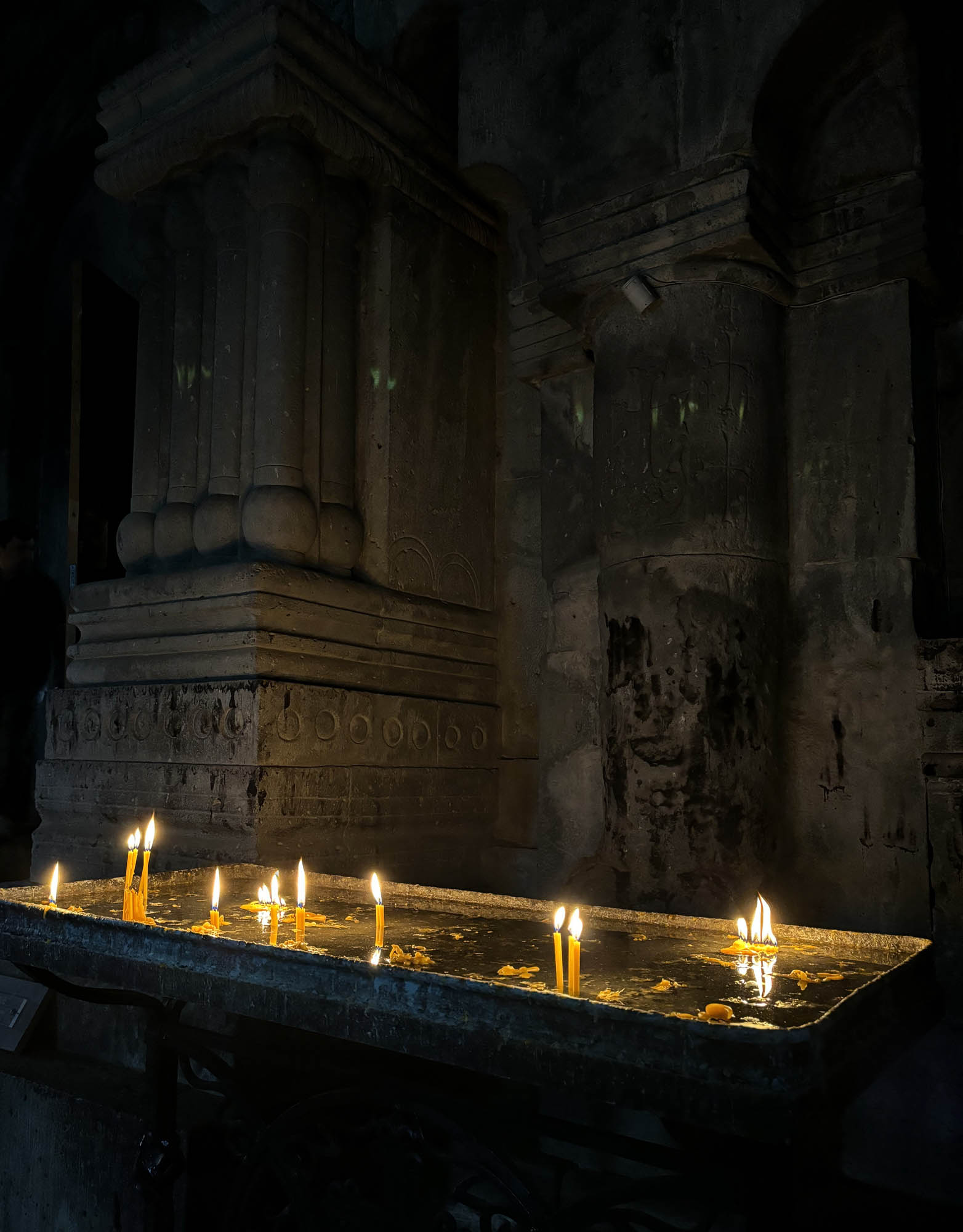
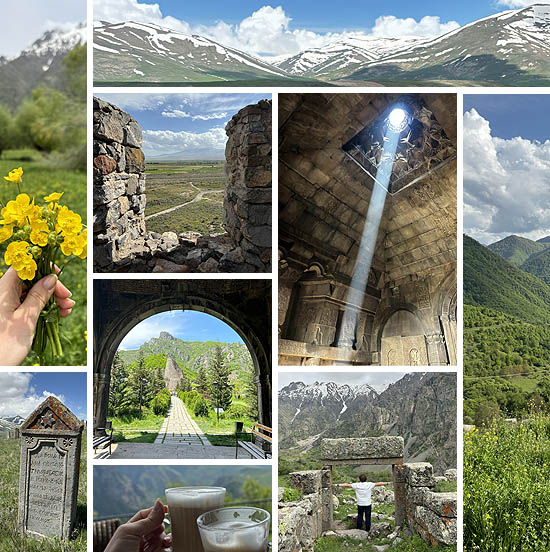
What touched me most was the feeling of antiquity and living history that accompanied us throughout almost the entire journey — especially in the monasteries of Armenia and among the mountain landscapes of Georgia. It was remarkable to see how closely nature, faith, everyday life, and the hospitality of the people are intertwined there.
I was especially struck by the roads winding through the mountains, the old stone churches, and the feeling that time flows differently there. And at the same time there was a very unexpected sense of home, a kind of inner peace and closeness, as if you were in a place you had known for a long time.
For me, this was not simply a journey, but an opportunity to slow down a little, to look at the world differently, and to meet very interesting people.
Thanks to Tamás for the atmosphere, the openness, and the shared experiences.
Iryna
Tree rings
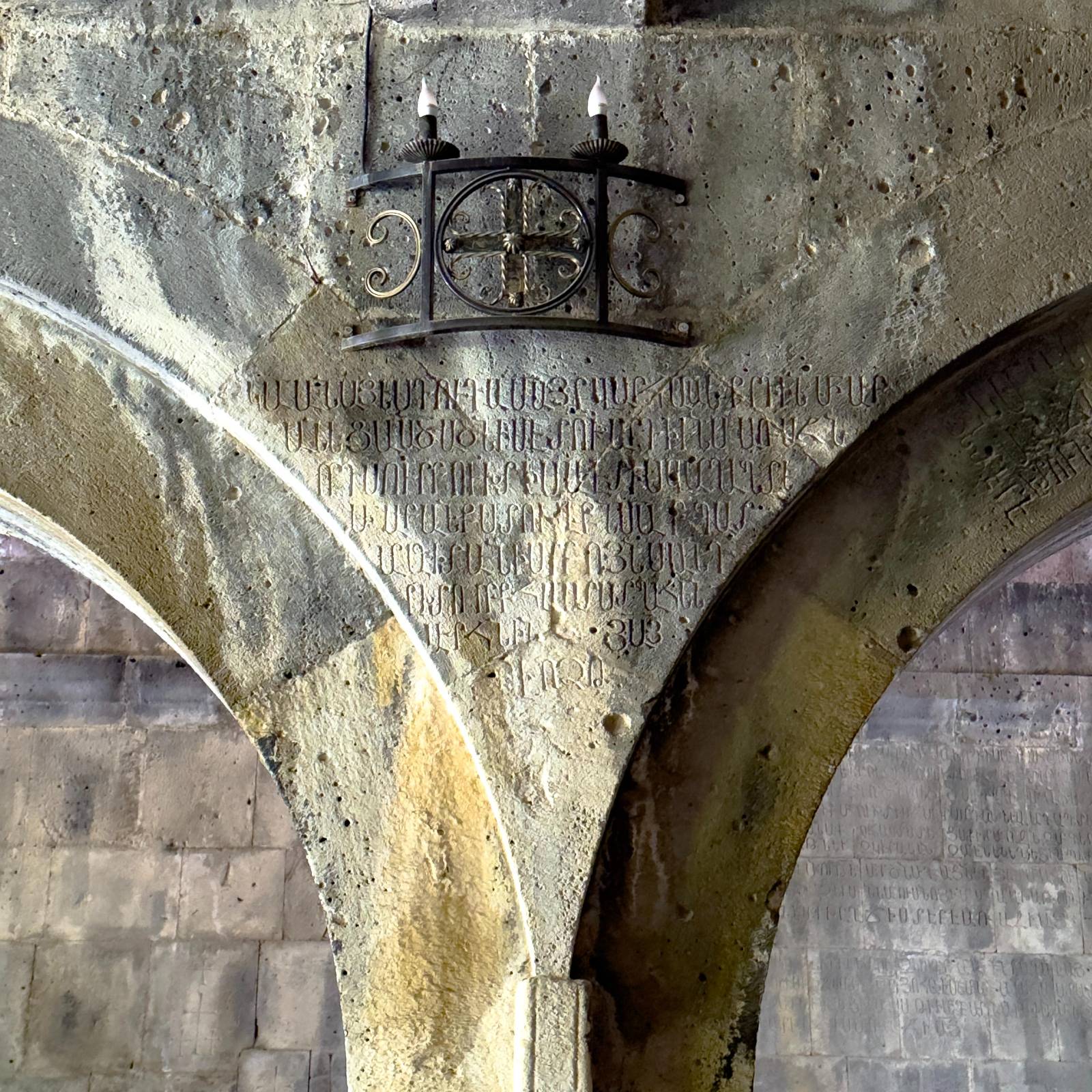
A human life has layers, which may be likened to the rings of a tree, or perhaps the chapters of a book; and the stream of one’s thoughts are replete with the echoes that one observes when these layers call out to one another. I like to travel to places, true, but truer still is that I like to travel to some of the same places again and again. I understand the braided path I have taken in my travels largely through the resonances that accrue as the opportunities for deeper understandings unfold.
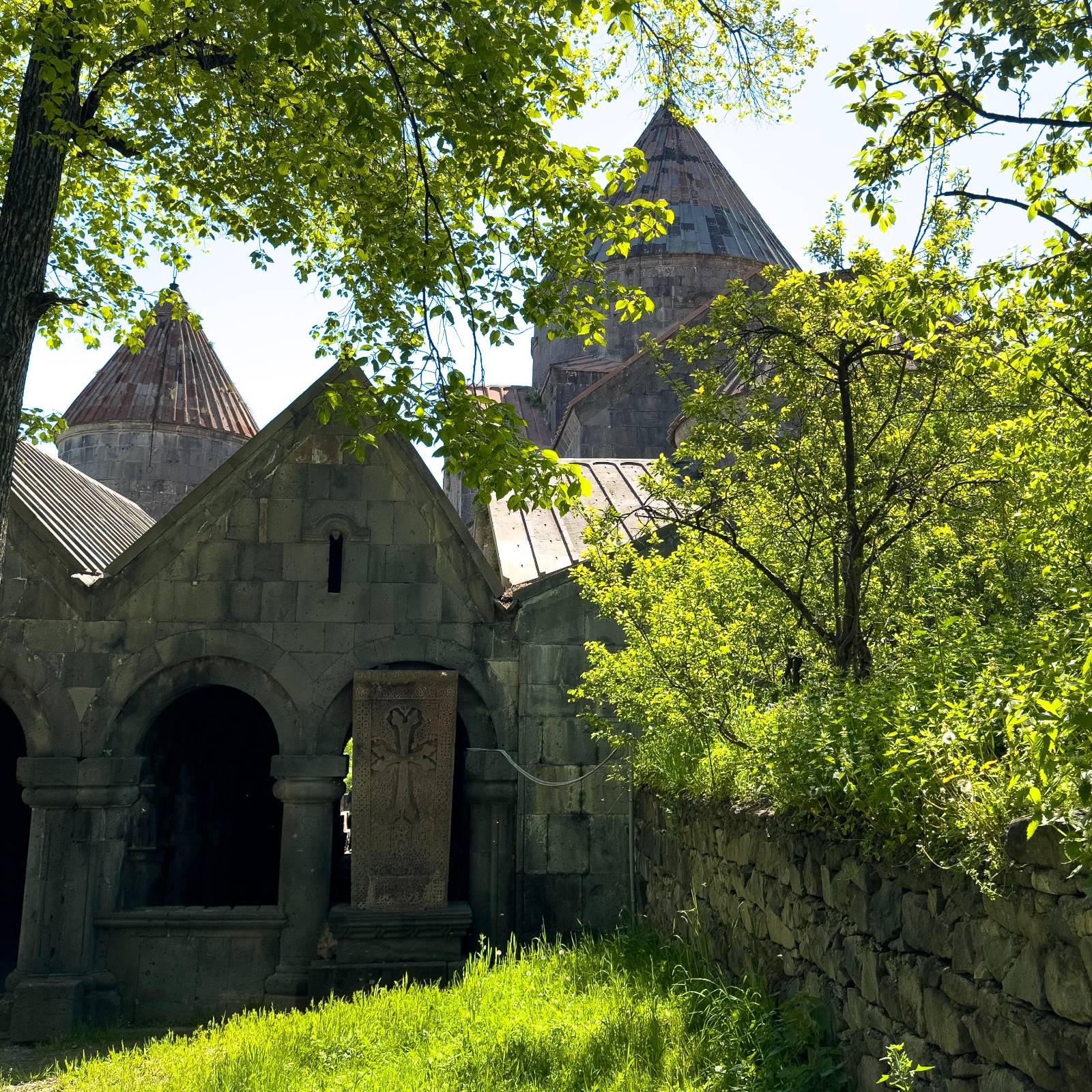
I first saw Sanahin in winter and vividly remember the wet stones of its ancient walls and reverberant sound of melting snow everywhere dripping, from the trees around the structure, and inside its open spaces onto the hard stone floors; a concert of natural sounds that made the entire site seem somehow alive.
Eleven years later I am at Sanahin once again, in different company, and I find it good that no major change to the site has taken place in the intervening years. It is Spring now, nearly Summer, and the nesting swallows darting in and out, feeding their young, are the perfect second verse to the song that is Sanahin, a resonant glory in site and stone, with its interior spaces richly carved with texts and figures, and richly reverberant to the human voice. Again, the sensation is that I am in the presence of a living thing; or at least a thing made by humans with a high degree of purpose, which still has the power to affect the humans of today.
Lloyd
Reflections (Georgia and Armenia)
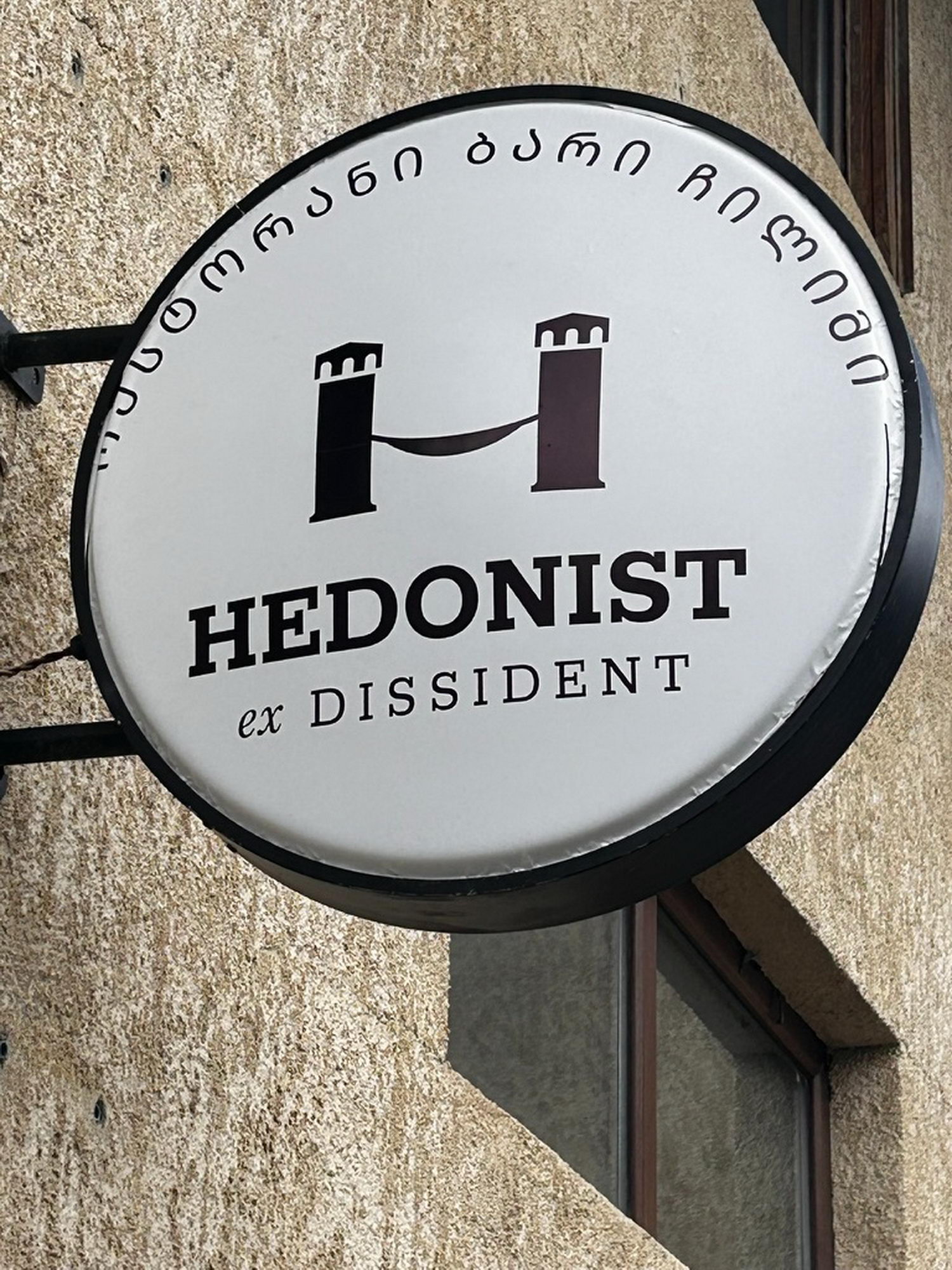
The sign says everything about the post-Soviet Caucasus. Whoever was protesting yesterday is happily drinking today—and above the “H” shaped like a Svaneti tower, the Georgian letters say that this is a bar. Dissident or hedonist? In Georgia, it depends.
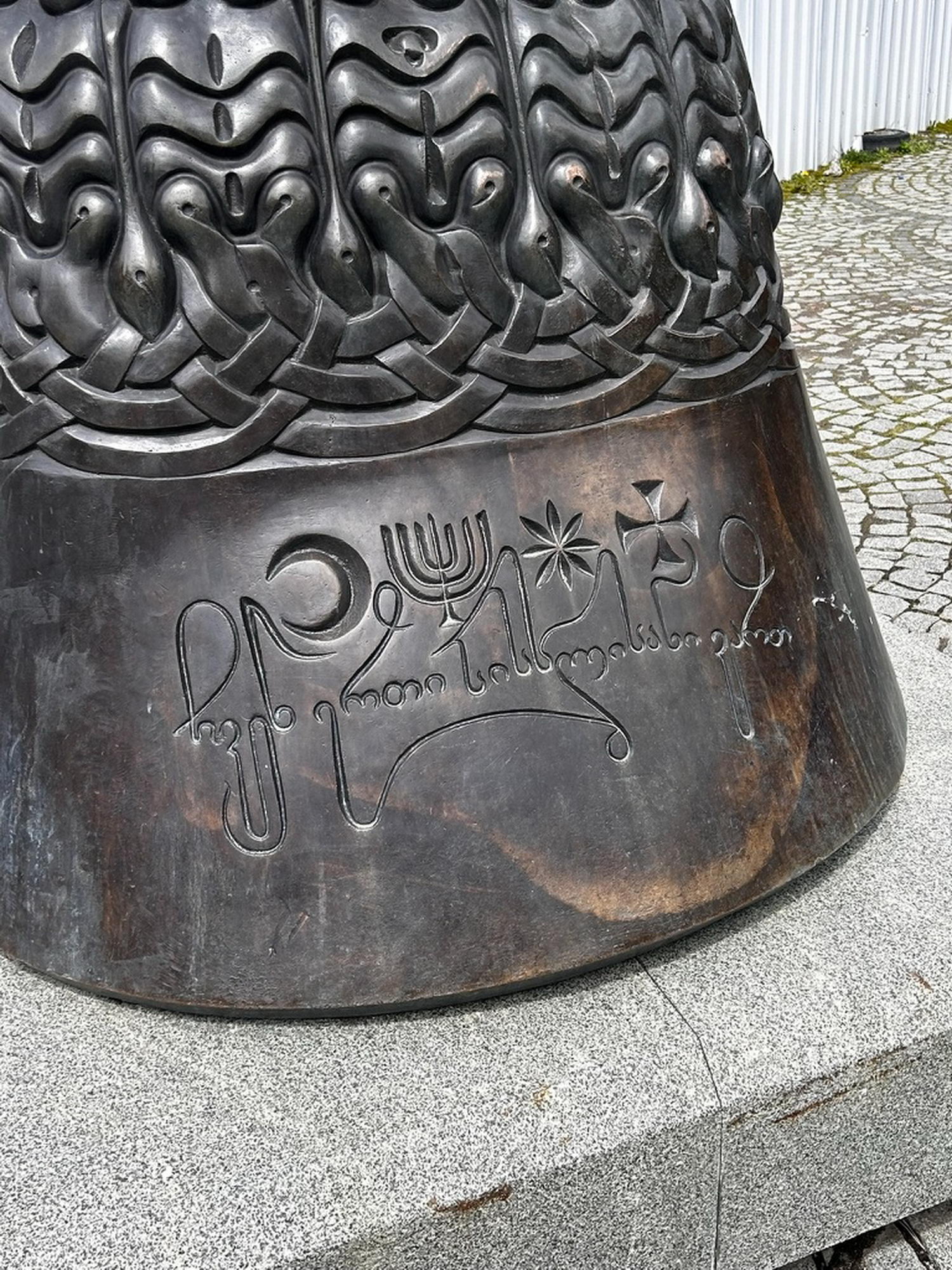
On this bronze, the menorah, the cross, the crescent, and Georgian script coexist side by side—an object that condenses the essence of Georgia into a single form. For thousands of years, this country has existed on the border between East and West, between the Biblical and the pagan world, and it does not explain this: it simply places it before you and leaves interpretation to you.
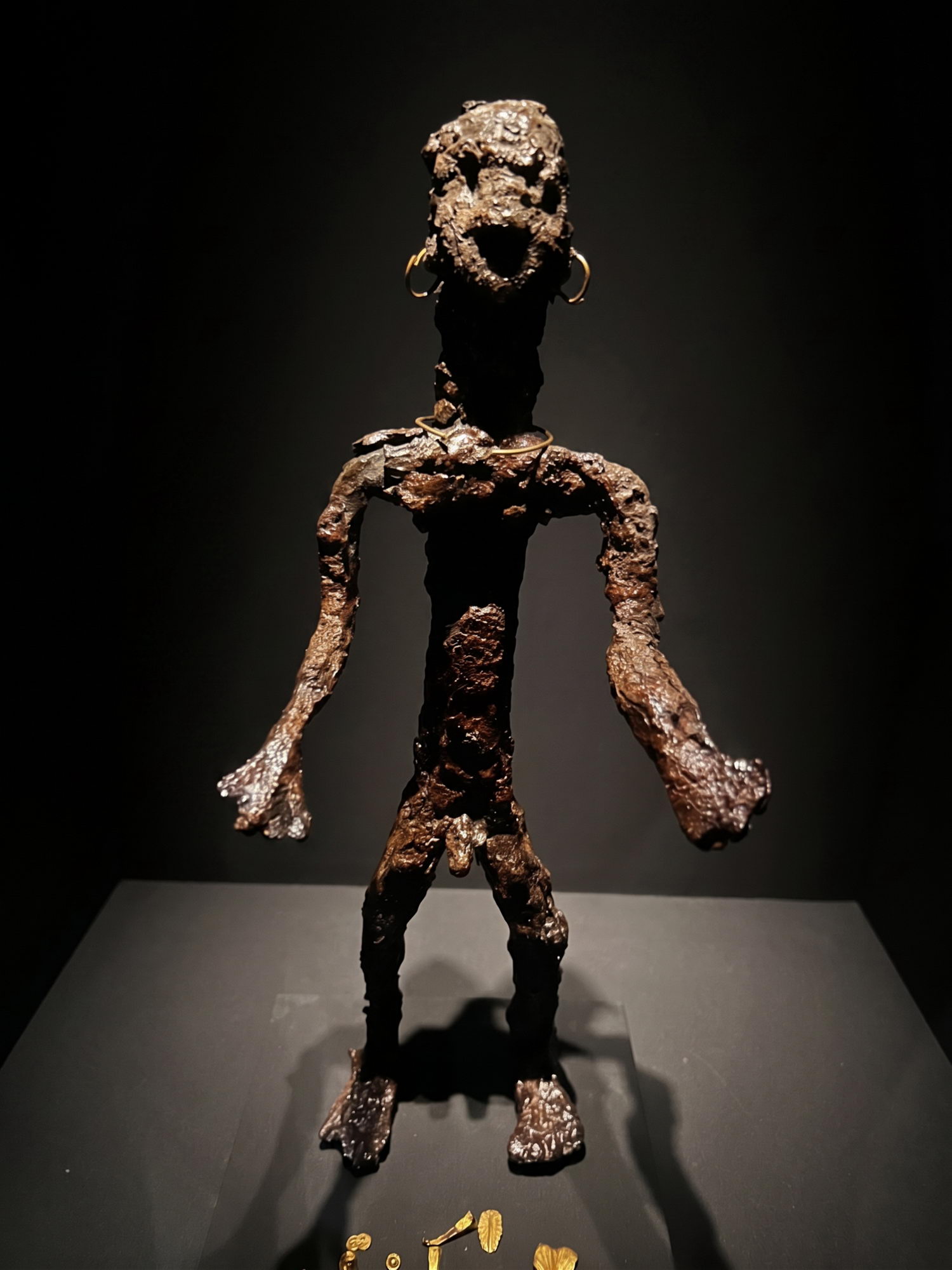
This small, corroded figure is more than a thousand years old, yet it shows a completely living face—open mouth, folded arms, earrings. It is not gold that shines the most, but the rusted iron from which a human being still looks back.
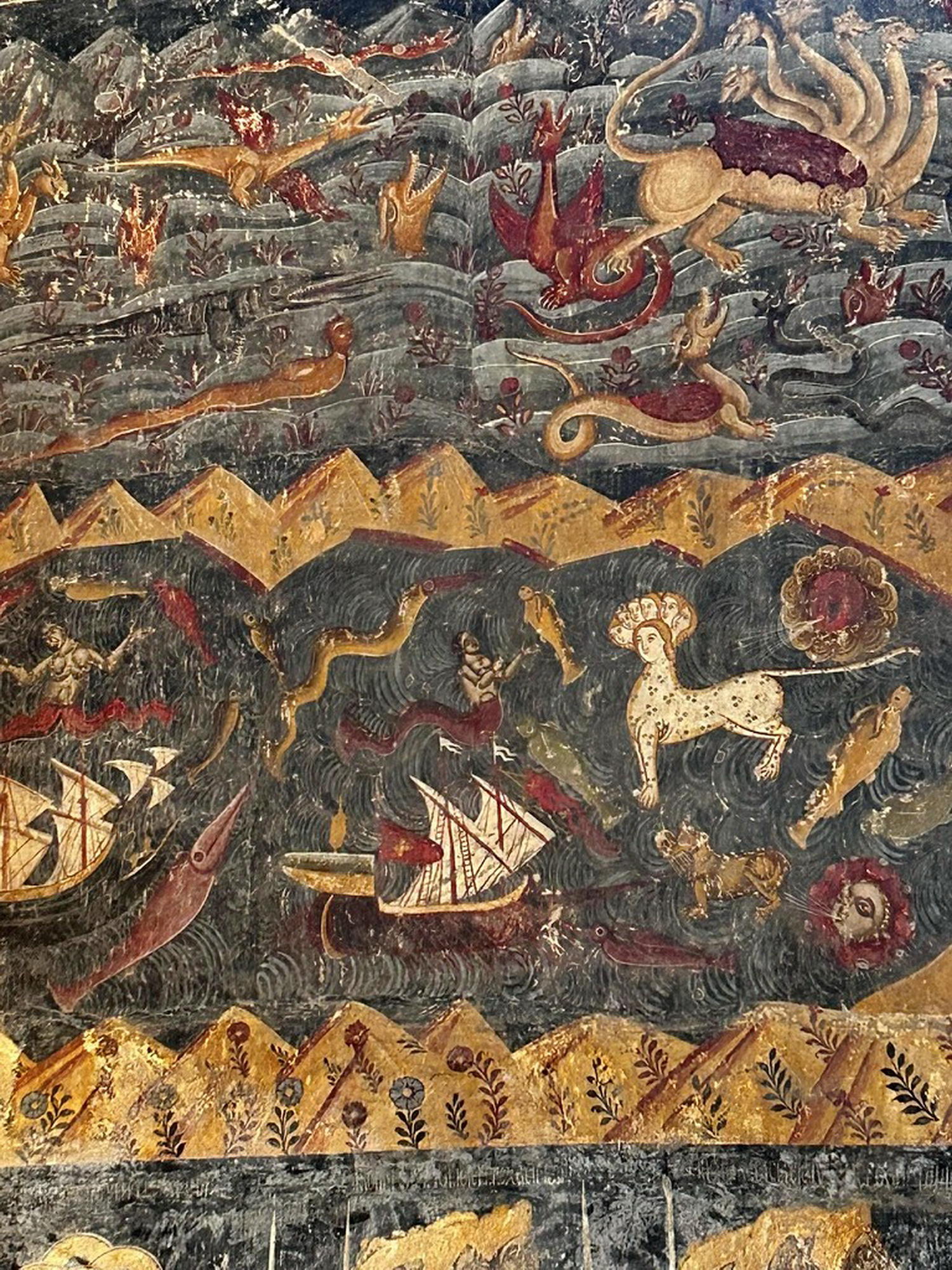
On the wall of a monastery church, the sea of the Last Judgment: dragons, monsters, ships, centaurs, and a white unicorn rushing through the waves. Whoever thought medieval Christian imagination was gentle and disciplined should look at this wall.
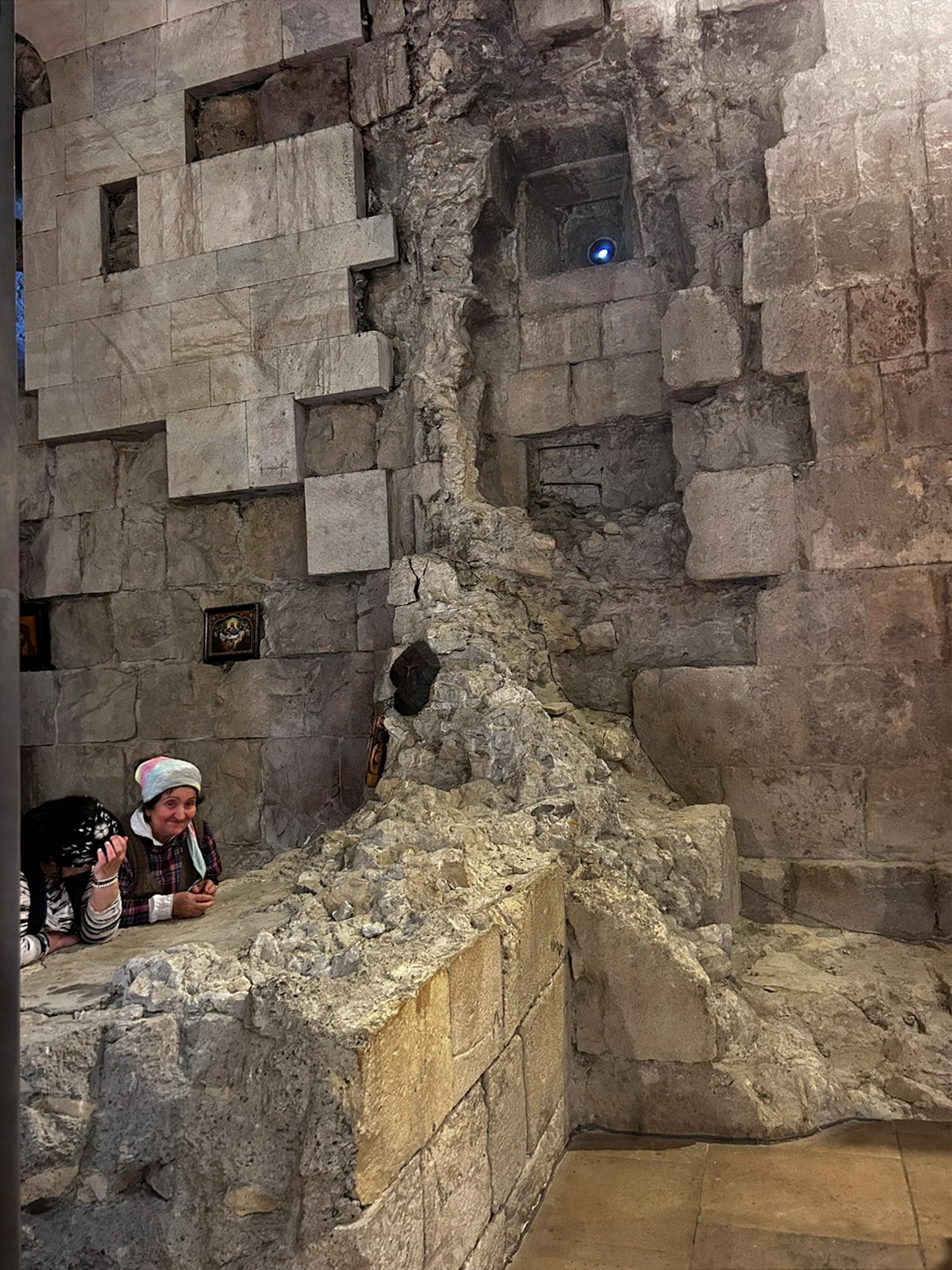
In candlelight, women with headscarves stand before the pulpit and talk. They are not tourists, but participants—and you can immediately feel the difference. Stone, smoke, and chant merge into something that no longer needs words.
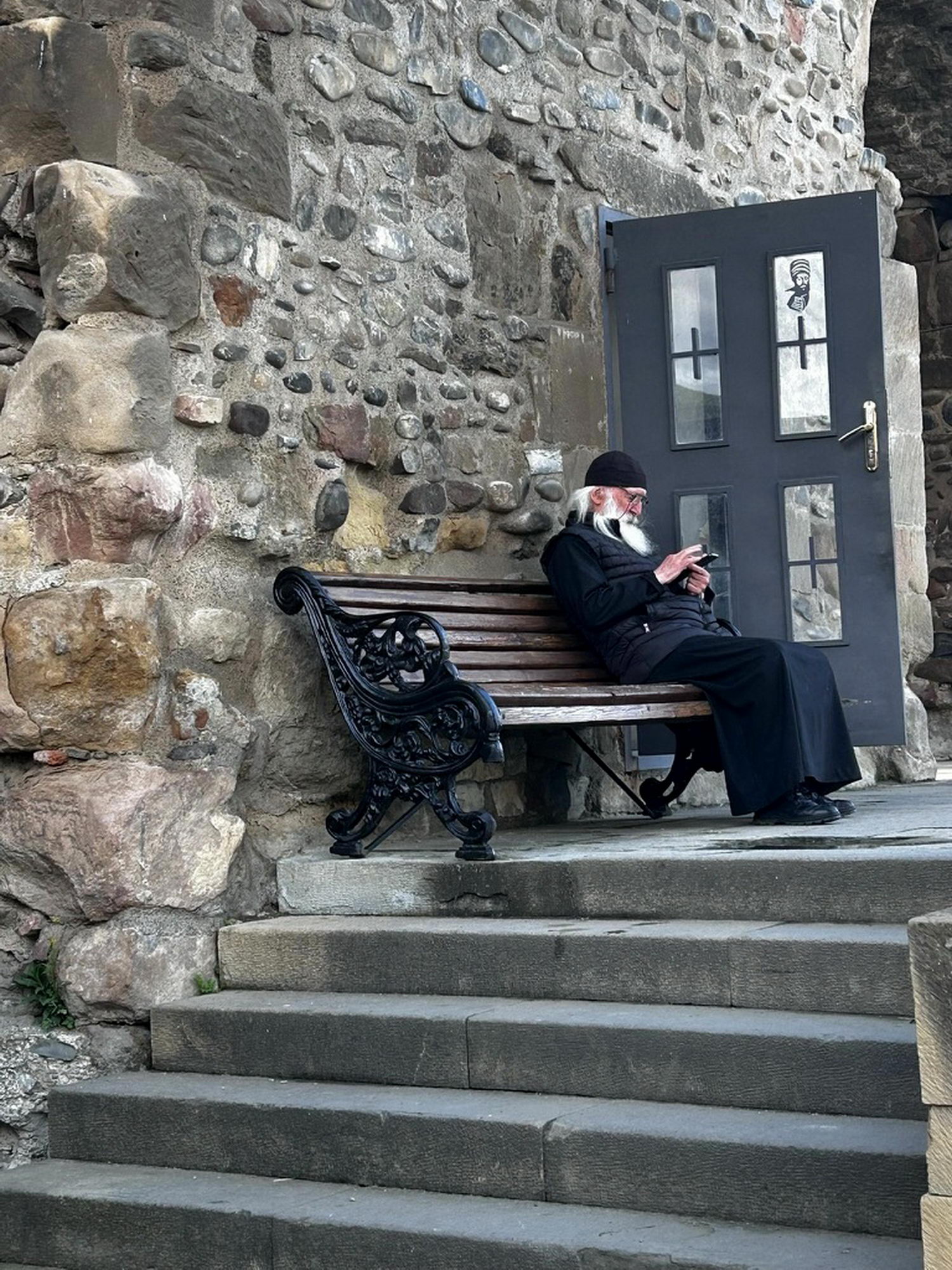
The image says what is difficult to express in words: the Caucasus is not a museum where tradition stands behind glass. This long-bearded monk, leaning against a stone wall, scrolls on his phone—and this is not a contradiction, only life.
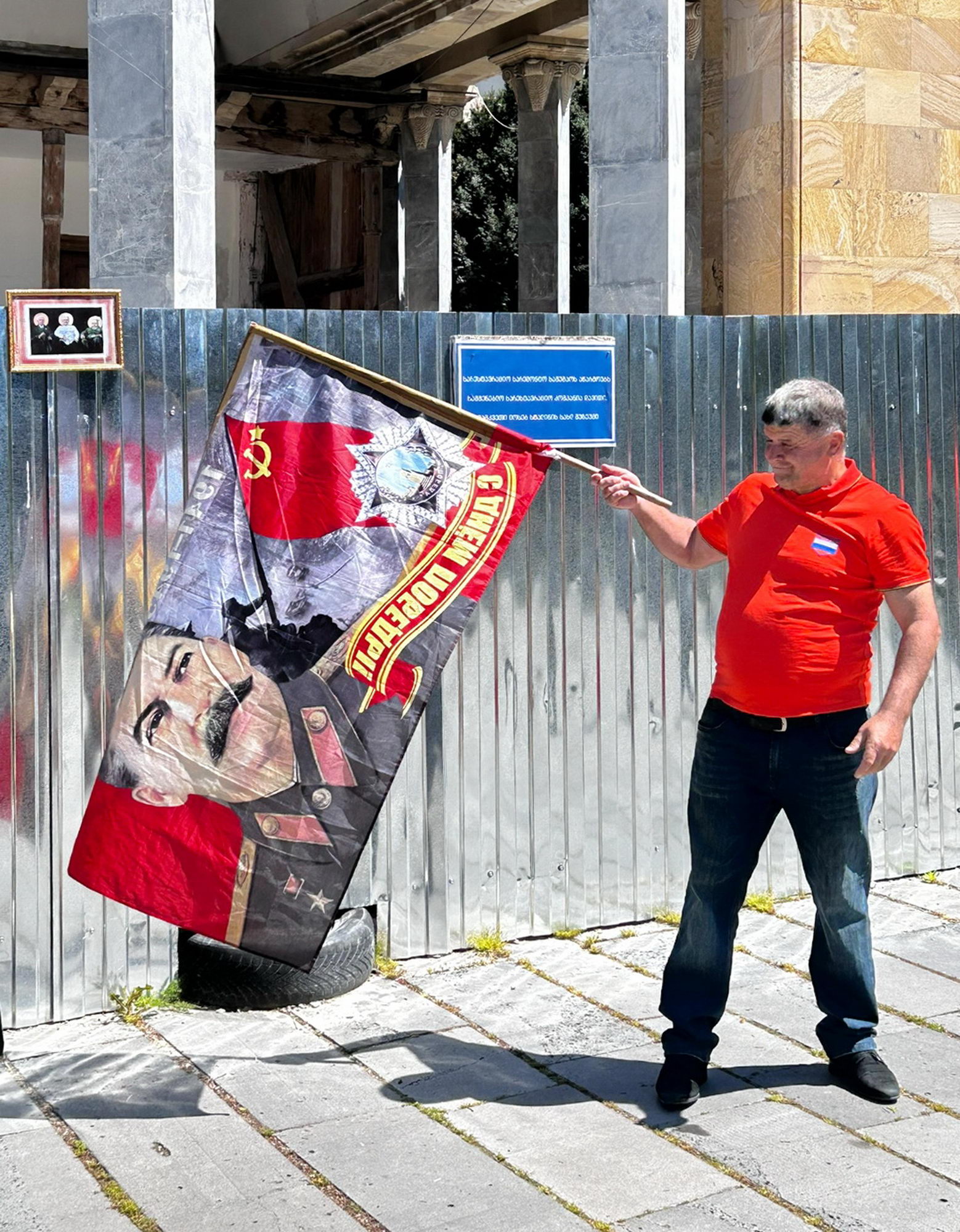
On Victory Day, a man with a Russian badge proudly raises a banner with Stalin’s portrait. In Georgia, this is both a political statement and the open sight of a very old wound. It is hard to simply walk past it.
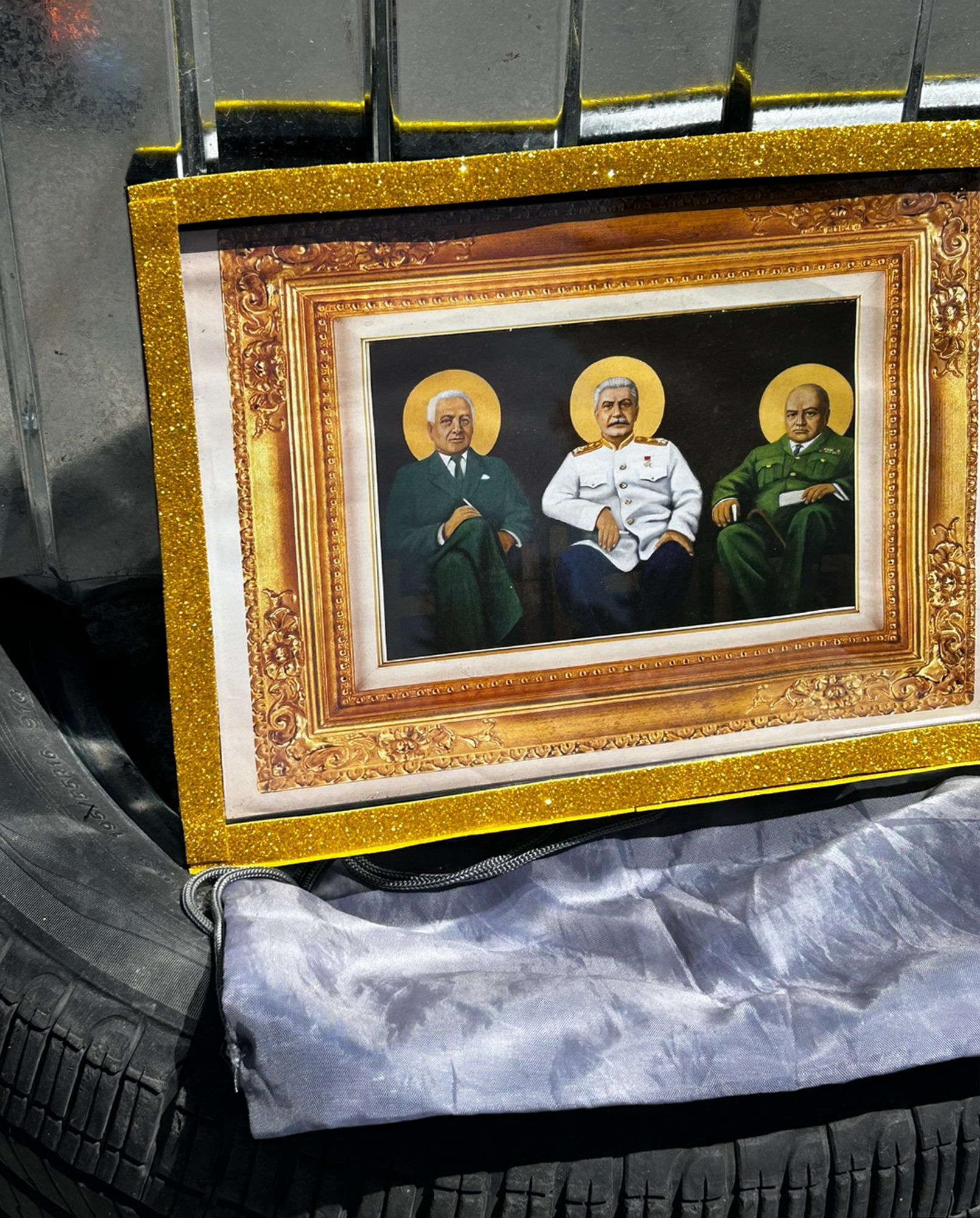
The Yalta “Big Three,” painted in icon style with halos. Someone meant it seriously, someone ironically. In Georgia, you can never be sure which. That, too, is the country.
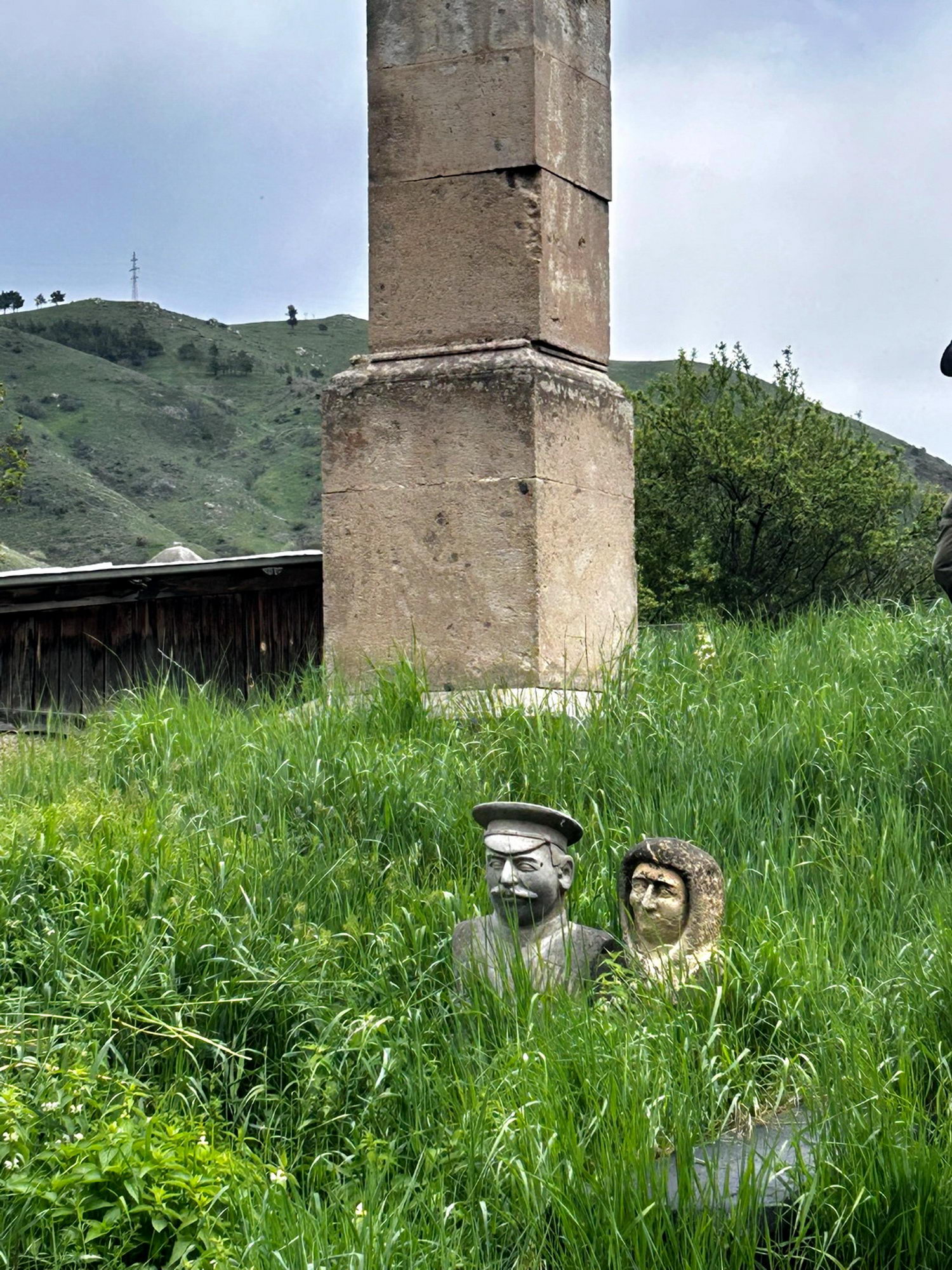
A bust of Stalin emerges from tall cemetery grass at the foot of a medieval tower. The Caucasus does not organize its history. It lives with it. But this is more like murderous irony.
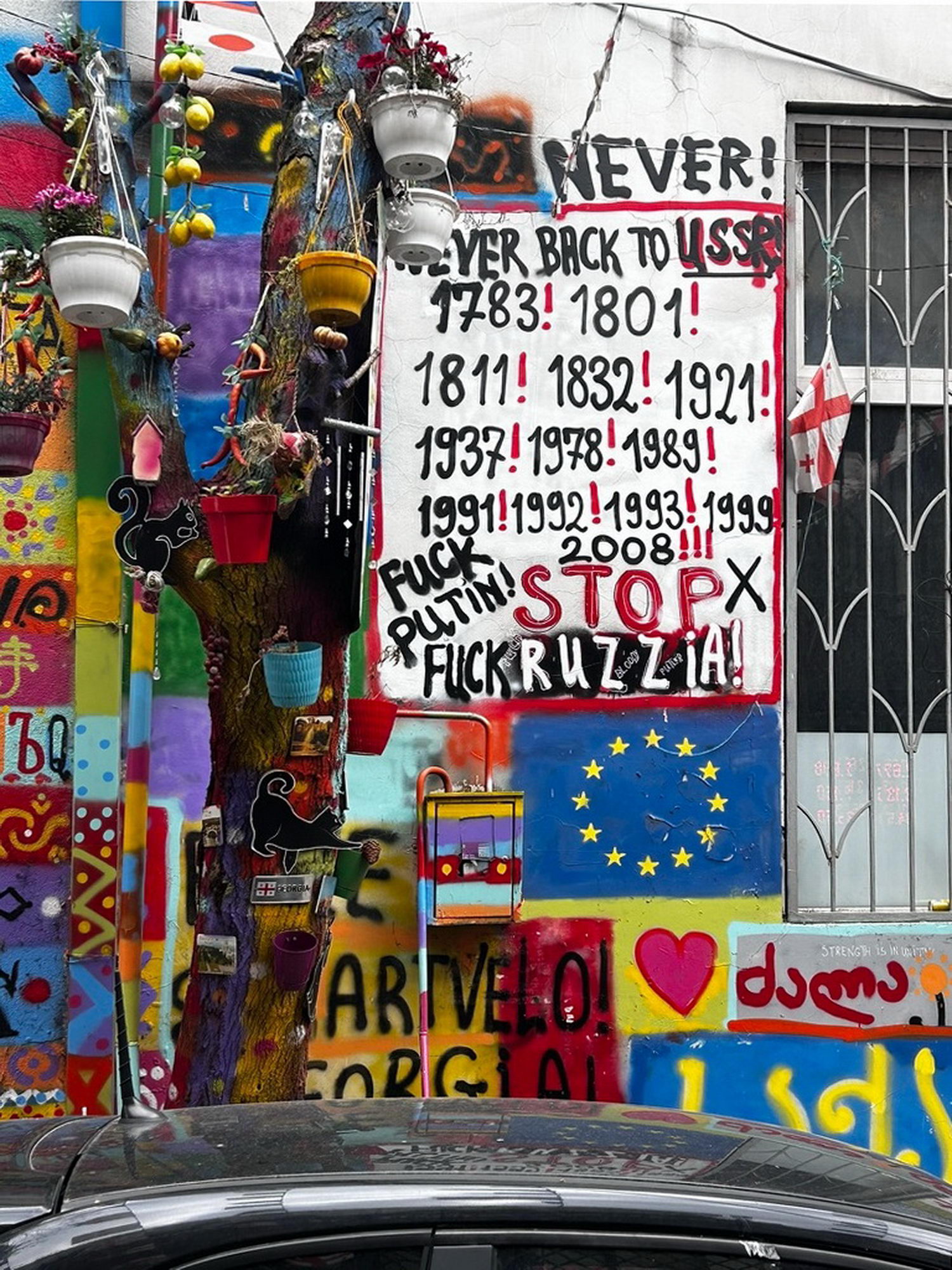
“Druzhba narodov 2026.” Every date on it is a real wound: 1783, 1801, 1921, 1937, 2008. Georgians do not forget, and they do not want to forget. The EU stars and the “Stop RuZZia” inscription side by side make it clear where the urban part of this country would like to go—if it were allowed to.
Robi
Back to the USSR
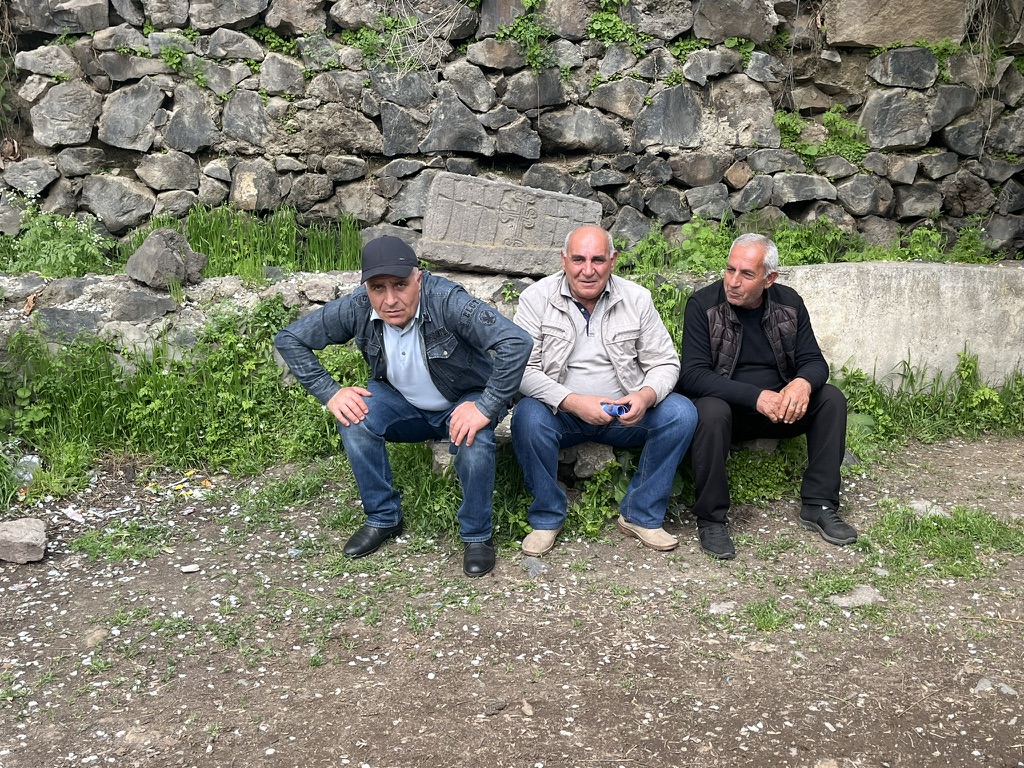
Beyond the many wonderful monasteries, cemeteries, and remarkable sights, I also tried through my photographs to show how Armenians live today and how the legacy of belonging to the former Soviet Union continues to leave its mark on the landscape.
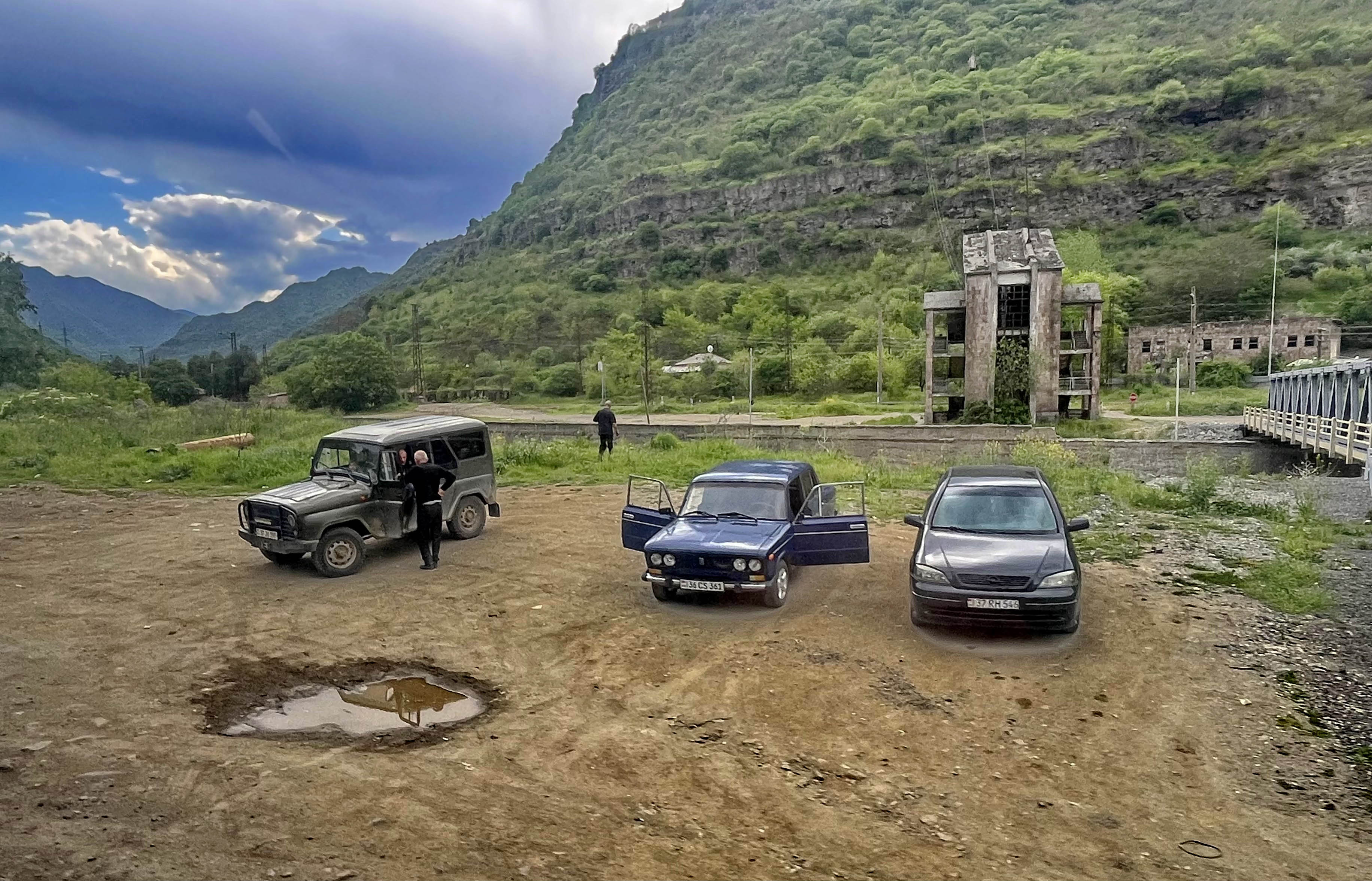
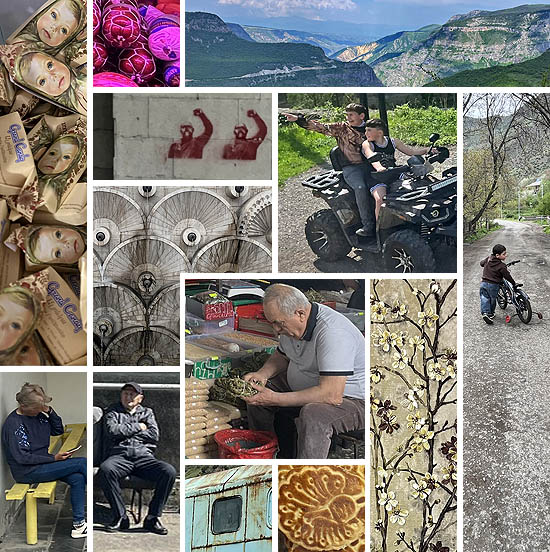
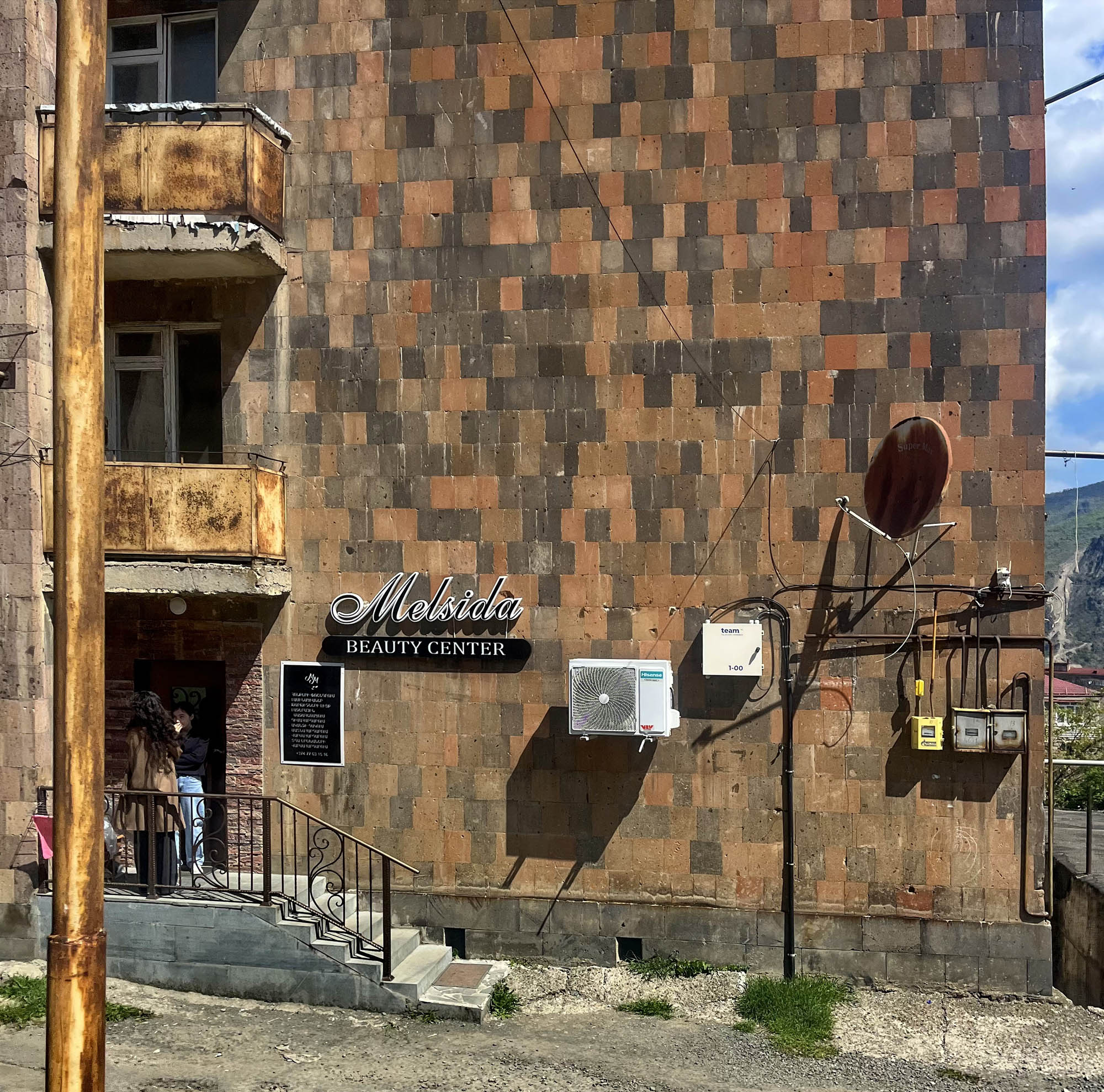
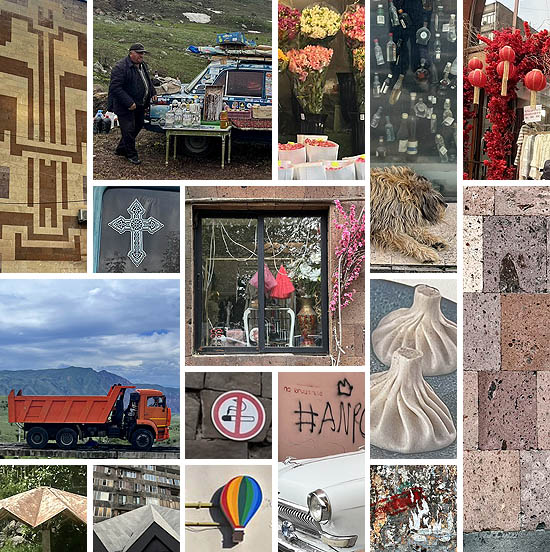
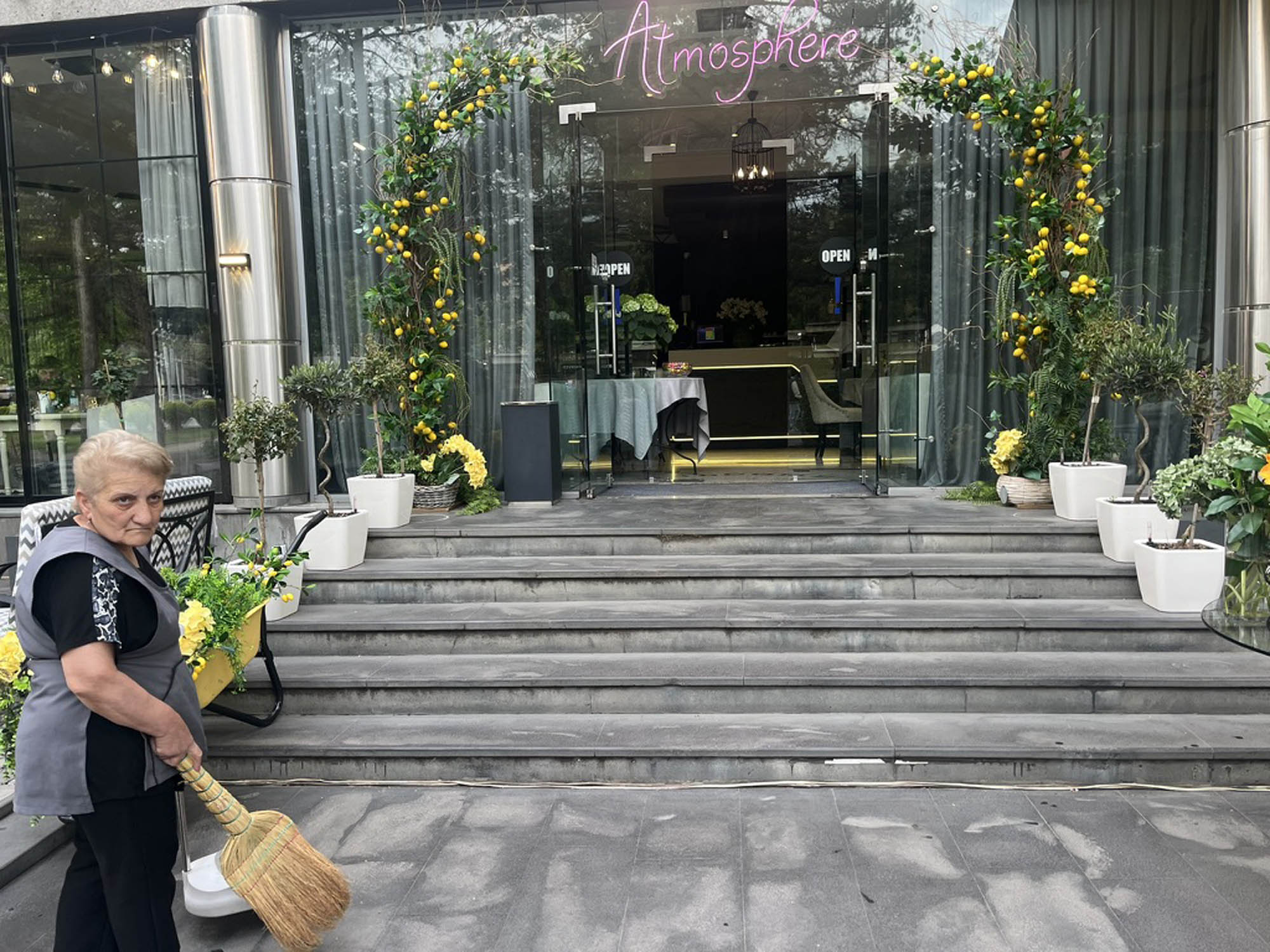
Zsófi
Yerevan
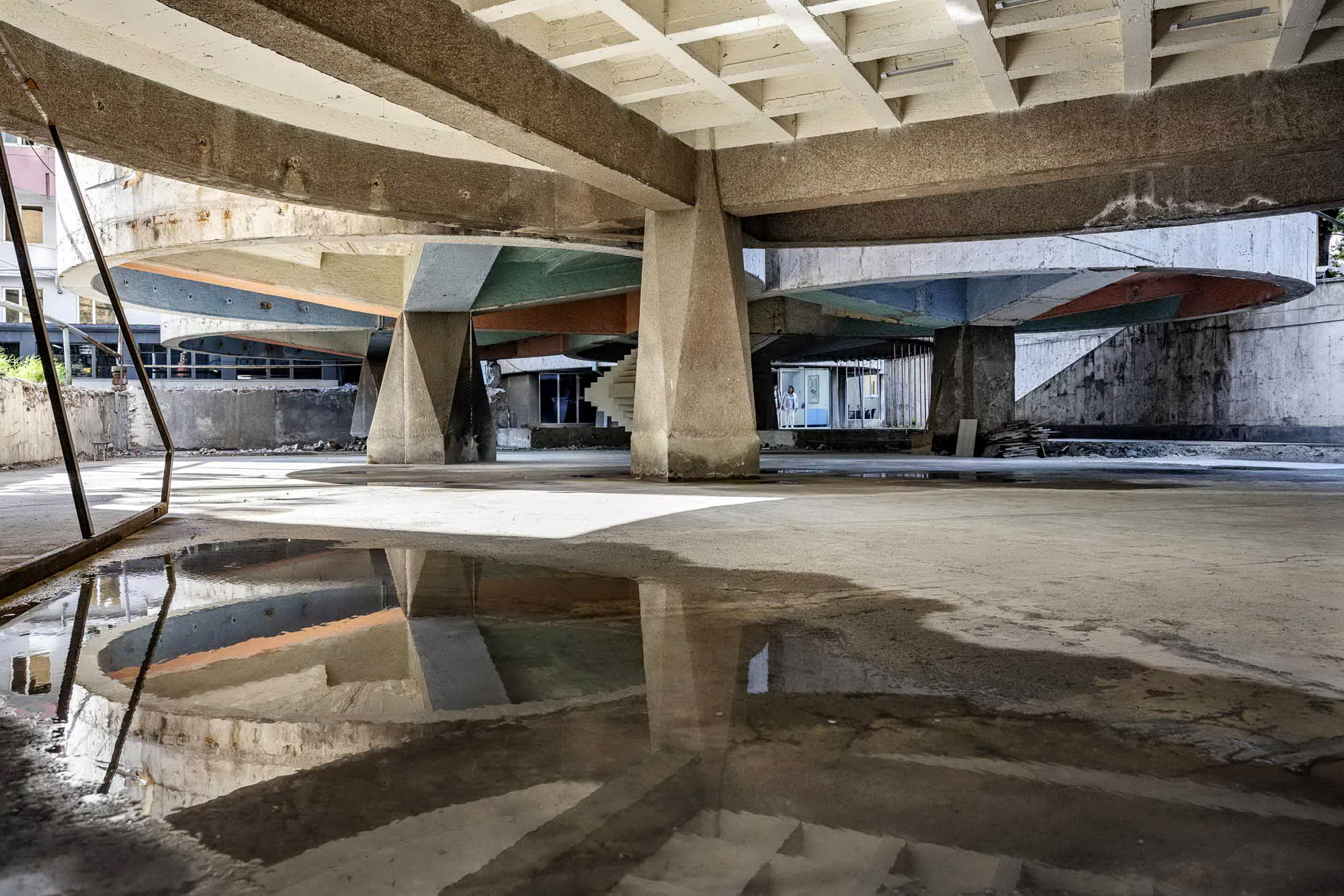
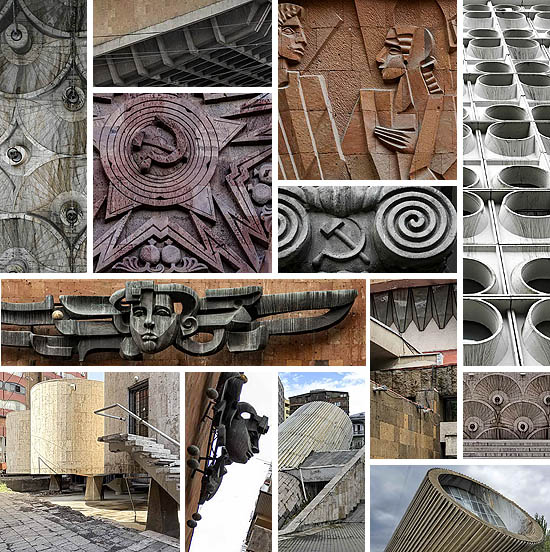
While preparing for the trip, I realized I had no idea what Yerevan actually looks like—what kind of architectural style defines it, or what the atmosphere of its public spaces and buildings might be like. Well, after five days wandering through a past punctuated by monasteries, khachkars, and Armenian and Jewish cemeteries, Yerevan itself felt like a time portal. We suddenly leapt across a thousand years, into the image of a large city shaped by a deliberate and uncompromising urban planning vision. Not by accident: Yerevan was the first Soviet city to be rebuilt according to a comprehensive master plan designed by forward-looking engineers. Its radial layout was created in the 1920s based on the plans of the Armenian architect Alexander Tamanian, who demolished the old bazaars, churches, mosques, and even the Persian fortress.
But the Soviet era is evoked not only by its grand squares and imposing buildings, but also by its remarkable examples of Soviet modernism. Alongside the stern neoclassical structures, bold architects stripped away unnecessary decoration and allowed the materials themselves to take center stage. Bare concrete and stone—mostly volcanic tuff and limestone—form clean, uncompromising structures that embody the former ideological faith in a new world: equality, collectivity, functionality. In an Armenian way, of course. The geometry dictated by concrete and stone is softened, as it were, by motifs drawn from Armenian folk art and traditional stone carving. Just as a pomegranate carved into a red star makes an authoritarian symbol strangely gentle.
I suddenly sense a resonance between the Armenian monasteries and Yerevan’s brutalist architecture. The shared foundation is the same: raw material, massive structure, and a kind of faith that drives builders to superhuman effort. And the message—stripped of ornament, image, or decoration—is also the same: perseverance in the hope of a better future.
A subjective selection of Yerevan’s brutalist and Soviet modernist architecture:
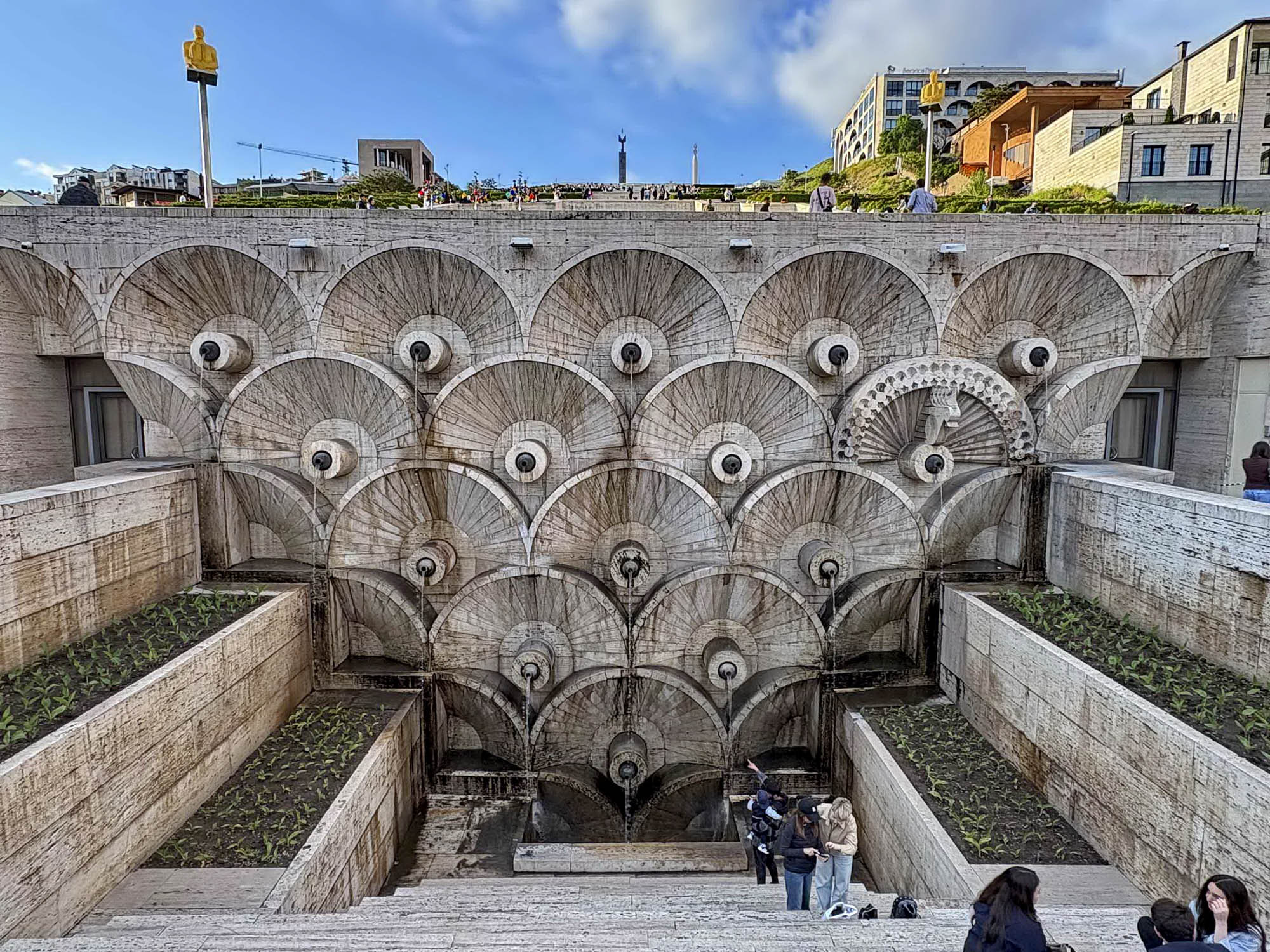
• Cascade Complex: A gigantic staircase and exhibition space housing the Cafesjian Center for the Arts. A beautiful encounter between Soviet brutalism and Armenian stone carving. Although it took decades to complete, it avoided the worst outcome—a bleak, imperial-scale parade structure—and instead became a public space for wandering, sitting, and, for lovers of socialist retro, riding escalators.
• Yeritasardakan Metro Station: Opened in 1981, this distinctive concrete entrance forms a massive tubular, ribbed structure rising from the depths like a Dune sandworm, illuminating passengers as they descend and ascend from the metro.
• National University of Architecture and Construction: One of the most striking examples of Armenian brutalism. Raw concrete surfaces form clover-like shapes, enriched by terracotta-colored stone frames, blending modernist geometry with traditional decorative motifs.
• Tigran Petrosian Chess House: Built in 1970 and named after the Armenian chess grandmaster, this building hosts not only international chess tournaments. On weekday afternoons it is filled with children attending lessons, reflecting the extraordinary popularity of chess in Armenia.
Petra and Endre
In-between place

If we consider Hungary to be, at least in part, an in-between place, then this is even more true of Armenia—though, for me, in a positive sense. It is a Christian country with Eastern-style traffic jams, small shops, an alphabet that is hard for us to interpret, yet with entirely Western-style city centres and services.
When we were still somewhere only “near” them, and then conquered the Carpathian Basin almost 600 years later, Christianity had already been a state religion there for centuries. This represents a 600-year head start, but also means 600 more years of wars to be fought against enemies attacking from all sides. Armenia has lost most of its territory; its former capital, Ani, is now in Turkey; and the majority of Armenians live outside the country’s borders. Even if not identical, a similar “pattern” can be observed in history.
The way they live their religion felt much more everyday, more open than in the Western world.
The “in-between” state—between the real and the digital—disappeared here during a week of voluntarily chosen digital detox, and we relied instead on the inexhaustible knowledge and experience of our guide. We received from Tamás such a quantity of information that it needs time to settle; later, building on the solid foundations he gave us, we may pass on what we learned and experienced here.
At the end, we asked Tamás for the ten words we should take away from the trip. Naturally, everyone had different ones. Here are ours:
• gavit
• khachkar
• mountains
• Molokans
• Ararat
• early Christianity (compared to Hungarian conditions)
• the relationship between church and landscape
• dogs with chips in their ears
• the Orbeliani lineage
• Momik, the stone carver
Thank you all for the good company! There is always a slight risk involved in what the group will be like. This was not a holiday, but a journey whose essential element was learning—and that always brings together a good team.
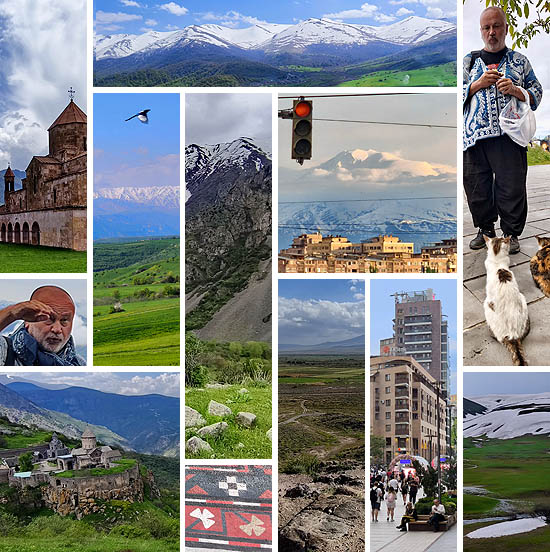
Zsófi and Tamás
Perseverance
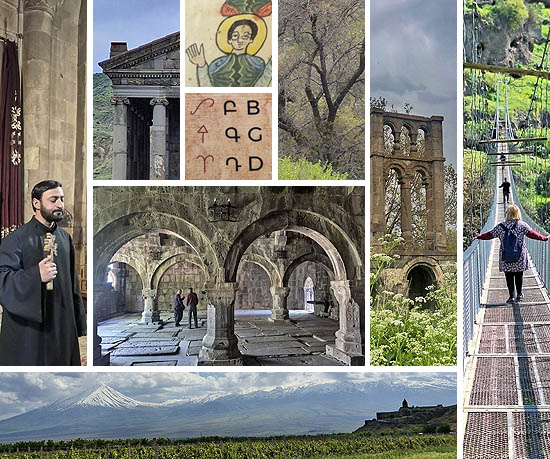
In Armenia, distance is not measured only in kilometres. It is a distance in time, in history, and in spirit.
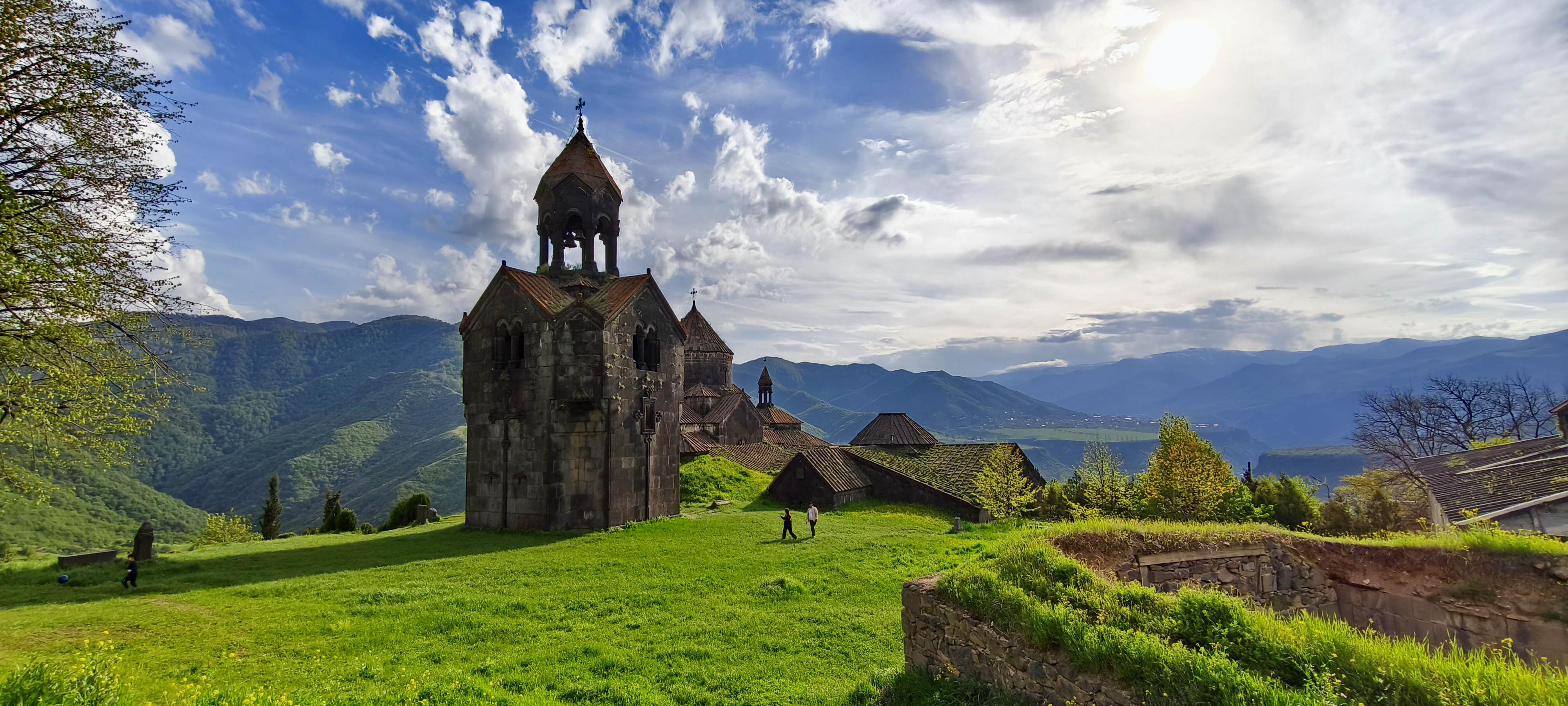
The monasteries do not seek the favour of visitors, nor do they dominate the landscape; instead, they blend almost imperceptibly into the mountains. Some can only be reached by climbing winding mountain roads, others by crossing suspension bridges, and there are those that reveal themselves only from afar, after a long detour. Here, every view must be earned. This is not the Champs-Élysées with the Arc de Triomphe waiting at the end. These places carry weight, and they require time.
Perhaps that is why the experiences are so powerful. The blessing of a local priest that accompanies the traveller along the way. Centuries-old manuscripts that seem almost to speak to you. Strange, mystical stones that make you feel they know more about the past than we do ourselves. A living tradition that is not a museum relic here, but part of everyday life.
The unique alphabet, the language with its unfamiliar sounds, the endless mountain landscapes, and the history of a people repeatedly tested by fate all tell the same story: perseverance. They speak of values that reveal themselves only to those willing to devote time, attention, and effort to them.
Armenia is not simply a travel destination. It is more like a slowly unfolding story, and by the time one reaches its end, one feels that it is not only a country that has been discovered, but also, in some small way, oneself.
For this, I am grateful.
Györgyi
Armenian postcard
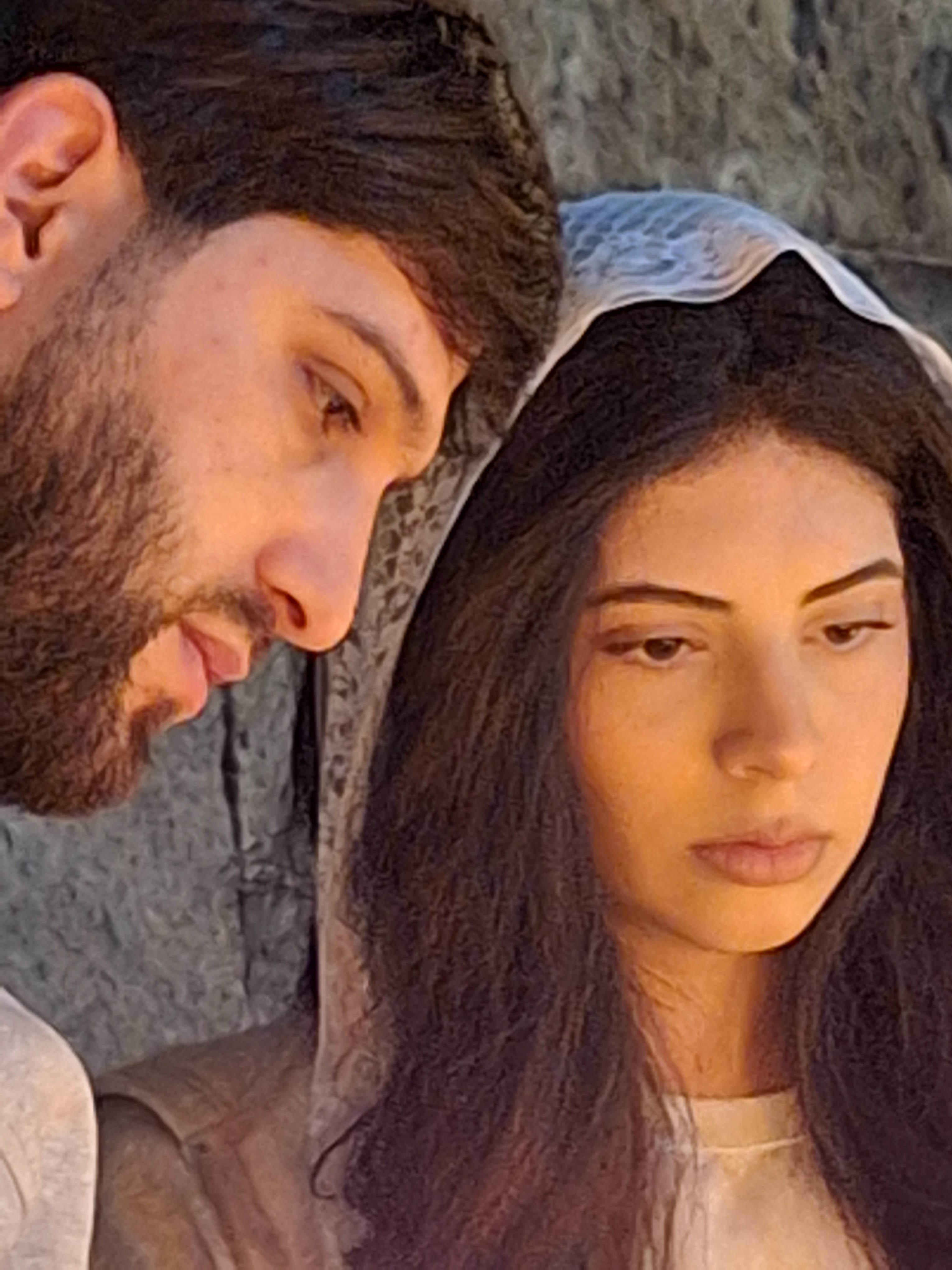
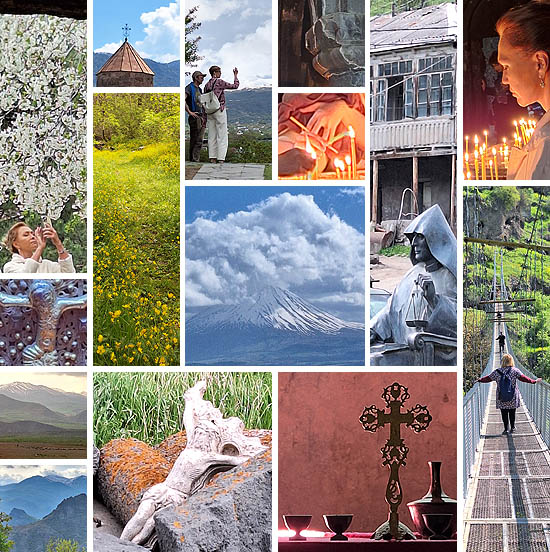
I have been left speechless by Armenia; let the images speak in my place. Reading the writings of many others, I found myself nodding in agreement again and again—this could just as well have been written by me—so I will only list a few keywords: trees, flowers, light, nature, stones, people, and Faith. A blending of the distant past, the recent past, and the present, all in a striking harmony.
For me, discovering the Caucasus was a journey into the past: mountains, valleys, streams, stones, ancient cultures—but the most beautiful memories are still those of the people living here, their sense of harmony and their dignified calm. Despite the fact that the past centuries and millennia in this region have been anything but peaceful.
My thanks to Tamás Sajó for showing me this wonderful country.
Helen
Fruit Trees and Animals
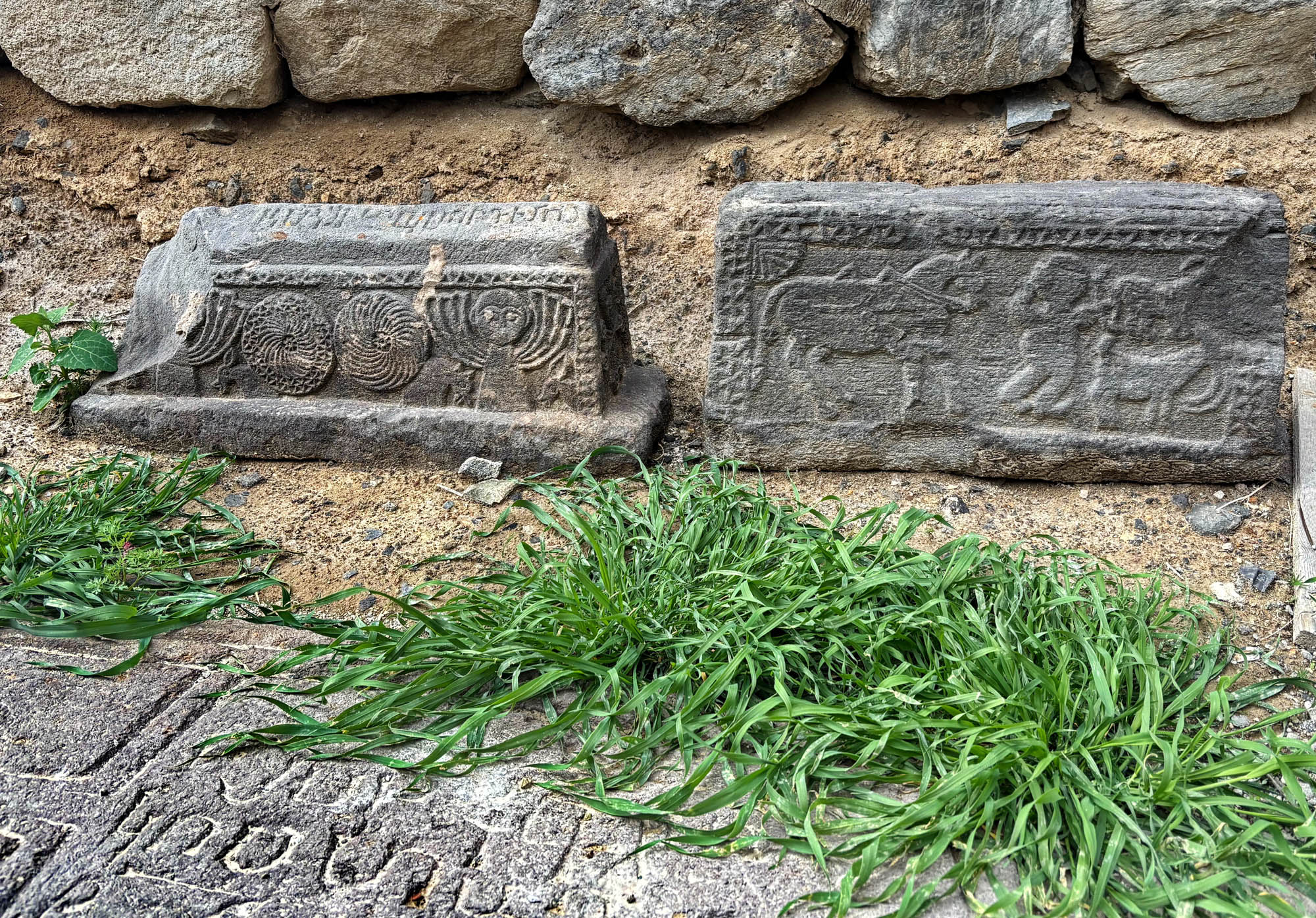
Beyond all the standard sights and wonders, this journey has left me with countless unforgettable memories.
How everything is emerald green, how a fruit tree seems to bloom on every patch of land, how loud and lively the people are, how delicious the vegetables taste. I know—it’s May.
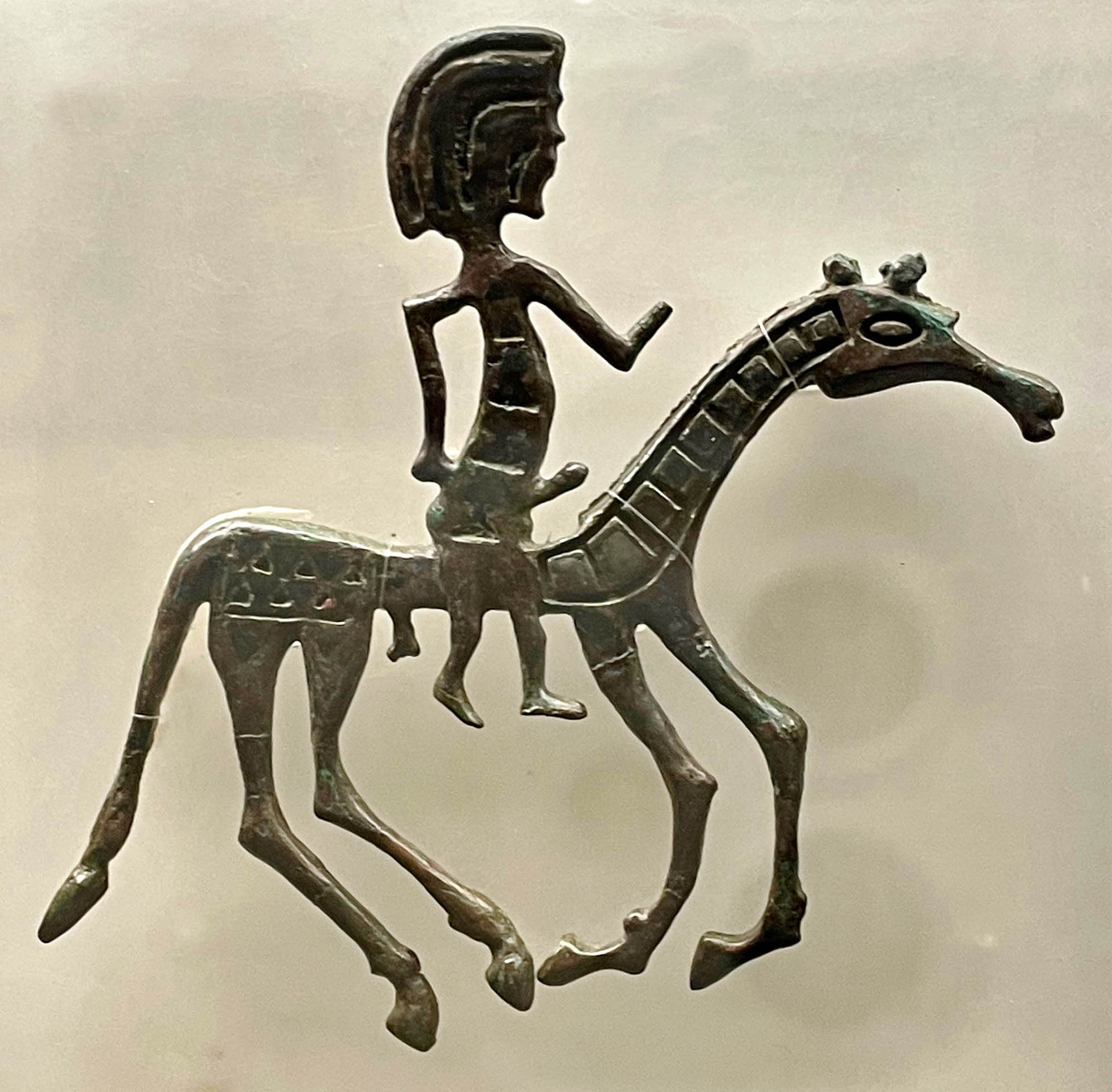
Yet when I think back on the trip, it is above all the animals that come to mind. Living and dead, tiny and monumental, cast in gold or iron, appearing everywhere: by the roadside, on town squares, in museums, churches, and on khachkars. Quietly reminding us that animals are simply part of our lives, naturally and self-evidently, without any need for philosophical reflection.
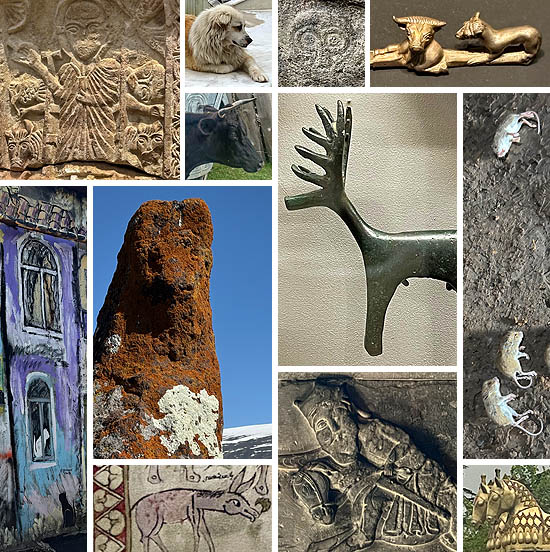
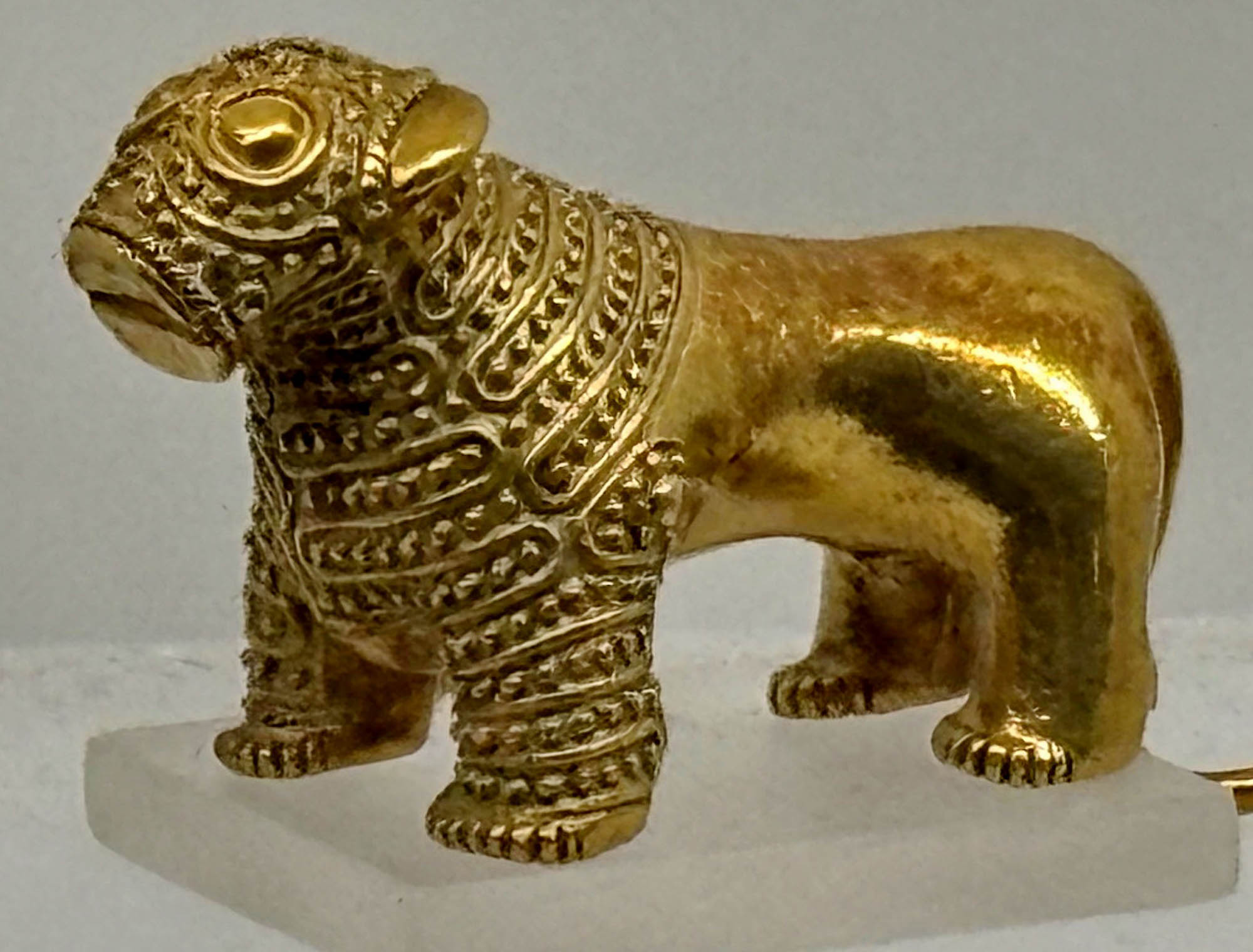
Mari
Commentary
These few photographs simply express what struck us most:
• the beauty of the landscapes
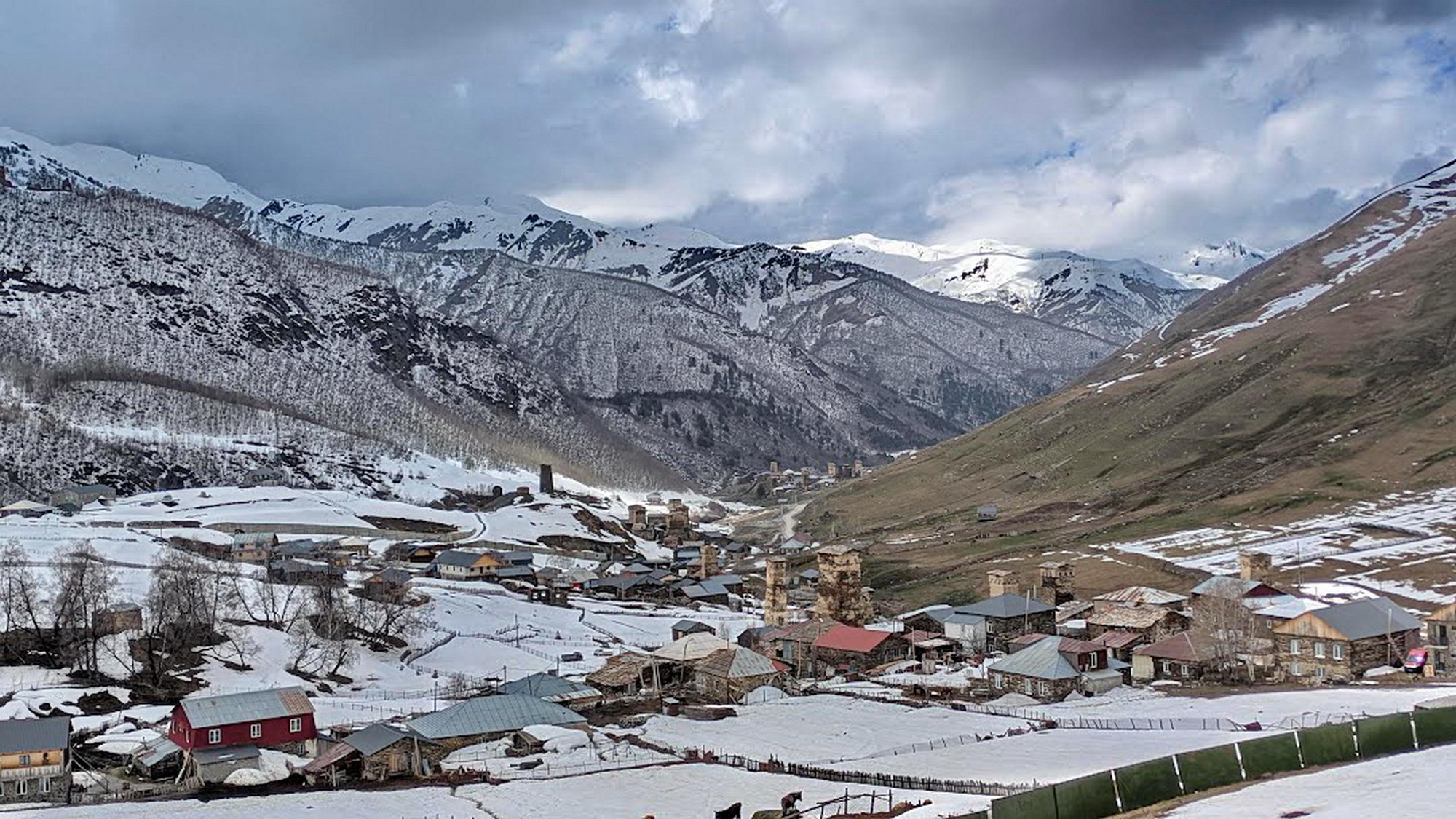
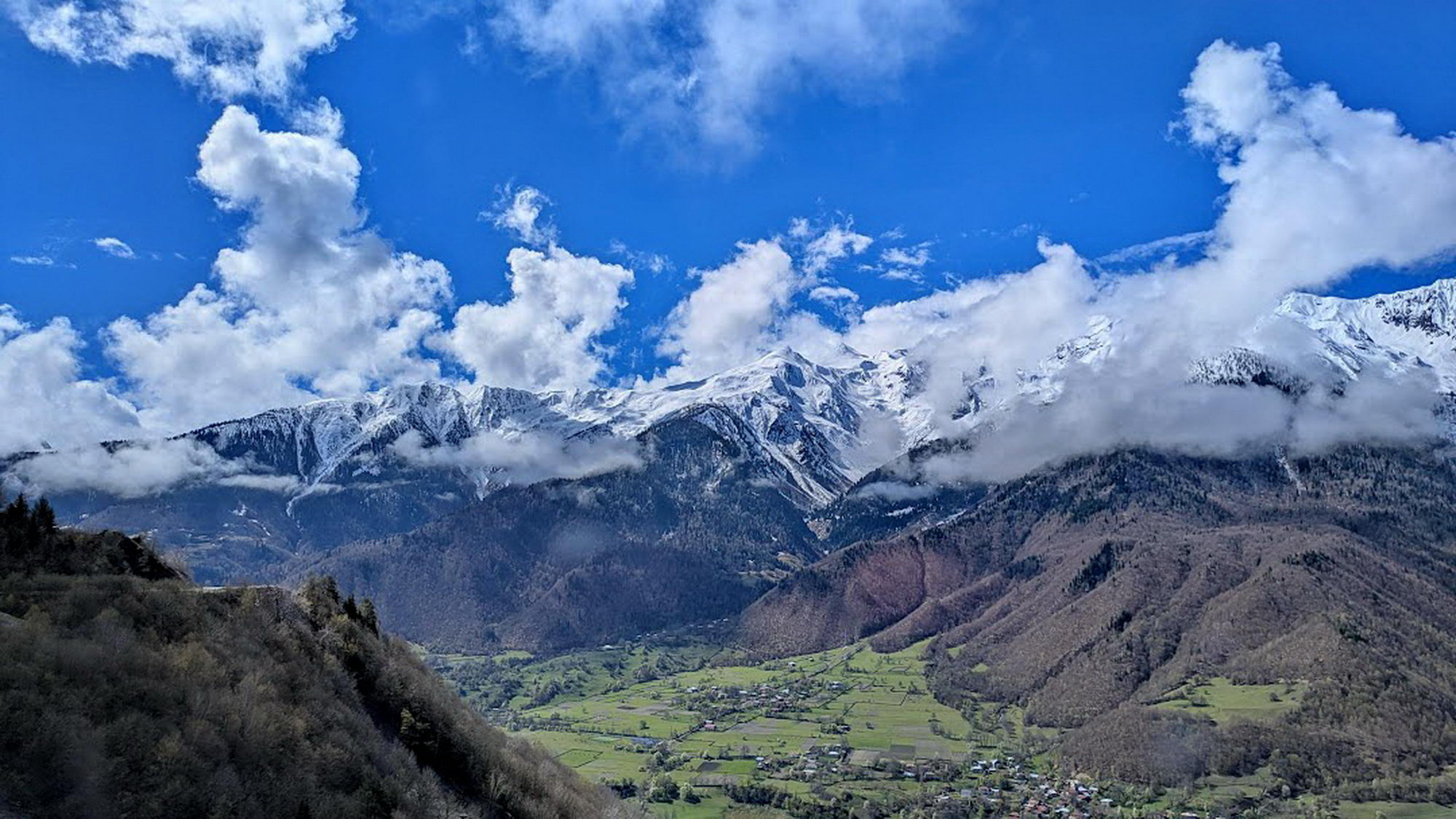
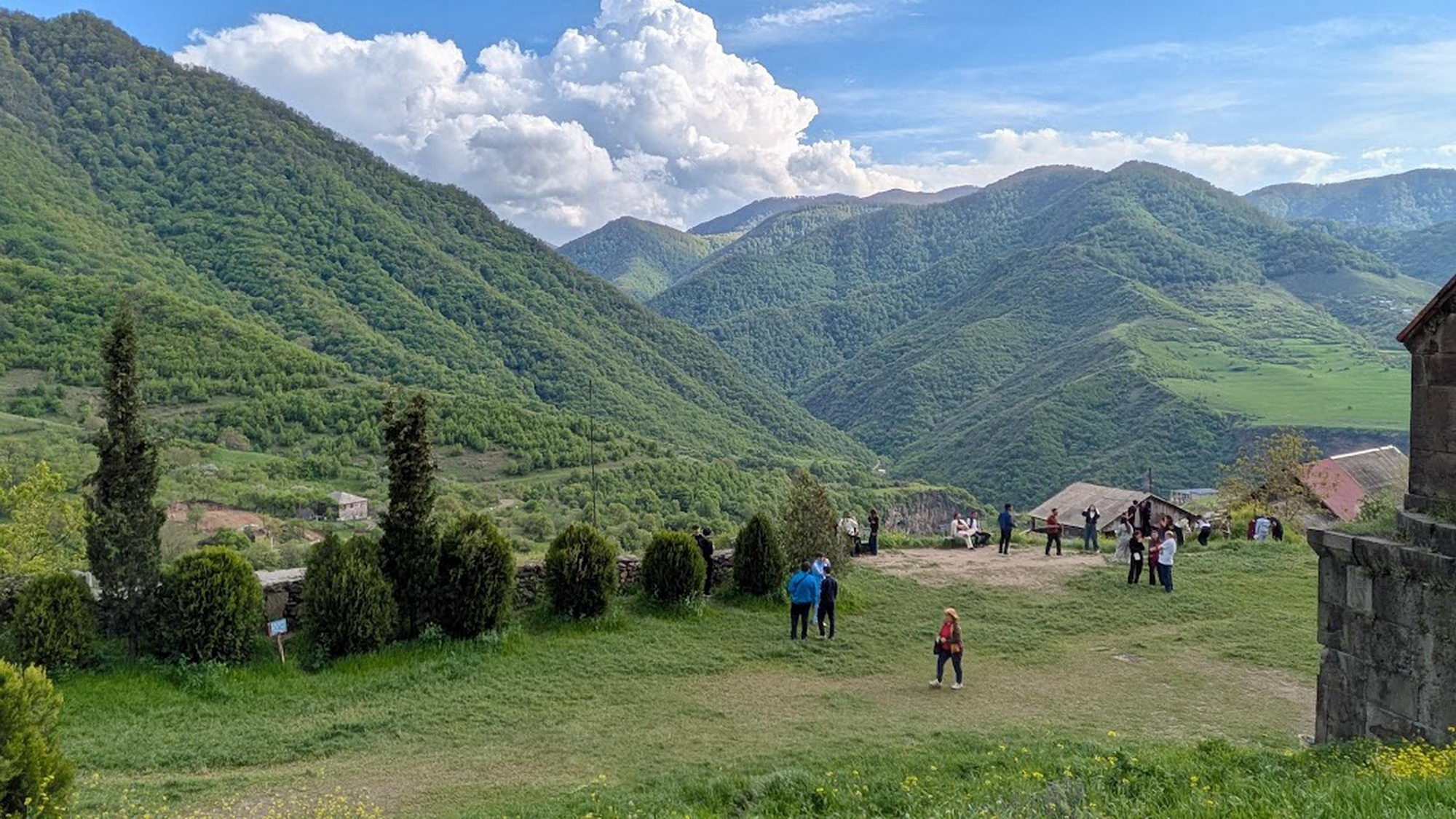
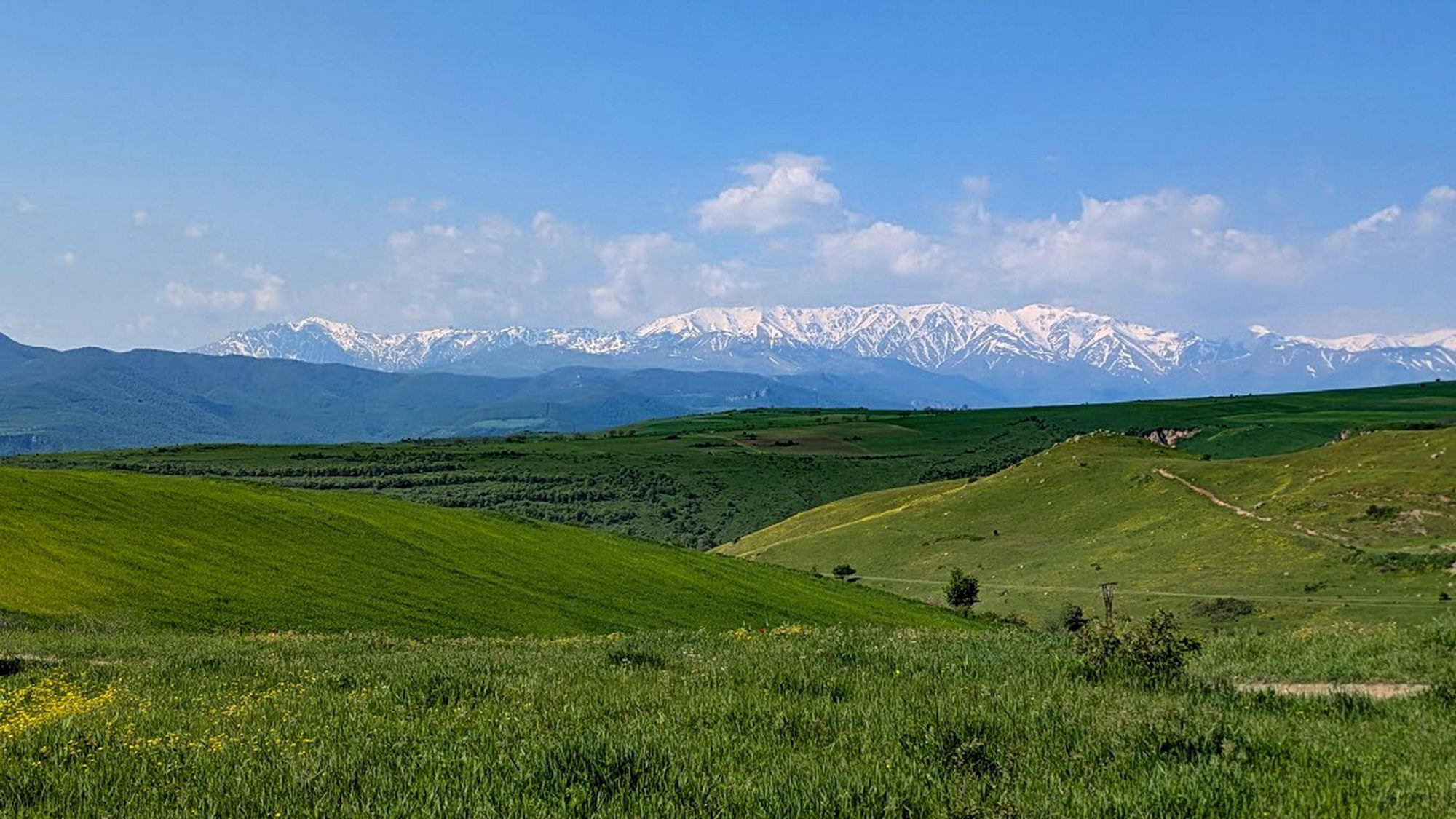
• the living and the dead
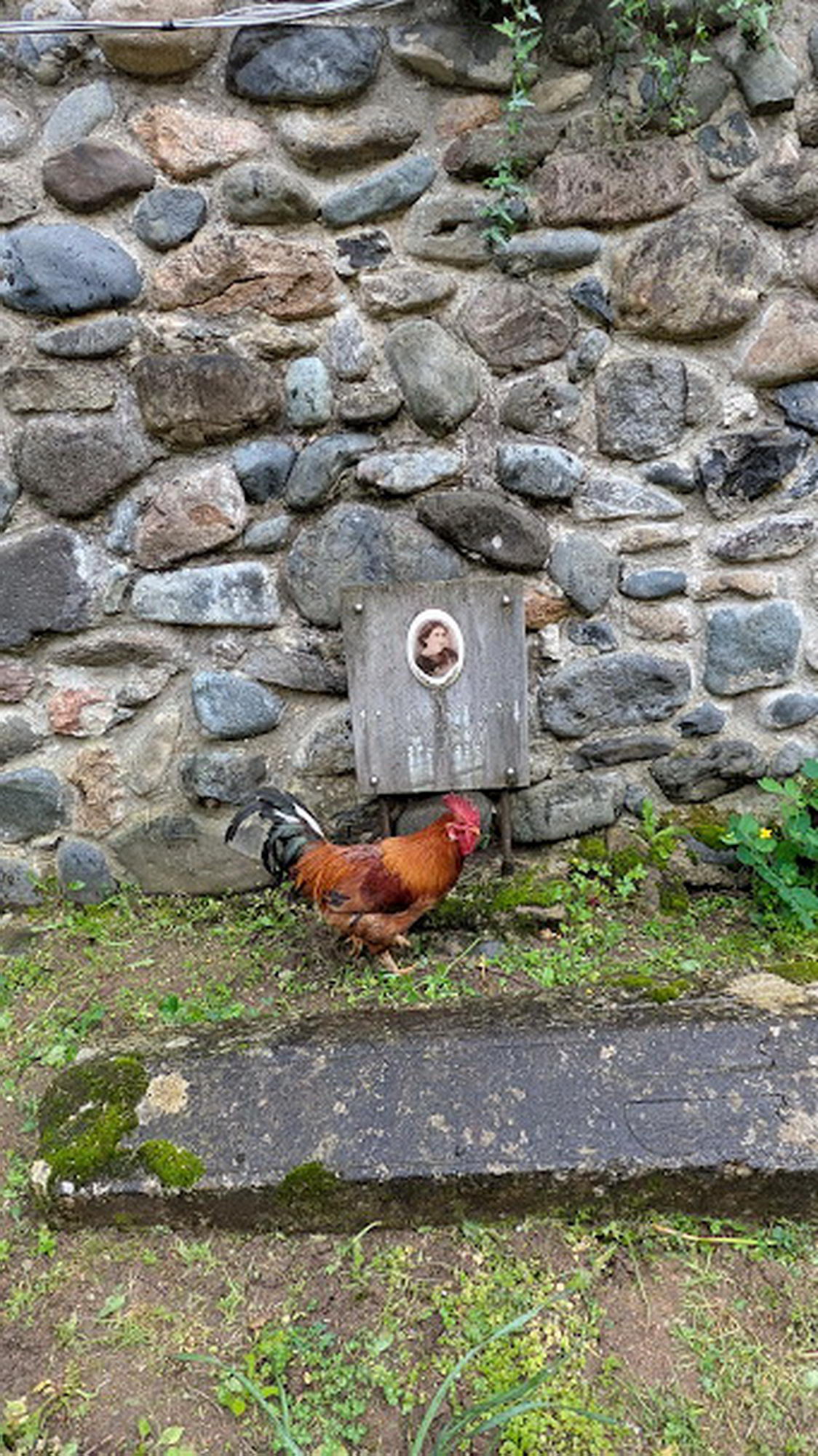
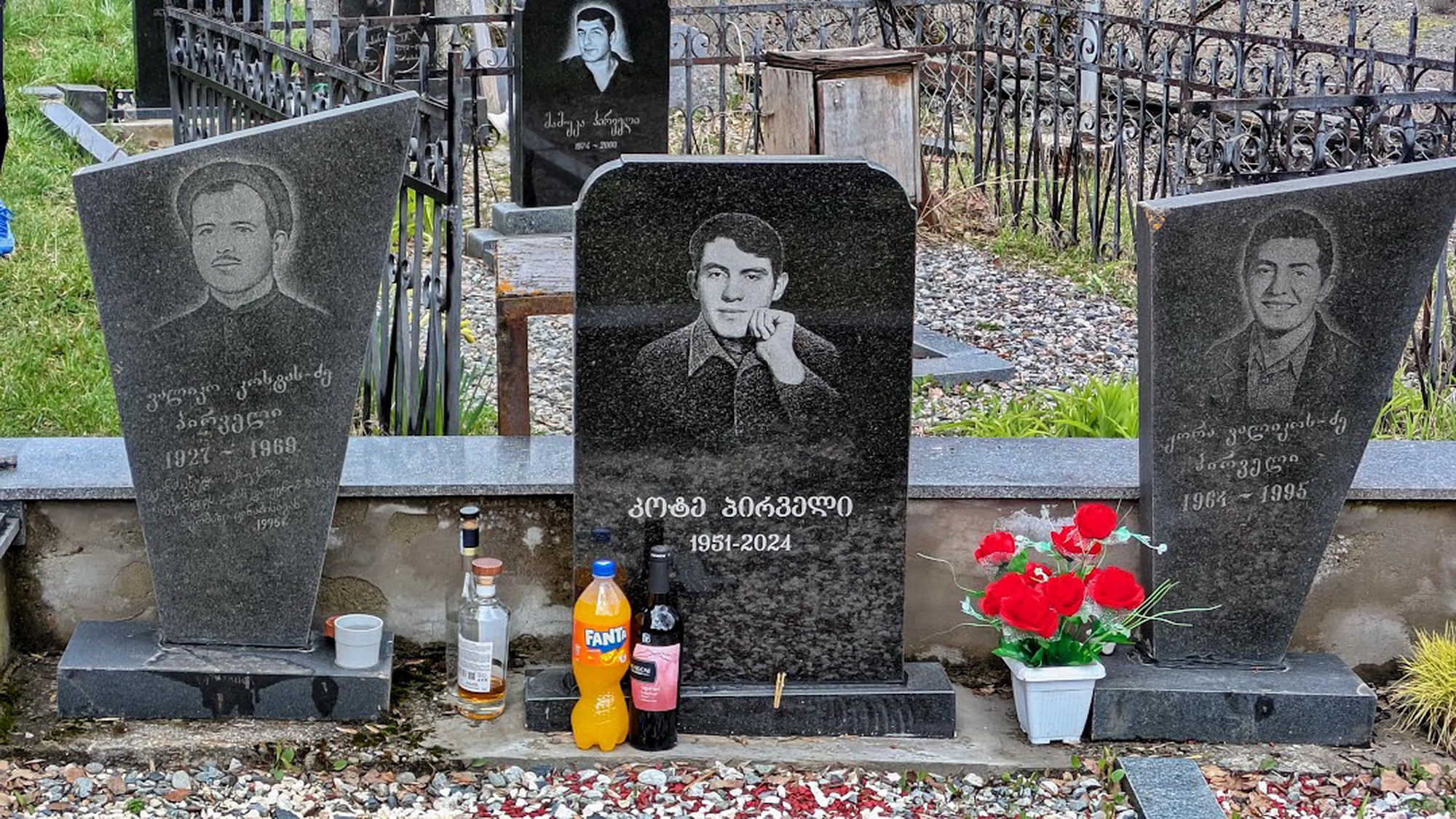
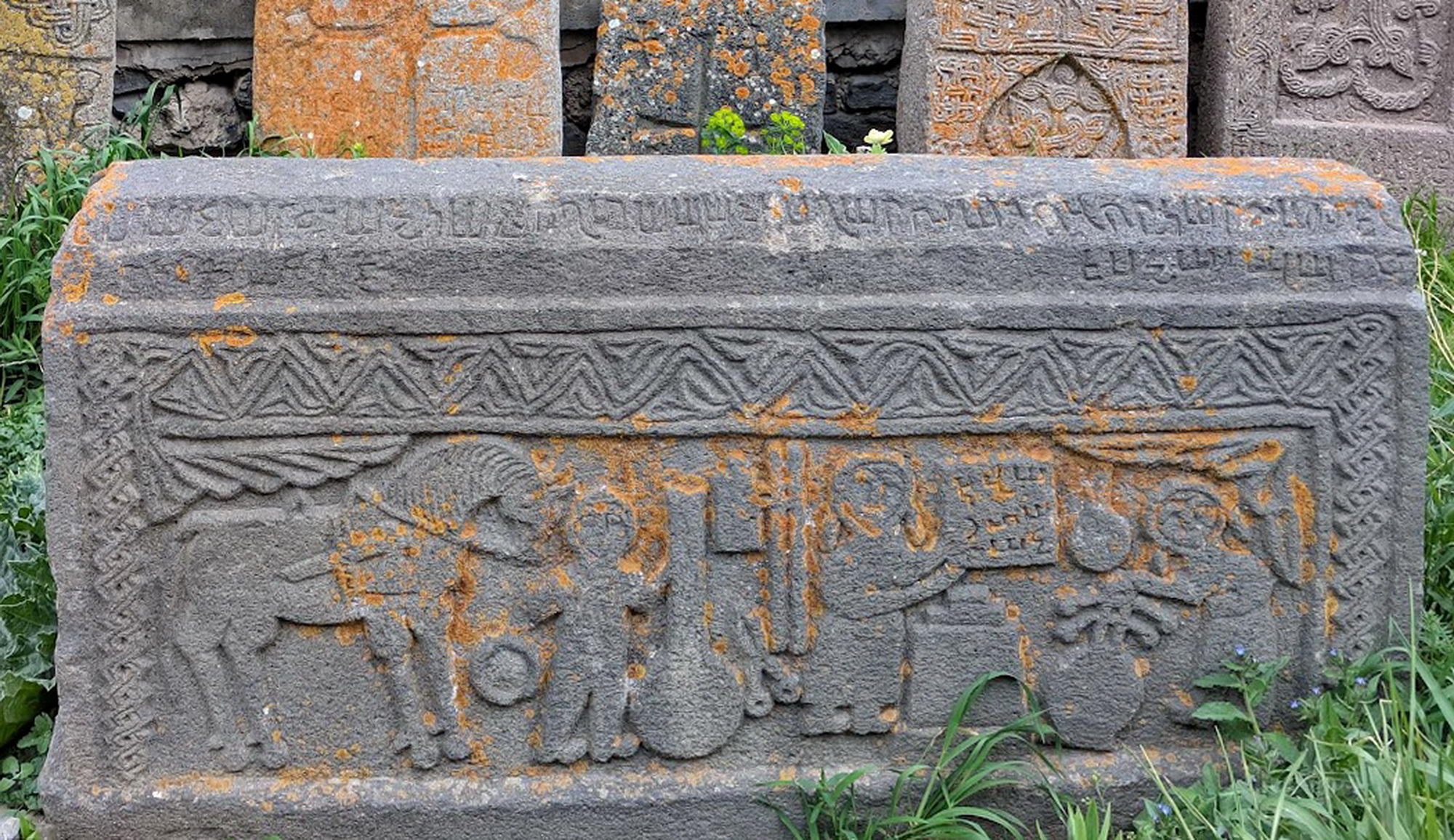
• piety

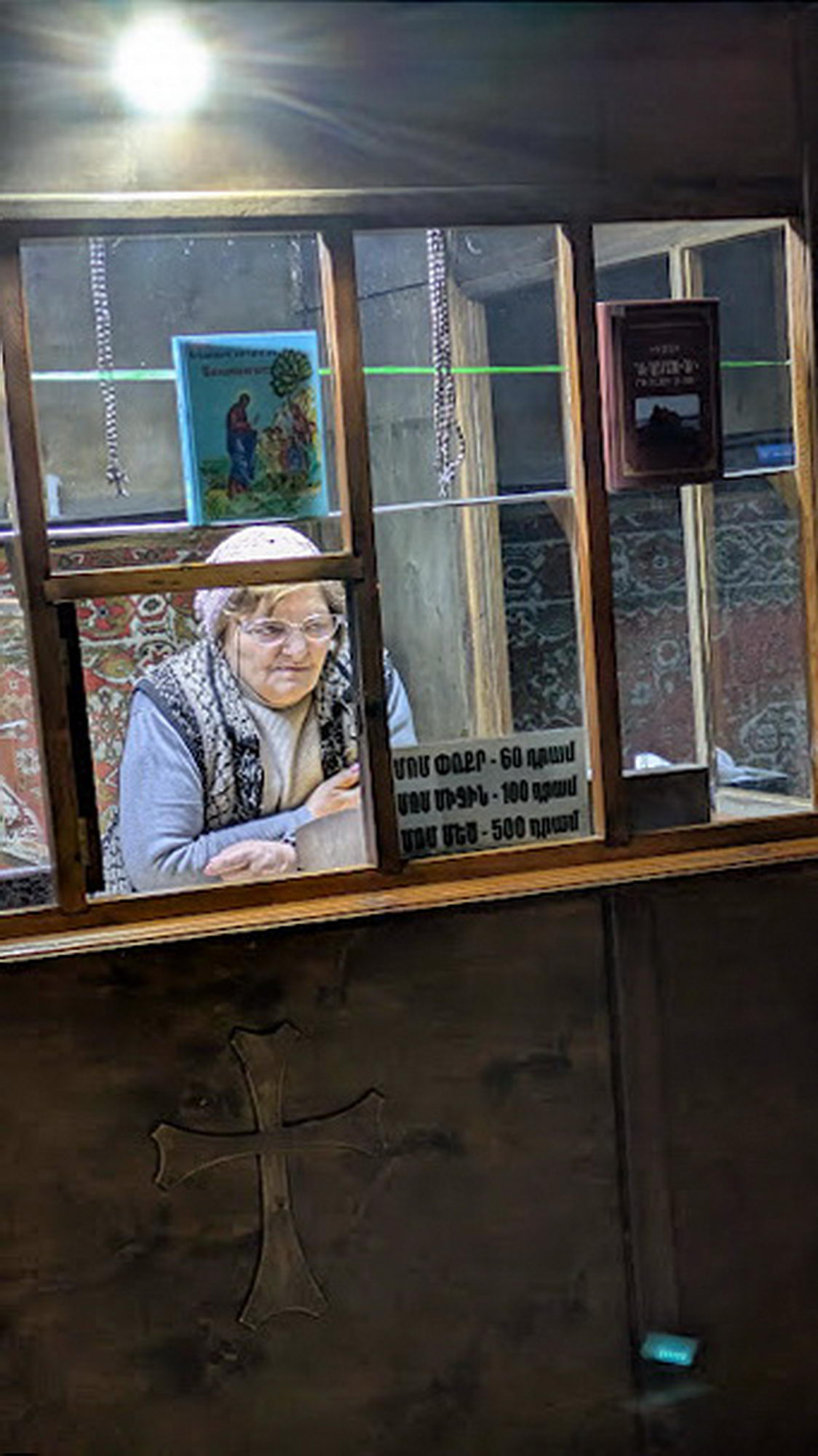
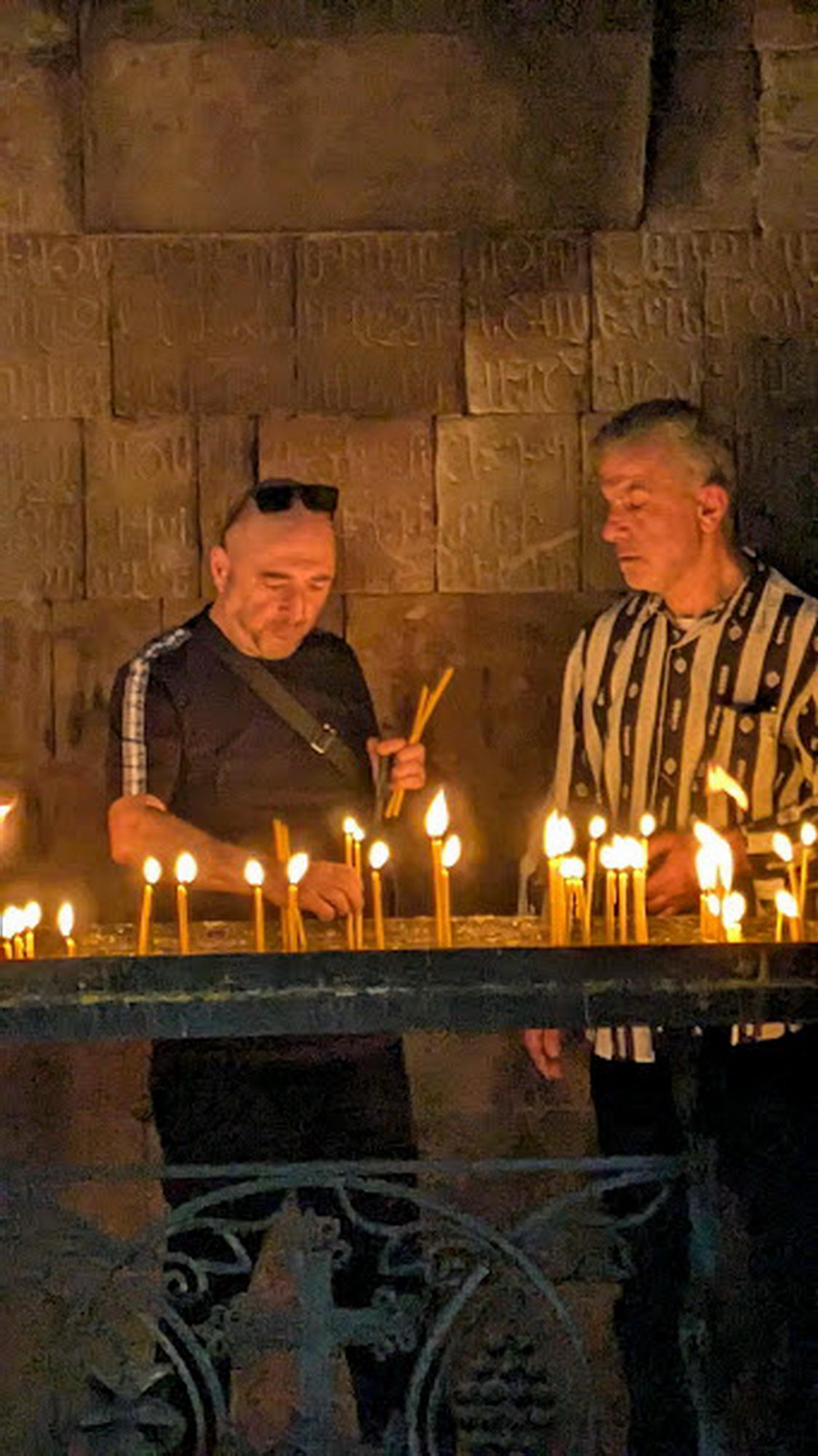
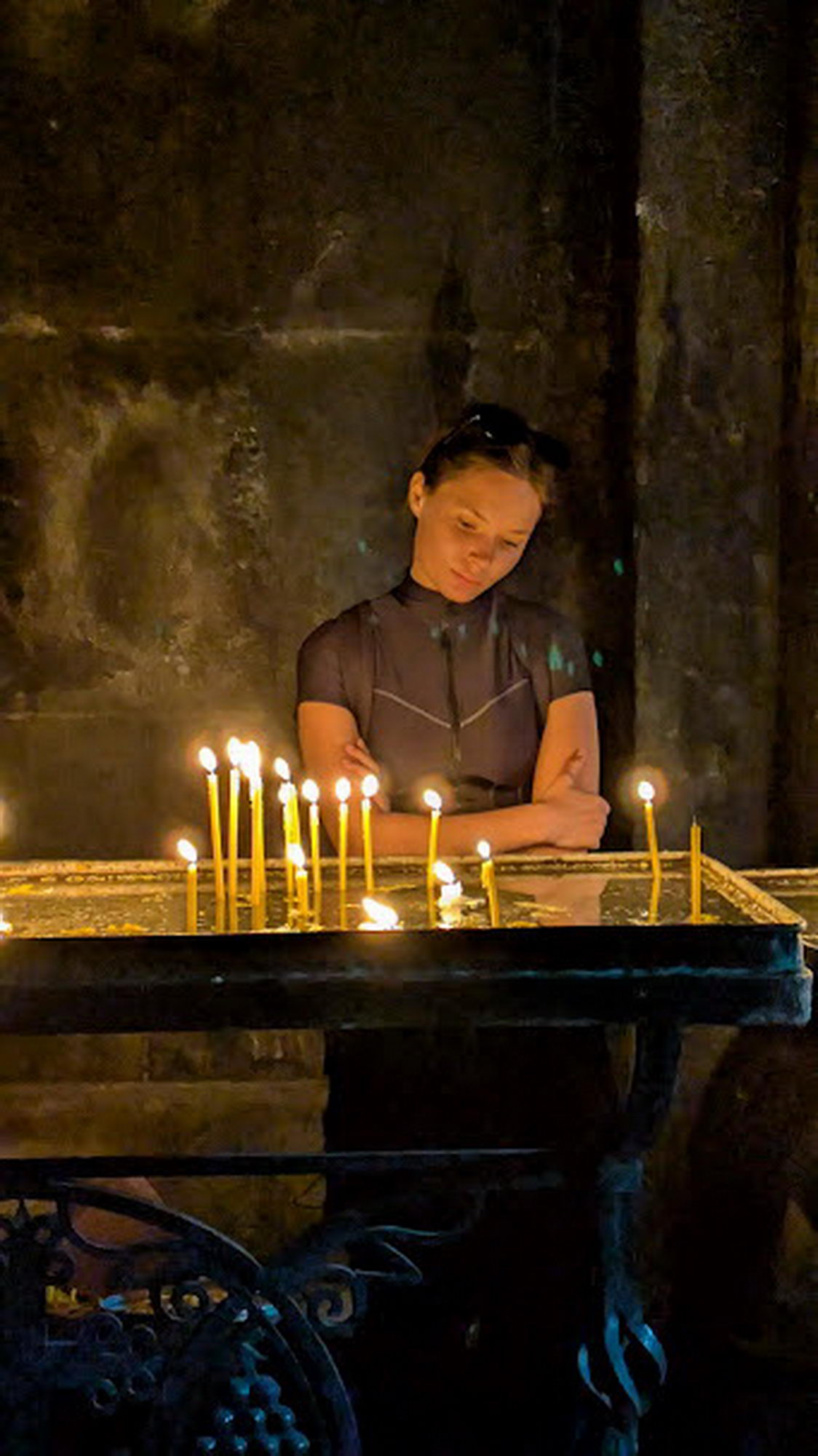
• the weight of the past
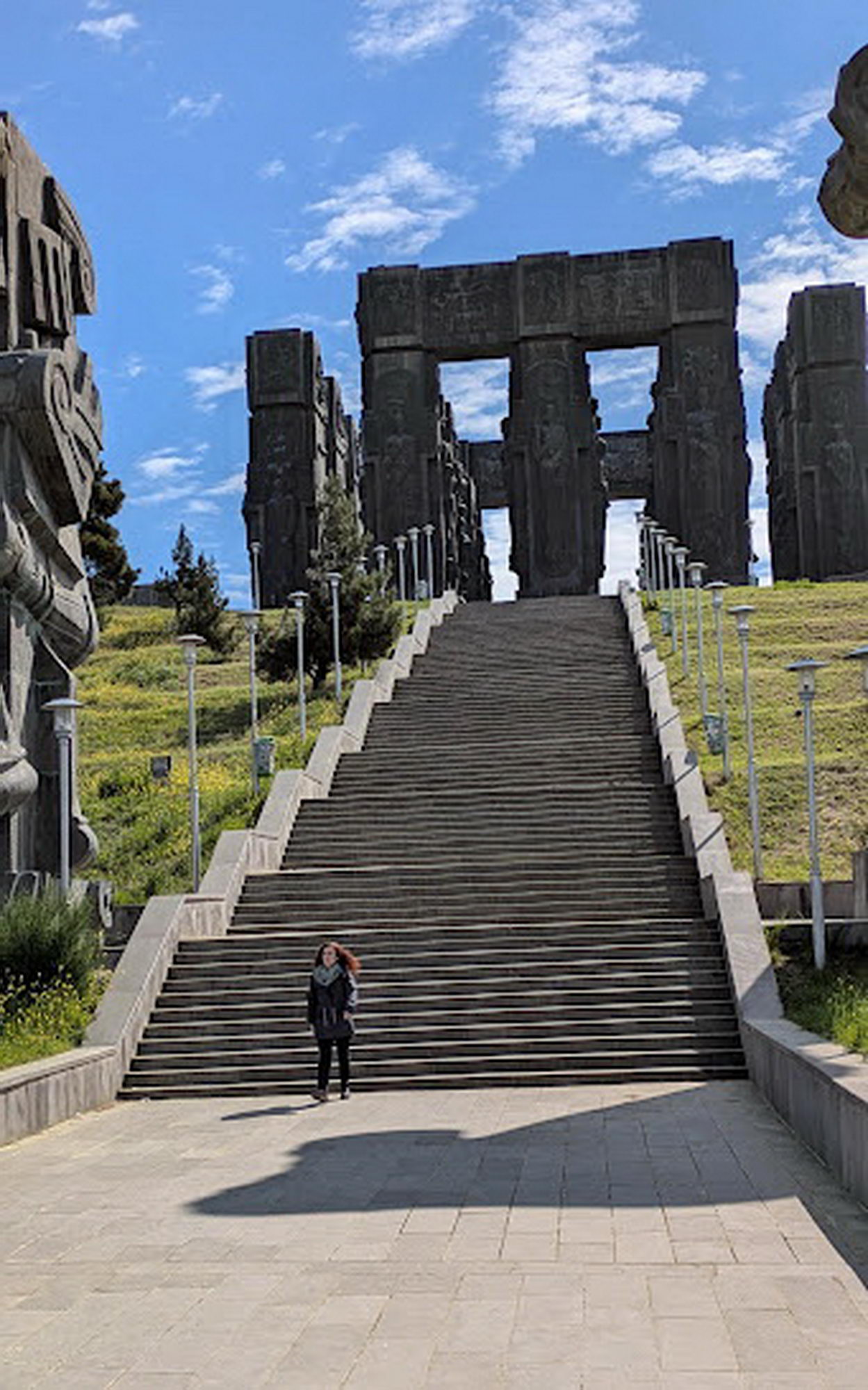
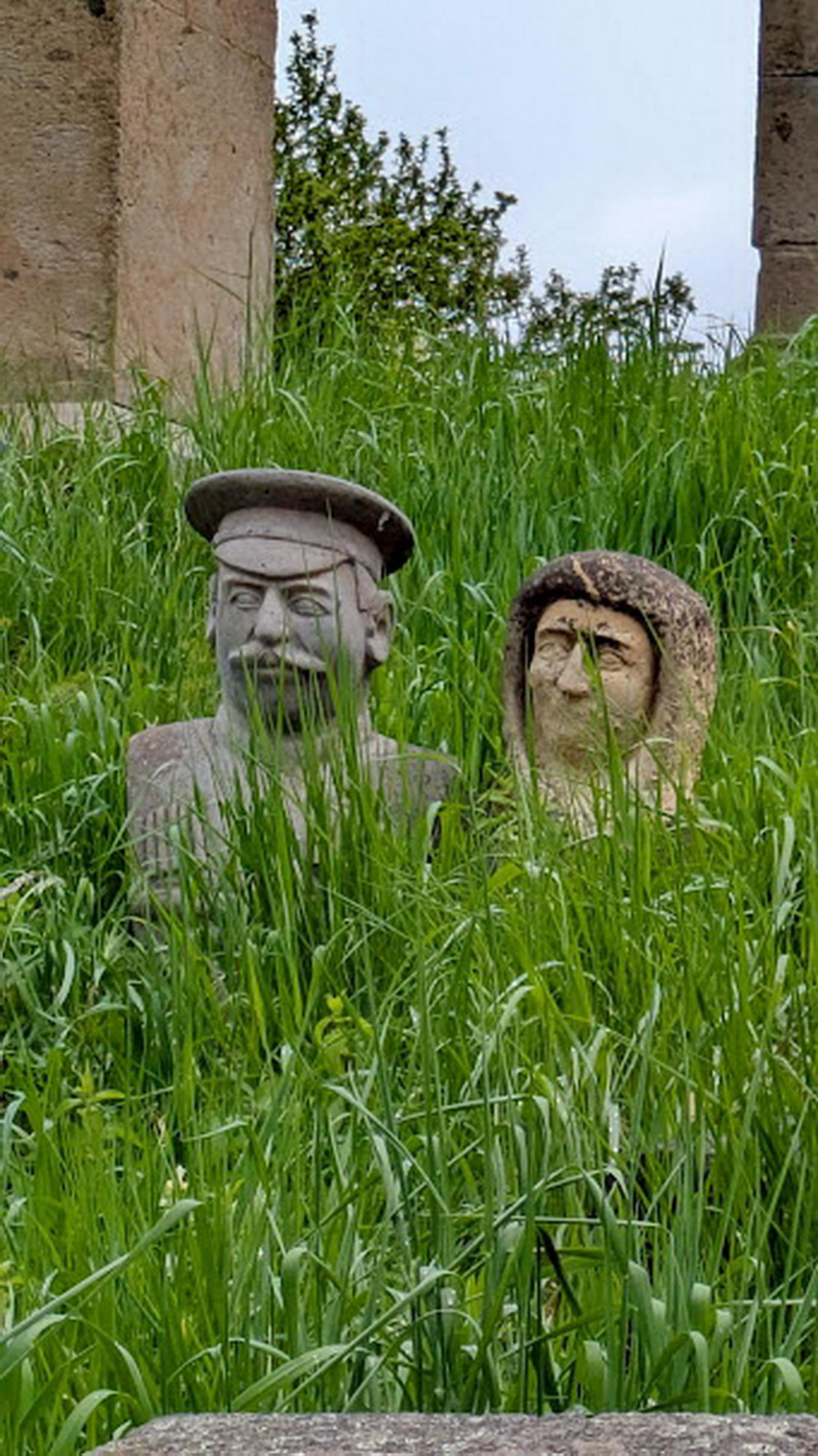
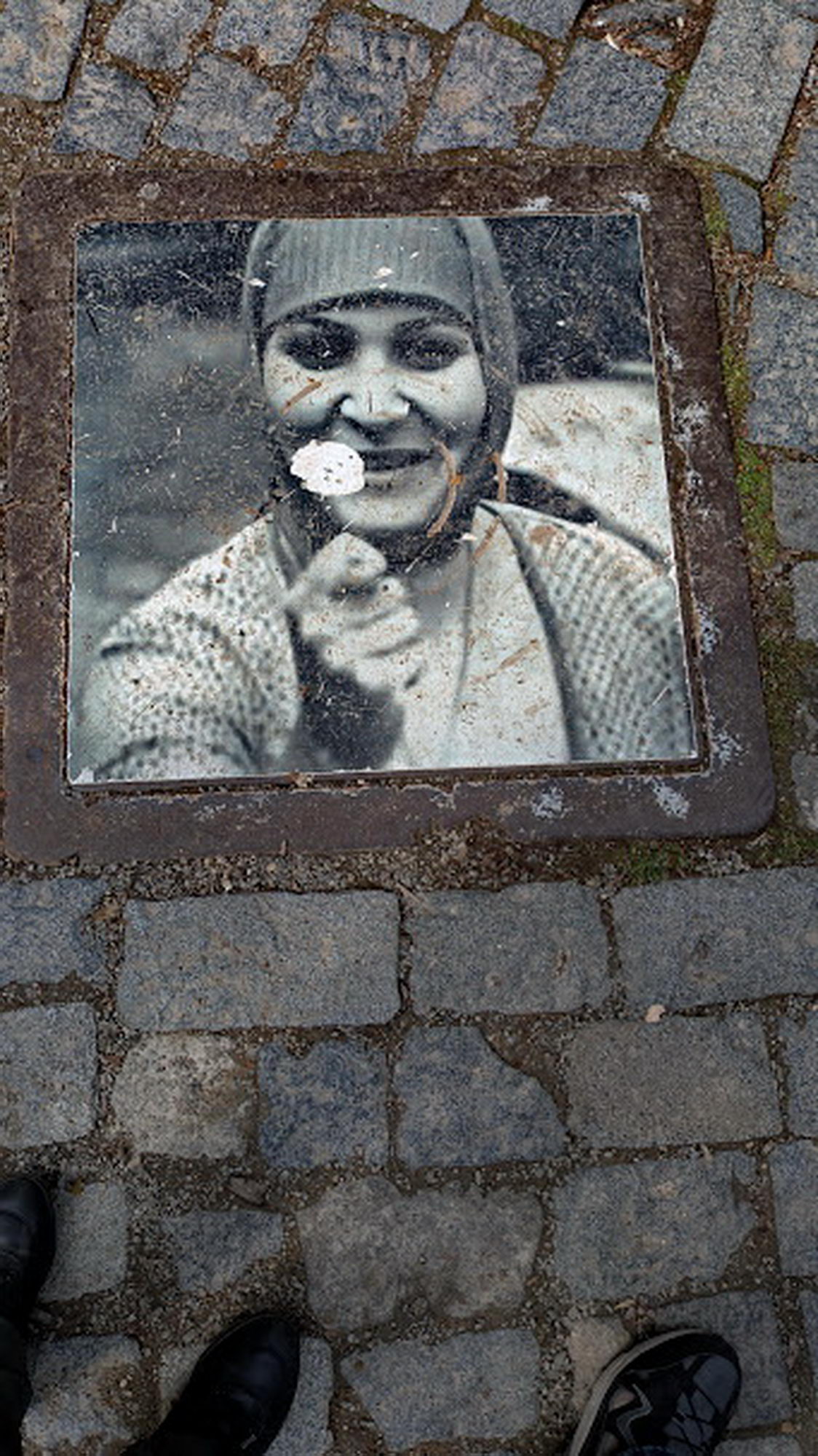
• the present
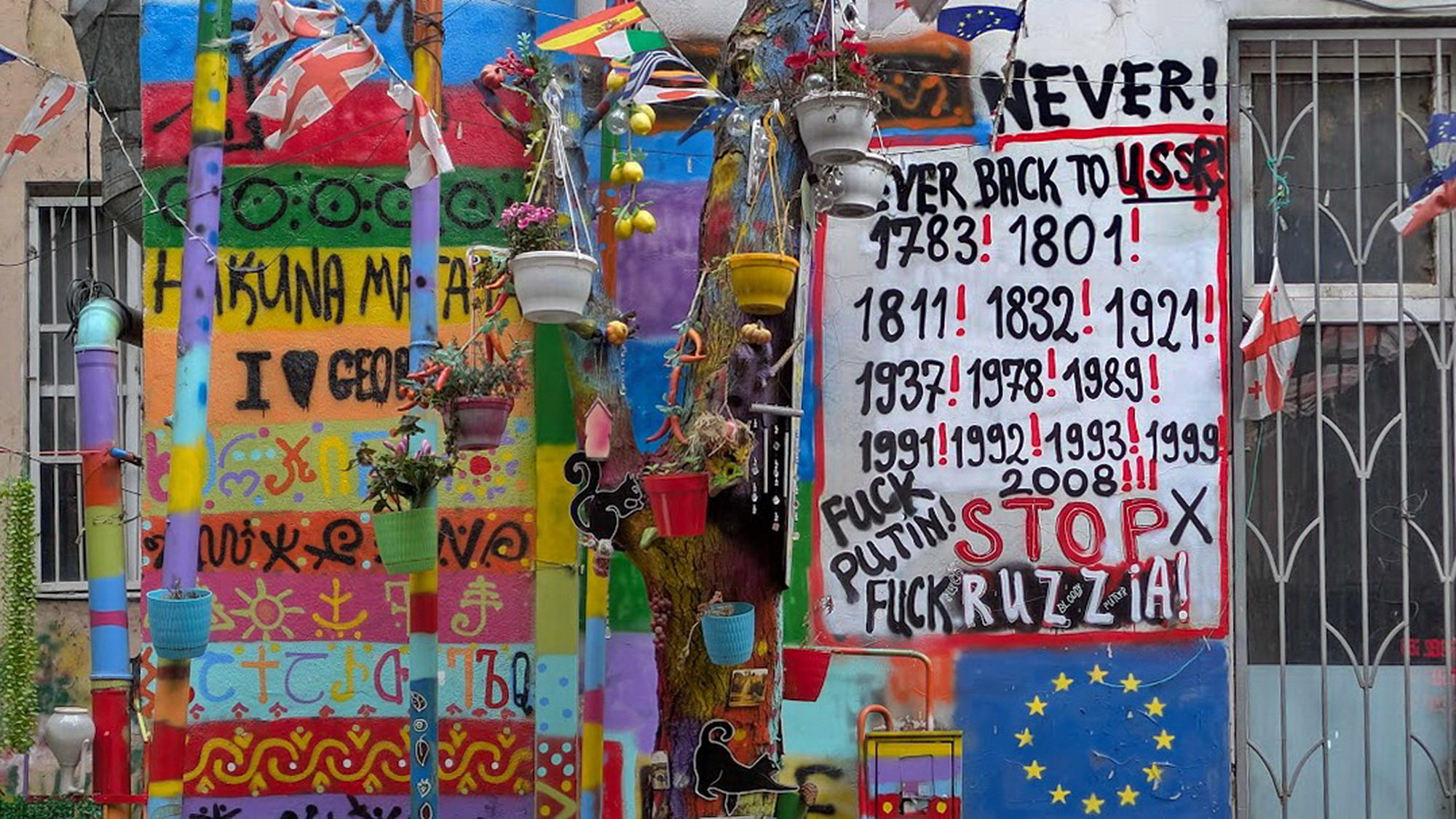
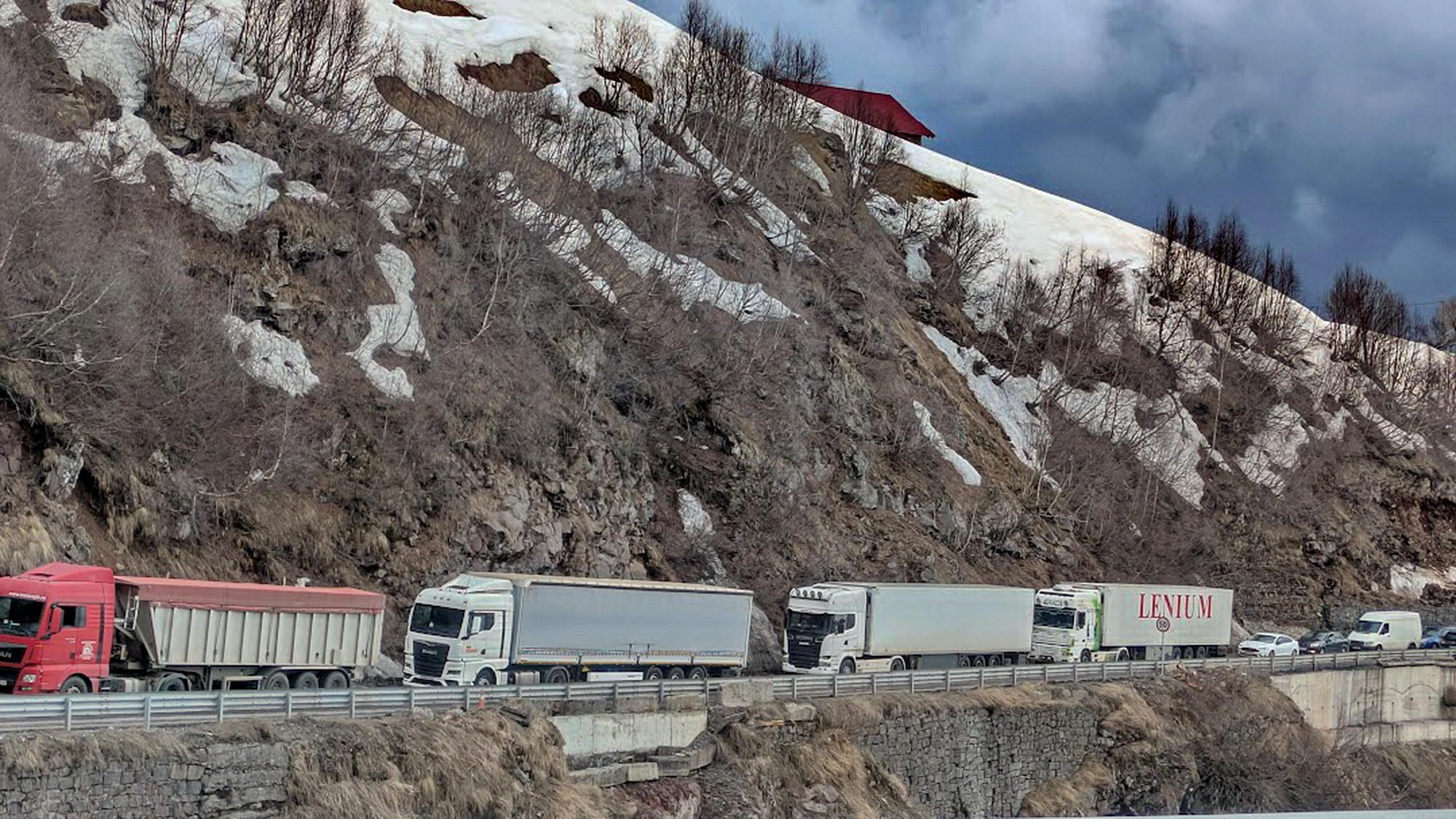
• an uncertain future
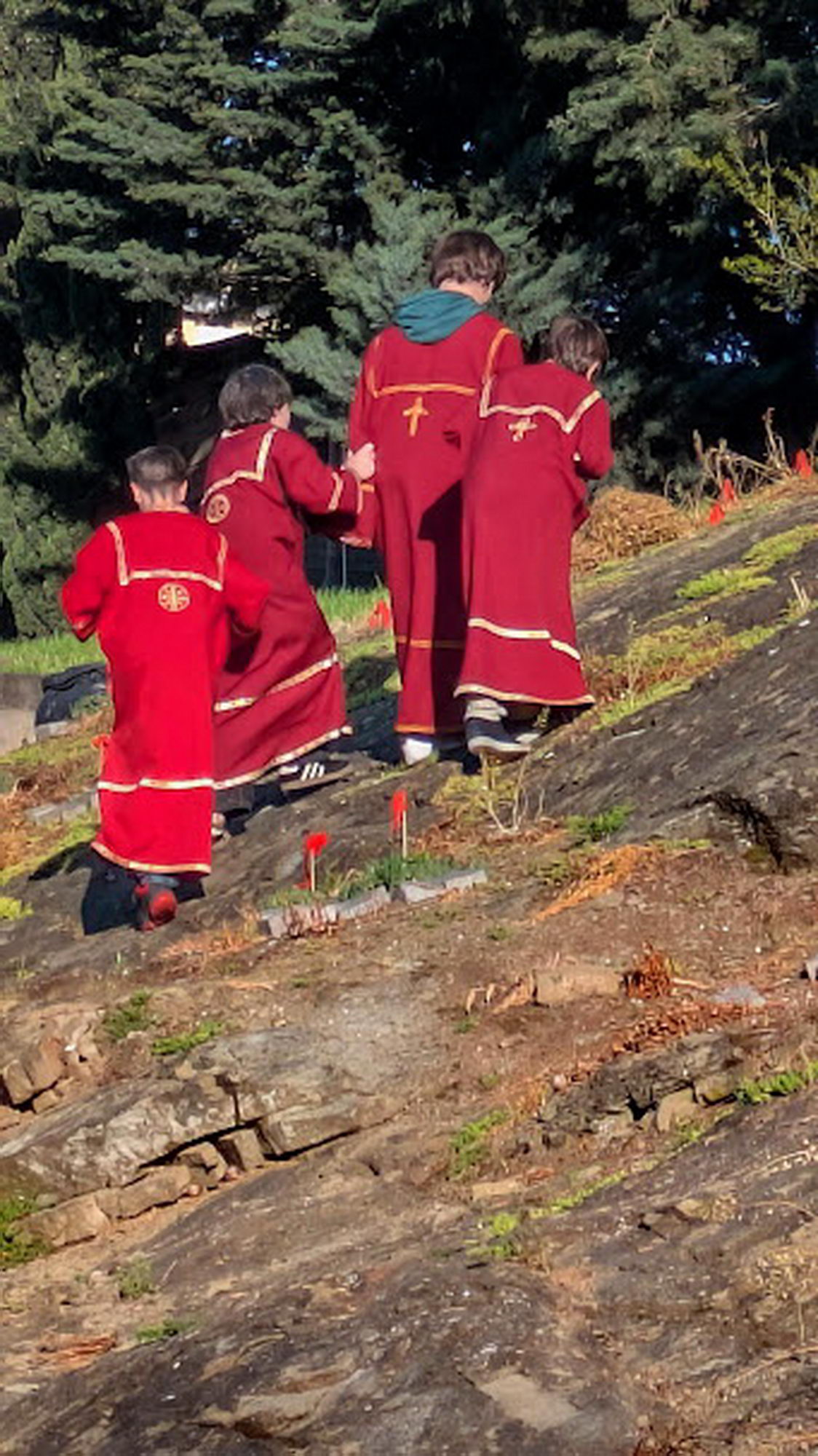
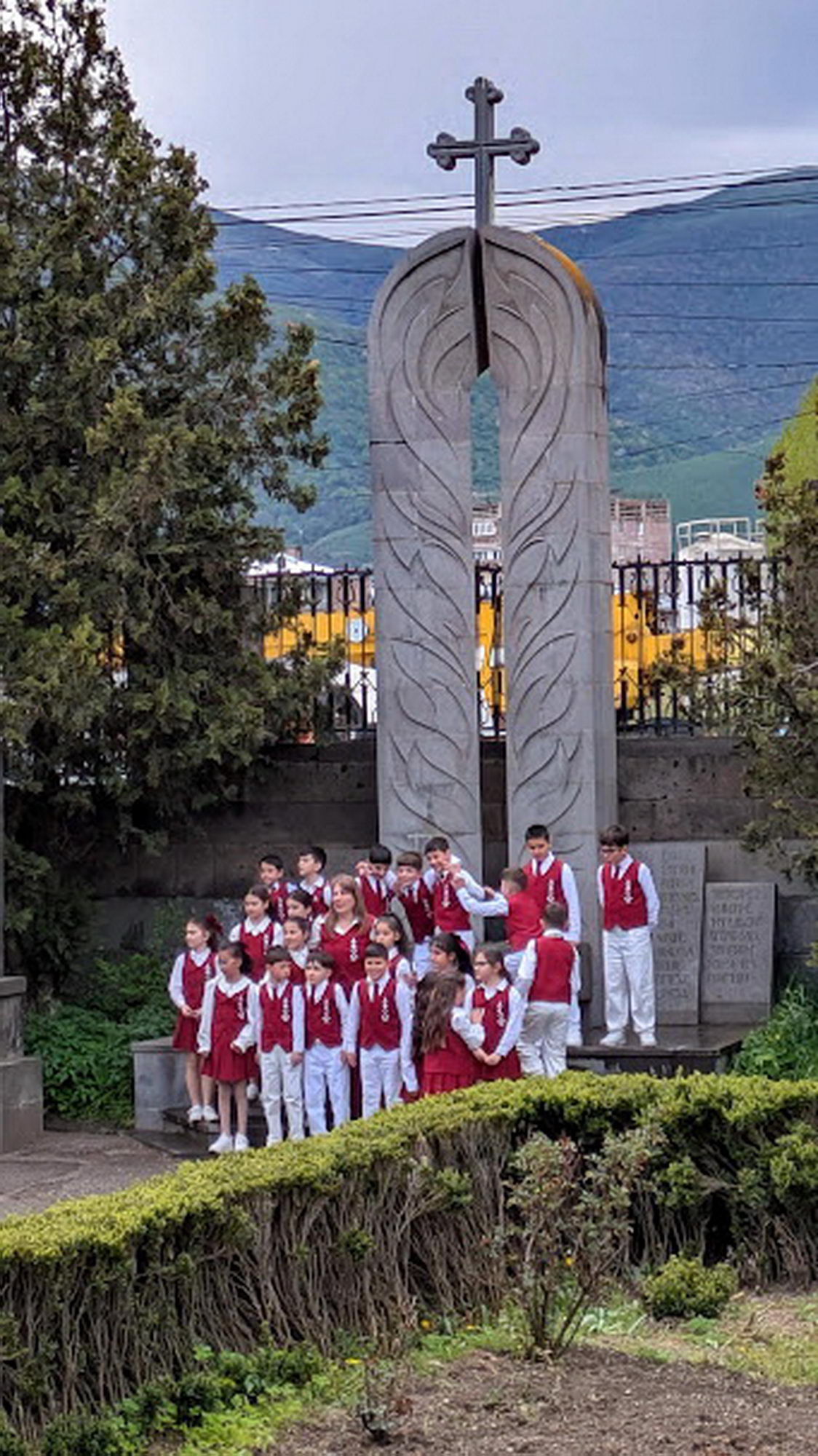
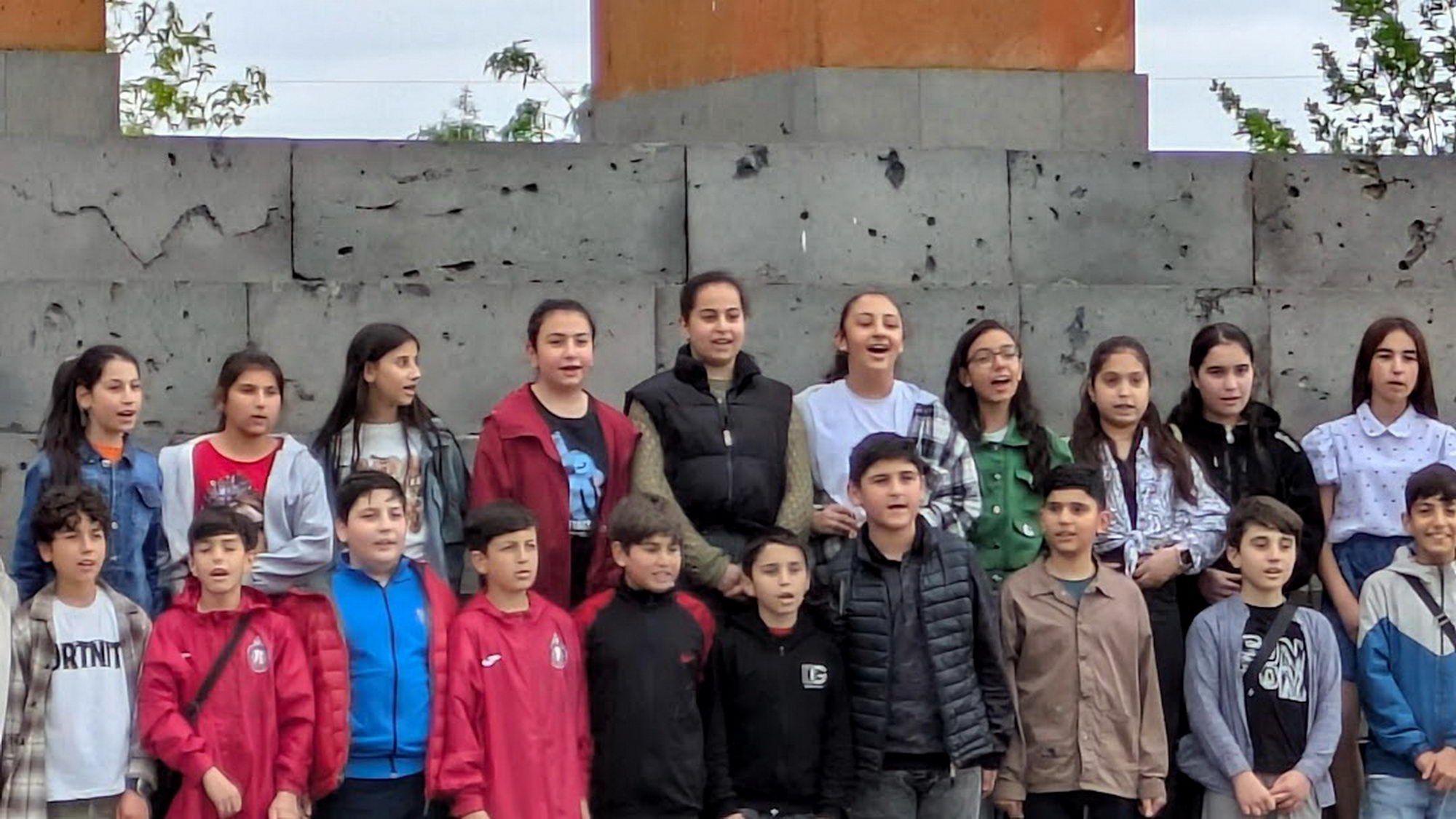
Pauline and Jean-Claude



Add comment