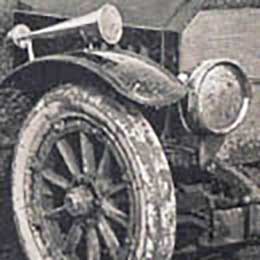


“When our famous and renowned forefathers, O Khan, first set foot on this land, where in time they would acquire a great and feared name, they exclaimed: ‘Kara bak!’ — ‘Look, there is snow there!’ Since then this country has been called Karabakh. Its former name was Syunik. For you must know, Khan, that our homeland is very ancient and famous. The karauls, the dark spirits, live in our mountains and guard immeasurable treasures. In our forests there are sacred stones, and holy springs rise from the earth. We have everything. Go through the city, look around — is anyone working? Almost nobody! Is anyone sad? Nobody! Is anyone sober? Nobody! You will only stare in amazement, my young lord!”
And indeed I stared in amazement at what splendid liars these people are. There is no tale they would not invent to glorify their homeland. Only yesterday, a stout Armenian man tried to convince me that the Christian Maras Church in Shusha was five thousand years old.
Shusha is the city of wonders. It was built in the mountains, five thousand metres high, surrounded by forests and rivers. Armenians and Muslims live here side by side in peace. For centuries it was the bridge between the countries of the Caucasus, Persia, and Turkey. The locals, with a charmingly childish exaggeration, sometimes call their small mud-brick cottages palaces. These people never tire of sitting on the steps leading to their doors, smoking their pipes, and telling one another again and again how many times Karabakh generals saved the Russian Empire and the Tsar himself, and what a terrible fate would have awaited them had they entrusted their defence to anyone else.”
Kurban Said: Ali and Nino, 1938
(The Azerbaijani novel, written in Parisian exile, tells of Shusha before 1914)

We arrive late in the afternoon in Shusha — Şuşa in Azerbaijani, Shushi in Armenian. The mud-brick cottages have long disappeared; Soviet apartment blocks now stand in their place. Many of the palaces — the two-storey stone houses built of carved stone in the eighteenth and nineteenth centuries — still survive in the old town. What they have in common is that they stand partly or entirely roofless, burned out and abandoned.
As we climb the steep streets, we understand why Shusha was the key to Stepanakert during the Karabakh War; why Azerbaijani artillery held out here even when the Armenian army entered neighbouring Khojaly in February 1992, cutting them off from their airport and massacring the Azerbaijani population of the settlement; and why the Armenian high command in Stepanakert decided, at the cost of enormous losses of life and destruction, to besiege and capture the mountain city on 8–9 May, Victory Day, which also brought them victory over Karabakh. We look down into the depths from the remains of the city walls. Six hundred metres below us, only a few kilometres away, lies Karabakh’s capital, which Azerbaijani artillery bombarded for four months from 10 January onwards, reducing almost every house to ruins and killing two thousand civilians.
The destruction of Shusha was caused not so much by the brief siege itself as by the Armenian civilians who entered the city after the army, looting and setting fire to the homes of the Azerbaijani inhabitants who had fled. But this was not Shusha’s first destruction in this century. After the First World War, during the territorial conflict between the briefly independent states of Armenia and Azerbaijan, at the end of March 1920 the Azerbaijani army and Azerbaijani residents of Shusha massacred the city’s Armenian population over four days and destroyed the Armenian quarter. Of the seventeen churches celebrated by Kurban Said, only two survived; deprived of their congregations, they survived the Soviet era after being converted into warehouses. Of its pre-war population of forty-five thousand, only five thousand remained. When Osip Mandelstam travelled through the Caucasus ten years later, he could still write in 1931:
|
…Так, в Нагорном Карабахе, |
...And in Mountainous Karabakh, |
 Shusha, the ruins of the Armenian quarter, c. 1920.
Today the situation is reversed. The Armenian cathedral has been restored, as have several houses in its vicinity. This is where the city’s present four thousand inhabitants live — mostly Armenians who fled from Azerbaijan — whereas before 1992 the city had a population of fifteen thousand. Today the Azerbaijani quarter is dead.
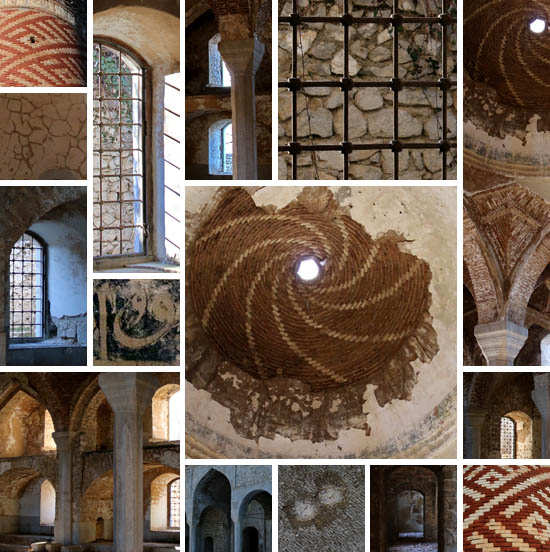
Turning towards the former marketplace, we have the feeling that we have left the city behind. The asphalt disappears, and we stumble through mud among deep puddles of melting snow. The windows of the apartment blocks yawn black and empty. Of the Soviet cultural centre only the façade remains, with its Stalinist Baroque pediment. At the end of the square still stands the Upper Mosque, built in 1787. In front of it, a black plaque in Armenian and English announces that it is under state protection. Unlike the Armenian cemetery of Julfa, the small Azerbaijani cemetery in its garden was indeed not desecrated. State protection, however, offers no defence against time, which is slowly consuming the mosaic coverings of the minarets, the arches of the mosque, and its brick façade. In photographs from 2007, the roof above the minarets was still standing; today we see only a strange structure in its place, probably used to remove the roof after it had become dangerously unstable.
 Shusha, Upper Mosque, 1988.
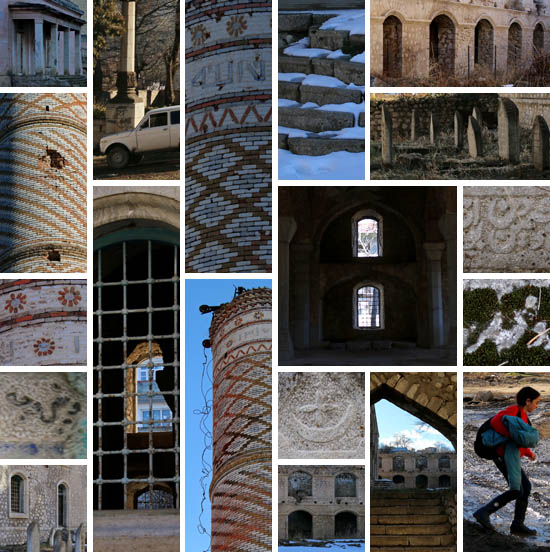
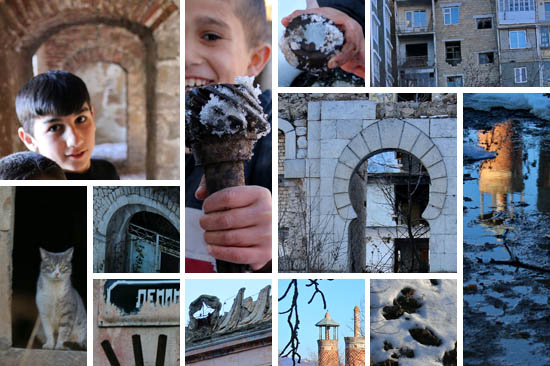
Below the marketplace, behind the former cultural centre, stands the Lower Mosque, built in 1874, in a similar condition. Children are playing in its courtyard. When they notice us, they naturally take us into their confidence and show us their collection of weapons gathered from beneath the surrounding ruins. “Azerbaijani. The Azerbaijanis left all of these behind.” “And where did they go?” “They went back to Azerbaijan.” “And did you come from there?” “Of course not. We are from here, from Shusha. We are not bezhentsy, refugees!”
They show us the secret passages leading up into the minarets and onto the tops of the domes. Seen from below, the arches of the building are still intact, but from above one can see that young trees are already growing among the roofless domes, which will eventually split apart the brick vaults.

Our companions join us and insist on showing us everything. “These were Persian houses.” “Not Azerbaijani?” “No, no. The Azerbaijanis lived there. Here it was the Persians.” “And what happened to them?” “They left too.” “And here was the prison,” they say, pointing to the collapsed basement of the cultural centre. We do not ask who imprisoned whom there.
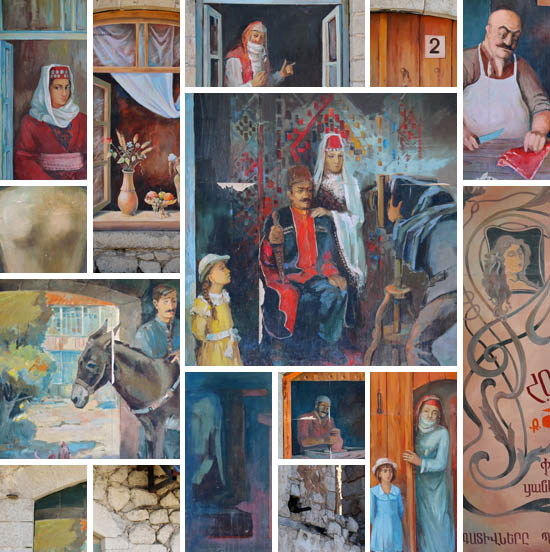
As we return along the main street, we follow Mustafa Agha’s advice and look to see whether anyone is working. We are delighted to find that almost every doorway is alive with activity: someone is loading a donkey, cutting meat, sewing, or making tiles. A photographer captures in his studio what it was like when, in Shusha, Armenians and Muslims lived side by side in peace.
“— Oh, Khan,” said Mustafa Agha, “your ancestors waged wars, but you sat in the House of Wisdom and became an educated man. You have therefore heard of the fame of the arts. The Persians are proud of Saadi, Hafez and Ferdowsi, the Russians of Pushkin, and in the distant West there lived a poet named Goethe, who wrote a poem about the devil.
“— Did these poets also come from Karabakh?” I asked.
“— No, noble sir, but our poets are better, even if they refuse to imprison their words in the prison of dead letters. They are too proud to write down their poems — they sing them.”
Qubanin ag almasi (The white apples of Quba), in the Bayati Shiraz mugham mode, sung by Miralan Miralanov. From the CD Azeri Love Songs. Karabakh, and especially Şuşa, was considered the centre of traditional Azerbaijani mugham music.



Add comment