

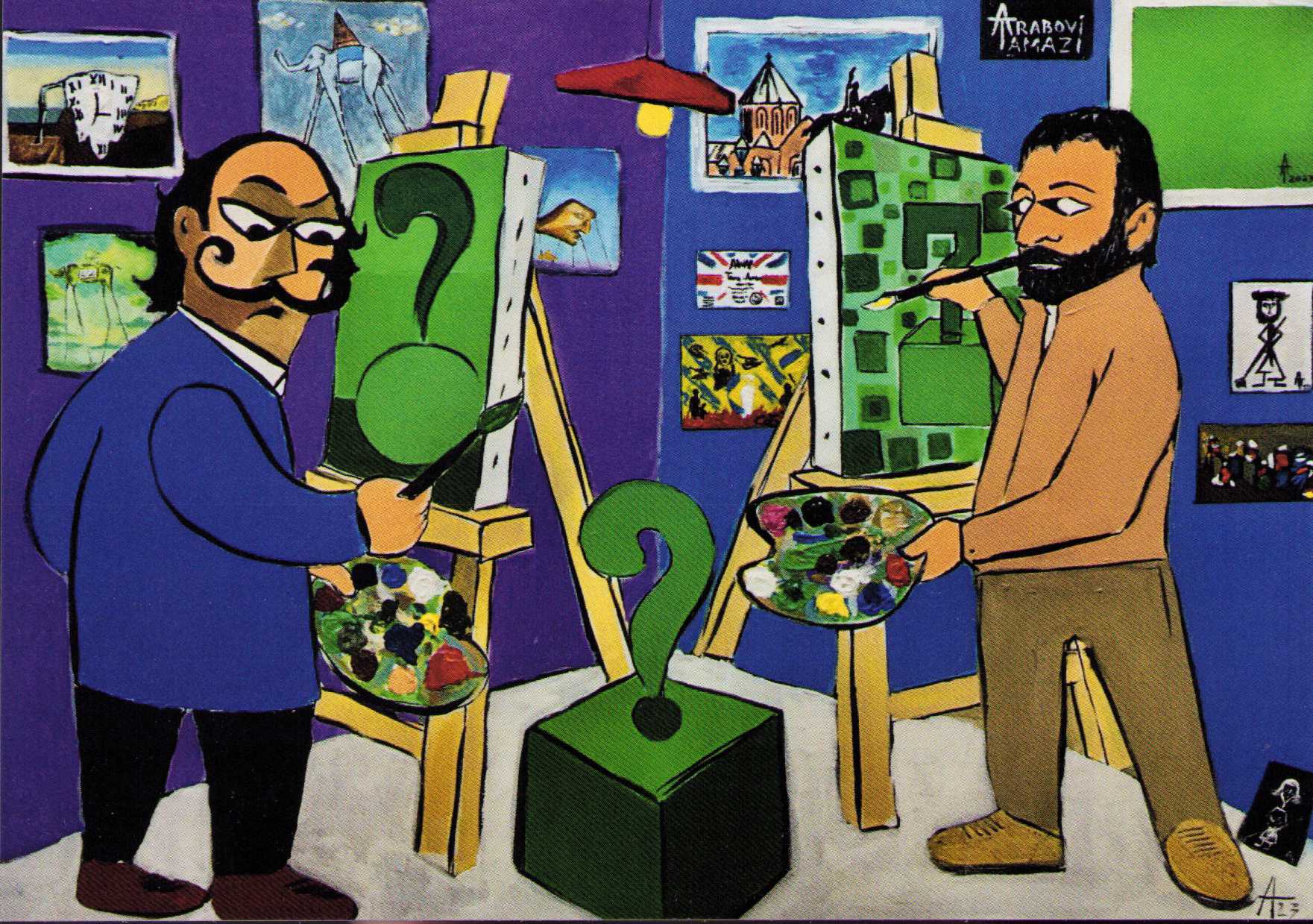
 Salvador Dalí (Catalan, Costa Brava) and Tamazi Arabovi (Yazidi Kurd, Tbilisi) paint the same model one hundred years apart.
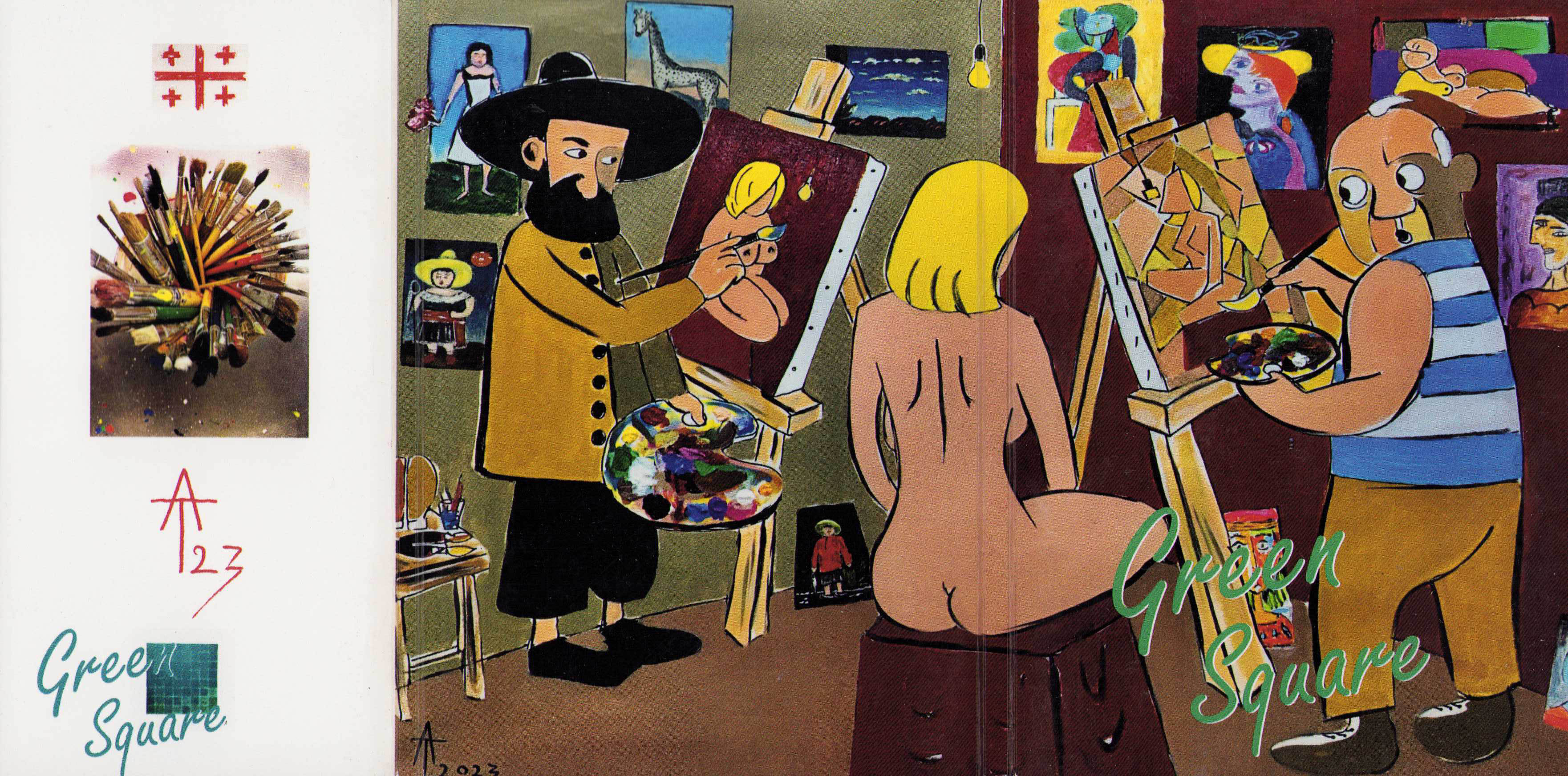
In a square in the Old Town, as in so many other places in Tbilisi, a local painter is displaying his works, hanging them on the wall of a house or leaning them against it, in the style of Pirosmani. I photograph two of them: one in which Picasso and Dalí, and another in which Pirosmani and Picasso, each in their own unmistakable style, paint the same model in completely different ways.
Seeing my interest, the painter hands me a set of postcards. The sixteen cards each feature two painters (sometimes three) portraying the same model in their own distinctive styles. He offers me a challenge: if I can identify every artist, I may keep the whole set for free. I do fairly well with the Western European masters, and I can also recognize the Russian classics, but I am completely at sea when it comes to contemporary Georgian, Ukrainian and Russian painters. To make matters worse, two Kurdish (!) painters also turn up. Now who on earth are they?
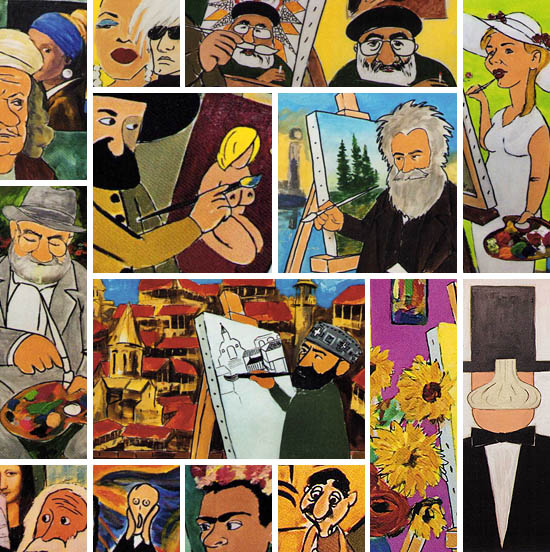
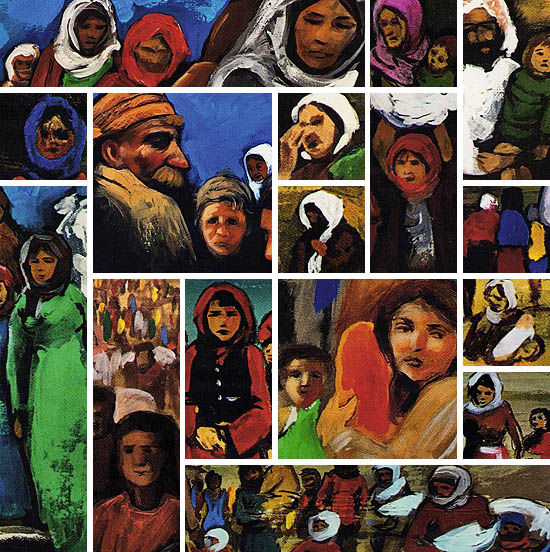
It turns out that Tamazi Arabovi, an internationally acclaimed painter with exhibitions and awards across Western Europe, is a member of the Kurdish Yazidi community that fled to Georgia two centuries ago. Noticing both my interest and my Kurdish trousers, he shows me several more series of paintings depicting the refugees of the 2014 Sinjar massacre, as well as Kurdish weddings in Tbilisi, including his own.
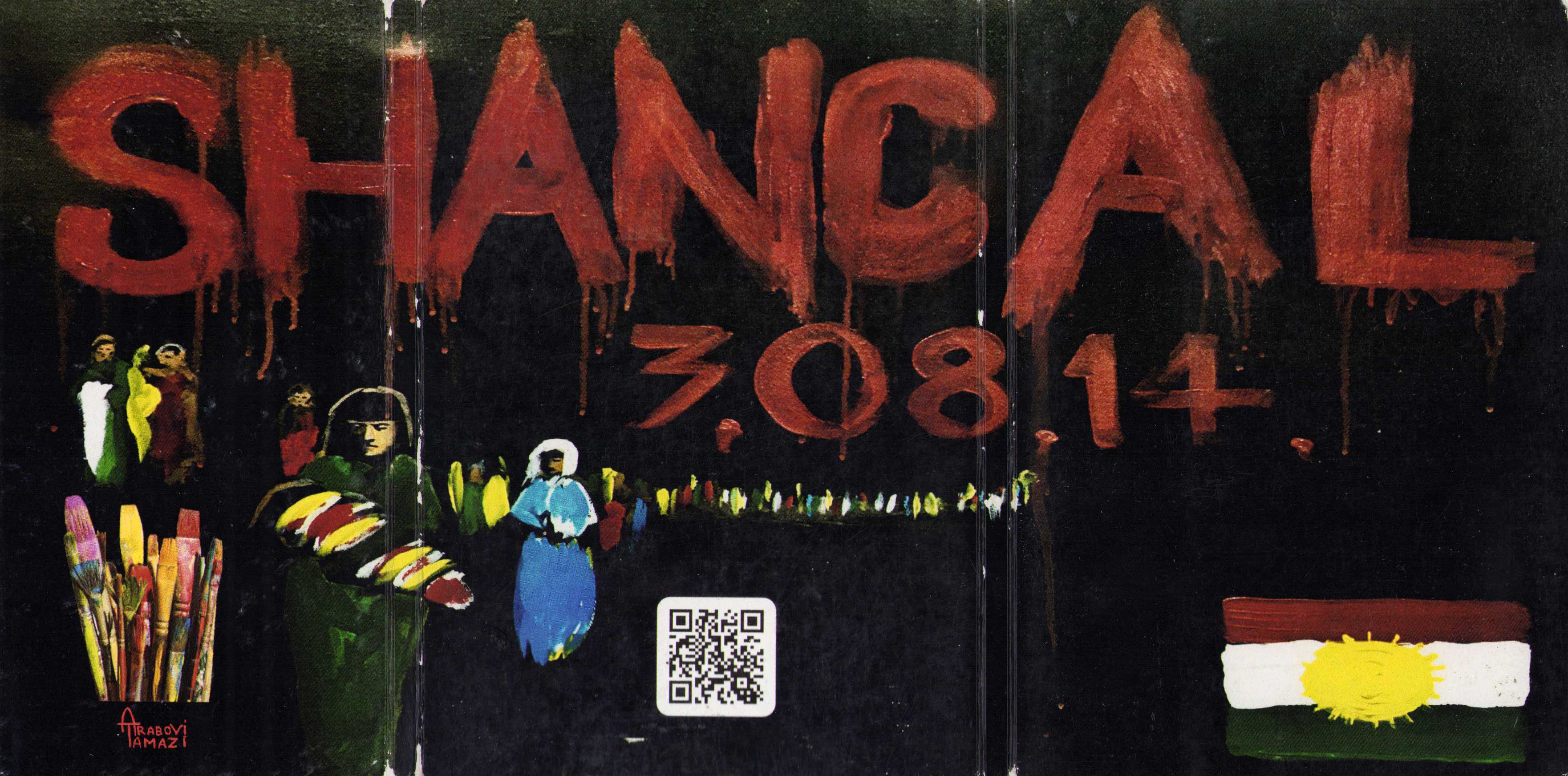 When ISIS terrorists captured the Sinjar (Şengal/Shangal) region on the Nineveh Plain, they massacred thousands of Yazidi Kurdish men and abducted tens of thousands of women and children into slavery, many of them into sexual slavery. The Yazidis of Tbilisi had fled to the Caucasus much earlier, during the nineteenth and twentieth centuries, escaping similar waves of persecution.
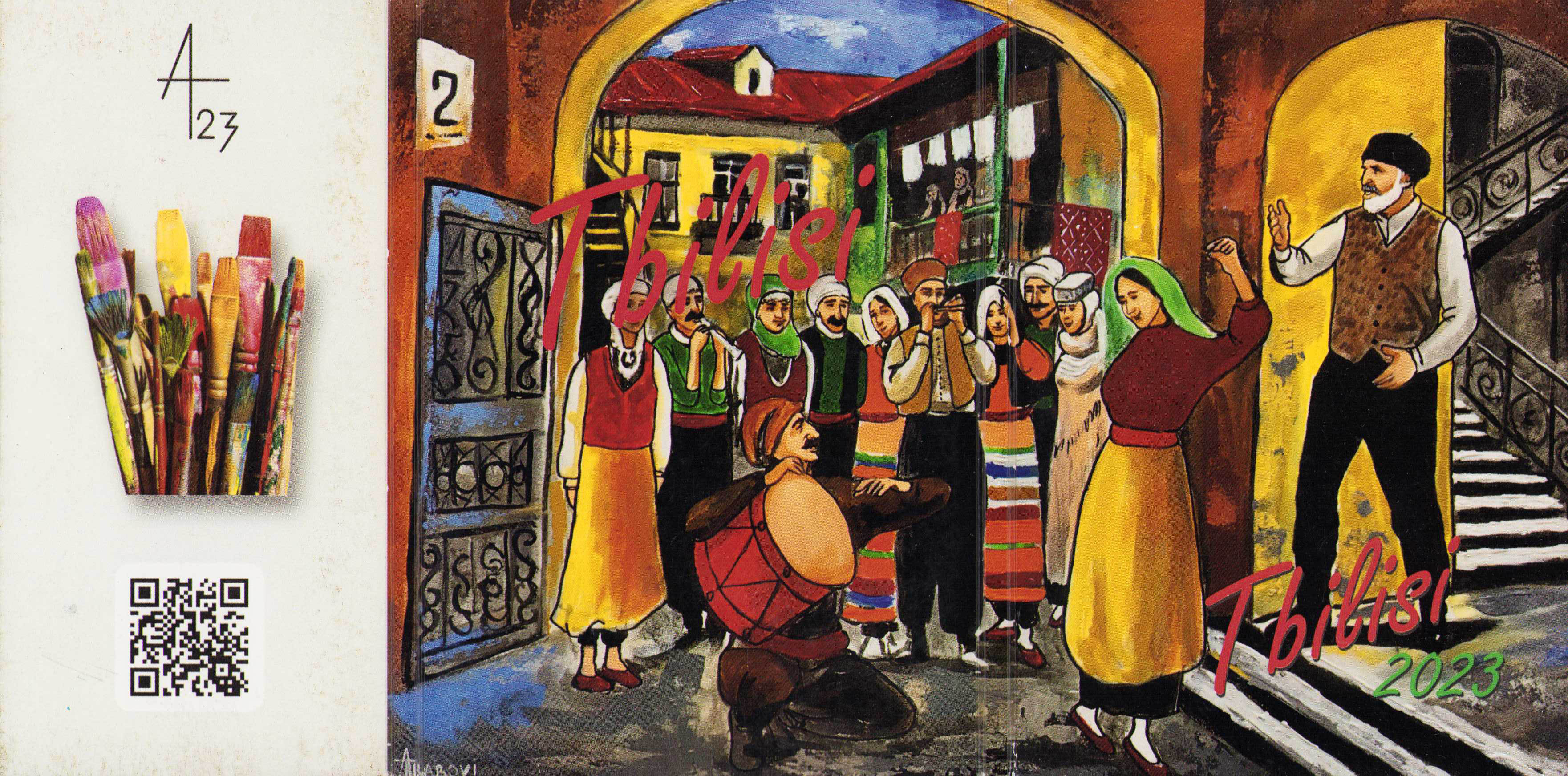 Kurdish weddings and figures in Tbilisi. Below, a video recording of a Kurdish celebration in the courtyard of the Yazidi temple in Tbilisi.
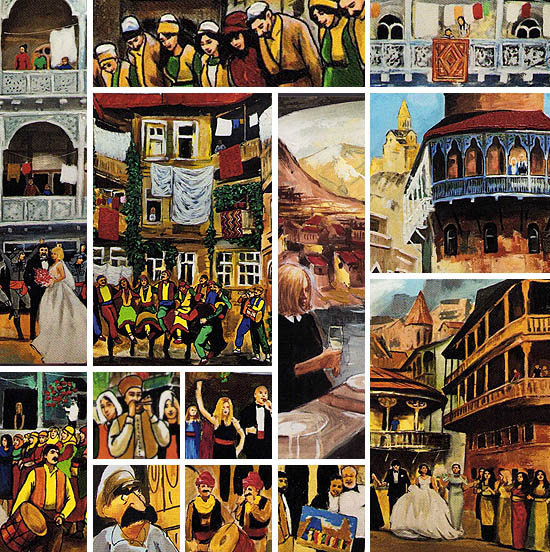
In the background of the paintings, the outlines of the Yazidi temple and community centre in Tbilisi keep reappearing, along with many well-known local figures, whom Tamazi identifies one by one. “This is our leader,” he says, hesitating for a moment, “something like the Romani vajda.” Then he adds, “Next time you come, I’ll introduce you to him.” From time to time we switch to Kurdish, but he speaks a very archaic dialect of Kurmanji. We spend a long time discussing the places and the situation of the Kurds I know from southeastern Turkey and Iranian Kurdistan. He gives me his phone number, and we agree that on my next visit to Tbilisi I will set aside at least a day or two for him to show me the places and personalities of the city’s three-thousand-strong Kurdish community.



Add comment