

I do not believe there are many people who are unfamiliar with the unofficial anthem of the Czechoslovak nation, performed by their celebrated star, Ivan Mládek, who himself described the song in these terms. For their benefit, I am publishing it here with the video, a transcription, and an English translation.
|
Jedu takhle tábořit Škodou 100 na Oravu
[refrén 1]
Projížděl jsem dědinou cestou na Vizovice
[refrén 1]
Říkám: "Dej mi předsedo letadlo a prášek
[refrén 2] |
I’m setting out camping in a Škoda 100 to Orava
[chorus 1]
I drove through a village on my way to Vizovice.
[chorus 1]
I said: “Give me, Comrade Chairman, a plane and some powder,
[chorus 2] |
The song is quite quintessentially Czechoslovak in the sense that, for Prague people, the distant Moravian—and even Slovak—countryside, with the border town of Vizovice, home of the Rudolf Jelínek plum brandy distillery, already holds the possibility of such exotic adventures. The Czech lyrics are mixed with Moravian and Slovak, and even Hungarian Romani dialect words—such as lóvé (“money”)—creating the impression that the story takes place somewhere on the edge of the known world.
Ivan Mládek has recounted the story in several interviews: in the autumn of 1977 they performed in Zlín—then called Gottwaldov. After the concert, a local musician and joker known as Kňučík (“Whiner”), Zdeněk Navrátil, approached them at the Hotel Moscow and made the following wager:
“If you write a song about Jožin from the marshes, you’ll get a demijohn of plum brandy.”
Mládek accepted the challenge.
Originally, Jožin was a local exhibitionist who frightened female workers at the local shoe factory. It was Mládek who transformed him into a provincial marsh dragon, defeated by the socialist era’s Prague Saint George—not with a holy lance, but with the help of an agricultural aircraft.
Mládek later also recounted that he really did receive the demijohn of Vizovice plum brandy. Indeed, when the song became a meme throughout Central and Eastern Europe in the 2000s, he himself brought a demijohn to Kňučík. And when Metallica performed the song at their Prague concert in April 2018, Mládek specifically praised their Czech pronunciation.
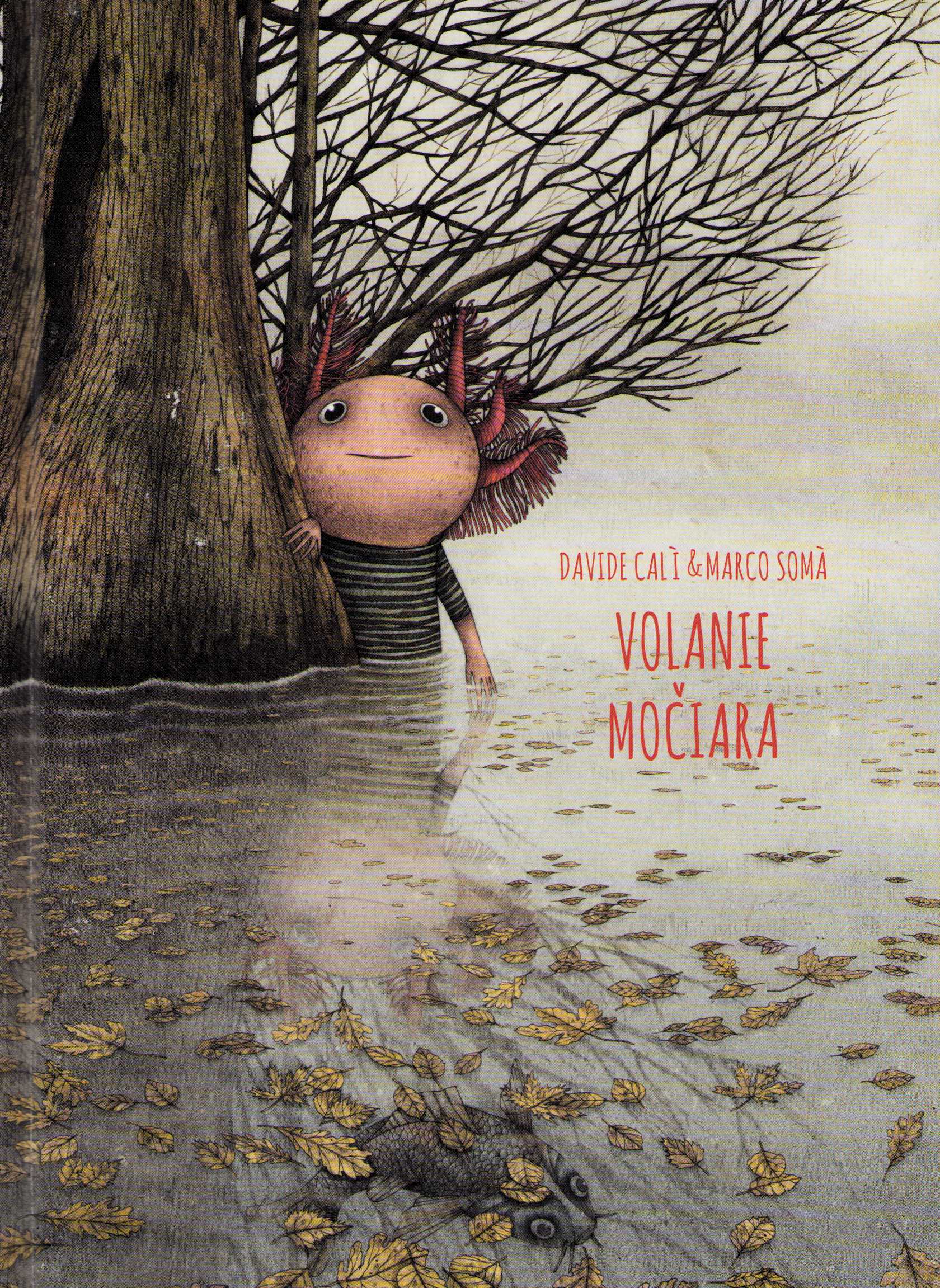
Perhaps it is not by chance that the beautifully illustrated children’s book titled The Call of the Marsh, reminiscent of the song’s title, can be bought in Český Krumlov not in Czech (Volání bažin), but in Slovak (Volanie močiara).
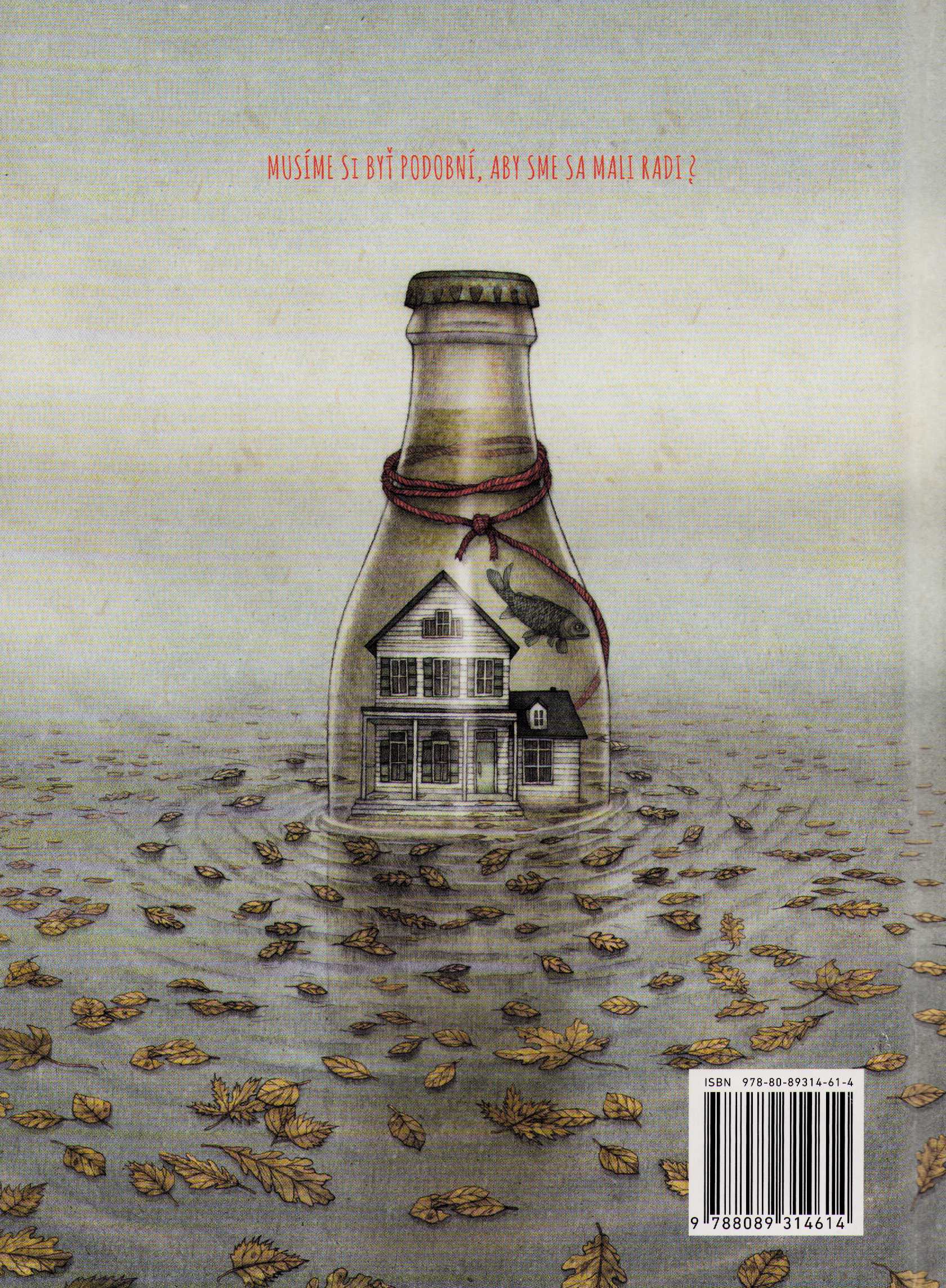 “Must we resemble those whom we love?”
This story has a very different tone from both Mládek’s song and the recently heard Estonian-language The Call of the Bog. Here the story is about a little Jožin—called Boris in the book—who is found at the edge of a marsh by childless parents, with gills and scales, and is lovingly raised as their own child. When the marsh calls to him, however, he returns there to discover his roots. In the end, he realizes that home is not where creatures like yourself live, but where you are loved and where you can love in return.
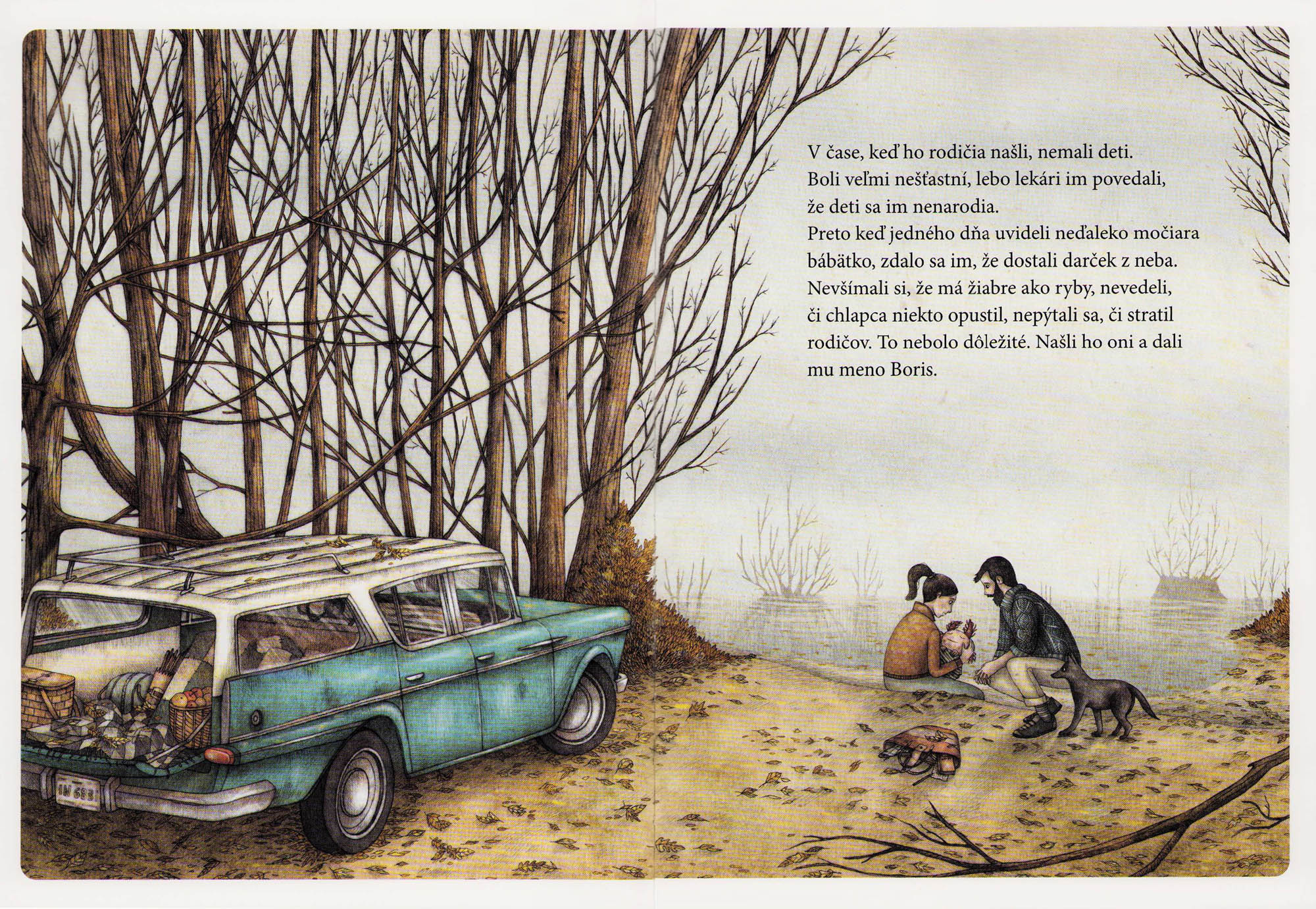 “When his parents found him, they had no children. They were very unhappy because doctors had told them that they could never have one of their own. Therefore, when one day they saw a little baby near the marsh, they felt that they had received a gift from heaven. They did not even notice that the little boy had gills like a fish [more precisely, like an axolotl], and they did not know whether someone had abandoned him or whether he had lost his parents. None of this mattered. They had found him, and they gave him the name Boris.”
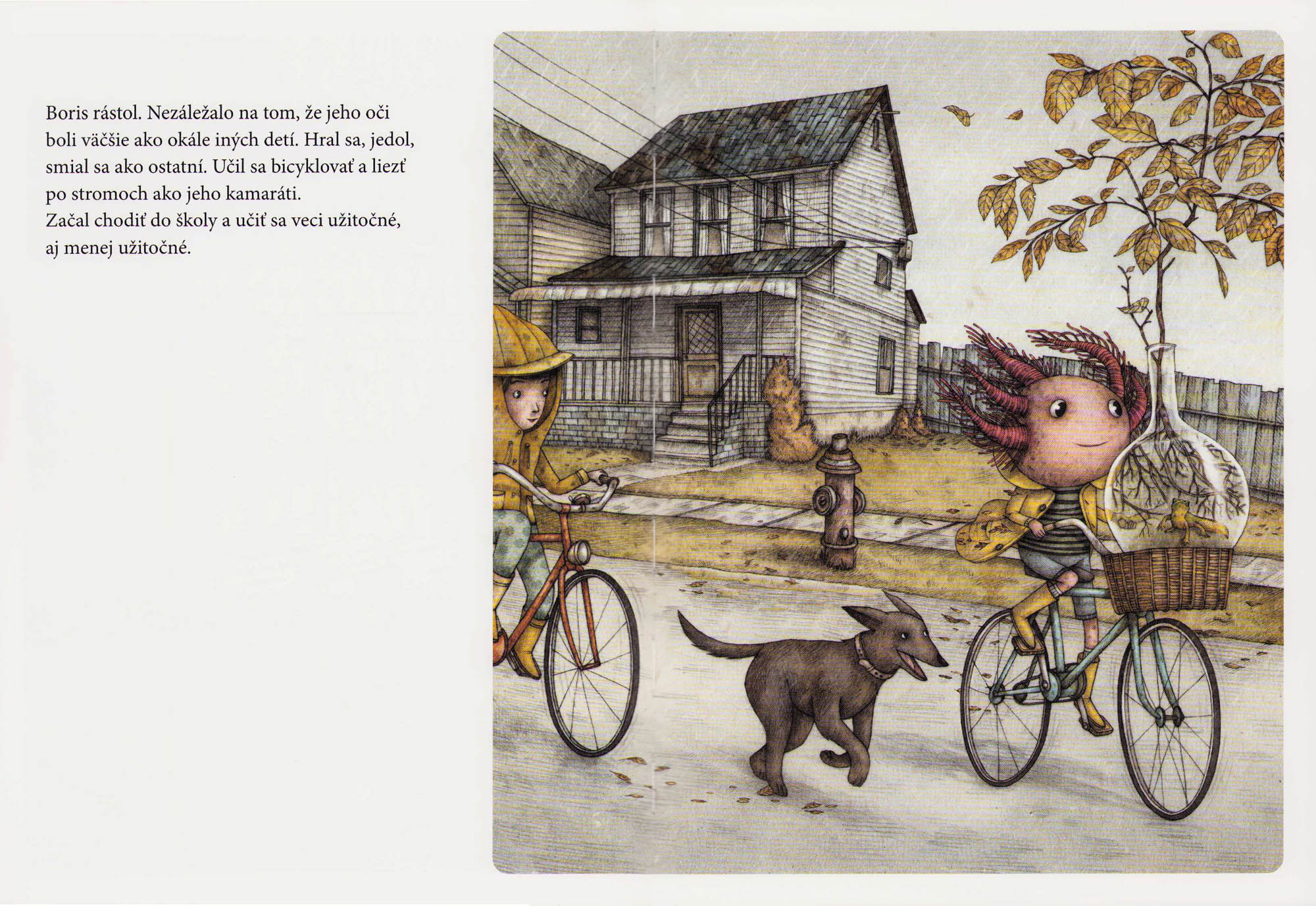 “Boris grew and grew. It did not matter that his eyes were much larger than those of the other children. He played, ate, and laughed like anyone else. He learned to ride a bicycle and climb trees, just like his friends. He started going to school and learning useful things, as well as less useful ones.”
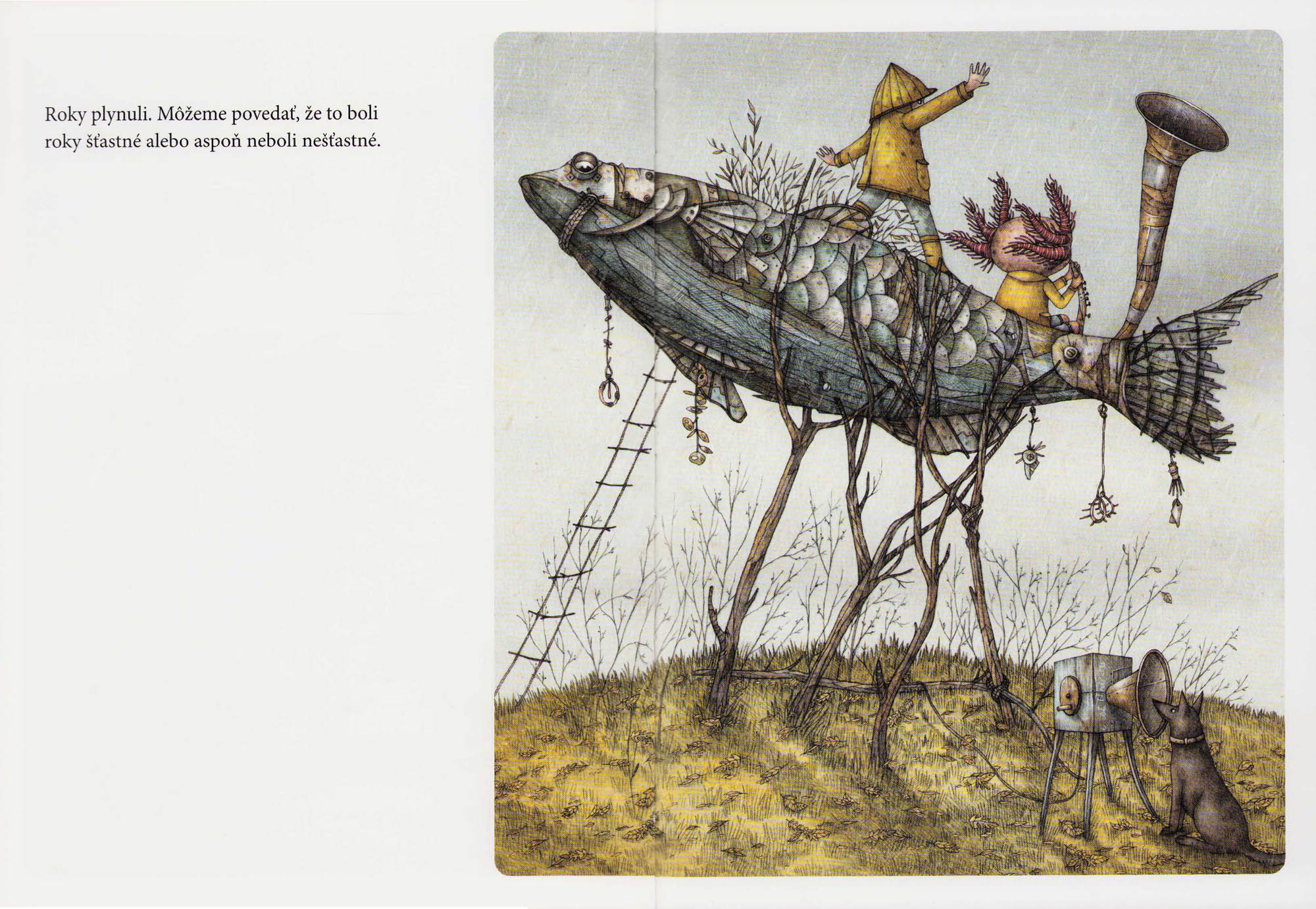 “Time passed. We can say that they were happy years, or at least they were not unhappy.”
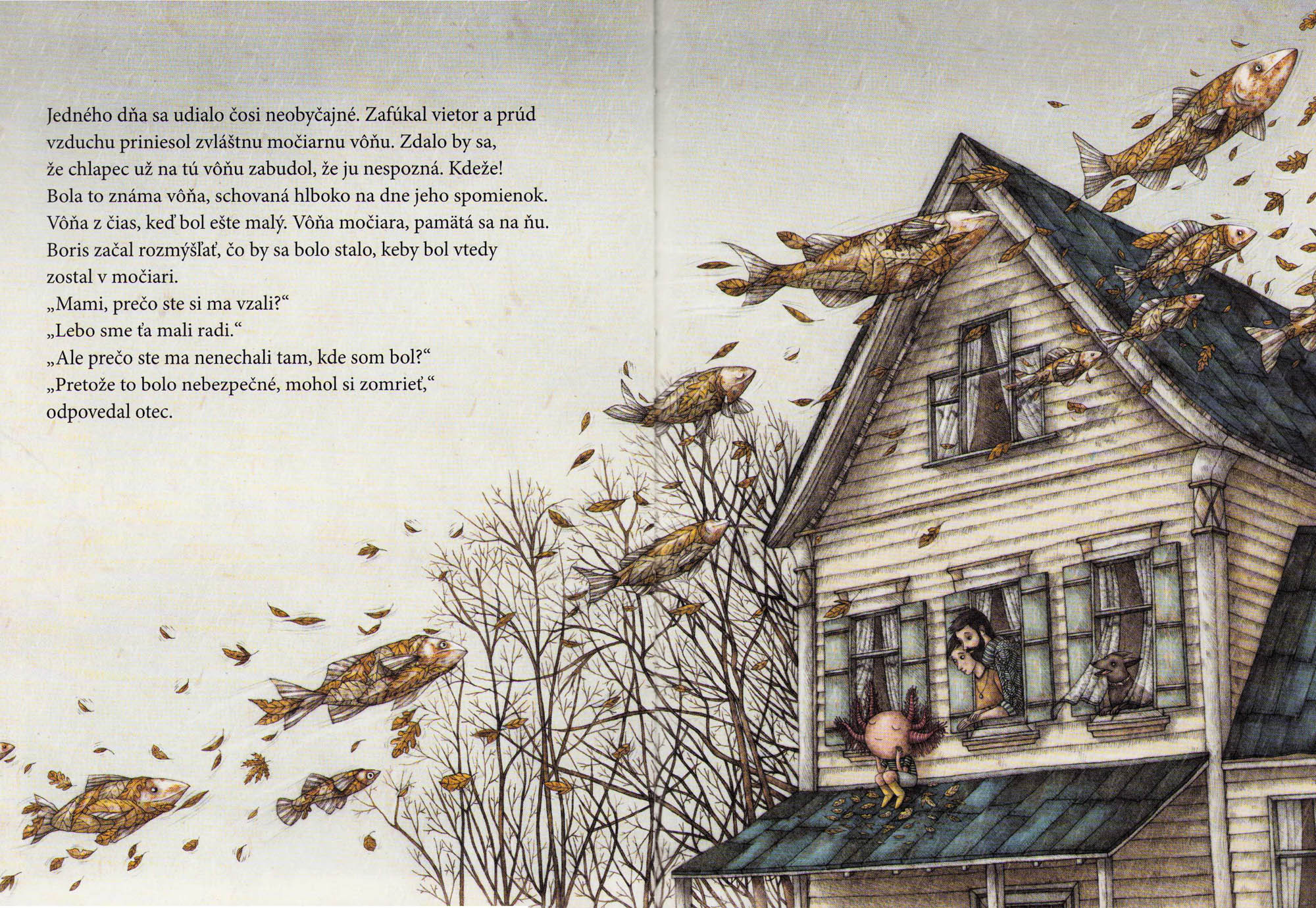 “One day something unusual happened. The wind rose, and the current of air brought with it a strange smell of the swamp. One might think that the boy had already forgotten this scent, that it was unknown to him. But no! It was a familiar smell, hidden deep at the bottom of his memories. It came from the time when he was still small. The smell of the swamp, he remembered.
Boris began to wonder what would have happened if he had stayed in the swamp back then.
– Mother, why did you take me in?
– Because we loved you.
– But why didn’t you leave me where I was?
– Because it was dangerous, you could have died – his father replied.”
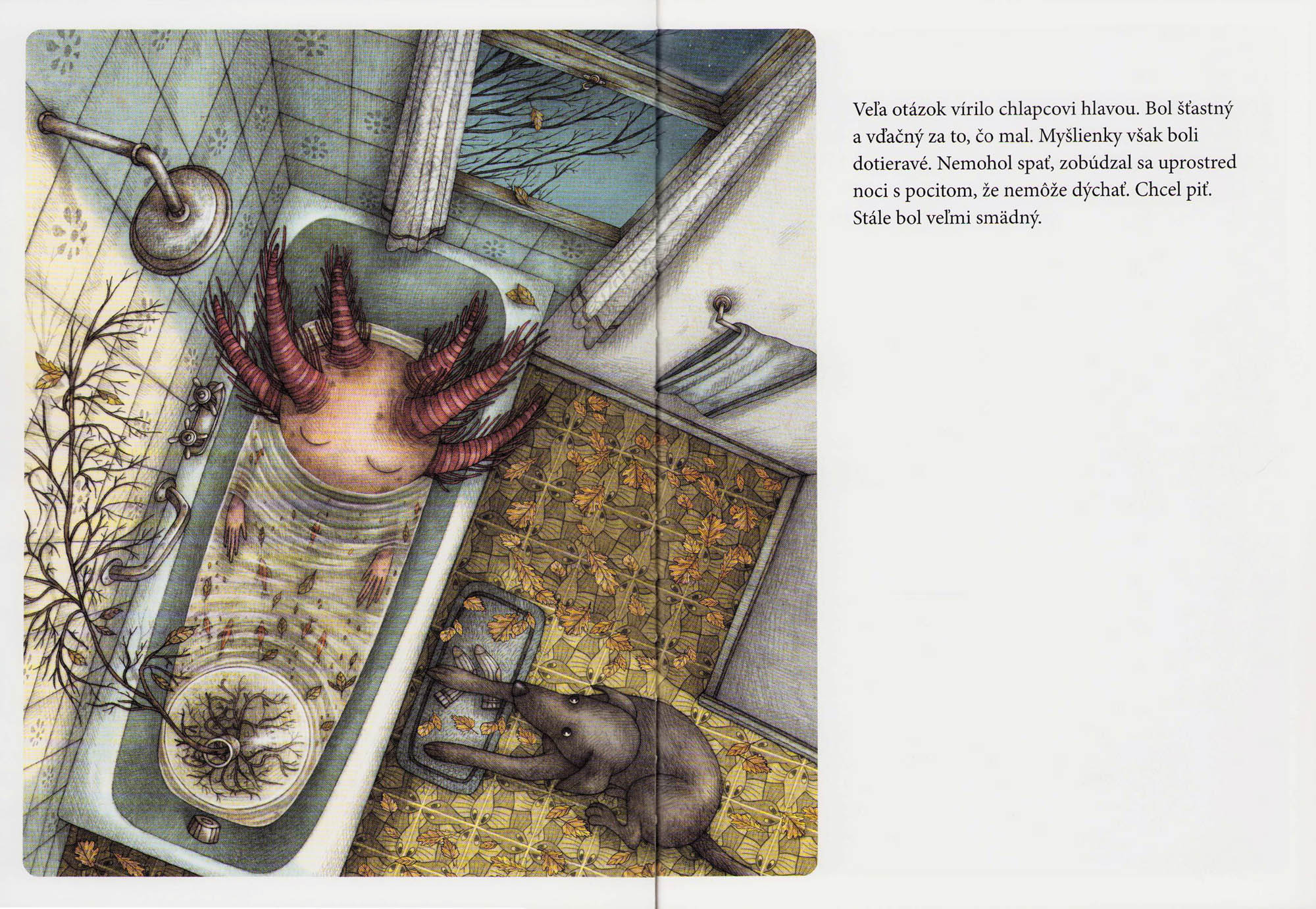 “Many questions swirled in the little boy’s head. He was happy and grateful for what he had. But the thoughts were intrusive. He could not sleep; in the middle of the night he woke up feeling that he could not breathe. He wanted to drink. He was always very thirsty.”
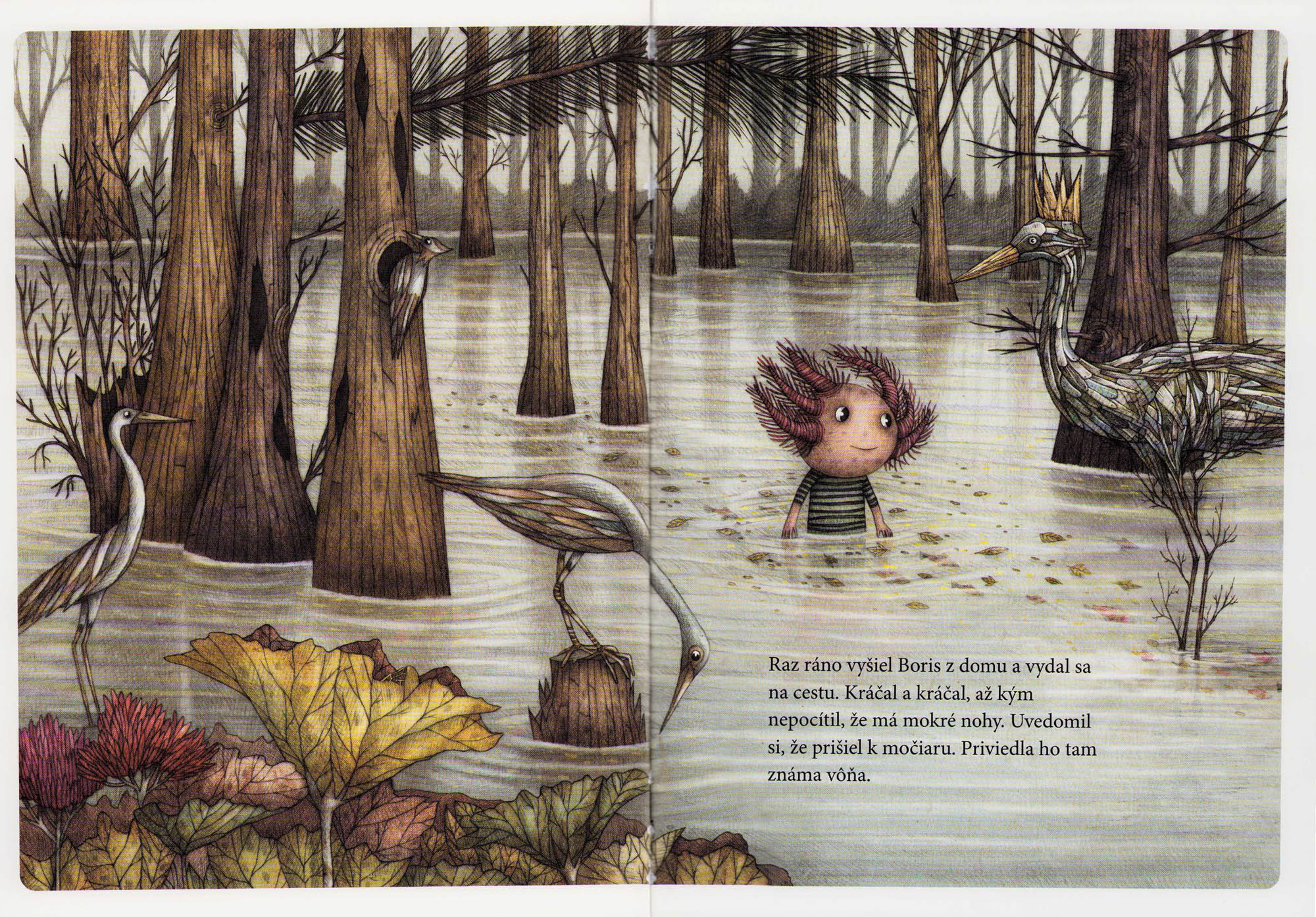 “One morning Boris left the house and set out on his way. He walked and walked until finally he felt that his feet were wet. He realized that he had arrived at the swamp. The familiar scent had led him there.”
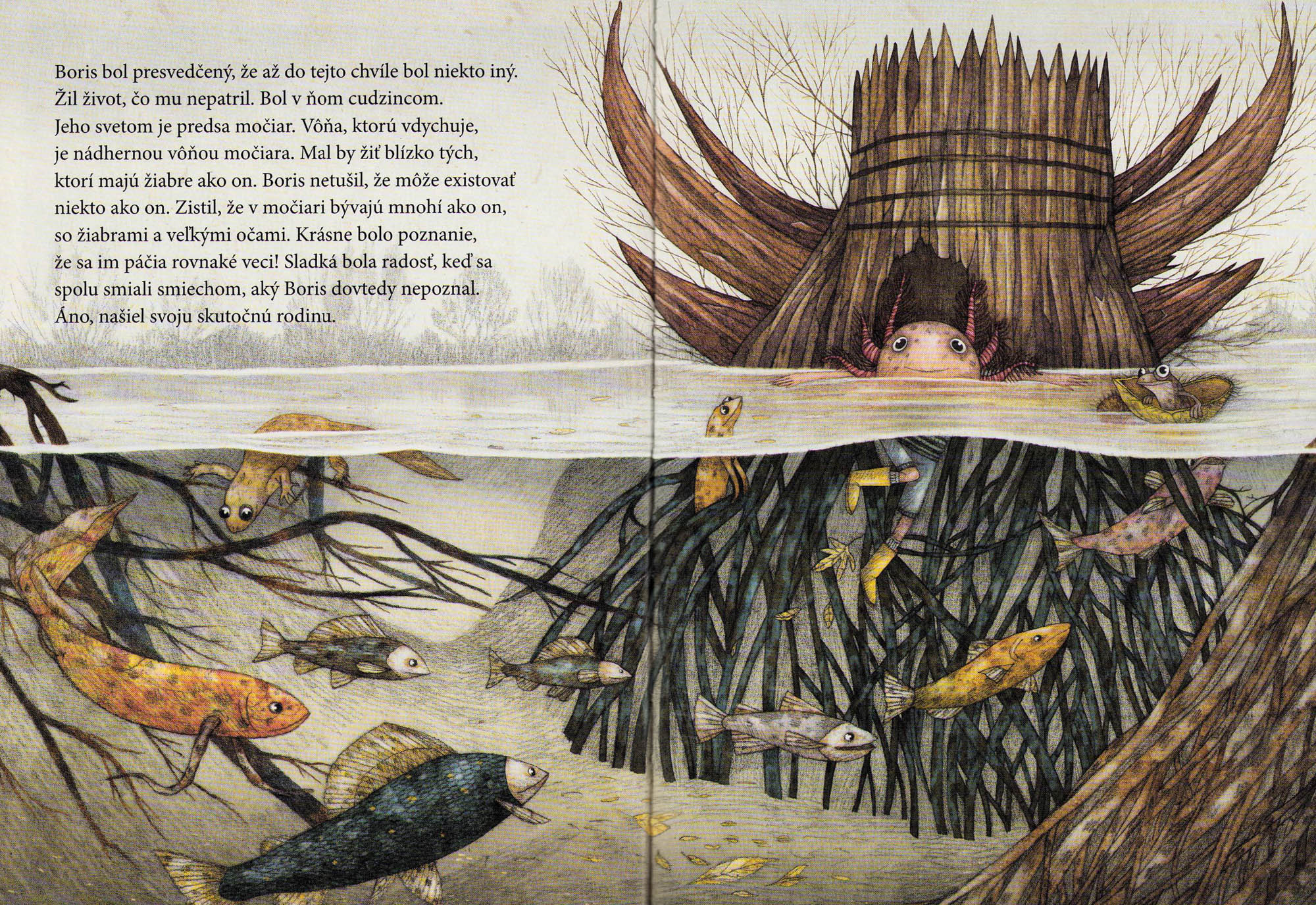 “Boris was convinced that until then he had been living someone else’s life. A life that did not belong to him. He was a stranger in it. After all, his world was the swamp. The scent he breathed in was the wonderful smell of the swamp. He had to live among those who had gills like his own.
Boris had no idea that there could be anyone like him. He discovered that many like him lived in the swamp: with gills and large eyes. It was beautiful to realize that they liked the same things! Sweet was the joy when they laughed together – with a kind of laughter Boris had never known before. Yes, he had found his true family.”
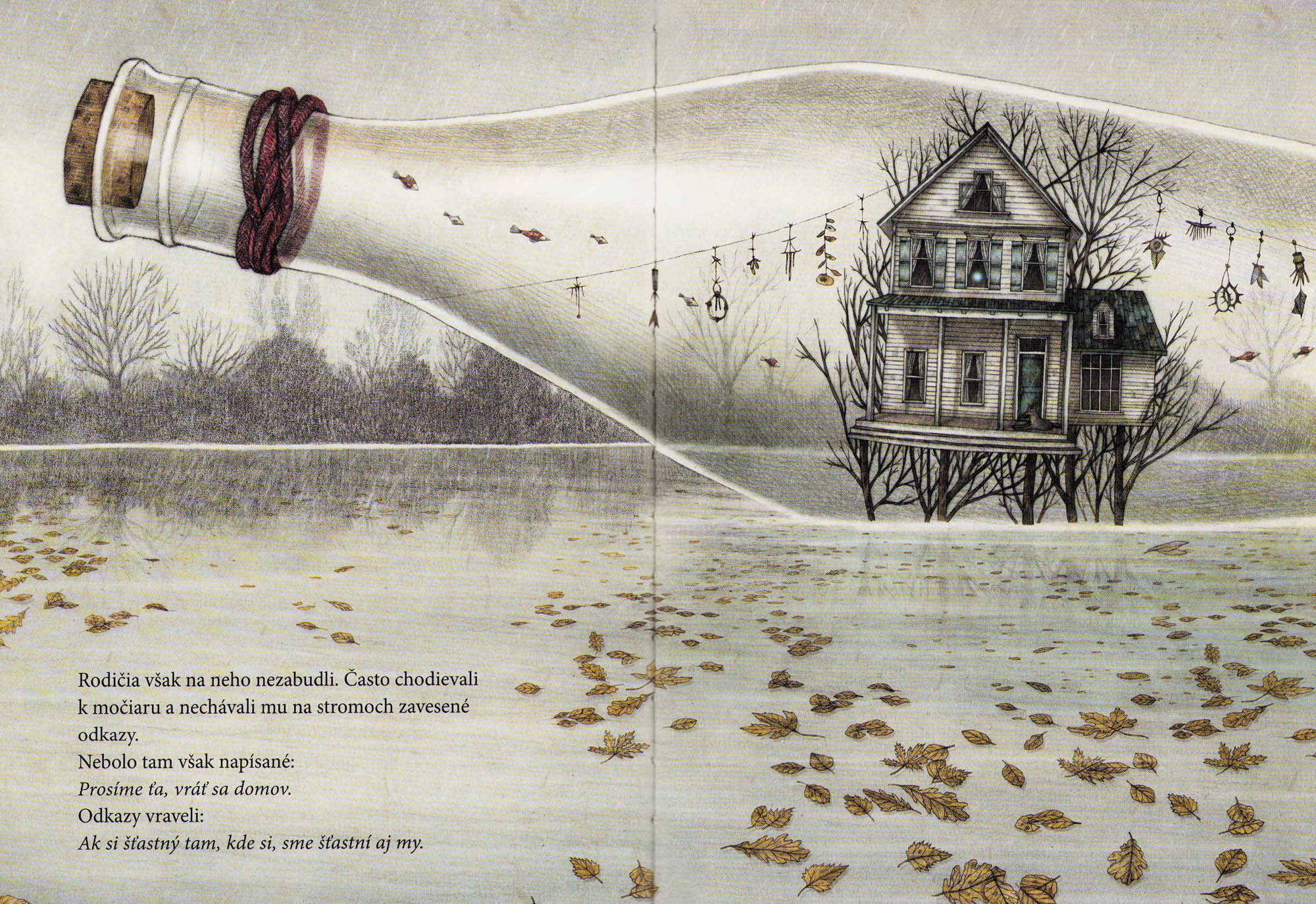 “His parents, however, did not forget him. They often went to the marsh and left messages for him hanging from the trees.
But they did not say:
Please, come home.
The messages said:
If you are happy where you are, we are happy too.”
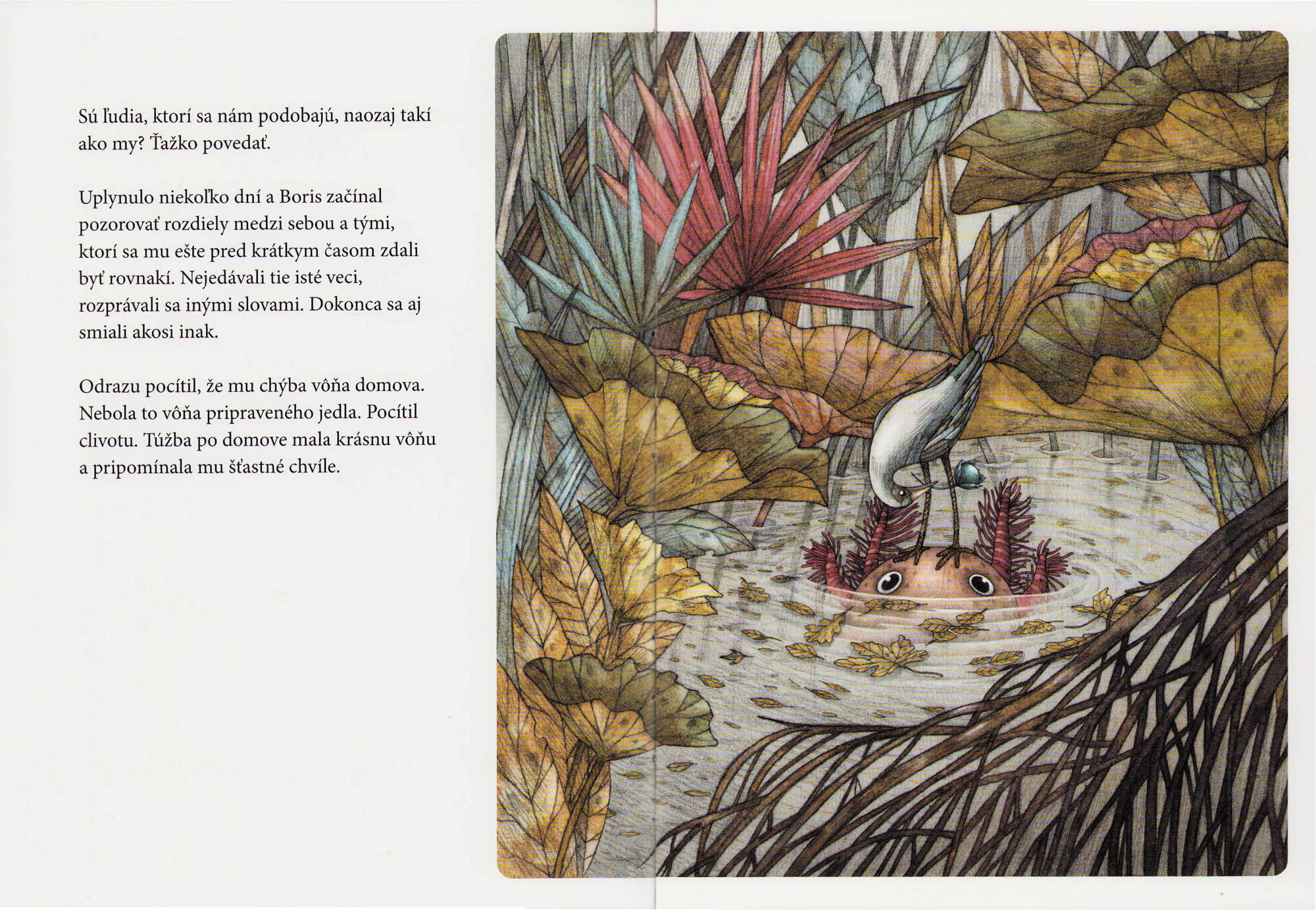 “Are those who resemble us truly like us? It is difficult to say.
Several days passed, and Boris began to notice the differences between himself and those who had until recently seemed completely like him. They did not eat the same things; they spoke with different words. Even their laughter was somehow different.
Suddenly he felt that he missed the scent of home. But it was not the smell of prepared food. He felt homesickness. The longing for home had a pleasant scent and reminded him of happy moments.”
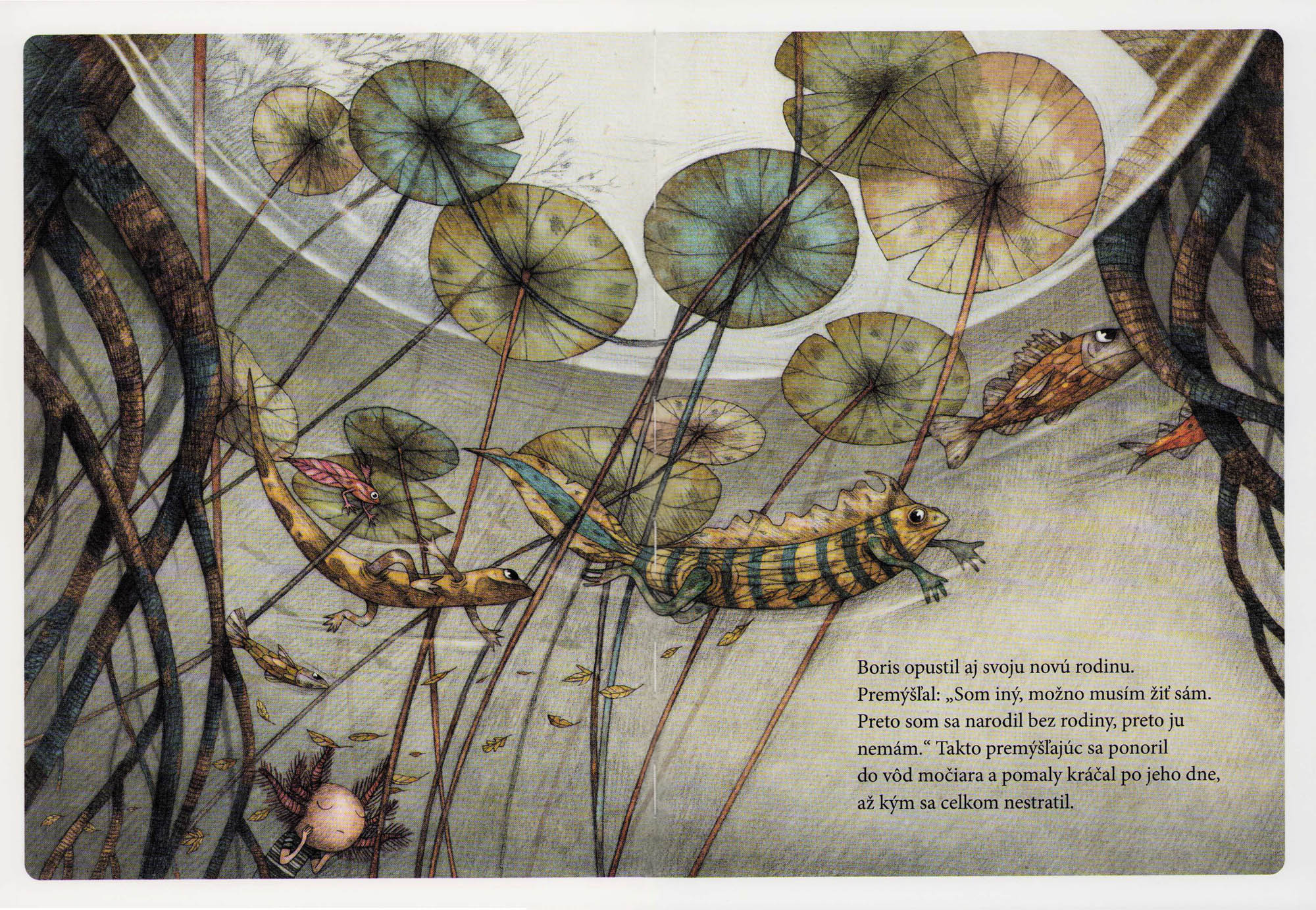 “Boris left his new family as well.
He thought: ‘I am different; perhaps I must live alone. That is why I was born without a family, that is why I do not have a family of my own.’ Lost in these thoughts, he sank into the waters of the marsh and slowly walked along its bottom until he finally disappeared completely from sight.”
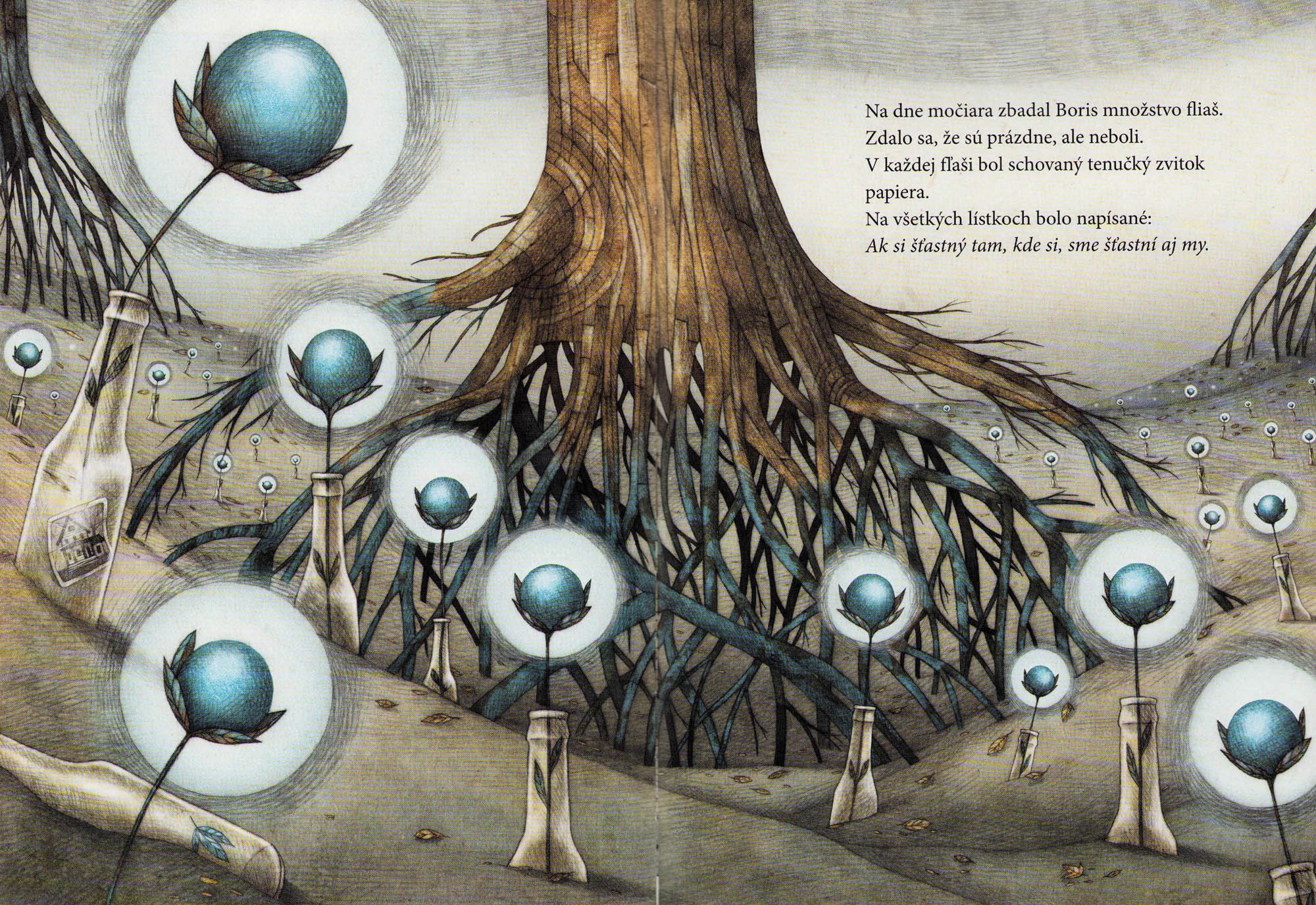 “At the bottom of the marsh, Boris noticed a great number of bottles. They seemed as if they were empty, but they were not. Inside each bottle was hidden a tiny rolled-up piece of paper. On every sheet was written:
If you are happy where you are, we are happy too.”
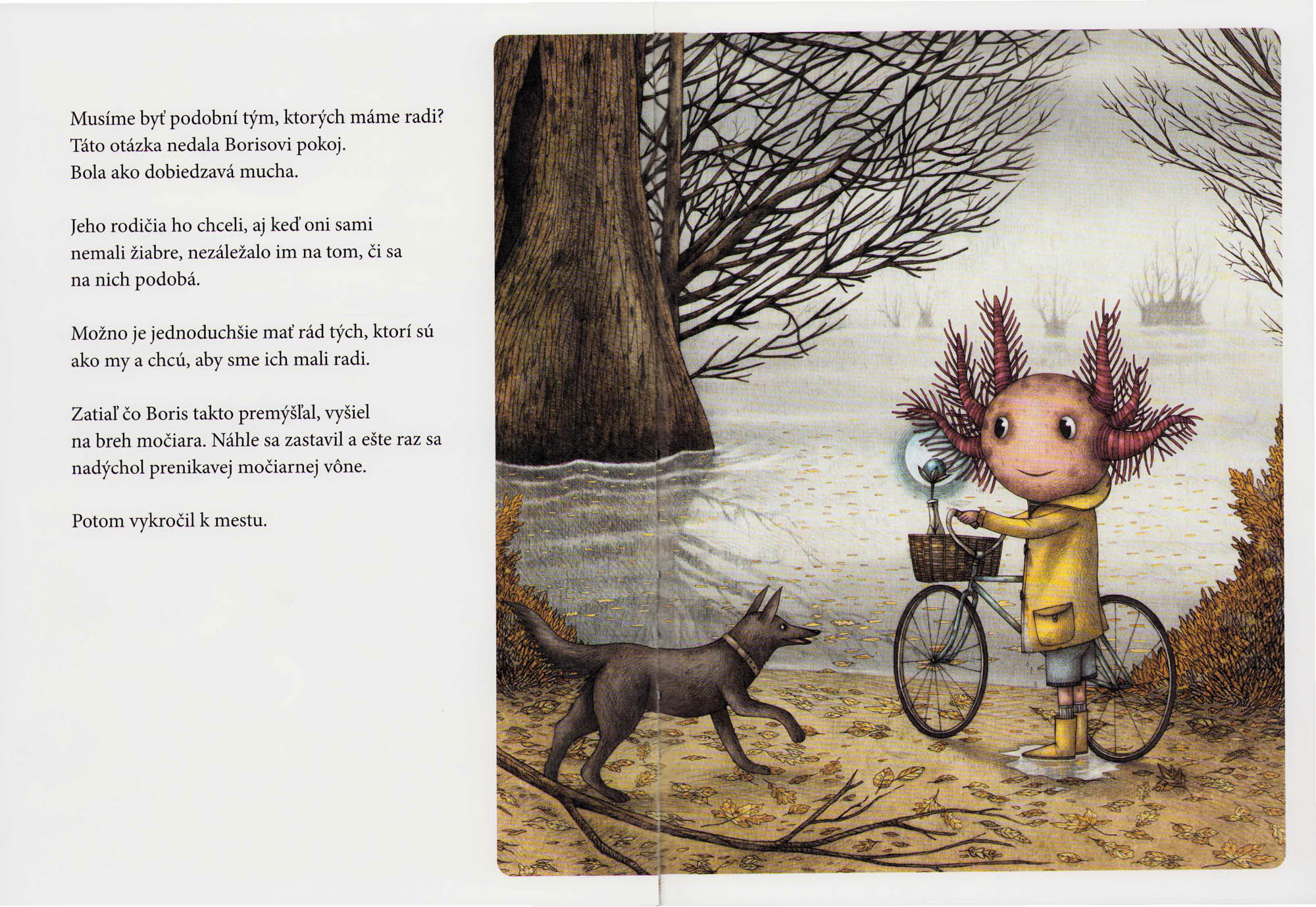 “Must we resemble those whom we love? This question would not leave Boris in peace. It buzzed in his head like an impudent fly.
His parents loved him, even though they did not have gills; it did not matter to them whether he resembled them or not.
Perhaps it is easier to love those who want us to love them.
While Boris was thinking these thoughts, he reached the edge of the marsh. Suddenly he stopped and, for the last time, breathed in the sharp scent of the marsh.
Then he set off towards the city.”
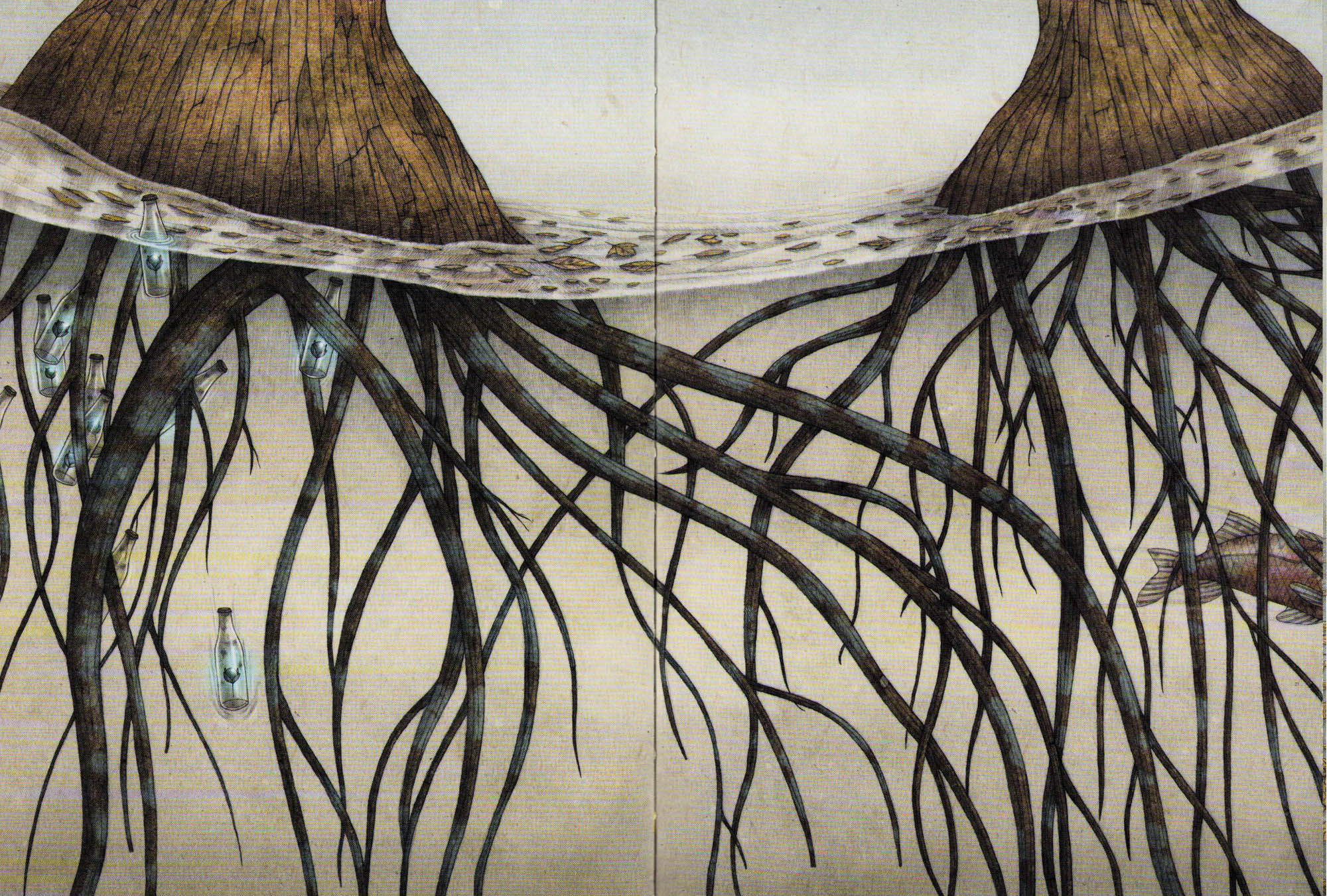
One of the most important motifs of surrealist or magical realist illustrations is the message in a bottle, with the world enclosed inside it. Although the illustrator is not Czech but Italian, this image is nevertheless closely related to the bottle mail that we previously encountered in Pavel Čech’s illustrations for The Saltwater Sea. Both works express the same fundamental experience: the carefully guarded yet at the same time confined microcosm, with the same codes of Central European melancholy and the same heritage of Czech surrealism — Jan Švankmajer and Jiří Trnka — which Marco Somà also represents. The world enclosed in a bottle is a universal monument to the contradictory yet deeply familiar feelings of longing for elsewhere and homesickness, love and loneliness — and in this artistic language, Czech culture has historically been one of the most expressive in the world.



Add comment